
Oppo Reno4 Pro review: Made for Gen Z and social media content creators
Reno2 launched with Snapdragon 730G and a year later, Reno4 Pro debuts with a Snapdragon 720G?! It's confusing, we know. Hit the link to find out what we think of Oppo's latest camera-oriented phone!

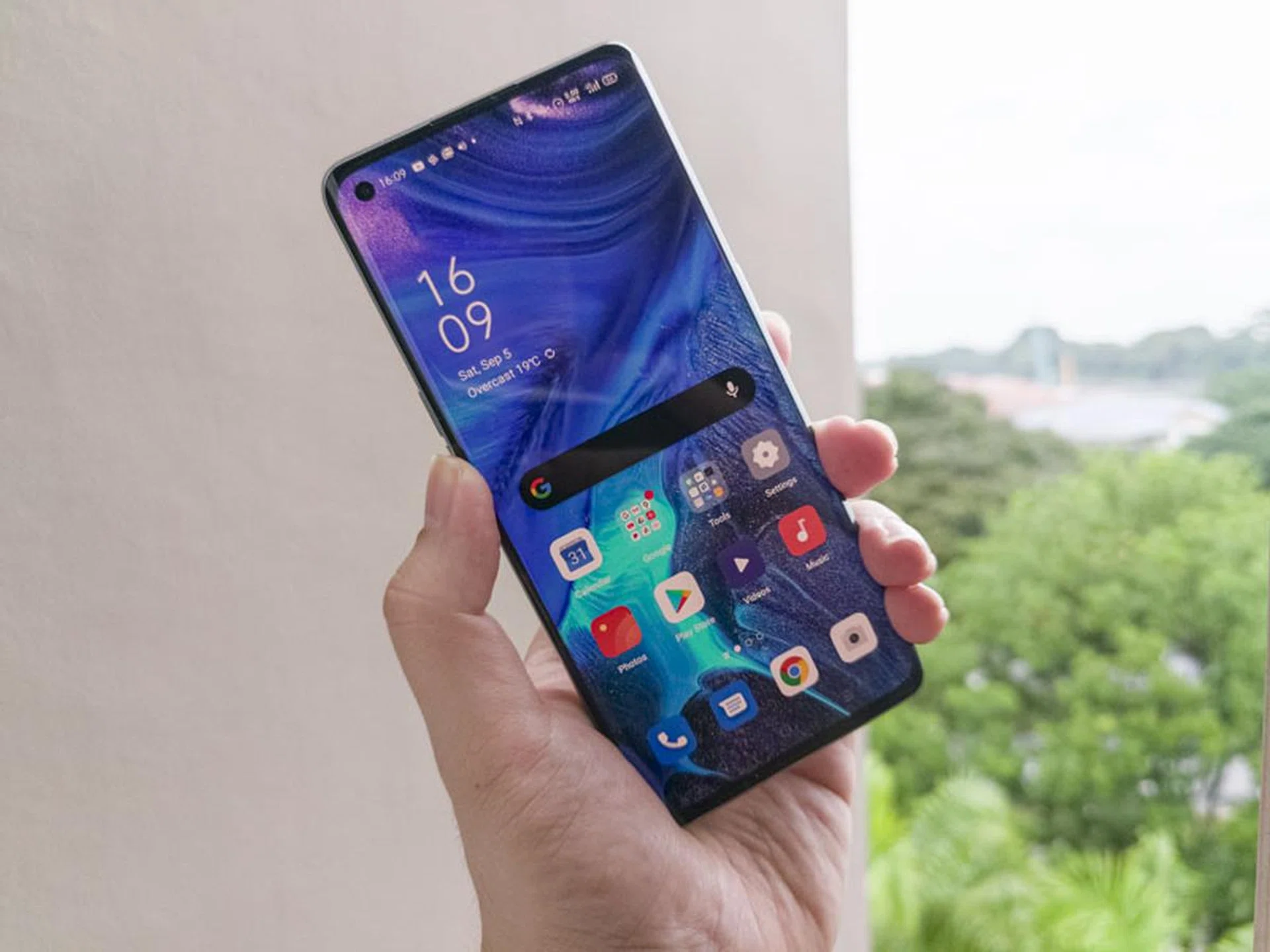
A new Reno every few months?
Oppo seems to iterate its Reno series quite rapidly at a pace of nearly one new entrant every four to five months! The original Reno and Reno 10x made its debut in April 2019, and then later the Reno2 in October 2019. Six months later, the Reno3 series was officially launched in Singapore in April 2020, and barely four months later, Oppo announced their latest iteration in the Reno series, the Oppo Reno4 series. While the usage of chipsets vary quite widely in each revision, they are all equipped with multiple rear cameras with several image-enhancement features, thus cementing the Reno series as phones that are highly focussed on imaging performance.
While there are multiple variants of the Reno4 series globally, only the Oppo Reno4 Pro will be available for sale in Singapore as of this writing.
How exactly does each Reno differ to-date?
Glad you asked, but sit tight as this isn't an easy question.
When Oppo first launched its Reno series just a little over a year back, it was positioned as the company's flagship offering with a modern design, top processing subsystem and true optical zoom with a periscope lens structure, among other leading-edge features on the Reno 10x Zoom. When the Reno2 landed a few months after, it wasn't a successor of the Reno 10x Zoom, but it did improve a good deal over the non-Zoom Reno counterpart (which we also reviewed):-
- Reno2 bested Reno with a Snapdragon 730G instead of the older Snapdragon 710 processor.
- Reno2 bested both Reno and Reno 10x Zoom with a slightly higher pixel density screen (401ppi) that's also more elongated (20:9 aspect ratio).
- Reno2 acquires the same ultra-wide-angle lens and the shark-fin pop-up selfie camera from the Reno 10x Zoom and incorporates a simple 13MP telephoto lens for 2x optical zoom, thus greatly boosting its camera capabilities over the standard Reno.
- Reno2 bested Reno with expandable memory, just like Reno 10x Zoom was endowed.
At this juncture, the lead Reno series is still the Reno 10x Zoom, but the Reno2 was a much better candidate in its S$899 price bracket than the standard Reno ever was.
Before the end of 2019, the Reno3 series was unveiled and boasted a Snapdragon 765G processing subsystem. However, by the time it made it to Singapore in April 2020, instead of the Qualcomm 5G counterpart that was first promised at the phone unveil, they instead were equipped with Mediatek processors. It did have some ups and downs that we'll quickly point out:-
- Reno3 series in Singapore used a lower-tier Mediatek processor instead of a 5G SoC from Qualcomm.
- Reno3 series boasted a better camera system with a 64MP Sony main sensor at the rear and dual-front camera setup for better selfies.
- Reno3 series foregoes the stylish pop-up selfie camera mechanism from the predecessors.
- Reno3 series has an updated design identity that's simpler and slimmer than the predecessors.
- Reno3 series offered speedier fast-charge capabilities.
- Reno3 series was quite a bit more affordable than all its predecessors
So is Reno3 Pro better than the Reno2? Yes from an imaging capabilities standpoint, but no from uniqueness and a processing subsystem standpoint. And it certainly doesn't best the Reno 10x Zoom either from an overall offering perspective.
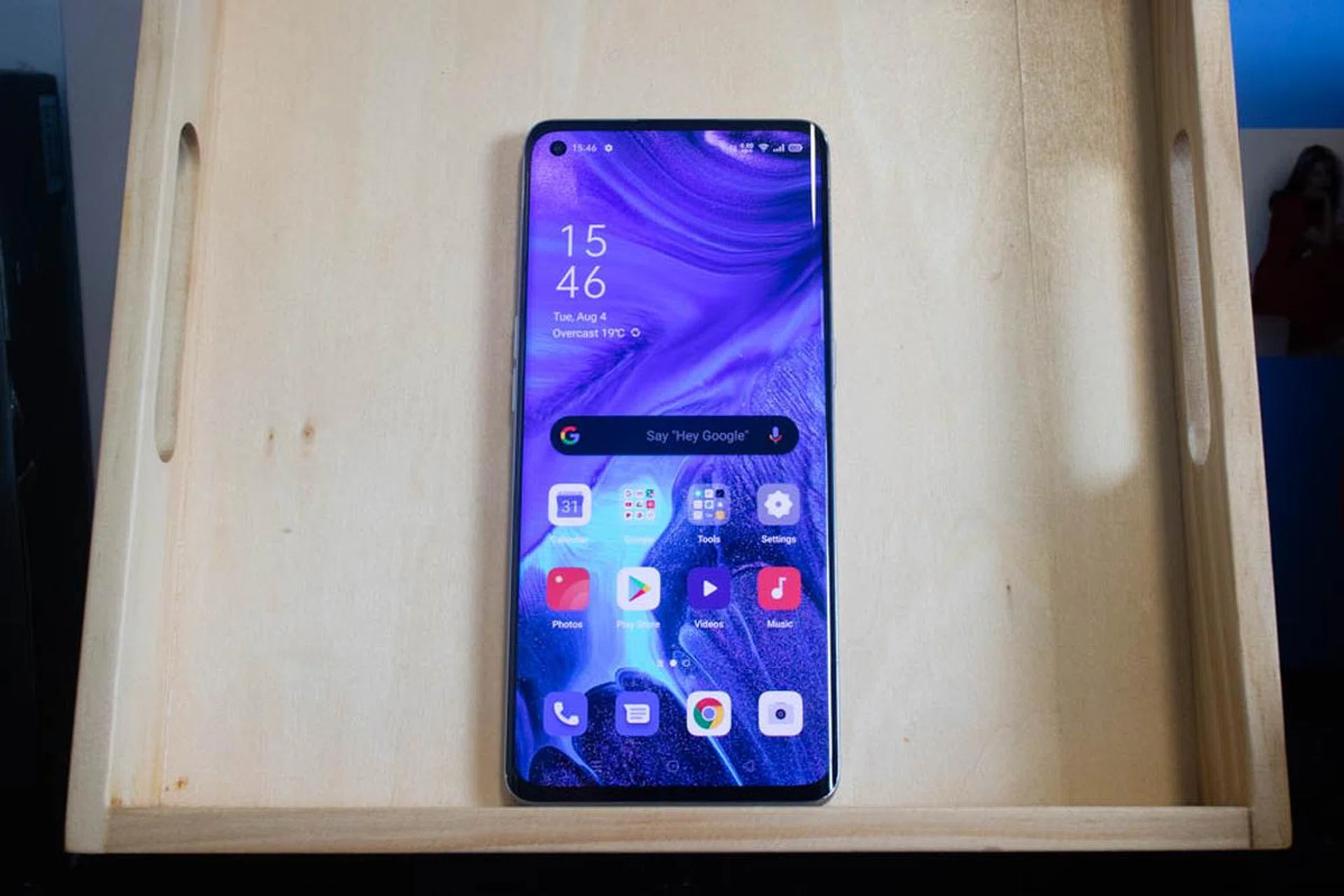
This might all sound confusing because Oppo has by now moved on to offer the Find X2 which is their current flagship offering. Now that leaves us with yet another confusing new entrant as Oppo pursues to offer a new Reno4 Pro, which offers a processing subsystem (Snapdragon 720G) that doesn't better the Reno2, a camera subsystem that doesn't better Reno2 and Reno3 and yet is priced at S$899 which seemingly only offers improved camera software, a better screen, a nicer build and even speedier fast charging.
With such a short time span between iterations, and without any clear progression path, just how improved is the Reno4 Pro against its predecessors and is it worth your attention?
Design
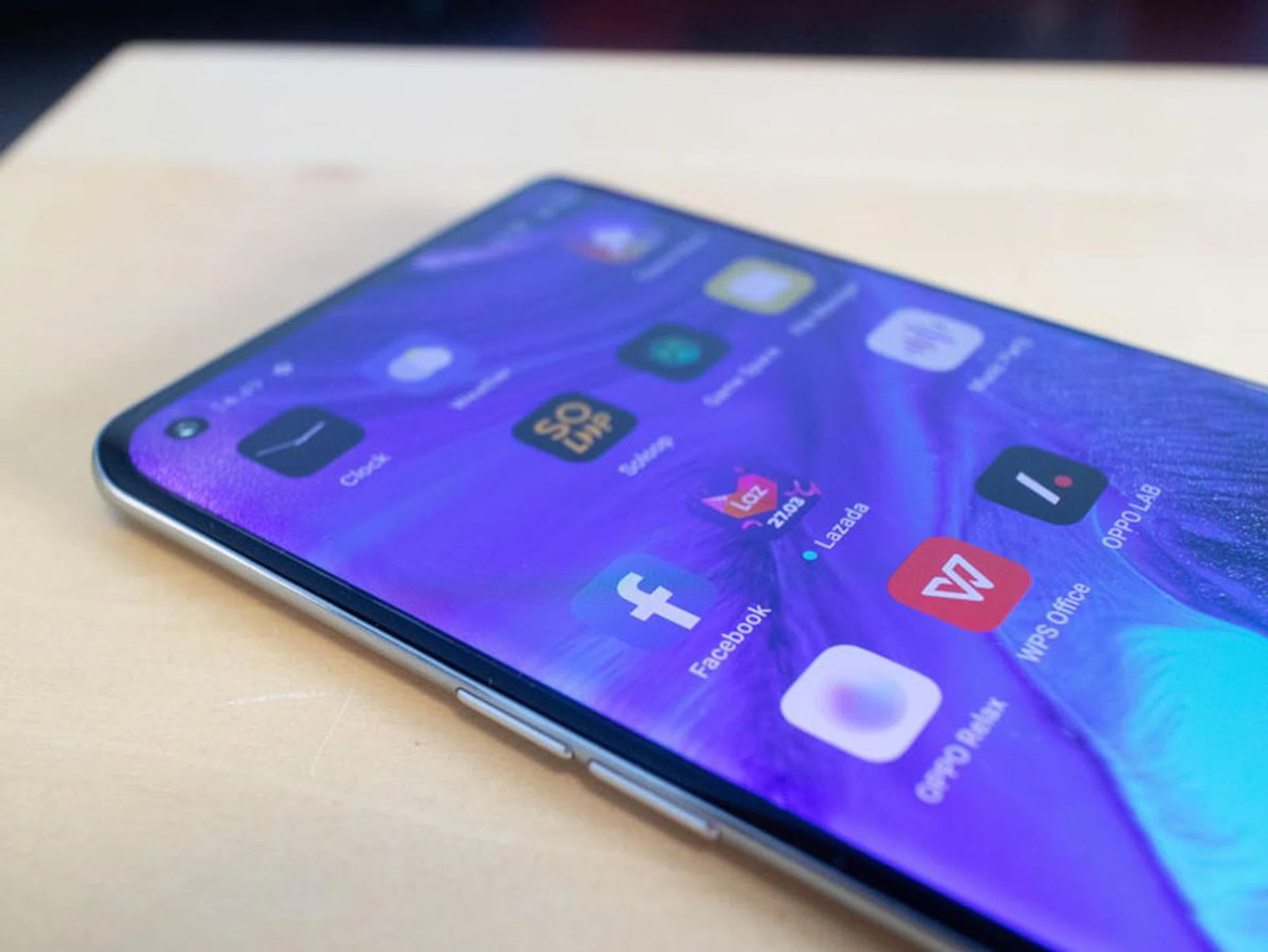
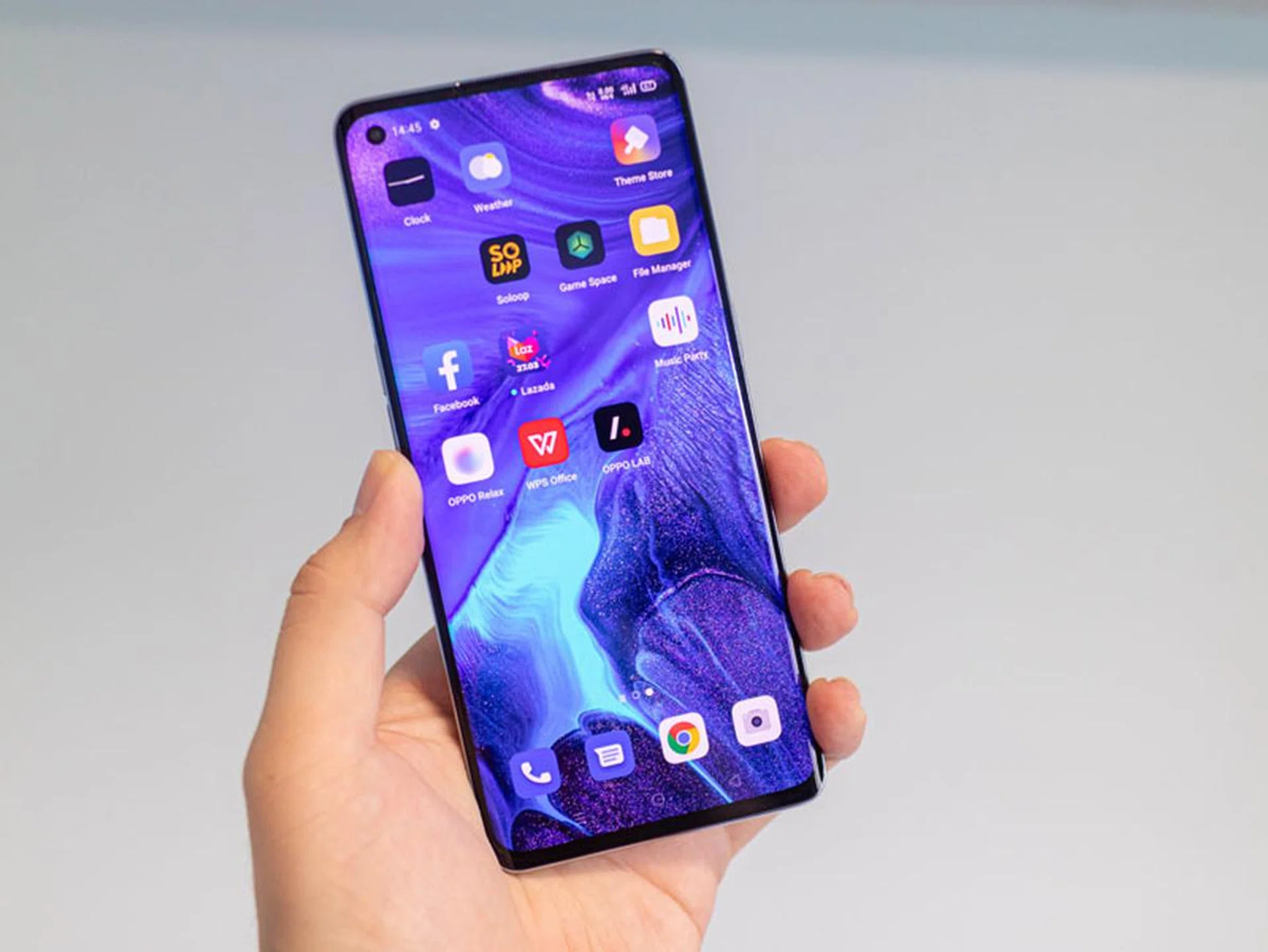
When the phone was first unboxed and I held it in hand, I was surprised by how light it seemed despite its rather large size (160.2 x 73.2 x 7.7mm). Weighing 161g, it is lighter and slimmer than Oppo Reno3 Pro (170g, 158.8 x 73.4 x 8.1mm), and one can argue that the Oppo Reno4 Pro is one of the lightest phones in the market for its size.
Just like the Oppo Reno3 Pro, it has a 3D curved display, which itself is a 6.5-inch E3 Super AMOLED screen with 20:9 aspect ratio. Keeping in line with the design language of the Reno series, the front display is also nearly bezel-less, with a 92% screen-to-body ratio. The Reno4 Pro continues to feature an under-display fingerprint scanner, which Oppo claims is now speedier at unlocking the device and it didn't disappoint in our usage; it is very responsive and unlocks the phone snappily.
The display has also improved with a 90Hz refresh rate, and up to 180Hz touch sample rate. With that, the Oppo Reno4 Pro feels much more responsive to user taps and gestures, and transitions feel more fluid than displays of most other mid-range phones with a normal refresh rate (60Hz).
Similar to Oppo Reno3 Pro, the Reno4 Pro’s rear camera array consists of four cameras laid out vertically.
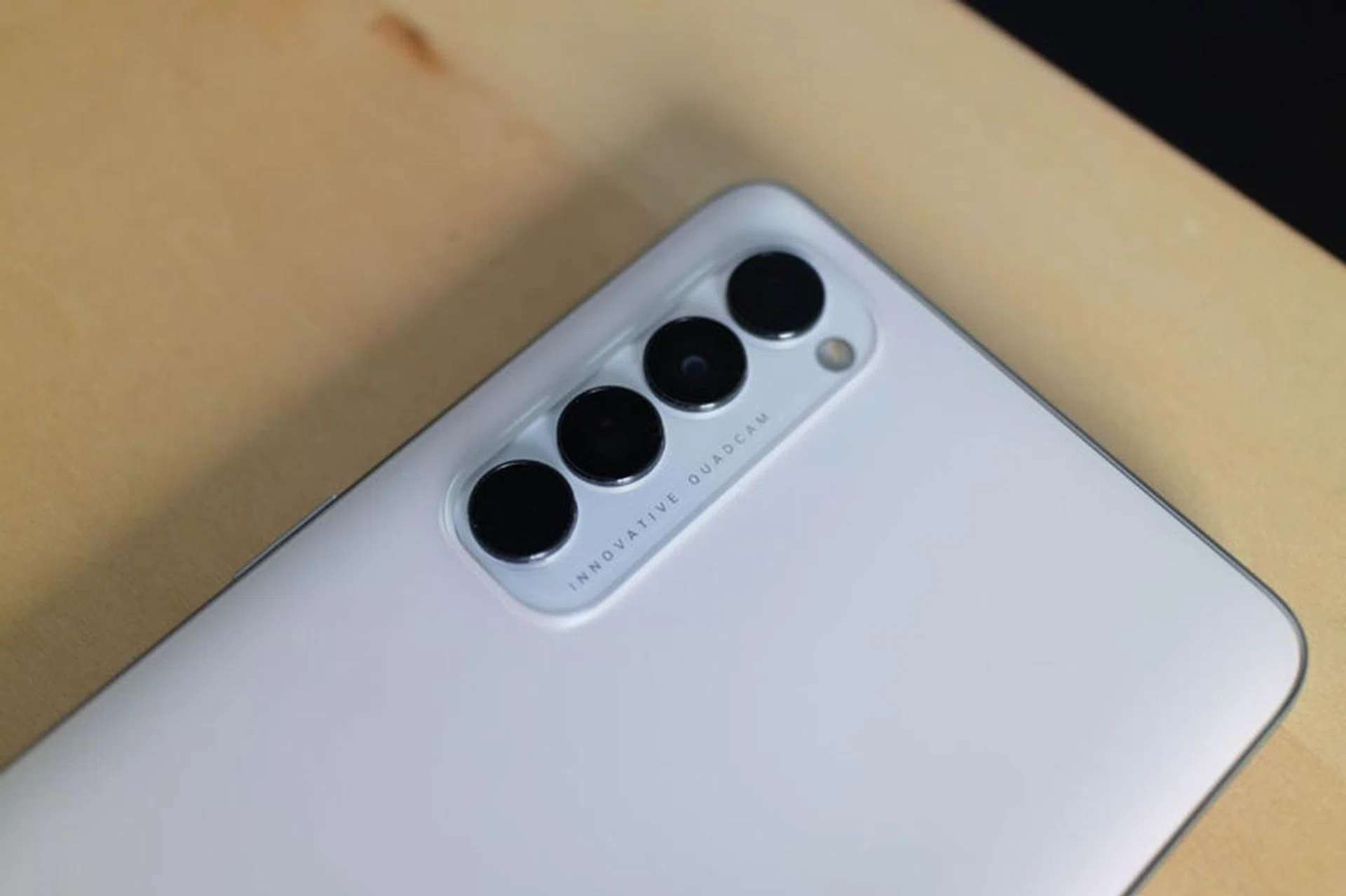
However, unlike the previous Reno models, the Reno4 Pro’s cameras protrude out, instead of being flushed to the back of the phone. This means the camera lens array is more prone to scratches when the phone is placed on its back and worse yet if placed on rough surfaces. Fortunately, this can be easily resolved by putting on a phone cover that comes packaged with the phone. You may still want to get a new phone cover if you prefer extra protection though, as it is just an ordinary TPU phone cover, but kudos for Oppo to include it in the packaging.
The front camera too sees a change as the Reno4 Pro now only has a single 32MP selfie camera, located within the tiny punch hole in the top left-hand corner of the display.
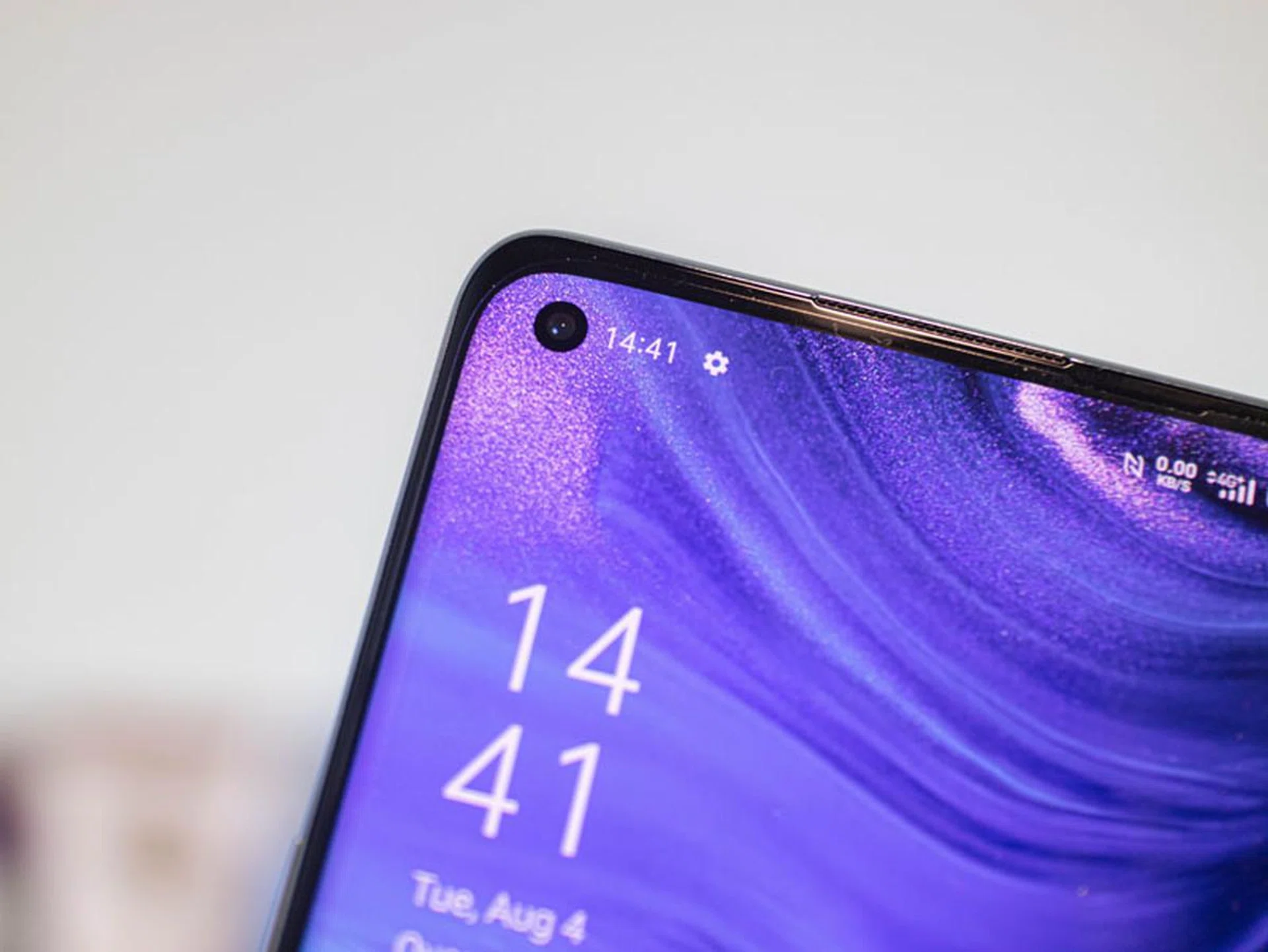
While we’re on the topic of design and handling, the Oppo Reno4 Pro features a matte finish on its back, which makes it feel more premium in the hand than the smooth gradient back of the Reno3 Pro. Two colour options are available with the Reno4 Pro: Starry Night and Silky White. The review unit I got is of the Silky White variant.
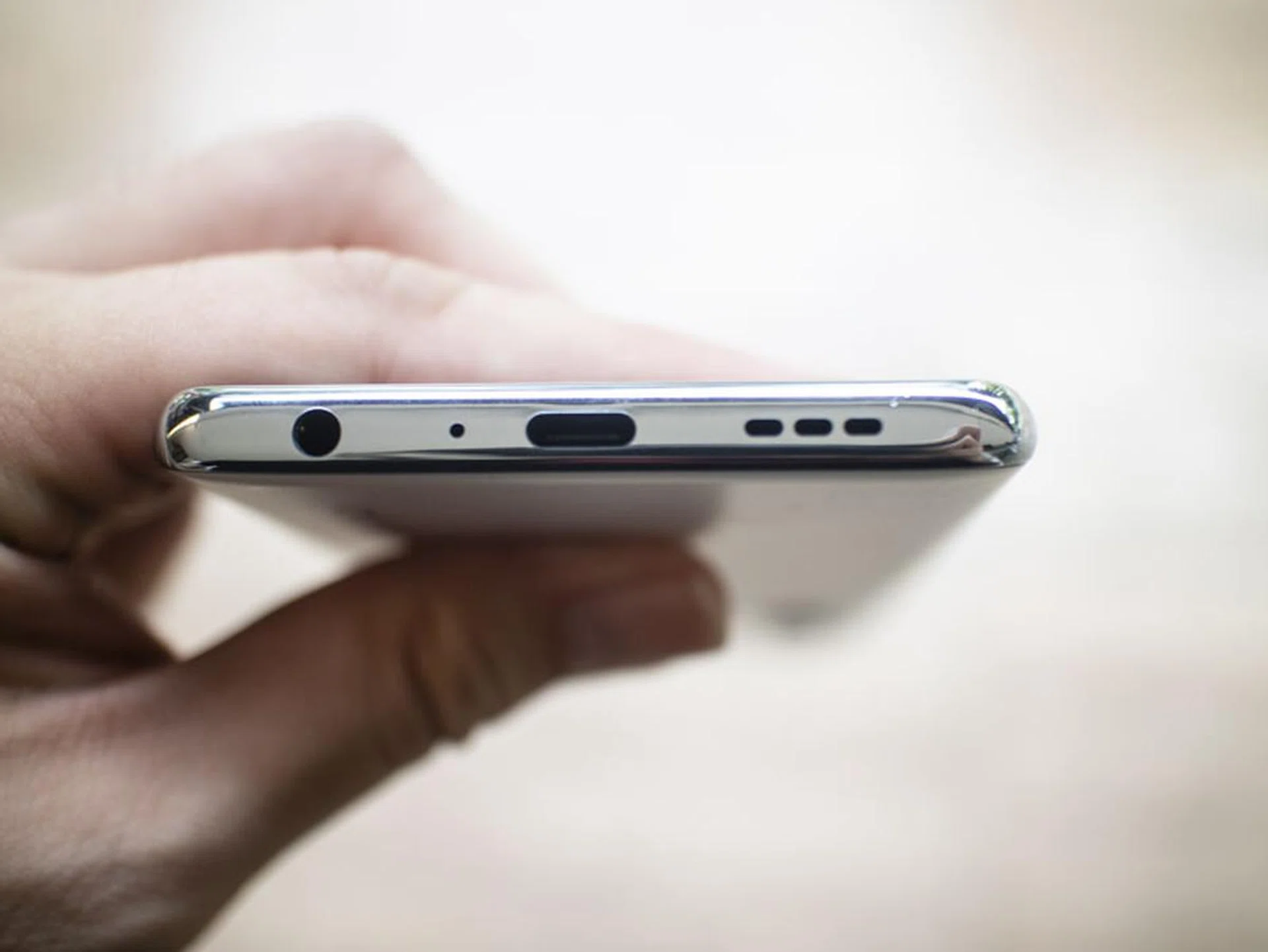
Last but not least, looking around the rims of the phone, the volume rocker is on the left side of the phone, while the power button is on the right side. The Oppo Reno4 Pro supports Dual SIM and external storage, so the Dual SIM and microSD card slot can be found on the top of the phone while the USB-C port and 3.5mm audio jack is located at the bottom. That covers ports, connectivity and hardware buttons for the device.
User Interface - Color OS 7.2
The Oppo Reno4 Pro comes with ColorOS 7.2, Oppo’s proprietary OS built atop Android 10. We have previously touched on this new ColorOS in our Oppo Find X2 review and the ColorOS 7 announcement. The user interface is exactly what you will find in the Oppo Find X2 as well.
SuperVOOC Charging
Looking across many of Oppo’s recently launched phones, it would seem ultra fast charging is a top priority for the company. Unlike phones of other brands, Oppo opted for VOOC, their own implementation for fast charging. The details surrounding VOOC are technical, but in a nutshell, VOOC pumps more current than increasing voltage as a mechanism for fast charging. We have previously conducted a shootout with different fast charging mechanisms, which you can read about in detail.
In Reno4 Pro, Oppo introduced the state-of-the-art SuperVOOC technology, which charges the phone using a whooping 6.5A current and 10V voltage. With this technology, Oppo claims that the 65W SuperVOOC charger that comes in the package can charge the phone from empty to full in just 36 minutes. Being skeptical, I tested the charger, and indeed, even with screen on and a short boot-up process, the phone is able to charge from 0 to 100% in 37 minutes.
Fast charging capability is now broadly available on almost all mid-tier range phones and higher, but if you frequently see yourself using the phone intensely and need a phone that can keep pace with you lifestyle without anchoring you down due to charging needs, then super fast charging like VOOC could be an important consideration on your next phone.
What about actual phone endurance? We'll share more on the last page with all the benchmarking comparisons.
Imaging Performance
The camera system has always been one of the key features of the Reno series. Does Reno4 Pro continue to feature superior imaging capabilities? To reiterate, the Reno4 Pro has the following rear camera array:
- 48MP Main Camera (IMX 586), 1/2-inch, f/1.7
- 8MP Ultra Wide Angle Camera, 1/4-inch, f/2.2
- 2MP Macro Camera, 1/5-inch, f/2.4
- 2MP Mono Camera, 1/5-inch, f/2.4
To put some context to the quad-camera system offered, the main shooter and the ultra-wide cameras are actually the same counterparts we've first seen on the Oppo Reno 10x Zoom over a year back and use the same sensor too. Even if the Reno4 Pro forgoes any telephoto lens and the special periscope-style lens array for true optical zoom that the Reno 10x Zoom offers, the usage of the same main and wide-angle shooters do set high expectations for the Reno4 Pro.
Note that the main camera's Sony IMX586 Quad Bayer 48MP sensor outputs 12MP photos by default as it uses four adjacent pixels combined to recreate the equivalent of having larger photosites on the sensor by raising photosensitivity. Also, since there's no telephoto lens on the Oppo Reno4 Pro, all zoom functionality is digitally achieved from cropping in the shots from the 48MP sensor.
Day Photos
The image quality of a typical well lit daylight photo is certainly a cut above what mid-range phones can churn out, though it still cannot match true flagship phones. By that, we also meant that it doesn't quite put out the same league images as a Reno 10x Zoom, which is perplexing. Looking at the photo below, while it looks good without pixel peeping, once you view it in full size (1:1), the image is quite grainy. This is a fairly bright scene and ISO levels were low (just over a 100), yet it's not quite apparent why the image exhibits this much noise level.

Click to view the full 12MP image produced by the Reno4 Pro.
Is the image processor's algorithm out of whack while churning out the 12MP images? Well, shooting at the sensor's native 48MP mode didn't help either; the noise and blur is actually more pronounced, especially when viewing it in a proper imaging application. (Click here to view the 48MP photo.)
Digital zoom, meanwhile, works just as intended and in fact, we noticed some smoothening applied to the photo so it actually looks better than both the 12MP and 48MP cropped in. The Reno4 Pro offers up to 10x digital zoom, so this is what you'll get:-

10x Digital Zoom.
Oppo has also claimed that there is an Ultra Clear Mode, in which the phone can take photos of 108MP! However, finding and activating this mode is not intuitive. It took me quite a while to figure out that it’s hidden under Pro Mode, XHD option.
Yet, the 108MP photo also suffers the same effect from 48MP mode - a notable amount of noise is retained, underscoring that sometimes, pixels are not everything. While we certainly understand that AI processing has a heavy hand to play in this mode, it probably hasn't yet progressed enough to overcome our misgivings:-

Even 108MP photo when downsampled to this preview still cannot save the loss of details in the original photo (Click for 108MP image)
Camera capability aside, Oppo's Reno4 Pro's camera app boasts a fair bit of tricks to fast track an ideal output that would look great on your social posts, so we tried exploring some of these features in the next few sections.
AI Color Portrait Mode
What really shines in Oppo Reno4 Pro is its AI Color Portrait Mode, in which the phone can, in an instant, detect a person's face and colorize the person, while rendering the background monochrome with bokeh effects to boot. You get to view the expected outcome in real time and there’s no processing lag to this feature, which highlights the fast image processing capability of the Reno4 Pro even with its mid-range processor. Note that this will not work if the camera app doesn't detect a human face (yes, we tried on a figurine and it doesn't work) or if your subject isn't facing the phone.
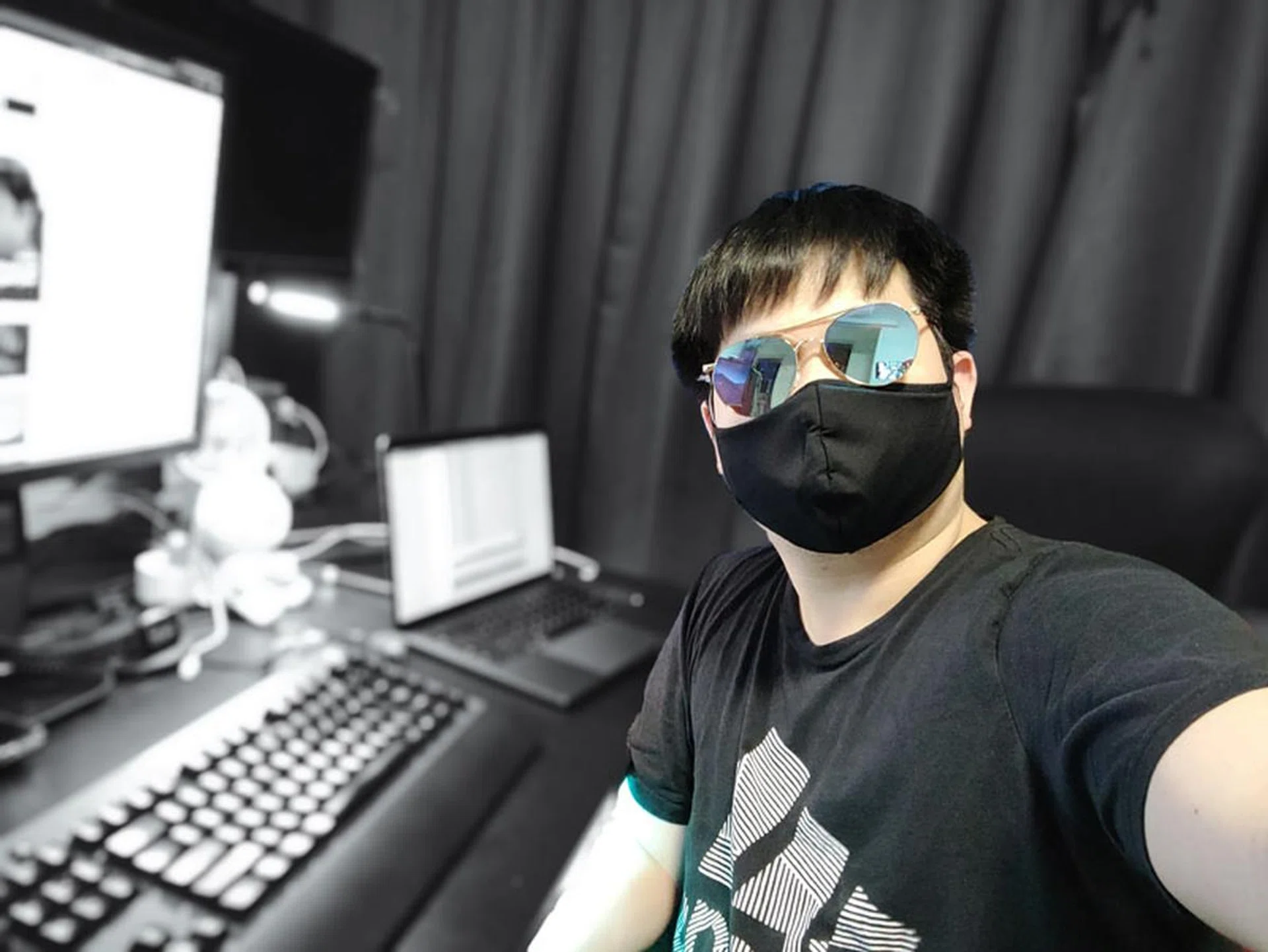
Works almost perfectly and instantly, even with front camera
Night Flare Portrait
When taking portrait shots with ambient lights, say city lights, using the default shooting mode might result in a pretty ordinary looking shot. I tried mimicking the look and feel at at home with limited lighting in the dark, and the 32MP selfie camera managed a pretty good shot to capture the scene.

Just an ordinary shot, but still looking good in limited lighting and that's good news for selfie lovers and the phone's single 32MP front camera.
No real qualms with it but Oppo's new Night Flare Portrait mode of the same scene yielded a dramatic effect that breaths more life to the subject matter. Clearly, this mode was expressly made to dramatize the scene to give it more pop and vibrancy, as well as fusing a stylist bokeh effect. The result? A very insta-worthy shot:-
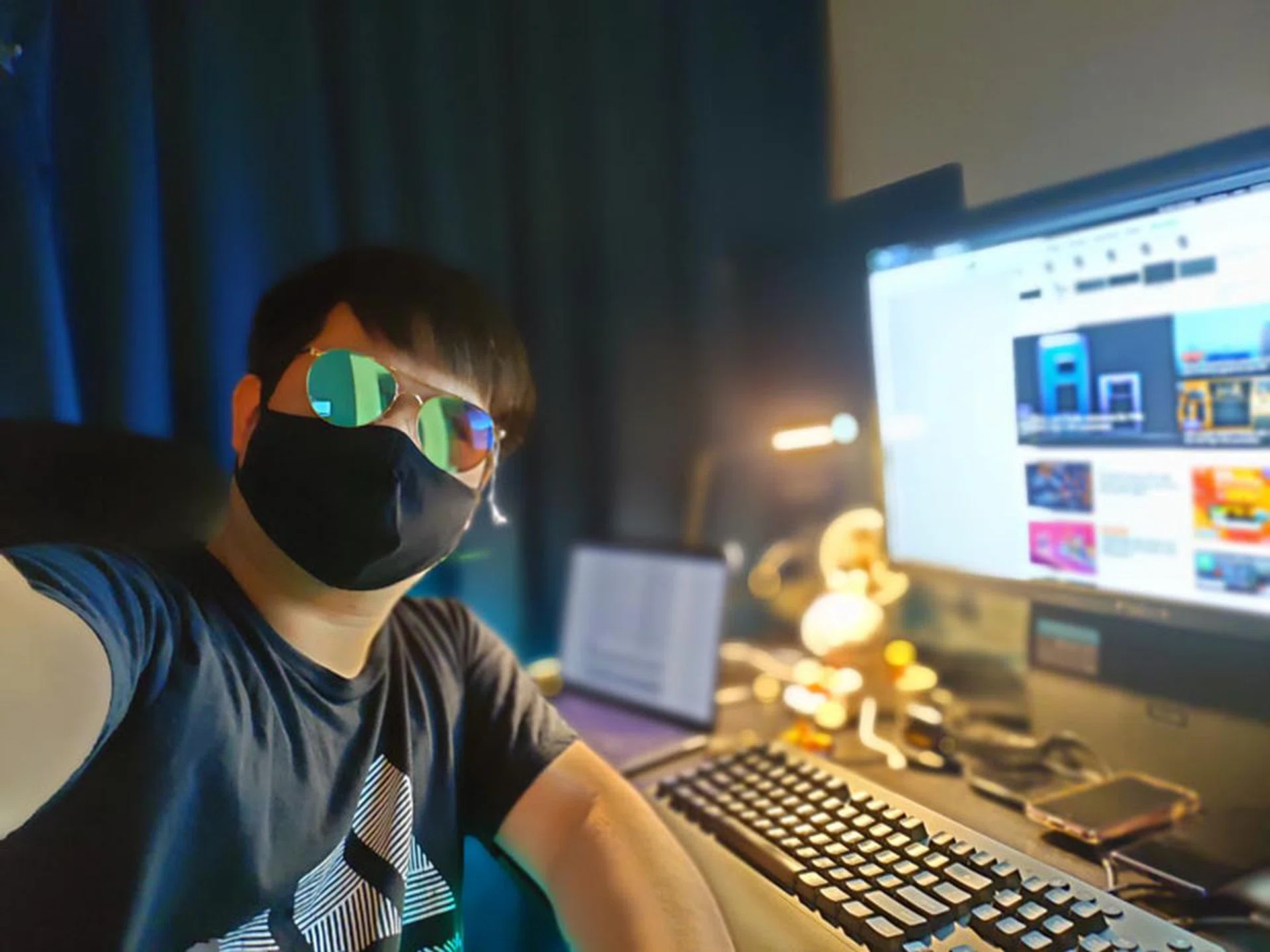
The same shot with Night Flare Portrait mode. Notice how the background has been given a nice blur and nicely brightened with softer colours applied to yield a very aesthetically looking portrait shot. Definitely insta-worthy.
Night Mode
The night mode works well when there is a good amount of ambient light, such as this example at Changi Jewel:-

However, night mode really falters in very weak lighting conditions. This would not have been a bugbear, if not for the fact that even last year’s mid range phone, the Google Pixel 3a, is able to render better photos when faced with very low lighting levels thanks to its Night Sight feature and Google's deep learning algorithms put to good use.

Enlarged photos. Left: Google Pixel 3a. Right: Oppo Reno4 Pro. Photo details are much sharper and detailed on the Pixel 3a than the Reno4 Pro
Ultra Steady Video
Ultra Steady Video mode is Oppo’s take on Electronic Image Stabilization (EIS) and has always been featured in the Reno series since the days of Reno2. In Reno4 Pro, Ultra Steady Video has also been incorporated for front camera usage, in addition to the rear cameras. This means users can now capture a selfie vlog with EIS out-of-the-box. There is also a "Pro" mode for better EIS.
After testing the Ultra Steady Video mode, the EIS works somewhat well for non-intensive motion such as walking. However, for more intensive motion such as jogging, the EIS struggles to contain longitudinal shifts, though it still manages to contain lateral shifts well. Here's a quick test of the Ultra Steady Video mode in action, without the Pro mode, and using the rear camera:-

I then tested the new Ultra Steady Video Pro mode. On first observation, it seemed like it did a much better job in stabilising the video even while jogging; however, FPS is now locked to 30fps instead of the 60fps I achieved earlier. On further comparison, you'll also note that the video quality has degraded significantly as if the video was recorded in 720p instead of 1080p resolution (even though it clearly states that the resolution is still 1080p). So the added stabilisation comes at a cost. Check out the Ultra Steady Video in Pro mode here:-

For reference on how Oppo's EIS fared in comparison with a low-cost gimbal; here is a video shot under normal settings, but attached to a Zhiyun Smooth X:

Benchmarks
The Oppo Reno4 Pro features a Qualcomm Snapdragon 720G, a mid-range SoC powered by two core clusters: a cluster consisting 6 Kryo 465 Silver @ 1.8GHz, and another cluster containing two Kryo 465 Gold @ 2.3GHz. It also features an Adreno 618 graphics processor. It is a departure from Reno3 Pro, which used MediaTek chips, and harkens back to the time where Reno2 uses Qualcomm Snapdragon 730G. This squarely places the S$899 Oppo Reno4 Pro among several sub S$600 mid-range phones that we've recently tested, so let's see how it fares and if the Reno4 Pro has enough to justify its asking price.
Geekbench 5
Geekbench CPU is a cross-platform processor benchmark that tests both single-core and multi-core performance with workloads that simulate real-world usage. Geekbench 5 scores are calibrated against a baseline score of 1000, which is the score of an Intel Core i3-8100.
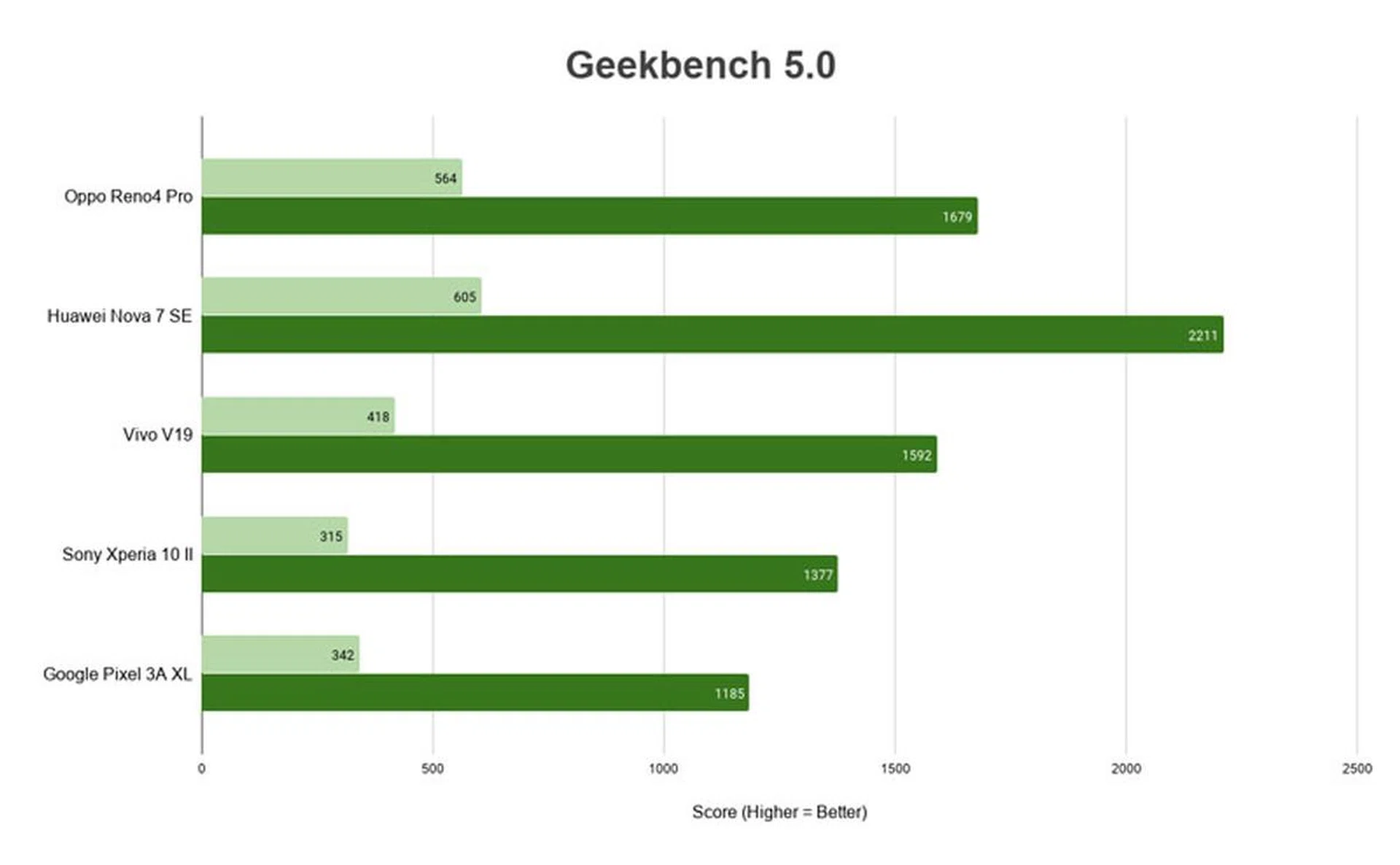
Oppo Reno4 Pro performs modestly against other mid-range phones, but falls somewhat behind Huawei Nova 7 SE which has a processor that's befitting a flagship phone.
Jetstream 2
JetStream 2 is a combination of a variety of JavaScript and Web Assembly benchmarks, including benchmarks that came before like SunSpider and Octane. It primarily tests for a system’s and browser’s ability in delivering a good web experience.
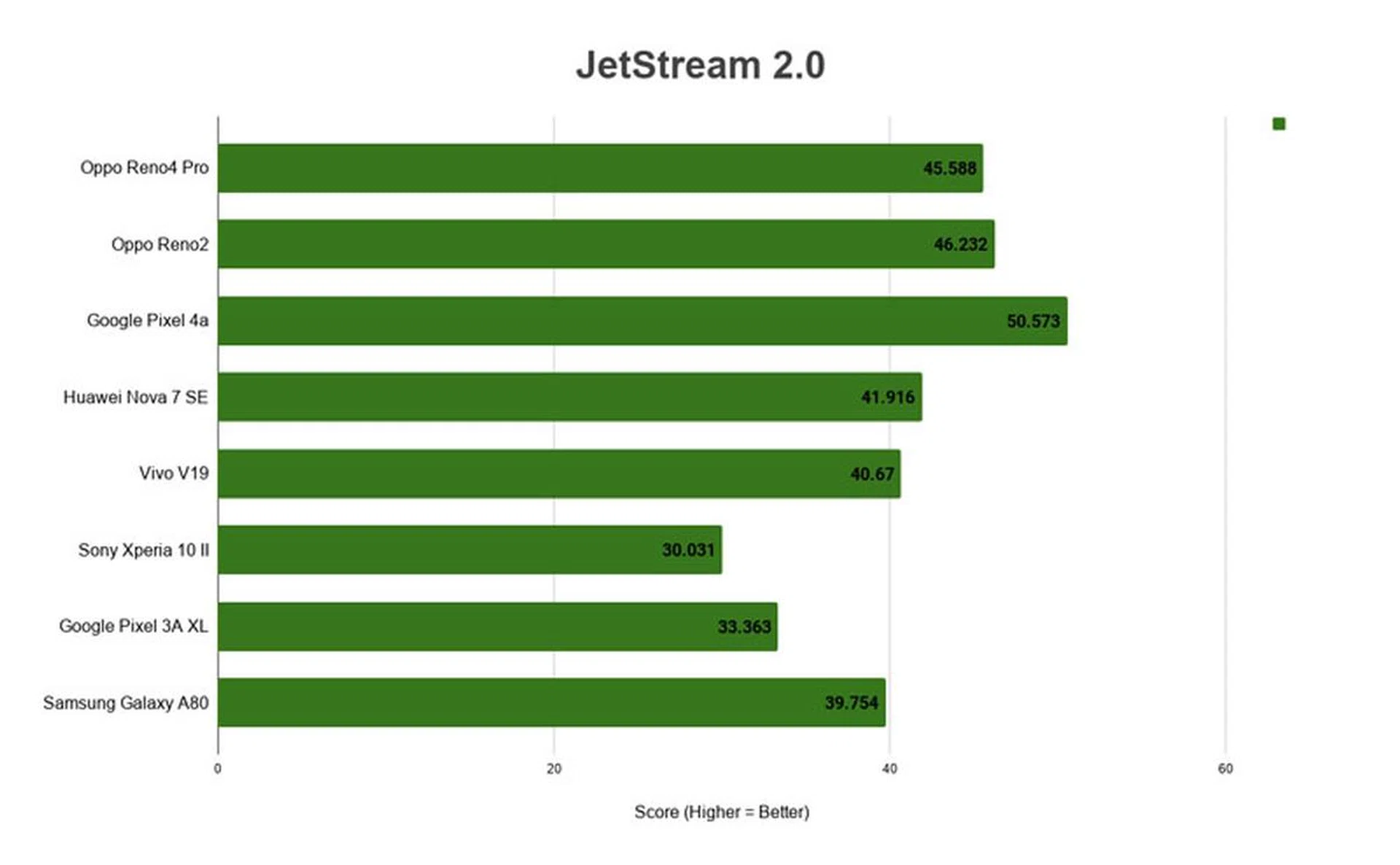
Overall, you can see that the Jetstream score of Reno4 Pro is close to that of Reno2, which is pretty much what you can expect given the phone's processor choice (which is actually a tad slower than Reno2 launched a year earlier).
3DMark Sling Shot Extreme
3DMark Sling Shot is an advanced 3D graphics benchmark that tests the full range of OpenGL ES 3.1 and ES 3.0 API features including multiple render targets, instanced rendering, uniform buffers and transform feedback. The test also includes impressive volumetric lighting and post-processing effects.
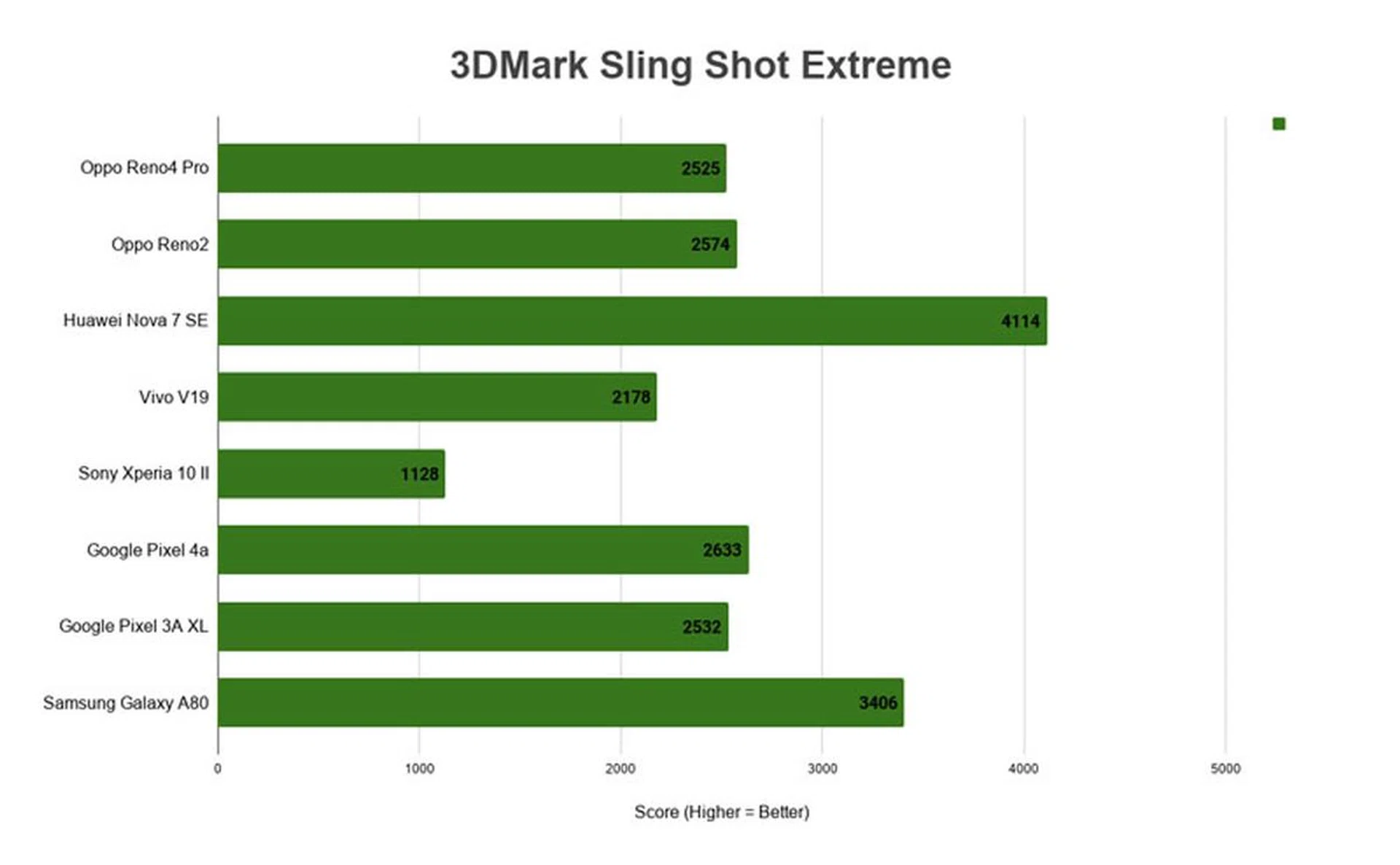
Once again, both the Reno2 and Reno4 Pro are almost equally placed, but both pale in comparison to the Huawei Nova 7 SE and the Samsung Galaxy A80. The latter was launched over a year with the same price point as the Oppo Reno4 Pro and was powered by the Snapdragon 730 processor, yet it somehow ploughed ahead of the other phones in this particular benchmark. Apart from this outlier result, the Reno4 Pro performed as expected.
Battery life
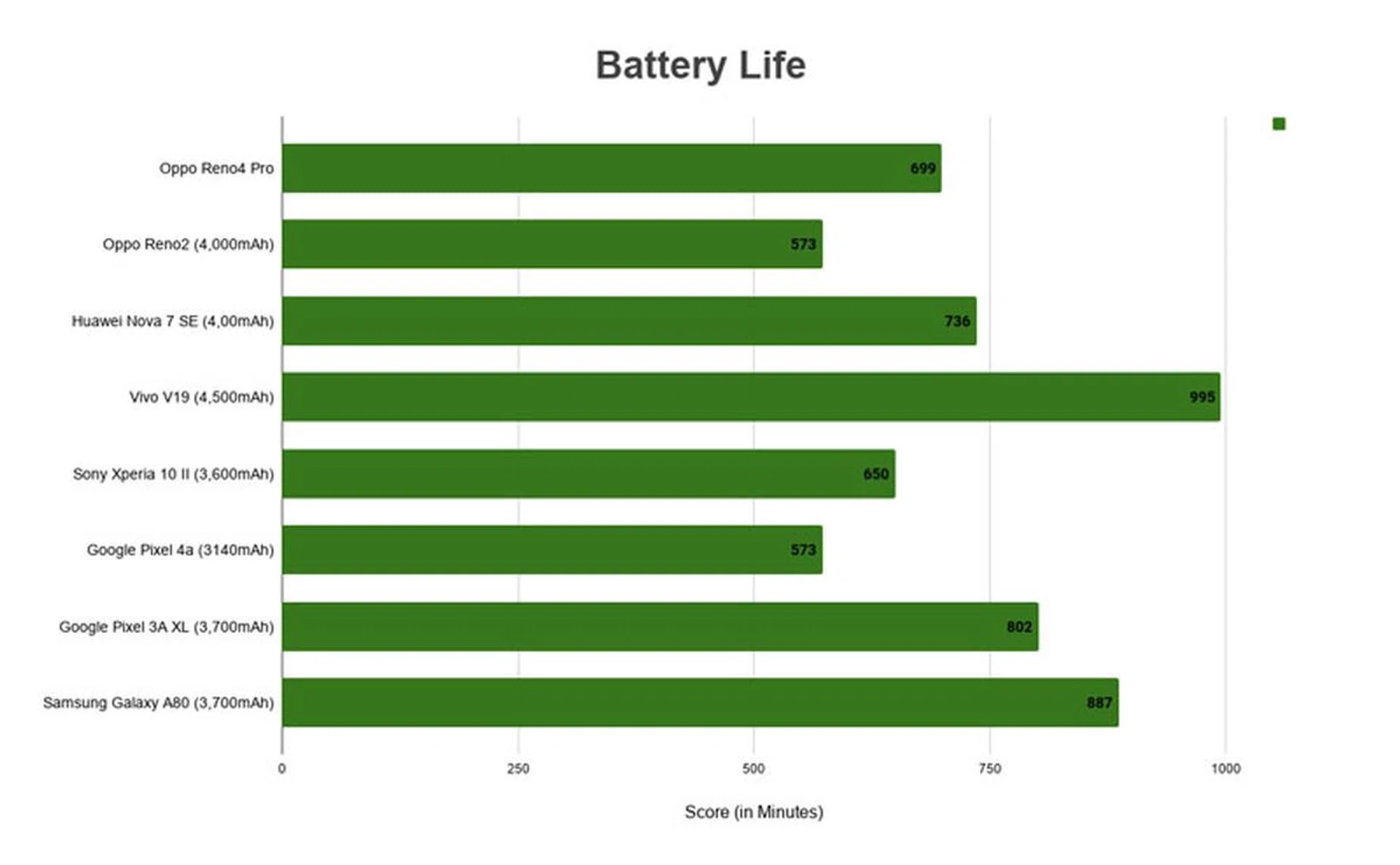
Our standard battery test for mobile phones has the following parameters:
- Looping a 720p video with screen brightness and volume at 100%
- Wi-Fi and Bluetooth connectivity turned on
- Constant data streaming through email and Twitter
The Reno4 Pro is packed with a 4000mAh battery - identical in capacity to the Reno2. In spite of that, the Reno4 Pro is able to last a total of 699 minutes in the battery test and gave me over two hours more uptime compared to the Reno2. Using it as a daily driver, the Reno4 Pro can comfortably last me throughout the day. Herein lies the benefits of using the Snapdragon 720G as it kept pace with most of the competing phones where performance is concerned, but power efficiency has improved appreciably over its predecessor. It's not a class leader, but it definitely ranks reasonably well.
As covered earlier, Oppo Reno4 Pro is equipped with the company's speediest charging technology yet with 65W SuperVOOC 2.0 and it clearly works as advertised. A full charge in just over half-an-hour? That's possible with the Oppo Reno4 Pro.
Conclusion
Oppo's Reno heritage is a confusing one but behind its past, the new Oppo Reno4 Pro can be characterised as a phone made for the social media era. While the quad-camera array is supposed to yield high-quality photos, they are more optimized to populate your social media channels with photos and videos that would look wow your followers and friends when they browse their feeds. Its snappy AI Colour Portrait photo and video mode further emphasise the phone’s alignment with the social media generation, along with other interesting effects such as the Night Flare Portrait Mode. The phone’s lightweight, nice build, its decent battery life, and a great screen that’s really responsive further pander to the needs of those who spend much time consuming or creating content on social media (and probably even targeted at the Instagram community).
Does it mean it's a great camera phone? Strangely no as we noticed notable grain and noise in several well-lit daylight shots. So while it's great for web-quality shots and sharing, it is not a good choice if you're looking for high-quality photos to process them for printing and post-processing work. It might also not fare well if you scrutinize the shots on a large screen TV.
Having said that, the recommended retail price (RRP) of the Oppo Reno4 Pro is S$899. A Snapdragon 720G powered phone asking for nearly a thousand dollars feels out of place, but let's round up what it has over its sub S$600 counterparts that also carry a similar processing system:-
- An excellent high brightness 6.5-inch FHD screen with 90Hz refresh rate and 180Hz touch sampling rate
- TÜV Rheinland Full Care Display Certification for those concerned about eye health and eye care.
- Fast and reliable under-display fingerprint sensor
- A good selfie camera with EIS support
- 256GB internal storage (double that of other devices) and with microSD expansion option
- 65W SuperVOOC 2.0 charging meaning it is literally the fastest phone in the market when it comes to juicing up the device (when paired with its power adapter)
- Slim and lightweight which makes it easy to handle and less streneous on your pocket
These above features are what differentiates the Oppo Reno4 Pro over the likes of Vivo V19 or a Google Pixel 4a. However, are these features really worth 50% more asking price? We might have been agreeable if the phone doubled up as a great all-round camera phone, but it didn't quite hold up in our testing.
However, it would seem that in this pandemic era, there is an increasing trend of phone manufacturers targeting the upper-mid-range phone market - a market that the Reno series is positioned at - and that brings increased competition in this market. Around the same time as the release of Oppo Reno4 Pro, there is the OnePlus Nord, which has similar near-high-end specs and a better processor (Snapdragon 765G, a fairly high-end, near flagship-class processor) - all at a lower price of just S$649. If users are more concerned about image quality, there is the Google Pixel 4a, which offers superior imaging capability (of course without the AI Colour fun) at almost half the price - at $499. If you’re deeply entrenched in the Apple ecosystem or live with family members using other Apple products, there’s always the highly capable (not counting its imaging capability) iPhone SE to consider (starting at just S$649 and tops out at S$889), which features a flagship processor either way. Should you be wondering how much more to get the bare minimum true flagship-class performance and handling, there’s always the OnePlus 8 that’s just hundred bucks more at S$998 and it’s a 5G-ready smartphone too.
While the Oppo Reno 4 Pro is a strong mid-range phone on its own, given the vast variety of competitors in this field, savvy consumers have plenty of options to choose from, and it would seem that Oppo Reno4 Pro’s high asking price could make it lose out to its competitors without its own niche and strong unique selling point to differentiate itself. Perhaps it’s a great asset to IG and TikTok creators who need a device out of the box to fulfil their immediate needs with a great looking screen, super-fast charging and pleasing images and videos that are ready to be published, but is that really enough when numerous third-party camera apps and shooters exist to complement any other phone device of choice? It’s a tough ask for S$899.
Our articles may contain affiliate links. If you buy through these links, we may earn a small commission.