
Oppo Find X2 Pro review: The price of smartphone beauty
Can the Oppo Find X2 Pro hold up against the current crop of equally tantalising flagships phones as of late? Let's find out.

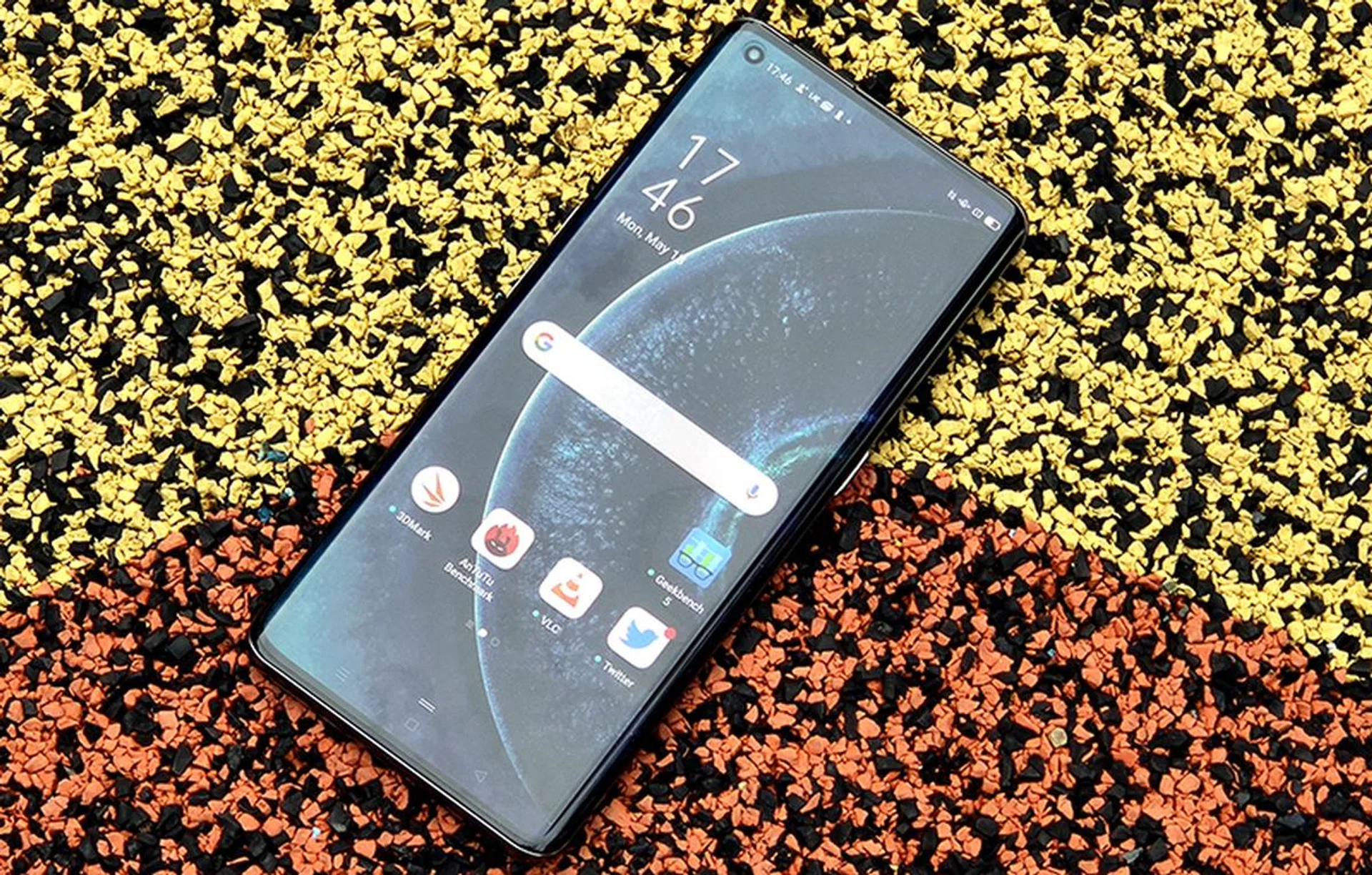
Oppo Find X2 Pro.
Opposing the high-end flagship tide
Most Android phone users for the last decade (would you believe it's just a little over ten years since the HTC Dream debuted, the first Android phone?) would tell you that if you wanted an Android phone that looks and feels like using an iPhone, you'd have to pick an Oppo. Since then, many Android phone makers, such as Samsung, ASUS, Huawei, and Moto, have gradually improved their Android-based user interfaces over time. What Oppo didn't have (while the others had in abundance) was a true flagship device that helped put these phone makers on the map. In a way, Oppo phones were constantly milling about in the mid-tier market with its frequent releases of their R series, despite its nice UI.
That held up until mid-2018 when Oppo decidedly launched the Find X. It had the top-end Snapdragon processor of its time, coupled with a bunch of features that Oppo was known for, like the brand's interesting approach to smartphone photography and its penchant for appealing designs, inside and out. It was a stunner, even if it was a little tough on the wallet.
Fast forward to 2020 and Oppo has finally updated its flagship-tier offering once more. Dubbed as the Oppo Find X2 Pro (and also known as the Oppo Find X2 Pro 5G in some markets), Oppo has decided that it's high time to pack all the latest smartphone innovations on the market behind their branding. It has a 5G-ready Qualcomm Snapdragon 865 chipset, alongside many of Oppo's claim to fame - nice display, good audio, interesting cameras, and it's SuperVOOC fast-charging technology, alongside its attention to interface and exterior design.
Can the Oppo Find X2 Pro hold up against the current crop of equally tantalising flagships devices as of late? Let's find out.
A flagship phone with a flagship price
One of the mind-boggling aspects is that the Oppo Find X2 Pro has a sticker price of S$1,699. Reactions amongst our readers went wild when we first shared its street price on social media. While flagship smartphones this year have generally been pricey, the Find X2 Pro debuts at a good S$200 above Huawei's P40 Pro and Google Pixel 4 XL. To be fair, the Oppo Find X2 Pro packs a massive UFS 3.0 compliant 512GB internal storage and 12GB RAM - truly flagship class. For comparison, here are the local official retail prices for other top-tier phones with somewhat similar specs:-
Model | RAM | Internal Storage | Price |
Oppo Find X2 Pro | 12GB | 512GB | S$1,699 |
Apple iPhone 11 Pro Max | 6GB | 512GB | S$2,349 |
Samsung Galaxy S20 Ultra | 12GB | 128GB | S$1,898 |
Samsung Galaxy Note 10+ | 12GB | 512GB | S$1,898 |
Samsung Galaxy Note 10+ | 12GB | 256GB | S$1,598 |
12GB | 512GB | S$1,598 | |
OnePlus8 Pro | 12GB | 256GB | S$1,398 |
So clearly, Oppo's price point is backed by the hardware it packs and is in fact reasonably priced against other competitors. 512GB of storage isn't cheap. Having said that, we're definitely on the lookout to see what else makes this phone justify its asking price.
Design
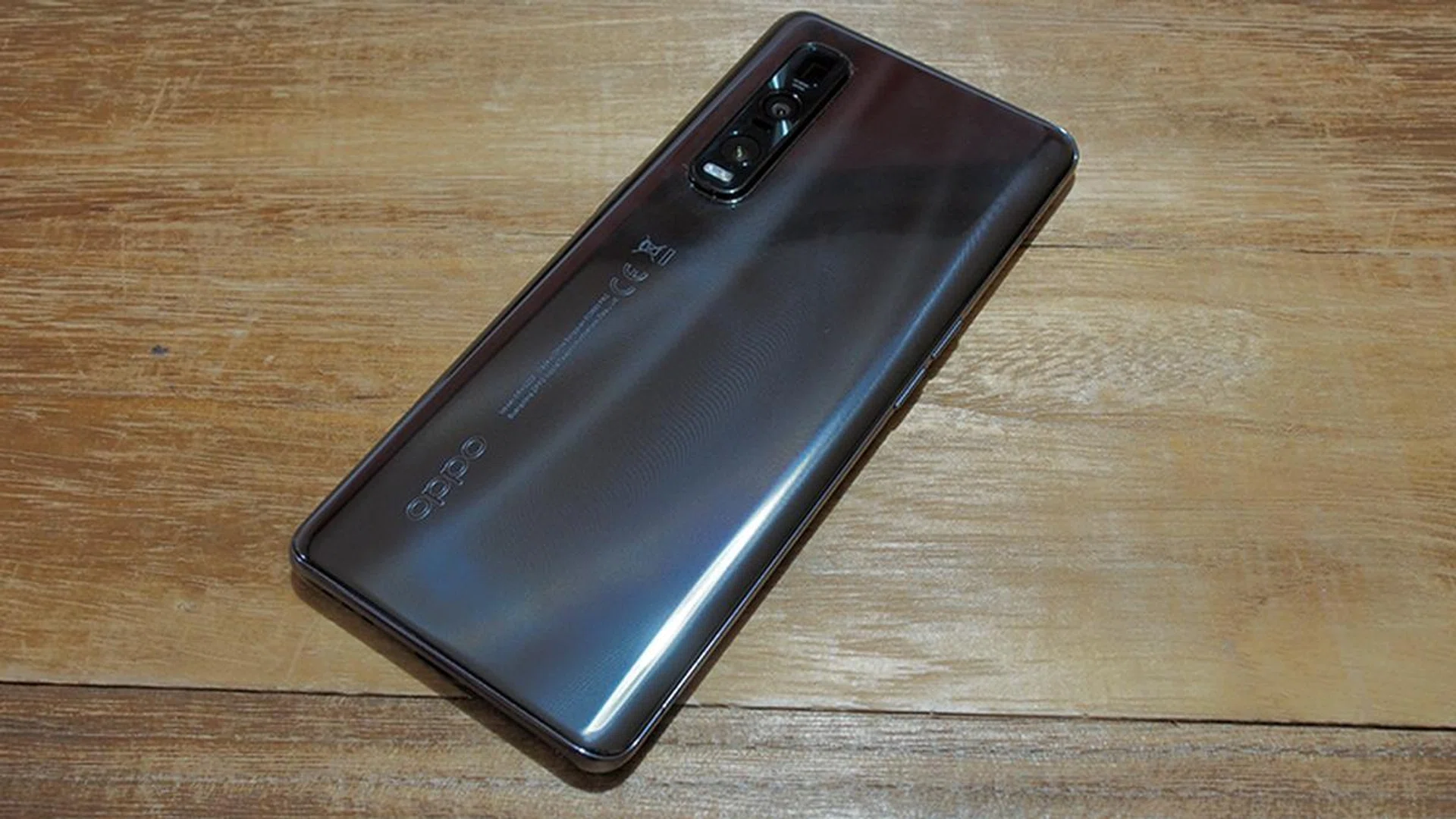
If anyone wants to know what a true flagship smartphone feels like in hand, the Oppo Find X2 Pro should be the point of reference for phones made this year. It's seemingly pedestrian at first glance, in part due to its raised camera housing and its glossy finish on our black Ceramic colourway. What makes it really stand out is the phone's build quality and handling.
Where the phone's different materials meet, Oppo's choice and execution of smooth, curved edges leave a lasting impression of a truly complete look and feel. The backplate lays flush against its metal frame, and in turn, melds nicely with the front panel with barely any bumps.
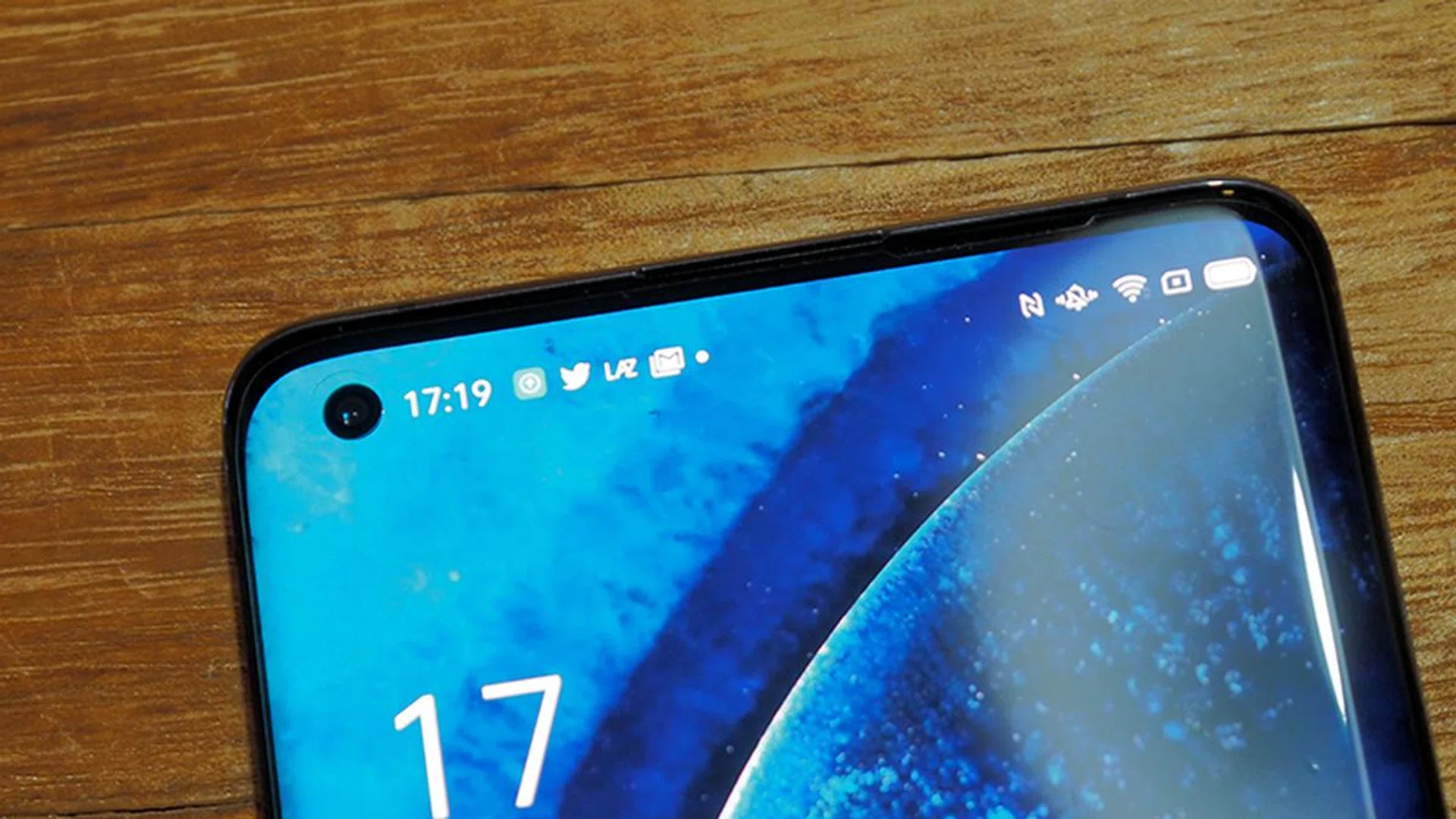
The notch-hole camera in the top-left corner, while the power/lock button rests on the opposite of the volume rockers. We know the phone isn't symmetrical, but it feels that way given how well-distributed the phone's weight is, and how naturally these buttons come to rest in your fingers.
Typically, phone makers treat the necessary antenna bands like an outcast, something that breaks the look and feel of the phone they want to make. The Find X2 Pro embraces its antenna bands and works it into the metal frame's design, giving it a small part to play in completing its look.
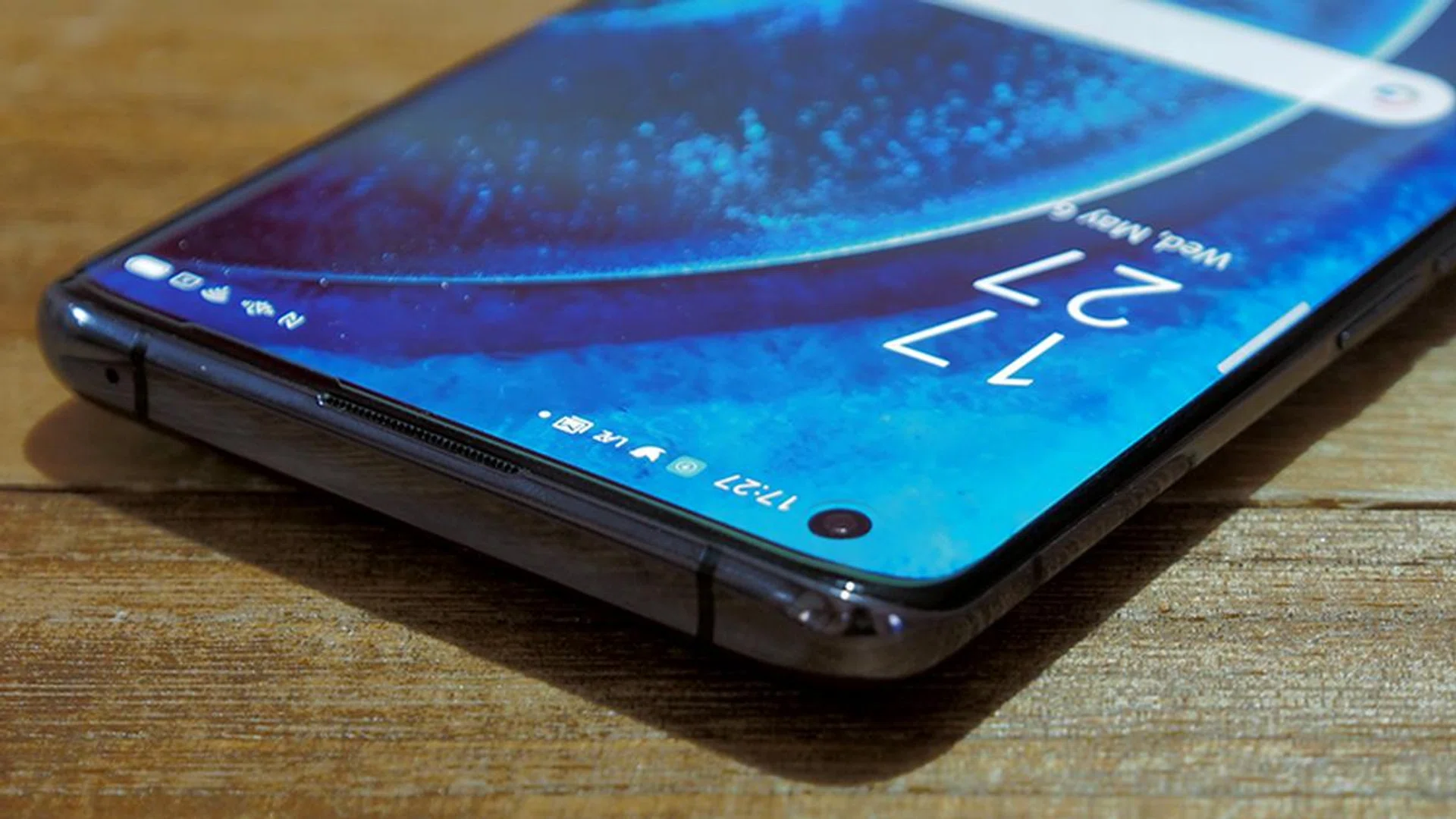
Another design aesthetic we liked about the Find X2 Pro is how it balances its bezels. The screen that curves along the edges doesn't quite touch the metal frame of the phone, leaving a thin, classy black bezel distributed evenly on the sides that are just outside of your vision when the phone faces you.
It doesn't just look pretty, the Find X2 Pro has IP68 water- and dust-resistance, which is something its predecessor didn't have. You can't be a flagship phone these days without some resistance to the basic elements, and Oppo at least rectified that on this device.
It's clear that in its design, Oppo put great effort into bringing out the typically unsexy bits in such meaningful ways that make other brands' flagships seem cobbled together by comparison.
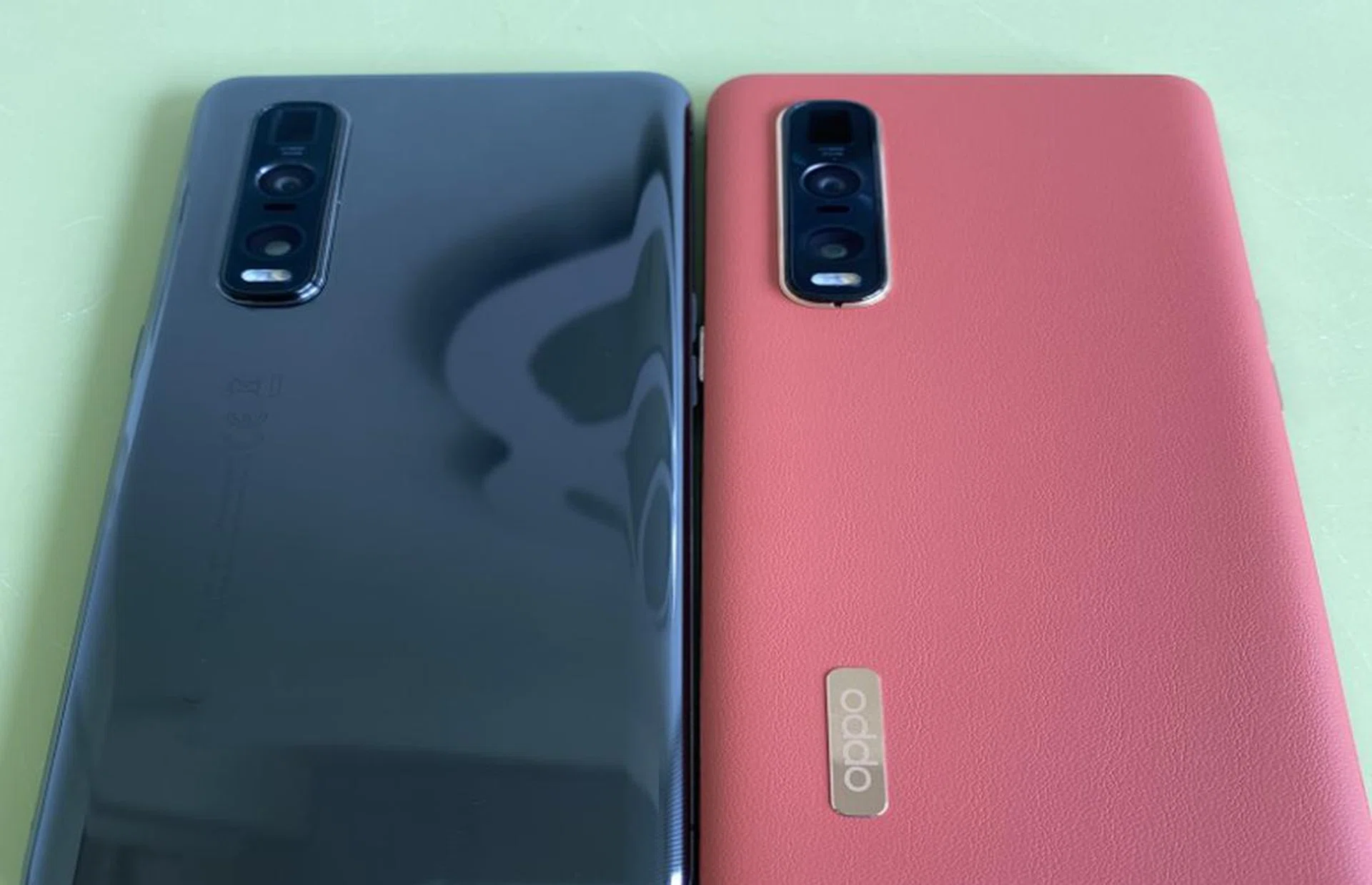
Side-by-side comparison of the Ceramic and Vegan Leather colours of the Oppo Find X2 Pro, taken from our First Looks opportunity.
Our review unit was the Ceramic variant of the phone (grey-black), but it's worth noting that Oppo has a vegan leather alternative (orange-pink) . They don't just look different, but they also cater to people who prefer a matte surface on the rear. It also helps the phone owner stand out from the crowd, given that flagship smartphones these days gravitate towards glossier, glass rears with no alternatives. Picking the vegan leather or ceramic version is a matter of personal taste.
Display & Audio
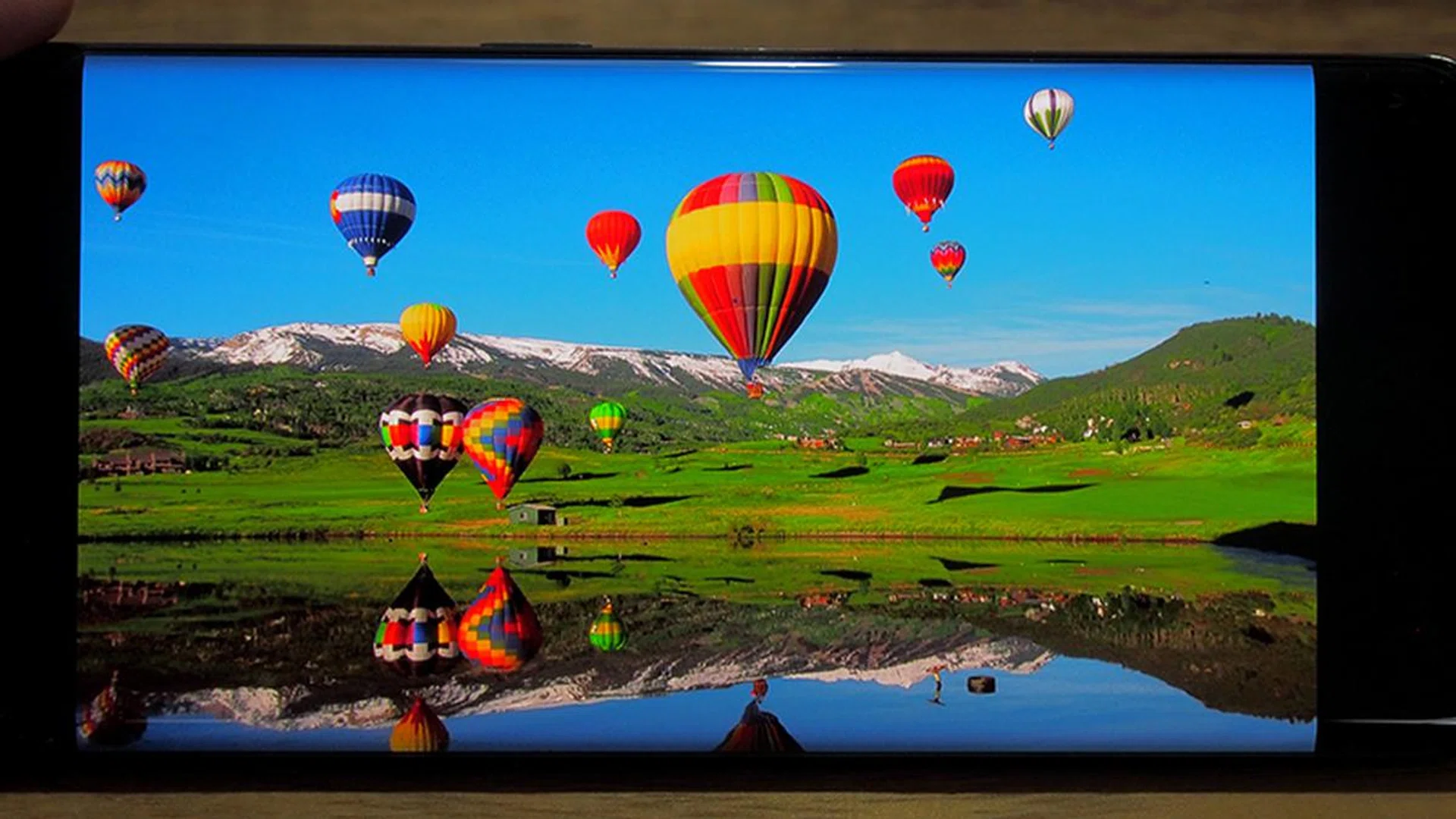
The Oppo Find X2 Pro packs a 6.7-inch, Quad HD+ (3,168 x 1,440 pixels resolution) AMOLED display. This works out to a pixel density of 513 PPI (pixels per inch), making it a treat for most eyes. The display also offers a 120Hz refresh rate and its touch sampling rate of 240Hz.
The display's features, from the resolution to its polling rate, and the displaying far more colours your eye can differentiate - 1.07 billion colours to be exact - and its AI-powered eye protection capability are what Oppo calls the Ultra Vision Screen. From our test display image, the Find X2 Pro's panel at default settings takes on a warmer tinge. It holds true to its colour reproduction claim given that it was able to produce the subtle differences even in extreme colours (specifically, the black balloon has the sun shining down on its nylon sheen). This is a high-quality flagship display, without a doubt. The display's warmer colour temperature can be attributed to the Find X2 Pro's AI Adaptive Eye Protection System (enabled by default), where one of its features include lower blue light levels that automatically adjust based on your ambient lighting and surroundings.
If that's not enough for you, the Oppo Find X2 Pro now supports HDR playback on popular streaming services, such as Netflix, Amazon Prime Video, and YouTube. Not all phones can claim this and it's always a win when a phone display makes the most out of the content you have access to.
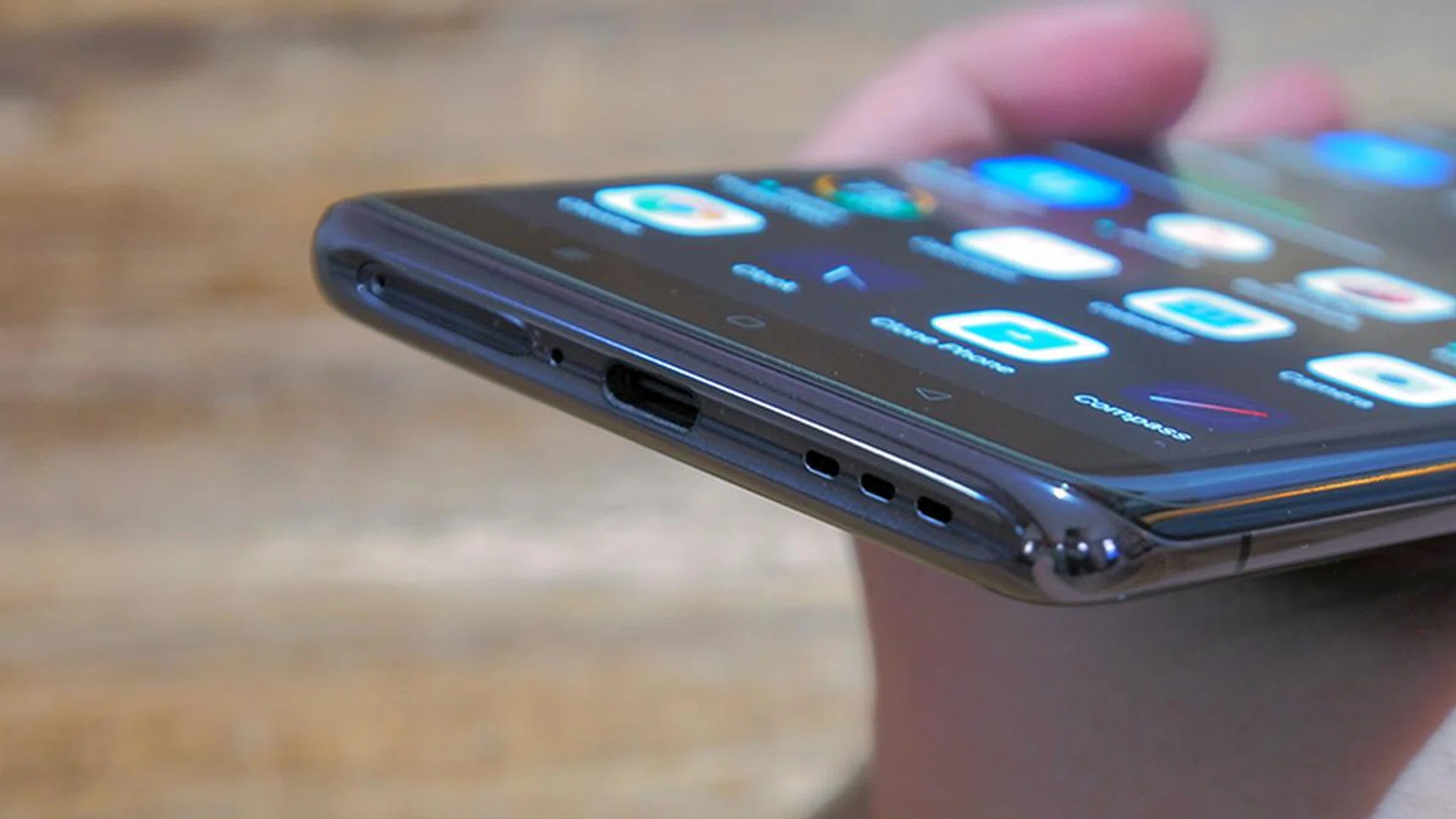
In the audio department, you can find the Find X2 Pro outfitted with two full-range speakers - one is located at the top-centre where you'd normally place your ears during a call, and the other is at the bottom-right, next to the USB Type-C port.
The speaker's positioning gives the Find X2 Pro its stereo-like sound (when you're watching videos in landscape mode). It's clear, sharp, with minimal muddling or distortion. On the one hand, we're not surprised by the audio quality given that Oppo was known for audiophile products before it went into making smartphones. On the other hand, it felt odd that Oppo chose not to shout about the Find X2 Pro's audio quality, but instead spent every effort talking about other aspects of the phone.
If speaker audio quality is what you value in your flagship smartphone, the Find X2 Pro will be your number one choice in 2020 until a better one comes along - a difficult feat in itself. Your videos would have never looked and sounded so good on a smartphone and we can attest to that in our audio trial when playing back a 4K resolution movie trailer as recorded with another phone; pay close attention to the audio quality and sound level:-
User Interface
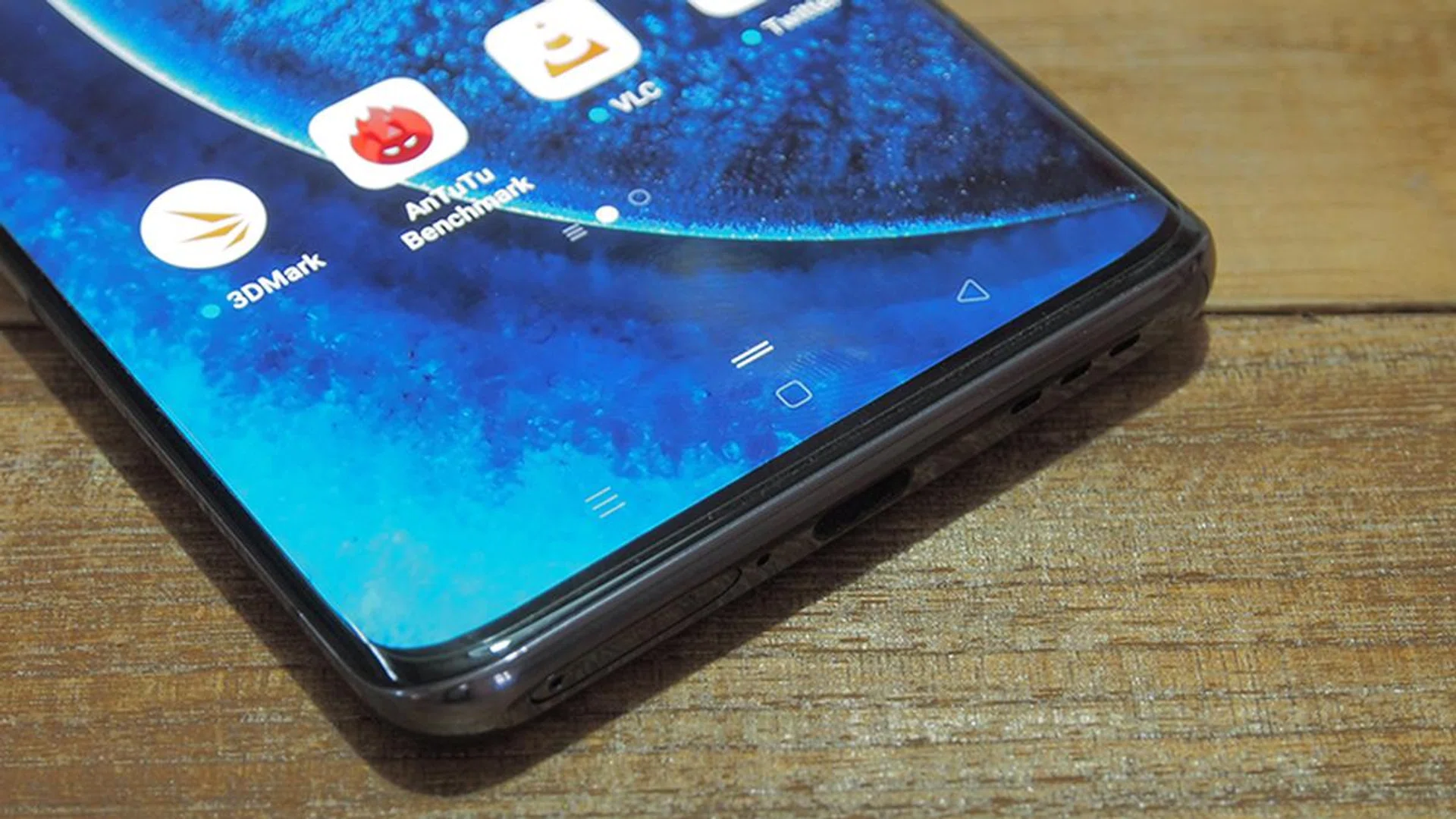
Usually, we'd reserve this section to talk about any operating system tweaks by the manufacturer that affects the user experience. Instead, Oppo's usage of a display with a touch sampling rate of 240Hz makes it such that the hardware plays a role, too.
The Oppo Find X2 Pro's 240Hz touch sampling rate offers buttery-smooth browsing and responsive gaming experiences. Not many phones have a 240Hz touch sampling rate. Besides this Oppo device, there's the Samsung with the Galaxy S20 series phones and the ASUS ROG Phone II with touch sampling rates this high, making the Oppo a flagship in both look and feel.
Touch sampling rate (in Hertz) refers to the display's frequency when it comes to tracking your finger that's providing input, where a higher number means that the device polls your finger's position more frequently within a given second. It's not the same thing as a phone's refresh rate, which is about how frequently the display updates its output in a given second.
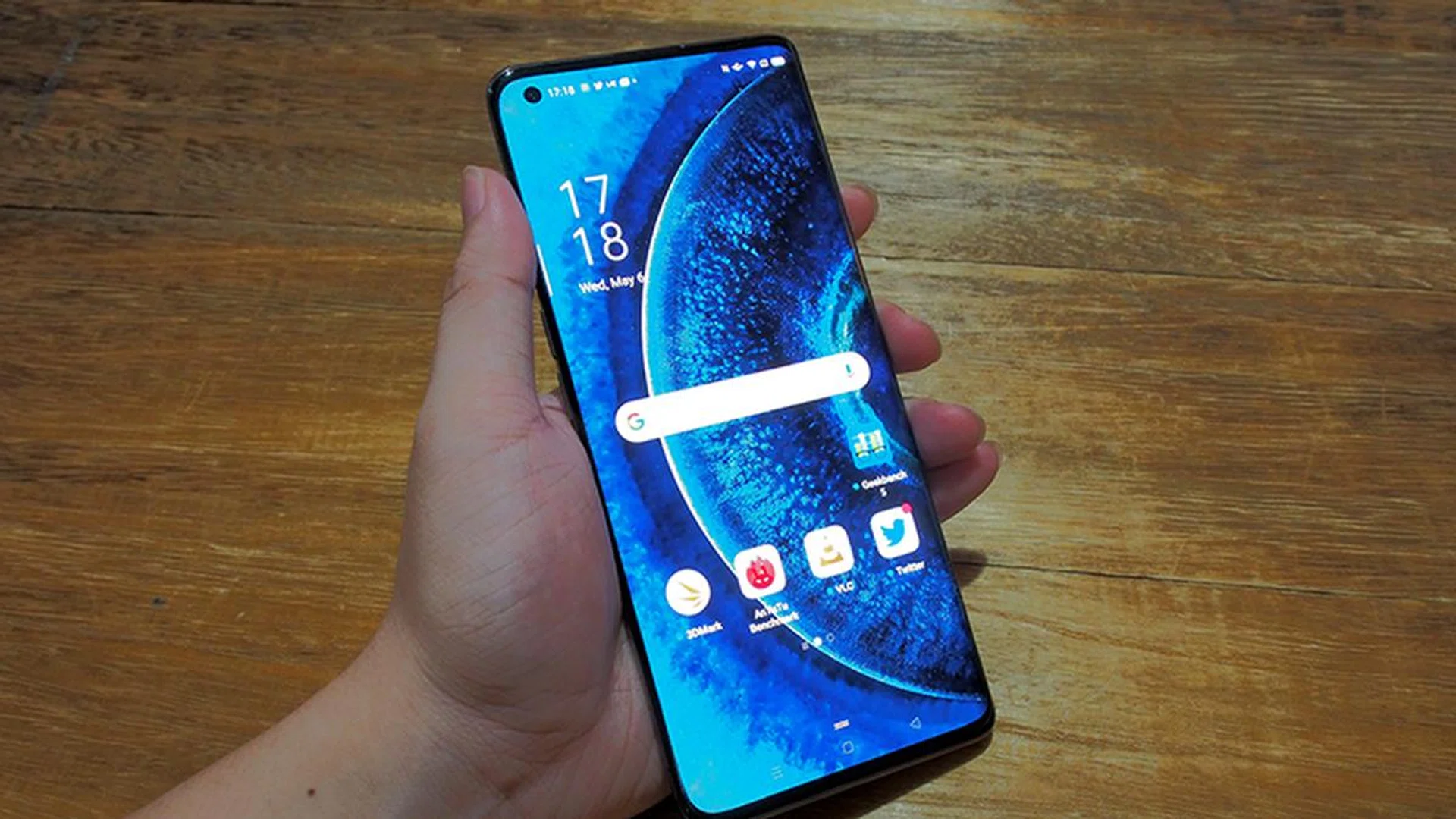
There's still debate on whether the reduced input lag matters in user experience given that the difference in response comes down to mere milliseconds. That said, navigating around menus and apps on the Oppo Find X2 Pro is nothing short of an excellent experience.
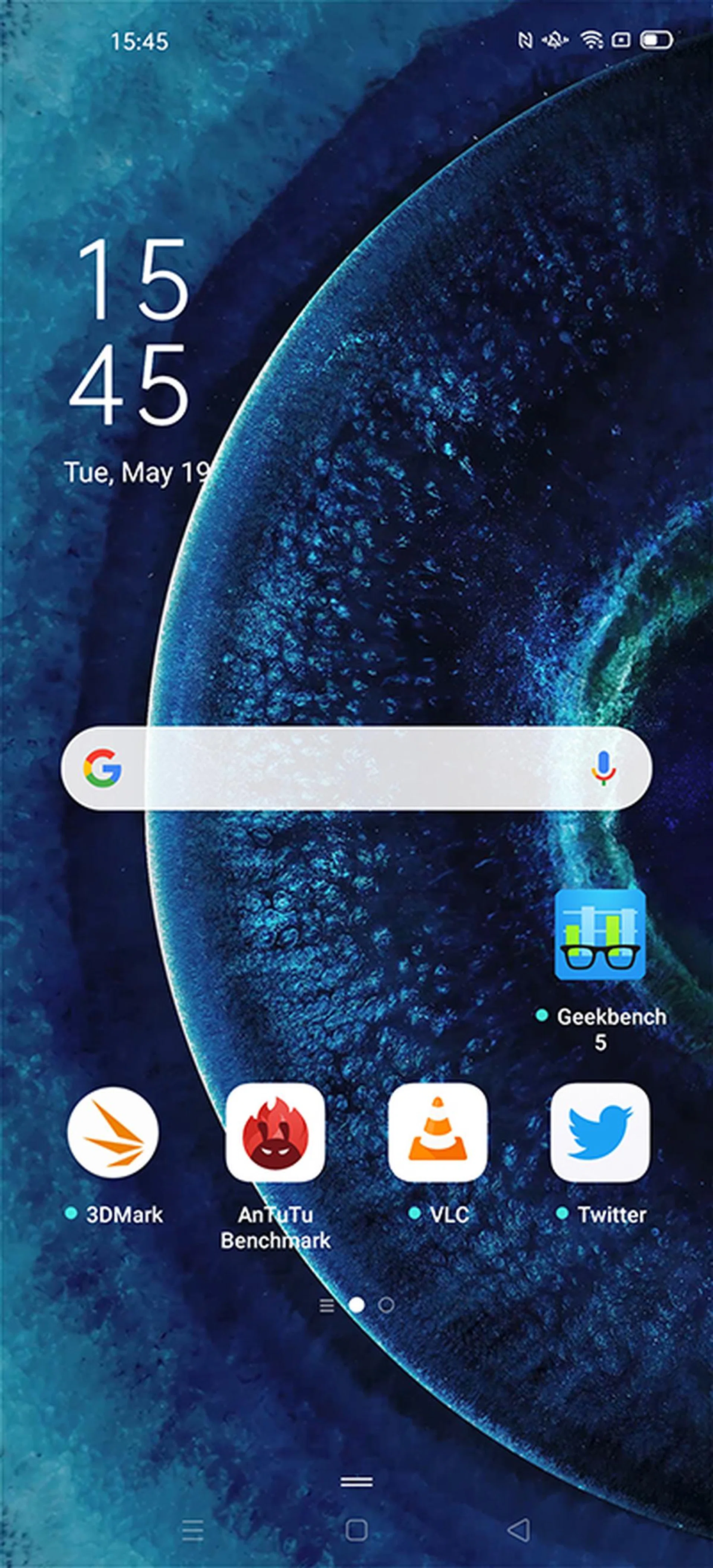
Contributing further to the user feel is none other than the user interface itself. Oppo has its proprietary ColorOS 7.1 operating system which is based on Android 10. Their default app icons don't feature any outlines, making it easy on the eyes. Opening, swiping, and closing menus in your apps follow your finger's tracking in a natural order. There isn't too much to say about ColorOS beyond how pleasant it feels, and how far along they've come.
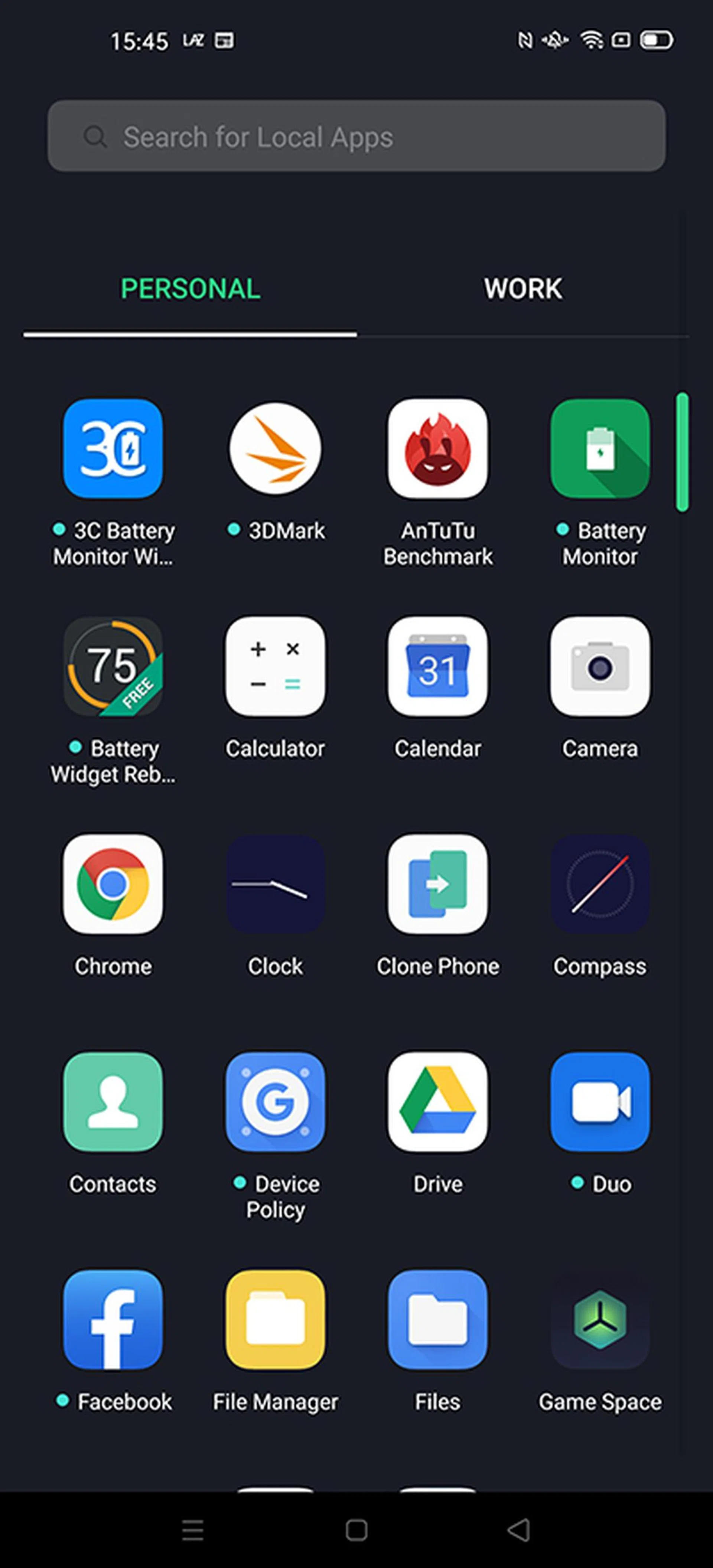
Folks who love Dark Mode will be pleased to learn that ColorOS 7.1 now comes with a dark theme. It's under the Display & Brightness option in the Settings app, and you can schedule Dark Mode for certain times of the day. This is particularly useful if you want a well-lit display without the bright panel light-bombing your eyes as you peruse your phone at night. The Find X2 Pro supports Dark Mode on some apps, but that's still in beta.
You can read more about ColorOS 7.1 here.
Where user experience is concerned, the lack of a microSD card slot and lack of 3.5mm audio jack is where it loses points on. The card slot only accepts up to two nano-SIM cards. But with a massive 512GB internal storage, do you need a microSD card slot? Perhaps not.
Camera performance
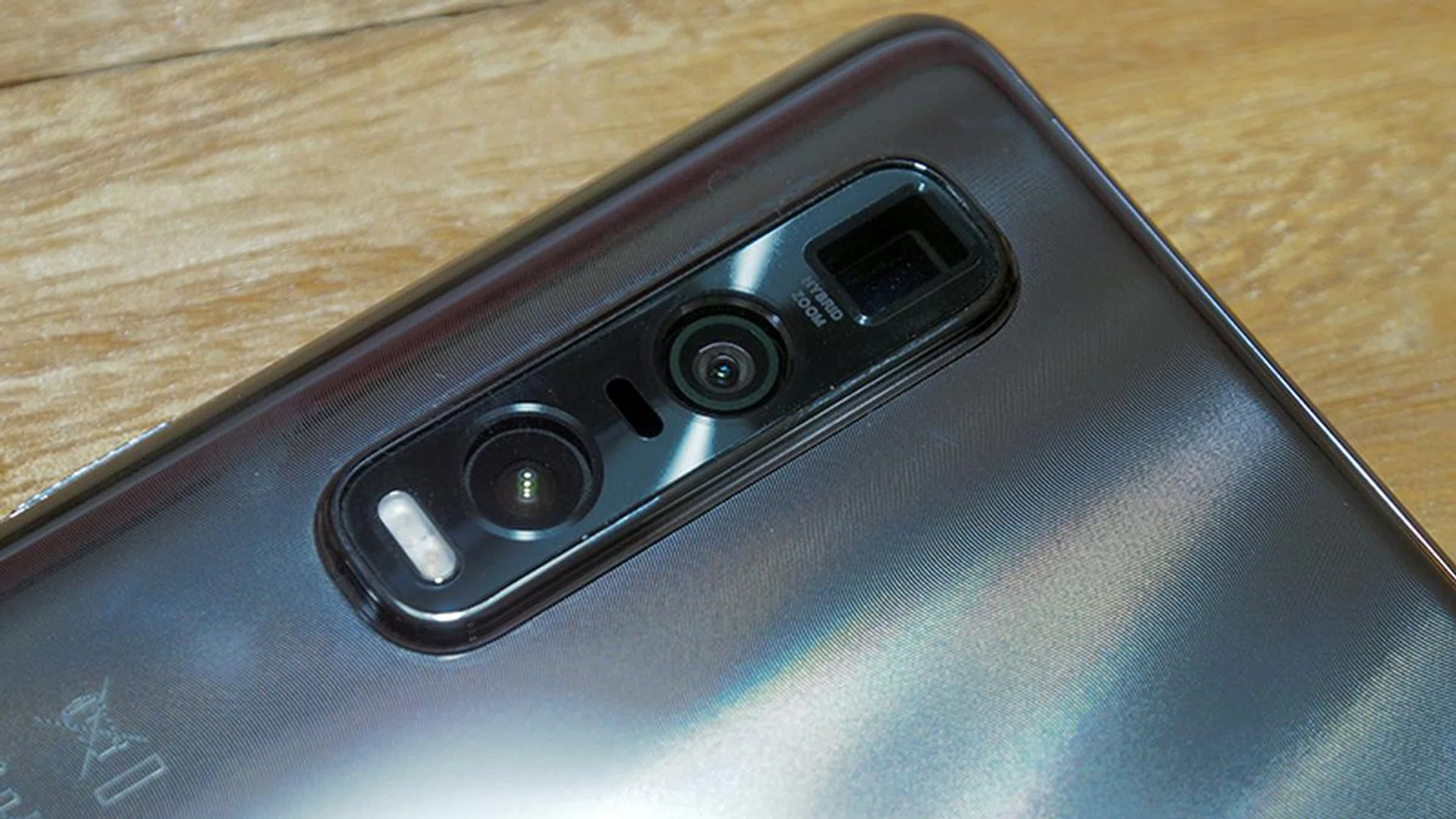
There's quite a bit going on in the Oppo Find X2 Pro's camera system, so we'll break it down based on what each camera promises to deliver, and how it fares as a shooter. In summary, the Oppo Find X2 Pro's Ultra Vision Camera system is a triple rear camera setup offering:
- 48-megapixel, wide-angle lens supported by a Sony IMX689 sensor with 1/1.4-inch sensor size, f/1.7 aperture, All Pixel Omni-Directional PDAF (phase-detection auto-focus), Optical Image Stabilisation (OIS)
- 48-megapixel, ultra-wide-angle lens supported by a Sony IMX586 sensor, f/2.2 aperture, 120-degree field-of-view, with Ultra Macro mode
- 13-megapixel Periscope Telephoto Camera, supported by an unspecified sensor with f/3.0 aperture. It offers 10x hybrid zoom and 60x digital zoom, helped along with OIS
The Sony IMX689 sensor is responsible for Oppo's All Pixel Omni-Directional PDAF, which refers to the sensor's ability to use any pixel as the focusing pixel. This is unlike conventional sensors that dedicate certain pixels for focusing duty, also better known as Phase Detection Autofocus (PDAF). The image below illustrates the differences.
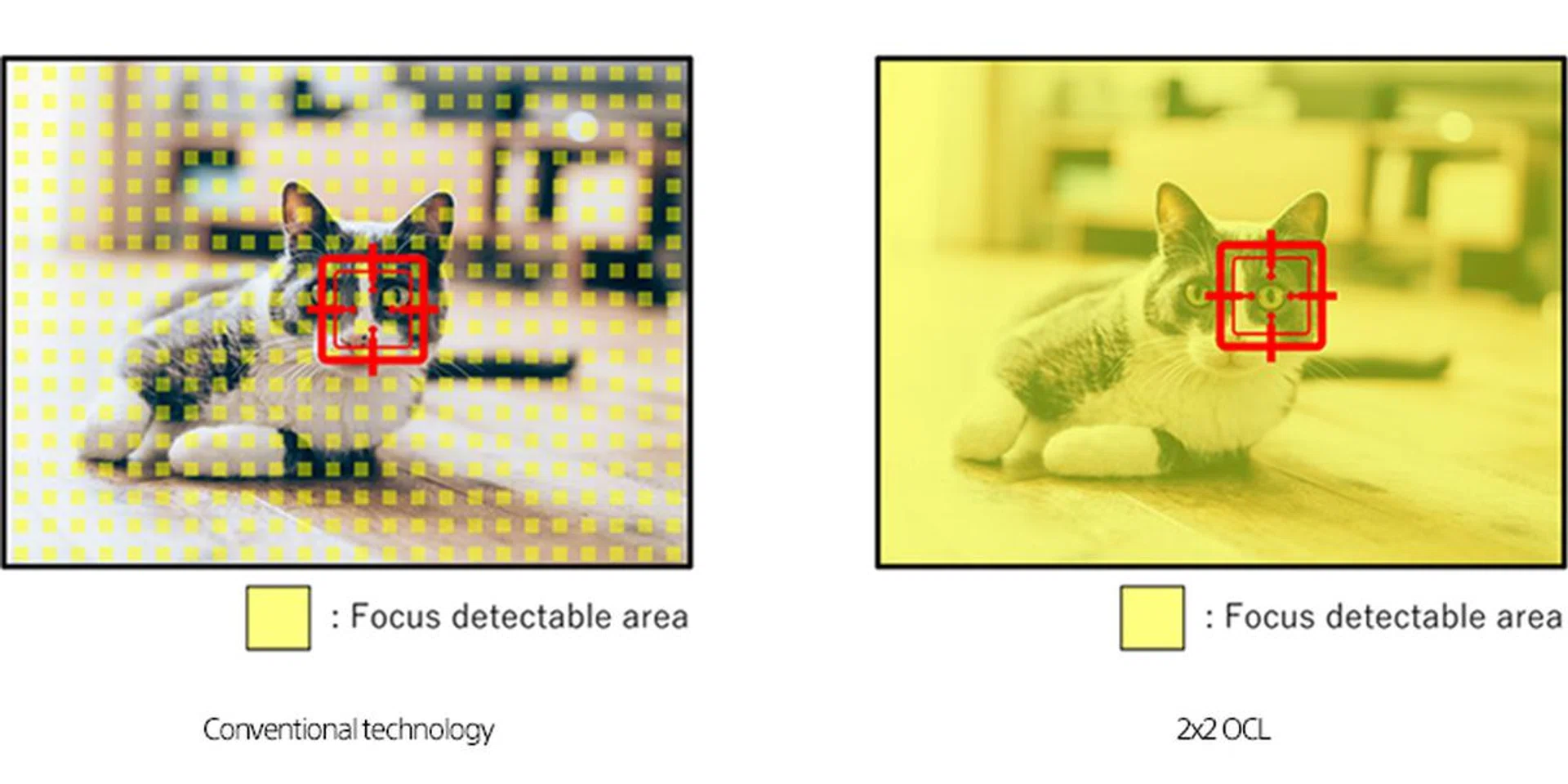
The left example features conventiona pixels dedicated for autofocusing, while the right example is one where all pixels can be used for autofocusing.
*This sensor is also found on 2019 phone models such as the Honor View 20, OnePlus 7 Pro, and the ASUS ROG Phone II, just to name a few.
Just like most multi-camera setups, the phone's programming decides which lenses to use under the circumstances it deems appropriate. By default, the Oppo Find X2 Pro tends to use the bottommost shooter (the one with Sony IMX689 sensor), and the Periscope Telephoto Camera (topmost shooter) only kicks in at 10x zoom or higher. Whenever it physically detects an object up close, it switches to the middle lens and enters Ultra Macro mode. Our lab test shot was taken from the main camera using the IMX689 sensor.

The lab chart shot, which has been corrected for perspective, hence the missing side - apologies for the angle.

Actual image size, cropped from the above photo (100%).
Based on the lab test (taken before local Circuit Breaker measures kicked in), the Oppo Find X2 Pro's main camera does an excellent job at capturing all the details. You can spot all the little things, even the faint white mould growing on the blackboard in the background. The sharpening it uses feels a little artificial, but it's mostly welcomed. It has no issues reproducing colours, even in places where it's not focused on (top-right, the image with a stack of colourful fabrics next to the darker-skinned lady). It's quite accurate at reproducing shadows too, given the differences between the shadows under each pinned photo and the shadows portrayed in some of the sample grids on the test board. Highlights are something it needs to be better at, but that's just judging from a test chart.
To further bring out the Find X2 Pro's camera performance, we took the device for a spin (while abiding by local CB measures) to get a sense of its performance in the real world. The photos were taken some time in the late afternoon with an overcast sky. It's not optimal photography time, but it makes for a suitable shooting challenge since smartphone photography is mostly about working with what you have. In a nutshell, it's a good, almost excellent camera system that shoots fast and is fuss-free.

A provision shop's outdoor display of groceries is an ideal, natural scenario for testing the colour and detail reproduction of any smartphone's photo-taking capabilities.

We experimented with how the Find X2 Pro's camera handle greatly contrasting lighting situations - the inside of the pavillion is low-light, while its surroundings are lit by the evening sun.

While the ATM and the lottery shop's signboard are red, the distinction here comes from the ATM's backlit plastic (the signboard above isn't lit). The man in the picture is a passer-by, which also indicates how quickly the Find X2 Pro can process and autofocus on subjects moving into the frame.

Detailing loses out a little, partly also because this is a very challenging shot for the camera with various lighting levels to balance. This gives us a good estimate of how well the Find X2 Pro can handle complex scenes.

A big part of colour reproduction is about the camera's ability to replicate colours that are "true-to-life", so we couldn't pass up these rows of flower wreaths to test the Find X2 Pro's flower power.

Extra photos for reference.

Extra photos for reference.

Testing of the optical zoom capabilities - this shot was done within 10x zoom (no electronic zoom).

Part 1 of trying out the zoom features - no zoom enabled.

Part 2 of trying out the zoom features - 10x zoom enabled. Possible to shoot handheld by relying on the built-in OIS.
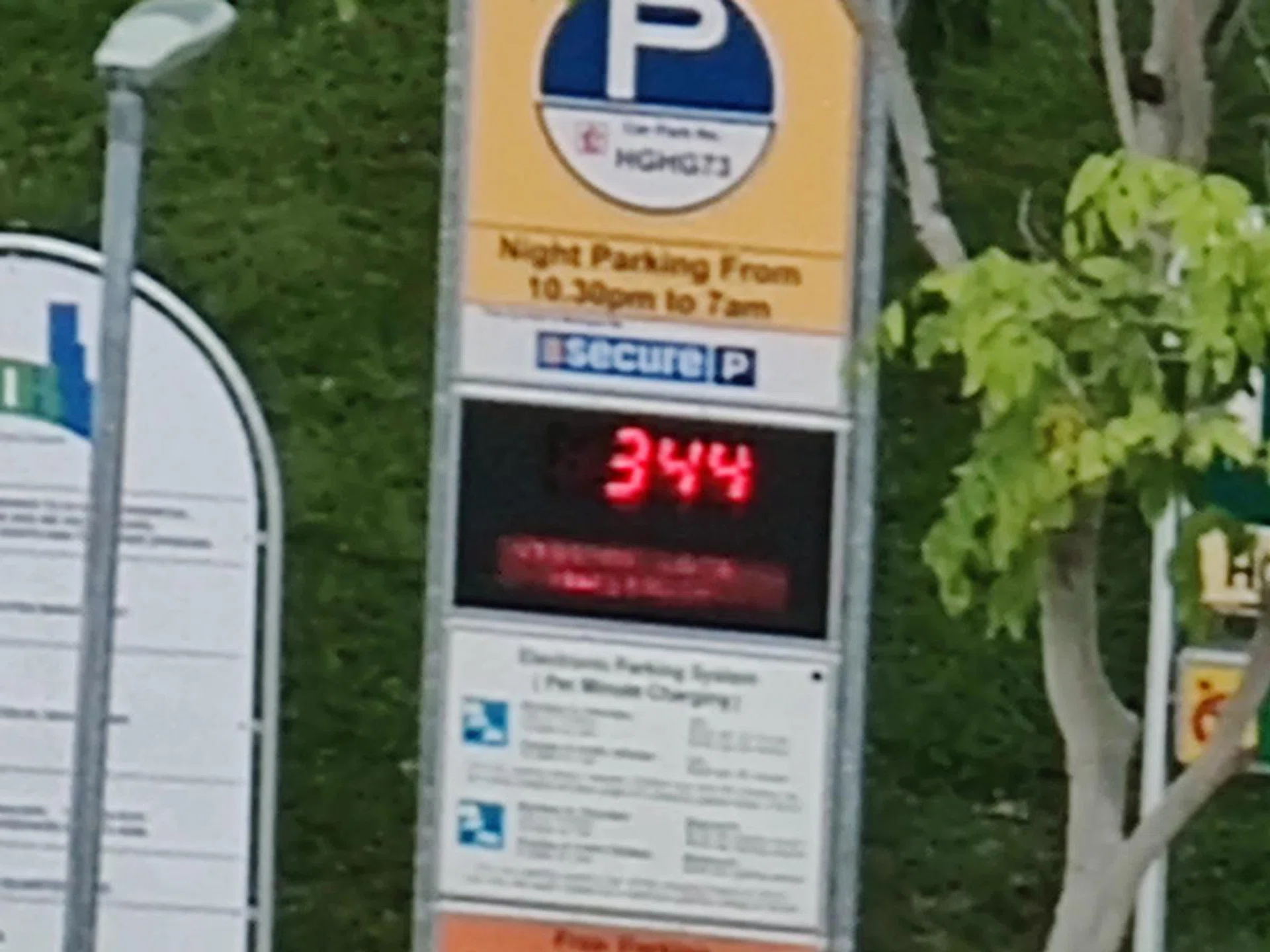
Part 3 of trying out the zoom features - 60x zoom enabled. Decent OIS software but hardly enough for a crisp, clear shot at its maximum zoom. A tripod is a must if you shoot at 60x zoom.
Benchmarks and Performance
What makes the Oppo Find X2 Pro a flagship device is the inclusion of Qualcomm’s Snapdragon 865 SoC. The Qualcomm processor offers not only one of the highest possible speeds and processing power of the current generation of mobile processors; it also comes with 5G support (both NSA and SA networks).
For a refresher on what the Snapdragon 865 processing unit houses, you can refer to this in-depth article.
That makes the Find X2 Pro another 5G-ready device, joining the ranks of other 5G-capable flagship tier devices such as the Huawei P40 series, the Samsung Galaxy S20 Ultra, and the OnePlus 8 series. While we’ve reported on several upcoming 5G-ready smartphones, the truth is there aren’t many that can be purchased in Singapore as of writing. Also, 5G networks for phone users aren’t available in Singapore yet, so it’s not a point of comparison until they’re up and running.
For this benchmark comparison, we took a combination of recent flagships and Oppo’s other recent upper mid-tier phone, the Reno2.
Jetstream
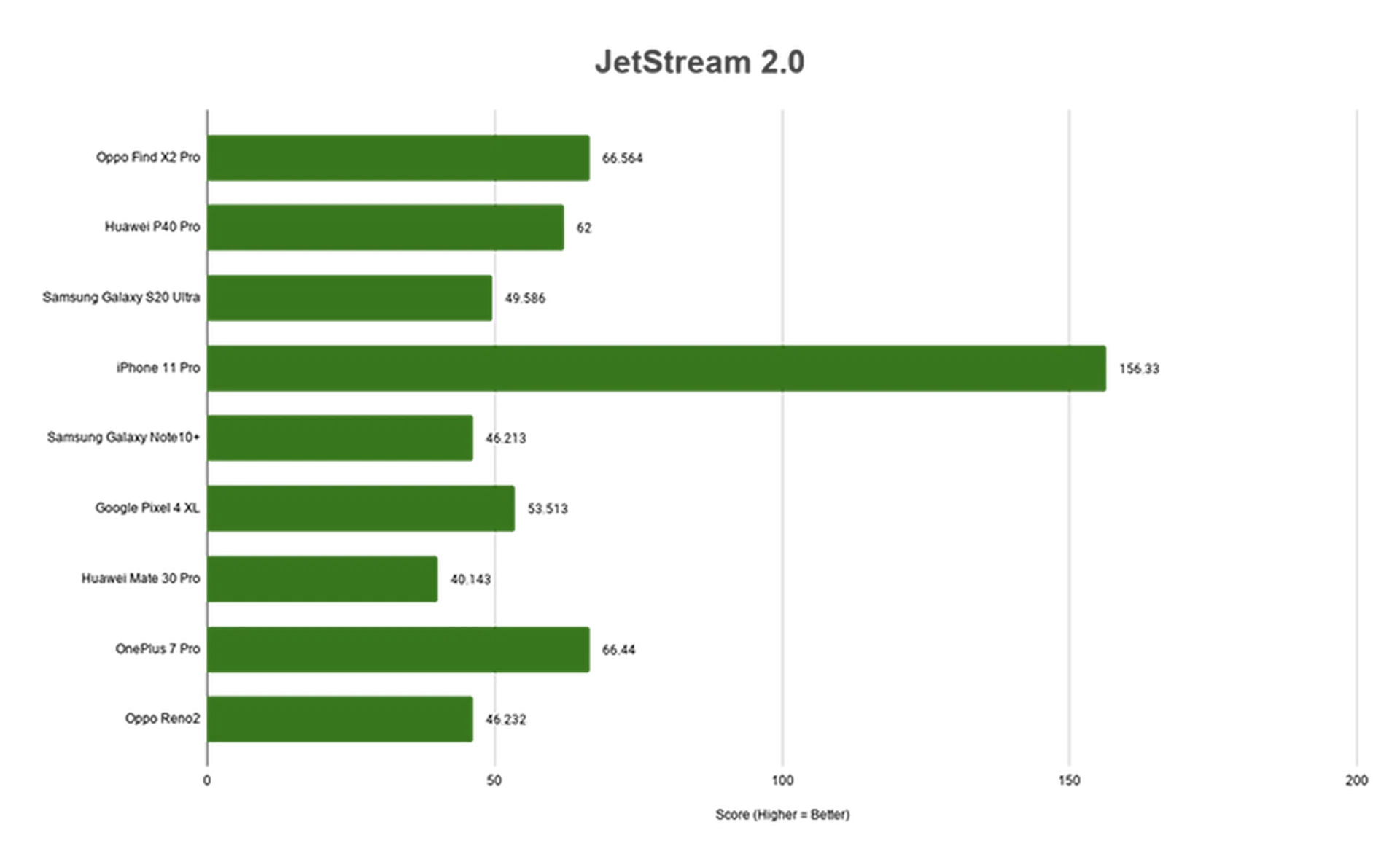
To benchmark the phone’s web browsing performance, we used the JetStream 2 benchmark test on the Google Chrome web browser app. The test measures a phone’s capabilities in handling a variety of advanced workloads and executing codes. JetStream 2 is an updated version of older benchmarks, such as the first JetStream and SunSpider.
While some phones come with custom-made web browsers, We always run this benchmark test on Chrome as it gives the best indication across devices, processors, and OS platforms - whether iOS or Android. Also, we would adjust the phone’s display settings to ensure that the screen doesn't turn off mid-test since this would relegate the browser's thread(s) to background processing. Where necessary, we would run multiple test instances to get a more accurate reading of scores.
If we compare it to only Android or Android-based devices, the Find X2 Pro leads the pack. It’s smooth and fast when loading webpages, so its performance matches up to its benchmark as well.
AnTuTu
Note #1: as of 9 March 2020, all AnTuTu benchmarks were removed from the Google Play Store. This move likely arose from Google’s attempts to relieve the Play Store of apps that violate their policies. AnTuTu is working with Google to restore their app listing. For this review, we used the APK file that was available on AnTuTu’s website.
Note #2: The Oppo Find X2 Pro review unit prompted us to use its “Racing Mode” while benchmarking on AnTuTu, which allows the device to commit more-than-normal levels of system resources to the testing process. We’ve disabled Racing Mode for this review.
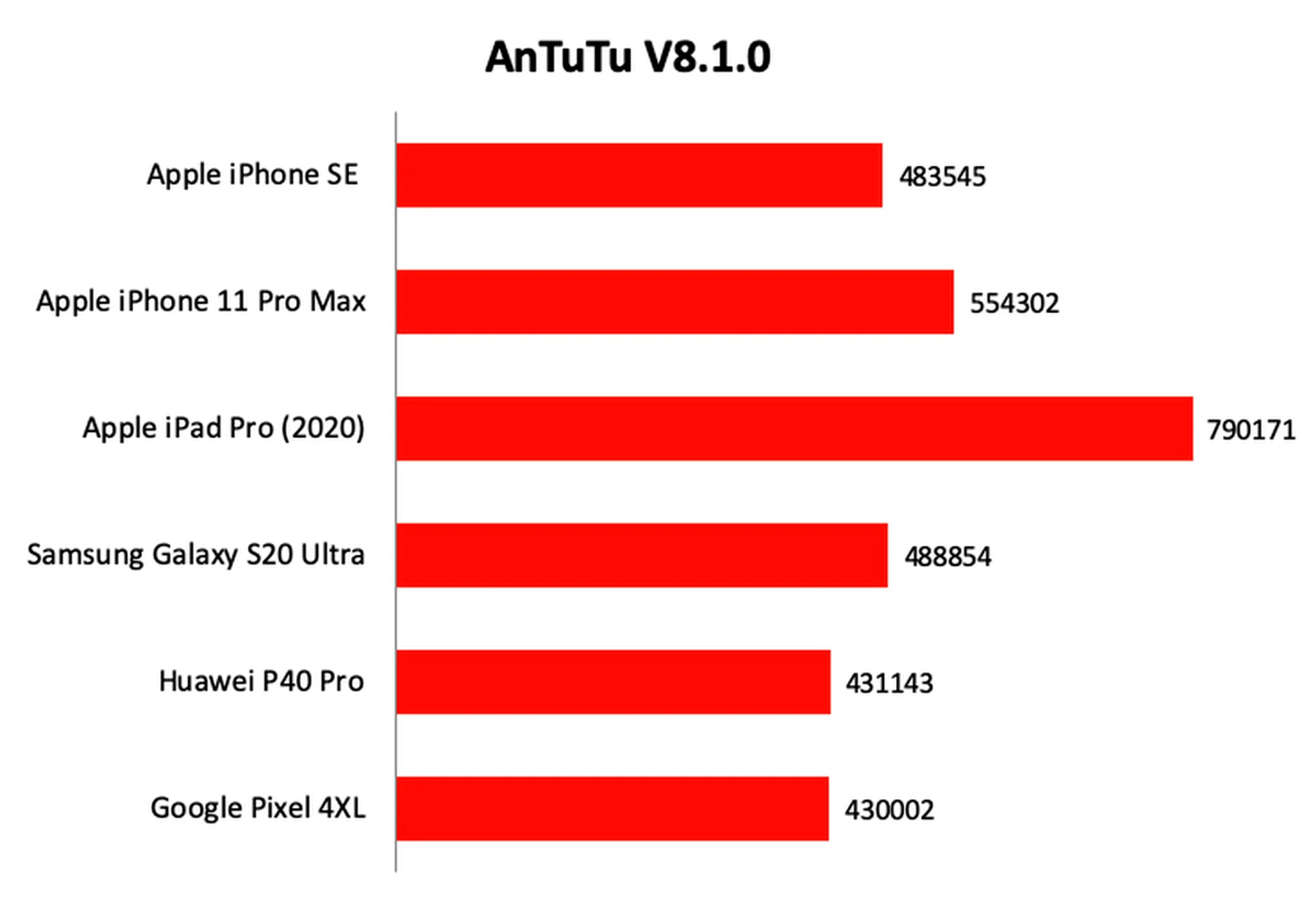
AnTuTu is an all-in-one benchmark that tests CPU, GPU, memory, and storage. The CPU benchmark evaluates both integer and floating-point performance, and the GPU tests assess 2D and 3D performance, the memory test measures available memory bandwidth and latency, and the storage tests gauge the read and write speeds of a device's flash memory.
Again, the Oppo flagship leads the pack in the benchmarks, and this mirrored our experience using the phone across games, messaging apps, social media networks, and other tools. As our first Snapdragon 865 processor based phone review, the numbers are looking good - so far.
Geekbench 5
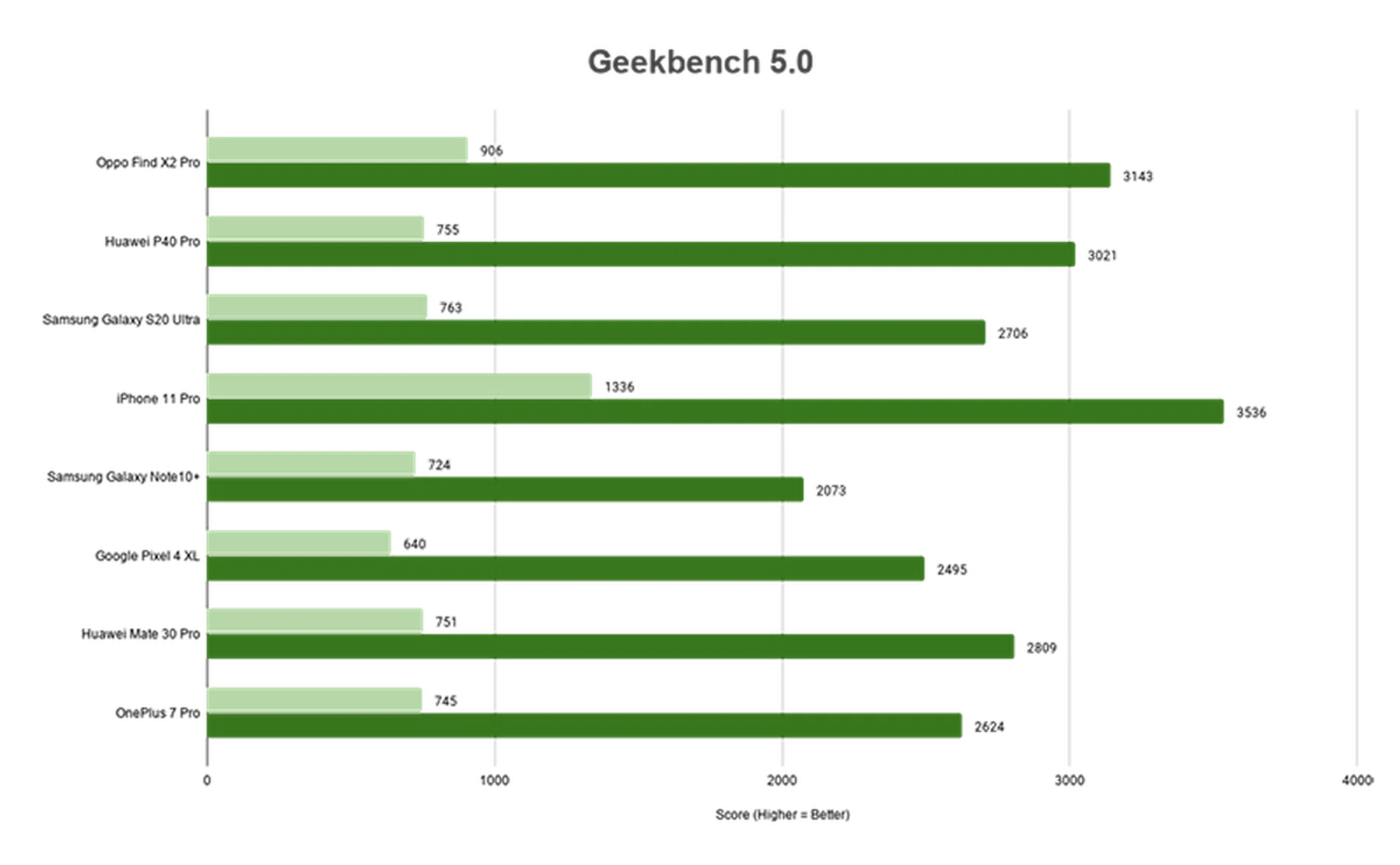
Geekbench CPU is a cross-platform processor benchmark that tests both single-core and multi-core performance with workloads that simulate real-world usage. Geekbench 5 scores are calibrated against a baseline score of 1000, which is the score of an Intel Core i3-8100.
Note: the older Oppo Reno2 was tested on an earlier version of Geekbench, where scores are not comparable with the newer Geekbench benchmark. Hence, we did not include it in this comparison.
Among non-iOS smartphones, the Find X2 Pro beats all the others at both single-core and multi-core performance. On paper, it will be faster than any other no matter if your phone is idling and running due processes in the background, or if you’re running a processing-heavy app.
3DMark Sling Shot Extreme
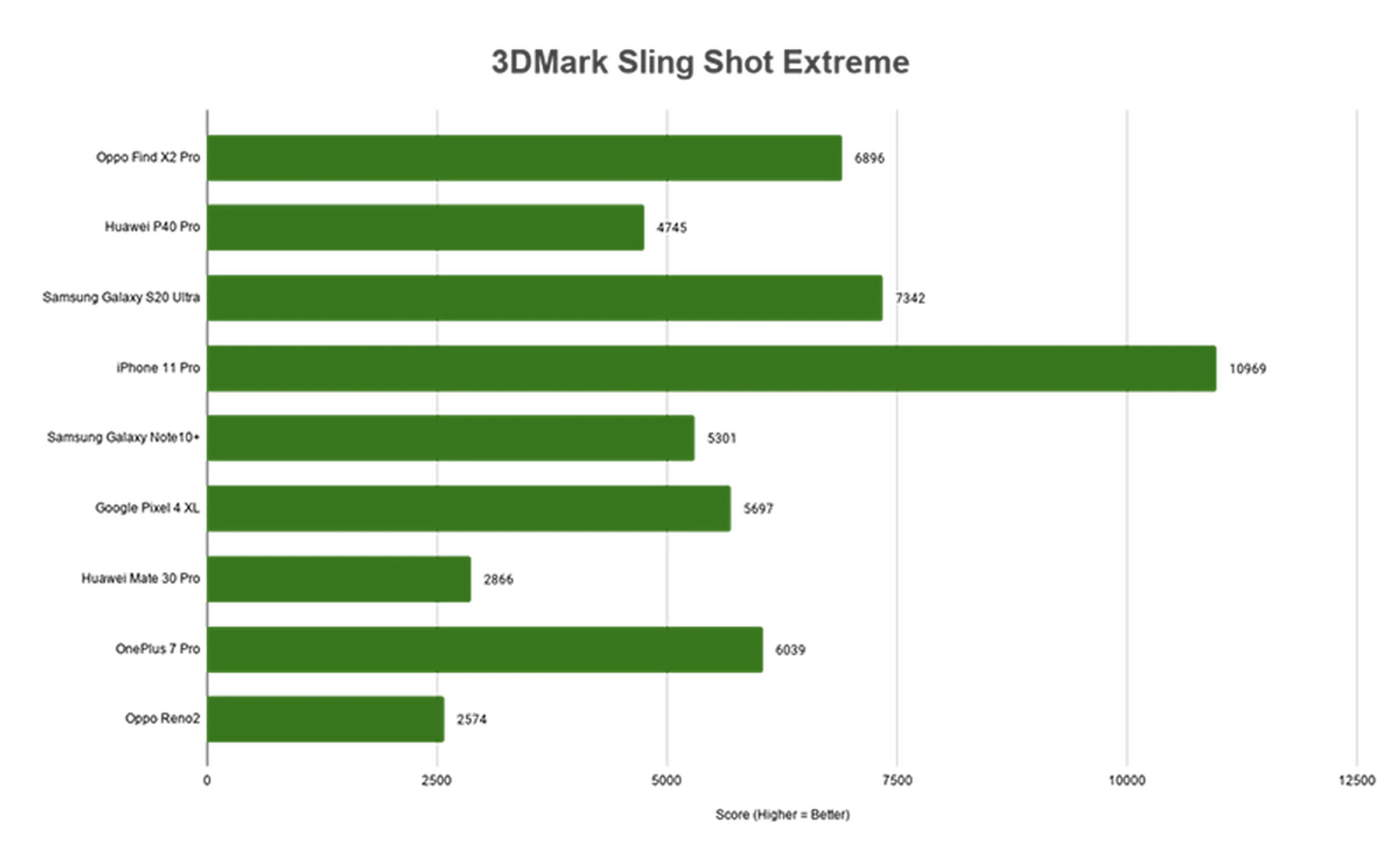
3DMark Sling Shot is an advanced 3D graphics benchmark that tests the full range of OpenGL ES 3.1 and ES 3.0 API features including multiple render targets, instanced rendering, uniform buffers and transform feedback. The test also includes impressive volumetric lighting and post-processing effects. The test’s Unlimited mode ignores screen resolutions.
The Find X2 Pro is no longer the leader of the pack at this point, but its performance on the other benchmarks have already help cemented its position as a flagship device.
We also tested the Find X2 Pro with some game titles that can be played at 120Hz refresh rate (like Injustice 2) just to push the phone hard. It held up well, with bearable loading times and smooth gameplay. We’re happy for the Find X2 Pro’s real-world performance matching up to its benchmarks.
Battery life
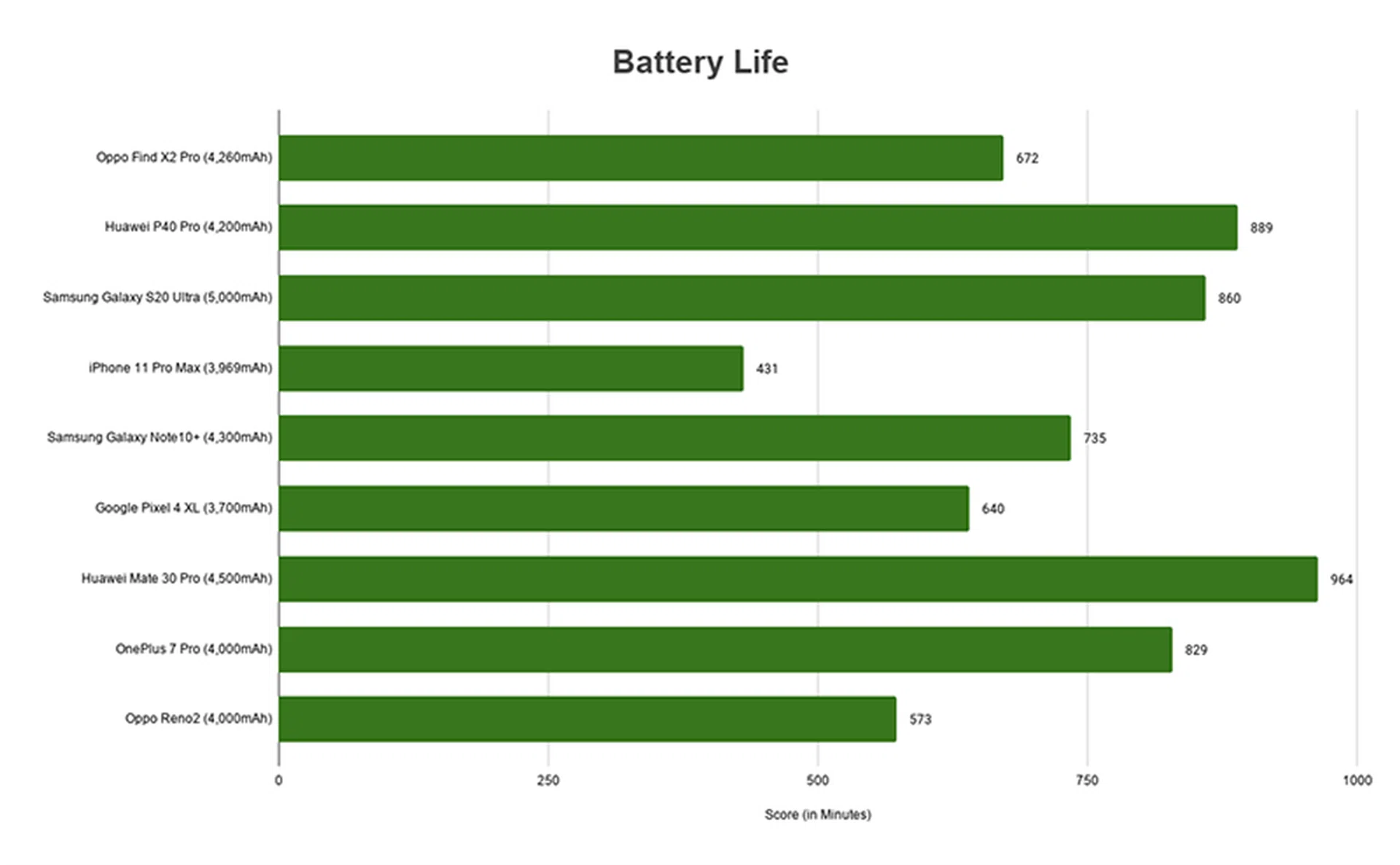
Our standard battery test for mobile phones has the following parameters:
- Looping a 720p video with screen brightness and volume at 100%
- Wi-Fi and Bluetooth connectivity turned on
- Constant data streaming through email
You’ll find the Find X2 Pro with a total battery capacity of 4,260mAh, and support for SuperVOOC 2.0 Flash Charge, Oppo’s proprietary fast-charging technology. The phone itself supports up to 65W charging power, and the charging adapter that comes with the phone is rated at 5V/2A (10W), with a maximum output of 10V/6.5A (65W). The charging adapter is inherently indispensable to the fast-charging abilities of the device.
With fast-charging, the Find X2 Pro’s battery goes from 0% to 100% in an hour or less, consistently. Without fast-charging, it takes approximately 2.5 hours for a full charge. Comparatively, it fared well enough in our battery testing to be placed in the middle of the flagship pack.
Conclusion
If you consider the Oppo Find X2 Pro on its own, it certainly delivers in everything it promised. It’s a beautiful 2020 flagship 5G smartphone with decent camera performance, an envious display, great speaker audio quality, high-end processing power, and reasonably good battery life with crazy-fast charging. It fits very nicely alongside some of the other 5G-ready flagship offerings out there, like the Samsung Galaxy S20 Ultra (it’s a bit of a low-blow to the Huawei P40 Pro if we want to bring up how the Oppo Find X2 Pro still has Google services attached to it).
The phone is not without its flaws. There's the lack of a microSD card slot for expandable storage, although the 512GB internal storage makes up for it. There's no wireless charging capability and the missing 3.5mm audio jack are some points of consideration depending on your existing lifestyle.
If we really wanted to pick on the phone, it would actually be its price tag. However, once you compare other phones with equivalent hardware specs and 'Pro' level options, the pricing actually doesn't seem as ridiculous. As covered on the first page, the Find X2 Pro is actually quite reasonably priced for its class and the phone comes with its own merits to make the price easier to swallow.
Perhaps a good middle ground would be to have the non-Pro option of the Find X2 officially in Singapore, giving us most of the Find X2 experience without the higher-end pricing.
That said, if you’re looking outside of your Apple-Samsung-Huawei trifecta during this upgrade cycle, the Oppo Find X2 Pro is the next phone you should be looking out for.