
ASUS P8Z77-V Deluxe - An Intel Z77 Mobo Preview
Despite news of the delayed volume shipments of successor CPUs to the current Sandy Bridge processors, we press ahead with our sneak peek of a board featuring the upcoming Intel Z77 Express chipset - the ASUS P8Z77-V Deluxe. With or without the processors, the show must go on!

22nm or 32nm, It is Your Choice
ASUS P8Z77-V Deluxe and all other Intel Z77 chipset based boards are designed to work with either the current Sandy Bridge processors fabricated from the 32nm process technology or the upcoming Ivy Bridge processors using the 22nm fabrication process. So even without an Ivy Bridge CPU, we would be able to insert a Sandy Bridge processor and put it through its paces with our slew of benchmarking tools. However, most of the upgraders will ultimately want to pair the newest CPU with the newest chipset, we'll save performance results when Ivy Bridge processors are made available.
Back to the ASUS P8Z77-V Deluxe model on our hands, the board reminds us of the ASUS P8Z68-V PRO because of its similar board layout as well as its familiar color scheme of different hues of blue set against a black PCB.
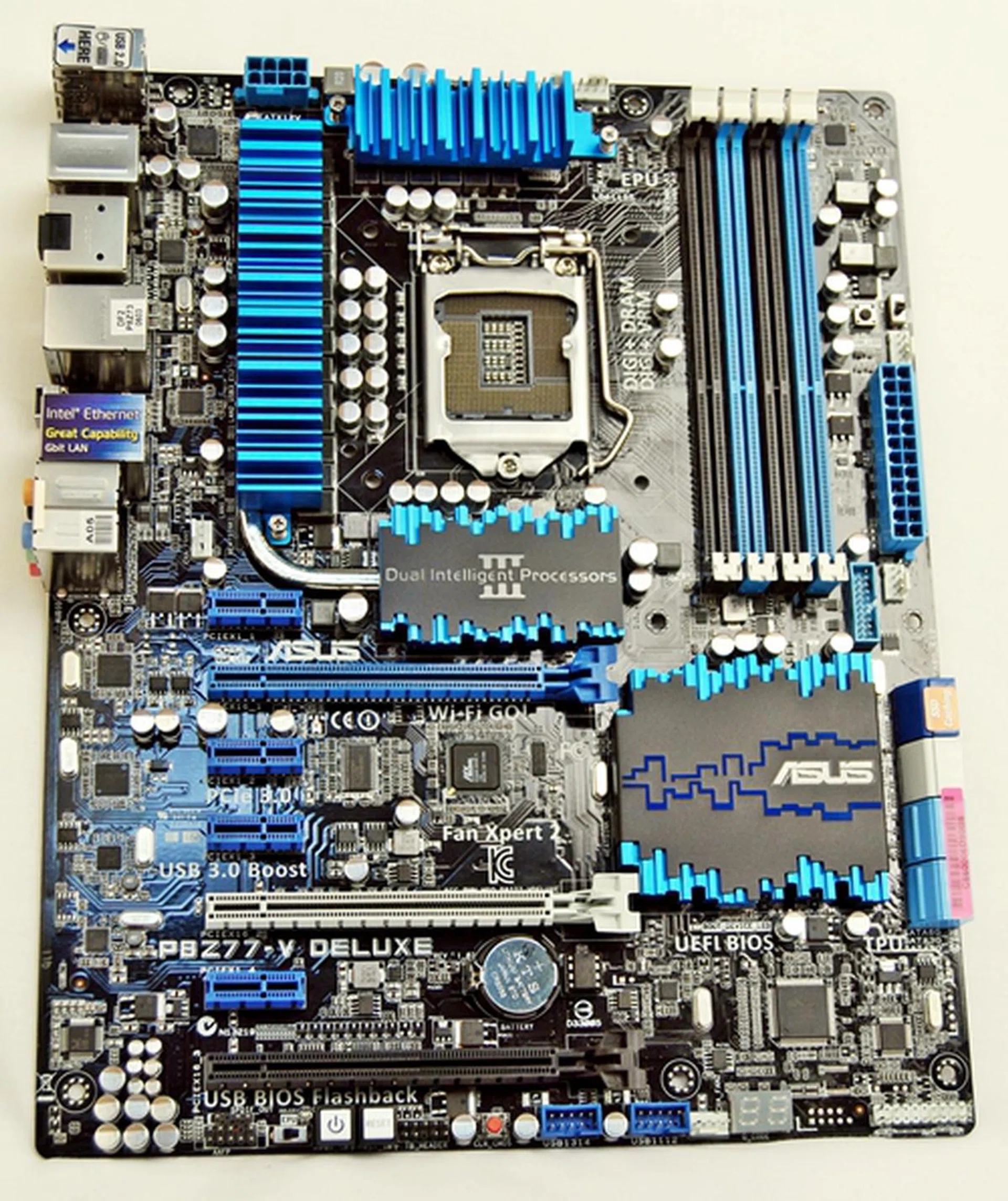
The ASUS P8Z77-V Deluxe motherboard bears the hallmark of a high-end board. There are a number of accompanying components like ASUS Wi-Fi GO! card as well as ASUS front panel USB 3.0 box to give owners of the board a certain level of perceived value for their hardware purchase.
Based on our past experience with ASUS P9X79 series motherboards, we believe that this new series will soon be fleshed out with Pro and Basic models in the near future.
New Chipset, New Features
At a glance, Intel Z77 Express chipset represents a slight improvement over the current Z68 chipset. For starters, Z77 chipset supports the third-generation Intel Core processors. As a result of their support for these new processors, they also inherit the need to support PCI Gen 3.0 bus standard on the motherboards. Since the last generation of mainstream Intel processors, the graphics PCIe controller has been embedded within the CPU die, and as such the upcoming Ivy Bridge CPUs have official support for PCIe Gen 3.0 bus standard. On a side note, Intel's Sandy Bridge-E CPUs launched in November 2011 can also support PCIe Gen 3 standards as their controllers are 8 GT/s-capable.
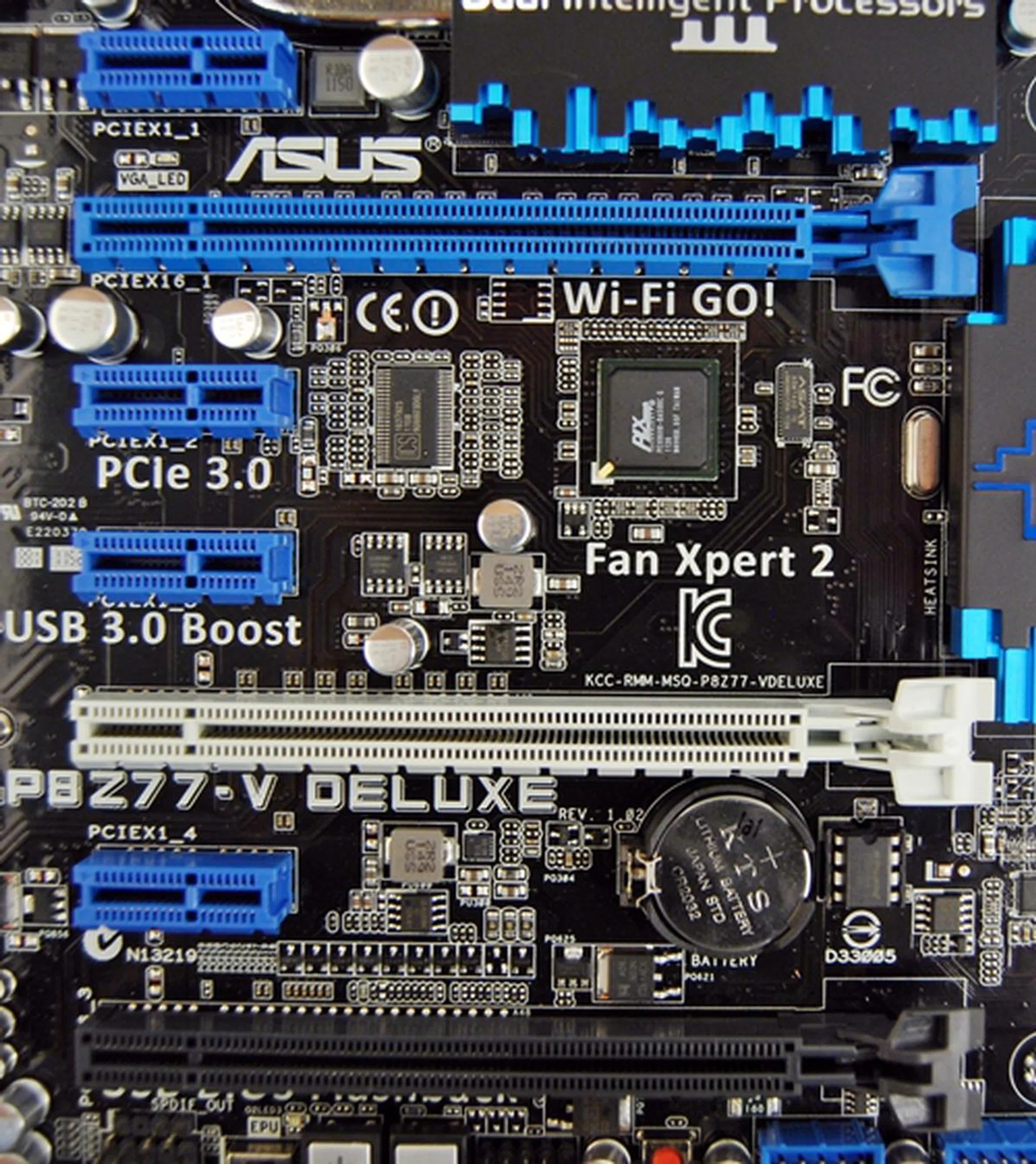
There are two PCIe Gen 3.0 PEG slots (blue and grey) which are auto-configured at x16 mode (single) or x8/x8 mode (dual). The black x16 PEG slot is configured for PCIe 2.0 at x4 mode (maximum) and the rest of the 4 slots are PCIe 2.0 x1.
Finally, there is also native support for USB 3.0 on the Intel Z77 Express chipset; however, the ASUS board still features third-party USB 3.0 controllers, courtesy of ASMedia, that supports ASUS USB 3.0 Boost UASP mode. Because of the limited number of native USB 3.0 ports, we'll continue to see several boards feature third party controllers to boost the number of ports supporting the speedier transfers.
The Usual Suspects
ASUS P8Z77-V Deluxe sports 4 memory DIMM slots and it support dual-channel DDR3 memory kits of up to 32GB in capacity. The board features three Digi+ power controllers that control power regulation for both the CPU and DRAM. With separate power controllers, such a feature translates to better performance especially when overclocking the system.
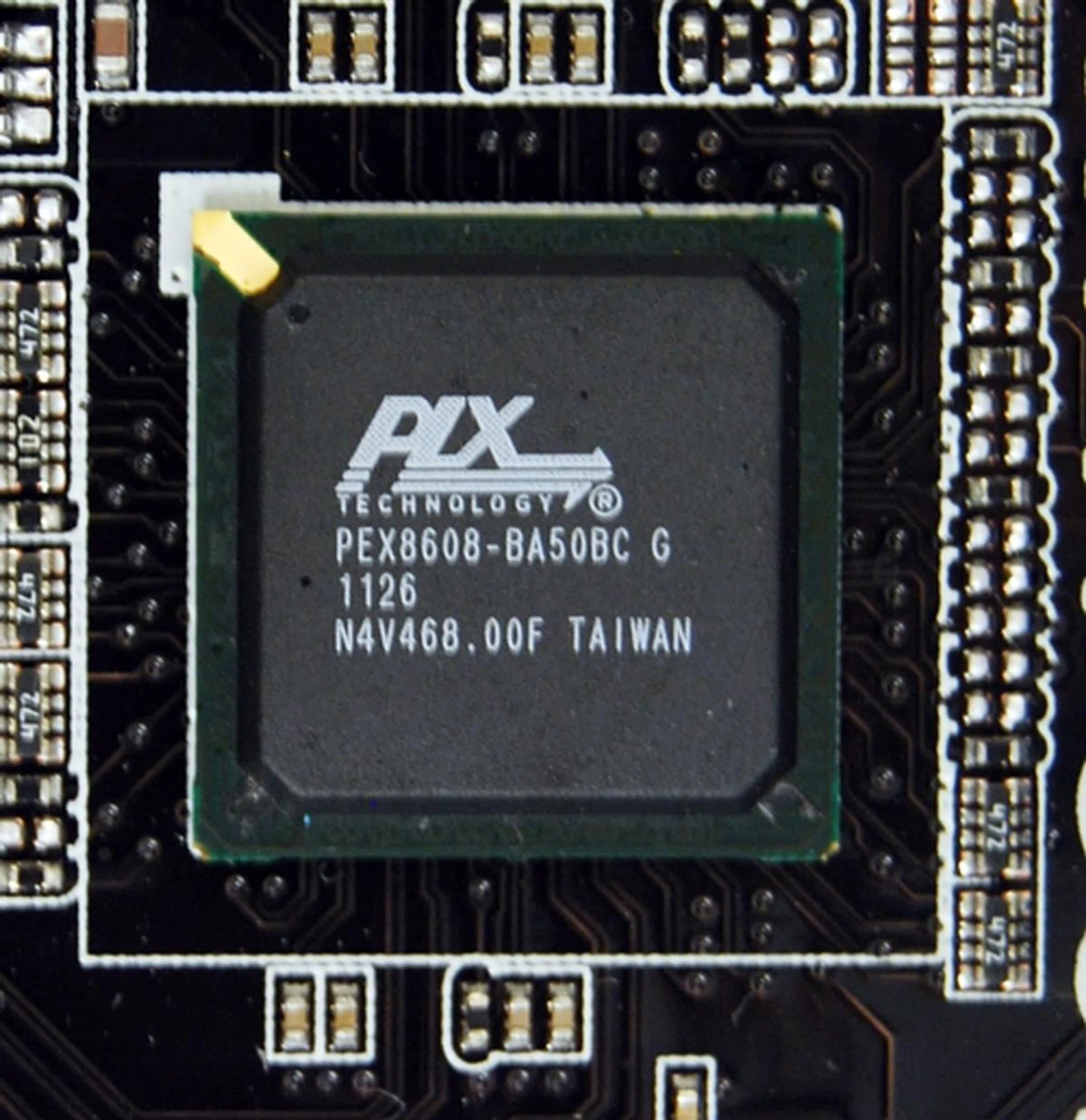
The PLX PEX 8608 offers eight additional PCIe 2.0 (5GT/s) lanes to the board.
Like the previous generation chipset Z68, the board sports video output ports and the PCIe lane configuration to support up to quad-GPU SLI or CrossFireX setup. Besides the hardware support, ASUS P8Z77-V comes bundled with LucidLogix Virtu MVP software that is touted to dynamically assign tasks to either the integrated graphics processor of the CPU or the GPU of the discrete graphics card. This will certainly help leverage the best of either GPUs and keep the board power efficient.
On Closer Scrutiny
Besides featuring LucidLogix Virtu MVP to add boost to graphical computing needs, the board's Z77 chipset supports Intel Smart Response Technology that will enable the system to fetch data from cache that is stored on a SSD. This will improve system performance versus a standard system if it needs to fetch data from its HDD. This caching technology is controlled by software from Intel. ASUS have also featured its own SSD Caching technology on this board for added measure. Is this an overkill on ASUS' part or the board manufacturer wanting to let users have an alternative to Intel Smart Response Technology? We laud ASUS for the latter to give users their preferred option.
Moving on to the hardware components of the board, as ASUS P8Z77-V is the deluxe version of this series, so we expect to see the makings of a pretty high-end board.

The onboard power and reset buttons sit at the bottom edge of the board. Take note of the ASUS EPU switch that will automatically detect the current PC loading and moderate the system's power consumption accordingly. We also welcome the easy access of the clear CMOS button (red dot of a button) to help us reset the UEFI BIOS settings, especially useful in overclocking or power tweaking exercises.
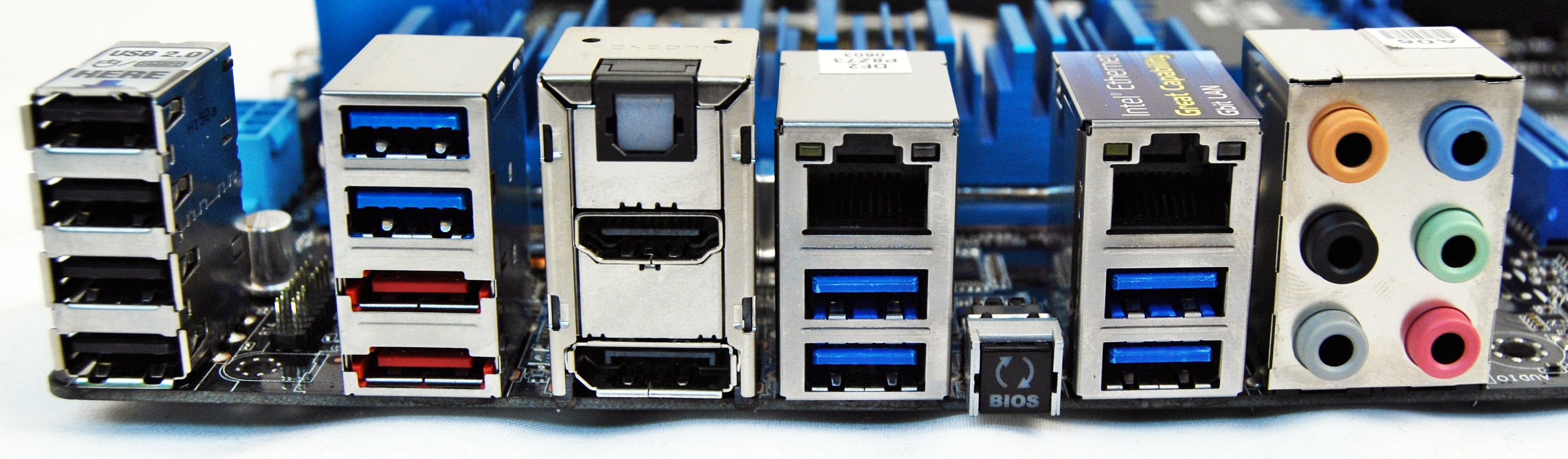
The left block of ports are USB 2.0 and the two USB 3.0 ports sit above the eSATA ports. The gap between these two blocks of USB ports will be filled by ASUS Wi-Fi GO! module.
From the housing for the video ports, we see a DisplayPort at the bottom of the stack. The board features dual-Gigabit LAN ports as well USB BIOS flashback as a nod to overclockers and power users. With this feature, these users can flash the BIOS without ever having to enter the UEFI BIOS or operating system.
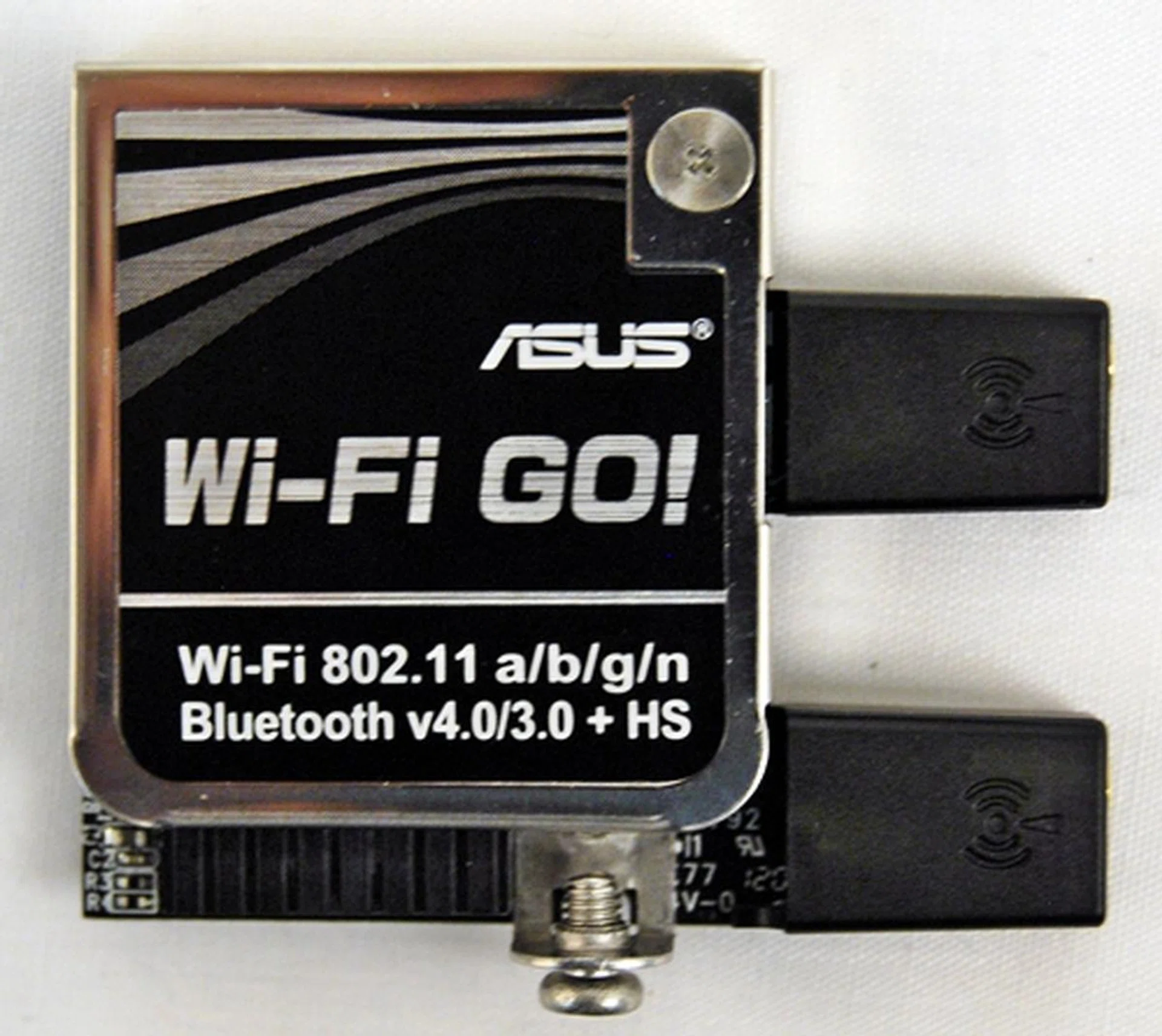
We first laid eyes on such an add-on module from ASUS last year when we were previewing X79 boards at their technical seminar. Now, this Bluetooth/Wi-Fi module has been christened ASUS Wi-Fi GO! card.
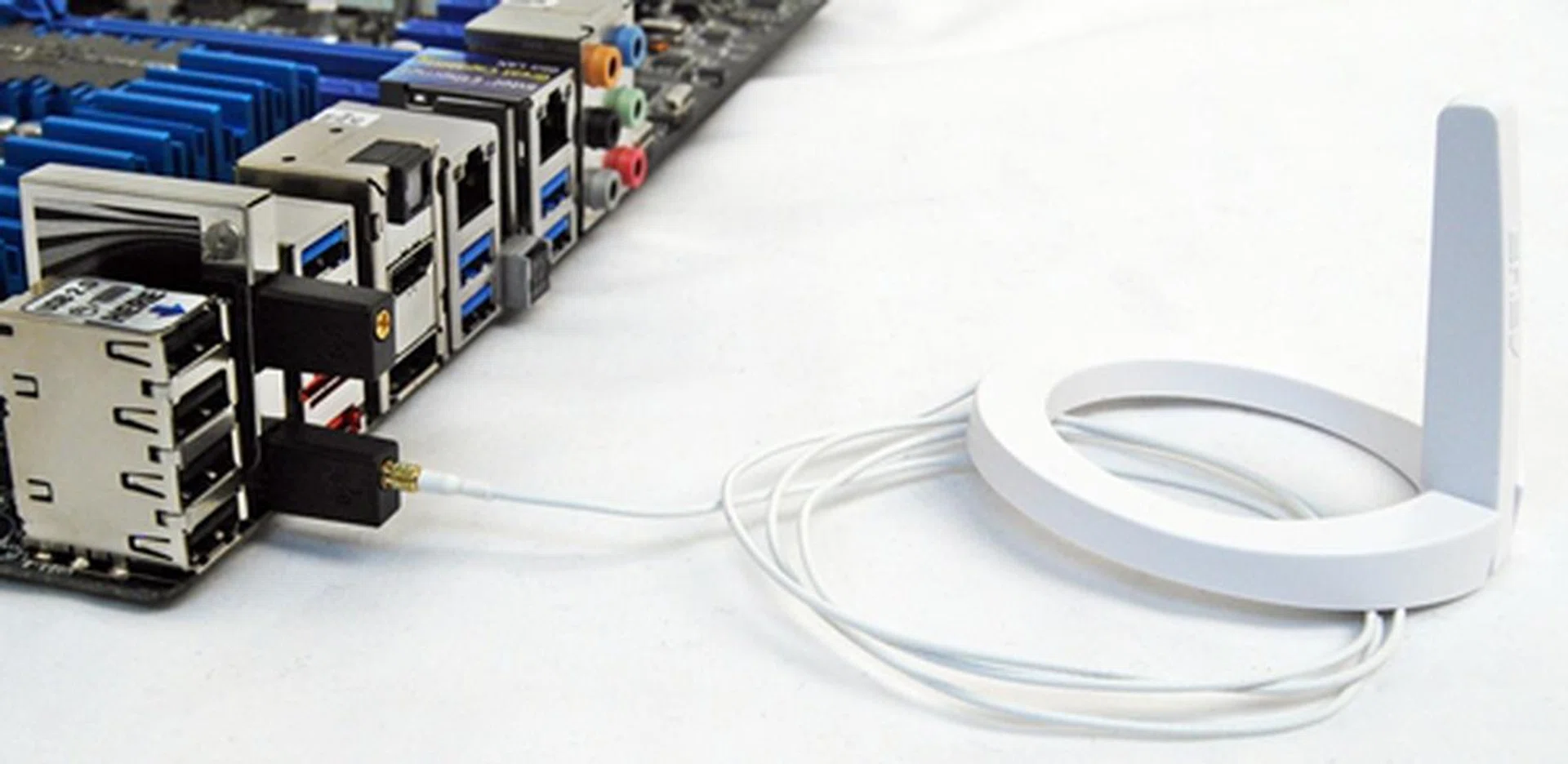
The ASUS Wi-Fi BT GO! card is secured to the motherboard with a small screw at its bottom. The white Wi-Fi Ring moving antenna comes in a pair. This setup promises to provide both Wi-Fi 802.11 b/g/n and Bluetooth connectivity to the system.
Concluding Remarks
We are somewhat impressed with ASUS P8Z77-V Deluxe on first looks. It has the usual offerings of a high-end board and it brought back memories of our past experiences (ASUS X79 motherboard technical seminar and our review of ASUS P8Z68-V Pro) with similar offerings from ASUS. Until the official launch of the 3rd-generation of Intel Core processors, we can reminisce those pleasant memories till we are able to put the board through its proper paces to see if it lives up to our expectations. So stay tuned to more developments later next month.
Our articles may contain affiliate links. If you buy through these links, we may earn a small commission.