
Oppo Find N3 Flip review: Is it really better than the Samsung Galaxy Z Flip5?
Are its perks and trade-offs enough to make people consider it over Samsung’s clamshell instead?

Note: This review was first published on 10 November 2023.
Oppo Find N3 Flip.
Flipping off the competition
Oppo must be pretty confident about its new clamshell foldable with its S$1,499 (256GB) official price tag, marking itself as a direct challenger to its S$1,498 Korean rival, the Samsung Galaxy Z Flip5.
Let’s take stock of what the Oppo Find N3 Flip offers. At a glance, it’s fronted by a 6.8-inch LTPO AMOLED Main Screen that has a less obvious crease, along with a vertical 3.26-inch AMOLED Cover Screen with extreme utility thanks to its FlexForm Capture (for selfies) and support for nearly 30 third-party apps.
TL;DR: Samsung cannot afford to rest on its laurels. The Oppo Find N3 Flip is a great alternative for the same price, if you know what you want in your clamshell phone.
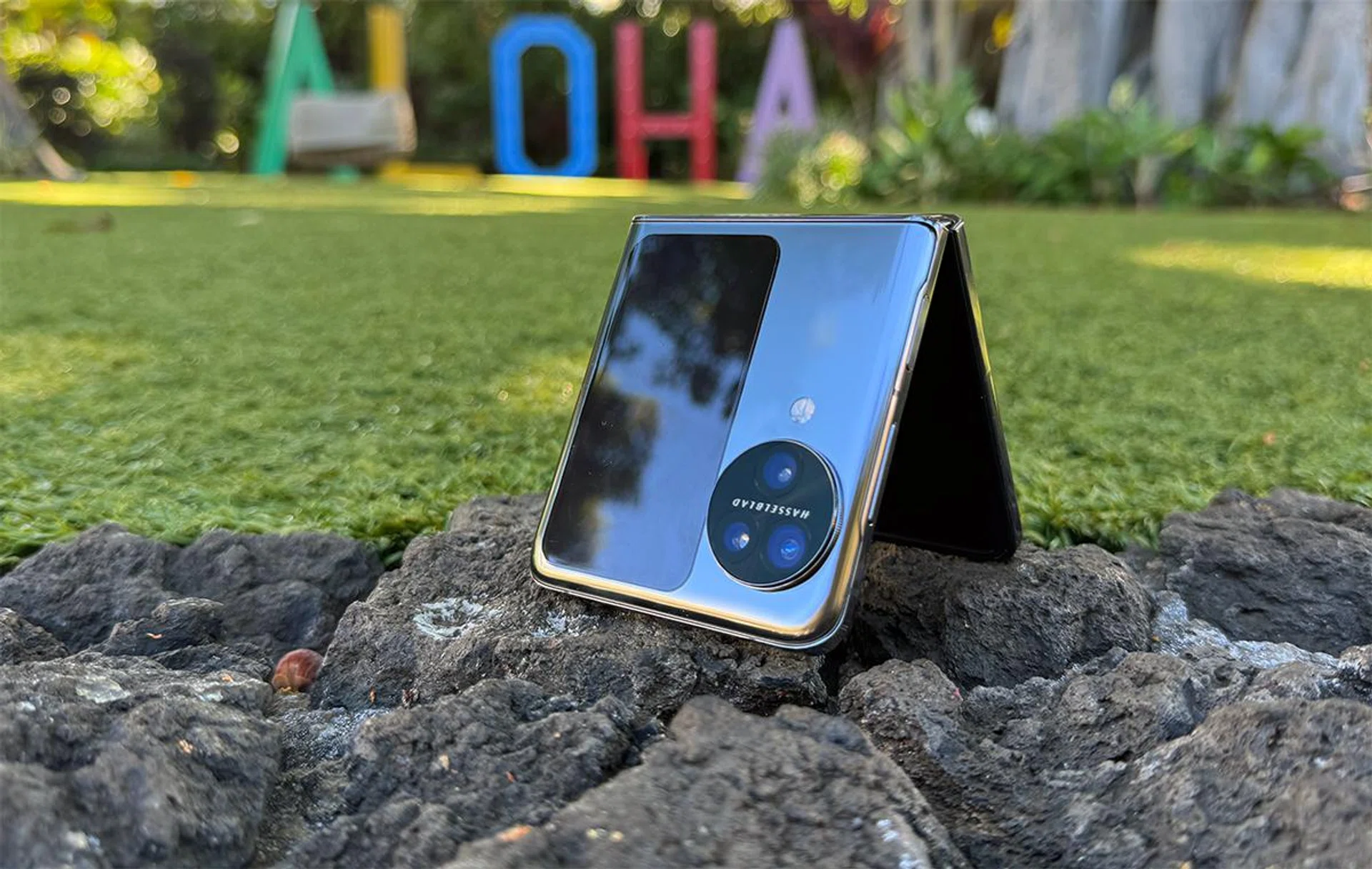
Flip over to the camera, and you get Hasselblad-branded shooters with a 50MP main camera, 48MP ultra-wide, and 32MP portrait camera with 2x optical zoom.
Topping it all off is IPX4 resistance against water, with the “X” signifying no dust resistance. Oppo also said its improved Flexion Hinge is rated for 600,000 folds, rounding off its durability.

Oppo Find N3 Flip on Main Screen.
The phone seems like it’s almost superior next to its Korean counterpart, until you realise it uses a MediaTek Dimensity 9200 chipset (while the Galaxy Z Flip5 uses Qualcomm Snapdragon 8 Gen 2). The Cover Screen on Oppo’s flippy phone also isn’t as big as its opponent’s, and it lacks wireless charging for its 4,300mAh battery with 44W wired charging.
Putting it all together gives us an Oppo Find N3 Flip seemingly poised to be a clamshell foldable for power users who want both style and performance in one device. Are its perks and trade-offs enough to make people consider it over Samsung’s clamshell instead? Let’s find out.
Almost better looking than before

Oppo Find N3 Flip in hand.
To the untrained eye, the Oppo Find N3 Flip may seem similar to its predecessor. A closer look would reveal many little design details, making Oppo’s latest clamshell even more aesthetically and practically pleasing than its previous iteration.
Although we were given Sleek Black colourway for this phone review, we’d gladly pick Misty Pink or Cream Gold in a heartbeat; they all look fantastic with its high polish finish and smooth texture.

Oppo Find N3 Flip in Sleek Black.
Find N3 Flip has a new Alert Slider added to its left rim, and is well thought-out. It has three levels (Silent, Vibrate, and Ring).
It’s impressive how Alert Slider is orientated to the display you’re currently on, inverting its controls when you flip to its other display. The Silent option always sits at the top, while Ring mode rests at the bottom. A lesser company would have neglected to orientate it correctly.

The hinge no longer has the Oppo logo but it's still on the back.
Oppo also did away with its logotype on the improved Flexion Hinge, replacing it with a beautiful wave pattern machined onto its polished metal bar. It adds a touch of class when they don’t put their brand name upfront. After all, true luxury or branded goods don’t need to advertise their worth. The Oppo logo is still prominent on the rear plate, but you can cover it up with a phone casing.

Camera housing looks a bit too bulky for its slim profile.
Another design gripe is the chunky Cosmos Ring with Starlight Track camera housing, ruining an otherwise sleek phone. Still, the increase in housing size is a worthy trade-off for getting high-powered Hasselblad rear lenses (more about its imaging performance later).
Finishing these details off are its glass platings on both sides with curved edges to resemble a compact makeup mirror, paired with an ultra-fast fingerprint sensor on its power button and a near-creaseless appearance for its inside panel.

Find N3 Flip's Main Screen.
The design of the Find N3 Flip is pleasing if only marred by an extra thick bezel for its Main Screen.
The 6.8-inch LTPO AMOLED internal screen at 2,520 x 1,080 pixels matches flagship alternatives thanks to its combo of 1-120Hz refresh rate, HDR10+ support, and 1,600-nits peak brightness. Helping it with its near-creaseless look is a new screen structure that reduces film reflection to 1%, which Oppo said is 5x less reflective than other foldable smartphones.

The near-creaseless panel could just as well be truly creaseless, except that you can still feel it when you run your finger across the display. 1% reflectivity does play a huge role in appearances.
We’d say the Find N3 Flip edges out the Samsung Galaxy Z Flip5, appearance-wise. Samsung does have a tidier camera housing, but it still keeps the branding on its hinge and also has thick bezels for its internal screen. Of course, Oppo's finishing blow comes from its near-creaseless inner display that’s high in quality, making up a significant part of the premium user experience.
Mini-apps, major utility

Mini-apps living on the Cover Screen.
With Oppo running ColorOS 13 on Android 13 for the Find N3 Flip, you’ll likely find it similar to most high-end or premium Oppo mobiles. Instead, we’ll look at the overhaul offered on the clamshell’s vertical 3.26-inch AMOLED Cover Screen (17:9 aspect ratio, 900-nits peak brightness).
While its size, shape, and orientation hardly changed since its predecessor, Oppo has made good on its promise to bring more third-party “mini-apps” to make the Cover Screen more useful than before.

Google Maps works amazingly on Cover Screen.
Don’t be misled by the name — these mini-apps are mostly full-fledged apps crammed into the phone’s tiny outer display. There are almost 30 third-party apps available, cutting across key categories like messaging, digital payments, fitness tracking, and more. You can pin up to three on the first screen, but swiping right would give you the complete list of mini-apps you’ve enabled. To enable them, it has to be done in the Settings menu.

TikTok, too, works on the Cover Screen.
In comparison, Samsung’s more prominent display may be easier on the eyes, but it only had five mini-apps available at launch, with two of them being default SMS apps, severely limiting its practicality.
Type | Name | Territory |
Tools | GBoard | Global |
AccuWeather | India | |
Fitness | Strava | Global |
MyFitness Pal | Global | |
Heytap | Global | |
NikeRun | Global | |
Digital Payments | Google Pay | Global |
Grab Pay | Global | |
Line Pay | Malaysia, Taiwan | |
Momo Pay | Vietnam | |
Ovo | India | |
GoPay | India | |
Ride-Hailing | Grab | Global |
Uber | Taiwan | |
GoJek | Global | |
Navigation | Google Maps | Global |
Social and Messaging | Zalo | Vietnam |
LINE | Global | |
WeChat | Global | |
WhatsApp | Global | |
Telegram | Global | |
Google Messages | Global | |
X (formerly known as Twitter) | Global | |
Reddit | Global | |
TikTok | Global | |
Productivity | Gmail | Global |
Outlook | Global |
In our Oppo Find N3 Flip trial, we tried using Telegram, Grab, and Google Maps (among others) to great effectiveness. The mini-apps are full-featured versions of their full-screen selves. We mainly used the Cover Screen to check for updates, seeing how the narrow panel size makes it poor for typing.
It served as a great way to keep tabs on directions, read our group chats, or see the status of our food deliveries and ride-hailing arrivals without powering up the Main Screen.
Oppo’s Cover Screen supersedes Samsung’s in sheer practicality, but we did wish it had the same real estate offered by its Korean rival.

3D interactive pets make for a more animated Cover Screen.
Other useful Cover Screen features included its notifications tab (which could display 4-5 full notifications at a glance), a customisable shortcut next to its clock, and a pull-down Quick Settings menu for adjusting brightness, Wi-Fi, etc. We did like the 3D interactive pet that lived on the display, but we also wished it had Samsung’s level of personalisation instead — replete with short videos as wallpapers.
Having tried both clamshells, we’re torn between choosing either foldable based on its outer display’s features. Why can’t they both have it all?
Imaging Performance

Oppo Find N3 Flip's Hasselblad cameras.
Where Oppo claims superiority for its Find N3 Flip is its rear cameras, seated in an eyesore-inducing circular housing next to its Cover Screen. It’s a triple rear combo with Hasselblad colour tuning and features to maximise its imaging capabilities.
- 50MP main camera (Sony IMX890, 1/1.56-inch sensor, f/1.8 aperture, OIS)
- 48MP ultra-wide camera (Sony IMX581, 1/2-inch sensor, f/2.2, 115° FOV)
- 32MP portrait camera (Sony IMX709, 1/2.74-inch sensor, f/2.0, 2x optical zoom)
Next to the Samsung Galaxy Z Flip5, you’ll see that the Oppo Find N3 Flip offers a larger main camera and ultra-wide sensor, an additional optical zoom camera, and Hasselblad colour tuning on top of it all. With hardware like that, it would be surprising if the Oppo shooter couldn’t outperform its main rival.
Against its predecessor, the Find N3 Flip's main camera now comes with optical image stabilisation, and has a greater zoom range (2x optical and 5x hybrid zoom) than before.

FlexForm Capture, using the 50MP main cam to shoot and the Cover Screen as a viewfinder. Its lack of detail in shadows gives a soulless look in the eyes.

The "XPAN" mode emulates the aspect ratio of iconic XPan cameras by Hasselblad.
As a clamshell, Find N3 Flip’s unique shooting modes also return, with FlexForm Capture (half-folded shooting, previewing shots with either display) and Hasselblad's XPAN shooting mode. But these aren’t new to Oppo phones, so we’ll go straight into imaging quality.
Image Samples

Main camera.

Ultra-wide angle.

2x optical zoom.

5x hybrid zoom.

20x digital zoom.
The imaging quality of the Oppo Find N3 Flip is excellent, with a pleasing colour science and its ability to capture detail. What we found impressive is the consistent shooting quality between its main camera, ultra-wide shooter, and telephoto shooter (within optical and hybrid zoom range), an uncommon trait even in premium handsets. The phone can deliver social-media-ready images, as long as you don't venture to its maximum digital zoom image (20x).

Main camera. The colour science doesn't sacrifice colour variation, with this image showing off the Oppo Find N3 Flip's ability to capture different whites and off-whites in the same image.

Ultra-wide angle.

2x optical zoom.

5x hybrid zoom.

20x digital zoom.
It would be more impressive if the Oppo Find N3 Flip's cameras were more capable at retaining detail in shadows, while toning down on the artificiality of its processing. Besides that, it's easily the most competent photography feature set you can buy on a clamshell foldable phone in Singapore (not that there are many).

Main camera.

Ultra-wide.

2x optical zoom.

5x hybrid zoom. Even at this distance, the Oppo Find N3 Flip can still make out the tanlines on the human subjects. Detail retention falls off towards the edges of the image, but not drastically.
Benchmark Performance
Oppo Find N3 Flip runs on the MediaTek Dimensity 9200, a TSMC-built, 2nd-generation 4-nanometer process chipset. Combined with its LPDDR5x RAM and UFS 4.0 storage, the clamshell has processing components that make it a true 2023 flagship-tier device. That naturally pits it against the other clamshell bigwig in Singapore, Samsung Galaxy Z Flip5.
Putting it to the test
To find out how the competitors line up specs and price-wise, check them out in this link.
To find out more about the tests we conduct and what they relate to, we've jotted them down here.


Benchmark Performance remarks
Before you gawk at the abnormally low performance in web browsing, know that the Oppo Find N3 Flip was speedy with webpages — the benchmarks somehow can’t capture that even after trying on different browser apps. Weird.
Beyond that, the Oppo Find N3 Flip has good synthetic performance and better real-world experiences, and it came pretty close to its leaked results, too. Temperatures also barely fluctuated when running intense apps like videography or editing. However, the phone does tend to run hot if you’re also using it under direct sunlight over an extended period.
Battery Life
Our battery benchmark uses PCMark for Android’s Work 3.0 Battery Life test to determine a modern Android-based smartphone's battery uptime in minutes. This controlled benchmark simulates real-world usage with a combination of both web and social media browsing, video and photo editing, parsing data with various file formats, writing (on documents), and more.

Clocking in nearly 12 straight hours of simulated tasks on a 4,300mAh is quite impressive, putting the Oppo Find N3 Flip on par with standard bar-type phones. It’s almost equal to Samsung’s uptime, but significantly worse than its own predecessor.
MediaTek probably traded out its excellent battery efficiency to match its main Qualcomm rival, so we’re not that fussed about the minor differences Oppo’s flip phone has against Samsung’s.
Its 44W SuperVOOC wired charging took 1 hour 30 minutes to get from 0-100%, with its first 30 minutes quickly bringing the phone up to 50%. We did wish it could do a full charge in under an hour, like the 80W Oppo Find X5 Pro.
Sadly, the Oppo Find N3 Flip lacks wireless charging, which we felt was an essential feature for flip phones given its emphasis on aesthetics (no dangling cables ruining how it looks on your desk). That and faster wired charging are two upgrades Oppo can consider for its next iteration.
A balance between style and practicality

Oppo Find N3 Flip.
We can see why Oppo priced the Find N3 Flip at S$,1499, on par with its main Korean competition. It has the makings of a true flagship handset, with a slight edge in offering a more enjoyable clamshell flip phone experience with its near-creaseless look and nifty mini-apps.
As a phone, it also checks out with a nice display, excellent imaging quality, a processor to match, and passable IP protections it could manage with its design and form factor. The Oppo Find N3 Flip is an extremely competent clamshell foldable phone inside and out. It shows Samsung that it’s possible to have almost no compromises in photography, creaseless appearance, and sufficient power for all your favourite apps.

Oppo Find N3 Flip.
If they’d figured out how to make its main display’s bezels thinner, add some wireless charging, find a less ugly camera housing, and perhaps make its Cover Screen take more space on its front plate, it would be a very attractive option even against conventional bar-type smartphones. There’s very little to gripe about, given that Oppo had several generations to refine its clamshell form factor as Samsung did, too.

Oppo Find N3 Flip.
The near-creaseless inner display makes a solid case for users to switch from a conventional flagship handset. Oppo offers added assurance through its optional Premium Service that looks after screen insurance and replacement needs. With the Find N3 Flip, you’d get a conventional phone with an extra outside panel for added convenience, be it new shooting angles or checking trivial notifications.
Against its previous generation, the Find N3 Flip offers far more raw power and Hasselblad-tuned cameras along with an extra telephoto shooter, along with more app compatibility for its tiny screen at launch. It’s a little scary how quickly Oppo pushed out its next-generation flip phone with hardware and software improvements in just half a year, too.
Charging S$1,499 (256GB) seems reasonable despite its S$200 jump from its predecessor. At least it’s not a Google Pixel 8 Pro where it's S$250 more than before without a clear enough value proposition to back up its inflation.
Oppo Find N3 Flip versus Samsung Galaxy Z Flip5: Which is the better clamshell?
Oppo Find N3 Flip.
Choosing between the Samsung Galaxy Z Flip5 and Oppo Find N3 Flip is tougher than it looks. Comparing what both devices offer only makes the choice harder.
For instance, Oppo Find N3 Flip has a superior imaging system, but the Flip5’s Cover Screen makes its photography and videography more practical because of its larger viewfinder.
Despite Flip5’s external display being better for personalisation, it’s the Oppo one that supports 30 third-party apps on the Cover Screen at launch. Sure, Oppo’s clamshell has nearly no crease, but the chipset performance is just shy of a flagship Qualcomm Snapdragon’s — which the Flip5 has.
You can see where this is going. Calling either phone “better” than its other main rival here isn’t a fair comparison because they are both excellent clamshell phones in entirely different ways.
For instance, if you prioritise having a creaseless appearance, Oppo won't need to do very much to convince you to choose its clamshell over Samsung's. The same goes for preferring Samsung’s version for its larger outer display, if you cannot accept squinting at tiny viewfinders when shooting selfies.
Choosing one comes down to knowing what you’d pay top dollar for.

Oppo Find N3 Flip.
Both models also feel short of having that one more thing needed to trounce the other. For some, it’s pretty much about splitting hairs when choosing based on wireless charging availability or bezel thickness.
In a forward-looking vein, the Oppo Find N3 Flip has better potential for future devices. Its flaws can be easily rectified and don’t require massive investment or research. For example, swapping out its chipset for a more powerful one is a matter of changing its chipset vendor, and increasing the outer display size or reducing camera housing is a mere tweak to its manufacturing process.
Samsung, on the other hand, needs to work its partnership arm harder to bring more Cover Screen apps. Making the inner display near-creaseless is also considerable R&D work (although we suspect they already have that technology but are just holding back, as seen here, here, here, here, here, and here). They’d also have to find a way to include more powerful cameras without altering its housing or raising prices.

Oppo Find N3 Flip.
For either company to have a definitive “better” clamshell phone fall onto their next generation of flippies to triumph over the other, but that’s a problem for tomorrow’s phones to worry about. Today, the Find N3 Flip feels on equal footing with Samsung’s Galaxy Z Flip5; either option is great, but only you will know which is the better clamshell for you.
If we expressed our preferences, then it would go to the Oppo Find N3 Flip since we are partial towards better cameras, better Cover Screen utility, and the lack of a visible crease. For these reasons, we have bestowed Editors' Choice onto Oppo's flip phone.
Oppo Find N3 Flip officially retails at S$1,499 in Sleek Black, Cream Gold, and Misty Pink. Check out our pricing article for direct links to all its retail touchpoints.