
Mobile Network Guide - What You Need to Know About 4G LTE
Singapore's first nationwide 4G mobile network went live on September 15th. However, there are still a number questions raised on what it means, compatibility, and many more concerns. Here's a simple guide to better understand the speedier alternative to 3G, an FAQ list and some considerations to factor.
Getting Started On 4G Mobile Networks
Many mobile users here are closely acquainted with the third-generation mobile telecommunications standard (commonly known as 3G) after its commercial launch by M1 and Singtel back in 2005. Basically, the 3G protocol enables consumers to connect to the Internet and its services via their mobile phones, without having to rely on Wi-Fi hot-spots in that sense. However, purchasing a smartphone these days entails more than just grabbing the sexiest hardware. With telecos companies evolving their networks to meet growing demands in mobile data usage, handsets we wield on a day-to-day basis have taken on their own transformations as well.
This is where 4G comes in. Countries such as South Korea and the States have already rolled out their own 4G telecom services in recent times, and now it's Singapore's turn to ride the next wave. Flip through a mobile phone catalog today, and chances are you might spot smartphones or tablets touting "4G" or "LTE" monikers. But what is 4G anyway? Is LTE a funky acronym for the word "Lite" or is it something else? With this guide, we want to provide you with some insight on the 4G standard, and hopefully equip you with a better understanding of this next-generation cellular network by the time you're through with this article.
4G LTE: The Basics
The 4G protocol is basically a fourth-generation standard for mobile phone communications. It's also the successor to the third-generation standard as mentioned which is widely prevalent today. Both Mobile WiMax and LTE are subsets of the 4G mobile network. However, the most recent 4G roll-out in Singapore involves only the LTE system, which stands for Long Term Evolution, or 3GPP Long Term Evolution for the Universal Mobile Telecommunications System (UMTS in short). Similar to 3G, a 4G mobile network provides users with broadband Internet access via smartphones, tablets, and USB wireless modems, albeit at faster data rates.
M1's and SingTel's LTE services operate on both 1,800MHz and 2,600MHz freqencies, while StarHub's is riding solely on the 1,800MHz band. In essence, lower frequencies, such as the 1,800MHz band, generally provide superior indoor signal strength with a longer range. However, higher frequencies like the 2,600MHz band are better suited for covering populated zones and managing data volumes due to their larger bandwidth. M1 is currently deploying the 2,600MHz band along coastal areas as well to avoid signal interference with neighboring telcos (such as Indonesia for example). Besides 4G, the lower 1,800MHz band is also used by existing 2G networks. Do check out our spread over at the next page if you want to know which are the current breed of 4G devices available in the market.
4G LTE Frequency Bands Covered by Mobile Operators:
- M1: 1,800MHz & 2,600MHz
- SingTel: 1,800MHz & 2,600MHz
- StarHub: 1,800MHz
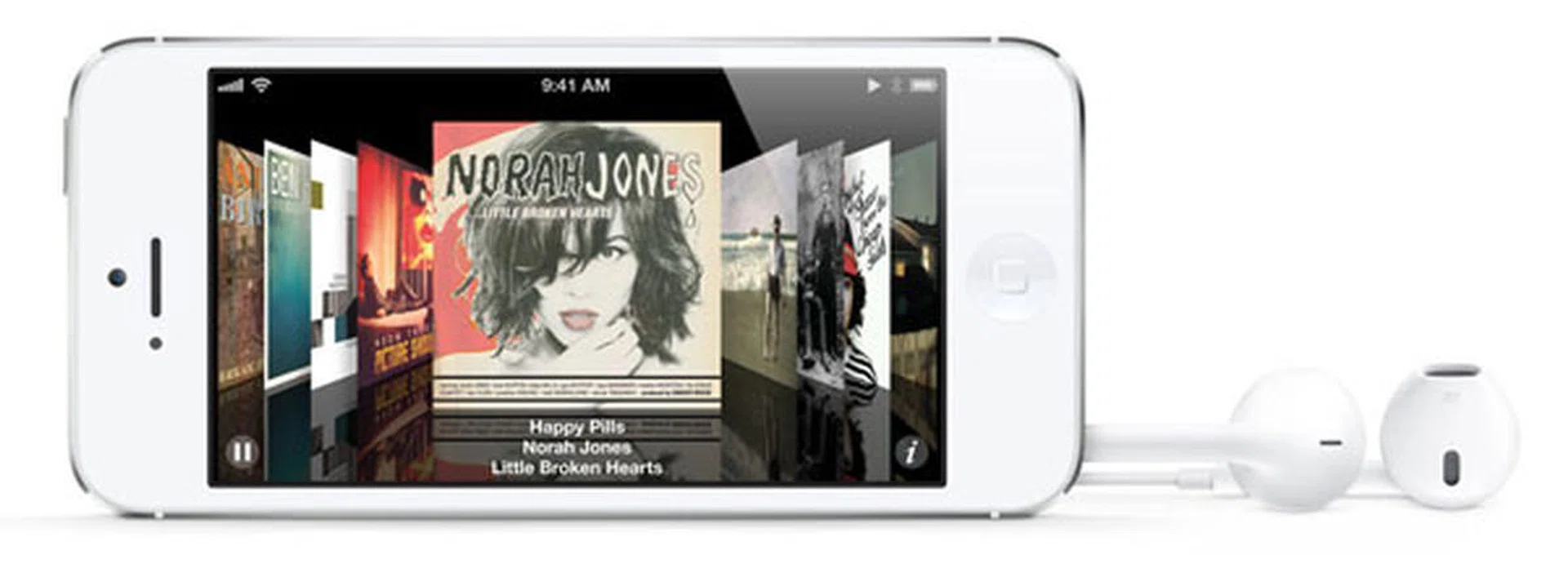
Apple's iPhone 5 is 4G-equipped. However, it is handicapped by its limited 1,800MHz band support. The phone is expected to fall back on 3G networks in areas with dedicated 2,600MHz coverage.
Upsides & Downsides of 4G
In comparison, 3G networks offer typical download speeds between 1.7Mbps to 4.8Mbps under most circumstances, while users on the 4G LTE band are able to enjoy typical download rates between 3.4Mbps to 12Mbps with a theoretical top speed of up to 75Mbps. Obviously, this noticeable speed bump is the biggest lure for users to board the 4G wagon. Real-world test results we've gathered based on SingTel's and M1's 4G LTE services can be found via the embedded links. They'll give you an idea on how 4G LTE matches up in reality. At this point in writing, all three telcos -- M1, SingTel, and StarHub -- are offering the same 4G price plans as their 3G packages, although prices of handsets will vary depending on which price tier is chosen. Take SingTel's 3G Flexi Lite plan for instance. Purchasing a new Samsung Galaxy III handset with this plan will cost you $398, whereas the LTE version will cost you seventy dollars more at $468. (Prices are accurate at the point of authoring this article.)
Furthermore, you'll also need to consider the telco's 4G coverage. For starters, M1 is the only one to offer nationwide coverage at this point in time. SingTel will extend its coverage to 80 percent by December 2012, and 95 percent by March 2013. StarHub's 4G reach is currently limited to only a few zones, such as the Central Business District, Singapore Expo, and Changi Airport. Like SingTel, StarHub's islandwide goal will only be realized in 2013. Note that voice calls for all three telcos are handled on the 3G spectrum.
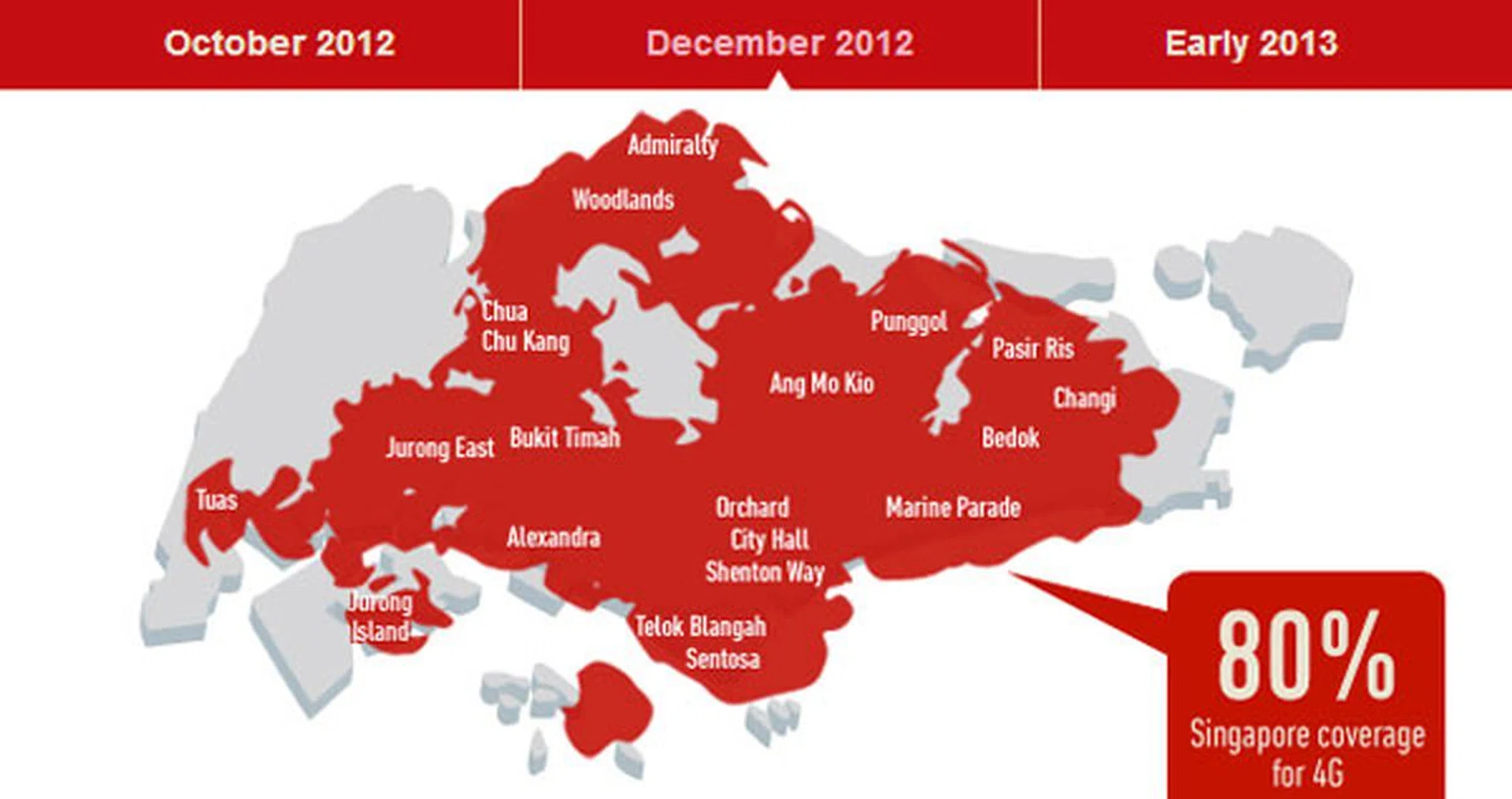
Map of Singtel's proposed 4G coverage by Dec 2012. Stay tuned to HardwareZone as we check on their network coverage and signal strength later this year.
 |  |
Advantages:
| Advantages:
|
Disadvantages:
| Disadvantages:
|
4G LTE: Frequently Asked Questions
We've compiled a list of commonly asked questions related to 4G LTE with the relevant answers. We hope they'd clarify some of your doubts.
1) What is 4G?
4G is a fourth generation mobile communications standard with faster data transmission speeds than 3G. Operators in Singapore are using the LTE (Long Term Evolution) subset.
2) Can I use my 4G phone overseas?
Overseas 4G/LTE providers may be using different technologies and frequency bands. Due to the fragmentation of the LTE spectrum bands, it is likely that your 4G/LTE mobile phone or tablet may not be compatible with their networks.
3) I am using a 2G SIM card. Do I need to upgrade the SIM card to enjoy 4G services?
Yes, you'll need to upgrade to a 3G or 4G SIM card. Existing 3G SIM card users are not required to perform any upgrades. If the 4G mobile device only supports Micro SIM, then the 3G Uni SIM (Universal SIM) card needs to be swapped for a 3G Micro SIM.
4) Will a 4G SIM card work with a 3G phone/phone?
Yes, a 4G SIM card is compatible with 3G and 2G networks/devices. However, you won't be able to enjoy peak 4G/LTE speeds of 75Mbps with such a configuration since the device doesn't have the necessary hardware support.
5) I am using a 4G mobile phone with a 4G subscription. What happens if I move out of a 4G zone?
According to SingTel, users will be able to enjoy 3G connectivity with theoretical peak download rates of up to 42Mbps when they exit 4G zones. Typical download speeds fall between 1.7Mbps and 4.8Mbps. Starhub users will enjoy similar theoretical peak 3G speeds of up to 42Mbps with the new DC-HSPA+ mobile network, while M1 users are capped at 7.2Mbps.
6) Will I be able to use 4G roaming services when I am overseas?
Apart from M1's 4G roaming services in Hong Kong and Korea, users are currently limited to 2G and 3G roaming services whilst overseas. Telcos like StarHub have plans afoot to implement 4G roaming options with countries like the Philippines in the near future.
7) My voice calls are being made in 3G mode. Why is that so?
The 4G/LTE network is strictly a mobile data network for now. As mentioned earlier, voice calls are dropped to 3G mode when a call is made. The phone would revert back to the 4G network once the call is terminated.
Parting Advice
Take time to consider your options. Do you really need a 4G subscription for your daily mobile needs? Some of its benefits include speedier throughput speeds and lesser user traffic since there are distinctly fewer 4G subscribers at this point in time. If you're lucky enough to find a sweet spot with good connectivity, it is likely you'll fire up web pages or social sites like Facebook and Twitter before the bloke plodding on 3G next to you. With typical speeds of 12Mbps or so, we have to admit we are tempted to jump onto the 4G ship ourselves. On the other hand, there are few things to consider.
If you're currently enjoying a data cap of 12GB for example, be prepared to lose 10GB or so when you re-contract your smartphone's mobile plan. Essentially, basic data plans are now capped at 2GB with all three telcos, although more expensive options like M1's MaxSurf+, SingTel's 3G Flexi Premium, and StarHub's SmartSurf Elite still come with a 12GB data bundle each month. You can check out our recent 3G/4G smartphone plans comparison where we've detailed costing breakdowns depending on your plan and data consumption.
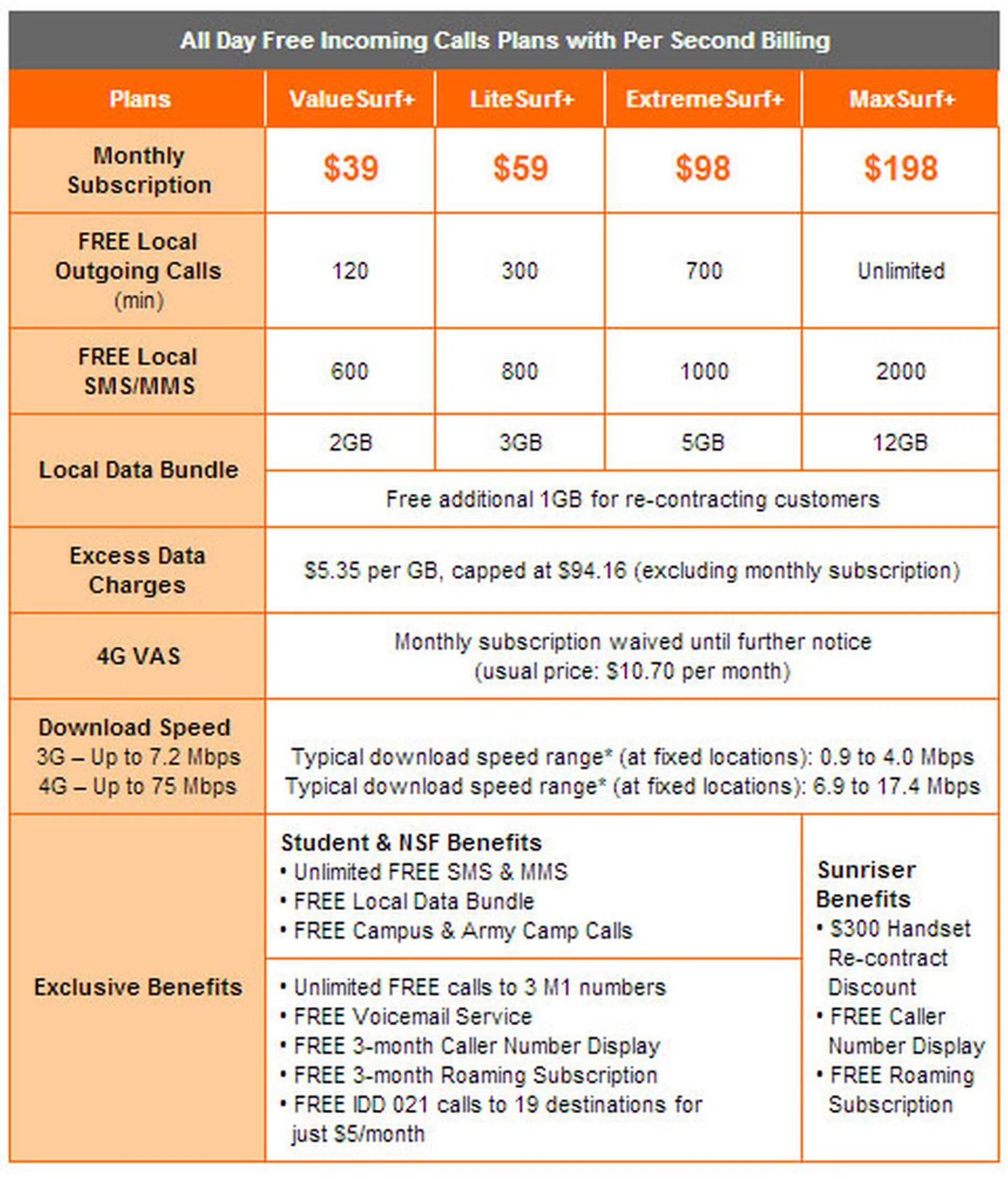
Snapshot of M1's data plans.
In addition, you might want to hold your horses if you're planning to re-contract your mobile plan with Singtel or StarHub. As mentioned in the previous page, islandwide 4G coverage won't be ready for these two providers till the next year rolls around. Besides, there'll be a greater number of 4G/LTE offerings by then if the current lot of LTE devices do not appeal to you. Throughput, however, may suffer when more users join the 4G airspace next year and are part of the rising concerns for the providers to tackle.
Also note that 4G zaps more power than 3G. The reason is quite simple really. Your phone is constantly toggling between the 4G and 3G networks to find the best reception. On the bright side, users may opt to throttle down their phones to the 3G network to conserve their battery power. For example, a mobile device running on a 4G network should be using the "LTE/GSM/WCDMA" mode by default. To switch back to 3G, simply select the "GSM/WCDMA" selection under the device's network mode. This option is also handy if you happen to be in an area with spotty 4G coverage where it's wiser to lock the phone down to 3G, thus helping conserve some power.
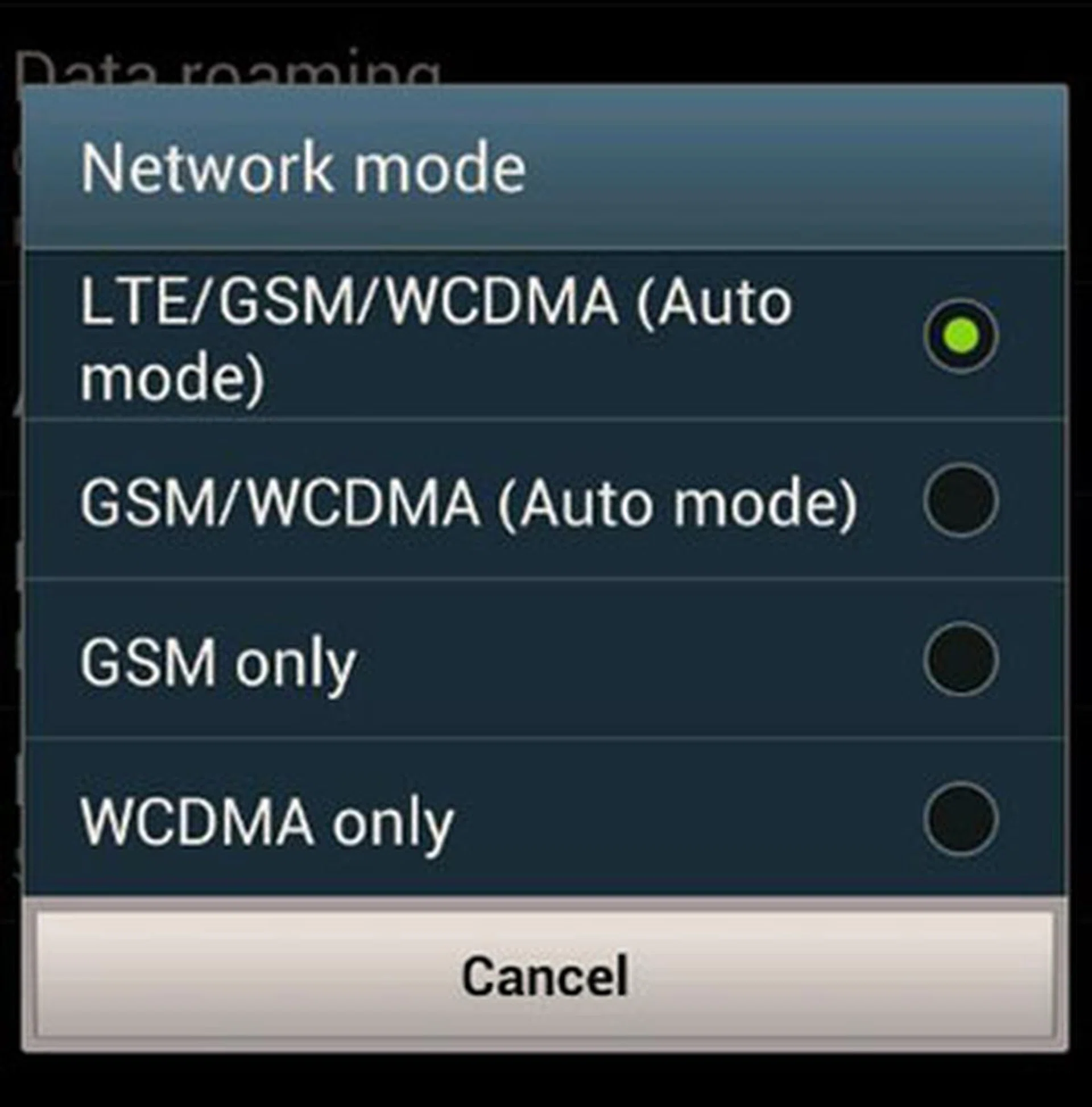
Network modes on a 4G device.
Currently, 4G data plans are priced equally as 3G options, albeit on a promotional basis. According to SingTel's microsite, it is indicated that their "4G service is offered at the same price as 3G until otherwise determined by SingTel", whilst M1's disclaimer states that monthly subscriptions for 4G VAS (Value Added Service) will be waived "until further notice". StarHub's message is a little more specific. Under their SmartSurf plans, it is highlighted that charges for the Speed Boost VAS is waived till 31st December 2013. What that in mind, there is a possibility that telcos may "adjust" the price plans after the "free" 4G incentive ends. We'll of course keep our HardwareZone readers informed should there be changes in telco price plans or services, so stay tuned for future updates!
Our articles may contain affiliate links. If you buy through these links, we may earn a small commission.