
Xiaomi 13 Pro review: Gunning for premium with Leica's wind at its back
Huge imaging promises aside, is the Xiaomi 13 Pro a good smartphone? Would it also make a good premium smartphone too? Let’s find out.

Note: This review was first published on 21 March 2023.
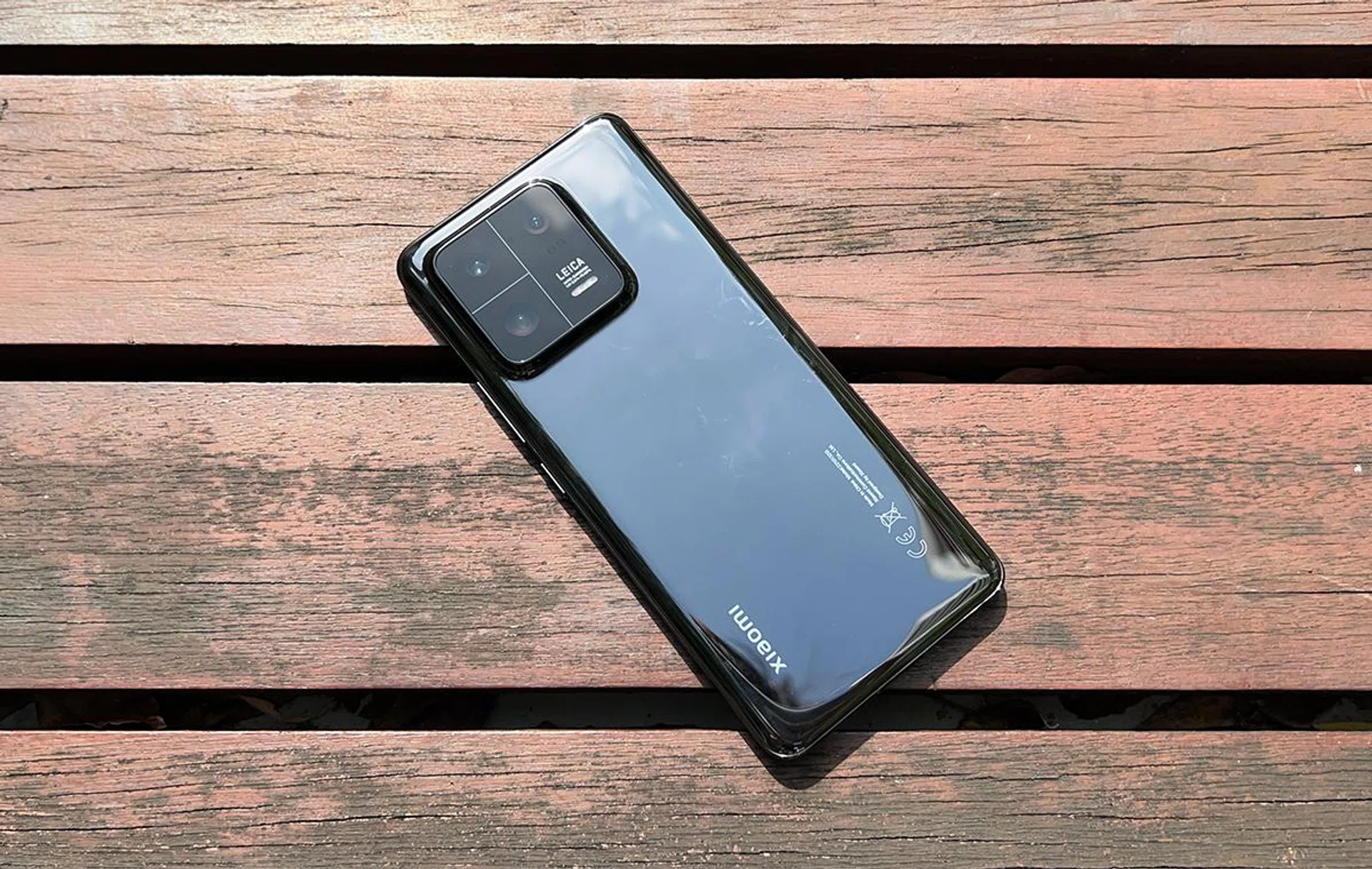
Xiaomi 13 Pro.
Does having the Leica brand on the phone change its price tag?
How much did you say that the Xiaomi 13 Pro retails at again?
It seems that Xiaomi wants to break away from its budget flagship reputation, having priced the Xiaomi 13 Pro at a whopping S$1,599 (256GB storage).
It’s 18% more expensive than its predecessor and well within HWZ’s Tech Awards definition of a premium-grade smartphone (above S$1,500). While that’s ambitious of Xiaomi, we’d have to assess the phone as an alternative to the Samsung Galaxy S23 Ultra or the current-gen Pro models of Apple’s iPhones.
The TLDR version:
Nice Leica optimisations, good performance, and solid construction. Overall, a fun, but expensive phone that could use more 'polish'.
To help with its newfound premium classification, Xiaomi 13 Pro offers many top-end components. It has the same flagship-grade chipset as the Samsung Galaxy S23 series (Qualcomm Snapdragon 8 Gen 2), and the latest RAM and storage types (LPDDR5X and UFS 4.0, respectively) like its Samsung rival.
It also has all the bells and whistles you’d expect from a premium-tier handset, like an IP68 resistance rating, in-display fingerprint sensor, fast wired (120W) and wireless (50W) charging, and 5G connectivity. As an Android 13 phone representing Xiaomi's best foot forward in our market, it features its MIUI 14 operating system.
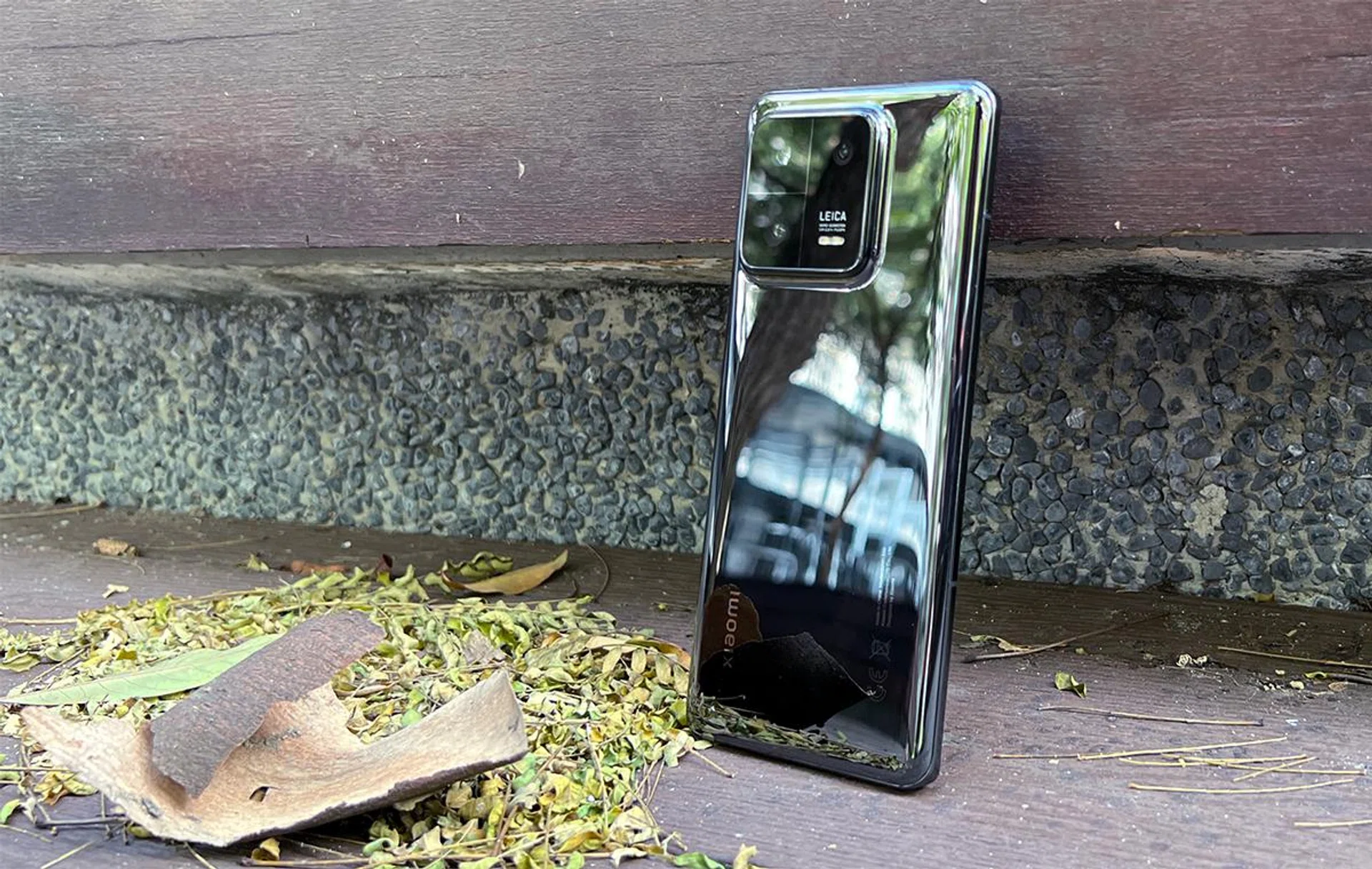
For its trump card, the triple-rear camera Xiaomi 13 Pro taps into its partnership with Leica, offering a co-engineered Leica camera system with lenses, image tuning, and a user interface that harkens to the aesthetics of the German optics manufacturer.
We’ve covered what the cameras offer in our initial launch coverage, so our review below will touch on the results we got through the Leica-touched Xiaomi 13 Pro instead.
Huge imaging promises aside, is the Xiaomi 13 Pro a good smartphone? Would it make a good premium smartphone too? Let’s find out.
A familiar face at a different price point
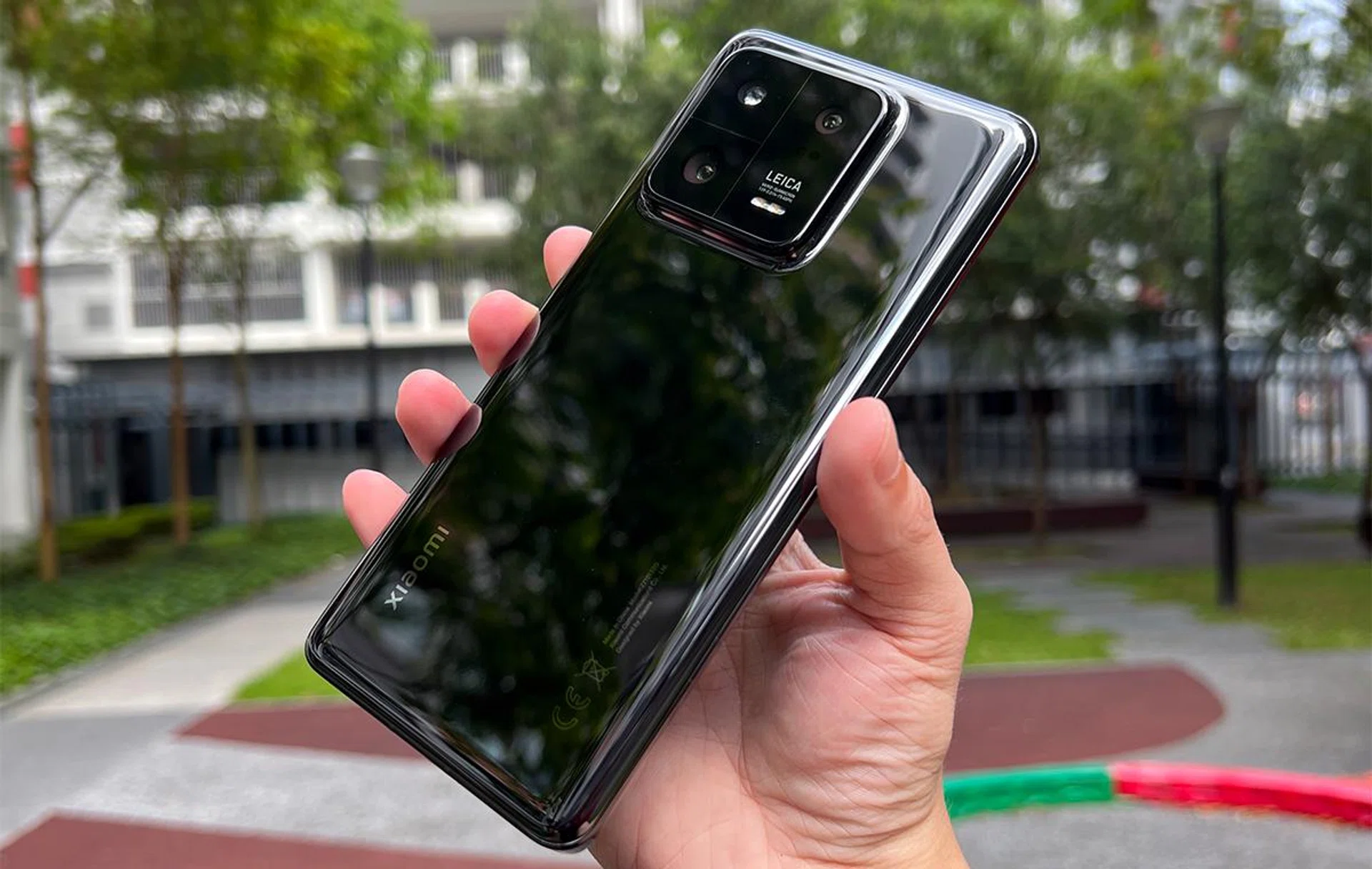
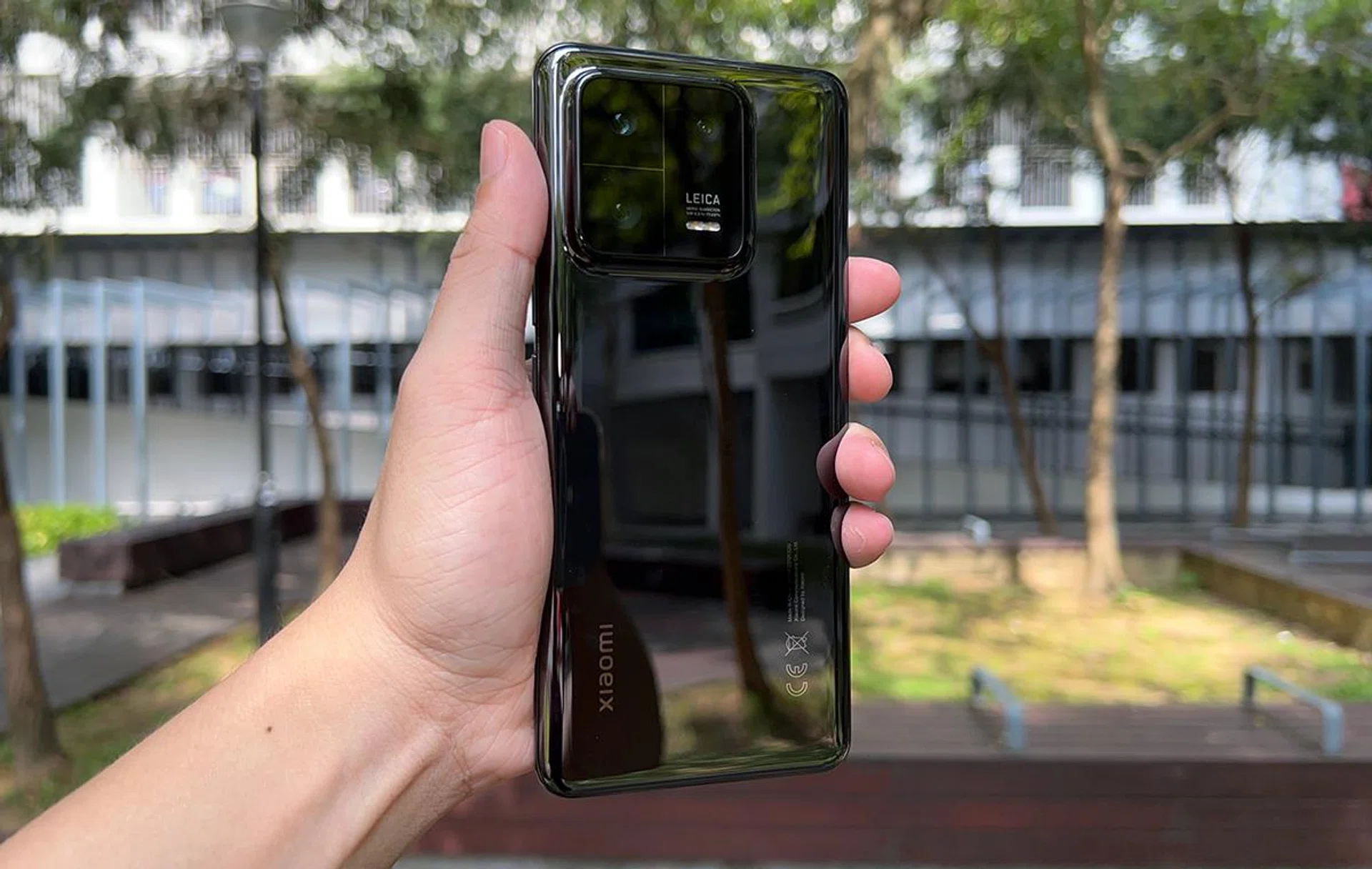
The Xiaomi 13 Pro's sandwich body with curved sides is all too familiar to fans of Chinese Android handsets. The company said that the rear is made from medical-grade bioceramic material, which implies that the Xiaomi 13 Pro uses the same mediums one would use to make prosthetic limbs and implants. Bioceramic is typically used for its durability and special "soft touch" texture and we think it helps to justify somewhat its premium asking price today.
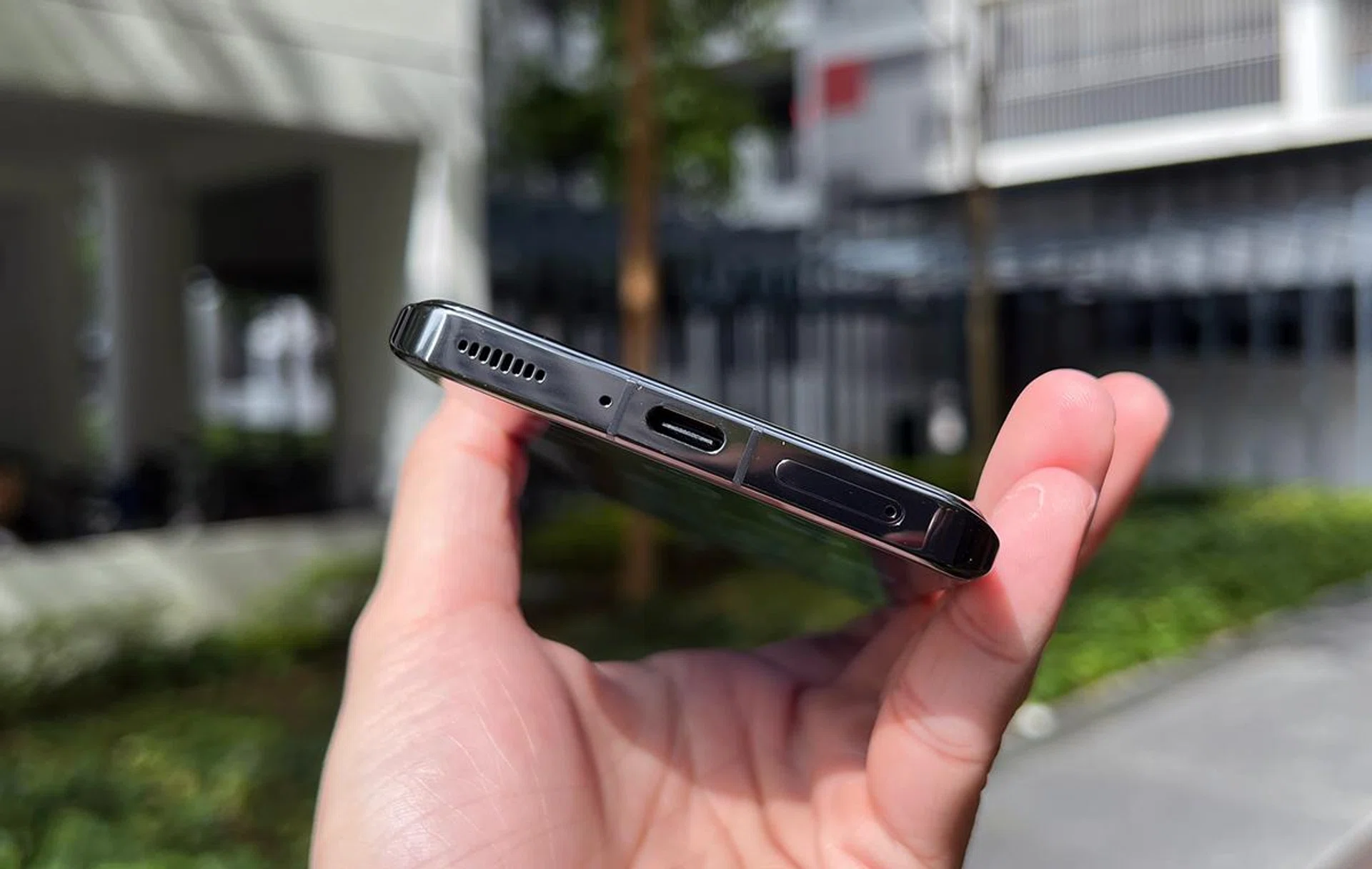
That said, the phone weighs 229g, bringing about some heft to day-to-day operation. For reference, the harmonica-sized Galaxy Z Fold4 (a winner in our books) is only 34g heavier.
If you're the type to derive a sense of quality assurance from the weight of products, the Xiaomi 13 Pro satisfies that. To us, it feels almost too heavy for portable gimbals, much less a low-tech selfie stick. The weight is pretty much a preference, but make no mistake: the Xiaomi 13 Pro is sturdy enough to be a blunt weapon in a desperate pinch (no, we don't recommend doing that).
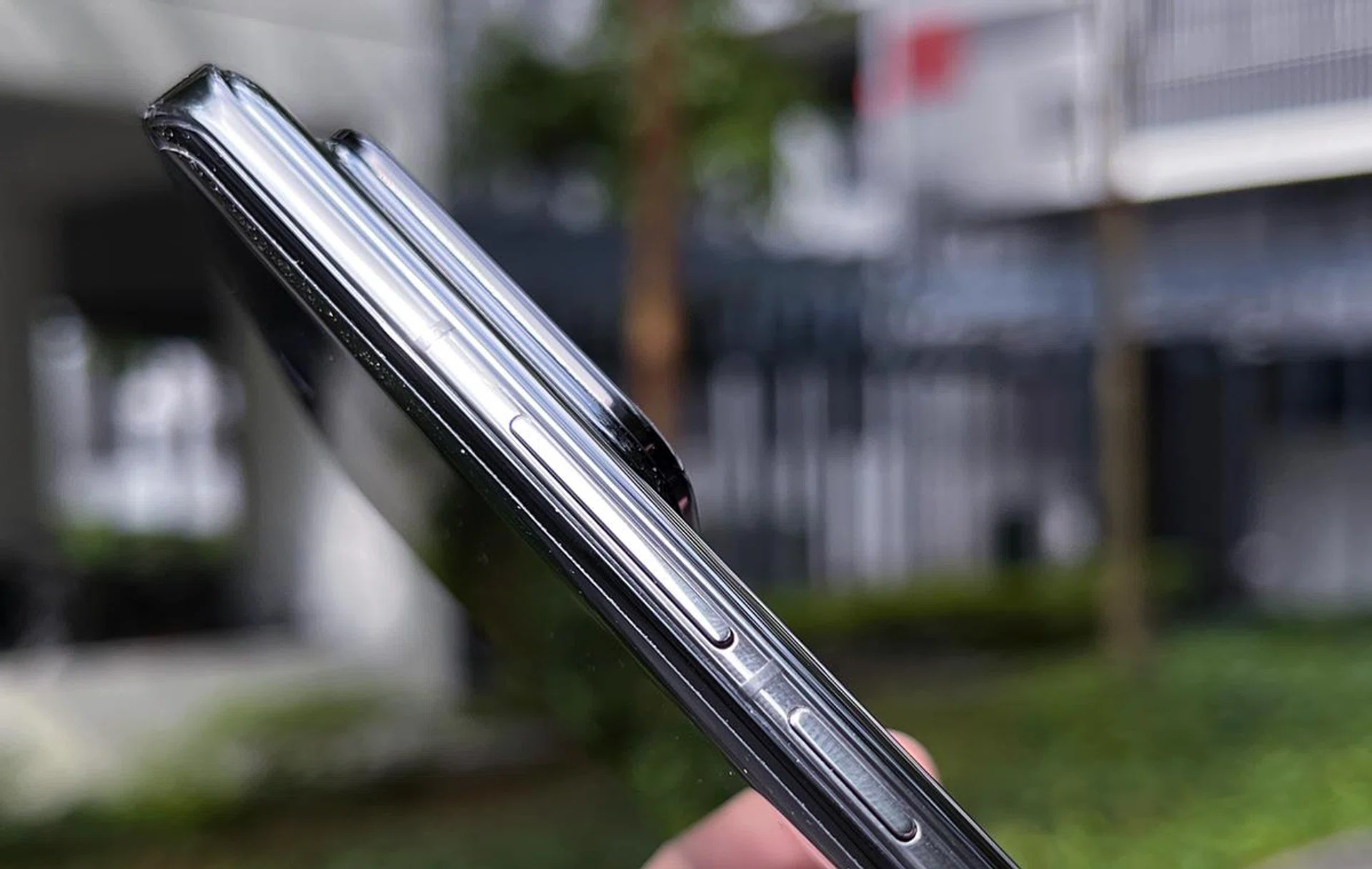
On the sides are raised metallic rims that run around the phone's body with two cutouts for buttons: the power nub and volume rockers. As a premium handset, we wished the phone's buttons carried a little more tactile or visual flair so that it improves the glance value when you're mindlessly operating the device.
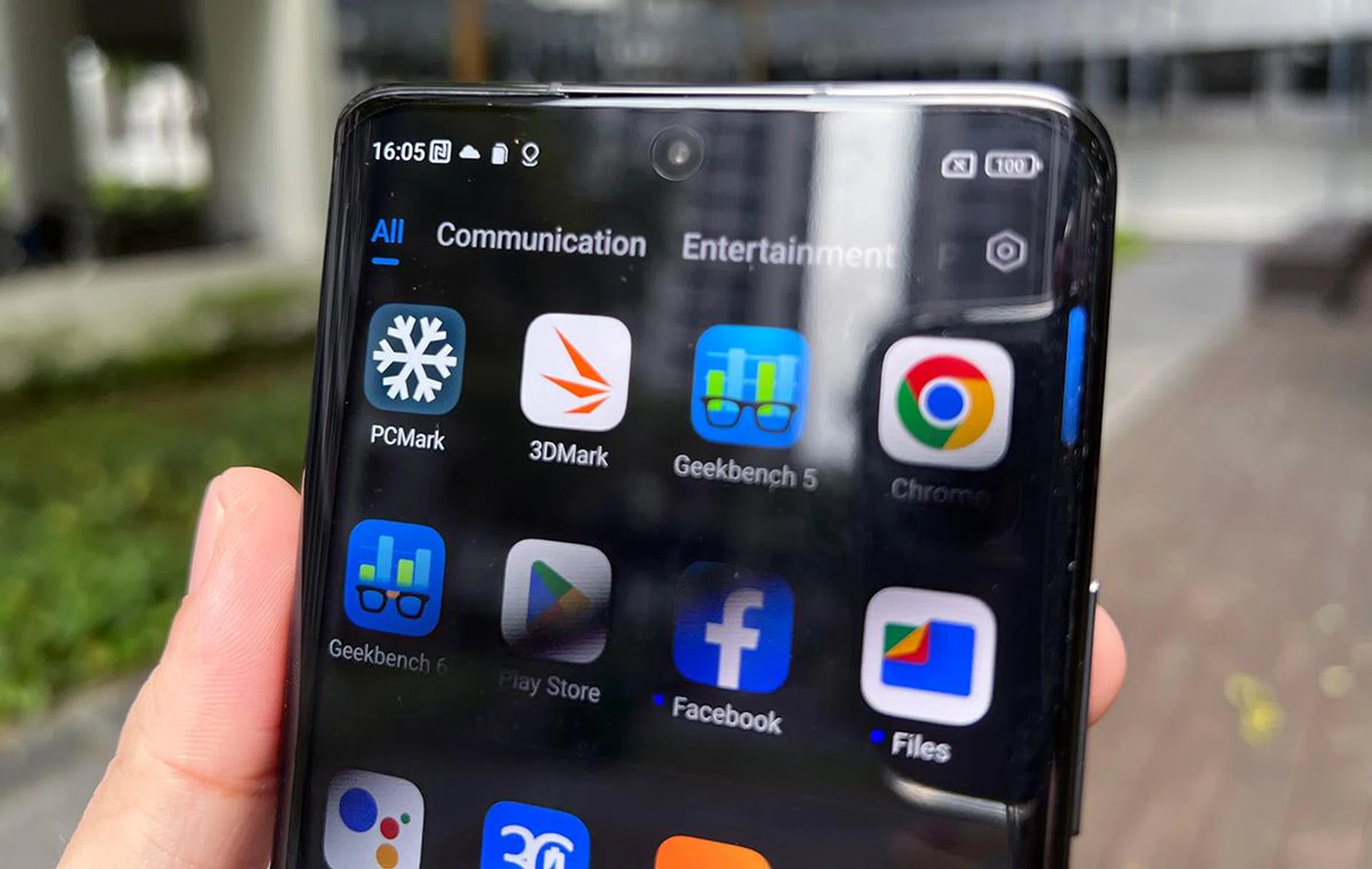
The front is the display, which uses Corning Gorilla Glass Victus, which has the same scratch resistance as the current-gen Victus 2 that's on the Samsung Galaxy S23 Ultra. The display glass also offers curved sides, so we won't fault you for thinking that the Xiaomi 13 Pro looks just like any other modern Chinese mobile.
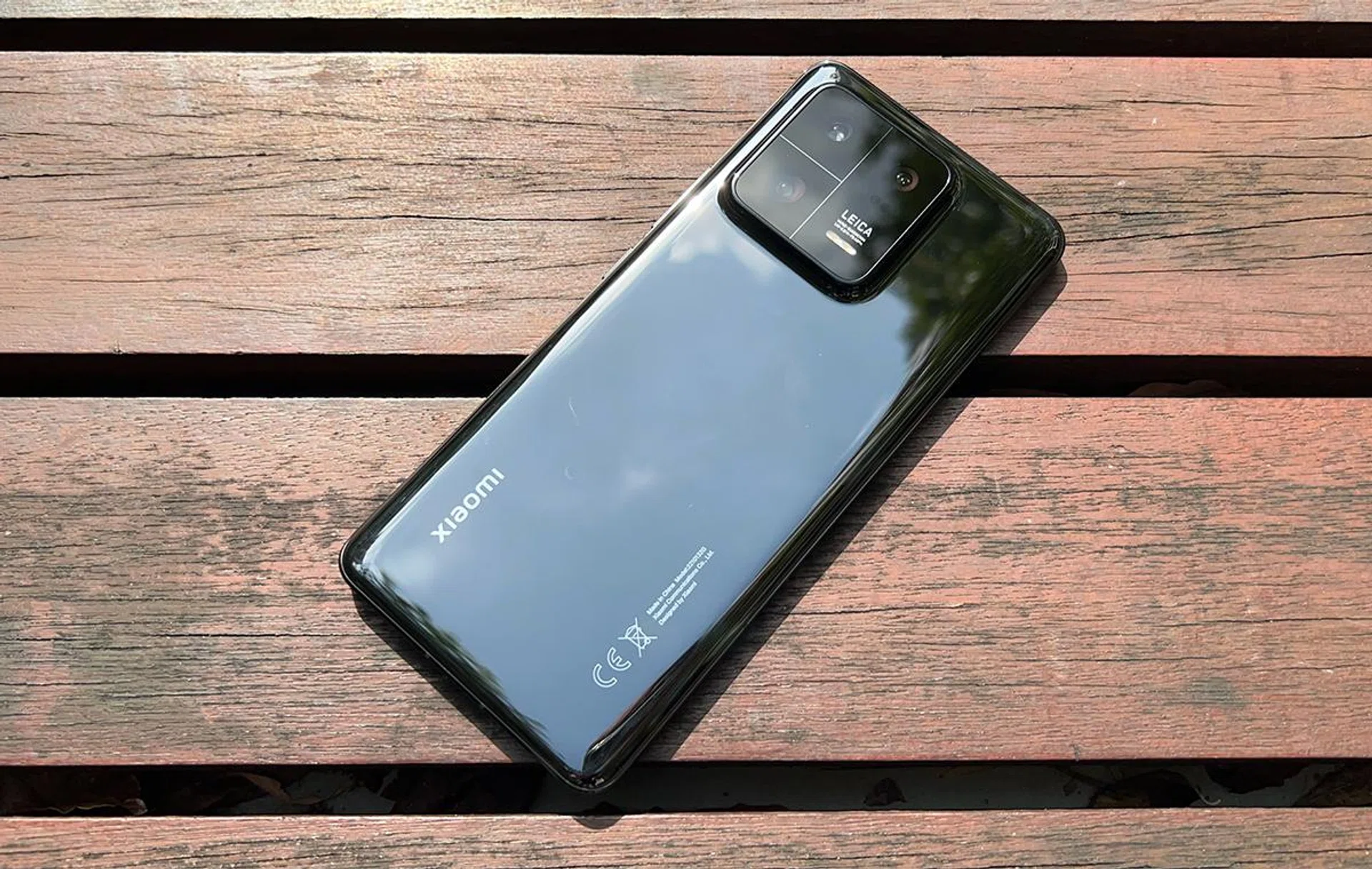
Topping it all off is a comically huge rear camera housing that even its provided phone casing cannot help to balance out against its back. Granted, it's a very neat square block with a thoughtful Leica-like design that emphasises clean lines, smooth surfaces, and formal minimalism, but all that aesthetic goes away when the hump catches on your pocket fabric or scuffs other belongings in your bag.
As a whole, the Xiaomi 13 Pro's physicality makes it a very classic Xiaomi product: it has a design that's mostly sensible and familiar if a bit formulaic, with generally solid operational handling. Unfortunately, it has little flaws that make people go "eh, it's a bit cheaper than the others, anyway".
But it's not cheaper now. It's S$1,599 for 256GB, so we hope Xiaomi understands that a different price point comes with different expectations, even in the 'superficial' areas of a phone.
Display and Audio
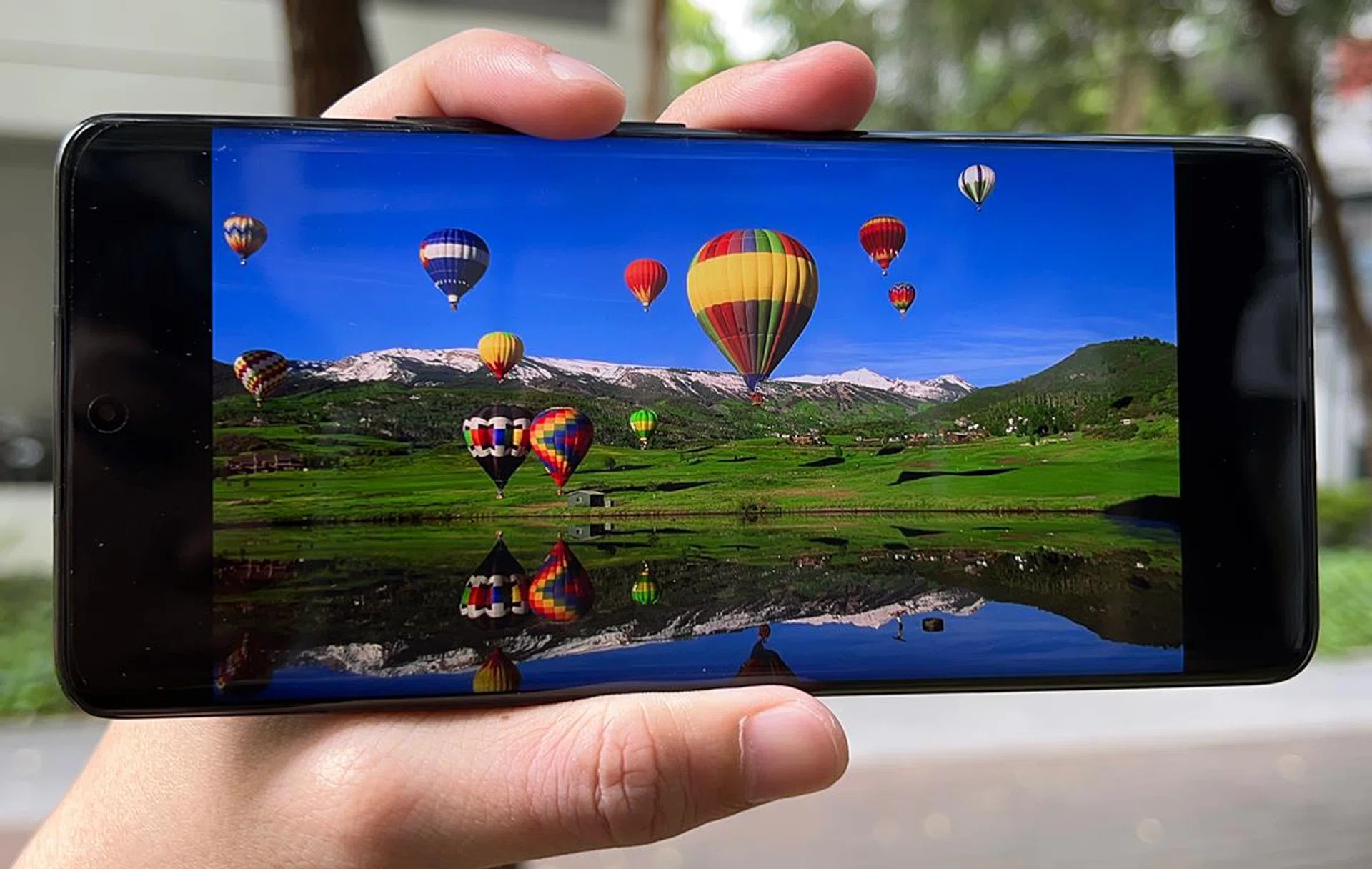
The front and centre of the Xiaomi 13 Pro is a lovely 6.73-inch LTPO AMOLED panel rated at WQHD+ resolution (3,200 x 1,440 pixels). LTPO means that the panel is capable of 1Hz to 120Hz refresh rates, and it proved capable of playing back our favourite shows with high framerates. The panel offers mildly aggressive saturation that's similar to the earlier days of Samsung's phone AMOLED displays, with a lower contrast tolerance.
It looks vibrant and sharp even under harsh sunlight, thanks to the display's 1,900-nits peak brightness (it typically sits at 1,200-nits if you don't need ultra-bright displays). To aid with environmental detection, the phone has 360° ambient light sensors that determine whether you need 1,900 nits.
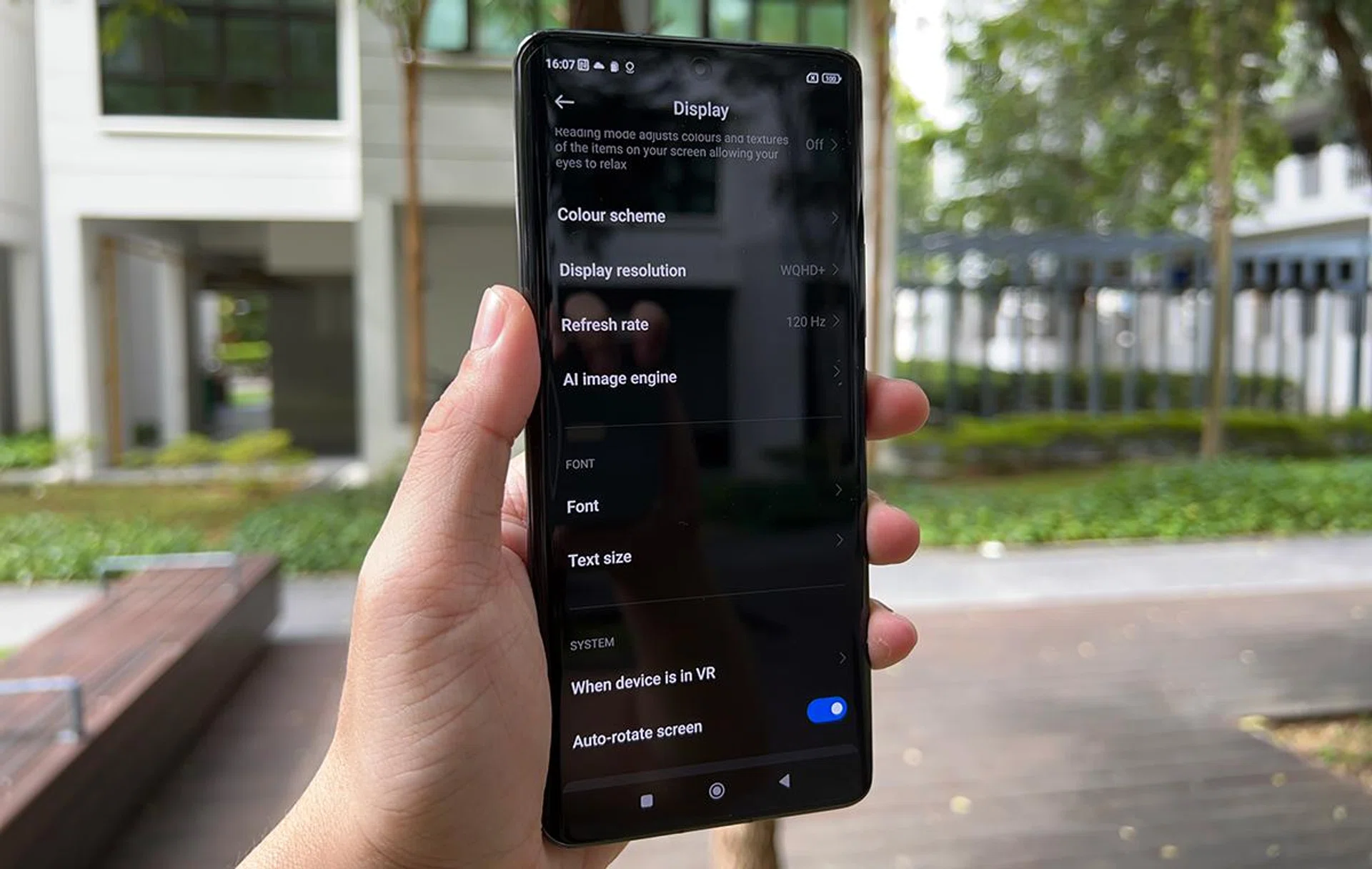
Other panel perks include support for HDR10+, Dolby Vision, and a touch sampling rate of up to 240Hz for gamers. We found the panel sufficient for the price it commands, but phone displays are hardly disappointing in recent times.
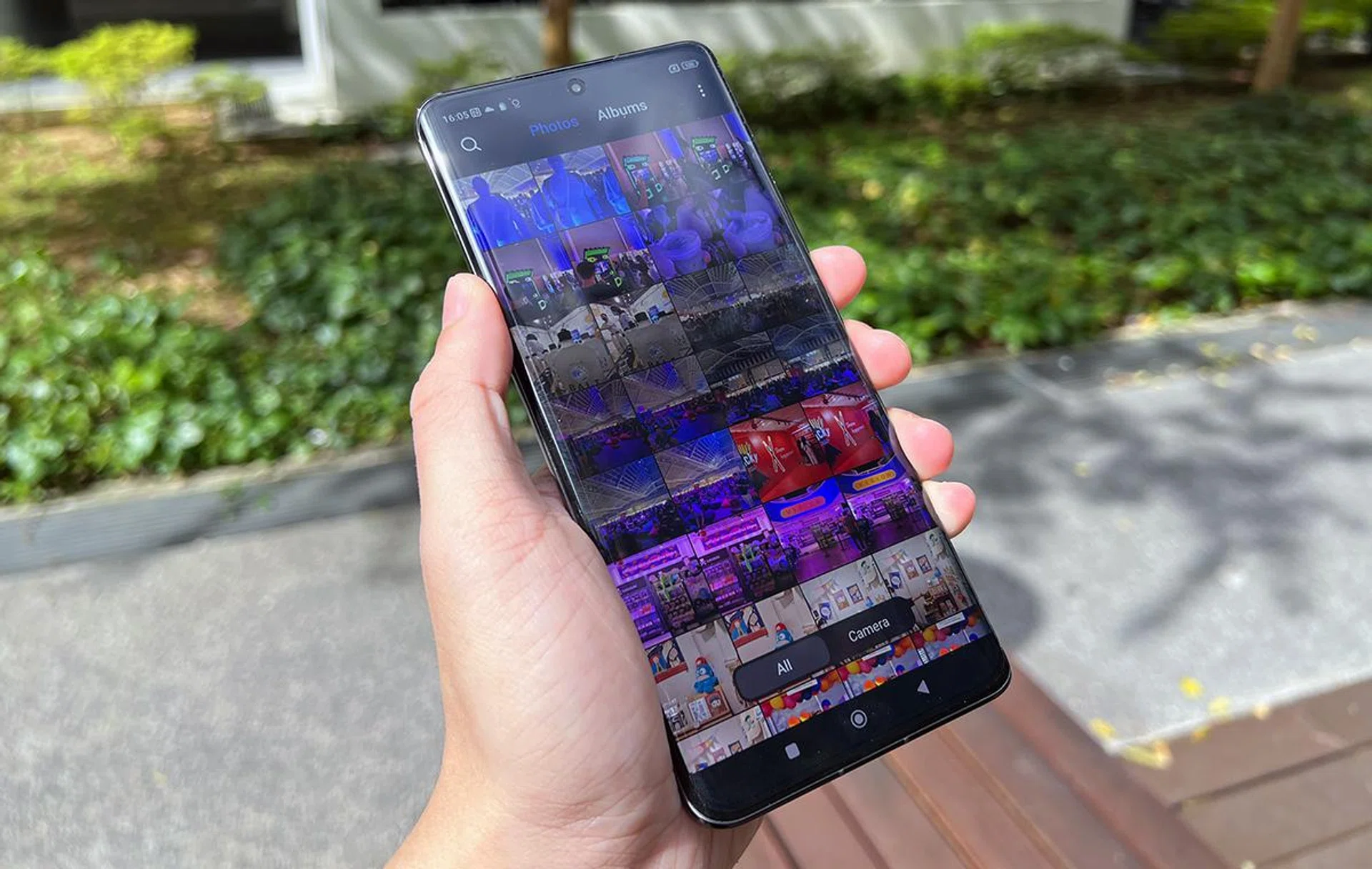
Bright and clear even under the afternoon sun in Singapore.
What surprised us was the default audio quality offered by the Xiaomi 13 Pro's dual speakers. Typically, speakers built into phones have a bloated or muddy sound that favours loudness over accuracy, but the Xiaomi 13 Pro can be obscenely loud without losing out on too many details. It was actually bearable to use the speakers for watching YouTube and swiping on TikTok, and there wasn't a need to reach for true wireless earbuds for better absent-minded listening. We'd still recommend getting a pair of TWS if you want a more focused musical experience.
The default Mi Video content player app supports its built-in Dolby Atmos surround sound technology, which makes onboard, Dolby Atmos-ready videos more easily compatible right out of the box.
User Interface
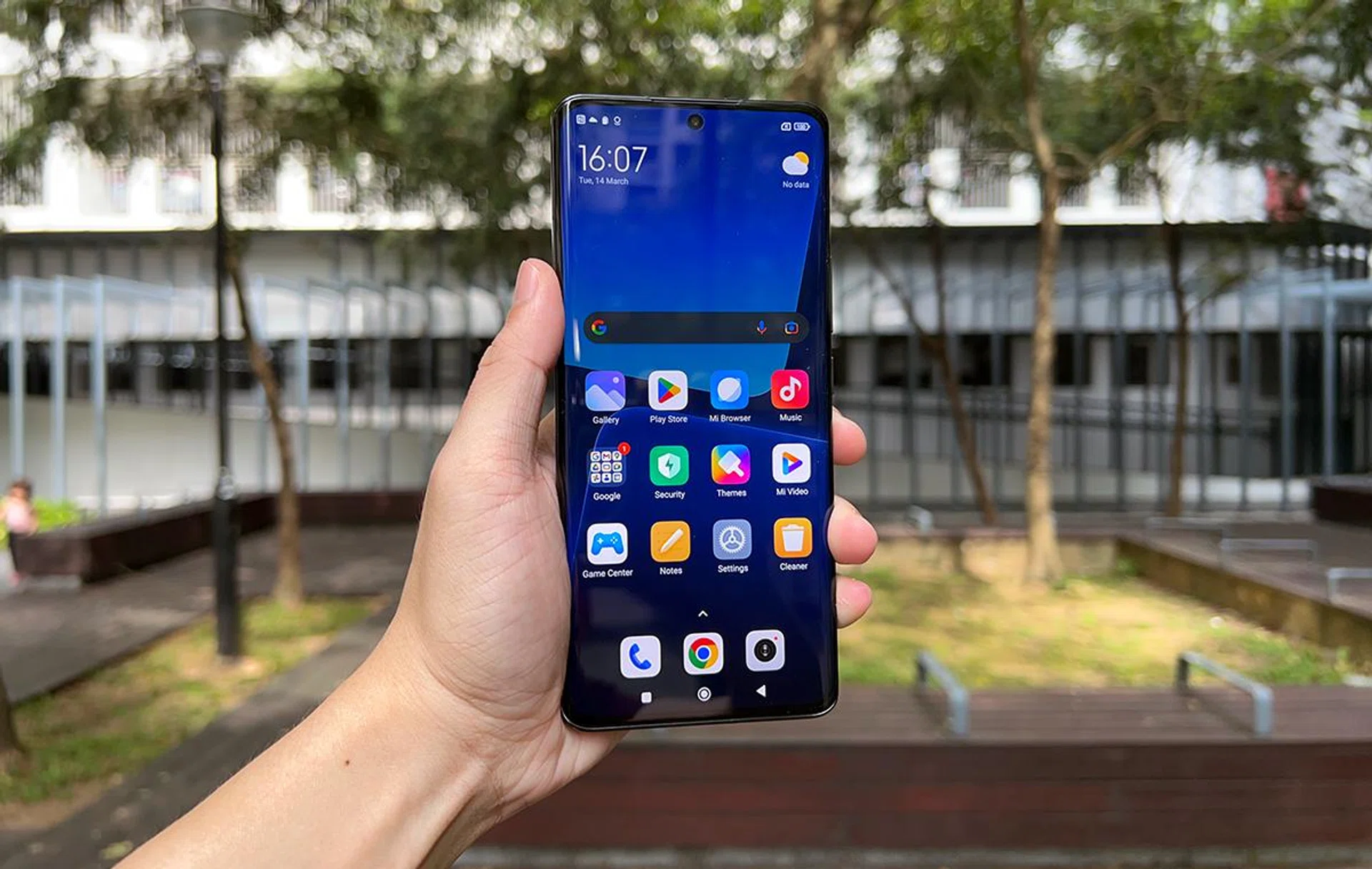
MIUI 14 and Android 13 need no introduction at this point because the Xiaomi design language hasn't really changed much over the years. It's still the same blocky palette paired with an iPhone-like notification dropdown menu (swipe down from the top-centre for notifications, swipe down from top-right for Wi-Fi, Bluetooth, brightness etc. settings).
In classic Xiaomi style, the UI's attention to detail is still inconsistent. Not all notifications feature bolded text for its headline. Video and email previews in notifications eat towards the margin where the "expand notification" button is, but certain other apps do not intrude into those margins and instead go into the next line.
The Settings app categorises the features based on their primary objective (security-related settings, for example, are all within the same space), but there are no headers to indicate why they are grouped together. Text inside the Settings app (like our Wi-Fi name under the Wi-Fi setting) goes into the next line mid-sentence. We can point out even more flaws, but that would be unkind since the MIUI 14 is clean and intuitive.
Xiaomi's UI being less polished is hardly new to the brand, and we've never really minded it until now. If Xiaomi wants to charge users premium prices, the polish and attention to detail set these brands apart from the rest. For instance, Apple and Samsung have come a long way to make their UI less icky for their fans, and we think Xiaomi fans also deserve some level of polish.
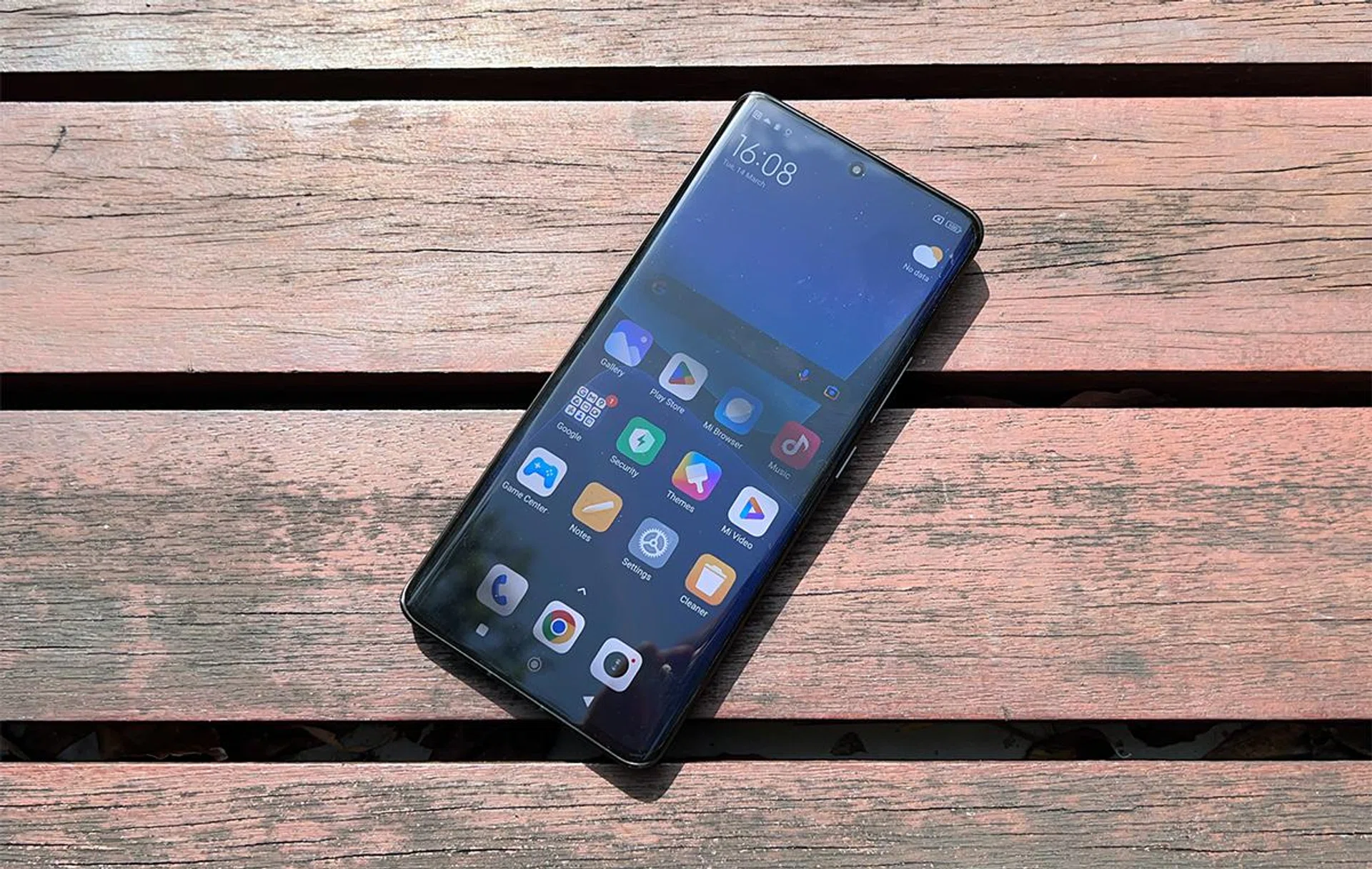
The under-display optical fingerprint sensor is blazingly fast and reasonably accurate, which makes it a breeze to unlock your phone once you whip it out of your pocket. The phone is also very speedy in day-to-day use.
Imaging performance

We’ve covered the Leica co-engineered camera system in detail here, so we’ll touch on the Xiaomi 13 Pro’s imaging performance and shooting experience instead.
In essence, the Xiaomi 13 Pro has a triple rear camera system with a 50MP main, 50MP telephoto, and 50MP ultra-wide camera. The telephoto camera offers 3.2x optical zoom and support for macro photography, while the ultra-wide has AutoFocus installed. The Xiaomi 13 Pro already offers a wide shooting range for various situations even before taking Leica's optimisations into account.
With the Leica perks thrown into the mix, you can shoot in Leica’s colour science through its Leica Vario-Summicron lenses on all rear cameras via a Leica-like user interface for its default camera app.
The premise of these Leica add-ons enables the Xiaomi 13 Pro to mimic a photo finish that you would achieve through a true Leica camera. If you enjoy the idea of shooting like you own a Leica without actually having one, the Xiaomi 13 Pro might just be attractive to you.
But, be warned: the app itself isn't the most intuitive, with Xiaomi cramming its features and tools all over the place in different sub-menus and ambiguous icons. This is oddly consistent with Xiaomi's historic struggles with its UI.

The two Leica Photographic Styles and what they offer via the rear cameras of Xiaomi 13 Pro.
Unfortunately, the deep Leica integration also means you can’t disable the Leica enhancements easily. At the bare minimum, you must choose between two Leica Photographic Styles for your regular photo-taking: Leica Vibrant, or Leica Authentic, both conferring different aesthetics to your final image.
If you want none of these finishes, you can download a third-party camera app, and still get to enjoy the Leica Vario-Summicron-branded lenses without the Leica UI or finishes. We mentioned this because Xiaomi mostly relied on its own imaging R&D and capabilities until the Xiaomi 12S series. Longtime Xiaomi fans don’t have to feel forced to use Leica aesthetics if they enjoy the rest of the Xiaomi 13 Pro device.
Alternatively, you can shoot in Xiaomi 13 Pro’s 10-bit RAW DNG format, and go into professional post-production to adjust your final images accordingly.
We split our image sampling into two sub-sections: learning to use Leica Vibrant’s and Leica Authentic’s styles to the best of our abilities, and gauging the general imaging performance of the Xiaomi 13 Pro.
Leica Vibrant versus Leica Authentic
A tiny yet important shooting feature of the Xiaomi 13 Pro sits in the “Leica” icon at the top of your camera app’s user interface. By default, the Xiaomi 13 Pro’s cameras all shoot in either Leica Vibrant or Leica Authentic photographic styles. These styles are distinct from the optional Leica and Xiaomi filters hidden in the magic wand icon at the bottom right of your image preview.

Leica Authentic.

Leica Vibrant.
According to Xiaomi, the Leica Vibrant and Authentic photographic styles are inspired by classic Leica aesthetics, are narrative-based, and are capable of achieving P3 colour gamut for “true-to-life” colour accuracy.

Leica Authentic.

Leica Vibrant.
In our trials, we felt that Leica Vibrant offered higher saturation with lower contrast to the overall image, while Leica Authentic strengthened shadows and highlights for a more dramatic effect (and also feels more true to the classic Leica vibes). Choosing either boils down to your personal preference.

Leica Authentic.

Leica Vibrant.
For us, we found that using Leica Vibrant in low-light or indoor situations helps to bring out details that are easily missed, while Leica Authentic performs well with sufficient sunlight and a good subject to match. It’s also very similar to our shooting experience with the Leica-backed Huawei P10 Plus, although its aesthetics went by different names back then.

Leica Authentic.

Leica Vibrant.
Here are some more sample images to showcase how and why the two Leica photographic styles matter on the Xiaomi 13 Pro.

Leica Authentic.

Leica Vibrant.

Leica Authentic.

Leica Vibrant.

Leica Authentic.

Leica Vibrant.
Other sample images
The general imaging performance of Xiaomi 13 Pro is quite strong, but it still leaves some to be desired.

Main Camera, Leica Authentic.

Main Camera, Leica Vibrant.
It has an impressive set of cameras with excellent rendition at its default focal points (ultra-wide, normal, 2x and 3.2x zoom), on top of good macro handling with its telephoto camera. If you want to point, shoot, and upload, the Xiaomi 13 Pro should do okay in this aspect.

2x zoom, Leica Authentic.

3.2x zoom, Leica Authentic.

Ultra-wide, Leica Authentic.
Overall, it offers average handling of details, with passable mastery over highlights, shadows, and contrast. It keeps noise to a minimum, especially under daytime shooting conditions.
However, the cameras have noticeably slow shutter speeds, affecting the sharpness and clarity outside the focal point. It can take most users multiple tries to get an ideal shot especially in challenging shooting scenarios – such as moving subjects, drastic lighting contrast, or having little light to work with.

Main Camera, Leica Authentic.

Main Camera, Leica Vibrant.
That also leads to the Xiaomi 13 Pro showing some cracks in handling scenarios with extreme contrast, where the details are sometimes lost in the brightest or darkest spots of the photo. Similarly, you can see the noise mastery take a hit when you preview the indoor, low-light photos from our photographic style comparisons above.

2x zoom, Leica Authentic.

3.2x zoom, Leica Authentic.

10x digital zoom, Leica Authentic.

70x digital zoom, Leica Authentic.

Ultra-wide, Leica Authentic.
It also struggles a bit with rendering reds in photos, where detail is also lost along that spectrum. Weird.
As a whole, the Xiaomi 13 Pro’s imaging capabilities generally fare well with some exceptional areas of performance, but it just needs a little more effort (either in software optimisation or better mastery of its awesome Sony sensors) to truly make other S$1,500+ phones shudder in their boots. A good start would be to fix its shutter. Colloquially speaking, it’s almost there. Almost.

Main Camera, Leica Authentic.

Macro mode via 3.2x optical zoom option, Leica Authentic.

Main camera, Leica Authentic.

Main Camera, Leica Vibrant.
Benchmark Performance
Inside the Xiaomi 13 Pro is the Qualcomm Snapdragon 8 Gen 2, and it’s not surprising given Xiaomi’s asking price and its positioning as a premium alternative to other upcoming SD8G2 titans in 2023. Having the latest LPDDR5X RAM and UFS 4.0 storage also puts it on par with the Samsung Galaxy S23 Ultra, so it’s down to synthetic benchmarks to see which brand did a better job at optimising the processor for its mobile platform.
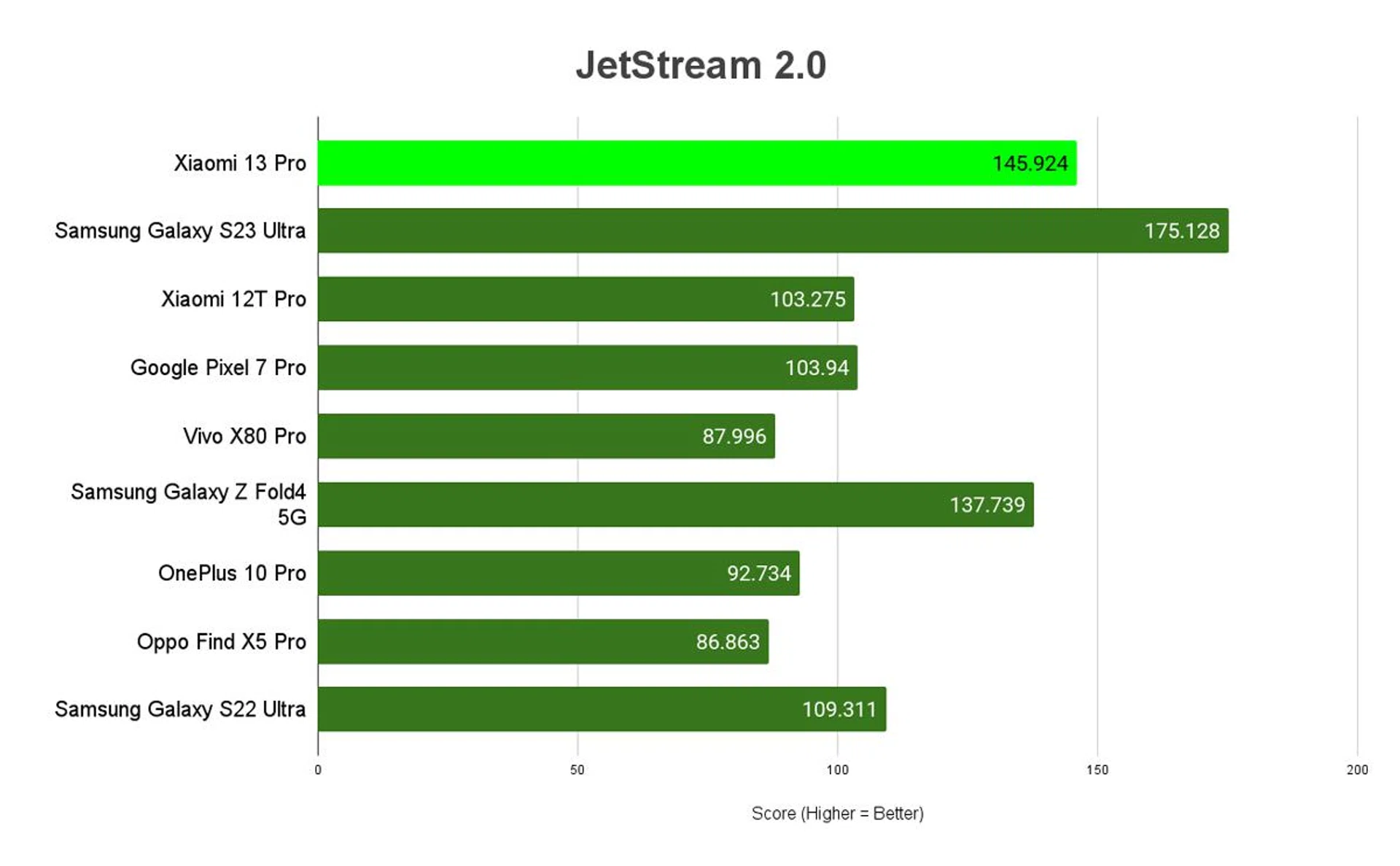
JetStream 2.0
JetStream 2 is a combination of a variety of JavaScript and Web Assembly benchmarks, including benchmarks that came before like SunSpider and Octane. It primarily tests for a system’s and browser’s ability in delivering a good web experience. It runs a total of 64 subtests, each weighted equally, with multiple iterations, and takes the geometric mean to compute the overall score. The higher the score, the better.
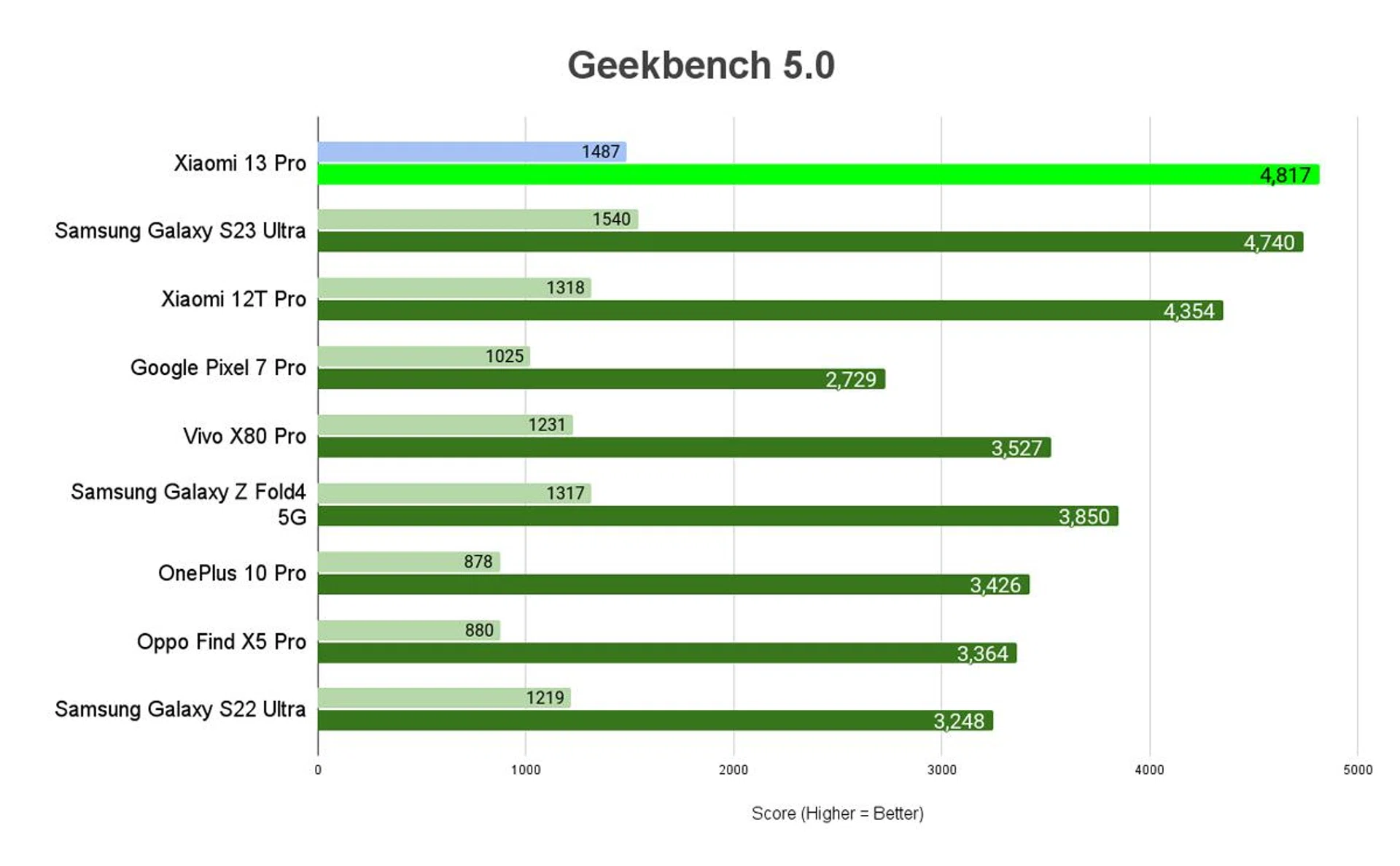
Geekbench 5
Geekbench CPU is a cross-platform processor benchmark that tests both single-core and multi-core performance with workloads that simulate real-world usage. Geekbench 5 scores are calibrated against a baseline score of 1000, which is the score of an Intel Core i3-8100. The higher the score, the better.
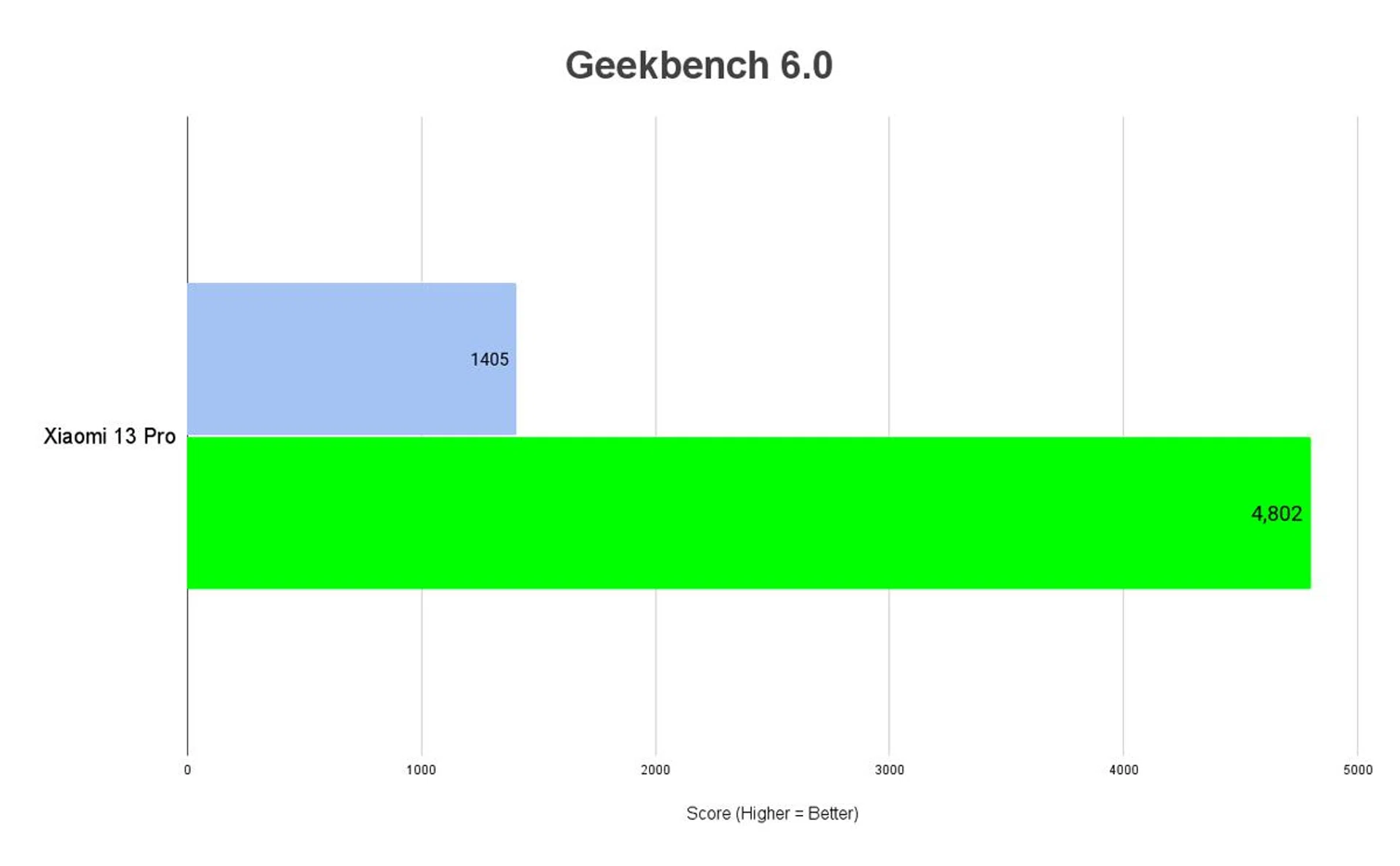
Geekbench 6
Our Geekbench 5 benchmarking will soon be replaced with Geekbench 6, the updated version that tests single-core and multi-core CPU performance. Geekbench 6 scores are calibrated against a baseline score of 2500, which is the score of an Intel Core i7-12700. We’ll continue to populate this new benchmark with more scores from our review units before fully transitioning over.
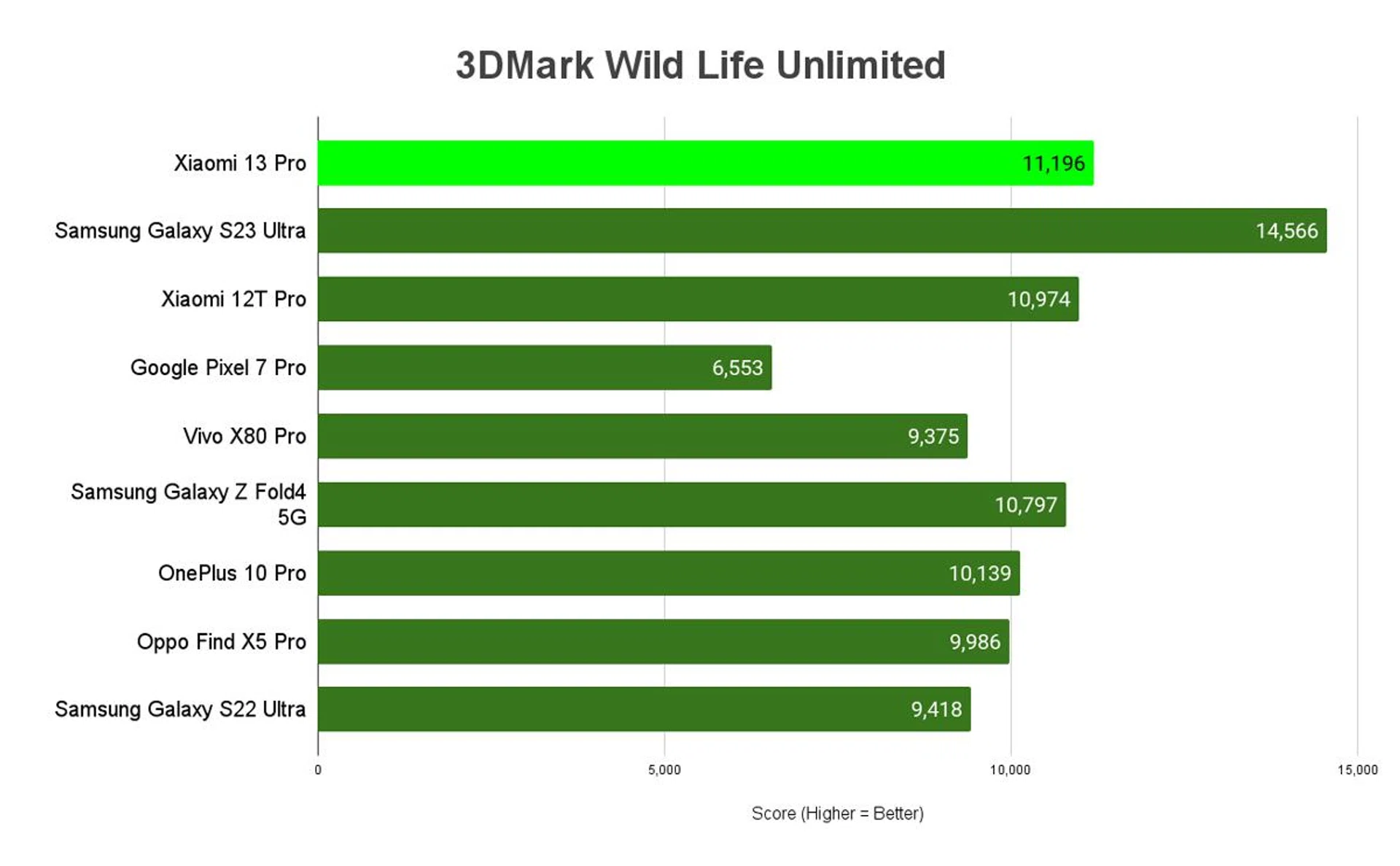
3DMark Wild Life (Unlimited)
3DMark Wild Life is a cross-platform benchmark for Windows, Android and Apple iOS for measuring GPU performance. Its graphics test consists of multiple scenes with variations in the amount of geometry, lights and post-processing effects, mirroring mobile games that are based on short bursts of intense activity. Wild Life uses the Vulkan graphics API on Windows PCs and Android devices. On iOS devices, it uses Metal.
In Unlimited mode, the benchmark runs offscreen using a fixed time step between frames. Unlimited mode renders exactly the same frames in every run on every device, regardless of resolution scaling. The higher the score, the better.
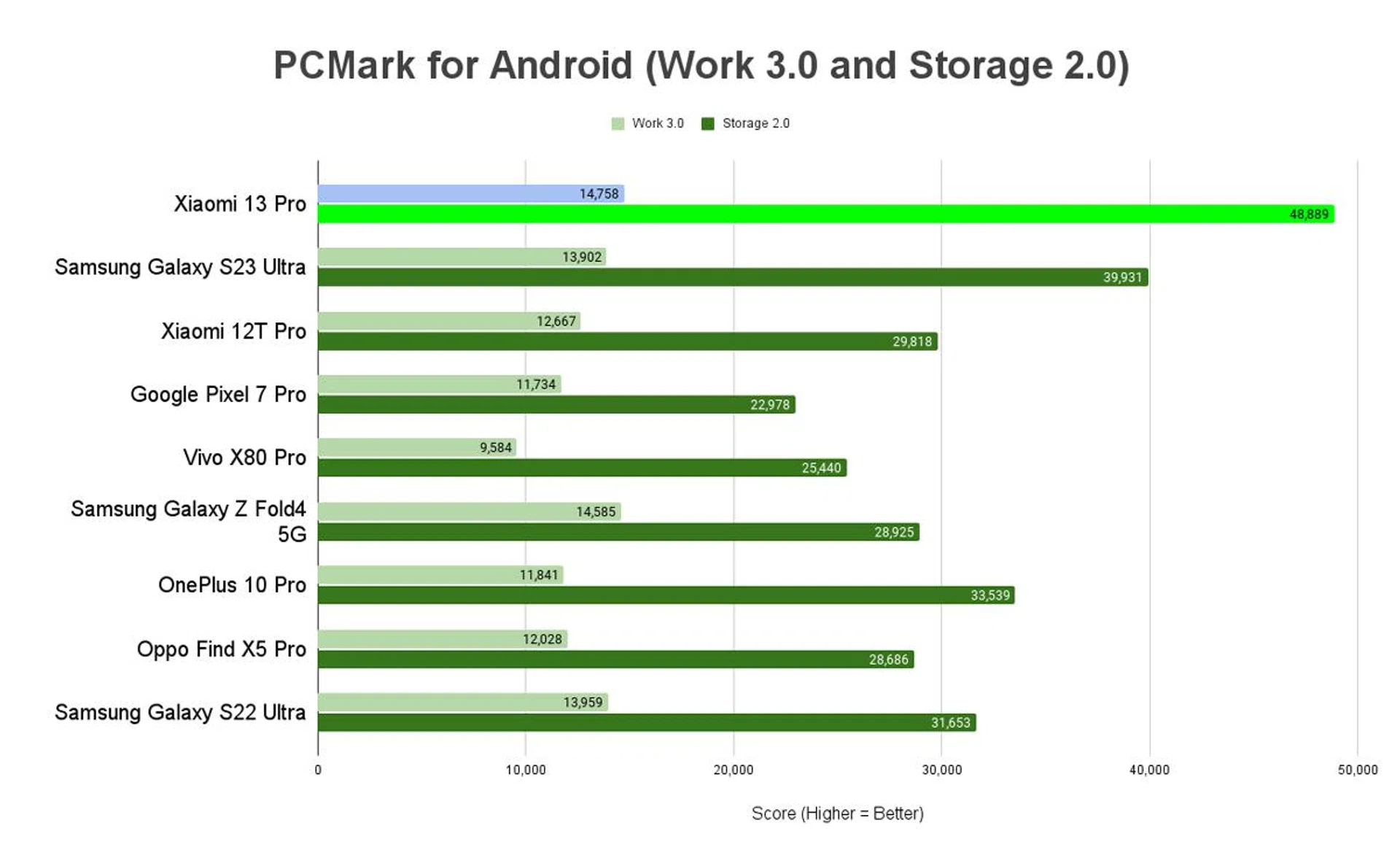
PCMark for Android - Work 3.0 and Storage 2.0
PCMark for Android is a benchmark for testing the performance of Android phones and tablets. The Work 3.0 test checks how the device handles common productivity tasks such as browsing the web, editing videos, working with documents and data, and editing photos. Storage 2.0 checks write-in and read-out performance for internal storage, external storage (if applicable), and SQLite database management. Together, the benchmarks can clue us in on how capable a phone is at handling everyday use. Work 3.0 scores are above, while Storage 2.0 scores are immediately below for each device - the higher the score, the better.
Since this is a newly introduced benchmark in our reviews, we’re building up our database of PCMark scores for Android phones.
Benchmark Performance remarks
With its synthetic performance almost on par with the Samsung Galaxy S23 Ultra, the Xiaomi 13 Pro offers true flagship performance. It exceeded our expectations with its fast RAM and storage speeds and fast CPU. As mentioned in our User Interface section, we encountered no major issues when using the Xiaomi 13 Pro daily. This is also in line with our expectations of Xiaomi, who has been making snappy high-end for several years now.
One possible reason why its GPU score doesn't measure up to the Galaxy S23 Ultra would be its clock speeds: the Samsung premium handset has a custom SD8G2 processor clocked at 3.36GHz, while the Xiaomi 13 Pro's version of SD8G2 tops off at 3.2GHz (based on multiple device monitoring apps installed). After all, that's why Samsung has been specifically marketing theirs as a 'Snapdragon 8 Gen 2 for Galaxy' edition processor.
Battery Life
Our new battery benchmark uses PCMark for Android’s Work 3.0 Battery Life test to determine a modern Android-based smartphone's battery uptime in minutes. This controlled benchmark simulates real-world usage with a combination of both web and social media browsing, video and photo editing, parsing data with various file formats, writing (on documents), and more.
To enhance consistency in battery results, we start the test at:
- 100% of the phone’s battery capacity until 20% left
- A fixed display brightness is calibrated at 200cd/m2 (200-lux) with the help of a luminance meter
- Max resolution
- Refresh rates unlocked
- 0% audio, or completely silenced where possible
- Full bars of Wi-Fi connectivity, Bluetooth, and notifications enabled
- Only one other battery recording app opened in the background
- Scored in uptime minutes; the higher, the better
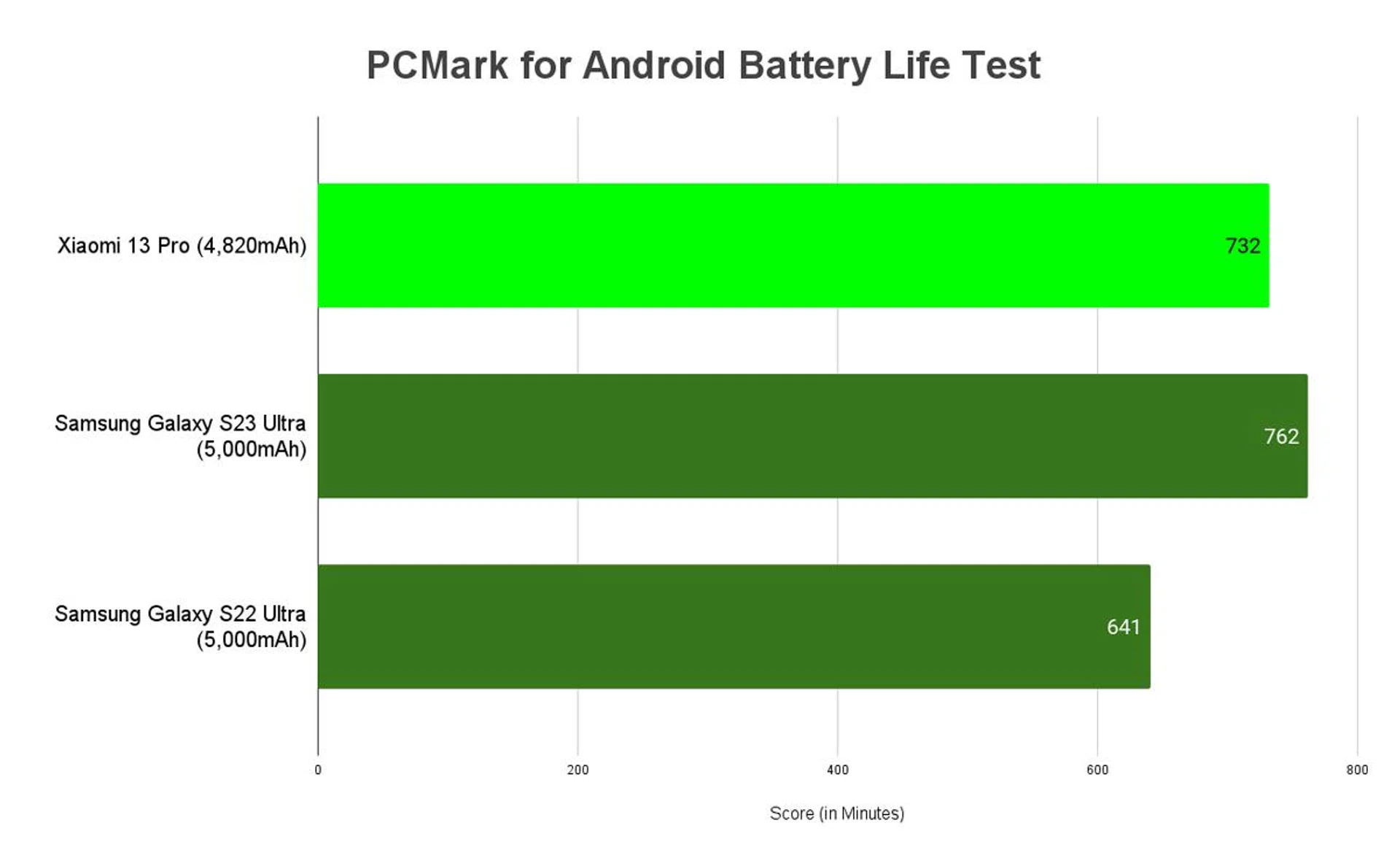
In real-world use, the Xiaomi 13 Pro burns through 3-4% when idling for 24 hours, about 10% for an hour of photography, 13% for an hour of 60-120Hz gaming, and consumes roughly 50% of its battery throughout our active day. It offers normal up-times, but it's also nothing to write home about.
It offers 120W wired fast charging and 50W wireless fast charging, both of which are must-haves for premium-grade handsets. It took 25 minutes for Xiaomi 13 Pro to get a 50% charge from zero, and 57 minutes for a 0-100% charge.
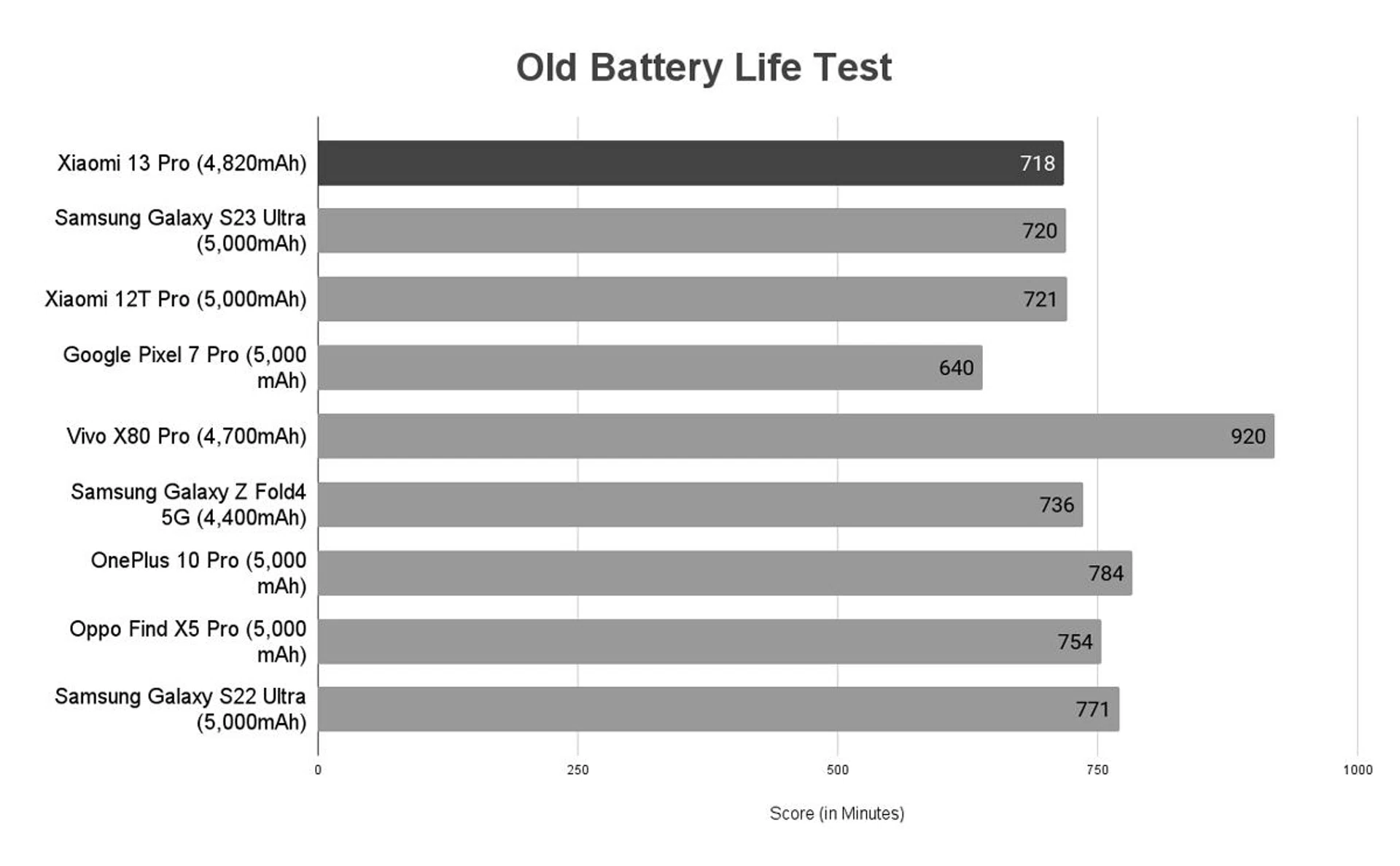
The new benchmark will succeed our outgoing Battery Life benchmarking, which has the following parameters:
- Looping a 720p video with screen brightness and volume at 100%
- Wi-Fi and Bluetooth connectivity turned on
- Constant data streaming through email
Conclusion
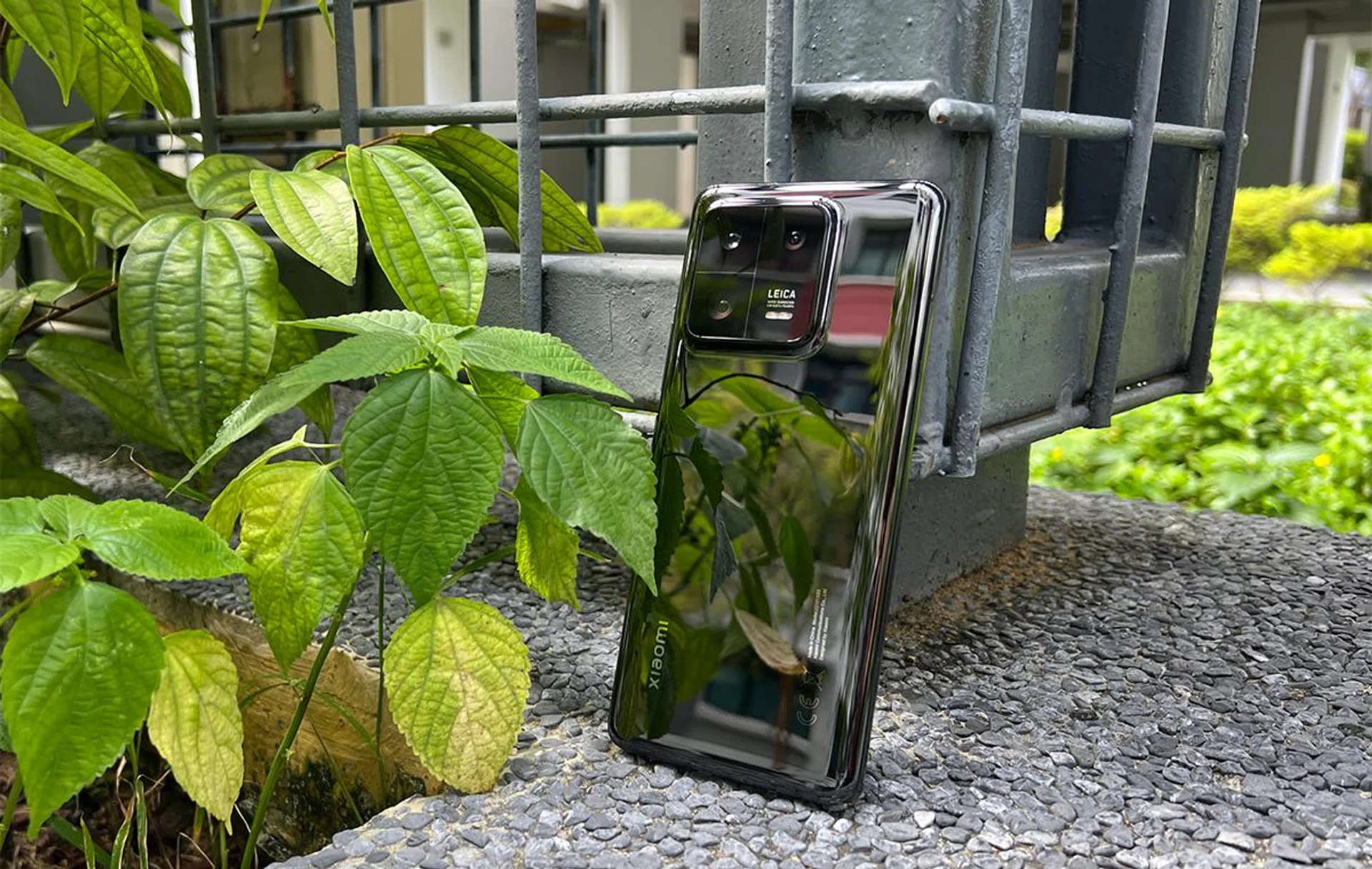
The Xiaomi 13 Pro mostly delivers in areas where you expect it to for a flagship-grade handset. However, it does have its fair share of flaws – even if none are severe enough to be game-breaking.
MIUI continues to have its quirks, the camera app is messy, and its slow camera shutter can cause users to miss moments. Fortunately, these are issues that can be easily solved via software updates. That said, for S$1,599, we'd expect the phone to come in a more polished state.
Furthermore, consider also how most other S$1,500+ phones have a combination of services, a robust smart device ecosystem, or on-chip security to justify their asking prices. In its current form, there's a slight suspicion that Xiaomi wants to ride on Leica's coattails to drive up the Xiaomi 13 Pro's asking price. That won't help non-Xiaomi users switch to this phone, especially when the Samsung Galaxy S23 Ultra is the current premium alternative that starts from just S$230 more than what Xiaomi is asking for.
Does that mean we don't like Xiaomi 13 Pro? No, quite the opposite. Overall, this is a rather handsome phone with a nice large display, top-tier performance, and a decent camera system. Though we are not 100% sold on the Leica partnership, there's no denying that it makes for a fun photo-taking experience, and the end results are often very pleasing.
The Xiaomi 13 Pro comes in Ceramic White and Ceramic Black. The official prices are:
- Xiaomi 13 Pro: S$1,599 (12GB RAM, 256GB storage)
- Xiaomi 13 Pro: S$1,699 (12GB RAM, 512GB storage)
You can get it at authorised Xiaomi retail stores islandwide. It's also available on Xiaomi's official Lazada page.
If you want something similar but more affordable, check out the regular Xiaomi 13. It has the same processor, same RAM type, same storage type, and same water resistance rated build, but it starts at a significantly lower S$1,199 (12GB RAM, 256GB storage) instead. The regular Xiaomi 13, however, has to make do with a lower resolution 1080p display and lower megapixel count for cameras. Beyond that, you're not really losing out on much.