
Sony Xperia 10 II review: A smartphone with a stunning display
At S$569, will this be the 4G LTE mid-range smartphone to beat, or is it just another mid-range phone with some bells and whistles? We find out.

Note: This review was first published on 29 June 2020.
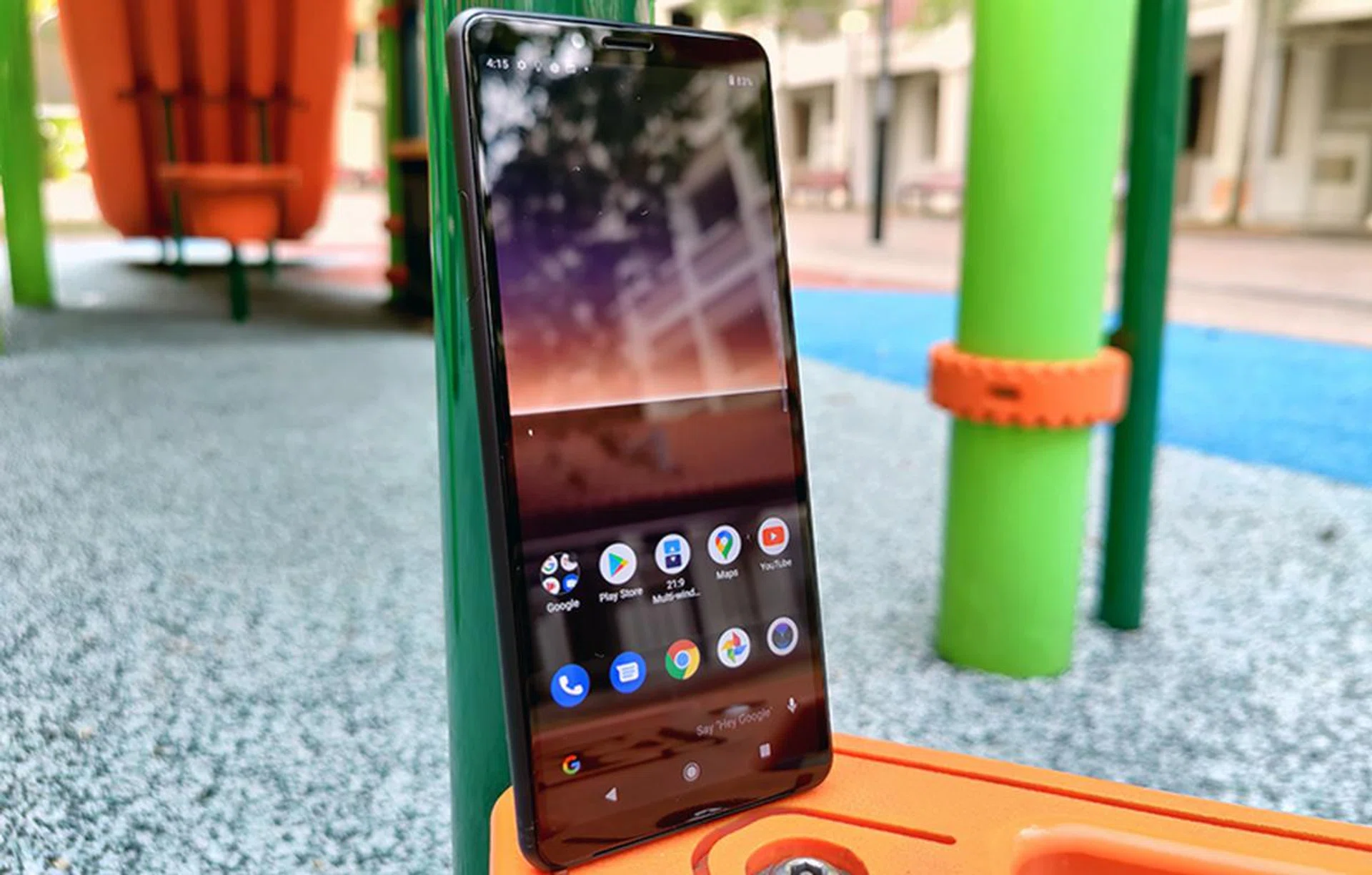
Sony Xperia 10 II.
Overview
It’s been a while since Sony Mobile last brought a mid-range device to Singapore, especially ever since they’ve announced the ‘defocusing’ of markets around the world. The last big splash they made here was through its flagship Sony Xperia 1 last year, which packed a 4K OLED display and a top-tier processor of its time.
Fast forward to date, and we have the mid-range Sony Xperia 10 II, which is the second version of the Sony Xperia 10 smartphone range. Fundamentally, it’s the same phone like its predecessor since Sony believes its got the user experience down pat, but it comes with some upgraded parts.
Returning features include the 6-inch, 21:9 display ratio, OLED panel at Full HD+ resolution which follows the aspect ratio of most movies while fitting more vertical content at one glance. More vertical viewing space is great for emails, reading documents and viewing more of your social media feeds easily. The display also has Multi-Window, a feature that lets you fire up two apps simultaneously for multi-tasking. Underneath the screen is a Qualcomm Snapdragon 665 chipset and a 3,600mAh battery powering its cinematic panel.
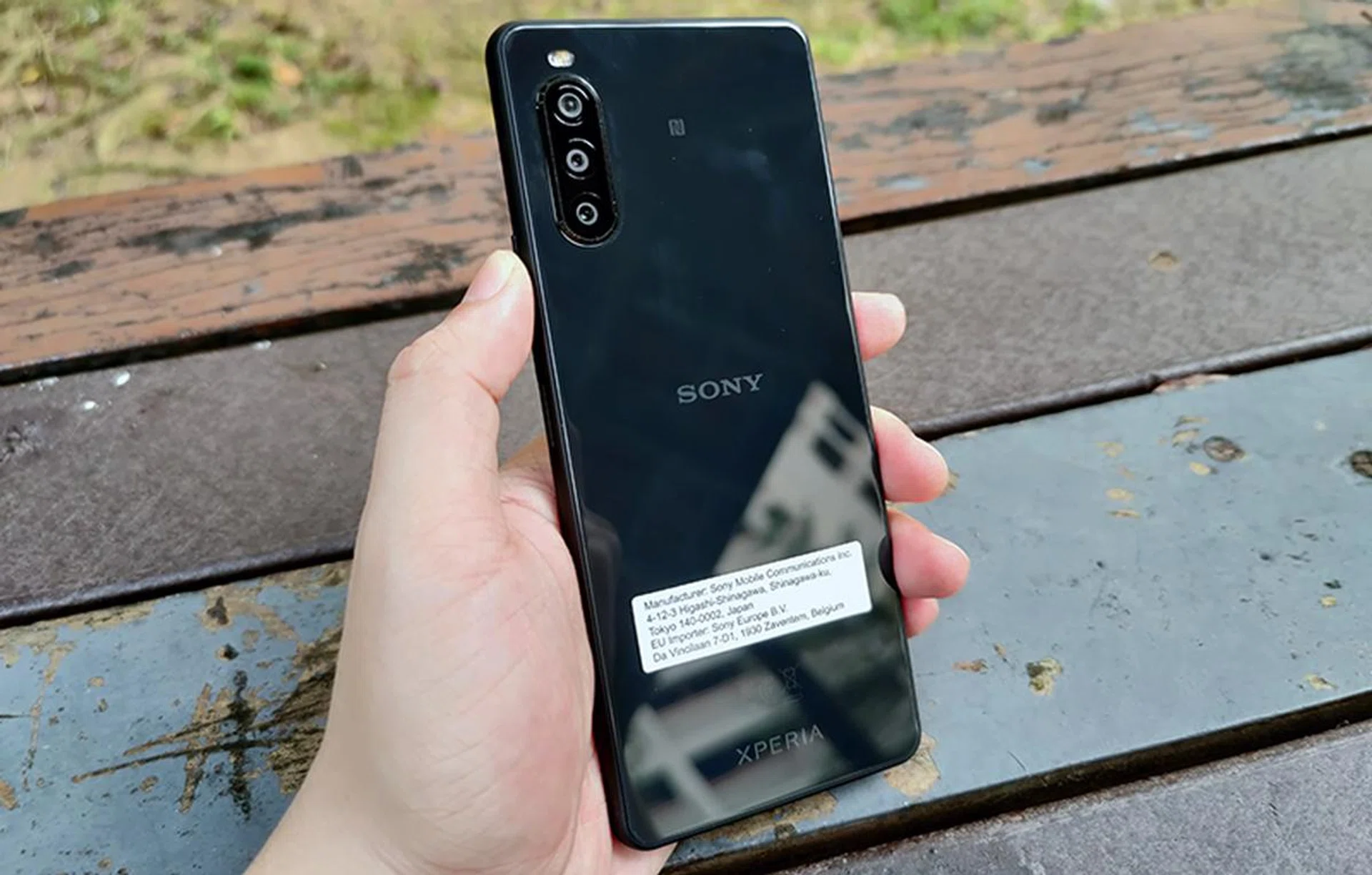
Despite its mid-range positioning and already touting a crisp display, the Sony Xperia 10 II also packs several other flagship smartphone traits. For example, it uses Gorilla Glass 6, which has 1.5 times better drop resistance than the preceding glassware and is the same glass type as the premium Samsung Galaxy S20 series. Adding to that durability is its IP65/68-certified water resistance rating, a marked improvement from its preceding model which had unrated resistance. It also has a triple camera system on the rear, which is one more lens than its predecessor.
At S$569, will this be the mid-range smartphone to beat, or is it just another mid-range phone with some bells and whistles? Let’s find out right after the unboxing jump:-

Design & Handling
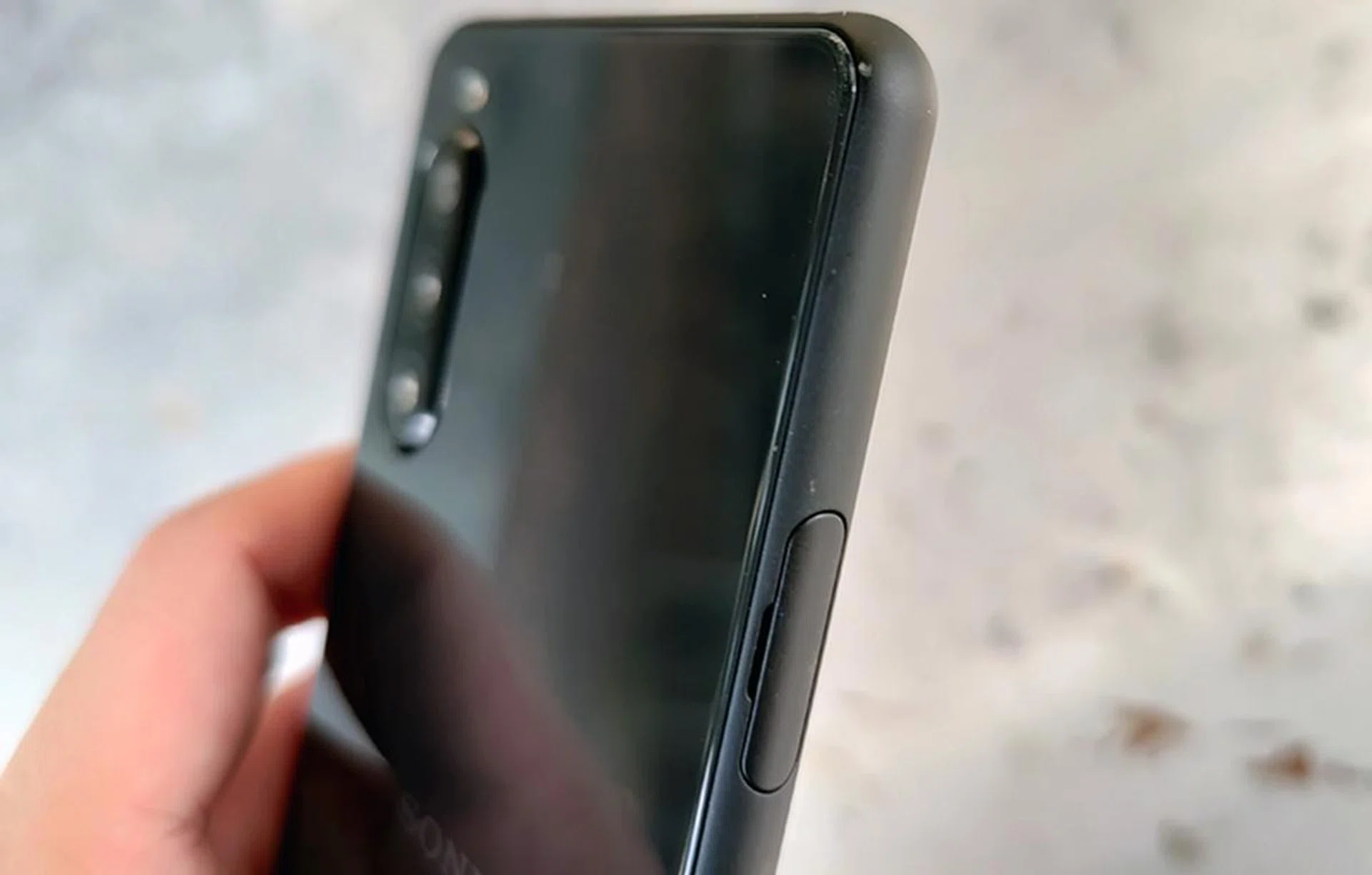
After checking the official website, we realised that Sony doesn’t have a fancy name for the design language used on the Xperia 10 II. Nonetheless, it’s easy to fall in love with their aesthetic as they opted for a clean, elegant look, which is a staple in Sony Mobile's design identity.
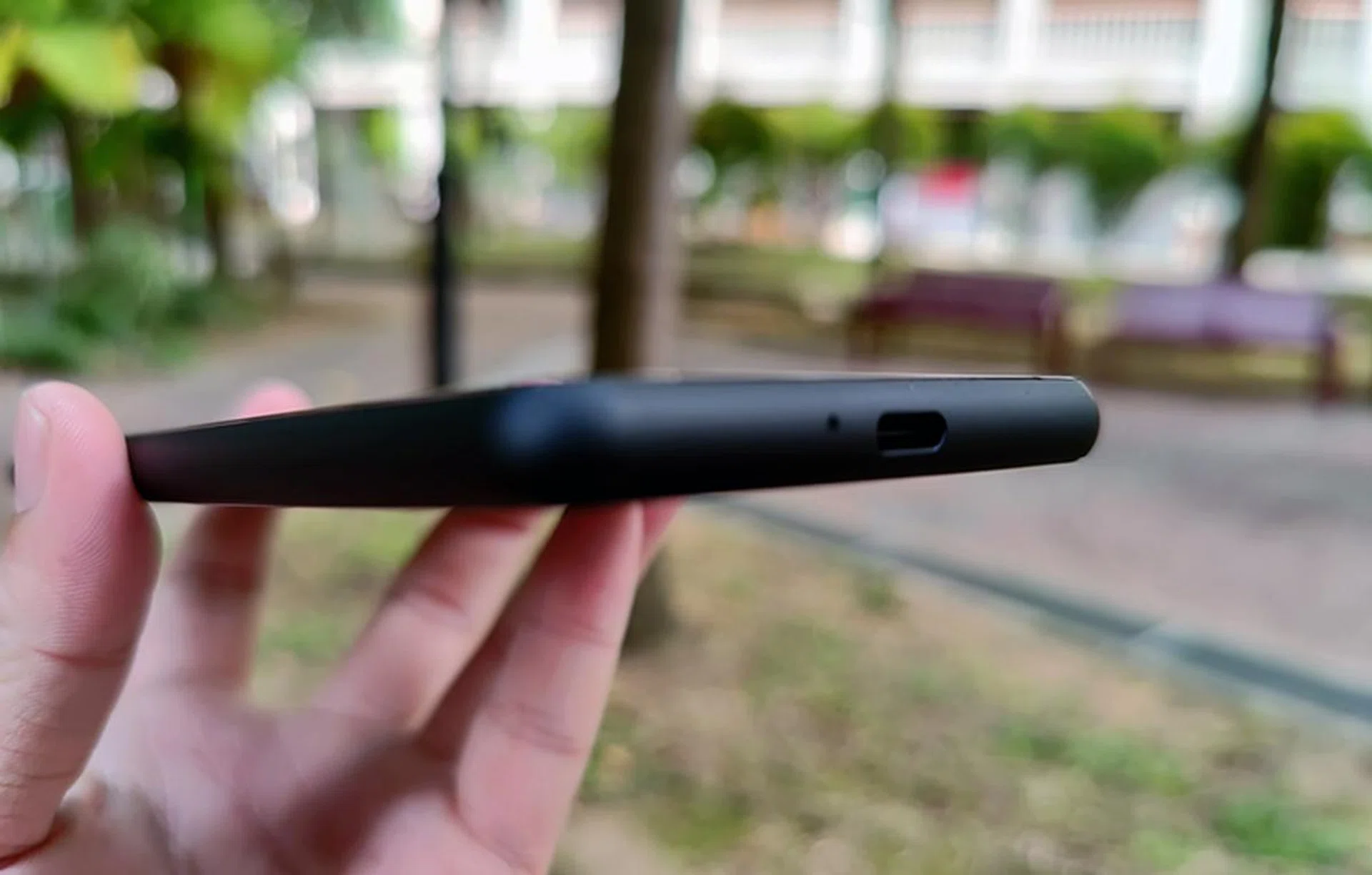
By itself, it features a tall, somewhat narrow body with the display housed around thin bezels on every side of the phone. There’s little to speak of, visually. With the device facing you, the power button on its right doubles as a fingerprint sensor and it sits below the volume rocker. At the top ‘chin’ is a call speaker, with its front camera adjacent to it. A 3.5mm audio jack port is nestled on the top-left of the device, and the left rim is a flap for the dual nano-SIM card tray with a hybrid second slot that can take in a microSD card when needed. The standard USB Type-C port rests dead-centre at the bottom rim with a very well-hidden single-firing speaker.
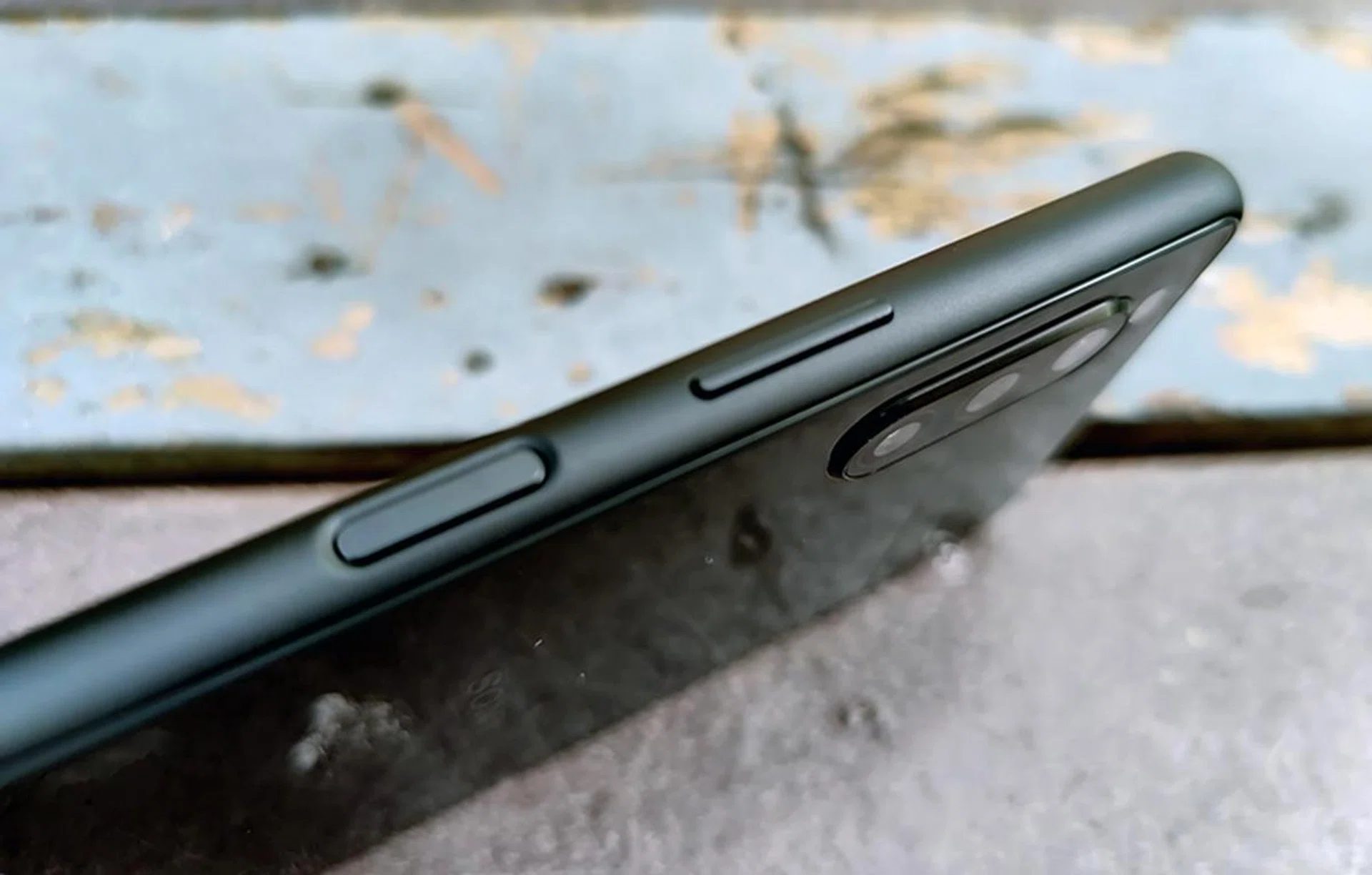
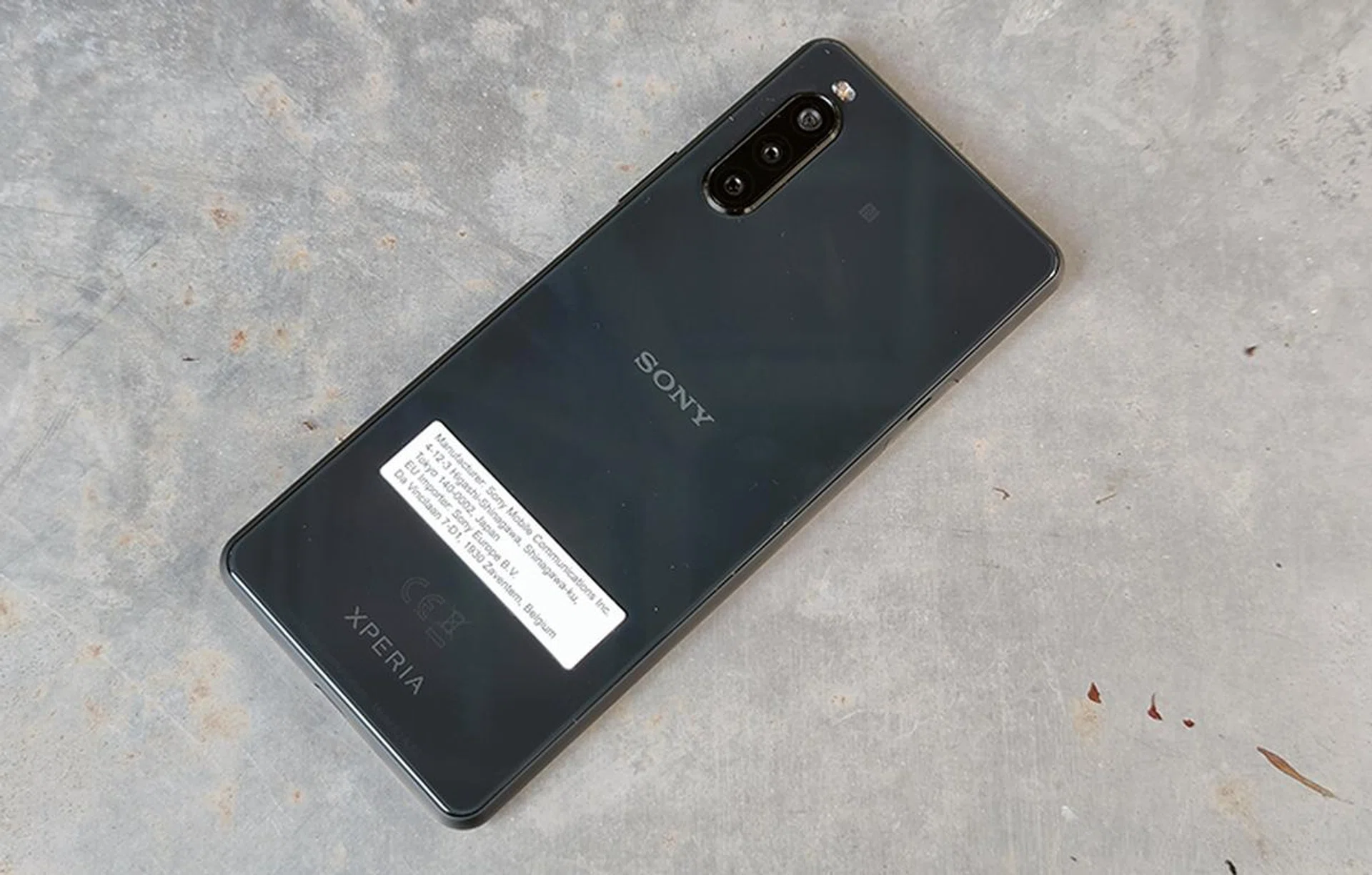
The back is a slate of glass that melds nicely with its metal sides. Despite a glass rear, the colourisation of the device makes it hard to spot any fingerprint smudges. While there’s a slight bump for the rear cameras’ housing, it’s barely noticeable - at least, when you compare it to the Huawei P40 Pro+.
Despite its generic aesthetic, the choice to make a muted-looking smartphone plays very well into the Xperia 10 II’s look and feel. Besides the practical look, it sells itself on durability with its Gorilla Glass 6 and IP65/68-certified water resistance.
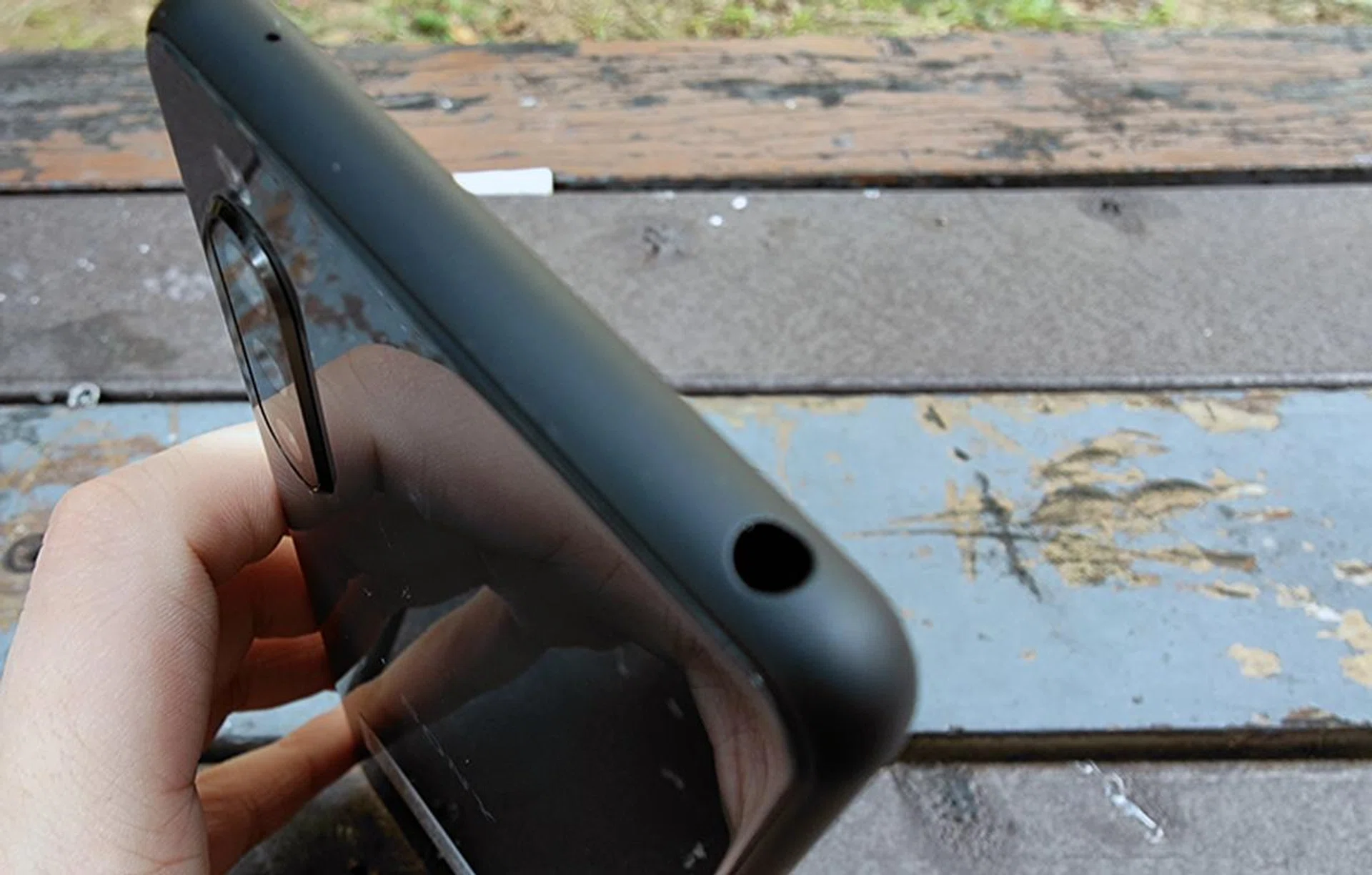
3.5mm headphone jack!
Handling is a breeze even with one hand, given its narrow-body (and a handy feature besides Multi-Window which we’ll get to that later).
Display & Audio
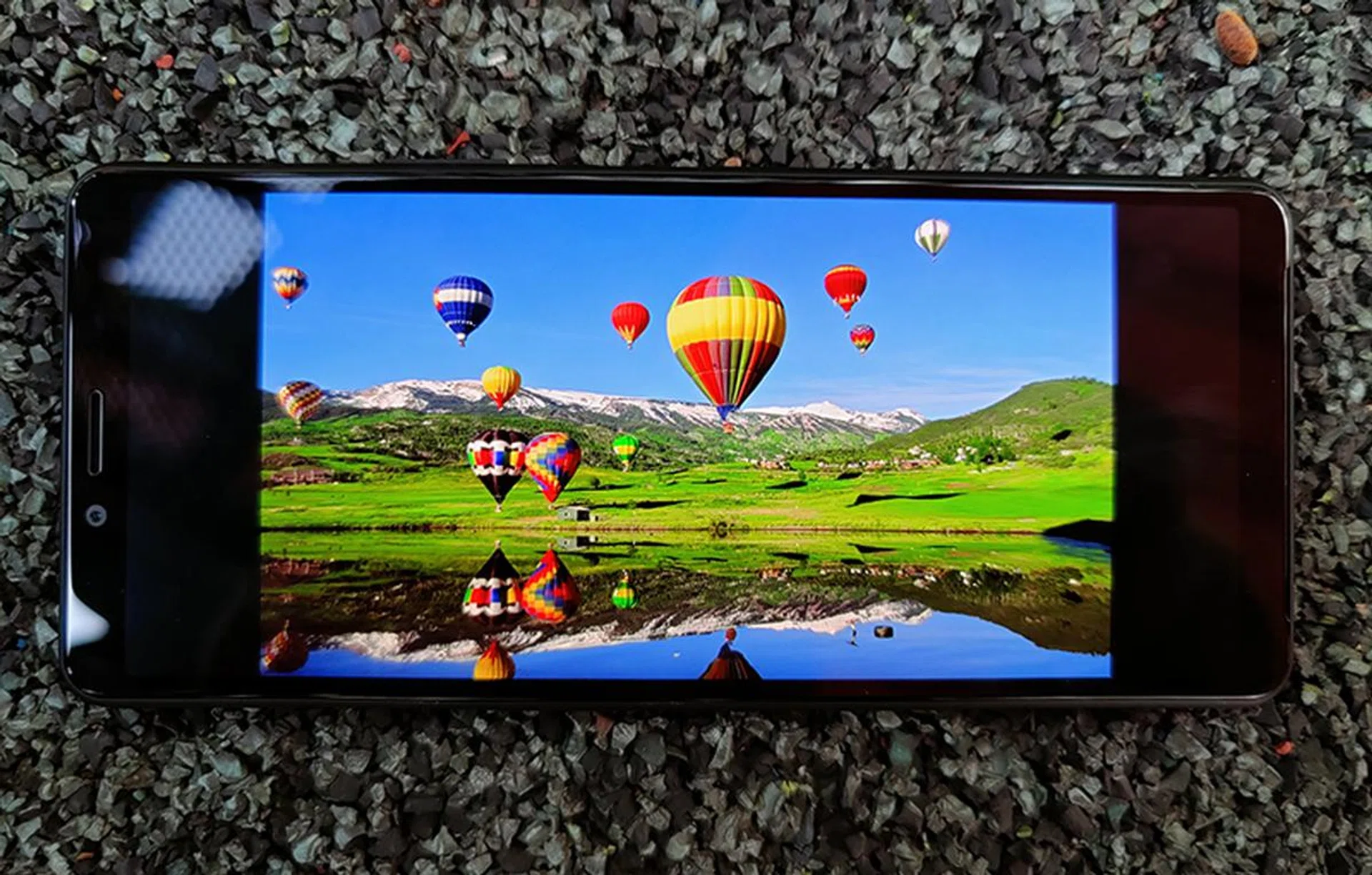
The display is a 6.0-inch OLED panel rated at Full HD+ (2,520 x 1,080 pixels resolution), with a super-tall 21:9 aspect ratio. The ratio is identical to the flagship Xperia 1 and Xperia 1 II, falling in line with Sony’s desire to deliver a cinema-like viewing experience through their phones. From the test image, you can tell that it’s sharp with excellent colourisation and contrast handling. The only gripe is the relatively low maximum brightness of the panel, making it tough to browse under direct sunlight even in the late afternoon.
The display felt luxurious despite the 1080p vertical resolution (when held in landscape mode). It was able to play 60 FPS content on YouTube with no issues too. If you spend a bulk of your phone time watching videos from downloaded or online sources, the Xperia 10 II would be an excellent choice to have. However, we’d recommend plugging into your preferred headphones for audio, since the speaker’s bloated signature betrays the phone’s visual quality.
User Interface
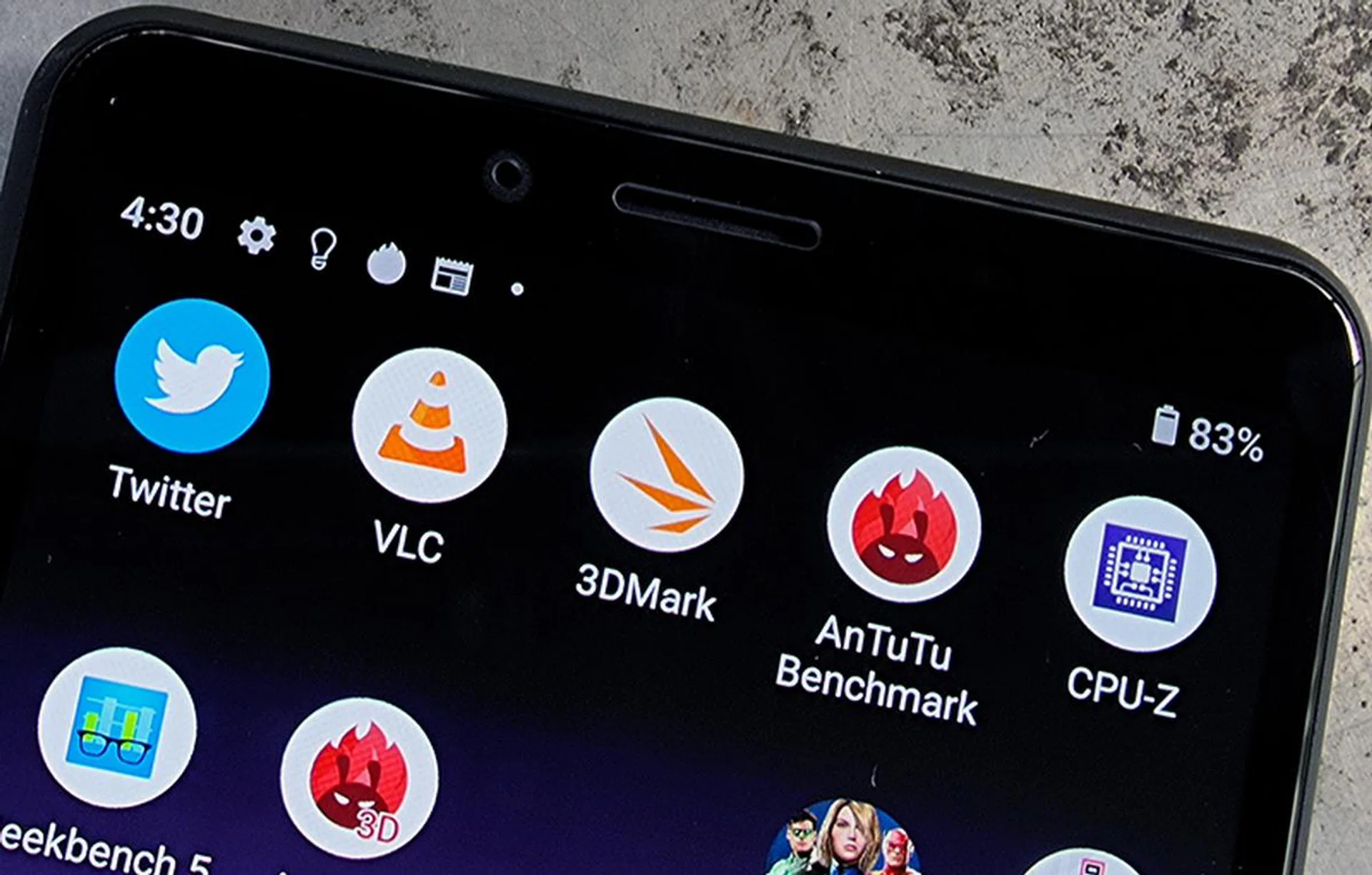
The Sony Xperia 10 II runs on Android 10 using Sony’s reskin. Sony’s interface choices are intimately tied to how they arrange and present information. Fundamentally, there isn’t too big a difference between Sony’s preferred look versus stock Android. Notably, it uses a customised font with its customised menus, as well as its own notifications and drop-down menu.
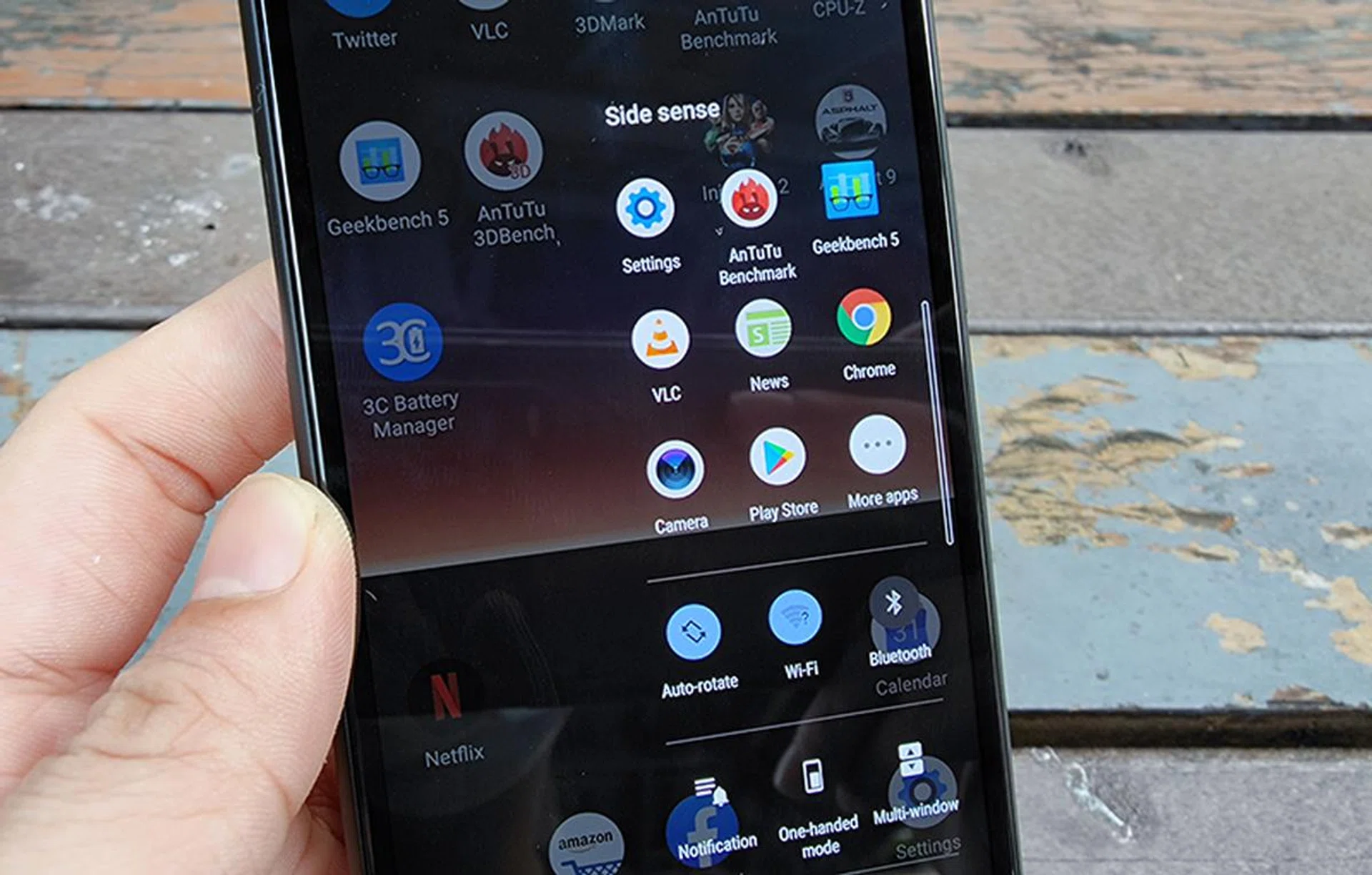
The Side Sense menu on the Home Screen.
A neat Sony customisation is Side Sense, which makes it even easier for one-handed use. Side Sense is an editable, miniature app drawer of sorts that can be summoned with a double-tap along the side of the device. This will quickly let a user jump into their preferred app with just one hand. You could select, and browse through your social media feeds with only one hand, or start responding to messages by single-handedly opening the messaging app before you begin writing replies (with both thumbs).

Multi-Window on the Xperia 10 II in action.
Another neat feature is Multi-Window, where Xperia 10 II fully utilises the 21:9 aspect ratio of the display by placing two apps, top-and-bottom of each other. One only needs to start the Multi-Window app to select the two apps and their orientation. It's especially handy if you need to quickly refer to your email inbox while messaging another person, or if you want to multi-task between watching a video and sending replies to others.
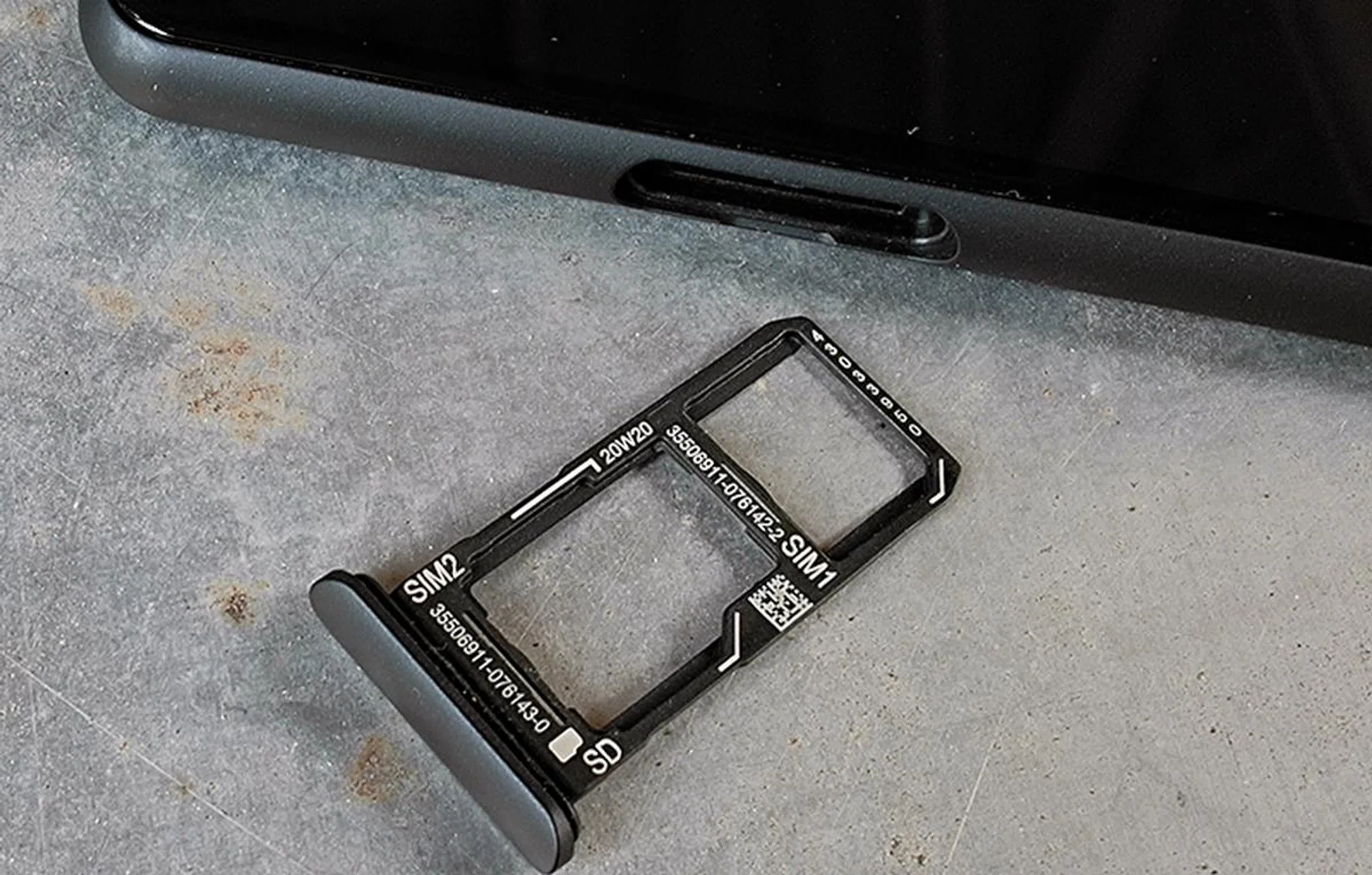
Adding on to its list of user experience features, the phone has a dual nano-SIM card tray with a second slot that can take in expandable storage media (microSD card), and there's even a 3.5mm audio jack which is now increasingly uncommon on mid-range and high-end phones. These features mean the phone accommodates to your needs (wired headphones, more storage), and not the other way around (wireless only and cloud storage option for expansion).
However, not everything about the Sony Xperia 10 II’s user experience is fine and dandy. When unlocking the phone with a PIN, the phone still requires you to hit the ‘enter’ key even if you’re done putting in the correct combination (this step always gets me).
Fingerprint unlocking makes a lot more sense since you don’t need to power on the display to start up your Home Screen. However, prints detection can be a little iffy, with a good 50-50 chance where the phone does not recognise any of my recorded fingerprints at times. This is baffling as we're in 2020 where many phones have mastered traditional fingerprint sensory and have moved on to in-display fingerprint sensors, which are now pegged back against the success rates of unlocking the device with a traditional fingerprint sensor. More amusing is that Sony was one of the pioneers to incorporate a fingerprint sensor with the power button and has served them well in the past. As such, you can see why we're taken aback by how the Xperia 10 II manages phone unlocking.
The Xperia 10 II doesn’t have the always-on display feature nor does it have a wake-up function. When you fish it out of your pocket or lift it off a desk to check the time or your notifications, you're required to hit the power button once. The annoying bit? It also counts as one fingerprint unlocking attempt, taking away one of your three tries before it locks you out for 30 seconds (if you fail).
Finally, there’s a noticeable lag time when firing up apps, loading websites and booting up social media feeds for browsing. Games have longer load times with occasional dips in framerates. While we aren’t expecting it to have a buttery smooth performance like the flagships phones of 2020, these bits are enough to feel noticeable in day-to-day use.
All about the cameras
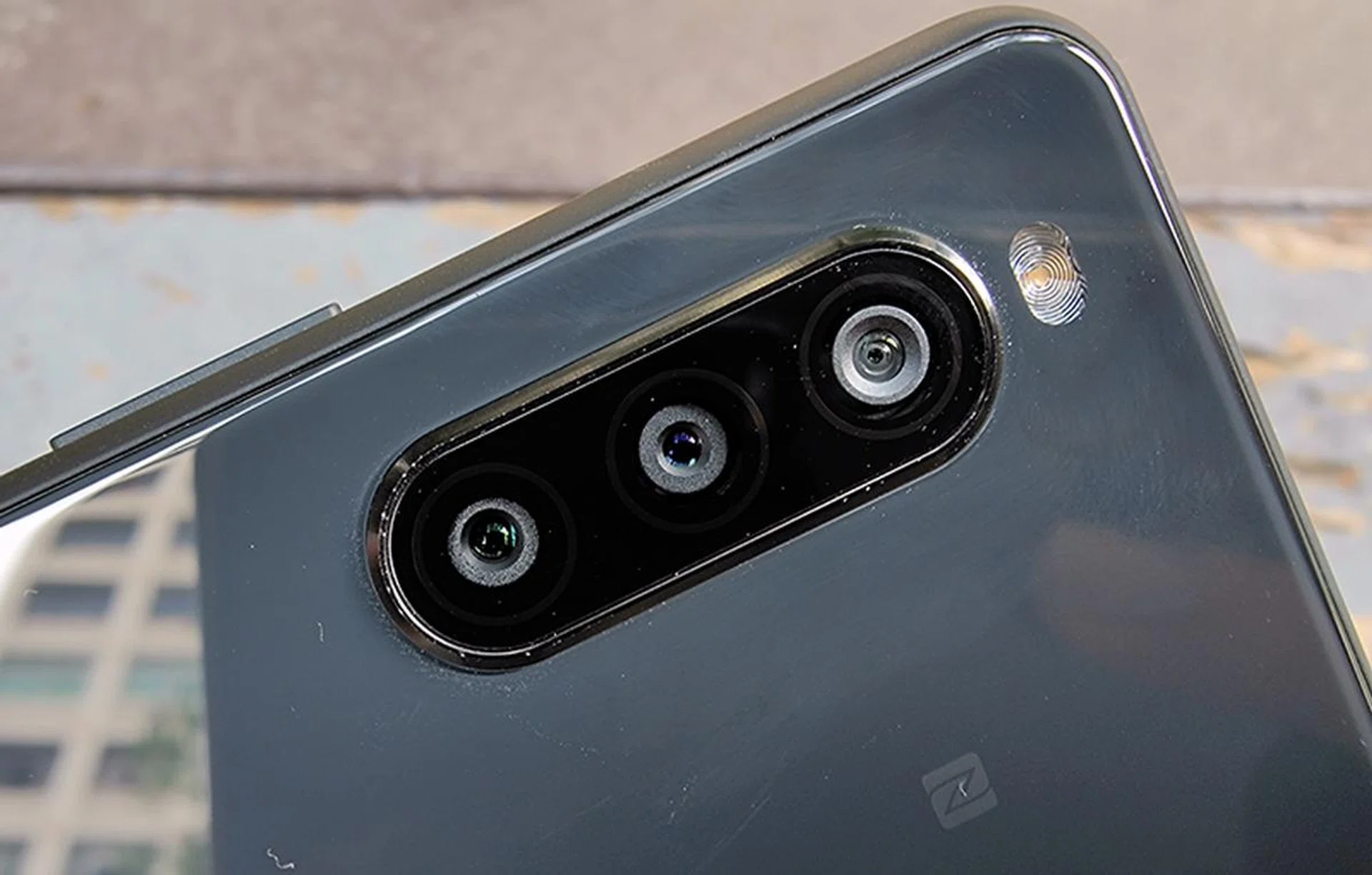
The triple camera configuration on the Sony Xperia 10 II’s rear is rather straightforward. There are three different lenses for three different shooting scenarios. Leading the pack is a 12MP primary camera with a 1/2.8-inch sensor and f/2.0 aperture, which on paper is ideal for taking portraitures. An 8MP telephoto camera follows it with 52mm focal length and f/2.4 aperture for zoomed-in shots. Finally, it also has an 8MP super-wide-angle camera with 120-degree field of view, and f/2.2 aperture for wide, landscape shooting.
Both the main lens and super-wide-angle lens work just fine, as it cleverly switches between these two when you tap the Zoom icon just above your shutter button. However, the telephoto lens only fires up more reliably when you start Bokeh mode (artistic background blur), and not always when you’re zooming in beyond 2x zoom. So please don't mind that some zoom shots are from the main camera and some others are from the telephoto lens - we could only manage what the phone allowed.
That said, we’re also here for the image quality of the shots, so here’s are the sample images.
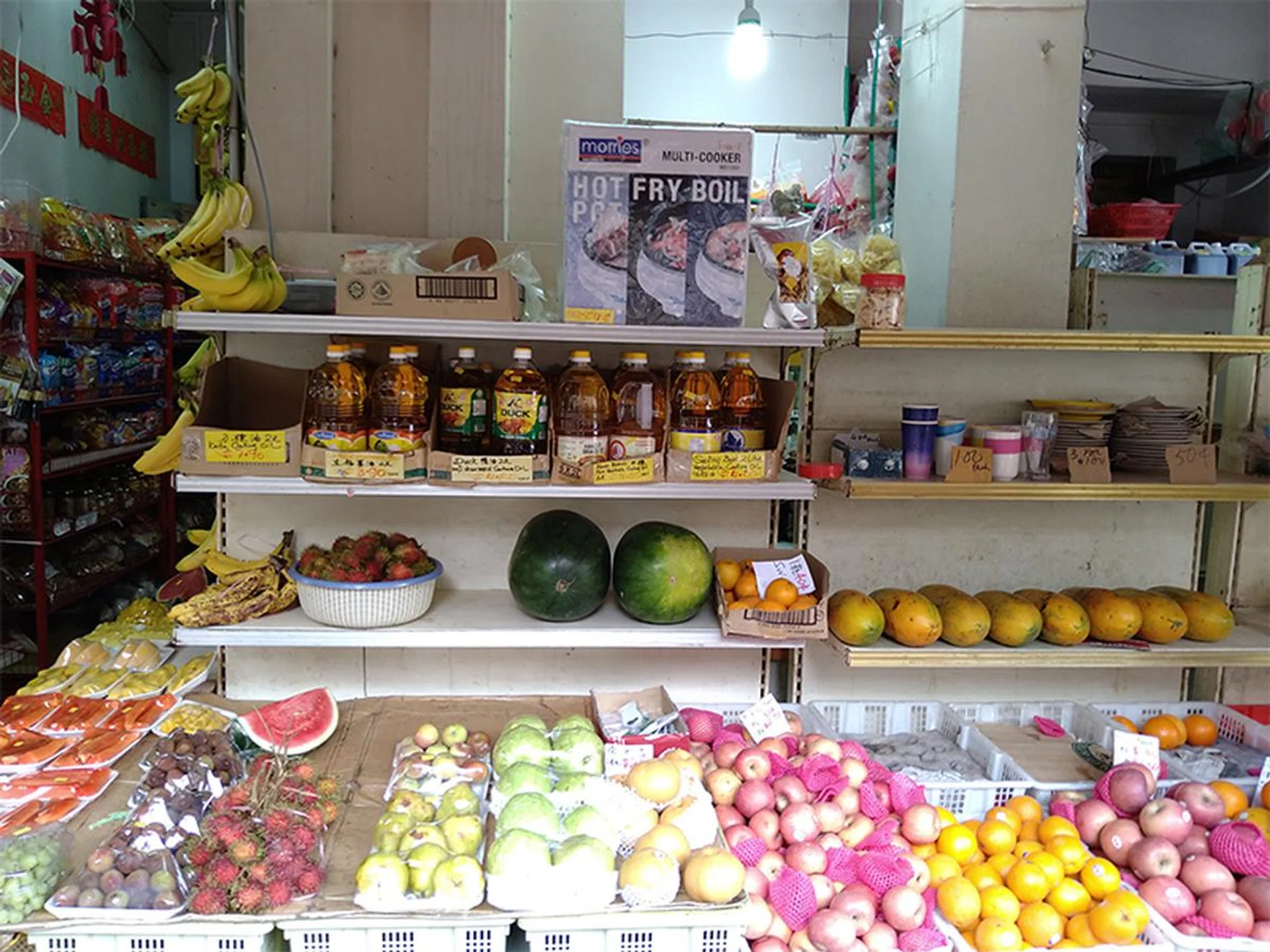
Primary camera shot. Seems to have a slight problem in handling bright and dark sections of a scene as observed with the blown-out highlights near the bottom of the image.
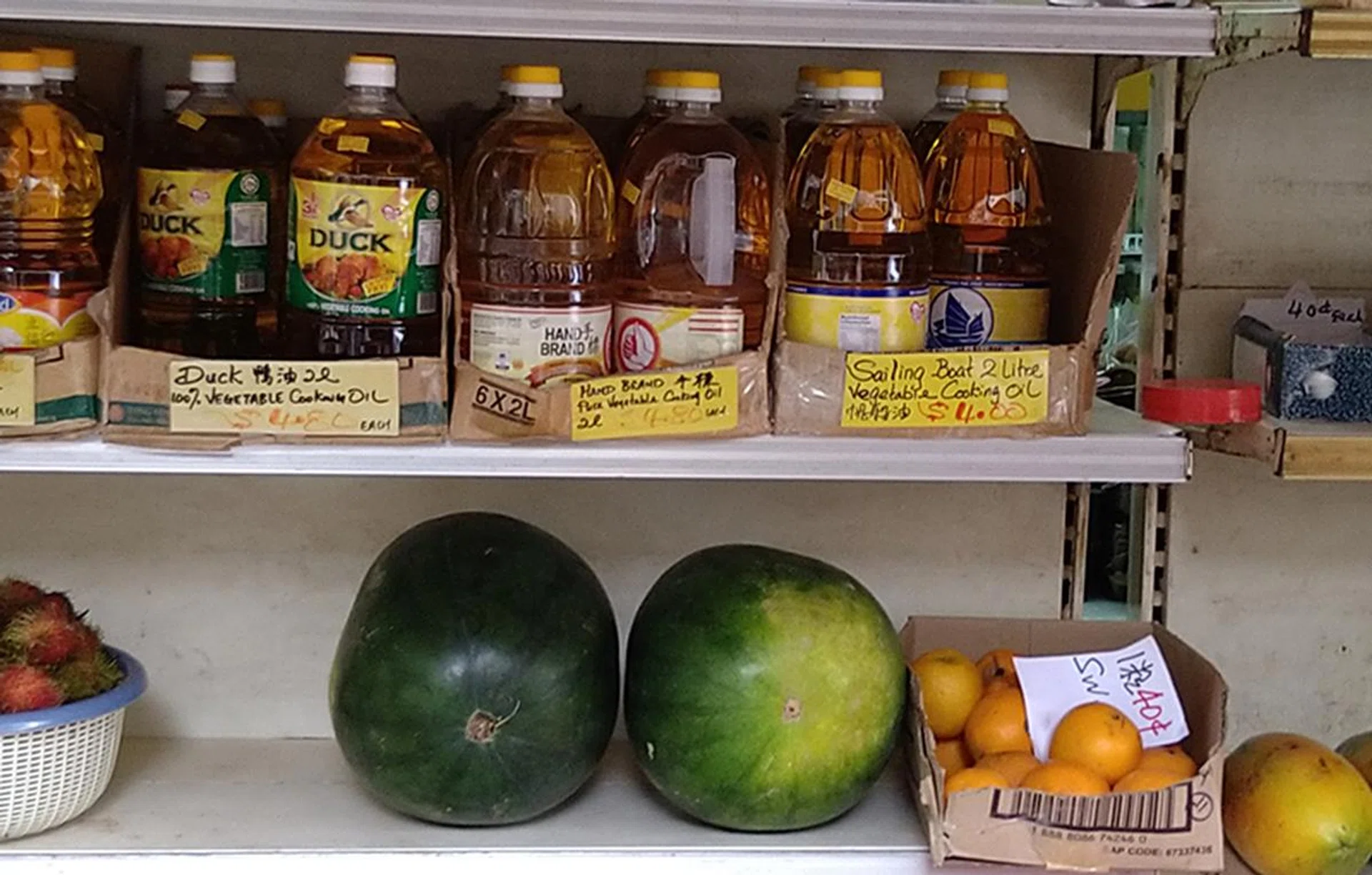
100% actual pixel size crop of the above image.
From our new 'lab reference' shot, you can tell that the main camera's aim is to be functional, with little in the way of enhancements. It needs a bit more work on handling contrast and brightness, but we can’t deny it handles colour nicely, plus it doesn’t quite leave out details entirely. You can still make out the blemishes on some of the fruits, for instance. As a whole, it’s an average performance for a mid-range smartphone (as compared to the outcome on high-end phones), even if it cuts a little close to the bare minimum of imaging performance for any modern phone.
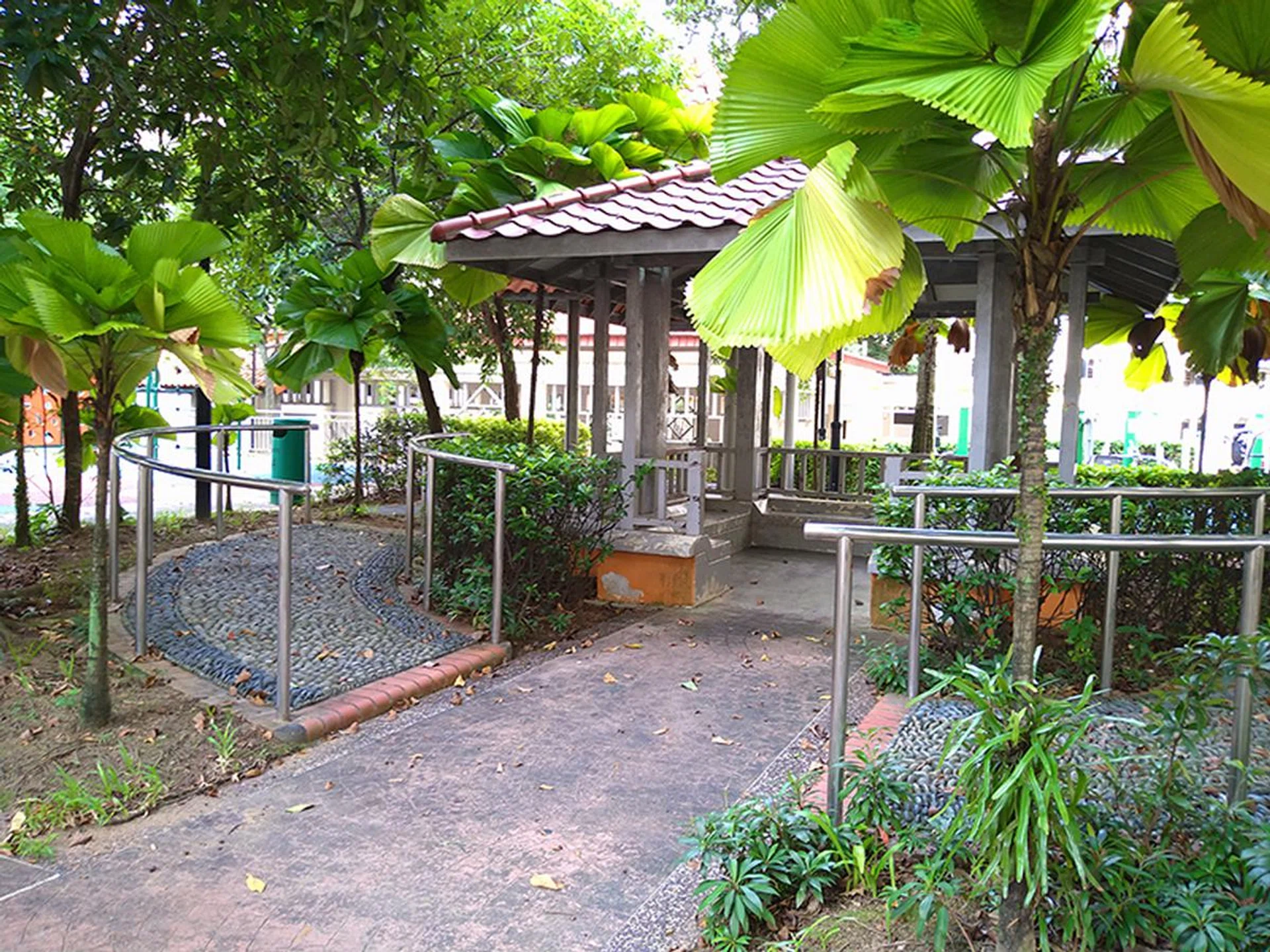
Another primary lens shot for reference.

Close-up shot with main camera.

2x zoom using main camera.
One surprise is how well the primary camera handles close-ups. It’s not quite a macro shot, but it manages to retain details and colour even at 2x zoom (probably because this zoom shot used the main camera).
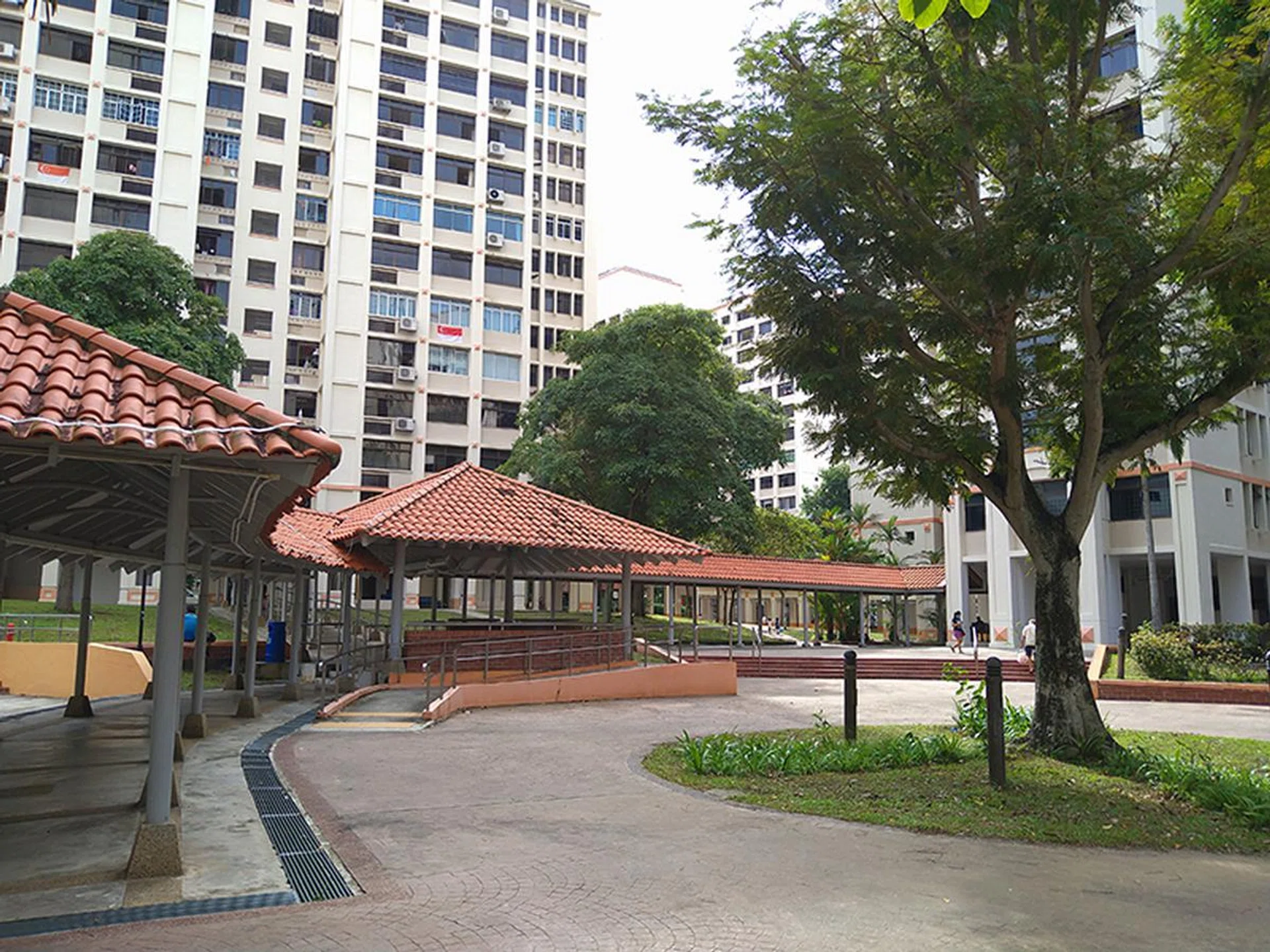
Main camera photo for comparison.
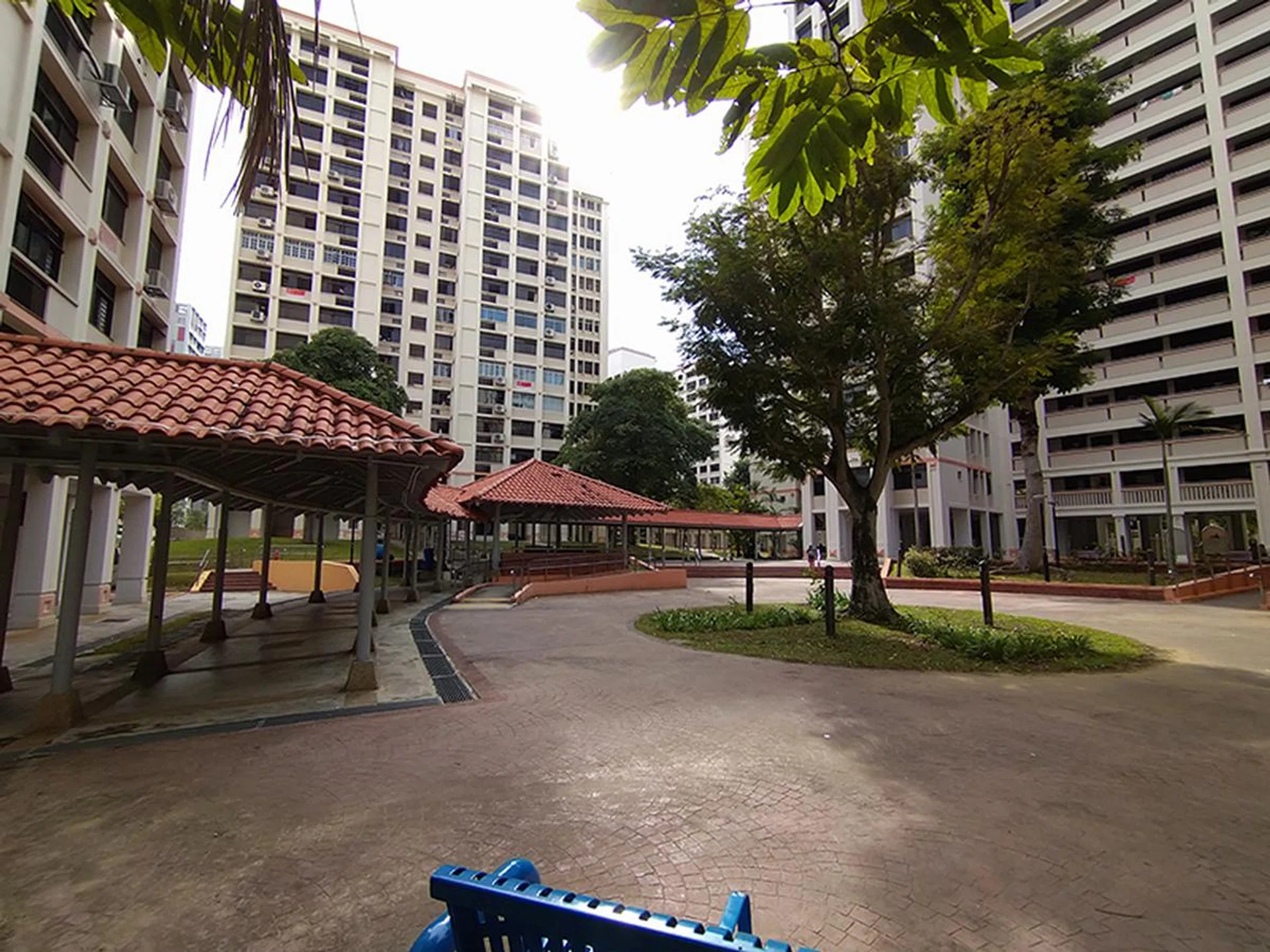
Super-wide-angle shot.

Main camera shot for comparison.
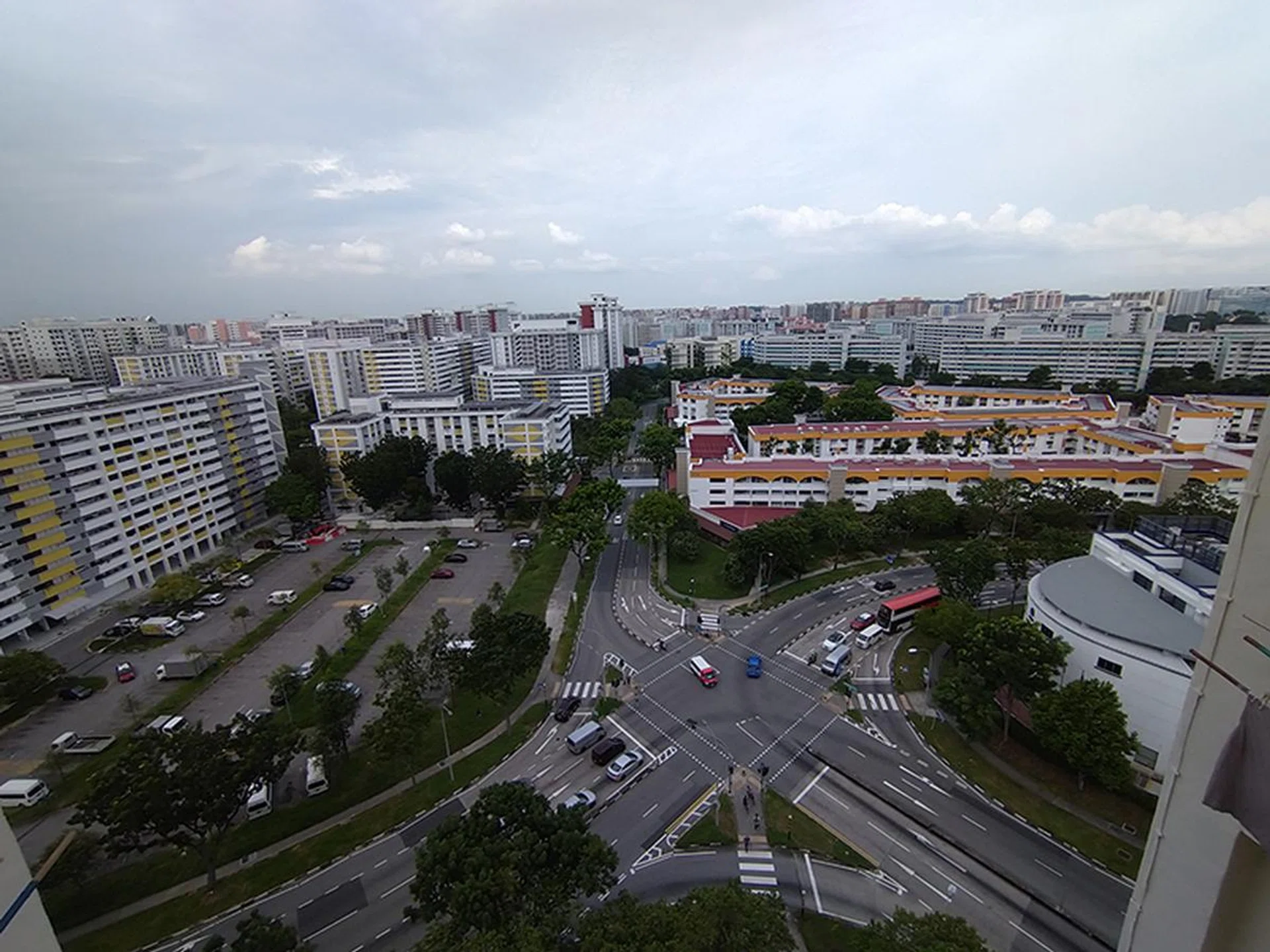
Super-wide-angle photo from the same spot.

10x zoom from the same position.
The super-wide-angle lens is obviously of a different quality when compared to the main lens - in fact, details are lost when you try to capture too much in one shot. The phone also doesn’t handle maximum zoom (10x digital) well since you can’t even make out the clay tiles of the roof sitting just below the supermarket logo. This is pretty much expected from a mid-range phone and one that can only handle digital zoom at that reach.

Main camera shot for comparison.

3x digital zoom on the telephoto camera.
That said, we still think the main lens is decent for standard shots and close-ups, which is satisfactory imaging performance for mid-range smartphones. Notably, this also means that camera photography is not a selling point of the Xperia 10 II, though it will suffice for general use.
Benchmark Performance
The Sony Xperia 10 II packs a mid-range Qualcomm Snapdragon 665 SoC. It's built on an 11nm process technology and packs an LTE-compatible modem, making it a 4G-capable device. With a processor of this tier and given how some mid-range devices aren't rated under modern versions of our benchmarks, we've decided to pit it against the Oppo Reno2, Google Pixel 3A XL, and Samsung Galaxy A80 (at least, for the scores we do have).
The Sony phone's processing subsystem doesn't quite stack up to these upper-tier mid-range phones from last year, so it's probably going to be a tough fight as the street price for all of these phones are currently evenly matched with the Sony's suggested retail price.
For the scores we don't have, we've shared scores from older flagship phones like the OnePlus 7 Pro, Huawei Mate 30 Pro, Google Pixel 3 XL, and Samsung Galaxy S10+ to see how it stacks up against 2019 flagship devices. For comparison's sake, we'll also throw in an OnePlus 8 Pro to see how it holds up next to current-gen flagship phones.
JetStream 2
To benchmark the phone's web browsing performance, we used the JetStream 2 benchmark test on the Google Chrome web browser app. The test measures a phone's capabilities in handling a variety of advanced workloads and executing codes. JetStream 2 is an updated version of older benchmarks, such as the first JetStream and SunSpider.
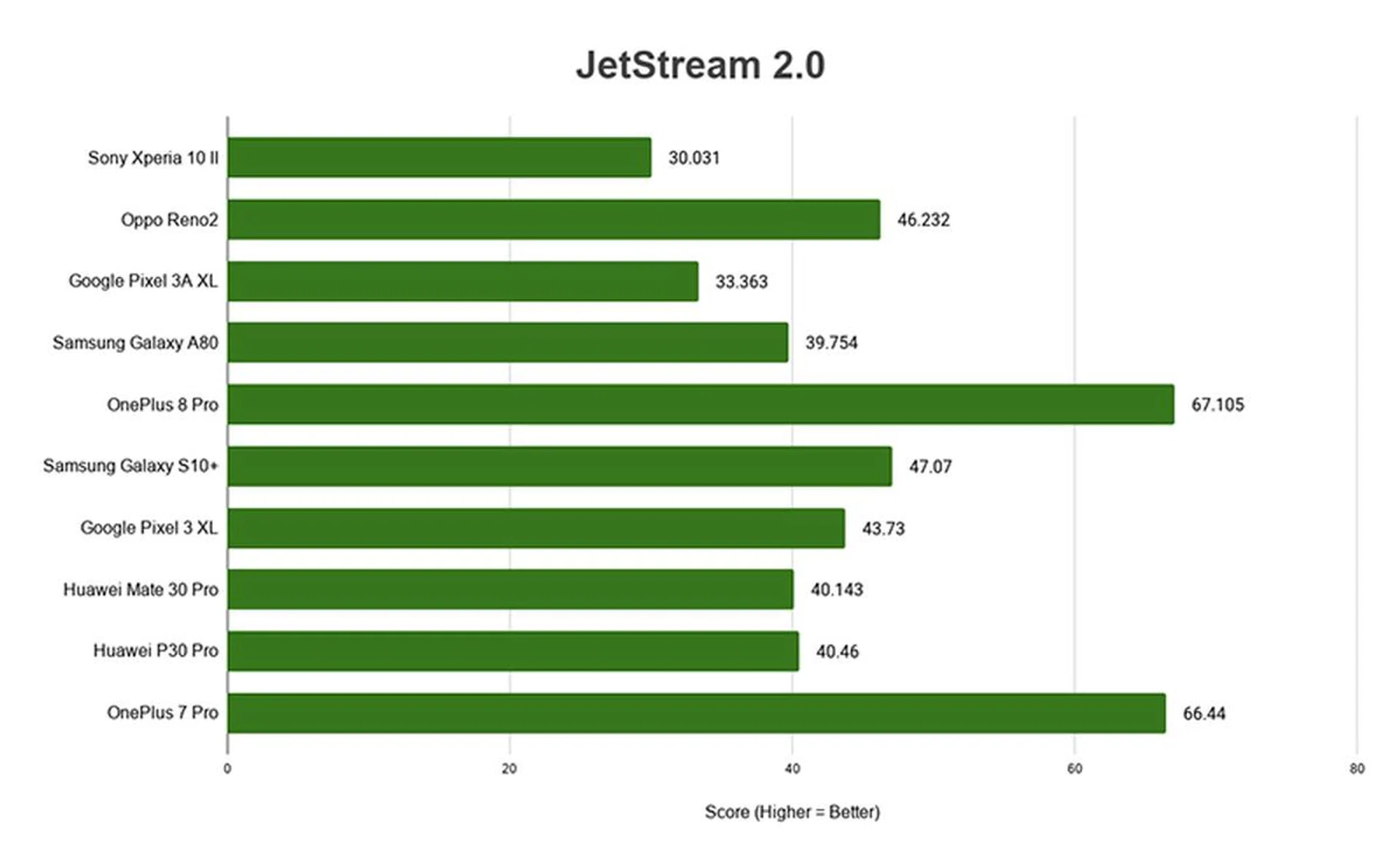
While some phones come with custom-made web browsers, We always run this benchmark test on Chrome as it gives the best indication across devices, processors, and OS platforms - whether iOS or Android. Also, we would adjust the phone's display settings to ensure that the screen doesn't turn off mid-test since this would relegate the browser's thread(s) to background processing. Where necessary, we would run multiple test instances to get a more accurate reading of scores.
Unlike the other benchmarks, we did have some scores from other mid-range devices that were tested on JetStream 2. For your reference, we've placed their scores in the chart and we'll talk about our experience in total after all the benchmark results.
AnTuTu
Note: As of 9th March 2020, all AnTuTu benchmarks were removed from the Google Play Store. This move likely arose from Google's attempts to relieve the Play Store of apps that violate their policies. AnTuTu is working with Google to restore their app listing. For this review, we used the APK file that was available on AnTuTu's website.
AnTuTu is an all-in-one benchmark that tests CPU, GPU, memory, and storage. The CPU benchmark evaluates both integer and floating-point performance, and the GPU tests assess 2D and 3D performance, the memory test measures available memory bandwidth and latency, and the storage tests gauge the read and write speeds of a device's flash memory.
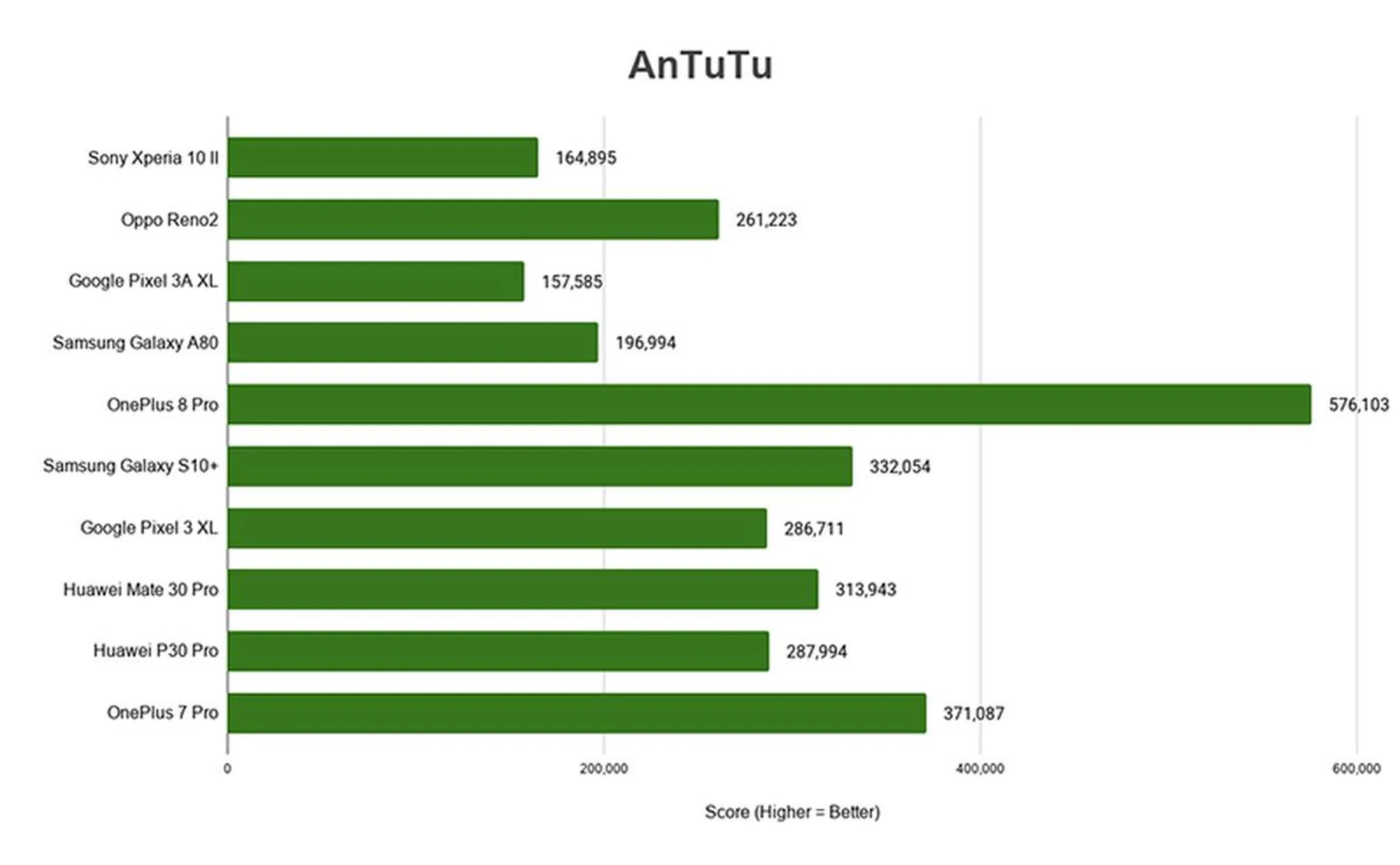
Since AnTuTu is mostly unchanged in recent times, plus the fact it's an all-in-one benchmark, older versions of the benchmarking tool can still be referred to. We've included their relevant scores for reference.
Geekbench 5
Geekbench CPU is a cross-platform processor benchmark that tests both single-core and multi-core performance with workloads that simulate real-world usage. Geekbench 5 scores are calibrated against a baseline score of 1000, which is the score of an Intel Core i3-8100.
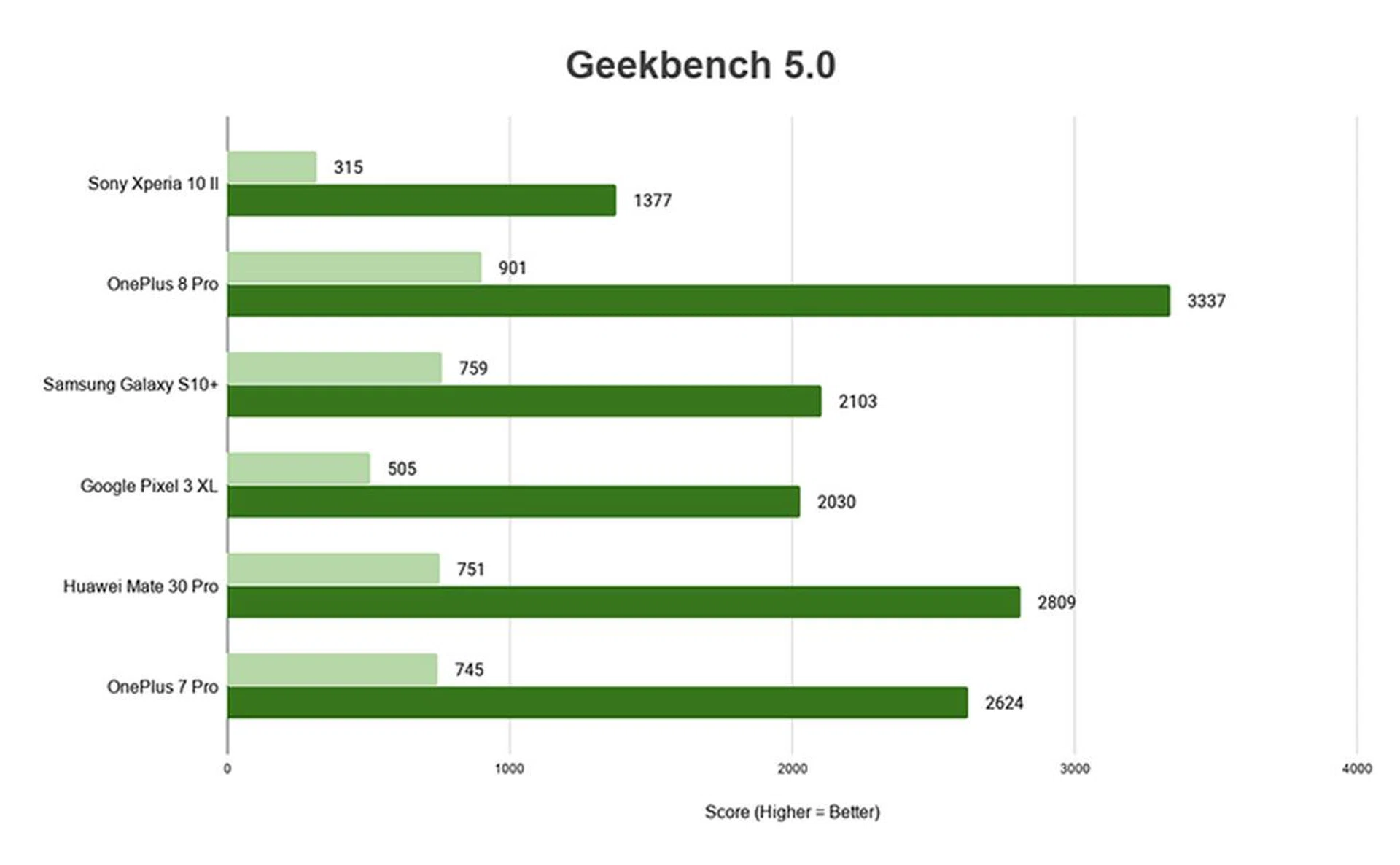
The Geekbench benchmarking tool is why we couldn't refer to older benchmark scores of other mid-range devices. Geekbench 4 had a baseline score of 4000 (the performance of an Intel Core i7-6600U processor). As one the first mid-range phones we're testing using Geekbench 5, we'll have to build upon the list of devices as time goes by.
That said, Geekbench publishes benchmark scores by other phones, which you can search via phone model or processor name. Below is a screencap of different devices with Snapdragon 665, showing how the Geekbench 5 performance for the Xperia 10 II is in line with other SD665 phones.

Single-core performance of other SD665 phones. Source: Geekbench.
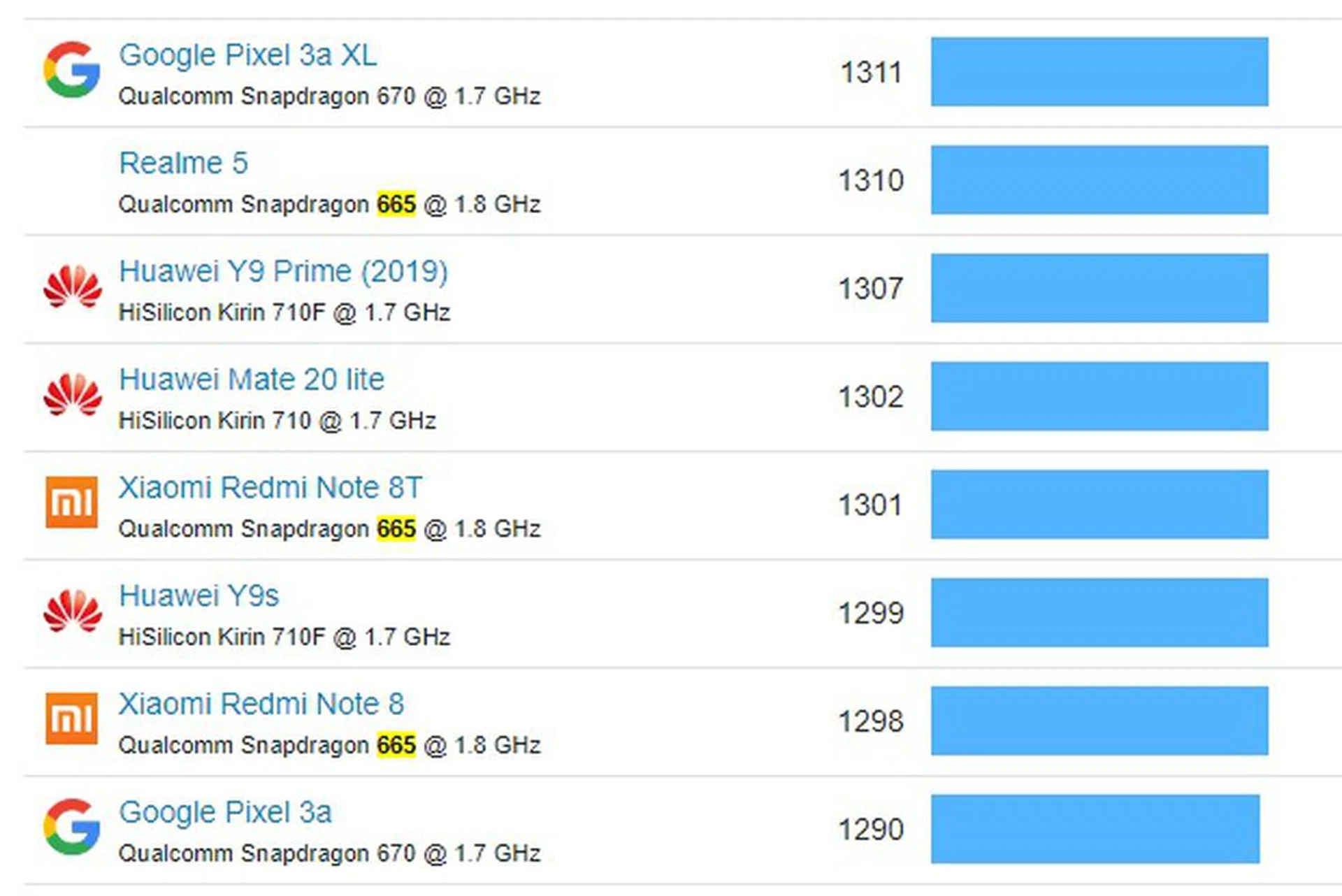
Multi-core performance of other SD665 phones. Source: Geekbench.
3DMark Sling Shot Extreme
3DMark Sling Shot is an advanced 3D graphics benchmark that tests the full range of OpenGL ES 3.1 and ES 3.0 API features including multiple render targets, instanced rendering, uniform buffers and transform feedback. The test also includes impressive volumetric lighting and post-processing effects. The test's Unlimited mode ignores screen resolutions.
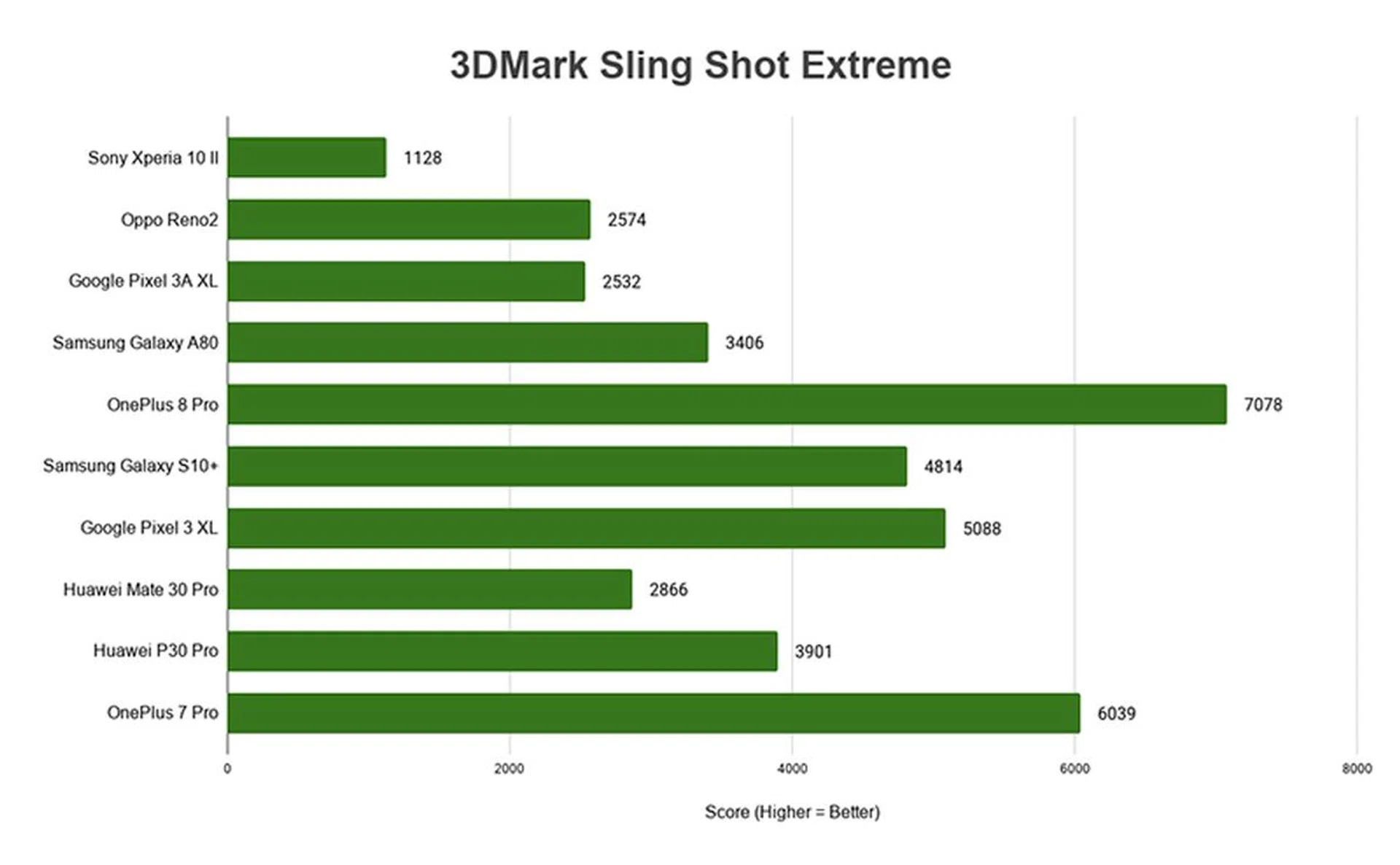
Some of the other mid-rangers also had a go on a slightly older version of 3DMark (ES3.0). Since there isn't a huge version difference with the current benchmark, we've folded their scores into the graph.
Performance roundup remarks
By considering our user experience, the benchmarked scores we've gotten, and scores from phones with an identical processor from the benchmarking tools themselves, we must say that the Xperia 10 II isn't quite the mid-range beast we wanted it to be. In fact, it's entry-level benchmark performance, with the delays, loading times, and browsing interruptions all making sense now that we have these numbers.
Battery Life
Our standard battery test for mobile phones has the following parameters:
- Looping a 720p video with screen brightness and volume at 100%
- Wi-Fi and Bluetooth connectivity turned on
- Constant data streaming through email
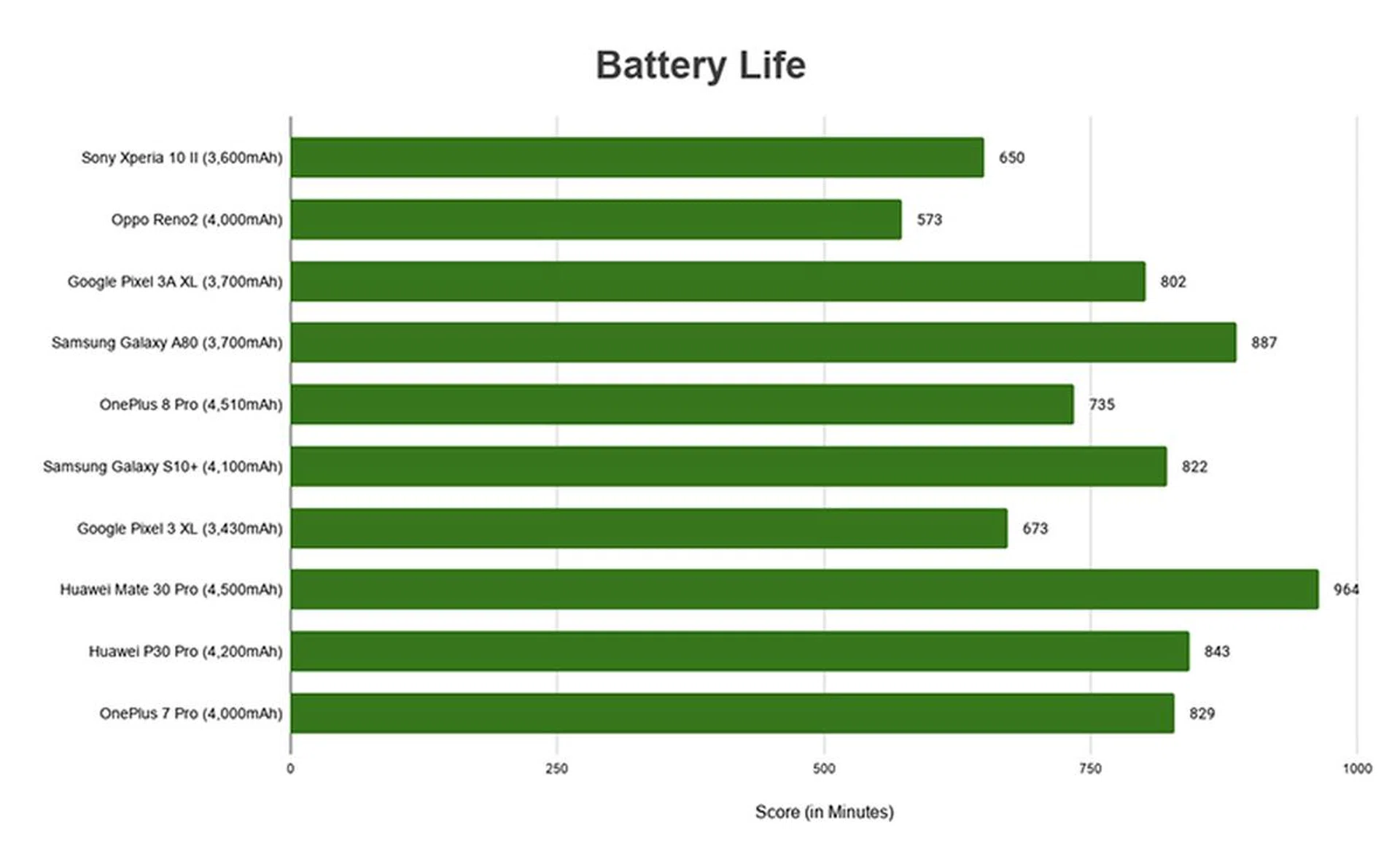
The Sony Xperia 10 II packs a 3,600mAh battery capacity backed by its proprietary Xperia Adaptive Charging technology for further battery care. It has neither wireless charging nor fast-charging capabilities built-in, which is status quo for devices in its class.
Typically, with lower benchmark performance, we've come to expect the device to excel at our battery life testing. We have to say 650 minutes isn't short, especially when it's not the lowest on the chart. It's still not comparable to equally matched alternatives like the Google Pixel 3A XL (almost 300 minutes more with just 100mAh extra juice) and the the upper mid-range Galaxy A80 by Samsung. Both of these comparison devices sport better specs and more powerful hardware, which only further shames the Sony's battery performance standings.
The Xperia 10 II took 120 minutes to charge from 0% to 70% (even with a fast-charging adapter and cable from a reputed electronics brand, but these shouldn't matters since the phone doesn't support fast charging). While we weren't expecting a full charge in an hour (i.e. standard fast-charging times for devices), two hours is still generous for the phone to reach full charge - and it didn't.
Conclusion
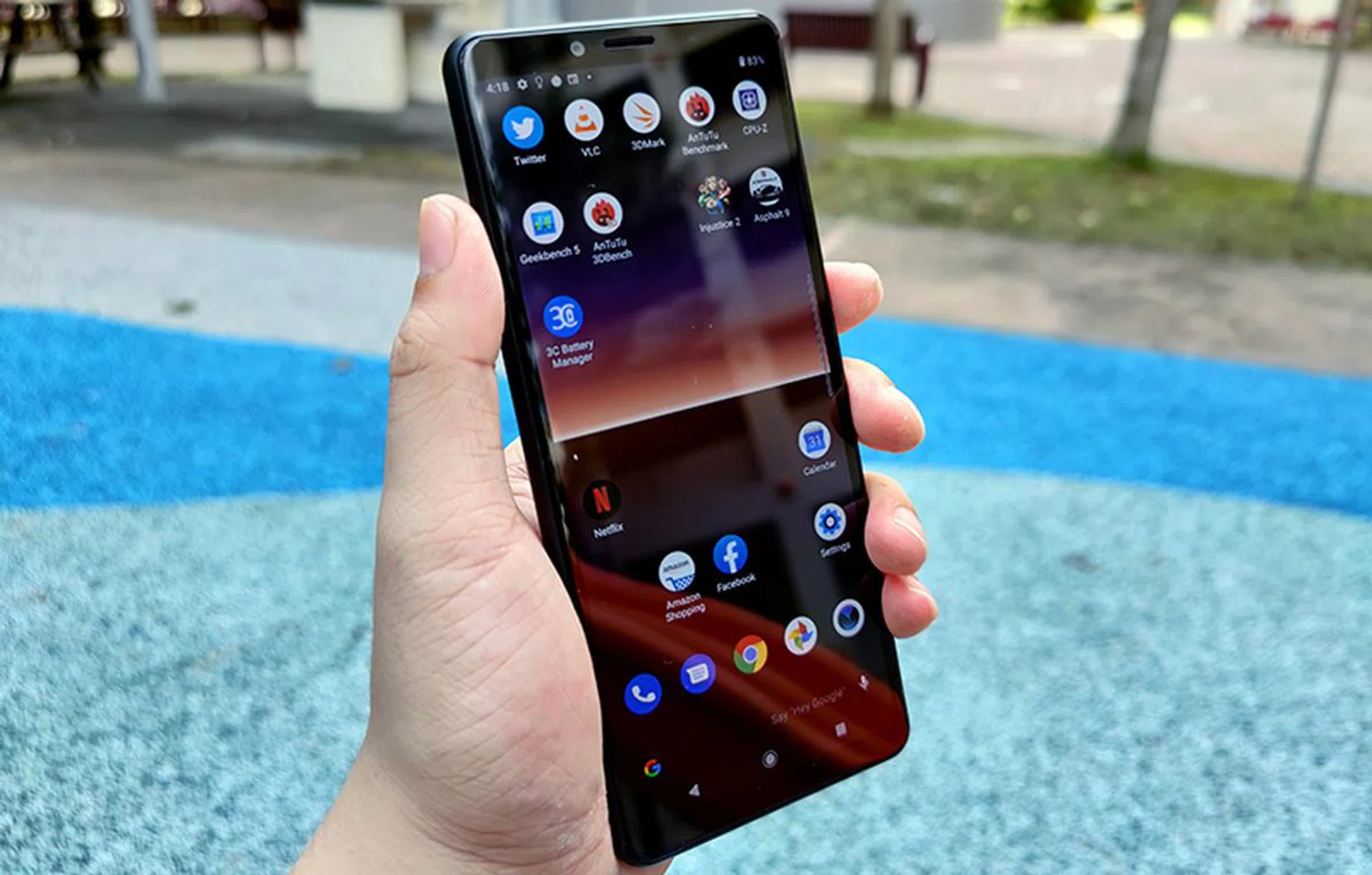
The Sony Xperia 10 II isn't a stunner, but neither is it just another mid-range with some "bells and whistles". In its defence, it has a 21:9 aspect rario screen, IP-certified water-proofing, a more durable glass body, a 3.5mm audio jack, and a dual nano-SIM tray that contains a hybrid second slot for storage expansion. Further to its credit is the highly practical design and aesthetics of the phone, which looks like textbook modern smartphone design. The software side of things also packs neat tricks like Side Sense and Multi-Window. These plus points are far too useful to simply be 'bells or whistles'. The primary camera isn't half-bad, either.
Where it does fall short are the secondary lenses on the rear, and more glaringly the real-world usage, and battery performance. The Xperia 10 II can be a tough phone that looks pretty, but its practicality can be hampered by the latency in little things, like checking the time or getting the fingerprint sensor to recognise its owner. We're not expecting a mini-powerhouse in our hands, but we still expect it to stand up to general usage day-to-day usage needs, and to a lesser extent, be better at the benchmarks.
Sure, it may be a couple hundred dollars cheaper than the upper mid-range alternatives like the Oppo Reno2 and Samsung Galaxy A80, but these phones are older (with Android 9 out of the box) and hence their market value is currently on-par with the S$569 Xperia 10 II, which is a new release.
If you compare phones from the entry-level range and upwards, there's Xiaomi Mi A3 with the same Snapdragon 665 processor retailing at S$349 on Lazada. While the Mi A3 offers a lower rated 720p display and no IP-rated resistances, it makes it up with a bigger 4,030mAh battery capacity and fast-charging technology, on top of dual-SIM support, 3.5mm headphone jack, expandable memory, and also a triple camera system on the rear. It's a tough competition for the Xperia 10 II from both ends of the smartphone scale.
If you value practical design, practical features, and a high-quality display to go with the whole package, the S$569 Sony Xperia 10 II could be a viable option. It's a very good backup phone to have given the core functionalities are all intact. If you're used to other mid-range or flagship smartphones from last year's releases, you might have to look elsewhere for an affordable daily driver that feels seamless enough for use.