
Huawei P30 Pro review: The camera alone is reason enough
Huawei's Mate 20 Pro smartphone was one of the best phones of 2018, but is the new P30 Pro even better?

Advancing your expectations of camera phones
Huawei's Mate 20 Pro was one of the best phones of 2018 - in fact, it was our pick for best smartphone of the year, in no small part due to its amazing triple camera setup. Huawei could have easily used the same camera system for this year's P series and called it a day, but instead, they've raised the stakes again with an innovative new quad camera setup.
The new and improved main lens now has a 40-megapixel Sony sensor with improved low-light performance and better optical image stabilization, while the 8-megapixel telephoto lens has been improved with an innovative new periscopic build that gives it 5x optical zoom, 10x hybrid zoom, and an incredible 50x digital zoom. The third lens is the same ultra-wide 20-megapixel lens found in the Mate 20 Pro, and the fourth is a ToF (Time of Flight) 3D lens, which allows for some interesting 3D applications and even better Portrait photography.
Is all of this enough to crown the P30 Pro as the new smartphone king? Let's find out, right after this video intro of the phone:-
Design
The look of the P30 Pro is one area where Huawei hasn't tried to reinvent the wheel. You get a metal and glass build with curved edges on the front and back and a tiny teardrop notch at the top of the display. The dual curved edge display makes the phone look a lot like Samsung's flagship phones.
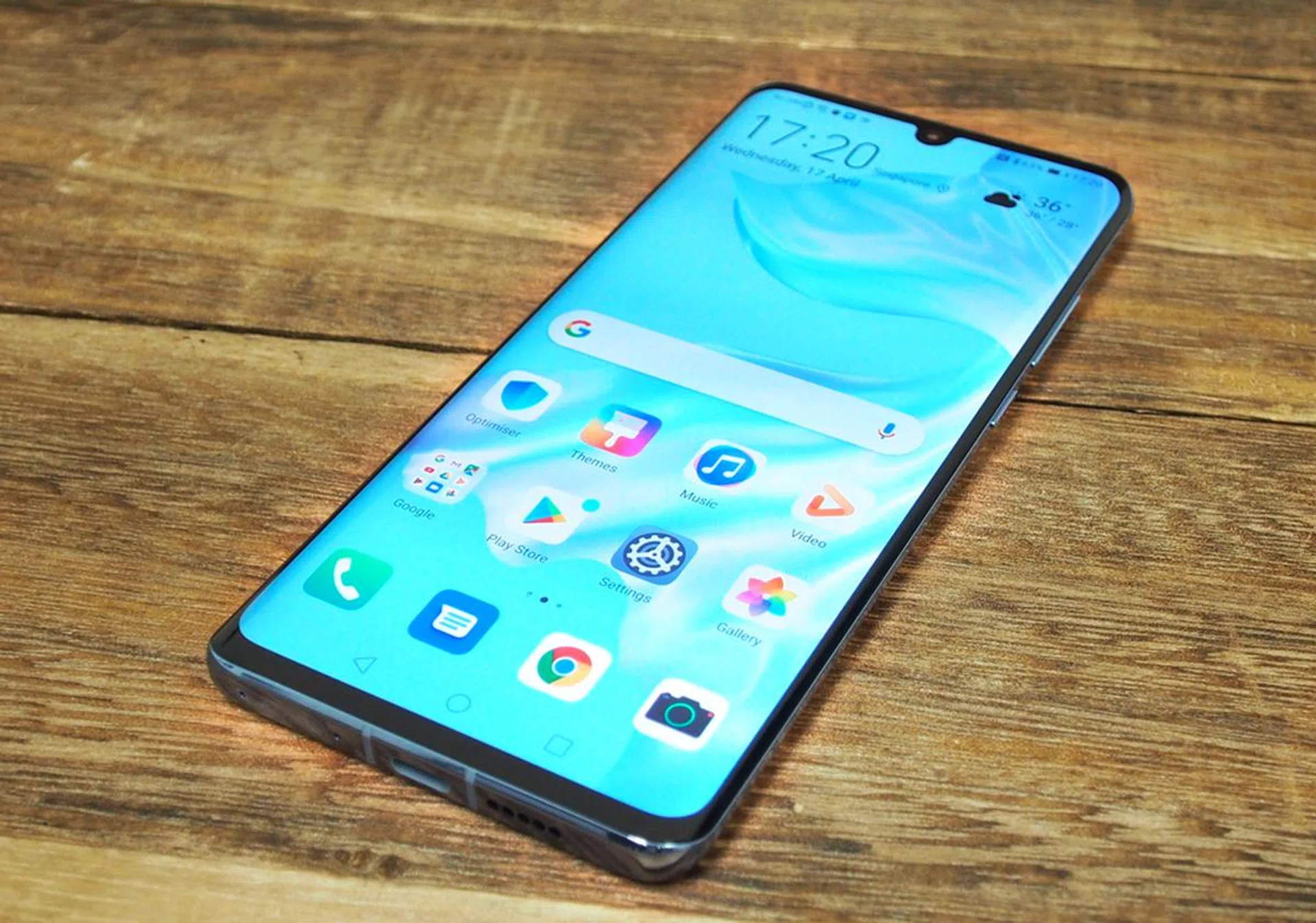
The notch in the display houses the selfie camera and nothing else. Unlike the Mate 20 Pro, you don't get advanced facial recognition, and there isn't even an LED flash or speaker here.
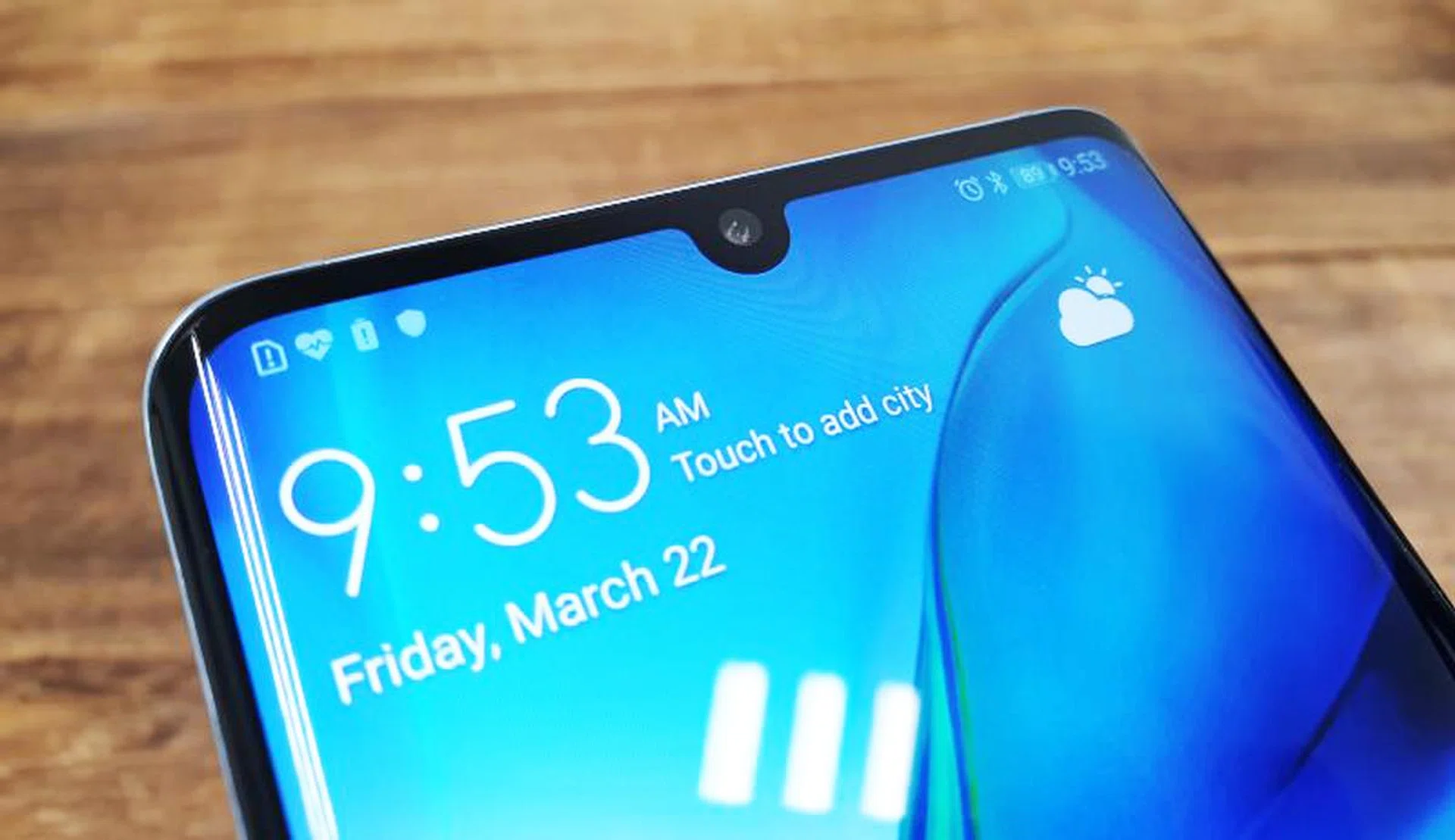
Instead of an earpiece speaker, the P30 Pro uses 'Acoustic Display' bone conduction technology. This isn't the first time we've seen this technology in a phone, as Xiaomi's first Mi Mix smartphone also used something similar. There's an audio coil under the display that creates vibrations, essentially allowing the entire display to act as an earpiece when you're making a phone call. The coil is located just under the notch - in fact, the P30 Pro will play an animation to show you where to place your ear for the best experience. It sounds strange, but it works really well - calls are loud, with crisp, clear audio.
The 6.47-inch display is the largest Huawei has ever put on a P series phone, which is really starting to blur the lines between the P series and the traditionally larger Mate series. The phone is actually very similar in size to the Mate 20 Pro, measuring 158 x 73.4 x 8.41. It's also nearly the same weight, coming in at 192g, just 3g heavier than the Mate 20 Pro.
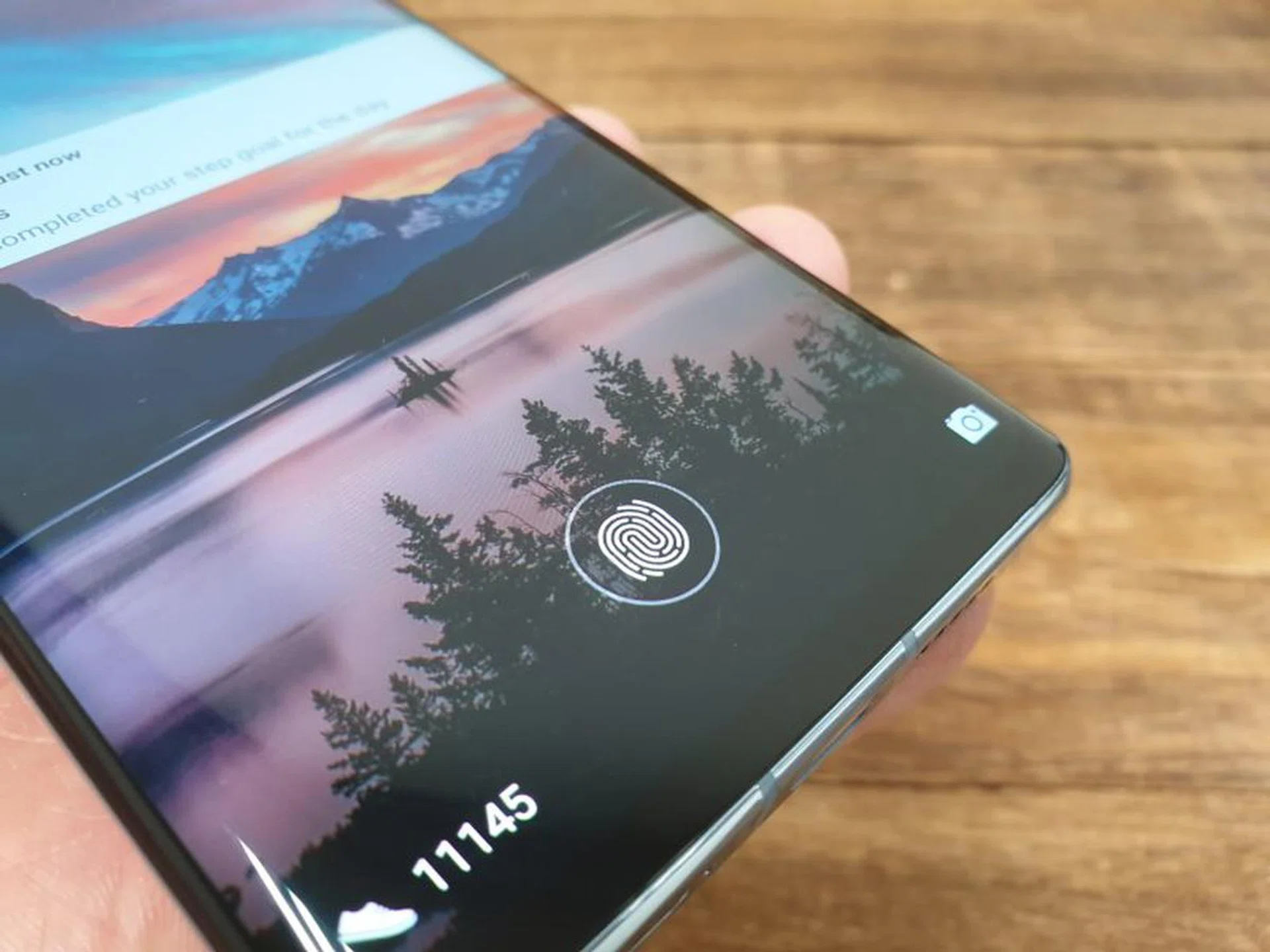
Like the Mate 20 Pro, the phone has an in-display fingerprint scanner. The scanner is optical rather than ultrasonic like on the Samsung Galaxy S10, but it works well, with fast, reliable detection. There's a Face Unlock option too, but it only uses the selfie camera, which means it's much less secure and can potentially be fooled by a picture. It's really just there for convenience, but the fingerprint unlock is so fast and reliable, you're better off using that.
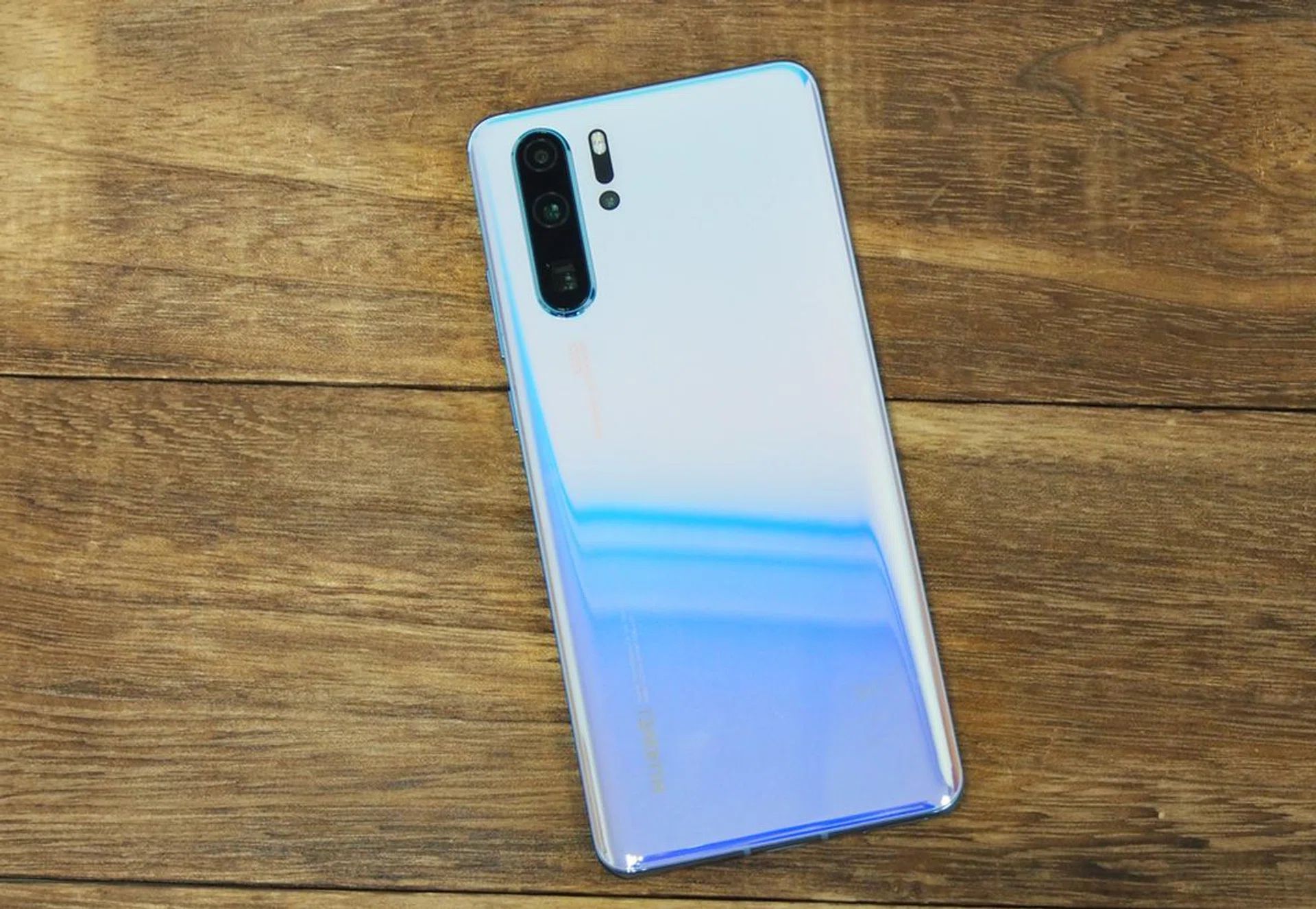
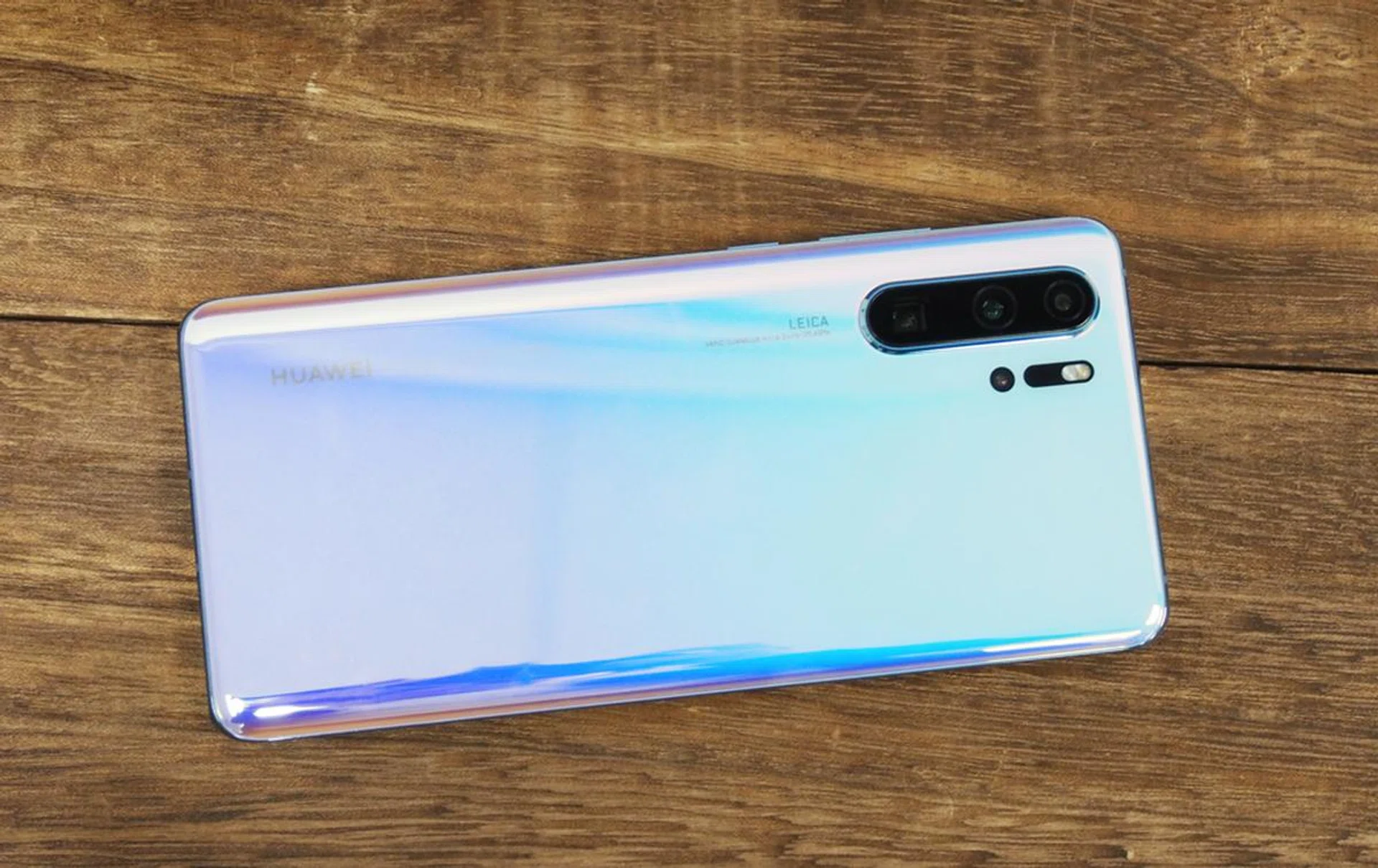
Flip the phone over and you'll immediately notice the unique quad-camera setup. Like last year's P20 Pro, the wordmarks on the phone are oriented horizontally, to mimic the look of a camera. While the Mate 20 Pro had a square camera setup, the P30 Pro has its three main lenses lined up in the upper left corner. The top lens is the 20-megapixel ultrawide lens, the middle lens is the 40-megapixel wide angle lens, and finally, the unusual 8-megapixel periscope zoom lens is at the bottom. Next to the main triple-camera setup is the dual-tone LED flash and ToF camera.
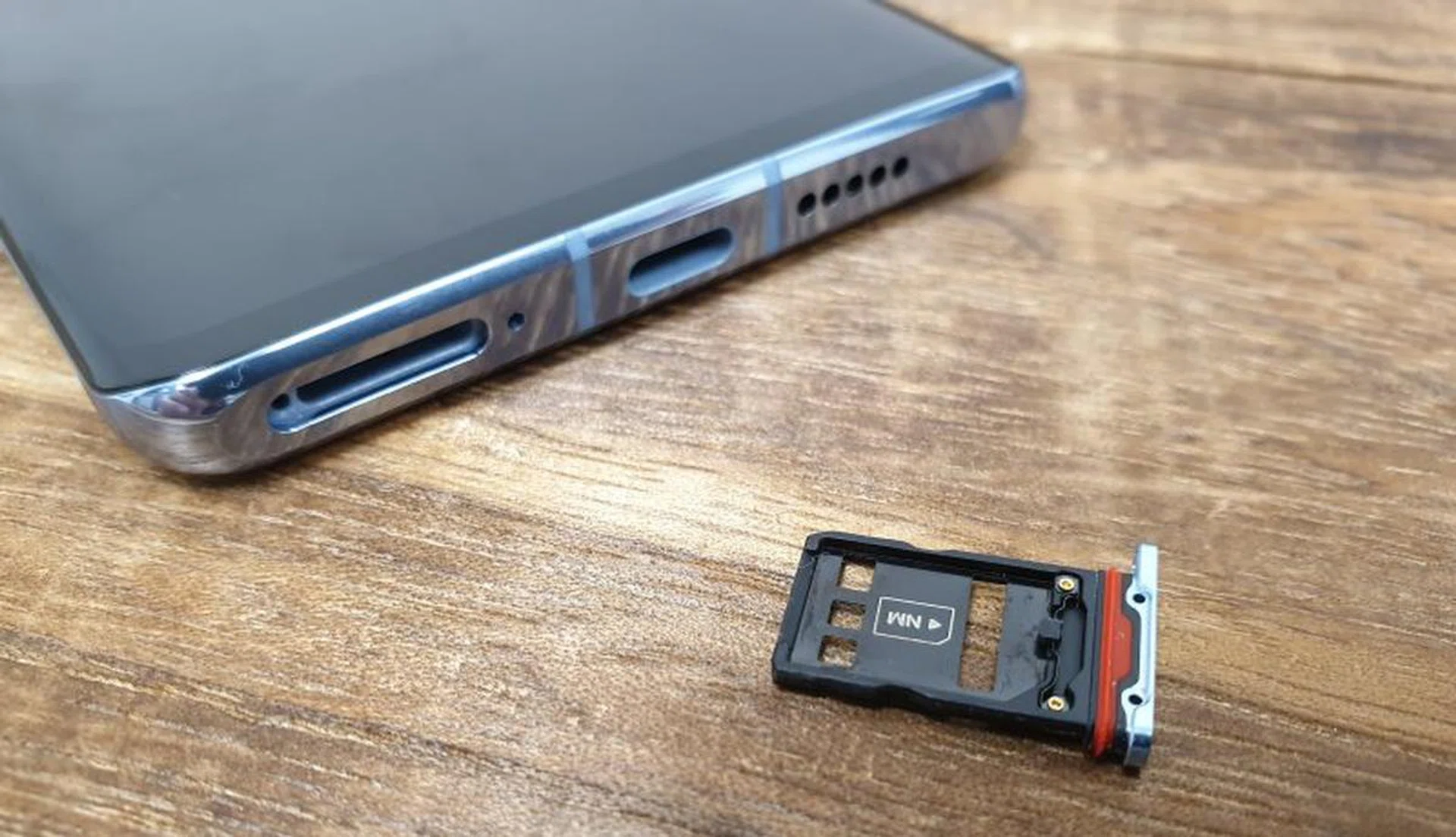
On the bottom, you'll find a downward-firing speaker, a USB-C port, and the hybrid SIM/Nano SD card slot. Unfortunately, unlike the regular P30, the P30 Pro does not have a 3.5mm headphone jack.
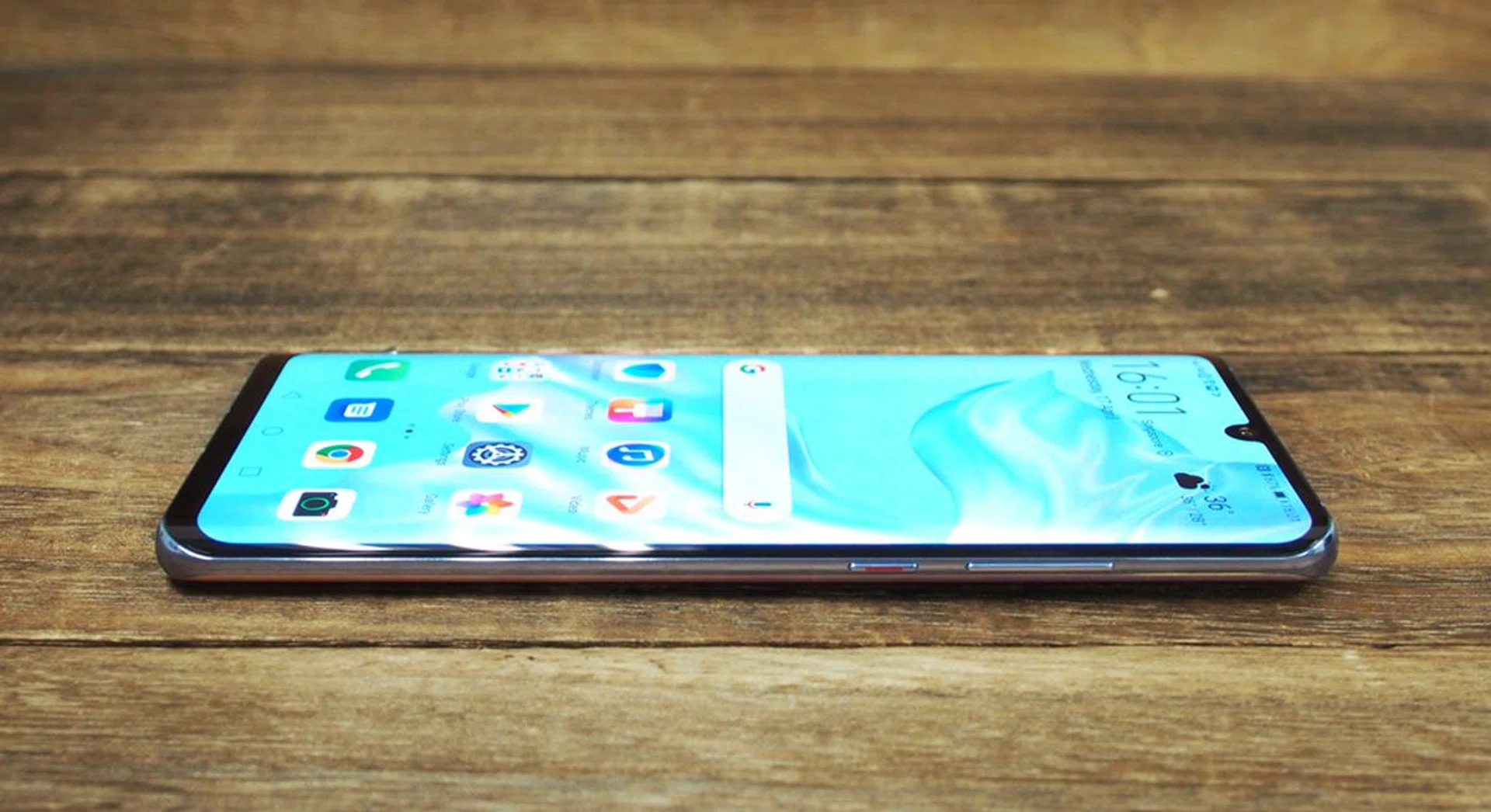
The power button and volume rocker can both be found on the right side.
Huawei was one of the first brands to experiment with gradient colors and that continues with the P30 Pro. There's a new Aurora color that's inspired by the Aurora Borealis and has a beautiful blue-green color gradient, or if you prefer something completely unique, there's a new Breathing Crystal color that has multiple hues all mixed into one - sometimes it looks white, other times blue, and other times purple. Alternatively, there's always Black.
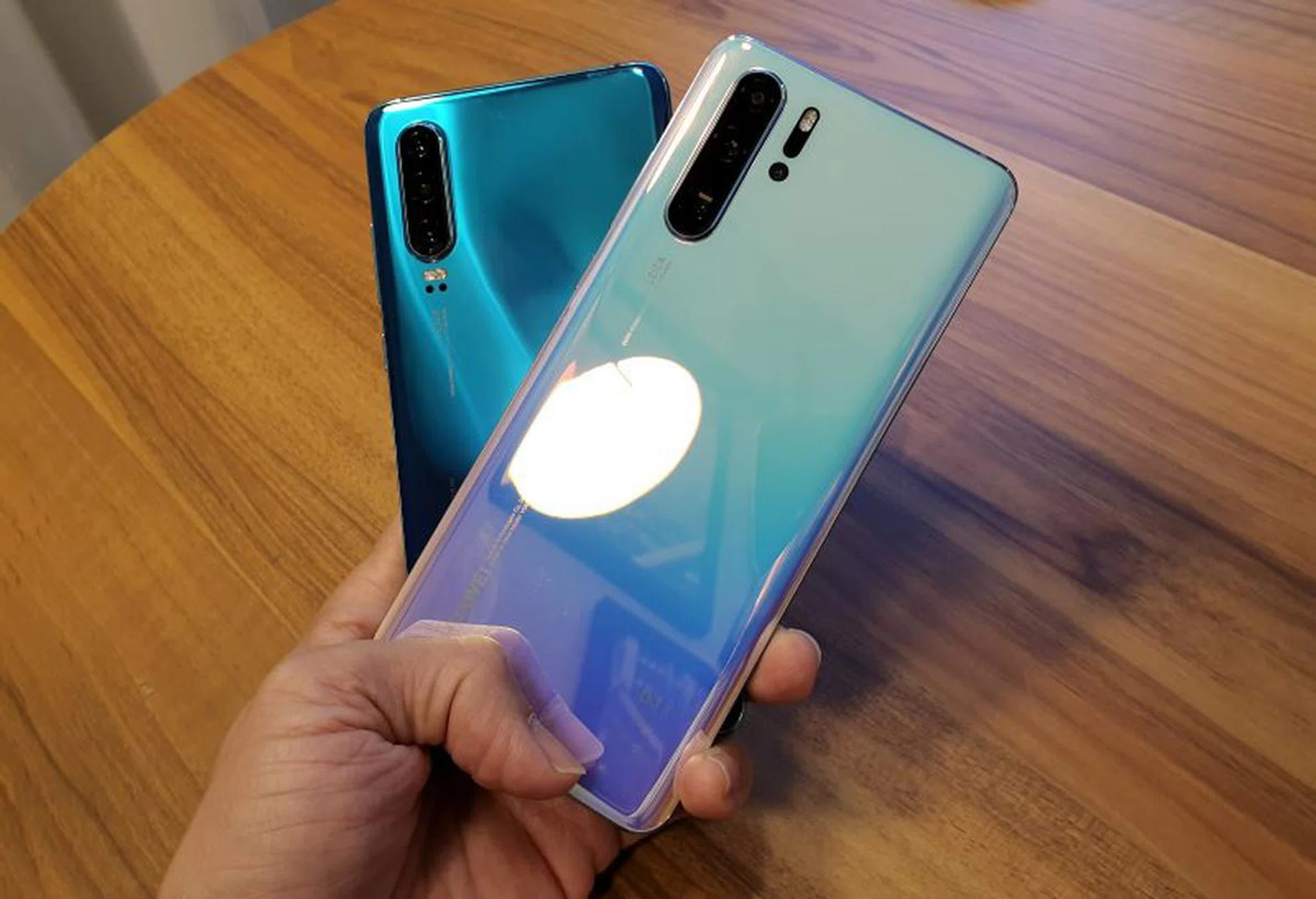
The P30 Pro in Aurora (back) and Breathing Crystal (front).
Finally, the P30 Pro has an IP68 rating for dust and water resistance.
Display and Audio
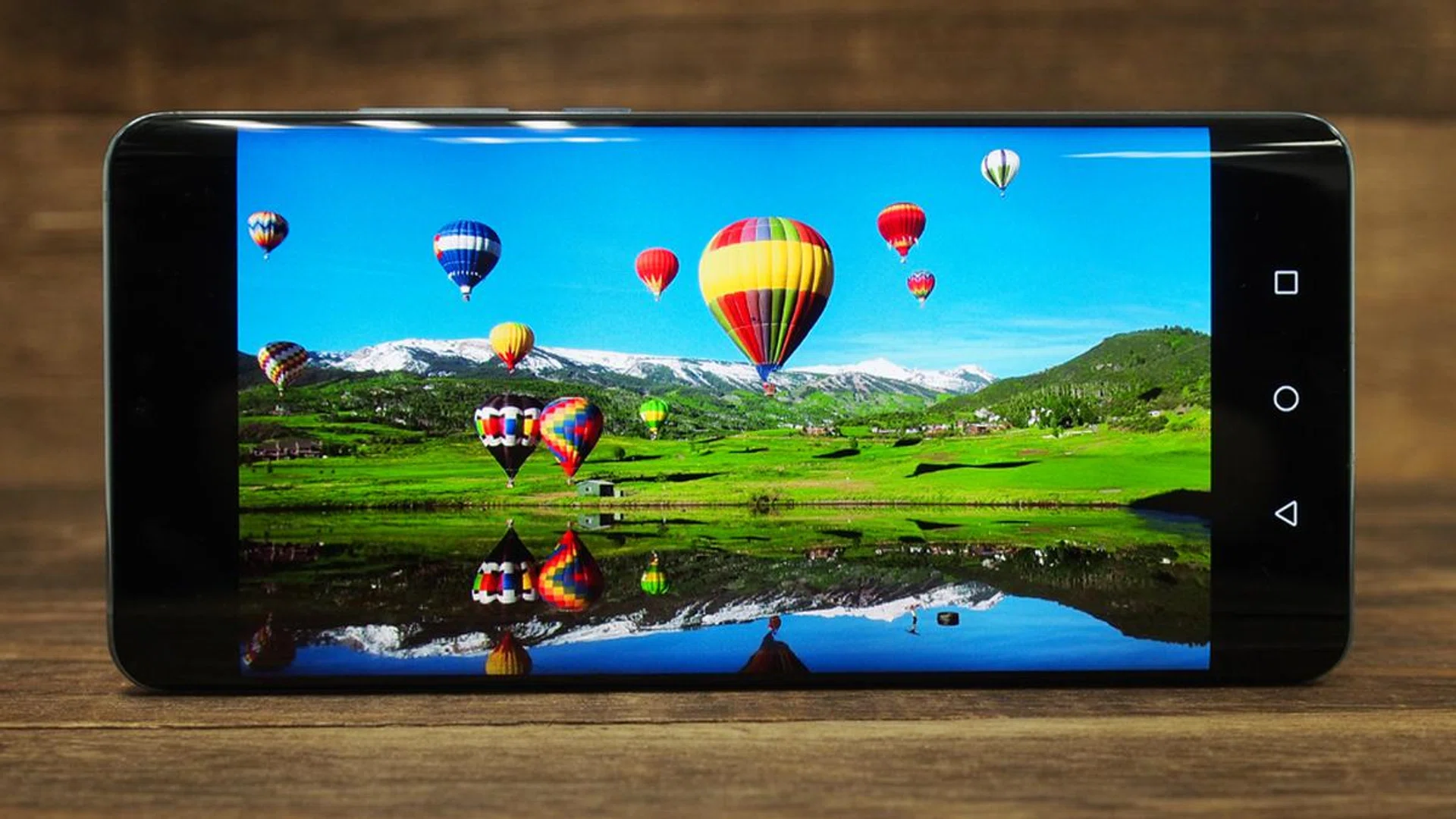
The P30 Pro has a 6.47-inch AMOLED display with a 2,340 x 1,080 pixels resolution (~339ppi) and 19.5:9 aspect ratio. The Full HD+ resolution is actually rather low for a display of this size, but the screen is sharp enough unless you really scrutinize it. The screen is fairly bright, maxing out at 600nits, although it could certainly be brighter. The screen has two color modes: Normal and Vivid, each of which also has three sub-modes, default, warm, and cold, which adjusts the color temperature accordingly. As expected, colors are more accurate under the Normal default mode (which is the default anyway) but if you want things to pop Vivid warm actually looks really good.
The display is HDR10 certified, and compatible with HDR shows on Netflix and Amazon Prime.
Unfortunately, unlike the P20 Pro and Mate 20 Pro, the P30 Pro lacks stereo speakers. Previously, the earpiece doubled as a second speaker, but the 'Acoustic Display' technology makes this impossible. Instead, all audio on the phone comes out of the single downward firing speaker. Having said that, the downward firing speaker is remarkably loud and boasts an impressive amount of bass. You only really notice the lack of a second speaker when you're watching content in landscape mode, as it becomes very obvious that the sound is only coming from one side of the phone.
User Interface
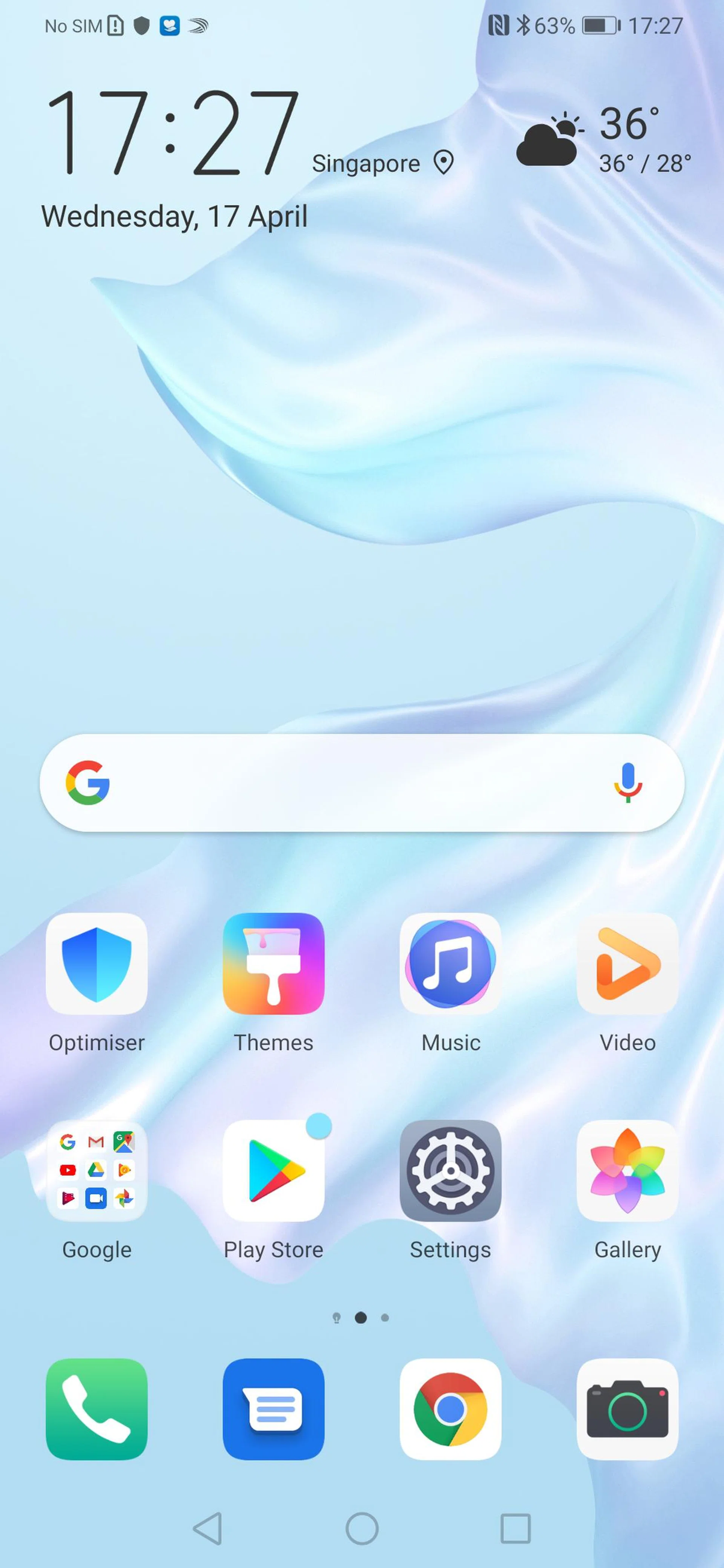
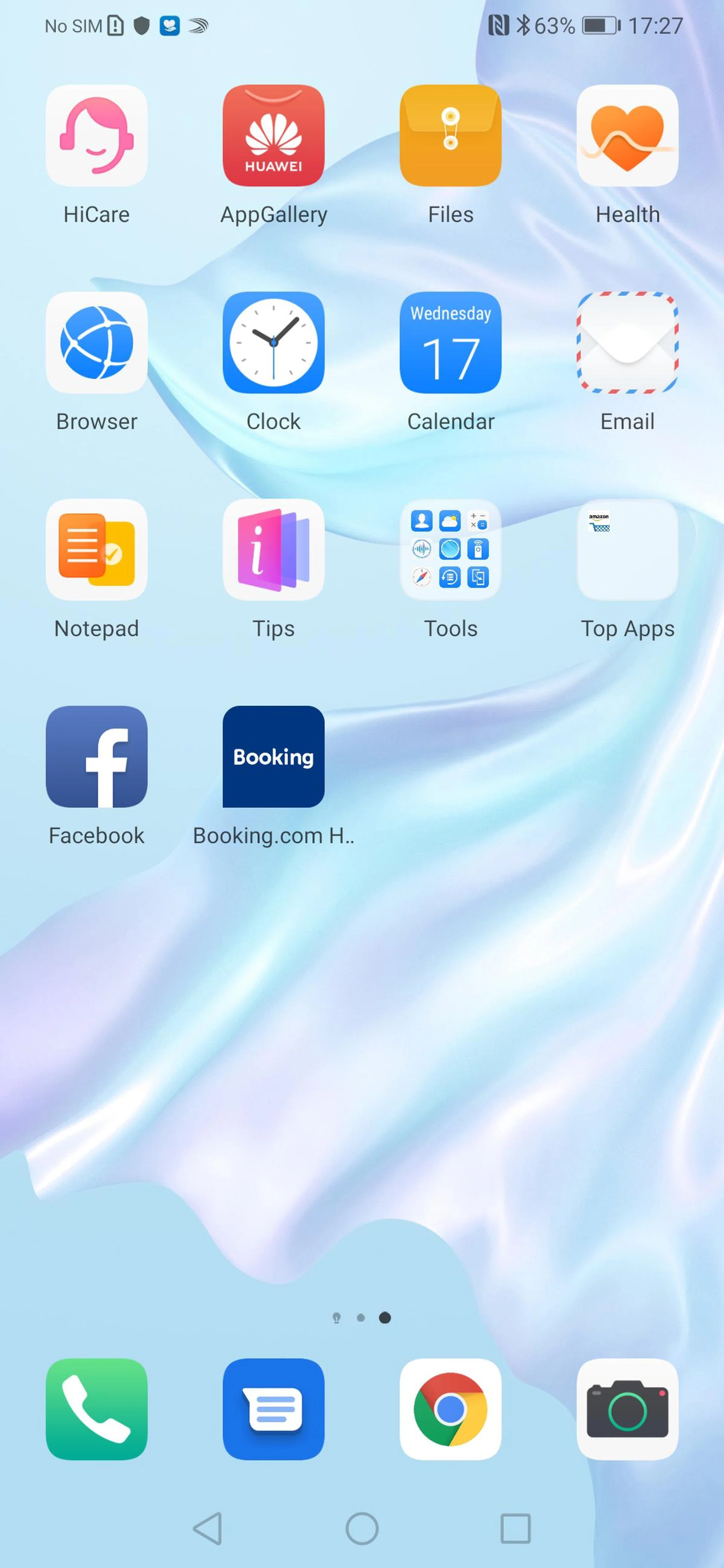
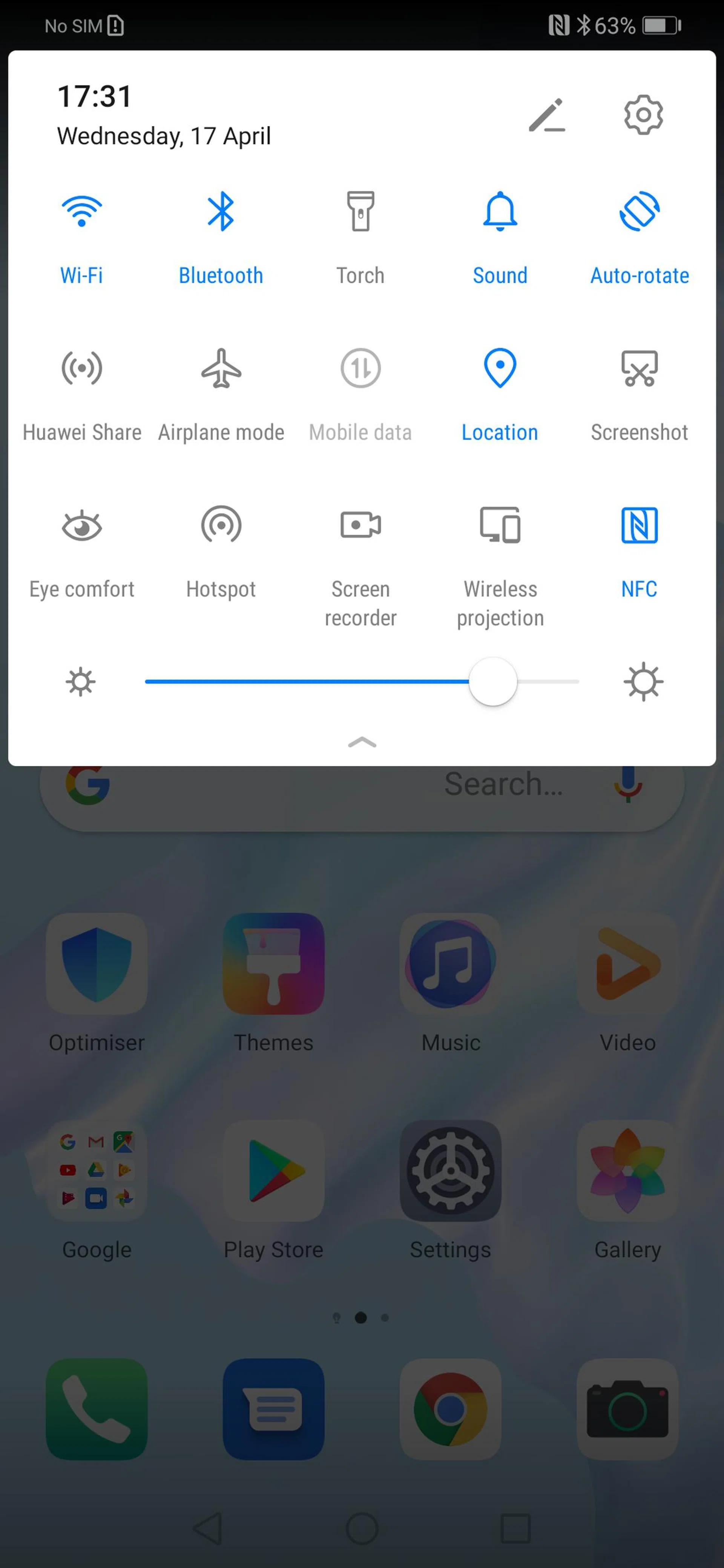
The P30 Pro runs on Android 9.0 Pie with Huawei's own EMUI 9.1 on top of it. There aren't many visual changes from what we saw on the Mate 20 Pro, but under the hood EMUI 9.1 includes a new file system called EROFS that Huawei says offers 3x faster read speeds, 10 percent improvement in app startup speeds, and 20 percent less space required by system files. All of this should make the P30 Pro snappier and faster, and with more available internal storage space.
The rest of EMUI is pretty much the same as the Mate 20 Pro. That means there's no app drawer, and all of your apps sit on the home screen, although you can restore the app drawer if you prefer a more stock Android look.
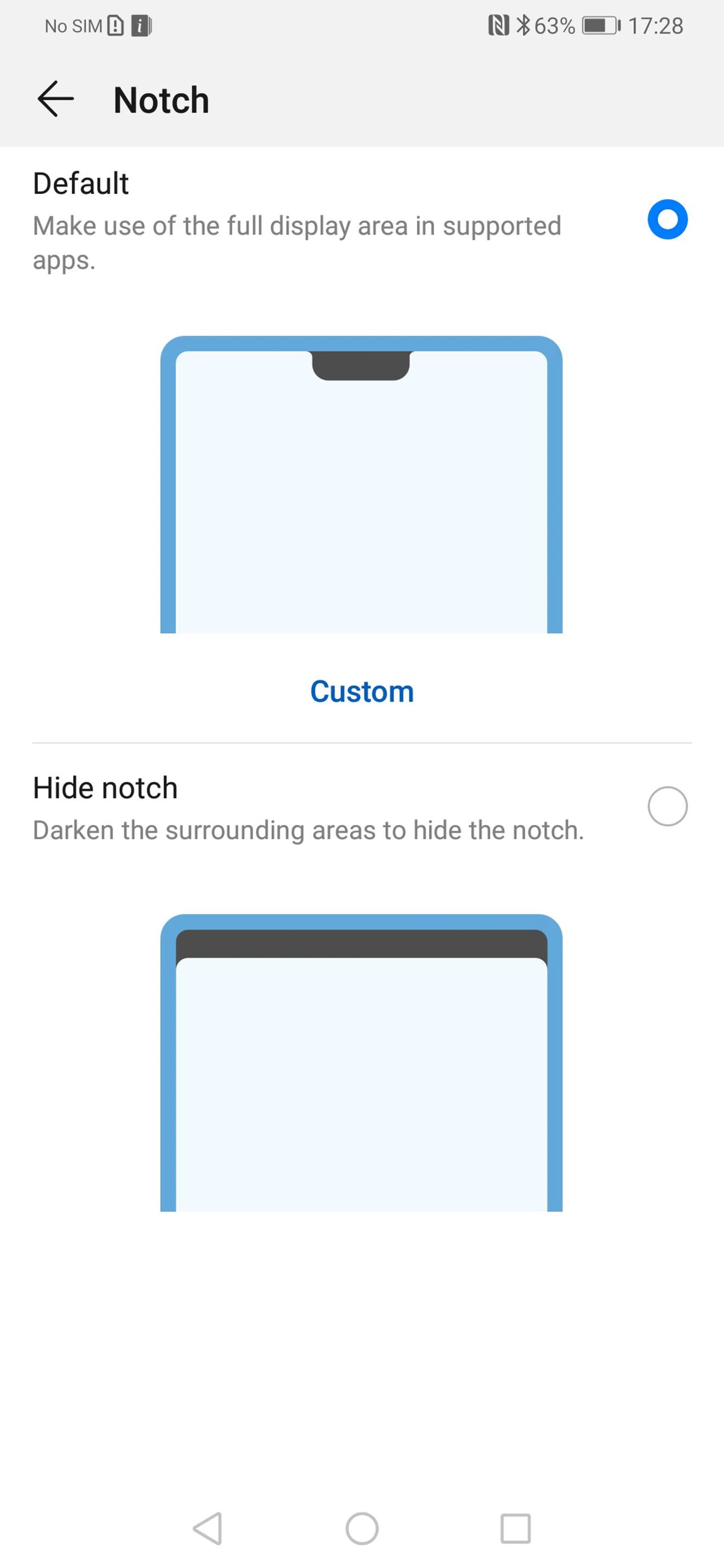
There's an option to hide the notch if you prefer, but this masks it with a larger black bar that covers the entire top part of the screen and is much more obtrusive. I imagine only the most die-hard of notch haters will choose this option.
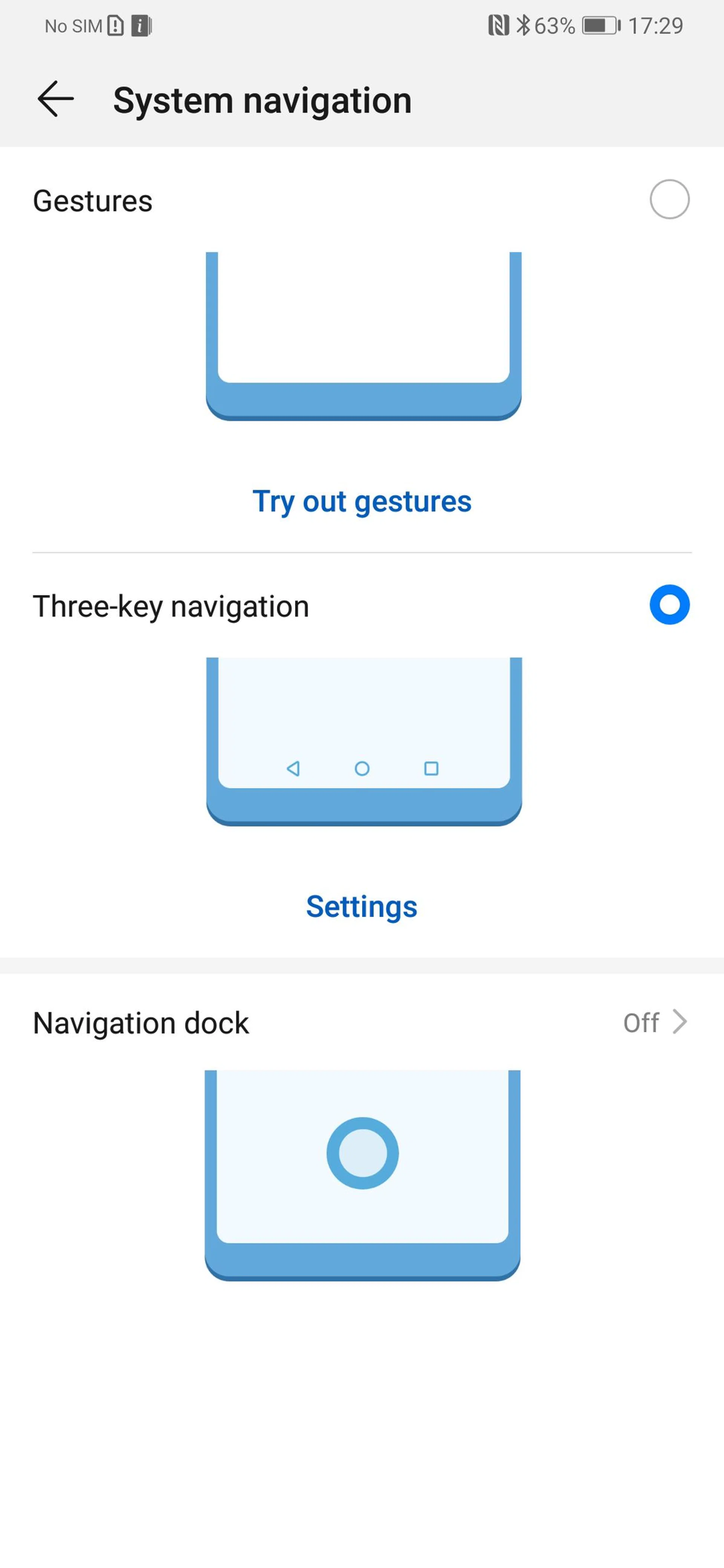
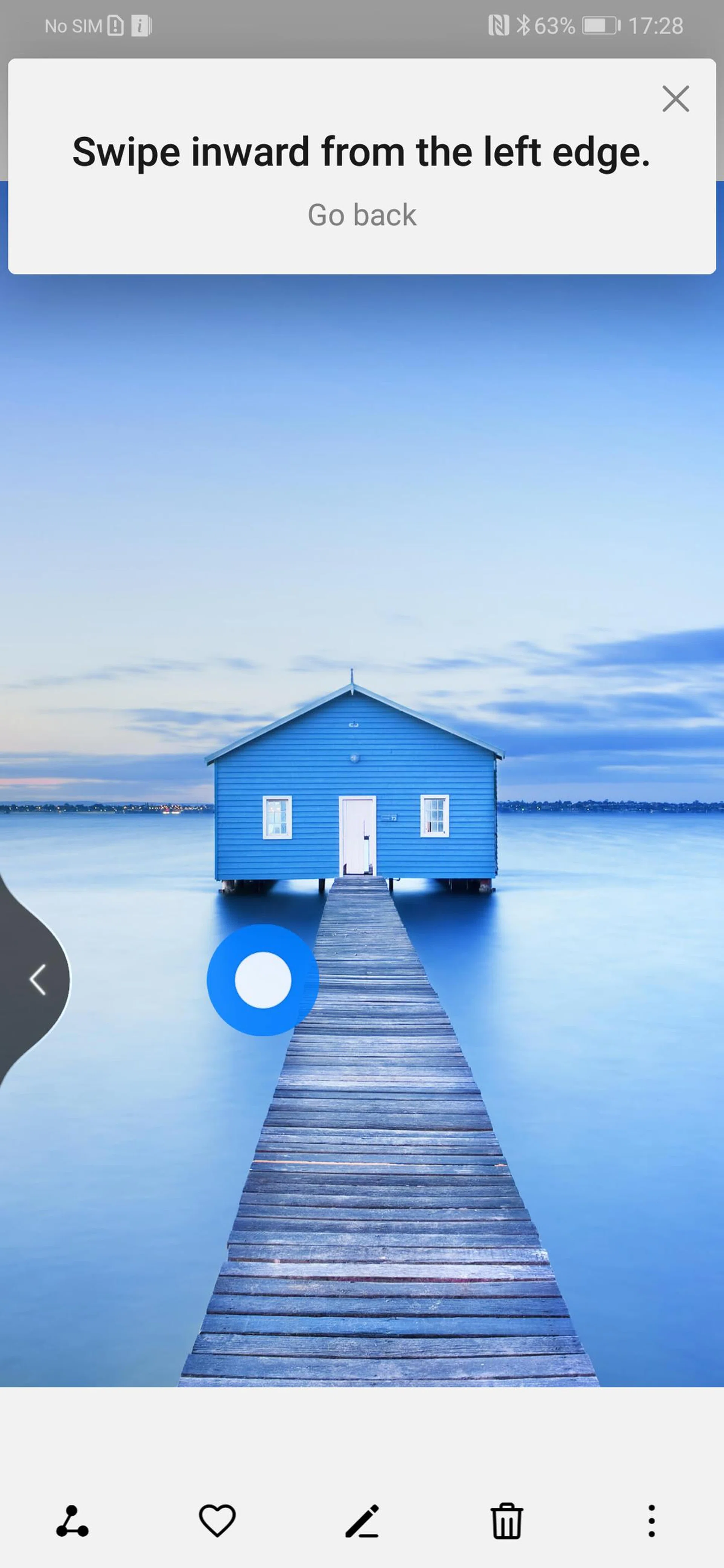
Like the Mate 20 Pro, there's also gesture-based navigation if you want to get rid of the onscreen navigation keys: swipe up for Home, swipe up and long press for the task switcher, or swipe from the left or right edge of the screen for Back.
Camera Features and Imaging Performance
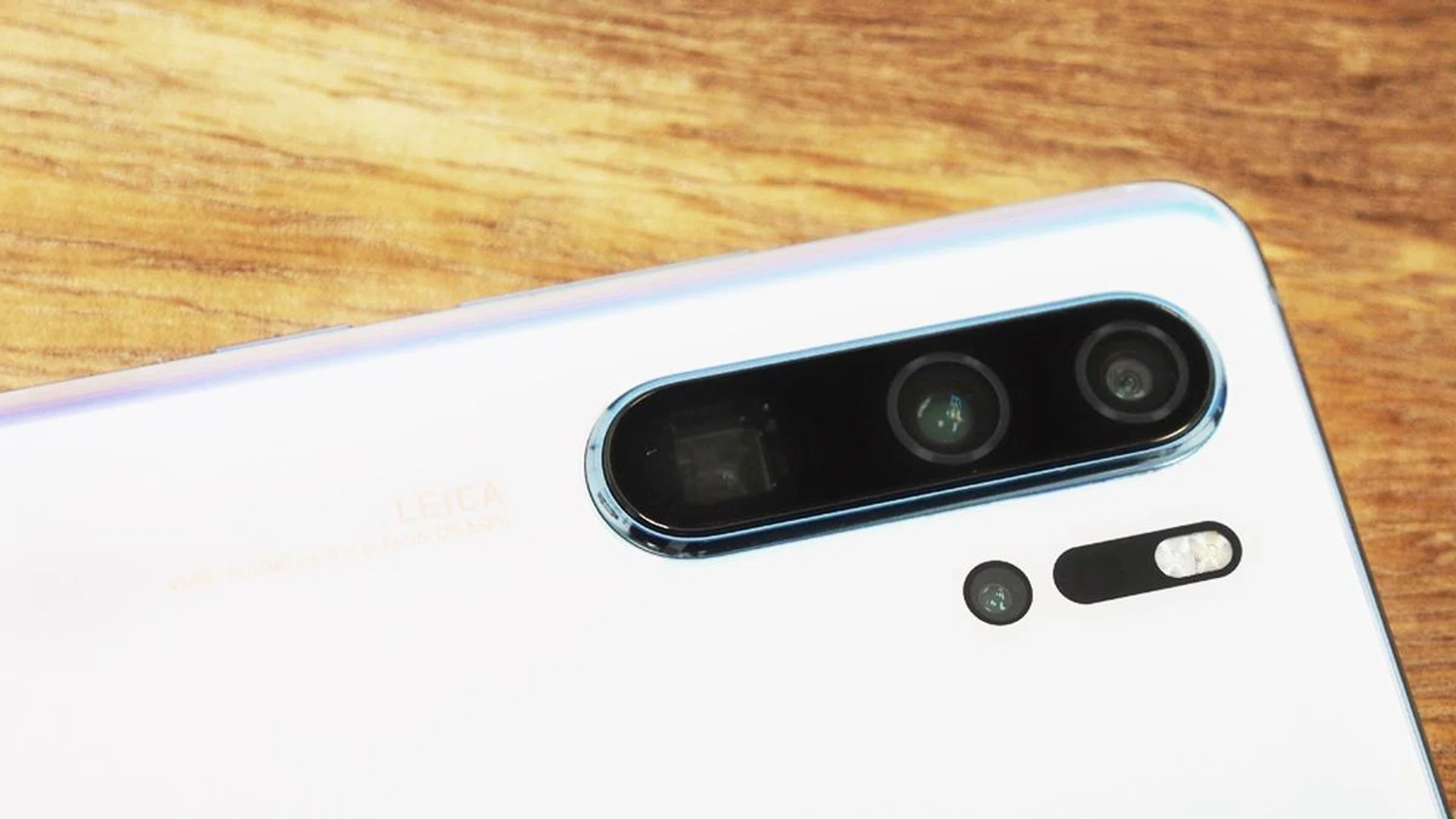
Huawei and Leica have been pushing the envelope with smartphone photography for a few years now and the P30 Pro continues that trend with an innovative new quad camera setup.
The setup has a triple camera system on the main camera module. From top to bottom you get: a 20-megapixel f/2.2 ultrawide, a 40-megapixel f/1.6 wide, and finally an 8-megapixel f/3.4 telephoto with 5x optical zoom. Both the wide and telephoto lenses have optical image stabilization. The fourth camera is the ToF (Time of Flight) 3D lens, and is located to the right, just under the LED flash.
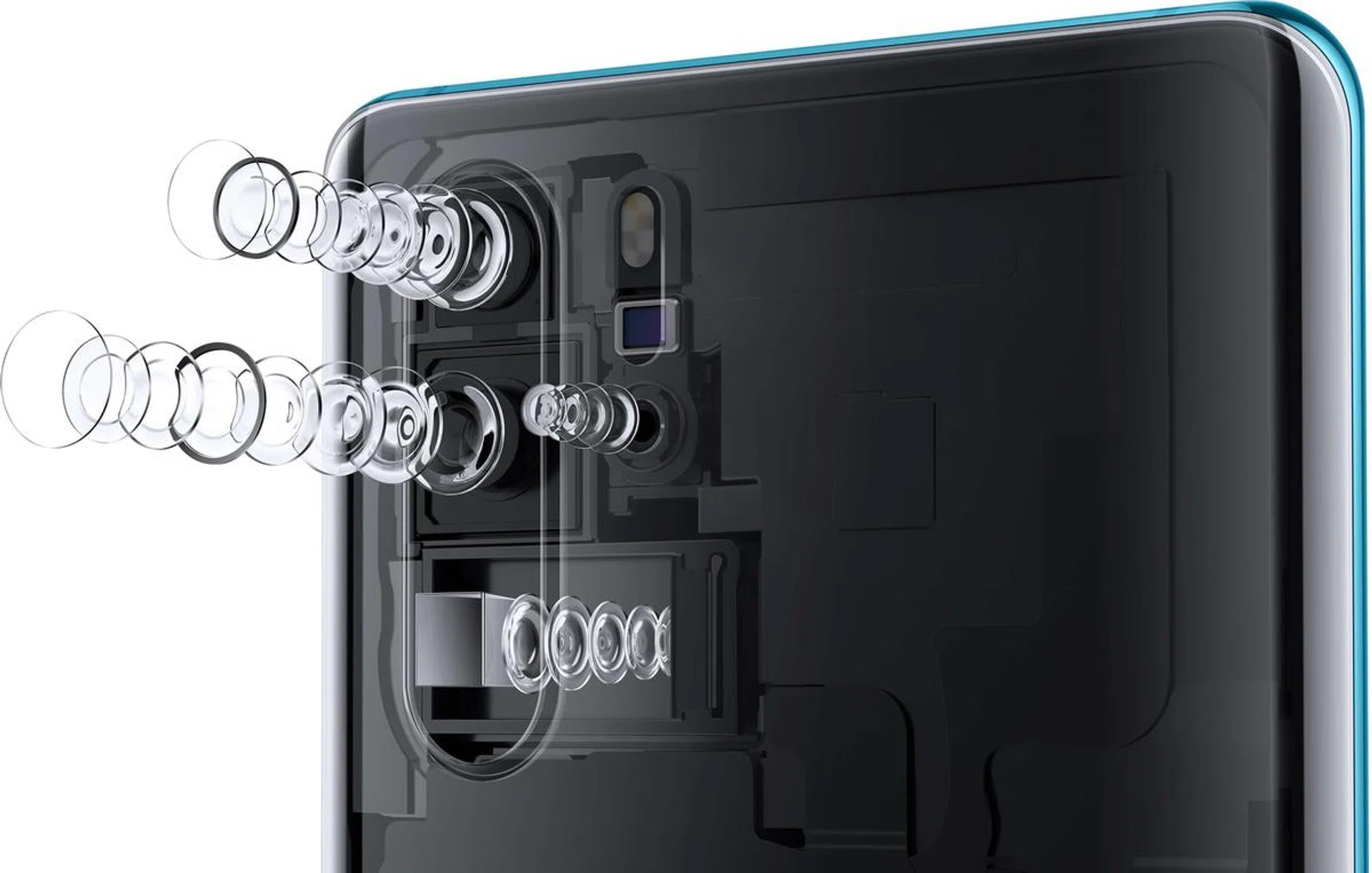
Top to bottom: a 20-megapixel f/2.2 ultrawide, a 40-megapixel f/1.6 wide, and finally an 8-megapixel f/3.4 telephoto with 5x optical zoom. The fourth camera is the ToF (Time of Flight) 3D lens, located under the LED flash.
The 20-megapixel ultrawide is the same lens we saw on the Mate 20 Pro. It has a 16mm equivalent focal length in 35mm terms, which gives it a very generous field of view of about 110 degrees.
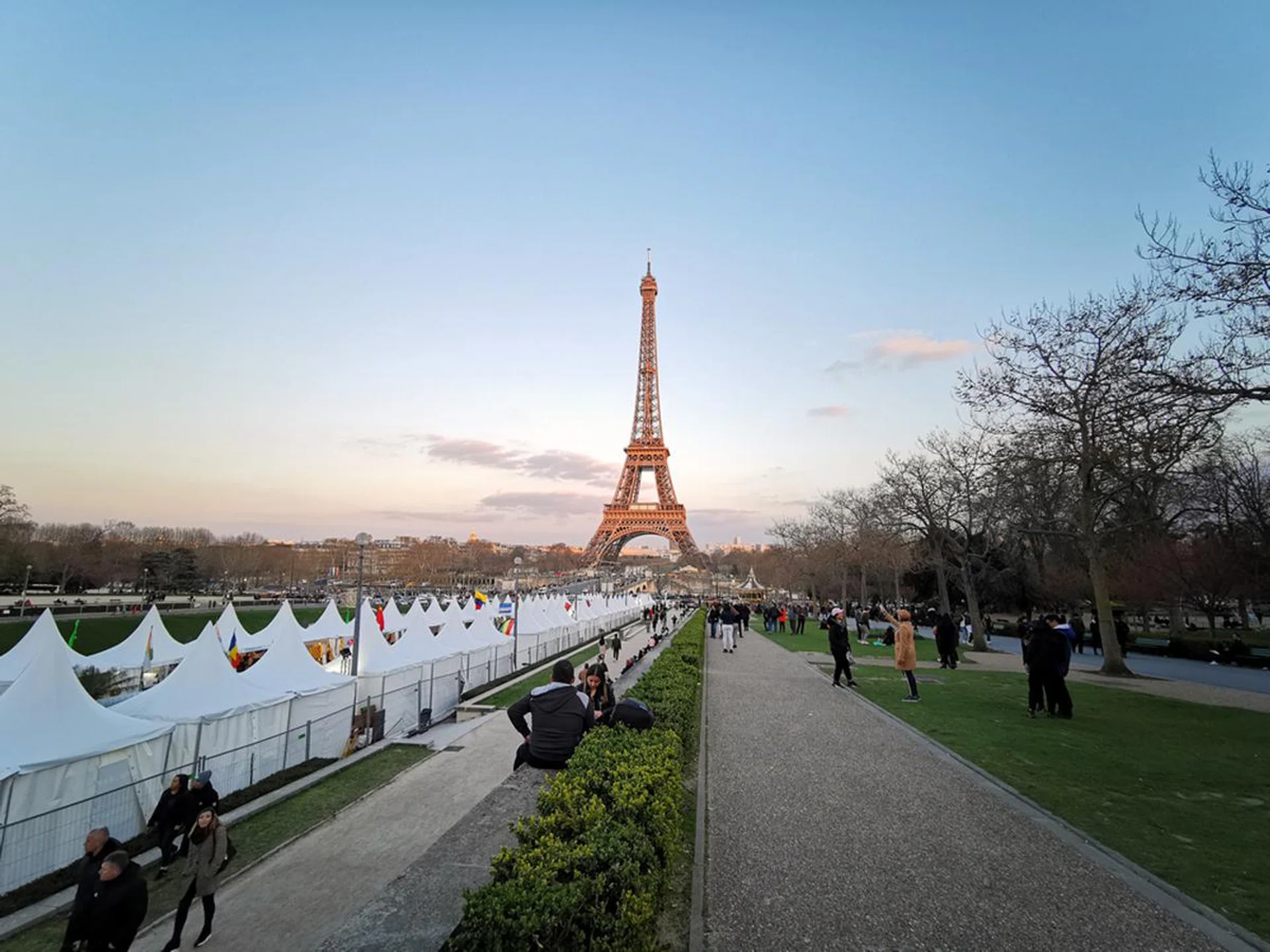
f/2.2, 16mm (ultra-wide), ISO100, 1 sec
It also doubles up as a (as seen on the Mate 20 Pro) with a focus distance as close as 2.5cm.
The new 40-megapixel wide angle is equipped with Sony's new SuperSensing sensor. It has a focal length of 27mm in 35mm terms, which is roughly equivalent to what the human eye sees. By default, it will generate super detailed 10-megapixel photos through pixel binning, but if you prefer, you can opt to save the full 40-megapixel image. The wide angle lens also uses a new RYYB color filter, which Huawei says collects more light than traditional RGGB filters, resulting in better low-light performance.

f/1.6, 27mm (wide), ISO50, 1/400 sec
The star of the show however is the new 8-megapixel telephoto lens. It has a unique periscope design that places the sensor to the right of the actual camera module. What you can see when you look at the lens is actually the back of the periscope lens' front element. There's no mirror here, the light is refracted at a 90-degree angle towards the sensor by a prism. The refracted light then passes through five additional lenses to get the final image.
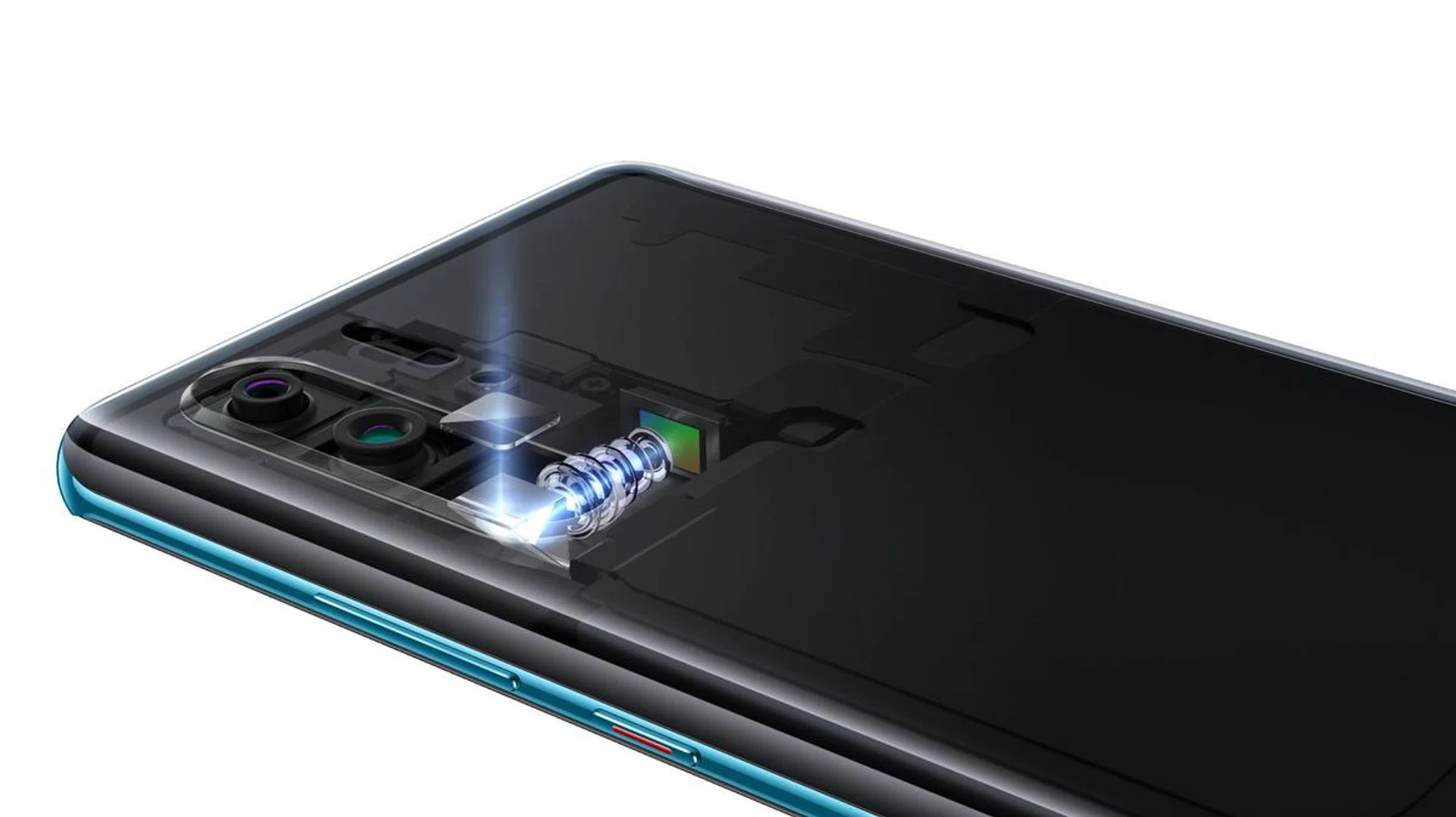
The telephoto lens offers a focal length equivalent of 135mm (5x zoom over the main 27mm wide angle lens).

f/3.4, 135mm (5x zoom), ISO50, 1/100 sec
If you use Huawei's Hybrid Zoom, which combines digital and optical zoom, you can get a focal length of 270mm, or up to 10x zoom. Compare what details you can discern from 5x optical zoom (seen above) versus a 10x Hybrid Zoom below:-

f/3.4, 270mm (10x hybrid zoom), ISO50, 1/100 sec
It can even do up to 50x of pure digital zoom, for a ridiculous focal length of 1343mm. Obviously, image quality isn't great at this distance.

f/3.4, 1343mm (50x digital zoom), ISO50, 1/100 sec
The ToF camera is used for autofocus and Portrait Mode. It creates a depth map of what you're looking at, which allows for better edge detection and subject separation for generating bokeh.
Like the Mate 20 Pro, Huawei's default camera app is enhanced by Huawei's Master AI, which can now recognize and tune settings for up to 1,500 different scenes. The P30 Pro also includes basically every shooting mode you can think of, including HDR, Portrait, slow-motion video, time-lapse video, and the excellent Night Mode we first saw on the P20 Pro.
Image quality is excellent with great detail, true to life colors, and minimal noise and processing. Unlike many smartphone cameras, corners are sharp, and there's very little lens distortion. Don't be afraid to use the 10x hybrid zoom either, because unlike most digital zooms there's hardly any loss in image quality, and thanks to the optical image stabilization it can capture tack sharp images fairly easily. Here's how the below photos compare against Huawei's very own Mate 20 Pro, here and here respectively.

Click for full-size image.
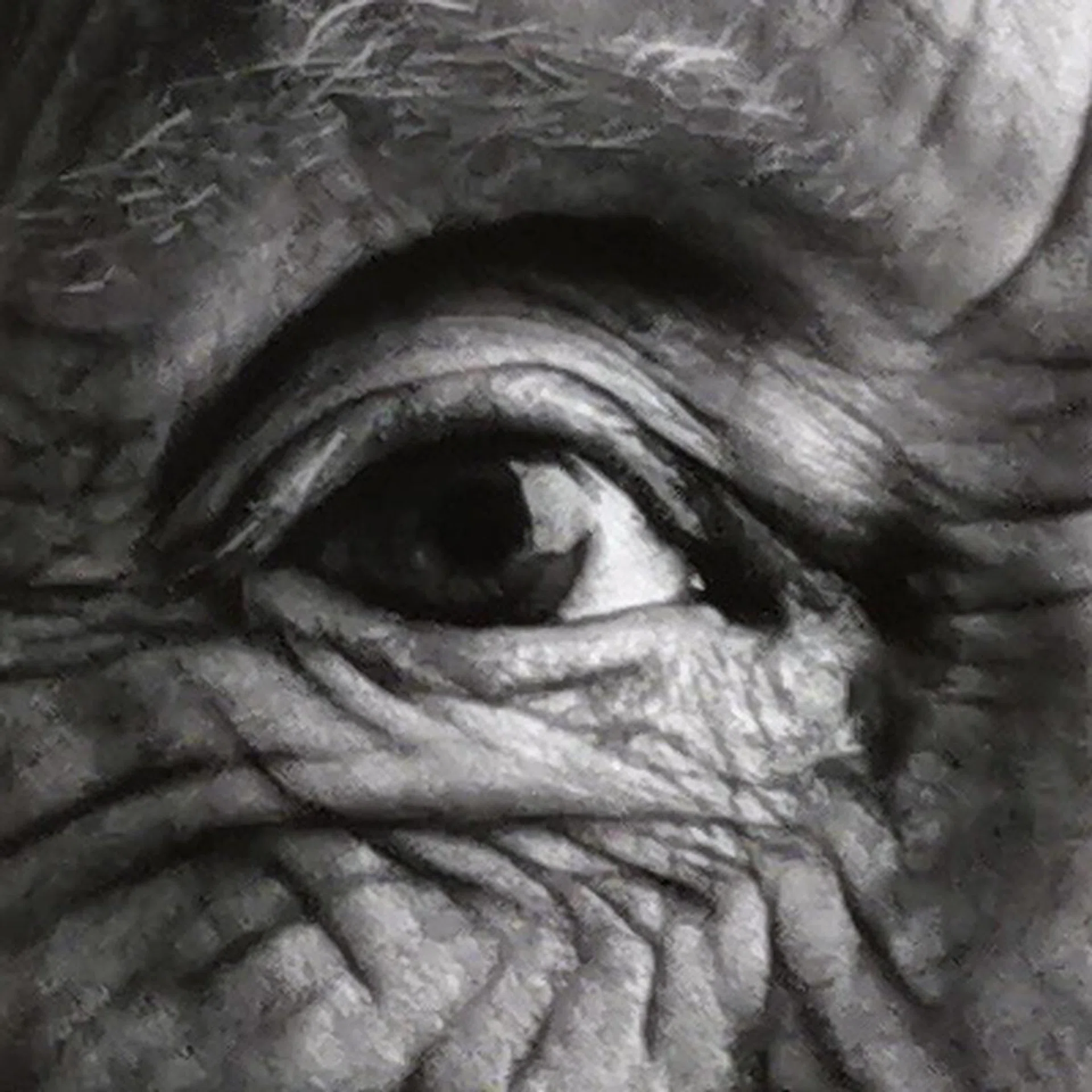

For even more camera imaging performance notes and sample images, check out our earlier firsthand experience with the Huawei P30 Pro in Paris.
Benchmark Performance
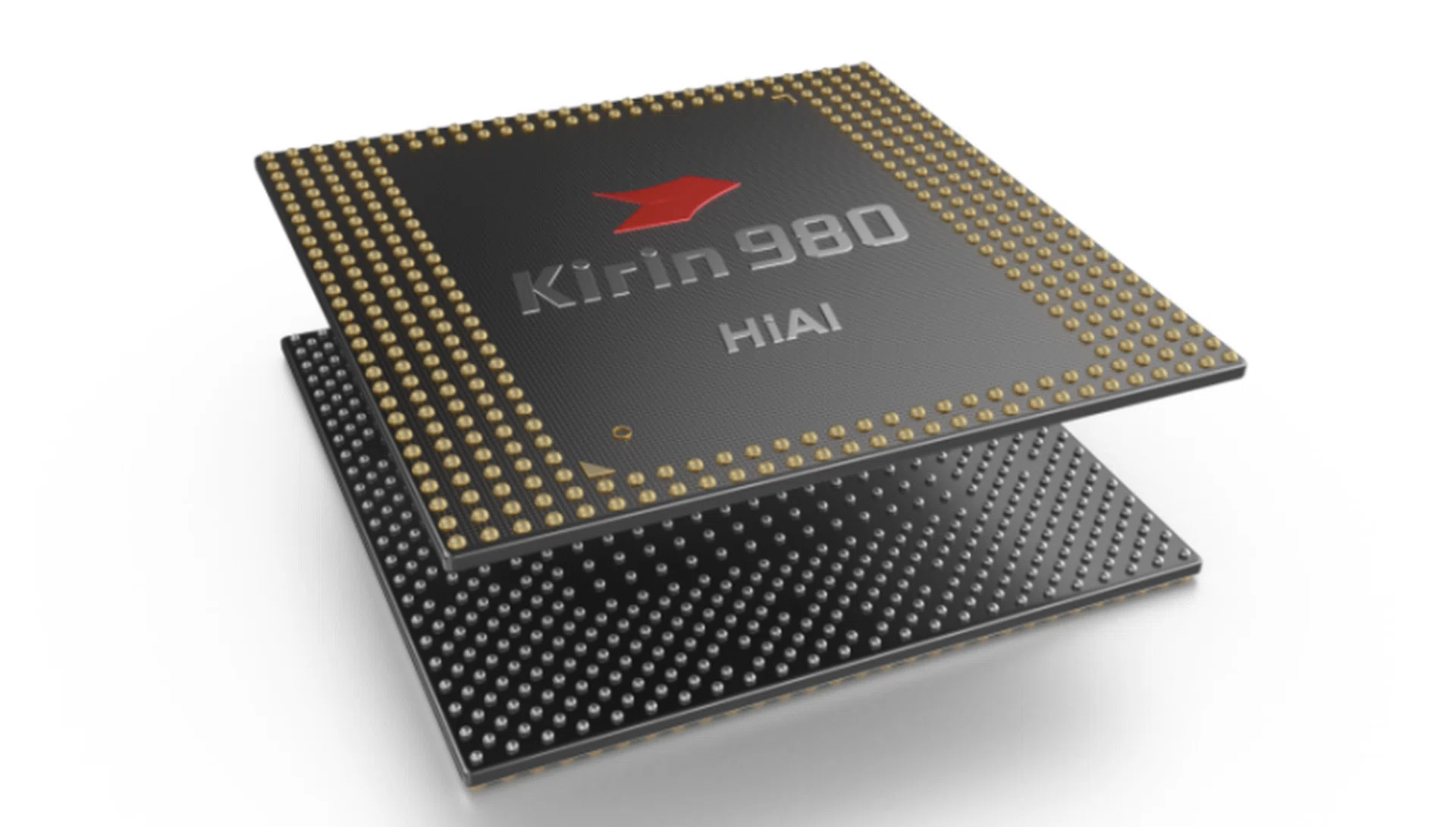
The P30 Pro is powered by Huawei's Hi-Silicon Kirin 980 processor, the same processor found inside the Mate 20 Pro. The Kirin 980 is 7nm octa-core processor with a unique setup: four low-power cores, two medium, and two high-power cores. In theory, this setup gives the phone more configurations compared to a standard big.LITTLE approach, which should give it better efficiency overall.
For more information on the Kirin 980, check out this article.
SunSpider Javascript
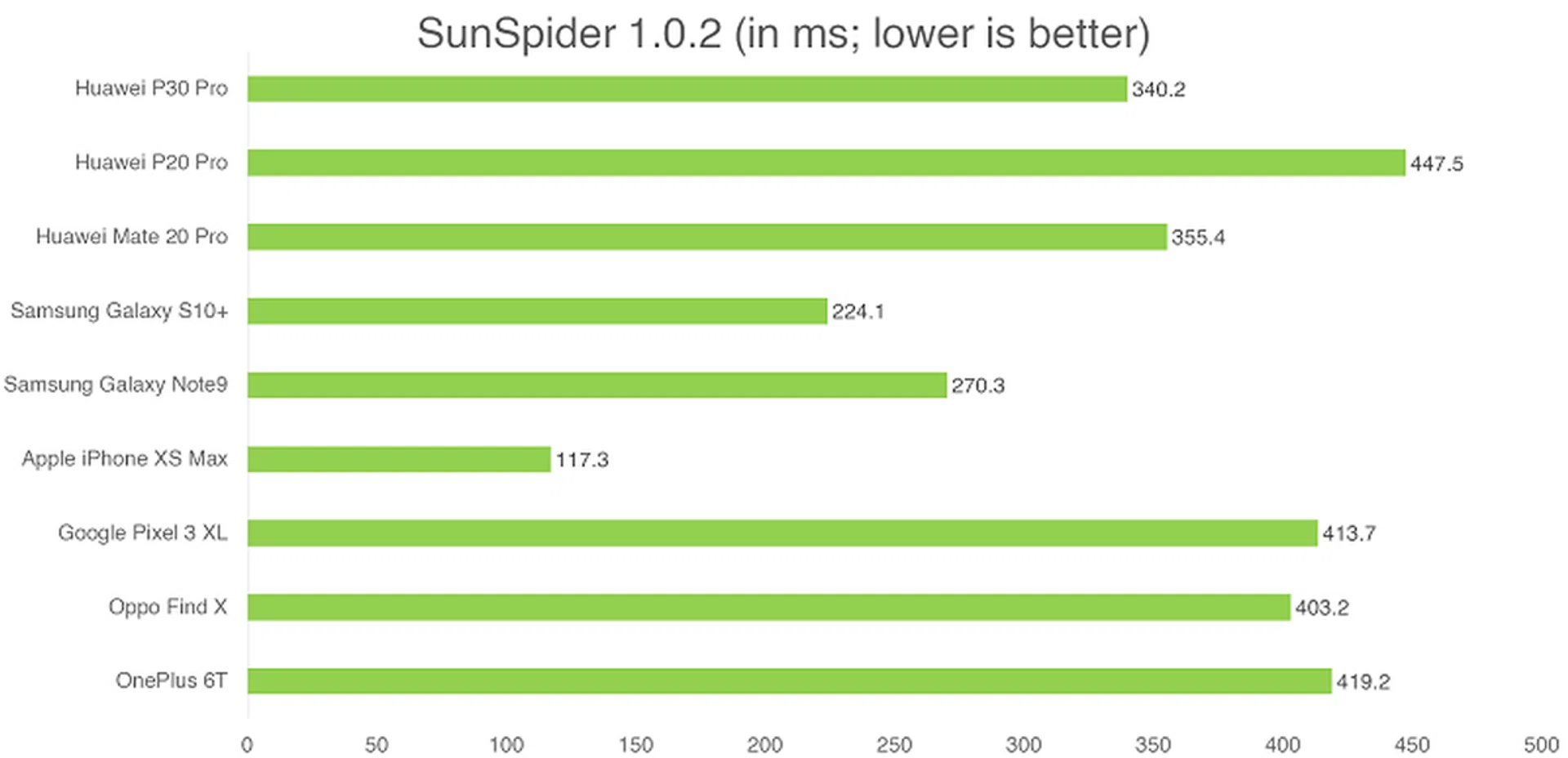
SunSpider JavaScript measures the browsing performance of a device when processing JavaScript. It not only takes into consideration the underlying hardware performance, but also assesses how optimized a particular platform is in delivering a high-speed web browsing experience.
The P30 Pro performed well in this test and was actually faster than the Mate 20 Pro. Actual browser performance was fast and responsive. In fact, I didn't notice any difference between the P30 Pro and the iPhone XS Max.
Antutu
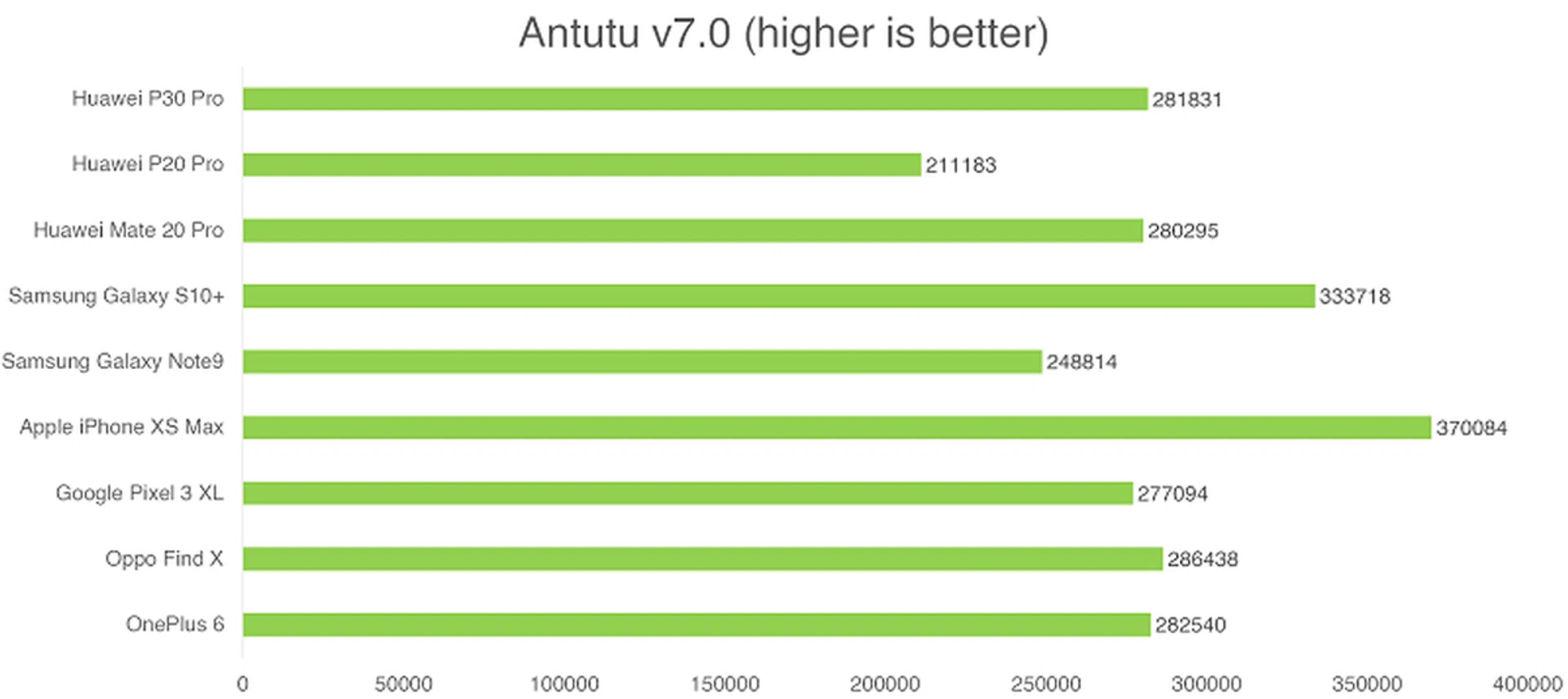
AnTuTu is an all-in-one benchmark that tests CPU, GPU, memory, and storage. The CPU benchmark evaluates both integer and floating-point performance, the GPU tests assess 2D and 3D performance, the memory test measures available memory bandwidth and latency, and the storage tests gauge the read and write speeds of a device's flash memory.
This benchmark shows just how far Huawei has come with its silicon in just one year. While the Kirin 970 in the P20 Pro was a little lackluster, the Kirin 980 outperformed everyone except for Samsung's newest Exynos 9820 and Apple's A11 Bionic.
Geekbench CPU
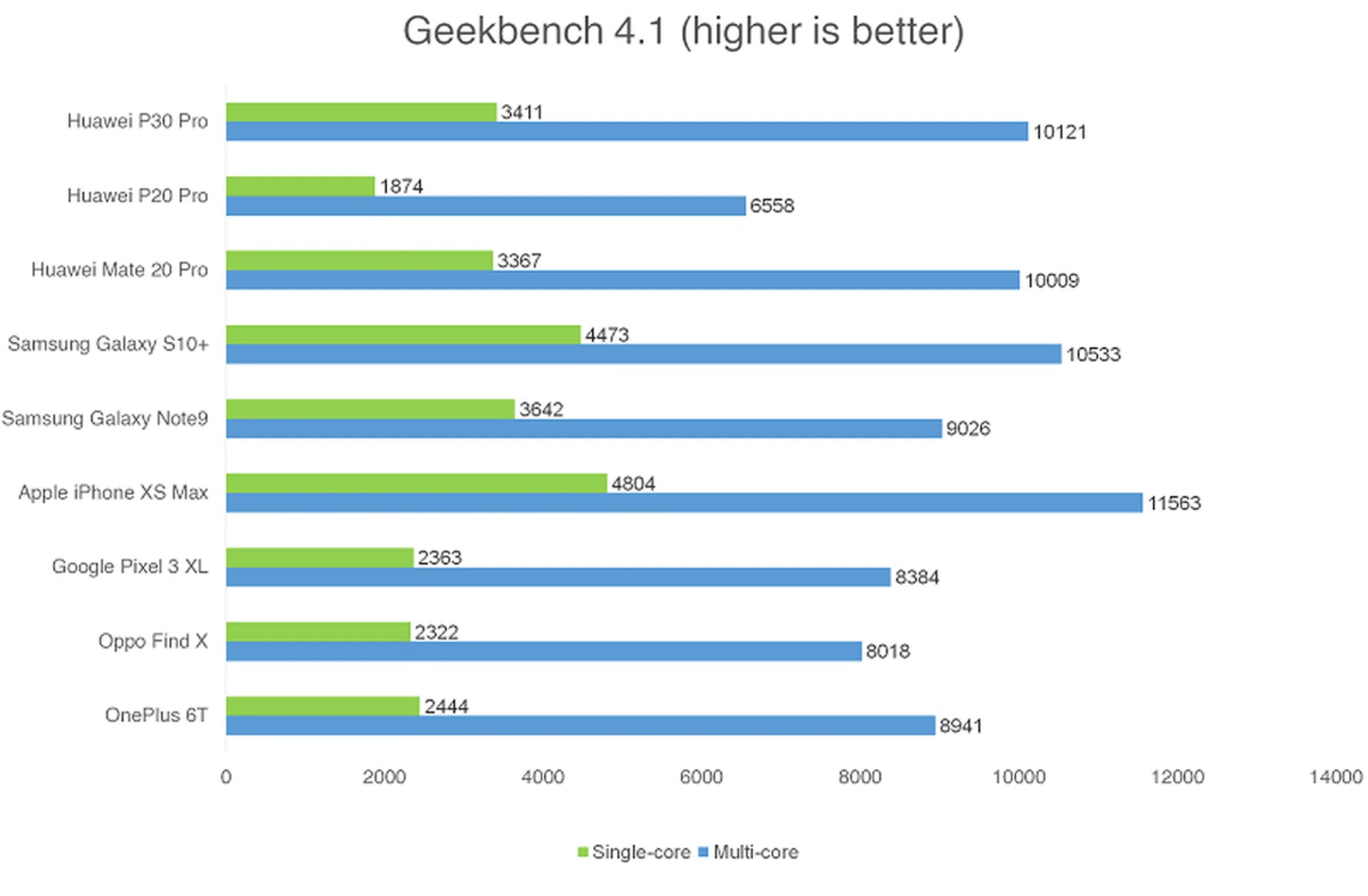
Geekbench CPU is a cross-platform processor benchmark that tests both single-core and multi-core performance with workloads that simulate real-world usage. Geekbench 4 scores are calibrated against a baseline score of 4000 (which is the score of an Intel Core i7-6600U CPU processor).
The Kirin 980 once again outperformed the Snapdragon 845 and wasn't too far behind Samsung and Apple's latest processors either.
3DMark Sling Shot
3DMark Sling Shot is an advanced 3D graphics benchmark that tests the full range of OpenGL ES 3.1 and ES 3.0 API features including multiple render targets, instanced rendering, uniform buffers and transform feedback. The test also includes impressive volumetric lighting and post-processing effects. We're running this benchmark in Unlimited mode, which ignores screen resolutions.
Despite Huawei's GPU Turbo 2.0 optimizations, gaming performance is one area where Huawei still lags behind. It underperformed compared to the Snapdragon 845 and A11 Bionic, however it still outperformed Samsung's Exynos chips.
Battery Life
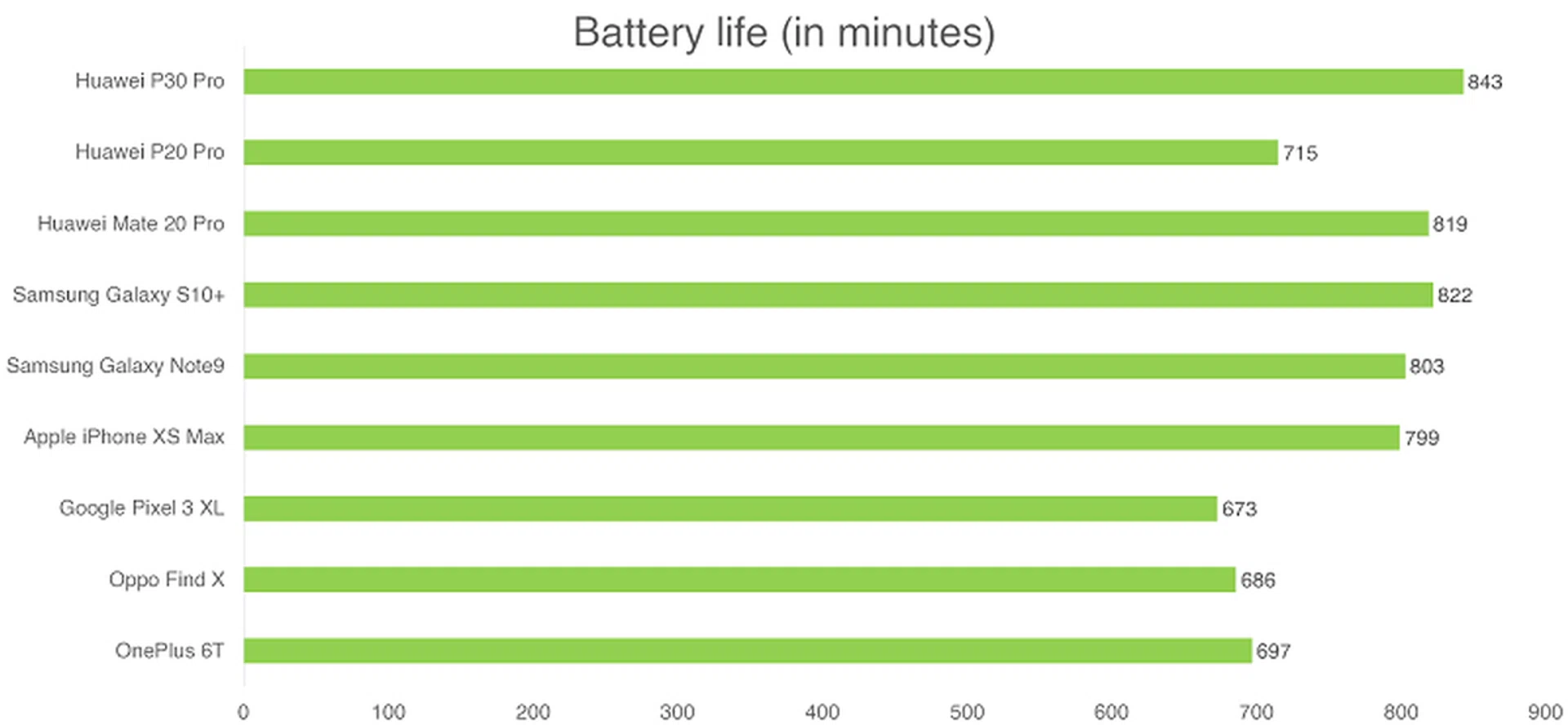
Our standard battery test for mobile phones has the following parameters:
- Looping a 720p video with screen brightness and volume at 100%
- Wi-Fi and Bluetooth connectivity turned on
- Constant data streaming through email and Twitter
The P30 Pro has a huge 4,200mAh battery, the same size as the one found in the Mate 20 Pro.
It lasted a massive 14 hours and 3 minutes in our video looping benchmark, making it our new battery life champion. However, this is partially due to its lower resolution display being more power efficient.
The P30 Pro uses Huawei's SuperCharge standard, which was introduced with the Mate 20 Pro and is capable of charging 10V at 4A for a total of 40W power transfer, far higher than any other fast charging standard available right now.
In my testing, the bundled cable and charger will charge the phone from 0 to 73 percent in just 30 minutes, and to 100 percent in just 48 minutes. This is far faster than anything we've tested. While this is very impressive, the phone does get alarmingly hot while charging.
The P30 Pro also supports 15W fast wireless charging through the Qi wireless charging standard and like the Mate 20 Pro and Samsung Galaxy S10, it can also reverse wireless charge other devices. Just put it back to back with another Qi device and it will start charging it. You can also reverse charge non-Qi devices by connecting the two phones with a standard USB-C cable.
Conclusion
Huawei is the most exciting phone manufacturer today. It's been consistently putting out great phones with innovative features and incredible cameras for the past few years now and the P30 is the culmination of those efforts. The quad camera alone is reason enough to buy this phone, but it also has the longest battery life around with the fastest charging battery, a beautiful curved glass design and a huge display with a tiny notch, plus two gorgeous and unique gradient color options (and also Black).
The P30 isn't faultless however. The screen resolution is lower than you would normally find on a flagship device, and it lacks stereo speakers and a headphone jack. The proprietary Nano SD card is an annoyance too, but these are all minor things that won't spoil your enjoyment of the phone. The display resolution is sharp enough, the downward firing speaker is really loud, and you can always use an adaptor or Bluetooth earphones if you need stereo sound. As for having to buy a proprietary expandable storage format, Huawei often bundles the Mate 20 Pro with a Nano SD card, so look out for promotions online or at the tech shows.
Compared to the Mate 20 Pro, the only real downside is the lack of a 3D face scanner for a more secure Face Unlock. But even this is debatable. Without the 3D face scanner, the notch is much, much smaller, and honestly, I find the in-display fingerprint scanner so much more convenient anyway, since you can unlock your phone without even looking at it.
If you can get over the stigma of using a China brand phone (seriously, it's 2019, China phones are good now) the P30 Pro should be at the top of your list if you're shopping for a new Android flagship. The Mate 20 Pro was the best phone of 2018, and the P30 Pro is even better.
Choose from three exciting colours, i.e., Breathing Crystal, Aurora, and Black at Lazmall now.