
Apple iPhone SE (2022) review: The bare necessities
The newest iPhone SE lacks the appeal of the fancier iPhone 13 series phones, but there’s still a lot to like and admire. Less is sometimes more.

Note: This review was first published on 14 March 2022.
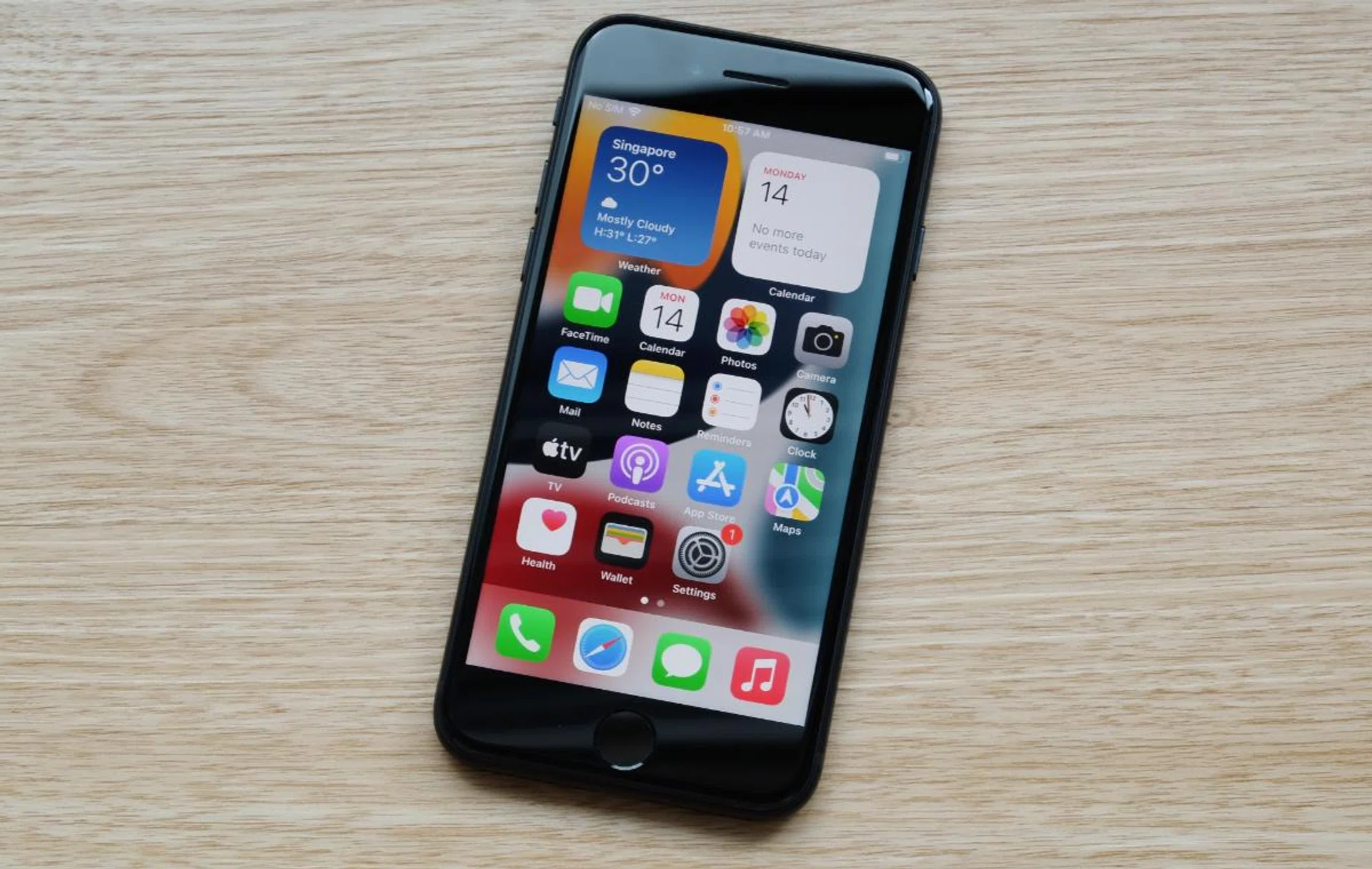
The iPhone SE (2022) is Apple's most affordable new phone but it's powered by the company's flagship-class A15 Bionic chip.
Entry-level only in name
We all know Apple does things differently, but nowhere is this more obvious than their take on an entry-level phone. The iPhone SE may be Apple’s most affordable new phone but it’s powered by the flagship mobile chip – the A15 Bionic - the same as what you'll find on the iPhone 13. Additionally, it has features more commonly found on mid to high-end phones like an all-metal body, 5G connectivity, and a camera system that employs advanced computational photography techniques and has 4K video recording. But is that enough to overcome the lack of certain features and dated looks?
Design & display
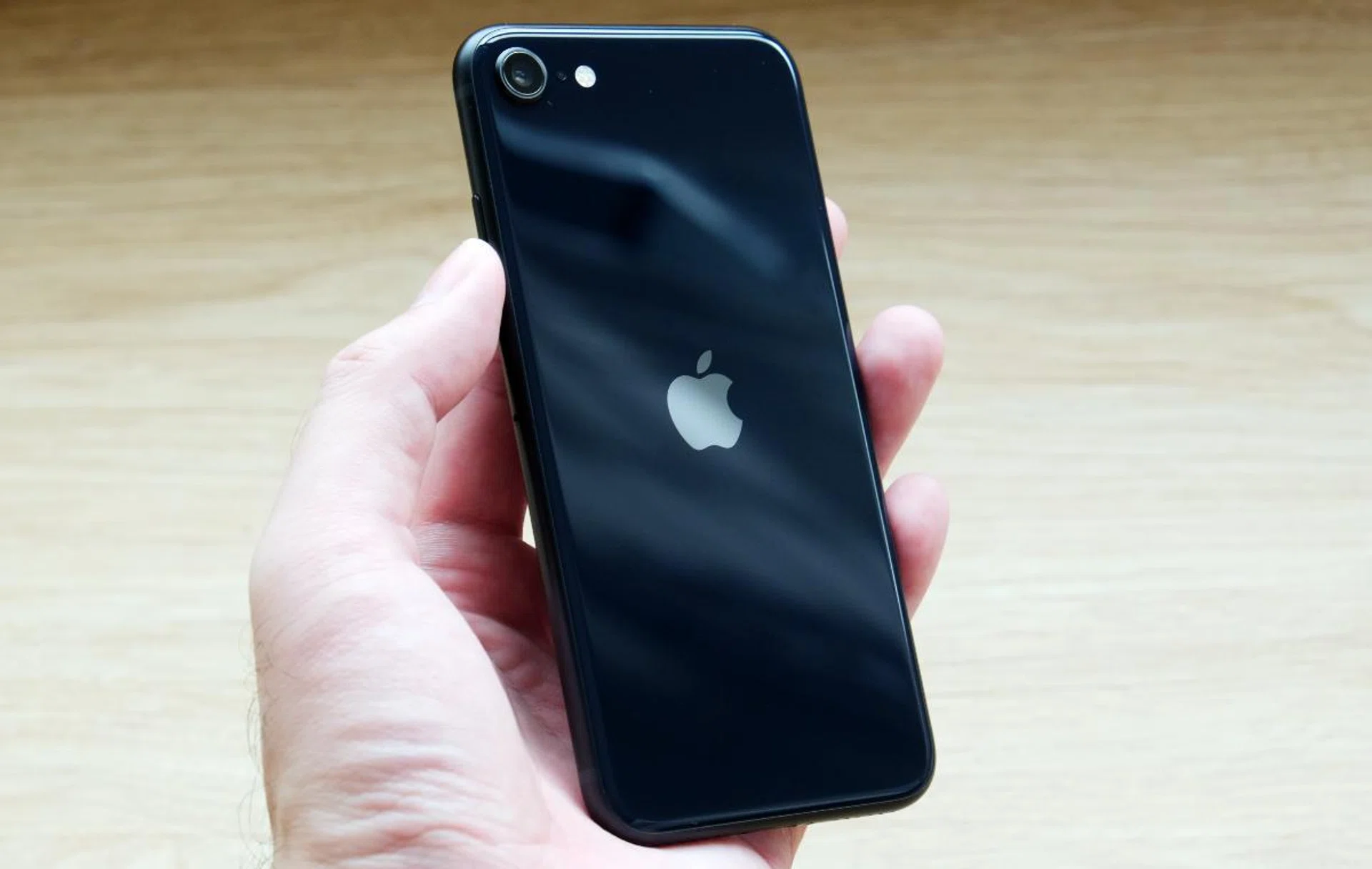
The build of the new iPhone SE is unquestionably premium. The sides are aerospace-grade aluminium and the back is glass.
The 2022 iPhone SE looks identical to the model it replaces. And that is perhaps its biggest problem. The last-generation iPhone SE was already criticised for the way it looked. Its large bezels and small screen made it look like a relic from the past. In fact, that’s not far from the truth since its design was based on the iPhone 8 from 2017 – that’s nearly five years ago if you can believe it. It doesn’t help also that it’s available in roughly the same colours: Starlight, Midnight, and PRODUCT(RED). Basically fancy names for white, black, and red. The unit I have is Midnight and it's a rich gloss black.
Still, there are some positives. Unlike other phones in its price range, the iPhone SE has an all-metal and glass body. The front and back are glass – the same “toughest glass in a smartphone” that’s also used for the iPhone 13 series, while the sides are aerospace-grade aluminium. In other words, as dated as it may look, its construction is decidedly premium.
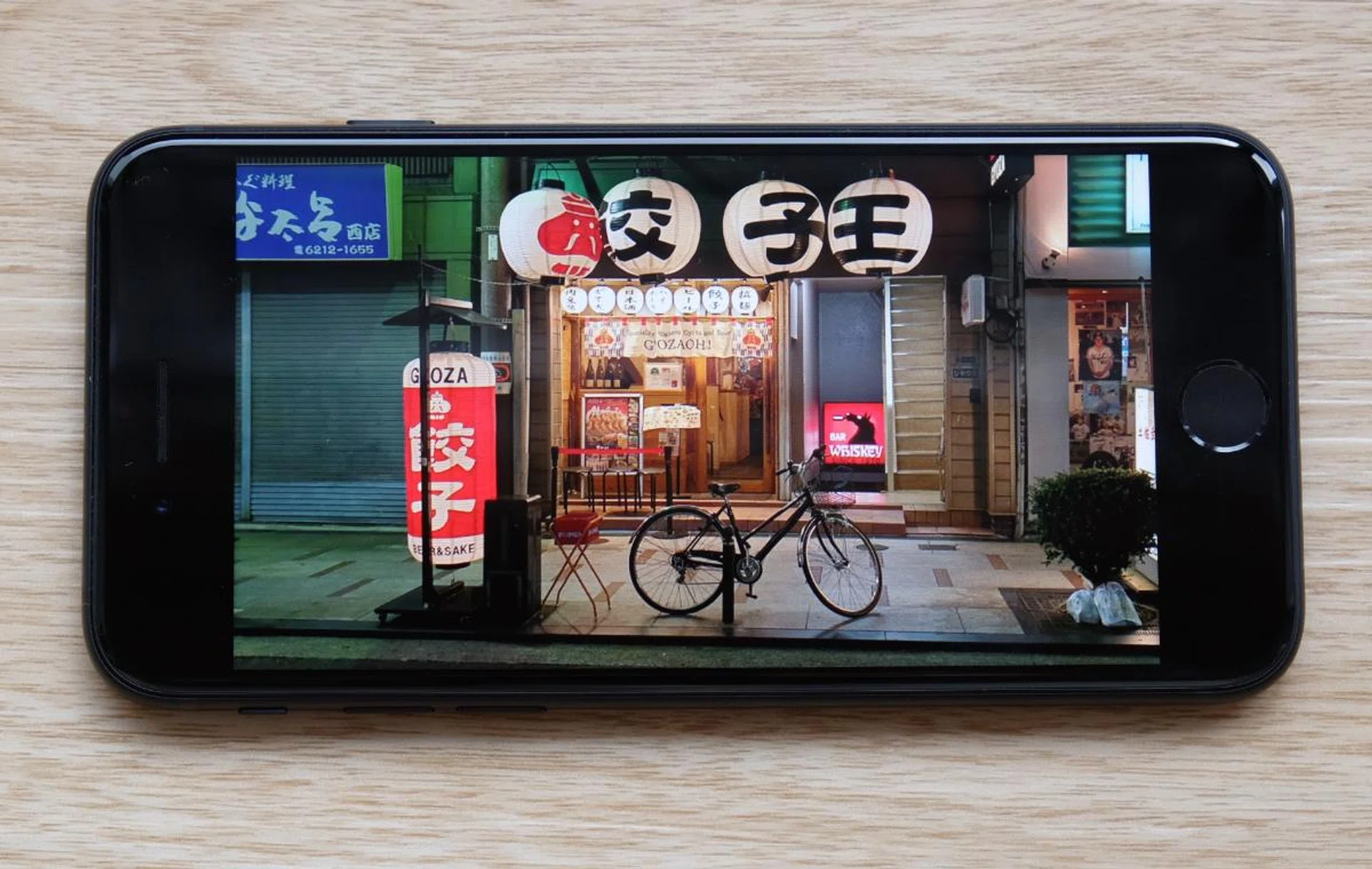
The display is obviously not quite as good as the iPhone 13's but it's definitely decent for its class.
The Retina HD display is unchanged. That means 4.7 inches in size, a resolution of 1,334 x 740 pixels, and a pixel density ratio of 326 pixels per inch. Like its pricier siblings, the display has True Tone technology and supports the DCI-P3 colour space. But no, there's no ProMotion (the feature that enables high dynamic refresh rates on the display).
There’s no hiding the fact that it’s small compared to most phones today, so typing on it can be tricky at first especially if you are coming from a larger phone. But at least it’s sharp, crisp, vivid, and gets bright enough even when outdoors. Obviously, it can’t hold a candle to the Super Retina XDR displays of its siblings – it’s noticeably less vibrant and punchy, and more washed out – but it’s adequate and good enough for its class.
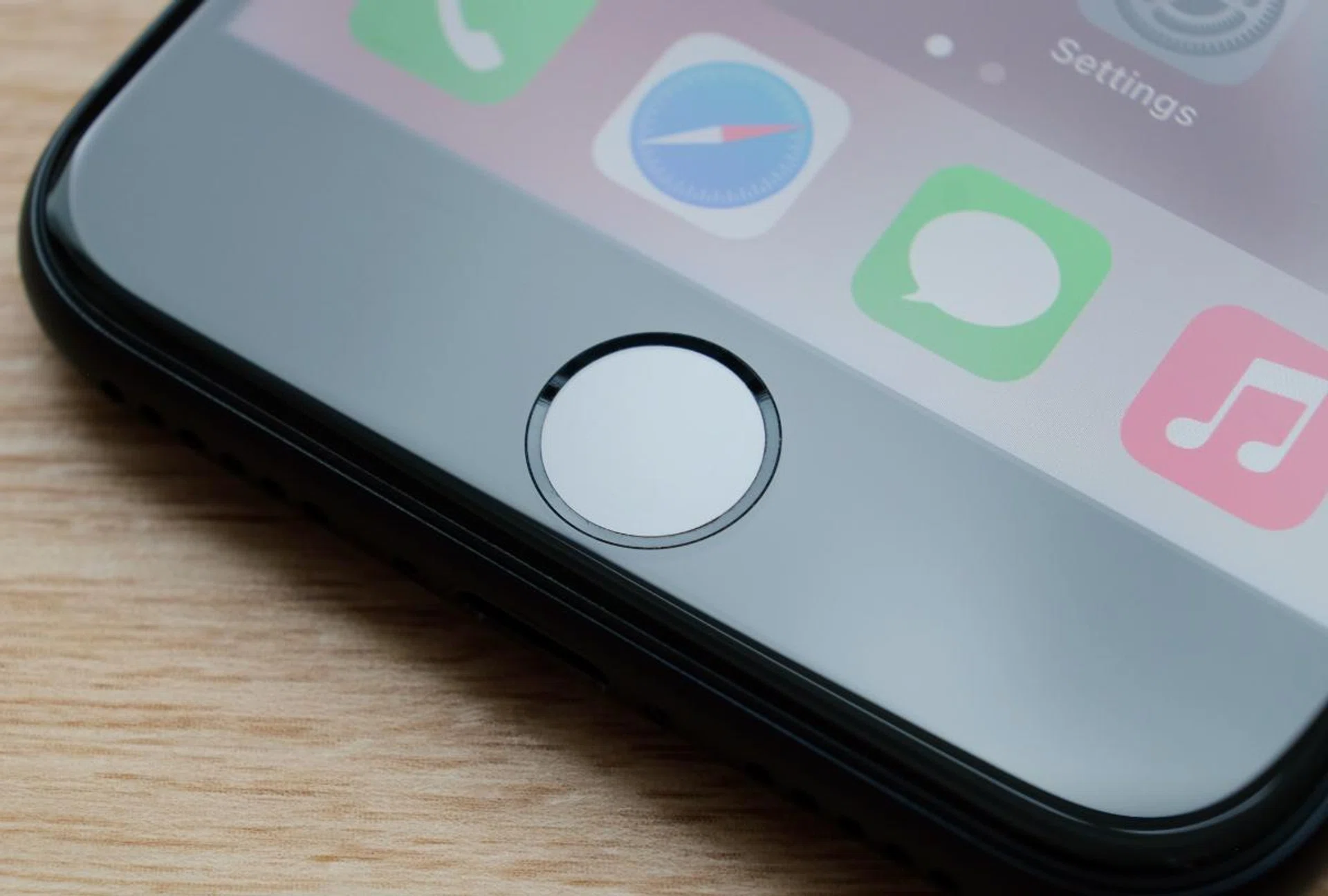
Touch ID lives on.
The iPhone SE doesn’t have Face ID, so below the display, you have the familiar Touch ID button. In case some of you have already forgotten, Touch ID relies on your fingerprints for authentication. The consolation is that it works quickly and reliably even if you are wearing a mask. Elsewhere, the iPhone SE has the usual power and volume rocker buttons and it’s worth noting that doesn’t have a headphone jack.
Useful features
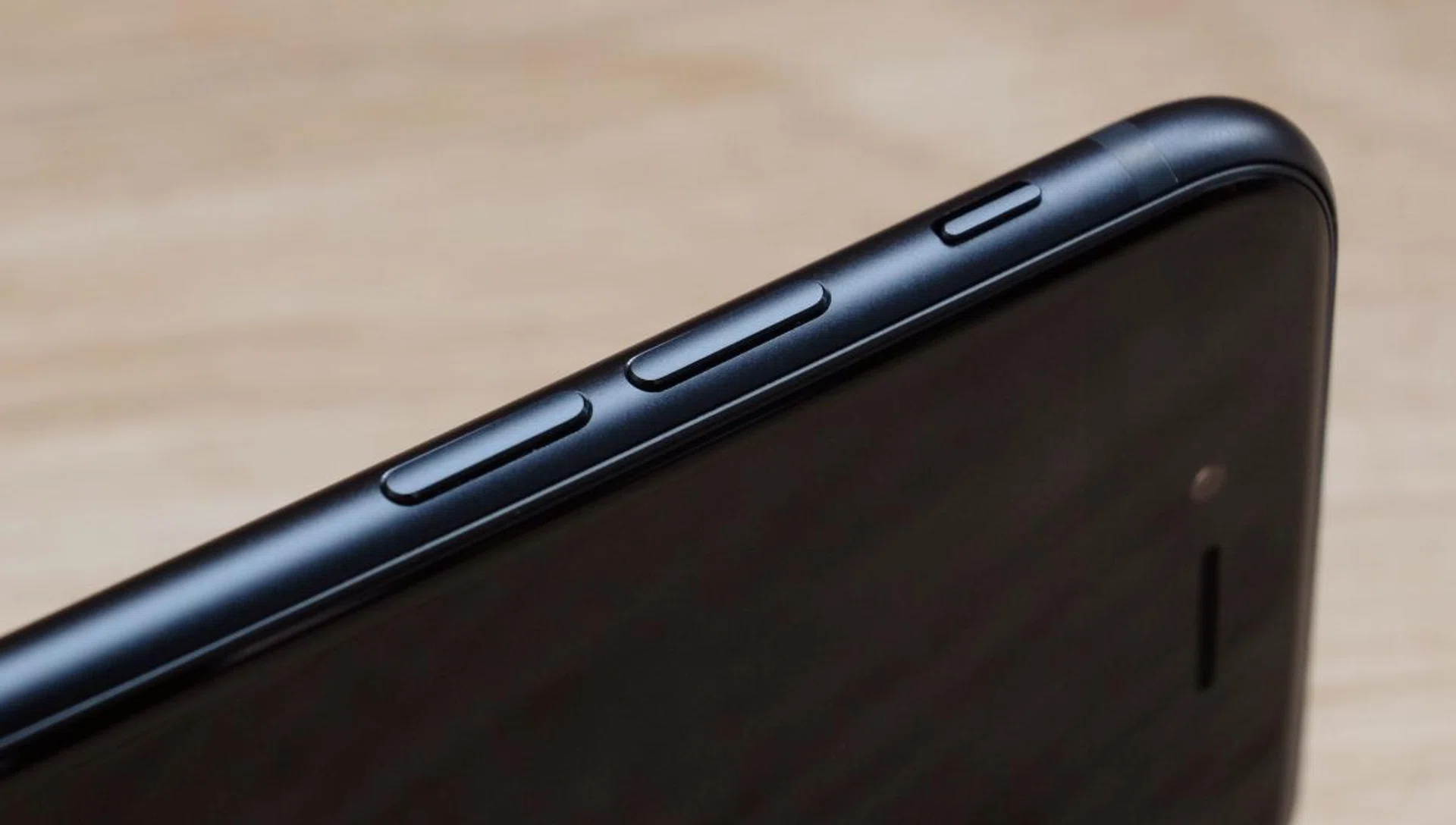
The sides of the phone are aerospace-grade aluminium.
Perhaps one of the most useful features of the iPhone SE is that it has IP67 water and dust resistance rating, which means it can survive being submerged in 1 metre of water for up to 30 minutes so a splash of water isn’t going to freak it out. It also supports wireless charging, which is something that’s missing from a lot of Android phones in this price range. While both are nice to have features, note that it's not new for the iPhone SE (2022) and it was present in the earlier iteration. MagSafe, however, is reserved only for the iPhone 12 and 13 series phones.
However, the headline feature has to be support for 5G – which was missing from the last generation iPhone SE. Obviously, there’s only support for sub-6GHz 5G and while I don’t think it’s a must-have killer feature, it’s certainly something that will ensure the longevity of the phone as we gradually transition to 5G phone plans.
The camera system
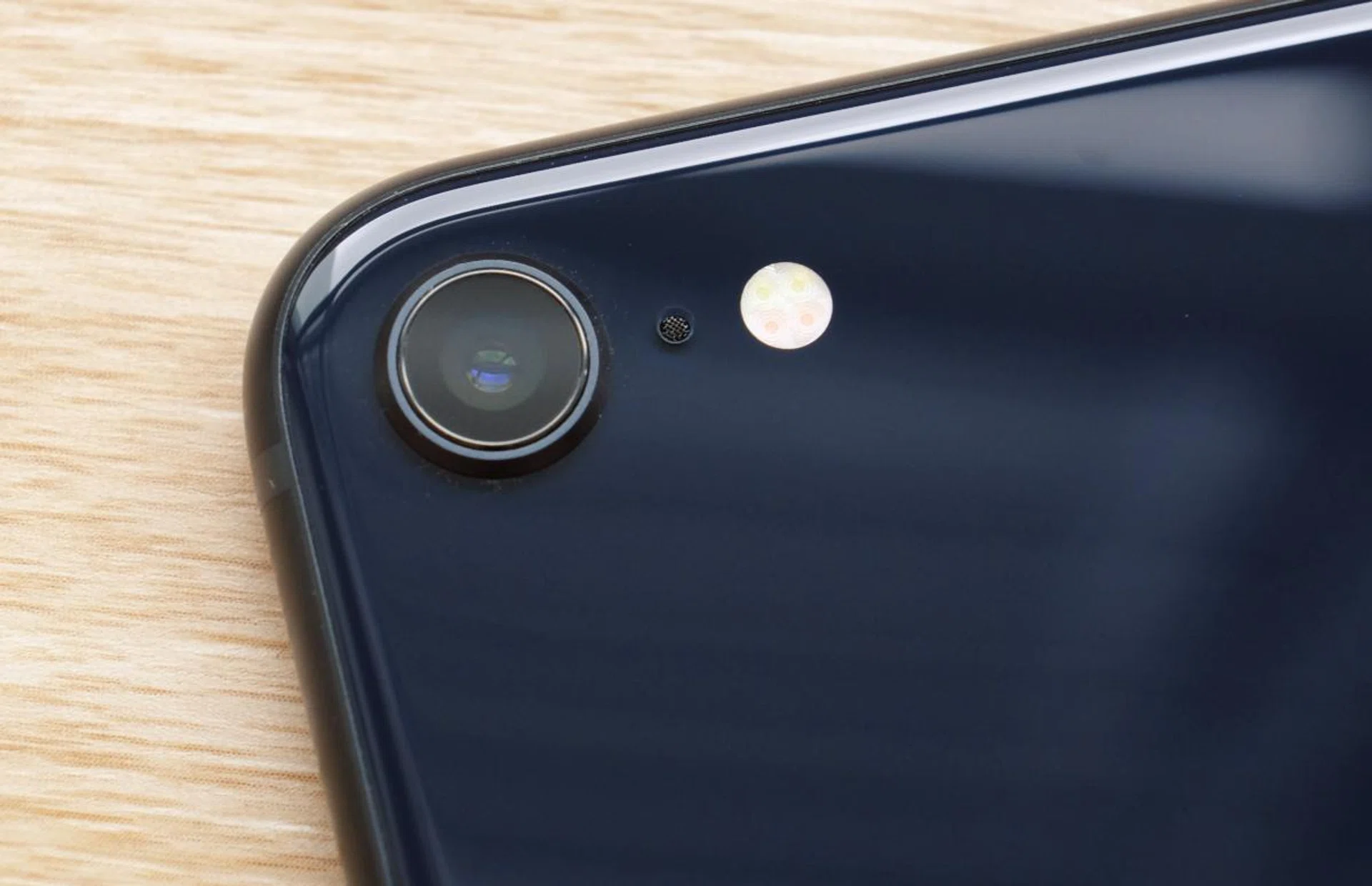
The camera hardware is unchanged but it benefits from new image signal processing techniques thanks to the A15 Bionic chip.
The hardware of the camera system in the latest iPhone SE is identical to its predecessor, which itself is based on the iPhone XR. That means a 12-megapixel f/1.8 rear-facing camera and a 7-megapixel f/2.2 front-facing camera. Certainly, it’s by no means cutting-edge, but much of Apple’s photography prowess actually lies in its software and post-processing. And that gets a boost thanks to the phone’s A15 Bionic processor, which enables new photography features such as Deep Fusion and Photographic Styles.
And along with the A15 Bionic, also Apple’s newest Smart HDR 4 technology which has cleverer noise reduction and more natural tone mapping techniques and algorithms. That said, the iPhone SE is not without its limitations. Because of its older sensor and lens, Night Mode is unavailable on this phone.
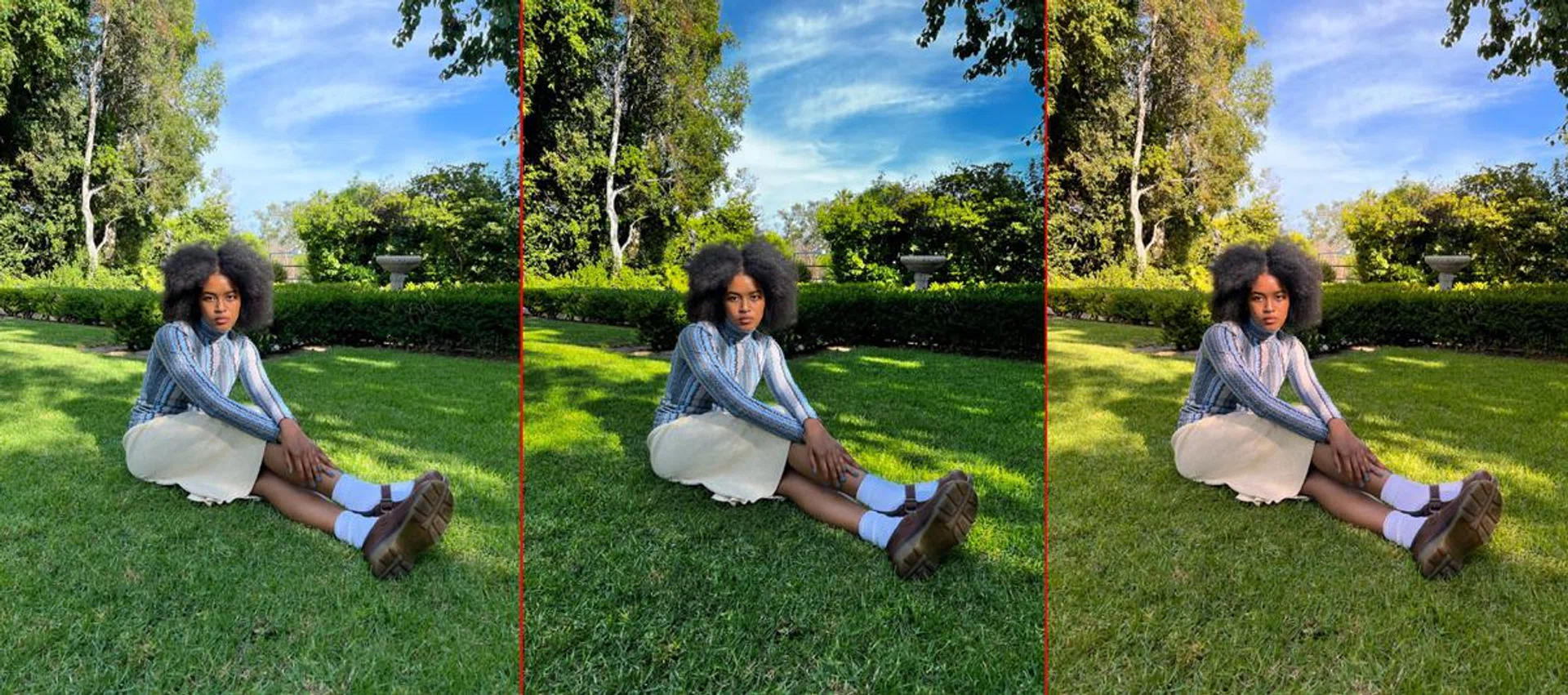
Photographic Styles come to the iPhone SE which applies your custom tone and warmth settings in real-time and mixes it into the A15 Bionic’s image signal processing pipeline. (Image source: Apple)
In well-lit situations, the iPhone SE takes excellent photos. And unless you blow them up to their full resolution, it's hard to tell the difference between a photo taken by the iPhone SE and an iPhone 13 or 13 Pro. That’s not to say that the iPhone 13 and 13 Pro aren’t better because they are, but the difference is not as great as you think. Honestly, the iPhone SE takes great photos with natural-looking colours and lots of details. Just take a look at the sample images below (and compare them with those we've taken previously on the iPhone 13 series).
Where the iPhone SE struggles is when the lighting conditions are poor. It still takes decent photos if your hands are steady, and it certainly passes if you are only sharing it on phones and social media. However, view the image in its full resolution and you can see that it is actually pretty blurry and noisy. Scroll to the bottom and see the comparison photos I took using the iPhone SE and an iPhone 13 Pro of a maneki-neko in a dimly-lit environment. Consequently, I think the biggest thing most people will miss is Night Mode.
Video used to be a strong suit of the iPhone SE. Back in 2020, very few Android phones in this price bracket could even record 4K videos, much less at the quality that the old iPhone SE was capable of. The competition has moved on and many Android phones in this price bracket can take 4K video. Nevertheless, the iPhone SE still has a slight edge here because its video quality remains very good. But the competition is gradually catching up.
Sample images

Click to see image in full resolution.
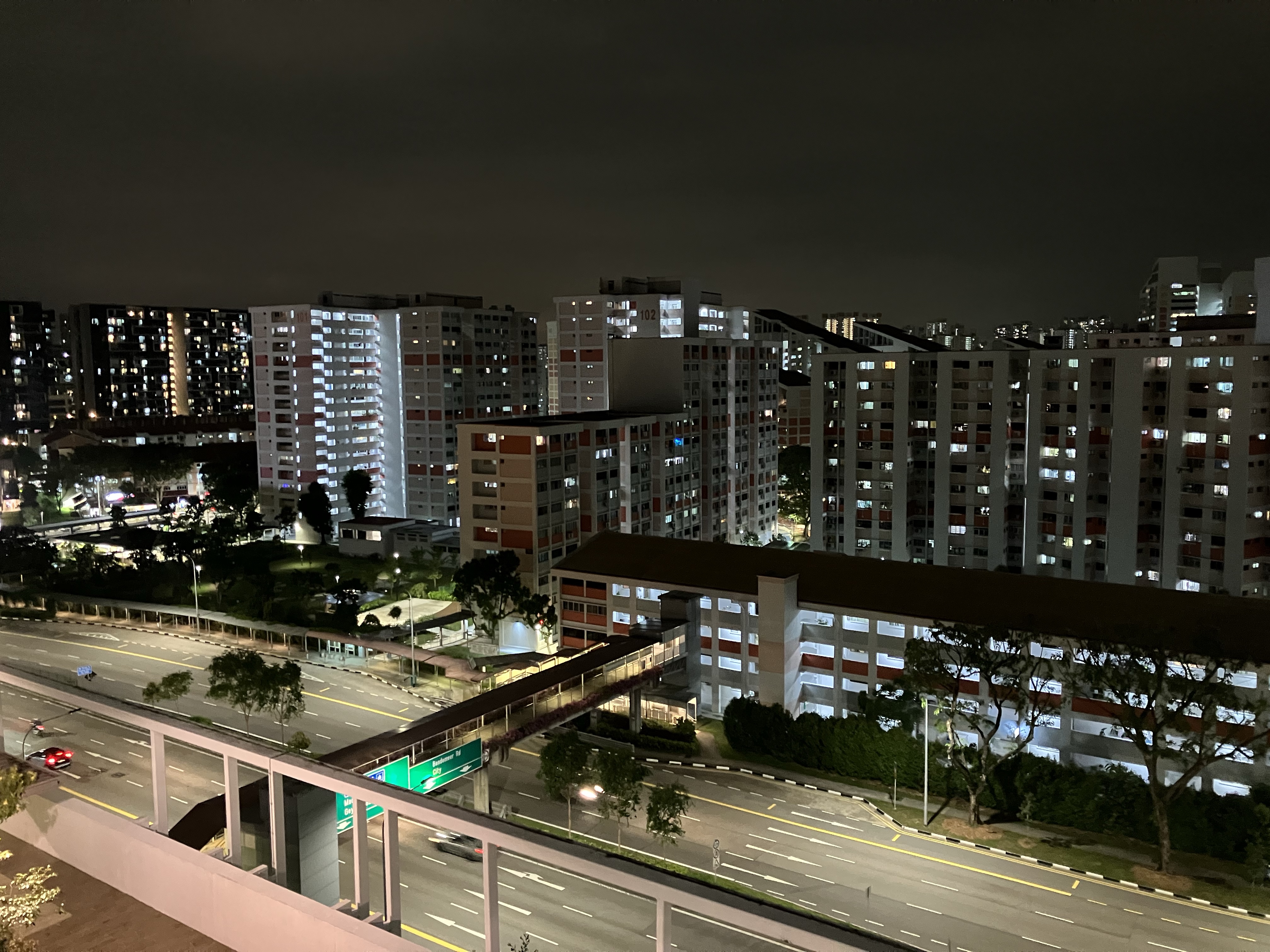
Click to see image in full resolution.
Click to see image in full resolution.

Click to see image in full resolution.
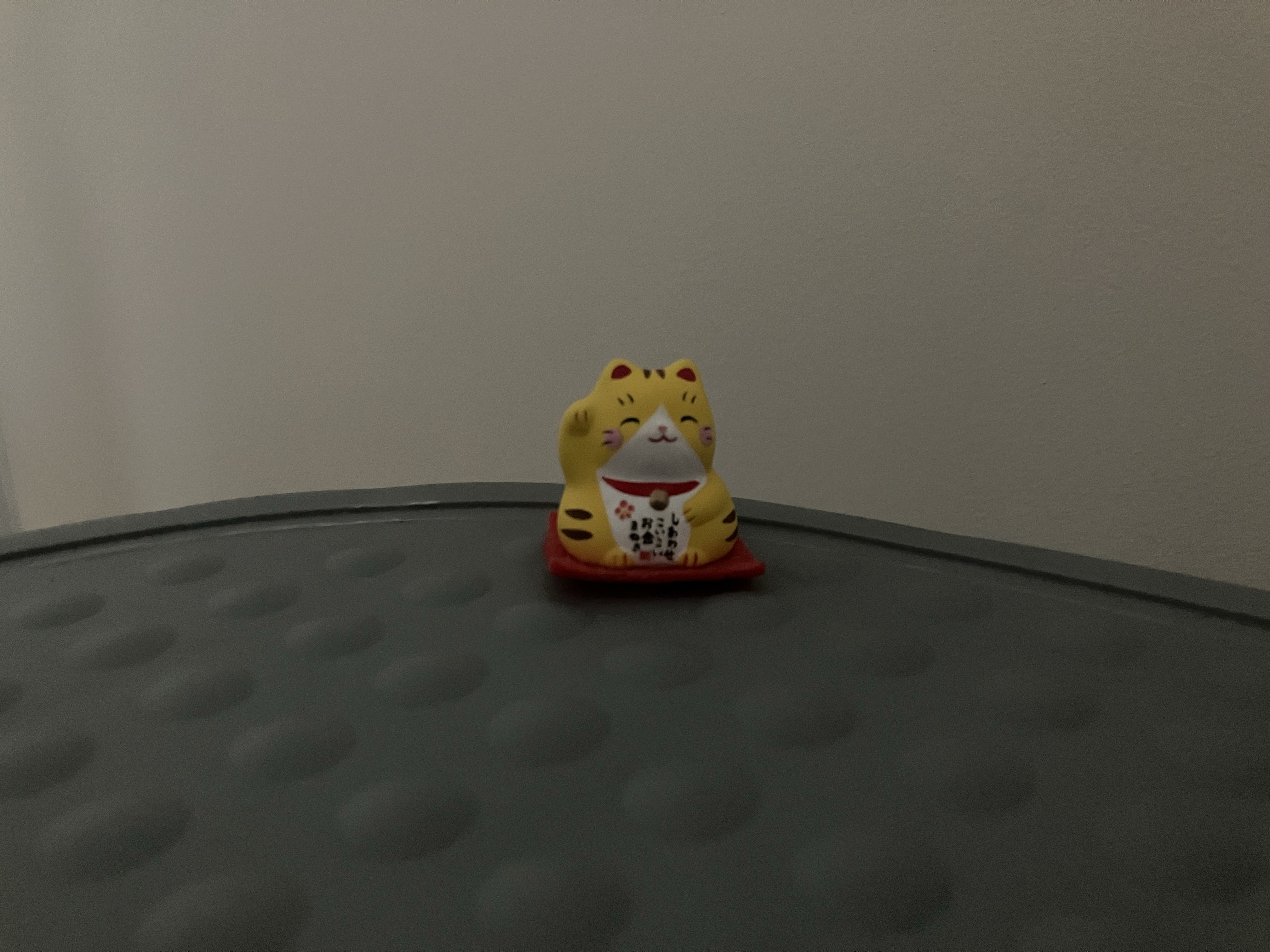
Taken with iPhone SE. Click to see image in full resolution.
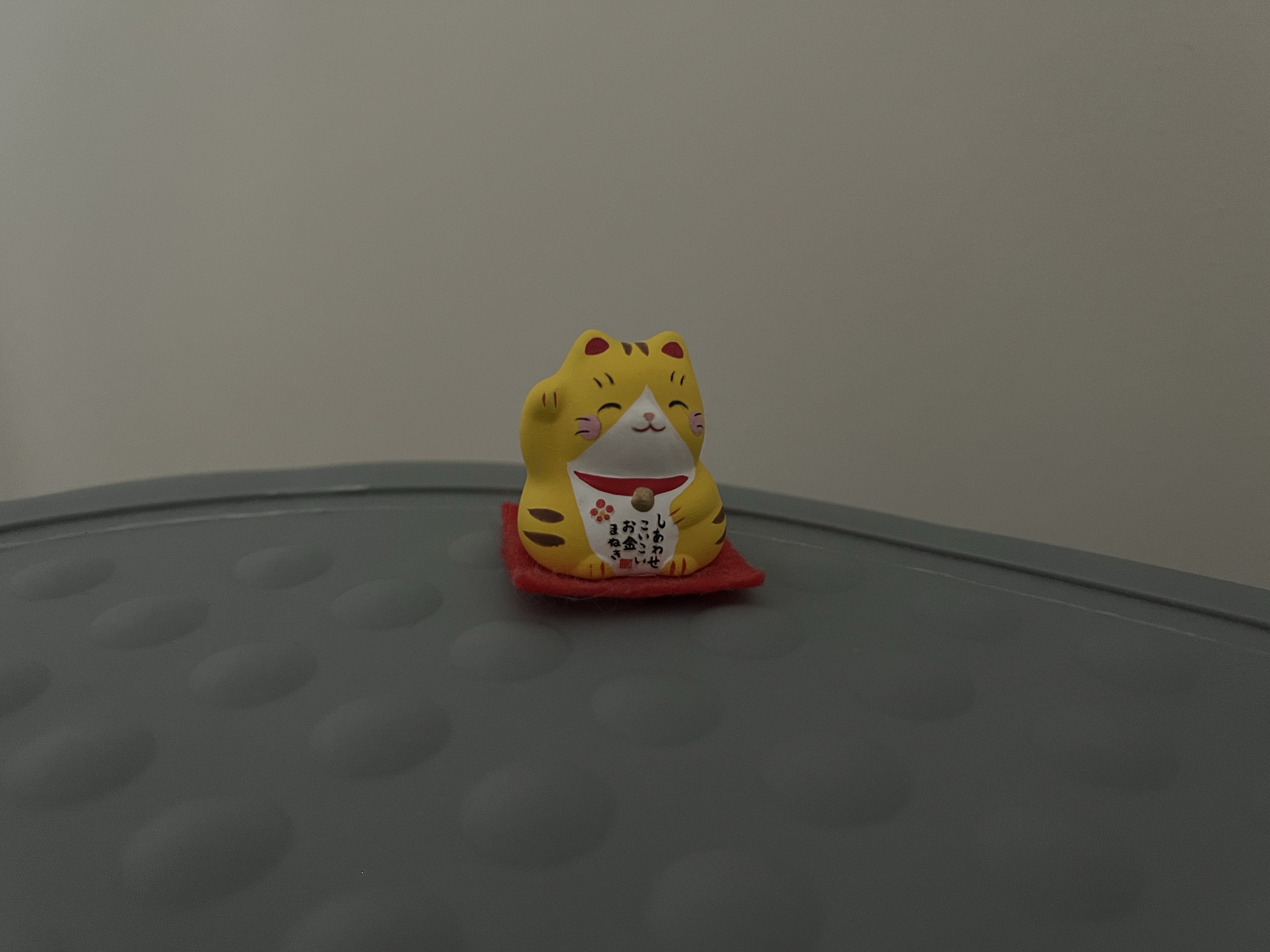
Taken with iPhone 13 Pro. Click to see image in full resolution.
Powered by a flagship chip
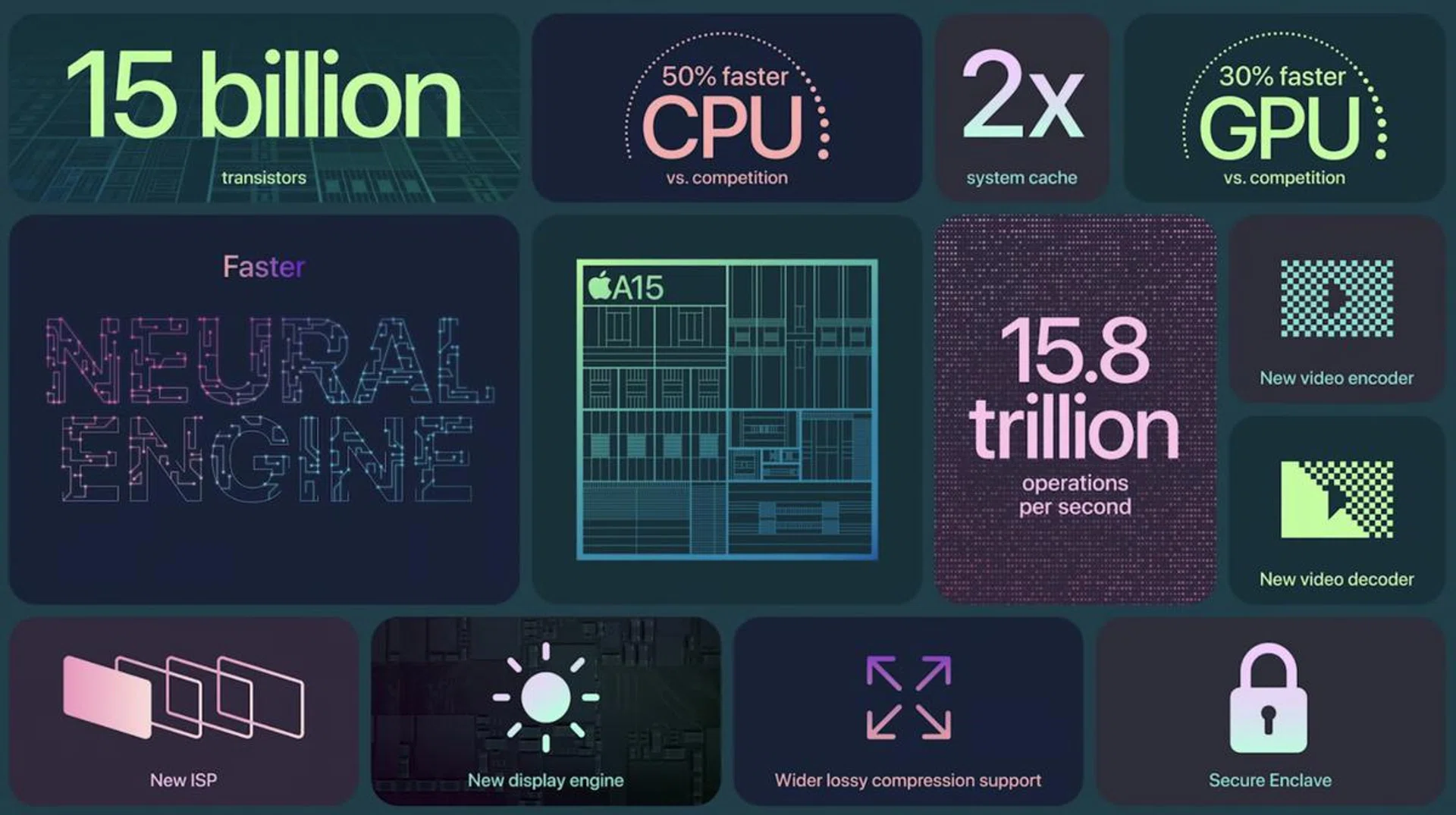
The iPhone SE is powered by Apple’s flagship-class A15 Bionic chip. To recap, it’s built on a 5nm process and has nearly 15 billion transistors. It has 6 CPU cores (two performance and four efficiency cores) and four GPU cores. It also has a new image signal processor and a new 16-core Neural Engine that’s capable of delivering up to 15.8 trillion operations per second.
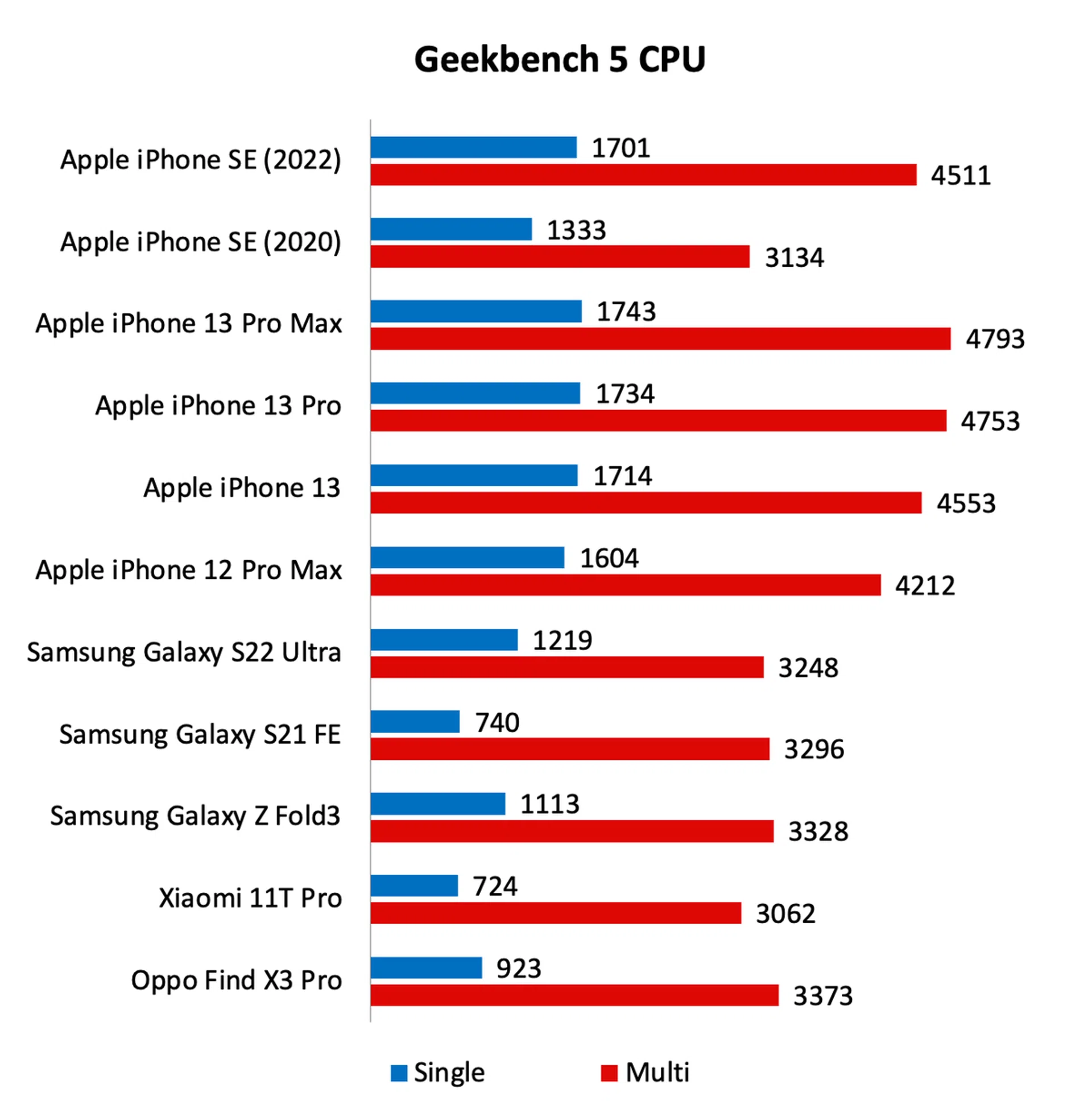
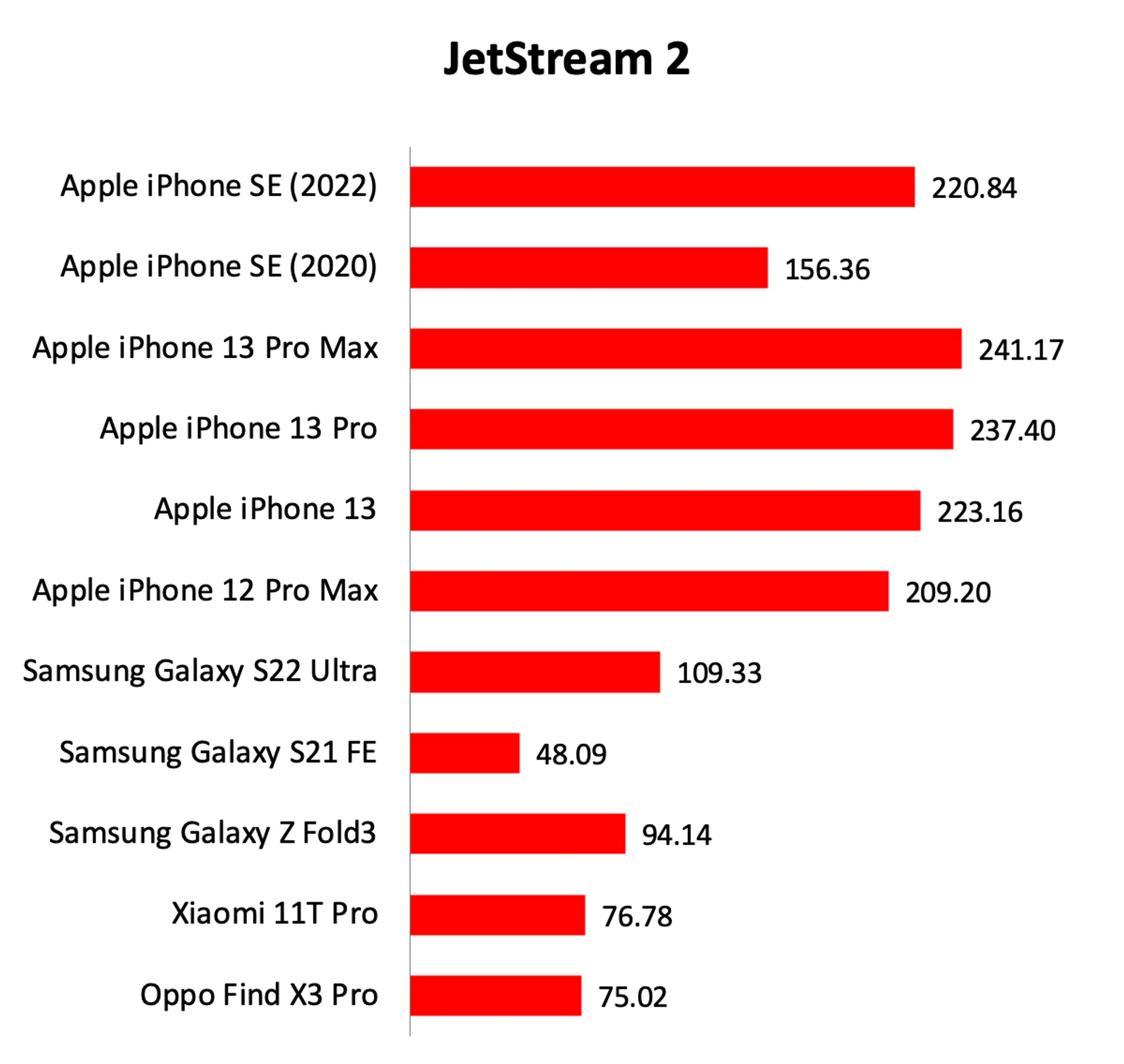
These impressive numbers give the iPhone SE an unassailable performance edge in this price category. The A15 Bionic is a monster mobile chip that’s nearly unmatched in performance. This means the iPhone SE is one of the most powerful phones you can buy, period.
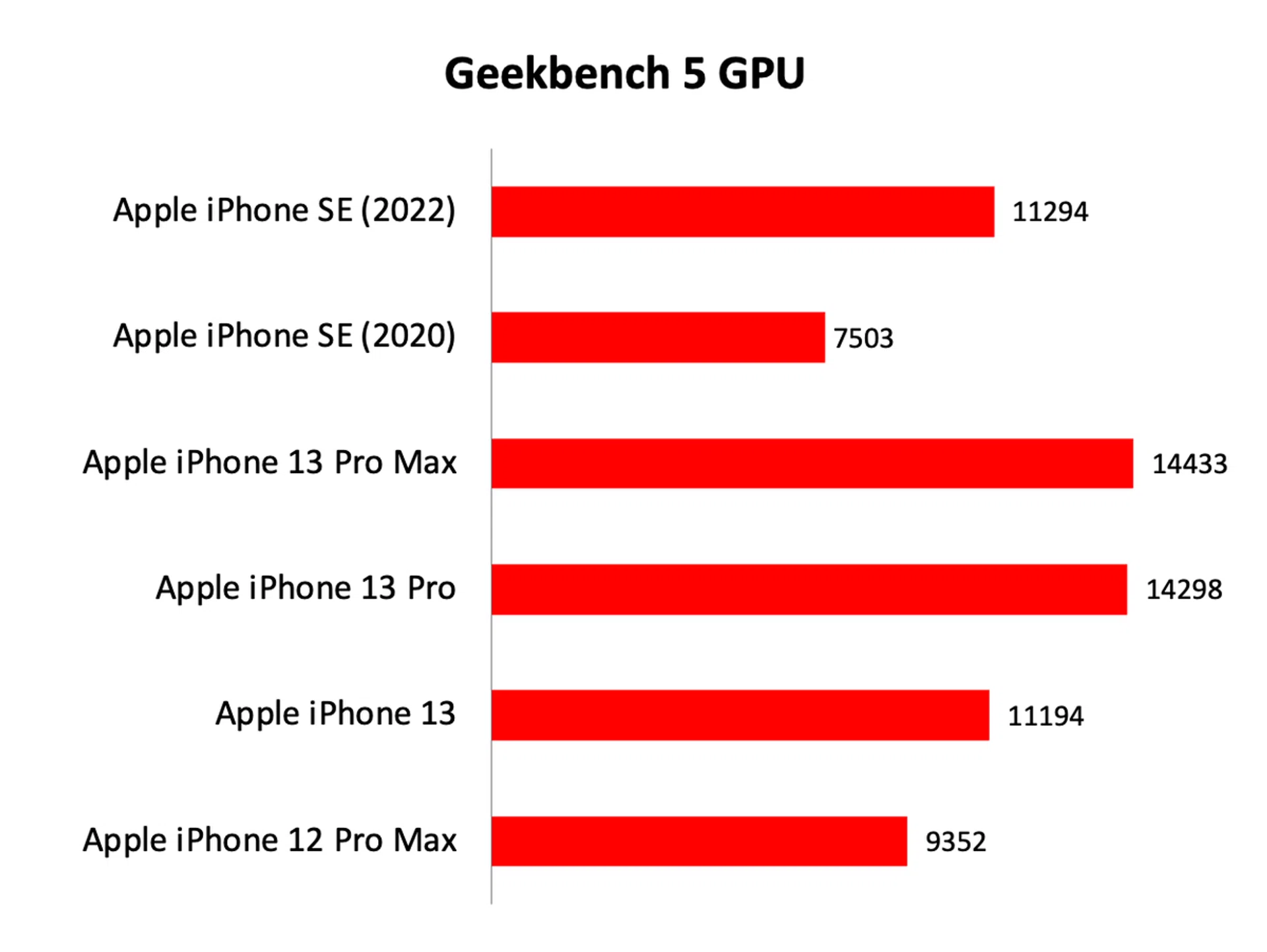
Because the iPhone SE is powered by the same chip found in the iPhone 13, their performance is more or less identical. The iPhone 13 Pro has better graphics performance because of its additional GPU core.
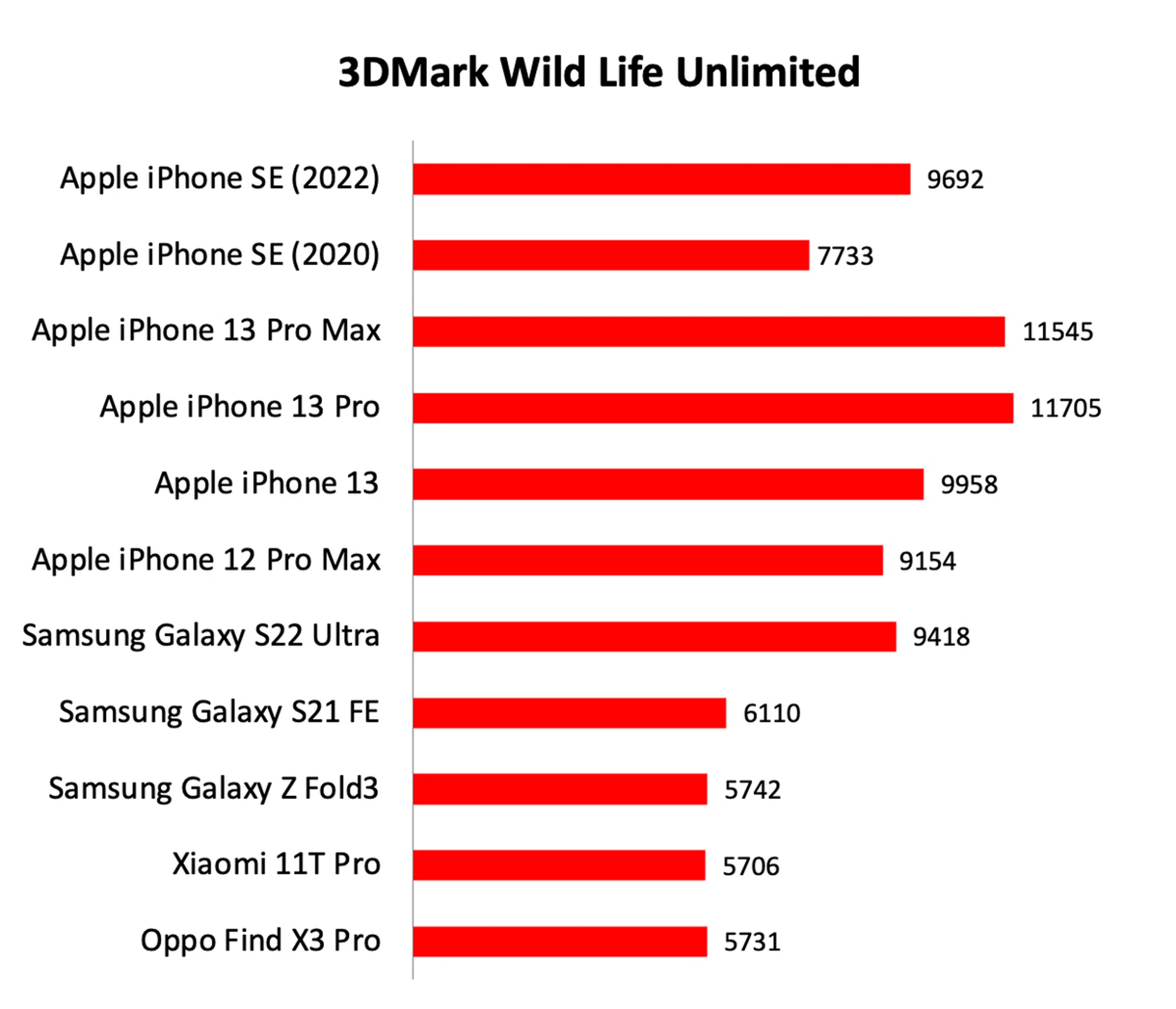
Compared to its predecessor which was powered by the A13 Bionic, the newer iPhone SE is significantly faster. Single-core scores were about 27% better while multi-core scores saw a jump of over 40%. On Geekbench’s GPU-intensive Compute benchmark, the new iPhone SE achieved a 50% higher score. On 3DMark Wild Life Unlimited, the new iPhone SE’s score was about 25% faster.
And despite being Apple’s most affordable new iPhone, the iPhone SE easily saw off competition from even the newest and most powerful Android phones. That’s arguably the most impressive thing about this phone.
Battery life
Our standard battery test for mobile phones has the following parameters:
- Looping a 720p video with screen brightness and volume at 100%
- Wi-Fi and Bluetooth connectivity turned on
- Constant data streaming through email
One little known fact of the new iPhone SE is that it has a slightly larger battery than its predecessor. That’s remarkable considering it has the exact same dimensions and it even weighs slightly less. However, just how much larger remains a mystery because Apple won't say. We have to wait until others take apart the phone to know for sure.
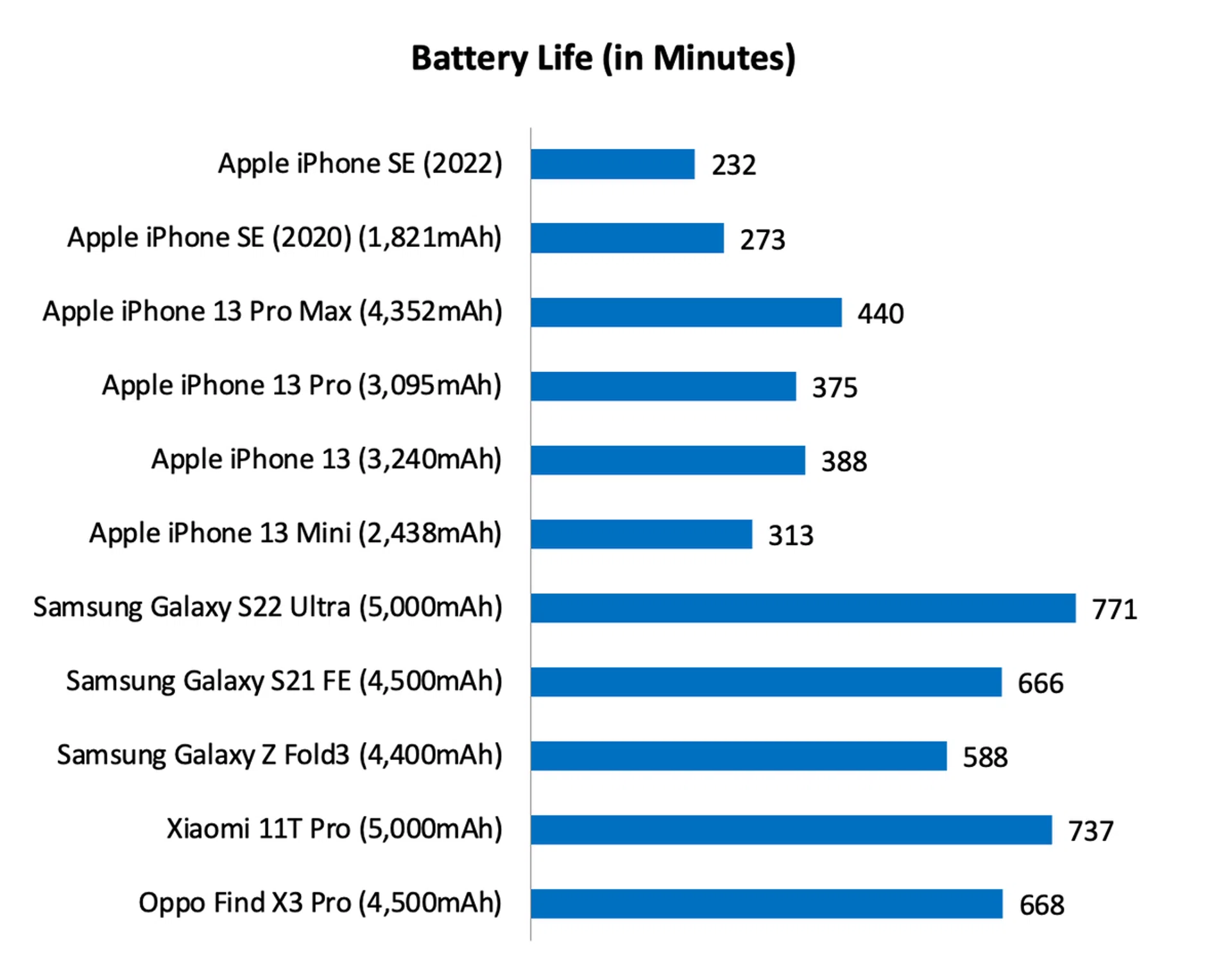
Apple claims up to 15 hours of video playback, which is two hours more than the last iPhone SE. However, in our battery test, we found that the new phone lasted 41 minutes less – that’s a drop of around 15%. Granted, our regime is markedly more intensive (100% brightness and 100% speaker volume), but that’s not an encouraging sign.
In my few days with it, I found that it has just about enough juice to last until the late afternoon. And that’s with about 3 hours and 45 minutes of screen time and mostly at home and with Wi-Fi. I suspect battery life would be quite poor if you were outside most of the time and relying on LTE and 5G. For most people, a mid-day charge would be necessary. And fortunately, the iPhone SE has a fast-charging feature. You can get from zero to 50% in 30 minutes if you have a 20W or higher power adapter.
Basic but highly functional
After completing the review of the last iPhone SE, it replaced my iPhone 11 Pro Max as my main phone for the next few months. Sure, I missed the lovely large OLED display of my iPhone 11 Pro Max and the photos it took, but otherwise, I was completely happy with it. The iPhone SE never felt slow and I liked that it was small and that I had Touch ID to rely on when I was outside wearing a face mask.
So like its predecessor, Apple’s newest iPhone SE forces you to ask the question, “What do you really want from an iPhone?”
For the most part, the iPhone SE offers much of the same performance and functionality as its pricier siblings. You get access to all of Apple’s exclusive features and services like iOS, iMessage, FaceTime, and deep integration with other Apple devices. You also have a fantastic ecosystem of apps, class-leading performance, and guaranteed software support from Apple for many years to come. The hardware isn’t bad either. The build is first-rate, the display is decent, and the camera takes nice enough photos most of the times.
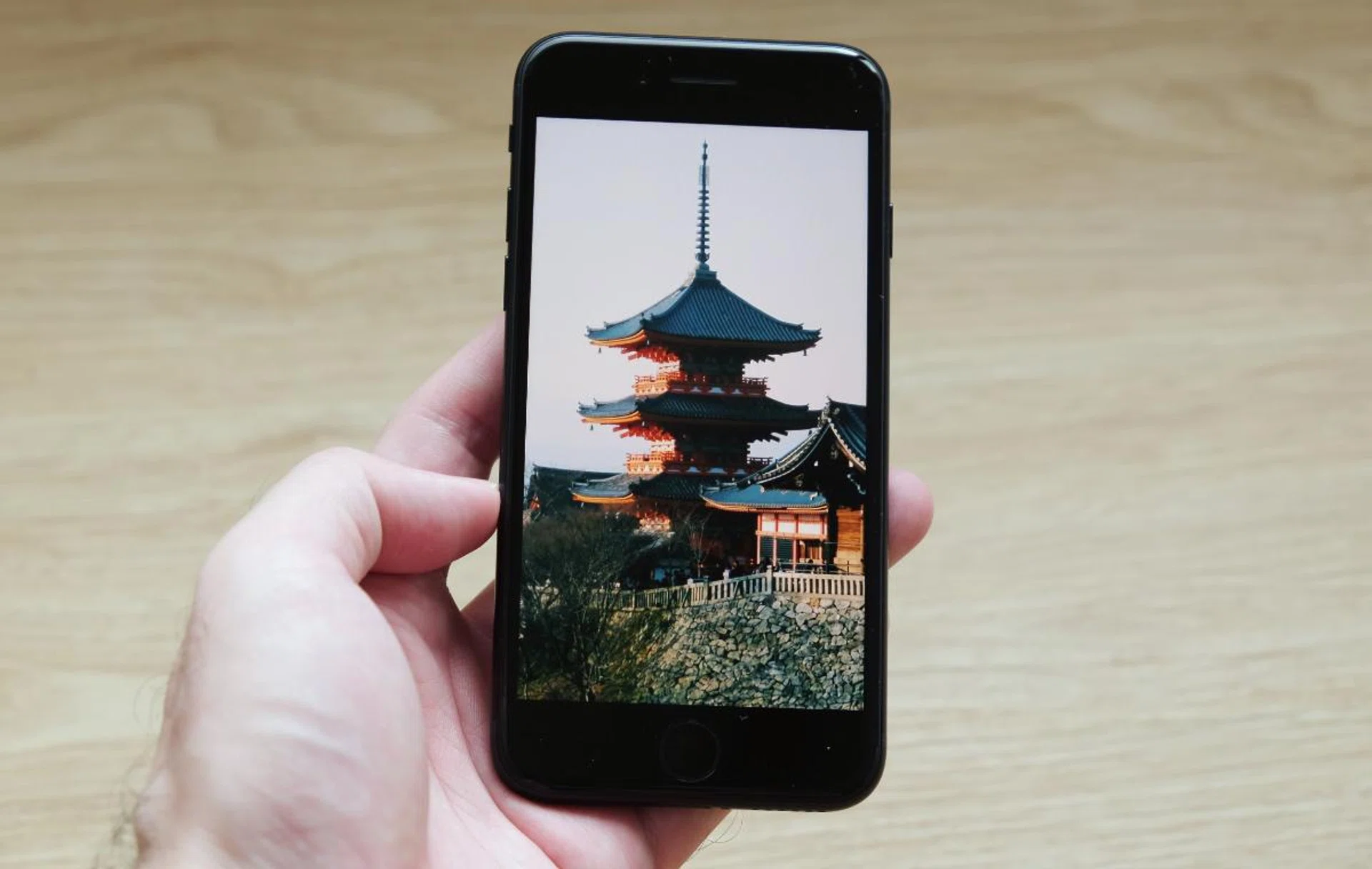
It may not be fancy but the new iPhone SE, much like its predecessor, is great value for money.
Certainly, Apple’s pricier phones like the iPhone 13 Series and even the older iPhone 12 are nicer phones. They have larger, brighter, more vivid displays, and their camera systems are more sophisticated, but is that worth paying double or triple the price? That’s the question you have to consider.
And of course, there’s no shortage of Android rivals. The Xiaomi 11T Pro is arguably the closest rival from the Android camp. Like the iPhone SE, it too has a flagship-class chipset and features normally found on flagship-class phones. It’s also cheaper if you take storage into factor because it has 256GB of storage and goes for S$799. An iPhone SE with 256GB is S$939. However, the Xiaomi phone's body is plastic, its performance is inconsistent, its water resistance rating is lower, and it doesn’t have wireless charging.
Climbing up further the Android ecosystem, the better established Samsung Galaxy S21 FE's current going price is identical to the 256GB edition of the iPhone SE (2022). While it still sports a plastic backing, it has a more premium feel than Xiaomi, offers a better camera system, an excellent HDR10+ screen, water and dust resistance on par with Apple, wireless charging and a better UI than most other Android phones. However, it can't hold a candle to any of Apple's phones where processing performance is concerned.
Capacity | Price |
64GB | S$699 |
128GB | S$769 |
256GB | S$939 |
If you look around, you’d be hard-pressed to find much that rivals the iPhone SE’s build quality, performance, and features for the same kind of money. Sure, they might have larger displays and comparable or even slightly better camera systems, but the iPhone SE main attraction is that it gets you into the Apple ecosystem and all the benefits that it confers at an attractive price. The 128GB edition could be the most ideal candidate to ensure you have a reasonable amount of storage without spending too much from our point of view. In fact, a comparable Galaxy S21 FE phone with 128GB storage is over S$100 more, further sealing the iPhone SE's proposition.
Ultimately, the iPhone SE might not be the iPhone you want, but it’s the iPhone you need. I know it’s a tired old cliche, but in this case, it’s very true.
If you're ready to make the jump using no-contract, SIM-only plans, Apple's online store is where you can check out the choices and colours before making a purchase. Alternatively, you can also consider getting it via Amazon.
Getting a contract-based plan from the telcos? Find out how much the Apple iPhone SE (2022) will cost you via StarHub and M1.