
Apple iPhone 16 Pro and iPhone 16 Pro Max doubles down on performance and videography
With the regular Apple iPhone 16 lineup packing so much new stuff in this generation of upgrades, one wonders how much more Apple can offer through this year’s Pro models. #apple #iphone #smartphone #singapore

Note (1): Looking for our hands-on experience article? Head over here!
Note (2): This article was first published on 10th September 2024 and has now been updated.
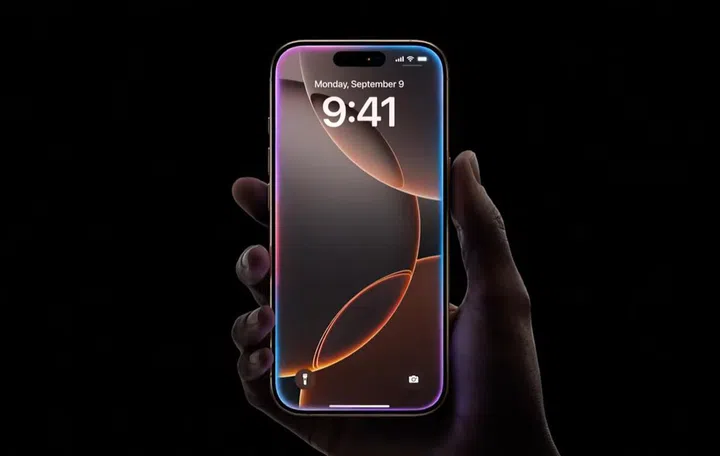
Apple iPhone 16 Pro Max. Image: Apple.
With the regular Apple iPhone 16 lineup packing so much new stuff in this generation of upgrades, one wonders how much more Apple can offer through this year’s Pro models, the iPhone 16 Pro and iPhone 16 Pro Max.
Smaller borders, bigger displays
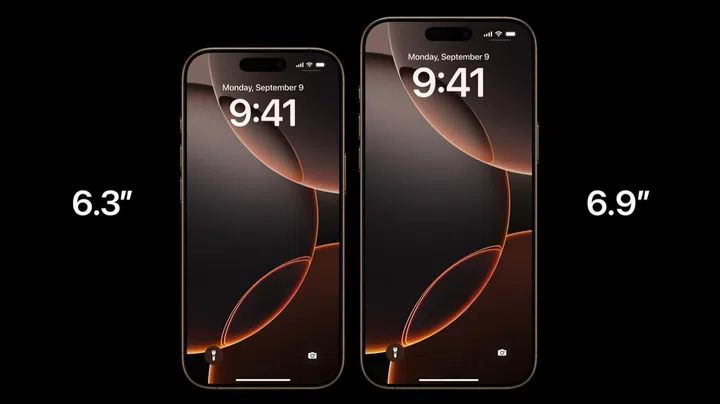
(L to R): iPhone 16 Pro and iPhone 16 Pro Max display sizes. Image: Apple.
Let’s get physical first. The displays on the Pro series are now bigger, thanks to thinner borders. iPhone 16 now comes at 6.3 inches, and iPhone 16 Pro Max goes up to 6.9 inches. Like previous year’s iPhones, these two models differ in size (battery and display) but are technically similar in features and components.
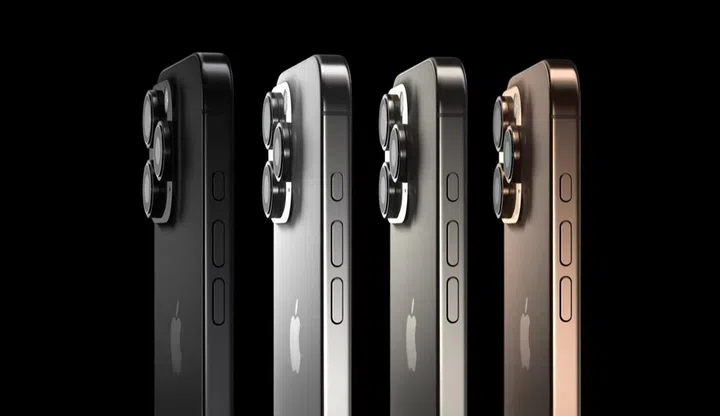
L to R: Black Titanium, White Titanium, Natural Titanium, Desert Titanium. Image: Apple.
The Pro models still use Grade 5 Titanium bodies but now feature a new micro-blasted textured frame wrapping around its 100% recycled aluminium frame. Apple said that the inside aluminium helps with thermal management, which is supposedly crucial to power management and battery life when using the new iPhones.
Apple Intelligence, too
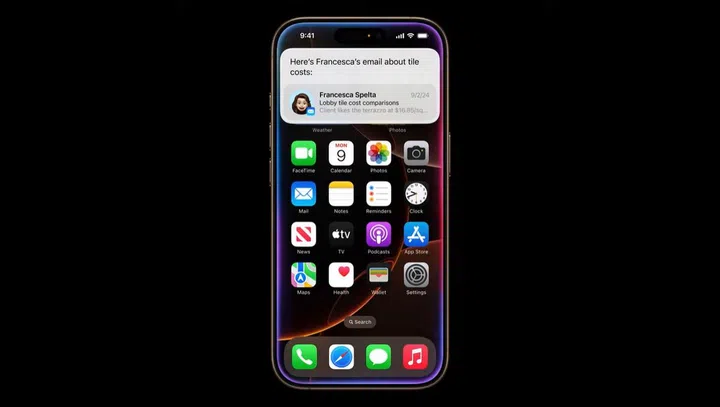
Apple Intelligence summarising an email. Image: Apple.
Apple Intelligence is a new standard for Siri, Apple's voice assistant. It also replaces the general search function on new iPhones and provides context-based results personalised to the data on your device.
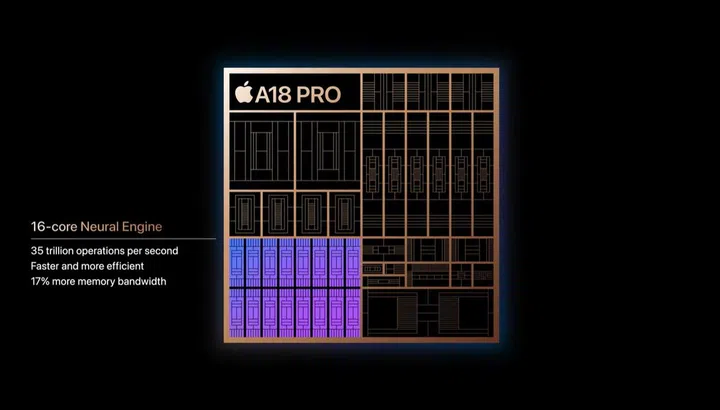
16-core Neural Engine that iPhone 16 Pro series rely on for on-device Apple Intelligence. Image: Apple.
It focuses on language and images to provide solutions and results tailored to your needs. Apple said Apple Intelligence is both on-device and cloud-based, relying on Apple’s Private Cloud Compute. Personal data is not stored on Private Cloud Compute but only used to service your requests.
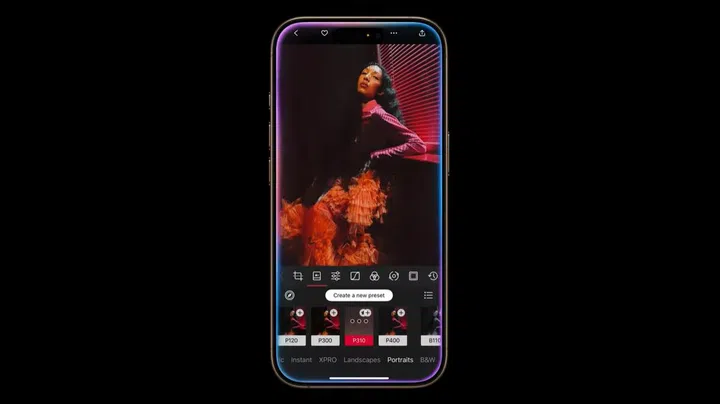
Darkroom editing with Apple Intelligence. Image: Apple.
The Apple Intelligence features revealed during the Pro segment show that the phone can locate information across your phone at a single ask, apply photo edits to the Darkroom app, and more. For more information, check out the iPhone 16 coverage we have here.
Apple A18 Pro chipset
Apple A18 Pro chipset for the iPhone 16 Pro series phones. Image: Apple.
The iPhone 16 Pro and Pro Max get Apple’s A18 Pro chipset, which has a 17% increase in memory bandwidth compared to its predecessor (A17 Pro on iPhone 15 Pro models). It also has one extra GPU core when compared to the regular iPhone 16 and iPhone 16 Plus.
The 6-core GPU has 20% faster graphics performance and 2x faster ray-tracing than the iPhone 15 Pro models.
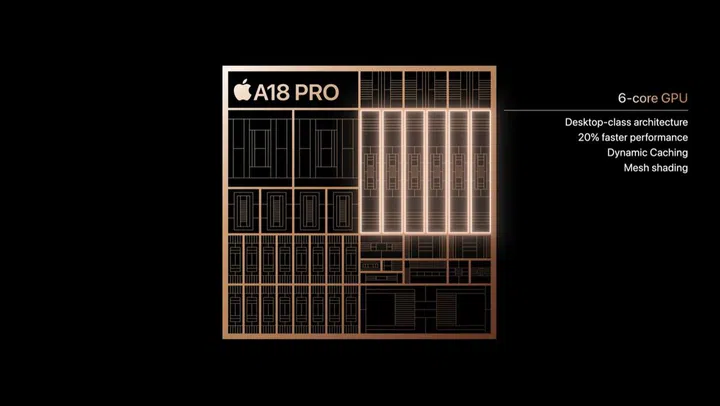
Apple A18 Pro chipset. Image: Apple.
The 6-core CPU (split into two performance and four efficiency cores) is 15% faster than the A17 Pro and uses 20% less power. It also offers “next-generation ML accelerators” for computing AI.
Other features unique to the A18 Pro are Advanced Media features, including ProMotion display support, faster USB speeds (USB 3 at 10Gb/s), and new video encoding plus image processing capabilities with 2x faster visual processing than its predecessor.
A different kind of camera upgrade
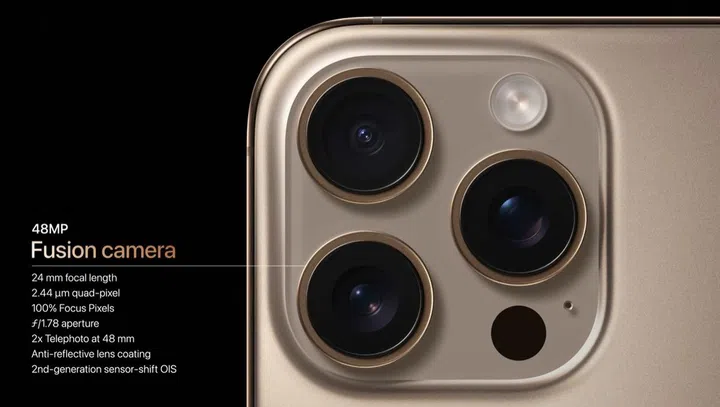
Apple iPhone 16 Pro series main camera. Image: Apple.
While Apple is expected to work on the camera set and features of the iPhone 16 Pro and iPhone 16 Pro Max, they were upgraded in unconventional ways.
The main camera, now called the 48MP Fusion Camera because of its pixel-binning and “optical quality” crop-in shooting at 2x zoom, has a second-generation quad-pixel sensor and improved shutter-to-display speed that’s 2x faster with zero shutter lag for ProRAW and HEIF photo-taking.
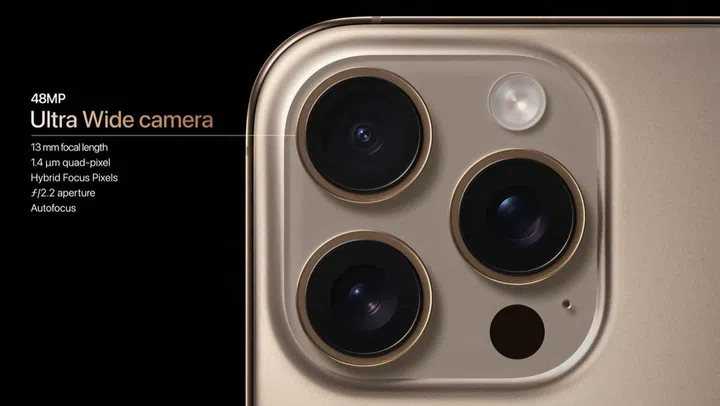
Apple iPhone 16 Pro series ultrawide camera. Image: Apple.
The new 48MP ultrawide camera also comes with a quad-pixel sensor, increasing its megapixel count beyond its traditional 12MP shooter. Users can now choose between pixel-binned ultrawide shots (which helps retain more brightness at the cost of megapixels) or a larger 48MP format. The ultrawide also doubles as the macro camera, just like the regular iPhone 16 series.
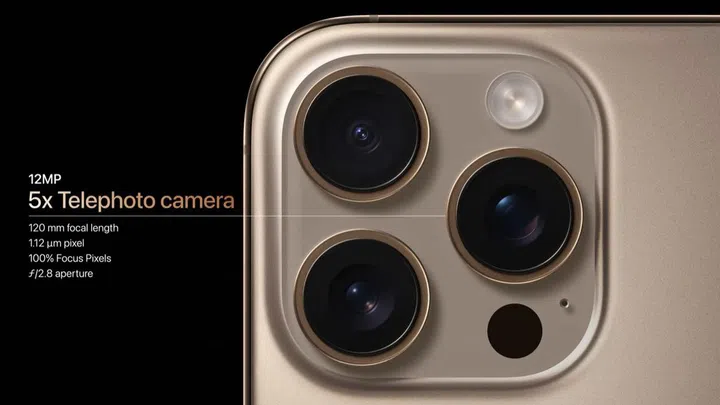
Apple iPhone 16 Pro series telephoto camera. Image: Apple.
What seems unchanged is the 12MP 5x Telephoto camera, which is back with the same 120mm focal length, pixel size, and aperture, and the same tetraprism design for bouncing light internally to achieve its optical zoom magnification.
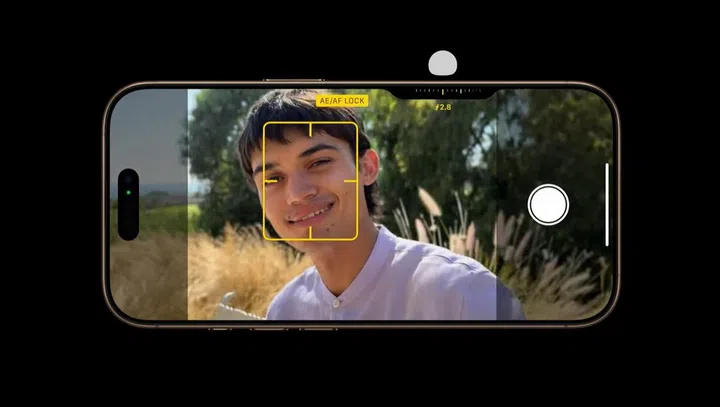
Two-stage shutter, unique to the iPhone 16 Pro series models. Image: Apple.
The tactile and capacitative Camera Control button gets all the slide-and-click features to adjust things like exposure and bokeh, just like the regular iPhone 16 models. However, iPhone 16 Pro models will get a two-stage shutter that lets users lock focus and exposure with a light press, but this is only coming “later this year” as a firmware update.
Photographic Styles received an upgrade in its versatility and user interface, offering more filters that are more true to an actual photo editing process that lets you control shadows, highlights, and temperature to create nuance.
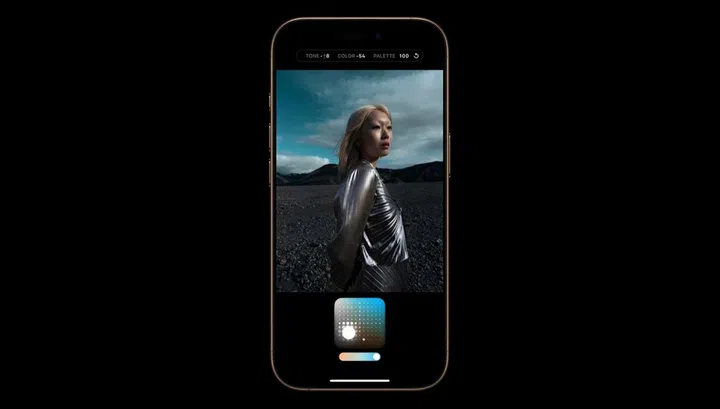
Touchpad-like editing for Photographic Styles. Image: Apple.
You can apply the style during and after the shot, with the latter offering a touchpad-like interface for fine-tuning. These features are in addition to improved preset styles, which Apple said are based on past and present photography aesthetics.
Pro recording features, like 4K120FPS slow-motion
4K120FPS, finally. Image: Apple.
For pro videographers, this is where the fun begins. Cinematic Slow Motion is a new feature of the main camera on the Pro models. This was made possible with 4K120FPS recording, which is new to iPhones.
4K120FPS can support frame-by-frame colour grading in Dolby Vision, on top of 4K120FPS capture in ProRes and Log recording directly to an external storage device.
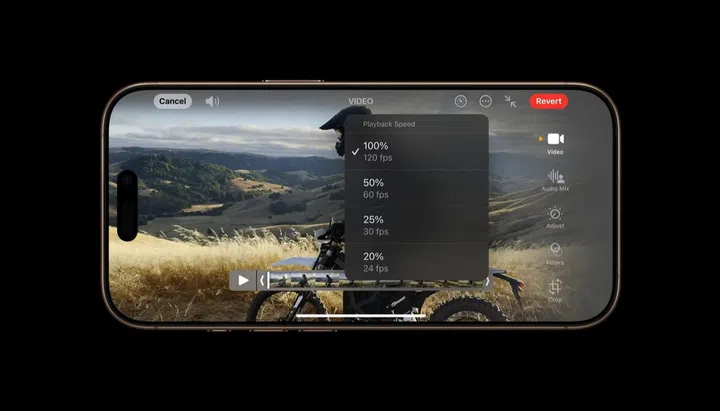
Playback speed editing is done in frames per second. Image: Apple.
Video editing also now offers playback speed editing directly from the Photos app. This means videos captured at 120FPS can later be edited to 60FPS, 30FPS, or even 24FPS playback without needing professional editing software to swap between normal and slow-mo recordings.
Also, 4K120FPS supports HDR, which you can toggle with the Camera Control button.
Studio-quality voice recording
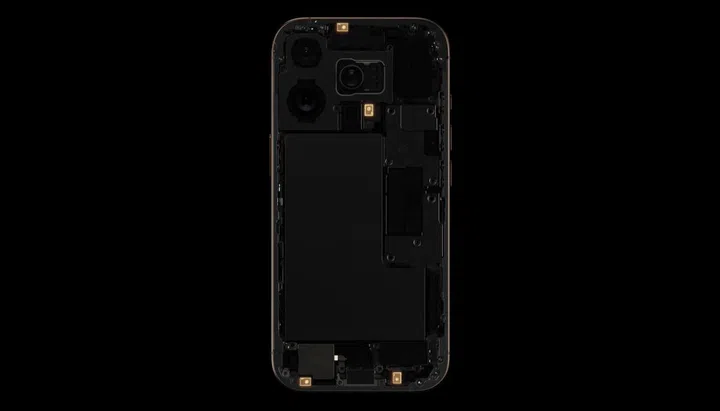
The placement of its four studio-quality microphones highlighted in Desert Titanium. Image: Apple.
The Pro models also received an audio upgrade. The devices now have four studio-quality microphones with lower noise floors to accommodate vocal and acoustic recordings.
The phones can also record with Spatial Audio Capture, which can be played back with other Apple products like AirPods and Apple Vision Pro.
A new Audio Mix editing feature separates speech from subjects from background noise, emulating various recording mixes at the touch of a button.
For example, users can isolate voices with the in-frame profile to highlight only subjects’ voices, use the studio profile for sound-dampening anti-reverb, and use the cinematic profile that gives the vocal track centre stage while framing environmental noise around the vocals.
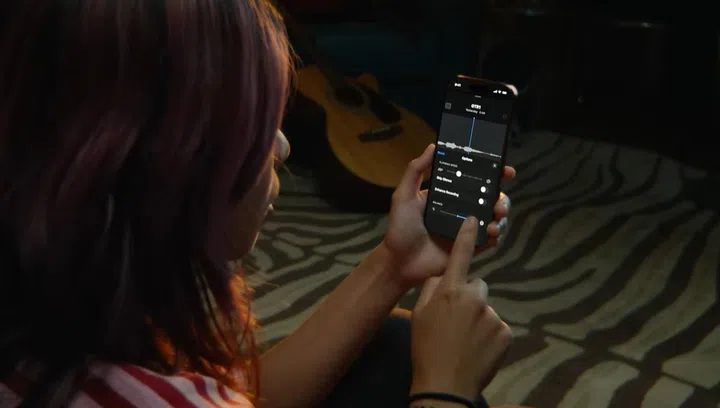
Voice Memo upgrade lets you record another audio track on top of an existing recording, and you can isolate their playback, too. Image: Apple.
The Voice Memo app gets an update that allows users to layer on another track on an existing recording and control the playback and isolation of both tracks they hear, all directly on the phone's external speakers without needing headphones.
Other features
iPhone 16 Pro series models get faster MagSafe wireless charging, although the exact speed was not specified during the keynote (spec sheets claimed 25W). Wireless charging on the iPhone 16 Pro series also gets Qi2 support.
While not mentioned in the keynote, the Pro models also have a 1-nit minimum brightness, 1,000-nits max brightness, 1,600-nits peak brightness with HDR, and 2,000-nits peak brightness outdoors.
All Pro models support sub-6 and mmWave 5G, Wi-Fi 7, and Bluetooth 5.3.
Singapore models come with Dual SIM support (one nano-SIM and one eSIM) and dual eSIM support. US models are dual eSIM only, supporting up to eight eSIMs.
Pricing and availability
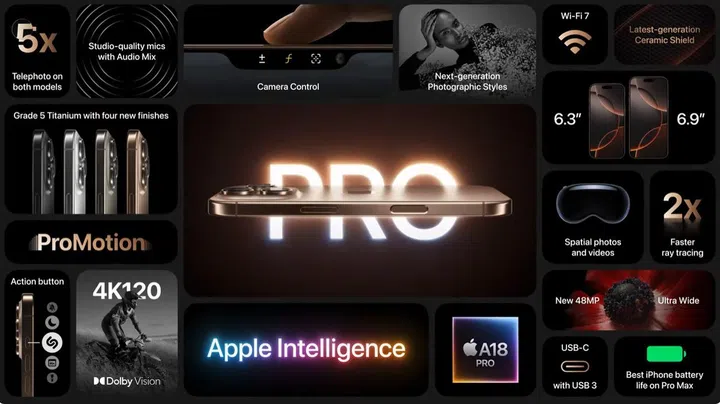
Summary slide of all iPhone 16 Pro series new features and improvements. Image: Apple.
The Apple iPhone 16 Pro series starts pre-orders on 13 September 2024, with retail availability beginning on 20 September 2024, at the following prices.
Apple iPhone 16 Pro | Apple iPhone 16 Pro Max | |
128GB | S$1,599 | NIL |
256GB | S$1,749 | S$1,899 |
512GB | S$2,049 | S$2,199 |
1TB | S$2,349 | S$2,499 |
Colours | Desert Titanium, Natural Titanium, White Titanium, Black Titanium |
We have a clip of the new Desert Titanium colourway below.
What do we think about the new iPhone 16 Pro? Here's our first-hand experience article -- direct from Apple's launch at its headquarters.
Read more:
- Apple’s iPhone 16 and 16 Plus get the expected AI boost along with a new A18 processor
- The AirPods 4 gets a revamped charging case with USB-C and supports anti-noise cancelling
- No Apple Watch Ultra 3 this year but there's a new and very sleek colour for the Ultra 2
- The Apple Watch Series 10 has a thinner design and an OLED display that's larger than the Ultra
Our articles may contain affiliate links. If you buy through these links, we may earn a small commission.