
Xiaomi 12T Pro review: Still the value flagship phone to beat
The Xiaomi 12T Pro is priced $300 more than the 11T Pro, but why did we still give it the Best Value award? Come find out!

Note: This review was first published on 14 November 2022.
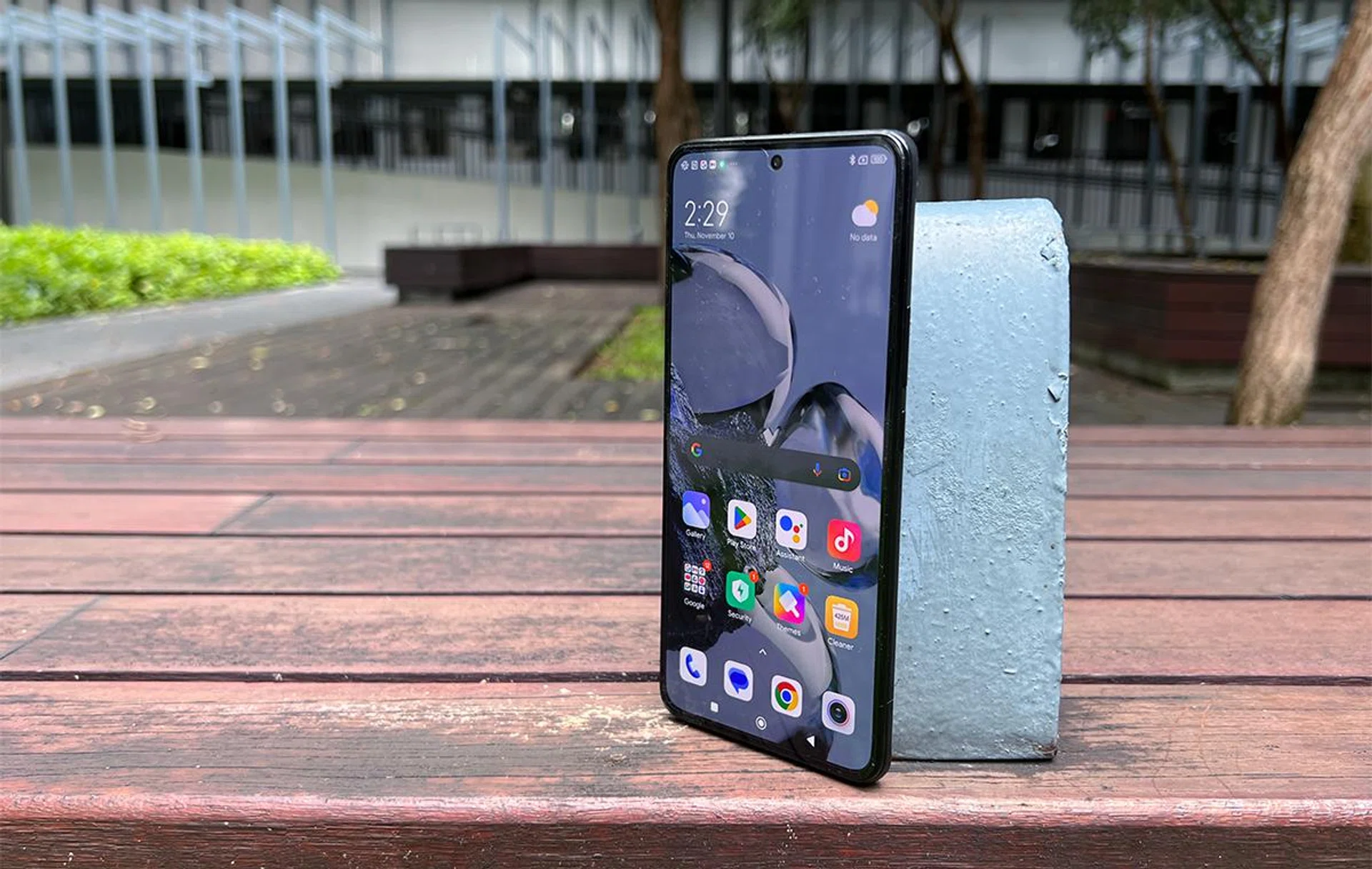
Xiaomi 12T Pro.
Justifying its price bump
Xiaomi fans might have experienced an aneurysm when the their new phone was officially announced last month. At S$1,099, the 12GB RAM + 256GB storage variant of the Xiaomi 12T Pro is Xiaomi’s most expensive T-series handset in Singapore thus far (and the version we've obtained for review). It’s also a steep increase from the Xiaomi 11T Pro (review here), which retailed at S$799 for the same storage capacity.
Is this the fault of inflation? Not quite. We think it's likely a balancing act by Xiaomi based on what’s offered out there. Here’s a non-exhaustive list of Snapdragon 8+ Gen 1 smartphones officially available in Singapore:
- ASUS ROG 6 and 6 Pro – starting at S$1,399 (and S$1,799 for the Pro)
- Samsung Galaxy Z Flip4 5G and Fold4 5G – starting at S$1,398 for 128GB for the Flip4, and an eye-popping S$2,398 for the Fold4
- OnePlus 10T 5G: starting at S$1,199 for the 256GB variant (or S$999 for 128GB)
While there are other SD8+G1 phones in the wild, they’re not officially sold in here yet, making the Xiaomi 12T Pro technically one of the most affordable budget flagship handsets in Singapore. So what if it's S$300 more than its predecessor's launch price? It's still cheaper than the rest; that's probably what Xiaomi was thinking.
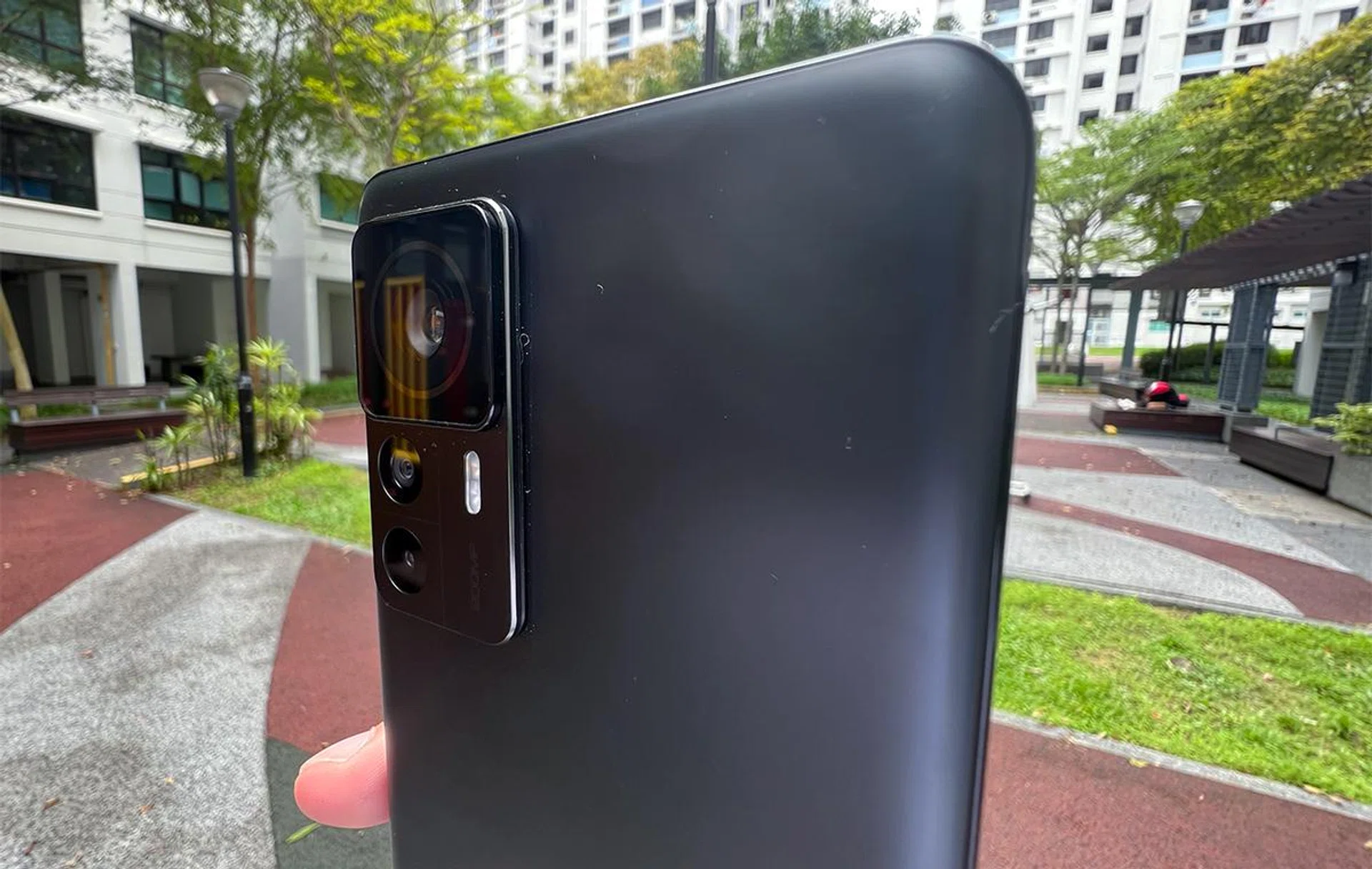
Now, to help set the device apart further from its rivals, Xiaomi packed in a 200MP primary camera (Samsung ISOCELL HP1 sensor) on the 12T Pro’s triple rear imaging array, which turned out to be quite a competent shooter in our early tests. The 200MP camera also has plenty of neat tricks to utilise its hardware, which we’ll cover more about later.
It’s also one of the few 'budget-flagships' with a display resolution higher than the Full HD. The 12T Pro has a 2,712 x 1,220 pixel resolution and boasts a flagship-worthy 120Hz refresh rate. Then, there's also its 120W wired fast-charging to convince heavy users that it won't take long to get a full charge.
TLDR version:
Still the cheapest Snapdragon 8+ Gen 1 phone out there, despite its massive price jump. You won't go wrong with the Xiaomi 12T Pro.
Classic Chinese phone design with a flatter camera housing
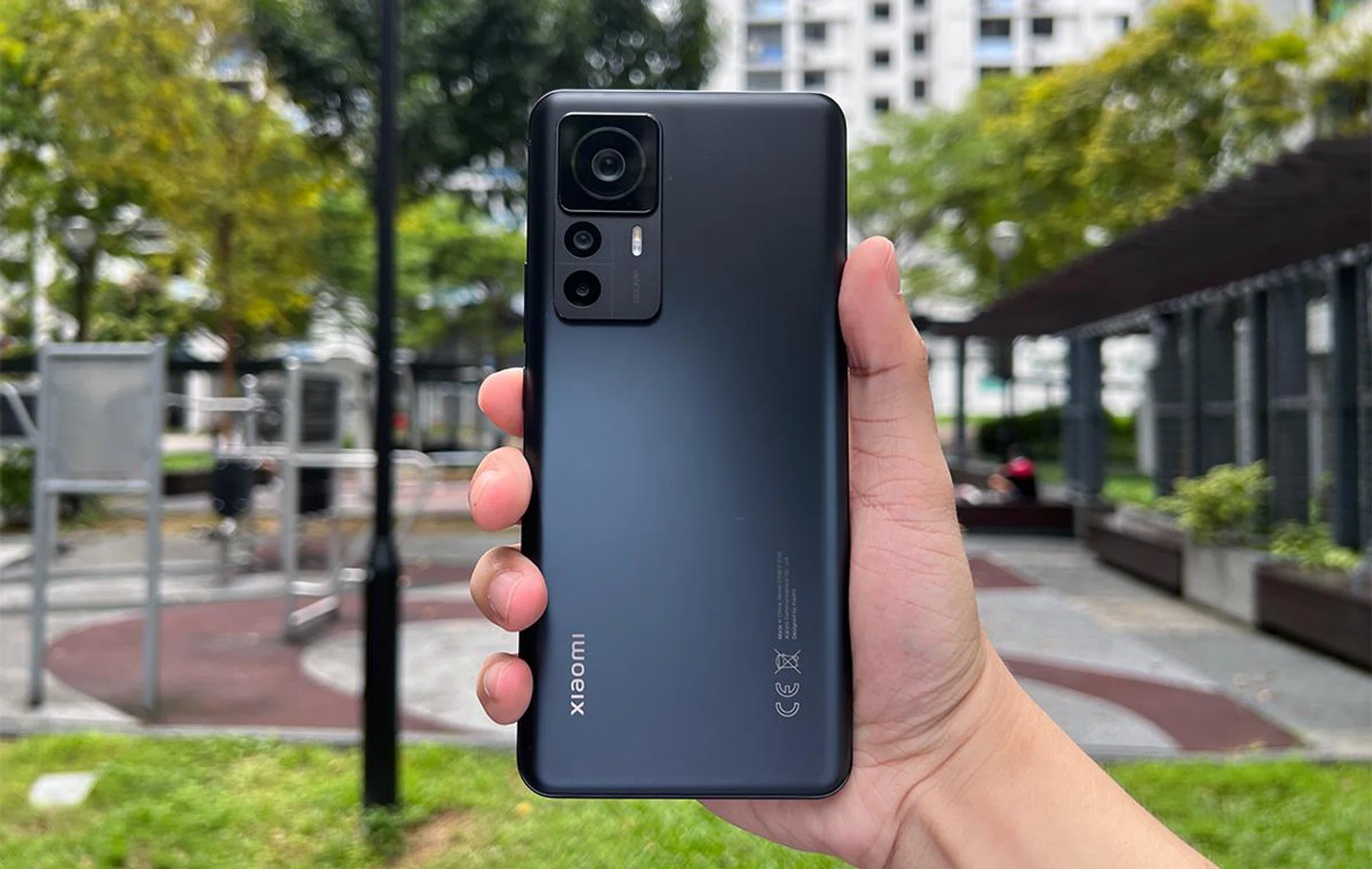
Chinese flagship-tier handsets tend to stick to the same design formulas. It gets hard to tell them apart after a while because of recurring traits like block camera housings, curved sides and corners on the back, and a penchant for a half or full-polish look.
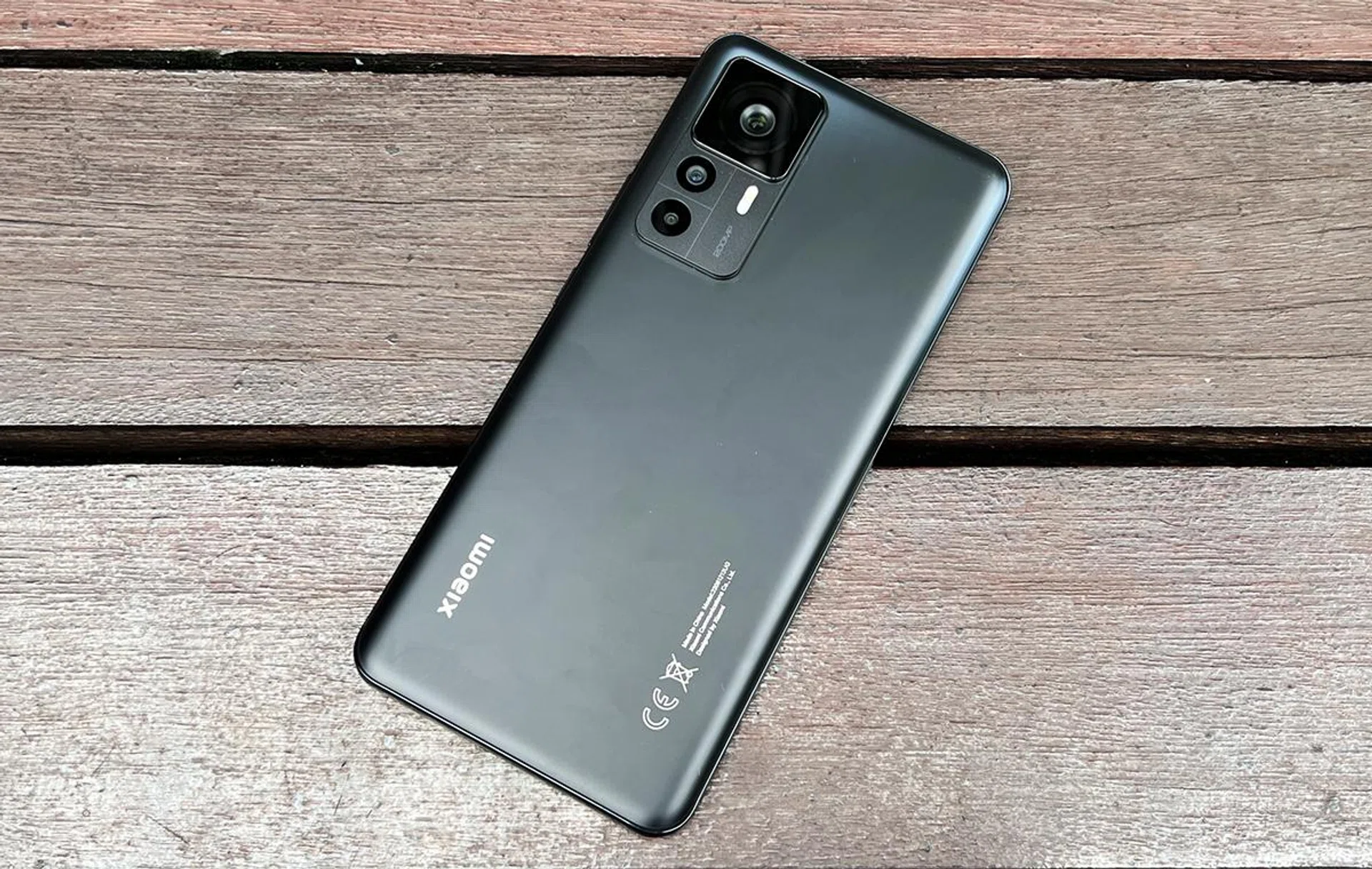
The Xiaomi 12T Pro doesn’t offer any revolutionary design updates since it takes cues from Xiaomi 12 and 12 Pro. But, they’ve managed to streamline the rear camera housing, making it a little friendlier for everyday use. Instead of the raised rim around its main camera (which the 12 and 12 Pro had), Xiaomi made it flush against a piece of protective glass. It should help reduce any instances of scuffing or damage when the phone jostles about in your pocket or bag.
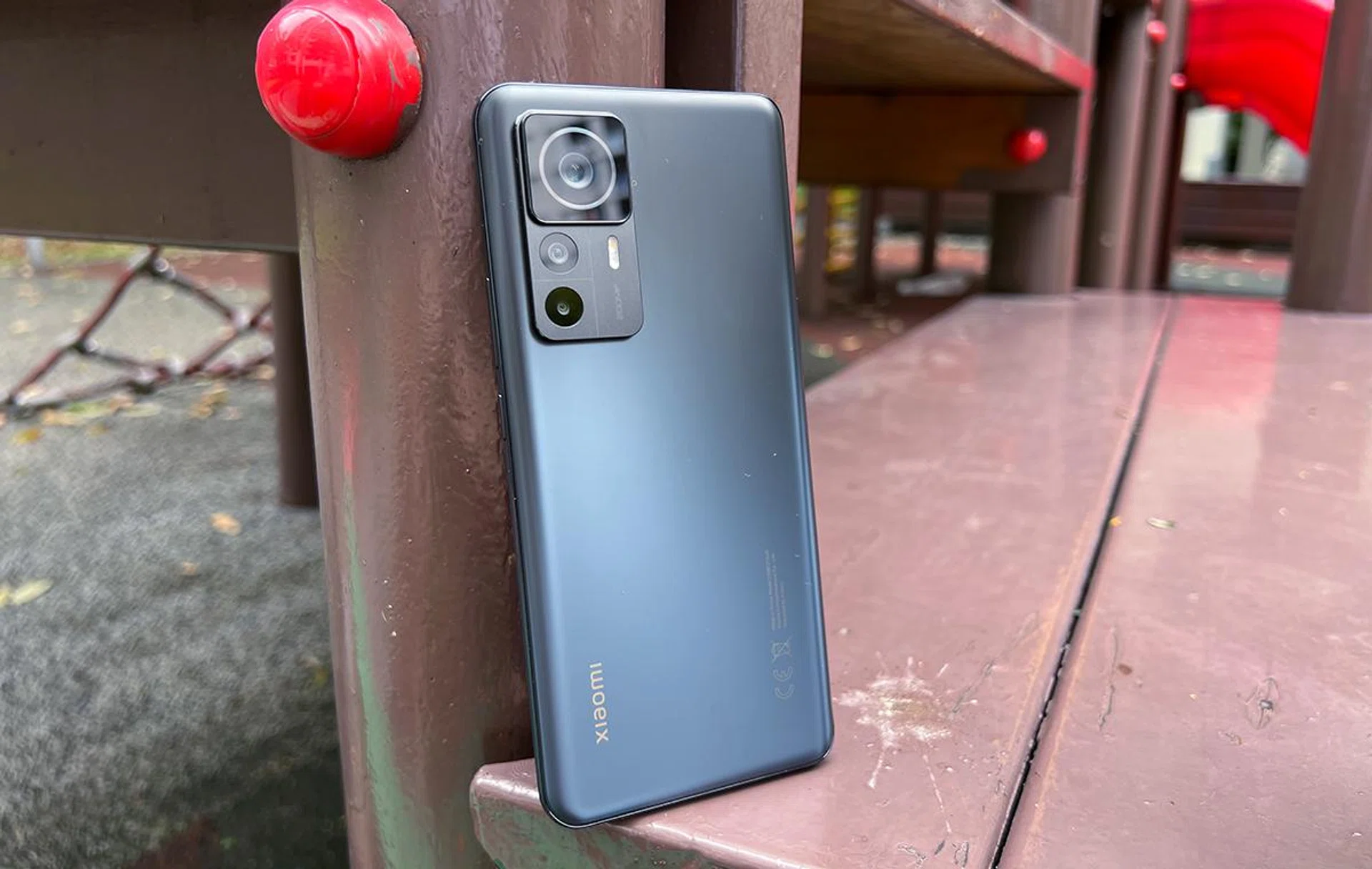
If you’re using it without a phone case, the Xiaomi 12T Pro’s side buttons for volume and power can get difficult to discern by touch. The buttons are very slim with no tactile embellishments, and the phone’s rims have mildly chamfered edges that your fingers can sense – making it more confusing. Also, refining the camera housing doesn’t make it less wobbly when facing up on the table, and even its phone case didn’t help much in that regard.
The rest of the phone feels average in hand. It’s a classic form factor with a curved back and flat display. Its sides look and feel durable, and the plastic back comes reinforced with glass, giving it a mildly premium feel in hand.
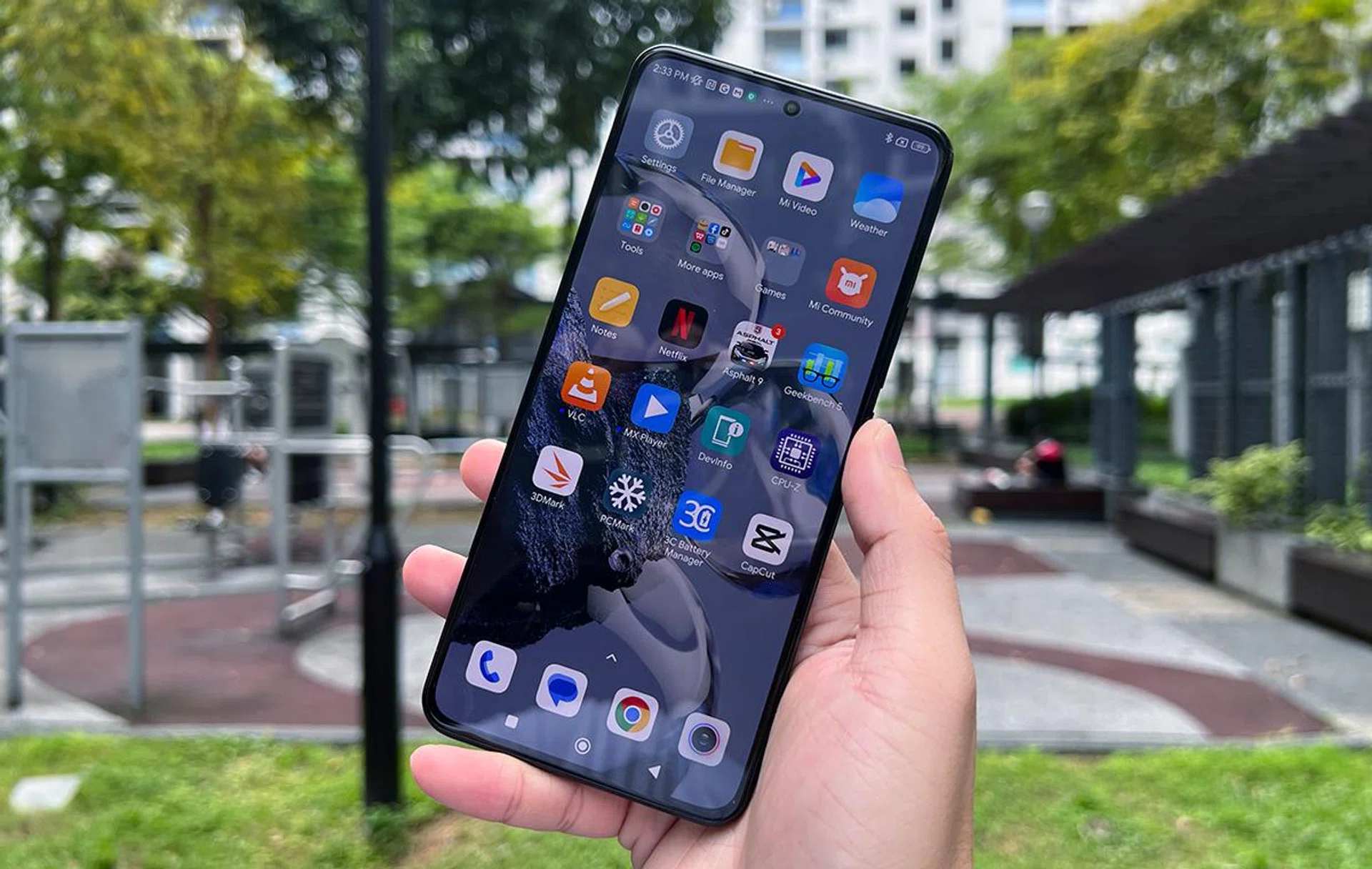
On the other hand, its 6.67-inch AMOLED display isn’t too shabby – in fact, it’s really sharp with its Full HD+ resolution and high pixel density (2,712 x 1220 pixels at 446 PPI). Content rendering is smooth, thanks to its fluid 120Hz refresh rate too.
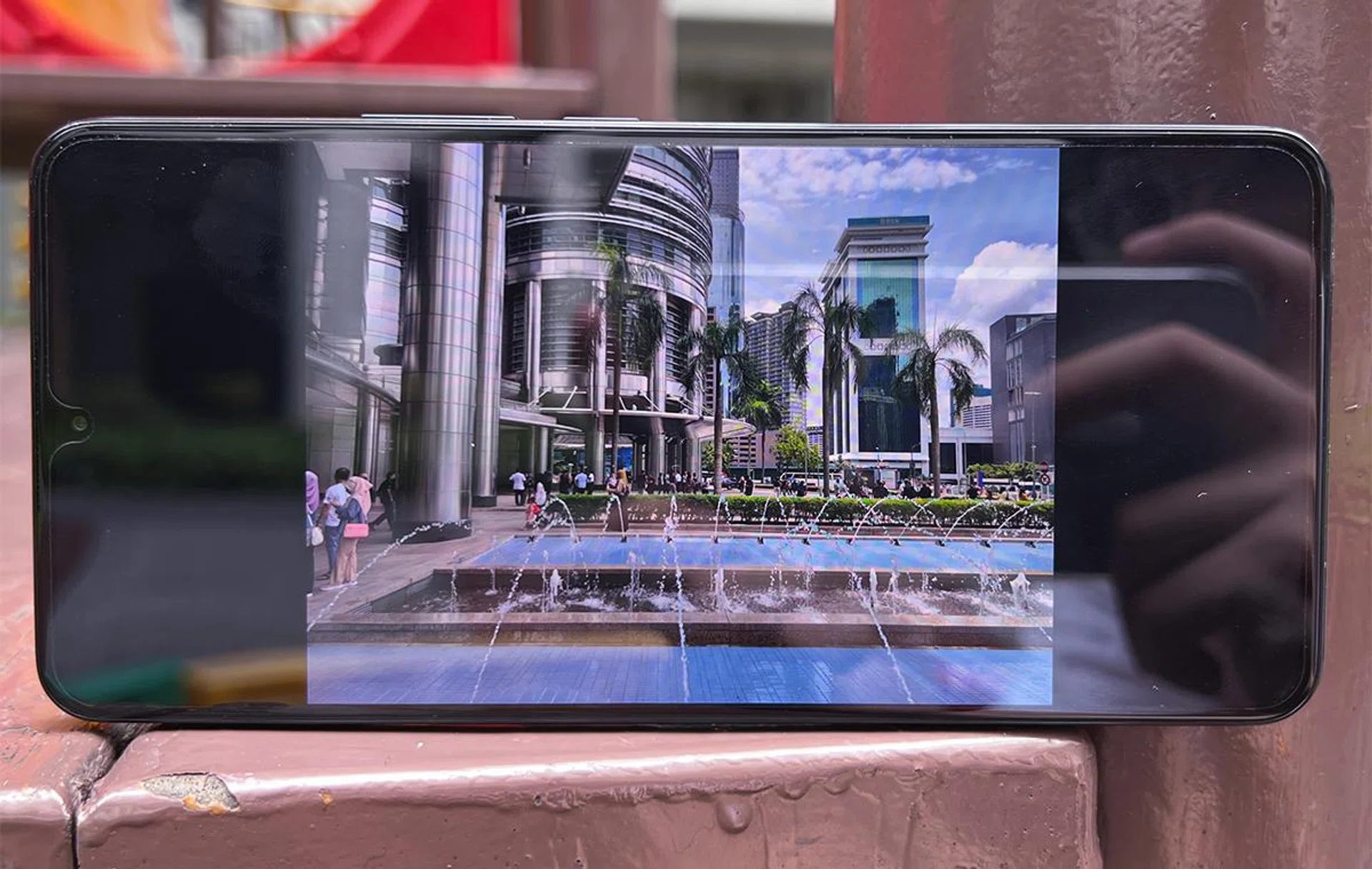
Viewing its 900-nits brightness under an overcast, monsoon-y sky.
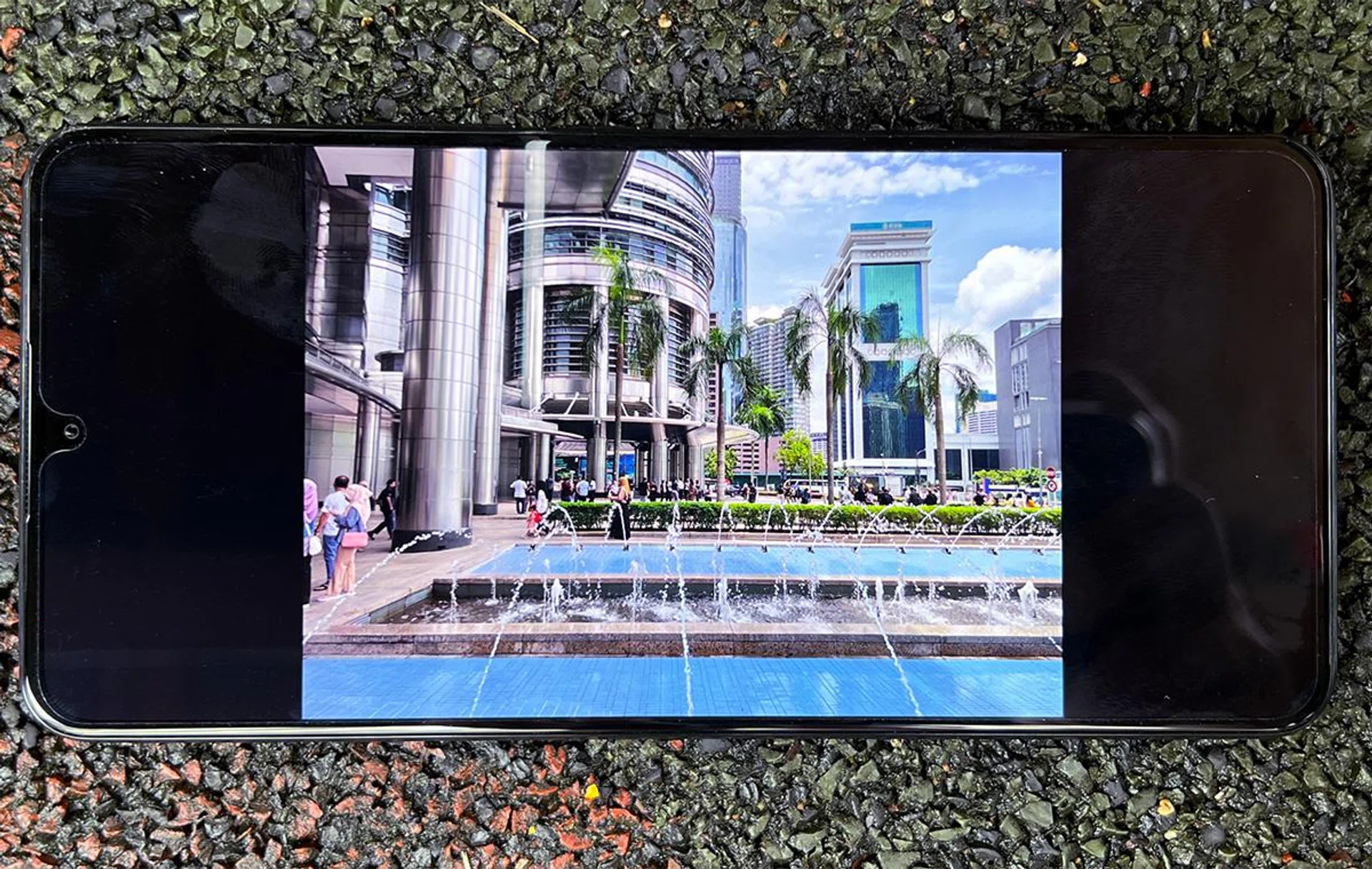
Same 900-nits brightness viewed under shade.
The only gripe we had was the panel having slightly washed-out colours if you have the display up at max brightness levels (900-nits) or during videos. Otherwise, the panel comes with all the key perks you’d expect on more expensive handsets, like support for HDR10+, SGS certification for Low Visual Fatigue, and a 480Hz touch sampling rate.
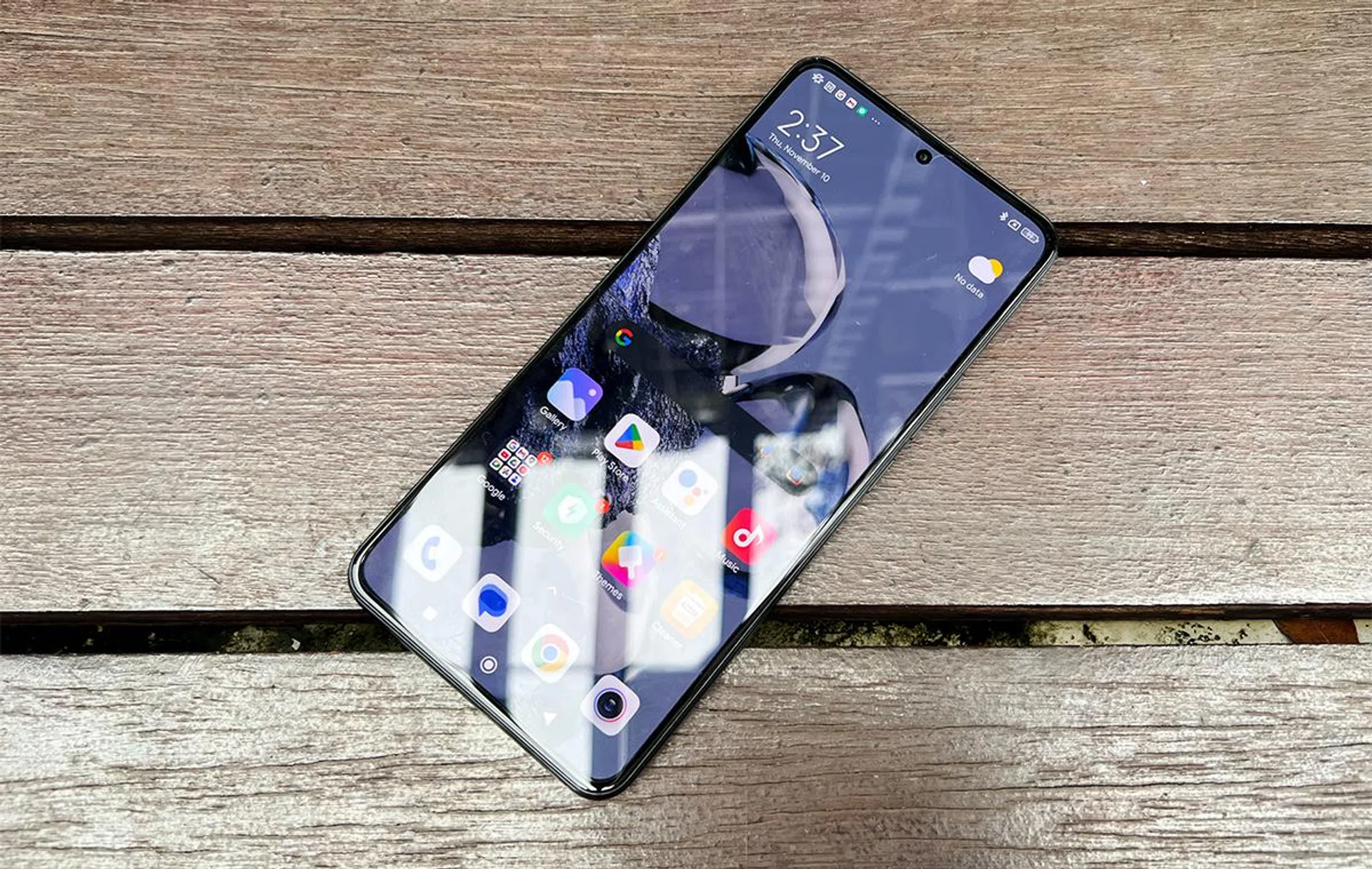
Xiaomi doesn’t specify if the in-display fingerprint sensor is optical or ultrasonic (we suspect it’s optical since it flashes white upon contact). That said, the response time is blazingly fast – faster than Pixel 7 Pro’s sensor. If you’d prefer, its AI Face Unlock is also reasonably speedy as well.
It doesn’t have the kind of IP68 rating that top-end phones have, but 12T Pro’s IP53 should suffice for everyday use and exposure to the usual Singapore weather. No dunking this phone in the pool!
Our Xiaomi 12T Pro was cloaked in MIUI 13 skin from Xiaomi, which is based on Android 12. It’s a lot more consistent than past MIUI reskins. For example, the shortcut icons in the pull-down menu are evenly-spaced, and so are the alert tabs on the notification screen. You can also adjust the font type and size to make words more legible on the interface (we used an unofficial typeface that mimics Google’s font, just so that small text is more readable at a glance).
Do we really need 200MP for a phone's camera?
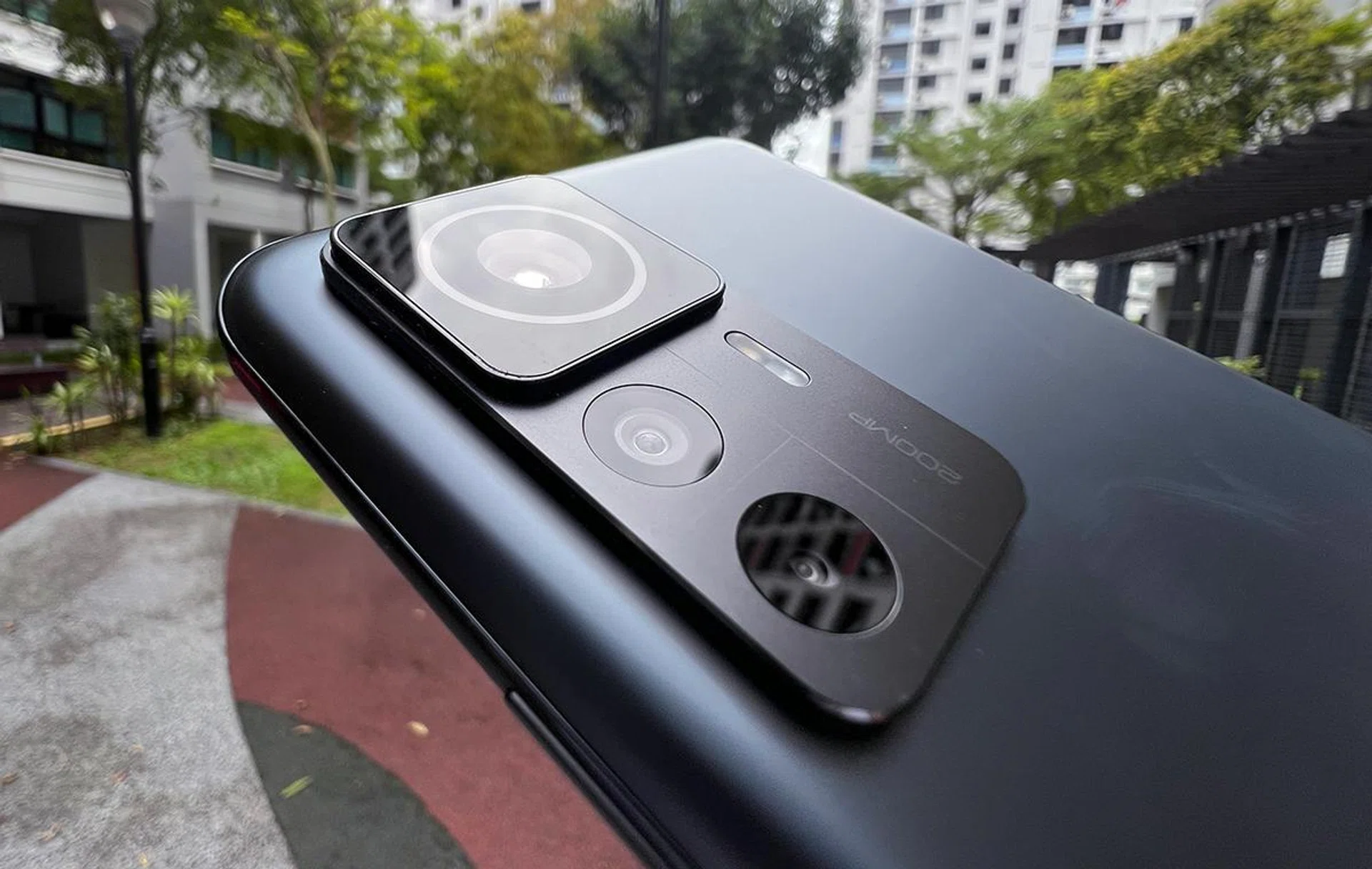
It’s quite hard to ignore the 200MP claim on the sensor, and there’s actually a little more than numbers behind it. Here are the specs for reference.
200MP main camera
- Samsung ISOCELL HP1 with 1/1.22-inch sensor size (0.64μm pixels)
4-in-1 pixel binning technique (1.28μm pixel size)
16-in-1 pixel binning technique (2.56μm pixel size) - f/1.69 aperture, 8P lens, 85° FOV
- OIS, 200MP Xiaomi ProCut, 2x in-sensor zoom, 8K video recording, HDR10+ video
8MP ultra-wide angle camera
- 1/4-inch sensor size (1.12μm pixels)
- f/2.2 aperture, 120° FOV
2MP macro camera
- 1/5-inch sensor size (1.75μm pixels)
- f/2.4 aperture
Generally speaking, Xiaomi’s camera combination covers enough shooting scenarios (like ultra-wide and macro), but it’s the 200MP one that has more than meets the eye.

Main camera with 16-in-1 pixel binning.

4-in-1 pixel binning, same camera.

No pixel binning, 200MP shot, same camera.

8MP ultra-wide. Has evident fish-eye effect.
To maximise the 200MP sensor’s utility, Xiaomi 12T Pro uses pixel binning, a technique that combines adjacent pixels on the sensor to form a larger pixel that can offer brighter resulting images. You could opt for extremely high-res 200MP images (which can be up to 70MB per image), or rely on its default 16-in-1 binning technique for regularly-sized and reasonably-lit 12MP photos.
Of course, a full 200MP is practical only if you intend to print poster-sized versions of these shots. The default 16-in-1 technique is more practical and it offers better management in colour dynamics and detail retention.
Also, finding the 200MP photo-taking feature is not intuitive. It's hidden inside default Camera app, under the “More” tab, which actually triggers 50MP shooting first. You'll have to go further to tap “200MP” in the top-left corner of your viewfinder. This is just one of the few examples of perplexing UI choices, so Xiaomi loses points (again) on user-friendliness.

2x in-sensor zoom that uses the middle 50% of the 200MP sensor.
Another perk of the 12T Pro is “2x in-sensor zoom”. It takes imagery from the middle 50% of its high-megapixel sensor to create a “zoomed-in” photo without using conventional digital zoom manipulation or corrective software. This method is becoming increasingly popular with new phones in the same style as the iPhone 14's 2x telephoto zoom.
The upside is not having typical detail and noise problems generated from traditional digital zoom. The downside is – obviously – not using the full sensor to capture your image. From our samples, the 12T Pro takes reasonably clear and well-coloured photos, but it doesn’t quite have the same colour dynamics or contrast management that’s usually provided by the phone’s software.

Main camera, 16-in-1 pixel binning.

4-in-1 pixel binning.

200MP no pixel-binning.

8MP ultra-wide.

2x in-sensor zoom.

10x (max) digital zoom.
The 12T Pro's main camera's 16-in-1 pixel-binned shots are excellent for casual use. It doesn’t win at creating life-like images, but they are ready for uploading to social media straight from the Gallery app. The overall imaging package also satisfies common shooting needs, making the Xiaomi 12T Pro an easy choice for an average photo taker who needs practical function over pro-level accuracy. If you want to create poster-sized prints via your photography chops and have the skills to post-process these images, Xiaomi’s 200MP camera is also an affordable way to go. Impressive marketing numbers aside, there are niche, yet practical uses for the 12T Pro’s main camera.
Benchmark Performance
The Xiaomi 12T Pro uses a Qualcomm Snapdragon 8+ Gen 1 processor to power the device. We've already introduced the chipset in separate articles, like the Samsung Galaxy Z Flip4 5G and Vivo X80 Pro. It is basically the best 2022 flagship-grade chipset Qualcomm can offer to consumers in 2022.
That puts the Xiaomi 12T Pro against other SD8+G1 competitors in Singapore, along with similarly priced peers like the Google Pixel 7 series phones.
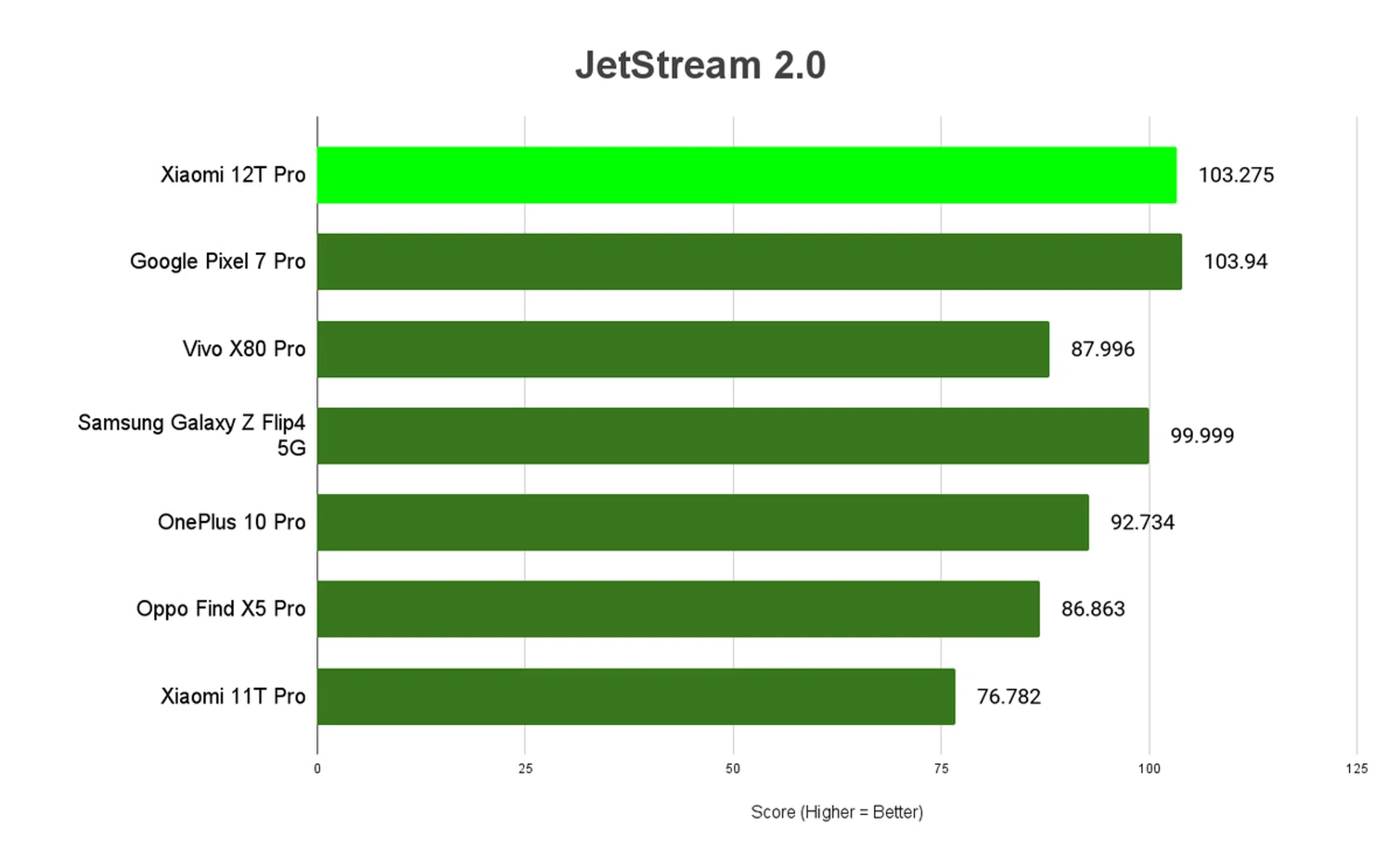
JetStream 2.0
JetStream 2 is a combination of a variety of JavaScript and Web Assembly benchmarks, including benchmarks that came before like SunSpider and Octane. It primarily tests for a system’s and browser’s ability in delivering a good web experience. It runs a total of 64 subtests, each weighted equally, with multiple iterations, and takes the geometric mean to compute the overall score. The higher the score, the better.
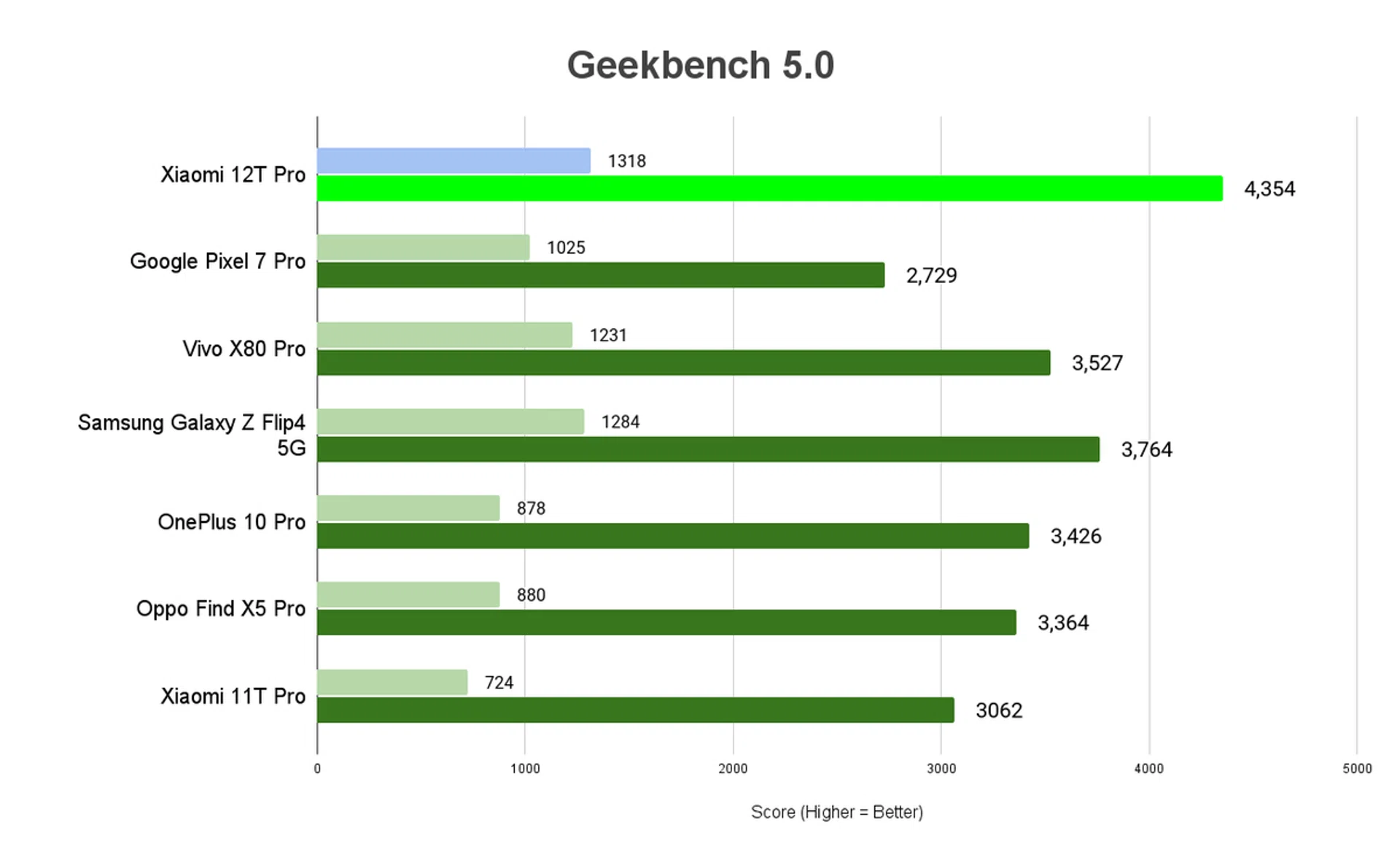
Geekbench 5
Geekbench CPU is a cross-platform processor benchmark that tests both single-core and multi-core performance with workloads that simulate real-world usage. Geekbench 5 scores are calibrated against a baseline score of 1000, which is the score of an Intel Core i3-8100. The higher the score, the better.
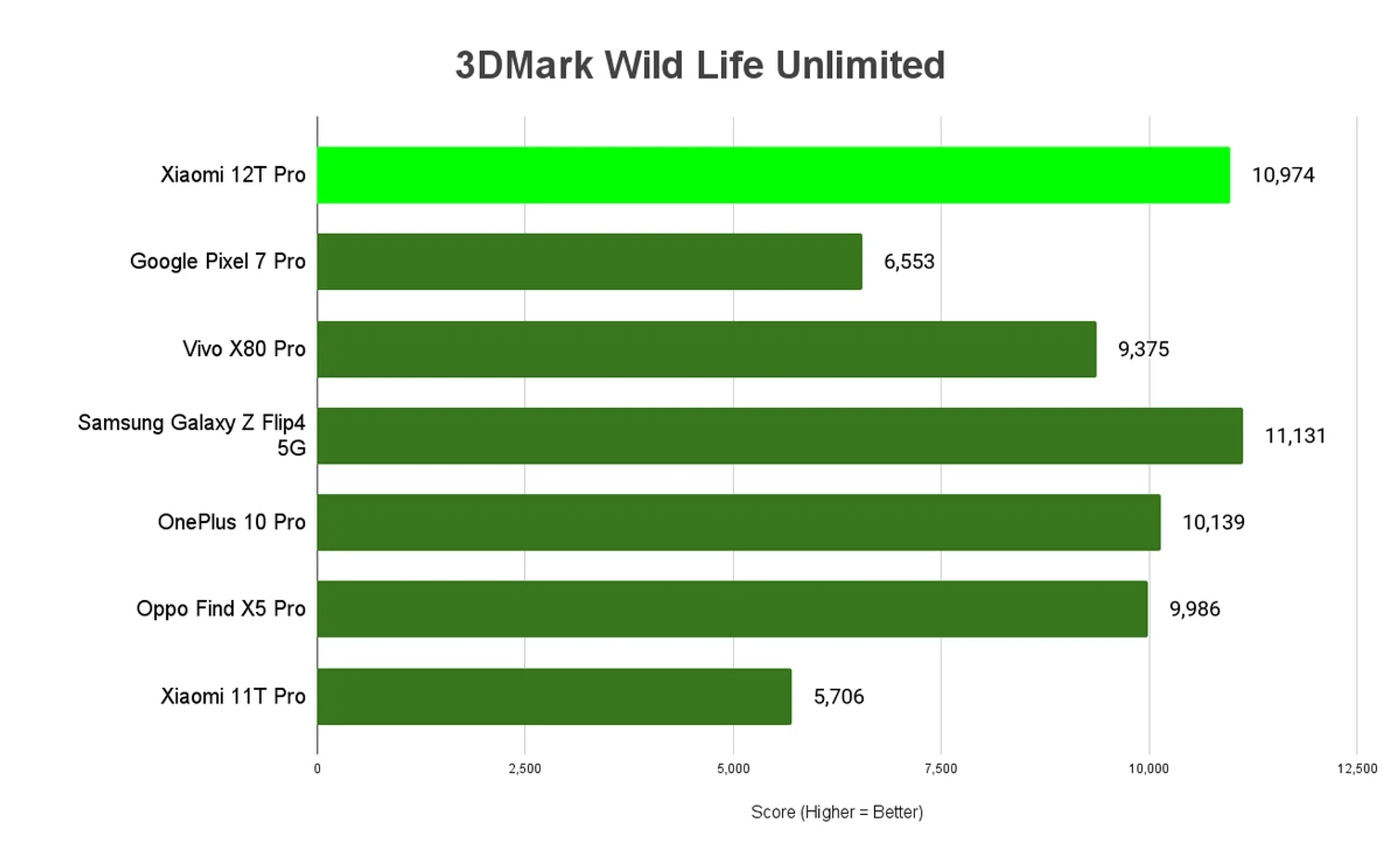
3DMark Wild Life (Unlimited)
3DMark Wild Life is a cross-platform benchmark for Windows, Android and Apple iOS for measuring GPU performance. Its graphics test consists of multiple scenes with variations in the amount of geometry, lights and post-processing effects, mirroring mobile games that are based on short bursts of intense activity. Wild Life uses the Vulkan graphics API on Windows PCs and Android devices. On iOS devices, it uses Metal.
In Unlimited mode, the benchmark runs offscreen using a fixed time step between frames. Unlimited mode renders exactly the same frames in every run on every device, regardless of resolution scaling. The higher the score, the better.
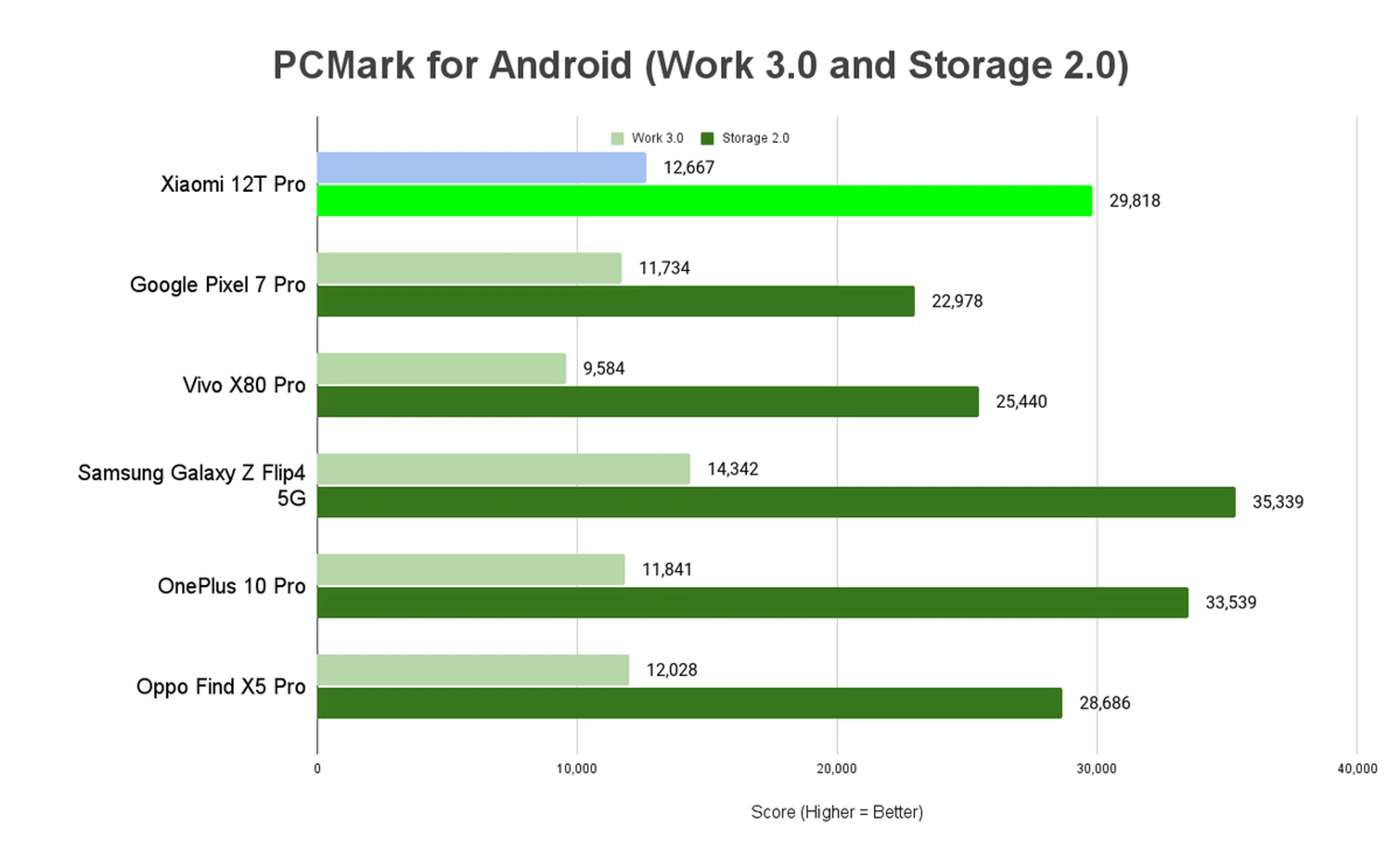
PCMark for Android - Work 3.0 and Storage 2.0
PCMark for Android is a benchmark for testing the performance of Android phones and tablets. The Work 3.0 test checks how the device handles common productivity tasks such as browsing the web, editing videos, working with documents and data, and editing photos. Storage 2.0 checks write-in and read-out performance for internal storage, external storage (if applicable), and SQLite database management. Together, the benchmarks can clue us in on how capable a phone is at handling everyday use. Work 3.0 scores are above, while Storage 2.0 scores are immediately below for each device - the higher the score, the better.
Since this is a newly introduced benchmark in our reviews, we’re building up our database of PCMark scores for Android phones.
Benchmark Performance remarks
With an SD8+G1 inside the Xiaomi 12T Pro, the phone’s synthetic performance matches that of other more expensive alternatives carrying the same component. In real-world use, the Xiaomi 12T Pro was able to handle 3D games at 60Hz without heating up. Navigation, recording, and general use were fine too. Our only performance-related issue of note was the longer-than-usual bootup time the phone had.
Battery Life
Our standard battery test for mobile phones has the following parameters:
- Looping a 720p video with screen brightness and volume at 100%
- Wi-Fi and Bluetooth connectivity turned on
- Constant data streaming through email
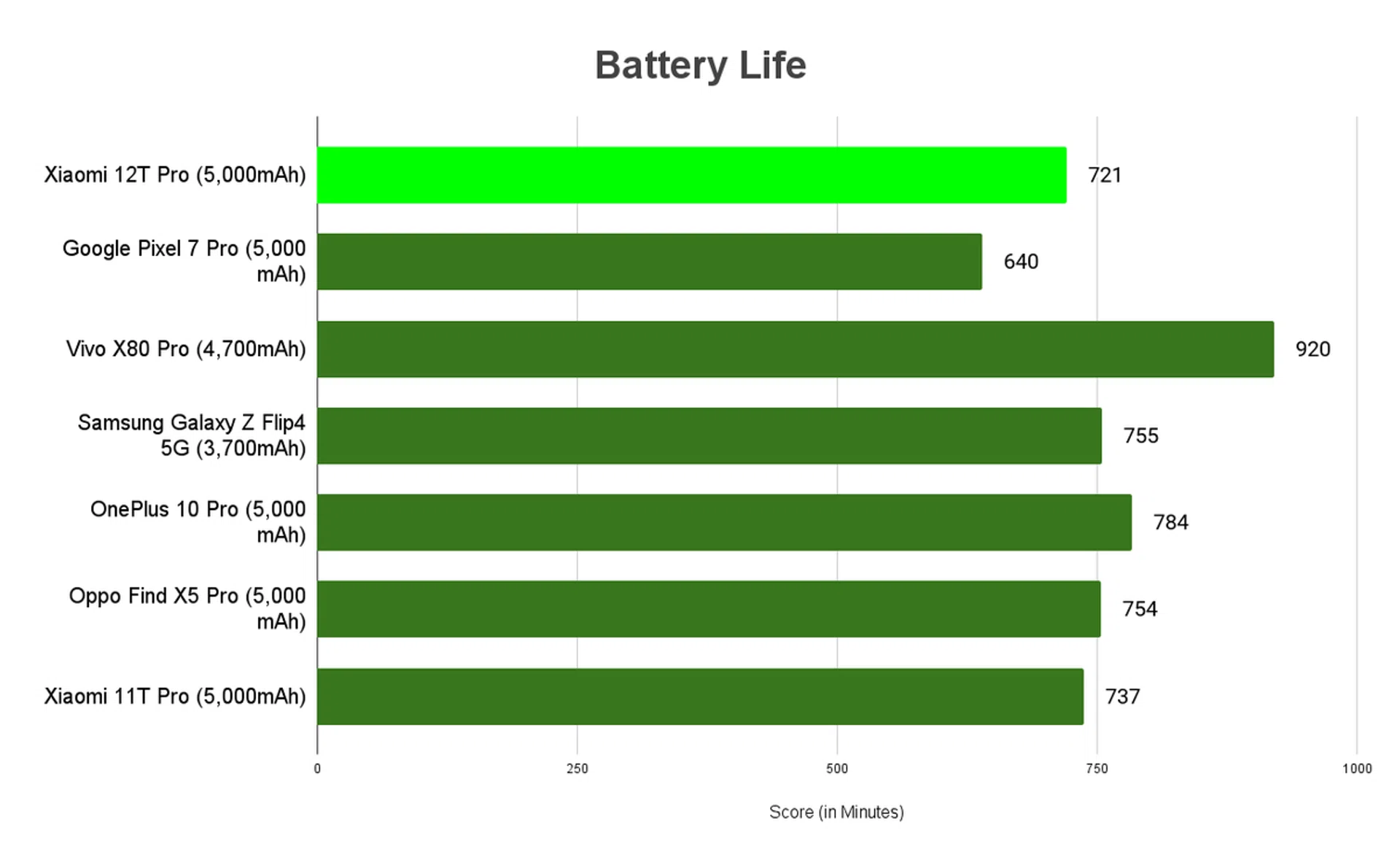
Xiaomi 12T Pro’s 5,000mAh battery gave us a solid 12 hours of uptime in our battery test. While it is not the longest in its class of rivals, the Vivo X80 Pro even trumped the 12T Pro by a few hours, we feel that 12 hours is still reasonably good considering the 12T Pro seemed to perform better in benchmarks overall.
Also, using its provided 120W charger took a mere 12 minutes to charge from 0% to 50%, and just under 25 minutes for a full charge. Xiaomi 12T Pro’s easily the fastest-charging phone battery we’ve encountered in 2022. It’s very convenient for users who can’t be tethered to a charging point all day long, but that also means you’ll need to carry its charging head to capitalise on its extreme fast-charging capabilities. Do note that the Xiaomi 12T Pro has no wireless charging support.
So, is S$1,099 reasonable for the 12T Pro?
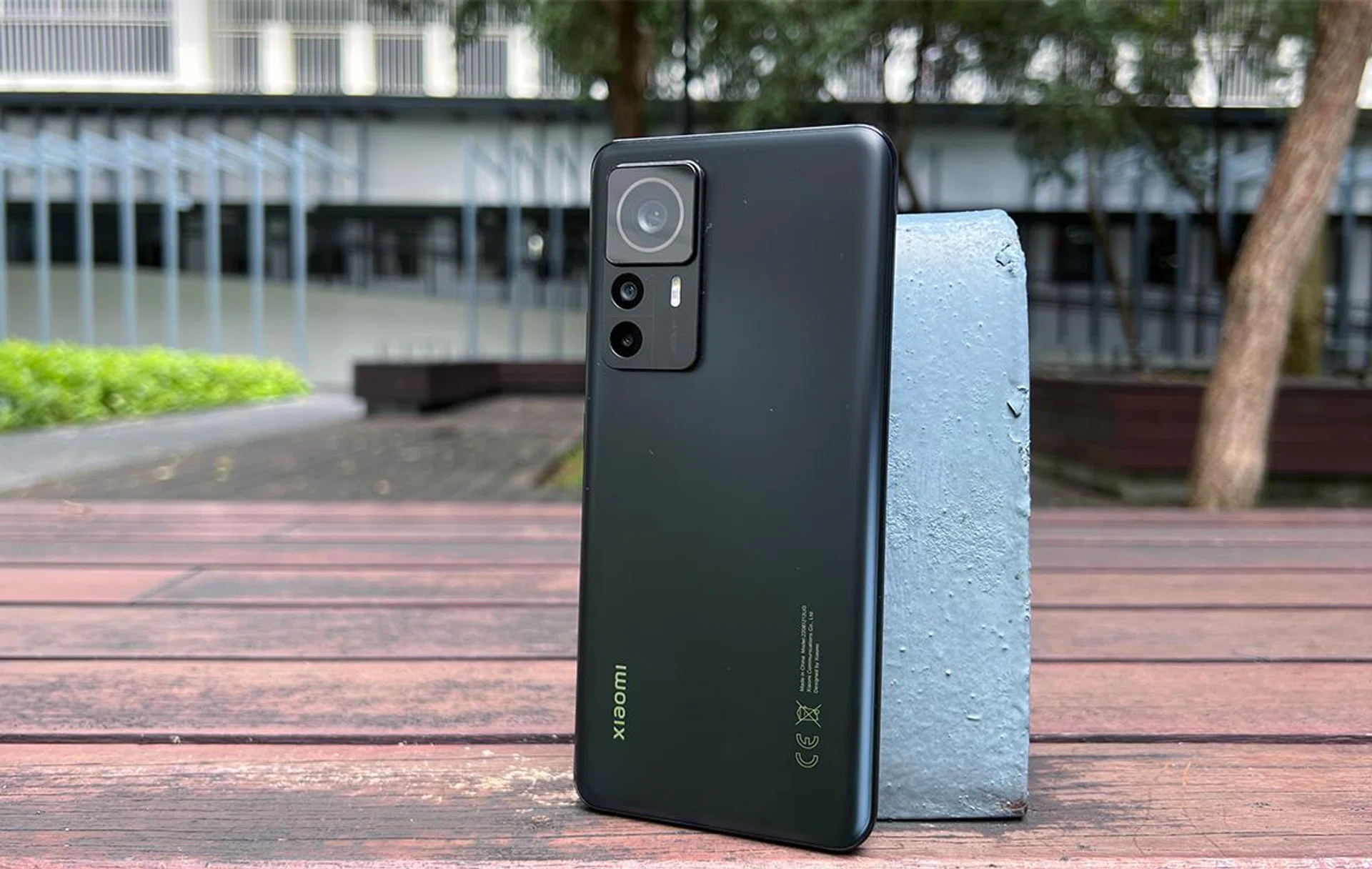
In some ways, the Xiaomi 12T Pro is still head-and-shoulders above true flagship handsets when it comes to its T-series emphasis on value for money.
S$1,099 gets you more than 1080p display resolution, 120Hz refresh rate, a top-end Qualcomm Snapdragon 8+ Gen 1 chipset, 120W fast charging, and 256GB storage to boot. There are flagship or premium flagship alternatives that charge more but don’t offer all of those perks at that price point. Probably the only missing piece of its puzzle is wireless charging.
The 200MP camera offers a nice touch to the overall handset. While you can certainly get stronger imaging performers around the 12T Pro’s price – like the Pixel 7 or Pixel 7 Pro – Xiaomi at least gives you some shooting flexibility and decent-looking photos with its camera combo. The firm also made good use of its pixel-binning techniques to help you get more out of its sensor.
The downsides to getting it are generally found on phones that trade polish and premium for a better price and are more experiential than performance related. The phone’s design is uninspired, with average handling. The UI, while improved, still lacks intuitiveness in some areas. Display too, could use a bit more calibration and fine-tuning for better colourisation and accuracy. And while the 12T Pro may lack IP68 certification, it does still offer some protection with its official IP53 dust and water resistance rating.
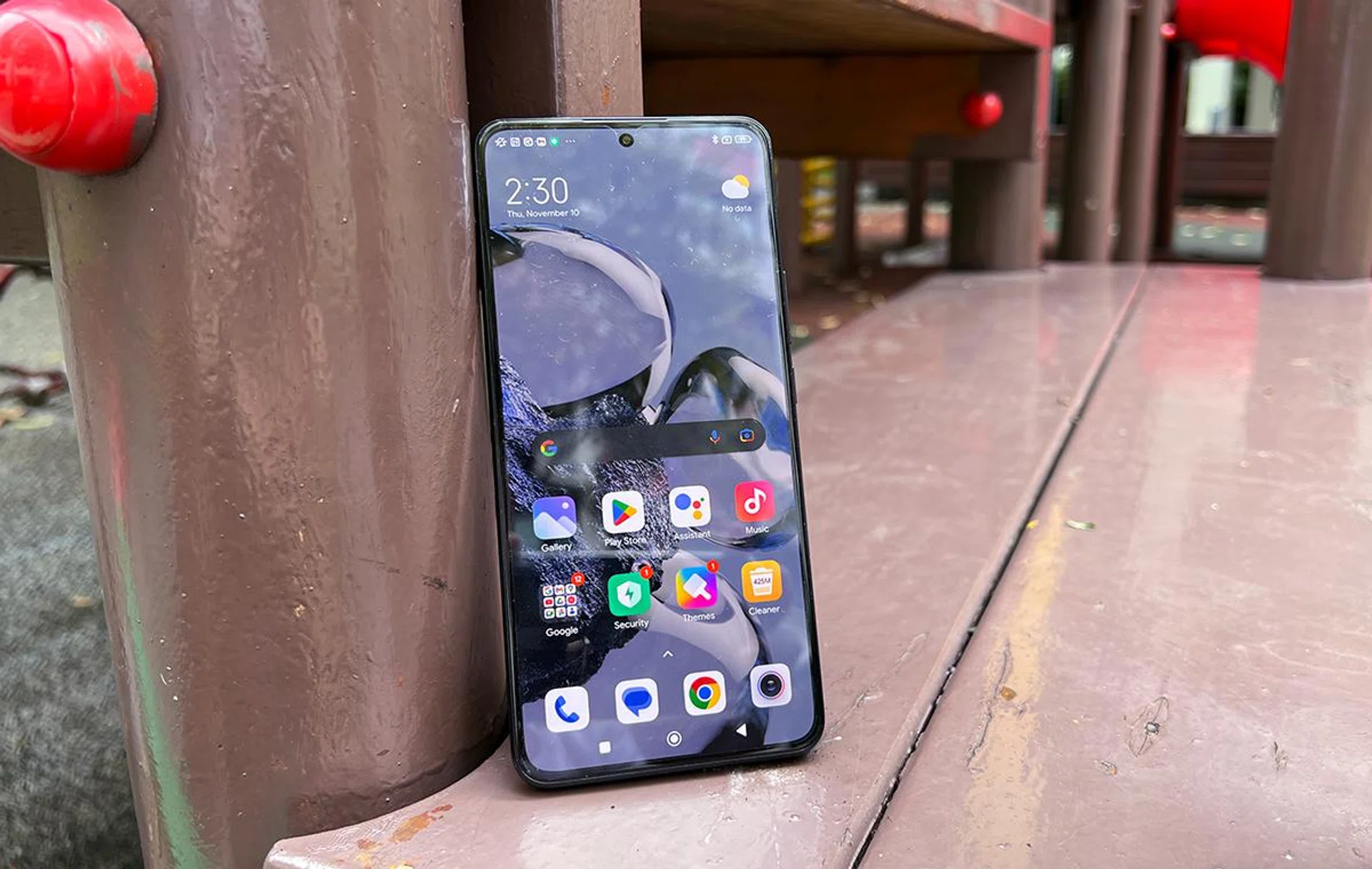
All in, Xiaomi 12T Pro satisfies what it’s designed to offer. You can’t really go wrong with this phone choice if your core focus is on a fluid display, good battery uptime, and a powerful processor in your phone. It's true that there are cheaper, more polished alternatives to choose from, but the Xiaomi 12T Pro is functional in those areas too. It's a good overall package that also convinced us to give our Best Value accolade.
If you want to spend as little as possible and still get a phone with an SD8+G1 processor and all the ‘core’ flagship perks, the Xiaomi 12T Pro is quite literally it (at least in Singapore). In our initial launch coverage, you'll also note that Xiaomi still offers a non-Pro Xiaomi 12T at somewhat similar pricing to the Xiaomi 11T Pro, but you don't get the top-tier treatment like its choice of camera sensors, less memory and trading Snapdragon for a Mediatek processor.
Xiaomi 12T Pro is available at S$1,099 on its official platforms. If you want a greater bargain, you should check out its physical Causeway Point store opening promotion too.
Our articles may contain affiliate links. If you buy through these links, we may earn a small commission.