
Vivo X80 Pro review: A top-notch Android camera phone shooter
Acing our standalone camera phone shootout, does the Vivo X80 Pro manage to excel elsewhere? We find out.

Note: This review was first published on 15 October 2022.
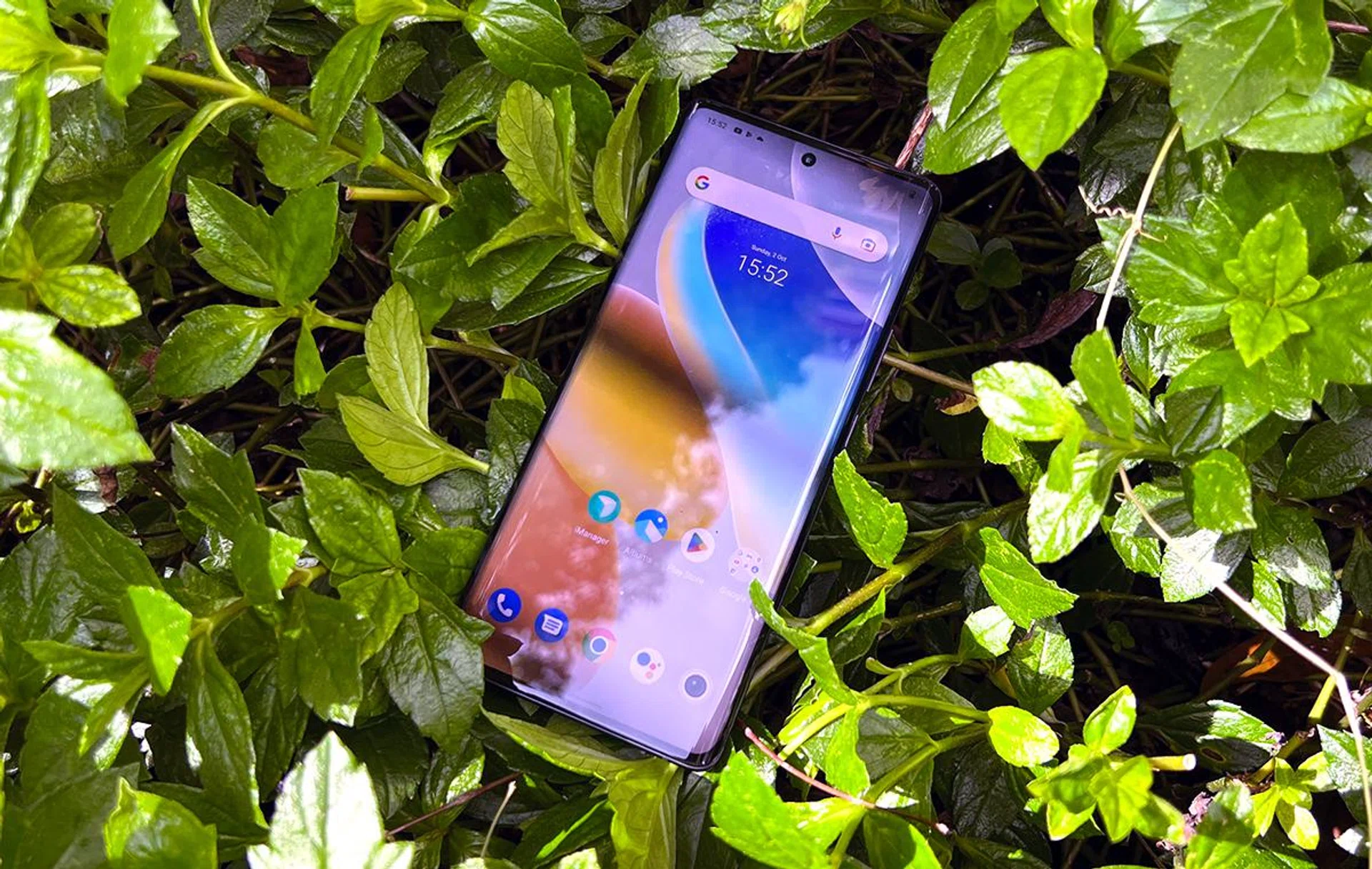
Vivo X80 Pro.
A journey from flagship-lite to true-flagship
Fans of the Vivo X series in Singapore would be familiar with how the Chinese phone brand positioned its variants – there’s a regular, Pro, and Pro+ version up until the Vivo X70 series.
Previously, the Pro+ models weren’t officially available here, which made some buyers extra salty (unhappy) since it was the only variant packing true flagship-grade components. The high-end X60 Pro and X70 Pro we reviewed were nice, but they were fundamentally flagship-lite handsets with prices to match.
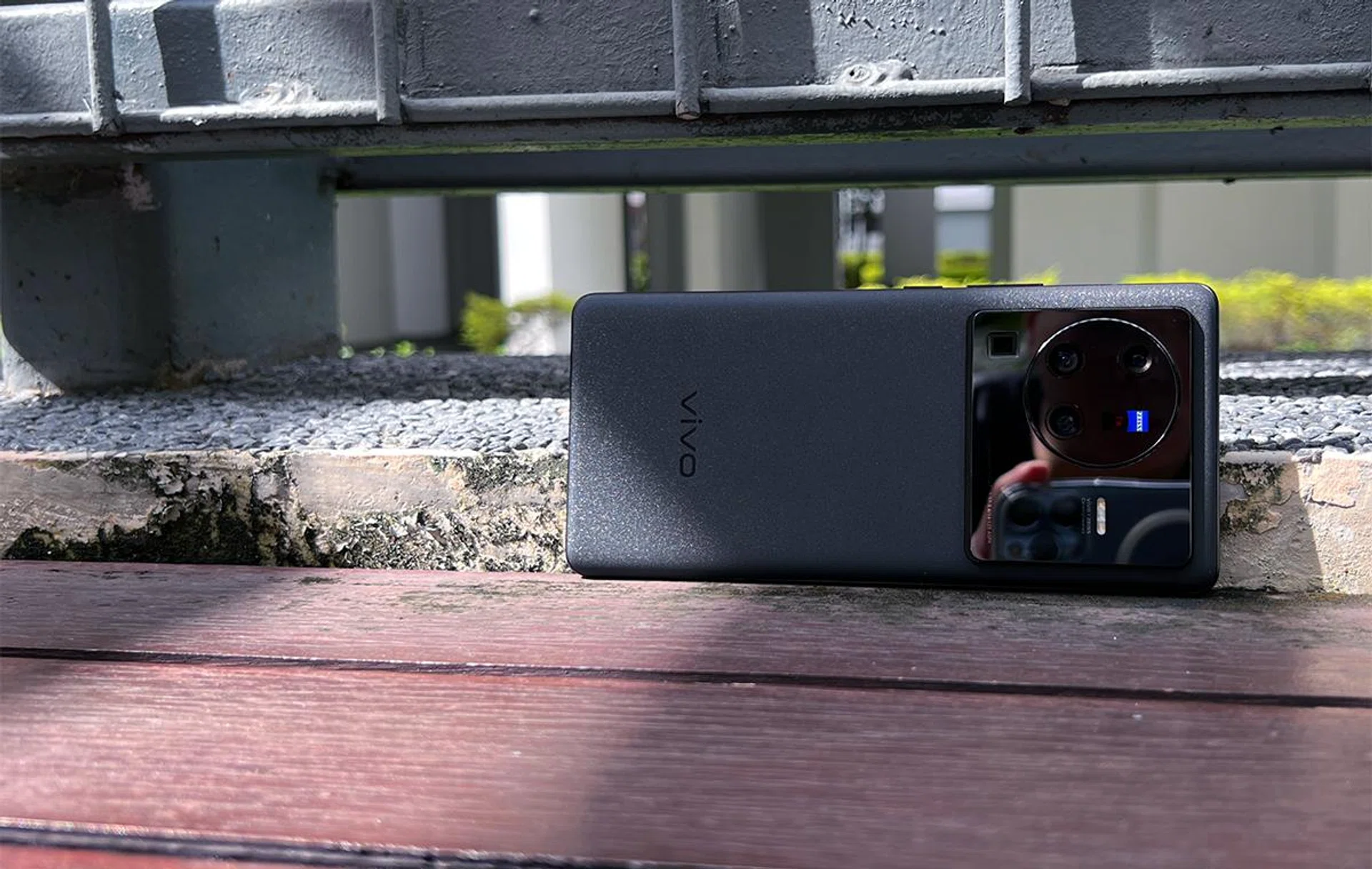
Vivo then shuffled its X80 series around such that the Vivo X80 Pro is now a true flagship phone with a Qualcomm Snapdragon 8 Gen 1, the leading chipset for high-performance mobile phones. With the consistent local availability of Pro models from Vivo, Singapore users can officially get a taste of what Vivo’s flagship-grade quality feels like. The downside is that it places the X80 Pro well within the premium flagship category with a sticker price of S$1,699 before discounts, which is significantly higher than its old S$1,199 Pro phones.
Note: If you’re holding out, there’s a possible Pro+ variant coming much later than the rest of the X80 series, but local availability isn’t guaranteed.
An excellent display to match its asking price
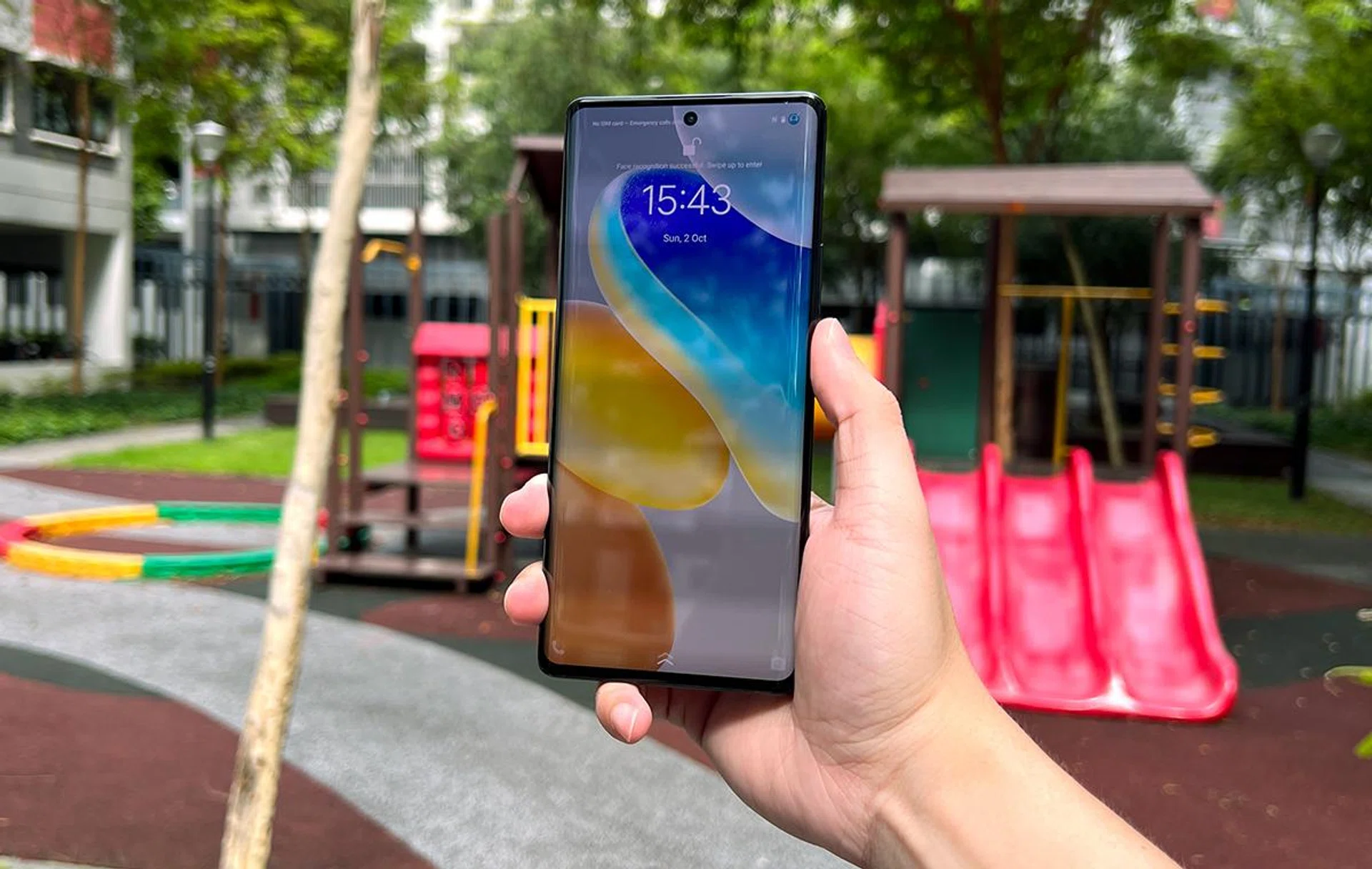
The X80 Pro’s display is specced at WQHD+ (3,200 x 1,440 pixels) resolution, and it takes advantage of its large 6.78-inch AMOLED panel. That’s an overwhelming ~517 PPI of pixel density, and you’d typically not need more than 300 PPI for your mobile content to appear sharp and clear at arm’s length. Vivo knows this, and it actually sets 1080p resolution as the default render resolution – but you can change that in the settings, and we’d expect 1440p for its asking price anyway. There is, of course, the downside of the phone guzzling more power, but you can choose the resolution based on your priorities.
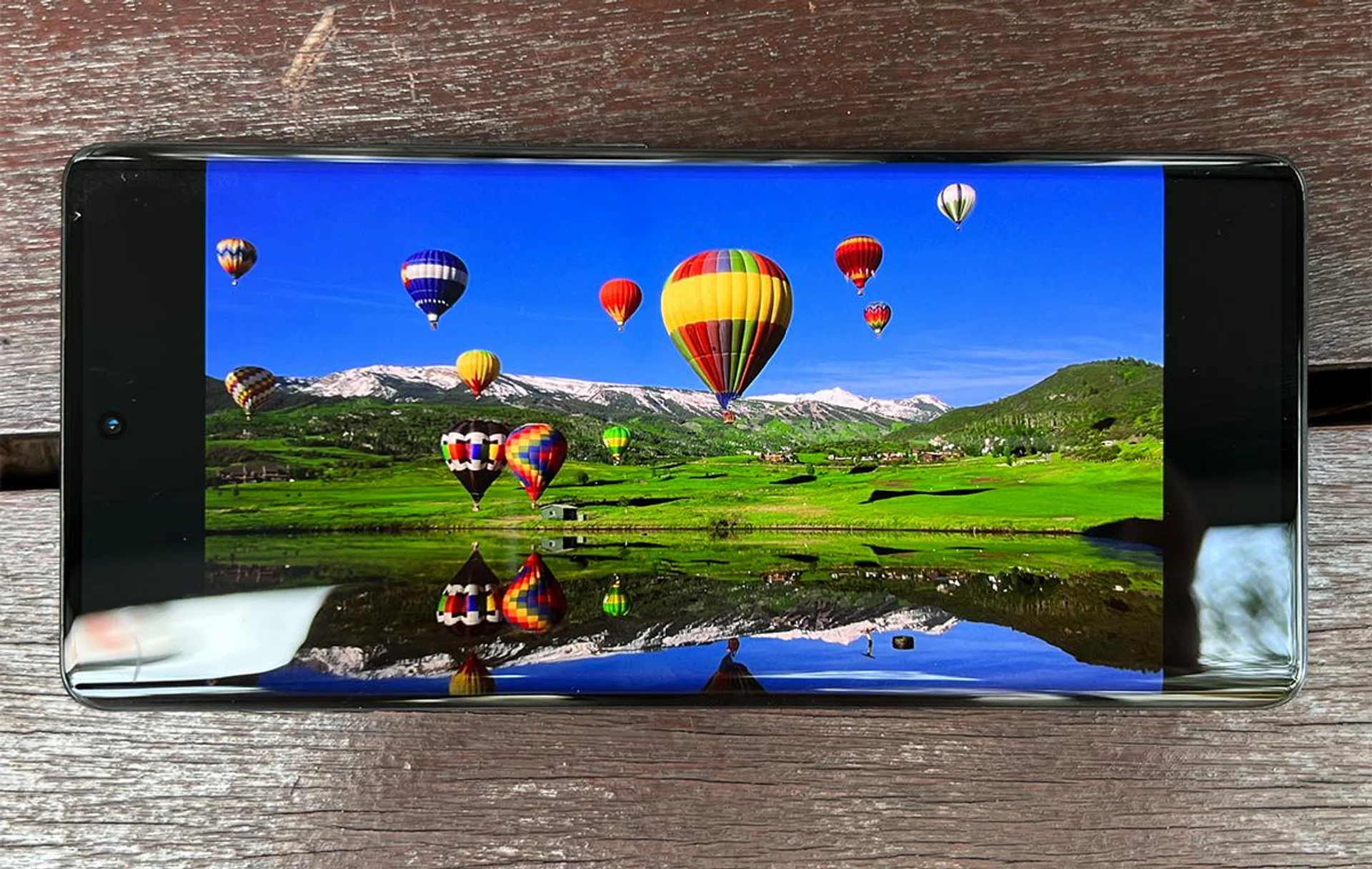
The content looks great with its excellent display that offers vibrant colours, amazing sharpness, and decent brightness control in most situations. We’d even say it’s one of the X80 Pro’s highlights despite Vivo not marketing its display expertise in its advertising.
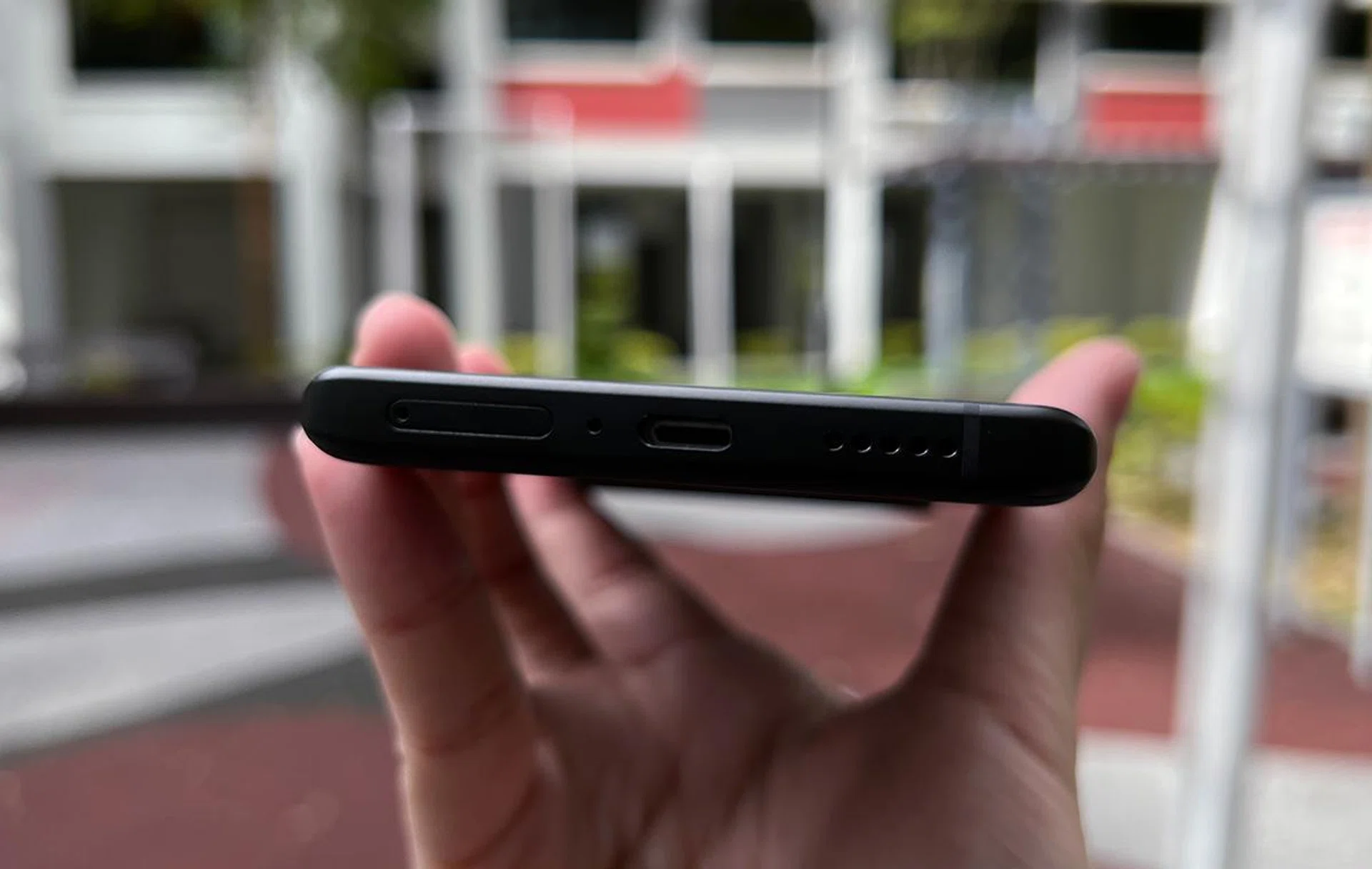
Default audio playback, however, is nothing to write home about. Besides having well-balanced stereo sound from its call speaker and bottom grille, it has a mediocre sound profile and clarity with noticeable bloat in its bass handling.
Fast unlocking, faster animations, all within a kiddy-looking UI
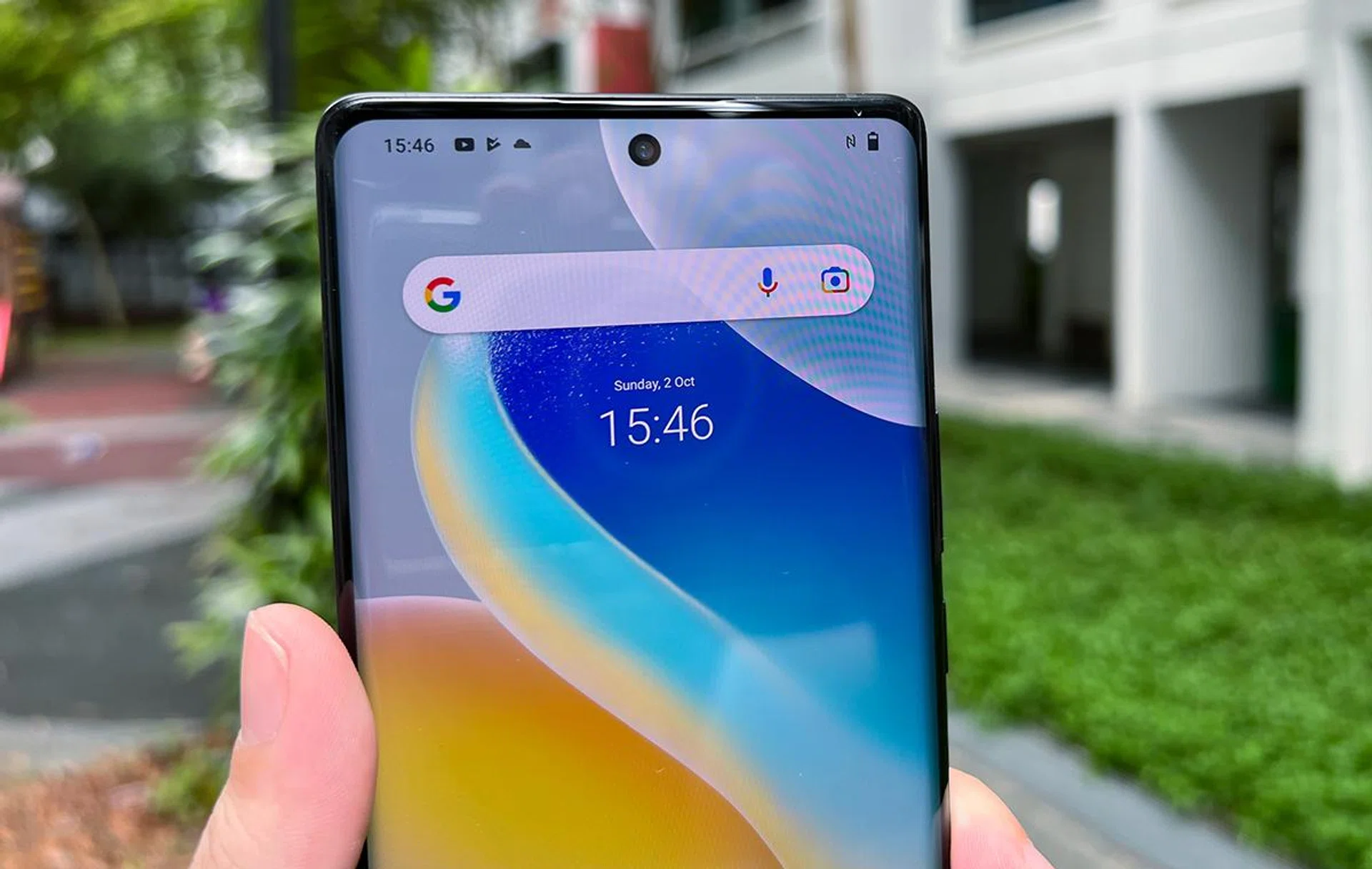
X80 Pro's front camera's is really fast and accurate for face unlocking.
Like most flagship-class phones, X80 Pro has quality-of-life features like Always-On Display, Eye Protection, Dark Mode, and personalised animations, but these perks aren’t activated by default either. If you haven’t already, it’s always good to give the Settings app a once-over to get all the perks of the device.
We liked its blazingly fast face and under-display fingerprint unlock, which feels secure and accurate (at least, we couldn't bamboozle either sensor when we wanted to). It never takes more than a single try with the correct face and finger, plus it denies entry if it’s not the owner’s registered biometrics.
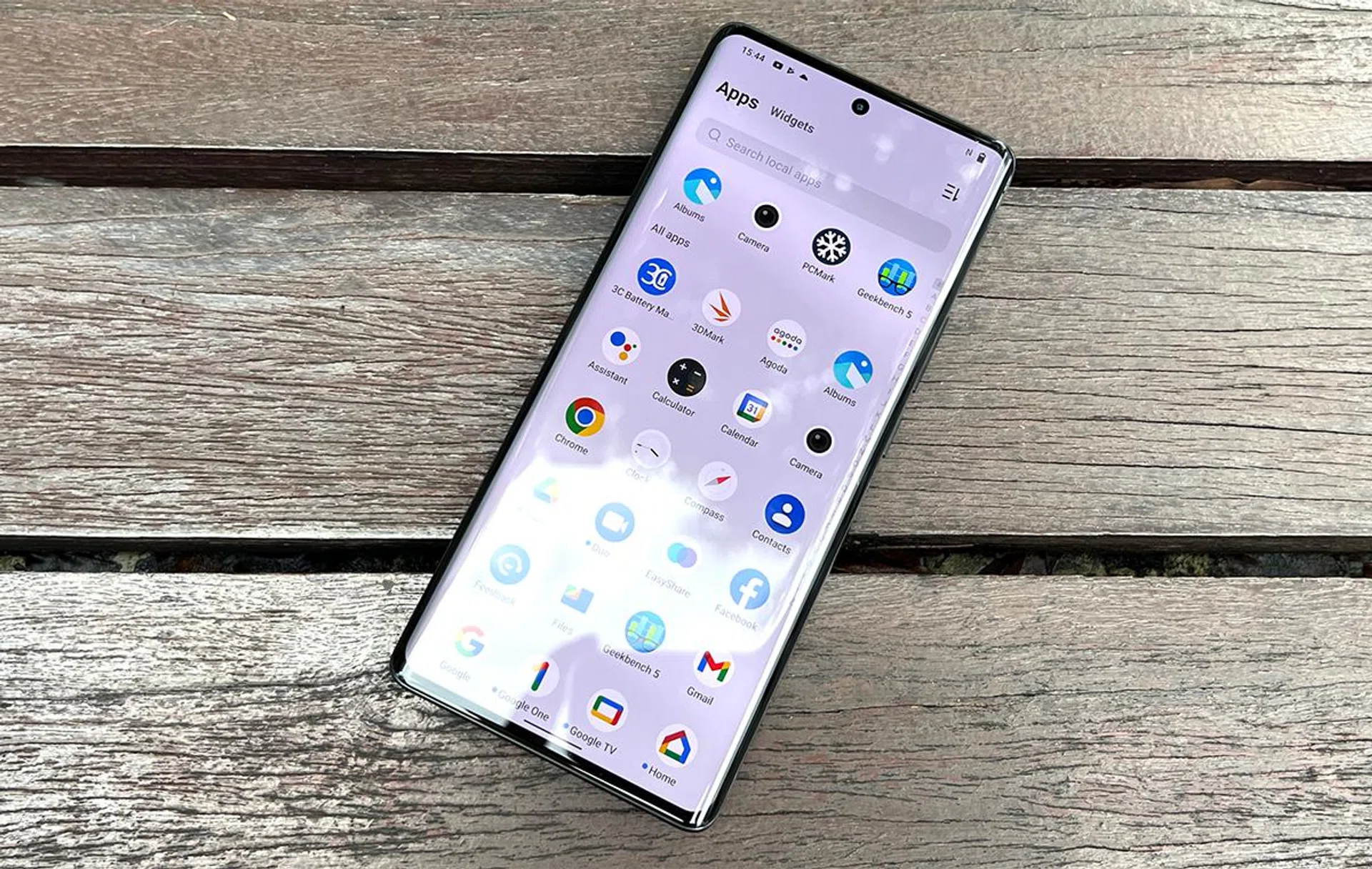
Funtouch OS 12 itself (the Android 12 reskin for Vivo devices) cuts across all Vivo’s smartphones, so its circular app icons and juvenile theme should be a familiar experience even for stock Android users. Most of the interface feels pleasant and natural with generous spacing, thick white bar-shaped notifications, and congruent circular logos for anything that requires toggling. It’s also relatively light on bloatware, which helps the X80 Pro’s overall premium positioning too.
It would’ve been excellent if not for its inconsistent font and font sizes and oddly childish default theme. It also has minor UI issues, like missing volume indicators in TikTok and other app quirks.

The rest of Funtouch’s customisation comes from its animations, which you can tweak in the Settings app. The animation styles provide enough variety for users of any other Android reskin (or even iOS converts) to feel comfortable with Vivo X80 Pro past the initial setup stage. We chose faster animations across the board to make the phone feel even more fluid and responsive than default.
High build quality with odd handling
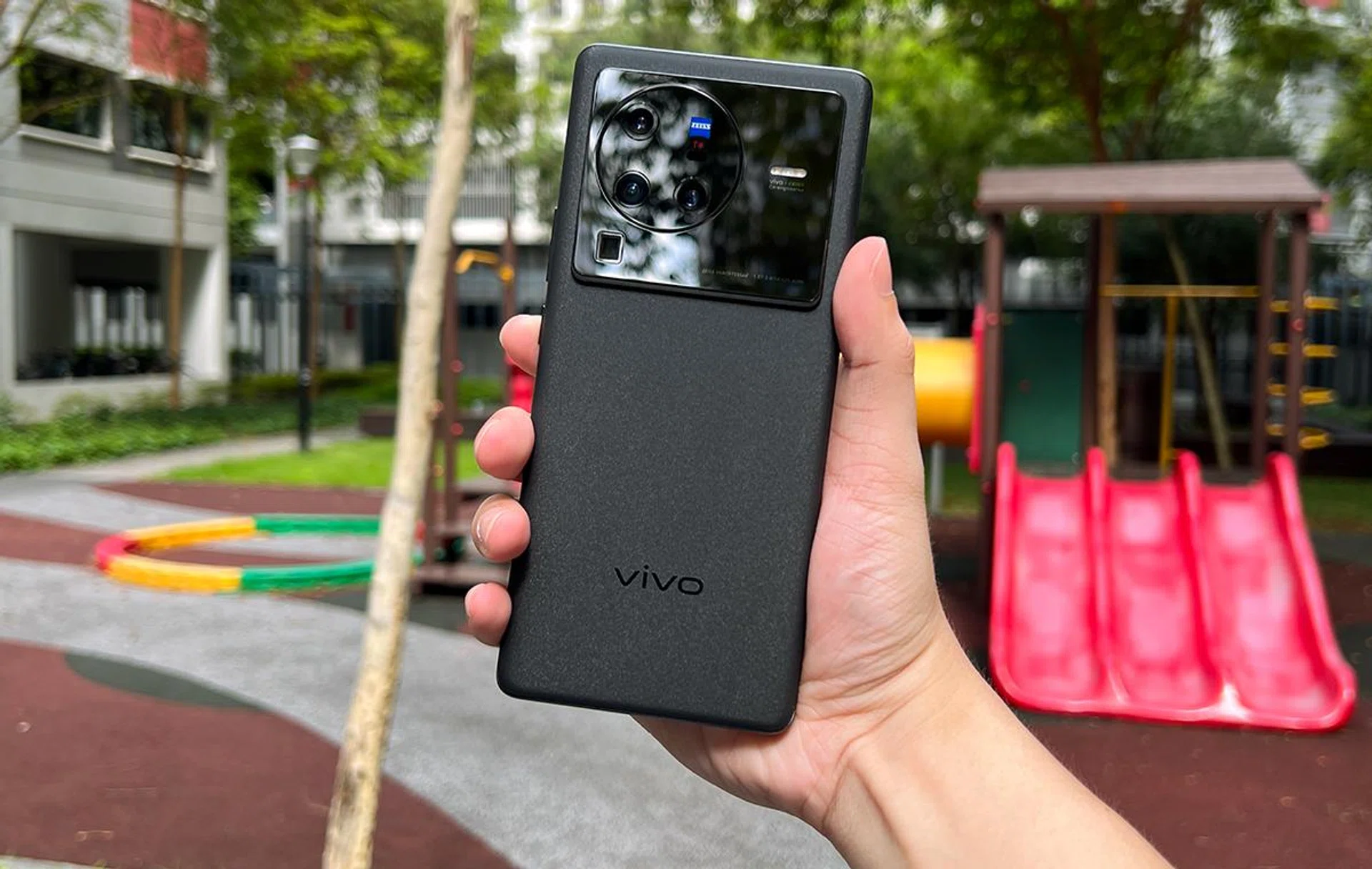
Our gripes with the X80 Pro largely lie with its design choice. The phone is slim and provides a good grip on its sides even without a casing, but its shimmery rear is smooth and prone to sliding out of your hands. An entire quarter of the rear makes up its rectangular camera housing. That’s visually pleasant, but it’s a pain when you’re trying to avoid fingerprint smudges or scuffing it up by accident.
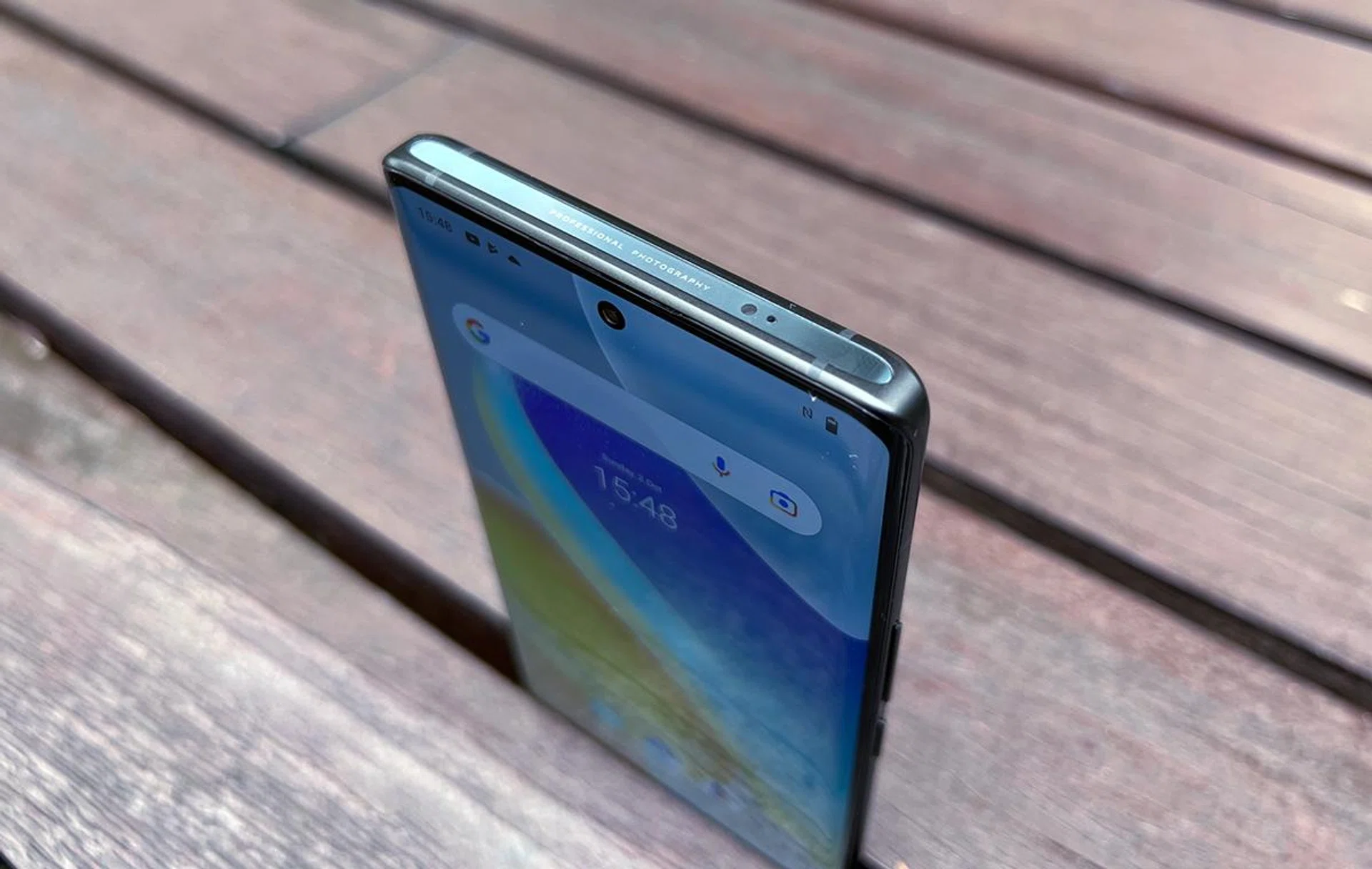
The thin volume and power buttons are not easy to distinguish by touch alone, and the gap between both buttons feels insufficient (Vivo could’ve fixed this by placing one of the buttons on the opposite side).

Fortunately, the premium heft from its 219g body and first-rate build quality make up for these design choices and handling missteps. Another likeable design trait is the thoughtful minimisation of black rims when you face the panel squarely. It feels nearly invisible, yet present enough to help frame your content nicely for extra viewing comfort. Build quality also gets the basics right, like having IP68 ingress protection rating for this pricey device.
Imaging
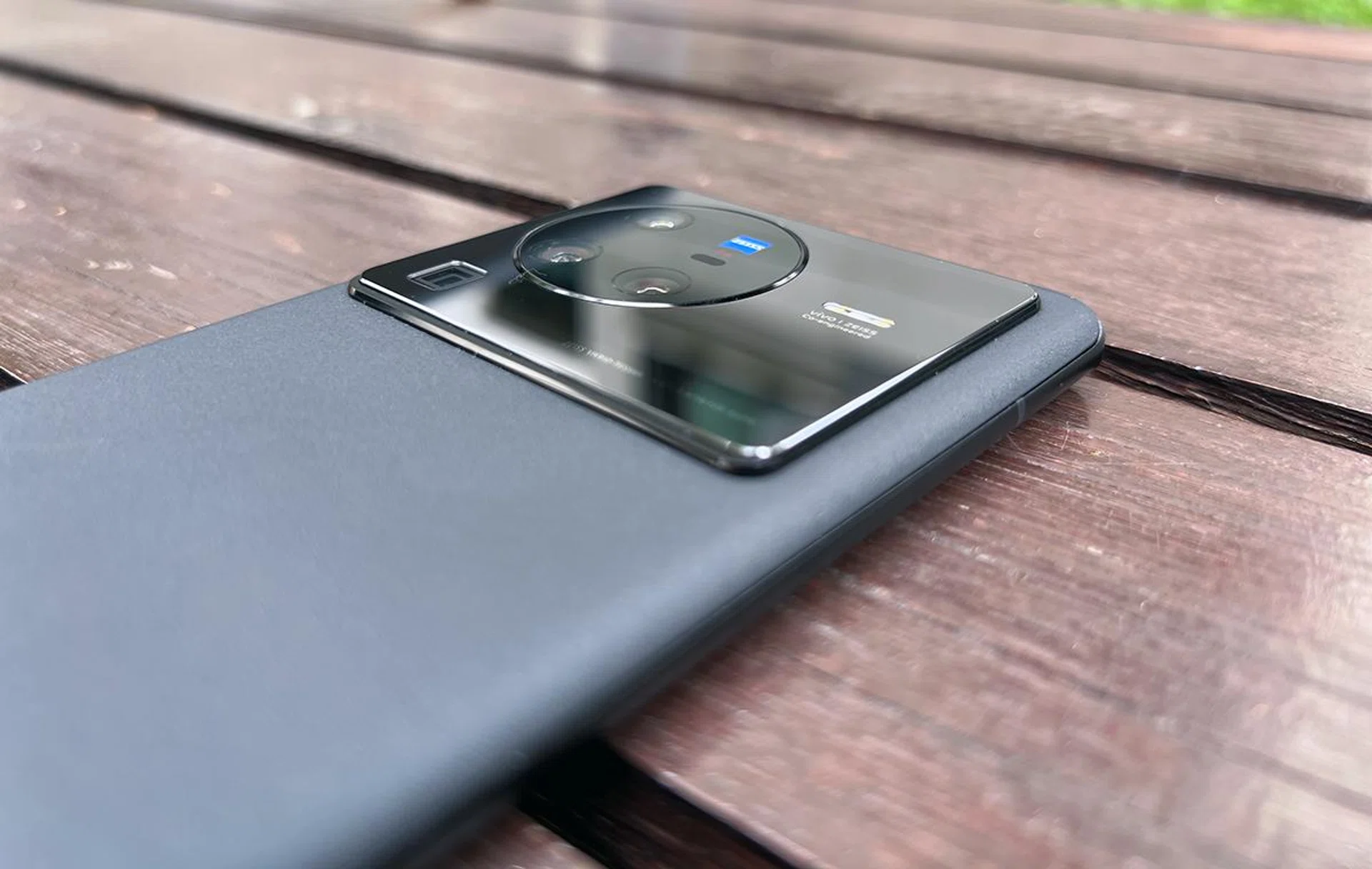
Before we dive into the features, here's what the Vivo X80 Pro has for its imaging chops:
- 50MP main camera, f/1.57 aperture, ZEISS Gimbal Portrait Camera, OIS
- 48MP ultra-wide, f/2.2 aperture, Macro shooting
- 12MP Portrait, f/1.85 aperture, 2x optical zoom (when compared to main camera lens)
- 8MP Periscope telephoto, f/3.4, 5x optical zoom
- ZEISS Gimbal Portrait Camera + Optical Image Stabilisation + Electronic Image Stabilisation
In summary, it has four rear cameras, two of which provide 2x and 5x optical zoom respectively, and the 12MP Portrait Camera gets built-in gimbal stabilisation (instead of its ultra-wide like before). X80 Pro also offers 60x digital zoom, and its ultra-wide also comes with macro shooting.

Main camera.

Ultra-wide-angle camera.

2x optical zoom.

5x optical zoom.
X80 Pro also gets some additions to one-up its competition. Beyond its 50MP “Ultra-Sensing” main camera is an additional, dedicated Vivo V1+ imaging chip that uses AI to process graphic and image workloads, like photography/videography/video gaming. It’s also one of the few brands that bothered with an imaging partnership with ZEISS, with the other notable brand here being Xiaomi with Leica.

ZEISS's cinematic bokeh filter applied on this portrait shot. The t-shirt matching the phone's design was not on purpose.
The ZEISS enhancements are the four different Portrait Shot filters you can use to get different bokeh shapes and styles, letting you use the background as an artistic element in your selfies (they are Cinematic, Biotar, Distagon, and Planar style bokehs).
These ZEISS options are limited to rear camera Portrait shots; you’ll have to rely on Vivo’s default filters for front camera selfies. The filters are also pretty aggressive, so your ZEISS shots will turn out mildly artificial with digital artefacts around the subject.

Macro shot (via ultra-wide-angle camera). Note that this is an ixora, with 4-5mm large petals, so this is a genuine macro shot unlike what your eyes tell you. We'll take note to insert a reference item in future for better spatial awareness.
If you’ve been following our content, you’d also know that the Vivo X80 Pro did very well in a flagship phone camera shootout quite recently. We’ve covered in great detail what X80 Pro’s cameras can and cannot do relative to other possible rivals available on our sunny island.
On its own, the X80 Pro grants impressive imaging capabilities, and most users would not have any major issues with its resulting photos and videos. It offers semi-true-to-life colour reproduction and has decent handling over noise and detail. The extra optical zoom lenses also help to ensure sharp images even when shooting from a distance. Also, the default camera app's interface is easy to understand (for us), but the huge variety of preset options may be overwhelming for users who aren't as well-versed in camera controls.
Like most alternatives, its high zoom mode (60x digital) is also not practical, but you still have plenty of photography modes like ultra-wide, its 2x and 5x zoom, the macro option, and the standard main camera to fulfill 99% of your imaging and recording needs.

Main camera.

The ultra-wide-angle camera is so wide that we got other people's hanging "teh khor" in the shot and had to retake it.

2x optical zoom.

5x optical zoom.

60x digital zoom, with stabilisation.
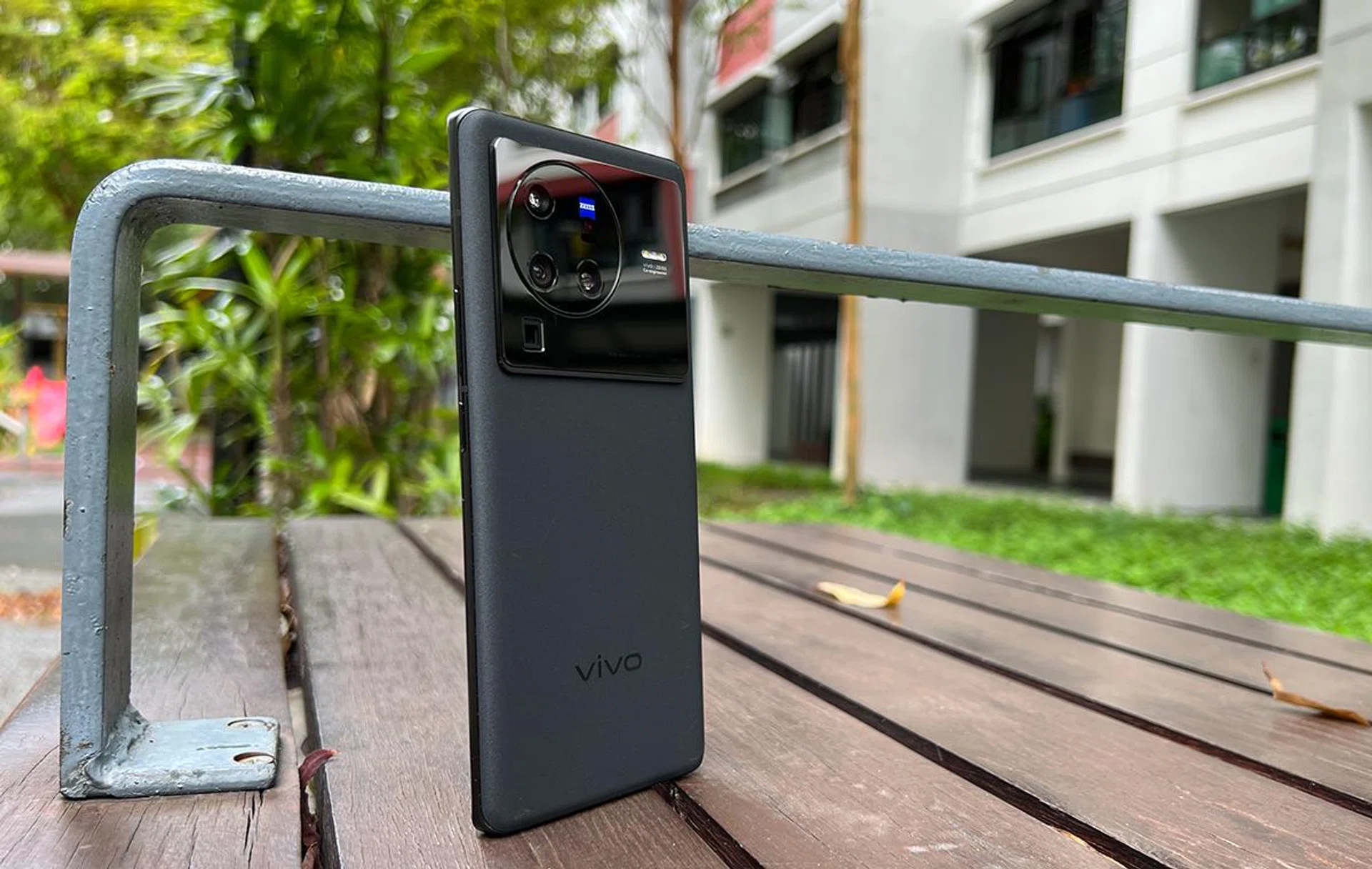
Vivo X80 Pro.
Benchmark Performance
A notable change to the Vivo X80 Pro is the choice of processor. Previously, the X series’ Pro models used near-flagship or “flagship-lite” mobile platforms and reserved true flagship hardware for its Pro+ variant. This has changed, and the X80 Pro touts a Qualcomm Snapdragon 8 Gen 1 chipset inside.
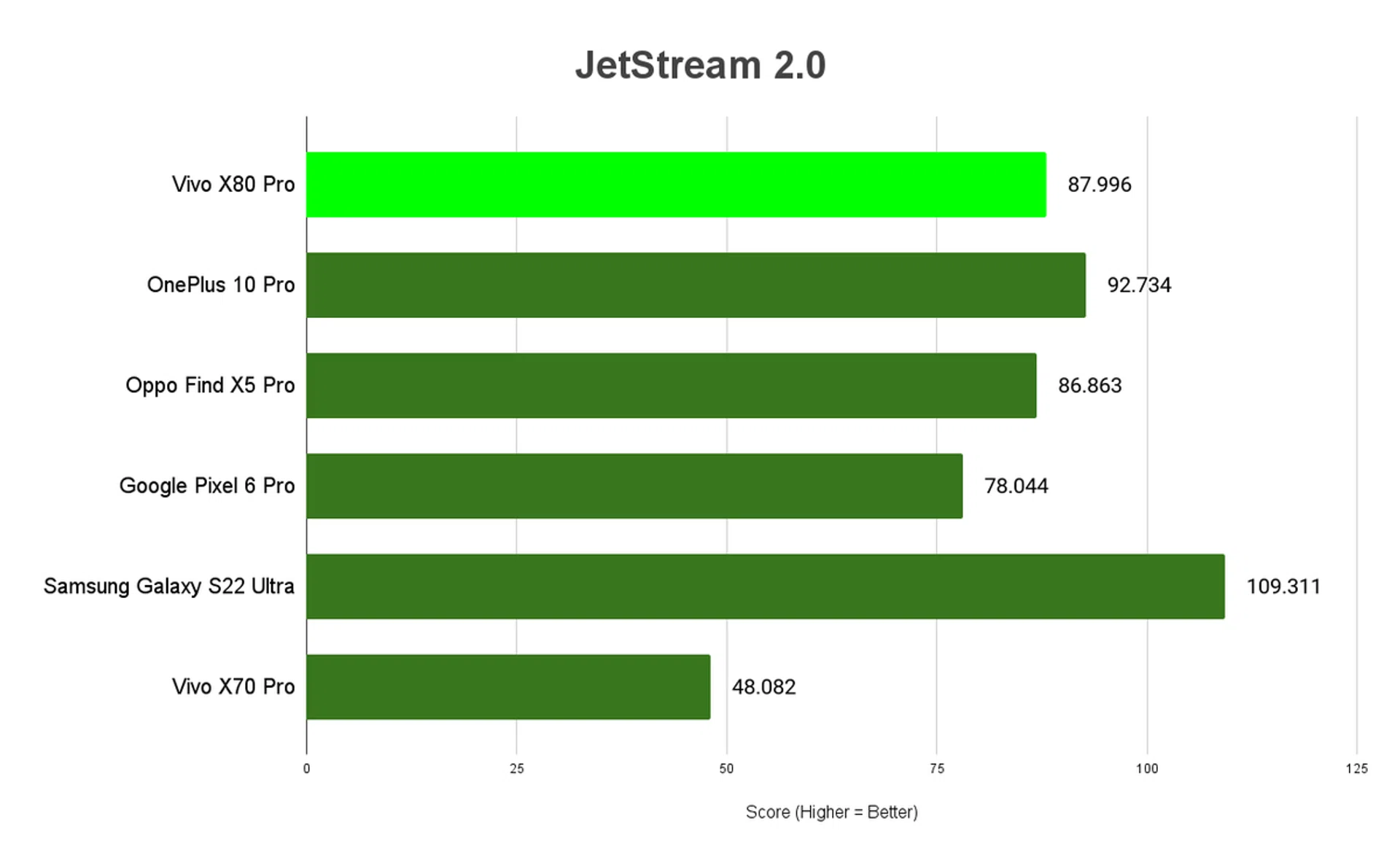
This puts it on the same playing field against the other SD8G1 alternatives we have here (Samsung Galaxy S22 Ultra, Oppo Find X5 Pro, to name a few), along with options that uses homebrew flagship-class processors (Apple Silicon and Google Tensor).
JetStream 2.0
JetStream 2 is a combination of a variety of JavaScript and Web Assembly benchmarks, including benchmarks that came before like SunSpider and Octane. It primarily tests for a system’s and browser’s ability to deliver a good web experience. It runs a total of 64 subtests, each weighted equally, with multiple iterations, and takes the geometric mean to compute the overall score. The higher the score, the better.
Geekbench 5
Geekbench CPU is a cross-platform processor benchmark that tests both single-core and multi-core performance with workloads that simulate real-world usage. Geekbench 5 scores are calibrated against a baseline score of 1000, which is the score of an Intel Core i3-8100. The higher the score, the better.

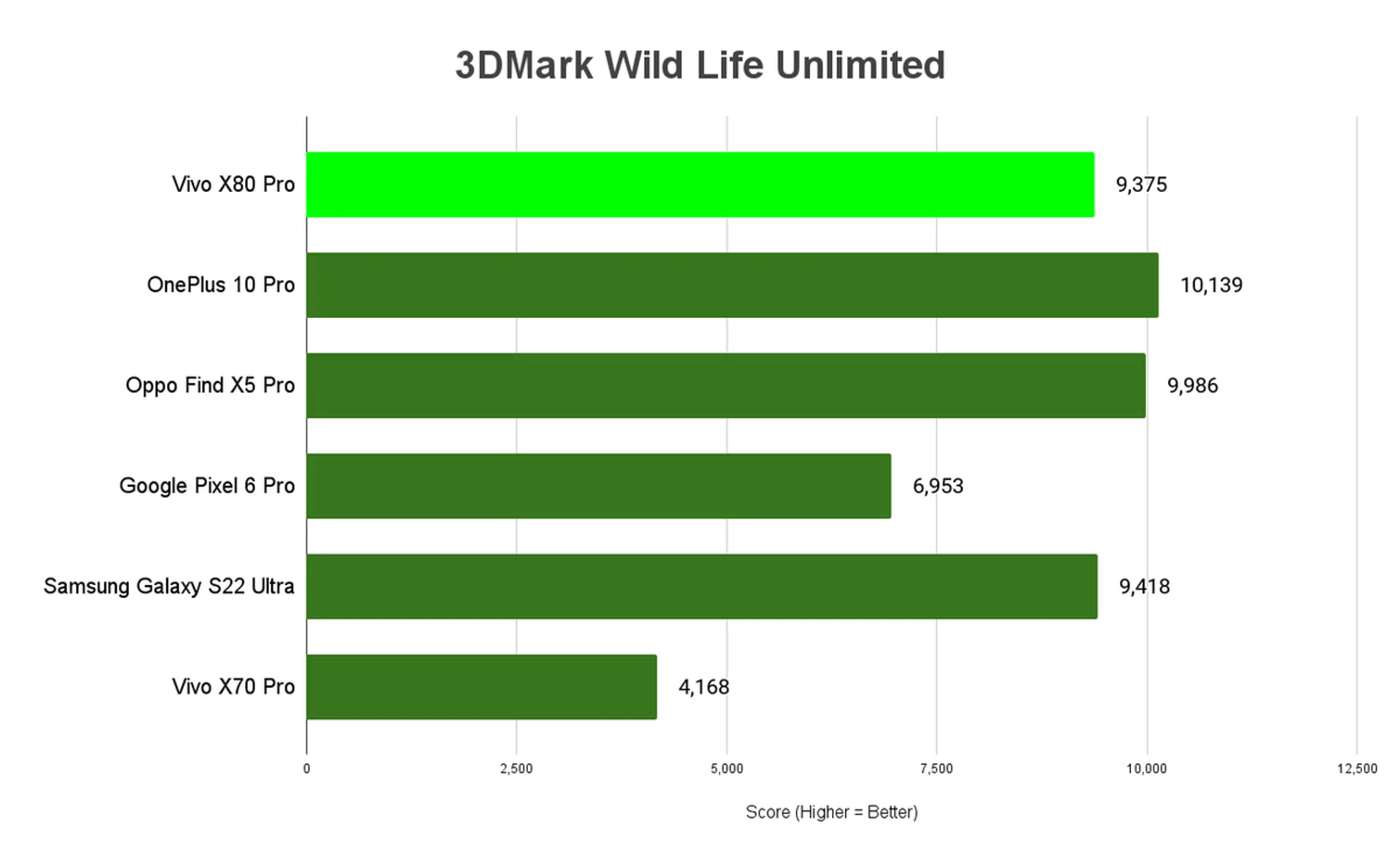
3DMark Wild Life (Unlimited)
3DMark Wild Life is a cross-platform benchmark for Windows, Android and Apple iOS for measuring GPU performance. Its graphics test consists of multiple scenes with variations in the amount of geometry, lights and post-processing effects, mirroring mobile games that are based on short bursts of intense activity. Wild Life uses the Vulkan graphics API on Windows PCs and Android devices. On iOS devices, it uses Metal.
In Unlimited mode, the benchmark runs offscreen using a fixed time step between frames. Unlimited mode renders exactly the same frames in every run on every device, regardless of resolution scaling. The higher the score, the better.
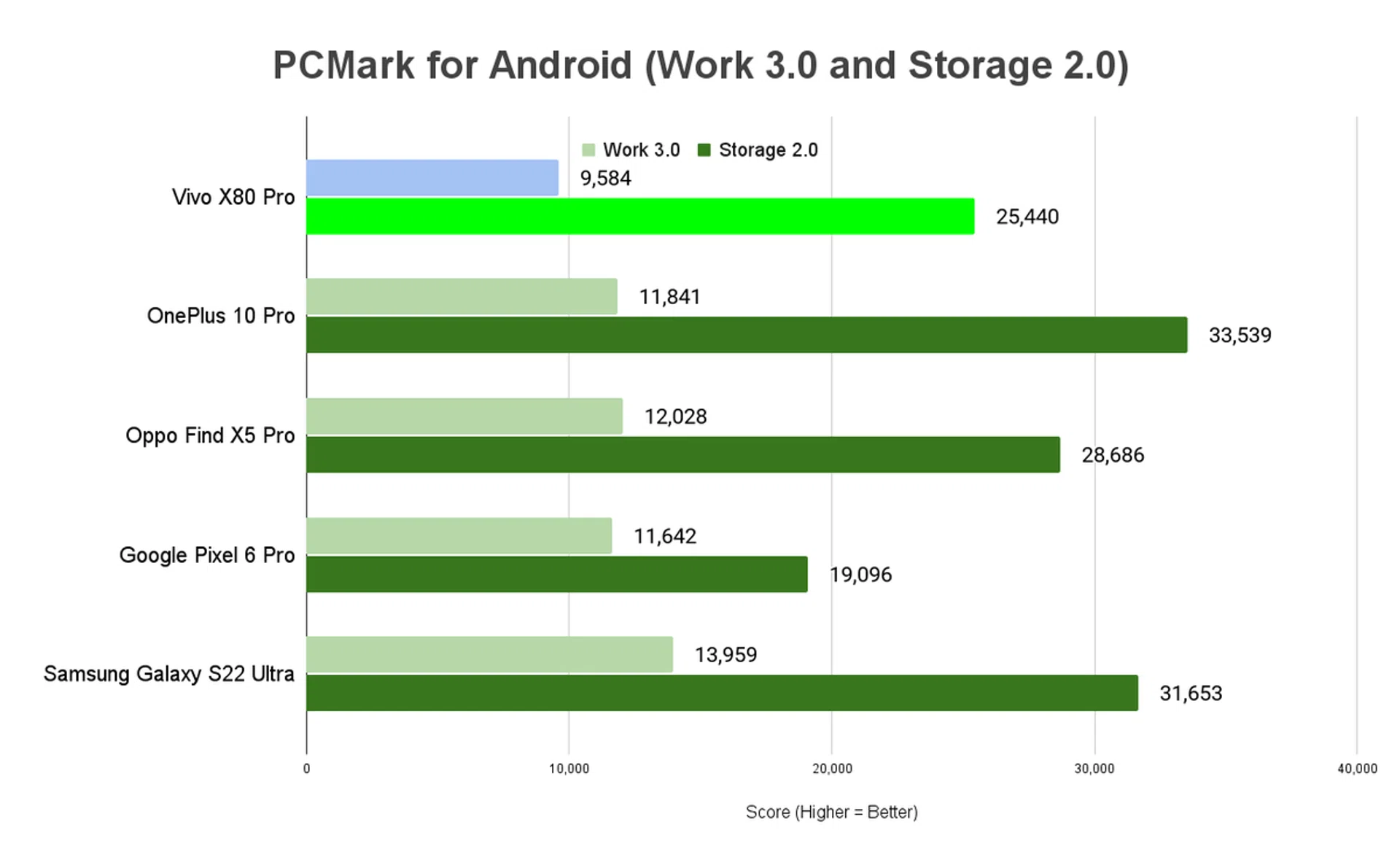
PCMark for Android - Work 3.0 and Storage 2.0
PCMark for Android is a benchmark for testing the performance of Android phones and tablets. The Work 3.0 test checks how the device handles common productivity tasks such as browsing the web, editing videos, working with documents and data, and editing photos. Storage 2.0 checks write-in and read-out performance for internal storage, external storage (if applicable), and SQLite database management. Together, the benchmarks can clue us in on how capable a phone handles everyday use. Work 3.0 scores are above, while Storage 2.0 scores are immediately below for each device - the higher the score, the better.
Benchmark Performance remarks
While the Vivo X80 Pro is undoubtedly powerful thanks to the Snapdragon 8 Gen 1 (SD8G1) within, we noticed that the scores tended to be lower than the ones found on other SD8G1-equipped Android smartphones. In our test runs, we also noticed severe performance throttling and aggressive heat management on-device, which likely also affected the synthetic numbers. The X80 Pro took great effort to ensure the phone was never too warm to the touch, regardless of the app or tests conducted.
The good news is that in real-world use, it’s not much different from other SD8G1 alternatives, although the performance gap becomes clearer with heavy, intense-use apps (like recording a video, editing, or mobile gaming on graphically intense games).
Battery Life
Our standard battery test for mobile phones has the following parameters:
- Looping a 720p video with screen brightness and volume at 100%
- Wi-Fi and Bluetooth connectivity turned on
- Constant data streaming through email
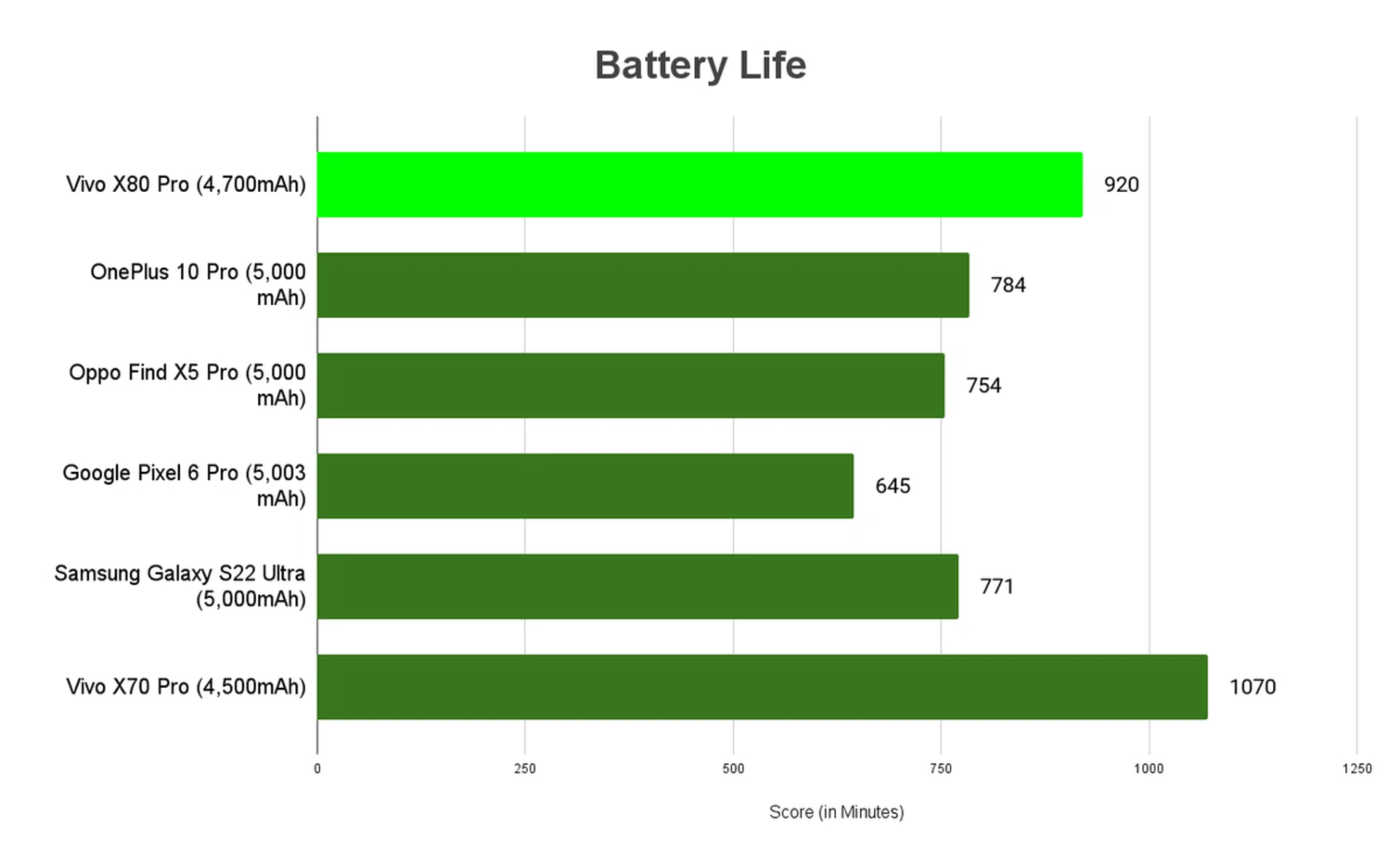
Vivo X80 Pro comes loaded with 4,700mAh battery, increasing from X60 Pro's 4,200mAh and X70 Pro's 4,500mAh. It didn't last as long as the X70 Pro, but clocking in 920 minutes (15 hours 20 minutes) is still really good among other SD8G1 alternatives. We suspect that the aggressive throttling and heat management (see Benchmark Performance remarks above) are the main factors to the Vivo X80 Pro’s excellent battery life.
It took 113 minutes (1 hour 53 minutes) to get a full charge from 0% with a third-party 40W charging adapter. Why didn't we try with Vivo's very own charger? That's because the brand consistently clocks in ultra-fast charging with its own adapter, to a point where it wasn't really necessary to revisit Vivo's charging expertise. It even comes with 50W wireless charging capability, which is compatible with the free 50W wireless charging dock Vivo typically throws in as a freebie for their purchases.
Unlike most flagship alternatives these days, the Vivo X80 Pro still comes with an 80W Vivo FlashCharge charging adapter in the box. It makes the hefty price tag easier to swallow, and yet it still tries to be environmentally friendlier with an all-cardboard box packaging. Other brands should understand this: you can still be kind to our planet without sucker-punching your customers by leaving out a fast-charging adapter. A sticker price reduction for omission is also acceptable in our books, but that never translates into reality. In this regard, we're quite liking Vivo's complete out-of-the-box experience.
Should you get the Vivo X80 Pro?
Seeing the Vivo X series model committing to a massive price jump (from X60 Pro and X70 Pro’s S$1,199 to X80 Pro’s S$1,699) might put some buyers off, but that’s only if you have a budget to stick to, or don’t really care for specifications.
Both its hardware and user experience are actually in line with its asking price. It’s very much a premium flagship product like your Oppo Find X5 Pro, with perks like a great display, impressive battery uptime (plus juicing up extremely fast) and wonderful imaging capabilities that eclipse many rivals.
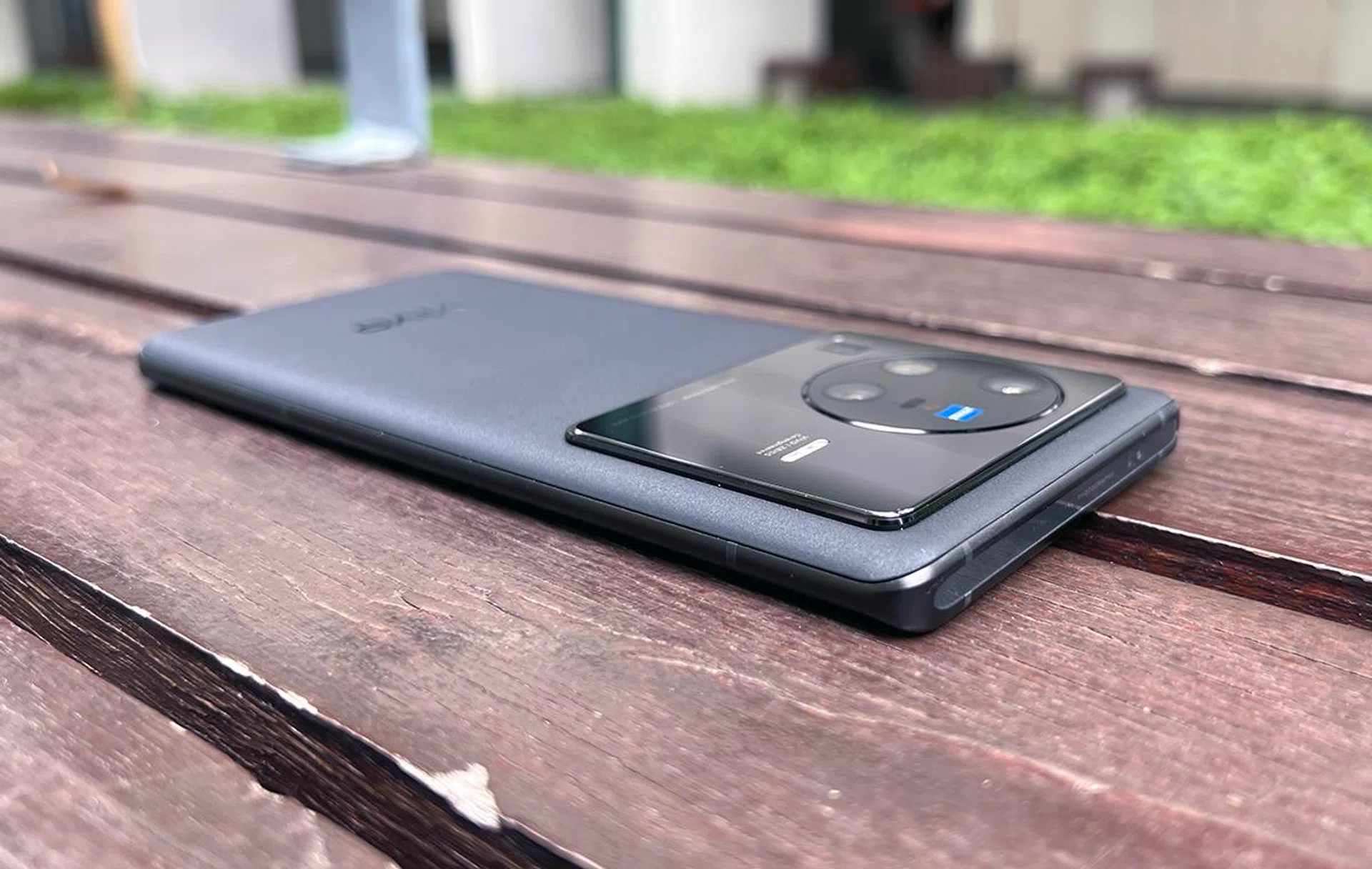
As an Android phone with 5G network support, we’d recommend the Vivo X80 Pro to people who don’t mind its user interface and design. That’s because it fulfils the core expectations out of a premium flagship phone with decent customisation options to make its UI and handling more bearable. It doesn't look like a flagship mobile, but it sure feels like one in hand.
The X80 Pro could be ideal for an Android user who likes a responsive device with little to complain about its screen, photography chops, and battery life. Above all, in our books, the X80 Pro is an extremely competitive shooter for photos and video coming ahead of many other flagship phones we've compared. If you're a supporter of Android phones and simply want the best camera phone shooter, Vivo's X80 Pro is an easy recommendation. It's also a complete gift option because the phone comes with a super speedy charger in the box. Just remember to get a nicer-looking phone casing to accompany the phone.
Of course, the likelihood of the X80 Pro being your ideal smartphone would diminish if your needs are niche or extreme (no frame drops while playing Genshin Impact or Tower of Fantasy, having it as a productivity/work phone, wanting the cleanest Android experience possible, wanting a smaller phone, etc.). Beyond that, it’s mostly a good device once you've given its settings section a once-over.
That said, S$1,699 is still highly priced, even for its premium classification. Among Android 5G handsets, it's also barely cheaper than the Samsung S22 Ultra while being more expensive than many other options. For this reason, we had to mark down its value proposition. Fortunately, Vivo does make an effort to run regular promotions and campaigns to help make the X80 Pro more palatable.
If you're ready to pick up a Vivo X80 Pro, it is officially available via our major telcos (M1, StarHub), the Vivo official store on Lazada and Shopee, Vivo's Concept Store at Bugis Junction and Causeway Point, and other consumer electronic store partners (Best Denki, Challenger, Courts, Gain City, and Harvey Norman).