

Steroid for Ultrabooks
Unveiled just last month at CES 2013, Japanese firm Plextor has wasted no time in getting their M5M mSATA SSD out into the hands of the public.
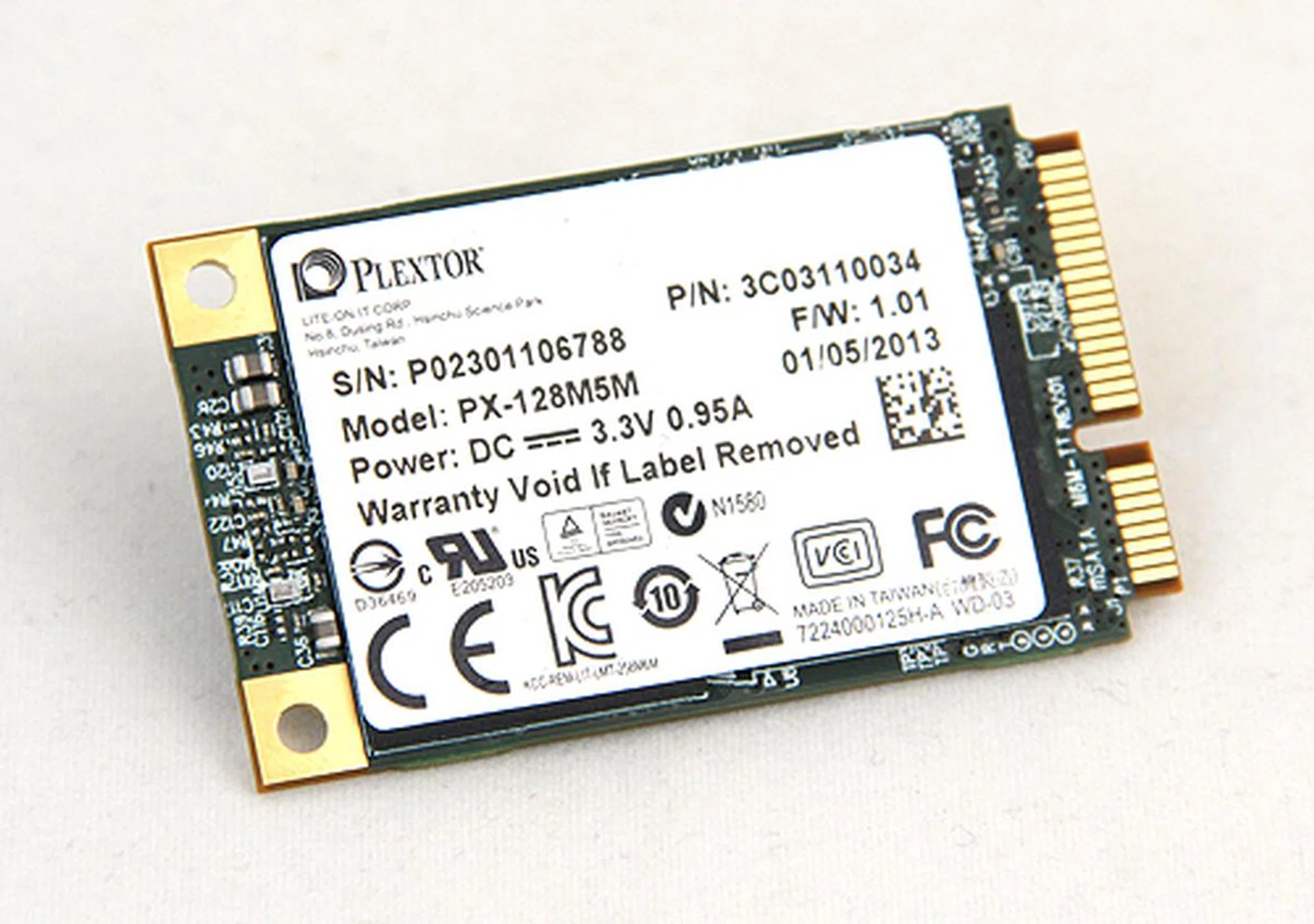
The Plextor M5M mSATA SSD uses the mSATA drive form factor and it is incredibly compact, measuring just about 5.1cm long and 3cm wide. Incredibly, the drive weighs just 9 grams! Of course, it's just a PCB designed for the mSATA form factor with flash chips, so its physical traits sound just about right.
The drive was designed for enthusiasts who are looking for a bit more oomph in their Ultrabooks. In terms of components, the M5M is identical to Plextor’s current flagship - the Plextor M5 Pro Extreme - which we reviewed in September last year. The M5M uses the same Marvell 88SS9187 controller and also 19nm Toggle-Mode MLC NAND from Toshiba. The firmware is also Plextor’s own. These top notch components should make for a fast drive.
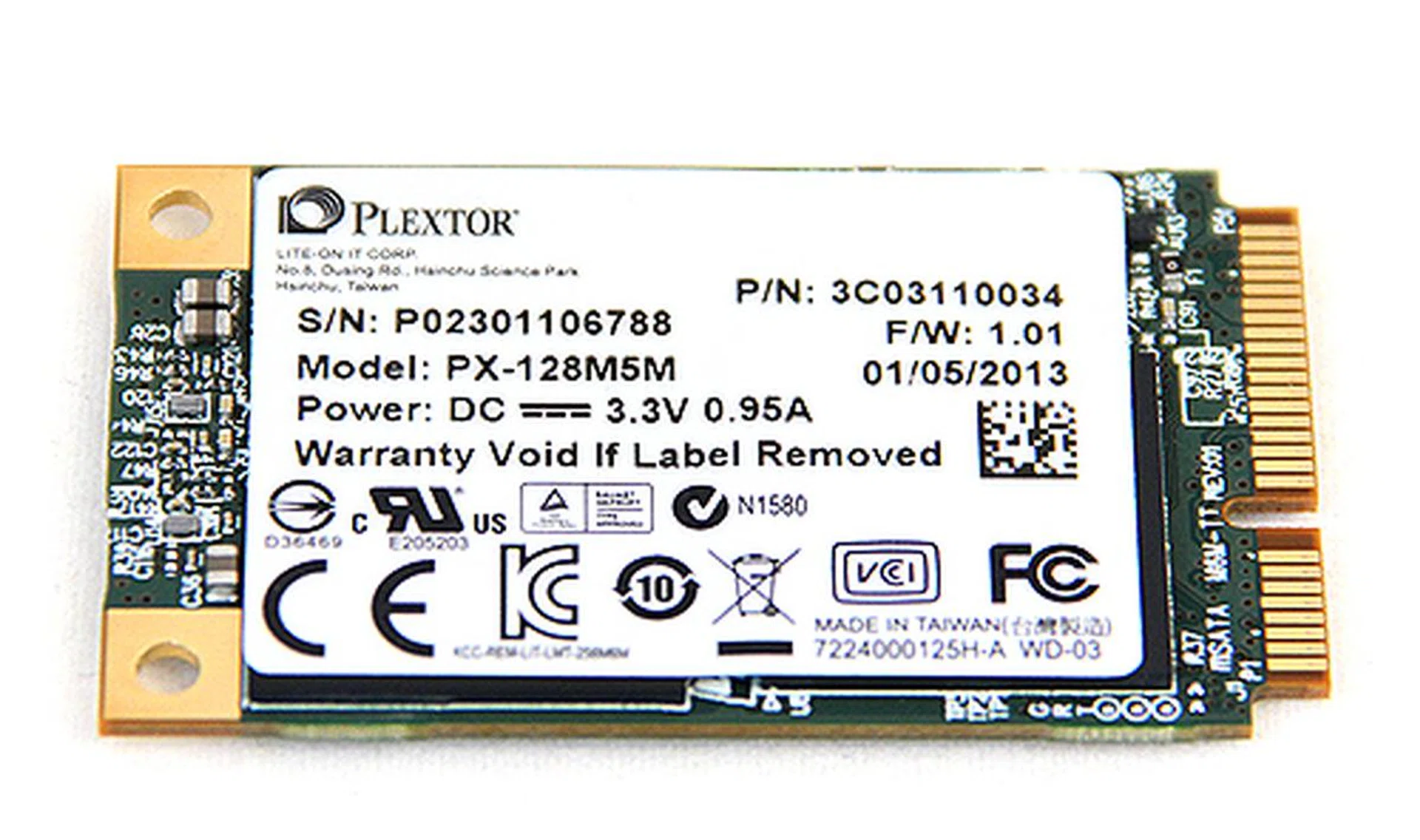
The Plextor M5M aims to provide the same kind of performance that the flagship M5 Pro provides but in a smaller form factor.
Additionally, the drive also features Plextor’s True Speed and True Protect technologies. True Speed ensures maximum and sustained performance and works to prevent speed drops which may affect performance. This suite of technology comprises the use of Marvell’s SS881987 controller, top quality NAND and Plextor’s exclusive firmware. True Protect uses 128-bit error protection code to ensure data is stored properly and the drive also has full 256-bit AES drive encryption.
Despite the much smaller form factor and denser memory chips, the dip in claimed performance isn’t that drastic. Sequential speeds are still comparable, but random access performance takes a more significant dip. The 128GB M5M’s sequential read and write speeds of 540MB/s and 320MB/s are not that far off from the 128GB M5 Pro’s 540MB/s and 460MB/s. Random read and write performance was pretty comparable too - 80,000 IOPS / 76,000 IOPS vs 100,000 IOPS / 86,000 IOPS. The table below offers a clearer summary of the drive’s claimed performance.
Drive | Sequential Read / Write Speeds | Random Read / Write Speeds |
Plextor M5M (mSATA SSD) | Read: 540MB/s Write: 320MB/s | Read: Up to 80,000 IOPS Write: Up to 76,000 IOPS |
Plextor M5 Pro (SSD) | Read: 540MB/s Write: 460MB/s | Read: Up to 100,000 IOPS Write: Up to 86,000 IOPS |
Here's a closer look at the drive.
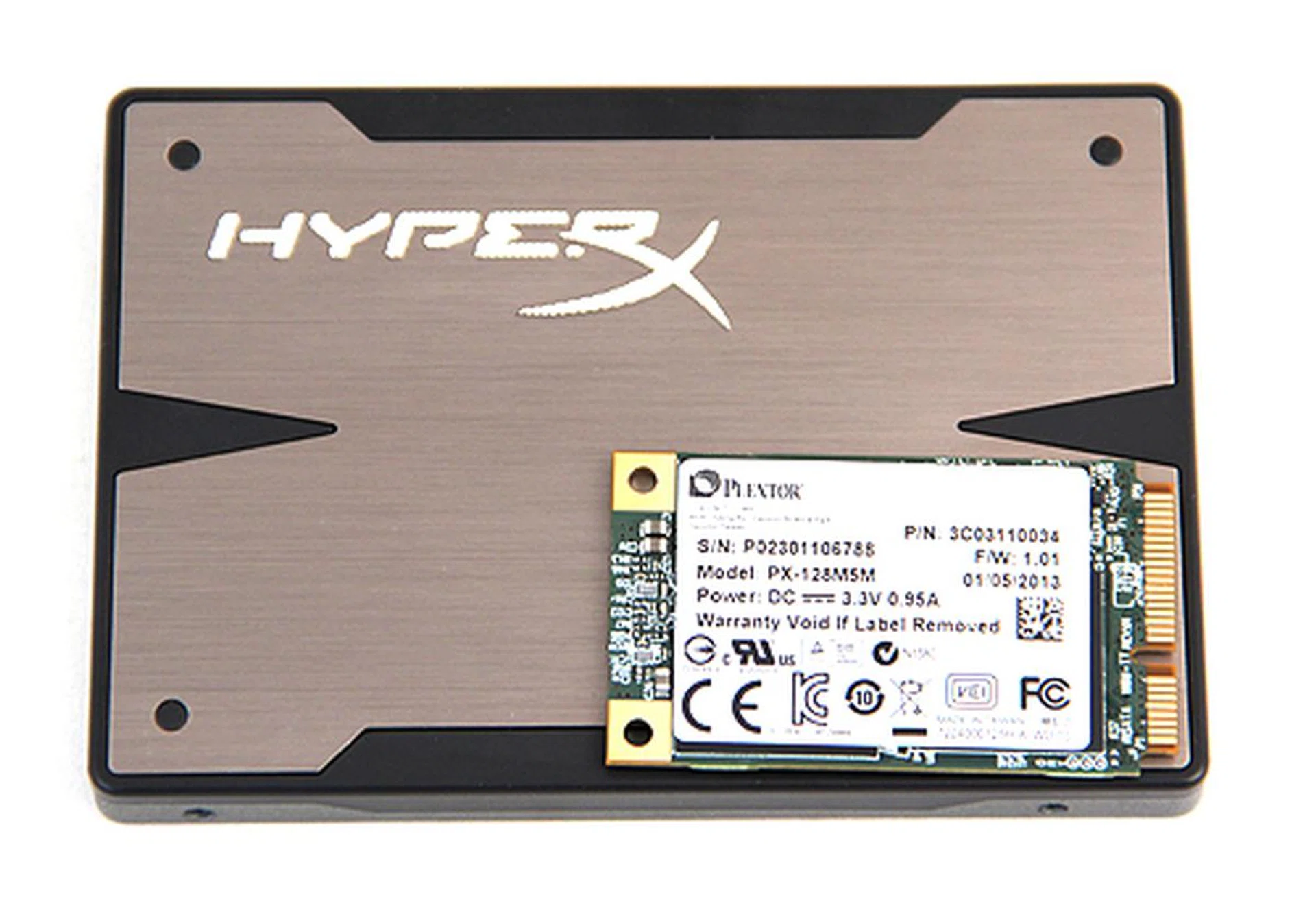
For those who've not seen or dealt with mSATA devices, here's the Plextor M5M juxtaposed with a typical 2.5-inch form factor SSD. Look at how much smaller it is.
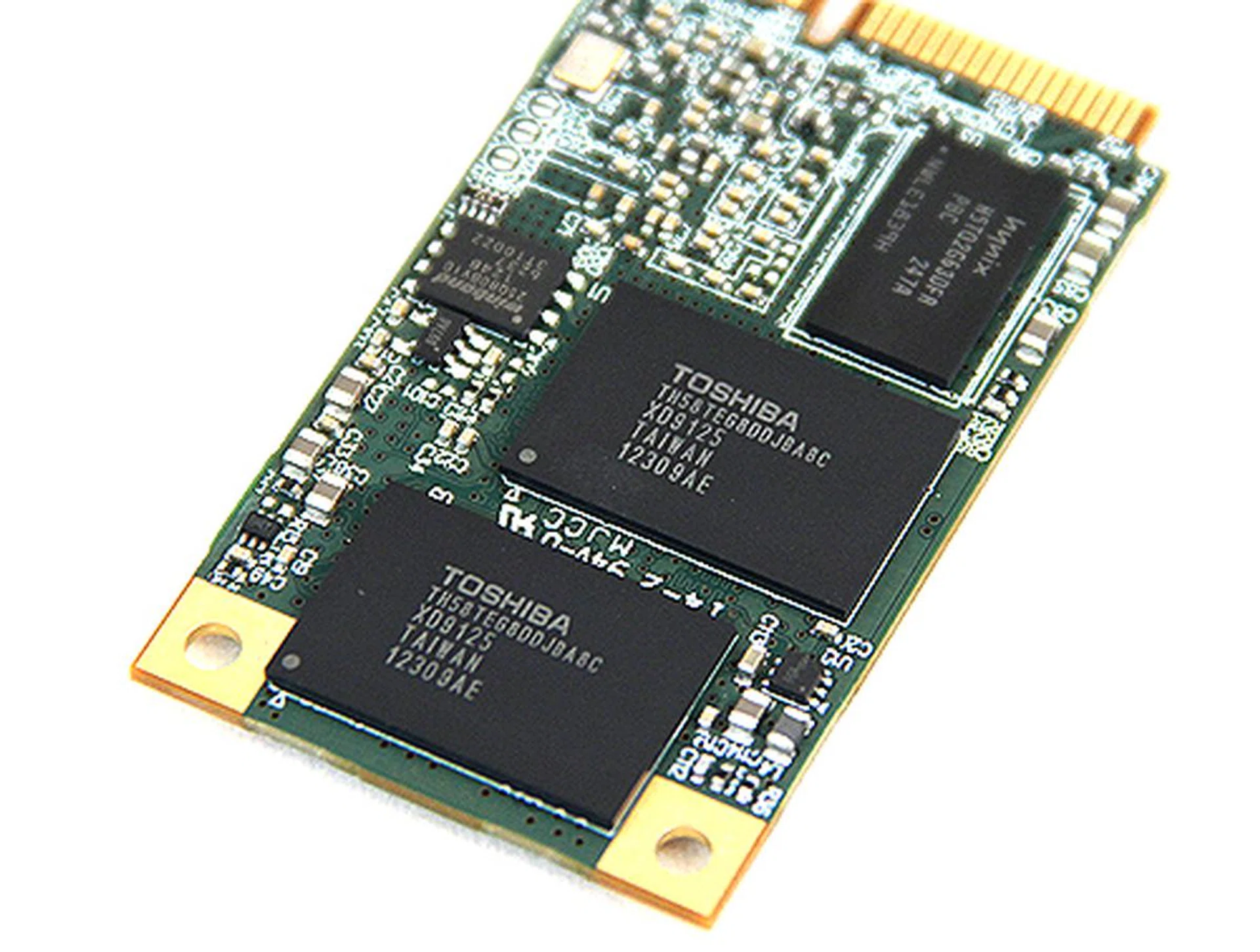
The drive uses four 19nm Toshiba Toggle-Mode NAND of 32GB density.
Test Setup
The drives tested on our storage testbed, has the following system specifications:
- Intel Core i5-2400 (3.1GHz)
- MSI Z68A-GD80 (Intel Z68 chipset)
- 2 x 4GB DDR3-1600 memory
- MSI GeForce 8600 GTS
- Windows 7
The list of drives tested:
- Plextor M5M mSATA (128GB)
- Intel SSD 520 Series mSATA (180GB)
- Plextor M5 Pro Xtreme (256GB) (Firmware: 1.02)
- Intel SSD 520 Series (240GB)
- SanDisk Extreme (240GB)
Since we haven’t reviewed an mSATA SSD for quite some time, we’ll be pitting the new Plextor M5M against the Intel SSD 520 Series mSATA SSD which we’ve extracted from the Intel NUC Mini-PC, which we’ve reviewed earlier.
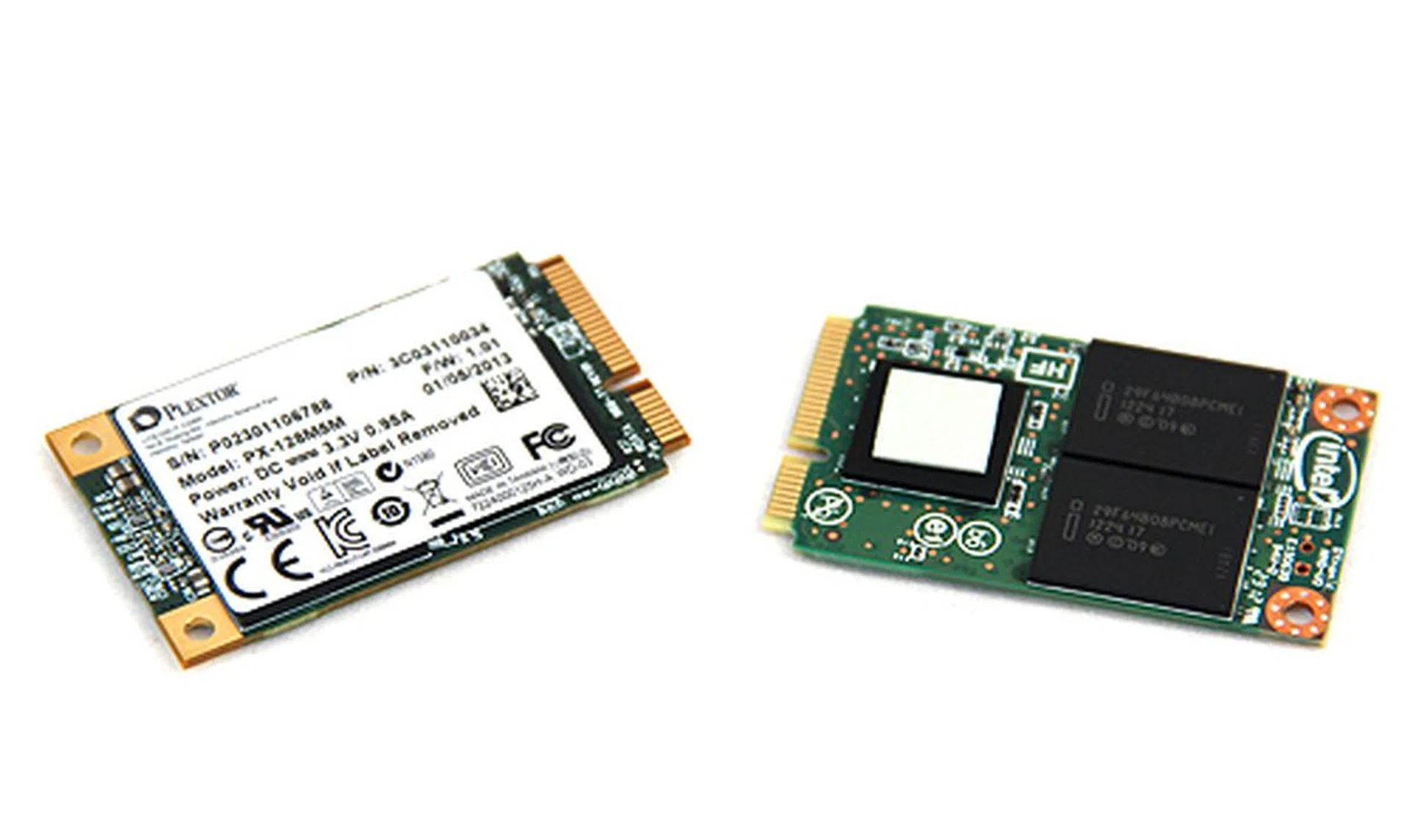
Though not a fair comparison, given the different capacities, the Intel SSD 520 Series mSATA SSD will provide a good gauge of the Plextor drive's performance.
The Intel SSD 520 mSATA SSD is a comparable SSD that uses the popular SandForce SF-2281 controller and 25nm MLC NAND chips from IMFT. Our drive is the 180GB variant and so uses three NAND chips of 64GB density. Although its differing capacitiy means it won’t be fair to compare one against the other, however, it will give a good idea of where the Plextor M5M stands in terms of overall performance.
We will also be paying close attention to how the Plextor M5M performs against the flagship M5 Pro. Since our review of the M5 Pro, the drive has received numerous firmware upgrades, and the latest firmware update "transforms" the drive into the M5 Pro Xtreme, which is capable of a claimed random read speed of 100,000 IOPS.
The list of benchmarks used are as follows:
- AS-SSD benchmark 1.6.4
- HD Tune Pro
- CrystalDiskMark 3.0.1
- PCMark 7
- PCMark Vantage
- Iometer (version 2006.07.27)
AS SSD Benchmark
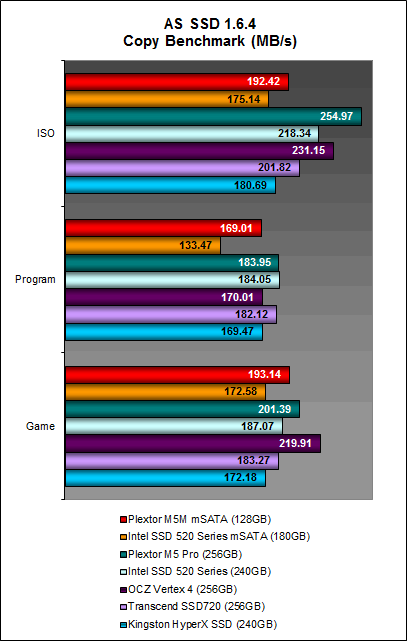
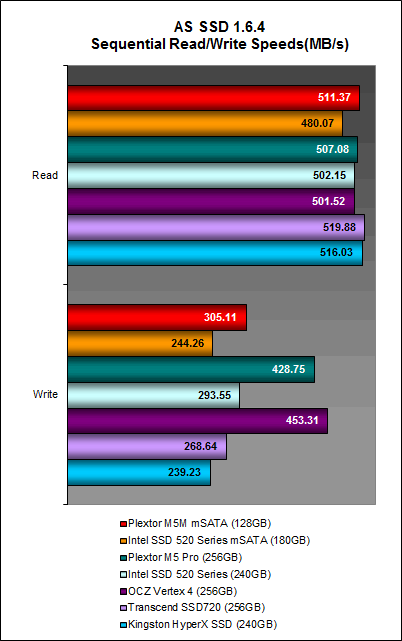
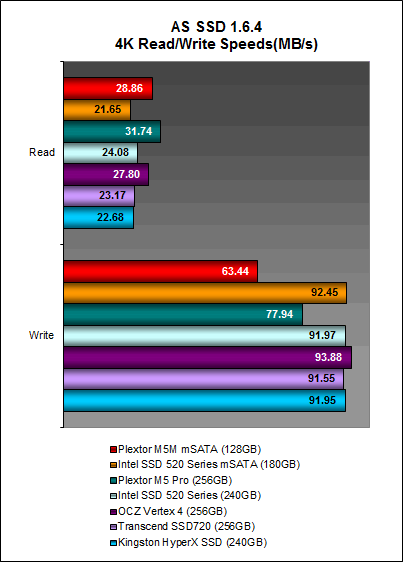
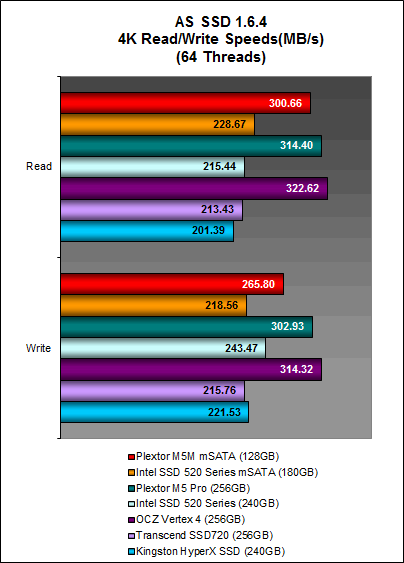
AS SSD is a benchmark that uses non-compressible and completely random data. What this means is that the drives using the SF-2281 controller cannot compress the data first, which takes away one of the strong advantages of this controller. Therefore this is a useful benchmark because drives that use the SF-2281 don't gain an upper hand.
Marvell-driven SSDs have traditionally performed well on this benchmark and the Plextor M5M didn’t disappoint. On the copy benchmark, it was easily quicker than Intel SSD 520 Series mSATA drive and was comparable to the rest of 2.5-inch form factor SandForce drives. Performance was also pretty comparable to the Plextor M5 Pro.
Performance on the rest of the benchmarks, particular sequential read/write and and 4k, 64 threads read/write was impressive, and the Plextor M5M was comfortably ahead of all the drives except the Plextor M5 Pro and Vertex 4.
CrystalDiskMark 3.0.1 Results
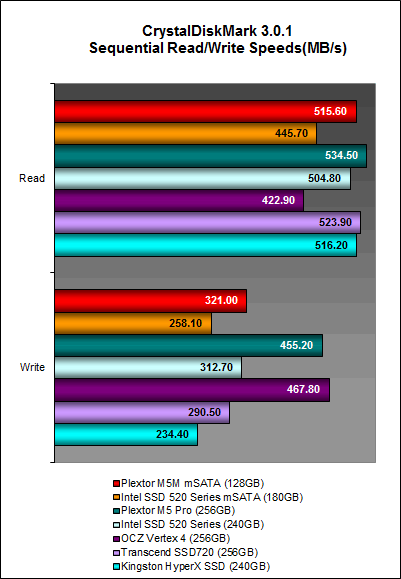
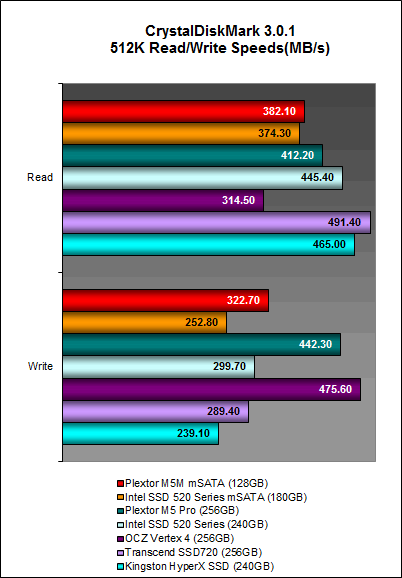
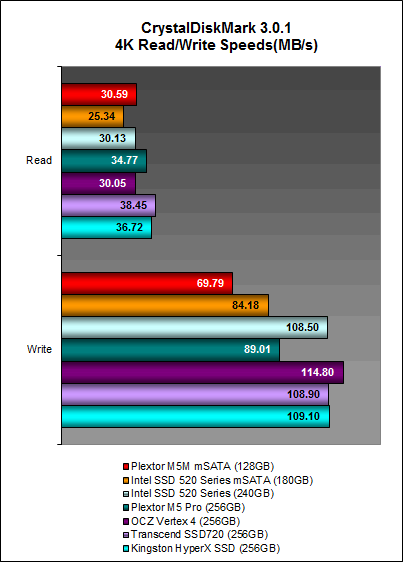
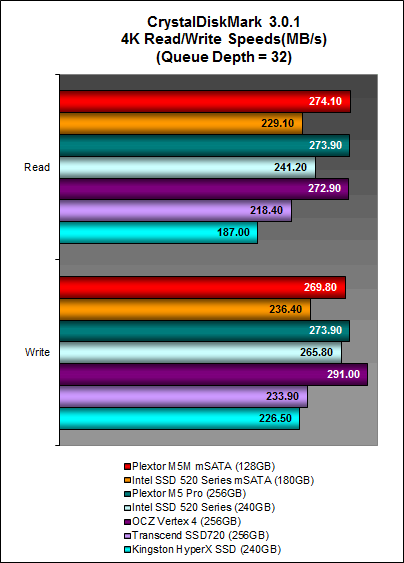
CrystalDiskMark is an easy-to-run and quick utility to use to gauge a drive’s performance. It measures sequential read and write performance and random read and write speeds of random 4KB, 4KB (queue depth 32) and 512KB data.
On CrystalDiskMark, the Plextor M5M was comfortably quicker than the Intel SSD 520 Series mSATA. Its performance was also comparable to Plextor’s flagship M5 Pro drive and also high-end drives such as the Intel SSD 520 Series and Transcend SSD720. Its performance on the intensive 4k, 32 queue depth workload was especially impressive.
HD Tune Pro Results
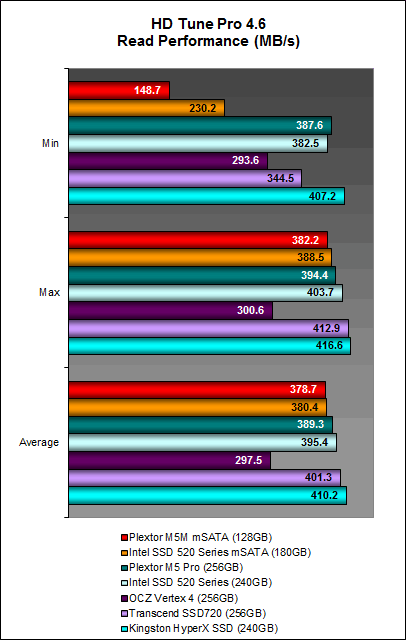
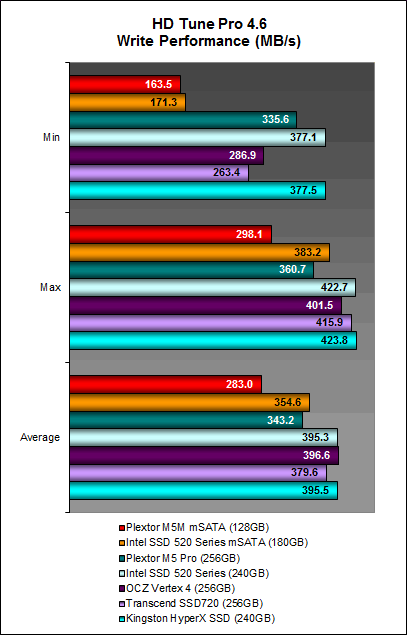
Sequential read performance on HD Tune Pro was generally about on a par with the Intel SSD 520 Series mSATA drive and also with the rest of the drives tested. However, sequential write performance was noticeably poorer by around 20%.
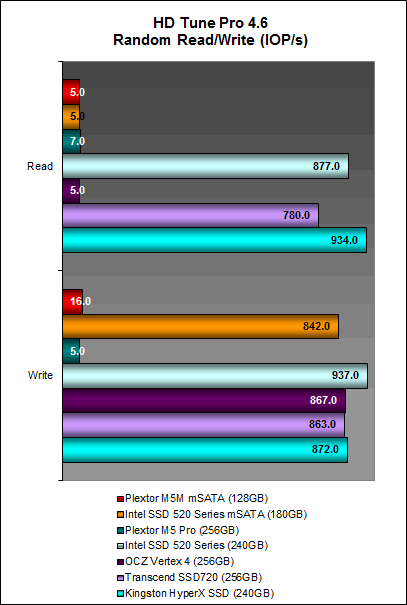
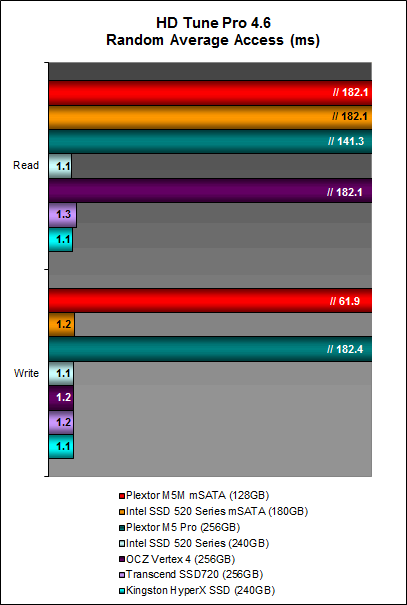
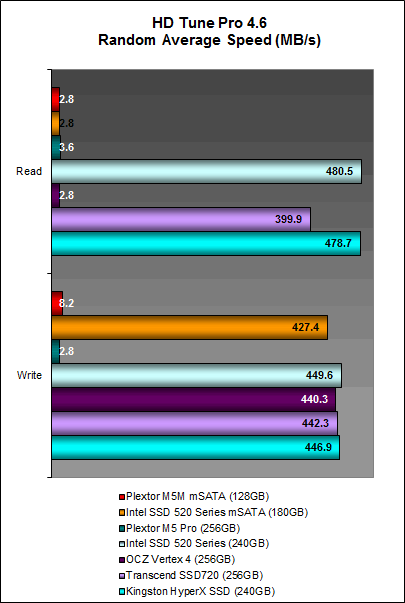
Like the Plextor M5 Pro, the Plextor M5M had problems running the random access benchmarks on HD Tune Pro, which resulted in very underwhelming performance. The Intel SSD 520 Series mSATA drive encountered problems only with random read operations.
Futuremark PCMark 7 Results
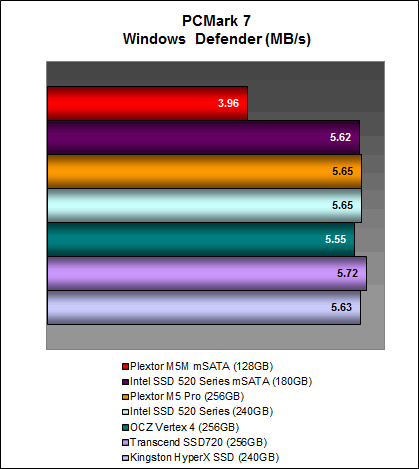
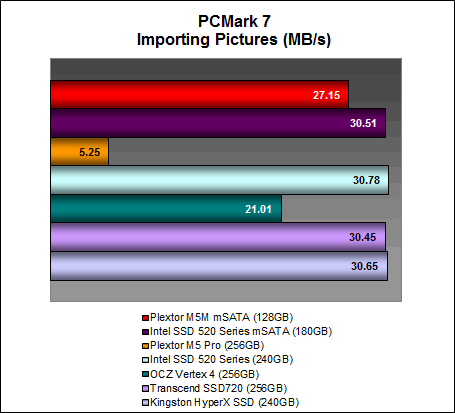
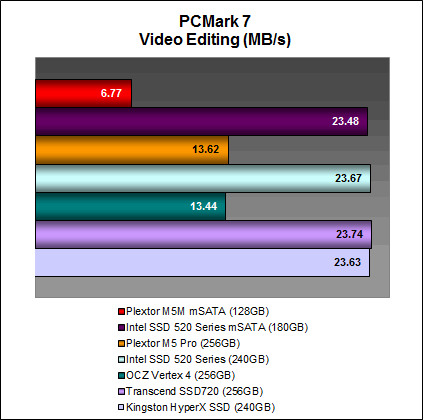
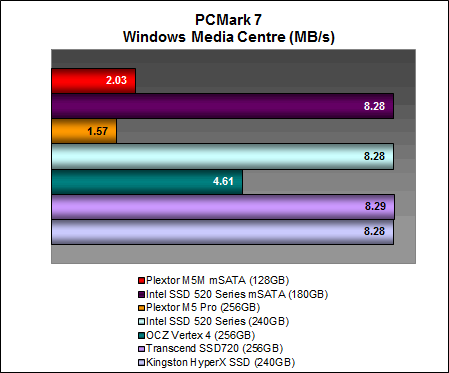
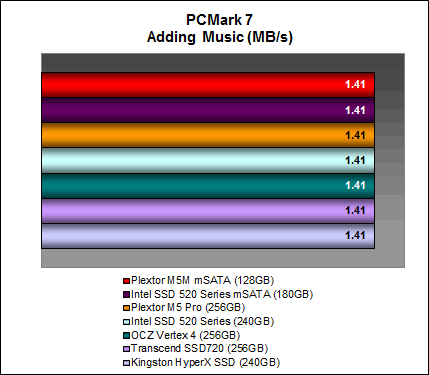
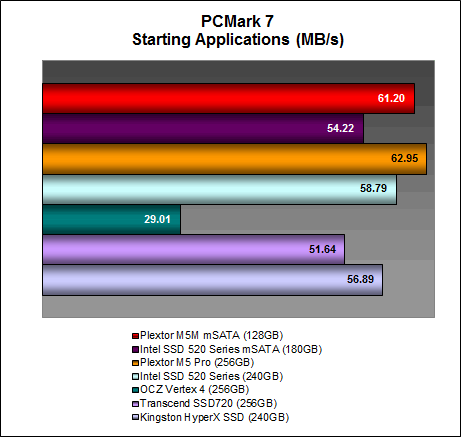
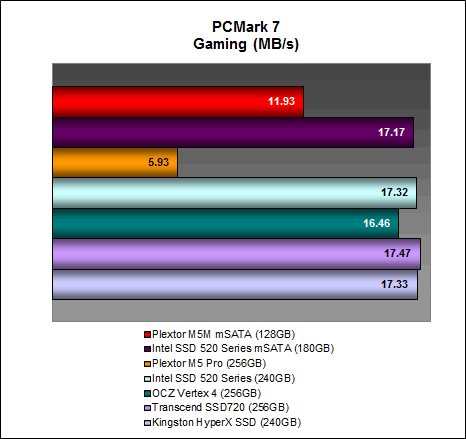
PCMark 7 is the current benchmarking suite from FutureMark that evaluates the performance of Windows 7 machines. It tests a wide range workloads and aspects of the system ranging from computation, image and video manipulation and storage. We’ll be looking solely at the storage test here.
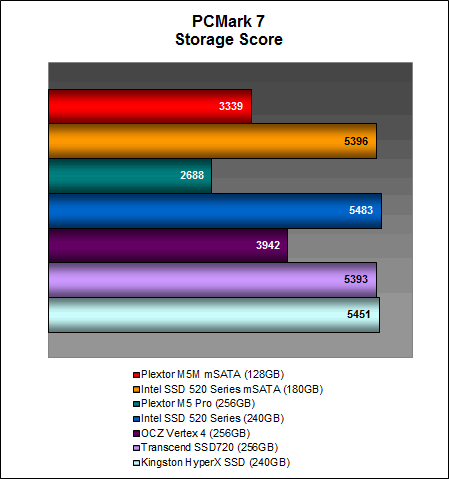
Marvell drives have typically not performed well on PCMark 7, but the Plextor M5M did manage to outscore the flagship M5 Pro drive by 651 PCMarks or almost 25%. However, it trailed the Intel SSD 520 Series mSATA drive by a whopping 2057 PCMarks - more than 60%.
Futuremark PCMark Vantage
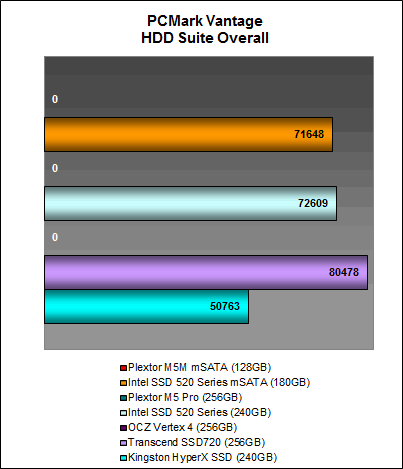
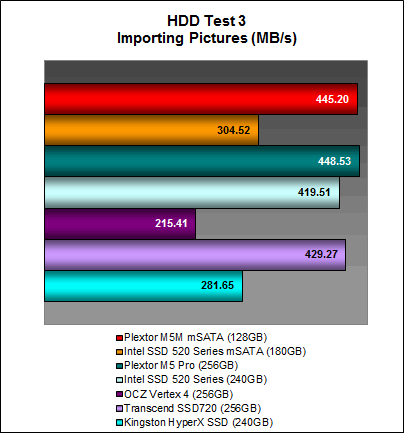
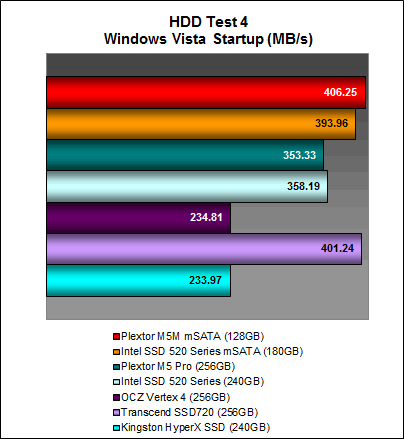
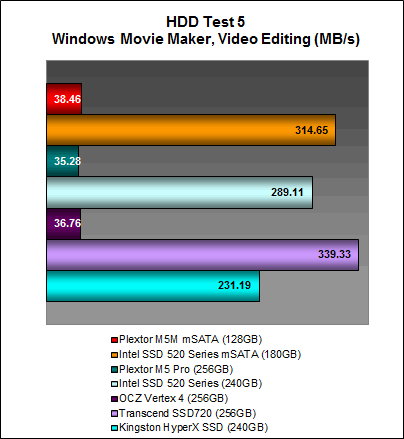
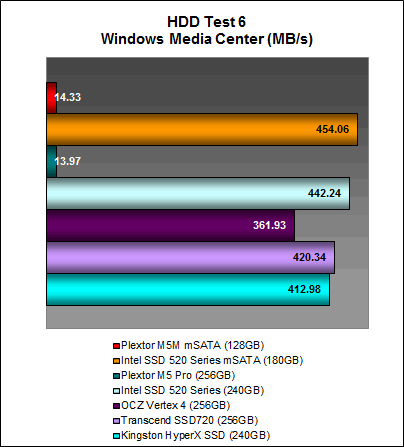
PCMark Vantage might have been around for quite some time, but it is still a fairly accurate representation of how the drives might be used in real-world scenarios. We are focusing on the hard drive test suite which comprises of tasks such as loading of applications to media creation.
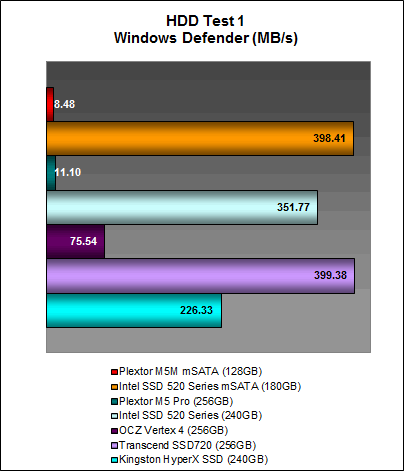
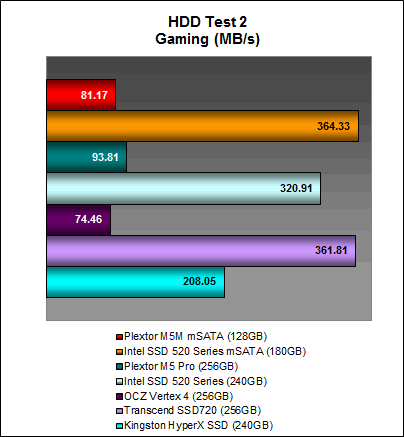
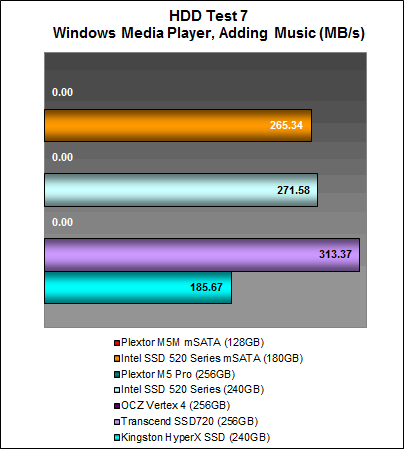
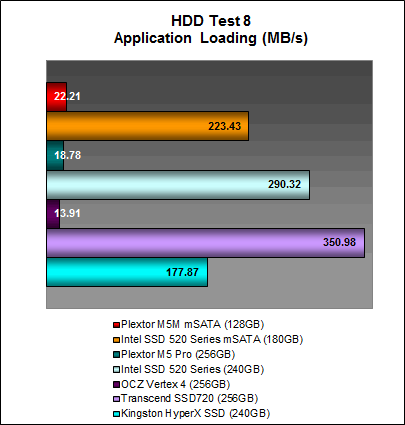
Marvell drives typically have problems with PCMark Vantage because of a specific workload - HDD Test 7, Windows Media Player, Adding Music - and the new Plextor M5M was no different, along with the Plextor M5 Pro and OCZ Vertex 4. As such, the M5M drive failed to generate an overall score. However, if we were to look at the individual workloads, we can see that it trailed the Intel SSD 520 Series mSATA drive in all except for one particular workload, which was HDD Test 3, Importing Pictures.
Iometer Results (Part 1)
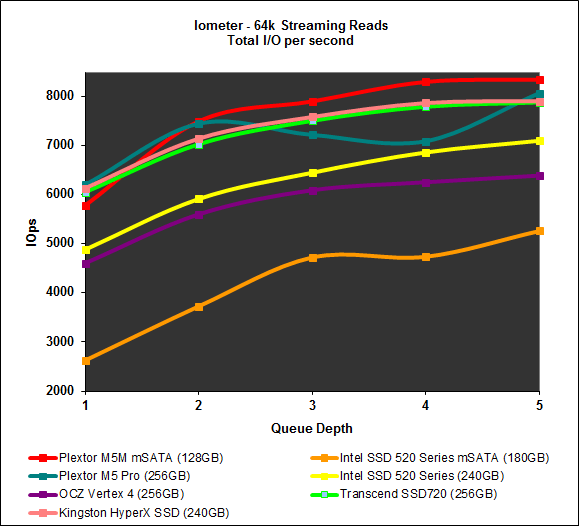
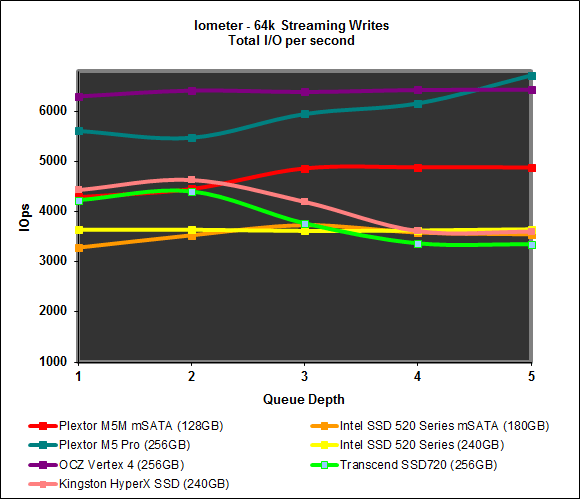
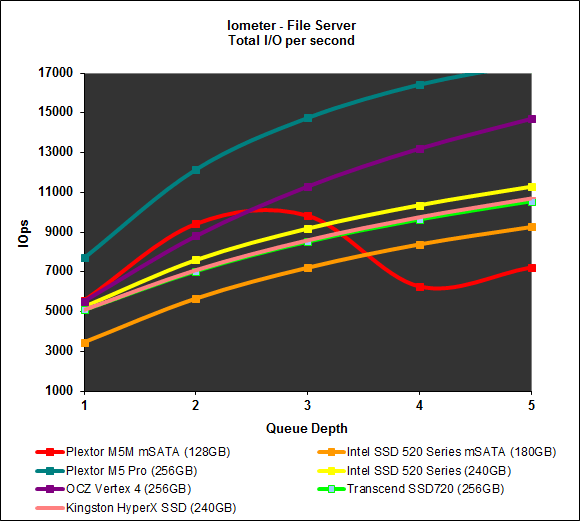
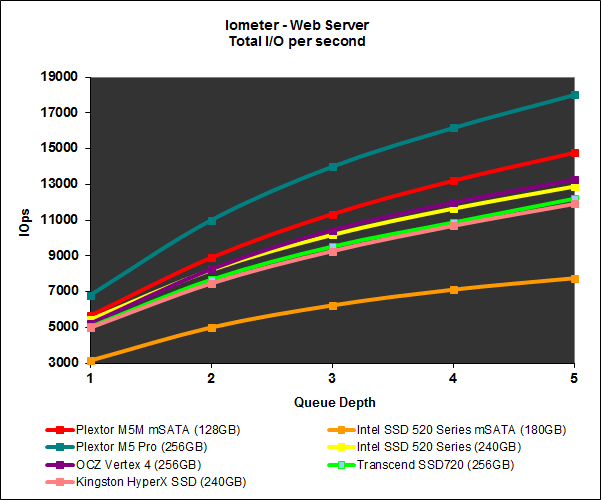
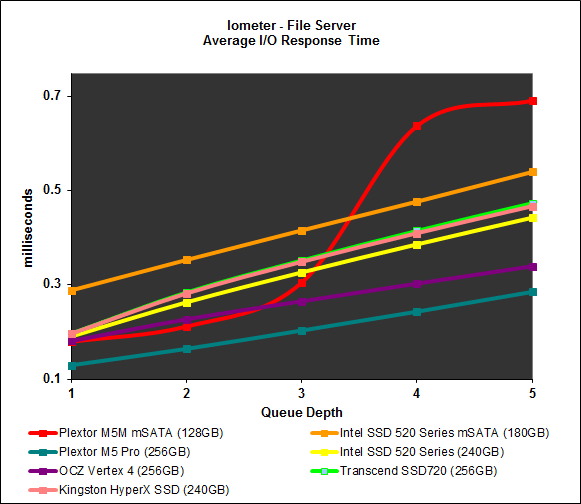
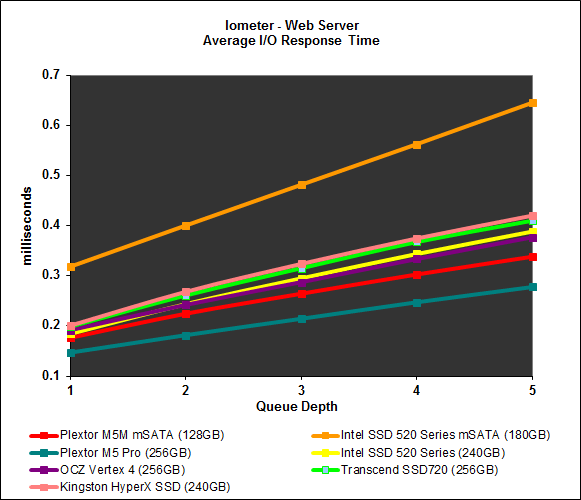
Lastly, we put the drives through the rigorous grind of Iometer, with different workloads and I/O queue depths. We have chosen to show results from a queue depth of 1 to 5 as this better represents the workloads a typical consumer might face.
Iometer has usually been a benchmark that Marvell drives have excelled in and the new Plextor M5M did reasonably well here, posting very high IOPS in the 64k streaming reads workload. Performance on the 64k streaming writes and Web Server workloads were good too, and the drive only suffered slightly on the File Server workload. Only the Plextor M5 Pro and OCZ Vertex 4 were convincingly quicker than the M5M.
Iometer Results (Part 2)
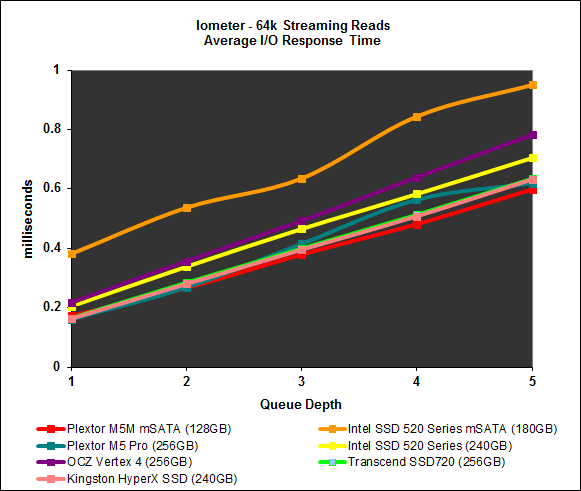
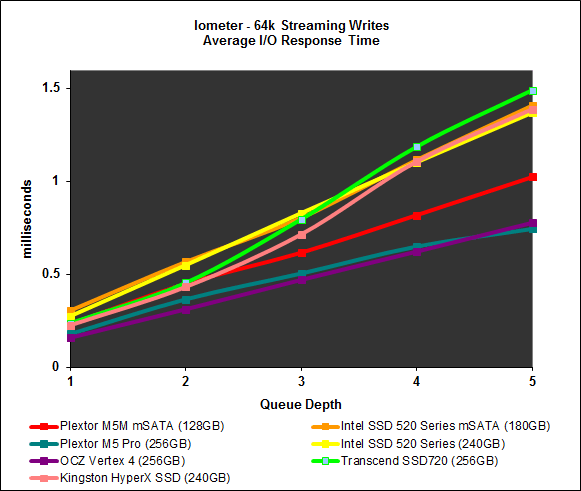
Finally, we look at the I/O response times for the workloads reported on the previous page. The Plextor M5M’s scored pretty highly on Iometer, and this can be attributed to its relatively low response times. It’s not the quickest of the lot, but as we can see from the graphs here, it was easily one of the quicker drives.
A Compact Speedy Drive
In terms of storage technology, the traditional mechanical hard drive has seen little progress in recent years, only larger capacities, lower costs and marginal speed improvements. While the head honchos at companies such as Seagate and Western Digital are quick to point out that traditional mechanical hard drives still have a place in the future, recent price drops and advances in SSD technology over the past few years will have consumers believing otherwise.
And if the Plextor M5M mSATA SSD is anything to go by, it seems like storage, as we know it, is about to get a whole lot smaller. Despite being just a fraction of the size of your typical 2.5-inch SSD - just slightly more than 20% in terms of surface area - the Plextor M5M performed admirably and was quite comparable, though slightly slower, to Plextor’s flagship M5 Pro drive. Against the other high-end 2.5-inch form factor drives such as the Intel SSD 520 Series and Transcend SSD720, the Plextor M5M more than held its own, trumping them in benchmarks such as AS SSD and Iometer.
If one needs any proof that storage is about to get a whole lot smaller, one only needs to look at the Intel SSD 520 Series mSATA SSD which was tested here. Admittedly, it’s not as quick as the full fat 2.5-inch form factor Intel SSD 520 Series, but it was no slouch either and we think users would be hard pressed to notice the difference in real world usage scenarios.
The Plextor M5M proves that sometimes, good things do come in small packages.
In terms of pricing, the 128GB Plextor M5M drive comes in at around US$109, this makes it more affordable than 2.5-inch SSDs with similar capacities - the Intel SSD 520 goes for around (US$144), while the Transcend SSD720 costs (US$124). More importantly, it is priced significantly lower than its key competitors in the mSATA SSD market. The 120GB variant of the recently released Intel SSD 525 mSATA drive costs around US$169, while drives from ADATA, Crucial and OCZ are retailing for around US$120.
All things considered, the Plextor M5M offers pretty impressive performance despite its small form factor and comes attractively priced too. At the present, there’s little in the way of variety for those looking for a high-end mSATA SSD to upgrade to, so the Plextor M5M comes with our hearty recommendation.
Our articles may contain affiliate links. If you buy through these links, we may earn a small commission.