
Huawei Nova 5T review: Champagne for a super Nova
Those looking for a manageably-sized mid-range smartphone will find the compact Huawei Nova 5T a competent package with only a few shortfalls.

Note: This article was first published in October 2019.
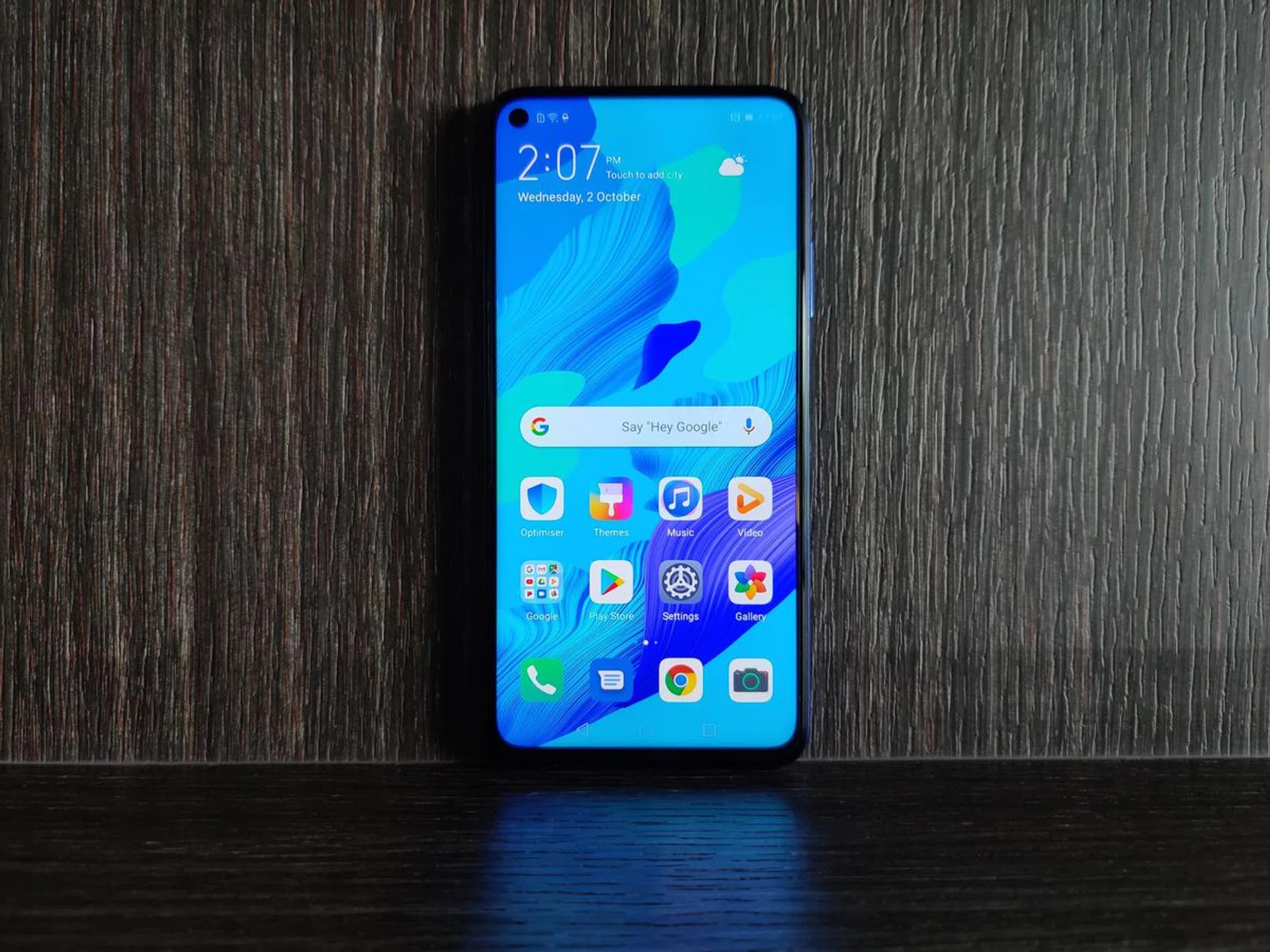
Honor-ing its View 20 sibling...
Punch-holing above its weight, again?
At least in Singapore, I like to think of Huawei as the smartphone company that goes only to extremes, since up till now most of its products have been placed at the far ends of the market: flagship P- and Mate-series juggernauts alongside a slew of decent budget products such as the very popular Nova 3i and Y6 Pro (yup, that phone).
Their mid-range range has been pretty quiet and left largely to Honor, Huawei’s sub-brand. Earlier this year in January we took a look at the Honor View 20, which proved to offer great value in the mid-range segment and was only hobbled by Huawei’s use of an LCD rather than a more vibrant, contrasty OLED display.
At this point, Honor appears nowhere close to replicating its parent’s success here, which we put down to a greater familiarity with the Huawei brand. It's probably also why the Nova 5T is a Huawei and not an Honor device.
Design
Just like the Nova 3i before it, the 5T should win most hearts on looks alone. Huawei has wisely stuck with its simple, subtly-textured gradient formula:
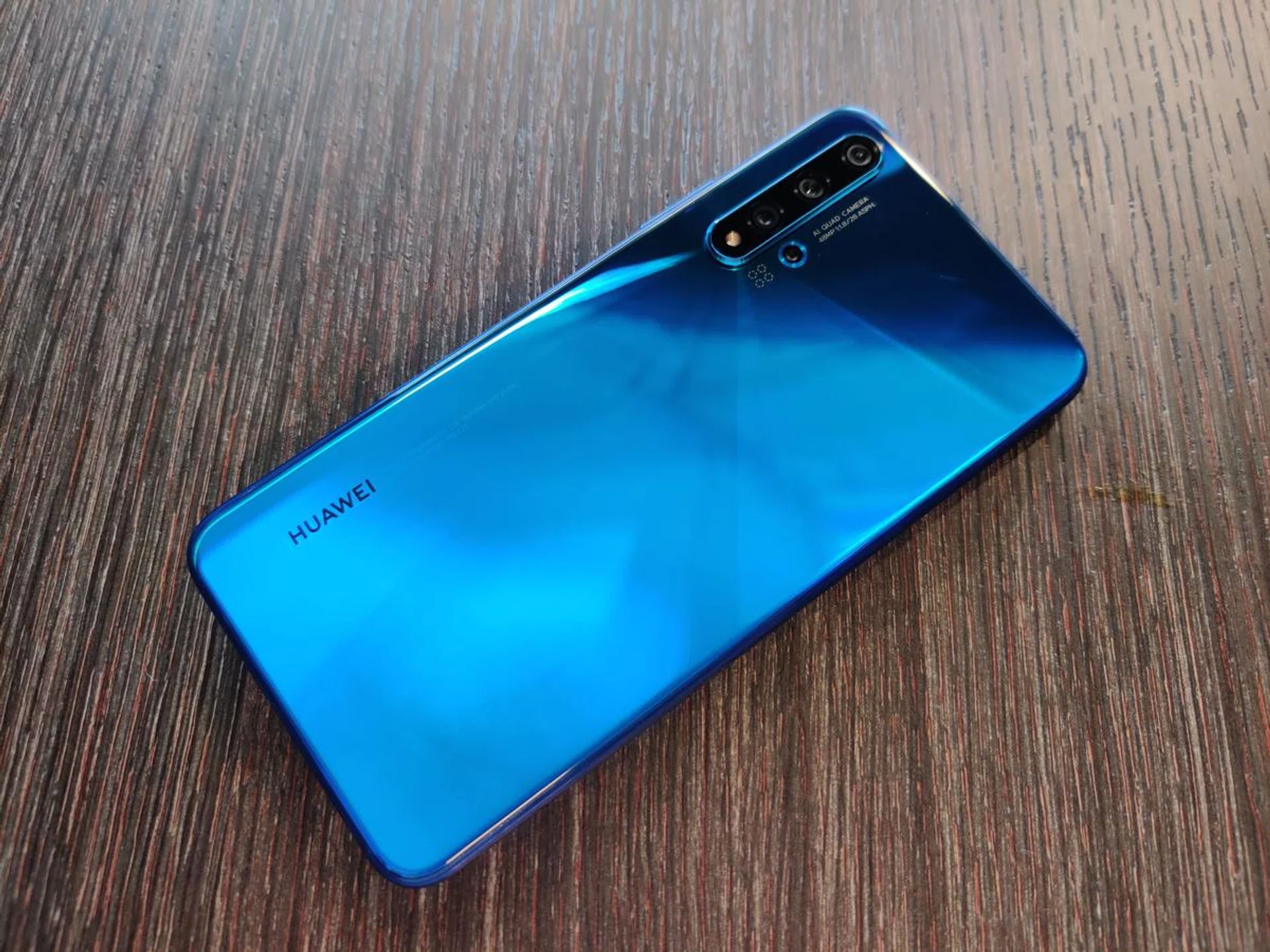
Nothing revolutionary, just a solid glass-and-metal sandwich.
Named Crush Blue (what exactly is being crushed, may I ask?), this colourway isn't exactly eye-catching, but it certainly looks classy. If you want a more funky vibe, there’s also a Midsummer Purple with the four letters in “nova” subtly lasered into its (ultra) violet gradient.
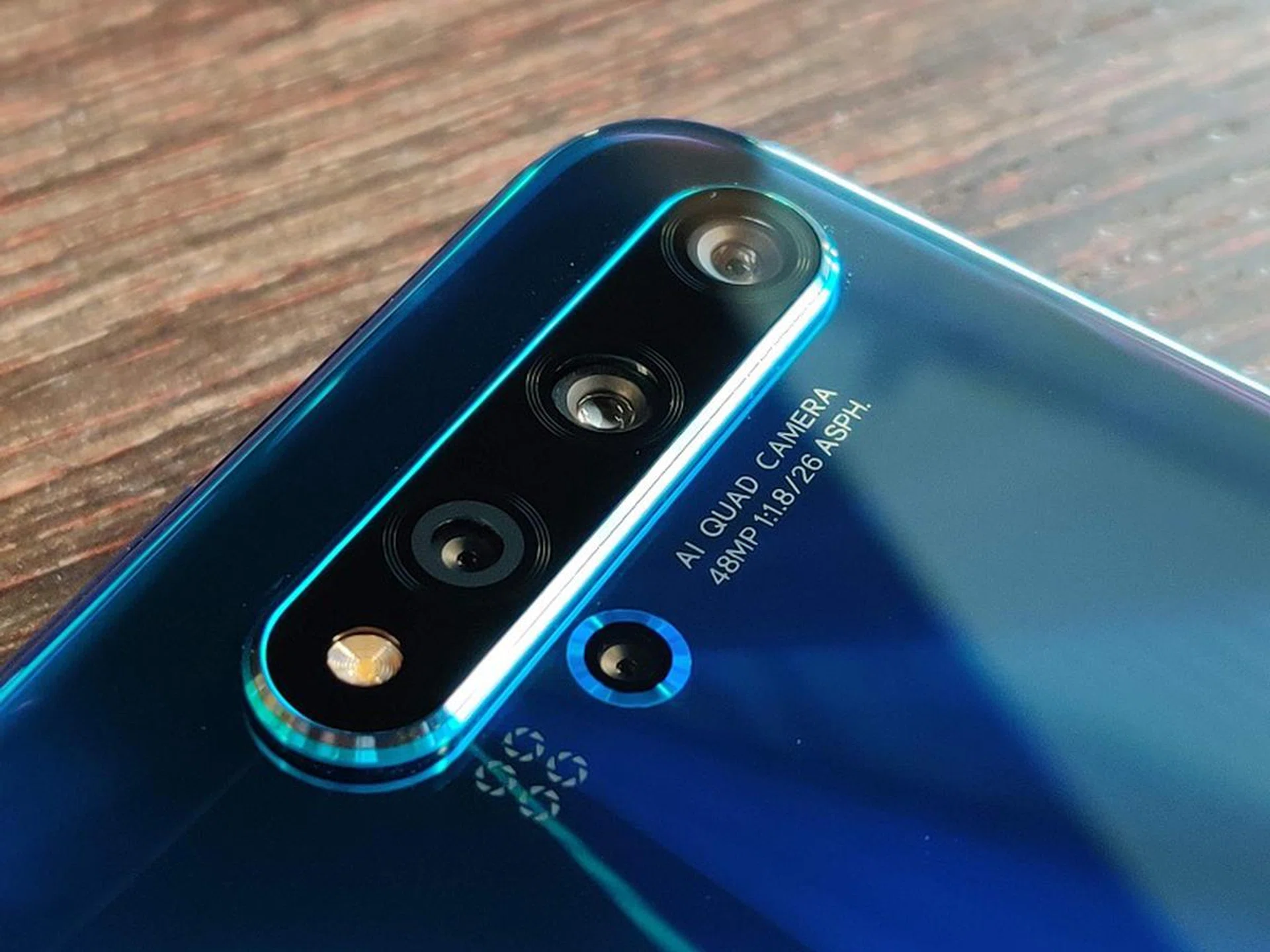
Rays of light appear to emanate subtly from the camera flash.
We didn’t find a case in the box, and if Huawei are not providing one in the retail units either, you’d best get one before you start using the phone. Like all glass-backed devices, it will quickly find its way along any smooth surface to the nearest floor.
With a USB-C (thankfully) port, a single speaker opening, and no headphone jack, there's nothing down below to talk about. You won't find expandable storage, either.
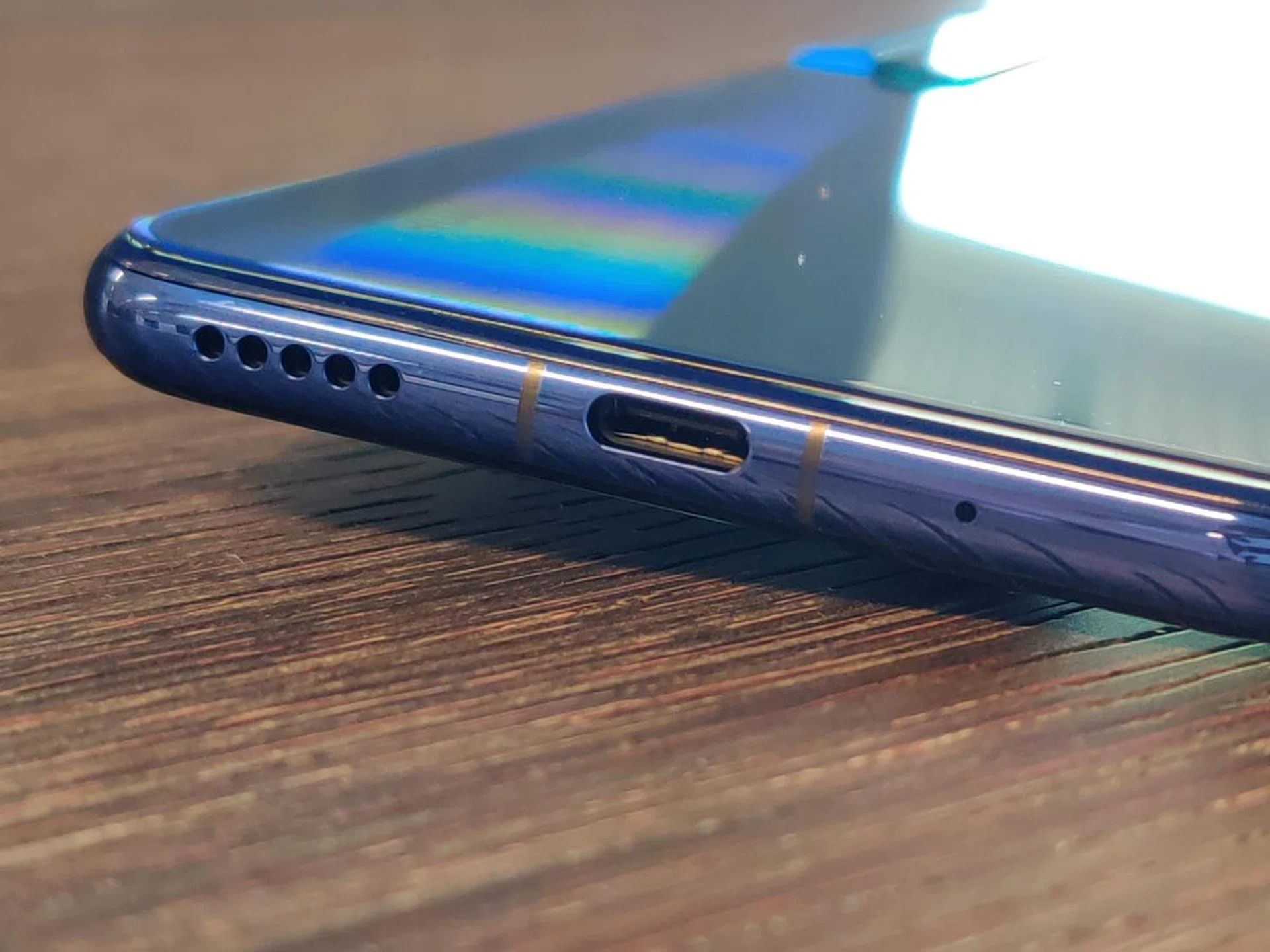
At least that speaker gets pretty loud and sounds crisp, with a decent helping of bass.
Rare these days is a notification light. And the Nova 5T actually has one embedded in the speaker grille!
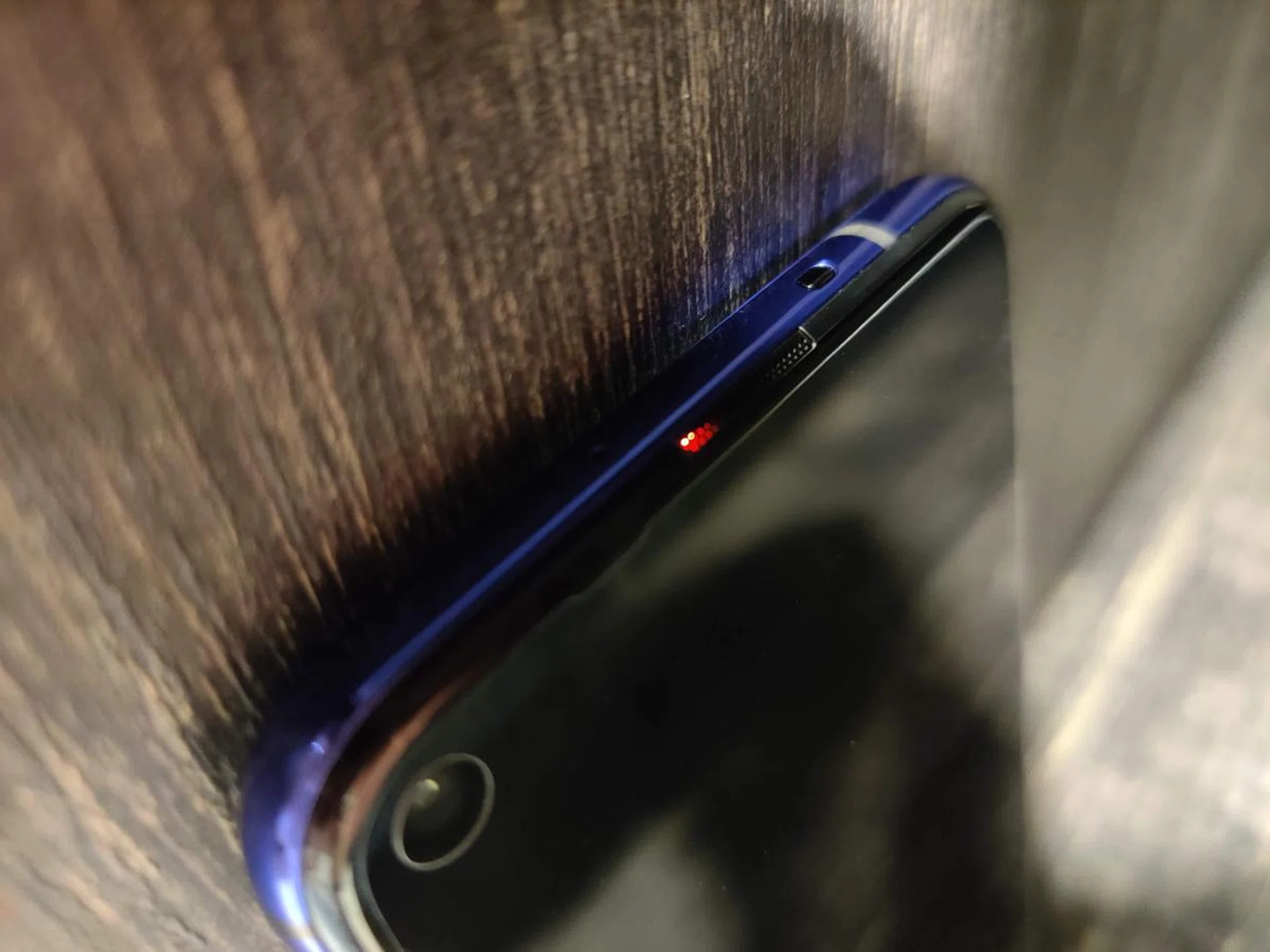
It flashes red, green, and orange. It's not easy to see, but at least it's there.
And, speaking of things you won't find on many phones...
What a great fingerprint sensor!
Bucking the in-display fingerprint sensor trend, Huawei brings back one feature from an untimely grave: the power-button capacitive fingerprint sensor!
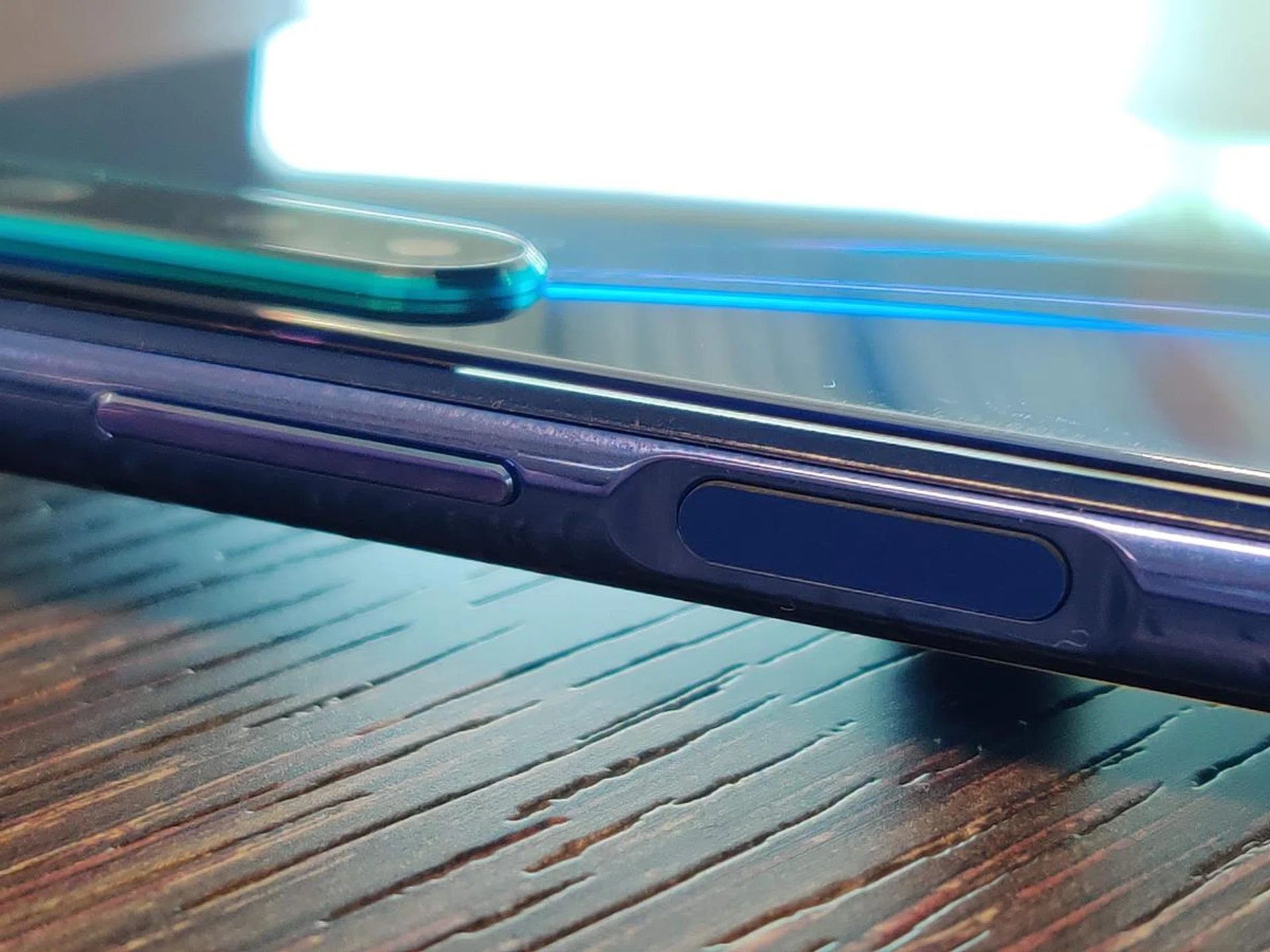
Apart from the Samsung Galaxy S10e, the last time we saw one of these was on the old Sony Xperia Z-series phones.
Huawei, how do I love thee for this? Let me count the ways. One: it’s way easier to enrol a finger on capacitive sensors like these. The enrolment process is not affected by dirt on the display, or ambient lighting conditions. Two: while it can sometimes lead to inadvertent unlocking, the power button is still by far the best place to have a fingerprint sensor. You don’t need to wake up the phone first. Or figure out where on the display to tap. Or move the phone until a fingerprint icon shows up (which is also difficult if it’s on a table or nightstand) - it’s a one-step unlock. And four: this sensor is just so darned fast and precise. The display turns on and unlocks almost instantly with just the right amount of pressure on the button.
Oh, for such a simple feature done right! Compared to some positively ancient in-display fingerprint sensors that take whole seconds to unlock (if they do at all), the Nova 5T’s implementation is so much more preferable that I want to throw my hands in the air and scream for joy. Newer is not always better, friends.
Not everything is perfect...
There were some things Huawei didn't get right, the first being the 6.26-inch 1080p LTPS LCD display. It’s not terrible - colours are vibrant, if as usual biased toward the blues, and the juicy-looking preloaded blue wallpaper helps make for positive impressions.

There's also no "halo" around the punch-hole, unlike with the View 20.
But... it’s still an LCD. The blacks aren’t anywhere near OLED levels, and luminance levels are a little inconsistent across its entire surface, especially near the edges. In case you noticed neither of these, a diminishing brightness at extreme viewing angles characteristic of LCDs should remind you. It also doesn't support any of the new HDR standards, unlike an increasing number of OLED devices (such as the similarly-priced Xiaomi Mi 9T Pro) and even a couple of LCD ones (such as the HMD Nokias).
There's more to find fault with considering this phone's mid-range status. As mentioned earlier, there's the lack of a headphone jack. Take out the SIM card slot - which doesn't even have a seal around its edges to confer some basic water and dust resistance - and there's no place for a microSD card. Good thing the internal storage is 128GB.
Huawei could easily have given us at least a few of these features, and our guess is they're trying to avoid hurting sales of the entry-level P30 (Lite) models. But in a crowded mid-range, where every manufacturer can now boast of at least one all-singing, all-dancing product, this doesn't seem to us like the right way to roll.
It's still the same EMUI...
There's practically nothing new to say about EMUI 9.1 on the Nova 5T. It's standard Chinese Android skin fare, with no app drawer, somewhat kiddish and variegated visual language, some (manageable) bloat, and little niggles like inconsistencies in font sizes. I'm not a fan of it, but that's just me.
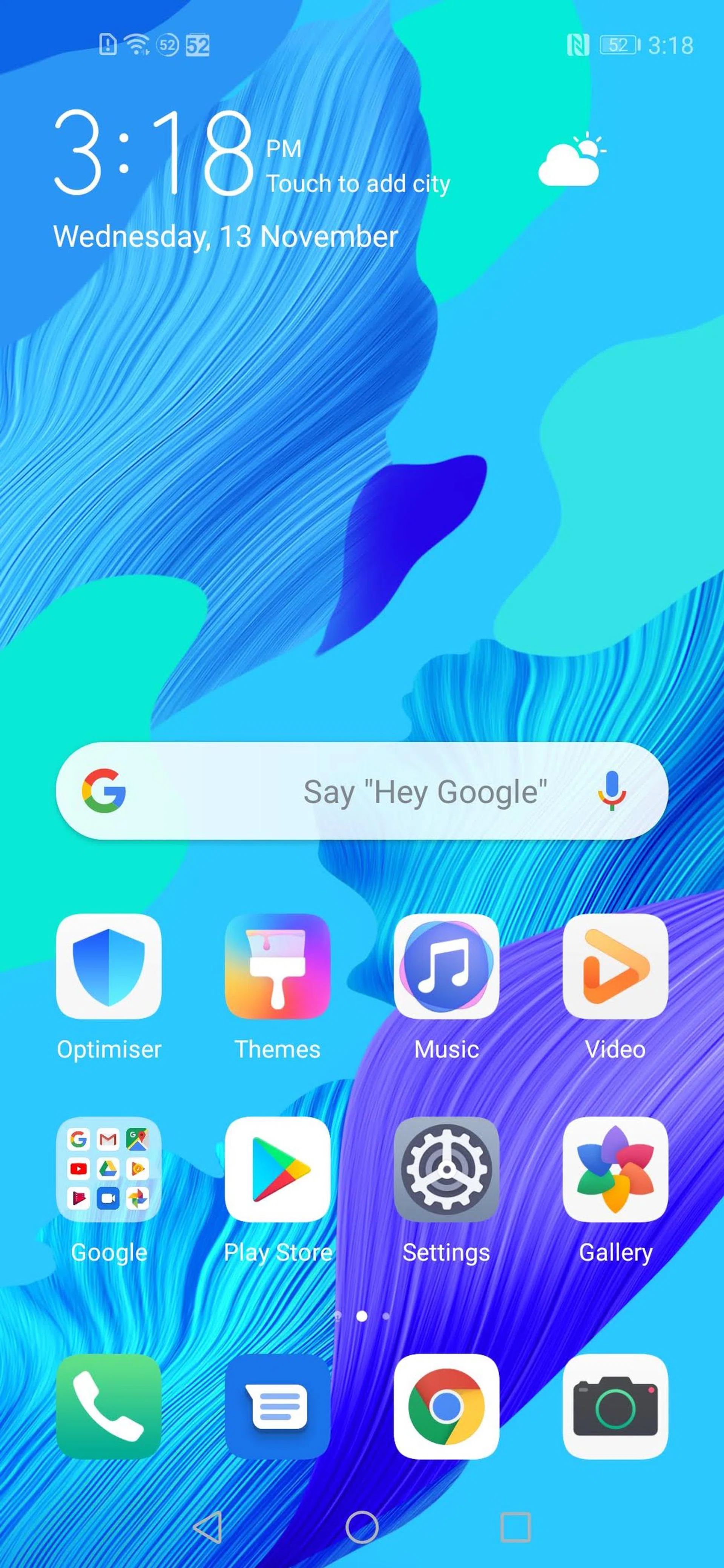
The same launcher, with no app drawer...
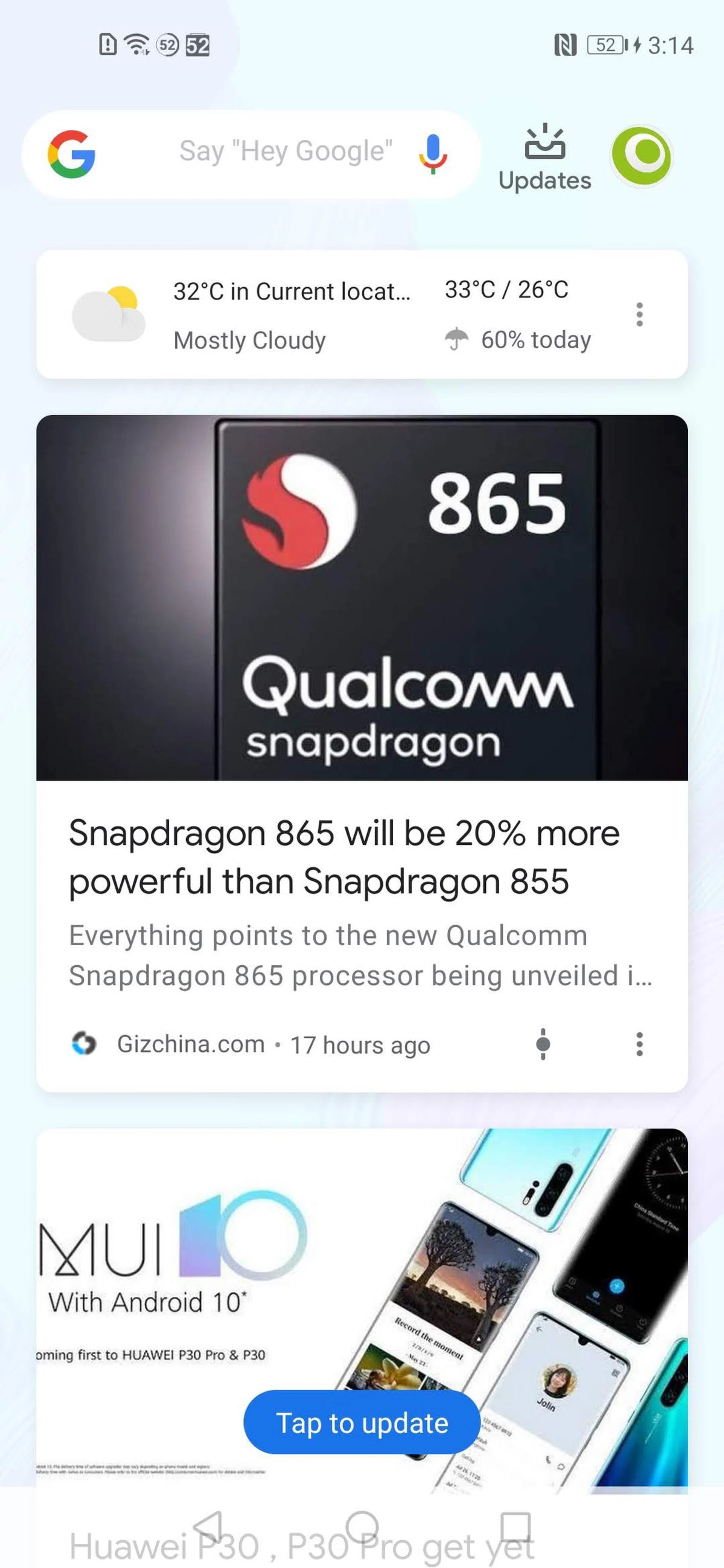
...but guess what, there's a nod towards a more Pixel-like experience: The Google Discover feed now shows to the left of the home screen!
And that's okay - EMUI is probably not aimed at me, because I'm sure that senior folks (can I say "boomers" without getting roasted on a spit in 2019?) and non-geeks will find it their cup of tea. It's at least colourful and the icons are nicely legible, and the lack of an app drawer is still an advantage for those converting from, say, cheaper iPhones.
I do have a new rant, and that has to do with the variance of the notification toggles in Chinese Android phones. Oppo, Xiaomi, and Vivo use huge squares clearly borrowed from iOS's Control Center. Only Samsung's OneUI and OnePlus's OxygenOS are closer to stock Android.
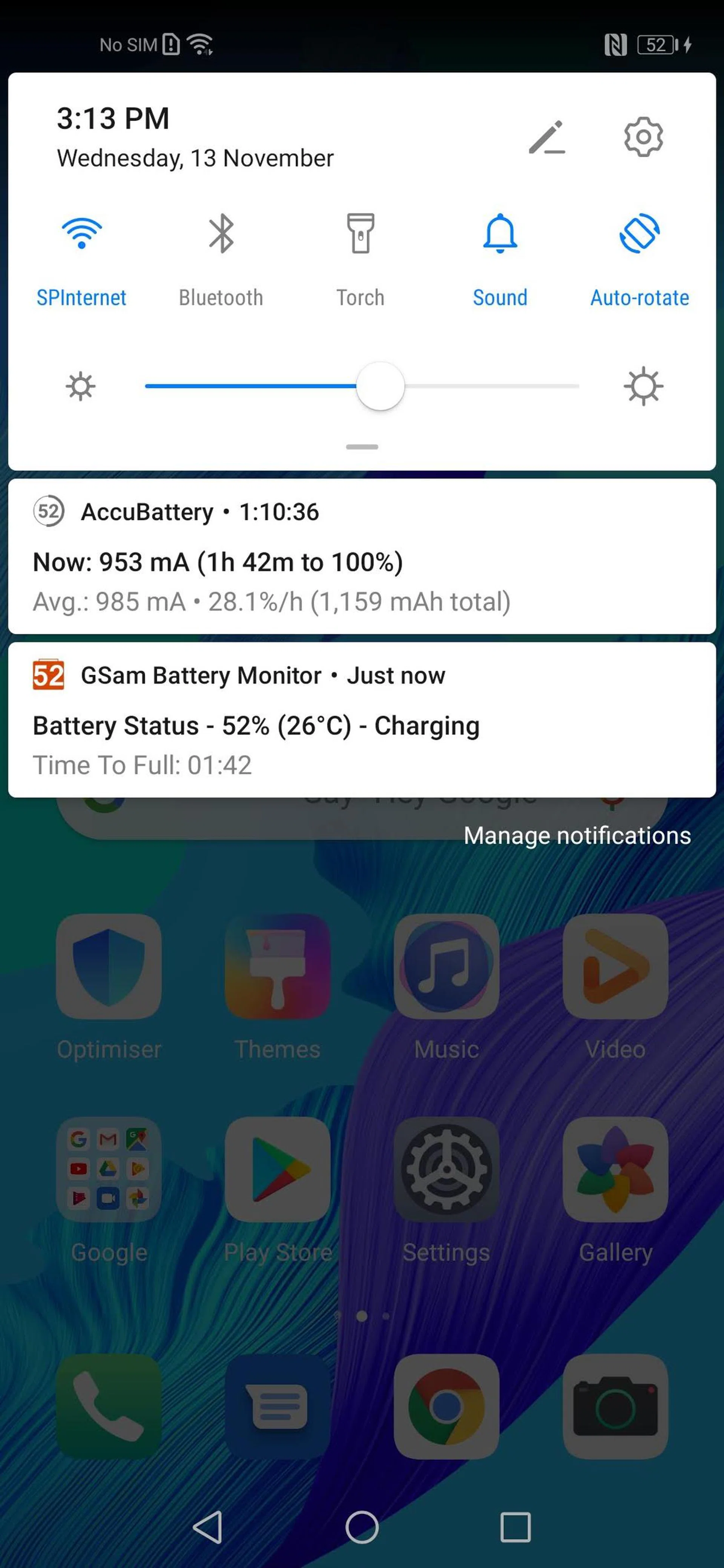
Meanwhile, Huawei sticks with blue line-art icons reminiscent of Android Marshmallow.
So, when will we ever see some visual commonality?
...it has (mostly) the same performance...
When it entered the mid-range fray at the beginning of this year, the Honor View 20's ace up its sleeve was that it used the flagship-class Kirin 980 processor. The Nova 5T has the same chip, which should give it a nice plus point over the competition. We'll put it head-to-head with its predecessor for reference, as well as other mid-rangers like the Qualcomm Snapdragon 670-series Vivo V15 Pro and the Google Pixel 3A XL.
[hwzcompare]
[products=675703,669402,664596,657522]
[width=200]
[caption=Test phones compared]
[showprices=1]
[/hwzcompare]
Okay, let's do JetStream first:
JetStream 2
The JetStream benchmark evaluates JavaScript performance over a range of real-world browsing scenarios. As expected, the Kirin 980 played second fiddle only to its Snapdragon 855 rival, which was thrown in for reference:
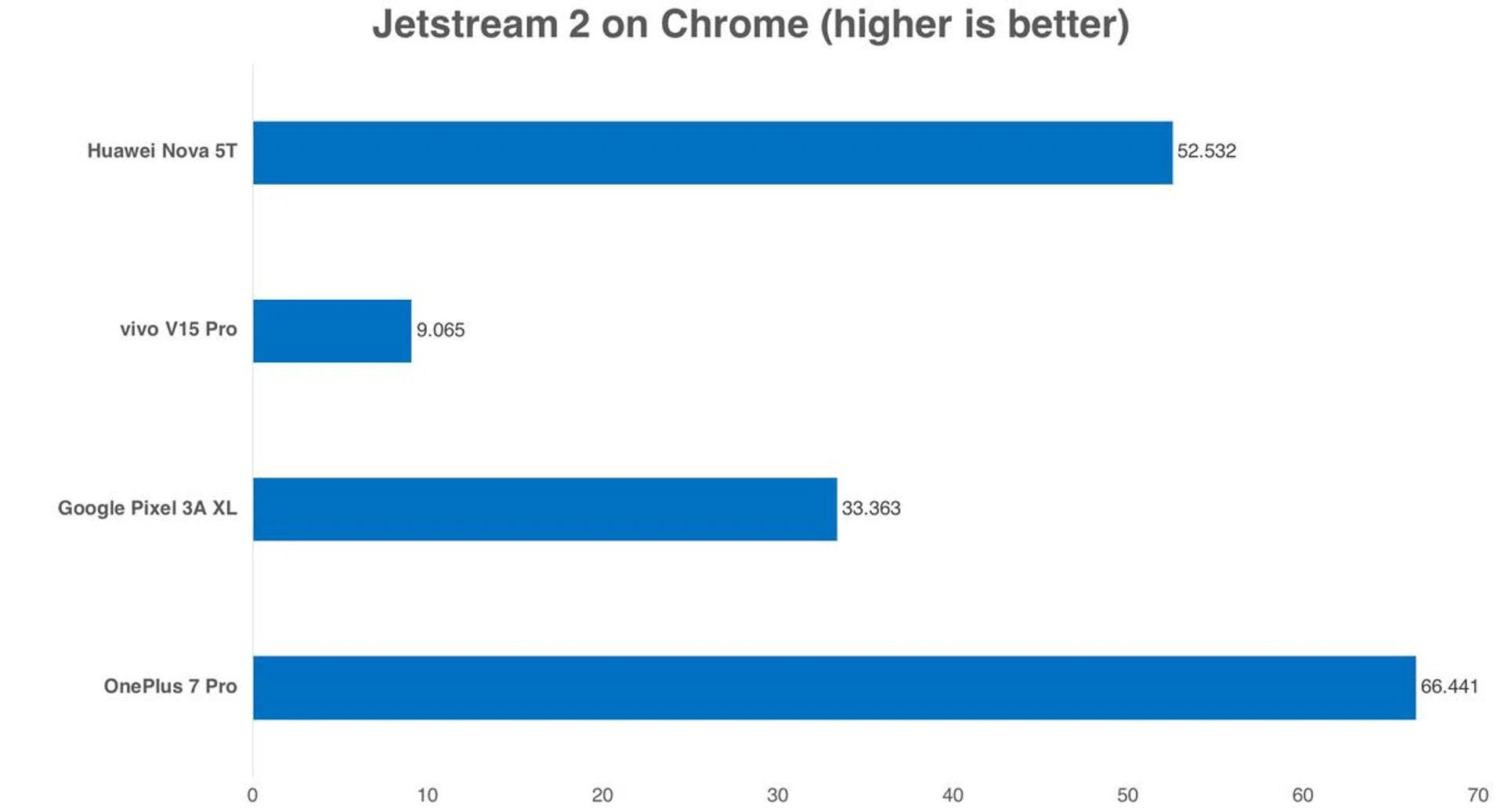
The Kirin 980 in the Nova 5T crushes the Snapdragon 67x processors in the Vivo and Pixel, but is no match for the Snapdragon 855.
Things, however, start getting pretty interesting from this point onwards.
Geekbench & Antutu
Both of these benchmarks measure system performance with regards to CPU, RAM, and storage speed factors. Now here's something eyebrow-raising: the Nova 5T scored worse than the Snapdragon 67x phones here - and even its spiritual predecessor!
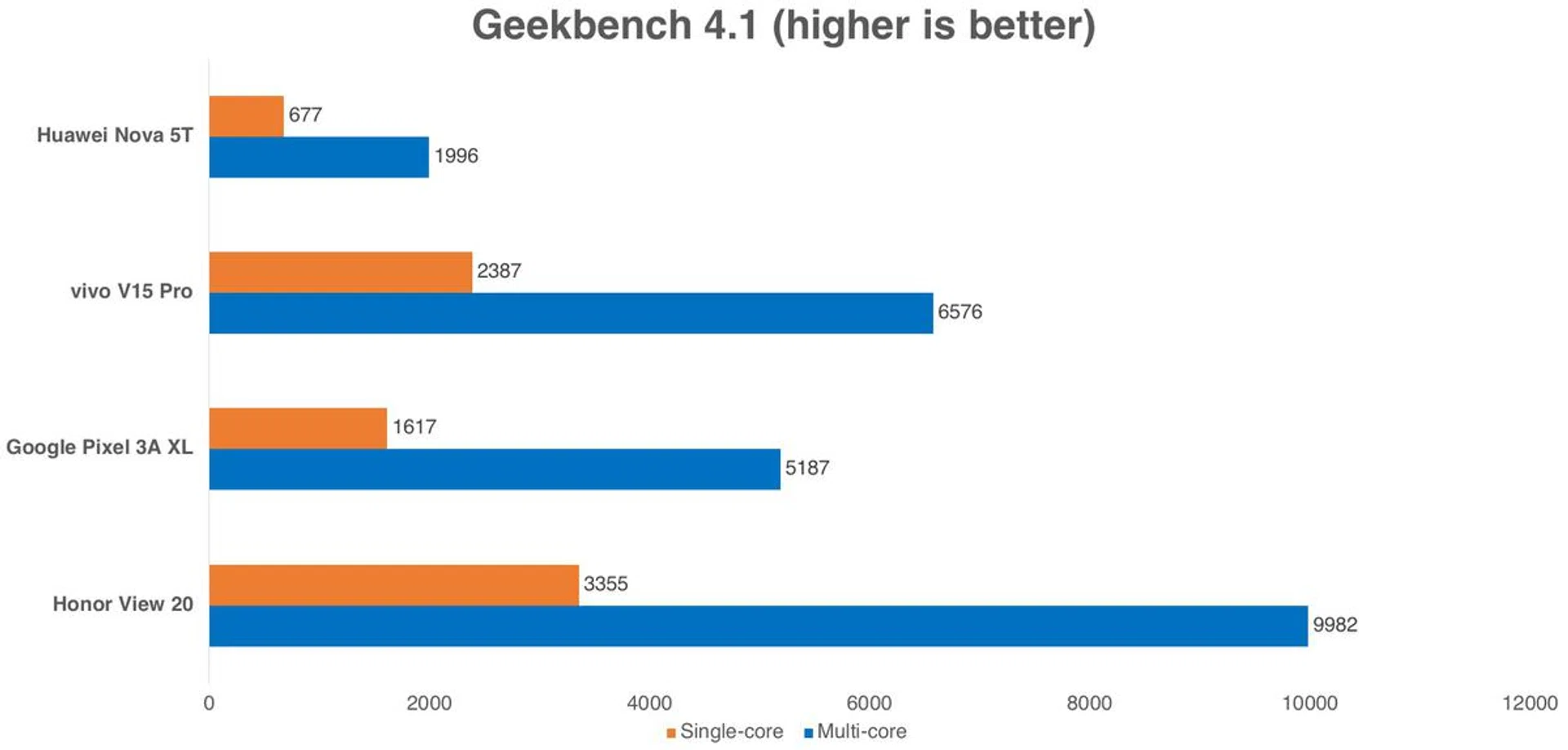
The Nova 5T ended up very much at the bottom of the tables, and way below the Honor View 20, with which it shares very similar specs and the exact same Kirin 980. There was no point even putting in the Snapdragon 855 anymore...
Rubbing our eyes in disbelief, we repeated the benchmarks several times and compared it directly against the Honor View 20 to make sure we were not getting something wrong...
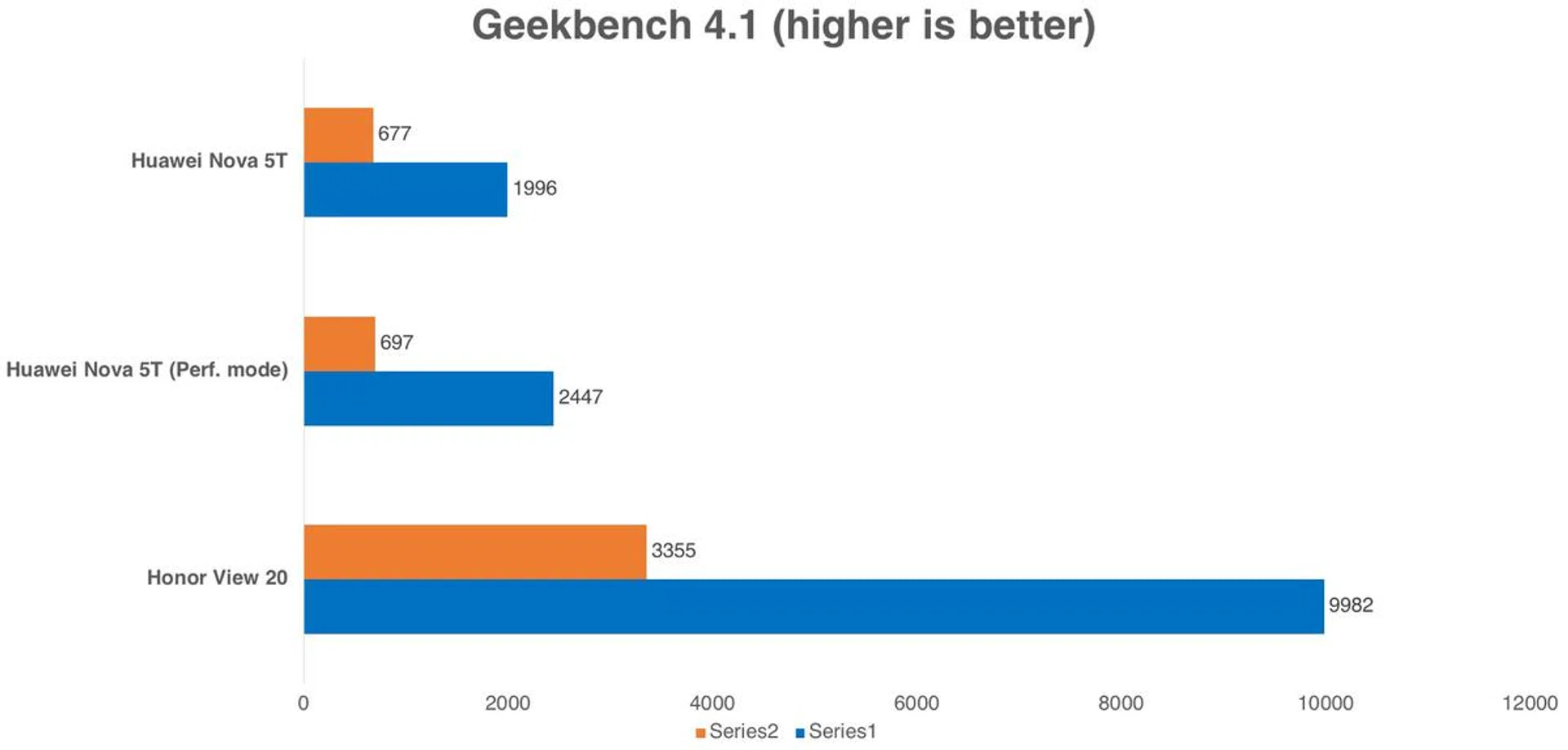
Before some of you point out that the Nova 5T has a Performance mode, Geekbench didn't seem to reveal any real difference when it was enabled.
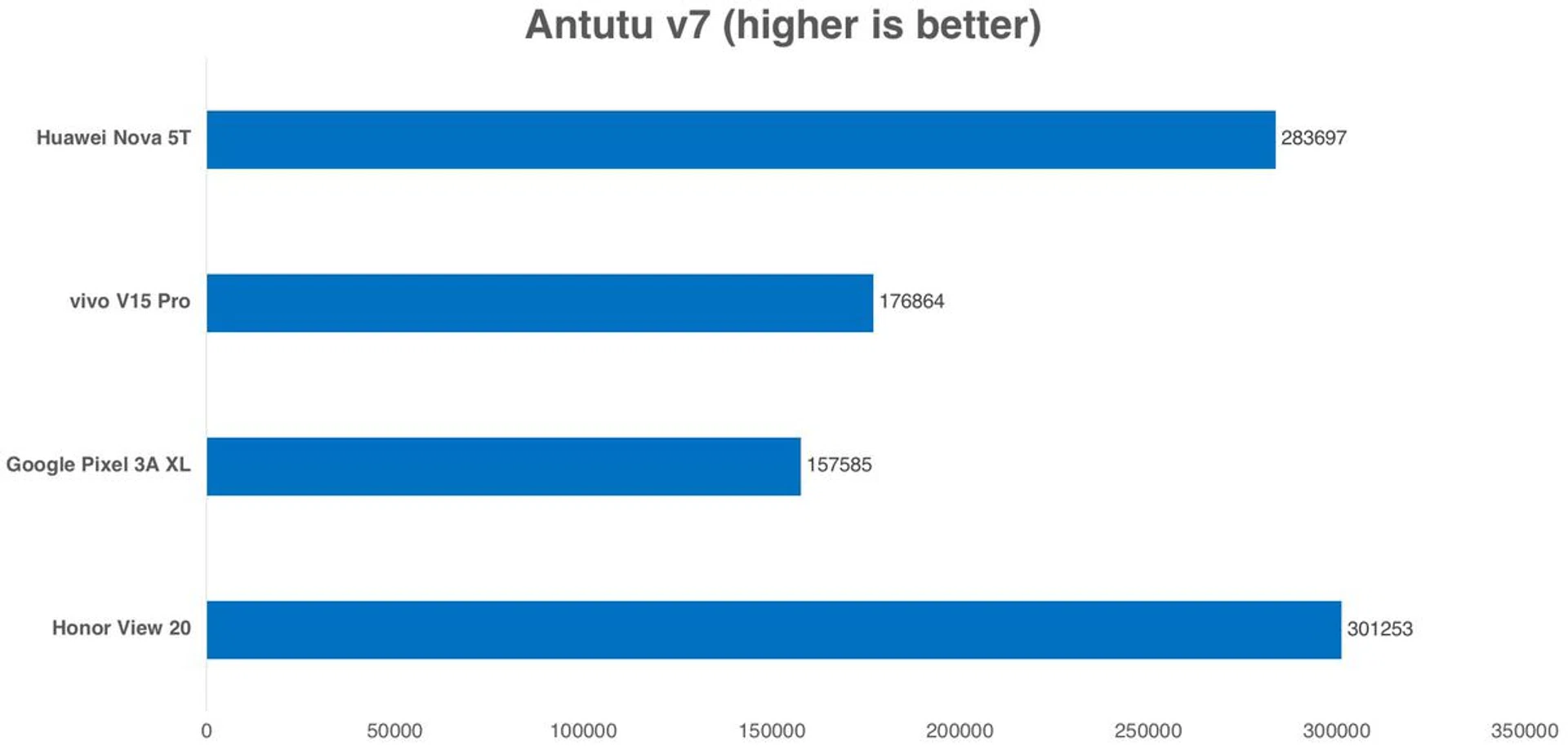
...this time, the Nova 5T eked out a win over the two Snapdragon 7xx devices, but still could not beat its Kirin 980 stablemate.
Wondering if storage speed could be the problem, we decided to run a round of AndroBench to compare both Kirin 980 phones. This benchmark focuses exclusively on storage performance in both sequential and random reads and writes, and we figured it would show up any speed differences in the flash storage used in both devices. (On another note, both of these phones have 8GB of RAM in their tested configurations.)
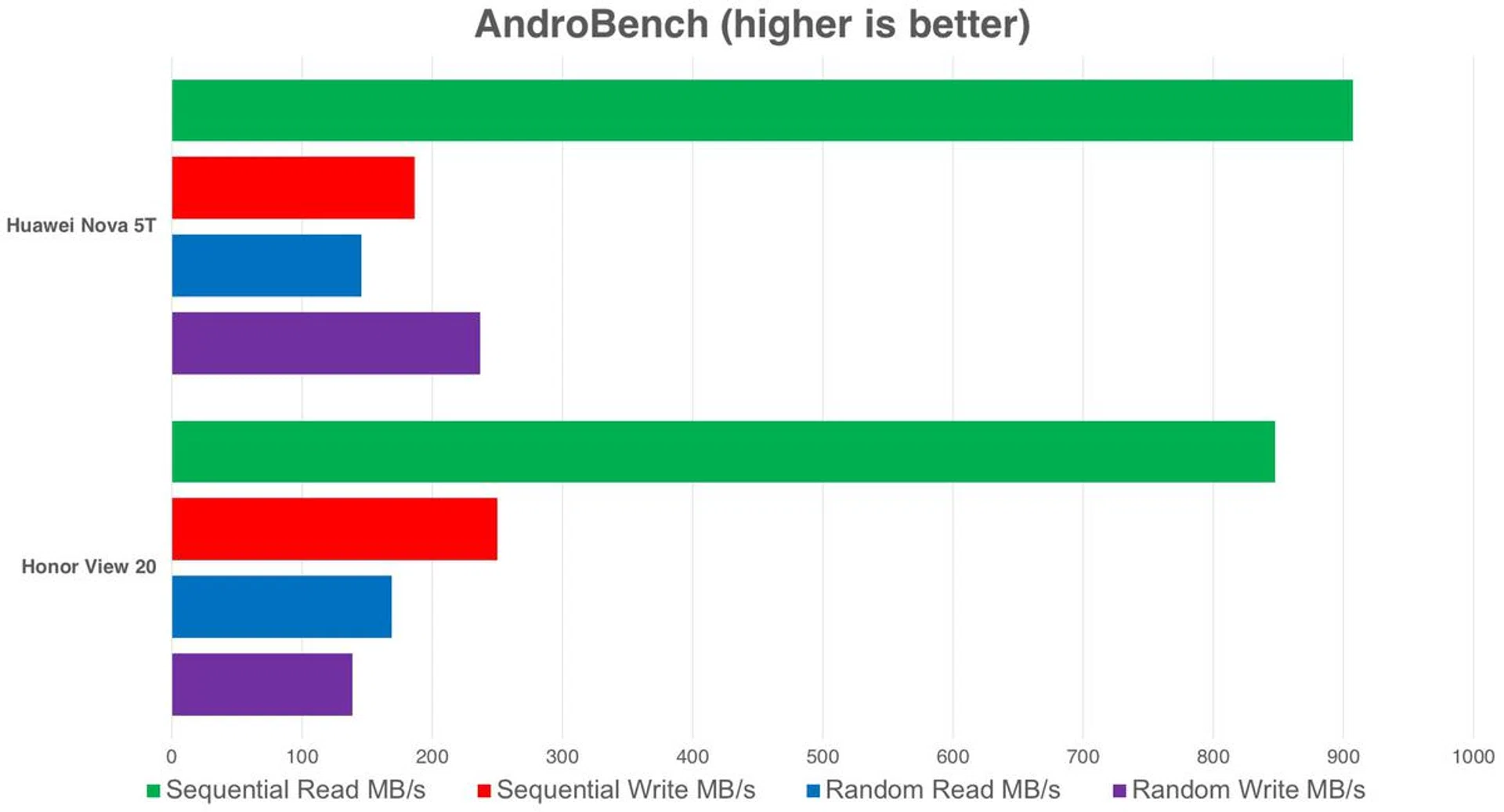
The results from AndroBench proved inconclusive, so we'll put the discrepancies down to differences in software or drivers.
3DMark
3DMark, which profiles graphics performance (duh), revealed another strange happening: the Nova 5T was again handily defeated by the Honor View 20.
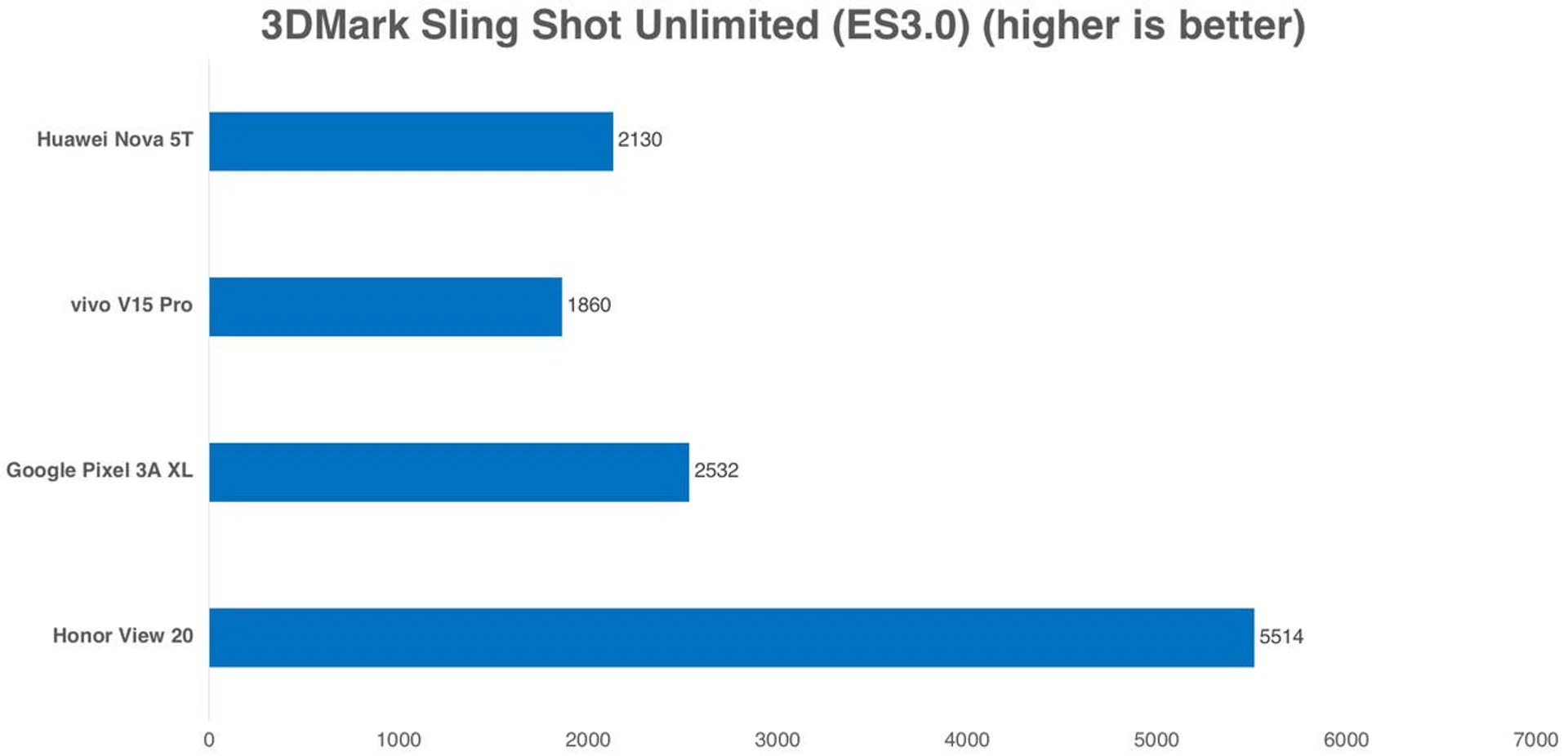
It's got to be the drivers!
We can only chalk these weird observations up to the use of different drivers and OS optimisations. Thankfully, none of this was noticeable in real-world usage. In daily use, the Nova 5T felt every bit like a Kirin 980 device, with no discernible lag. However, it was just a little disconcerting to see these results. One can only wonder...
...but not the same battery life?
Our standard battery test for mobile phones has the following parameters:
- Looping a 720p video with screen brightness and volume at 100%
- Wi-Fi and Bluetooth connectivity turned on
- Constant data streaming through email and Twitter
Given its 300mAh smaller battery compared to the Honor View 20, and (perhaps) the higher power drain from its Kirin 980 chip over the Snapdragon devices (and from using an LCD screen instead of an AMOLED panel), the Nova 5T didn't impress with outright battery numbers. We had no problem securing a day's worth of moderate usage, but once the display brightness was turned up, there were days when this figure seemed in jeopardy. This phone could do with a larger juice pack than a 3,750mAh battery. It's saving grace could be its speedy recharge as it has support for 22.5W Huawei SuperCharge.
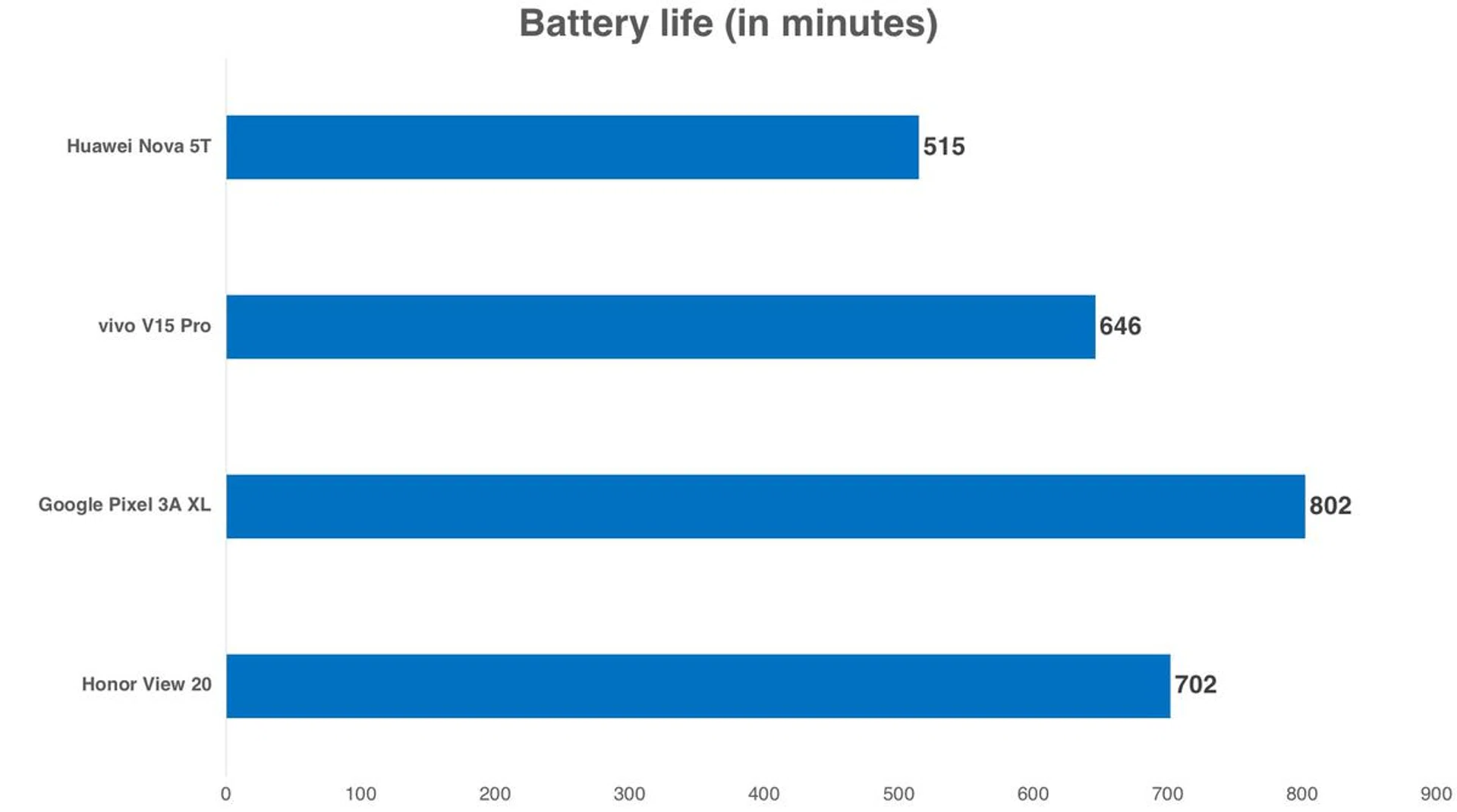
The Nova 5T's battery life was where it ought to have been given its 3,700mAh cell.
The phone's quad-camera system comprises the main 48MP lens, 16MP wide-angle, 2MP macro, and a 2MP bokeh lens.
Imaging
No fewer than four cameras are on the back of the Huawei Nova 5T. Every mid-ranger today must have its 48-megapixel sensor, and Sony's IMX586 is paired with a 28mm lens for the main shooter, followed by a 16-megapixel f/2.2 13mm ultra-wide, a 2-megapixel depth sensor... and another dedicated 2-megapixel macro unit, which we'll have more to say about later.
Available camera modes include the usual panorama, a Pro with full shutter, ISO and exposure compensation adjustment, various modes that make use of multi-frame long exposure fusion such as the Night mode and Light painting, and a proprietary 48MP AI Clarity mode which makes use of slight movement between shots to create a "true" 48MP image. For those of you into such things, there's also an AR lens feature for superimposing various animal emoji onto your head.
Let's just say those already used to the state of the Chinese smartphone camera art in 2019 will neither be disappointed - nor surprised - by the Nova 5T's nicely detailed but overly rich output. As with most other Huaweis we've reviewed, there are no obvious colour casts, but the camera tends to emphasize (and often oversaturate) blues.

As expected for a Huawei, the Nova 5T turns in contrasty and saturated colours with blue, blue skies.

The wide-angle camera is competent and, importantly, doesn't differ greatly in colour rendition from the main shooter, but wide-angle shots often look more contrasty due to the smaller-aperture lens having to work harder to catch the light.

Indoors, noise is well controlled and the HDR algorithm works well to bring up shadow detail...

...but there are sometimes signs of slightly over-zealous HDR processing, such as in the slightly unrealistic flat-looking clouds here.
While low-light performance is decent, it's no longer anything to stand on your chair and shout about. Huawei would have been at the very top of the multi-frame stacking night mode game (with Google) a generation ago, but all of the mid-range competition has since cottoned on to how it's done, so it's just par for the course now:

Night-mode performance is definitely competent, but compared to the more expensive Huawei flagships, images are softer due to higher levels of luminance noise.
Kudos to the 32-megapixel selfie shooter for not turning me into a K-pop star wannabe, though I wish it had a little more bokeh:

Yes, my desk is messy. No, I do not have time to fix it.
Video quality on the Nova 5T kept pace with its still image output. You have a choice of 4K at 30fps or 1080p at up to 60fps. Slow-mo video is also available at up to 960 (yup!) frames per second.
There's a... dedicated macro camera?
In keeping with a rapidly growing trend for 2019 on newly-released and upcoming Chinese phones, the Nova 5T features a dedicated 2-megapixel macro shooter.
I'm personally not a fan of these things. Why? First, check out the reference shot for this comparison we're about to do:

There's nothing better, and handier, to test macro modes with than a tenner. (In case you've been living under a rock, what appears to be a line above the names of Singapore is actually microtext: "MONETARY AUTHORITY OF SINGAPORE.")
Now, take a look at these two crops, one from the macro camera, and the other from Huawei's AI Clarity 48MP mode:
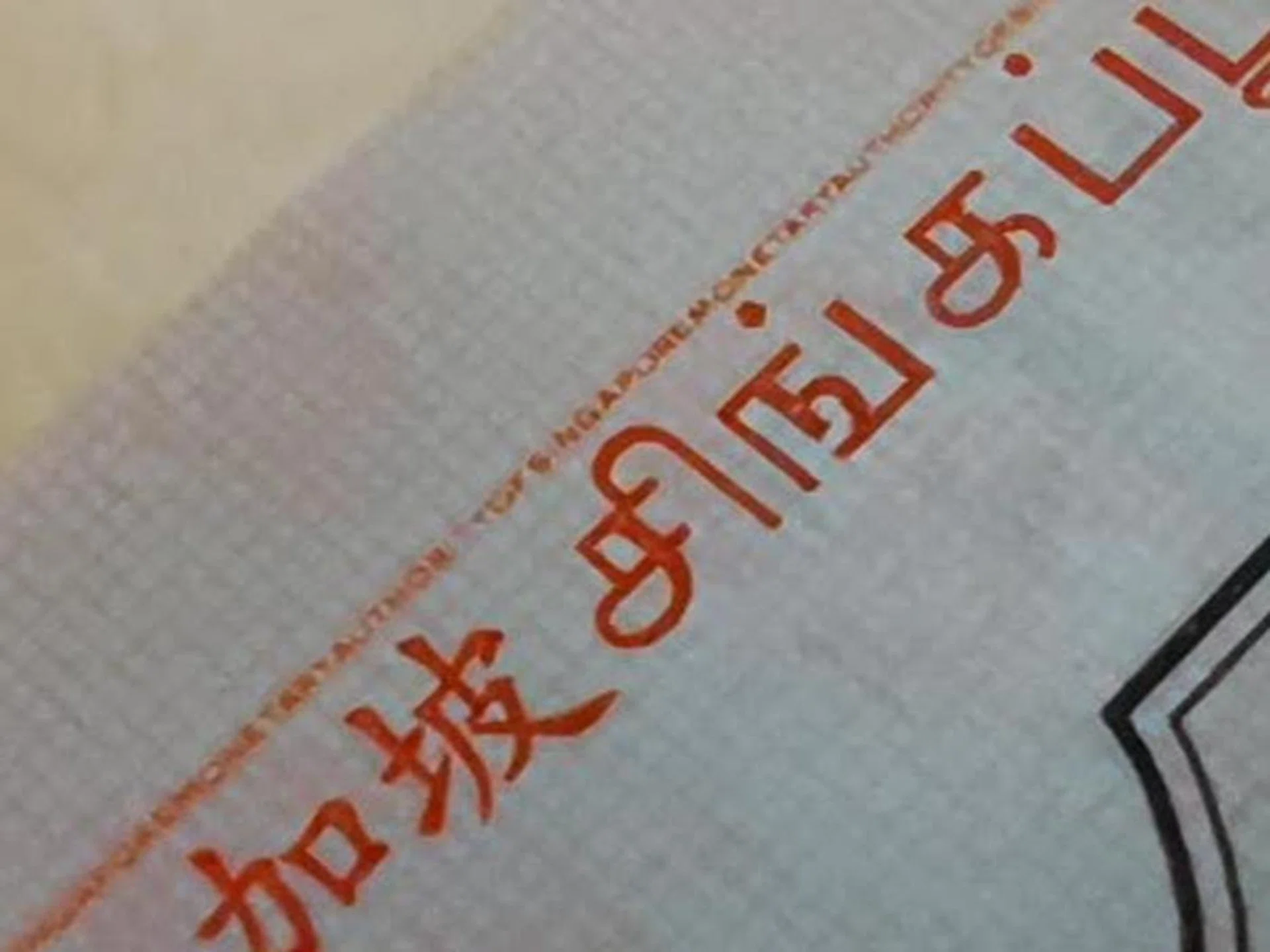
The so-called macro camera is actually less detailed...
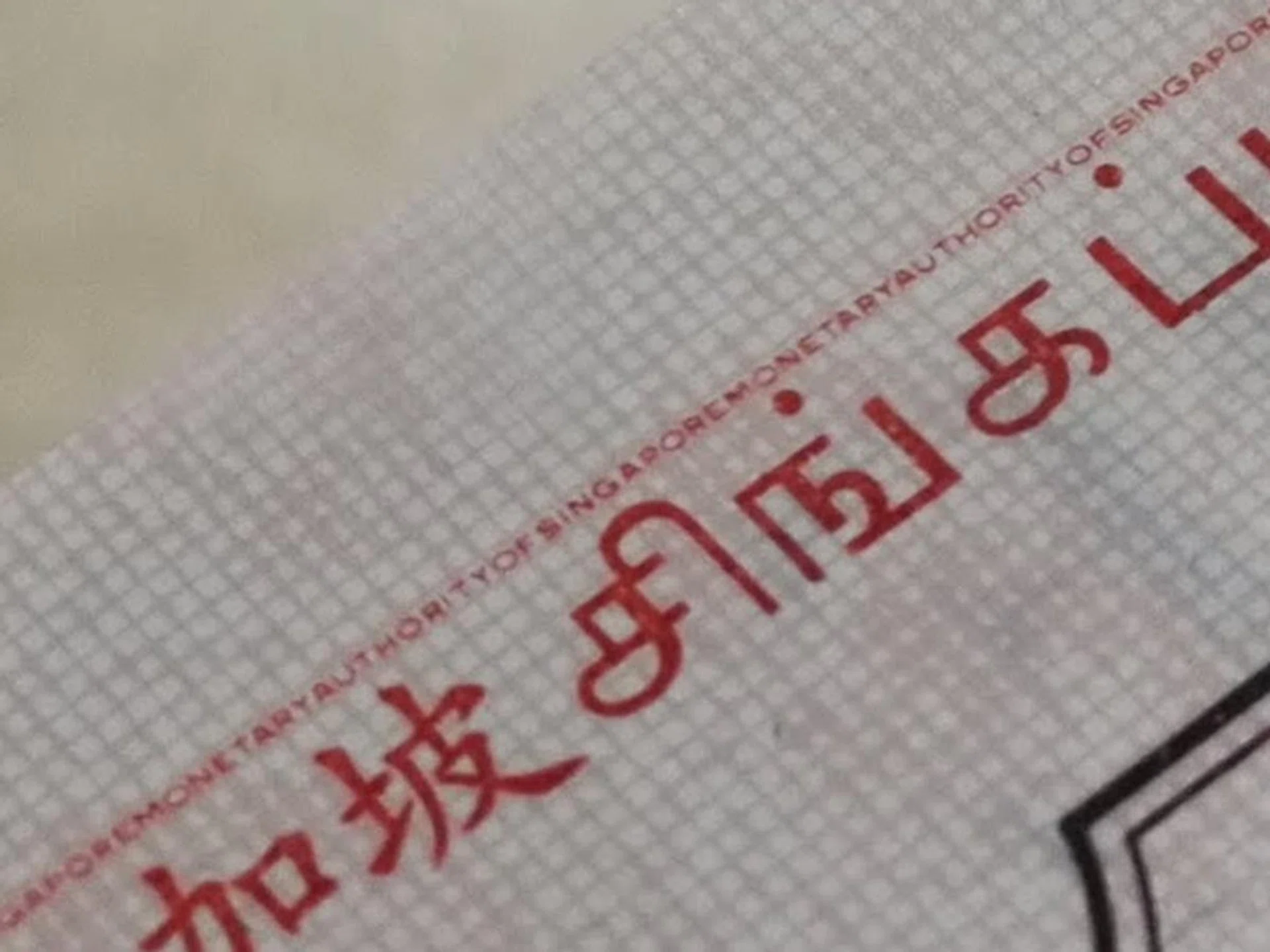
...than a crop from the 48MP AI Clarity shot!
We're starting to see an increasing number of phones with a completely unnecessary complement of cameras. Even the newly-announced 108-megapixel Mi Note 10 has multiple telephoto units, one for 5x zoom - and one for just 2x! Why, really?
In this case, dedicated 2MP macro snappers appear to me to be a step in the wrong direction, lacking sufficient detail and hence offering little benefit over using the main camera at a greater distance (especially since it's likely to be a high-megapixel unit these days, too). And it's certainly not great having to pay for extra features/functions that add no value.
Conclusion
Continuing in the spirit of the Oasis song which gives this review its title, I only have this to say to anyone surprised by the Huawei Nova 5T's general level of competence: where were you while we were all getting high on the mid-range?
There's nothing surprising about this phone in 2019, and there shouldn't be, even given its flagship-class processor, its good cameras, and its premium build. The only debatable party poopers are the use of an LCD (which isn't that bad), no dust and water resistance (which is rare at this price anyway), and we think it'll mostly come down to whether you're okay with the lack of expandable storage and a headphone jack - and whether you can get used to the slight dissonance in EMUI OS versus cleaner Android builds on, say, the Pixel 3A XL.
Not least of all, the RRP of $598 stamps this phone firmly as a mid-range player. All that's left is (puts on sunglasses) to slip inside the eye of your mind and see if the Nova 5T is gonna be the one that saves you. Yeeha!
Online store purchase options
Our articles may contain affiliate links. If you buy through these links, we may earn a small commission.