
The Birth of the Ultrabook Concept
A few years ago - back when Intel’s processors still had the name 'Centrino' tied to them - we had a class of notebooks known as 'sub-notebooks'; they're basically cheap and weak laptops that barely allowed you to do anything more strenuous than run Microsoft Office. And even then, they only stayed alive for not more than two hours on a single charge. Eventually, these sub-notebooks evolved into what we call netbooks.
Netbooks typically run on Intel’s low-voltage, minimal power Atom processors, and are marketed as a lightweight, mainstream notebook-like presentation platform or content creation device. Notably, they were more compact than average notebooks. But the fact of the matter is, most buyers instead found themselves using netbooks mainly as content consumption devices. For complicated tasks or those that require more intense processing and require more screen real estate and resolution, many would find their ways back to laptops or desktops.

Netbooks are increasingly being made obsolete by powerful, thin-and-light Ultrabooks. Pictured here is a premium netbook, which by now has been sidelined for these newer devices (including tablets).
And even as a media consumption device, a netbook doesn’t seem to do the job very well either. Thanks to the advent of rich multimedia websites like YouTube, Facebook (not to mention Flash-based games), and the like, the limited hardware a netbook runs on is exposed even further. Though similar to a mainstream notebook, a netbook has USB ports and a real keyboard, but it also come with weak graphics and can hardly handle any credible multi-tasking due to its limited CPU processing power. And if your focus is on media consumption, a tablet with its even higher portability and easy-to-use touch interface may be a better choice. Indeed, when anyone whips out a netbook now just to watch a YouTube video, he is simply eliciting ridicule from the guy holding an iPad next to him.
Goodbye Netbook and Hello Ultrabook!
Intel probably heard the death knell of the netbook earlier this year, when Apple worked closely with Intel to get the right kind of low-voltage processors that is both powerful, and energy efficient for their latest line of MacBook Air. Having said that, the demise of netbooks is inevitable as it was only a stop-gap measure to satisfy simple computing usage with a light and small notebook. Ultimately, the goal is to have notebooks that are slim, sexy, powerful and affordable - this is exactly what Intel wanted to carve out with the "Ultrabook" segment. Here's our video walkthrough on what they are and design considerations to choosing one:-

Such notebooks have existed for years with the exception of price in the form of Sony's ultra expensive range of notebooks (such as this) amongst others. Apple's MacBook Air, which captures most of the ideals of an Ultrabook, was also initially very expensive, but the company's perseverance to keep that model, continuously improve it and bring down the price point (not to mention its strong brand following) made it a de facto leader among this class of notebooks. So the challenge for the rest of the notebook players is to bring down the price of manufacturing such desirable notebooks and be able to compete in the market effectively.
Intel has also outlined certain characteristics of the Ultrabook which we've captured in this table below and compared it across other notebook variants to give you a better understanding of the differentiation across them. Incidentally, the requirements for an Ultrabook, are somewhat similar to the latest MacBook Air iteration, but that's exactly what the consumers desire these days.
Categorization / Key Identifiers | Netbook | Mainstream Notebook | Ultrabook |
Requirements | A platform at new affordable price points | All purpose usage | More than basic usage with extreme portability |
Key Usage Models | Internet-centric | Office Productivity & Multitasking | Office Productivity & Multitasking |
Screen Size | 10 inches and below | 13 inches and above | 11 to 13 inches |
Operating System | Windows Starter | Windows Home Premium and above | Windows Home Premium and above |
Hardware Platform | Intel Atom (Up to 13W TDP) | Intel Sandy Bridge (Up to 55W TDP) | Intel Sandy Bridge (17W or below TDP) |
Price-point | <US$500 | >US$500 | <US$1,000 |
Weight | ~1.3kg | ~2.0kg | 1.3kg or less |
The First Real 'Ultrabook'
The MacBook Air of 2008 appeared around the same time as netbooks did. When it came into the scene, it was nothing like anyone had ever seen before. It was low powered, extremely expensive, and simply didn’t seem like a serious machine. Meanwhile, netbooks exploded in popularity, and was the de facto machine to get if you wanted extreme portability.
Apple, with their deep pockets and grand vision for the future of computing, stuck with the MacBook Air. And boy are we glad they did. Three years down the road, Apple basically controls every single step in the MacBook Air’s supply chain - including parts prices. When you are buying parts by the gazillions, and building millions of MacBook Airs, you will bring the price down to exactly where you want it to, and make a healthy profit at the same time.
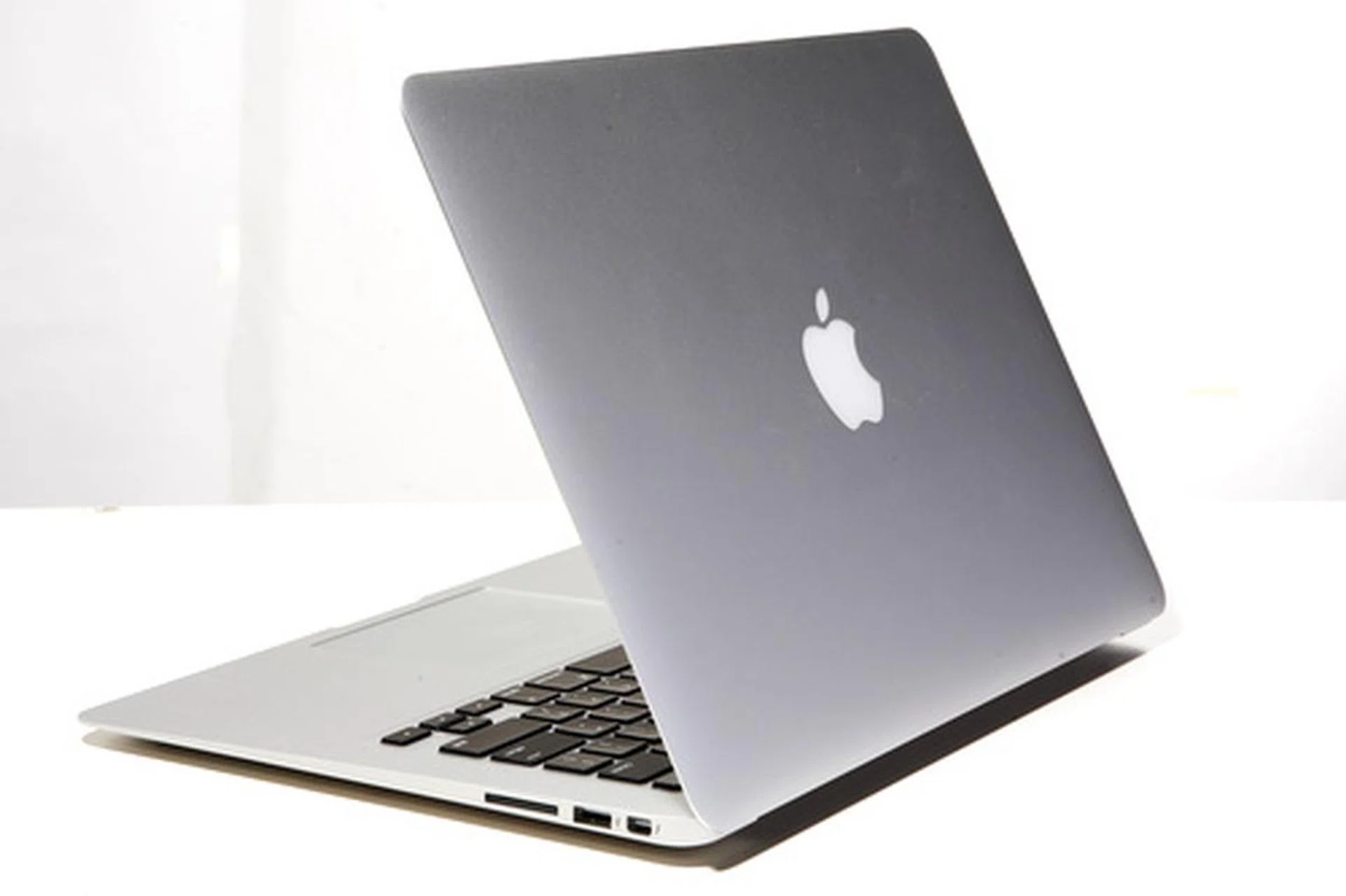
This year's MacBook Air is what an Ultrabook should be. While it isn't cheap by any means, other manufacturers are already struggling to catch up with its price point.
So this is where we are at now. The current Ultrabooks are super-thin (less than 20mm) notebooks that use fairly powerful ultra-low voltage (ULV) second generation Intel Core i5 or i7 Sandy Bridge processor, and boast fast start-up times (think 20 seconds) thanks to the use of SSDs (solid state drives). Depending on screen sizes (11 or 13 inches) and other configurable hardware, prices range from US$1000.
So what are Ultrabooks then? And where do they fit in to the big picture? Well Ultrabooks are basically Windows based machines that have MacBook Air-like specs, and cost under US$1000. Yes that’s right, Ultrabooks are the cheaper, Windows versions of the MBA. Intel while working with Apple, saw how lucrative ultra thin notebooks can be, now wants other manufacturers to join in the fun. If it catches on with Windows products, Intel can effectively sell even more processors. This is of course the real reason behind creating an enticing new notebook segment, which as a byproduct, is improving our expectations of a notebook. This is Intel's expectation of Ultrabooks:-

Ultrabooks You Can Hold Now
Still not very clear on what an Ultrabook is like? No problem. All you have to do is go look for a Samsung Series 9. This notebook is exactly what an Ultrabook should be like, price aside. Samsung was one of the manufacturers who bought into Intel's Ultrabook premise, and has the manufacturing clout to actually come up with one. We first saw it during Computex 2011 in Taiwan early this year. And even though the ASUS UX31 was widely talked about, the Samsung Series 9 was the first to appear in the market, as early as April 2011.
However Samsung was unable to lower the price of the Samsung Series 9 to fit into Intel’s sub US$1000 pitch. Using expensive materials to form its uniquely designed shell, it costs US$1649 a pop and was way too expensive for the general public looking for a Ultrabook with tablet-like instant use features. At this kinds of prices, they might as well get themselves a tablet (which Samsung also offers by the way).
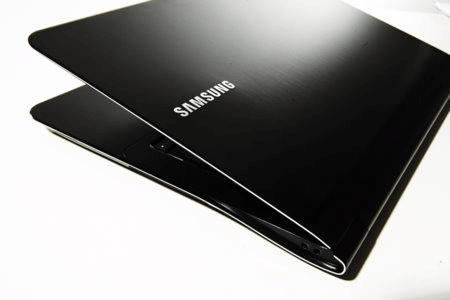
The Samsung Series 9 reached us as early as April this year, and while it embodies everything an Ultrabook should be, there is one area that prevents it from being a true Ultrabook -- price.
As we get closer to the end of the year, more Ultrabooks will be released, and we will be seeing more of what will become the next trend for notebooks (goodbye netbooks, don’t write to us, we won’t be missing you).
Thus far, we've gotten our mitts on the very beautiful Lenovo IdeaPad U300s which really impressed us, and gave us hope for the future of Ultrabooks. There was also the Acer Aspire S3, which to us, looked exactly like the MacBook Air, but didn't quite rival it. In its case, the Aspire S3 comes in various configurations, and some of those flavors don't come with an SSD, in an effort to cut costs. Those machines without SSDs registered performance levels way below than what we're comfortable with. But like the U300s, the Aspire S3 also set the bar pretty high for what we expect ultra-thin-and-light notebooks to be like in the future. In fact, the Acer Aspire S3 was the first true Ultrabook in this region that managed to meet all of Intel's criteria, including price.
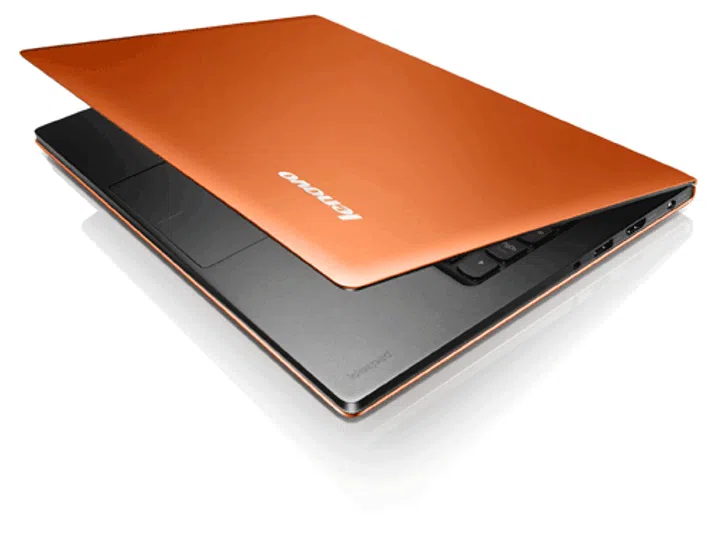
The Lenovo IdeaPad U300s is a beautifully crafted machine that is somewhat different from other machines out in the market, thanks to its bold design.
Each manufacturer has something up their sleeve and we can’t wait to lay our hands on all of them. Toshiba has the Z830, ASUS with their UX31, LG with their P220. HP, the world's biggest PC manufacturer also announced their Folio series to usher in a slightly varied version of the Ultrabook. And if the Ultrabook premise does well, Economics 101 tells us that the prices will head south, and we will all be swimming in Ultrabooks and affordable SSDs (we really hope so). For now, almost every notebook brand we know has pledged to deliver an Ultrabook to ride this new wave.
What Can You Do with Ultrabooks?
So the tech industry is abuzz with chatter about Ultrabooks, but what can you expect to do with this new class of notebooks? Is there a 'catch-22' associated with an Ultrabook? Let's recollect where it stands. Here you have notebooks that are extremely portable, thin and come with screens that are generally 13 inches across. They have tablet-like features, such as instant resume, could potentially be touch enabled and depending on Windows 8, it could be pen controlled, or better yet, both.
In fact, much of what an Ultrabook can do, is very much dependent on the upcoming Windows operating system codenamed, Windows 8. This new OS is supposed to be more tablet friendly, but at the same time, maintaining its PC centric roots. Effectively, this means it will offer two types of computing experiences on the same OS. But if your Ultratbook machine shipped this year, in 2011, it will still be based on Windows 7.
So what exactly can you do with an Ultrabook, running on Windows 7? Well the answer could simply be, anything you can do on Windows 7, but that’s not quite right. Let’s look at the components an Ultrabook comes with, and let us break it down for you.
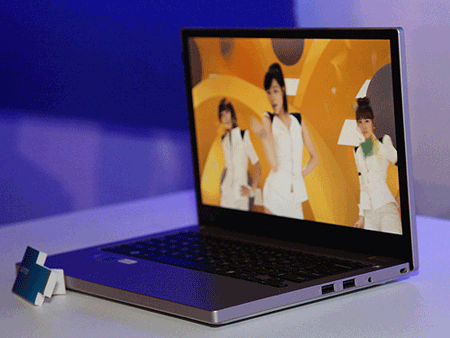
Ultrabooks can generally run Windows 7 just fine, Their reasonable Intel HD 3000 integrated graphics is able to render almost anything you need to - except for serious gaming. That limitation is more than understandable though.
In terms of graphical power, Ultrabooks run on the fairly versatile integrated graphics (Intel HD 3000). Rendering the Windows 7 desktop isn’t a problem, and the same goes for spreadsheets and charts on your typical office software. Running a few tabs in your web browser, filled with rich HTML5, or even Flash apps won’t pose problems (unlike graphic intensive games). Even maintream photo and video editing programs would be a pleasure to use. If you stretch it a bit, depending on each system's configuration, professional grade application can run reasonably well too.
With start-up times that need to be 20 seconds or less (a guideline laid by Intel), without tweaking any software or hardware, this would most Ultrabooks will likely be running off solid state drives. When you have an SSD onboard, the extremely efficient read/write speeds and fast seek times of these devices will also contribute to more efficient loading of programs, and everything else. The more affordable models would still be using a traditional hard drive, so don't assume that an SSD is the norm.
So essentially, an Ultrabook can do just about anything but intensive games - until unless the next revision of Ultrabooks come along in the future where their thin profile and limited TDP range can accommodate a future generation of discrete graphics.
If an Ultrabook can accomplish just about anything, how does it differ from beefier multimedia and gaming grade machines? Simply put, computing hardware has evolved a lot faster than software can catch up with, leading to the current situation where even entry-level notebooks are sufficient for most needs. Where the more beefier machines deliver their edge is when you crunch very large workloads in rendering or engineering software, run several content creation tasks in parallel or indulge in high quality gaming. The Ultrabook wasn't designed to tackle these extreme situations and hence the presence of various notebook segmentation to cater to every need.
What’s Next for Ultrabooks?
So our resident silicon expert, Dr. Jimmy Tang, went all the way down to San Francisco to get us some news regarding Intel’s next generation Ivy Bridge processors. According to Dr. Tang, the current horde of Sandy Bridge based Ultrabooks heading our way may be half obsolete by the time they reach us.
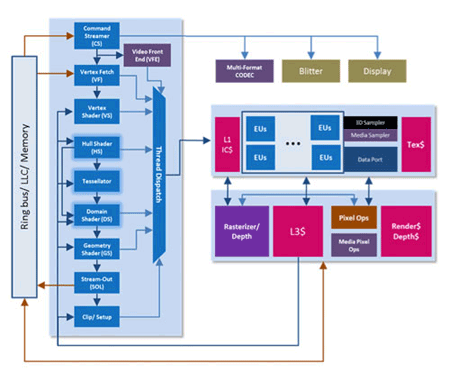
Yes it looks complicated, but for the more technical readers out there, this is the Ivy Bridge processor's graphics processor block diagram. Notable new features include DirectX 11, Intel Quick Sync Video technology, hardware tesselation, support for compute shader and level 3 cache within the graphics processor for better power management and performance.
The new processors, codenamed Ivy Bridge, which we will be seeing in early 2012, feature even better graphics, better power conservation and are backward compatible with the current platform that use the Sandy Bridge processors. That means the current batch of Ultrabooks can easily be updated by manufacturers just by dropping these new chips onto the motherboards, and they’re good to ship. Essentially, all you need to know is that the Ivy Bridge processors will feature improvements from all angles to better the already well received second generation Core i3/i5/i7 processors.
Even though the Ivy Bridge processors have yet to arrive, we already know what comes after it -- Haswell (2013). According to what Intel has shared, Haswell will complete the Ultrabook transformation. While that sounds abstract, the new Haswell chips will improve further on power consumption, and graphical processing power to enable all-day usage with an always-on standby capability.
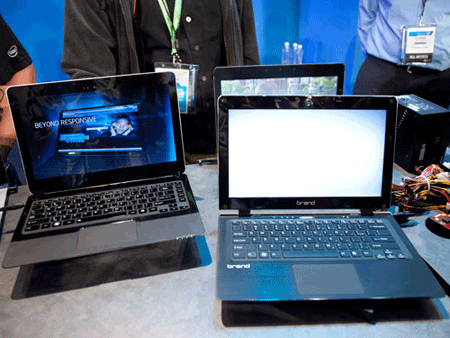
These are Ivy Bridge based notebooks that were on display during Computex earlier this year, and they were all working swell. We should be seeing these new machines at the turn of 2012.
We know is, it can’t come soon enough, even though currently, Sandy Bridge processors are already powerful and efficient enough for most needs. But it’s actually the extra long lasting and efficient battery life that gets us excited. Imagine a scenario where you don’t have to worry about charging your notebook, even after a whole day of intensive use, disconnected from the wall. Now that is what extreme portability is all about.
What Will Make or Break Ultrabooks
Also extremely crucial to the success of Ultrabooks, is what these machines are made to run on -- the Windows operating system. Windows 7 is great, and we're more than happy to complement Microsoft on that. However if the next iteration of Windows -- codenamed Windows 8 -- lives up to what we've seen so far, then it might just be the catalyst that propels the Ultrabooks to the next level.
What we know so far is that Windows 8 is extremely touch-friendly and geared for usage on multiple product groups from tablets to PCs. Gestures and touch movements will control elements in the graphical user interface, such as the much touted "Tiles" concept (also found on Windows Phone 7). As it is, part of Intel's US$300 million fund is targeted at improving the way users interact with their hardware, whether through touch, stylus or other new means of interfacing with the Ultrabooks.
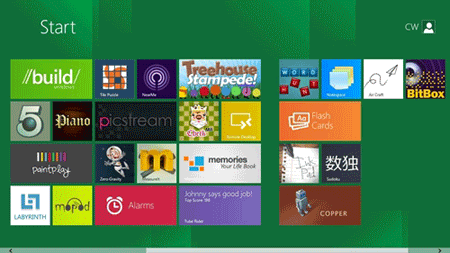
Windows 8 is what Microsoft will be using to penetrate the tablet market and improve the standings of Ultrabooks.
.
Due to this direction, we get an impression that Ultrabooks down the road will feature touch-sensitive screens, or could be convertible into tablets. This gives you a plethora of options on how you can use your machine, or how you want it to interact. In fact we'd go so far as to say, what Ultrabooks can or cannot do is quite dependent on what Windows 8 will allow. So to get an inkling of how Ultrabooks will progress later next year, be sure to keep your eye on the Windows 8 momentum too.
And if Ultrabooks take off, you can be sure that the line between notebooks and tablets will be blurred even further. That's because Ultrabooks are meant to have the same instant-on, instant-use feature found on tablets, while tablets are increasingly adding more compute performance at a furious pace (such as NVIDIA's upcoming Tegra 3 platform). We can't say for sure which will be the dominant form factor, but if the Asus Transformer, Eee Pad Slider and upcoming Transformer Prime are anything to go by, we'd like to have our cake and eat it at the same time please.
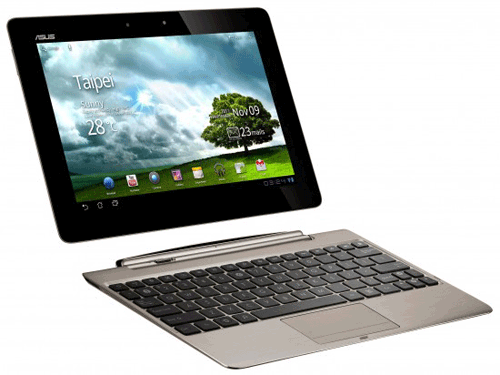
The forward thinking Asus Transformer Prime may be more than just an innovative form factor to differentiate itself from other tablets. It might possibly become the dominant form factor of Ultrabooks in the years to come.
Will Price Break the Ultrabook?
Another crucial factor that is acting as a roadblock of sorts for mass adoption of Ultrabooks, is price. This is a crucial reason why netbooks were so popular in its heyday (until people found out its limitations first-hand). Pricing will yet again play a pivotal reason to alienate or elevate Ultrabooks. So far, none of the 13-inch Ultrabooks we've come across have managed to live up to the sub-US$1000 promise of the Ultrabook.
Even Apple, with its extremely streamlined operations is unable to price their top specced MacBook Air under US$1000, so what hope do other manufacturers have of lowering their prices, and yet make a healthy profit at the same time? We know that Intel is banking on mass adoption of Ultrabooks to make inroads into the mobile arena, because they have virtually no presence in tablets and mobile phones today.
They need to leverage on their strength in the PC arena and force their way in using Ultrabooks. And it isn't going to happen unless Ultrabooks cost a lot cheaper than what manufacturers are charging these days. Sure they've got a US$300 million Ultrabook fund to boost innovations surrounding Ultrabooks (touch technology, battery life, etc.), but that isn't going to mean much if the overall notebook prices don't fall enough to stimulate mass adoption.
Except manufacturers are wary of the Ultrabook. Most of them are still riding high on the netbook wave.
Even though every major manufacturer has an Ultrabook slated to appear in the market, they are worried that reception for them may be lukewarm at best, hence the low initial shipping numbers. Remember when ASUS was the only vendor to embrace netbooks, and when it sold well, every other manufacturer jumped on board the train? Well the same situation is happening now. Manufacturers are hesitant to invest heavily on something that is yet unproven to their company. However unlike the netbook phase, all the companies are on the new bandwagon, but are progressing cautiously until visible gains can be seen.
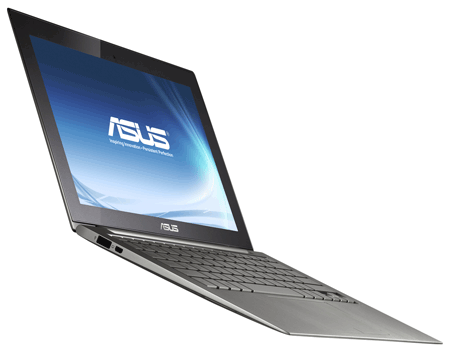
The ASUS UX31, one of the earlier Ultrabooks to be announced.
Something else holding back Ultrabook development now is also the materials available. We know aluminium on your notebook is as sexy as sexy gets, but here's the kicker. Apple basically has a vice-like grip on suppliers that work with aluminium because as you can tell, almost all of their products use a magnesium-aluminum alloy extensively in their designs. Other manufacturers also want their Utlrabooks as desirable as Apple's products, but unfortunately they would likely have to source for other materials to build their machines from (like the carbon fiber used on the Sony Vaio Z).
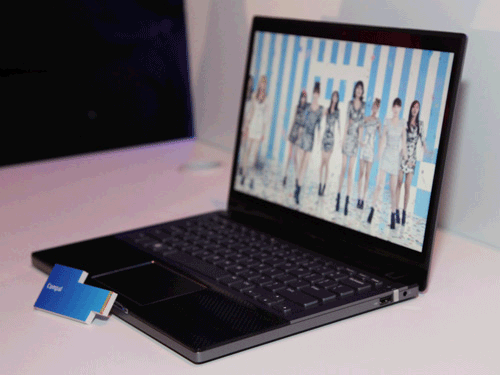
This Compal machine was one of the Ultrabook machines introduced by Intel.
We really hope that Intel and their Windows partners can work on the final roadblocks as soon as possible because all of the Ultrabooks that have graced our labs, are truly objects of desire. Intel recently also made a statement as reported by Businessweek, that as many as 70 Ultrabooks are in the pipeline, and that prices will drop further. Here's hoping to a brighter future for Ultrabooks and more varied options for us consumers.
Our articles may contain affiliate links. If you buy through these links, we may earn a small commission.