
Intel Arc B580 review: The true budget card with a 1440p gaming edge
For budget-conscious gamers who’ve grown weary of the escalating cost of entry into PC gaming, this is a card that delivers where it truly matters.
#intel #battlemage #gaming

Note: This review was first published on 27 January 2025.
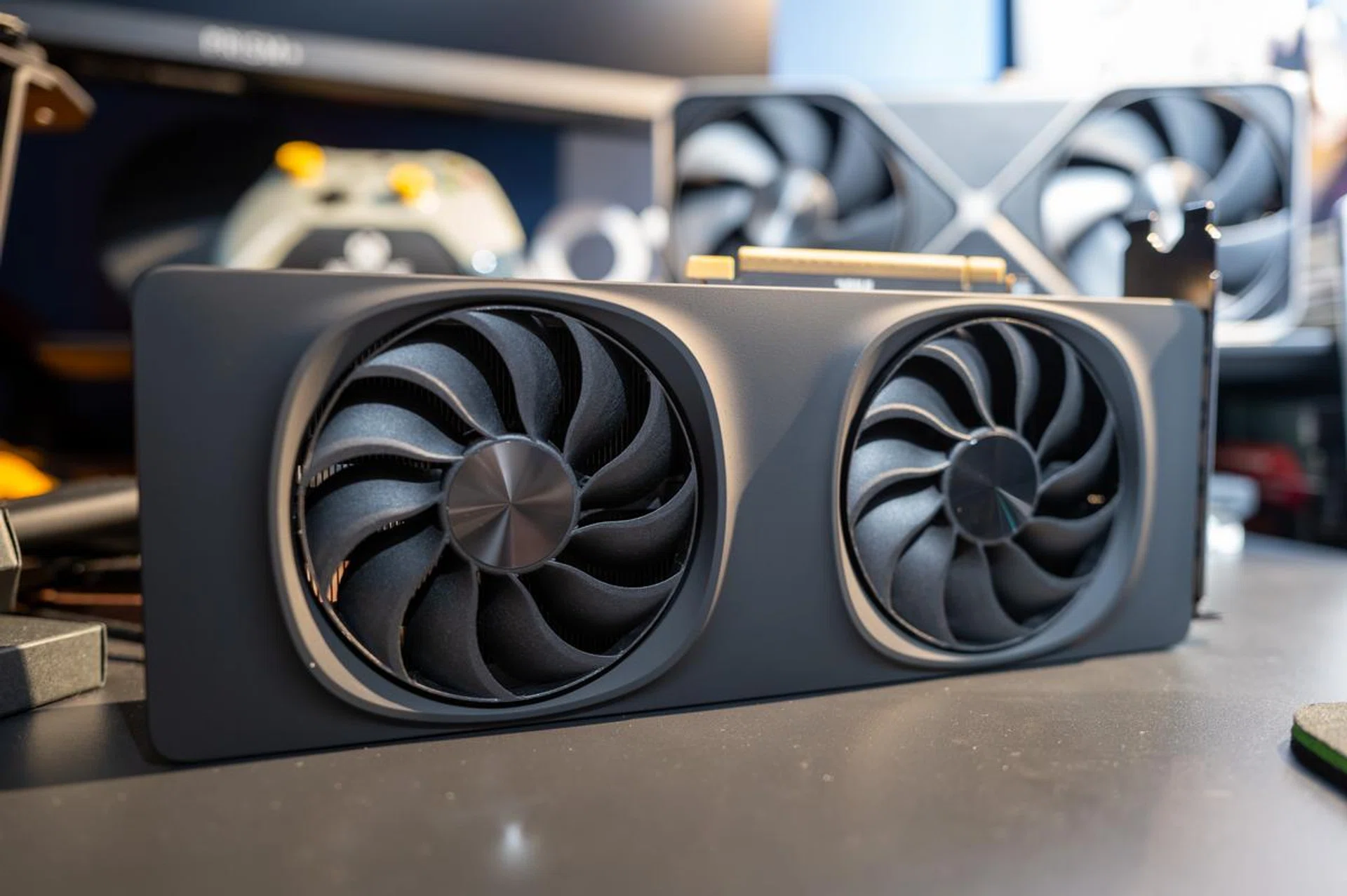
The Intel Arc B580 is the true budget gaming card that we have been waiting for. (Image: HWZ)
The NVIDIA GeForce RTX 50 Series may be getting all the attention right now, and justifiably so – our review of the GeForce RTX 5090 Founders Edition noted how it’s no longer just about sheer horsepower but about using AI to redefine what’s possible in gaming, especially on the higher-end gaming spectrum. These cards aren’t what we would call affordable or for the masses though.
Enter Intel and its Arc B580, a US$249 discrete graphics card that is aimed squarely at gamers who have a tighter budget and are not that interested in the latest visual technologies like neural rendering or ray tracing capabilities.
Now you might be forgiven for assuming that the Intel Arc B580 is nothing more than an affordable card for 1080p gaming. I mean, it is. But with 12GB of VRAM, which you don’t find in any of NVIDIA and AMD’s GPUs at this price point since they are all limited to 8GB, the Arc B850 has enough muscles for 1440p gaming too – as my time spent benchmarking the card revealed.
In short, this is the card you really want without having to sell a kidney or mortgage your home. It’s a nice breath of fresh air if you’re a budget gamer who can only afford a 1080p card that actually runs 1440p pretty well too.
Intel really knows how to make a nice-looking card
It’s not like Intel cut corners with their reference card to keep the cost low either. Built on Intel’s Xe2 architecture (codenamed Battlemage), the Arc B580 is more gorgeous in person than our photos here showed. The fan shroud has a very nice, soft, silky black finish that gives it an unexpected premium feel too. It’s almost the anti-thesis of the somewhat cold, industrial-looking all-metal cards from NVIDIA and AMD. Flip to the side where the logo is printed, and it will also light up with a white LED. It’s a simple yet stunning graphics card and it’ll look really good if you’re going for the all-black and no RGB computer build.
Elsewhere, the Arc B580 is – thankfully – powered by a single 8-pin PCIe power connector and occupies two PCIe- slots. You also won’t need a card stabiliser or holder.
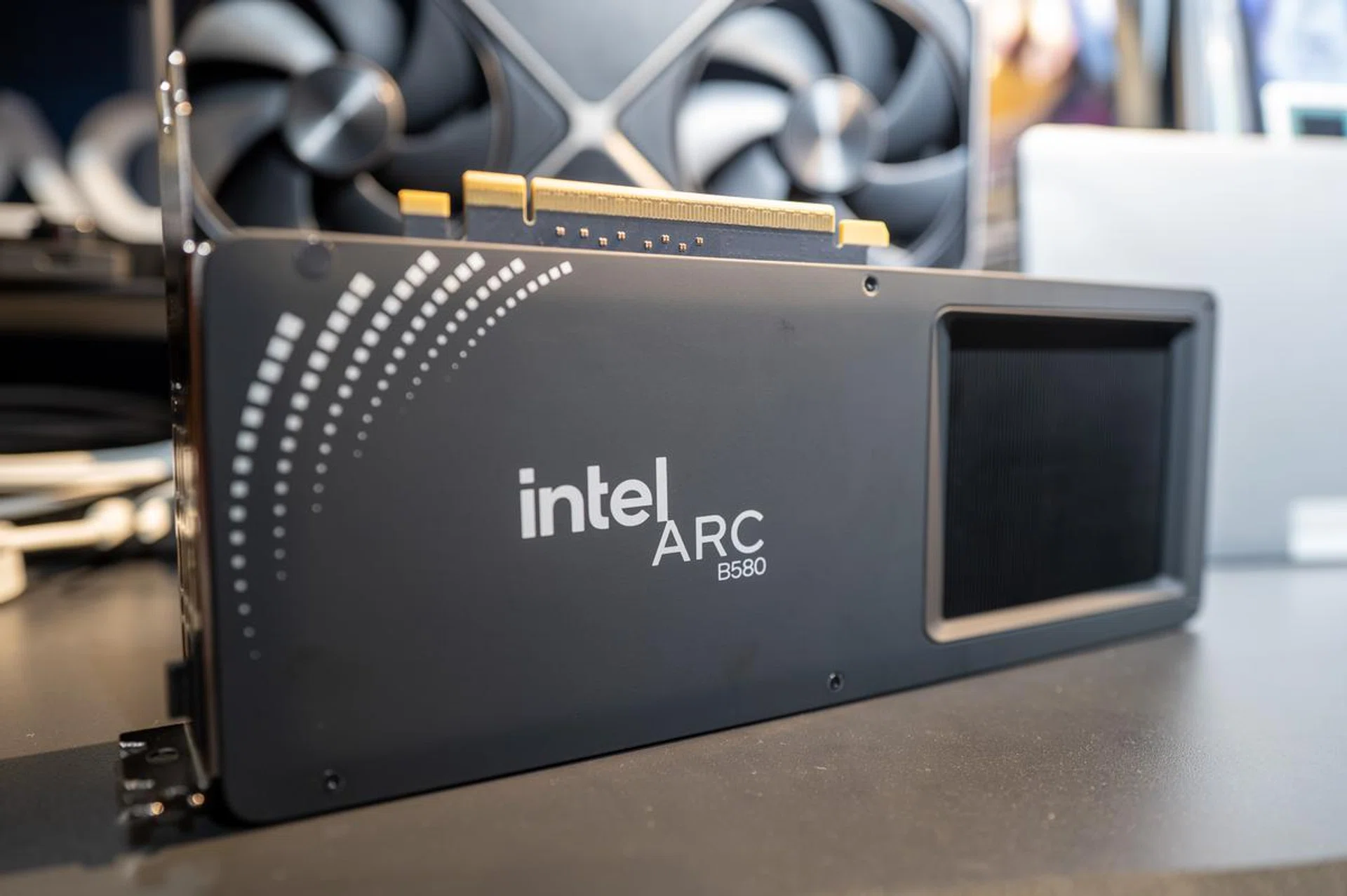
There will be AIB partners cards, but Intel's own reference card is a 'limited edition' that looks really well made. (Image: HWZ)
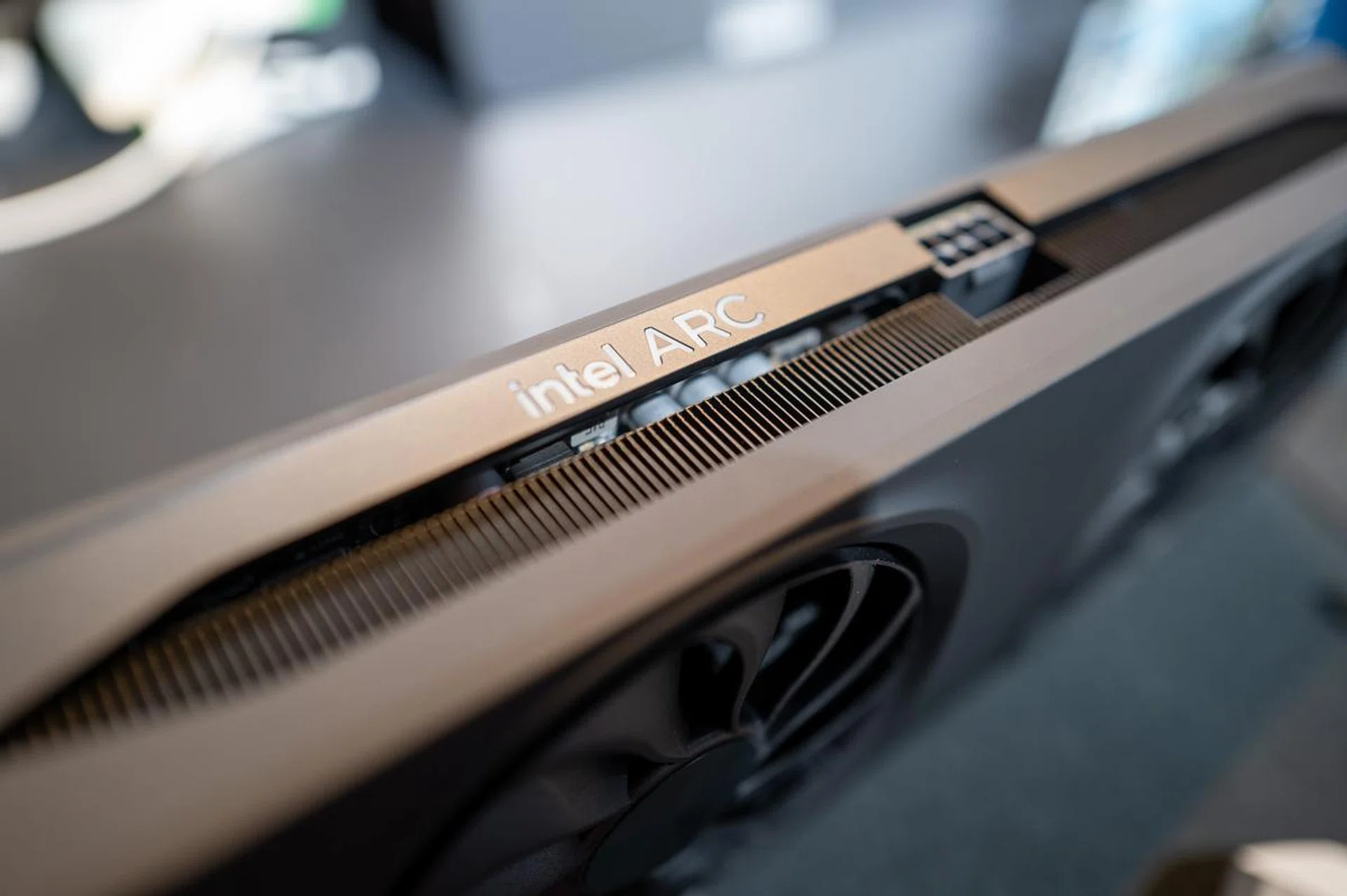
A standard PCIe power connector works just fine. (Image: HWZ)
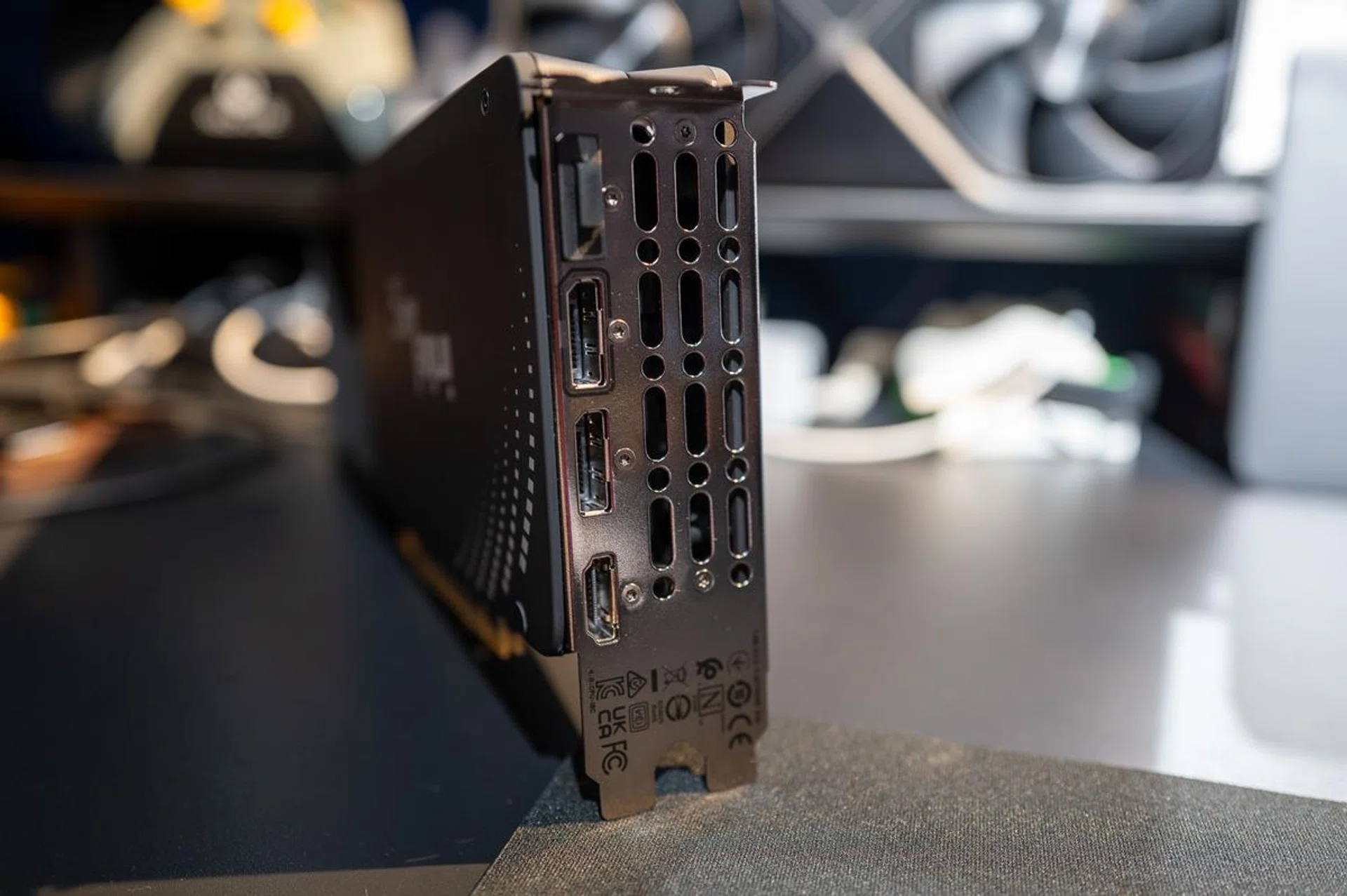
The Arc B580 comes in a standard dual-slot card design. (Image: HWZ)
Gaming Performance
For our benchmarks with the Intel Arc B580, we are only focusing on 1080p and 1440p resolutions with our 2025 test rig that comes with the following components:
- AMD Ryzen 9 9950X
- ROG Maximus Z890 Hero
- Samsung 990 Pro 1TB SSD
- Kingston Fury 32GB DDR5
- Windows 11 Home 64-bit
- ASUS ROG Swift OLED PG32UCDM 4K Gaming Monitor
The cards used for comparisons are the following:
- MSI GeForce RTX 4060 2X Black 8GB (There are no Founders Edition cards for the GeForce RTX 4060)
- NVIDIA GeForce RTX 4060 Ti Founders Edition
- AMD Radeon RX 7600
GeForce
Graphics Card | Intel Arc B580 | MSI GeForce RTX 4060 Ventus 2X Black | AMD Radeon 7600 |
GPU | Battlemage (G21) | Ada Lovelace (AD107) | Navi 33 |
Process | 5nm TSMC | 5nm (TSMC) | 6nm (TSMC) |
Transistors | 19.6 billion | 18.9 billion | 13.3billion |
Shading Units | 2560 | 3072 | 2048 |
RT Cores | 20 | 24 | 32 |
GPU base / boost clocks (MHz) | 2670 / 2670 | 1830 / 2460 | 1720 / 2250 |
Memory | 12GB GDDR6 | 8GB GDDR6 | 8GB GDDR6 |
Memory bus width | 192-bit | 128-bit | 128-bit |
Memory bandwidth | 456 GB/s | 278 GB/s | 288 GB/s |
Interface | PCIe 4.0 | ||
TDP | 190W | 115W | 165W |
Price (at launch) | US$249 | US$299 | US$269 |
To deliver resolutions higher than today’s minimum 1080p standard, a GPU requires not only enough power to generate all those pixels but also more memory capacity and bandwidth. Let’s take the US$300 NVIDIA GeForce RTX 4060 as an example, which the Arc B580 competes directly with in the budget segment. Packed with just 8GB that goes through a small 128-bit bus, the RTX 4060’s performance is hampered by this limitation even at 1080p – especially if you try maxing out the graphics settings.
By building the Arc B580 with 12GB of VRAM and a much wider 192-bit bus, Intel has clearly thought this out. As we can see from the benchmark results below, the Arc B580 not only bested NVIDIA and AMD’s equivalents in 1080p but also outgunned their cards at 1440p.
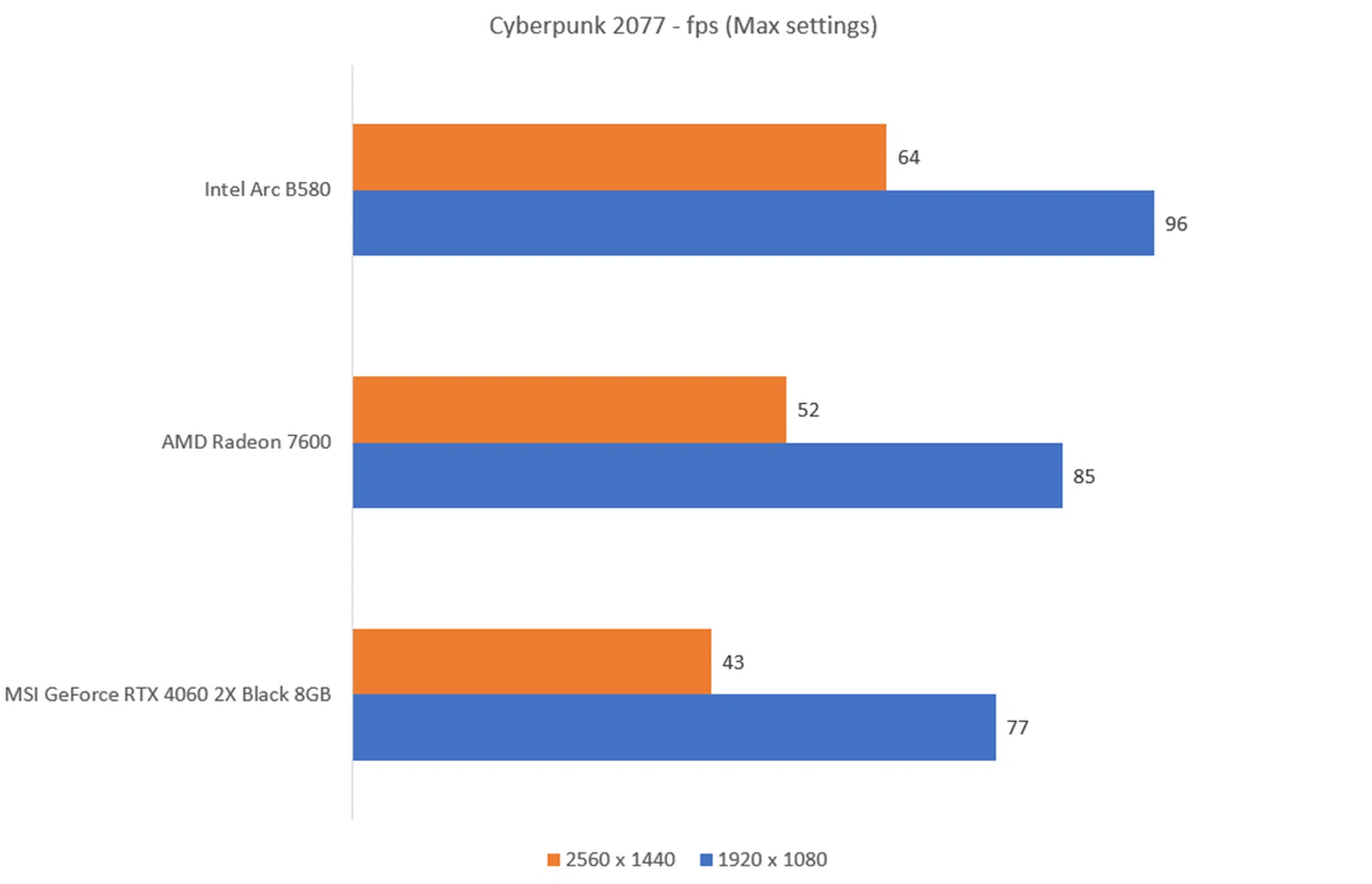
The higher the fps, the better.
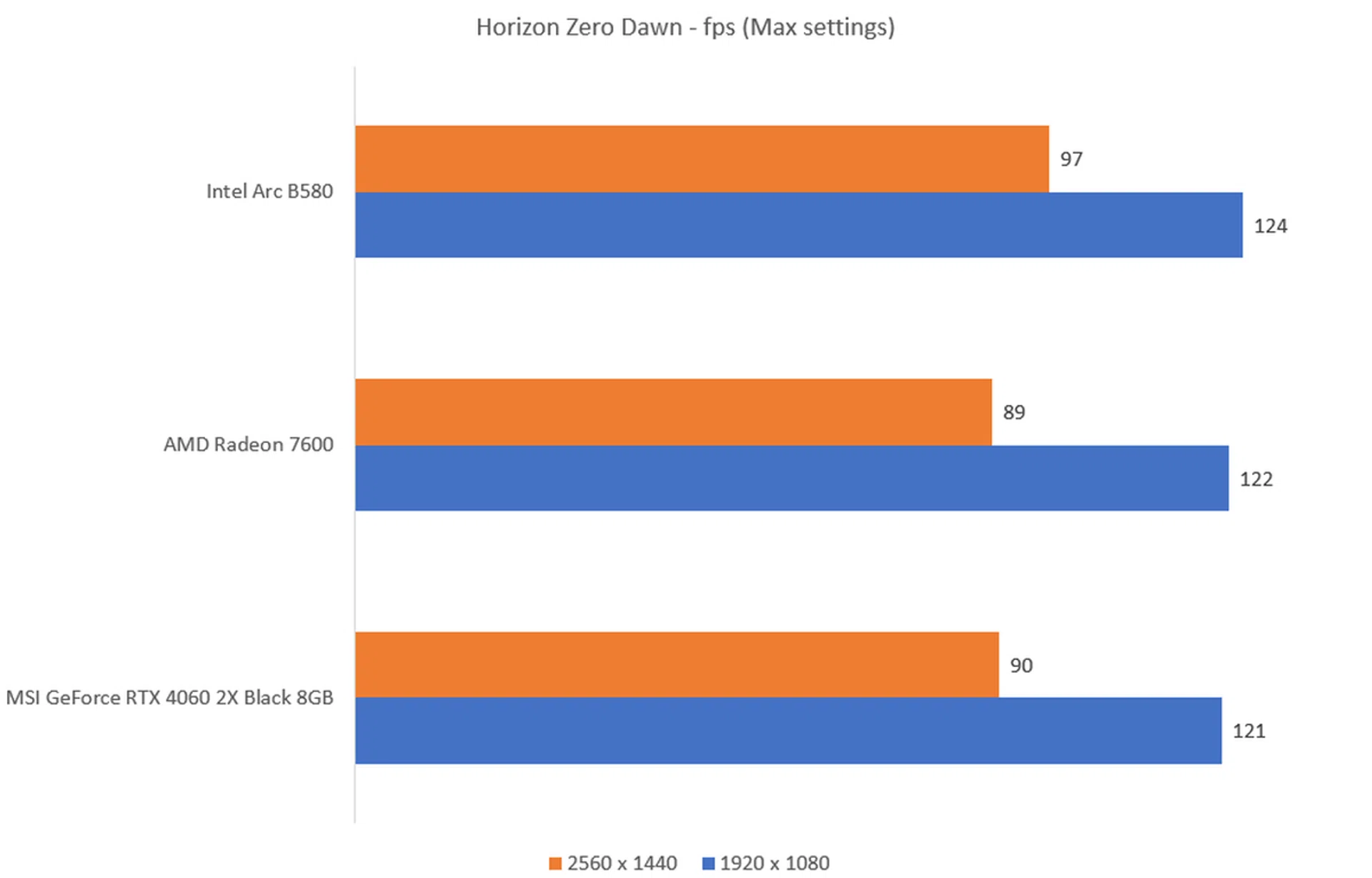
The higher the fps, the better.
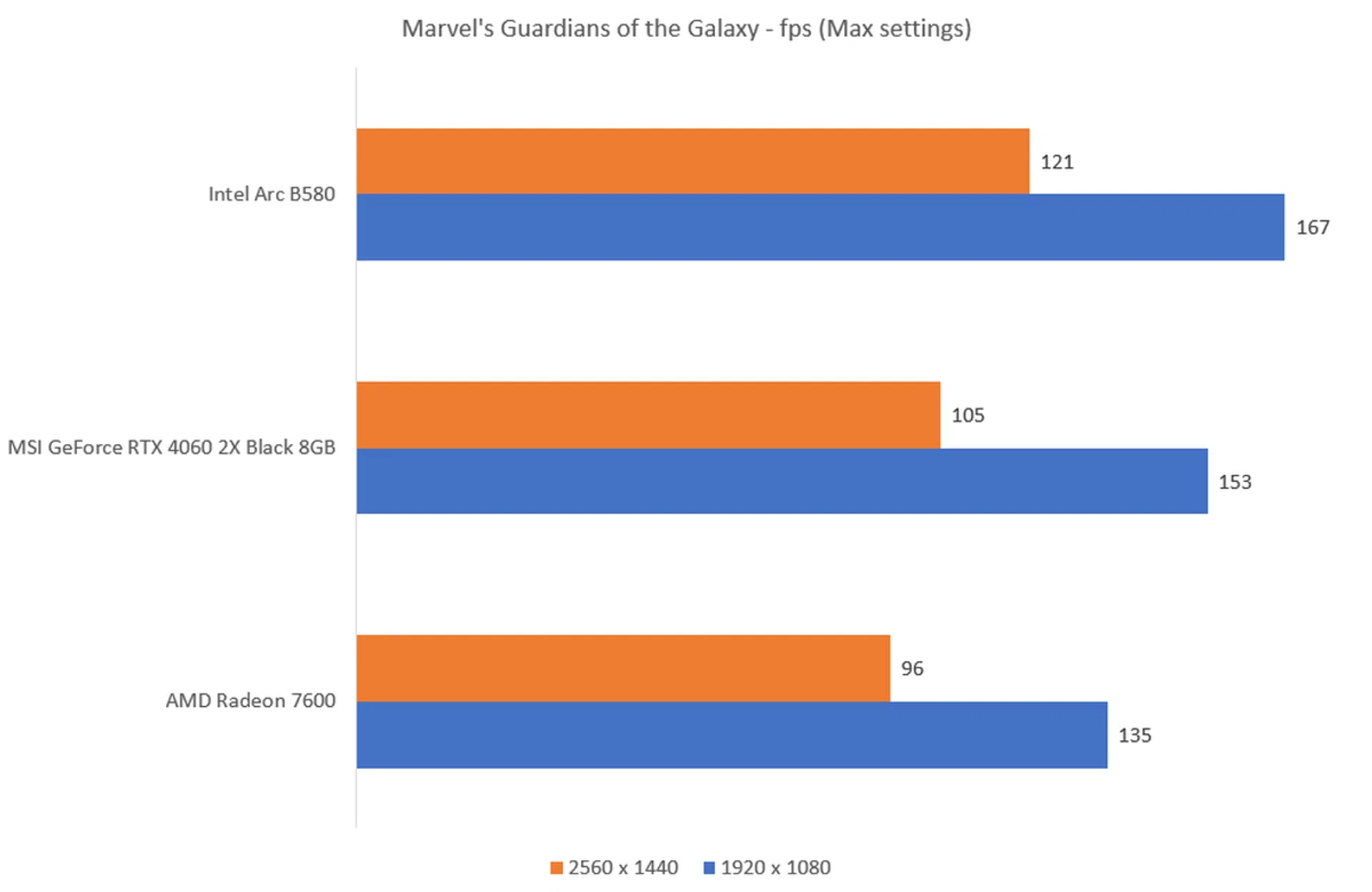
The higher the fps, the better.
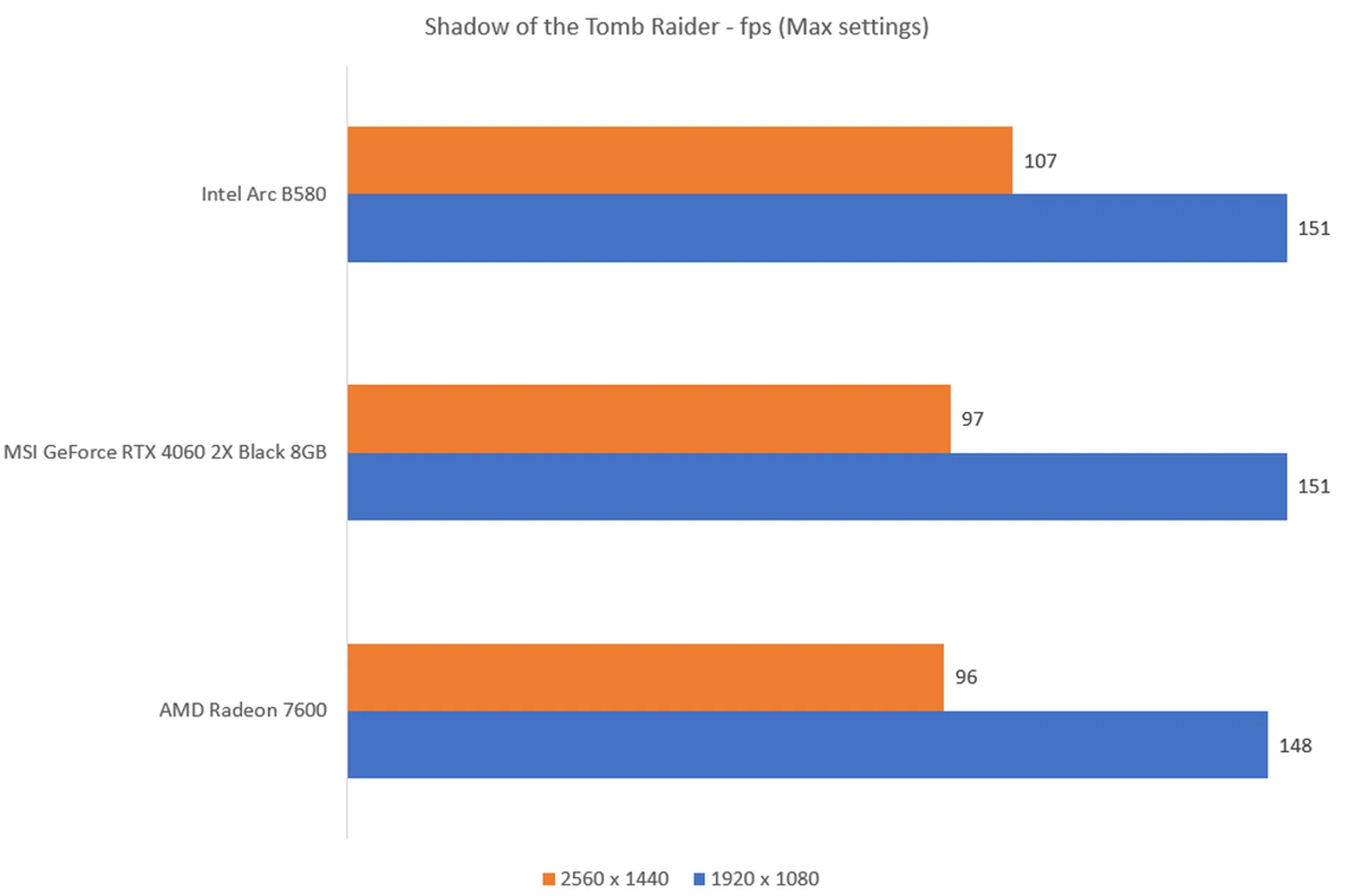
The higher the fps, the better.
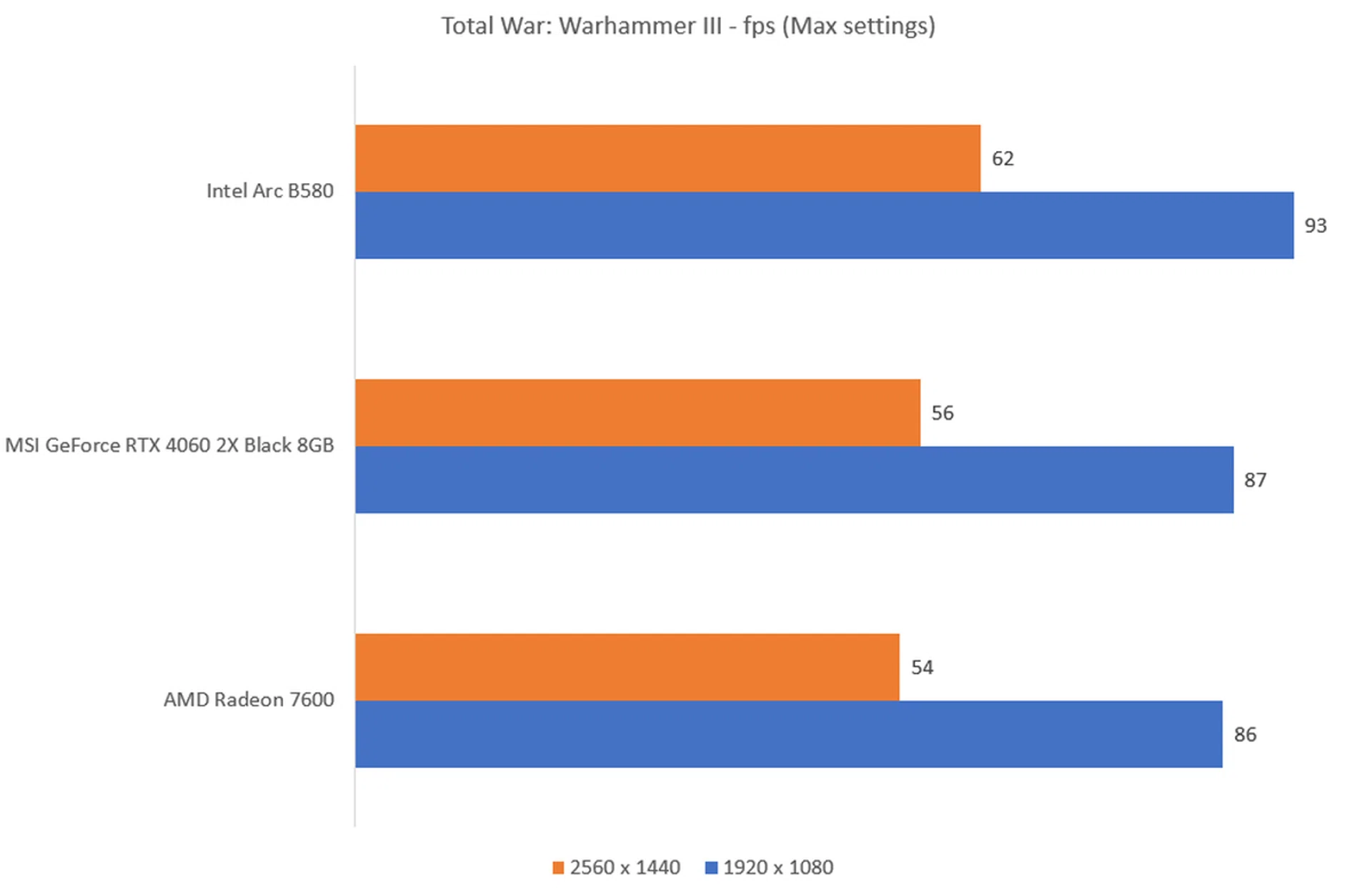
The higher the fps, the better.
At 1080p, the Arc B850 and GeForce RTX 4060 are neck-to-neck in some games but the former heads the chart in almost all of the games tested. But dig deeper and we can see how the Intel card's lead gets wider at 1440p, thanks to its higher memory count. It's also noteworthy that despite the games' visual settings being maxed out sans ray tracing, the Arc B580 maintains more than 60fps in all of the titles including Cyberpunk 2077. Of course, the list of games tested here is not the most exhaustive but it does have a mixture of old and recent games that feature enough different game engines and APIs variety to give us an idea of broader performance trends of the Arc B580.
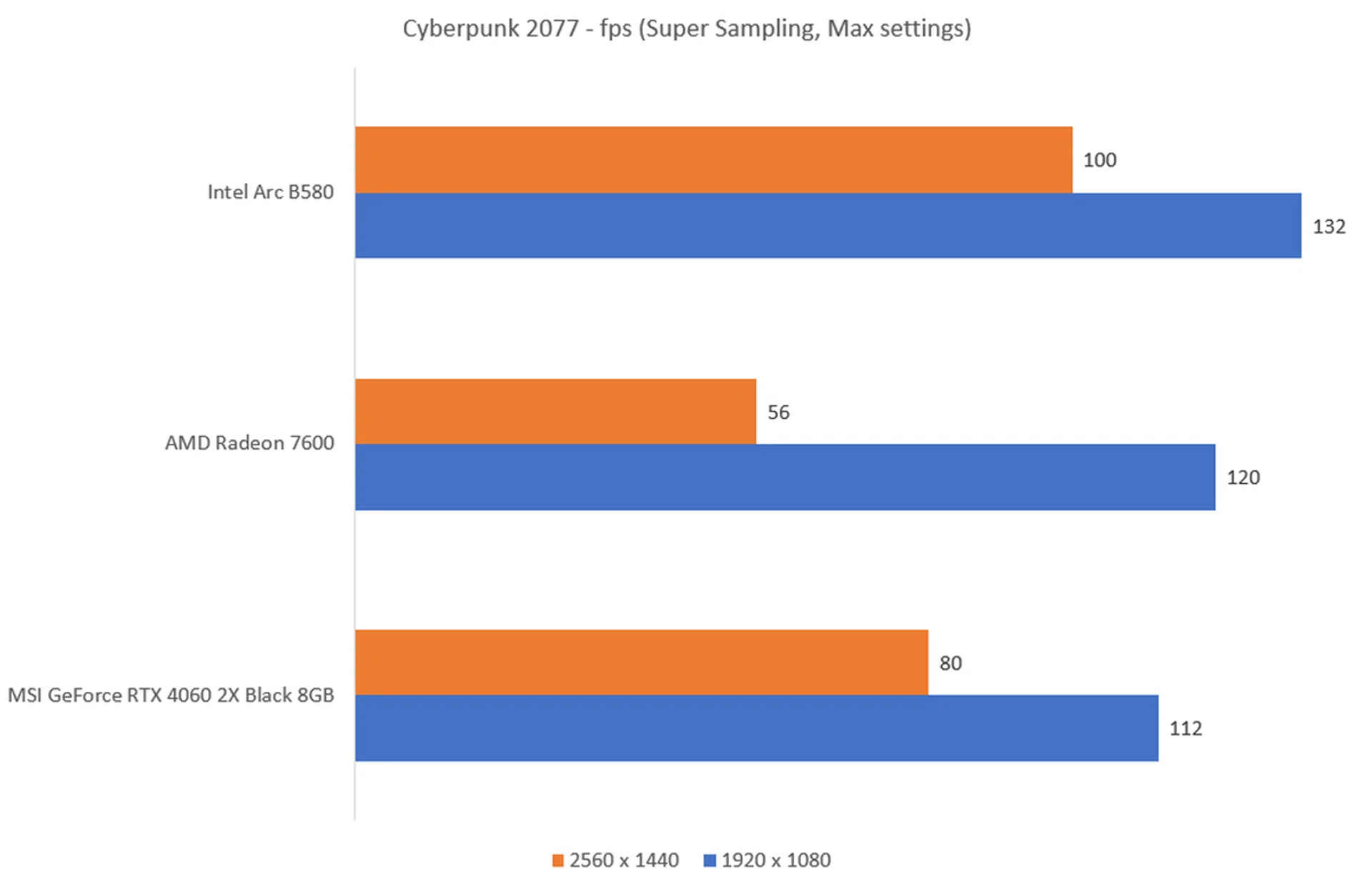
The higher the fps, the better.
Let's not forget that Intel also has a super sampling tech that it calls XeSS. Similar to NVIDIA's DLSS and AMD's FSR, Intel's super sampling work by inserting AI-generated frames between "real" ones to improve frame rates and visual quality – via the Xe 2 cores' XMX extensions. Now in its second generation, XeSS 2 is supported in over 150 games according to Intel. That pales in comparison to the number of titles that support the third generation of DLSS (aka DLSS 3), which is more than 600 as of last November.
But where XeSS 2 is supported, like Cyberpunk 2077, the results are pretty impressive when compared to the GeForce RTX 4060 (DLSS 3) and Radeon 7600 (FSR 3.0). Once again, the Arc B580's superiority in memory is telling.
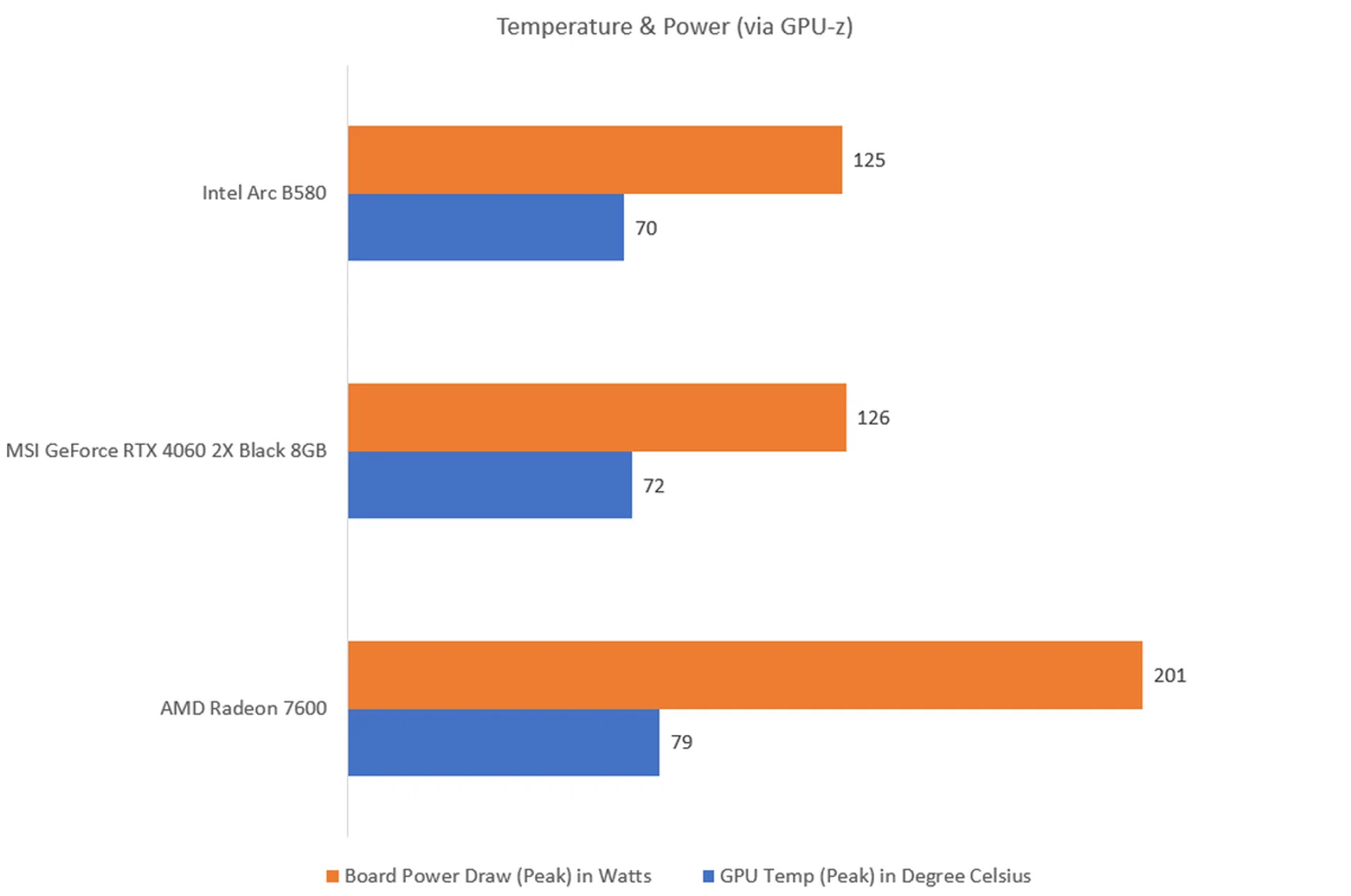
The higher the fps, the better.
Despite having a higher TDP rating at 190W the Arc B580 still remained the coolest and power efficient compared to the NVIDIA and AMD cards here. I haven't explored overclocking with our Intel's reference card, but I highly suspect that the GPU has plenty of headroom for overclocking. Especially with AIB partners' cards that have more advanced cooling solutions.
Final thoughts
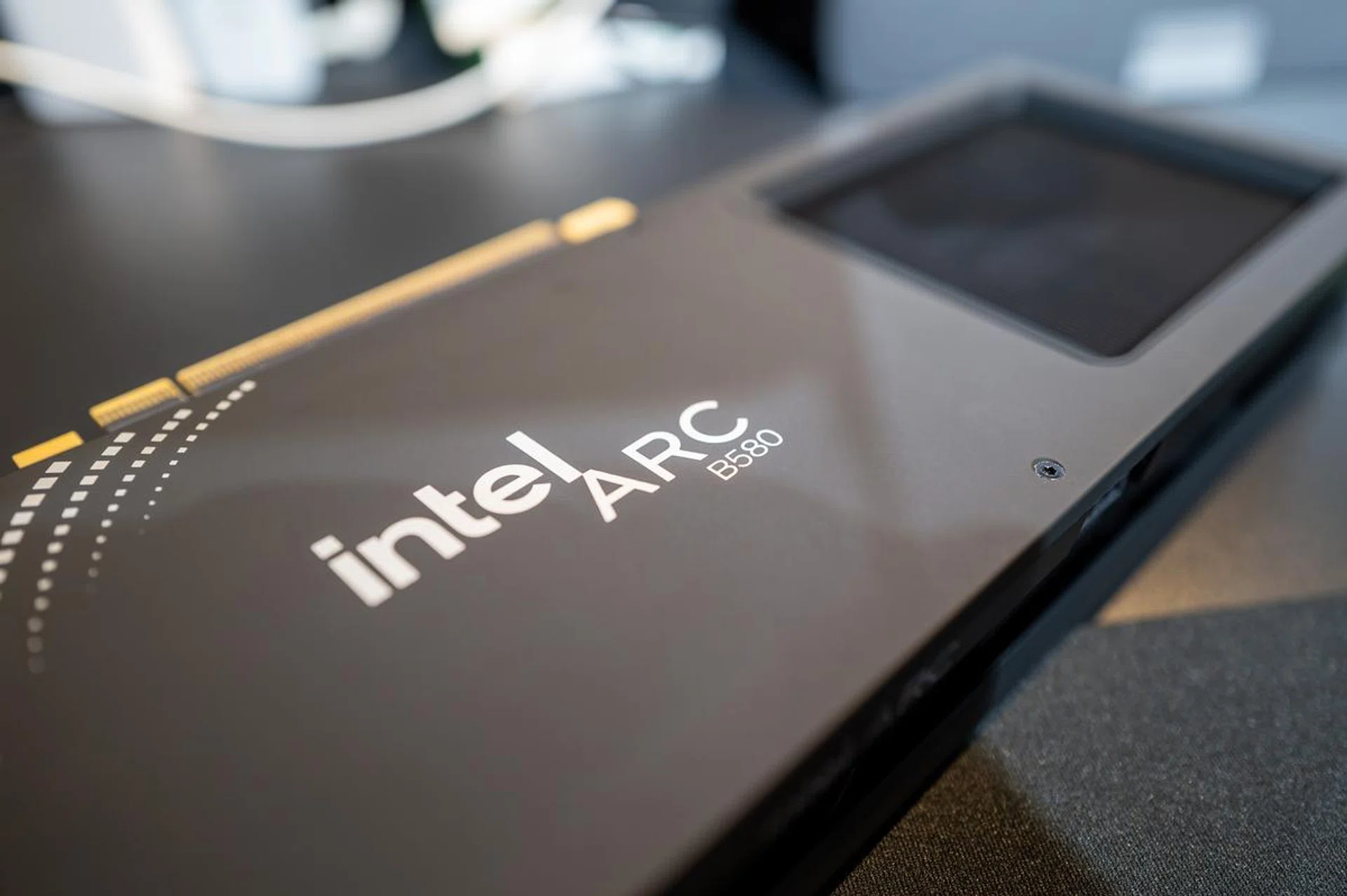
NVIDIA and AMD's next generation of budget cards need to have at least 12GB and ideally, matches the Arc B580's price. (Image: HWZ)
In my opinion, Intel’s Arc B580 is truly a breath of fresh air for gamers on a tight budget, delivering far more than its price tag suggests. At US$249, it’s not just another entry-level GPU; it’s a card that punches above its weight with a 12GB VRAM configuration and offers headroom that NVIDIA and AMD's equivalent cards simply don’t provide in this segment. That extra memory makes a tangible difference, letting gamers enjoy smoother 1080p gameplay while still holding its own in 1440p without compromising on graphical settings. I'll be very surprised if NVIDIA and AMD do not put a minimum 12GB of memory in their upcoming GeForce RTX 5060 and Radeon RX 9060. Whether it will be launched at a price point that's close to the Arc B580 is a big question mark too.
That said, the Arc B580 is not without its trade-offs – XeSS 2 is still not as widely supported as NVIDIA’s DLSS and its content creation performances is nothing to shout about – but for the target audience, those omissions aren’t likely to matter much anyway. What Intel offers instead is an honest, straightforward gaming card that delivers where it counts: performances that more than justifies its price tag, a manageable form factor, and overclocking potential. At CES 2025, we also got to see the Arc B580 capable of handling triple-screen gaming with an optimised launch title (F1 2024), which helps us understand the full potential of this GPU:-
Ultimately, the Intel Arc B580 isn’t just an affordable graphics card option; it’s really a compelling one, and not just because of its price. It’s a return to the kind of value that used to make GPUs like the NVIDIA GTX 1060 and AMD Radeon RX 480 standout choices. For budget-conscious gamers who’ve grown weary of the escalating cost of entry into PC gaming, this is a card that delivers where it truly matters. For its strong, compelling mix, we're bestowing this GPU our Editor's Choice recommendation.
Well done, Intel.
Our articles may contain affiliate links. If you buy through these links, we may earn a small commission.