
MSI Ventus 2X Black GeForce RTX 4060 review: A budget graphics card enhanced by DLSS 3.0
It's not without its flaws but for the price, the RTX 4060 is a sound choice for many PC gamers on a tight budget

Note: This review was first published on 29 June 2023.
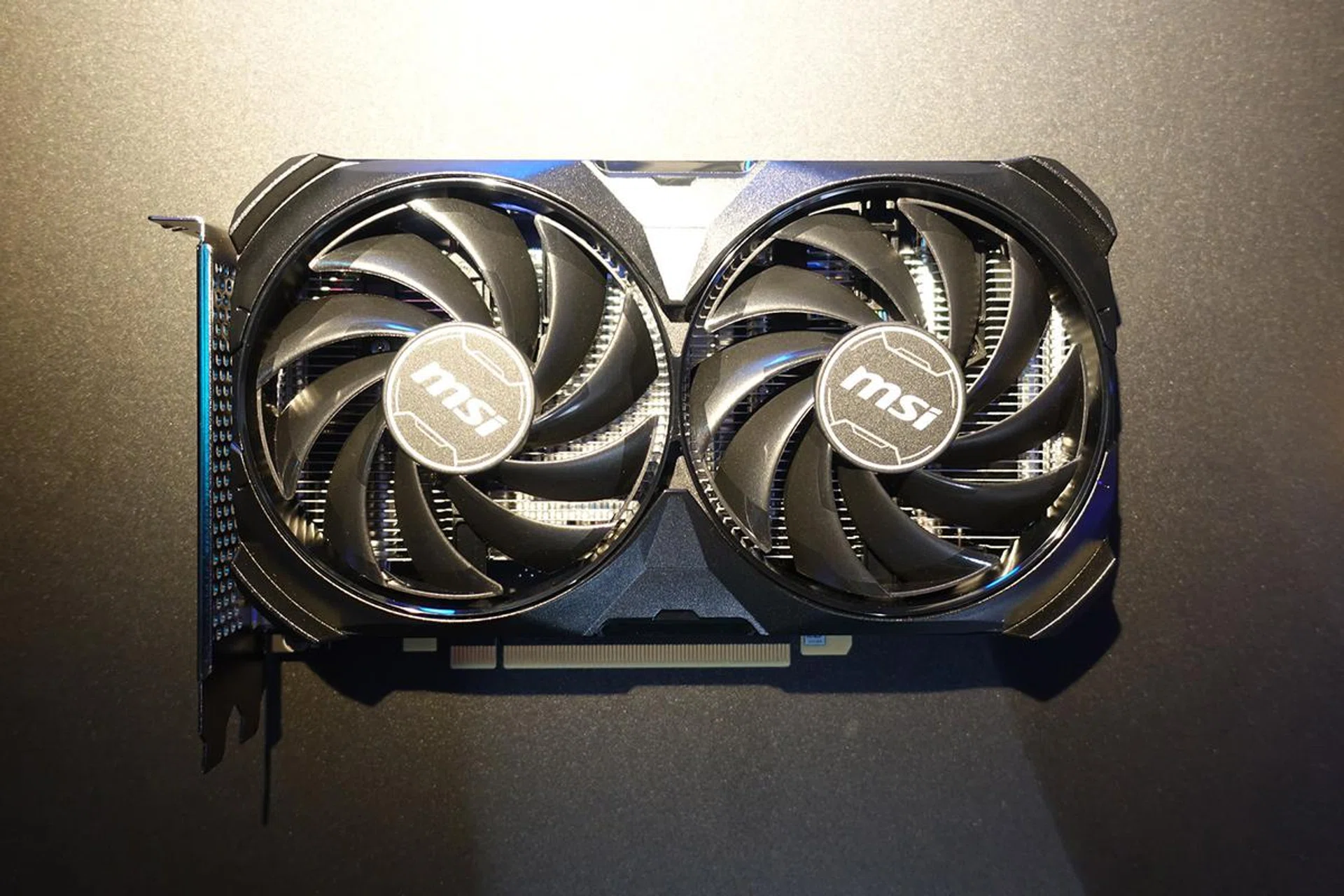
The arrival of the NVIDIA GeForce RTX 4060 brings some certainty in an industry grappling with the complex question of what makes the best graphics card. Affordability seems to be PC gamers' favoured attribute, as suggested by the Steam Hardware Survey, which indicates cards like NVIDIA’s entry-level GeForce RTX 2060 as the most popular. Yet, it appears that both NVIDIA and AMD are only gingerly acknowledging this vast majority of gamers. A case in point is the GeForce RTX 4060 Ti with its rather lofty US$399 price tag.
Fortunately, the GeForce RTX 4060 stays true to the cost bracket of its predecessors, sticking to the familiar US$299. This is certainly good news for potential upgraders from the RTX 2060 and even those hanging on to the GeForce GTX 1060. There is no Founders Edition of the RTX 4060, so NVIDIA sent the MSI Ventus 2X Black GeForce RTX 4060 to me for this review. During my time spent with it, I found that it delivers a hefty improvement in performance, but its 8GB VRAM could be a limiting factor as game requirements continue to grow more demanding.
GeForce
Graphics Card | RTX4090 FE | RTX 4080 FE | RTX 4070 Ti (ROG Strix) | RTX 4070 FE | RTX 4060 Ti (8GB) FE | RTX 3060 |
GPU | Ada Lovelace (AD102) | Ada Lovelace (AD103) | Ada Lovelace (AD104) | Ada Lovelace (AD104) | Ada Lovelace (AD106) | Ada Lovelace (AD106) |
Process | 4nm (TSMC) | 4nm (TSMC) | 4nm (TSMC) | 5nm (TSMC) | 5nm (TSMC) | 5nm (TSMC) |
Transistors | 76 billion | 45 billion | 35.8 billion | 35.8 billion | 22.9 billion | 22.9billion |
Streaming Multi-processors (SM) | 128 | 76 | 60 | 46 | 34 | 30 |
CUDA cores | 16384 | 9728 | 7680 | 5888 | 4252 | 3840 |
Tensor Cores | 512
(Gen 4) | 304
(Gen 4) | 240
(Gen 4) | 184
(Gen 4) | 136 (Gen 4) | 120(Gen4) |
RT Cores | 128
(Gen 3) | 76
(Gen 3) | 60
(Gen 3) | 46
(Gen 3) | 34 (Gen 3) | 30(Gen3) |
GPU base / boost clocks (MHz) | 2230 / 2520 | 2205 / 2505 | 2310 / 2760 | 1920 / 2475 | 2310 / 2525 | 1830 /2535 |
Memory | 24GB GDDR6X | 16GB GDDR6X | 12GB GDDR6X | 12GB GDDR6X | 8GB GDDR6 | 8GB GDDR6 |
Memory bus width | 384-bit | 256-bit | 192-bit | 192-bit | 128-bit | 128-bit |
Memory bandwidth | 1,018GB/s | 716.8GB/s | 504.2GB/s | 504.2GB/s | 288.0GB/s | 288.0GB/s |
Interface | PCIe 4.0 | |||||
TDP | 450W | 320W | 285W | 200W | 160W | 200W |
Price (at launch) | US$1,599 | US$1,199 | US$799 | US$599 | US$399 | US$299 |
Making a case for DLSS 3.0, again
Here is the thing: Just based on rasterisation-based performances alone, the RTX 4060 might not be that enticing if you already have a last-generation graphics card like the GeForce RTX 3060 or AMD's Radeon RX 6600 XT. It also does not consistently outpace the RTX 3060 Ti in most games.
But there's a twist – it leaps forward when DLSS 3.0 and Frame Generation are enabled, a capability that the RTX 3060 Ti and the GeForce RTX 3060 and Radeon RX 6600 XT do not have. Frame Generation is an innovation NVIDIA baked into its RTX 40 series cards, designed to boost frame rates in a novel way, independently of the CPU.
DLSS 3.0 is what makes the lower-end RTX 40 series cards really shines.
I’m not going to talk too much about the RTX 4060 GPU since I have covered pretty much of it in my RTX 40 series card reviews, including the recent Founders Edition GeForce RTX 4060 Ti. But suffice to say, MSI’s GeForce RTX 4060 card aligns with the rest of the RTX 40 series, using the same Ada Lovelace graphics architecture. Though it has fewer third-gen ray tracing cores and fourth-gen Tensor Cores, its 24 Streaming Multiprocessors (aka SM) provide 96 Tensor Cores and 24 RT Cores, alongside 3,072 CUDA Cores, a step down from the RTX 3060's 3,584.
Just like the RTX 4060 Ti FE that I reviewed, the RTX 4060 also packs 8GB of GDDR6 VRAM, which falls short of the RTX 3060's 12GB offering at its 2021 launch. NVIDIA tries to counterbalance this with a bigger L2 cache – up to an impressive 24MB –so that the card relies less on its VRAM storage.
Let’s find out how the card performs.
Performance benchmarks
For benchmarks, our graphics card test rig comes with the following specifications:
- Intel 12th Gen Core i9-12900K CPU
- ROG Maximus Z690 Hero
- Samsung 980 Pro 1TB SSD
- Kingston Fury 32GB DDR5
- Windows 11 Home 64-bit
- ASUS ROG Swift PG43UQ 4K Gaming Monitor
There is no point gauging the card against the flagships GeForce RTX 4090 and RTX 4080 cards, so we'll drop down to the mid-tier GeForce RTX 4070 cards. I have also included the RTX 3060 and AMD’s Radeon RX 7600 cards (for obvious reasons) used in the comparisons.
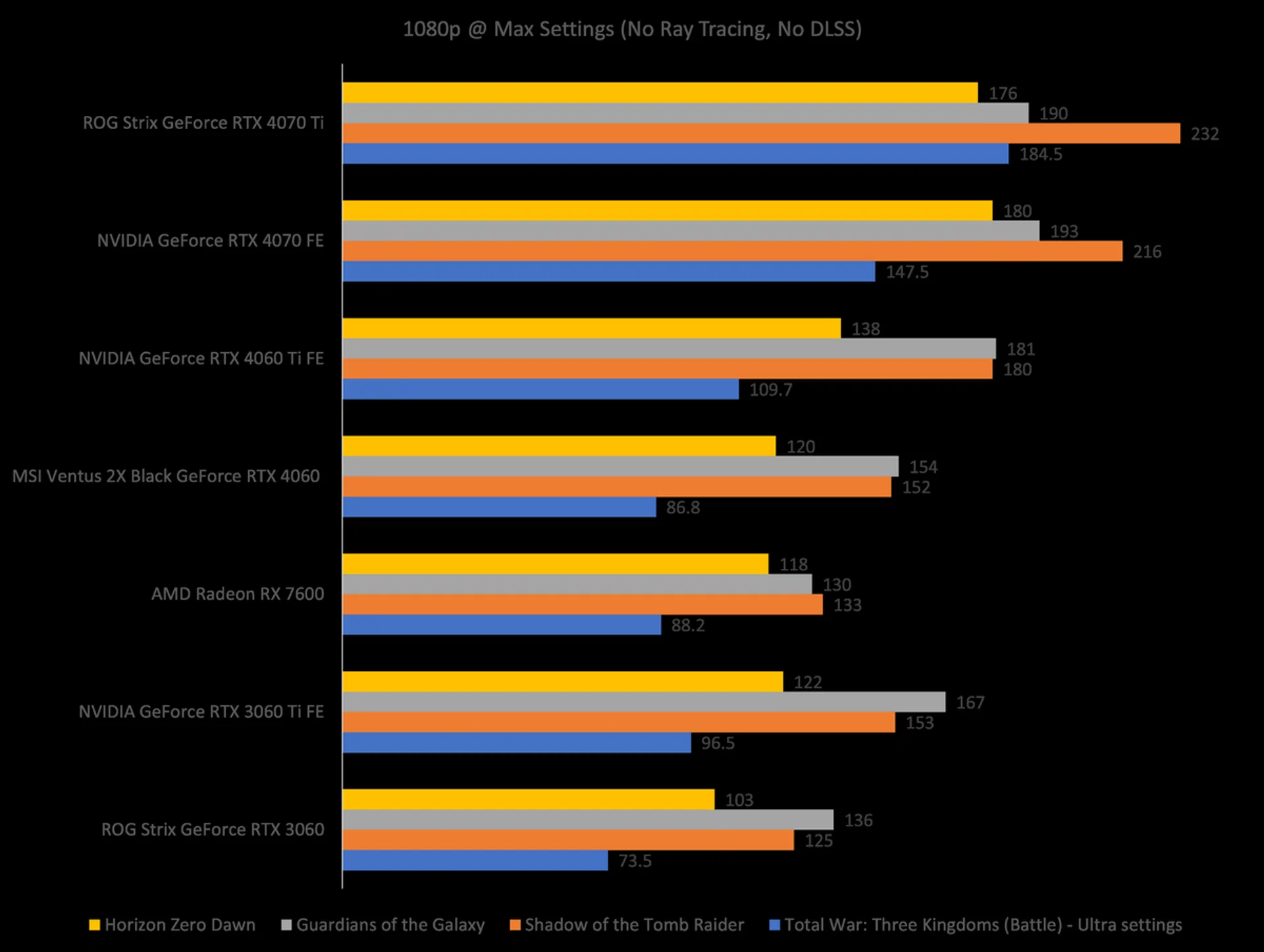
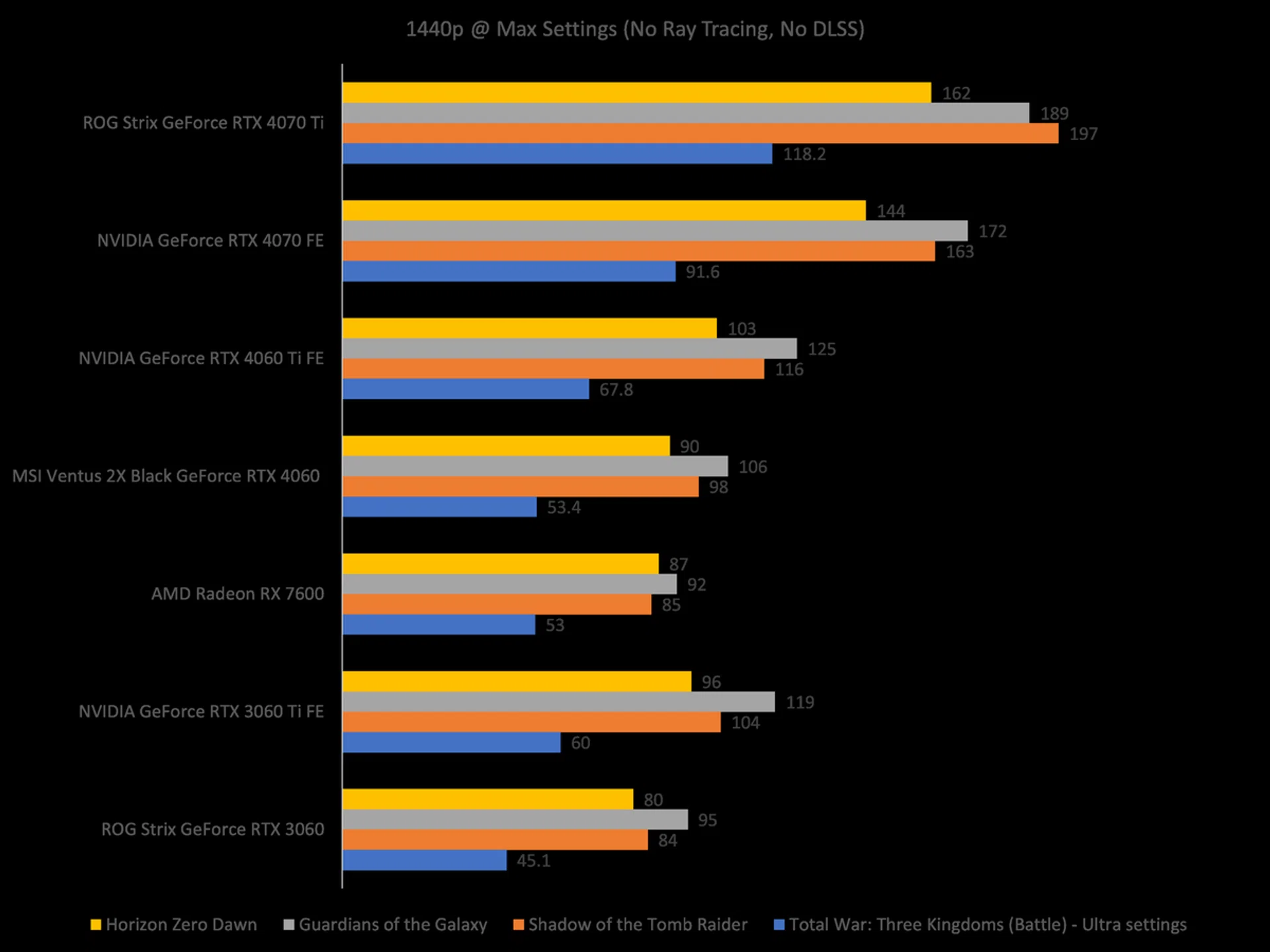

Touted as a 1080p graphics card, the RTX 4060 makes a strong case in most games, hitting 60+ fps on average at 1080p with high settings. But it does stumble in some games when going up a notch at 1440p.
For example, in Marvel's Guardians of the Galaxy, the GPU runs smoothly and easily hitting 150+ fps at 1080p. But in more complex games, for example real-time strategy games like Total War: Three Kingdoms, the 8GB of RAM becomes a bottleneck, causing frame rates to drop to below 60fps at 1440p. This isn't something I had come across often when testing the above games at 1080p, but it's a point to ponder, especially if you are aiming for resolutions beyond 1080p (1440p is still playable, although you might need to tweak around with the visual settings).
The RTX 4060 also shined in some demanding titles, such as Cyberpunk 2077. I played the game with ray tracing set to "ultra" and DLSS turned on Quality mode at 1080p, and the game runs on an average steady 60+ fps. Activate Frame Generation, and this jumps up to 96 fps, providing some pretty good value-for-money 1080p gaming experience. It's worth noting that while DLSS 2.0 is well supported, there's still not many games that support DLSS 3.0 (which supports Frame Generation) although the list is growing.
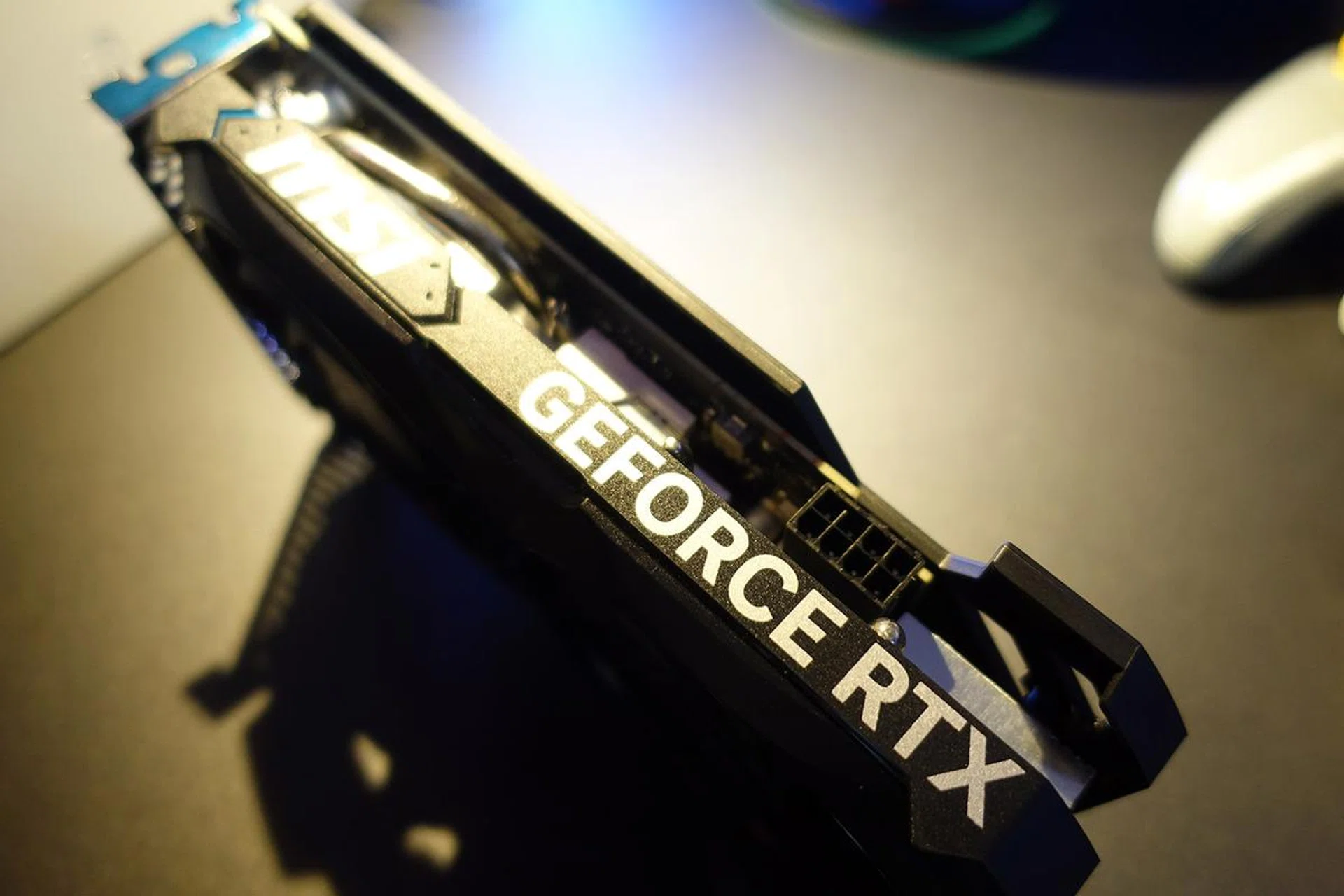
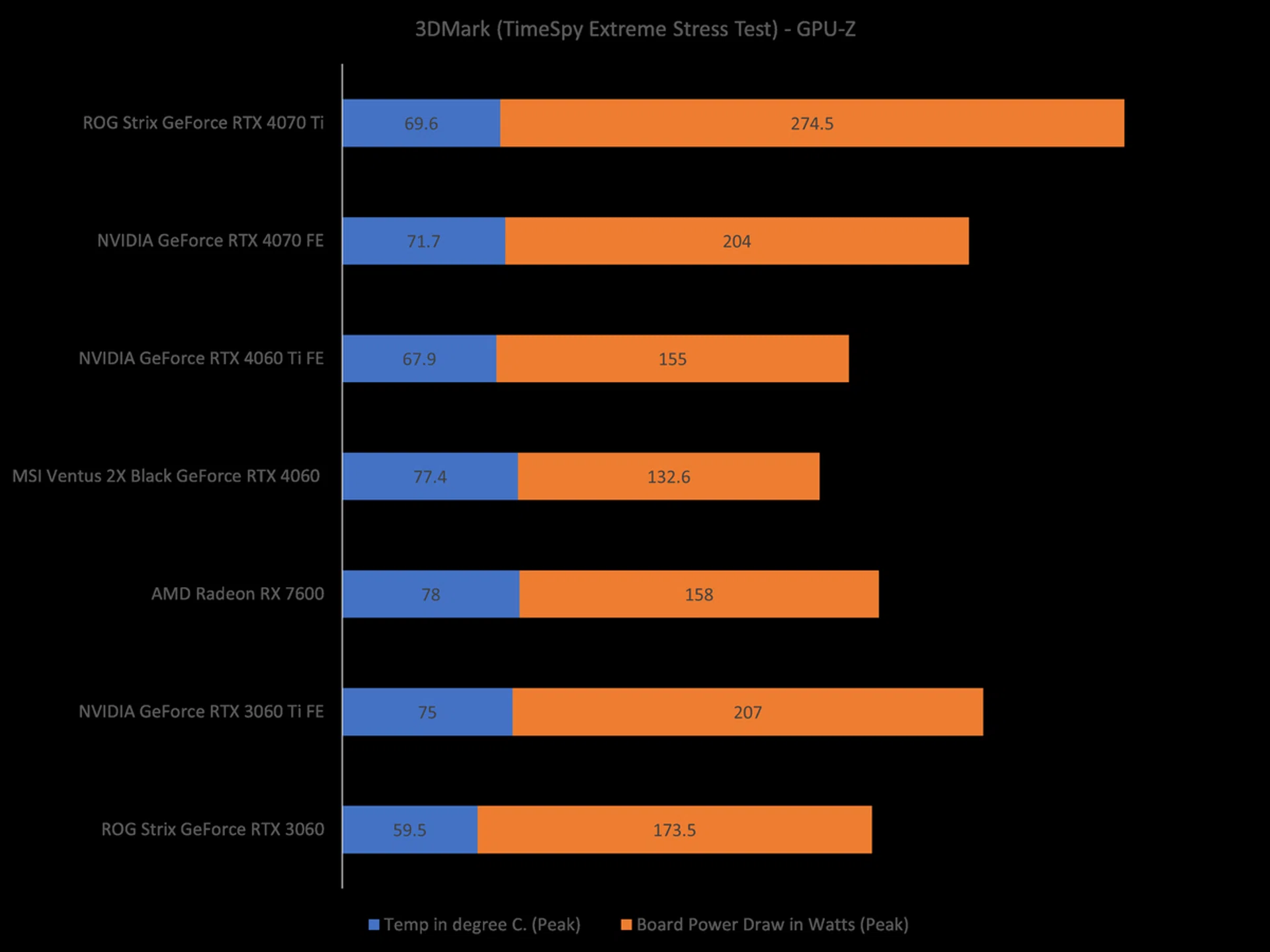
The low power requirement of the GeForce RTX 4060 is another noteworthy feature, with just a – surprise surprise – single 8-pin connector necessary to fuel its peak power consumption of 132W during my testing. Its petite size and relatively low power make it an excellent choice for compact PC builds, though the tradeoff would be settling for 1080p gaming.
Final thoughts
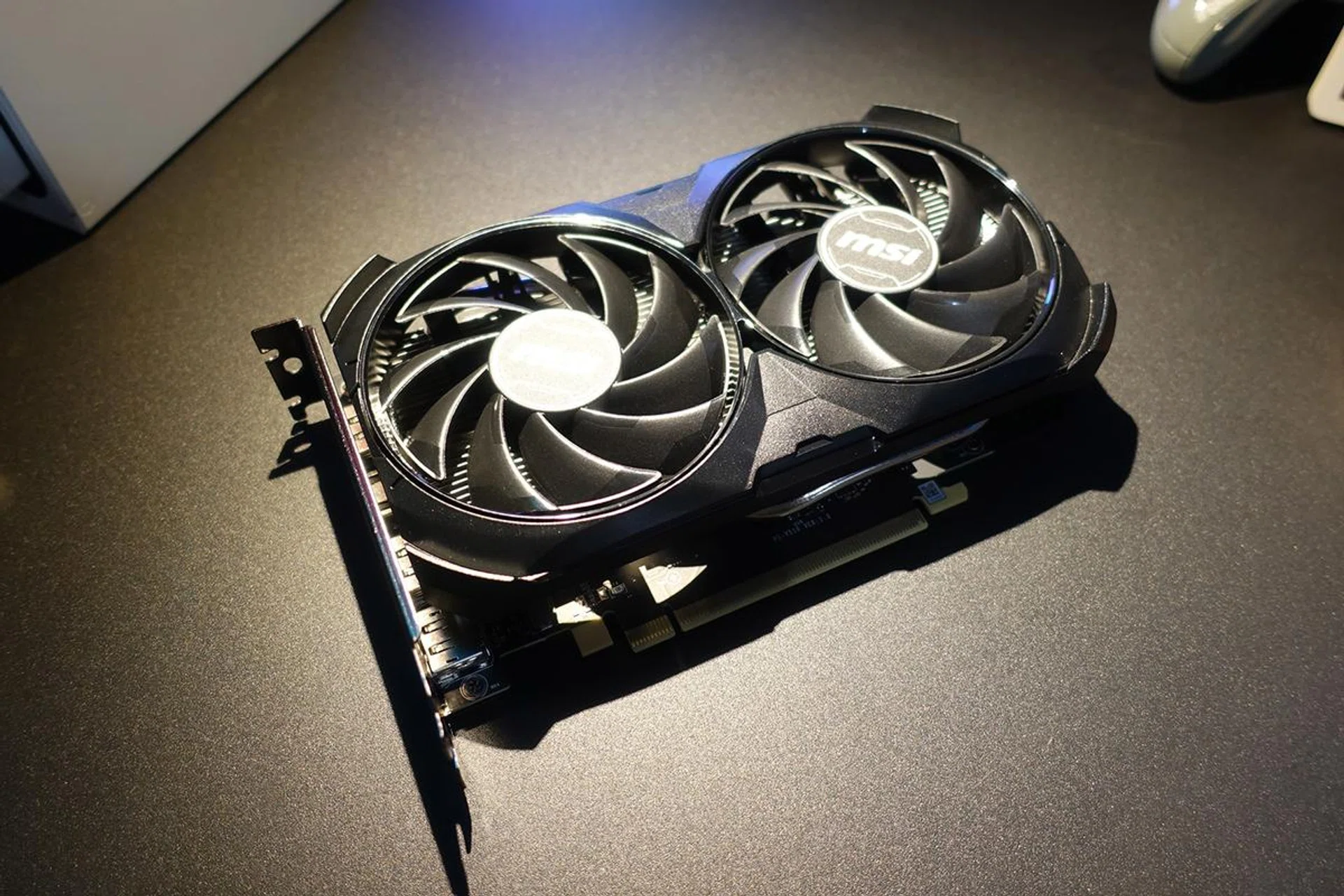
At a fair price point, the MSI Ventus 2X Black GeForce RTX 4060 is a solid option for 1080p gaming, with a small caveat: its 8GB of VRAM might cause occasional hiccups in certain games. However, this GPU promises a consistent 60 fps experience in most PC games, and with DLSS 3.0 in the mix, those frame rates could get a nice boost.
It's not without its flaws, but for the price, I do think the RTX 4060 is a sound choice for many PC gamers on a tight budget. As with all RTX 40 series cards, DLSS 3.0 and Frame Generation stand as key selling points over AMD’s own budget-centric Radeon RX 7600. While the limited 8GB of VRAM may present a hurdle in certain games, I do not think it is a dealbreaker as much as it did for the RTX 4060 Ti, particularly for gamers focusing on 1080p titles.
Our articles may contain affiliate links. If you buy through these links, we may earn a small commission.