
Tecno Phantom V Flip 5G review: The most affordable clamshell foldable you cannot buy in Singapore
Turns out, it’s possible to get a foldable clamshell phone way below S$1,000. Just not here.

Note: This review was first published on 28 September 2023.
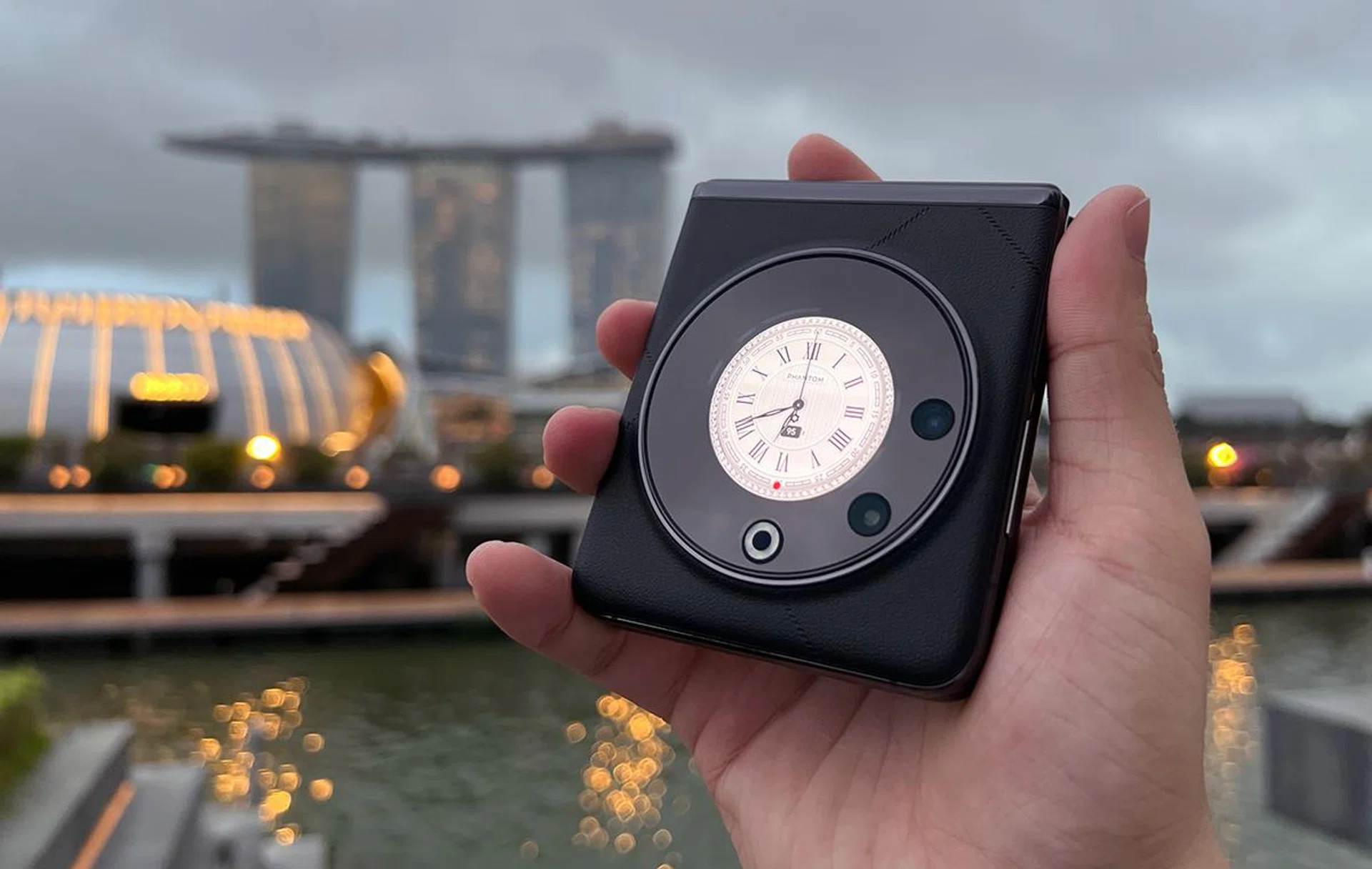
Tecno Phantom V Flip 5G.
Clamshell phone under a thousand bucks
Chinese smartphone company Tecno chose Singapore as the global launch venue for the Phantom V Flip, its first-ever clamshell foldable in its lineup. It launched at US$598 (approx. S$816), an unthinkable price point, especially when clamshell foldables are new to Tecno and other phone brands and chock full of new tech to make its form factor practical.
Here’s a quick introduction about the brand before we take apart the phone. Tecno Mobile is Chinese smartphone brand based in Shenzhen with manufacturing facilities in India, having been around since 2006 and pumping out over a hundred models in select markets. Its modern phones primarily utilise MediaTek processors across its entry-level and mid-range selection. Tecno also makes other IoT stuff, like IP cameras. You might have seen some sold here (albeit unofficially through third-party retailers). Tecno Mobile should not be confused with Tecno Singapore, an unaffiliated home appliance brand.
The TL;DR verdict:
Being an affordable clamshell smartphone with a foldable display does have its drawbacks, but the Phantom V Flip 5G is still an ideal entry point for this form factor for not too much money.
The Tecno Phantom V Flip 5G focuses primarily on the lifestyle it seeks to promote by combining its photography chops with its form factor. It relies on its unique lychee-pattern classic leather appearance and "near-creaseless" panel (Tecno's claims) to stand out. To draw you in, it has a 64MP main camera with a 13MP ultra-wide secondary shooter, topped off with a 32MP front camera notched in its main display.
The Android 13, 4,000mAh, 45W wired charging phone is otherwise typical of a mid-range device (with a MediaTek Dimensity 8050 5G chipset), paired with a flagship-tier 6.9-inch AMOLED main display, and a circular secondary display Tecno calls “The Planet” Personalized Versatile Cover Screen.
Here’s the odd part. Tecno has never officially retailed in Singapore, and that's also true for the Phantom V Flip 5G. According to the brand, they would likely bring it to Indonesia and Malaysia — just not here.
But, how could we say no to exploring a ~S$800 clamshell phone with a foldable display? Tecno must have given up a few bells and whistles to make it possible at this price, right? Let’s check it out.
Looks can be deceiving
Tecno Phantom V Flip 5G, unfolded.
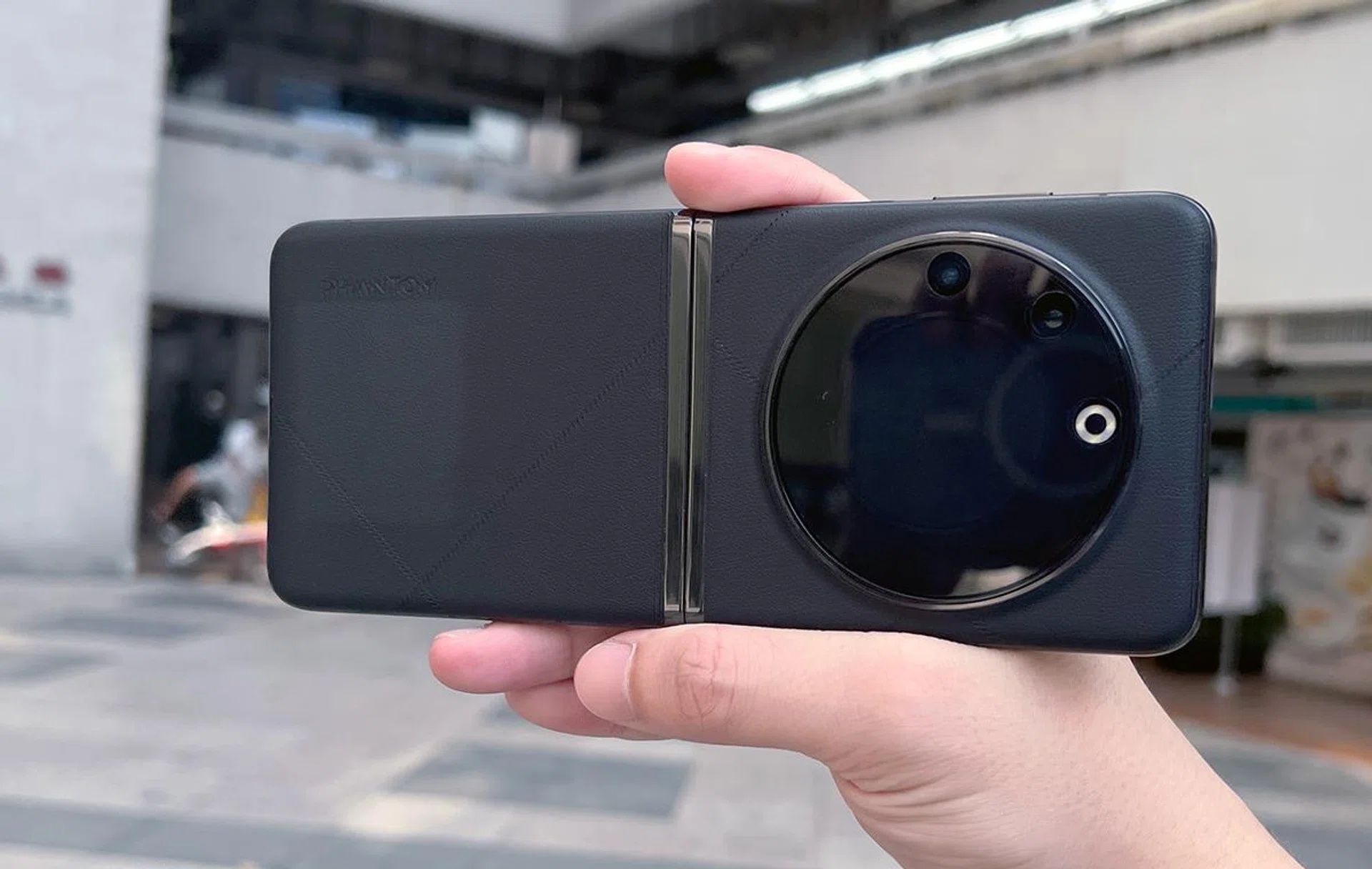
By this point, the Phantom V Flip 5G’s form factor should be no stranger to folks keeping tabs on the foldable display market. Clamshell types house a main display folded inside the phone while putting up a secondary display on the front plate near its main cameras. The Phantom V Flip 5G tries to bump its appeal up with a lychee-pattern leather finish, which feels similar to the faux-leather blend found on the seats of "affordable" family cars.
The camera lenses are flushed, and the housing island barely rises above the rest of the phone.
Phantom V Flip’s design supersedes rival clamshells in one manner — the camera housing. Oppo and Samsung variants both have jutting camera rings holding their lenses. Tecno’s cameras are flushed against the display’s round glass while keeping Phantom V Flip just as slim (6.95mm unfolded, 14.95mm folded) as its rivals. We can only imagine the engineering proficiencies needed for Tecno to pack it all flat.
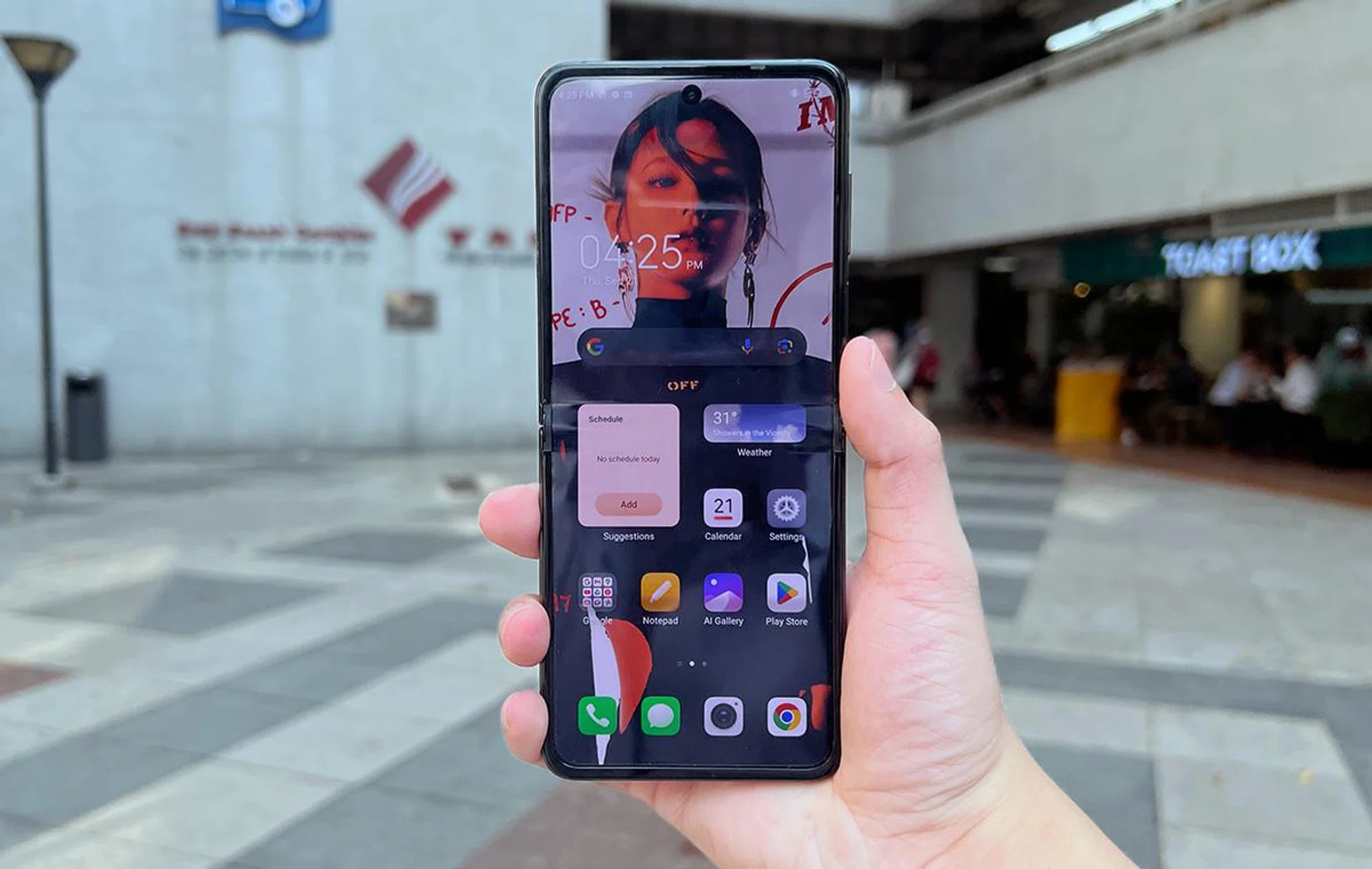
The crease is still there, but not in a glaring way.
Tecno claimed it has a near-creaseless Main Display within. It’s a 6.9-inch, 10 to 120Hz flexible AMOLED panel topped with Ultra Thin Glass, further bolstered by its proprietary drop-shaped hinge. Tecno also said the crease is less than 0.11mm even after 200,000 folds, with an endurance of 6.8 years of folding if you do it 100 times a day. In daily use, the crease is visible when you're focused on video or photo content, so we'd say its attempts at reducing crease visibility aren't quite there yet.
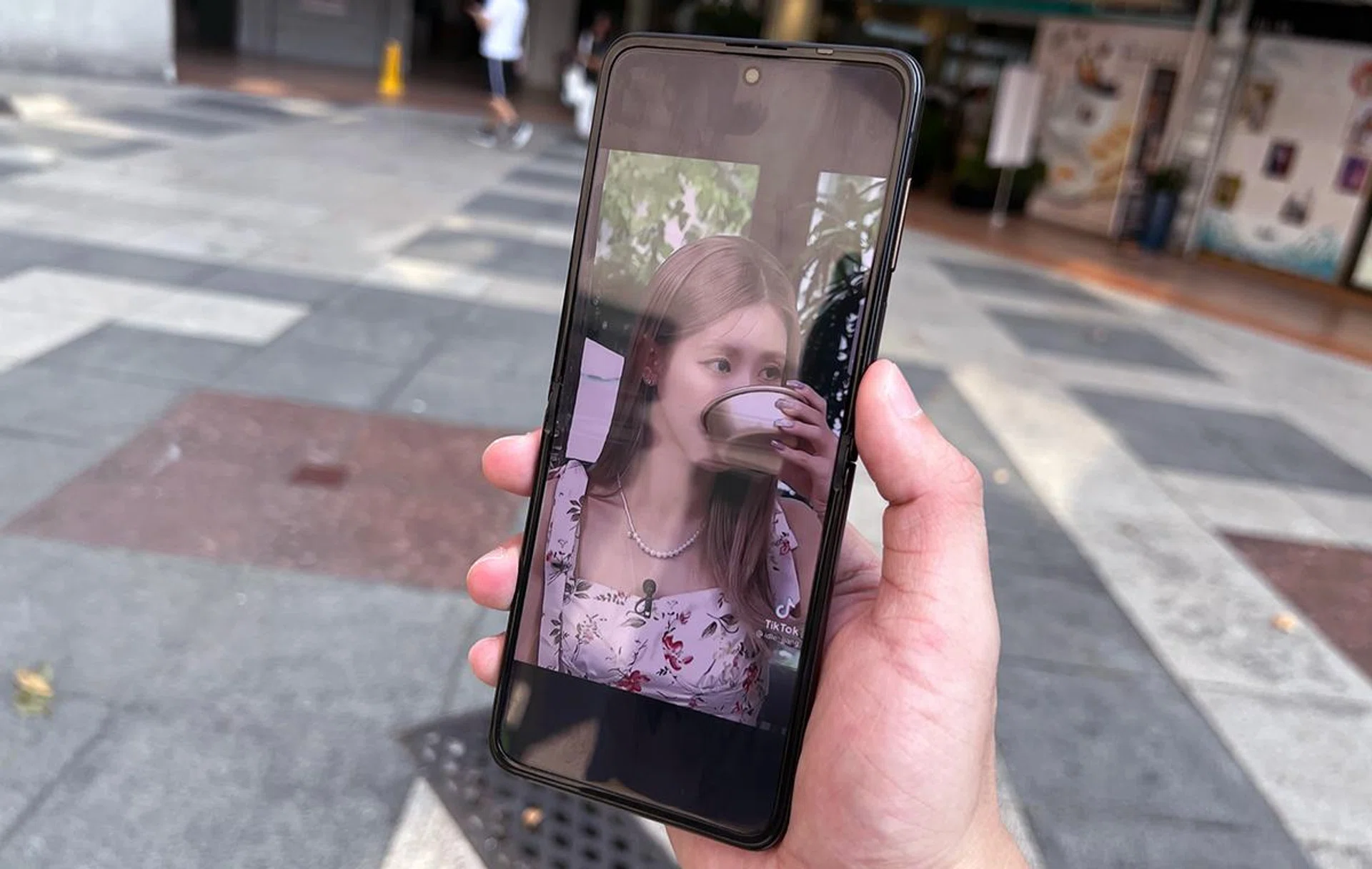
The display works great and is fairly accurate with colours and details.
That said, it has a high-end panel, with 100% DCI-P3 gamut, 1,000-nits peak brightness, 1,440Hz high-frequency PWM dimming, a contrast ratio of 1,000,000:1, and Full HD resolution of 2,640 x 1,080 pixels. It's almost flagship-grade, if not for the lack of HDR support.
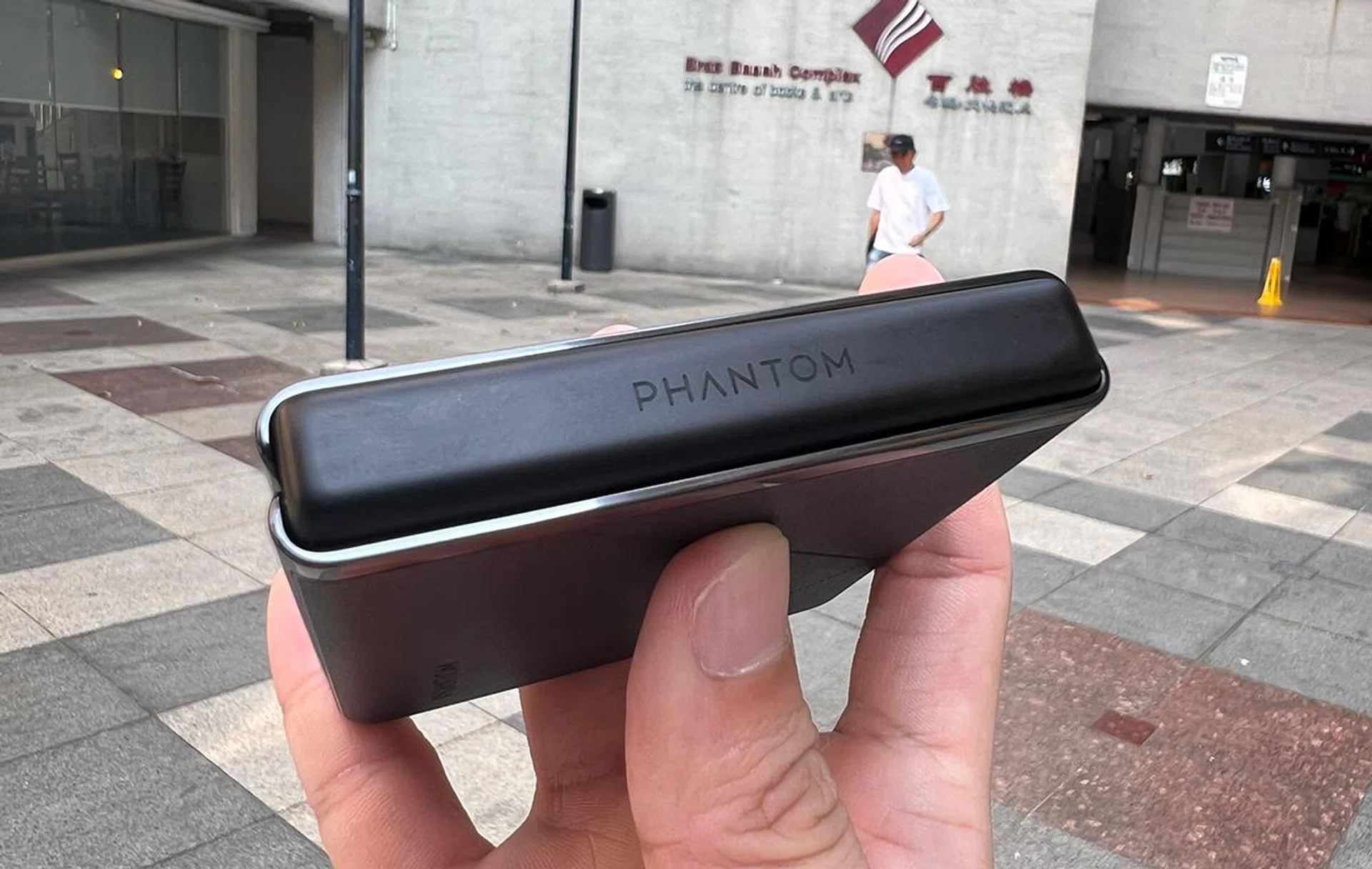
Tecno's proprietary drop-hinge with its leather-like finish that resembles car seats.
Beyond the display and camera housing, the Phantom V Flip tries to be unique with its design and handling competencies but falls into classic design traps. For example, we like its leather material and how it stays free from fingerprints, but it’s very prone to attracting dust.
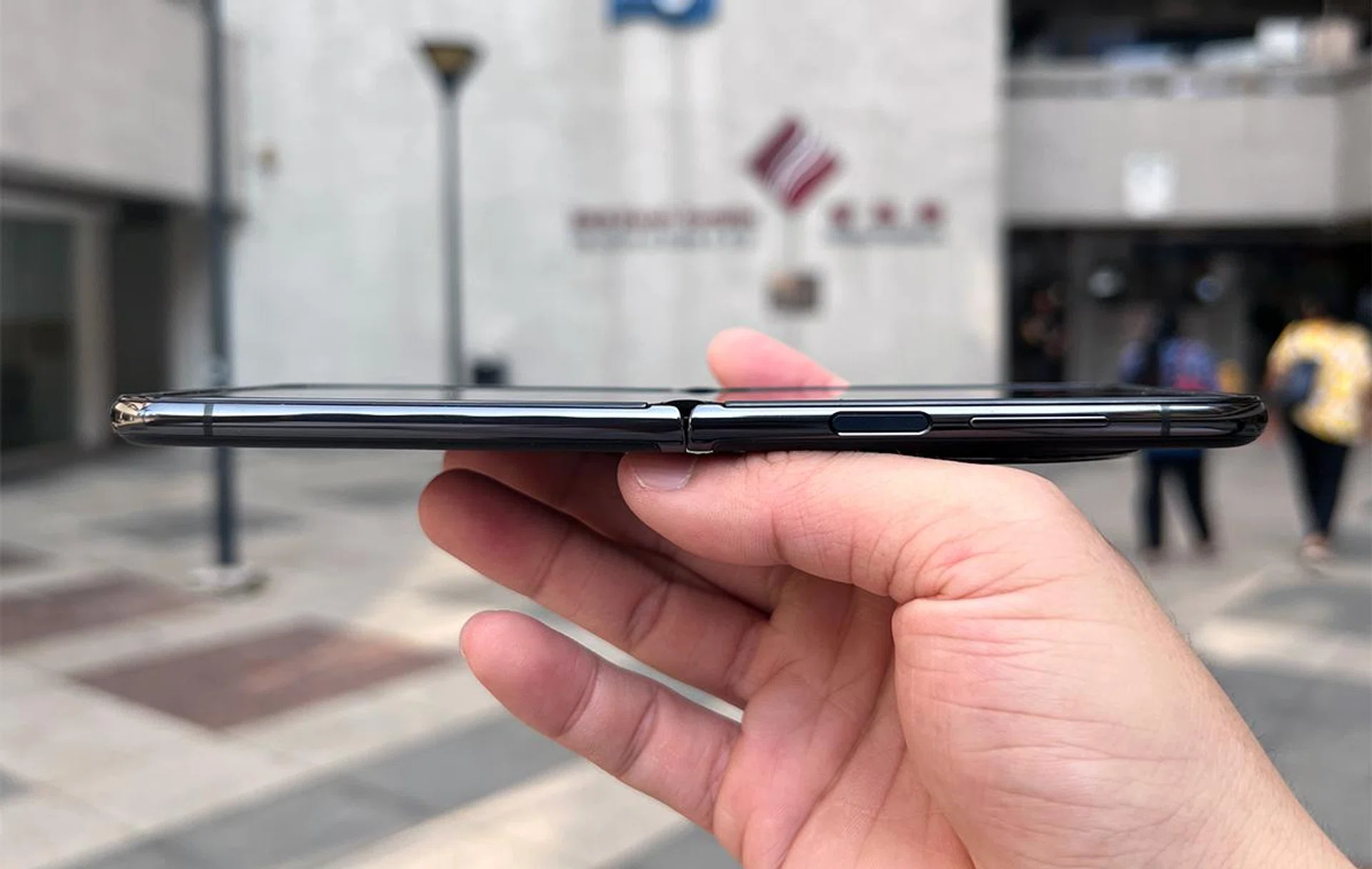
The phone doesn't open fully straight, and we're not sure if we should force the issue.
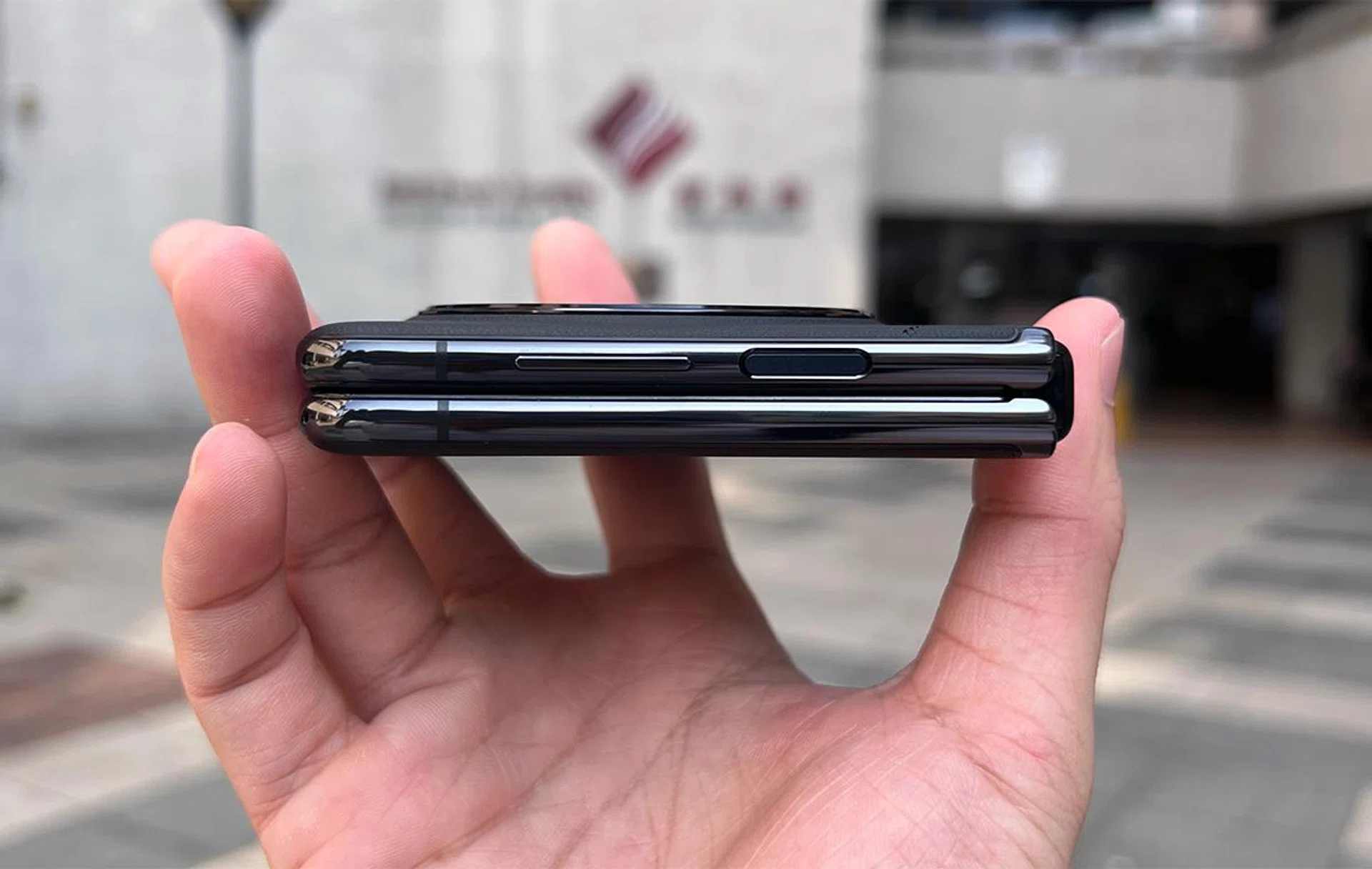
When fully opened, the two halves aren’t precisely levelled at 180°, which takes the premium shine away from the phone. We’re also not a fan of side-mounted fingerprint sensors, and that drawback becomes apparent later on during day-to-day use.
There’s also no mention of water or dust resistance, while its main rivals have some form of protection against the elements (Galaxy Z Flip5 comes with IPX8 – no dust protection, but high water resistance). It’d be nice for Tecno to include IP-rated protection since it adds to its clamshell phone's perceived robustness and durability.
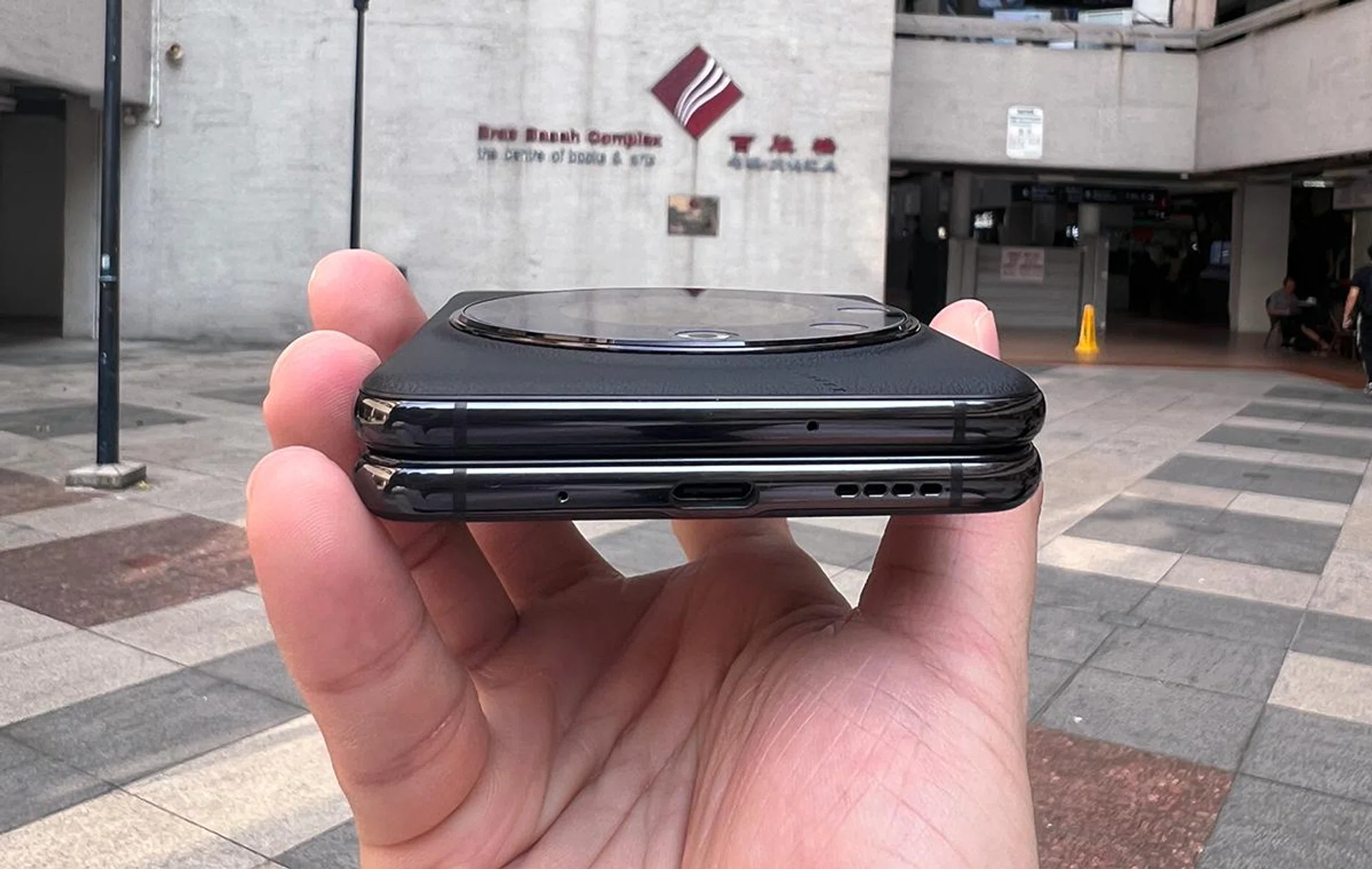
USB-C port for its charging and file transfer needs.
While Tecno has gotten most of the Phantom V Flip’s handling down, there’s still plenty of room for build quality and material improvements if it wants to dethrone true premium clamshells. IP-rated water resistance and better attention to detail would be a nice starting point, but let's move along considering the price point of this clamshell.
Circular cover screen
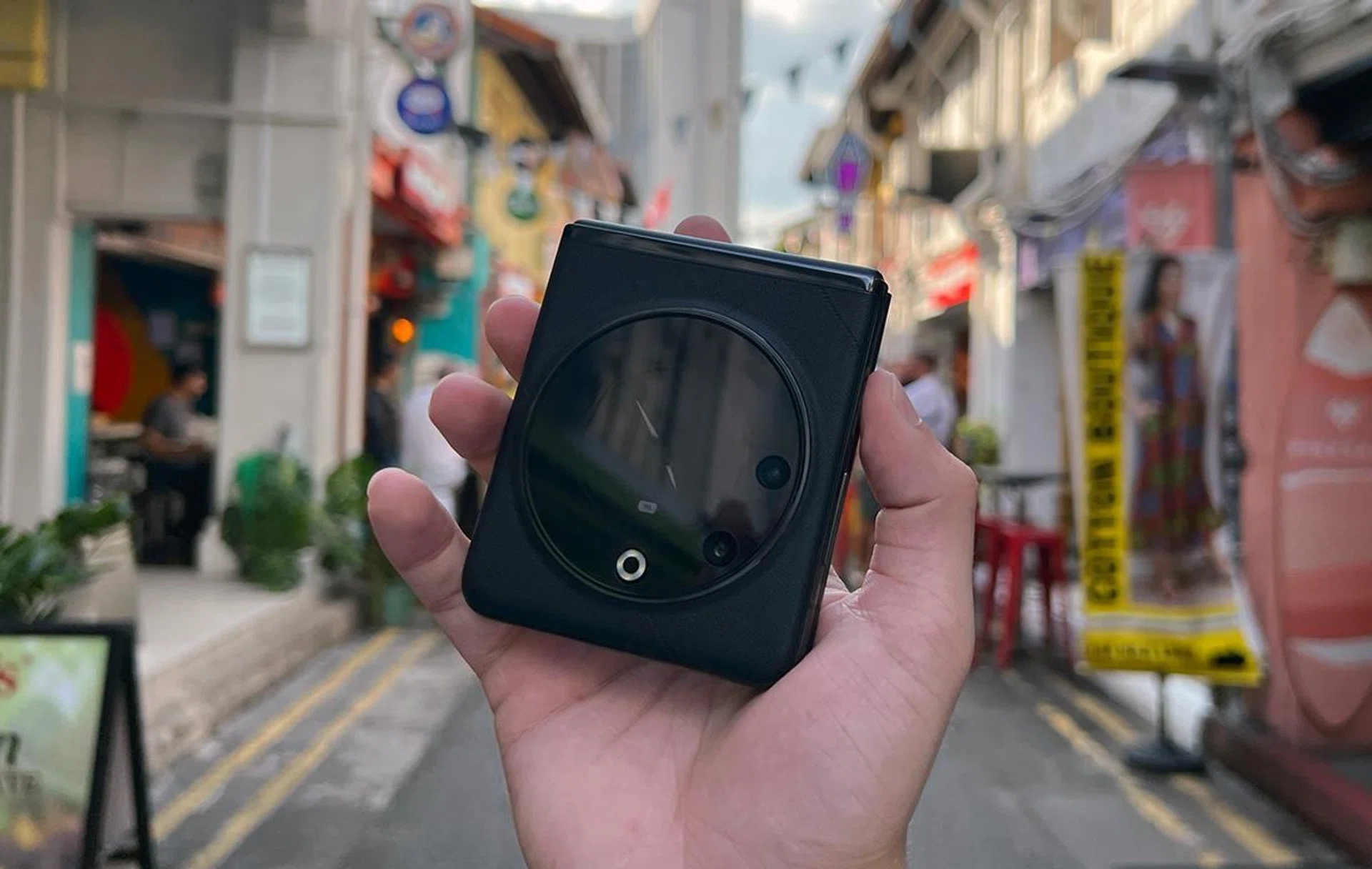
Tecno Phantom V Flip 5G.
Tecno calls its secondary display the Versatile Personalised Cover Screen. It’s a 1.32-inch, round AMOLED panel with a 60Hz refresh rate and 120Hz touch sampling rate, packing 466 x 446 pixels resolution (and a sharp pixel density of 451 PPI).
Versatile Personalised Cover Screen resembles a high-end smartwatch display you’d typically get from a Galaxy Watch6 series. Nine widgets are supported on it, with five enabled by default (weather forecast, calendar, camera, health tracker, and alarm).
The widgets aren’t anything to write home about if you’ve seen similar ones from smartwatches or other flip phones. They provide basic information because of the display’s limits. For example, it fits no more than one notification or calendar appointment, with an extra line or two after. Perhaps the most useful widget is the camera, which summons Swipe Shot (using the cover screen as a viewfinder for its main camera selfies).
Despite the name, a drawback of Versatile Personalised Cover Screen is the dearth of personalisation. While you can choose from a dozen template clock faces and any Tmoji cartoon avatar of yourself, you can’t customise it by setting a wallpaper or designing a clock face with your choice of colours, fonts, or layouts. We did try to use the custom wallpaper setting, but the Settings app would hang and crash after selecting a wallpaper for Cover Screen.
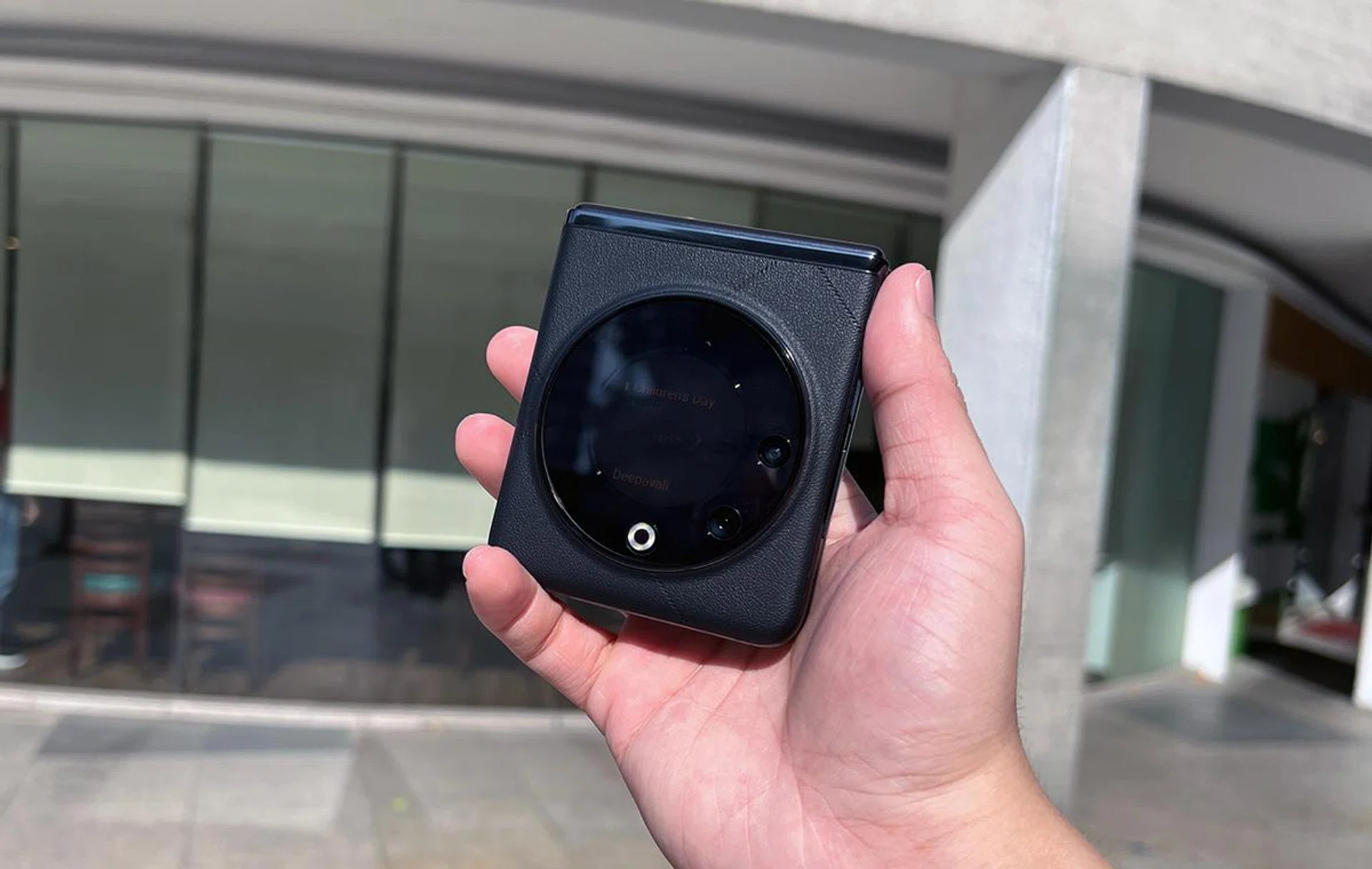
800-nits peak brightness is bright enough for indoor use, but not so much if you're going up against Singapore's infamous sunny weather.
After trying the Samsung Galaxy Z Flip5’s secondary display (which takes up almost the entire front plate of the clamshell), I find it difficult to appreciate Phantom V Flip’s take on it. After all, why would I give up on Google Maps navigation or a bigger viewfinder for previewing photos and videos? Tecno’s cover screen is significantly smaller and doesn’t have third-party app support at the time of writing this review.
That said, Tecno did a decent job making a practical secondary display that looks pleasing, with core functionalities intact. It’s just that Samsung’s Galaxy Z Flip5’s Flex Window set a really high bar to meet. Had Tecno's phone came out last year, we would have had a very different opinion of it.
HiOS, Android 13
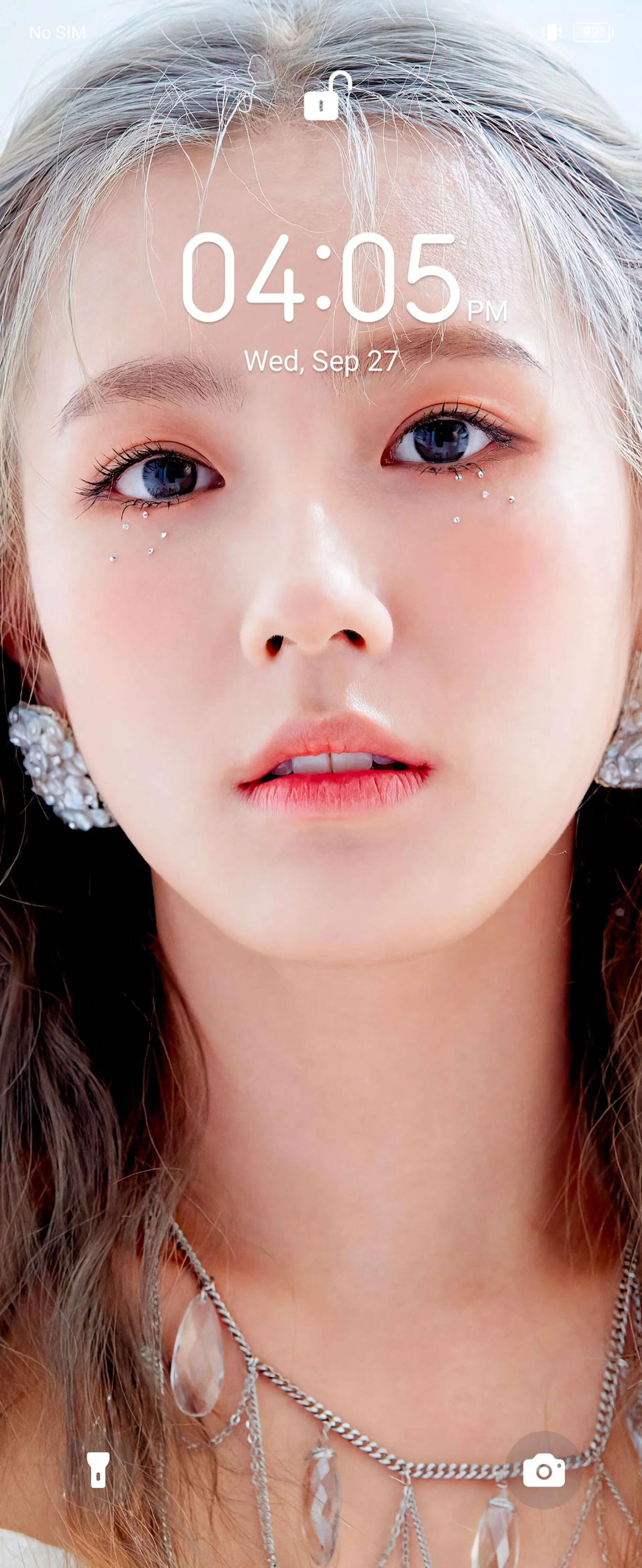
Lock Screen.
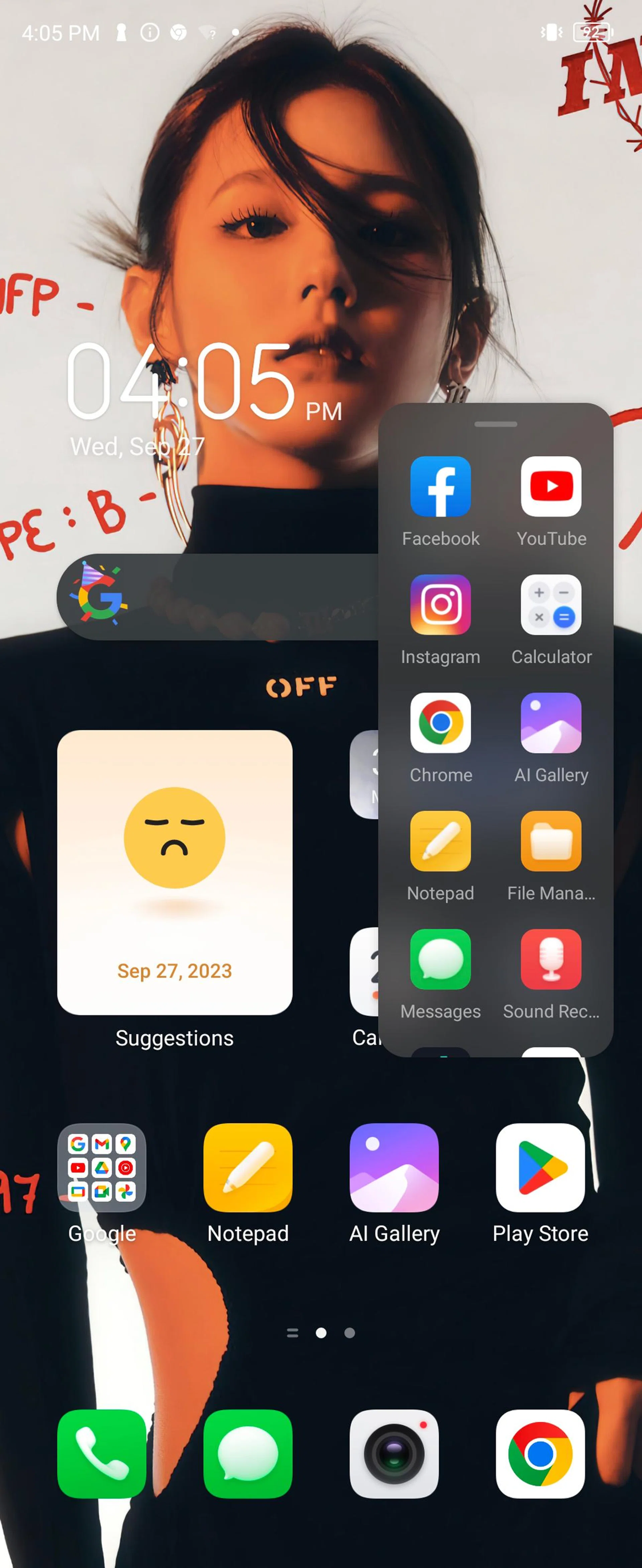
Home Screen (with pop-up submenu enabled).
The phone runs on a reskinned version of Android 13 called HiOS, replete with Google Mobile Services and the Google Play Store.
It’s our first time experiencing Tecno's operating system, but it feels familiar because their reskin takes UI cues from Xiaomi’s MIUI and Oppo’s ColorOS. It favours a juvenile colour palette, has notifications laid out logically and cleanly with no kerning or font errors, and has a dense dashboard menu holding all your toggles for Wi-Fi, brightness, torchlight, Bluetooth and more.
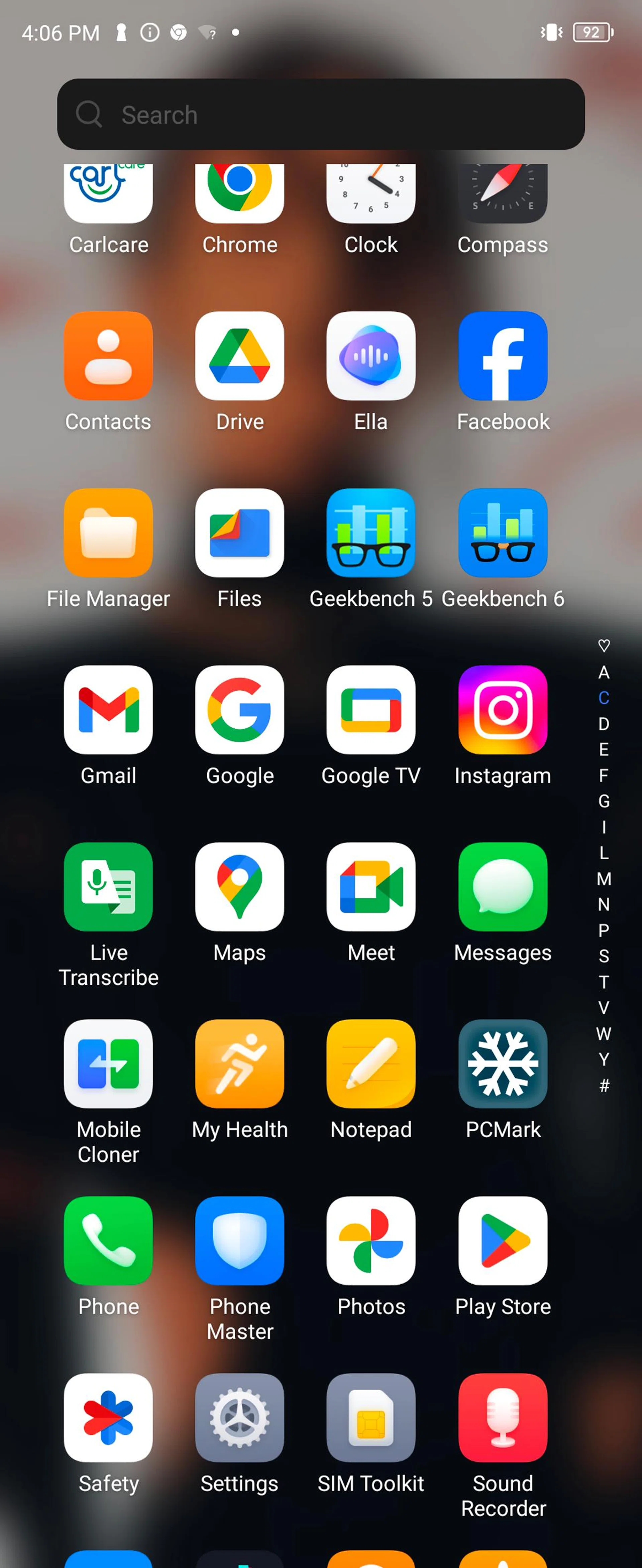
App drawer.
Phantom V Flip’s user interface exceeded our expectations and is surprisingly light on bloatware. It doesn’t pack much nonsense beyond HiOS proprietary apps, and it did not take us more than five minutes to remove them.
Features that are specific to its form factor are also intuitively located. For example, its dual-sided viewfinder for photos and videos (Cover Screen Preview) is an icon in the top left corner of your Camera app’s main screen.

Control centre.
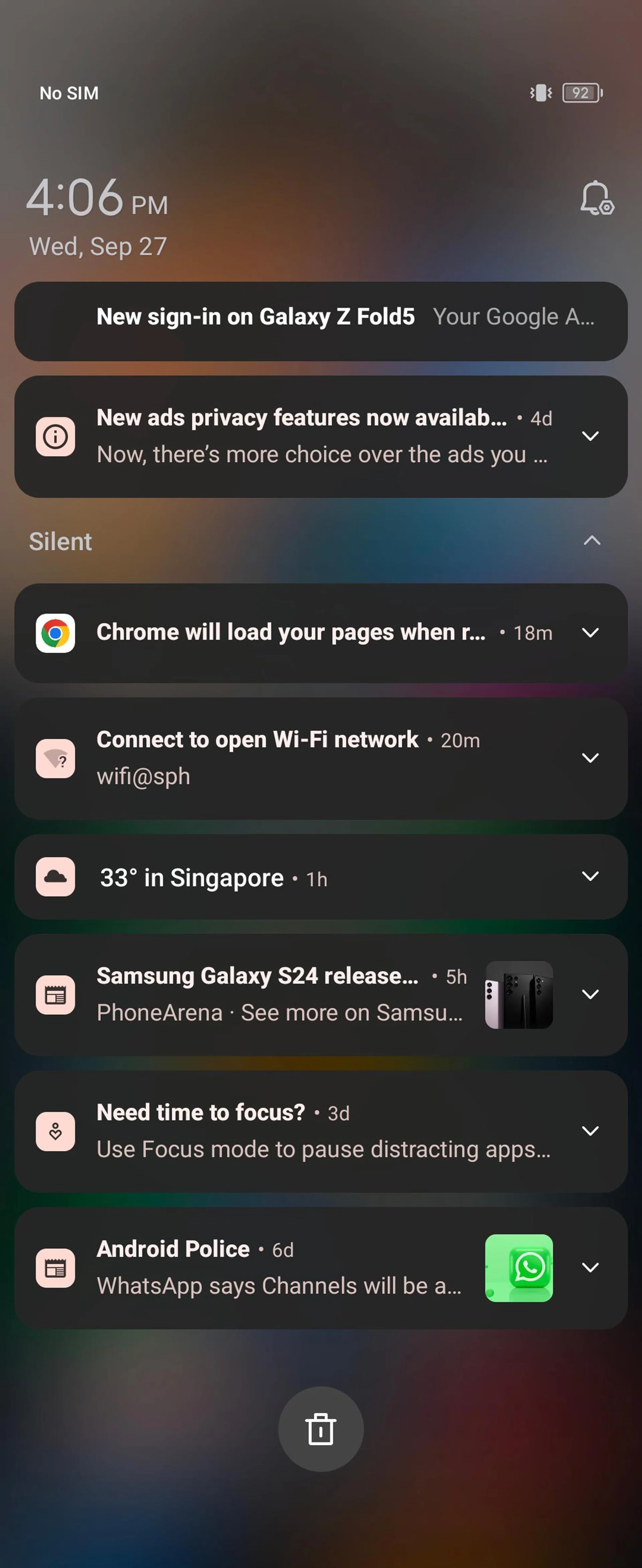
Notifications centre.
The only flaw in our day-to-day use is the auto-adjusting screen brightness. It’s extremely aggressive, dimming and lighting up multiple times in a matter of seconds until it’s satisfied with its brightness level. This seems like an easy fix with a firmware update, so we won’t penalise the Tecno Phantom V Flip 5G for this flaw.
The phone offers fast and accurate facial recognition and fingerprint unlocking, but its in-button, side-mounted fingerprint sensor leaves much to be desired. While it's faultless, the button placement feels an inch off from where you'd usually rest your thumb when holding a phone.
Imaging Performance
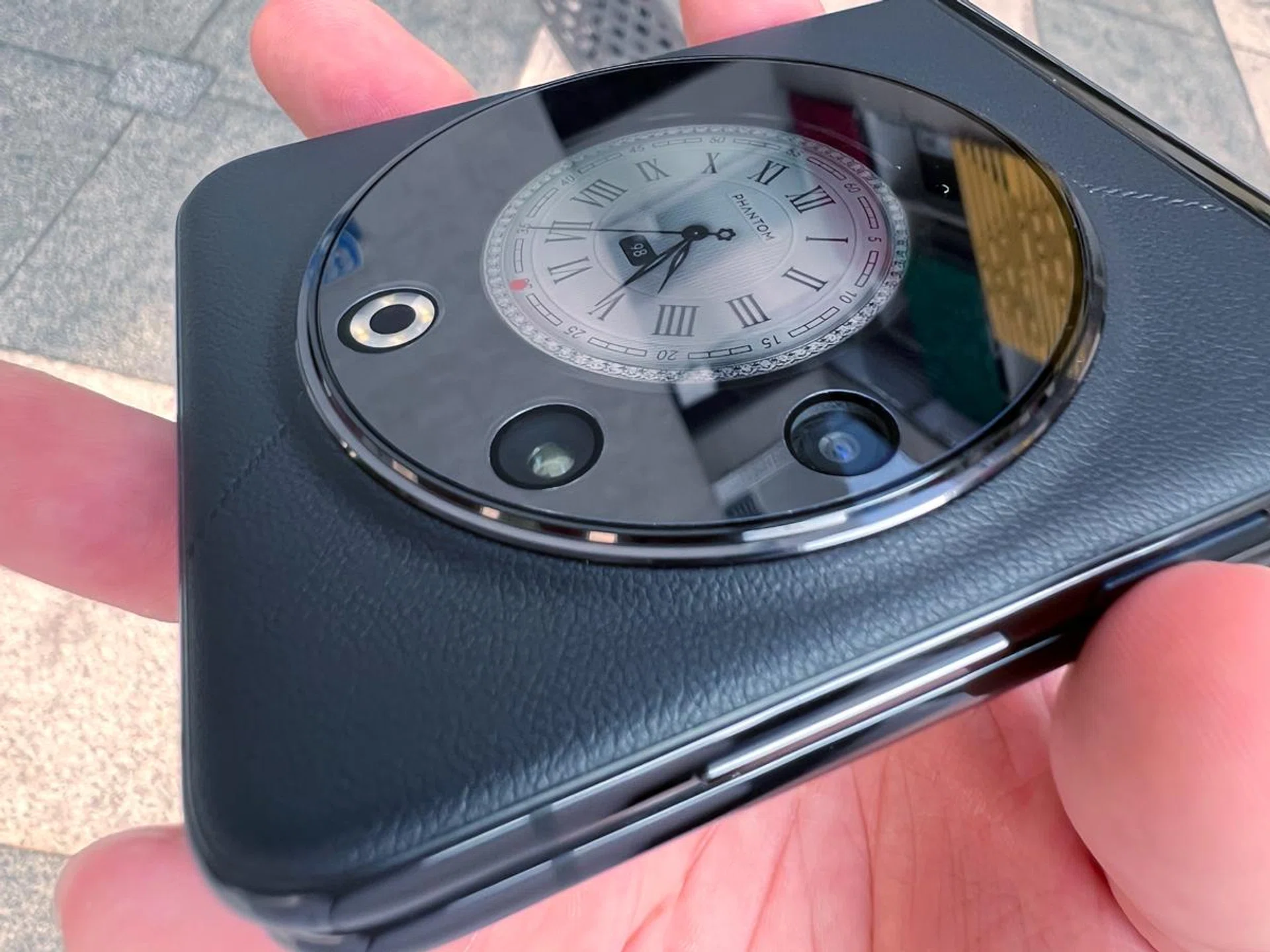
The Tecno Phantom V Flip 5G offers a 64MP main, 13MP ultra-wide, next to its flash module.
Like most clamshell foldables, Tecno Phantom V Flip 5G splits its camera arrangement into two key areas. The dual rear cameras are on the same plane with its cover screen, and there’s a punchhole 32MP front camera on its inner display for video calls.
It offers a 64MP main camera supported by an RGBW Ultra Sensitive Sensor (0.8μm pixel size, f/1.7 aperture, Phase Detection AutoFocus). Compared to traditional RGGB sensors, the main camera on Phantom V Flip supposedly offers 60% better light intake, 15% less noise, and 10% better colour accuracy.
Its 13MP ultra-wide angle camera (1.12μm, f/2.2, PDAF) uses Dual-Camera Fusion Technology for image data compensation. The 13MP shooter combines image data with the main camera to enhance resolution, sharpness, colour saturation, and alignment.
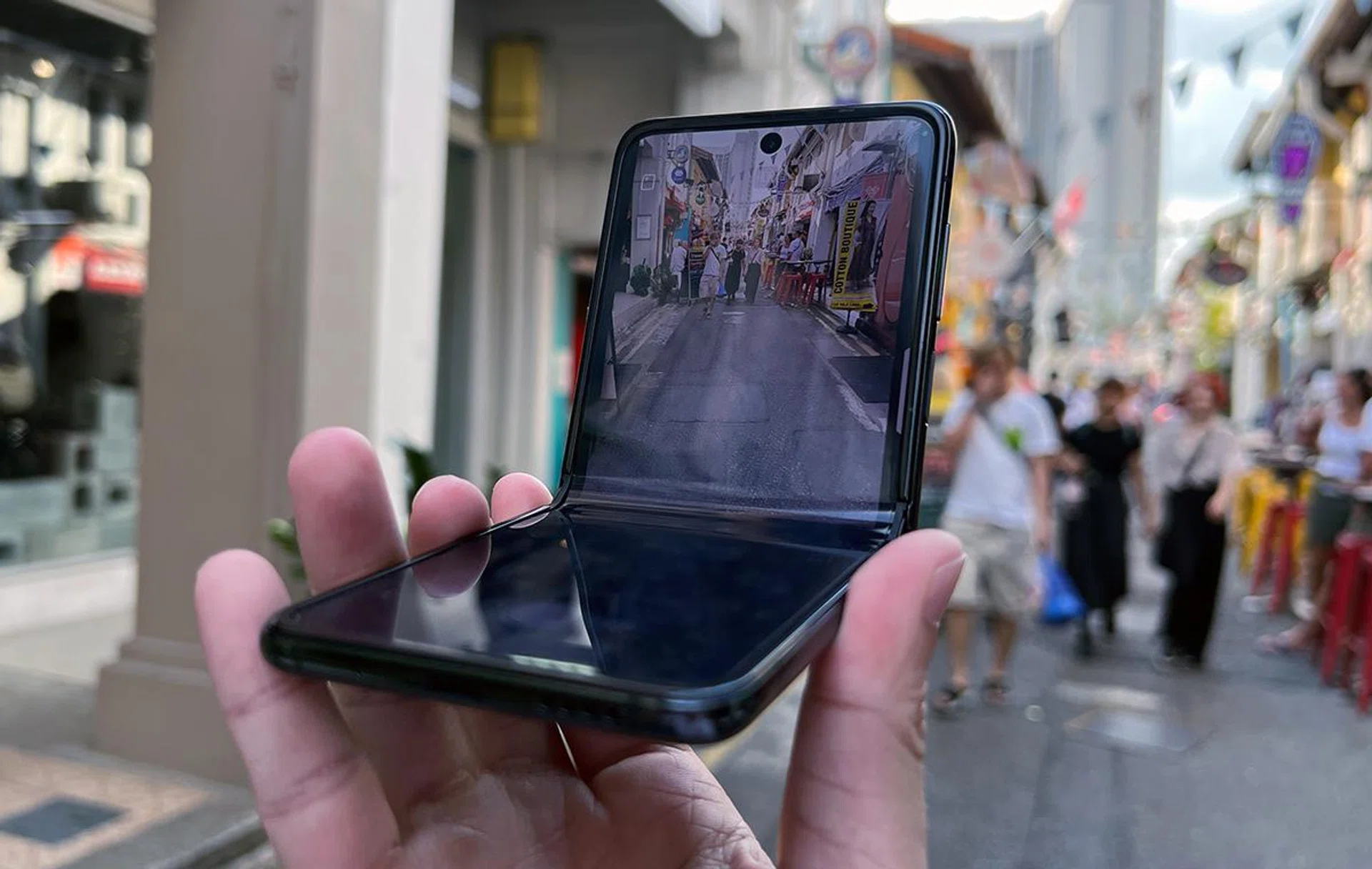
Upright photography is possible, a hallmark of clamshell foldable phones.
Besides Swipe Shot from its Cover Screen, Phantom V Flip also fully uses its folds to offer FreeCam Selfie (upright, hands-free photography with its main and inner display camera).
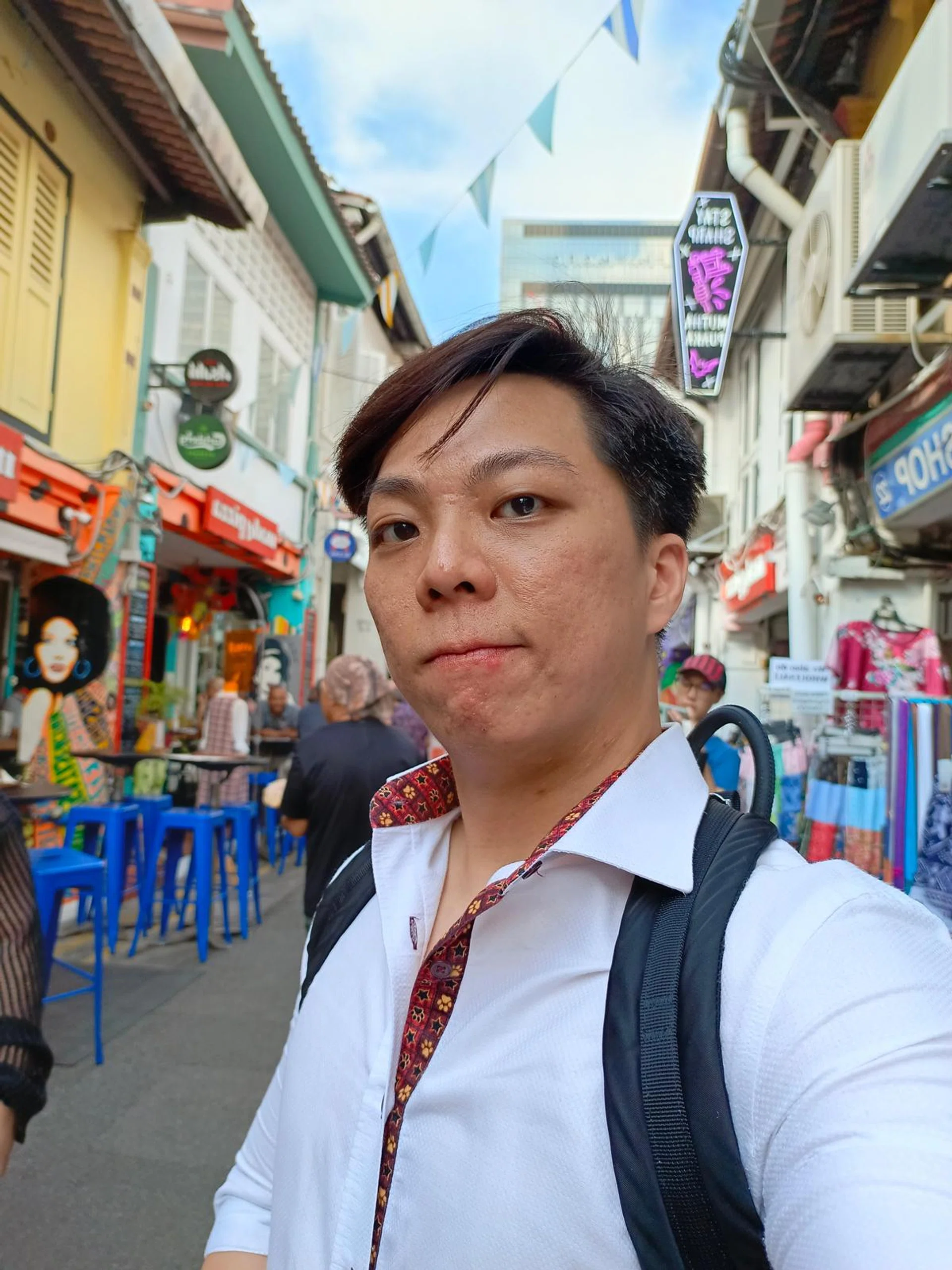
Main camera shot using Cover Screen as the viewfinder. Without filters, the camera was able to accurately capture a very ripe pimple along the lip.
It also has aggressive retouching tools (all optional). You can let the algorithm decide how to beautify your face, and it even packs six body contouring options that use AI to read your figure and make you more of a thirst trap.
Finally, it supports 4K60FPS recording on the main camera, HDR recording (but not in 4K), and dual-view videos (front and rear camera recording).
Here are some photo samples to ascertain its imaging quality. Photos are arranged in the following order for each shot: regular main camera attempts with no extra zoom, a 2x zoom sample, followed by its 13MP ultra-wide attempt.
Imaging Samples
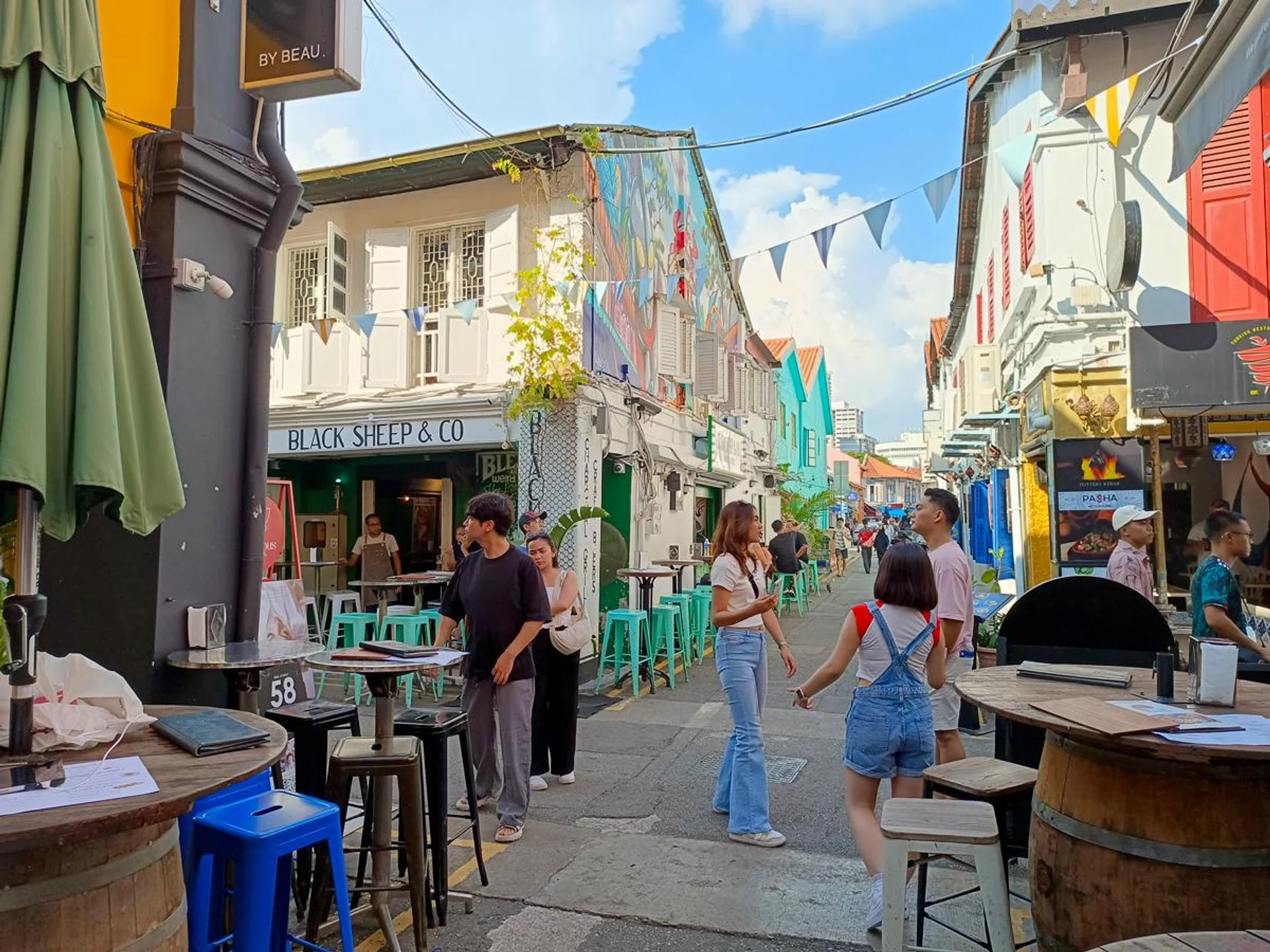
Main camera.
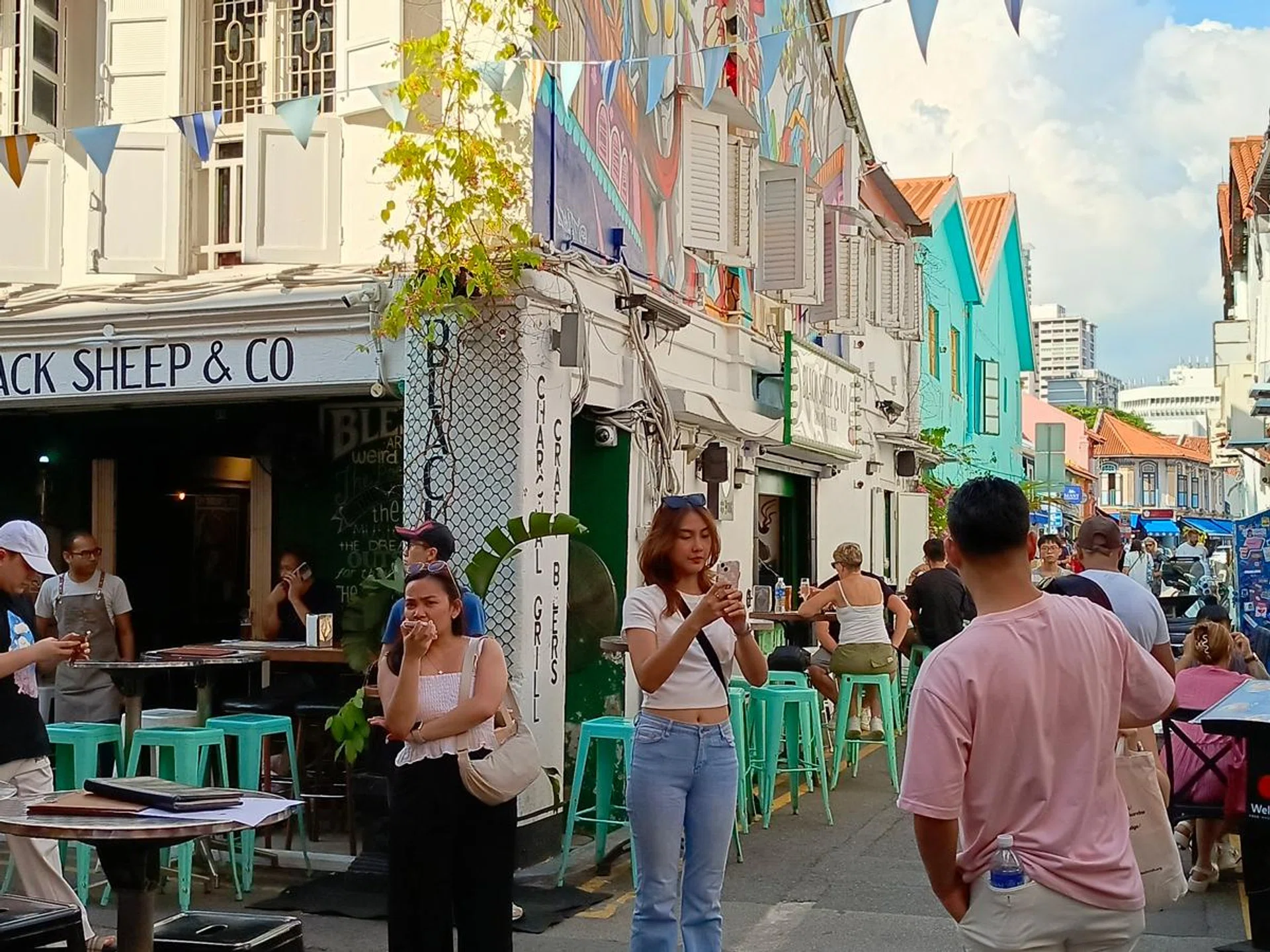
2x zoom
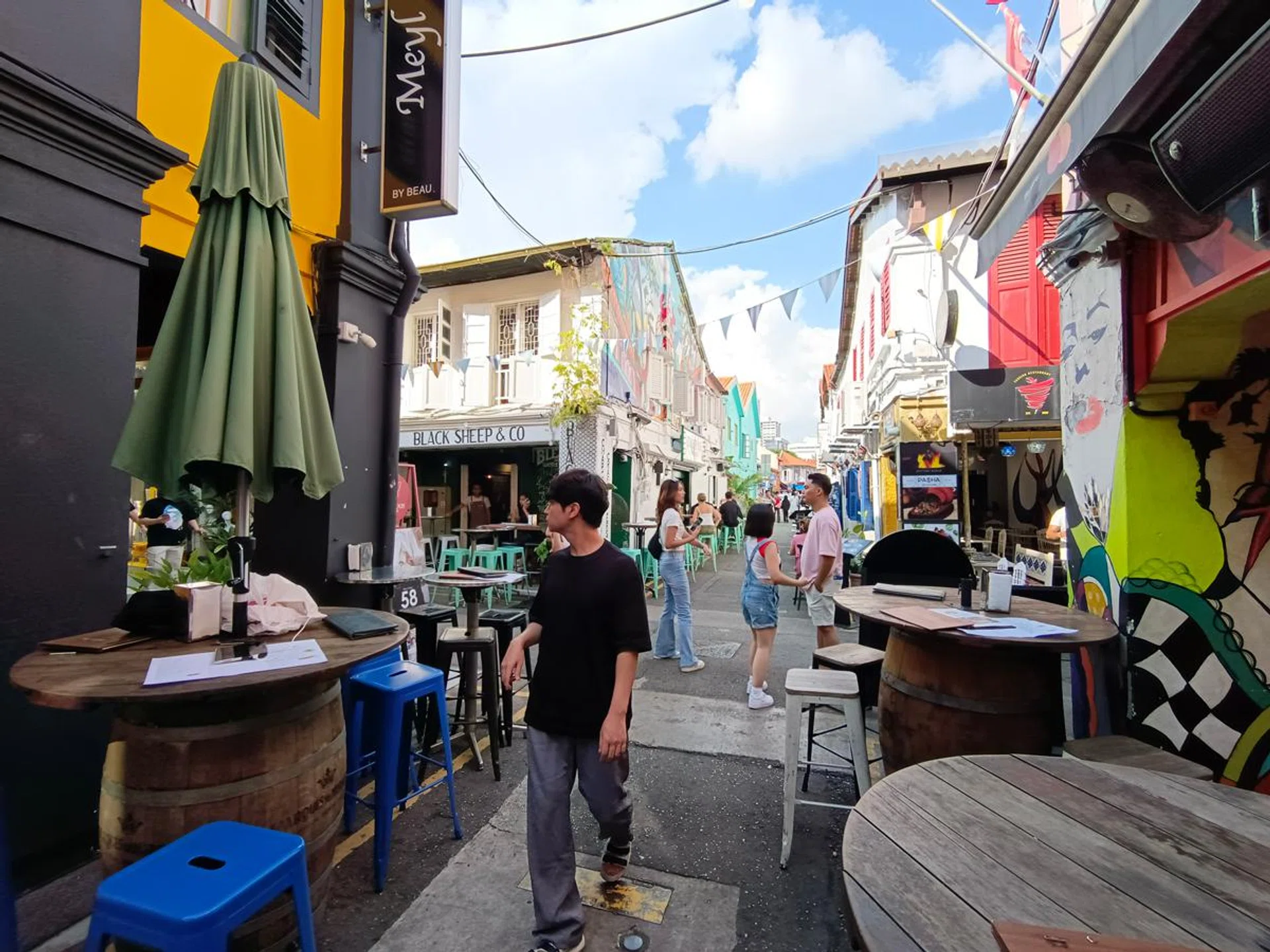
Ultra-wide.
Its main camera performance is sufficient, capable of clear shots at regular and 2x zoom range. Its 13MP ultra-wide struggles with colour accuracy, and is prone to overexposure. Detail retention on the main camera shots are also surprisingly well-structured, but the phone struggles with details in the shadows or dark colours (hint: see the lady's black pants, which is supposedly well-lit with afternoon outdoor conditions).
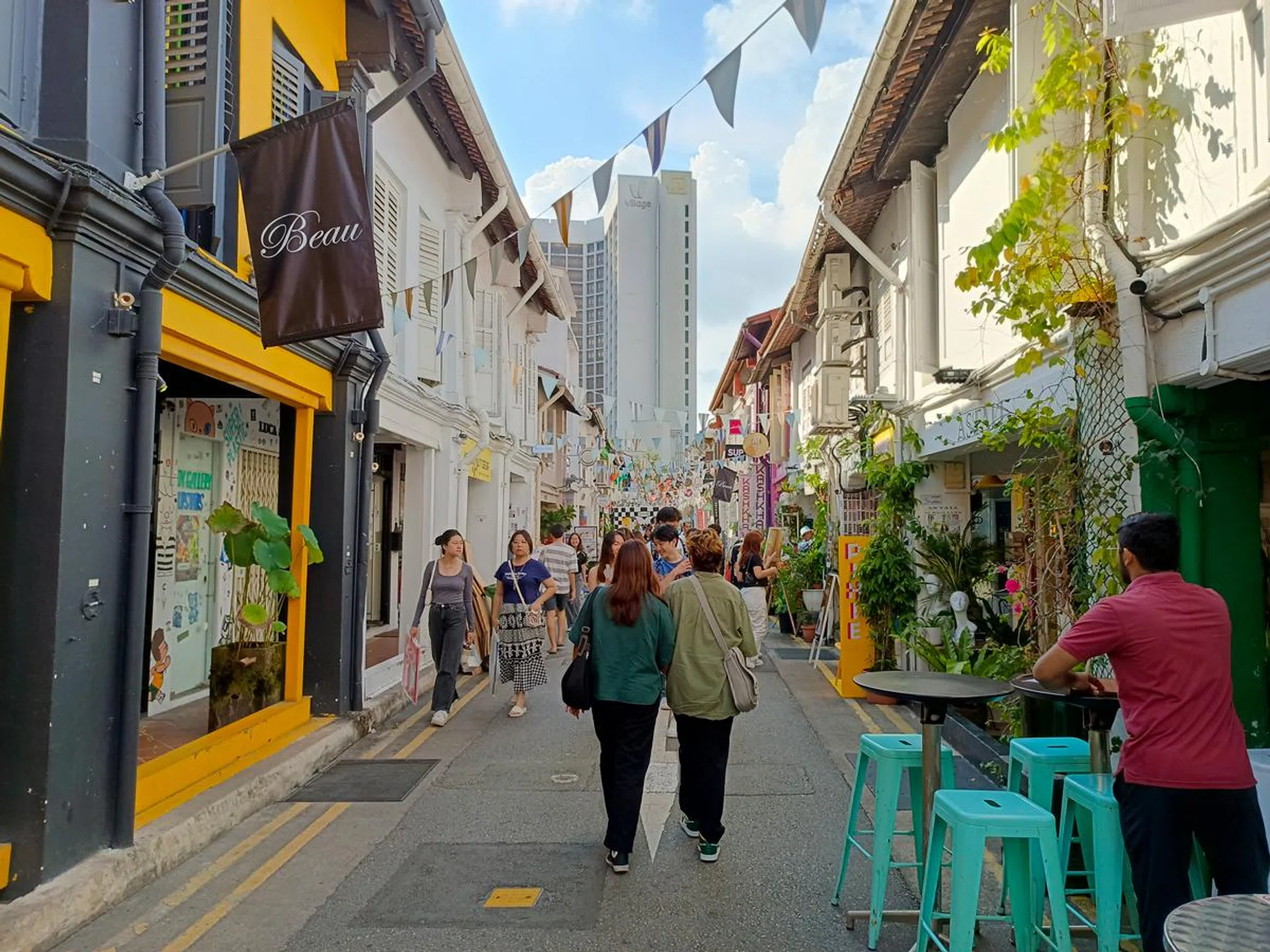
Main camera.
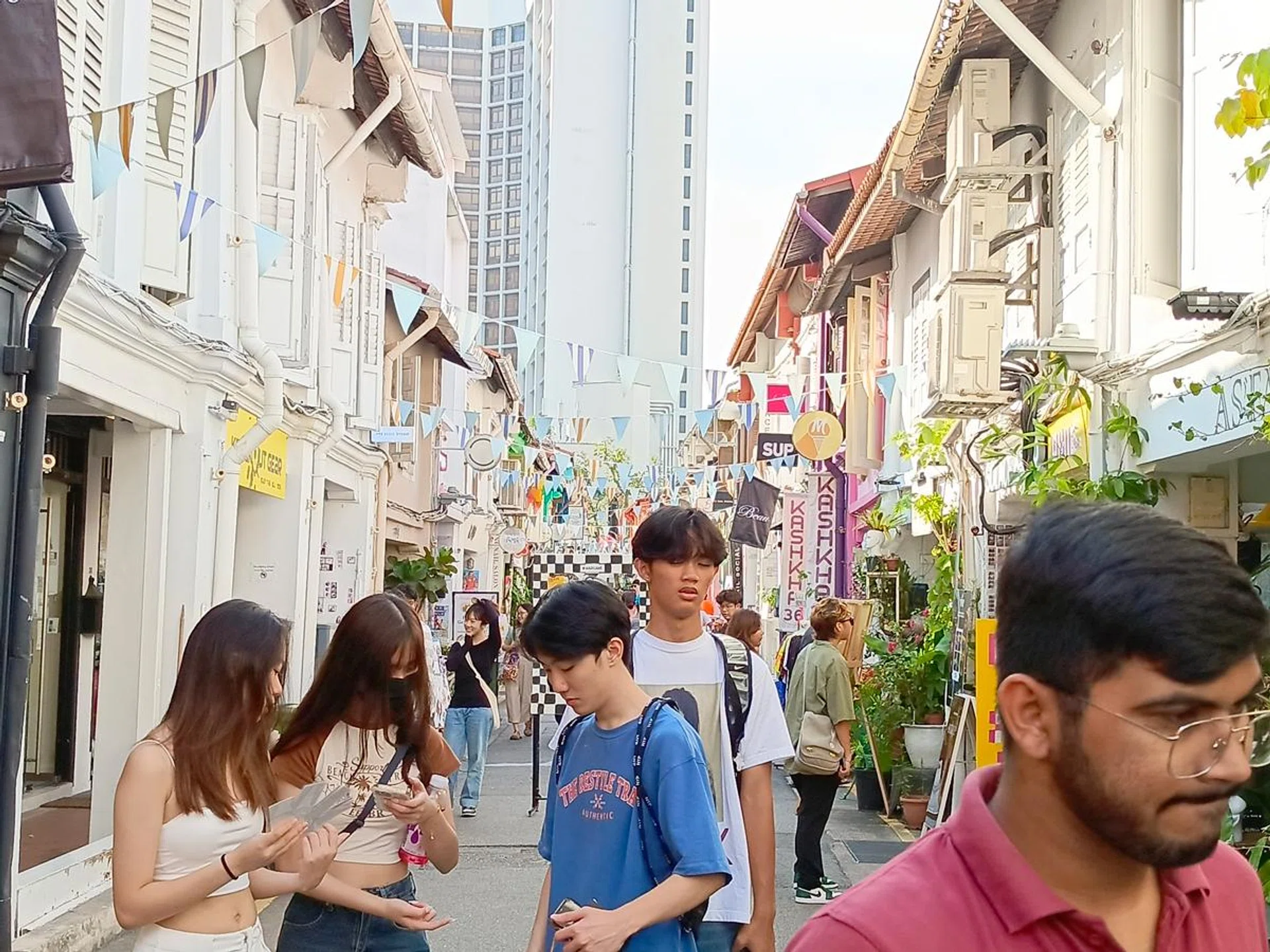
2x zoom.
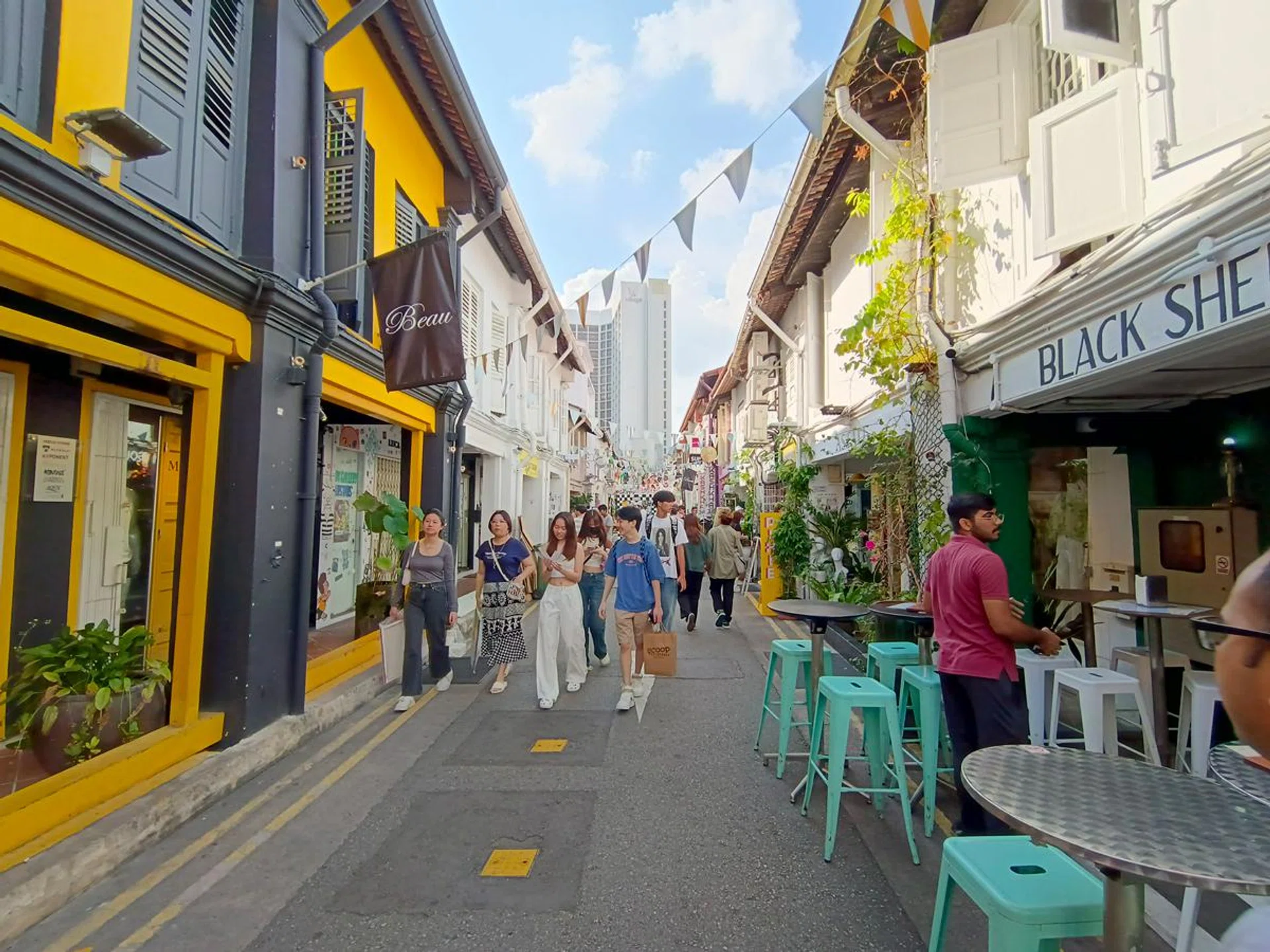
Ultra-wide.
The phone also overcompensates its brightness and exposure when it thinks the conditions aren't right, which resulted in a significantly brighter 2x zoom shot despite that photo coming from the same lens as the main camera. As far as we can tell, the regular main camera shot where you can feel the warm afternoon sun is accurate to its real-world counterpart (it was 35°C at that moment). That makes the other two accompanying shots, well, not accurate.

Main camera.

2x zoom.
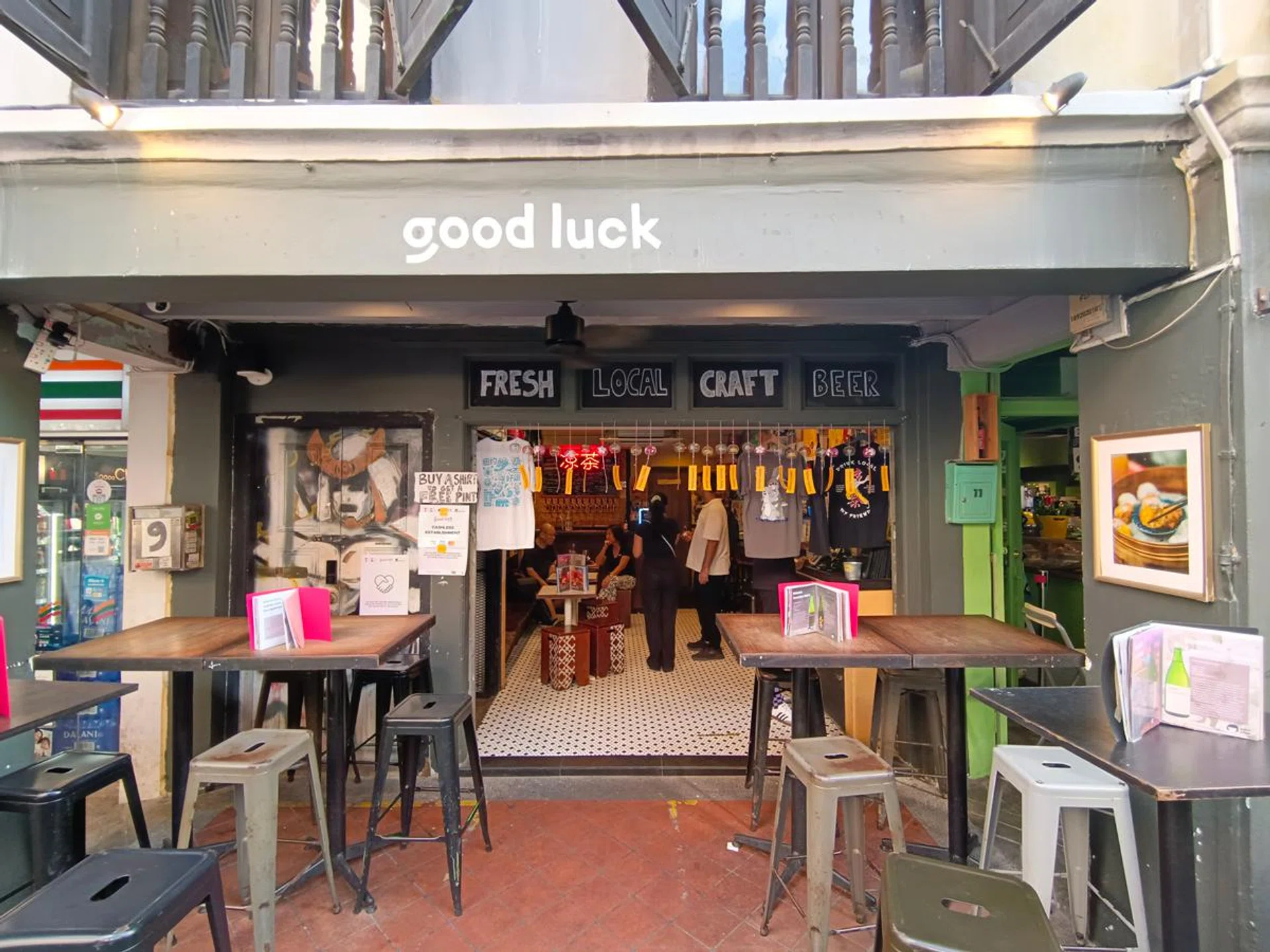
Ultra-wide.
This, funnily enough, is similar to how the phone has sudden bouts of aggressive display brightness adjustments during normal use. While we can chalk up the photo's end result being largely dependent on the photographer's skill and patience, this also means that the Phantom V Flip 5G isn't as intuitive as your typical modern Android flagship handset's camera. You will need at least two or more attempts for a properly lit image. Here, you can see that the main camera is now overcompensating for the dark interior of this craft beer shop. The ultra-wide sample shows the shooting position we've taken up, which is outside of the venue.
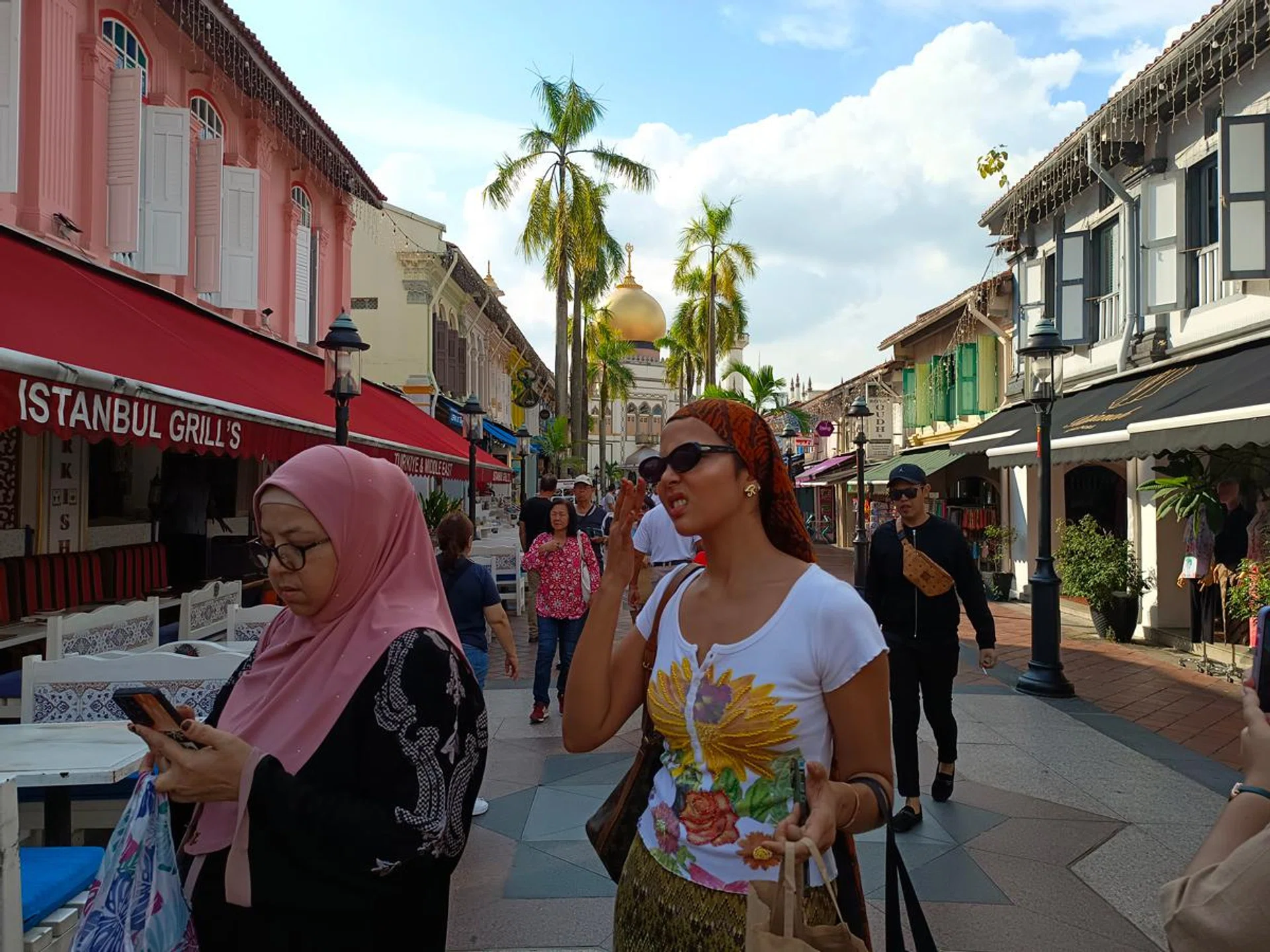
Main camera.

2x zoom.
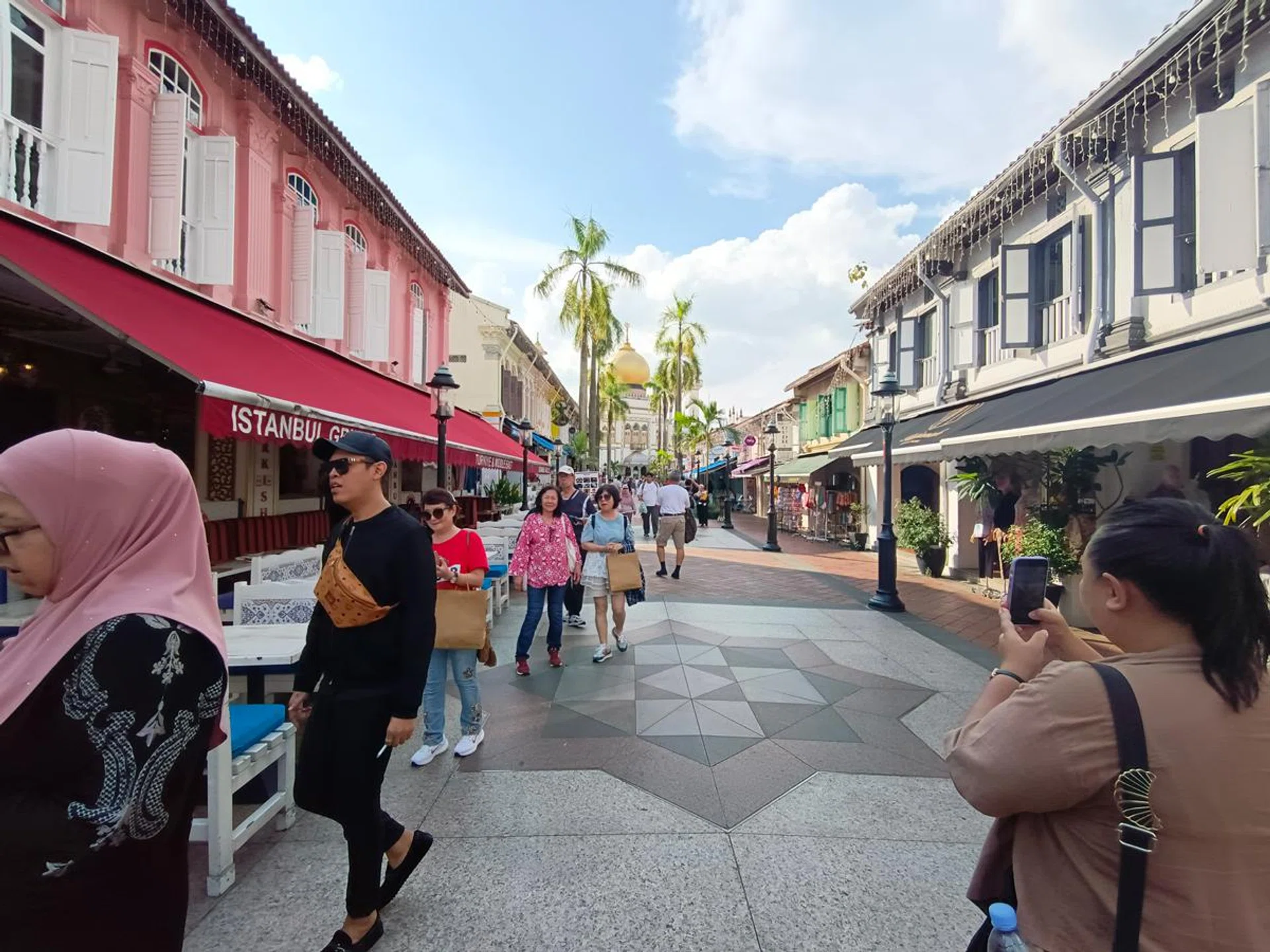
Ultra-wide.
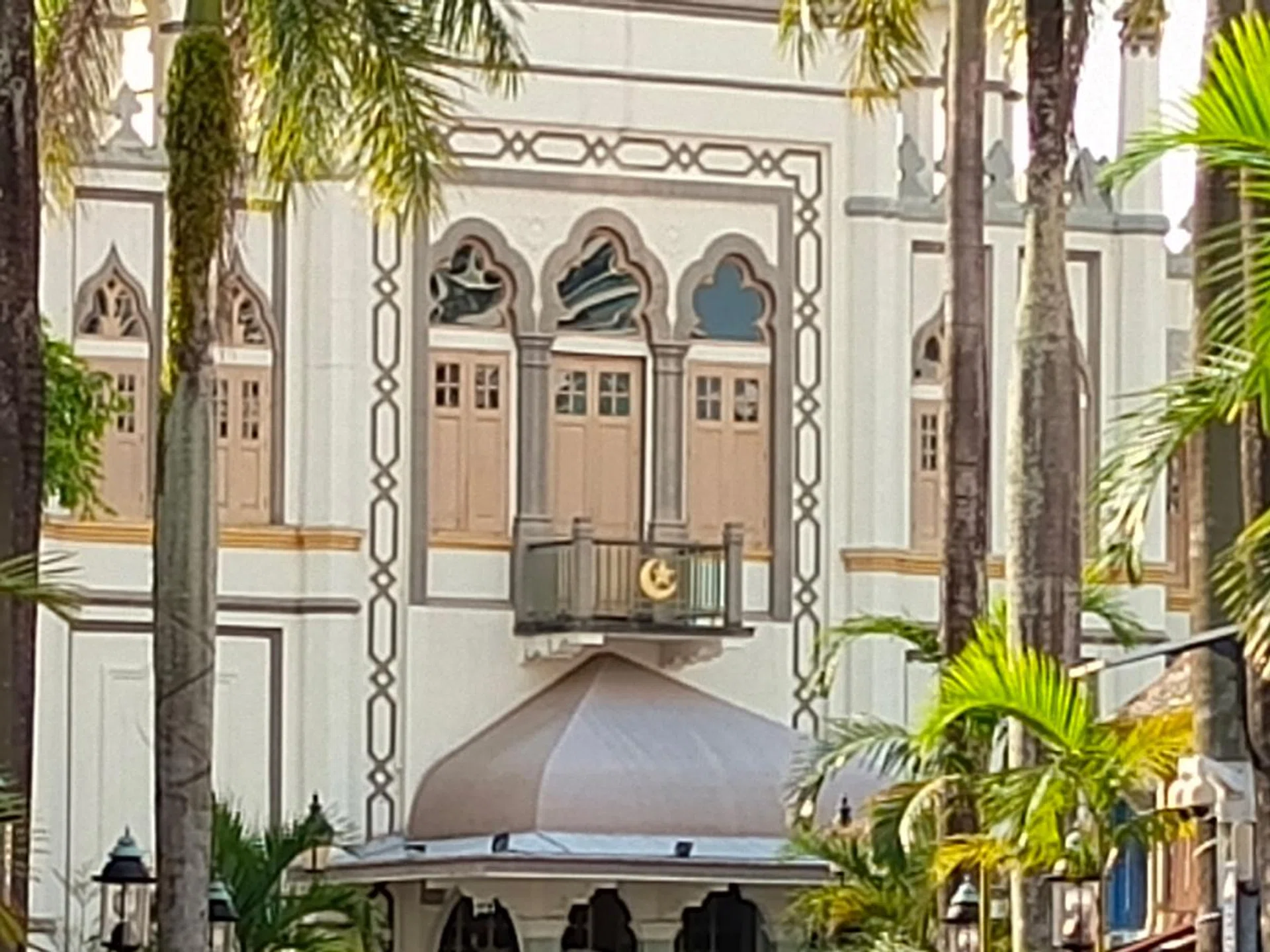
10x zoom.
Here, we tried the 10x digital zoom out of curiosity (and the results weren't surprising). Once again, the Phantom V Flip 5G cameras showed they were able to retain details, but really struggle with figuring out the right balance for exposure. Details captured by the main camera, however, are commendable, although it still struggles with details in shadows (like darker clothing).
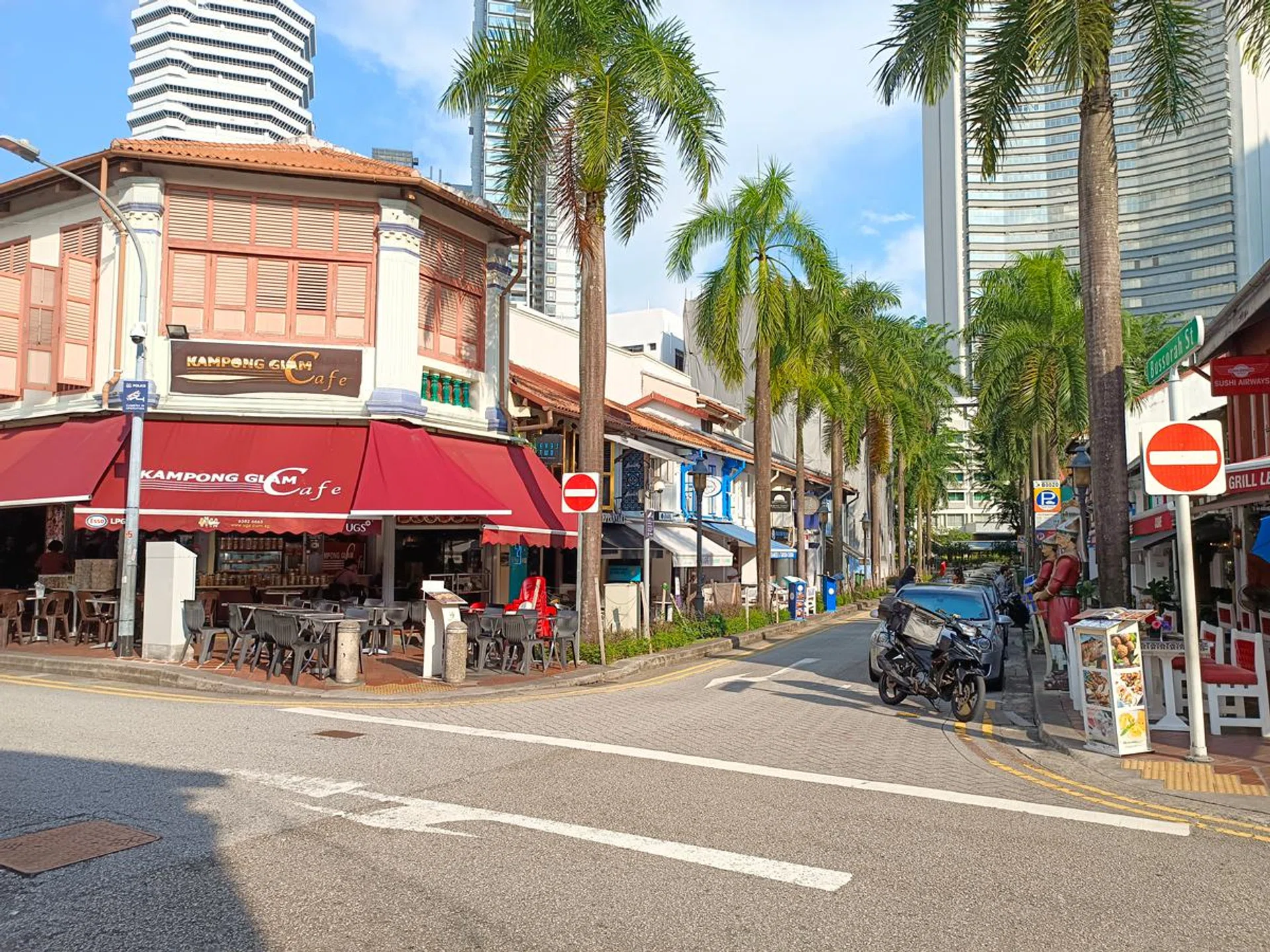
Main camera.
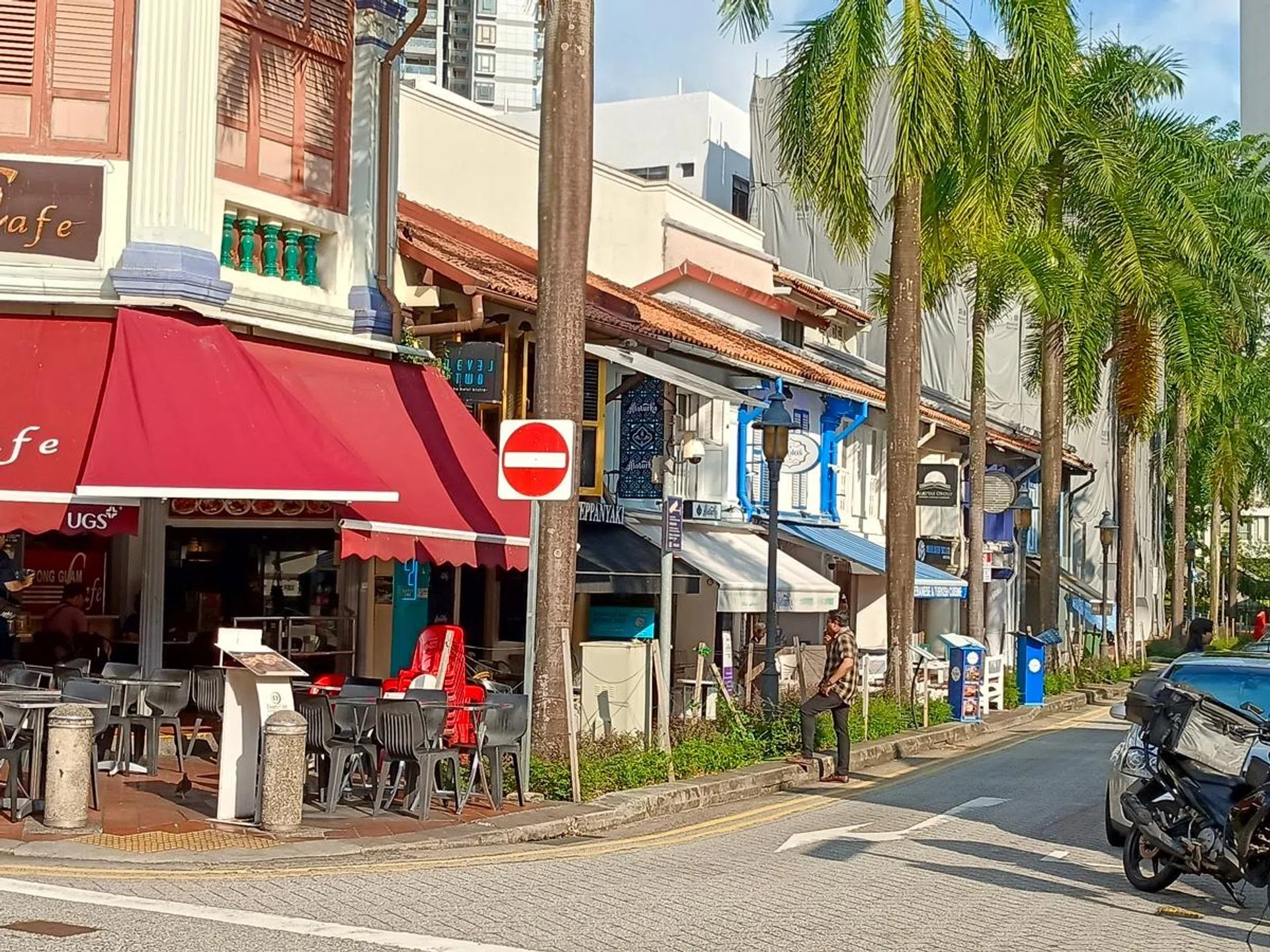
2x zoom.
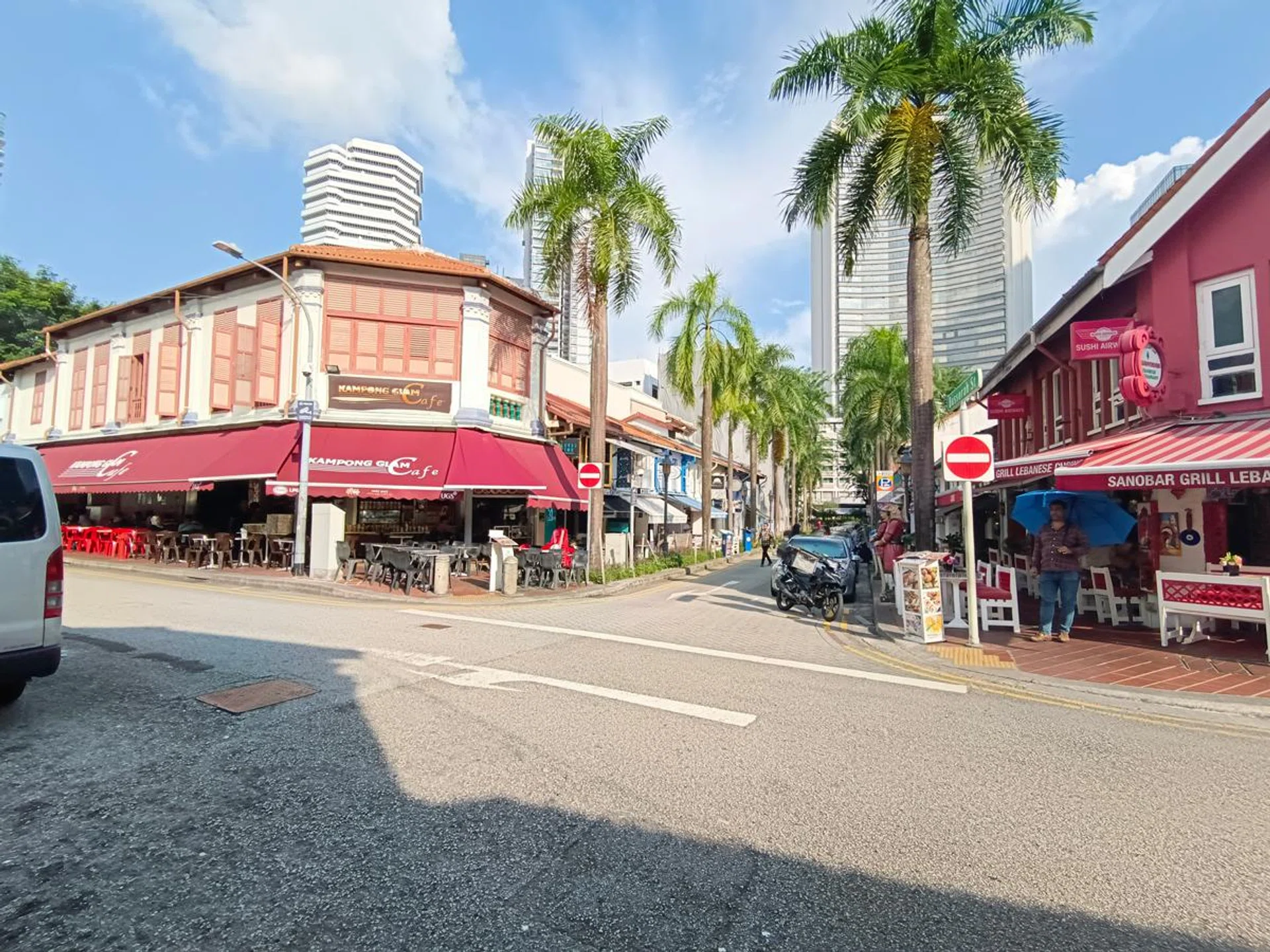
Ultra-wide.
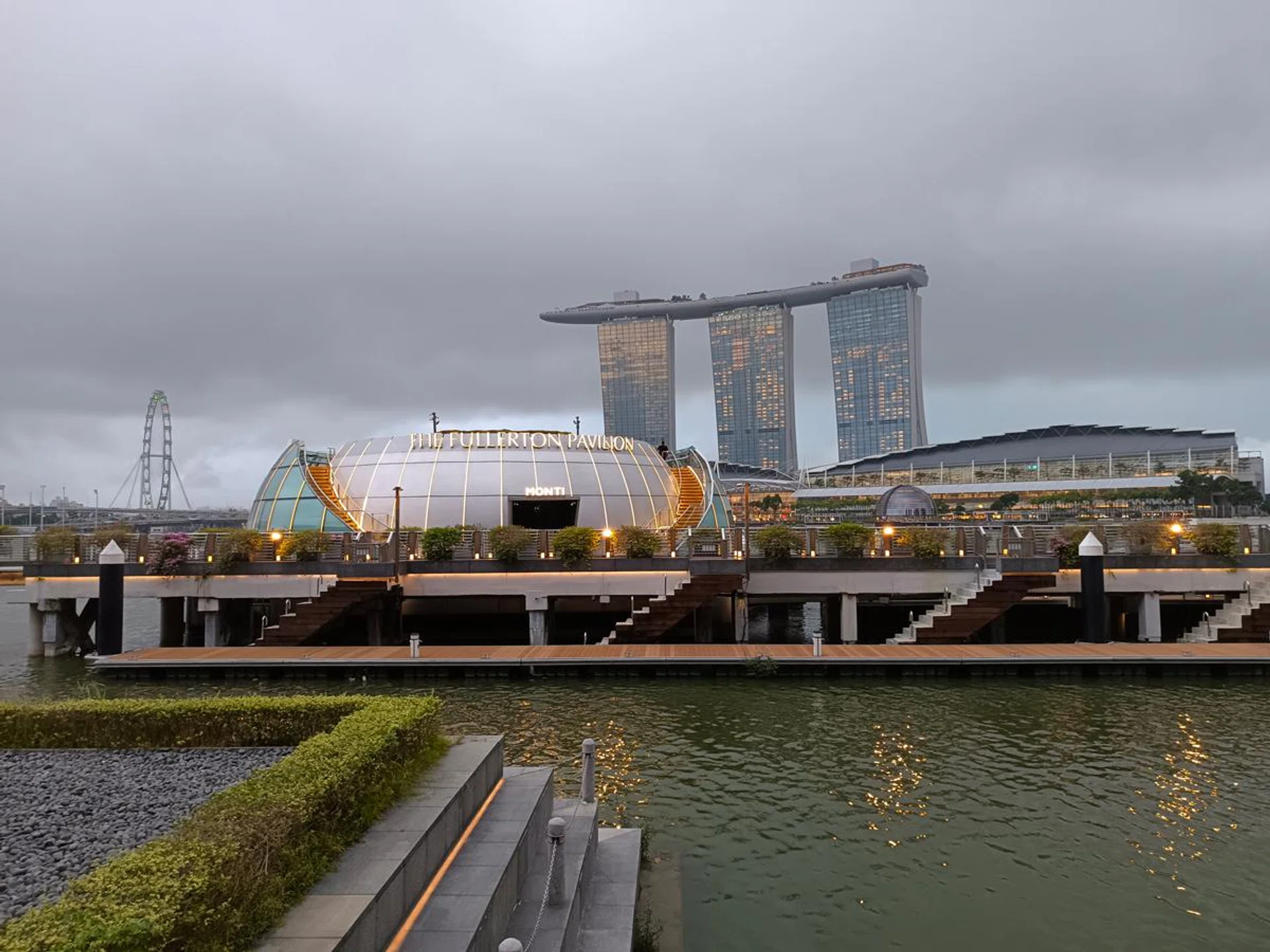
Main camera (note: weather suddenly switched to a downpour, this shot was taken in the evening, moments before rain).
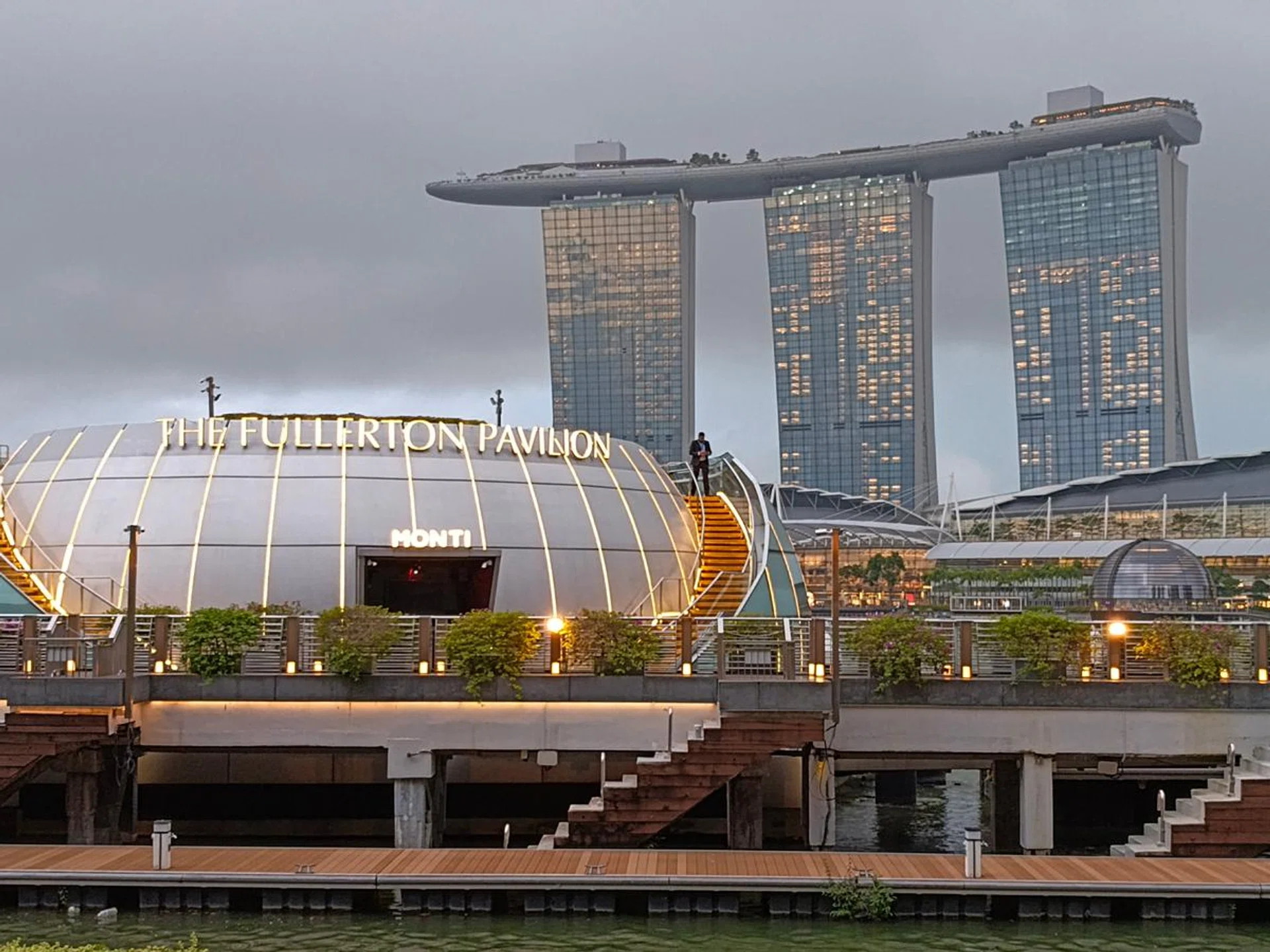
2x zoom (note: weather suddenly switched to a downpour, this shot was taken in the evening, moments before rain)
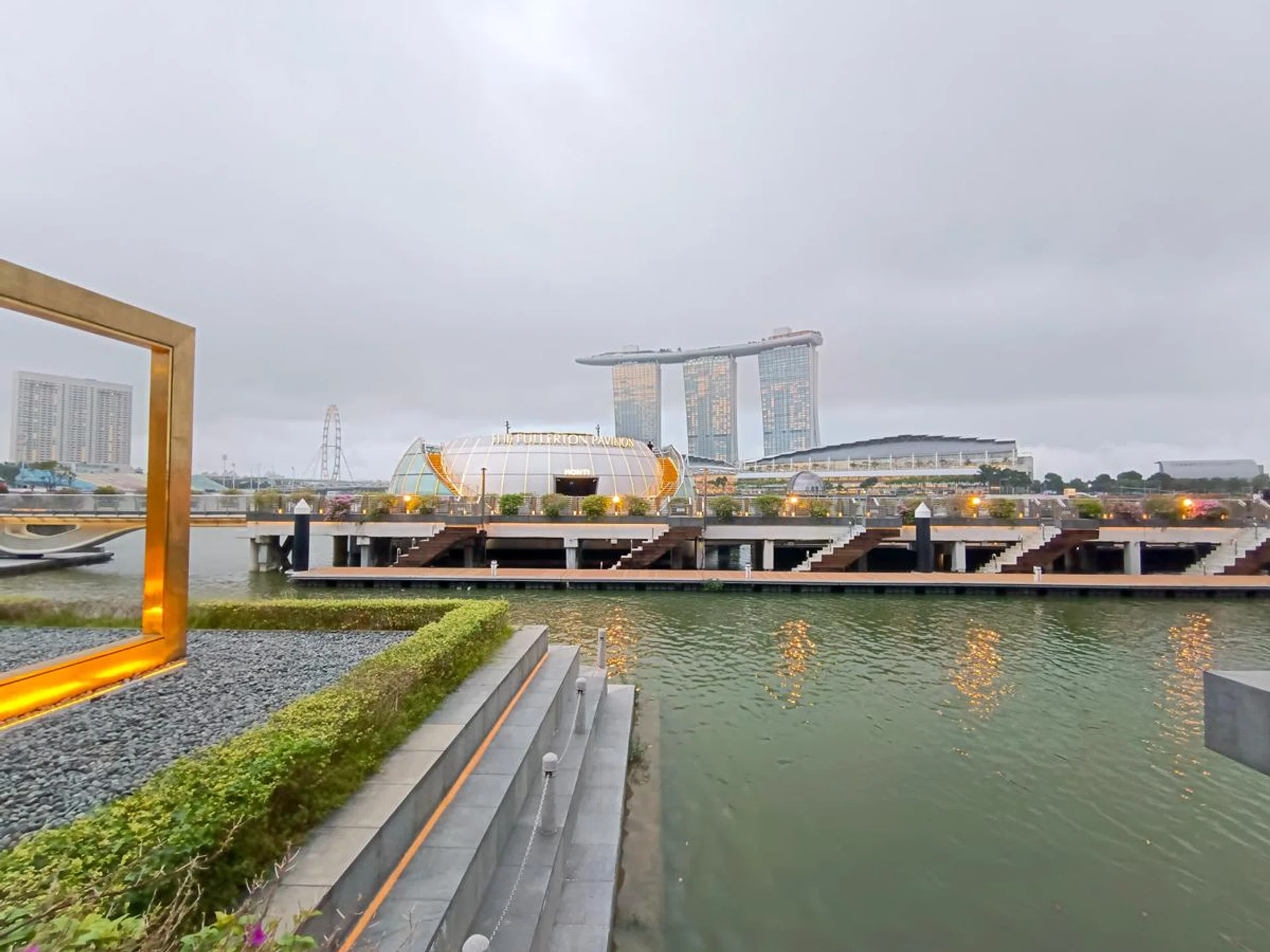
UItra-wide. (note: weather suddenly switched to a downpour, this shot was taken in the evening, moments before rain)
An imaging performance like Phantom V Flip 5G’s isn’t going to win any awards. Still, it suffices for personal social media use if you stick to the main camera in well-lit areas. However, you might want to skip the Phantom V Flip 5G if you need a reliable shooter for your influencer debut.
Benchmark Performance
Tecno Phantom V Flip runs on a MediaTek Dimensity 8050 5G processor, a 2023 mid-range chipset made on a 6-nanometre manufacturing process. If you’re curious, MediaTek’s flagship equivalent is Dimensity 9000 (used in the Oppo Find N2 Flip), and 9000+. Explaining the grading of processors can be a bore, especially to users drawn towards clamshell phones for their aesthetics and form factor. So, we’ll let the benchmark scores below do the talking instead.
It naturally competes against the Samsung Galaxy Z Flip5 and Oppo Find N2 Flip, since there aren’t many major clamshell phones with foldable displays in Singapore. We’ll also throw in our recently-reviewed Nothing Phone (2), since it falls within a similar price range.
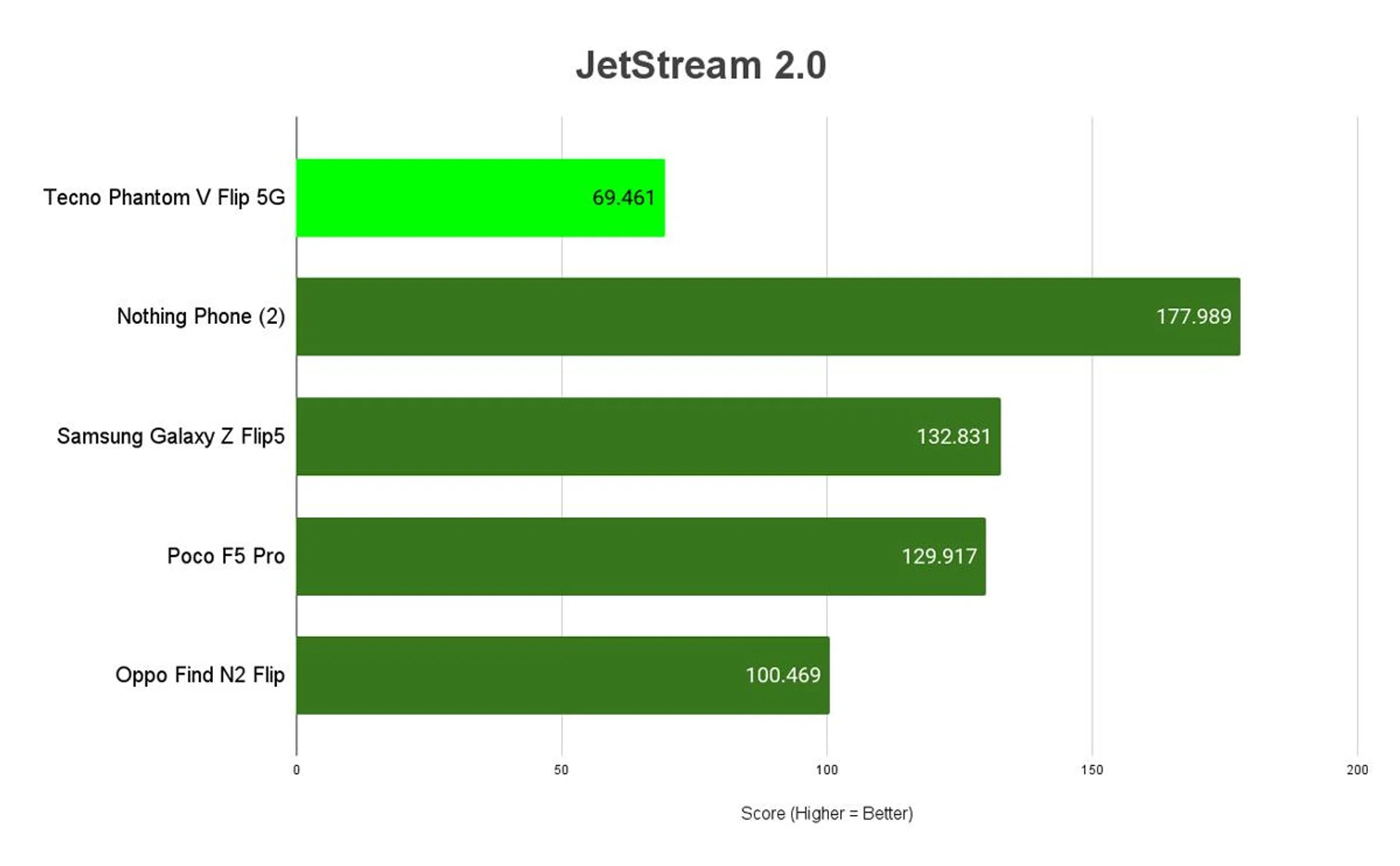
JetStream 2.0
JetStream 2 is a combination of a variety of JavaScript and Web Assembly benchmarks, including benchmarks that came before like SunSpider and Octane. It primarily tests for a system’s and browser’s ability in delivering a good web experience. It runs a total of 64 subtests, each weighted equally, with multiple iterations, and takes the geometric mean to compute the overall score. The higher the score, the better.
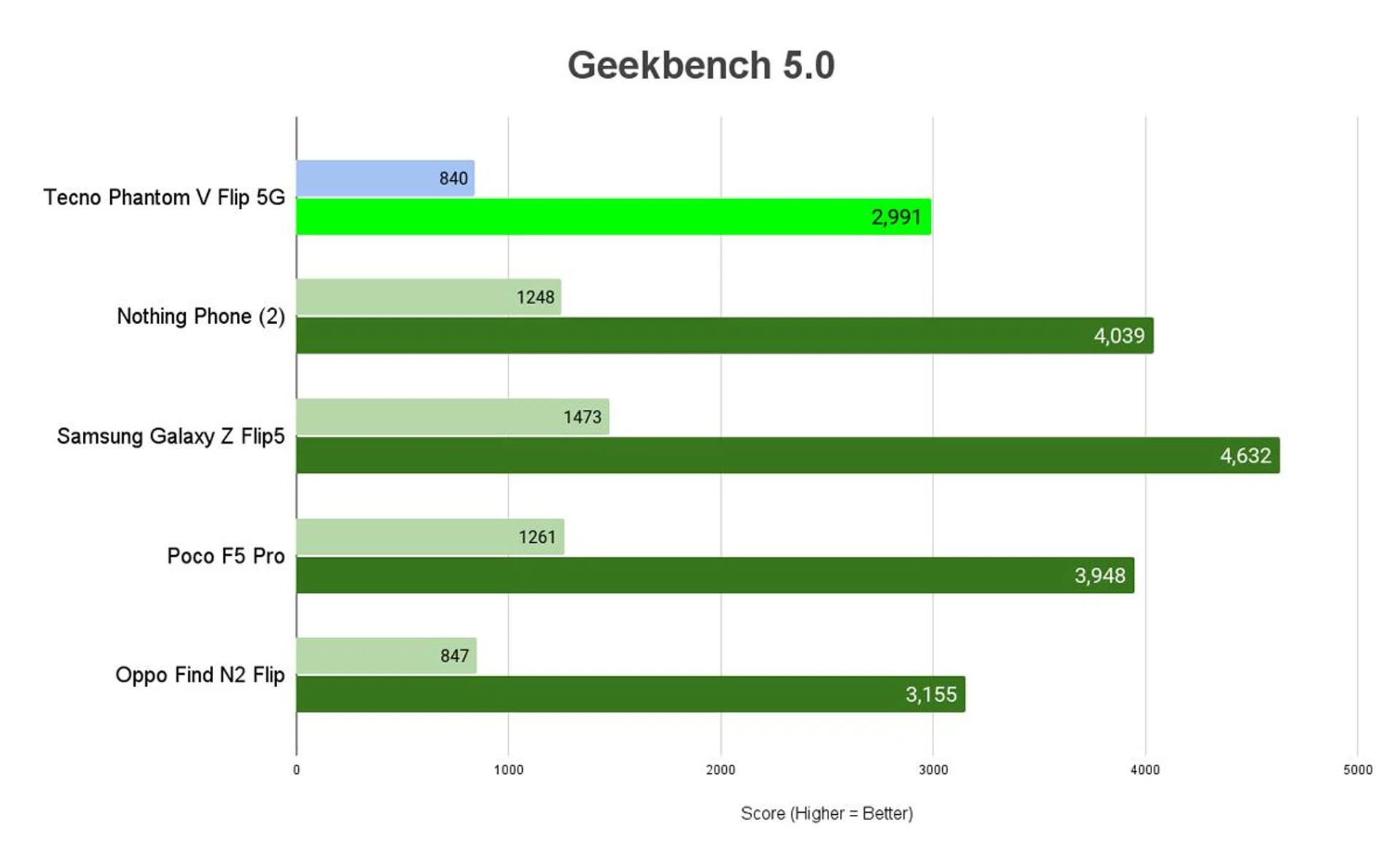
Geekbench 5
Geekbench CPU is a cross-platform processor benchmark that tests both single-core and multi-core performance with workloads that simulate real-world usage. Geekbench 5 scores are calibrated against a baseline score of 1000, which is the score of an Intel Core i3-8100. The higher the score, the better.
Geekbench 6
Our Geekbench 5 benchmarking will soon be replaced with Geekbench 6, the updated version that tests single-core and multi-core CPU performance. Geekbench 6 scores are calibrated against a baseline score of 2500, which is the score of an Intel Core i7-12700. We’ll continue to populate this new benchmark with more scores from our review units before fully transitioning over.

We do not have scores for the Oppo Find N2 Flip as the benchmark only went live after we completed its review.
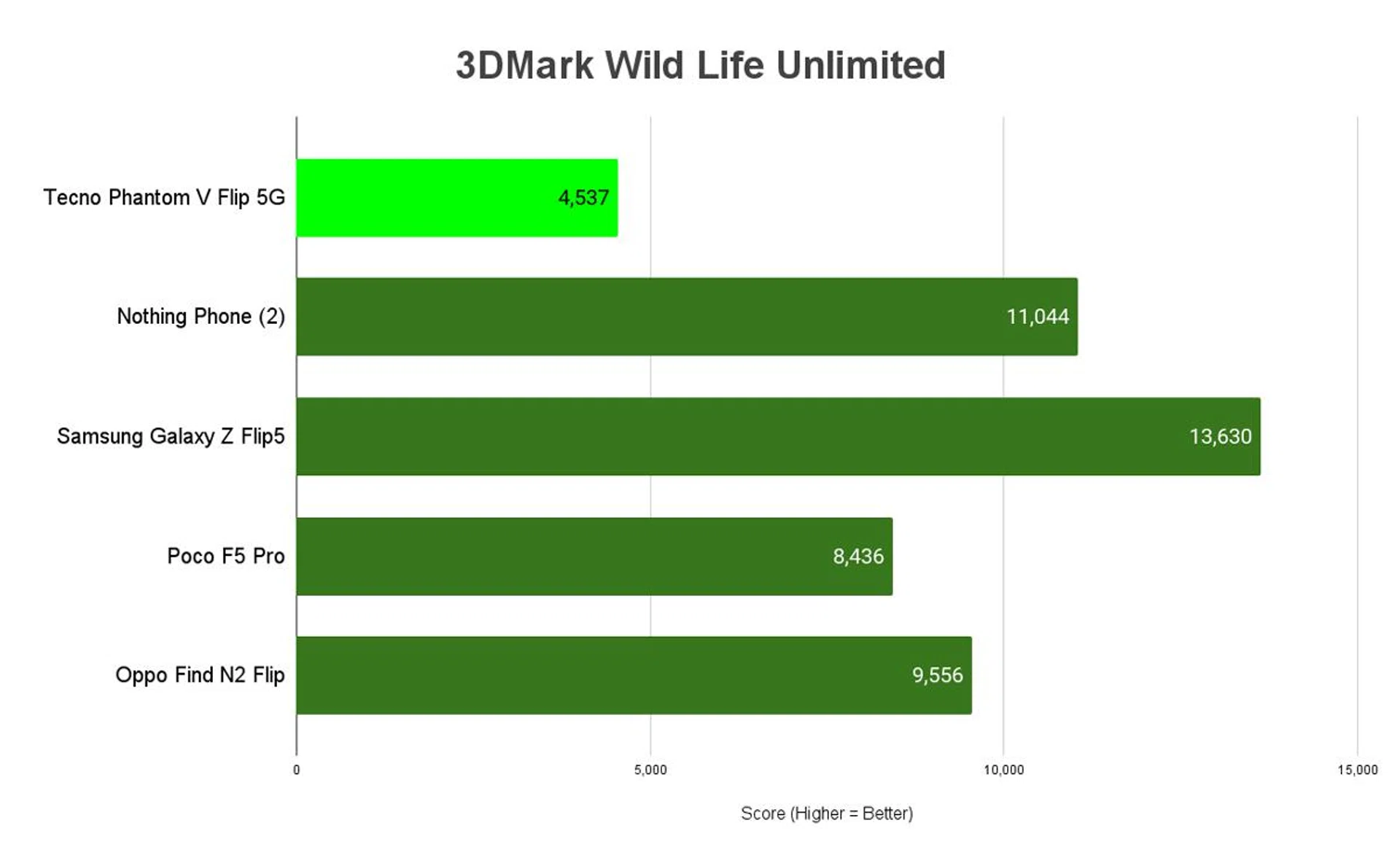
3DMark Wild Life (Unlimited)
3DMark Wild Life is a cross-platform benchmark for Windows, Android and Apple iOS for measuring GPU performance. Its graphics test consists of multiple scenes with variations in the amount of geometry, lights and post-processing effects, mirroring mobile games that are based on short bursts of intense activity. Wild Life uses the Vulkan graphics API on Windows PCs and Android devices. On iOS devices, it uses Metal.
In Unlimited mode, the benchmark runs offscreen using a fixed time step between frames. Unlimited mode renders exactly the same frames in every run on every device, regardless of resolution scaling. The higher the score, the better.
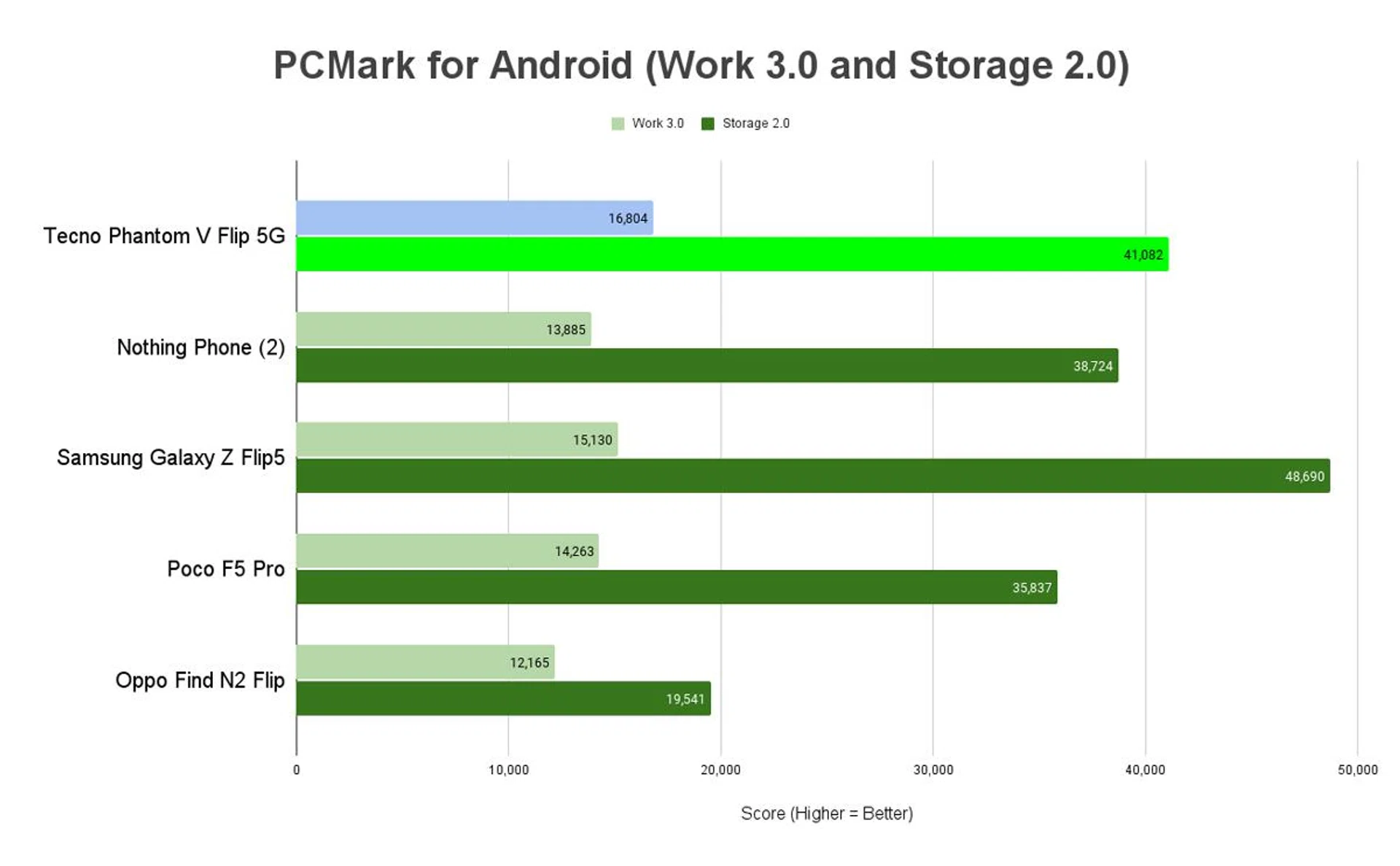
PCMark for Android - Work 3.0 and Storage 2.0
PCMark for Android is a benchmark for testing the performance of Android phones and tablets. The Work 3.0 test checks how the device handles common productivity tasks such as browsing the web, editing videos, working with documents and data, and editing photos. Storage 2.0 checks write-in and read-out performance for internal storage, external storage (if applicable), and SQLite database management. Together, the benchmarks can clue us in on how capable a phone is at handling everyday use. Work 3.0 scores are above, while Storage 2.0 scores are immediately below for each device - the higher the score, the better.
Benchmark Performance remarks
The Tecno Phantom V Flip 5G’s raw power is understandably nowhere as robust as the Oppo Find N2 Flip’s, considering that the latter uses a higher-grade chipset than Tecno’s. Despite the difference in synthetic scores, the Phantom V Flip 5G still holds up very well in everyday use and doesn’t get beyond 38°C. This can be inferred from the benchmarks: it does well in simulated everyday use, but it can't run mobile games at the same level as its rivals.
Battery Life
Our battery benchmark uses PCMark for Android’s Work 3.0 Battery Life test to determine a modern Android-based smartphone's battery uptime in minutes. This controlled benchmark simulates real-world usage with a combination of both web and social media browsing, video and photo editing, parsing data with various file formats, writing (on documents), and more.
To enhance consistency in battery results, we start the test at:
- 100% of the phone’s battery capacity until 20% left
- A fixed display brightness is calibrated at 200cd/m2 (200-lux) with the help of a luminance meter
- Max resolution
- Refresh rates unlocked
- 0% audio, or completely silenced where possible
- Full bars of Wi-Fi connectivity, Bluetooth, and notifications enabled
- Only one other battery recording app opened in the background
- Scored in uptime minutes; the higher, the better
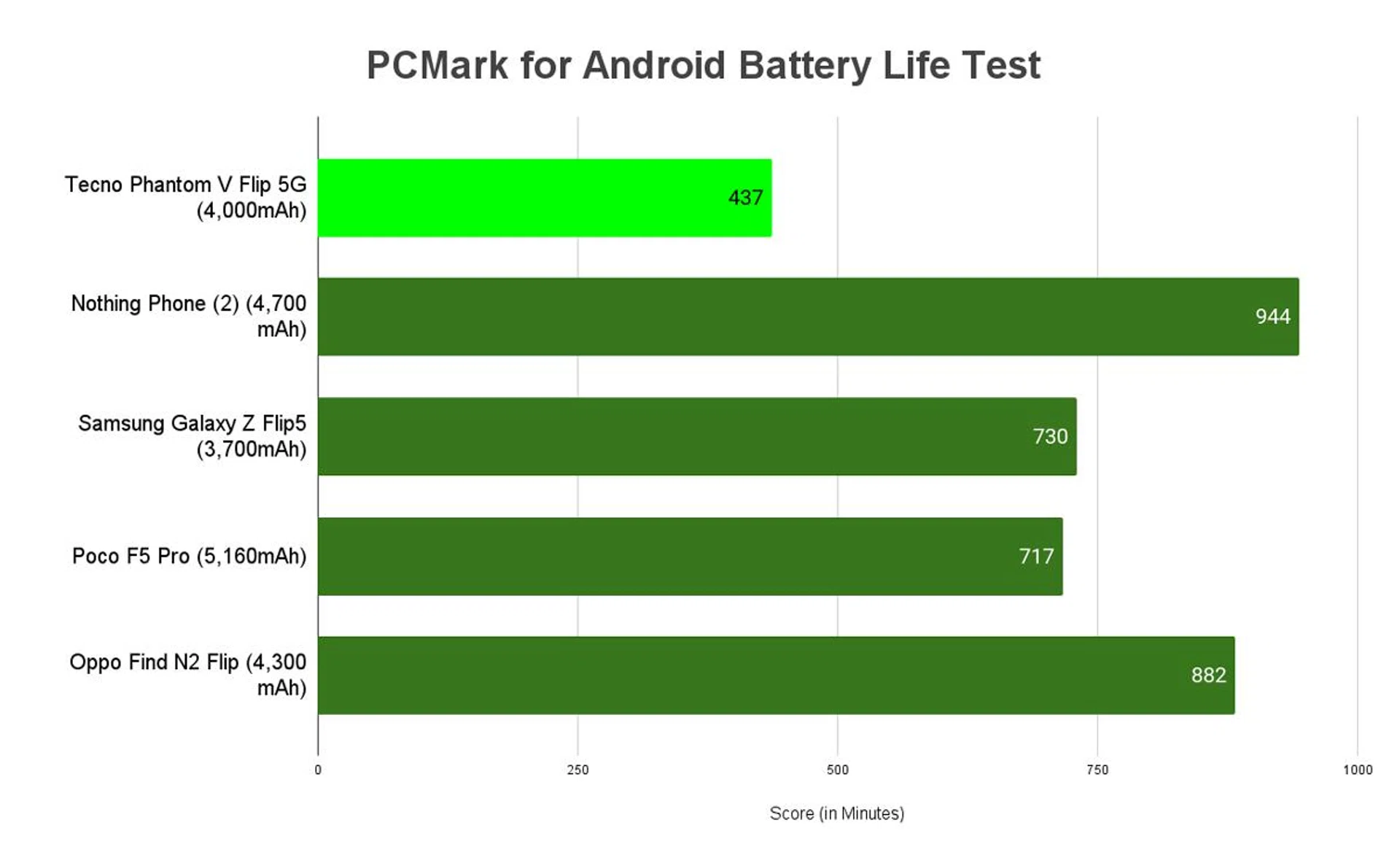
The 4,000mAh battery clocked in about seven hours of uptime of benchmarking, across simulated texting, browsing, media consumption, and editing of photos and videos. In real-world use, it saps about 8-10% when idling overnight, and uses almost 20% for an hour’s worth of photography.
Remember, the test cuts off at 20% battery, so the Tecno Phantom V Flip can definitely last a little longer. But we think seven hours isn’t enough for clamshell users, since its core appeal lies in its imaging versatility (a battery drainer) while doing everything a phone should do. You’ll definitely need a powerbank to have a full day out with this device.
Tecno offers 45W wired charging with its cable and compatible charging brick in the box, which adds to its value-for-money offer. A clamshell foldable display and adapter included? You’re really spoiling your users.
That said, the phone lacks wireless charging and reverse charging. That’s expected for a phone of its calibre.
A good first attempt by Tecno
Tecno Phantom V Flip 5G.
This is a very good first attempt by Tecno at making a clamshell-styled smartphone with a foldable display. It has the basics correct, and it generally felt enjoyable to use.
If you take the phone apart, you’re paying ~S$800 for a relatively new form factor, a near-creaseless high-quality panel, a decent main camera, and operable daily performance, charging adapter included.
Where it falls short is the battery life, which can be remedied with a powerbank in tow. The other shortcomings can be chalked up to Tecno's effort to keep its price lower than others, like the lack of wireless charging and IP-rated water resistance.
This makes the Tecno Phantom V Flip 5G an excellent starter choice for users who don’t want to commit too much money to find out if they like clamshell foldable phones. If you prioritise understanding the appeal of foldable displays with minimal expenditure, Phantom V Flip 5G may be a good fit next to older generations of clamshell phones from other brands (with their price cuts, of course).
Tecno Phantom V Flip 5G.
However, the lack of bells and whistles is a stark reminder that you truly get what you paid for. Phantom V Flip 5G may fare nicely with its less visible crease, peachy leather finish, and flushed cameras, but certain creature comforts are keenly felt, especially having used other clamshell foldables before.
For instance, it has neither has water resistance protection Samsung offers on its Galaxy Z Flip5, nor the higher-grade chipset and better battery life than Oppo Find N2 Flip. It also has to deal with these rivals having extensive secondary displays more suited to being used as a selfie viewfinder. Even more painful for Tecno is going up against Samsung’s and Oppo’s matured software ecosystem, which makes these rivalling phones worth getting, even when Tecno is priced far less than the other foldable phones.
If we compare beyond flip phones, Tecno Phantom V Flip 5G might find it tough to rival fantastic options around its price point. For instance, it needs to beat the Nothing Phone (2) here. This competitor also focusses on scoring style points but doesn’t skimp too much on high-end parts, and it comes extremely close in pricing too. It also has a high-quality AMOLED panel, and offers IP-rated water and dust resistance, unlike the Phantom V Flip. More importantly, the Nothing Phone (2) is officially supported here.
Tecno Phantom V Flip 5G.
With such options here, it’s clear that Tecno Phantom V Flip 5G sees itself an ideal choice for users who wonder if clamshell handsets fit into their lifestyle. Doubly so, given that it’s Tecno’s first-ever attempt at this form factor; it's trying to impress whoever's willing to give the foldable tribe a fair shot.
The only problem is sourcing and buying the phone since its global launch keynote on our sunny island did not translate to having an official retail presence here. No official presence also means no after-sales service, which is a huge risk if you want to make the phone your daily driver.
The Tecno Phantom V Flip 5G officially begins retail in one of its key markets, India, before going to other territories. It has an official price of INR 49,999 / US$598 for 8GB RAM + 256GB storage (approx. S$816). Availability in other markets and countries will be communicated at a later date.