
Meet the Huawei P9, the first smartphone co-engineered with Leica
Huawei Consumer Business Group held a major event yesterday to launch the Huawei P9 and P9 Plus, their first smartphones co-engineered with Leica, and we were on hand to give you a first look of their premium smartphone.

Mr Peter Tong, President of Huawei Consumer Business Group Southern Pacific Region, takes the stage to share the latest developments with Huawei's B2C business.
Did you know that Huawei has become the number three smartphone player worldwide, just behind the likes of Samsung and Apple? Over the last year, their presence in the Southern Pacific region has grown to over 10,000 stores, an increase of 40% compared to 2015, and a 1000% increase when compared to 2014.
This was shared at Huawei’s Southern Pacific Brand Conference in Bali, and Peter Tong, President of Huawei Consumer Business Group Southern Pacific Region, kick-started the session by giving a brief presentation on how the company is moving from purely B2B (business to business) to include both B2C (business to consumer).
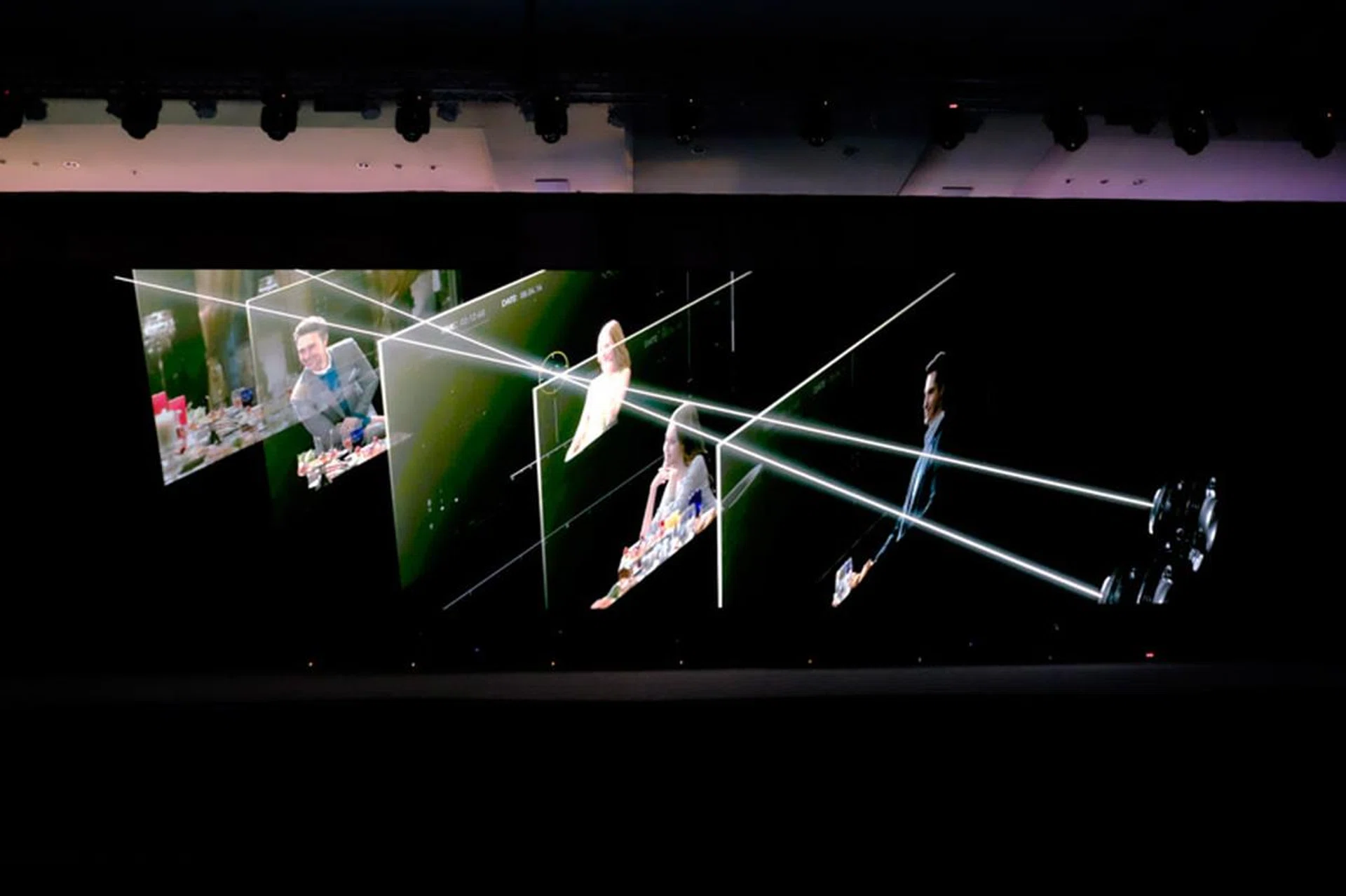
The dual-lens camera is certainly a stand-out feature.
So, it was with much excitement that the company announced their latest dual-camera smartphones - the Huawei P9 and P9 Plus. The headlining feature for both cameras? A dual-lens camera that was co-engineered with Leica. One lens captures to a RGB sensor to focus on getting the best colors, while the other captures to a monochrome sensor that focuses on getting depth and detail. (If the dual camera setup sounds familiar, it's because the old HTC One M8 used to feature a somewhat similar configuration but its implementation is different.)
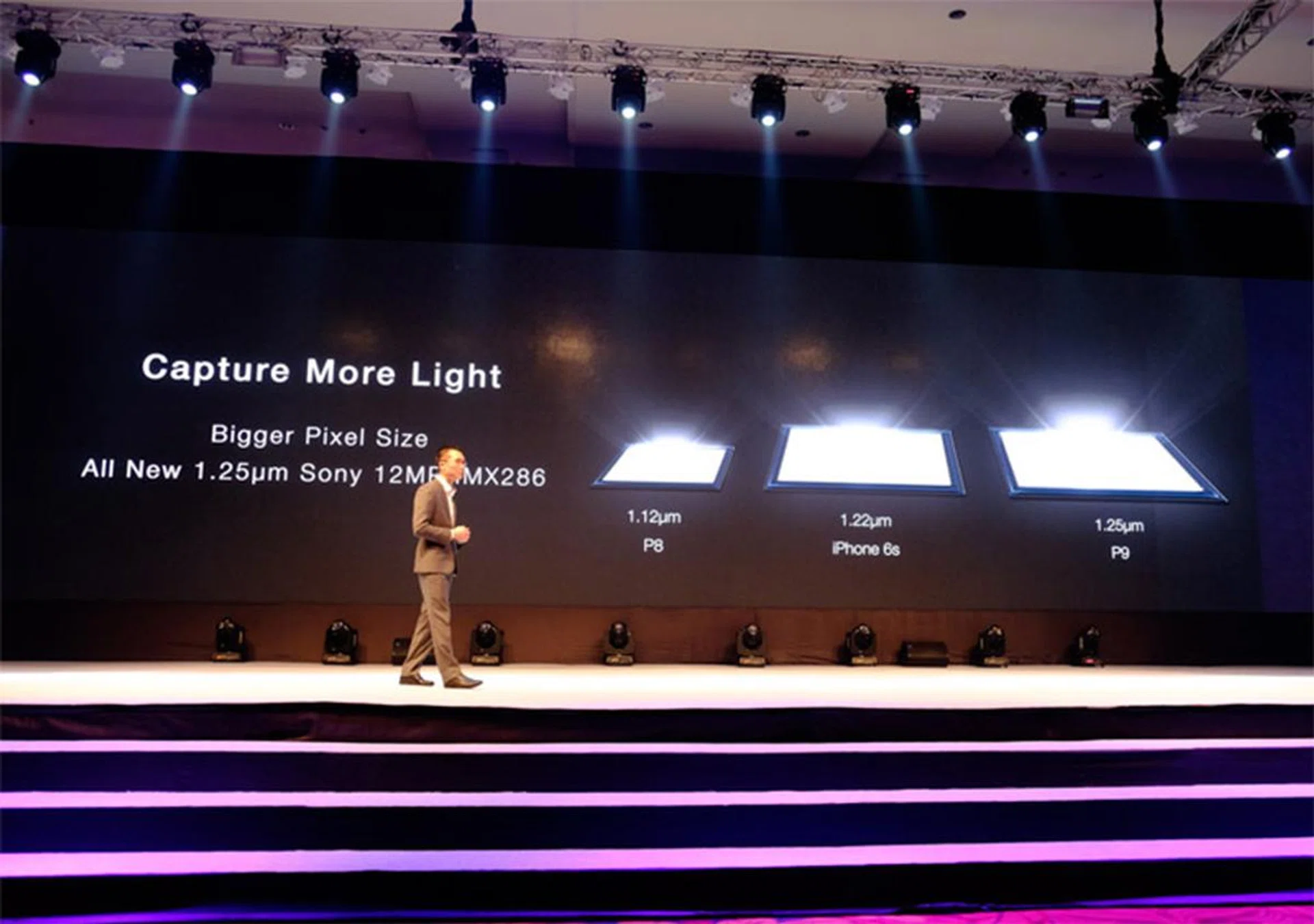
Slight lower resolution in exchange for a larger pixel pitch is Huawei's approach.
Combined, the information from both sensors is meant to give you great images in lowlight as the dual-camera design allows for more light and detail to be picked up. Using a lower 12MP resolution also allows for a larger pixel pitch.of 1.25μm as compared to the previous P8(1.12 μm), and even the iPhone 6s (1.22 μm). This certainly helps to capture more light and improve sensitivity.
Thanks to the partnership with Leica, color simulations akin to what you might find on Leica cameras can be found in the P9, giving you Leica colors. Three options are available on the phone - Standard, Vivid and Smooth. But obviously having a true monochrome sensor means you’ll get great black and white images too.
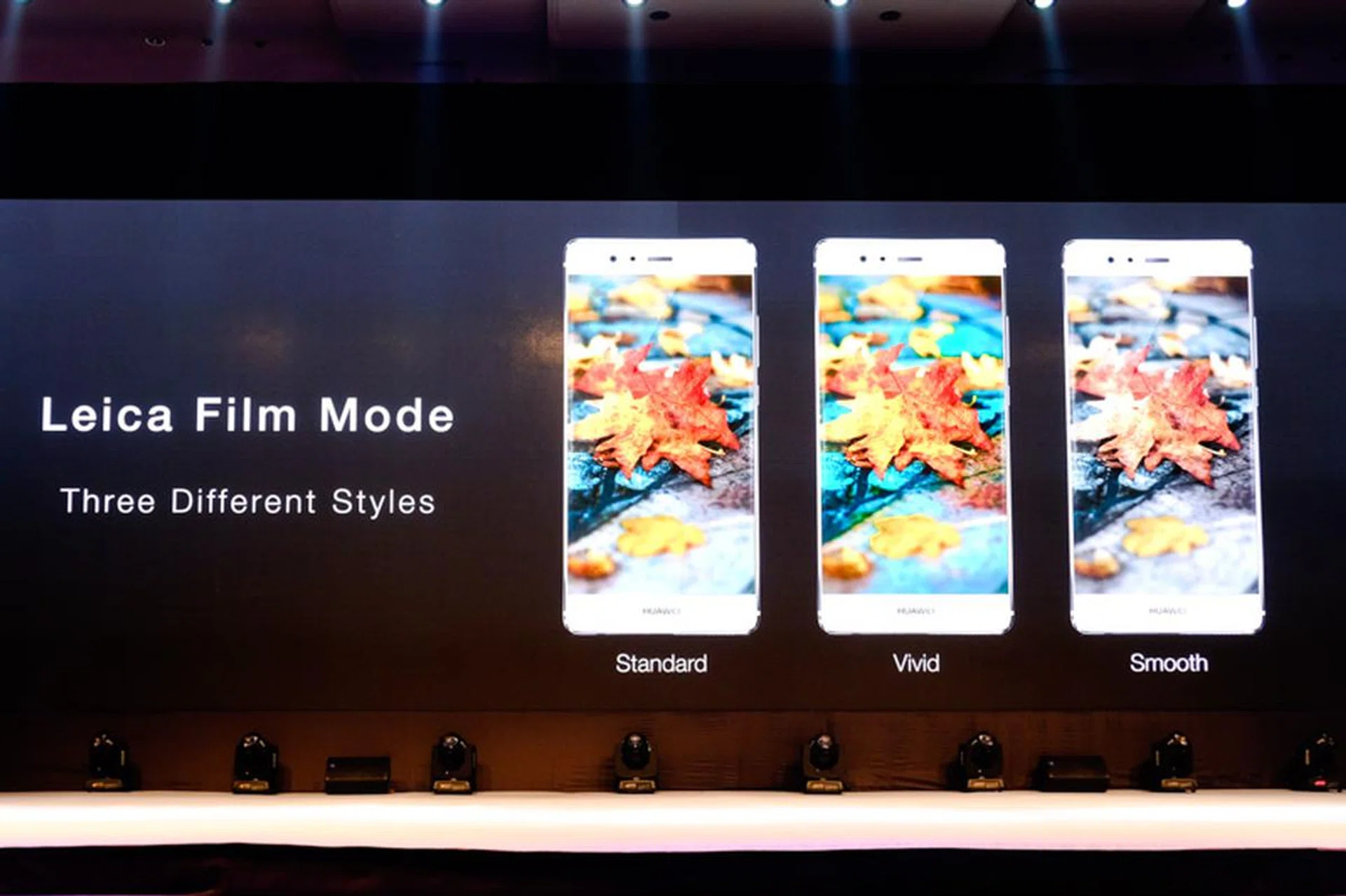
Three different color styles to fit your personal taste.
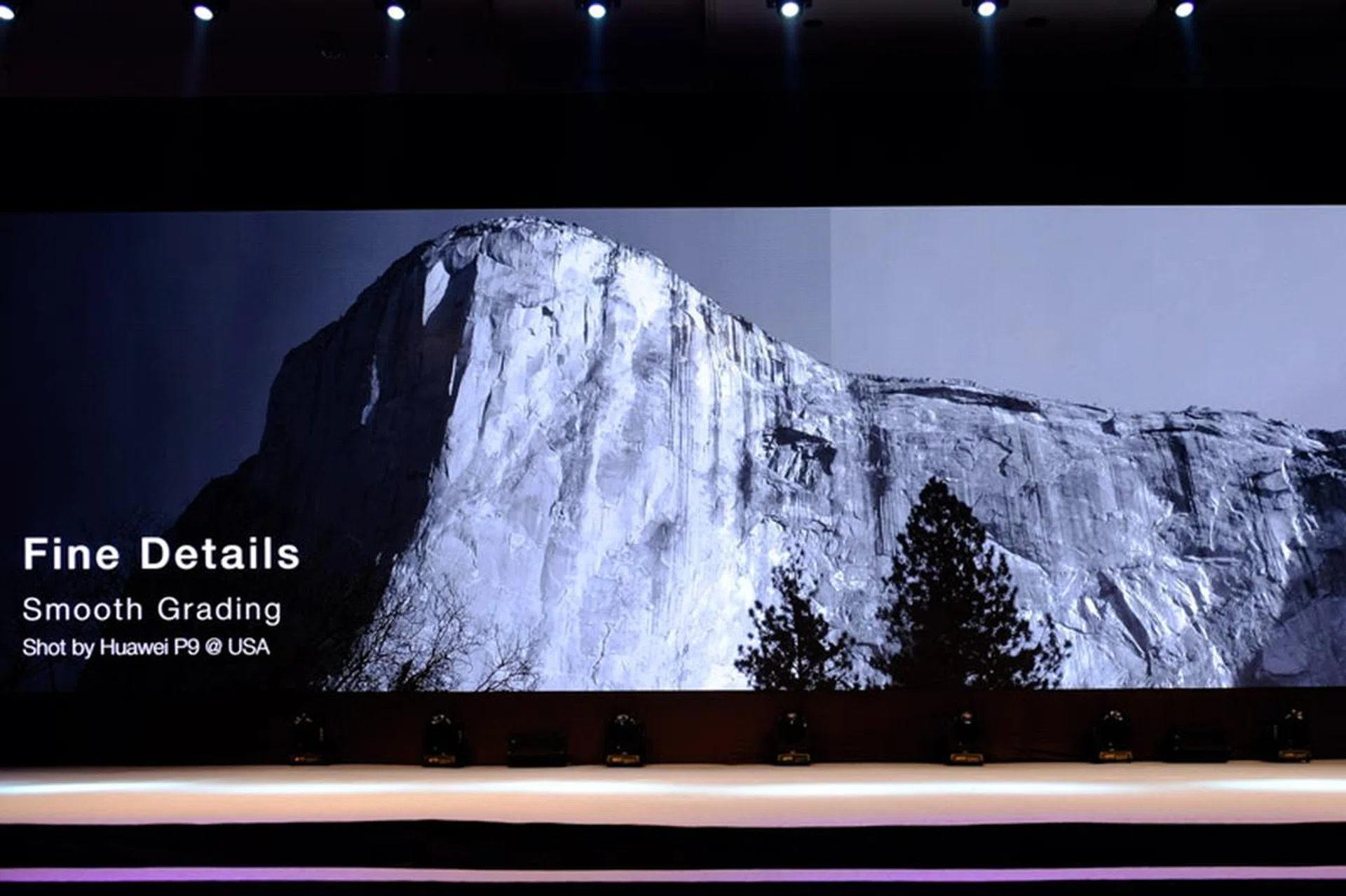
The dedicated monochrome camera gives you better detail.
The P9 and P9 Plus also come with Huawei’s Hybrid Focus technology system that combines three focusing methods-laser focus, depth focus, and contrast-based focus for faster, more accurate results.
This, paired with their new wide-aperture mode, allows you to truly experiment with aperture values to see what sort of result you would yield, as the mode captures images with all the depth information preserved. This means that you can select a different focus point after the shot, and even re-adjust aperture value to see the result, quite like what you might be able to do with a Lytro camera.
Both lenses are also used to create images with focus that can be adjusted after the shot is taken.
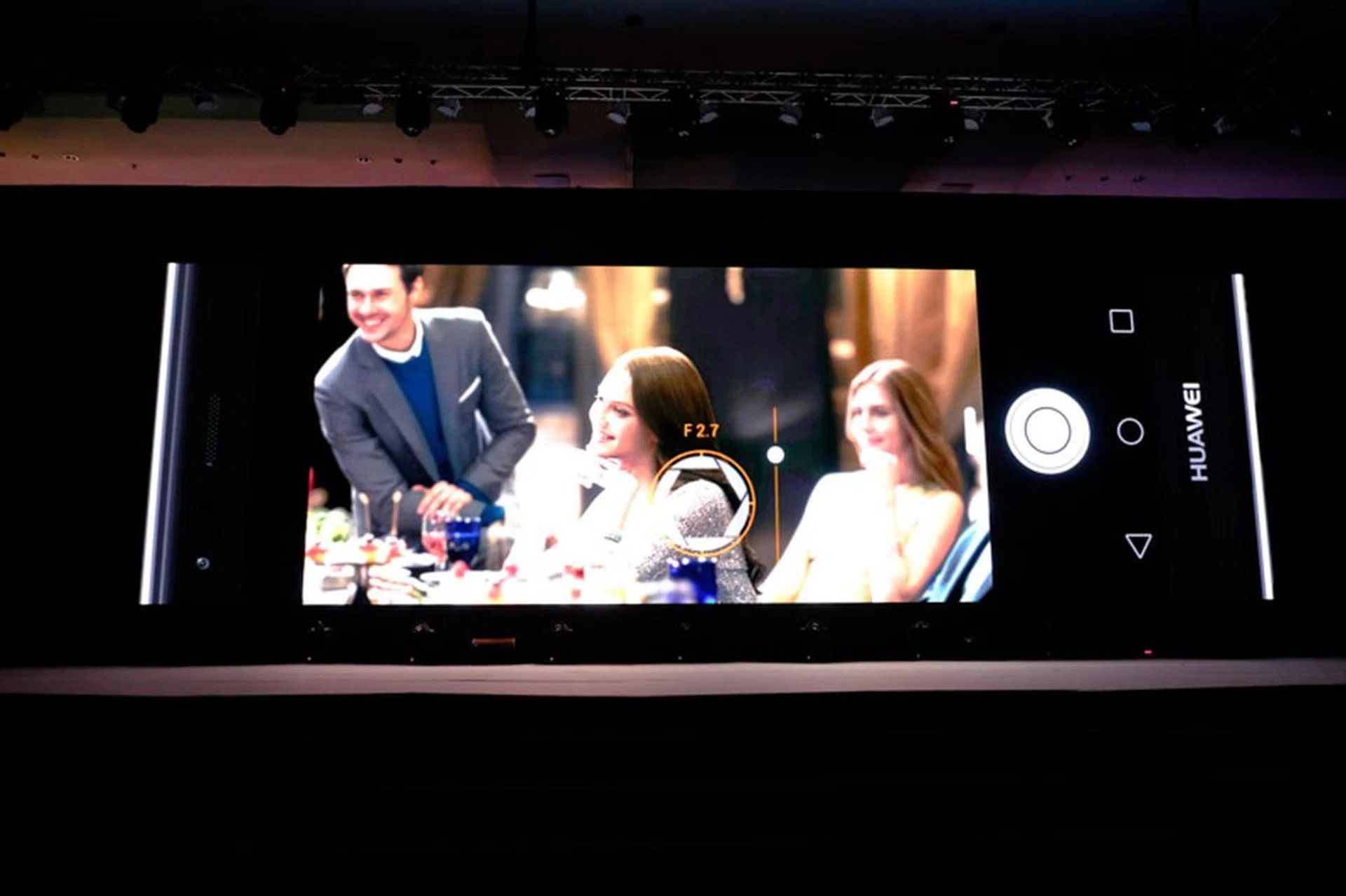
You can even readjust the aperture after the shot.
We're told the interface and even the shutter sound of the camera are taken from Leica, and the phone certainly has a very full-featured camera app, with everything from time-lapse to HDR to of course, a dedicated Beauty photo mode, and there’s even a Beauty Video mode.
Placing the camera in Pro mode even allows you the option to shoot in RAW (DNG) format while giving you full control over ISO, shutter, and the focusing and metering methods as well as offering white balance and compensation options.
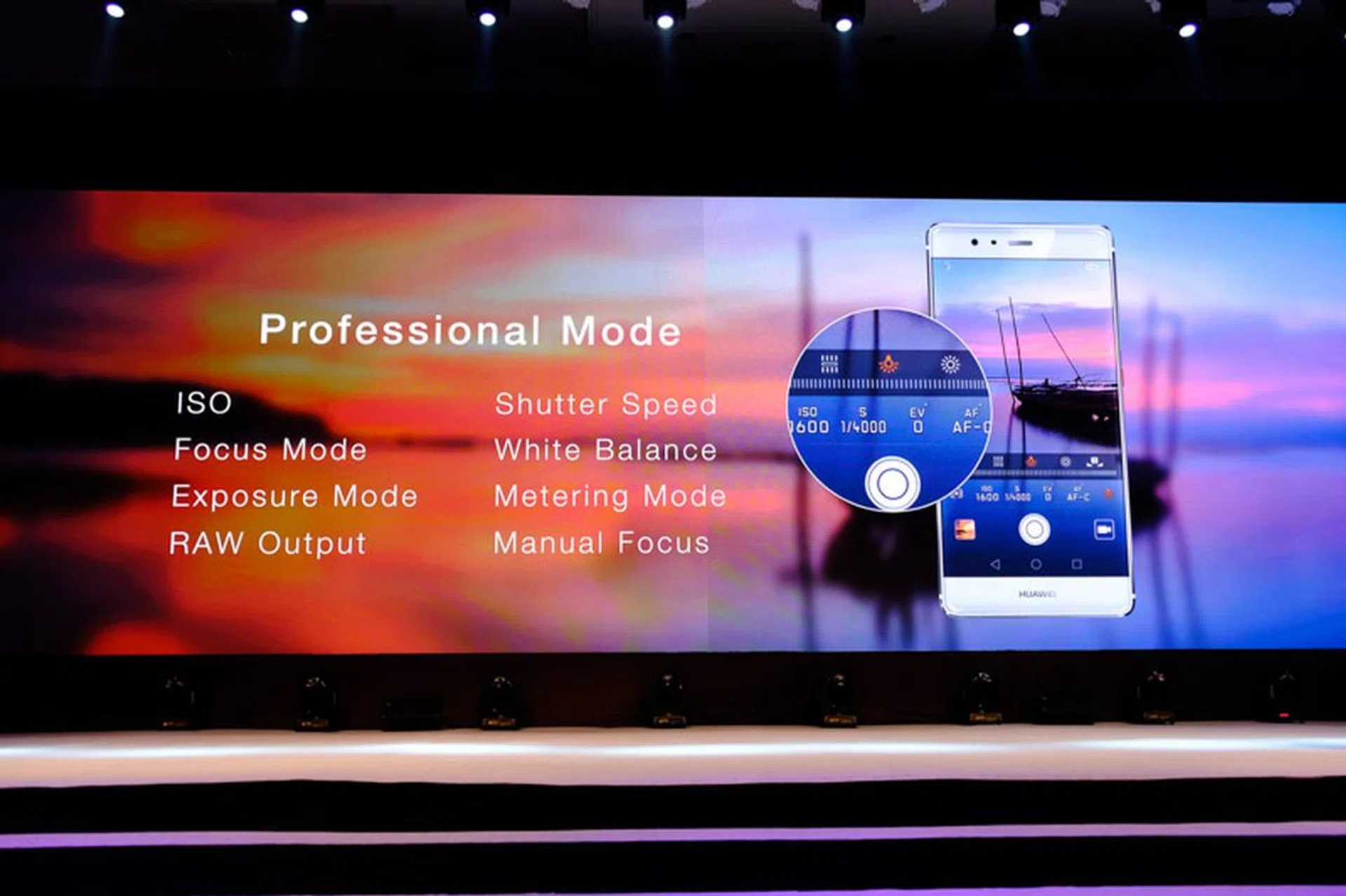
Full control over exposure in Pro mode.
In terms of physical design. the P9 itself extremely slim at just 6.95mm and Huawei took great pains to allow the camera modules to be flush with the surface of the phone. This keeps them from getting scratched so easily, and allows the phones to be slimmer than the competition, as you can see from the slide below.
The display on the P9 is certainly a very respectable one too, measuring 5.2 inches across with a 423ppi count and 96% color saturation. It extends almost to the ends of the phone breadth-wise, and has a slightly raised bevel.

The Huawei P9 is easily one of the slimmest smartphones in its class.
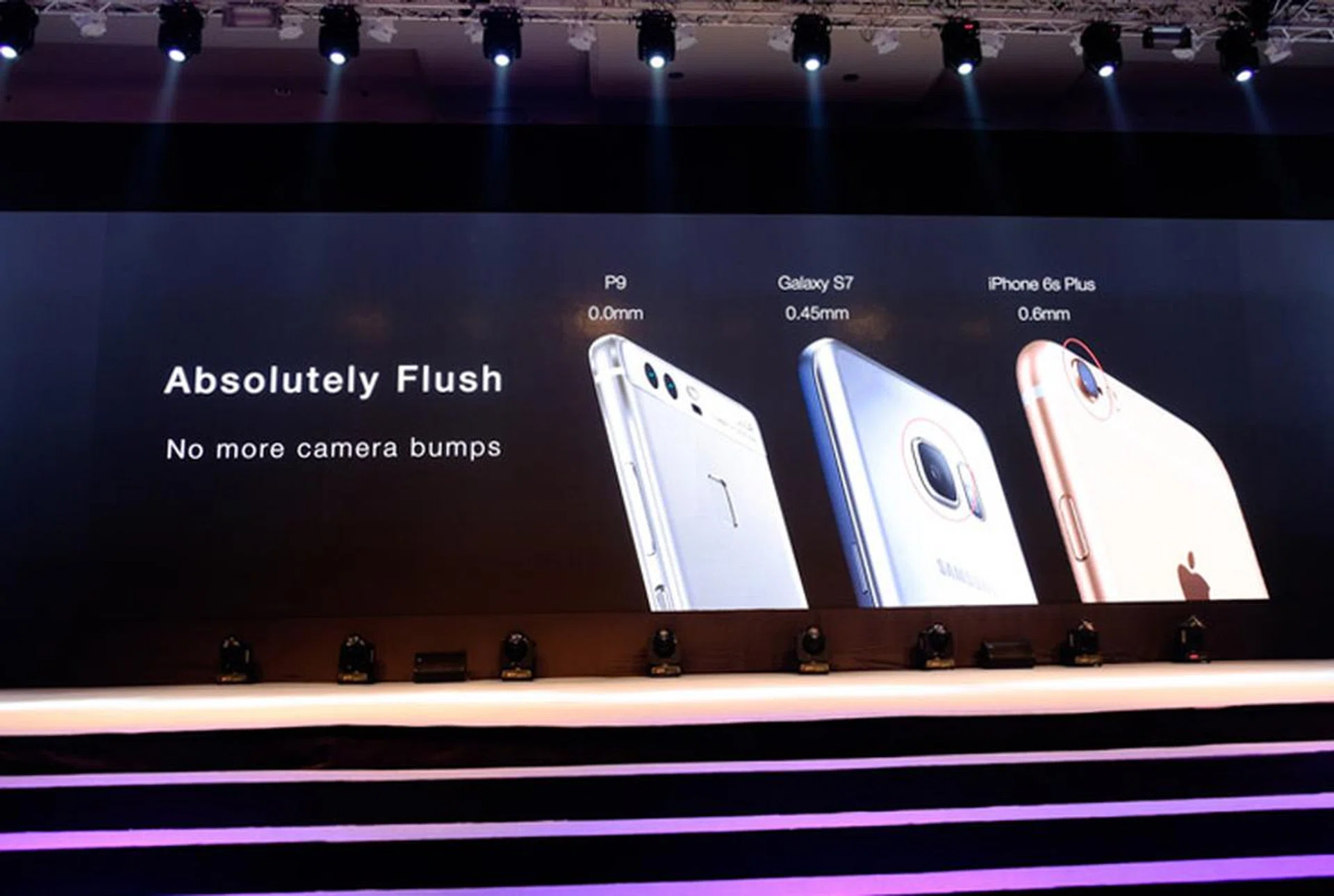
No camera bumps on the P9!
Fingerprint security is also quite impressive, as it takes into account the depth of the individual ridges when conducting identification over four levels. Put simply, it means a simple photograph of your fingerprint won't fool it!
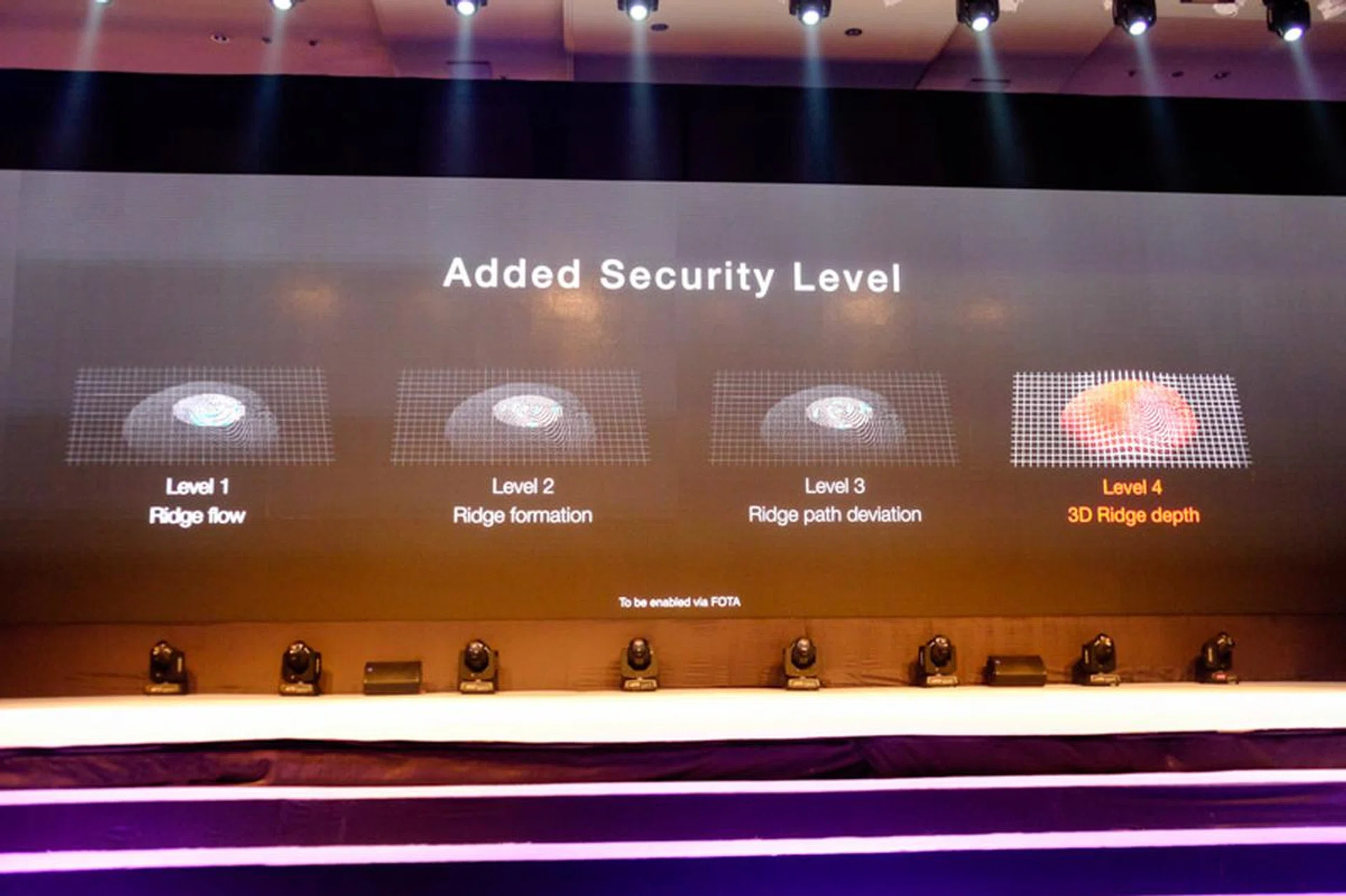
Multiple layers are read for greater security in the P9's fingerprint sensor.
The P9 Plus on the other hand, shares a largely similar design but with a larger 5.5-inch Press Touch display that works much like Apple’s 3D Touch, allowing you to activate different functions depending on how hard you press. The P9 Plus will have two levels of sensitivity and 18 native apps are already supporting this feature.
The P9 Plus will only be slightly thicker than the P9 at 6.98mm, and besides the better display, will also pack in better speakers whether held vertically (where the earpiece will play treble and the speaker plays bass) or horizontally (where both will play in stereo).
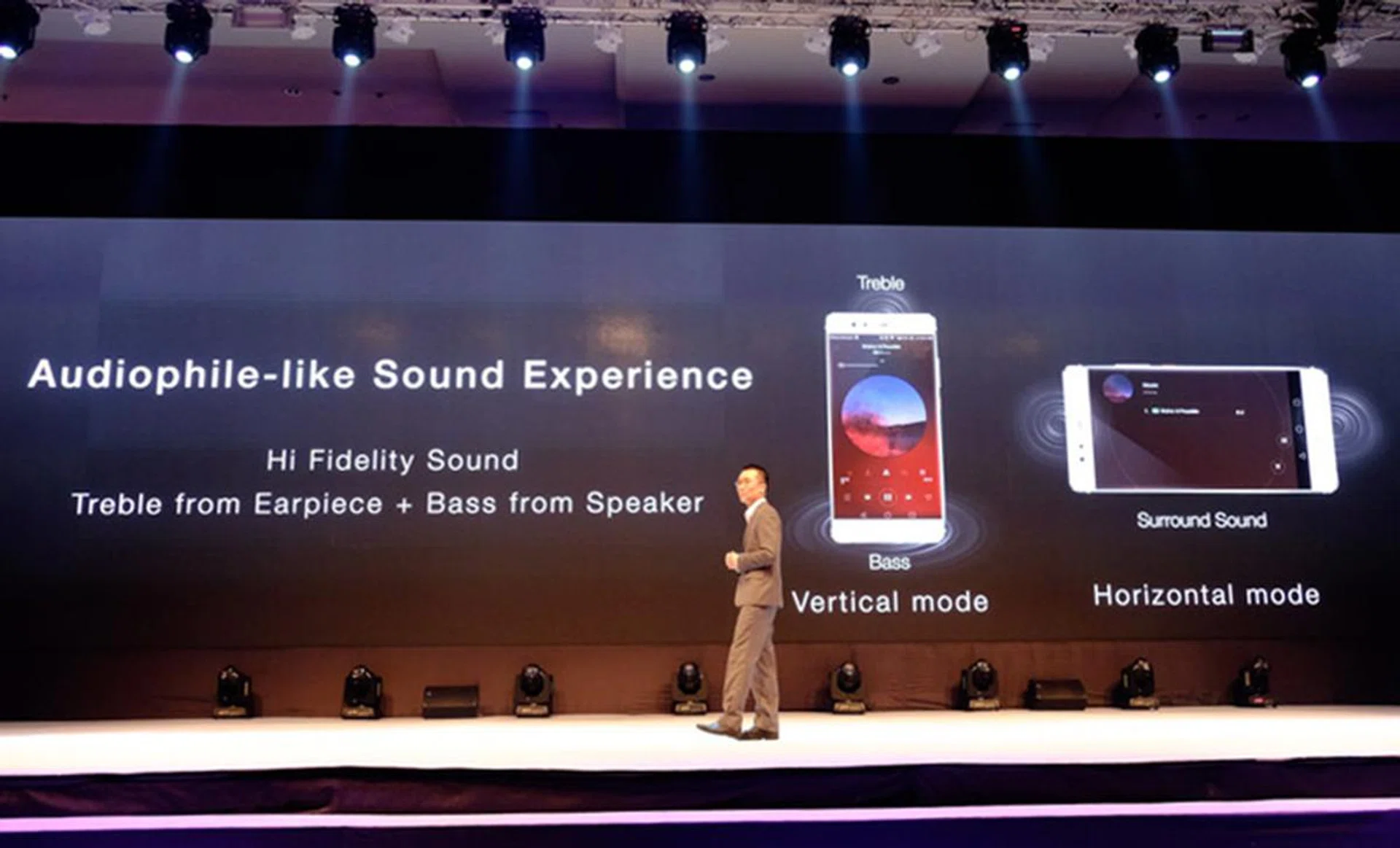
Smart sensors in the P9 Plus will give optimal sound based on the orientation of the phone.
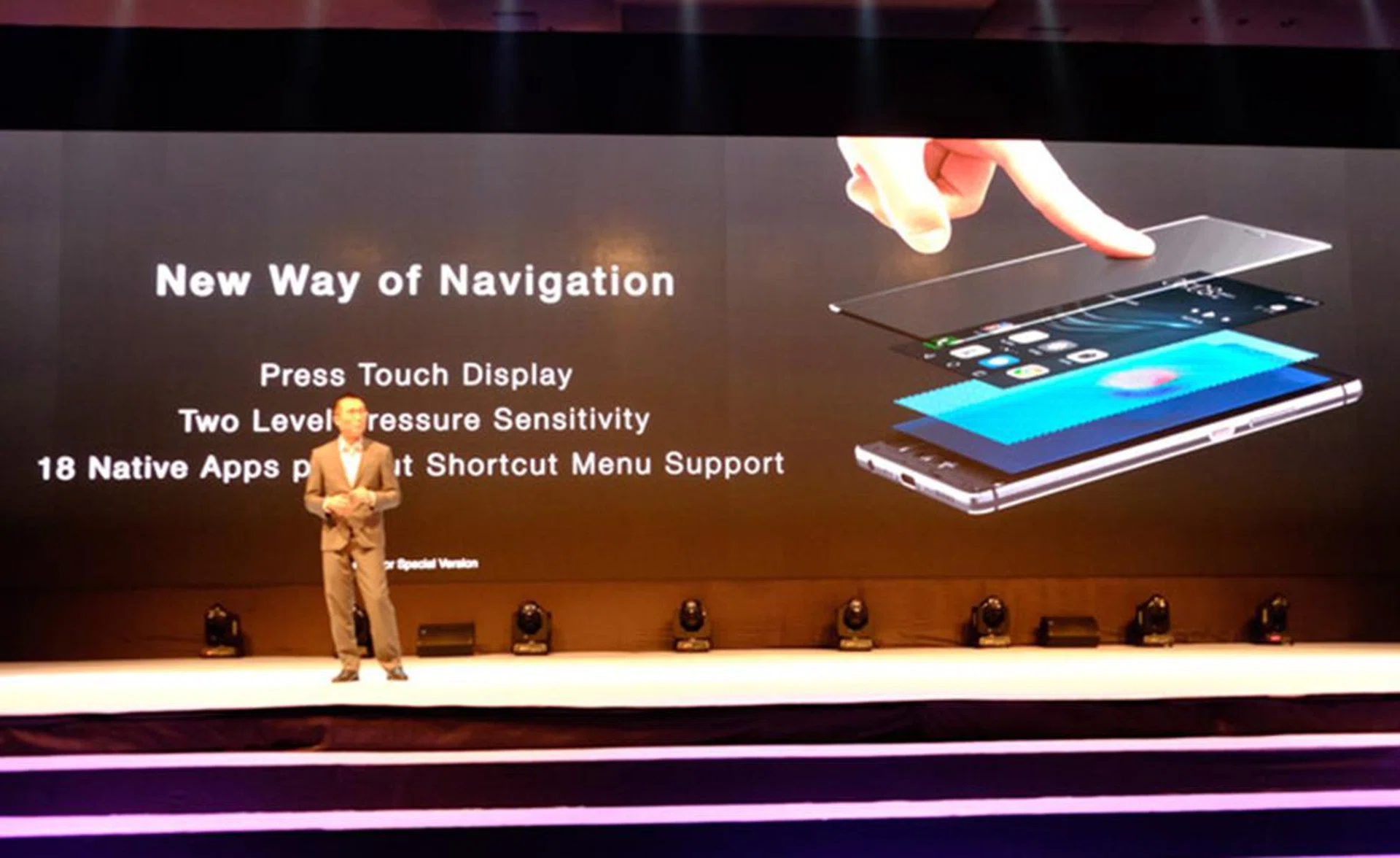
Press Touch is another option for navigating the P9 Plus.
Battery life will also be better, thanks to a larger 3400mAh battery (compared to 3000mAh on the P9) that’s said to allow for up to 14 hours of HD video, up to 9 hours of 4G browsing, and up to 65 hours of music playback.
The P9 Plus will also come with dual-IC Rapid charge which gives you up to 6 hours of talk time from just 10 minutes of charging!
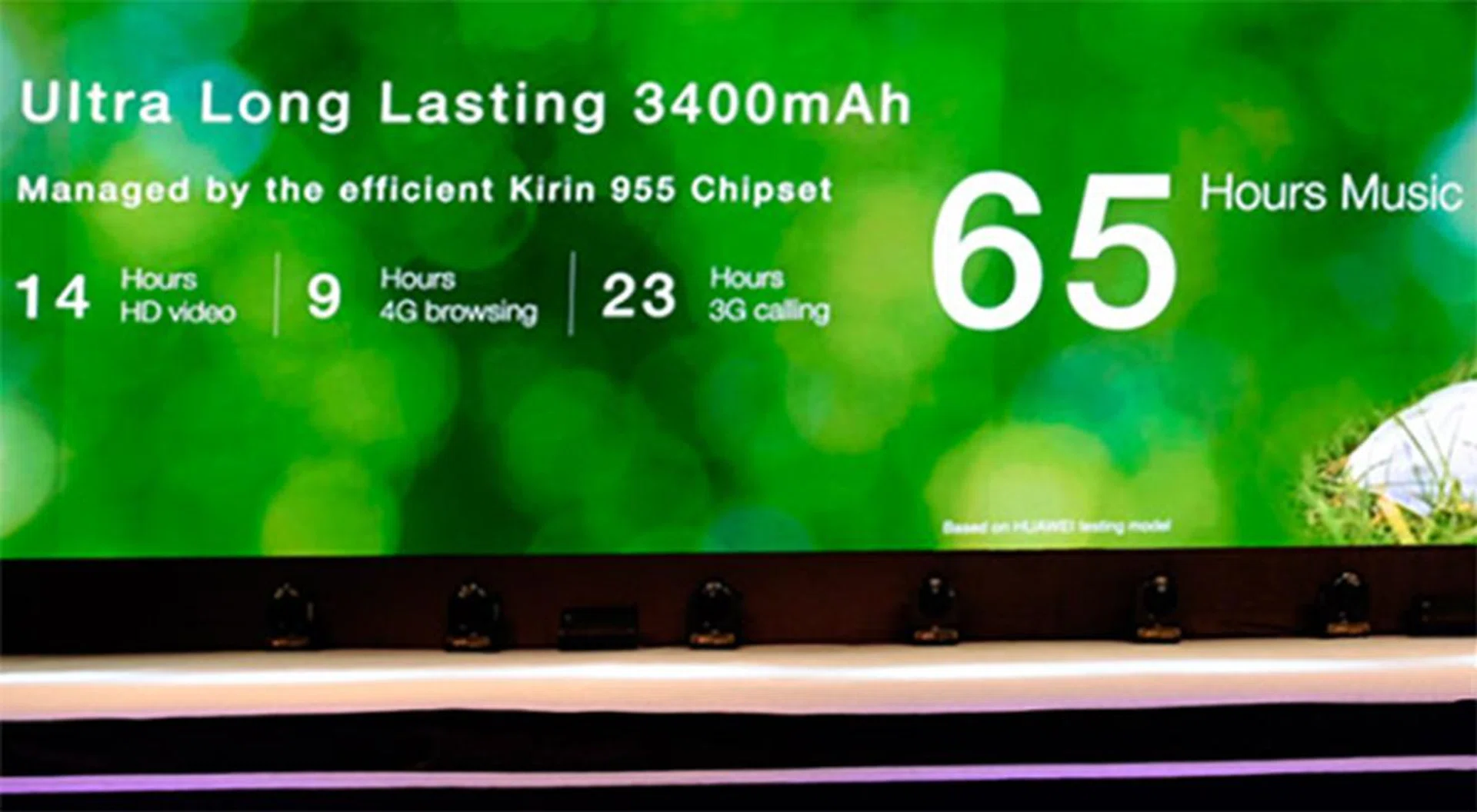
Smart optimisation by the P9 Plus will allow you to get the most out of the battery.
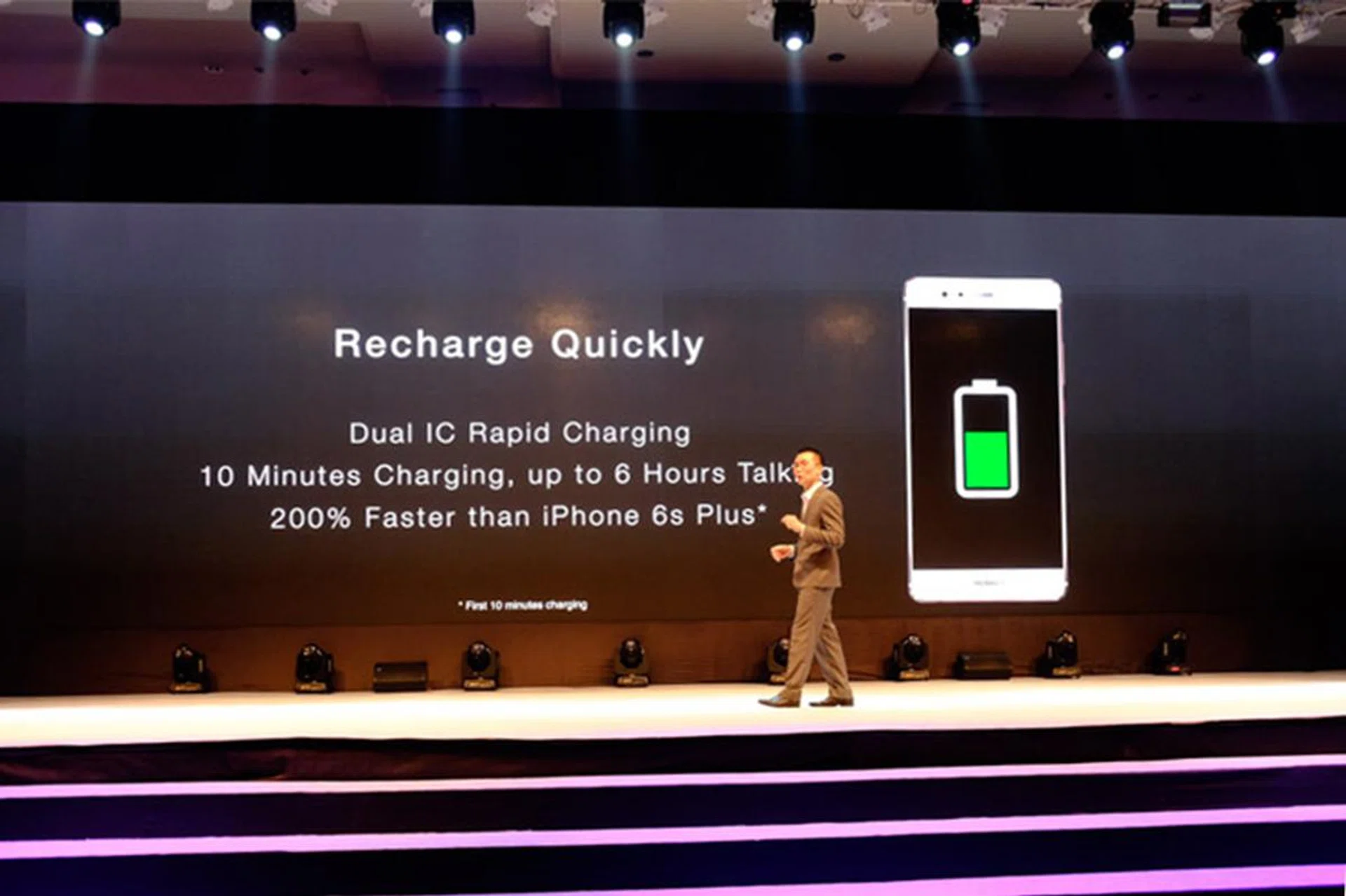
Dual IC Rapid Charging sounds like it will be a god send to those of us who often deplete the batteries in our smartphones.
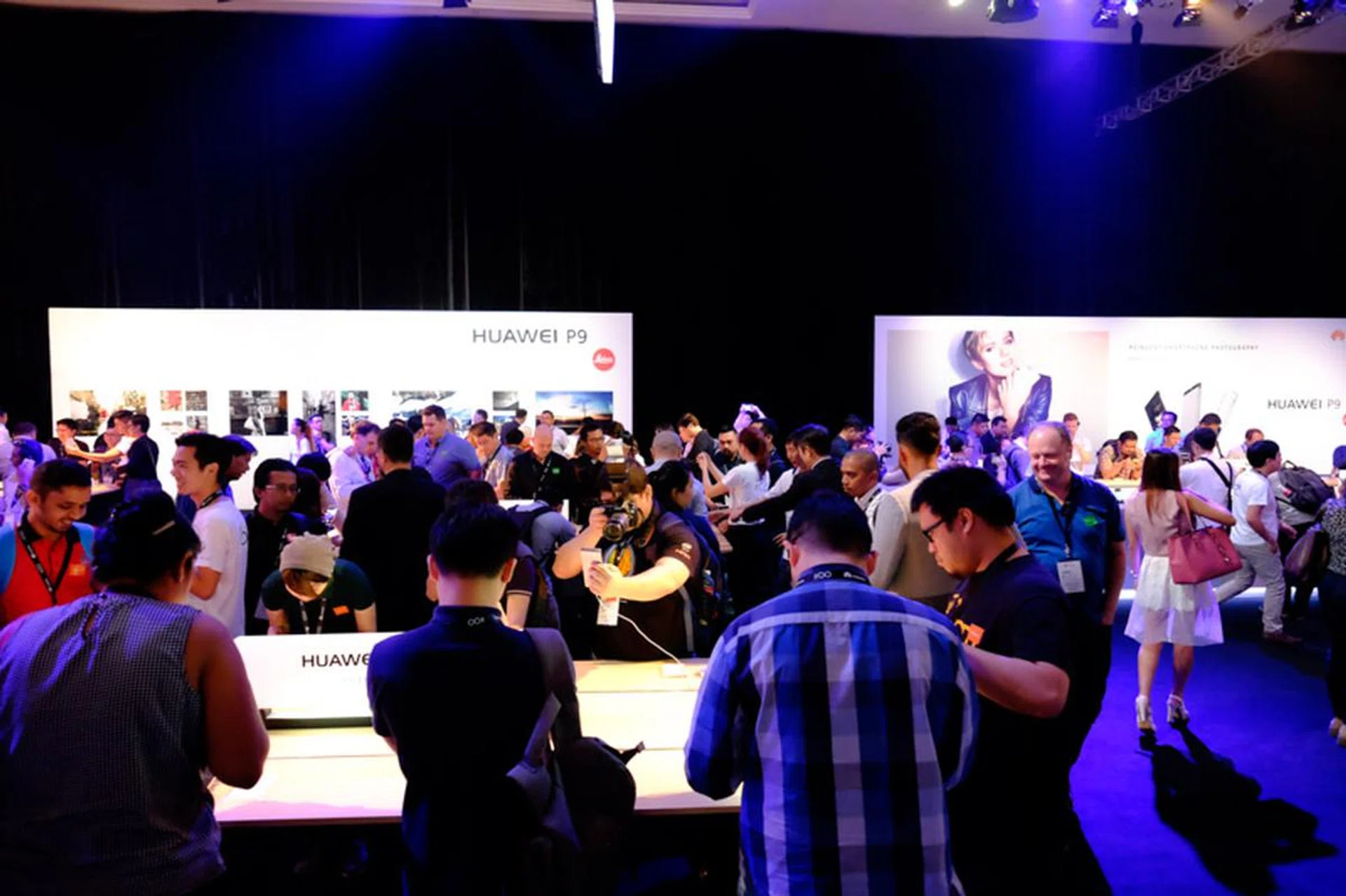
Just behind the presentation area was a huge experience zone, where Huawei’s latest products were out on full display. There was a selection of Huawei Watches, the new MateBook, and of course the P9 and P9 Plus out on display.
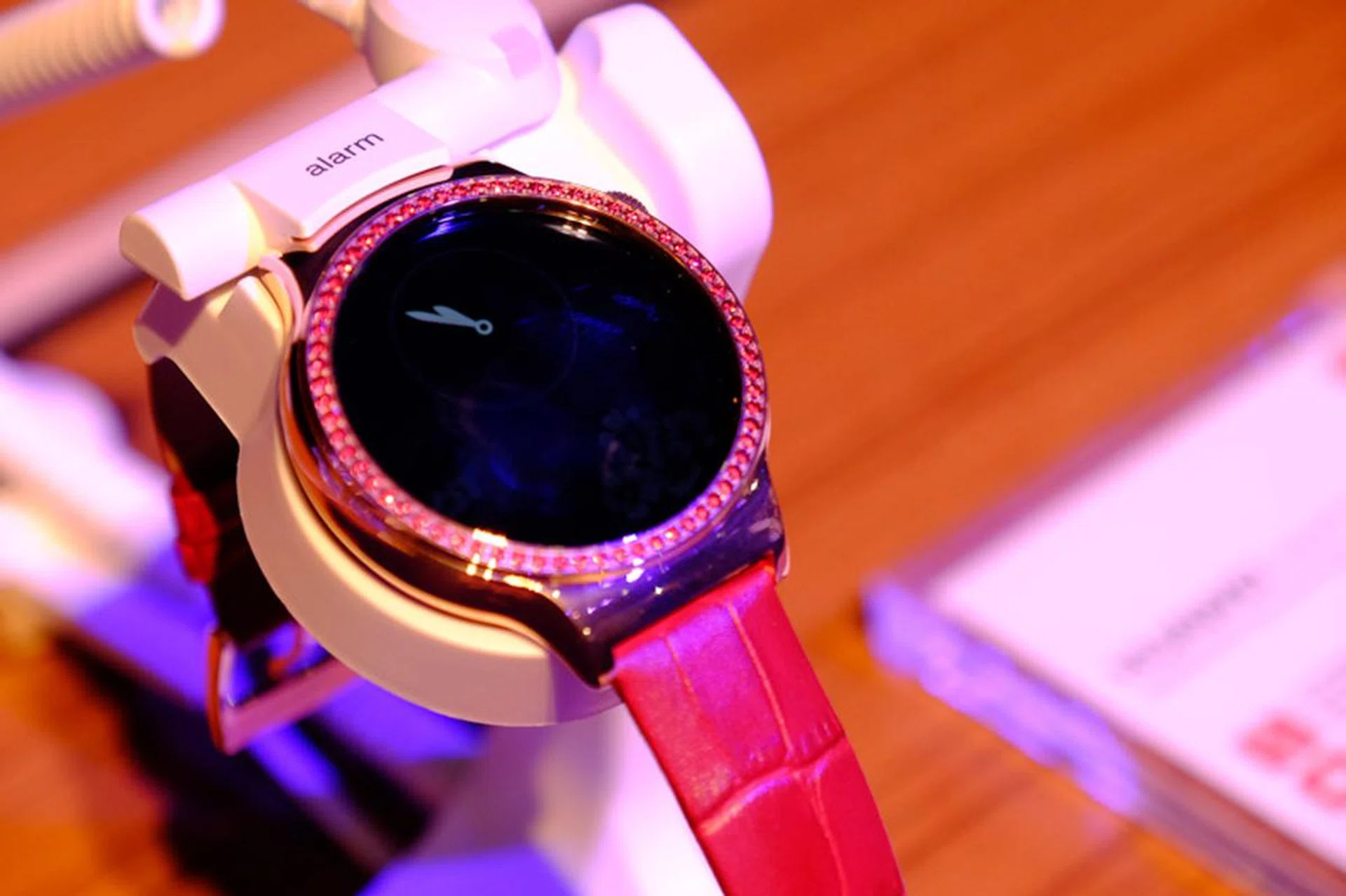
A selection of Huawei smartwatches were out on display.
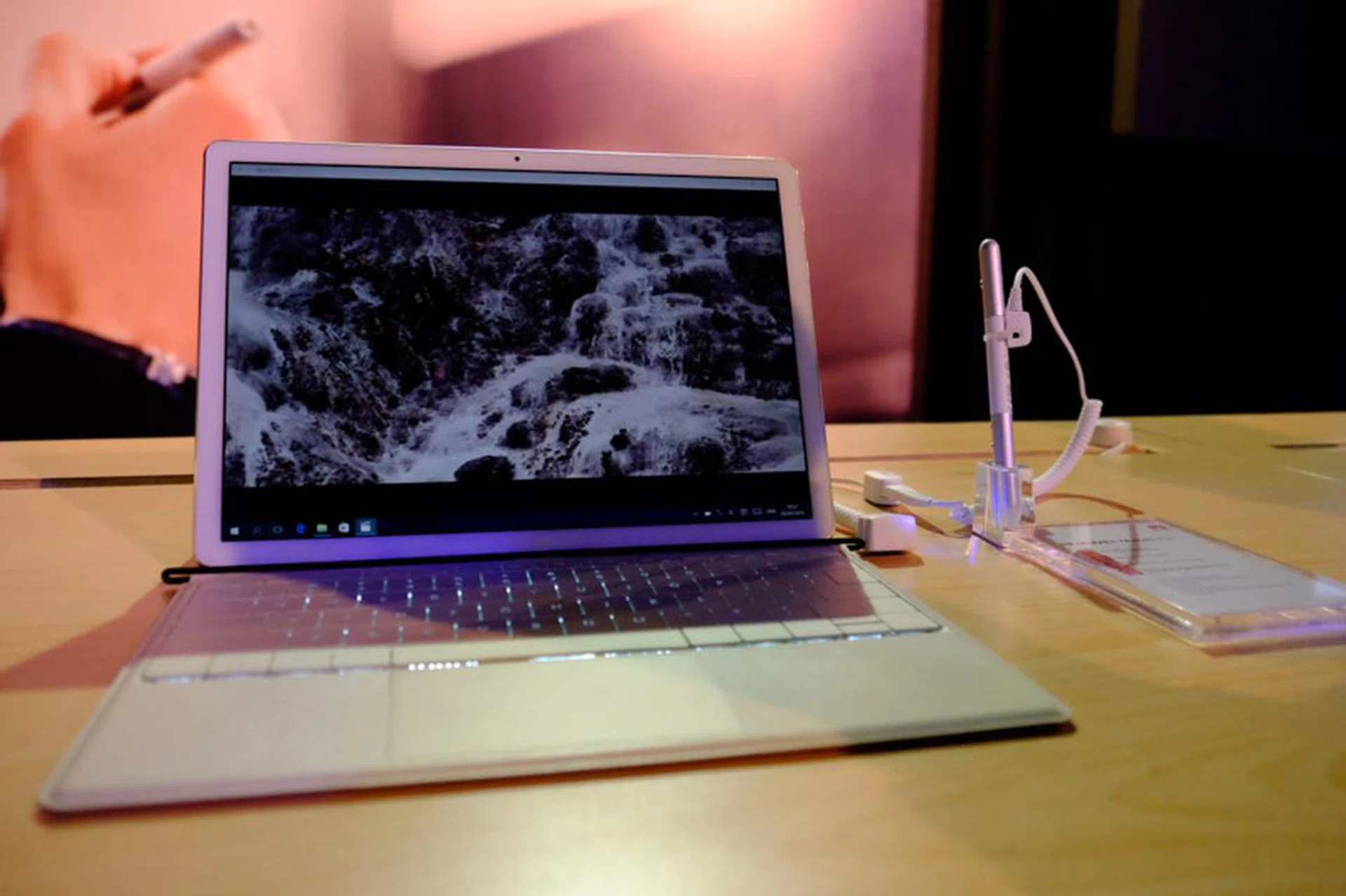
Here's their latest MateBook too.
Here are all three colors available for the 32GB version - Mystic Silver, Titanium Grey and Prestige Gold. The fingerprint sensor is located on the back of the camera, but is actually placed so you can reach it quite comfortably. We’re told it can be configured as a shutter for the camera, offering you yet another option to take images.
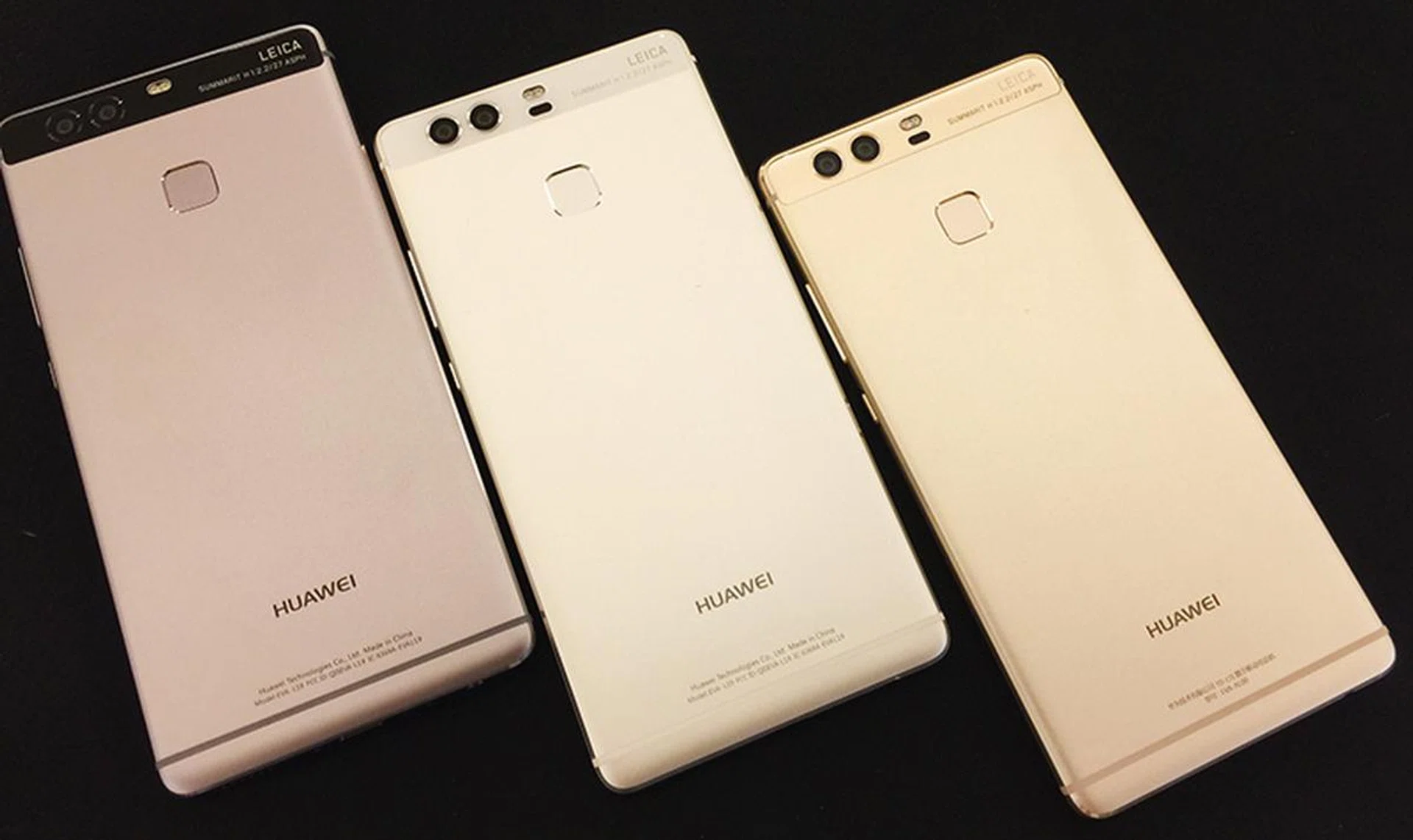
From left to right: Mystic Silver, Titanium Grey and Prestige Gold.
The 64G deluxe version is the only one that comes in the Haze Gold color, but other than a slight difference in the front, the hold button of the deluxe version also comes with a red trim; a homage to Leica’s red logo.
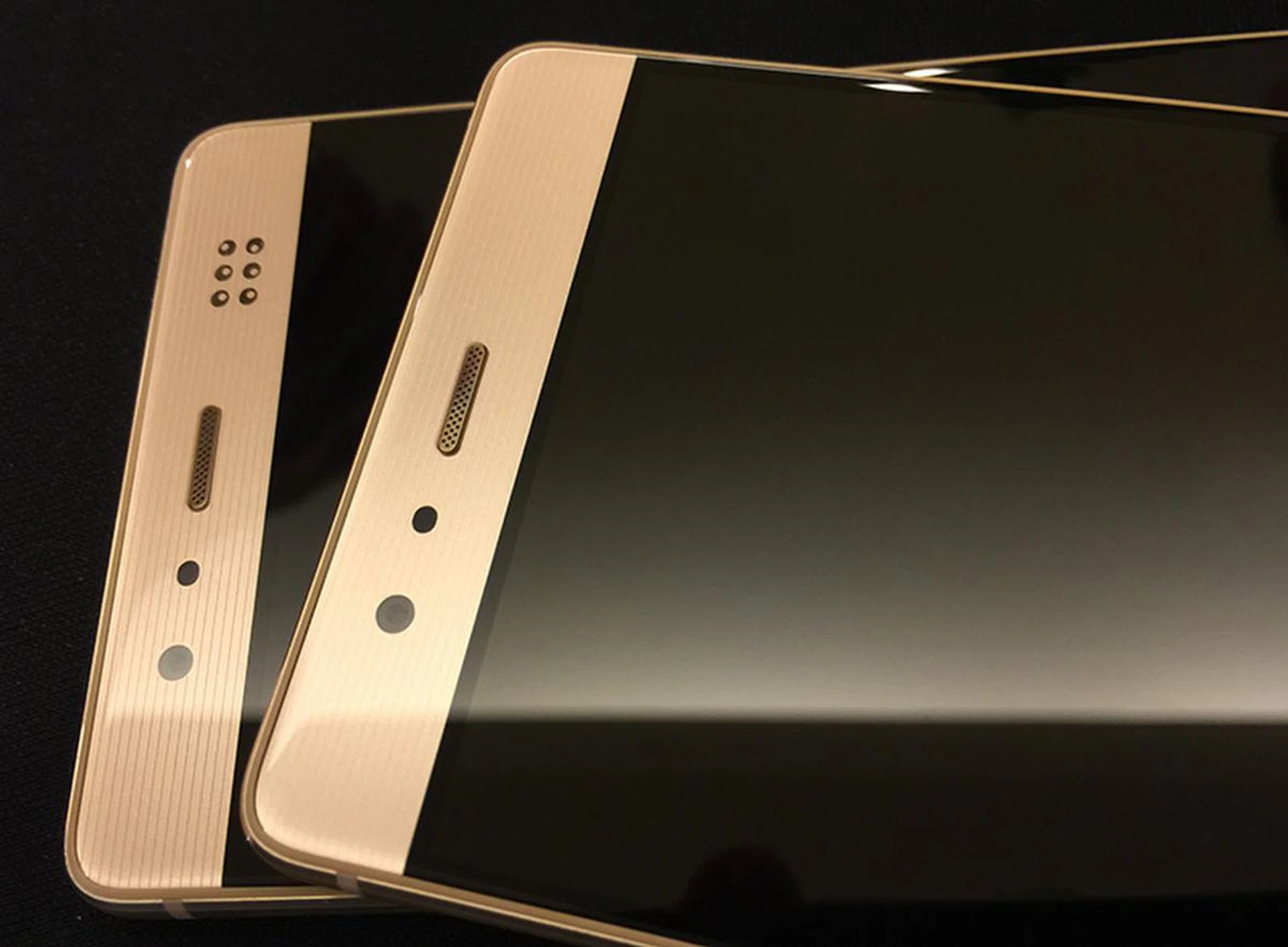
Can you just about make out the Haze Gold finish?

Notice the red trimming around the hold button.
Below, here’s a side-by-side comparison of the P9 (right) and the P9 Plus (left). As you can see, the two are virtually identical other than the slight difference in size. Force touch on the P9 Plus seems to work fairly well, though you'll really have to use it for an extended period of time to assess its usefulness.
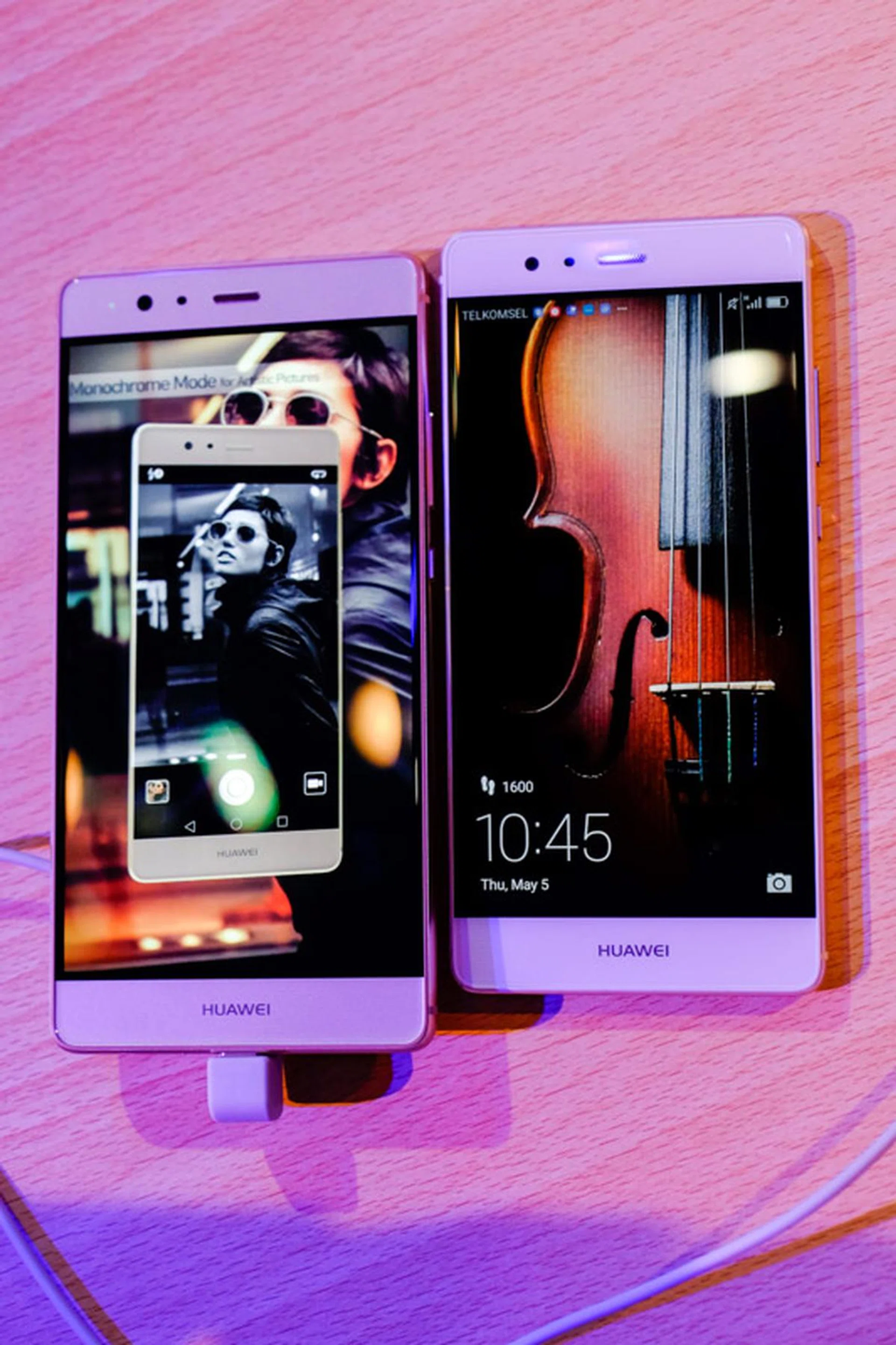
The P9 Plus on the left is only so slightly larger, but has better components internally.
Finally, there was also a “backstage area” setup where several models were placed with Huawei products while they got their make-up and hair done. This was open to the audience so you could go up to take pictures of the products in action. Here are few pictures showing off the black and white mode and the wide-aperture mode.
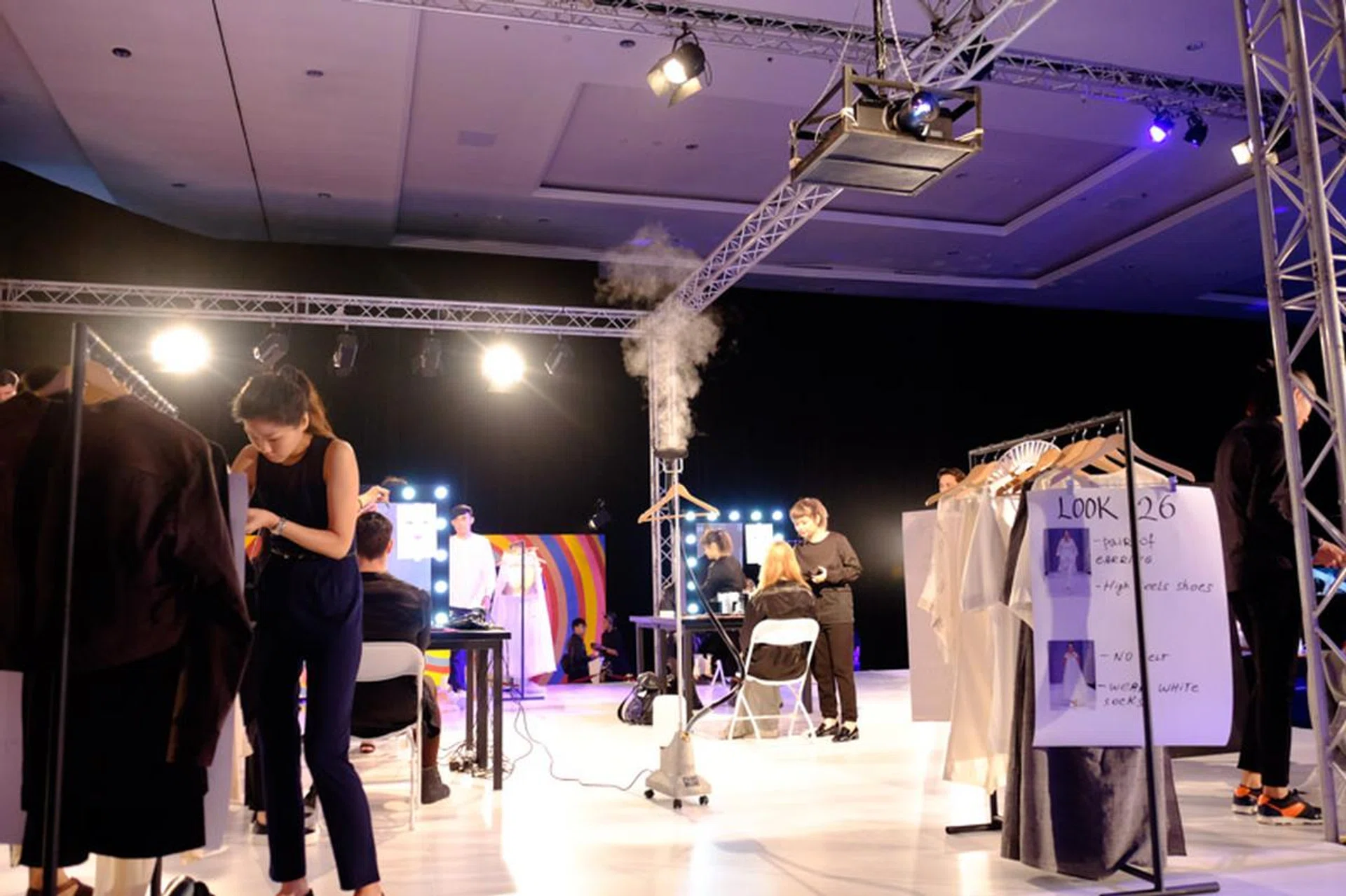
It's all a stage... with Huawei P9s on it.
The following pictures were taken by the Huawei P9, 32G model. They’re published here for your reference only and are copyright to SPH Magazines. We ask that you do not reproduce them elsewhere.

Perfect Black and White photos straight out of camera? Certainly seems a possibility with the Huawei P9.
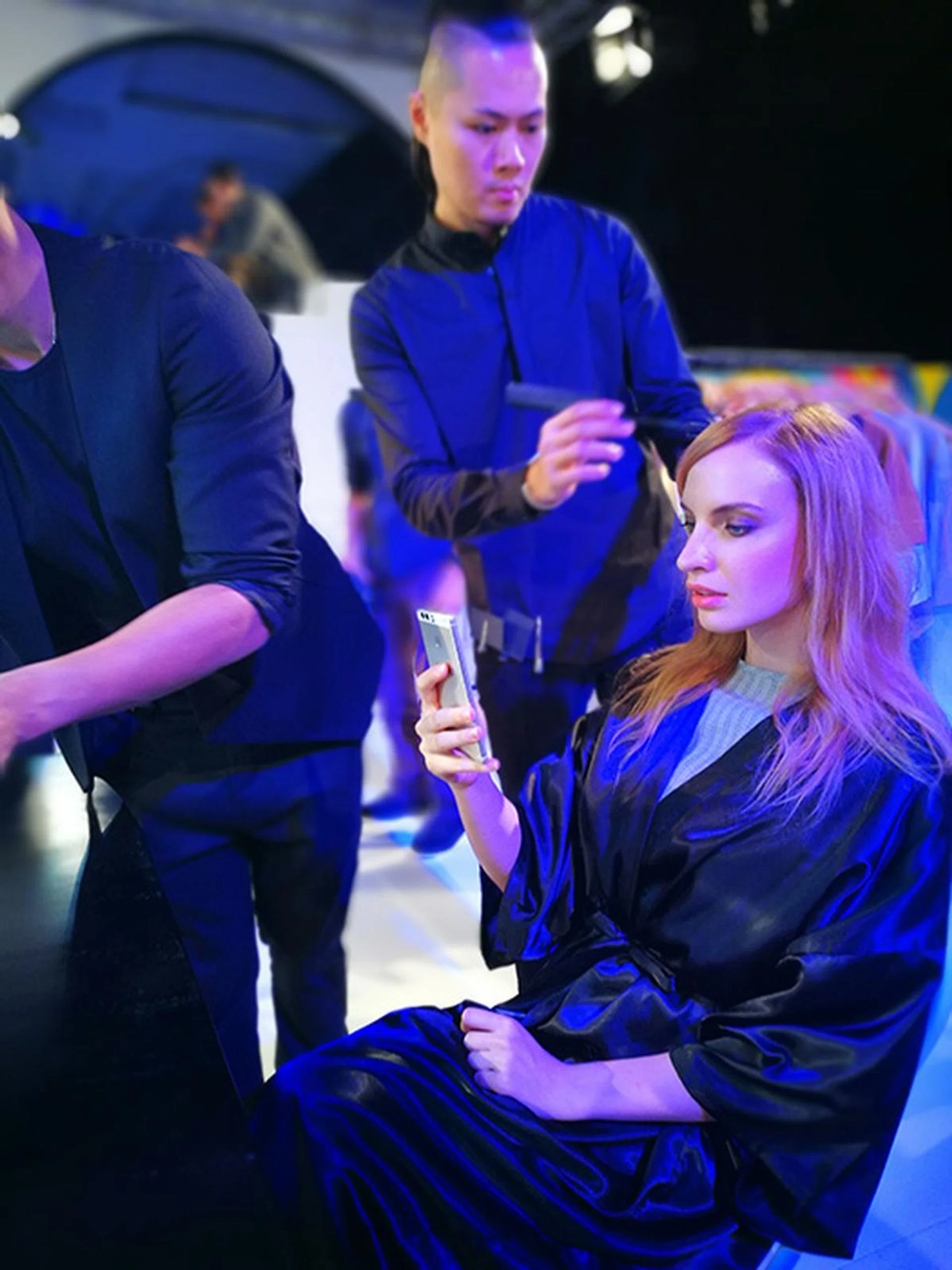
Here the focus point is on the model.
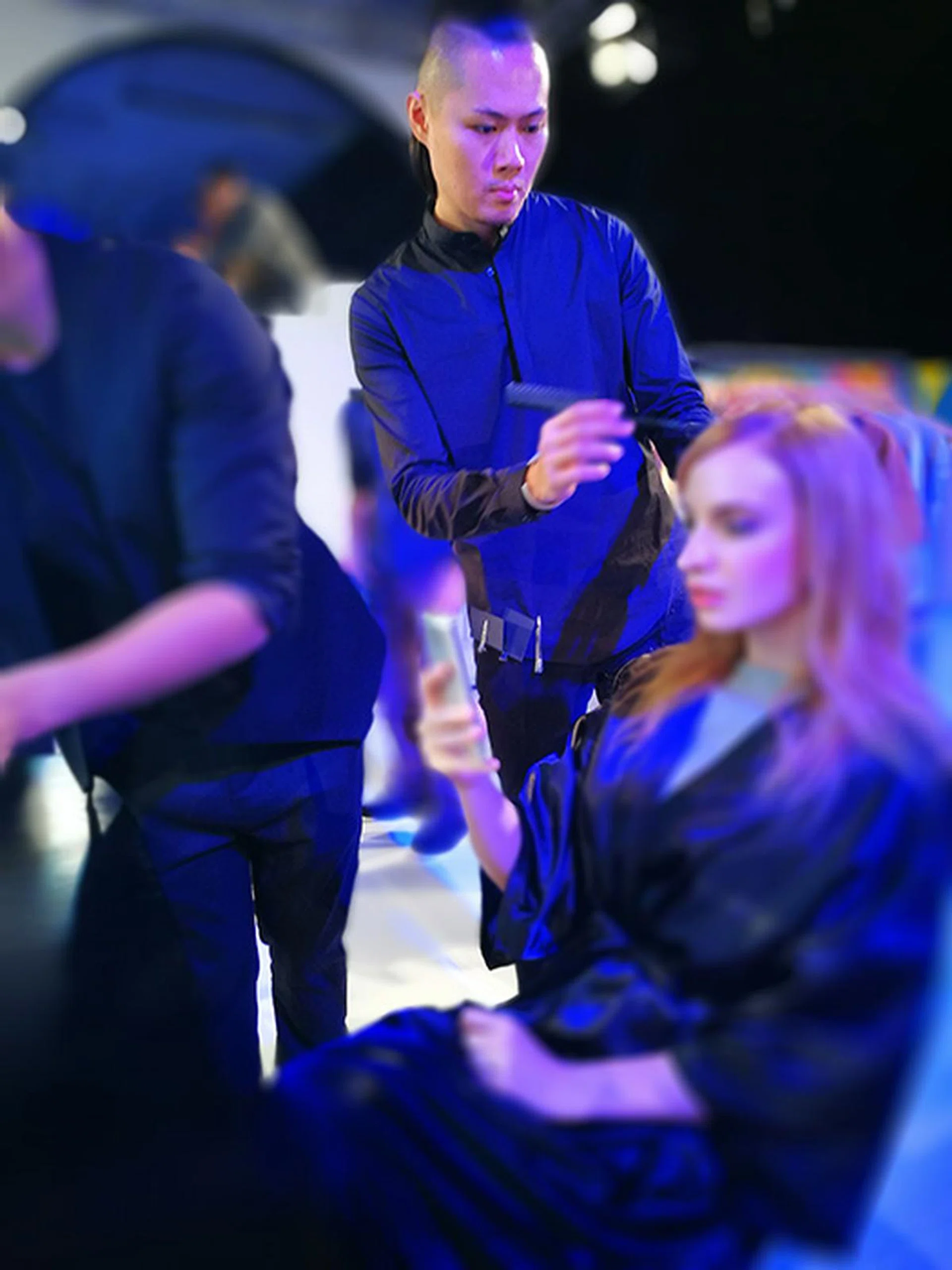
Same photo, but we selected the hair stylist instead.
As you can see, the aperture mode certainly does seem to give a rather convincing impression of shifting the focus point with the appropriate change in aperture, while the Black and White mode gives nice deep blacks. It would have been nice to be able affect the amount of contrast or even the level of grain in this mode, but that’s something that can perhaps be applied in a later version.
Overall, we have to say that the Huawei P9 seems to be an extremely well-constructed smartphone with a nice premium finish, a good display and a nice set of features. The smartphone camera app is one of the most full-featured ones we’ve seen thus far, making it a pleasure to take photographs with. We’ll leave off any verdicts on the quality of the images and the phone itself till we get to conducting our proper reviews, but hopefully this article has given you a decent idea of what to expect!
The Huawei P9 Deluxe version (4GB RAM + 64GB storage, Haze Gold) will be available from 12 May for pre-order from Lazada.sg for S$888, and an exclusive Leica leather phone case is available while stocks last as part of the pre-order special. Meanwhile, the 32GB version of the P9 will also be available from the Huawei Flagship Store (Plaza Singapura), and the main telecos for S$768 by the end of the month in Prestige Gold, Titanium Grey and Mystic Silver.
The Huawei P9 Plus (4G RAM + 64GB storage) will be available in Haze Gold and Quartz for S$998 from late June onwards.
Our articles may contain affiliate links. If you buy through these links, we may earn a small commission.