

(This article is one of 16 parts in our Tech Awards 2025: Editor's Choice content series.)
Projectors, like printers, usually see a much slower refresh cycle, unlike most other tech gadgets and home appliances. Since we’ve already tested and compared Home Entertainment Projectors previously (these options are still the lead candidates in their field), we’ve decided to pivot to a newer class of projectors that have seen much interest by consumers and brands alike, competing for a spot in your home.
To be accurate, mini projectors have been around for a long time, but they’ve always been severely handicapped in quality, capability, or marred with misaligned specifications that might have misguided consumers. That meant that consumers often felt that they had no choice but to consider bulkier options when adopting projectors for a quality output (Read: Dispelling Projector Myths).
Only in the last couple of years have we noted technology advancements to facilitate capable mini projectors that are designed for this role, plus the proliferation of ‘smart projectors’ that make them self-sufficient as long as there’s a power source. Goodbye to messy and troublesome setups.
For this year’s selection criteria of best mini projectors, they must have been released in the market between April 2023 and April 2025, have a smart OS built in, capable of projecting at 1080p resolution, have built-in audio, offer premium features and be designed for portability within the confines of your home.
Take note, we’ve specifically outlined this category as “mini” as opposed to “portable” or “micro” because, while our nominees are easy enough to move around at home, they are not the pick-up and go models that fit in your hand. The nominees are, however, smaller and more portable than the home cinema/entertainment class projectors mentioned earlier, such as those from BenQ, KJM, Hisense, Samsung and many others.
Nominees:
Note: The list of brands competing in this category is exhaustive, and some brands either do not make the cut based on our selection criteria, do not sell the particular model in Singapore officially, or weren’t able to provide a test unit during our testing and qualification phase.
And the winner is…
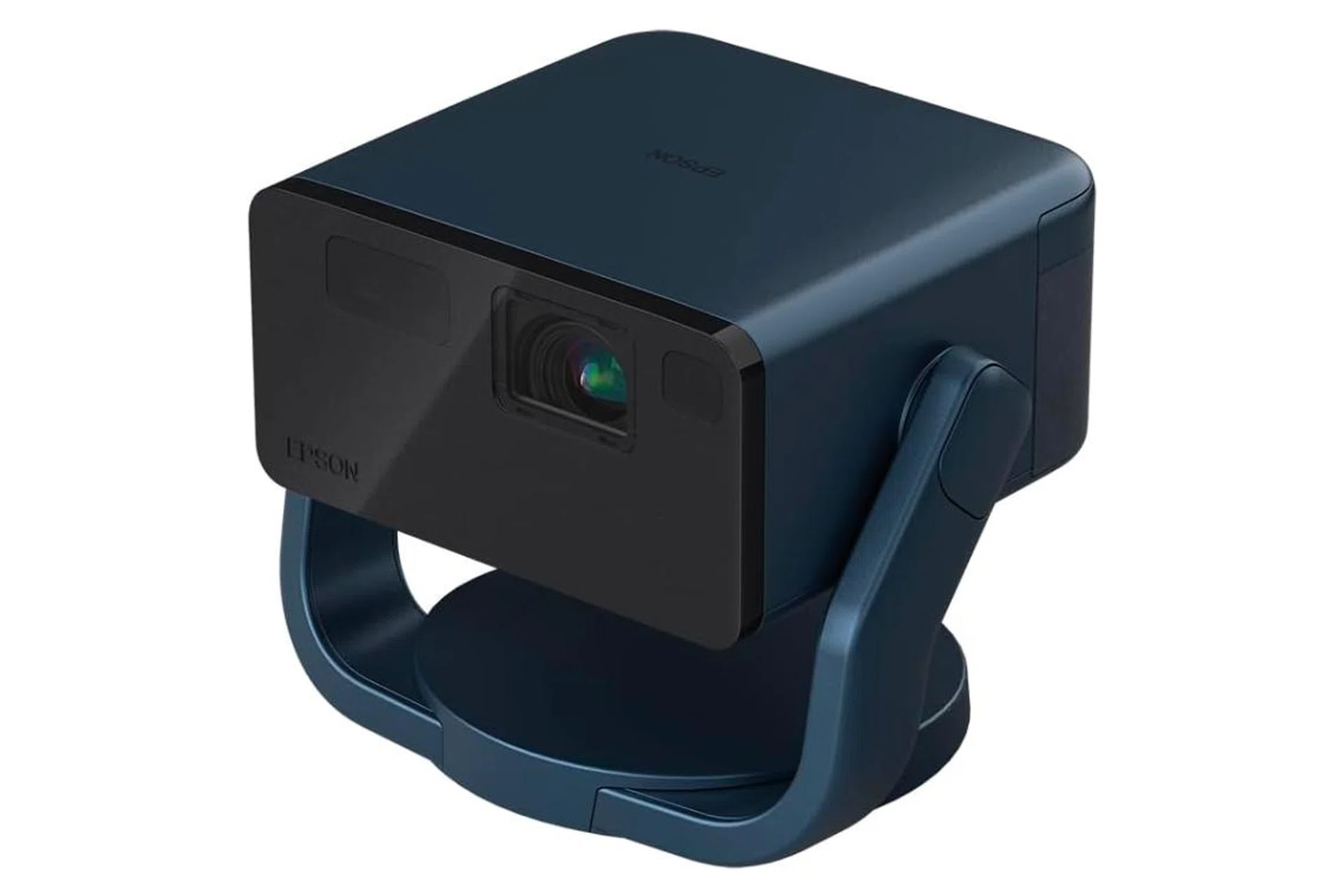
Epson EpiqVision Mini EF-22N brought us big pictures with big vibes.
Epson EpiqVision Mini EF-22N - Best Mini Projector
If you’re someone who’s thought about turning your living room into a mini cinema (or projecting movies onto your bedroom ceiling for those cosy nights in), this one’s highly worth checking out.
It’s not tiny—not something you’d toss in a backpack—but it’s still pretty compact for what it’s capable. The stand does have some heft to it, but it’s very sturdy and reliable, allowing you to confidently swivel and tilt the projector to your preferred angle. It’s far cry ahead of our other nominees, that’s lacking in this aspect of sure-footedness. As you can see in the image below, the base houses the power connection on one side and has a Kensington lock on the opposite side to help you secure your projector. This latter point might be a very small detail, but this is what gives it the flexibility in deploying it at both a personal and public space if you’ve an impromptu outing or gathering planned.
The projector feels solid and exudes a premium feel, and setting it up is refreshingly simple. Plug it in, power it on, and boom—there’s your screen. Within seconds, it automatically adjusts the image to make it look straight and sharp. Even if you’re not placing it directly in the centre of a wall, it cleans up the picture nicely. No fiddling with buttons, nor deciphering troublesome onscreen settings to achieve optimal projection. I’ll also caveat that this fuss-free auto focus and auto keystone alignment is the fastest I’ve observed across any others in the market.
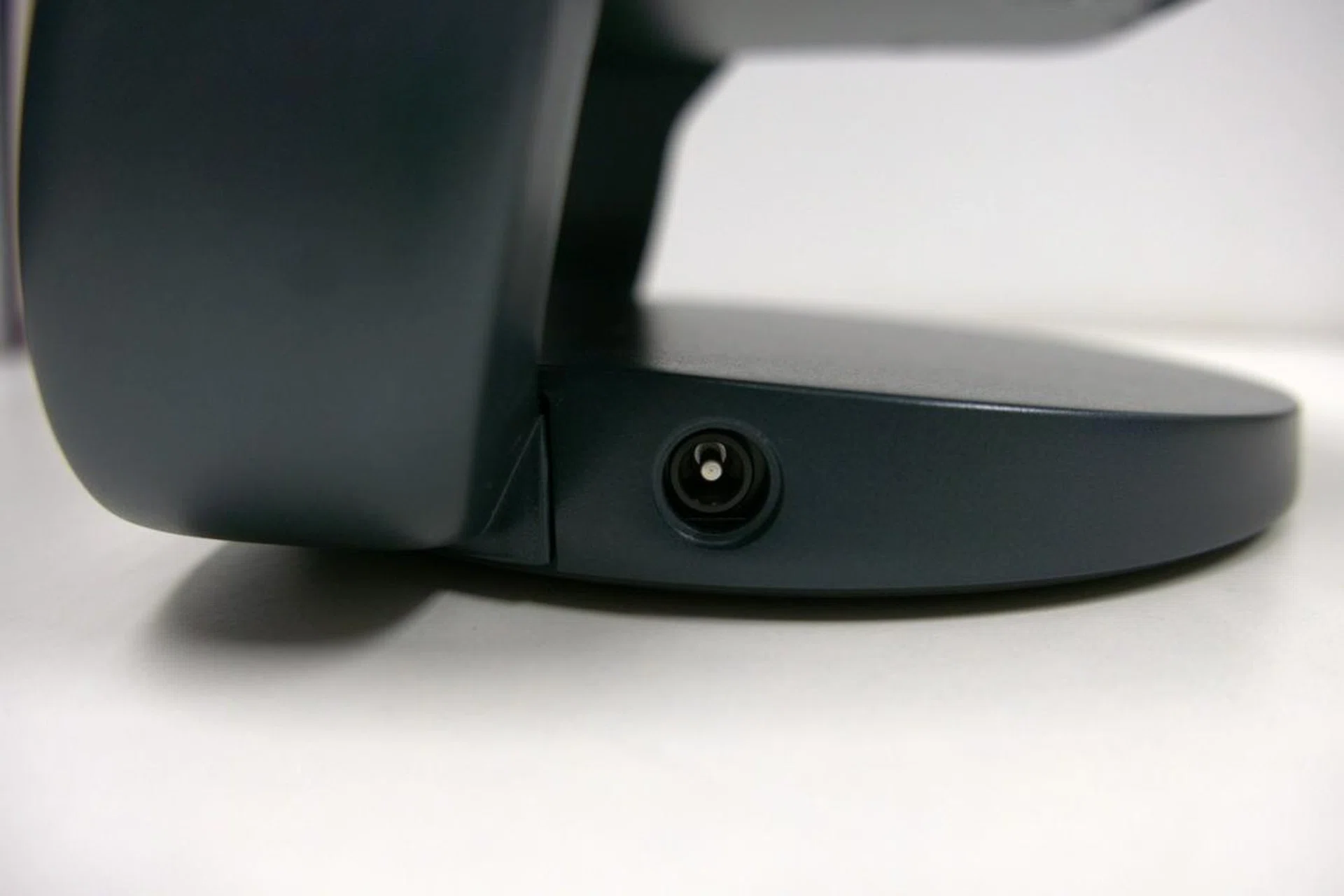
The sturdy base is what allows the Epson projector to effortlessly project on any wall (or ceiling), and at almost any angle, while the ultra-fast auto focus and keystone do their magic. Meaneihl, the power supply plugs into the side of the base, while a Kensington lock is available on the opposite side.
The picture quality is outstanding. While it may be labelled as a Full HD display resolution (1080p), the vibrancy of the colours truly makes everything pop. Whether I was diving into a Netflix series, enjoying YouTube videos, or scrolling through my personal photos (courtesy of the easy-to-use Google TV operating system of the projector and remote), everything looked incredibly rich, detailed, and surprisingly bright—even with ambient light in the room. This remarkable clarity can be attributed to the projector’s “true” 1,000-lumen brightness rating. When combined with Epson’s 3LCD technology, the colours appear true to life, free from any washed-out tones. If that sounds a bit hard to believe, check out what we found in our video.
This one has built-in stereo speakers, and for a mini projector, they’re not bad at all. You can actually enjoy dialogue clearly without needing to crank up the volume. It won’t replace a soundbar or home theatre audio setup, but for a bedroom, small living room and ad-hoc usage? It more than suffices.
It is best for movie lovers who want that home theatre feel without needing a dedicated room or screen. Plus, you can easily stow it away when not in use and deploy it easily in any room with a free wall.
You can find the Epson EpiqVision Mini EF-22N available for purchase on Lazada, Shopee, and Courts online stores for S$1,488. If you don’t necessarily need the base, swivel, and tilt functionality, there’s also the more affordable EpiqVision Mini EF-21 series to consider, too, with all the goodness we’ve observed on the EF-22N.
Here’s how we rated all the contenders:-
| Model | Design | Performance | Features | Value | Overall | Price |
|---|---|---|---|---|---|---|
| Epson EpiqVision Mini EF-22N | 8.0 | 9.0 | 8.5 | 8.5 | 8.5 | S$1,488 |
| Samsung Freestyle 2nd Gen. | 8.0 | 8.5 | 8.0 | 8.5 | 8.0 | S$1,499 |
| ViewSonic M10 | 6.5 | 7.5 | 7.0 | 6.0 | 7.0 | S$1,599 |
Below, we briefly share how the other contenders fared.
Samsung Freestyle 2nd Gen - Best for casual users
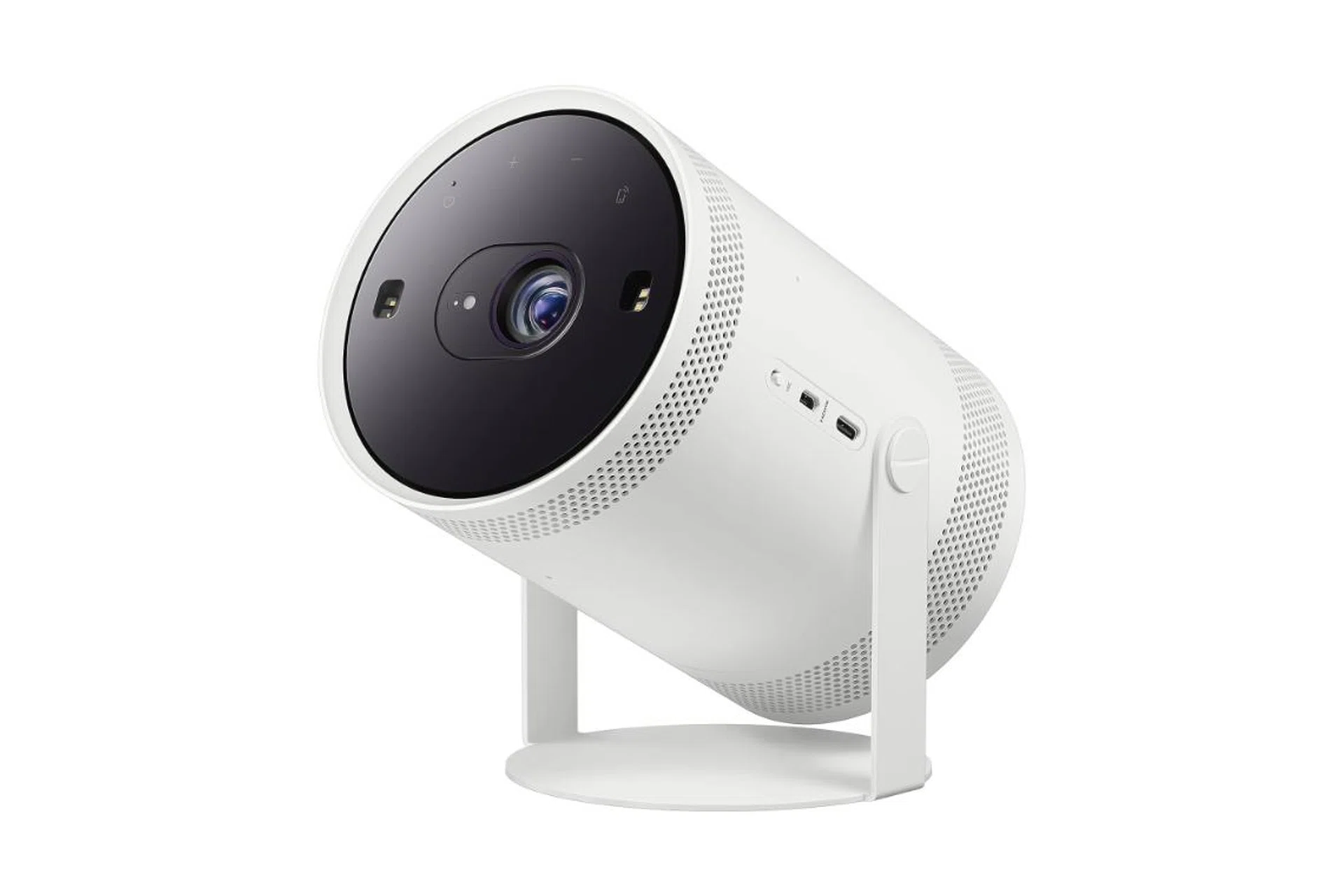
Samsung Freestyle 2nd Gen.
In second place was the Samsung Freestyle 2nd Gen. Yes, it looks like a fancy soup can (in the best way) in that it’s small, sleek, and ready to party wherever you take it. It has a built-in smart TV system running their Tizen OS (like what you’d get on a Samsung TV) and even supports cloud gaming. But this is where it excels. Given its small size and handy portability, it can go anywhere for on-the-go entertainment with a compatible USB-PD power bank that meets its power requirements (or Samsung’s own design-matched add-on battery accessory). Just plonk it down, let it focus and straighten itself out, and you’re ready.
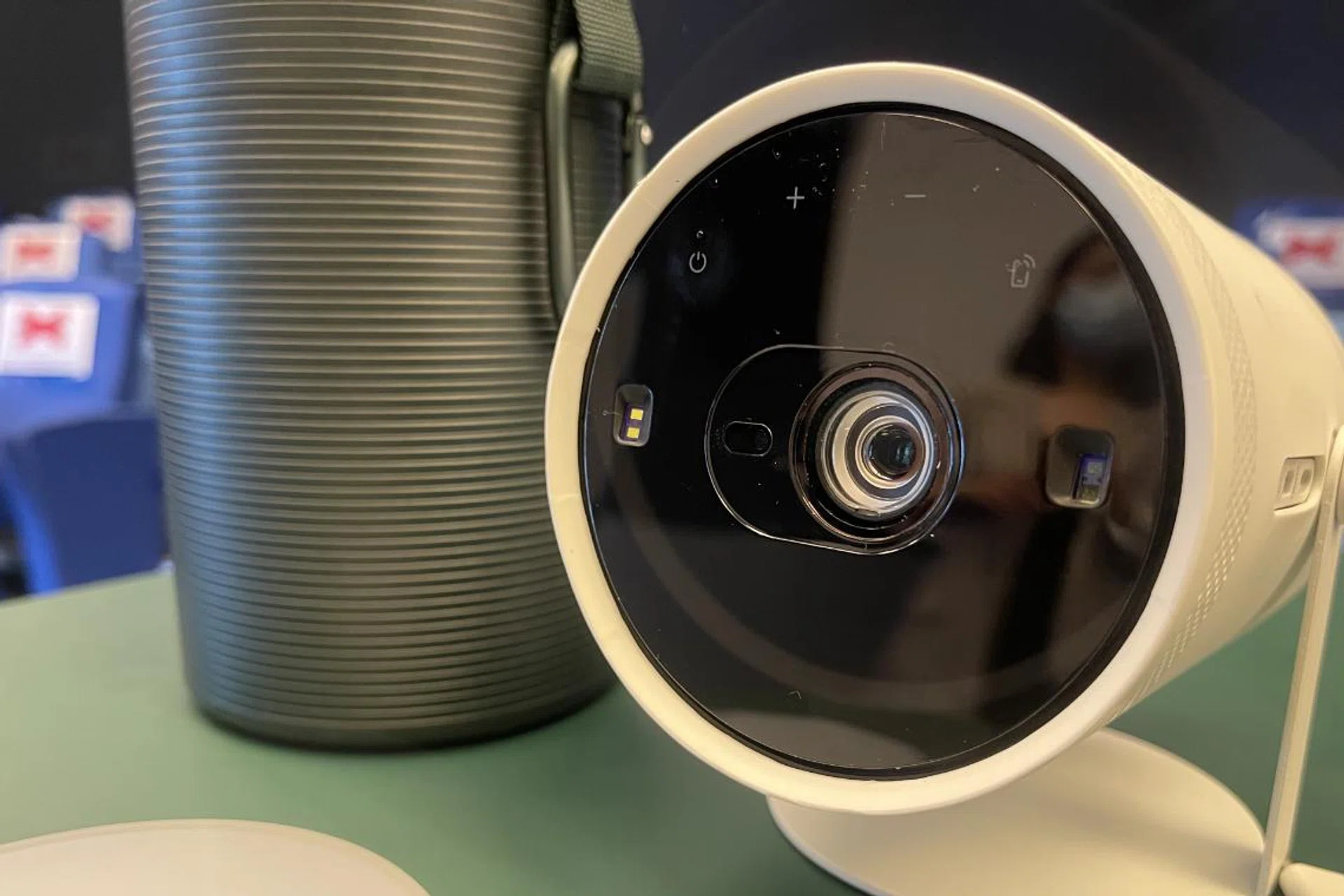
Be careful you don’t blind yourself when turning on the Samsung Freestyle projector.
Downsides? It’s not the brightest, so it can look washed out in well-lit rooms, and while the speaker is fine for casual listening to both tunes and shows streamed, it’s only just about adequate (though you can wirelessly connect to any other Bluetooth speaker you might have to augment your viewing setup). It can also get a bit warm, and this can affect someone sitting directly behind it in a small room, given how its ventilation is designed. Turning it on can be a challenge, too, as the power button is located at the front of the projector, exactly where the projection lamp is located, too. So when you engage it, you run the risk of being blinded by the lamp light as it comes on. Last, but not least, while the cradle stand affords the projector great flexibility in projection angle, it’s nowhere as sturdy as the Epson’s stand, nor can it hold a projection angle indefinitely; the side screws loosen up over time and need to be tightened with a flathead screwdriver. A small discomfort to put up with for the projector’s small build and weighing just less than a kilogram.
For those who wish to see and know more about Samsung’s offering, we’ve a complete hands-on experience video of the original Freestyle, which is quite similar to the 2nd Gen edition we’ve tested this round.
Overall, we feel that the Samsung Freestyle 2nd Gen. is best for casual users who want something fun, portable, and easy to use, especially for the occasional outdoors or on-the-go needs without needing a wall power socket. It can be bought from the online stores of Courts and Best Denki for S$1,499.
ViewSonic M10 - Best for discerning users, if you don’t mind the design quirks
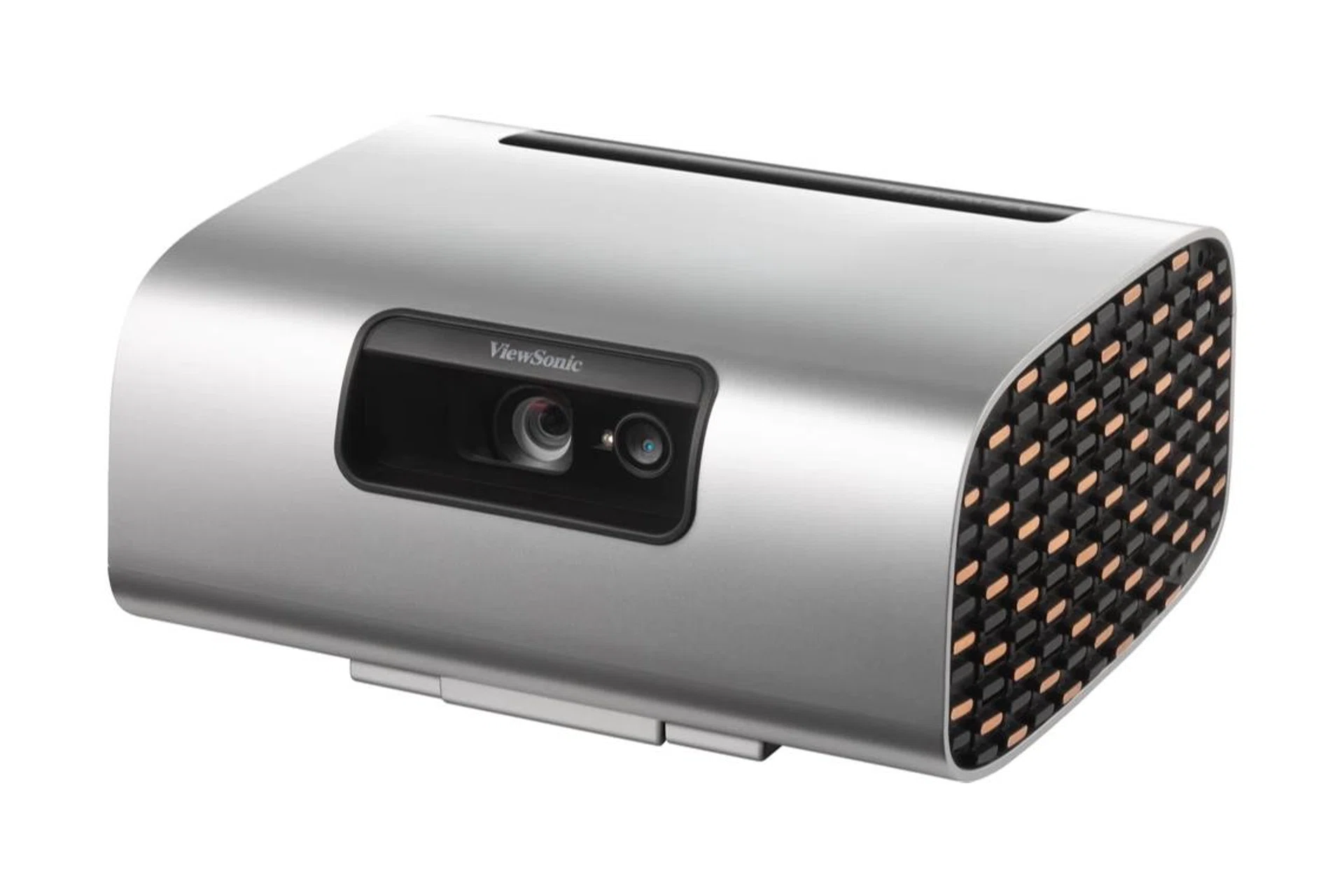
ViewSonic M10
While the ViewSonic M10 was smaller than the Epson EpiqVision Mini EF-22N, it had some quirks that cost it points. Although it uses a proprietary Android-based OS, it’s not Google TV. As such, it lacks a familiar and user-friendly OS and has only Netflix and YouTube pre-loaded, with no access to any other apps. The ViewSonic M10 is designed like an older tier projector, where it’s designed to stream content wirelessly from your devices to watch. But despite trying with mobile phones such as an iPhone 16 Pro Max and an Oppo Reno 12, it was using a laptop via HDMI that worked best without connectivity woes.
It also has a strange design. Foremost of which is where the power supply and I/O ports are housed behind a flap door. As such, when the projector is in use, this flap door is always left open, hanging there. Surely relocating the ports to the rear of the housing would have made more sense for ease of connectivity and cable management. The power button, too, is hidden on the opposite side and isn’t easy to spot or access.
Physical and operating system design limitations aside, the projector, for its size, has impressive visual prowess as it is bright and vibrant. Naturally, it works well even during the day or in rooms with more than usual ambient lighting. Plus, it comes with Harman Kardon-tuned speakers within its housing, which actually sounds as good as the association with a renowned audio player in the industry.
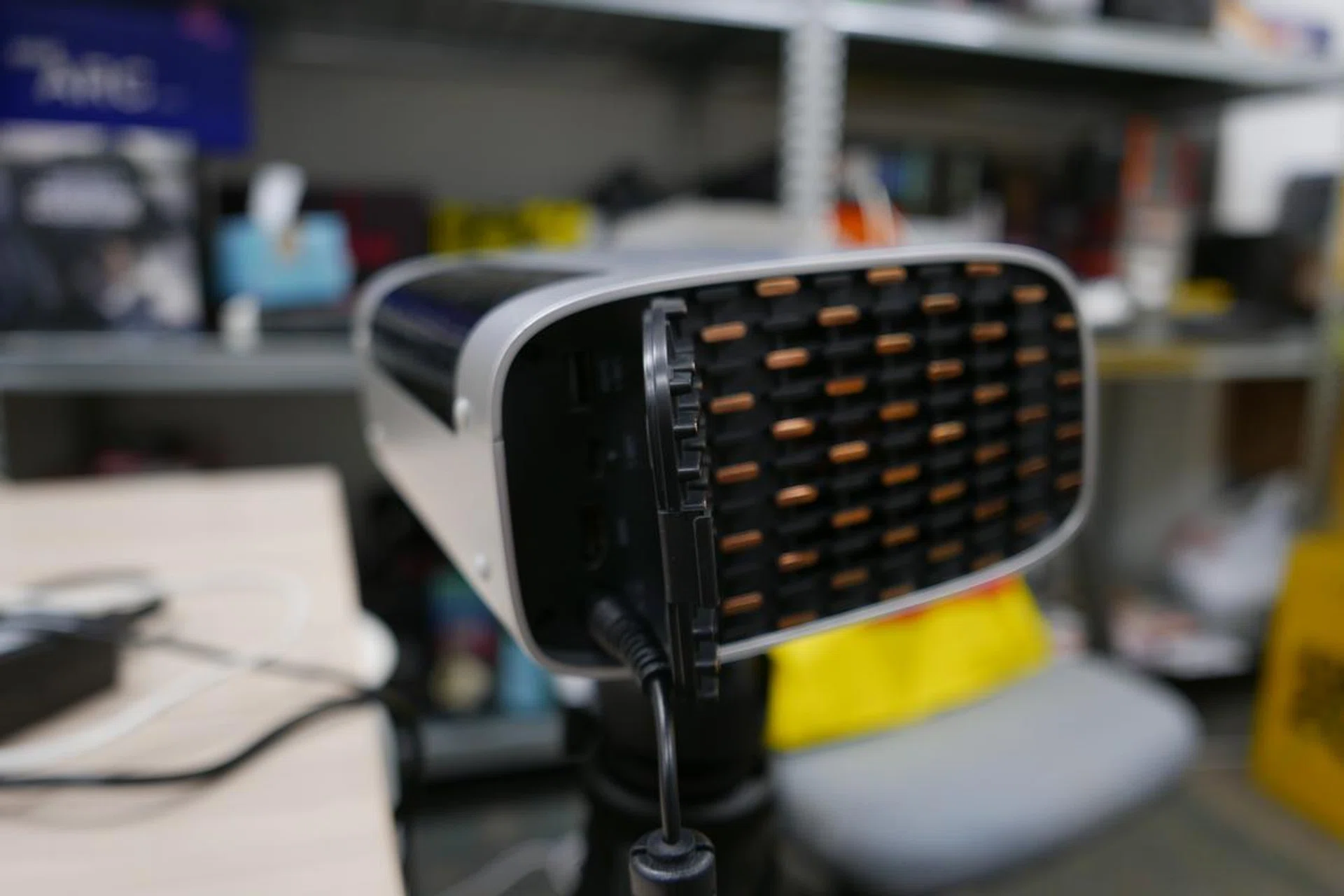
The power cable just keeps hanging out of the side and you can’t close the flap door.
In our view, the ViewSonic M10 is a good choice for those who prioritise top-notch visuals and audio in a small package, and don’t mind connecting it to a streaming device (preferably tethered), even if it’s more cumbersome.
At S$1,599, it’s also the most expensive projector we tested, but those interested can find it online at Lazada, and Viewsonic’s online store.
(This article is one of 16 parts in our Tech Awards 2025: Editor's Choice content series.)
References
- Epson EpiqVision Mini EF-22N (tested and scored internally)
- Samsung Freestyle 2nd Gen (tested and scored internally)
- ViewSonic M10 (tested and scored internally)
Our articles may contain affiliate links. If you buy through these links, we may earn a small commission.