
Ricoh GR Digital IV - Prime on a Compact
While Ricoh may not be as famous as Canon or Panasonic in the compact camera market, its latest premium compact model the GR Digital IV offers good build quality with a fast F1.9 lens. Join us as we put it through our tests and see what makes this camera stand out.
Introduction
Point-and-shoot cameras have always been popular with the casual-shooting crowd. They don't need the fancy functions of the more complicated cameras but merely want a small and light camera that is easy to use, a compact camera that they can bring to parties, holidays and other events.
While the compact camera market is saturated with Canons, Nikons and Panasonics, rarely do we hear about a Ricoh camera. Ricoh has, in fact, been in the camera business since 1937, it’s known mostly for producing premium compacts. The Japanese manufacturer has just updated of one its camera models, the GR Digital III, with the GR Digital IV. Join us as we find out what the GR Digital IV has to offer.

What else does the GR Digital IV offer besides its fast F1.9 lens and good build quality?
Understated Build, Great Handling
The first thing that will strike you about the GR Digital IV is its understated look. While other compacts strive to outshine one another in their flashy outfits, the GR Digital IV’s matte black magnesium alloy body exudes an understated machismo, both looking and feeling sturdy.
At a passing glance, the Digital IV looks just like any other compact. But upon closer inspection, we found minor details woven onto its body which set it apart from your normal compacts. When we handled the Digital IV, we felt that there was a lot of thought put into the ergonomics and controls.

The GR Digital IV has a matte, textured surface that feels rugged and doesn't attract fingerprints.
The Digital IV possesses a standard mode dial, but there’s a lock release button beside it that you have to depress in order to rotate the mode dial. While it may look awkward, in reality it isn’t that difficult to use when operating the camera. We guess Ricoh doesn’t want you switching the modes by mistake in your haste to capture that perfect shot.
The camera also sports an up-down dial on the front and an adjustment lever on the back. The buttons allow you to select shutter speed and aperture in the manual modes. There’s also a nice, empty spot on the back of the camera where your right thumb will be when you’re holding it. This helps you get a pretty good hold of the camera.
Where is the zoom dial/lever you ask? Well here’s the thing; the Digital IV features a fixed 28mm lens, so there's no optical zoom. There is the option of up to 4x digital zoom though if you really have to zoom into something to take a picture, but we can't recommend it since digital zooms is just the camera cropping and enlarging the original picture.

You can spot the lock release button right above the M in the mode dial.

There's a nice spot for you to place your right thumb as you hold the camera, right below the Adjust lever. The textured surface gives you a better grip.
Magic Screen
The Digital IV comes with a 3-inch Sony WhiteMagic RGBW LCD screen. The WhiteMagic technology works by adding white pixels to the standard RGB pixel mix of an LCD panel or screen to produce greater brightness without increasing power consumption.
Alternatively, you could forgo the power-saving and increase the brightness to levels that are higher than conventional LCD screens. We maxed out the brightness of the Digital IV’s LCD and when we tried viewing it under sunlight; we could still see whatever was on the LCD under the glare of a mid-day sun. Magic!

This picture was taken in the mid-day sun. With maximum brightness you can still see what's on the LCD screen.
Handy Interface and Controls
The Digital IV is first and foremost a compact, so its user-interface (UI) is easy to navigate. What sets the experience apart from some of its peers is that the Digital IV allows you to access certain functions and settings on the fly instead of digging through layers of sub-menus.
It lets you assign to the two function buttons and the adjustment lever certain functions and shortcuts to sub-menus. One particularly useful control is the capability to assign up to five frequently-used options to the adjustment lever, and we liked the fact that we could access the white balance, exposure compensation and ISO settings on the fly with this lever.
It's no stretch to say that the Digital IV possesses one of the best control systems in a camera, whether a compact, DSLR, or mirrorless camera.

The UI is simple to navigate.

The Digital IV makes it easy to access certain frequently-used options such as white balance or ISO setting without needing to navigate through the respective sub-menus.
Image Performance
Ricoh has been talking about the Digital IV's hybrid auto-focus system which combines an external auto-focus with a conventional contrast auto-focus system. Ricoh boasts that the auto-focus speeds are nearly twice as fast as the GR Digital III, and while we can’t say for sure the speed improvements are exactly like Ricoh says, we did find the auto-focus on the Digital IV to be fast and accurate.
The AF system really shines in macro mode. We were astonished that the camera could focus at a distance of about 2 centimeters from the subject and that it managed to lock on to the subject quickly. The shallow depth-of-field that we got with an F-stop of 1.9 was impressive and we found ourselves taking more macro shots than we bargained for, some of which can be viewed in the sample pictures section.
Ricoh has included a Snap mode, which lets you focus at a preset distance so you can take pictures quickly without the camera constantly hunting for focus. You could set the preset distance at 1 meter and the camera will just focus at that distance, so it makes taking snapshots fast and easy. Manual photographers used to setting focus distances on their lenses will appreciate this digital equivalent.
In terms of resolution, the Digital IV gets a 1800 x 2000LPH (vertical and horizontal) on our charts, which is excellent. For noise control, unless you intend to pixel-peep, the Digital IV's noise performance is good. Noise starts appearing at ISO800 and while you could make do with ISO1600 when in a pinch, we're not sure why the option for ISO3200 is even there when it's very grainy and noisy. If you view the sample pictures in the next section, you will notice that the real world application of ISO1600 is still very much usable. The Digital IV shoots in RAW as well, something any serious photographer will appreciate.

100% crop of our resolution test

100% crop of our resolution test

ISO80, 100% crop of our test scene

ISO100, 100% crop of our test scene

ISO200, 100% crop of our test scene
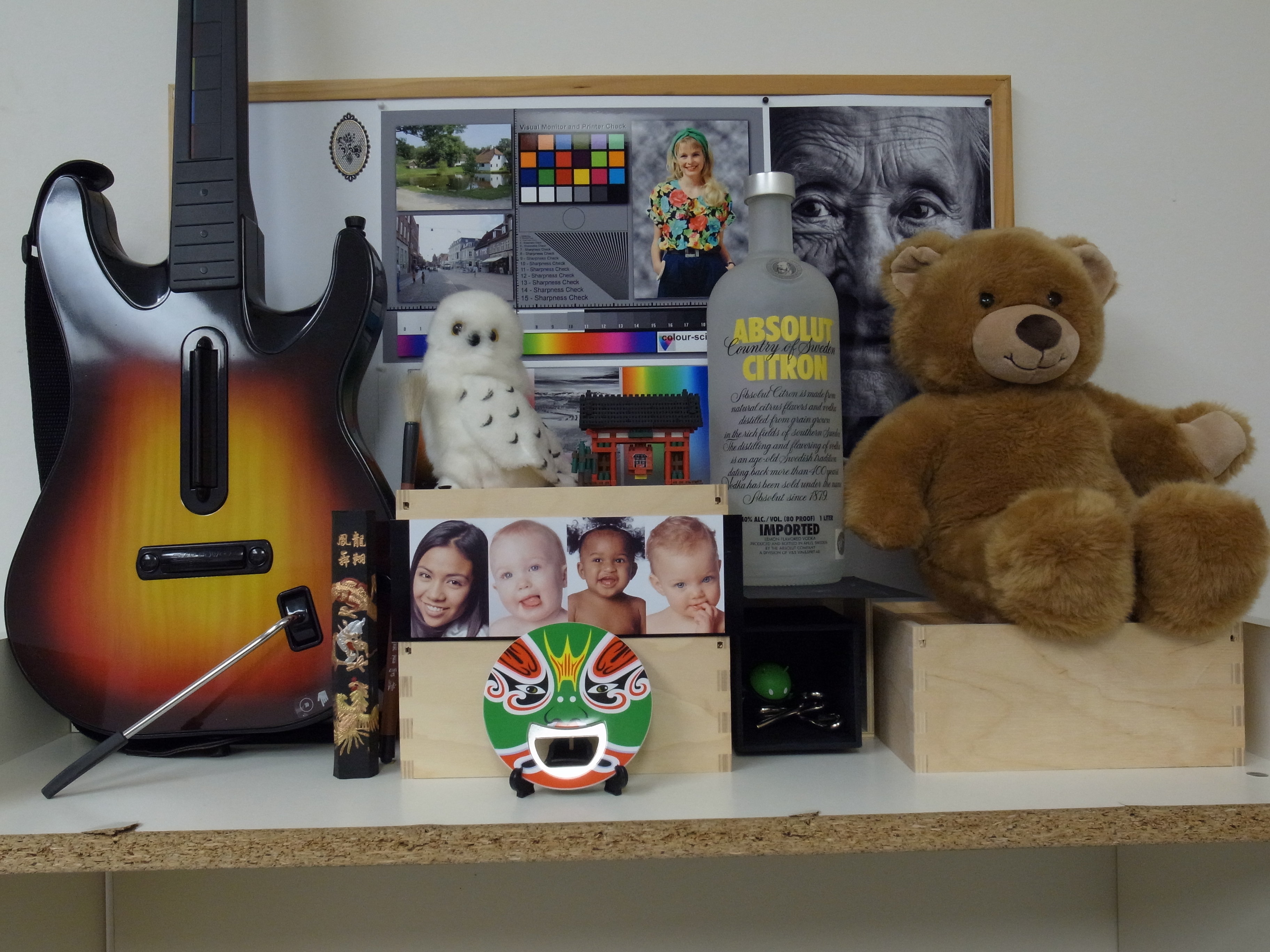
ISO400, 100% crop of our test scene

ISO800, 100% crop of our test scene

ISO1600, 100% crop of our test scene

ISO3200, 100% crop of our test scene
Sample Photographs
These are sample photographs shot with the Ricoh GR Digital IV. The photos have not been post-processed and are copyright to SPH Magazines. They are provided for your reference only and we ask that you do not reproduce them elsewhere. Click for the full-resolution images.
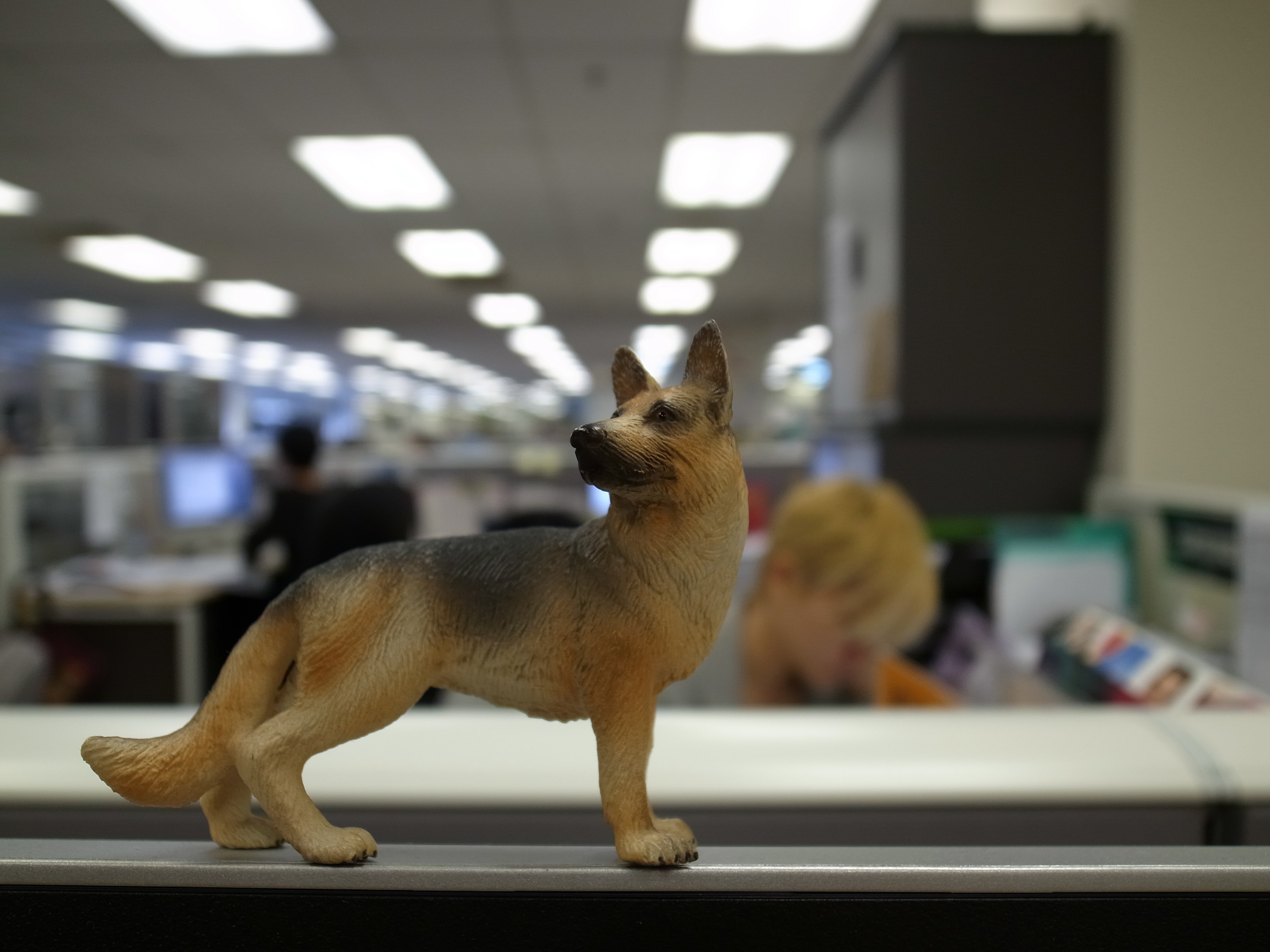
f/1.9 at 28mm (35mm equivalent), 1/42 sec, ISO80.
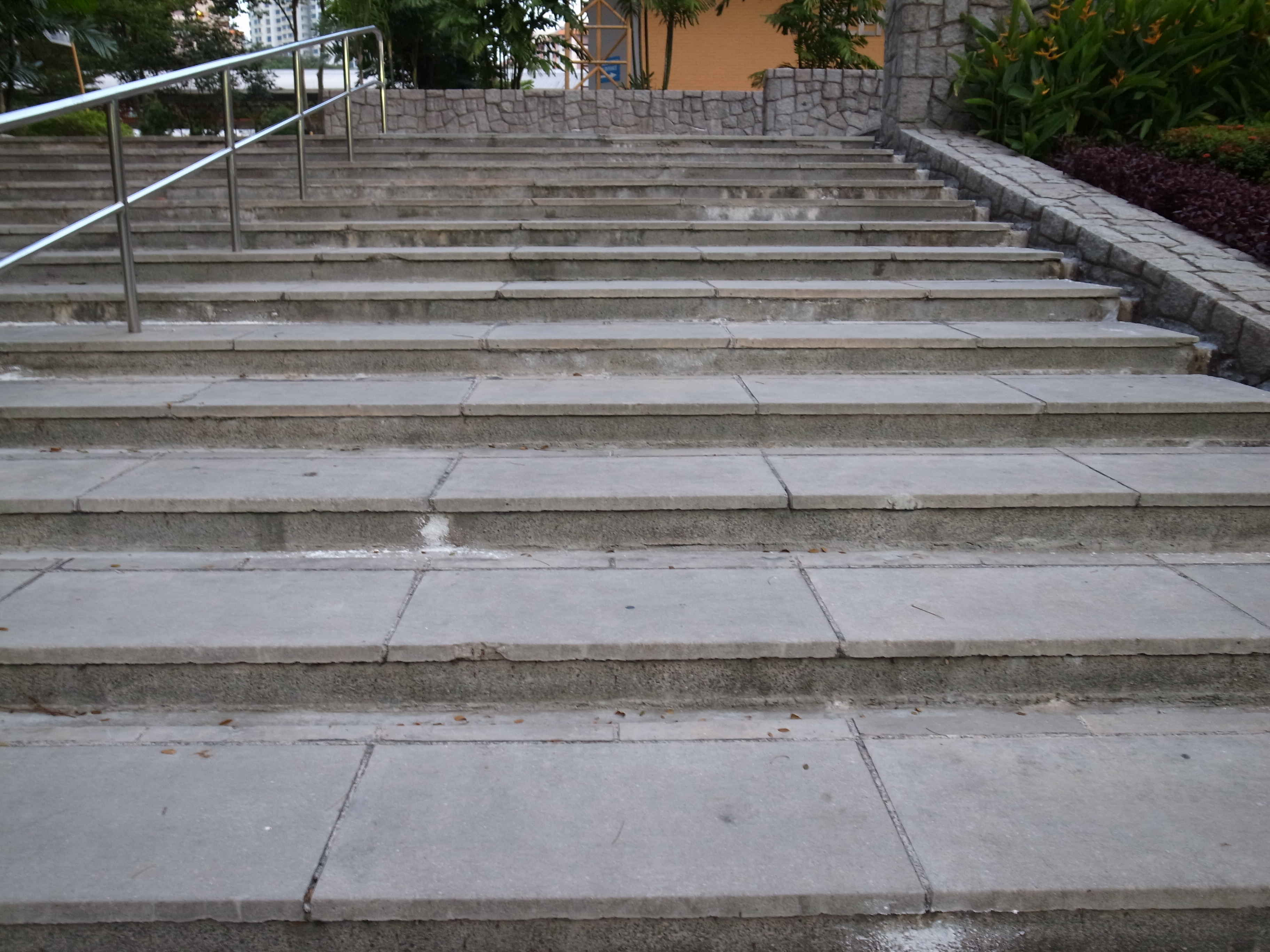
f/1.9 at 28mm (35mm equivalent), 1/15 sec, ISO154.

f/1.9 at 28mm (35mm equivalent), 1/930 sec, ISO80.
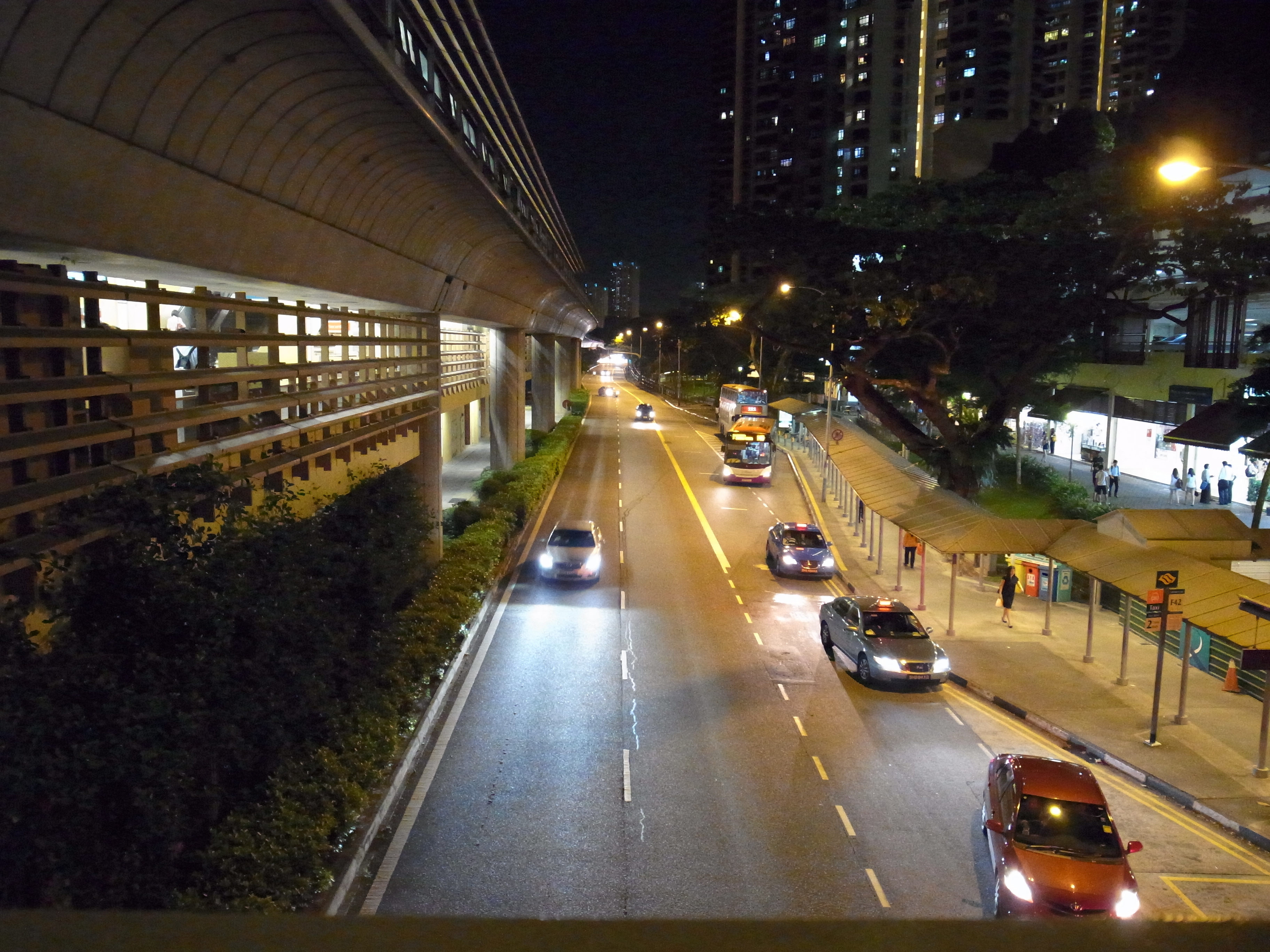
f/1.9 at 28mm (35mm equivalent), 1/30 sec, ISO1600.

f/1.9 at 28mm (35mm equivalent), 1/17 sec, ISO1600.
Conclusion
Have you ever wished you had a compact that could capture great snapshots and excel in street photography? The Digital IV provides ease of use and many customization options while still fitting into your pocket. In some ways the Digital IV can really complement a DSLR if you already own one; it's small and compact and takes great pictures. And let's not forget the fact it can shoot in RAW as well.
While in classified as a compact, we would like to think of the Digital IV as a prime lens in a compact camera body that takes pictures with great shallow depth of field due to the low F-stop. It also has a superb macro mode, which allows you to get in really close to the subject, and the autofocus system is accurate and fast, even in macro mode. Some may find the fixed focal length crippling, while others find it a good challenge to shoot at a fixed focal length all the time. It really depends on your shooting style.
At $999, the Digital IV seems to be too pricey for a compact camera, even one with such good build quality and handling. It costs as much as the Fujifilm X10, another powerful compact camera with a fast F2 lens. Unlike the GR Digital IV, the Fujifilm X10 can zoom, with a 4x optical zoom lens (28-112mm in 35mm equivalent). The Canon S100 is another fine performance compact camera which costs less, at $699, with a 5x optical zoom lens (24-120mm in 35mm equivalent).

We really liked the Digital IV, with the exception of its high price.
Our articles may contain affiliate links. If you buy through these links, we may earn a small commission.