
Shootout: The best smartphone of 2015
The high-end smartphone category is one of the most competitive consumer markets out there. It's the place where manufacturers get to showcase their latest and greatest research and development and most luxurious designs. But which is the best smartphone of 2015? Here's what we think.
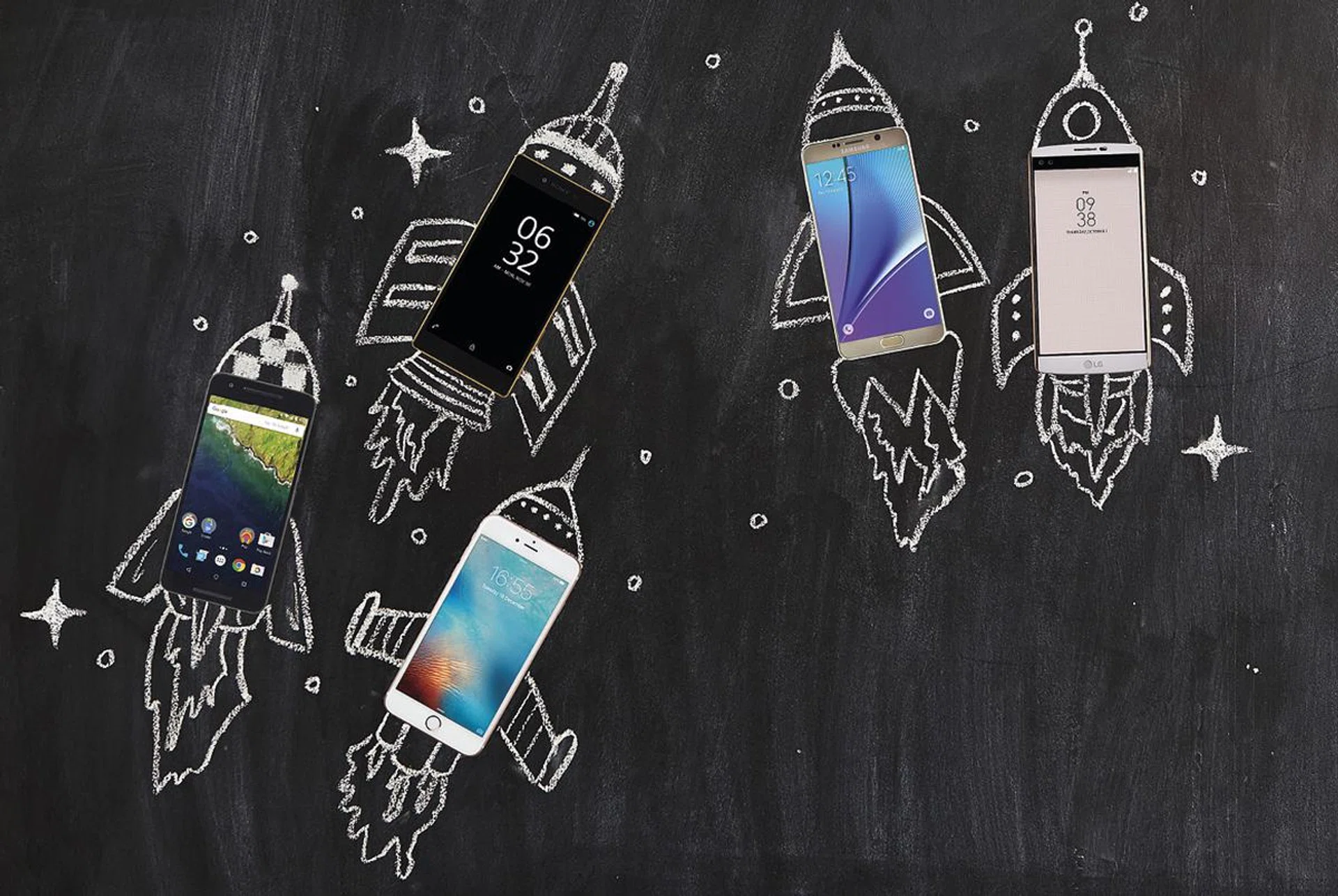
Overview
Smartphones are one of the most competitive consumer markets out there, especially at the high-end where manufacturers get to showcase their latest and greatest research and development and most luxurious designs. We’ve rounded up six of the best flagship smartphones to find out which is truly the best of the best.
Here are our competitors:
Apple iPhone 6s Plus

The iPhone 6s Plus may look identical to last year's model but once you start using it you realize just how different it is. The biggest addition is 3D Touch, Apple's game-changing technology that we expect to see many brands try to copy and reproduce on their 2016 flagship smartphones.
If you're not familiar with 3D Touch, its a technology built into the iPhone 6s and 6s Plus display that lets it register varying degrees of pressure. With 3D Touch, you can press harder than normal on a homescreen app, and a Quick Actions menu will appear with shortcuts related to that app - like taking a selfie with the camera, or calling one of your favorite contacts. When you’re actually inside an app, you can hard press on web URLs, messages, maps or images to create a ‘Peek’ window that lets you preview that content. Press harder a second time to ‘Pop’ that content open in its related app. 3D Touch is a revolutionary addition to the touchscreen interface that creates a new way to interact with your phone. It makes everything more efficient and convenient and introduces a completely new way to interact with your phone that is both intuitive and incredibly useful. It's the single biggest improvement to the touchscreen since its creation. Here are some key apps that are 3D Touch ready.
And it's not just 3D Touch either, the iPhone 6s and 6s Plus benefit greatly from upgraded cameras and processors, expanded RAM, and better battery life. All of these combine for what is easily the best iPhone ever.
HTC One M9
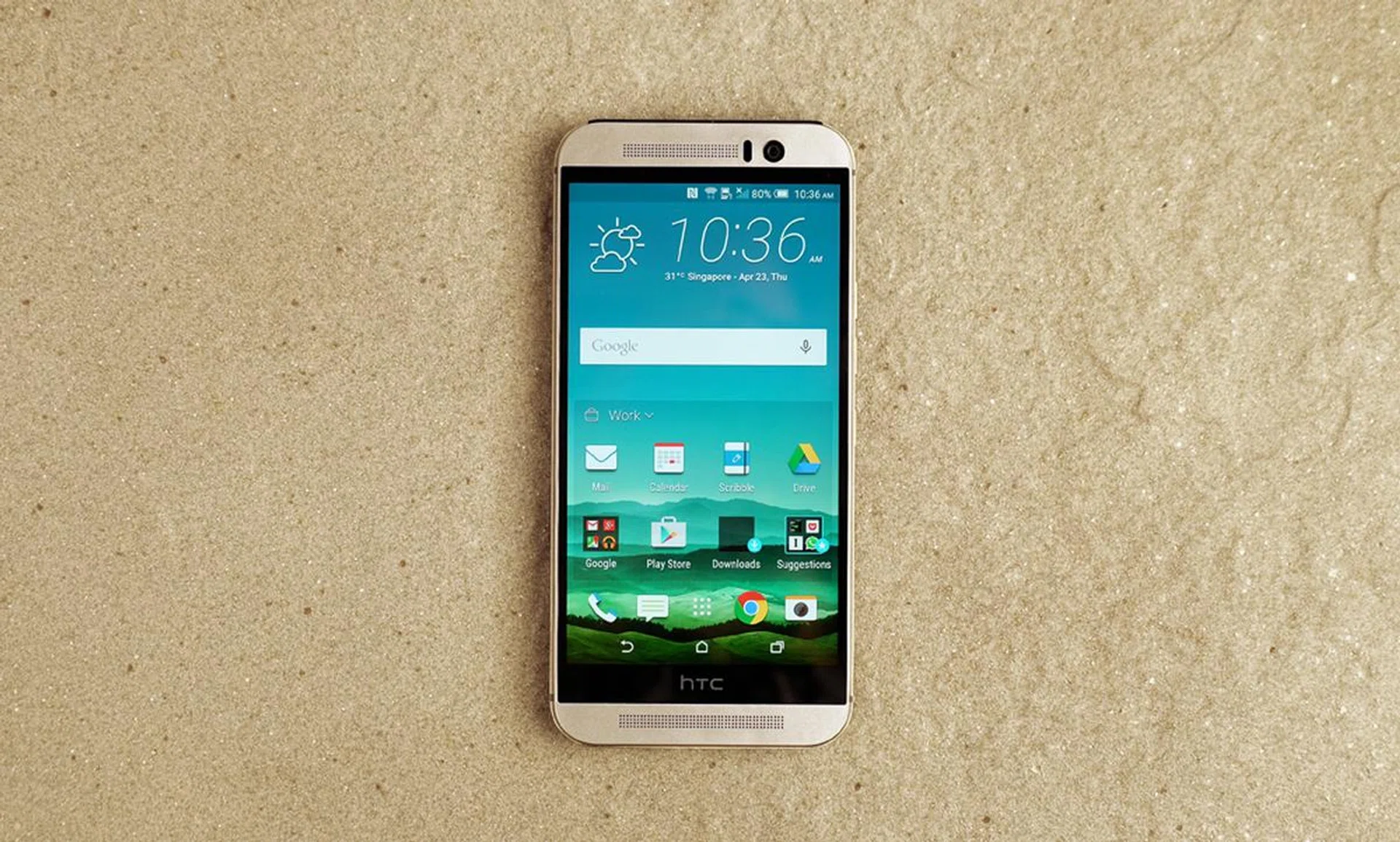
The HTC One M9 was one of the earliest flagship smartphones released in 2015 (way back in April). As expected from HTC's One line, the phone boasts a combination of luxurious looks and premium materials with a comfortable and ergonomic shape, an excellent display and some of the best stereo speakers available on a smartphone. It's also one of the few flagship smartphones left these days with expandable storage. But for all its good points, there's just nothing particularly exciting about it.
The HTC One's feature set hasn't really grown in two years, and even the Duo camera, one of last year's big features, is missing from the One M9. It's also the only smartphone in this comparison without a fingerprint scanner.
Additionally, areas which HTC have focused on, like the camera and battery life, arguably the two most important features of any smartphone, didn't really impress us, and the M9 isn't even a definite upgrade over last year's model in either of these categories.
Ultimately, despite the lack of innovation or any major upgrades, the One M9 is still a good phone, but it leaves a very big question hanging over HTC's head for 2016. Where does it go from here?
Huawei Nexus 6P
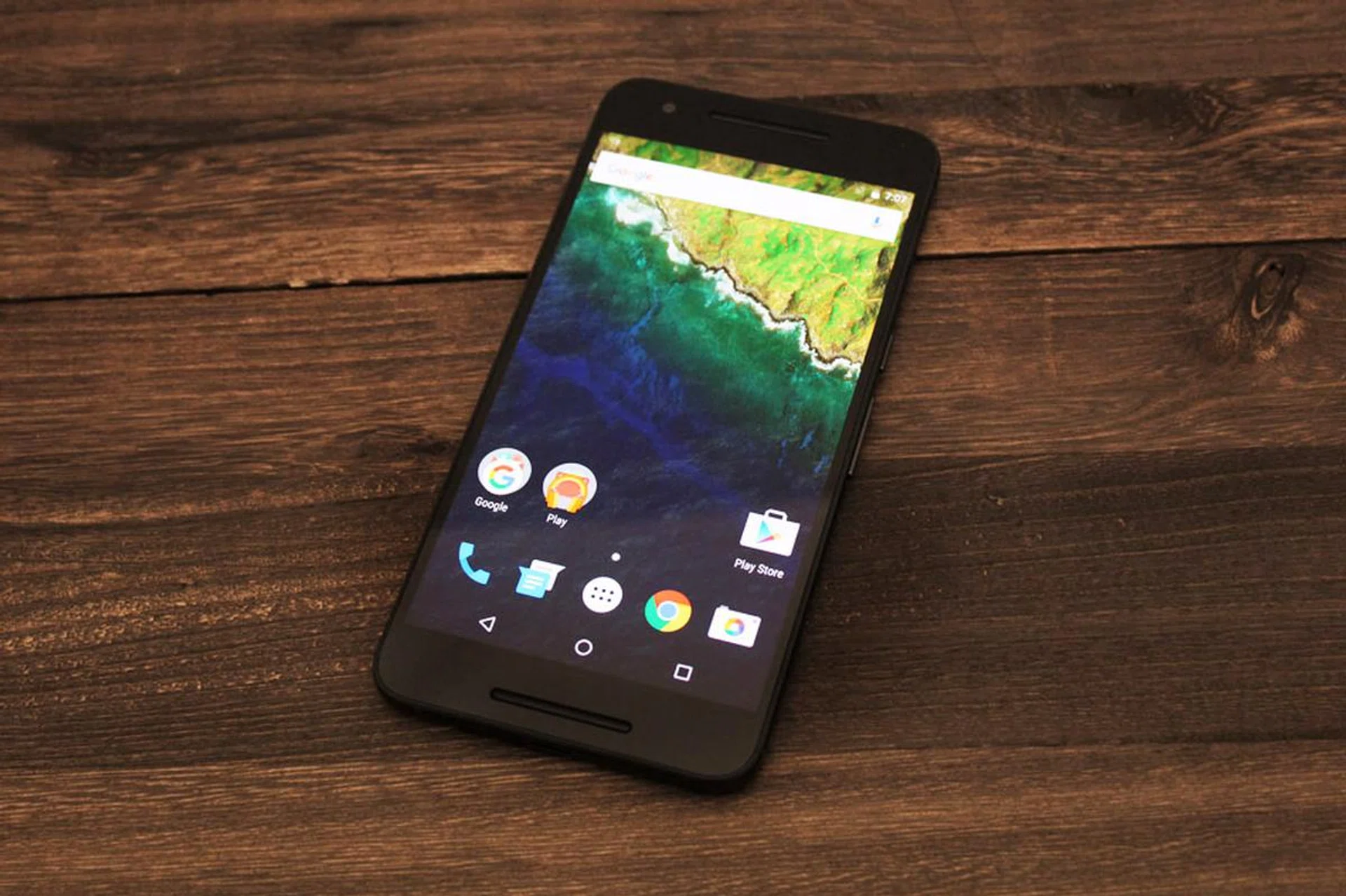
In the past, while stock Android is and has always been a great piece of software, Nexus phones have always been deeply flawed in some way, be it terrible battery life or an abysmal camera. But with the Nexus 6P, Google and Huawei have hit on a winning formula. For the first time, a Nexus phone can be appreciated as the sum of all its parts - both hardware and software.
Forget the dull, plastic Nexus phones of the past. The Huawei Nexus 6P is a serious flagship competitor with a luxurious full-metal and glass design and top-of-the-line hardware. Combine that with its great camera, buttery-smooth stock Android experience, and sub-S$1000 retail price and you have the best phone Huawei or Google has ever made. An enthusiast's dream indeed.
LG V10
No online review yet (coming up), so I'll go into more detail about the V10.
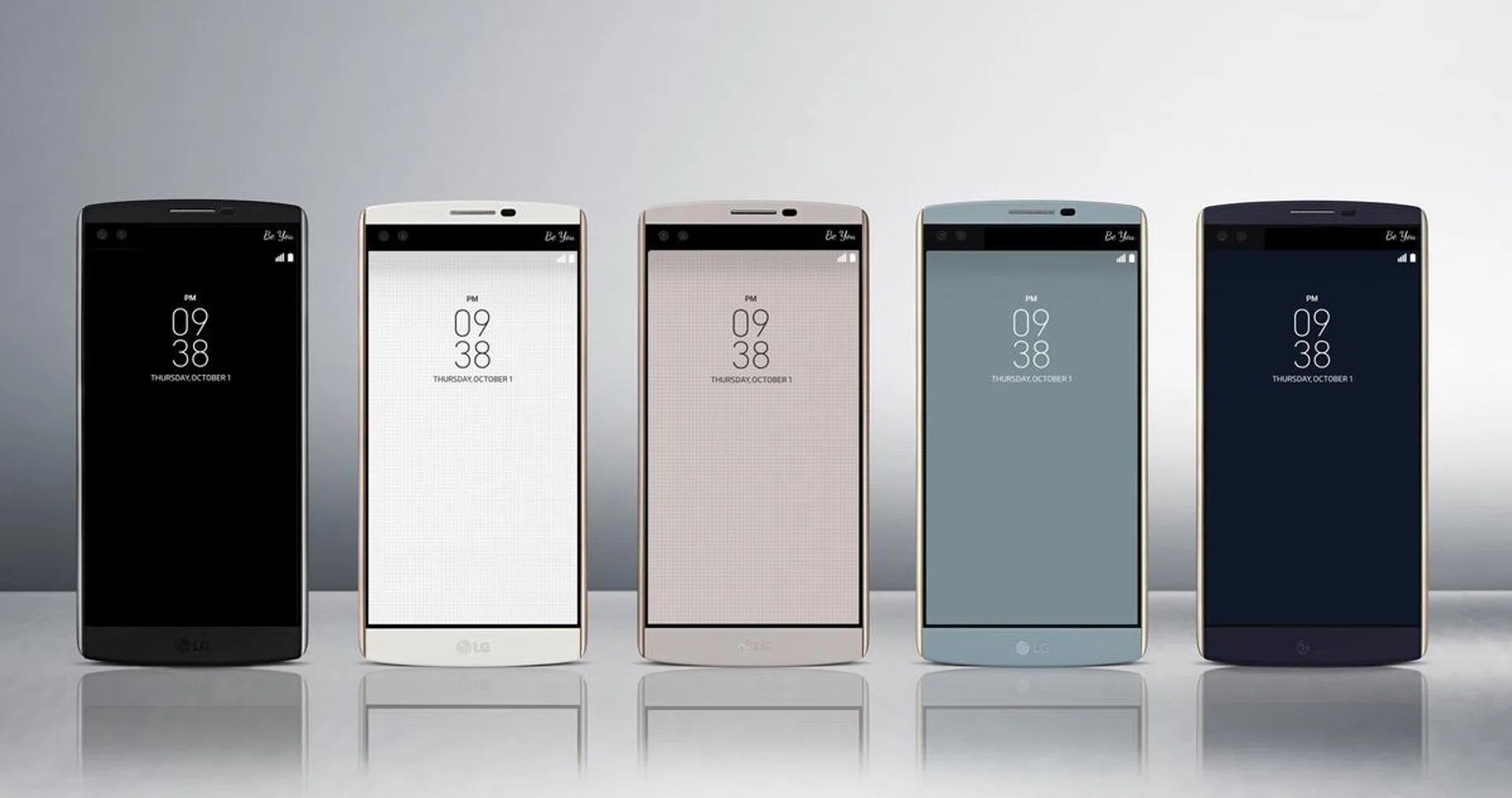
The LG V10 is a pretty big departure from LG’s previous flagship, the G4. It isn’t curved, it isn’t plastic and it doesn’t have a leather back. What it does have is two front-facing selfie cameras, a small secondary screen sitting above its main 5.7-inch display and a textured, rubberized rear cover that feels like the grip of a power tool.
Along the sides of the V10, LG has finally ditched the plastic construction and gone for a surprisingly tasteful stainless steel frame. Two colors are available locally, a dark blue with silver sides, and a beige option with gold sides. The V10 feels rugged and rigid in a way that its lighter aluminum rivals just can’t match - there’ll be no #bendgate here. Surprisingly, despite its stainless steel construction, the V10 only weighs 192g, exactly the same as the iPhone 6s Plus. As with LG’s previous couple of flagships, all of the buttons on the V10 are positioned at the rear of the phone with two volume keys framing one circular power button (that doubles up as a fingerprint scanner), all nestled centrally underneath the camera module. The rear of the phone has a rubberized finish with a heavily textured diamond pattern. It’s not as pretty as the leather on the back of the G4 but it provides a very reassuring grip, which is most welcome on a phone this size.
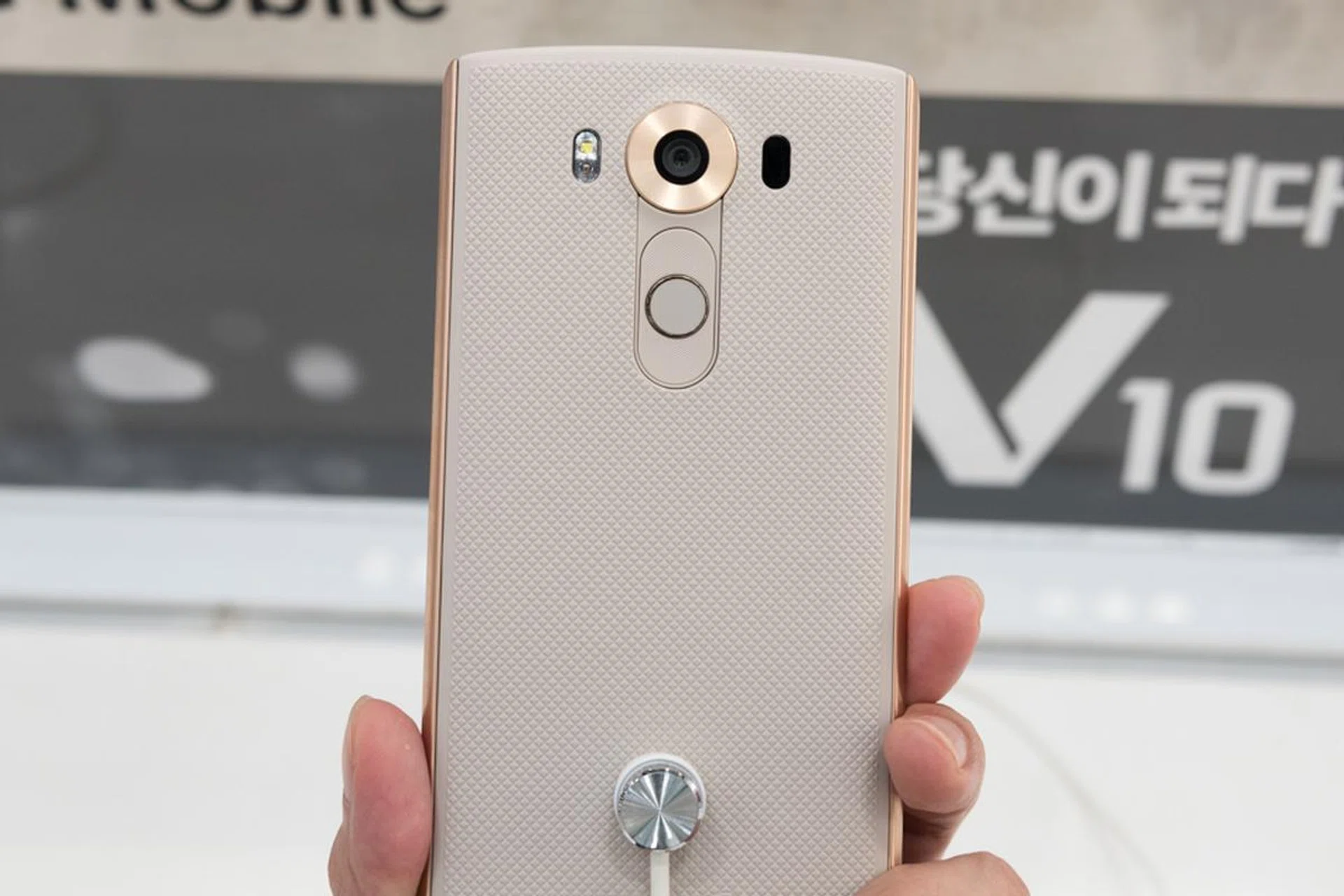
Here's the rear of the beige version of the LG V10.
The fingerprint scanner works reasonably well, but it isn’t quite as fast or accurate as the sensor on the other phones in our shootout. The V10 requires you to press down on the power button to wake it and then a second or so for the phone to unlock.
The camera module on the back of the V10 is the same 16-megapixel shooter with optical image stabilization and laser autofocus as the G4. The G4’s camera was already one of the best around, and for the V10 it’s been improved with a number of software upgrades. Automatic mode has been finely tuned to nail the correct focus, exposure, ISO and shutter speed each time, while the improved manual mode gives expert photographers even more granular control over all aspects of the photo.
Those manual controls are also available when you’re shooting video now, and you can also set your frame rate along with resolution, right from the app. There’s also new video stabilization software, which works in tandem with the phone’s optical image stabilization, resulting in some very clean hand-held video.
On the front of the phone, you get two selfie cameras: one with an 80-degree field of view, and one designed for group selfies (wefies?) with a wider 120-degree field of view. Both cameras are 5-megapixel.
The main display on the V10 is a 5.7-inch IPS LCD with a QHD 2,560 x 1,440 (515ppi) pixels resolution. The display is ultra sharp with good brightness, but colors look a bit muted and blacks, while deep, are naturally not as good as the AMOLED displays in our shootout. Above the main display there’s an always-on 2.1-inch secondary display. This little window displays notifications and other system status messages. It’s not incredibly useful, but it does show the time when the main display is off, which is quite nice. There’s even an option to display your signature here, although we’re not sure why you would want to.
The V10 is powered by a Qualcomm Snapdragon 808 hexa-core processor with 4GB RAM. It’s also one of the last flagship smartphones available with both a microSD card and a removable battery. The microSD card is particularly noteworthy as it supports cards up to a massive 2TB. Internally, you get 64GB storage.
The V10 is very different from LG's G4 and we hope its the direction the company continues in for 2016. We loved the robust stainless steel frame and the return to a more standard straight form-factor. The always-on secondary display was also quite convenient and our initial tests with the V10's camera are quite promising (look out for our in-depth smartphone camera shootout coming soon!). Our only complaint is that the V10's 808 hexa-core processor isn't as powerful as the other processors in our shootout.
For more photos and a close-up of the LG V10, check here.
Samsung Galaxy Note 5
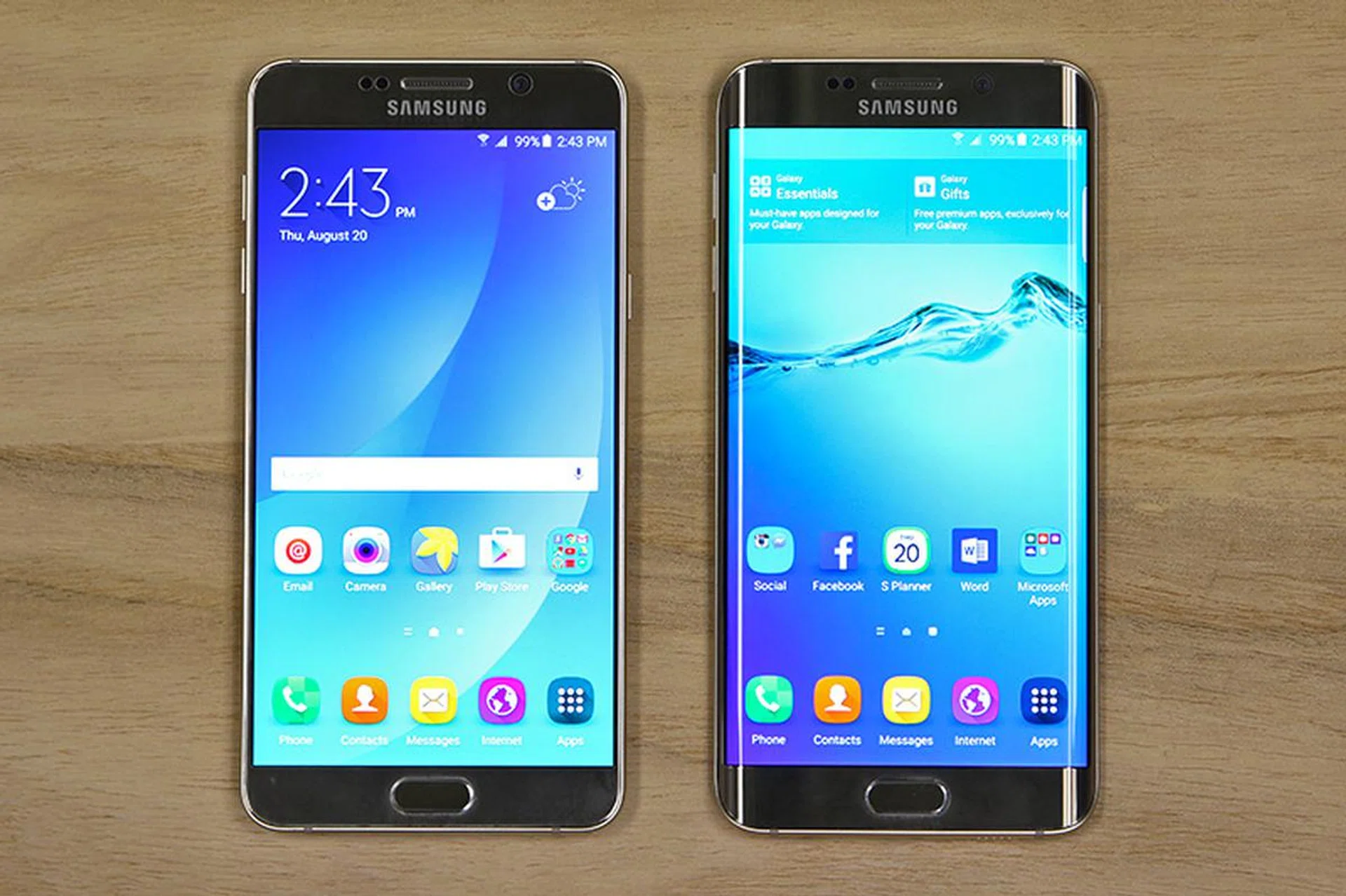
2015 was the start of a new era for Samsung, one that marked a new attention to aesthetics and build quality that is second to none. Starting with the Galaxy S6 back in April, Samsung followed up with the Note 5 and S6 Edge+ in August, and then the very well designed Gear S2 smartwatch in September.
Samsung also broke up with Qualcomm and proved that it can build better processors on its own with its Exynos 7420 easily matching or exceed the Snapdragon 810 in most benchmarks. For the record, throughout all of our testing with Samsung's Exynos 7420 devices, none of them ever felt warm, something we can't say for the Snapdragon 810-equipped devices. And Samsung has finally gotten its software right too, stripping out bloatware and fixing problems that have plagued Samsung phones for years. Yes, Samsung also got rid of the SD card slot and removable battery, and admittedly, that's a real shame, but it would be a mistake to dismiss these phones based solely on these missing factors. Easy alternatives are available to address them such as carrying around a powerbank and maybe investing in some good Cloud storage.
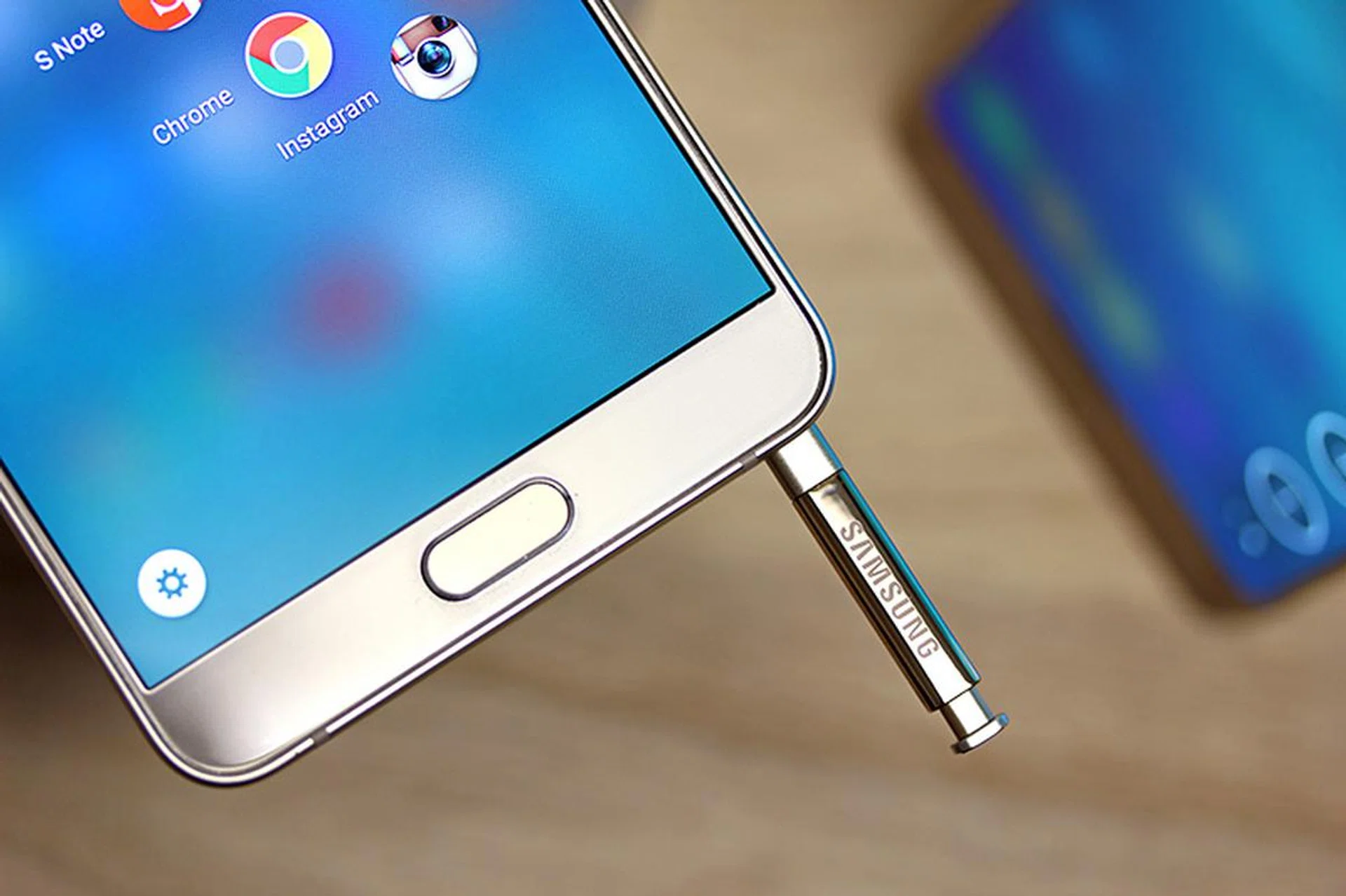
We chose the Note 5 for this shootout because, while it may not have the flashy curved design of the S6 Edge and Edge+, it is probably Samsung's most useful device. The large 5.7-inch Super AMOLED display is one of Samsung's best ever and it's a productivity beast thanks to its unique S Pen stylus, which has been improved with thoughtful new features like Screen Off Memo and Scroll Capture. It’s also S$100 cheaper than the S-Pen-less S6 Edge+.
Sony Xperia Z5 Premium
Like the LG V10, our full review for the Z5 Premium isn't online yet (though we've a hands-on article), so I'll go into more detail.
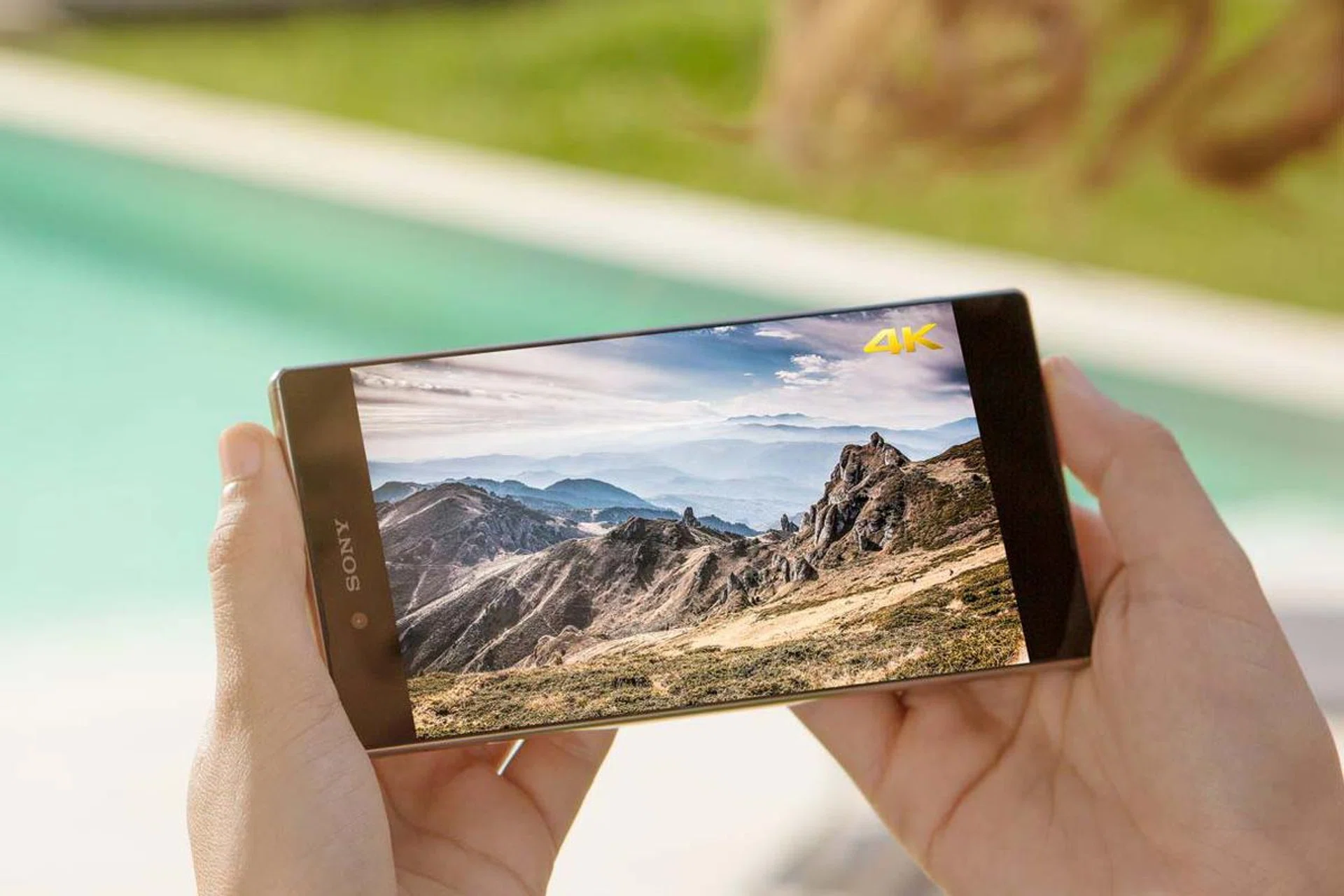
Sony’s Xperia Z5 range consists of three models: the Z5 Compact (4.6-inch), the Z5 (5.2-inch) and the Z5 Premium (5.5-inch). But an extra 0.3-inches isn’t all that sets the Z5 Premium apart from its siblings. It also has a shinier finish and amazingly, a UHD (4K) resolution display.
Design-wise, the Z series has had only marginal changes over the years, and that remains true with the Z5 Premium. The minimalist, boxy design is back with front and rear panels made of Gorilla Glass 4 and a metal frame with plastic corners. Why the plastic? Well if you accidentally drop the phone, the corners will absorb the impact rather than directing the pressure inwards (like metal), which would shatter the screen or rear glass.
Like all previous Z series smartphones, the Z5 boasts a waterproof design, which is now rated IP68 – the highest rating a device can get. That means it’s completely impervious to both dust and water, even when continuously submerged. In recent months Sony has gone from saying you can dunk its Xperia phones as much as you like to recommending you don’t submerge them in water, but based on its IP rating, it shouldn’t be a problem. Another nice upgrade is that there’s no more fiddly flaps on the Z5 Premium. Even the exposed micro-USB port is internally water sealed.
A new addition on the Z5 Premium is a fingerprint scanner. Gone is Sony’s signature round power button, and in its place is an oblong power button that doesn’t look as stylish, but does double up as an extremely fast and accurate fingerprint scanner. Its position on the side of the phone lets you grab it out of your pocket and already have it unlocked by the time you’re looking at the display.
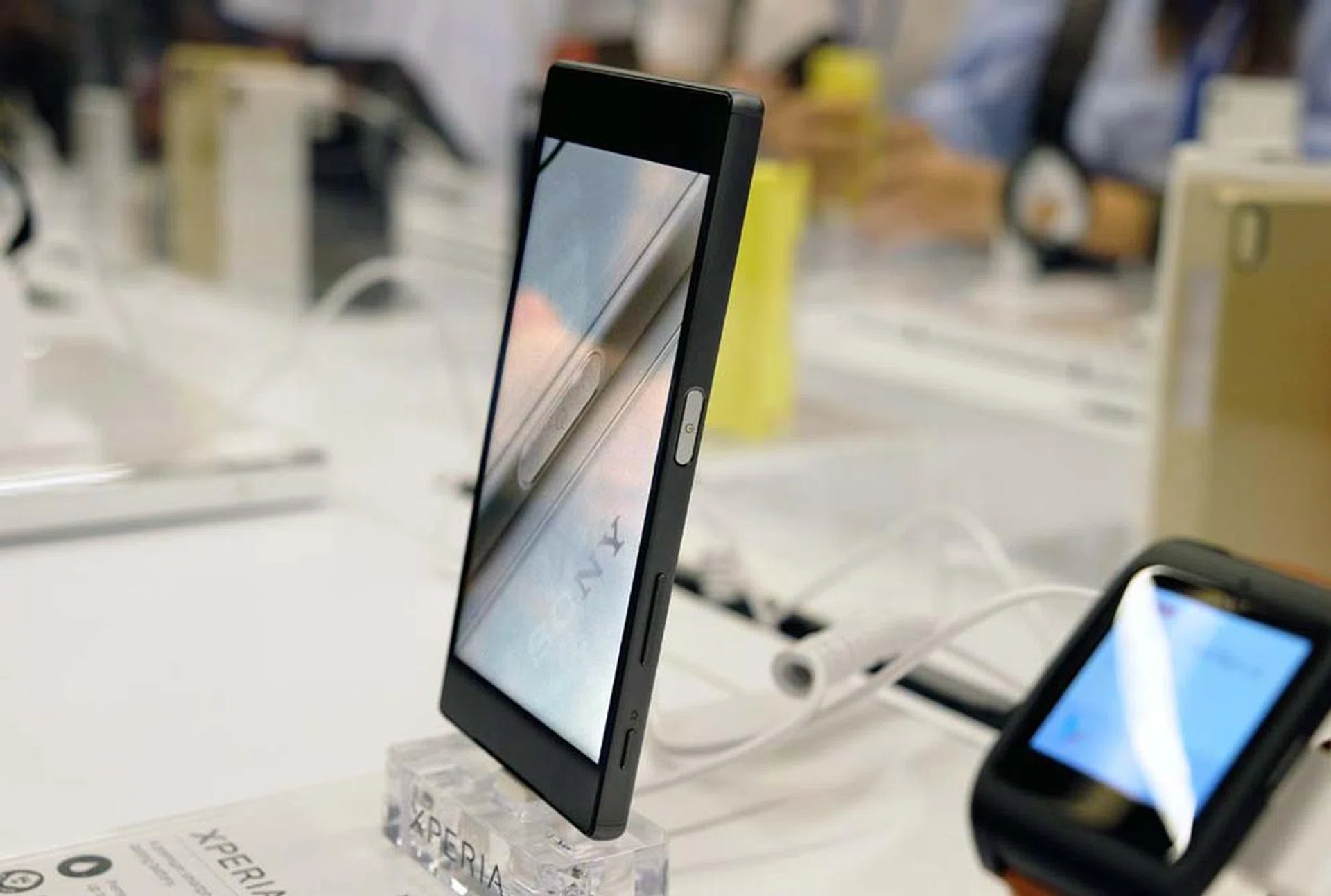
Sony's signature round power button is gone, but we think the new button's built-in fingerprint scanner is a worthwhile tradeoff.
The Z5 Premium’s standout feature is its 3,840 x 2,160 pixels display. That’s over eight million pixels in total, and 806 pixels per inch, which, for a 5.5-inch phone is quite honestly ridiculous. Sony has been billing the Z5 Premium as the first phone with a 4K display, but technically speaking, it’s actually UHD, as it has a slightly lower resolution than what's officially deemed to be 4K. Close enough though.
Of course, at this size, it’s completely impossible to tell the difference between a QHD (or even Full HD) display and the Z5 Premium’s UHD display. On top of which, most of your video content is likely to be Full HD resolution at best anyway. While there’s loads of 4K content on YouTube, the YouTube app itself only lets you select up to 1080p because the app itself is only running at 1080p. Obviously you can load your own 4K content onto the phone, but the file sizes are ridiculous – a one and a half hour movie is around 100GB. In fact, even Sony’s own video store only lets you buy 1080p HD movies on the Sony Xperia Z5 Premium. So what this means is you’re only really going to get native resolution content on the display when you’re looking at still images – and even then, they’re going to look identical to Full HD displays anyway.
Ridiculous resolution aside, the Z5 Premium’s display is still pretty great. For an LCD display, the blacks are deep and the colors are vivid and bright, although they’re nowhere near as good as the Note 5 or Nexus 6P’s AMOLED panels. As with other Xperia phones, the white balance is a bit on the cool side by default, but you can tweak this with the RGB sliders in the Settings menu. Viewing angles are quite decent too.
The Z5 Premium is powered by a Qualcomm Snapdragon 810 octa-core processor with 3GB RAM. It has 32GB internal storage and a microSD slot that supports cards up to 200GB in capacity.
Sony's Z line of smartphones has gone through three updates (Z3, Z3+ and now Z5) in the past year alone so we can understand when consumers say they are wary of buying a new Sony smartphone ("is it going to be obsolete in a few months?"). Having said that, the Z5 Premium is probably about as good as the range is going to get thanks to its flapless IP68 design, stereo speakers, 23-megapixel camera and ridiculous 4K display. There's pretty much nothing Sony can do to improve on it, and we expect that 2016 will be the start of a completely re-designed flagship range from Sony.
Benchmark Performance
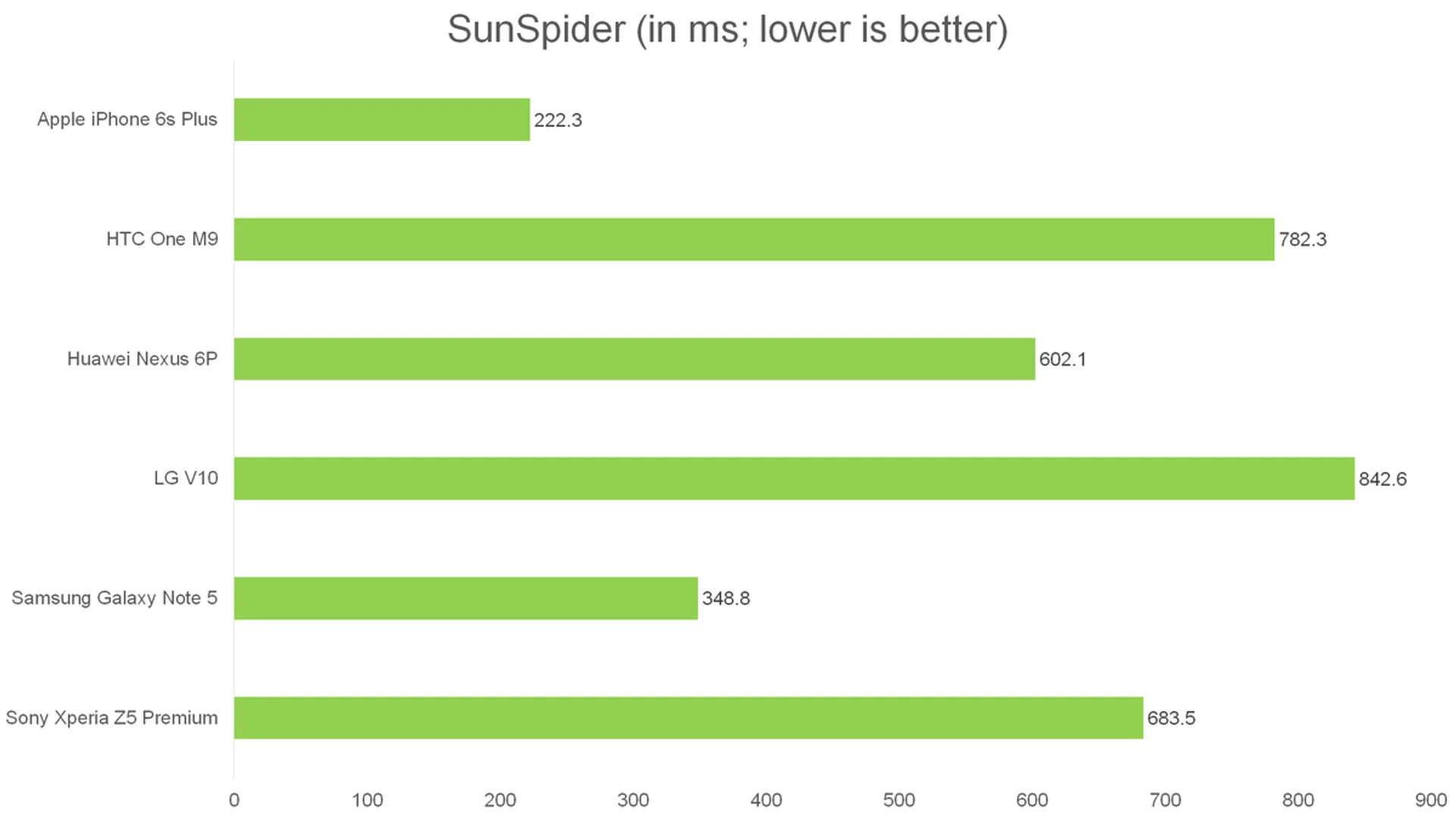
Sunspider Javascript
SunSpider JavaScript measures the browsing performance of a device when processing JavaScript. It not only takes into consideration the underlying hardware performance, but also assesses how optimized a particular platform is at delivering a high-speed web browsing experience. Two phones did particularly well here, the Galaxy Note 5 and the Apple iPhone 6s Plus. The iPhone was the overall winner on this benchmark thanks to Apple’s great optimization between its hardware and software.
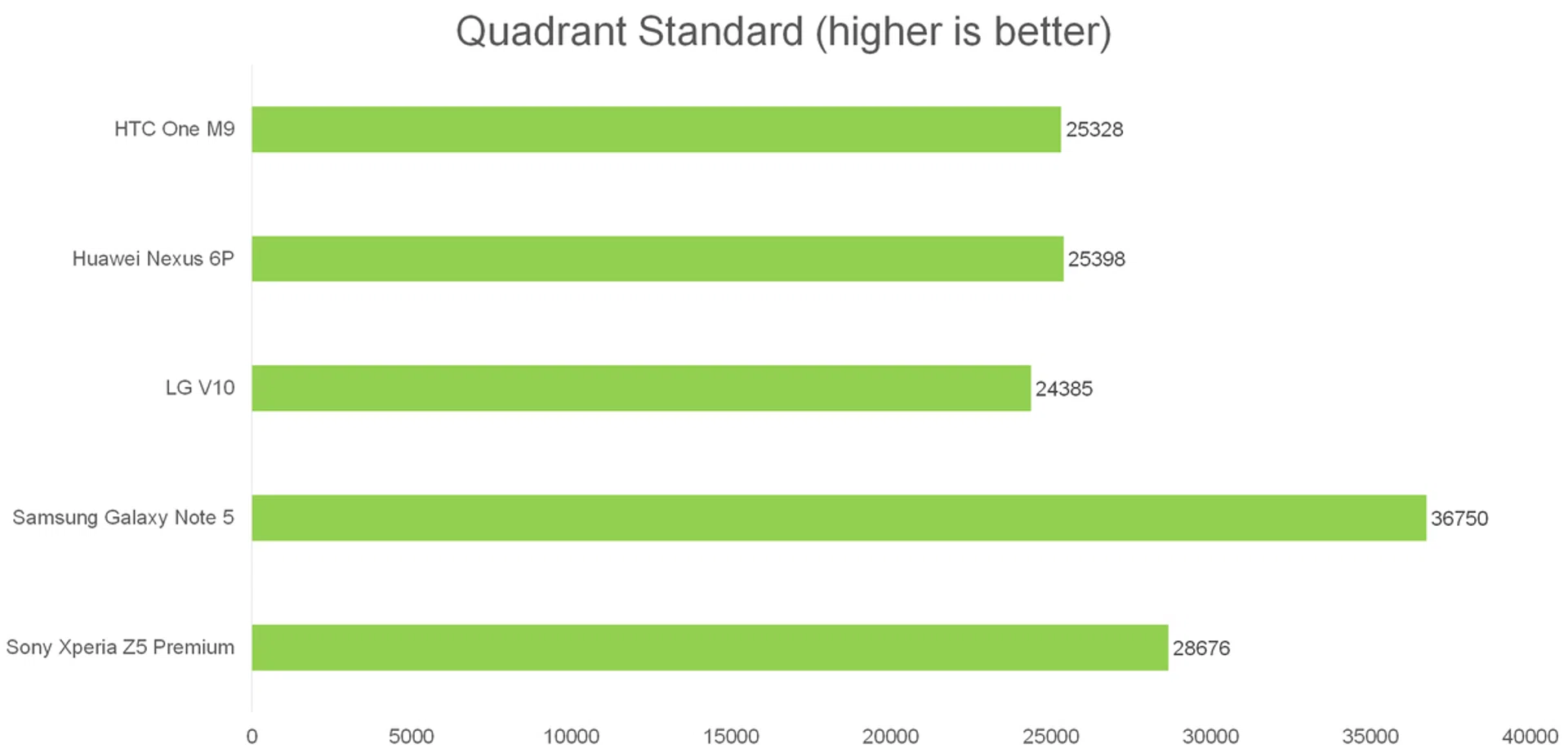
Quadrant
Quadrant is an Android benchmark that evaluates a device's CPU, memory, I/O and 3D graphics performances. As this is an Android benchmark, the Apple iPhone 6s Plus is not included. Samsung’s in-house Exynos 7420 is the only non-Qualcomm processor in this benchmark, but still ran circles around the competition, with the Note 5 massively outscoring all of its Qualcomm-equipped rivals. The 808-equipped V10 lagged behind everyone else.
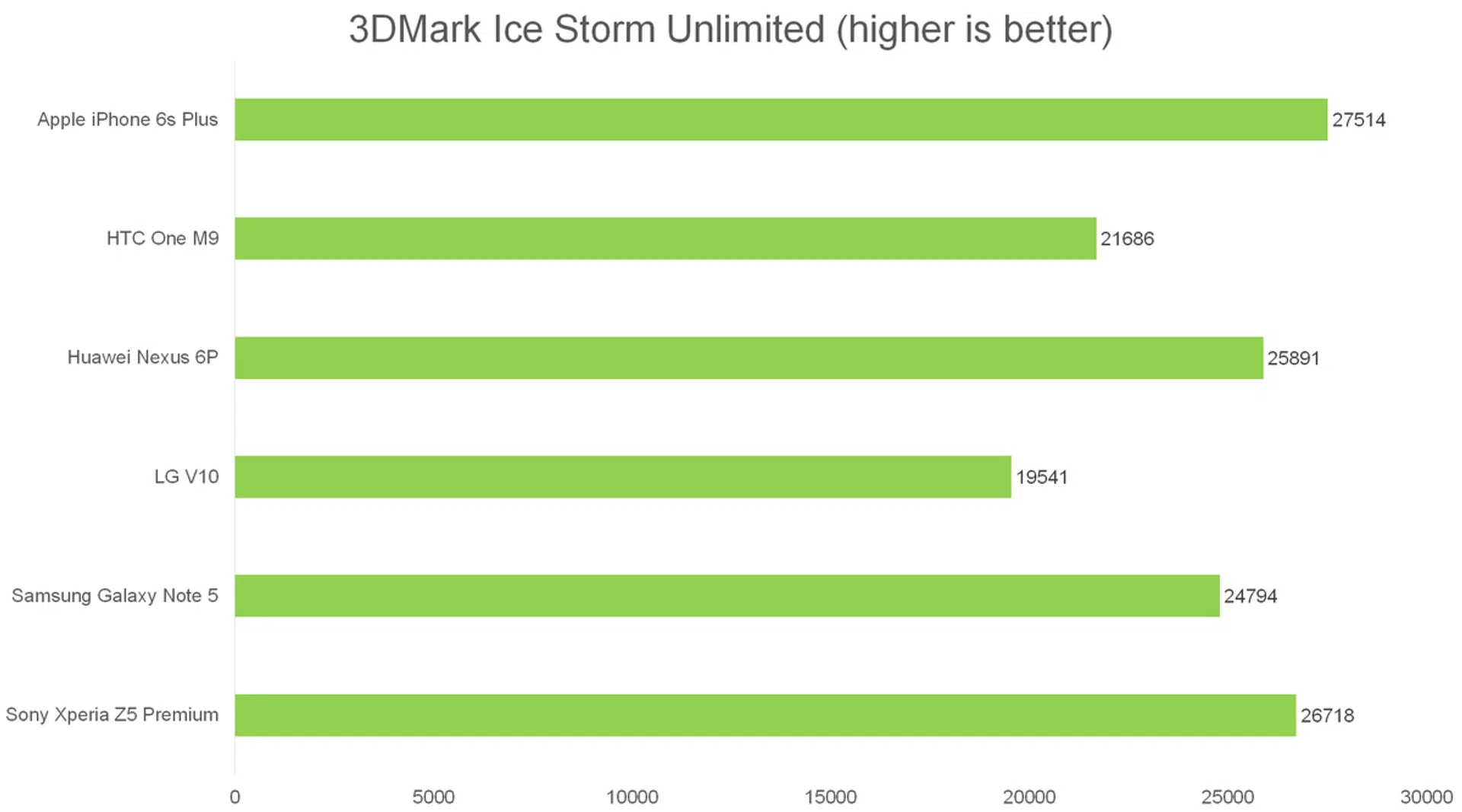
3D Mark 2013
3DMark 2013 - Ice Storm is designed to test the gaming capabilities of a device, putting its GPU through a rigorous OpenGL ES 2.0 benchmark test that uses fixed off-screen rendering with high quality textures and post-processing effects. The Unlimited version of the benchmark disables v-sync, display scaling and other OS factors, making it ideal for chipset comparison.
This gaming benchmark was quite closely contested with the Apple A9, Exynos 7420 and Snapdragon 810 all performing well, with Apple’s A9 leading the pack. Once again, the V10’s Snapdragon 808 was a fair bit behind the leaders.
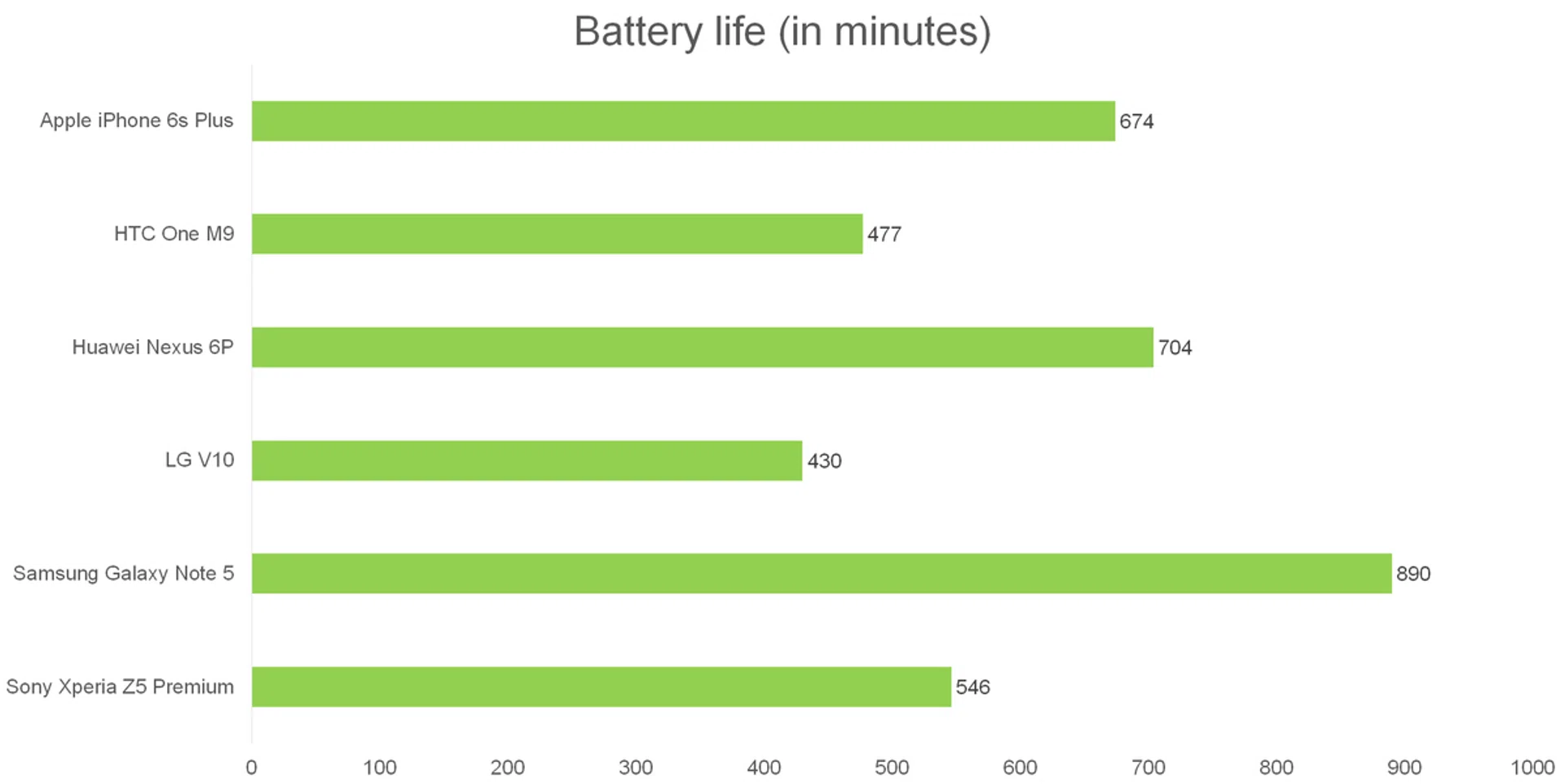
Battery Life
Our standard battery test for mobile phones involves:
- Looping a 800 x 480-pixel video with screen brightness and volume at 100%
- Wi-Fi and Bluetooth connectivity turned on, and constant data streaming through email and Twitter
Both AMOLED-equipped smartphones (the Note 5 and Nexus 6P) were able to outlast the competition here, with the Nexus 6P running for 11 and a half hours and the Note 5 lasting just under 15 hours. By comparison, the phones with LCD displays didn’t fare as well, and the Z5 Premium in particular suffered due to its ultra high resolution UHD display, lasting just nine hours.
So what's the best smartphone of 2015?
As I said at the start of this shootout, this category is extremely competitive. We can confidently recommend all of the phones tested and each one has its merits.
- If you’re at the pool or beach a lot, or if you really like the idea of a UHD display, the Sony Xperia Z5 Premium with its IP68 build is going to be the one for you.
- For photographers and especially videographers, the LG V10’s camera and software is one of the best combinations out there and the amount of manual control available will be very welcomed (look out for our comprehensive smartphone camera shootout coming soon).
- Don’t want to spend over 1K and you prefer a bloat-free pure Android experience? The Huawei Nexus 6P is the best Nexus phone ever.
- And if you want a revolutionary feature in your next smartphone, Apple’s 3D Touch display is easily the single best improvement to the touchscreen since it was invented.
Honestly, you can’t go wrong with any of them.
But there must be a winner, and the phone that stood out above the rest was the Samsung Galaxy Note 5. While each of the other phones has some area where it’s not that great (price, performance, battery life etc.), the Note 5 is practically flawless, performing well in each category. It boasts a gorgeous metal and glass build, it has a powerful and more importantly power efficient processor, it (along with the Nexus 6P) has the best display out of all of our compared smartphones, with deep blacks and gorgeous colors, and its S-pen stylus is actually practical and functional. Unless you have specific usage needs, the Galaxy Note 5 is the best smartphone you can buy right now.
Looking for the best smartphone of 2015? Look no further.
Model | Design | Features | User-Friendliness | Performance | Value | Overall |
8.5 | 9.0 | 9.0 | 9.0 | 8.0 | 9.0 | |
8.5 | 8.0 | 8.5 | 8.0 | 7.5 | 8.0 | |
8.5 | 8.0 | 8.5 | 8.5 | 8.5 | 8.5 | |
LG V10 | 8.5 | 8.5 | 8.5 | 7.5 | 8.0 | 8.0 |
8.5
(adjusted down from 9.0 in original review) | 9.5 | 9.0 | 9.0 | 8.5 | 9.0 | |
Sony Xperia Z5 Premium | 8.0 | 8.5 | 8.5 | 8.0 | 8.0 | 8.0 |
Our articles may contain affiliate links. If you buy through these links, we may earn a small commission.