
Lenovo’s Legion Go 2 handheld comes with expected improvements but also a steep price bump
The gaming handheld was announced at IFA 2025 alongside the Legion Pro 7 gaming laptop.

Lenovo’s theme for its IFA 2025 showcase was mostly AI-centred and focused mostly on ThinkPads, but it also took the chance to announce a few launches in its Legion gaming sub-brand. The announcements spanned the usual product category of laptops and monitors, but a notable launch was that of its Windows 11-based second generation Legion Go.
Lenovo has already expanded its handheld gaming PC lineup with the Legion Go S earlier this year. But while that handheld was positioned as a budget-friendlier option, it ended up falling short thanks to the compromises it made in performance (read our review for more on that). This second generation Legion Go comes as a direct follow-up to the original, and while we first got wind that such a device was in development back in CES, it’s only now that it has materialised.
Legion Go Gen 2
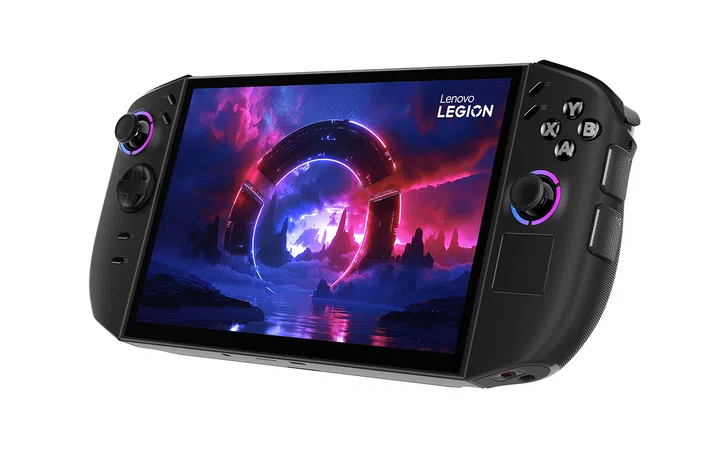
The handheld weighs slightly heavier than the original Legion Go at 920g.
A highlight of the new Legion Go is the new 8.8-inch OLED display on the front of the handheld. This is an upgrade from the similarly sized LCD of the original Legion Go, though admittedly it’s also a downgrade from the 2560x1600 resolution, with the new Legion Go’s display coming in 1920x1200.
It’s not purely an OLED-and-resolution tradeoff, though. Unlike the original Legion Go, which had static 144Hz and 60Hz refresh rate options, the second-gen Legion Go has variable refresh rate capped at 144Hz and going as low as 30Hz.
The lower resolution, OLED display and variable refresh rate should hopefully point to the new Legion Go having a longer battery life than its predecessor (which, from our review, averaged just under two hours). To make sure of that, the new Legion Go has a 4-cell 74WHr battery, larger than the original’s 49.2WHr size.
The Legion Go Gen 2 is powered by AMD’s latest handheld PC processors, including the Ryzen Z2 and Z2 Extreme. The latter has an integrated 4nm Radeon 890M GPU, which has 16 compute units and is built on RDNA 3.5 architecture. Lenovo says that memory options go up to 32GB of 8000MHz RAM, while storage tops out at 2TB PCIe Gen4, with a microSD card slot that supports an additional 2TB.
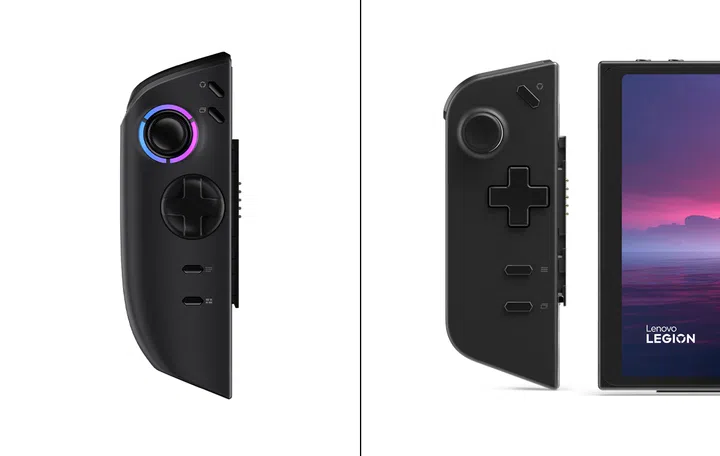
The Legion Go Gen 2 controller (right) is slimmer and less angular than the original Legion Go’s controller (left).
The new Legion Go also features re-designed detachable TrueStrike controllers, which are meant to give a smoother feel in the hand (indeed, it does look a bit less angular than the controllers on the original Legion Go). The hall-effect joysticks and programmable buttons on the back are retained, as is FPS mode, which turns the right controller into a vertical mouse.
The new TrueStrike controllers are also backwards compatible with the original Legion Go, though it’s unknown if Lenovo plans to sell separately. On the main console itself, there’s also a new fingerprint sensor on the top.
Other Legion products at IFA 2025
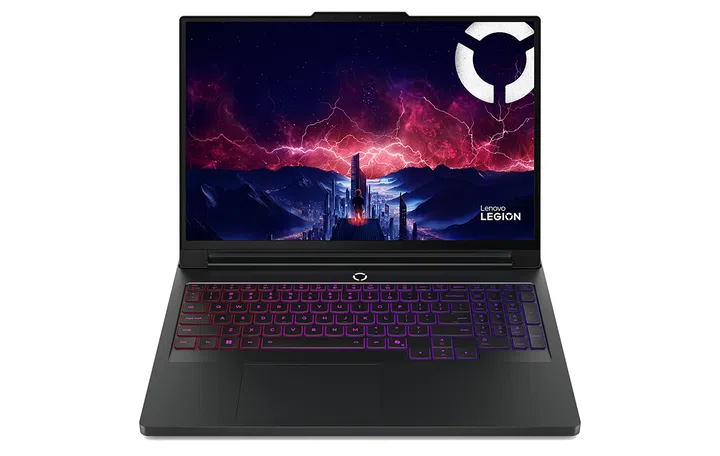
The Legion Pro 7 gets a long-overdue update, and offers up to an AMD Ryzen 9 995HX3D and an NVIDIA GeForce RTX 5080.
Though the new Legion Go may be one of the highlights to come out of Lenovo’s IFA 2025 Legion lineup, it’s not the only one. Other launches include three new Legion Pro monitors, the 32UD-10, 27UD-10 and 27Q-10, all of which are OLED displays with a 240Hz refresh rate (280Hz for the 27Q-10), and an updated Legion Pro 7 with that features a Ryzen 9 9955HX and NVIDIA GeForce RTX 5080, bringing it up to part with the current generation of components.
Pricing and Availability
Local availability isn’t out yet, though we do know when they’ll generally start to hit the market, as well as what their European starting prices are going to be. The second-gen Legion Go is set to be available starting this month, and will start at €999.
This is quite the jump from the €749 of the original Legion Go, and that ended up costing over S$1,000 when it came to Singapore. If the first generation’s price tag was high enough that Lenovo felt the need to offer a more palatable alternative in Legion Go S, we can only imagine what decisions had to be made for the company to land at this new price point. It’ll have to go against steep competition, too, with a Steam Deck OLED currently sitting around S$900 for 512GB (at least on iShopChangi).
As for the other launches, the three new monitors will be available from October to November of this year, with these being the prices: €599 (27Q-10), €859 (27UD-10), €899 (32UD-10). The Legion Pro 7 Gen 10 is set to be available starting October, and will start at €2,899.