
Lenovo Legion makes a CES 2025 appearance with the SteamOS-powered Legion Go S
The first third-party device running SteamOS, licensed by Valve themselves.
#lenovo #legion #ces2025

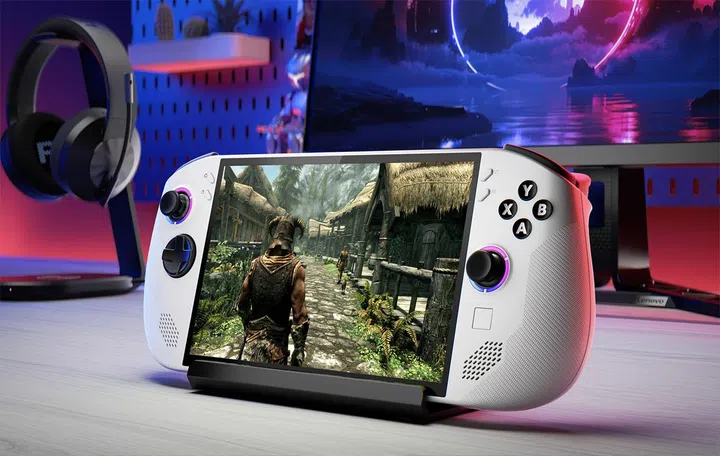
The new Legion Go S gaming handheld in Glacier White. (Image source: Lenovo)
At CES 2025, Lenovo announced a few new Legion gaming devices, including new Legion laptops and a 2nd-gen Legion Glasses. But headlining the announcement was the unveiling of the SteamOS-powered Legion Go S portable gaming handheld.
New Legion Go handhelds

A look at the front of the Legion Go S, of which the SteamOS variant is the first third-party device to run the operating system. (Image source: Lenovo)
The Legion Go S is part of Lenovo's line of Legion Go portable gaming systems, and while the Go series is typically powered by Windows, the SteamOS variant of the Legion Go S is the first third-party device running this incarnation of SteamOS. Although SteamOS, according to Valve, is set to be released to other gaming handhelds, it's not clear when that will take place; this currently makes the SteamOS-powered Legion Go S the most accessible alternative to a Steam Deck once it goes on sale.
It should be noted that this variant of the Legion Go S has been prefixed with 'SteamOS-powered', as there are two versions of the Legion Go S, one running Windows 11 and another running SteamOS.
Aside from differences in software, however, the two Legion Go S devices have the same hardware internals, being run by either an AMD Ryzen Z1 Extreme CPU or a Legion Go-exclusive AMD Ryzen Z2 Go processor. Memory options go up to 32GB of LPDDR5X RAM, and on the front, the display is an 8-inch 1920x1200 120Hz LCD touchscreen. Connectivity options include WiFi 6E support, two USB4 ports and a microSD card slot.
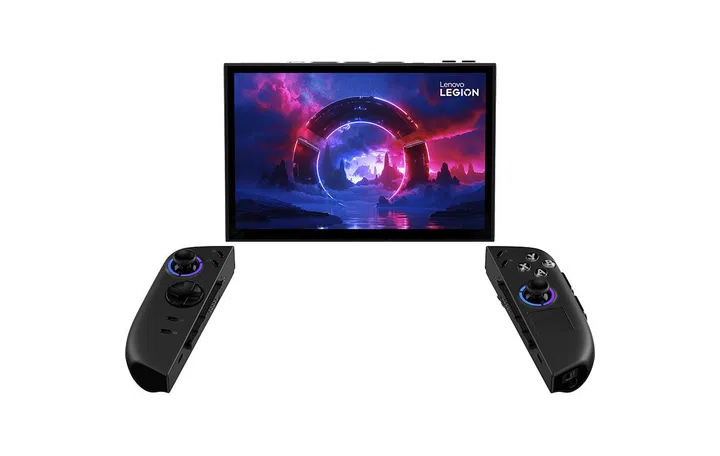
The 2nd generation Lenovo Legion Go with an improved controller. (Image source: Lenovo)
The Legion Go S isn't the only new handheld product unveiled, either. Lenovo also announced that they are developing a 2nd generation Legion Go, which succeeds their original 2023 Legion Go. Production details have yet to be finalised, but Lenovo introduced a prototype of the 2nd-gen Legion Go at CES, which features an AMD Ryzen Z2 Extreme processor and 32GB of LPDDR5X memory, along with an 8.8-inch 16:10 OLED display at a 144Hz refresh rate.
Other improvements Lenovo noted include a re-designed TrueStrike controller with a circular D-pad, a bigger 74Wh battery and up to 2TB of SSD stroage.
Other Lenovo Legion announcements
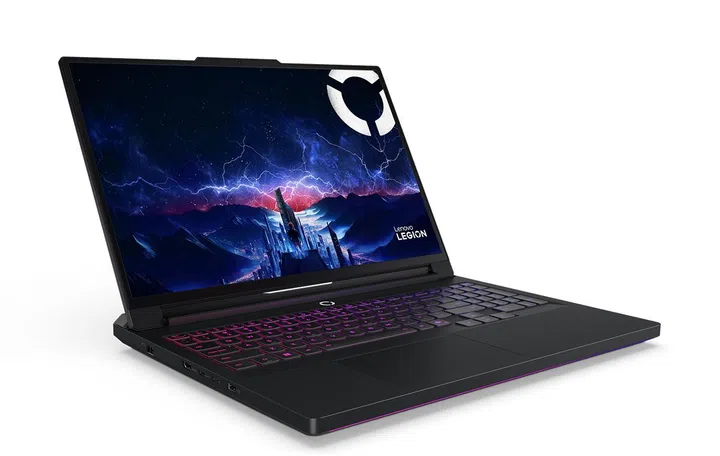
The refreshed Lenovo Legion Pro 7i, with new Intel Core Ultra 9 Series 2 CPUs. (Image source: Lenovo)
Apart from the Legion Go(s), Lenovo also revealed a couple of refreshes to their Lenovo Legion line of gaming laptops, as well as new product additions.
The Lenovo Legion Pro 7i and 5i see an upgrade in the CPU department, going up to an Intel Core Ultra 9 275HX processor. The GPU is updated as well, going up to an NVIDIA GeForce RTX 5090 for the Legion Pro 7i, and a GeForce RTX 5070 Ti for the Legion Pro 5i. If you're leaning towards AMD, the Legion Pro 5 (non-i) has an AMD Ryzen 9 9955HX as the highest-tier CPU option, but you're stuck with up to an NVIDIA GeForce RTX 5070.
The non-Pro Legion 7i and 5i will similarly get a CPU upgrade, up to an Intel Core Ultra 9 275HX, while the Legion 5 goes up to an AMD Ryzen AI 7 350, but all three laptops will 'only' be able to run an NVIDIA GeForce RTX 5070.
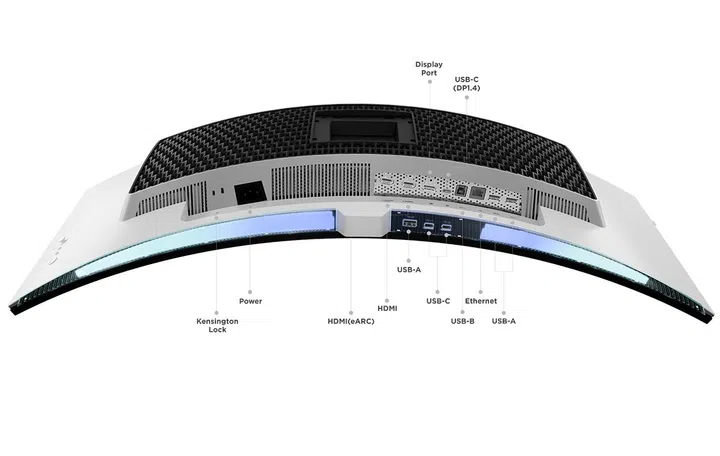
Ambient lighting on the bottom of the Legion Pro 34WD-10 monitor. (Image source: Lenovo)

Lenovo also announced the Lenovo Legion Glasses 2, a pair of AR glasses. (Image source: Lenovo)
Other announcements included, a 3rd generation of their Legion Tab gaming tablet running a Snapdragon Gen 8 3 chip, two new 34-inch monitors (one of which, the Legion Pro 34WD-10, is a 3440x1440 OLED monitor with a USB hub and a lighting strip underneath), upgrades to their Legion Tower 7i, Tower 5i and Tower 5 pre-built PCs, and new Lenovo LOQ laptops. Lenovo did also unveil a sequel to the Lenovo Legion Glasses, the Legion Glasses 2, which features a sunglasses-esque re-design, a lighter 65g weight and an upgrade to a 120Hz micro-OLED display.
Pricing and availability
While Lenovo did not specifically announce local availability, it did give general timeframes for US availability, along with starting prices in USD. So if you're planning to get a Legion Go S or a new Legion Pro laptop, keep these starting prices in mind:
- Legion Go S (Windows 11), US release in January 2025 at US$729.99
Additional configurations will be available starting May 2025 at US$599.99 - Legion Go S (SteamOS), US release in May 2025 at US$499.99
- Legion Pro 7i, US release in March 2025 at US$2,399
- Legion Pro 5i, US release in May 2025 at US$1,499
- Legion Pro 5, US release in June 2025 at US$1,399
- Legion 7i, US release in June 2025 at US$1,599
- Legion 5i, US release in May 2025 at US$1,299
- Legion 5, US release in May 2025 at US$1,149
- 3rd-gen Legion Tab, US release in January 2025 at US$499.99
- Legion Pro WD34-10 Gaming Monitor, US release in March 2025 at US$999.99
- Legion Glasses 2, US release in March 2025 at US$399.99
Our articles may contain affiliate links. If you buy through these links, we may earn a small commission.