

When you look at the mobile devices you’d likely carry on a productive day (smartphones, tablets, laptops, accessories like cameras or true wireless headphones), it becomes clear that a good power bank or portable charger is crucial to staying juiced up. Here, we can help you find the best power banks to fit your needs.
With more attention given to malfunctioning power banks in public spaces (like trains and planes), so knowing how to tell if a power bank is safe to use is just as important as getting a good deal on one.
How to pick the best power bank for yourself: 5 things to look out for
Here are some considerations to help you pick the right power bank, and to help you understand why they can have extremely disparate price points.
1. All about capacity (mAh)
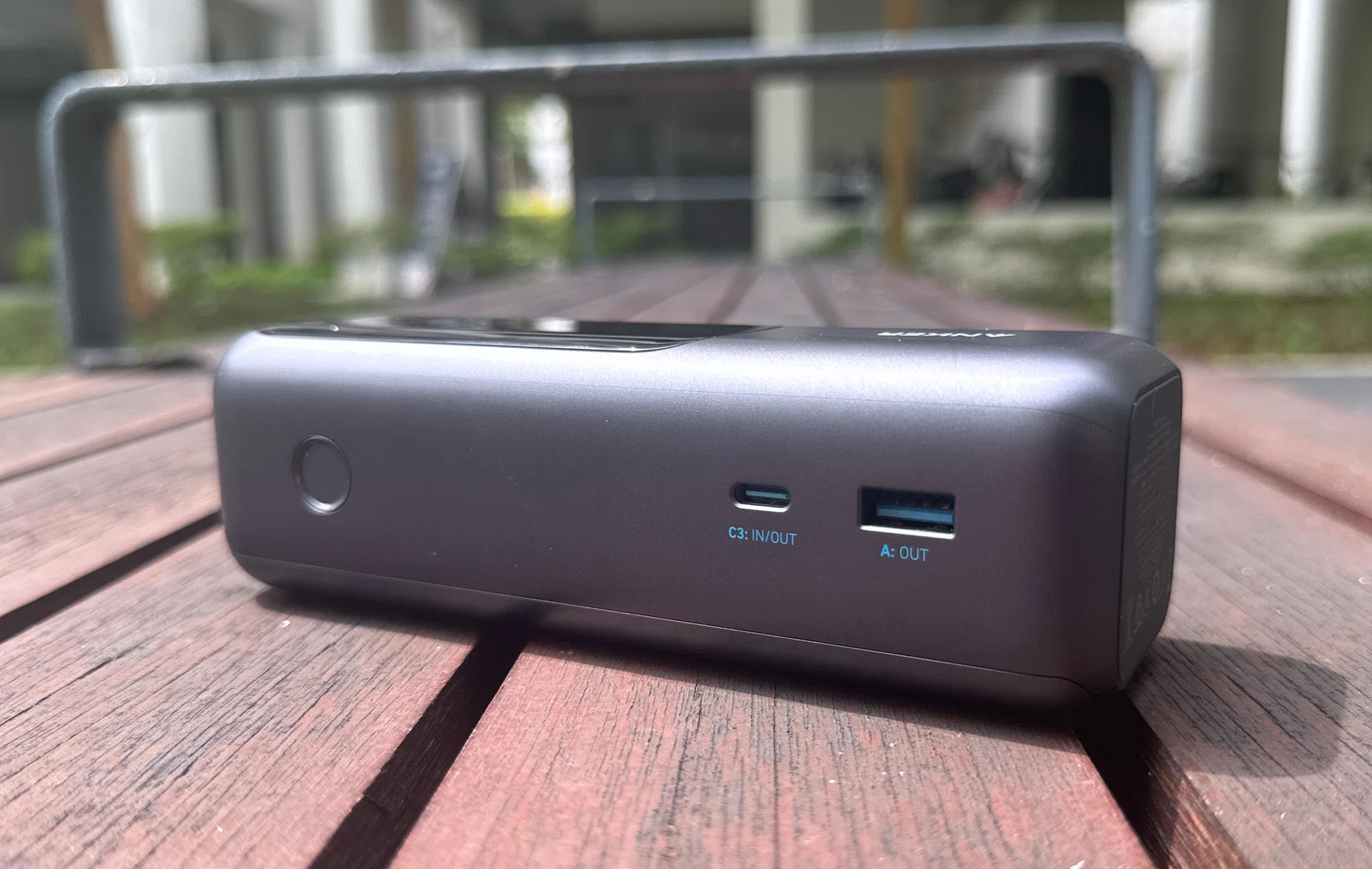
A large capacity power bank with ports at its rear.
The capacity (written as mAh, or milliampere-hours), refers to the amount of stored charge inside your power bank. A higher number usually means it has a larger capacity, which in turn gives you more juice to charge multiple devices. Phones these days often come with 5,000mAh batteries, so that a 10,000mAh power bank can charge you at least twice.
However, there are regulations and limits to the maximum capacity you can carry. Note that IATA guidelines limit these batteries to 100Wh if you plan to carry one on board a flight without needing prior approval. If you assume the typical 3.7V seen in lithium-based power banks, that means you’re limited to ~27,000mAh if you’re travelling with one, and that is before accounting for airline- or territory-specific regulations.
Higher-capacity batteries might cost more and feel bulkier, and that’s usually because the power bank contains more of the above-mentioned battery cells. Other reasons (like features) can contribute to a power bank’s retail price, as seen below.
2. Ports: the type, the speed, and how many
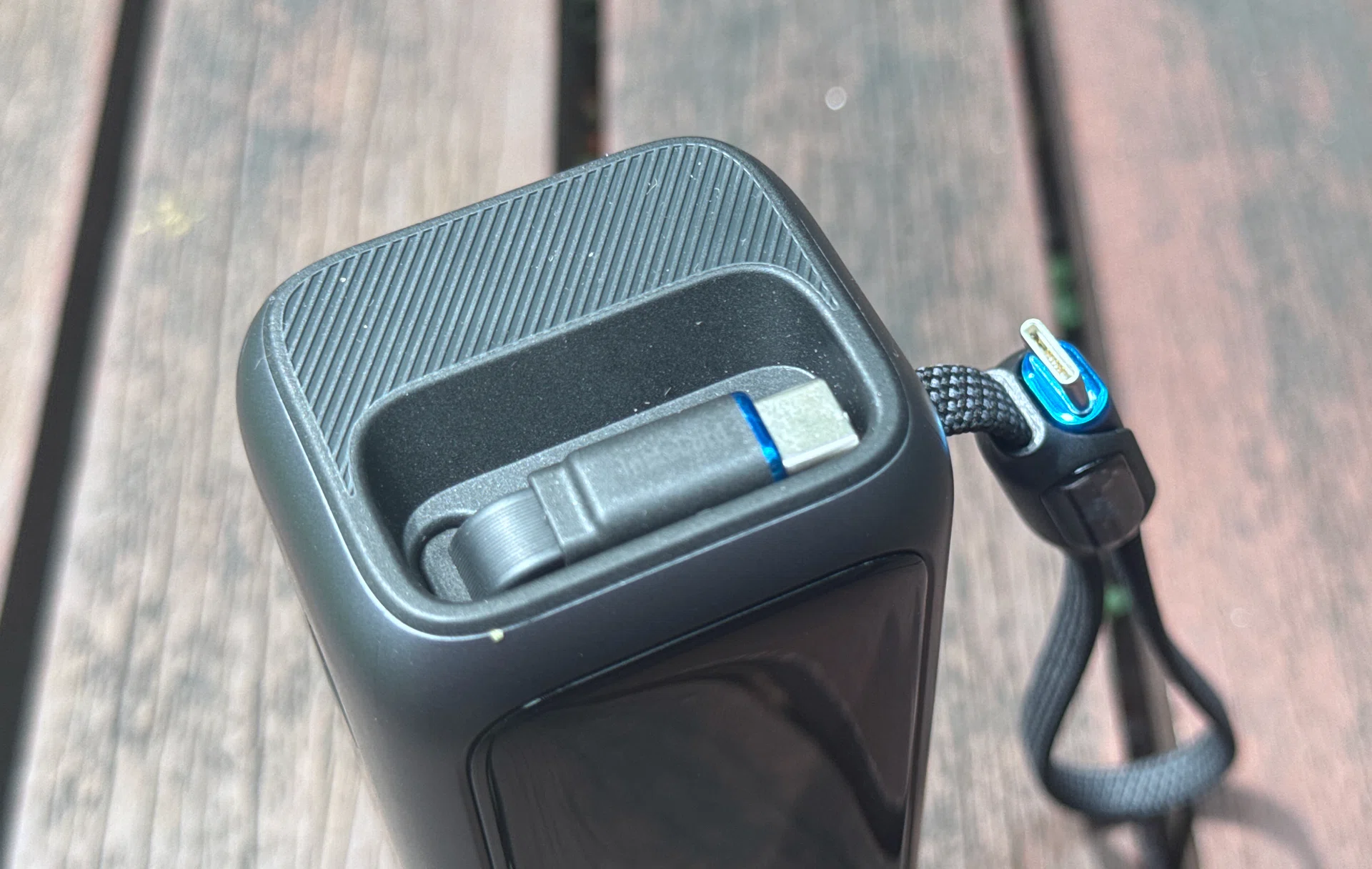
A power bank with built-in retractable cables. This isn't commonplace and increases the price of the unit, but it's a nice convenience feature.
Look for power banks with enough ports to charge the devices you want to use. The maximum charging speed per port matters, and generally, good power banks will clearly state port charging speeds in their specifications. That also includes declaring the maximum charging speeds when multiple ports are in use; the maximum speed is not always the same when only one is used.
Also, make sure that the ports match your cables and devices (USB-A or USB-C, etc.). Some power banks come with built-in charging cables, and good ones will also indicate the expected speeds for them, too.
Better or newer ports and cables with certified speed ratings contribute to a power bank’s final cost.
3. Support charging profiles and standards
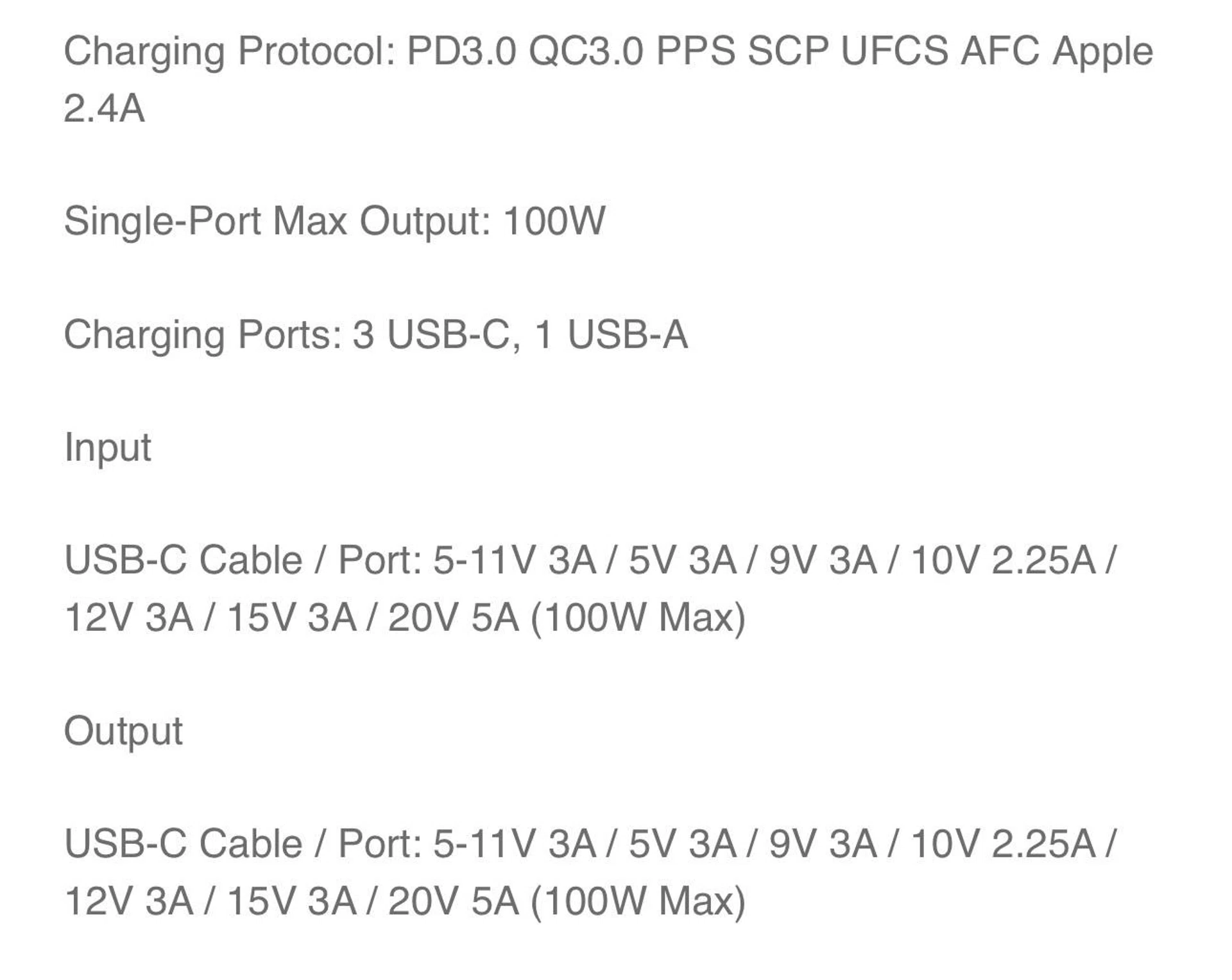
Charging profile support information is often plastered deep in the specs section of the respective power bank's info page.
The maximum charging speed of your power bank is only half the story. Knowing its charging profiles is important if you use mobile or portable devices across different brands.
If you’re not too picky, you should still check the maximum charging speeds when a power bank is connected to multiple devices. This affects users who need to charge bigger mobile devices, like laptops. Most of the time, a power bank’s bare minimum profile would include industry-wide ones like Qualcomm’s (Quick Charge, a.ka. QC) and USB-IF’s Power Delivery (PD charging).
For Android phone users, you may check if the power bank and your phone have matching charging profiles. Like your phone, a power bank can support multiple charging profiles, and some are proprietary (brand-specific charging technologies, Such as OPPO’s SuperVOOC).
The general rule of thumb is to look out for the fastest charging profile on your most used devices, and match it to the one offered on a power bank. The version numbers have to match for the best outcome, but you can still enjoy fast-charging if the device or the power bank has an older technology. No matching profiles would mean you get normal charging speeds, which is relatively slow in today’s context.
Pricier power banks tend to support a wide range of proprietary charging profiles, use newer generic technologies, and comply with safety regulations. Conversely, a power bank with only one stated charging speed and no declaration of its charging profile(s) is, at best, nonsense, and worst, a disaster waiting to happen.
4. Wireless charging with a power bank
Wireless charging power banks are a convenient option for charging your devices without cables. Safe usage aside (not charging under a blanket, pillow, or in a bag), wireless charging is generally less efficient than wired charging because some power is always lost in translation (versus direct-to-cable charging). Also, wireless chargers can command a premium, as they’re considered add-on features for power banks.
5. Size and weight, versus usage
Slim and lightweight options are perfect for daily use. In contrast, heavier ones are better for longer trips or group use as they typically have a higher charging capacity and simultaneous charging support for multiple devices. First, consider the portable devices you’d normally carry, before deciding on the best fit power bank for your needs.
From reputable names like Anker to budget-friendly options from UGreen and beyond, here are some ideal portable chargers and power banks to shop now. Never be caught with 1% again.
Best power banks and portable chargers to shop now
Anker 25,000mAh Power Bank (165W, Built-In and Retractable Cables)
$152.99
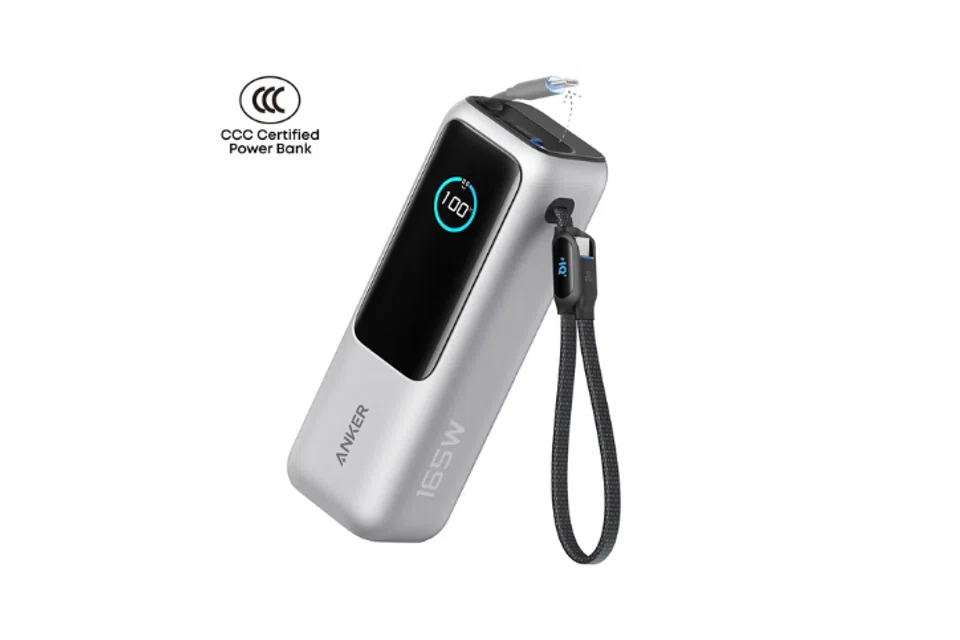
This list starts on a strong note with a qualified 3C (China Compulsory Certification) power bank, which is required for air travel to Mainland China. The 25,000mAh capacity, 165W maximum charging speed on a single cable, on top practical frills - like two built-in cables and a display that shows the exact speeds - make it a powerful all-rounder for most people despite its high official price and ~600g girth. Well, only the weight presents a problem, since we found the deep discounts you need below.
Ugreen 35525B (25,000mAh Nexode 200W laptop power bank)
$95.99 $150.00 36% off
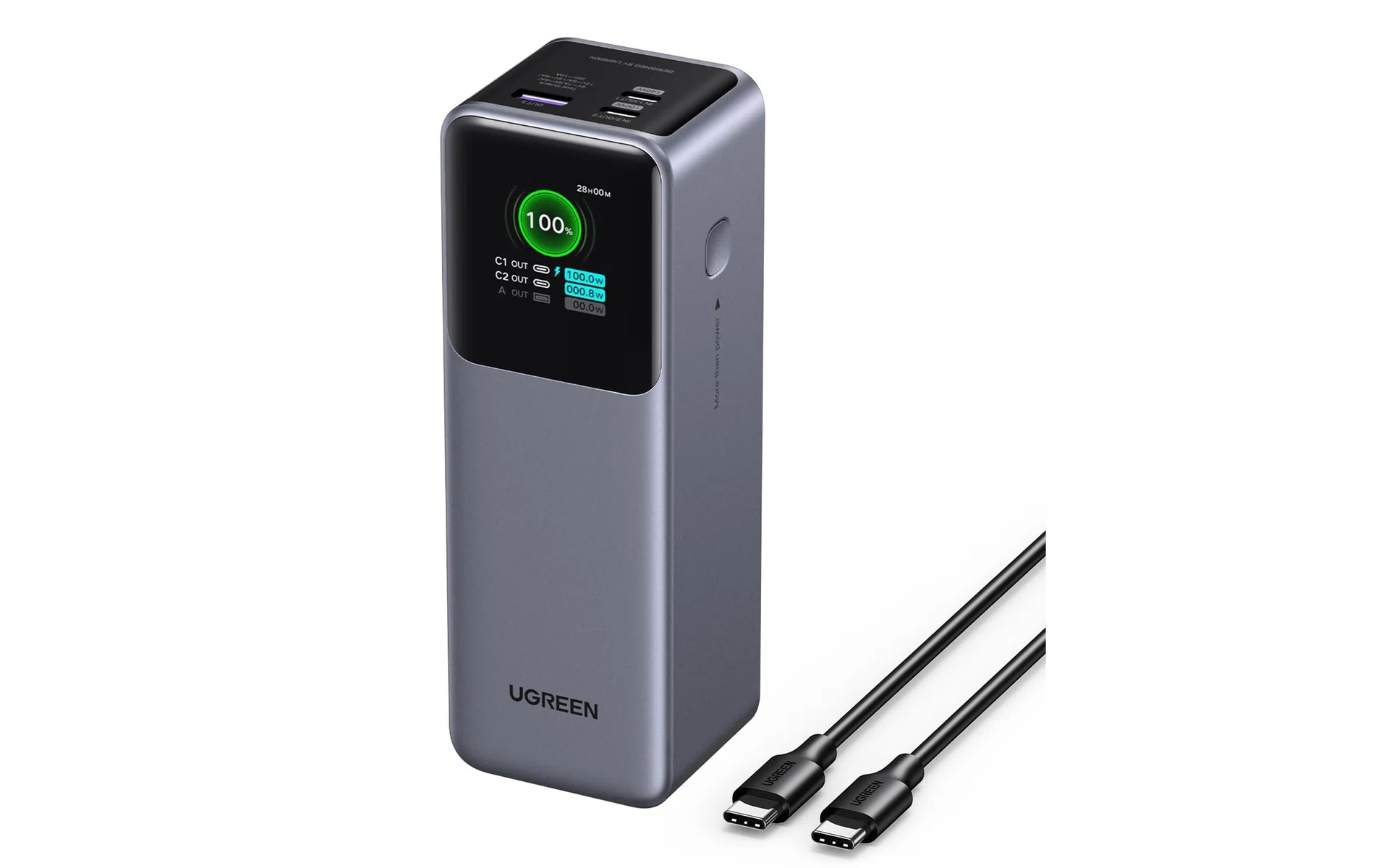
Ugreen 35525B (25,000mAh Nexode 200W laptop power bank)
One common thread among high-utility power banks is the brand’s inability to give them an easy-to-remember name. We partly understand why. In the case of this Ugreen one, it’s marketed as a laptop power bank because of its huge 25,000mAh capacity, 140W charging speed via its first USB-C port, and dual 100W charging when both USB-C ports are in use (hence the 200W in the name). And those aren’t even all the features it has.
Anyway, it’s on a steep discount, so don’t forget to grab one if you need it. If you’re on the fence, hop in to our review to find out more (20,0000mAh, 165W model).
Xiaomi Magnetic Power Bank 6,000mAh (Qi2, 15W)
$54.40
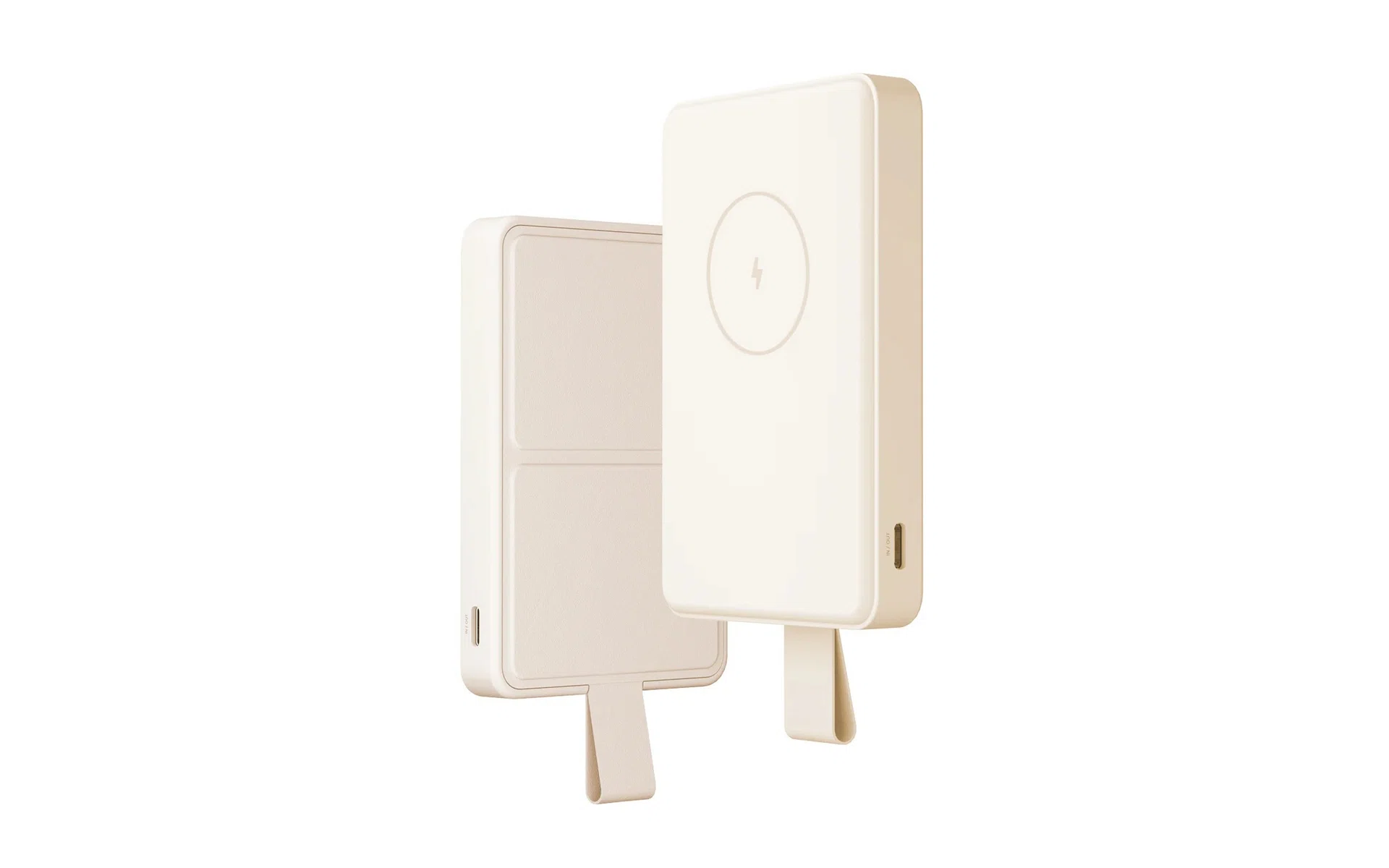
Xiaomi Magnetic Power Bank 6,000mAh (Qi2, 15W)
If Qi2 wireless charging is a must-have for you, this Xiaomi power bank should fit your needs while staying affordable. Qi2 is rated at 15W, which is not as fast as Qi2.2’s 25W, but it should see wider compatibility since the faster 25W charging rate is still relatively new in consumer products as of publishing time. The Xiaomi power bank includes a built-in kickstand, so you can charge hands-free while it sits on a desk. Xiaomi also said it’s compatible with MagSafe phone cases and phones, so iPhone users can enjoy this power bank as well.
While over $50 for a 6,000mAh capacity power bank doesn’t sound like much capacity per dollar, don’t forget that you’re paying for the wireless charging convenience and its sound design.
Baseus EnerGeek GR11 (20,000mAh, 145W)
$52.42 $181.90 71% off
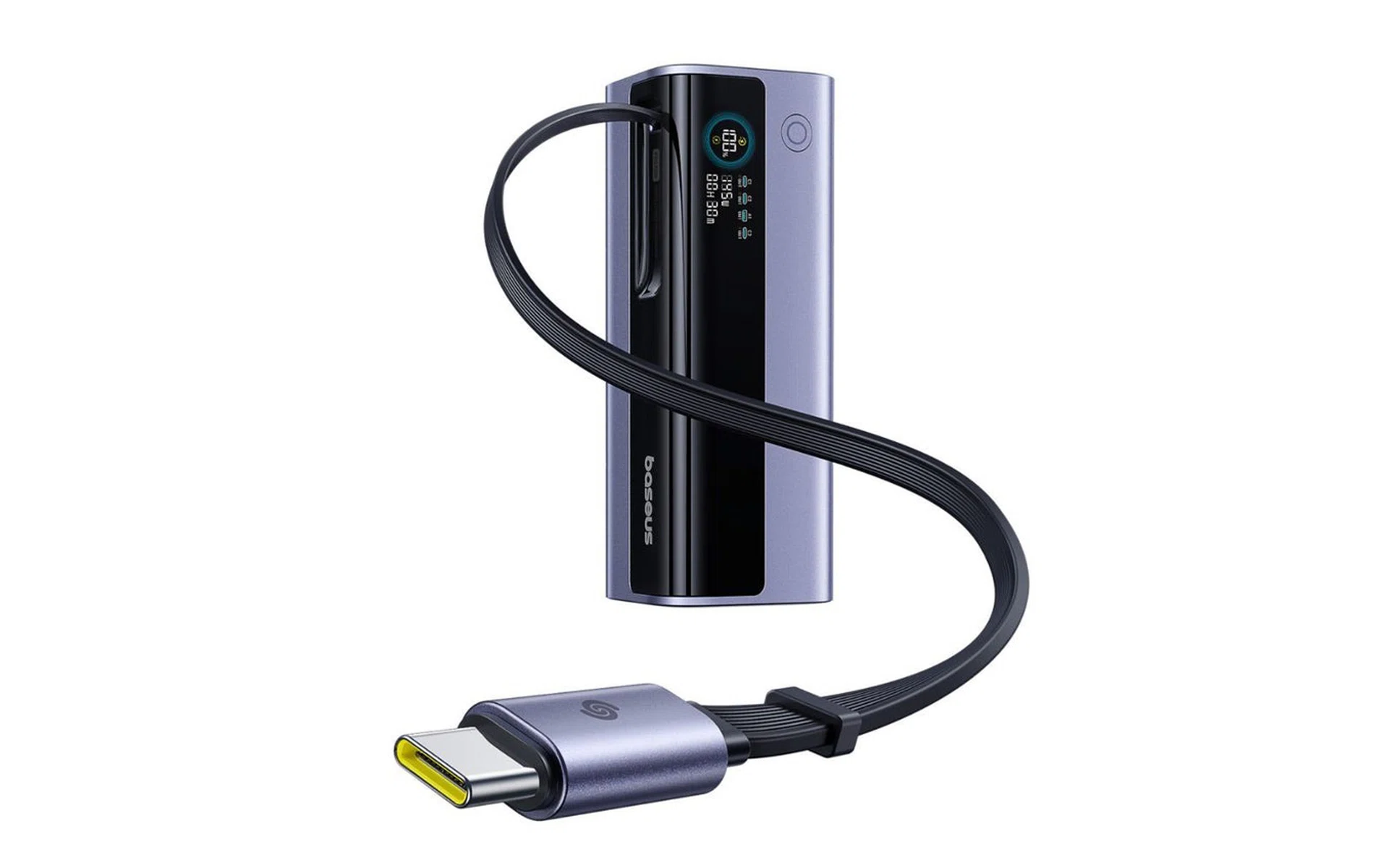
Baseus EnerGeek GR11 (20,000mAh, 145W)
This Baseus power bank features two USB-C ports that support up to 100W charging and can deliver 145W in total (100W + 45W) when both ports are active. This is clearly designed for users who regularly charge a laptop and a smartphone simultaneously. Additionally, it has an extra USB-A port with a maximum charging speed of 33W, along with a built-in 60cm retractable USB-C cable. Charging options are plenty, but bear in mind that it can only deliver a maximum of 30W when all four ports are in use (which is just 7.5W each).
Sharge Shargeek 170 (24,000mAh, 170W, IP66-rated)
$122.91 $139.90 11% off
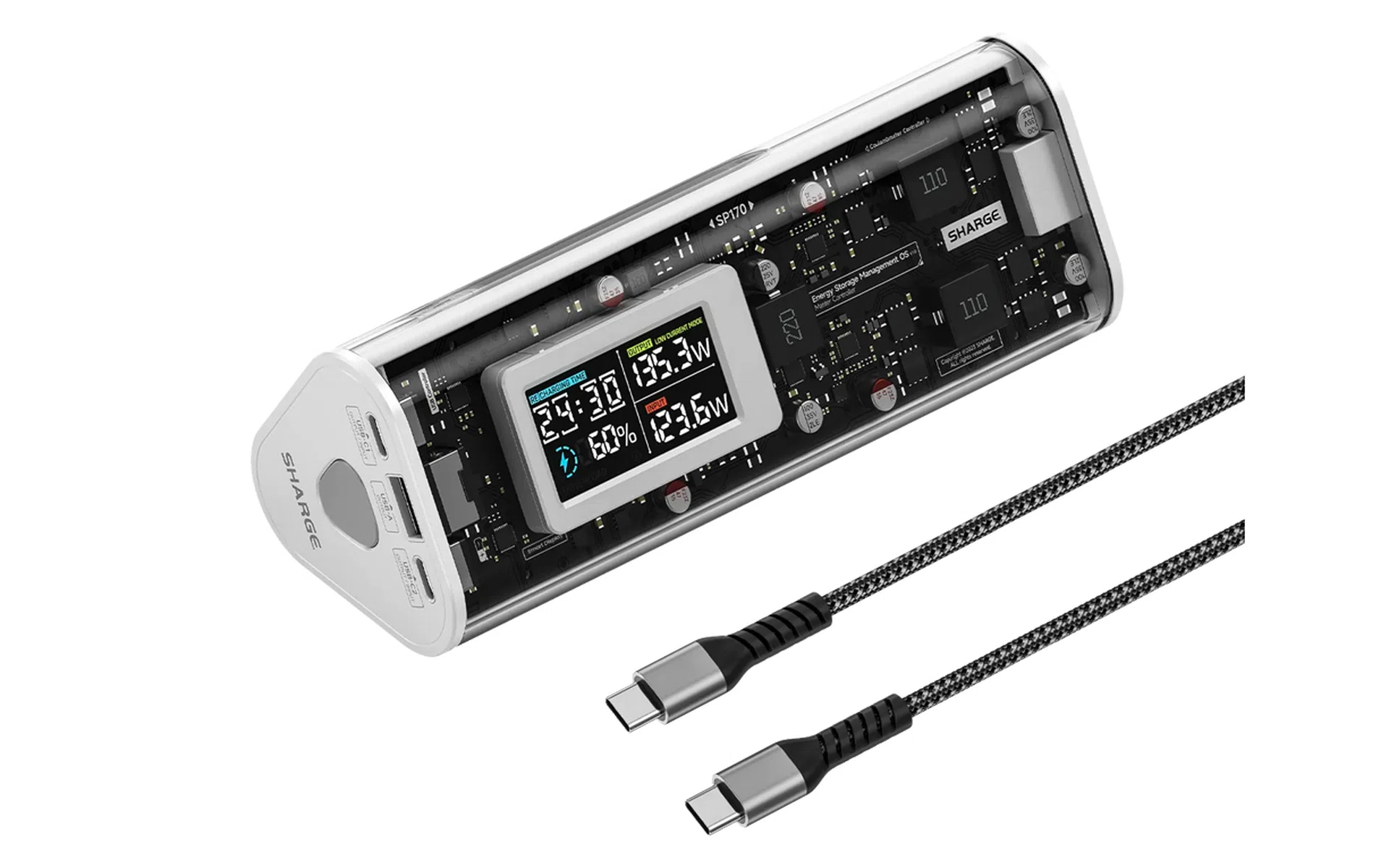
Sharge Shargeek 170 (24,000mAh, 170W, IP66-rated)
Finishing this list is a uniquely designed, 3C-certified power bank (referring to China Compulsory Certification - CCC, or 3C) that may provide users with added assurance when travelling to or within China. The Sharge Shargeek 170 features a transparent, prism-shaped case that lets users see its circuitry and components, making it easy to spot any issues. It even has a detailed display with an alarm for abnormal temperature levels. The 24,000mAh capacity supports up to 170W maximum output (140W and 30W) combined, with a 65W + 65W + 18W split when all three USB ports are active (2x USB-C and 1x USB-A). What’s really special is the IP66 rating for splash resistance, making it an easy choice if your safety comes first.
Our articles may contain affiliate links. If you buy through these links, we may earn a small commission.