
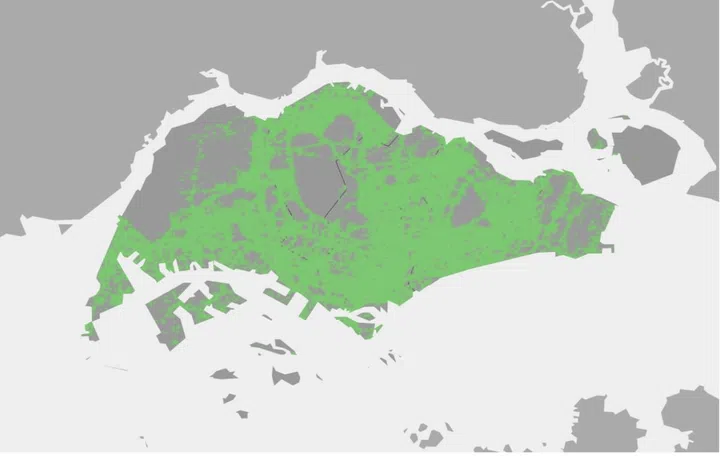
Singapore's 5G Coverage. Image source: Opensignal.
With StarHub announcing that it has achieved 99% coverage for its outdoor 5G network in Singapore, it joins the ranks of M1 and Singtel who have also achieved the same, meaning that Singaporeans have access to one of the best 5G experiences in the region.
Both M1 and StarHub won their 5G licence on a joint bid, and partnered with Nokia to deploy its 5G core network, which is crucial for both telcos as they serve consumers over their 5G standalone (SA) network.
It hasn’t taken that long for the three telcos to hit 99% coverage. But the last mile does seem to have taken a while for each of them.
Singtel launched its 5G standalone (5G SA) network in 2021 and surpassed 95% coverage in July 2022 three years ahead of its target set by the Infocomm Media Development Authority (IMDA). StarHub turned on its 5G SA network in 2021 with 50% coverage, hitting 95% in the second half of 2022. When M1 Launched its 5G SA network in 2021, it also had 50% coverage with its 5G bid partner StarHub. M1 hit 95% coverage of Singapore in December 2022. An M1 spokesperson puts the telco’s 5G coverage now at 99%.
As for Simba, back when they were TPG, they announced plans to carry out 5G NSA trials with approval from the IMDA and were widely expected to be launching their 5G SA network by 2026.
What is good for local 5G subscribers is that they have access to an award winning 5G network, according to an Opensignal report in late 2023. According to the report, Singapore’s big three local telcos led the way in the categories of Gaming, Download Speeds, and Video.
Our articles may contain affiliate links. If you buy through these links, we may earn a small commission.