

Note: This article was first published on 24 May 2021.
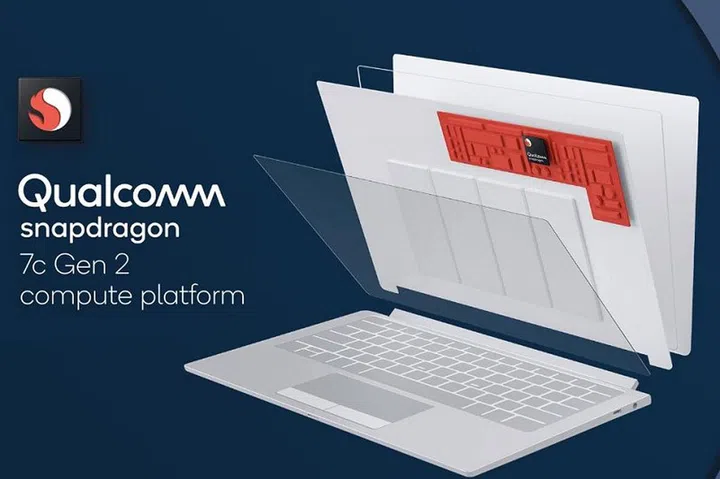
We hardly saw Snapdragon 7c based systems, but Gen 2 is now out.
Always-on, always-ready, always-connected, instantaneous performance with long battery life and cellular (4G) connectivity is still a tough expectation of a typical AMD/Intel-power x86 notebook unless you look at systems upwards of US$900. Locally, that’s anywhere between S$1.2k to $1.5k depending on configurations and platform expectations.
Qualcomm’s Snapdragon Compute Platforms which first debuted in 2018 (and had subsequent platform updates in 2019) are designed to address this pain point of cost and efficiency; if any mobile phone can offer the above experiences at such low costs, why can’t notebooks match this without an expensive price tag?
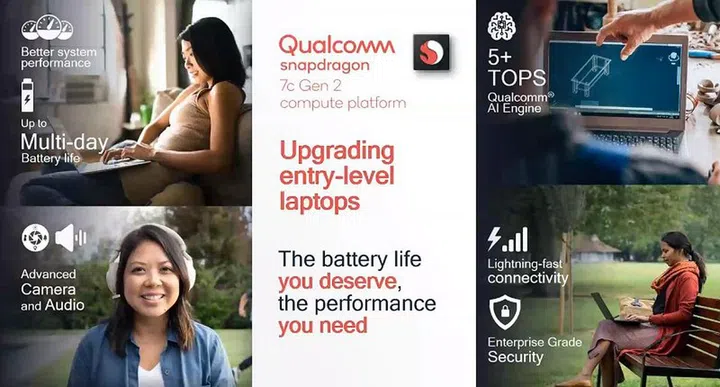
Today, Qualcomm debuted their value-level offering, the Snapdragon 7c Gen 2 Compute platform, to upgrade entry-level laptops to offer thin, quiet, cool and light computing with lighting fast responsiveness, great audio and video experiences to address the rapid uptake of video conferences and virtual meetings of any kind, great connectivity, AI and security acceleration built-in, all from just a US$350 price point.
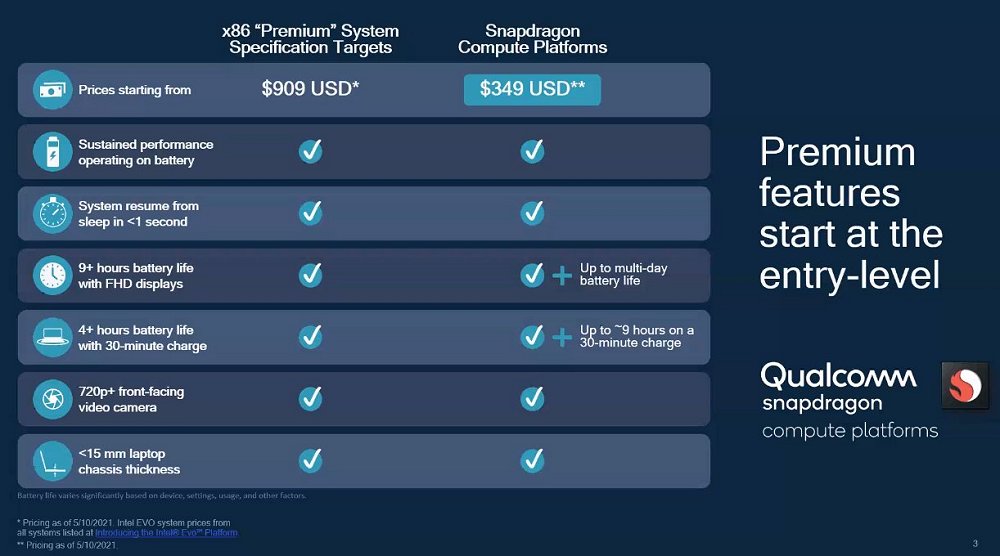
(Click to view larger image.)
To translate, that means getting a super-effective productivity machine at under S$500, which is quite possibly difficult to imagine. Just taking a look across notebook offerings at that price point, these usually run Chrome OS to safe on system resources because more often than not, they would be equipped with Intel Pentium and Celeron processors, which are woefully inadequate to maintain the high-quality experience that you would get from a notebook three times that cost, and yet that’s what the Snapdragon Compute platform promises to do on a full Windows 10 operating system no less.
So what does Gen 2 bring?
Mostly higher clock speeds which now enable even better capabilities out of the Qualcomm Hexagon 692 DSP, Spectra 255 Image Signalling Processor (ISP), and Kyro 468 CPU. Almost all other features and offerings like its integrated Snapdragon X15 LTE modem enabling up to 600Mbps downlink, dual-band Wi-Fi 5 and Bluetooth 5.0 are on a par with the first-generation Snapdragon 7c. You might ask why not update the Wi-Fi to a newer standard or offer 5G connectivity, but Qualcomm feels these features were omitted to keep to the target price range. Besides, it won't be a necessity for most consumers hunting for a laptop in that mass-market price segment.
The Gen 2 part is likely made possible from a more matured silicon process allowing higher clocks or Qualcomm has been able to speed bin them better to offer another SKU, or perhaps a combination of both reasons. In any case, here's how they compare technically:-
Snapdragon 7c
Gen 2 | Snapdragon 7c | Snapdragon 8c | Snapdragon 8cx | |
Launch Year | 2021 | 2019 | 2019 | 2018 |
Process technology | 8nm | 8nm | 7nm | 7nm |
CPU | Kyro 468 (octa-core)
up to 2.55GHz | Kyro 468 (octa-core)
up to 2.4GHz | Kyro 490 (octa-core) | Kyro 495 (octa-core) |
GPU | Adreno 618 | Adreno 618 | Adreno 675 | Adreno 680 |
ISP | Spectra 255 | Spectra 255 | Spectra 390 | Spectra 390 |
DSP (AI) | Hexagon 692 DSP | Hexagon 692 DSP | Hexagon 690 DSP | Hexagon 690 DSP |
Modem | Qualcomm X15 LTE | Qualcomm X15 LTE | Qualcomm X24 LTE | Qualcomm X24 LTE |
5G support | No | No | Yes, optional | Yes, optional |
Memory support | dual-channel | dual-channel | quad-channel | eight-channel |
Storage support | UFS 3.0 & eMMC 5.1 | UFS 3.0 & eMMC 5.1 | UFS 3.0 & NVMe | UFS 3.0 & NVMe |
Will Snapdragon Compute based systems gain more popularity?
While not yet popular, the Windows-on-ARM platform emulating x86 code is partially to blame, as they tend to run into compatibility issues; chiefly only Windows Store apps and popular 32-bit Windows applications run well without hitches. x64 applications aren’t supported on ARM processors, but that might be changing as Windows x64 emulation has been introduced since late in 2020 in developer builds.
Actual usability is still a hit-or-miss at this stage and is a work-in-progress, but Microsoft’s commitment to address running x64 apps (from their Windows Store or otherwise) remains a priority to sweeten the abilities of Windows-on-Snapdragon, and as a result Windows-on-ARM ecosystem as a whole. When does run fine, we've seen it offering very fulfilling experiences. To help accelerate testing and development for Windows on Snapdragon application testing, Qualcomm will also be releasing an affordable test system for developers dubbed the Snapdragon Developer Kit for Windows.
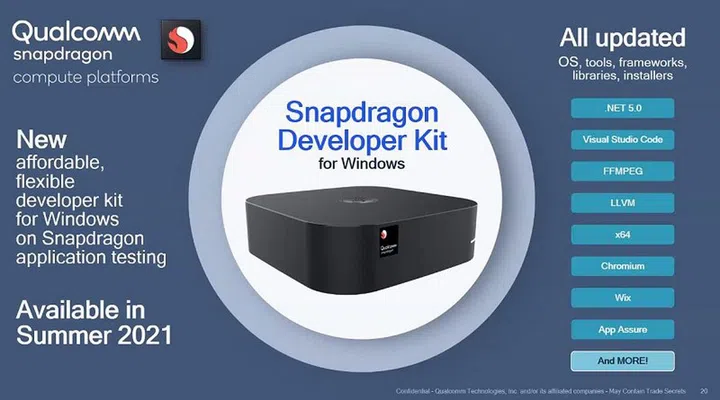
Microsoft’s Windows 10 platform commitment and ongoing enhancements could be enough to edge more vendors to adopt and introduce a wider variety of Snapdragon Compute Platform based notebooks to democratize high-quality entry-level PC experiences.
At this point in time, Lenovo is chimed in their support for the Snapdragon 7c Gen 2 Compute Platform process, and we expect to see more details of their product line-up at Computex 2021, along with other possible design wins. Stay tuned for more reporting on this topic in the next few weeks.
Source: Qualcomm
Our articles may contain affiliate links. If you buy through these links, we may earn a small commission.