
Redmi Note 13 Pro+ 5G review: A little bit of everything, a little more affordable
On paper, the Redmi Note 13 Pro+ 5G offers a significant upgrade from its previous version. Does the S$569 phone still live up to its reputation as the first port of call for midrange phone buyers?
#xiaomi #redmi #note13pro

Note: This review was first published on 5 March 2024.
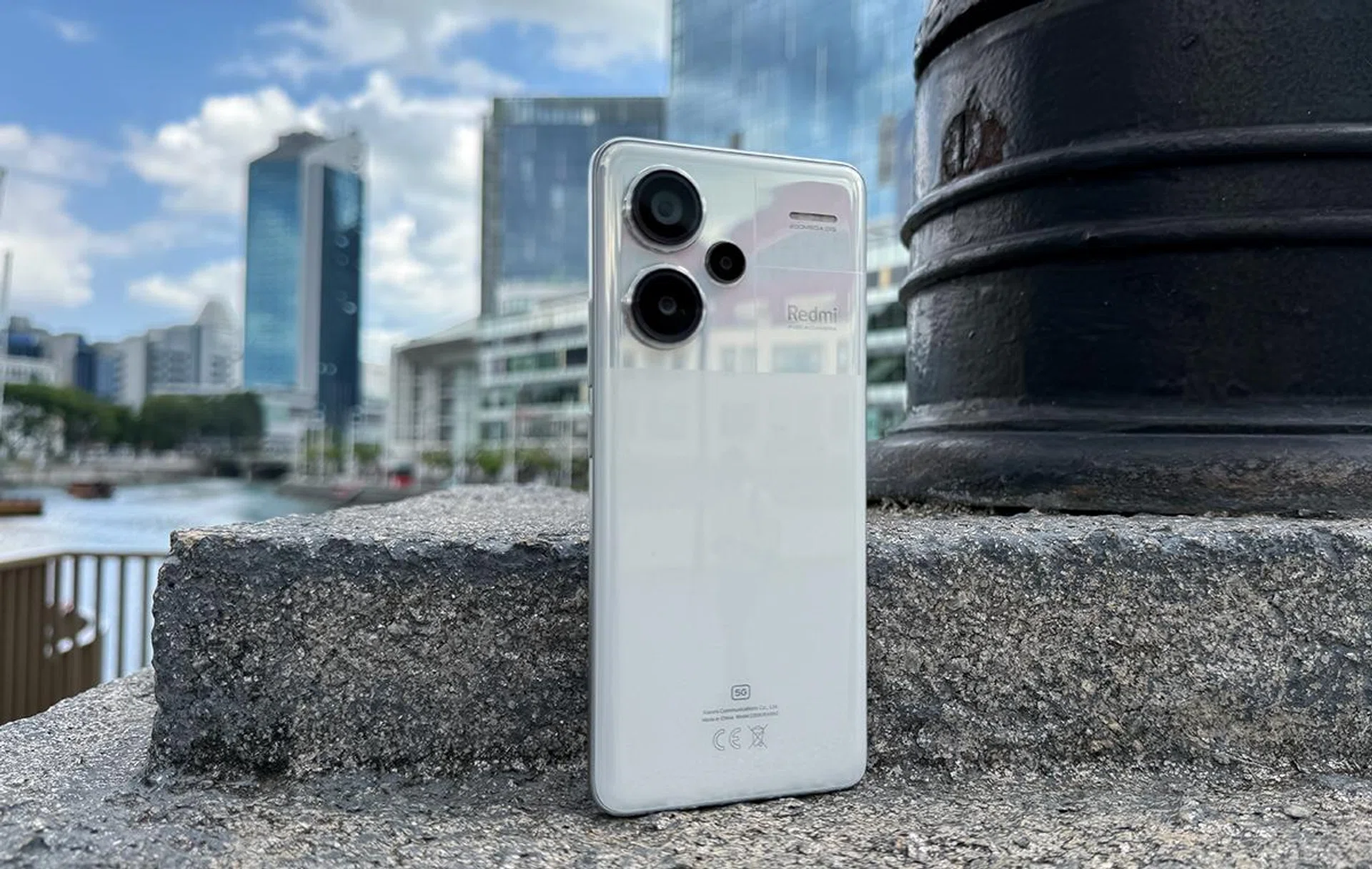
Redmi Note 13 Pro+ 5G along the Singapore River.
Bigger and better
The Redmi Note 13 Pro+ 5G by Xiaomi adopts the successes of its predecessor, by layering big numbers inside an affordable body and slapping on a small price tag.
At S$569, the Redmi Note 13 Pro+ makes it clear that it wants to be the first port of call for anyone shopping for a midrange phone. But it also entices buyers with specs and features like the 4nm MediaTek Dimensity 7200-Ultra chip, a 200MP main camera, a fast 120Hz AMOLED display, IP68 rating, 120W wired charging, an in-display fingerprint reader, and more.
Has Xiaomi got the mix of performance, features, and price right? Or did it leave too much on the chopping table to get the price down? Let's put the Redmi Note 13 Pro+ 5G through its paces to find out.
The TL;DR version:
You don’t have to pay through your nose if you just want a little bit of everything in a phone.
Better-designed for better handling
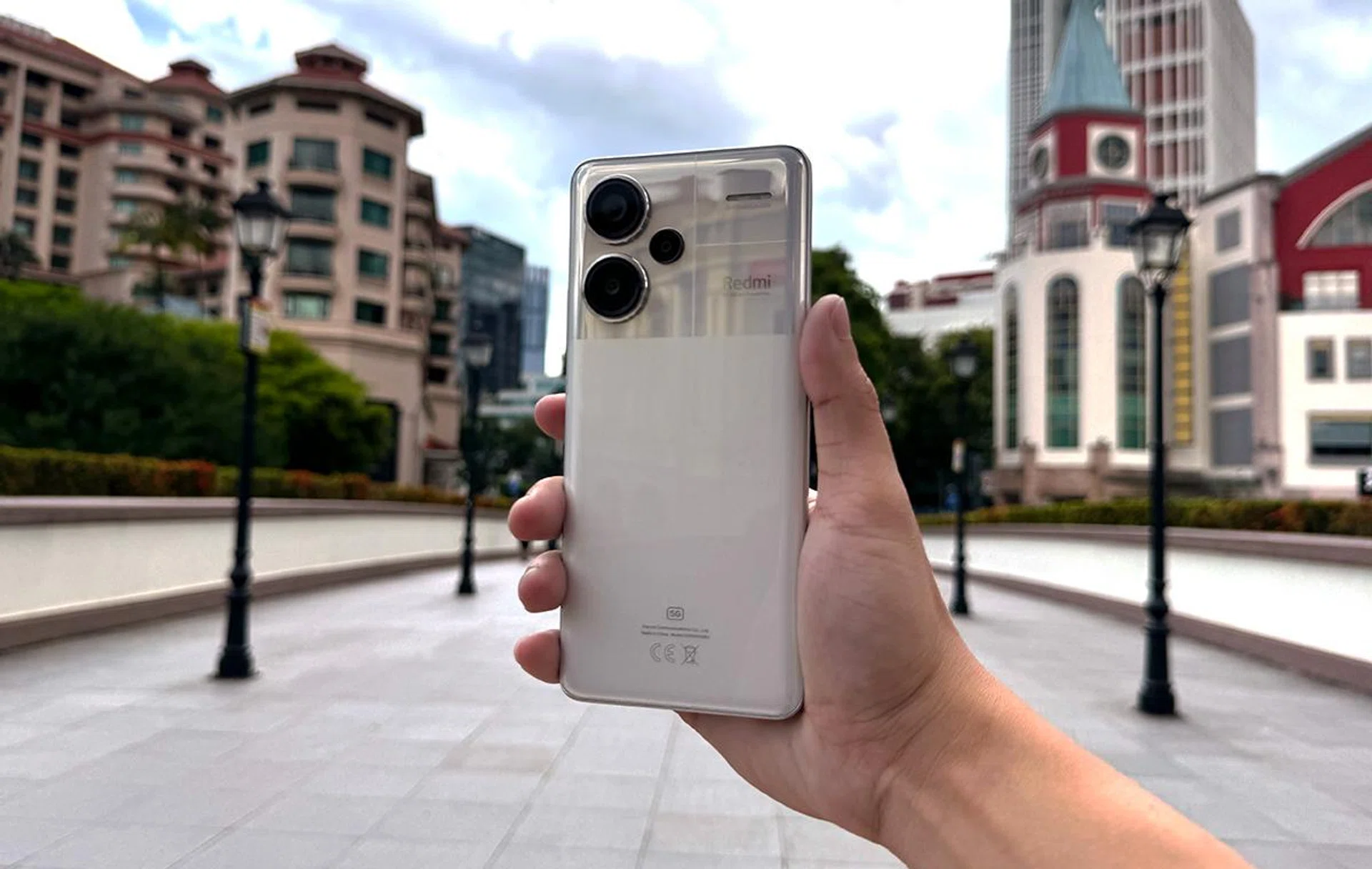
Redmi Note 13 Pro+ 5G did away with its camera island, making it more appealing and less bulky. We're not so hot about its two-toned rear, though.
Almost nobody really buys a Redmi Note phone for its aesthetics, but Xiaomi has still managed to put together something pleasant for the Redmi Note 13 Pro+ 5G.
For a start, the phone actually feels slimmer than the preceding version, which was odd. We assumed they’d have identical dimensions since the phone still looked chunky from the sides. It turns out that Xiaomi really did shave off 0.8mm of thickness to make the Redmi Note 13 Pro+ 5G feel even better in hand. We’re glad we’re not imagining things.
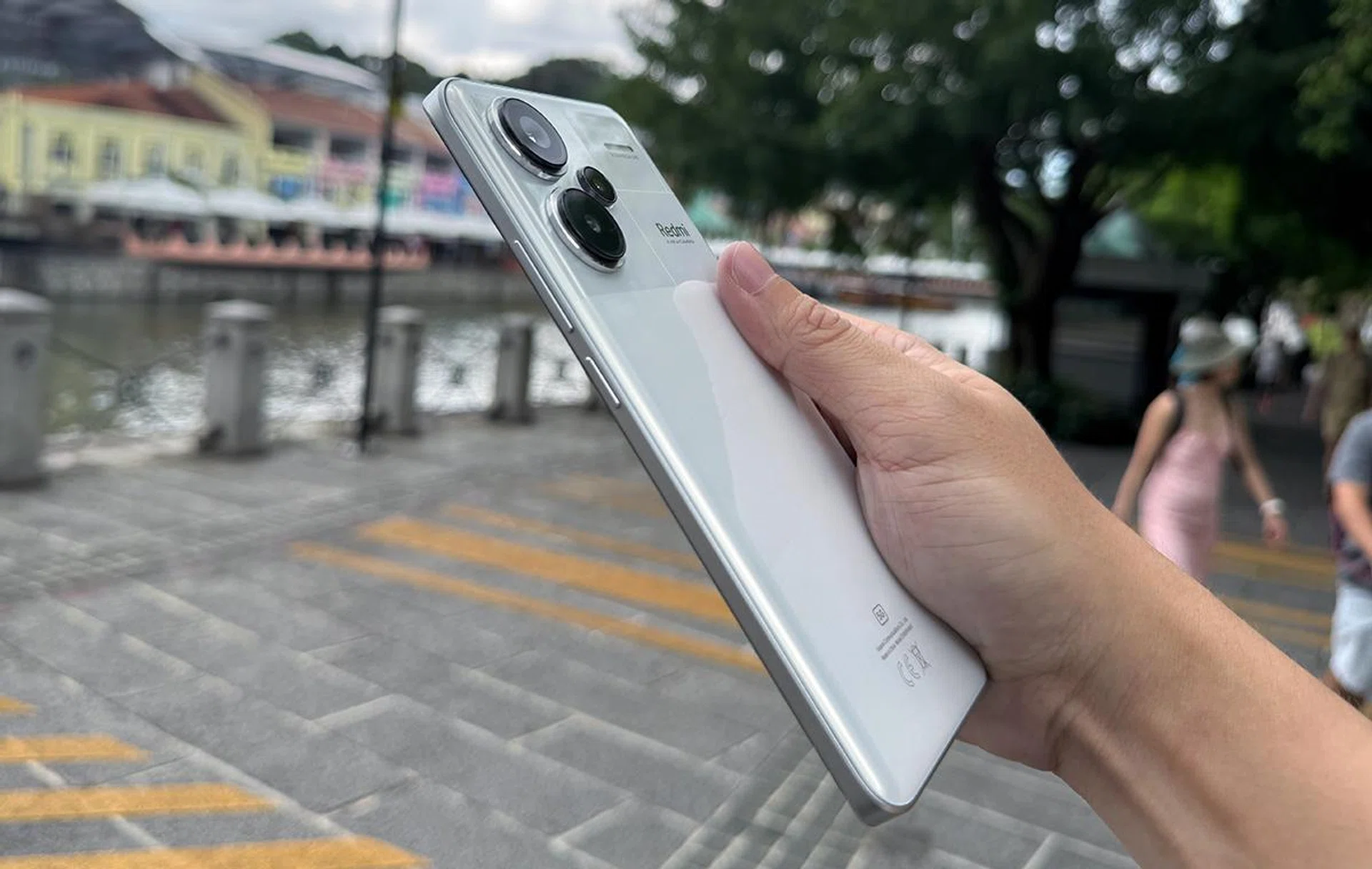
Shaving off bulk by using rings instead of a camera island made the rear more balanced.
We liked how Xiaomi removed the chamfered camera island for Redmi Note 13 Pro+ 5G’s rear shooters. The new design features raised camera rings to hold its lenses in place, giving it a cleaner appearance, even if the camera's circles look comically large.
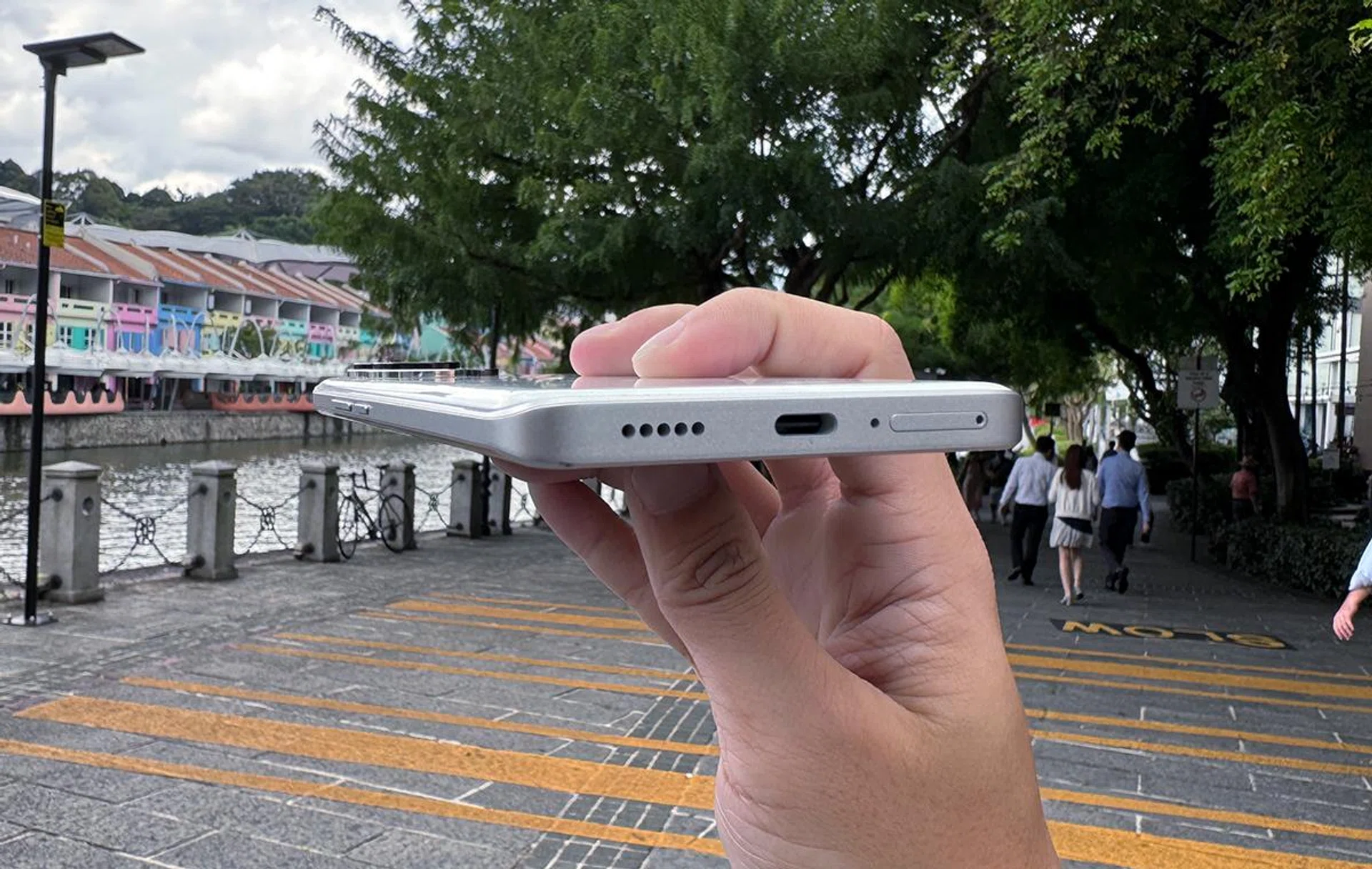
Thick, but not as thick as before.
Beyond these tweaks and a missing 3.5mm audio port (it used to be at the top), the phone looks similar to its predecessor. It still uses a rear glass finish that curves towards the rims. The speaker, SIM card tray, USB-C port, and pinhole front camera are still all in the same corners. The phone’s handling improved mildly thanks to its reduced thickness, but it doesn’t really change how you use the Redmi device.
A brighter display, all the better for watching shows with
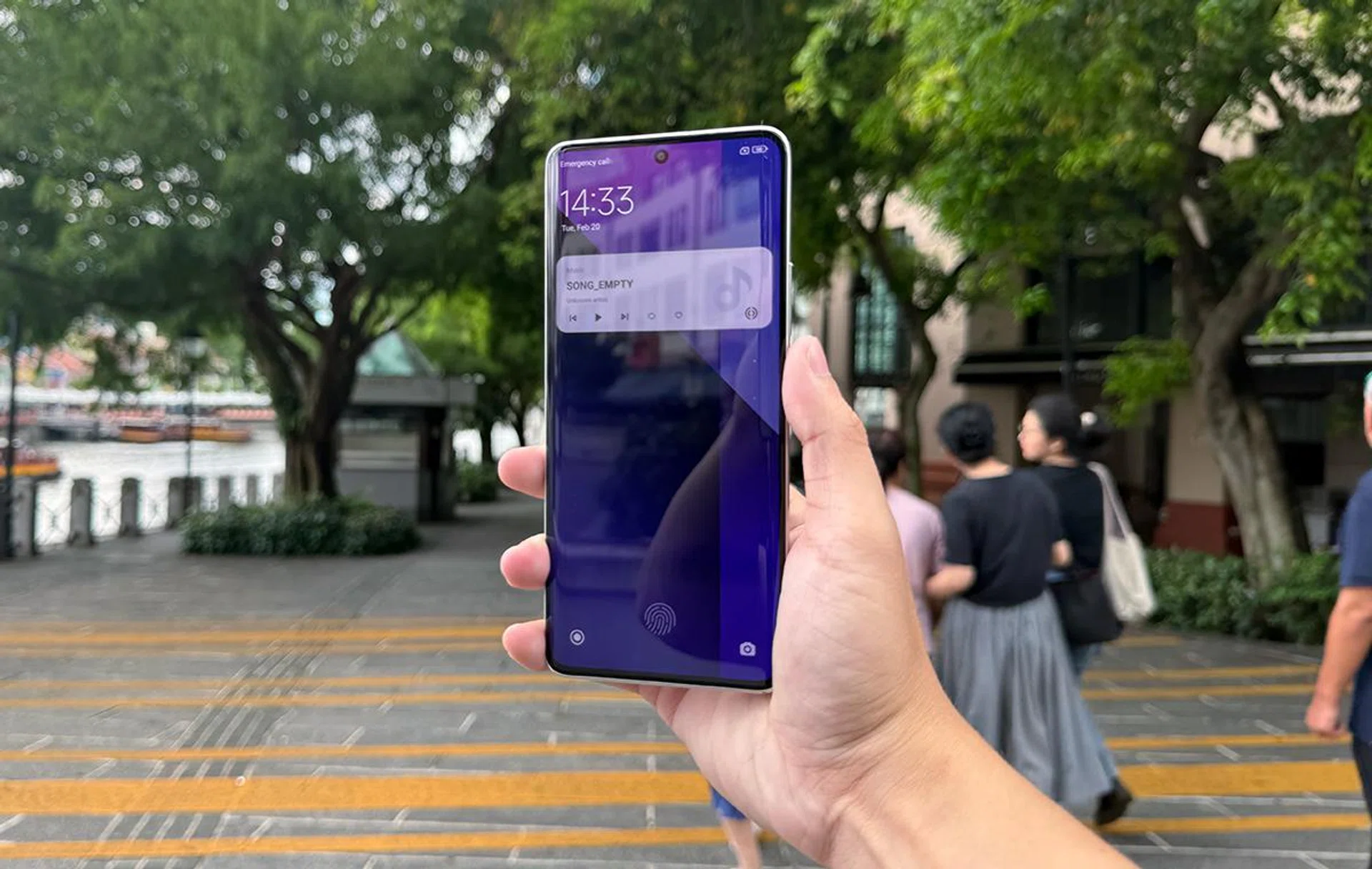
Even under Singapore's infamous heat and sunlight, Redmi Note 13 Pro+ 5G still holds up with its 1,800-nits peak brightness.
Also returning is a pleasant display, with the Redmi Note 13 Pro+ 5G fronted by a 6.67-inch CrystalRes AMOLED panel capable of 120Hz refresh rate. At a glance, the panel quality seemed the same as before, but Xiaomi’s improvements to the display revolve around making it more useable in more situations.
The biggest change is the doubled peak brightness from its old 900 nits to the 1,800 nits on the Redmi Note 13 Pro+ 5G. It’s now significantly more visible under sunlight, which is helpful if you have trouble seeing the screen under our bright Singaporean outdoors.
Second is the upgrade from Gorilla Glass 5 by Corning to Gorilla Glass Victus, but we weren’t about to scratch our phone just to test the durability of the Redmi Note 13 Pro+ 5G. Looks like we’ll have to take Xiaomi’s word for it.
Third, the display has higher fidelity, with Xiaomi squeezing in 2720 x 1220 pixels resolution (441 pixels per inch) into the same display size as before. Redmi Note 12 Pro+ 5G was also 6.67-inch, but it capped out at 2,400 x 1,080 pixels resolution, bringing a pixel density of 394 PPI.
To be fair, the average human eye perceives things 300 PPI or higher as “sharp” or “clear”, so you’ll have to pixel-peep to actually feel the difference between the Redmi Note 13 Pro+ 5G versus its older model.
Other display-related improvements are also nice. The phone is certified for HDR10+ and Dolby Vision content. The cherry on top is an upgraded 12-bit colour depth, which has slightly more accurate colourisation and vividness when compared to its predecessor’s panel with 10-bit depth.
In our trials, we can understand why many people don’t see the point in splurging on expensive phones, especially if panel vibrancy and sharpness are how they measure a phone’s worth. This phone might not have a cutting-edge display, but it still looks great with streamed videos, online content, and in day-to-day use. You'll even see noticeable benefits if you have content that is 1440p and above.
HyperOS? Not yet
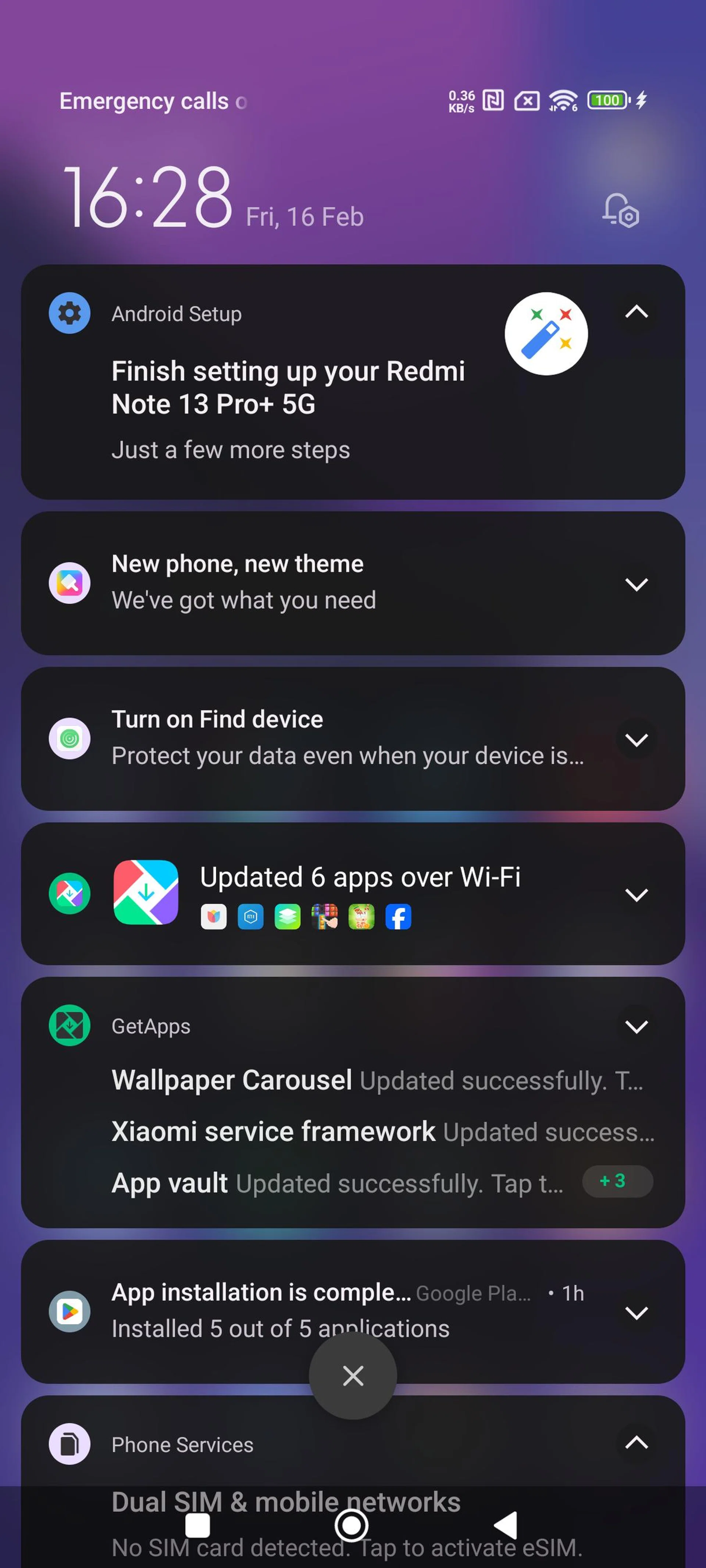
Is this the last time we'll see MIUI 14? Maybe not.
The Redmi Note 13 Pro+ 5G is preinstalled with MIUI 14 (Android 14). That’s to be expected since Xiaomi’s HyperOS platform is still fairly new and barely breaking new ground in both mobiles and automobiles in its home market.
The good news is that the Redmi device has a familiar interface that requires very little familiarisation. That includes all of MIUI’s weird quirks, like its inconsistent notification header sizes and sleep/idle settings hidden in the Always-On Display submenu (instead of the Display submenu).
Welcomed changes
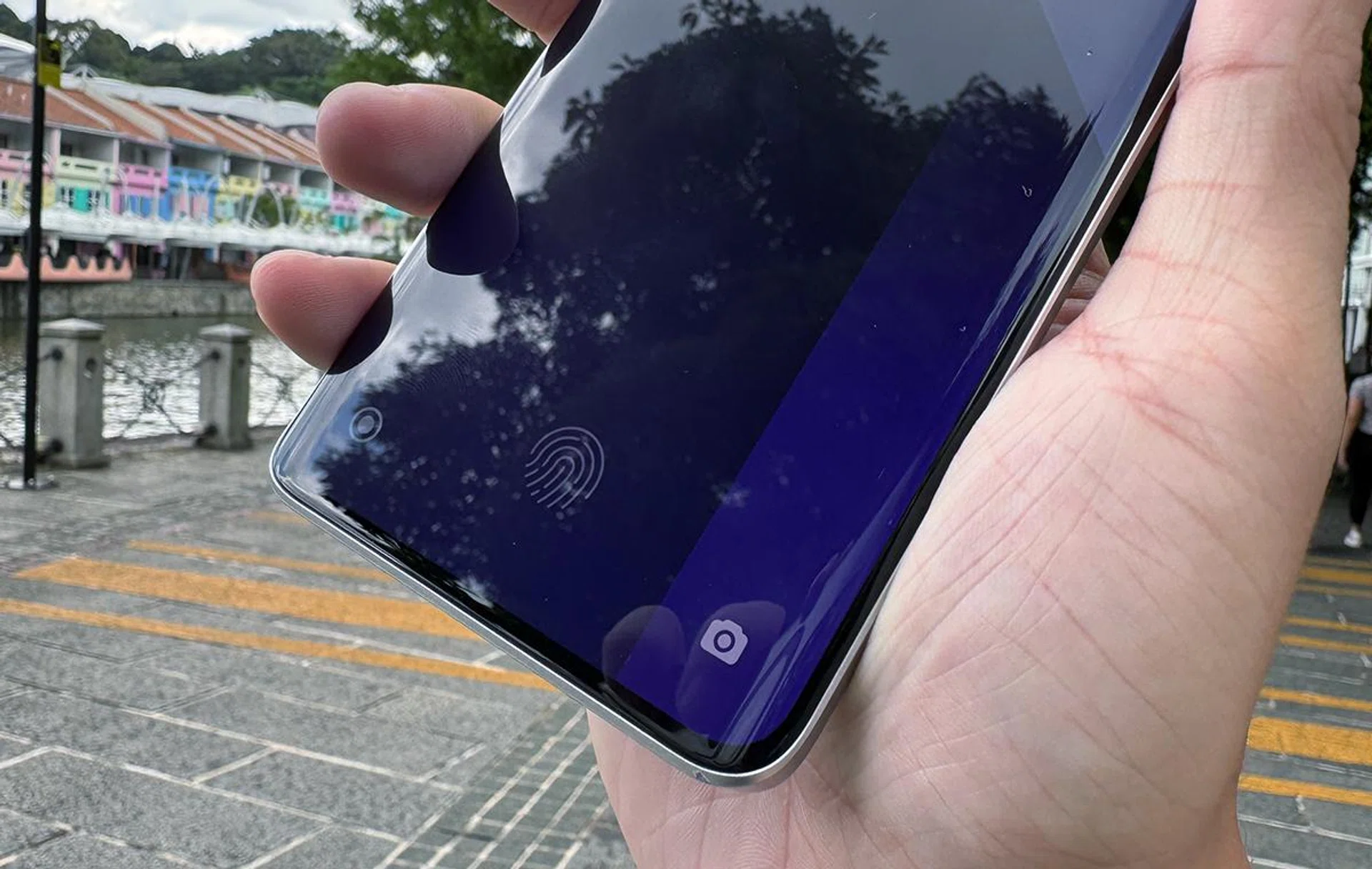
In-display fingerprint sensors are superior to side-mounted ones, not because it has better functionality. It's just less awkward, especially if you're left-handed.
What’s new and different about the Redmi Note 13 Pro+ 5G are two physical changes that alter how the phone works for you. First is the in-display fingerprint sensor, and second is the removal of its 3.5mm audio jack.
While both are hardly revolutionary, the preceding Redmi Note 12 Pro+ 5G only had a side-mounted fingerprint sensor on the power button. The in-display sensor position is far more natural to the grip and works well. It has a fast response time and is accurate enough to deny entry for unregistered fingers.
While it was still nice to have 3.5mm audio ports, it won’t be missed. True wireless earbuds have improved drastically over the decade, with functional options that cost a fraction of Redmi Note 13 Pro+ 5G’s sticker price. For example, a pair of Redmi Buds 4 Lite retails at S$23, arguably cheaper than many wired in-ear headphones. So there really isn’t an excuse to hang on to 3.5mm (unless you’re a pro videographer, but these pros would be using much more powerful phones for videography work).
Besides these positive tweaks, the new Redmi Note phone is made even better with an improved IP68 rating (up from its previous IP53), making it much more water-resistant (read the URL to see how much more). A high IP rating makes it slightly more difficult to get water damage, like being accidentally rained on. Don't disregard this, it significantly changes the user experience, especially if you have been using cheaper and unprotected phones most of the time, since you can be less careless around liquids.
What was not so welcomed was the same slowdown and stuttering when the phone is put under immense load (at bootup, running app downloads while using, or trying to browse on the phone during an online call). It’s noticeable if you’re used to flagship-tier handsets, but it’s a standard affair for phones priced around or lower than a Redmi Note series handset.
Imaging Performance
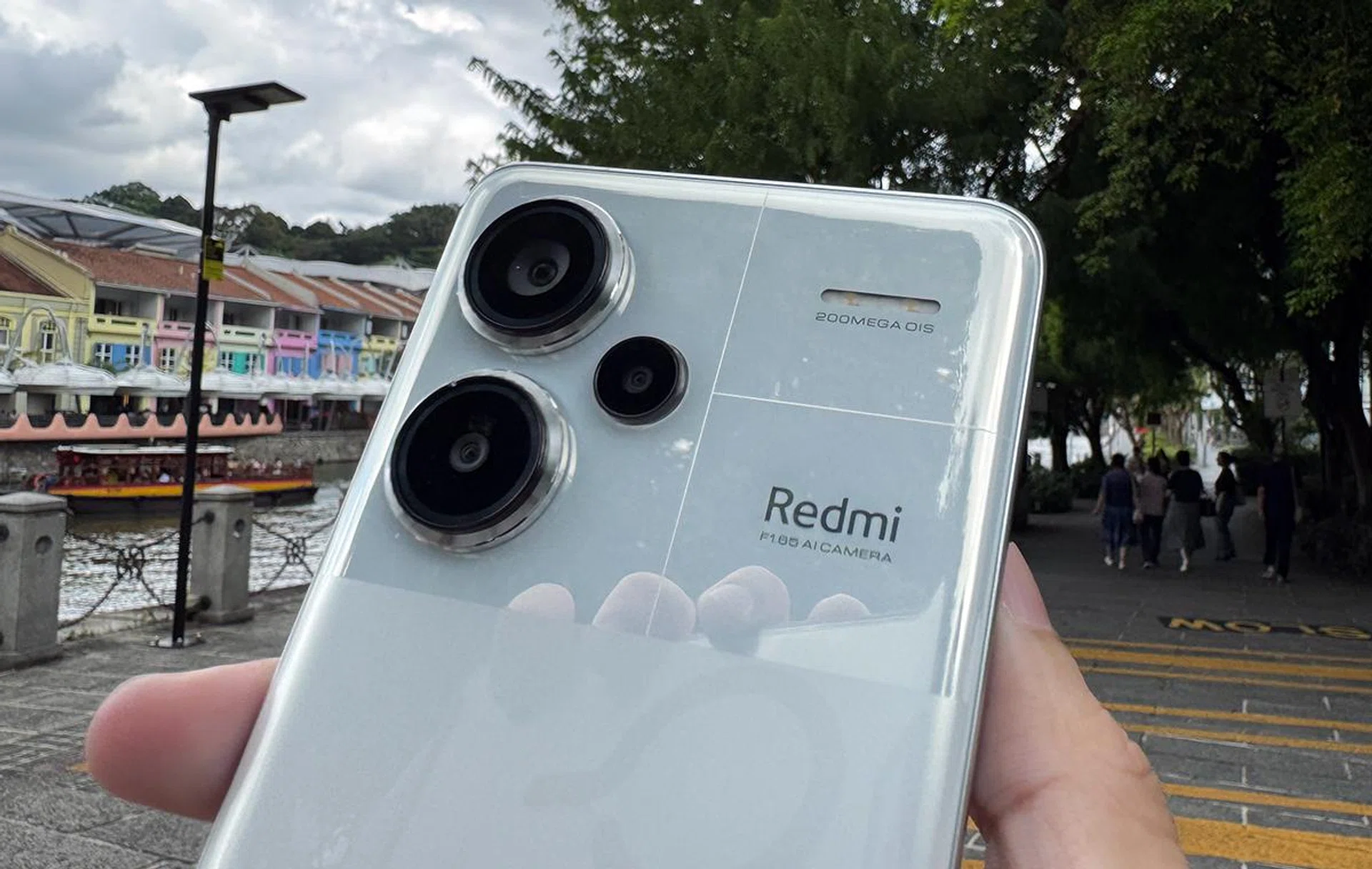
Redmi Note 13 Pro+ 5G rear cameras.
The Redmi Note 13 Pro+ 5G returns with a similar triple rear camera combo.
You’re getting a 200MP main camera with the same specs as before, like its sensor size (1/1.4-inch), aperture (f/1.65), and perks (16-in-1 pixel binning for default shots). The same goes for its 8MP ultra-wide camera, with an f/2.2 aperture and a 119° field-of-view. The last camera is a 2MP macro camera.
Xiaomi supposedly improved its imaging prowess via its updated Xiaomi Imaging Engine, which the brand said is supported “across a wide range of third-party apps”, uses computational photography, and has forced resource allocation to prioritise capturing when in use. The Chinese brand also said the phone has improved efficiency with light sources via its Optics Fusion blend (optical, space, time, and lighting fusion).
We think they basically kept the cameras mostly unchanged but made some tweaks to the software. Here are some test shots.
For reference, the main camera shoots at 23mm (35mm equivalent), with the ultrawide images coming in at 16mm. The 4x zoom images are based on its main camera, shot at 96mm (per its EXIF data).

Main camera.
From our trials, the Redmi Note 13 Pro+ 5G can give us serviceable images if you’re not actively looking out for flaws or shortcomings. The colours are almost balanced, and it does a decent job of retaining detail in the focused areas.

Main camera.

Ultrawide camera.

4x zoom.
Both daytime and indoor low-light images are well-lit, leading the eye to interesting subjects. For instance, you can see the display signs vibrantly highlighted in the Japanese supermarket, the road signs and buildings along the street “popping out” and calling to you, and giving you a sense of weather from the gentle waves seen on the Singapore River.

Main camera.

Ultrawide camera.

4x zoom.
Where it stops short are its colour biases and detail retention outside of the image’s centre. The Redmi Note 13 Pro+ 5G sensors emphasise reds, which can skew the contrast (again, the Japanese supermarket makes it clear). Subjects that are a part of the scene but not the main attraction (like shoppers) lose plenty of finer details in their faces and clothes. Trees, while their trunks are well-captured, don’t receive the same attention for their leaves. At times, the subjects we expected to show up sharp and lively turned out a little flat — like the public buses running along the road. Noise, while not distracting, still shows up in out-of-focus areas, including daytime shots.

Main camera.

Ultrawide camera.

4x zoom.
Oddly, both strength and flaws are consistent across the three modes we shot in (main camera, ultrawide, and 4x zoom), which suggests the issue lies in the phone's imaging processing pipeline.
All in all, photos from the Redmi Note 13 Pro+ 5G are great for a phone of its class. It'll suffice for basic imaging needs and is more than adequate for sharing on social media, just don't expect it to hold a candle to phones that are double or triple its price.

Main camera.

Ultrawide camera.

4x zoom.
Benchmark Performance
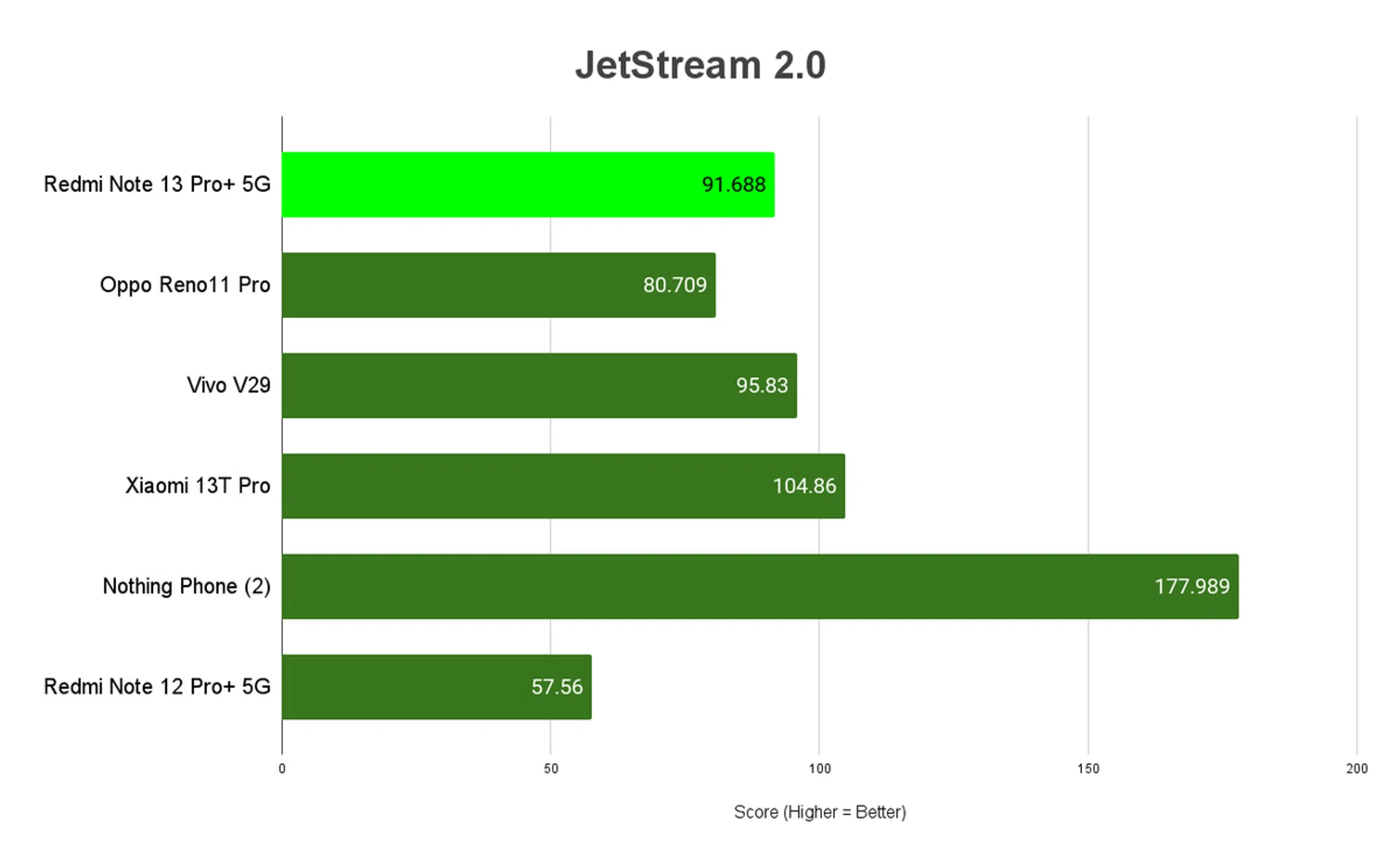
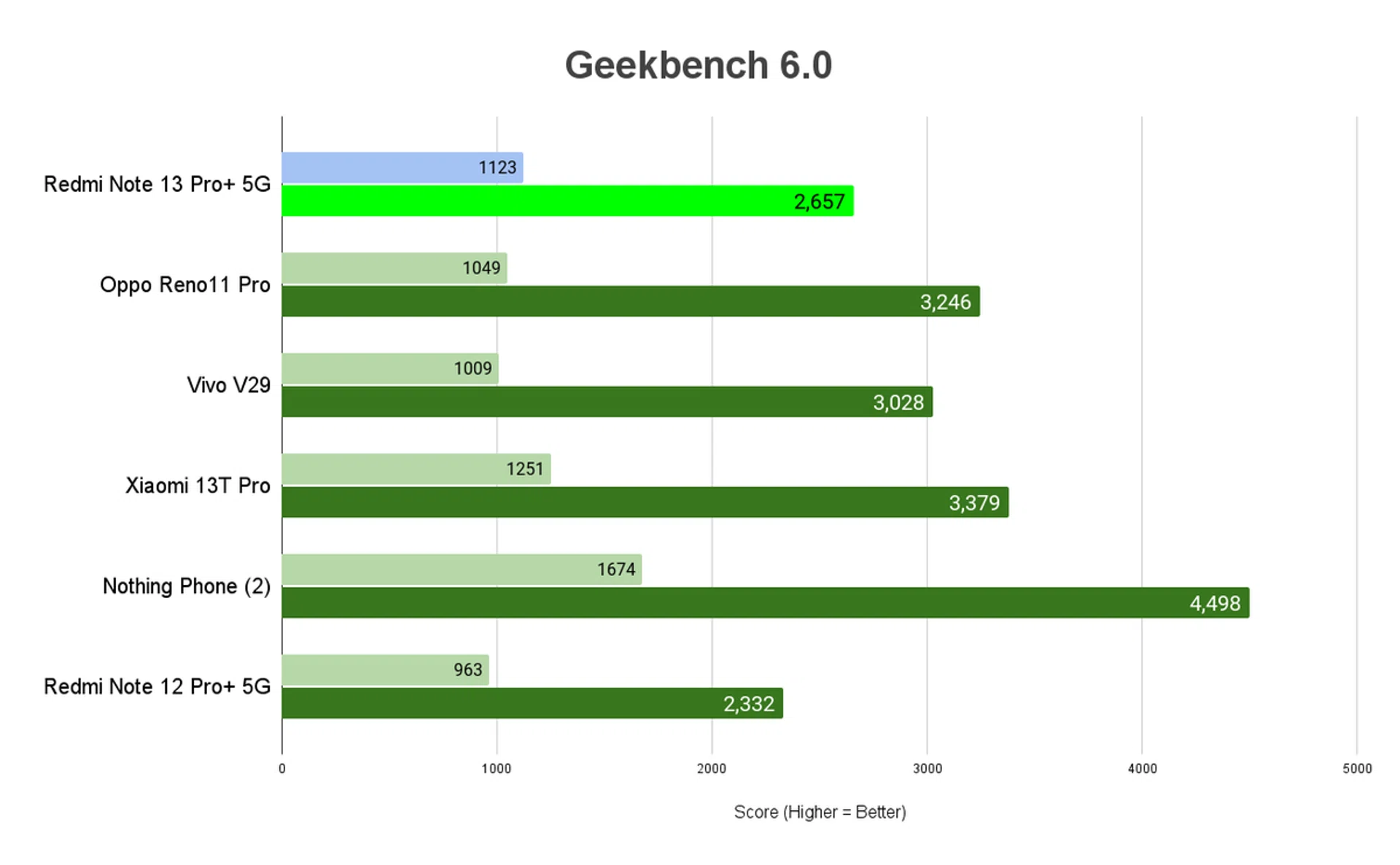
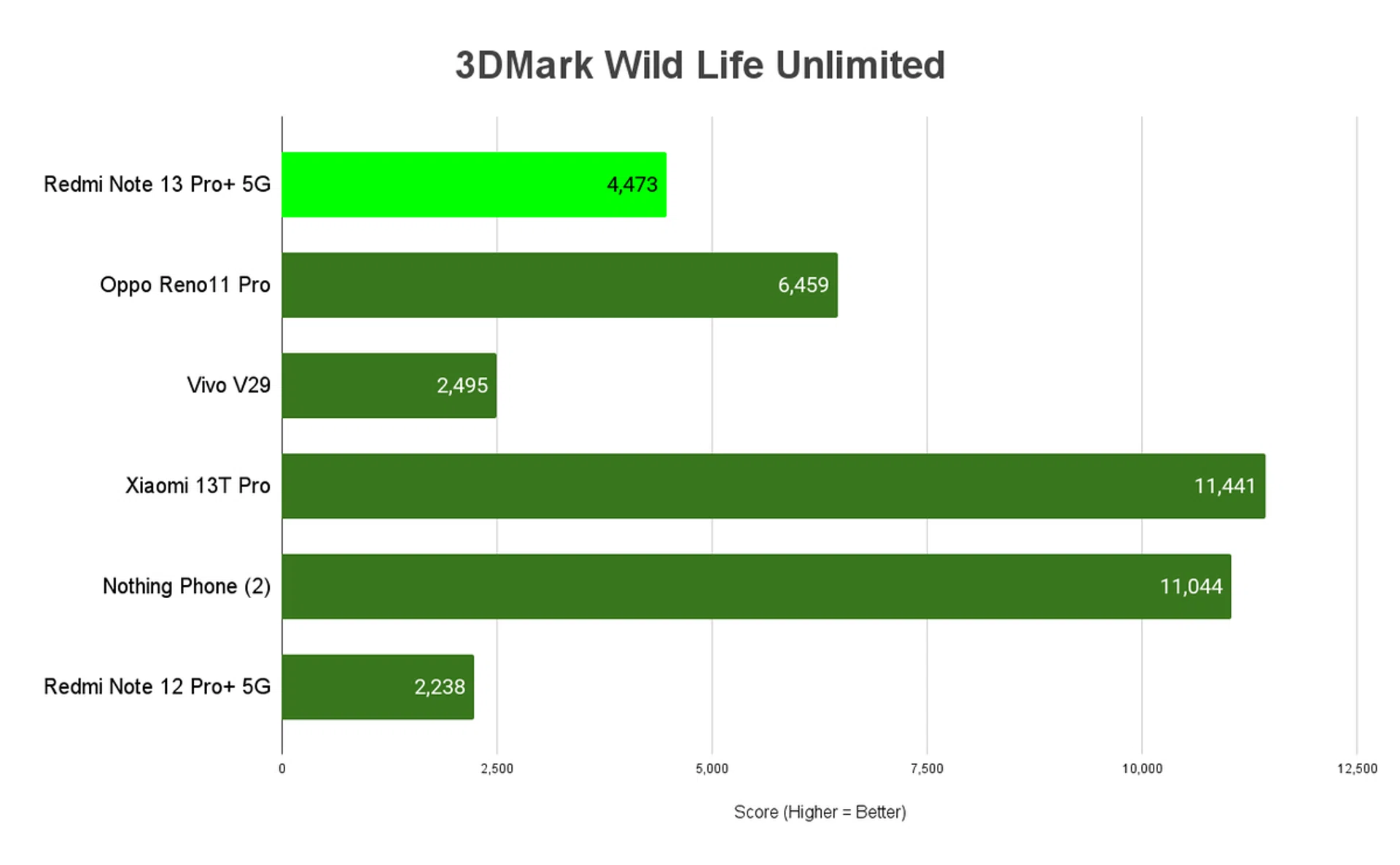
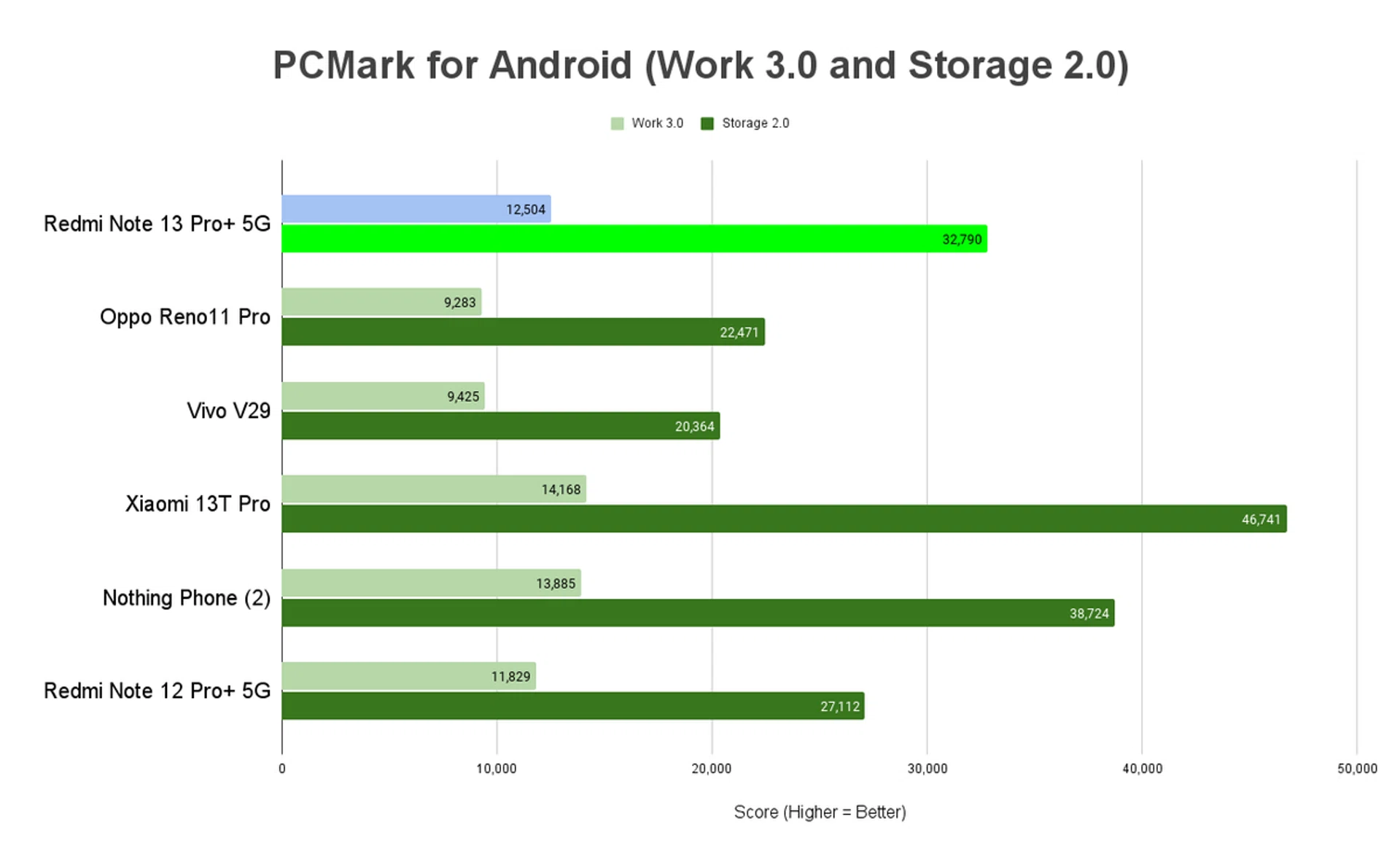
Redmi Note 13 Pro+ 5G uses an entry-level MediaTek Dimensity 7200-Ultra chipset, a souped-up version of its base chipset model launched in 2023. The chipset is responsible for some features, like its 200MP camera support and 5G networking compatibility. It also supports Bluetooth 5.3, Wi-Fi 6, and NFC. However, it’s not designed to be a processing powerhouse, which you can see from our comparisons to similarly priced phones below. Another improvement to performance is UFS 3.1 storage, which should mean faster read and write speeds to internal storage.
Putting it to the test
To find out how the competitors line up specs and price-wise, check them out in this link.
To find out more about the tests we conduct and what they relate to, we've jotted them down here.
Performance remarks
During regular use, the Redmi Note 13 Pro+ 5G manages to keep up with no perceivable stutters or lag. When the phone has many background tasks to keep up with, like updating several apps simultaneously, and running downloads while watching shows, it slows down noticeably. These hiccups are within expectations since it’s not a flagship-tier phone. The phone also manages to keep things cool, never going above 41°C even when strained. The Redmi Note 13 Pro+ 5G is leagues ahead in performance when compared to options like the Vivo V29 and its predecessor, even if it’s nowhere near the top of the pile.
Battery Life
Our battery benchmark uses PCMark for Android’s Work 3.0 Battery Life test to determine a modern Android-based smartphone's battery uptime in minutes. This controlled benchmark simulates real-world usage with a combination of both web and social media browsing, video and photo editing, parsing data with various file formats, writing (on documents), and more.
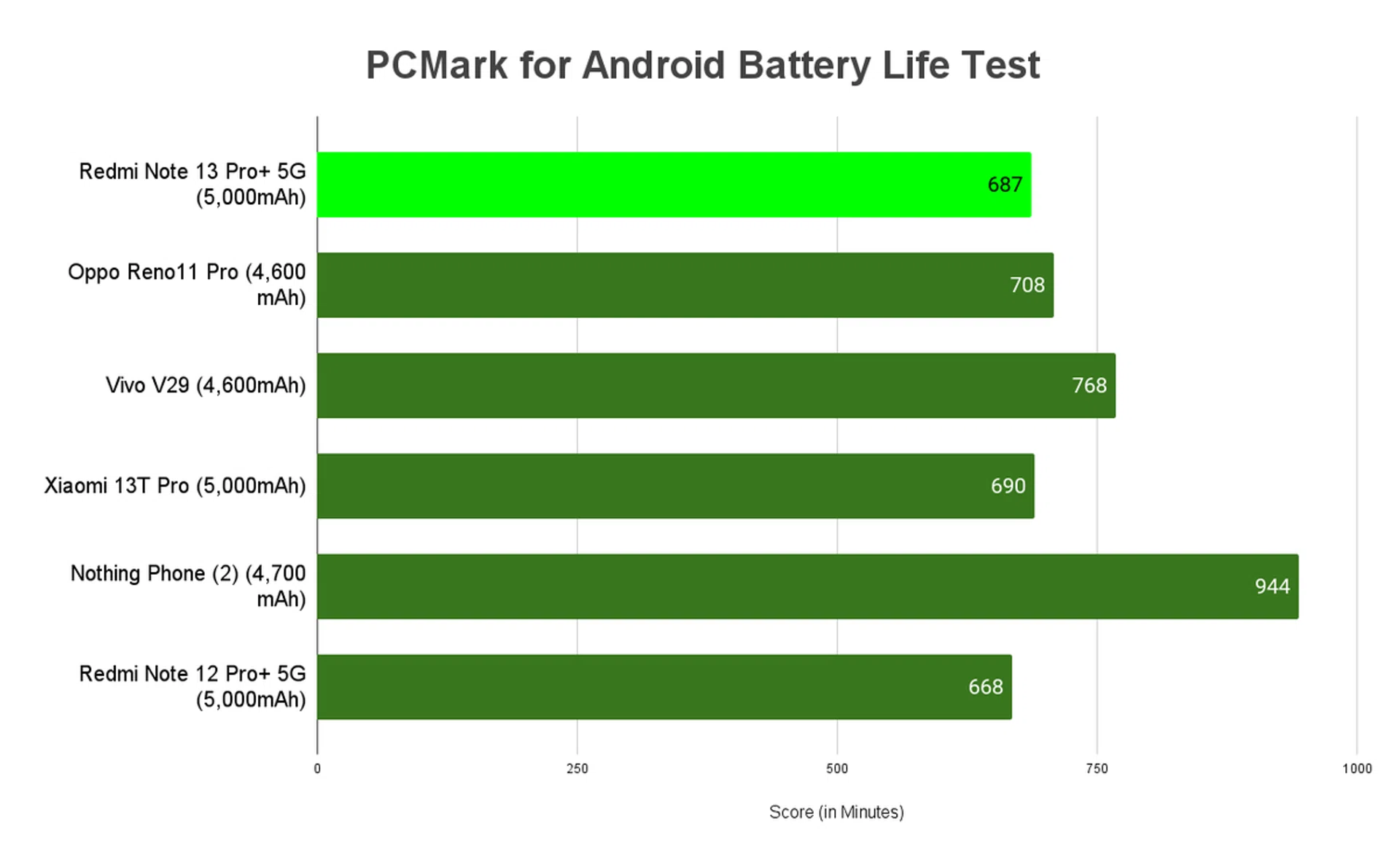
As mentioned, the Redmi Note 13 Pro+ 5G has a 5,000mAh battery. Its battery uptime of just under 12 hours isn’t fantastic, but definitely acceptable given the limitations of its chipset and its amazing display quality.
Like before, the 120W HyperCharge wired fast-charging adapter can bring the Redmi Note 13 Pro+ 5G from 0-100%, slightly under an hour. This has been a consistent experience with the previous device.
We also tried another full charge on a different third-party adapter to satisfy our curiosity. It took nearly two hours, and the battery tracker in the Settings app confirms that, too. Sticking to the 120W adapter Xiaomi provided in the box (20V with variable 3 to 6A) would be best.
As a phone with only basic needs afforded, it does not have wireless charging.
Conclusion
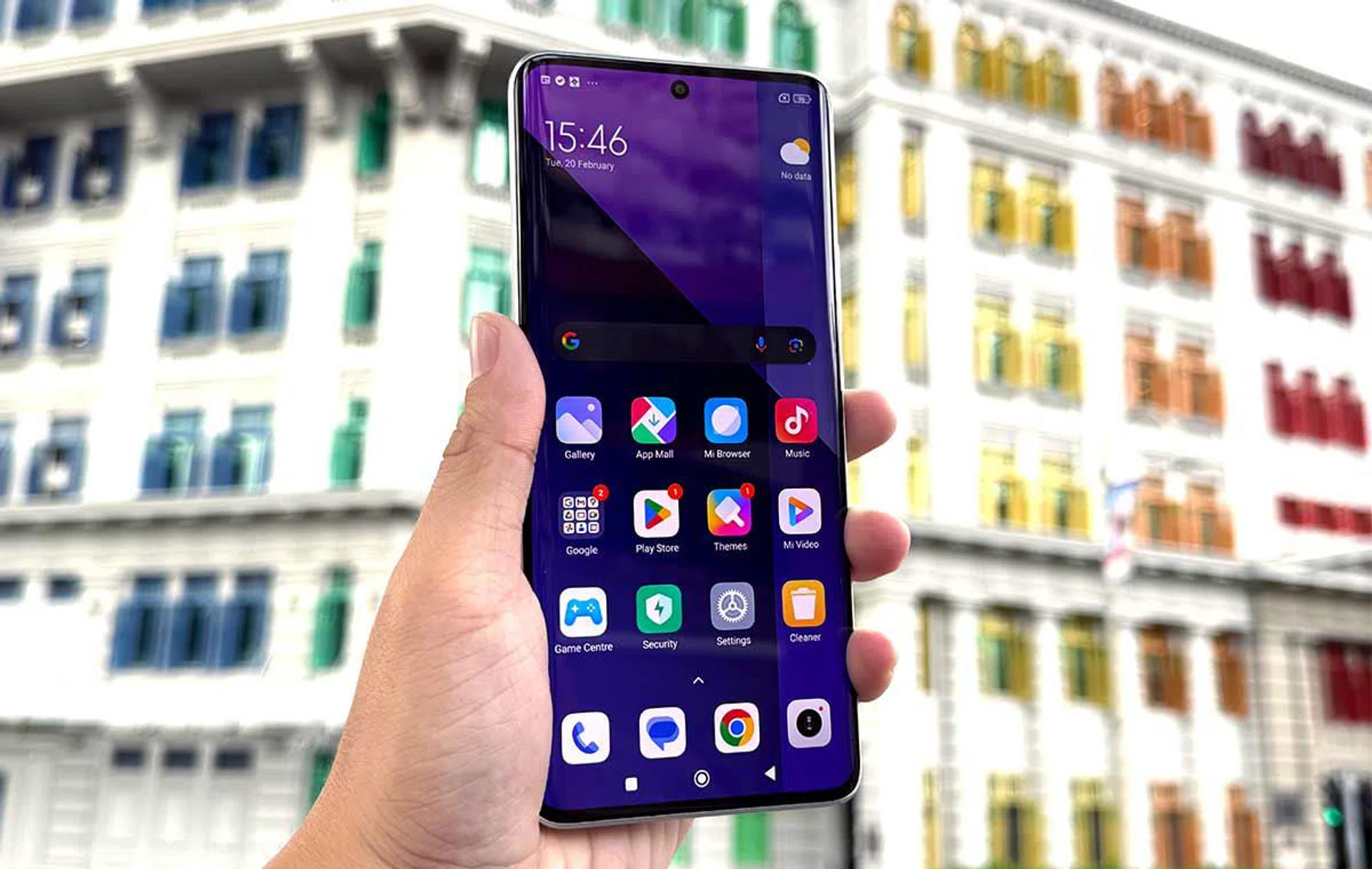
Redmi Note 13 Pro+ 5G.
The poster child of budget phones has historically been the domain of Xiaomi’s Redmi phone series, and the Redmi Note 13 Pro+ 5G once again proves that you don’t have to pay through your nose if you want a a solid phone that covers most of the bases for just S$569 (12GB RAM + 512GB storage) – which, interestingly, is the same price as its predecessor (no price hikes, yay!).
In fact, it’s great for people who don’t care for cutting-edge parts or features. You see, it still comes with an IP68 water resistance rating and has a good enough display that can show you both 1080p and 1440p content with great clarity and colour, all while having a decent battery life, functional performance, 512GB storage, and some conveniences like in-display fingerprint recognition for unlocking your phone. It's more than capable of being a daily driver if you don’t need the latest and greatest that other phones charge a premium for.
Admittedly, it doesn’t have a unique selling point like the S$649 Vivo V29’s Aura Light 2.0 for selfies, nor an impressive portraiture shooting system like the S$899 OPPO Reno11 Pro. But that’s because the Redmi Note 13 Pro+ 5G doesn’t need these things to entice folks who know what they want. It comes in at nearly S$100-300 less than the Vivo and OPPO and gives you perks like water resistance while delivering decent 120Hz viewing quality.
Samsung's Galaxy A54 is a tempting alternative, given the strength of Samsung's ecosystem and the brand's promise of years of OS updates and security patches. But, it's a considerably pricier phone at S$654, and that only gets you 8GB RAM + 256GB storage. Furthermore, it's not a lot more powerful. Again, this just highlights the value proposition that the Redmi Note 13 Pro+ brings to the table.
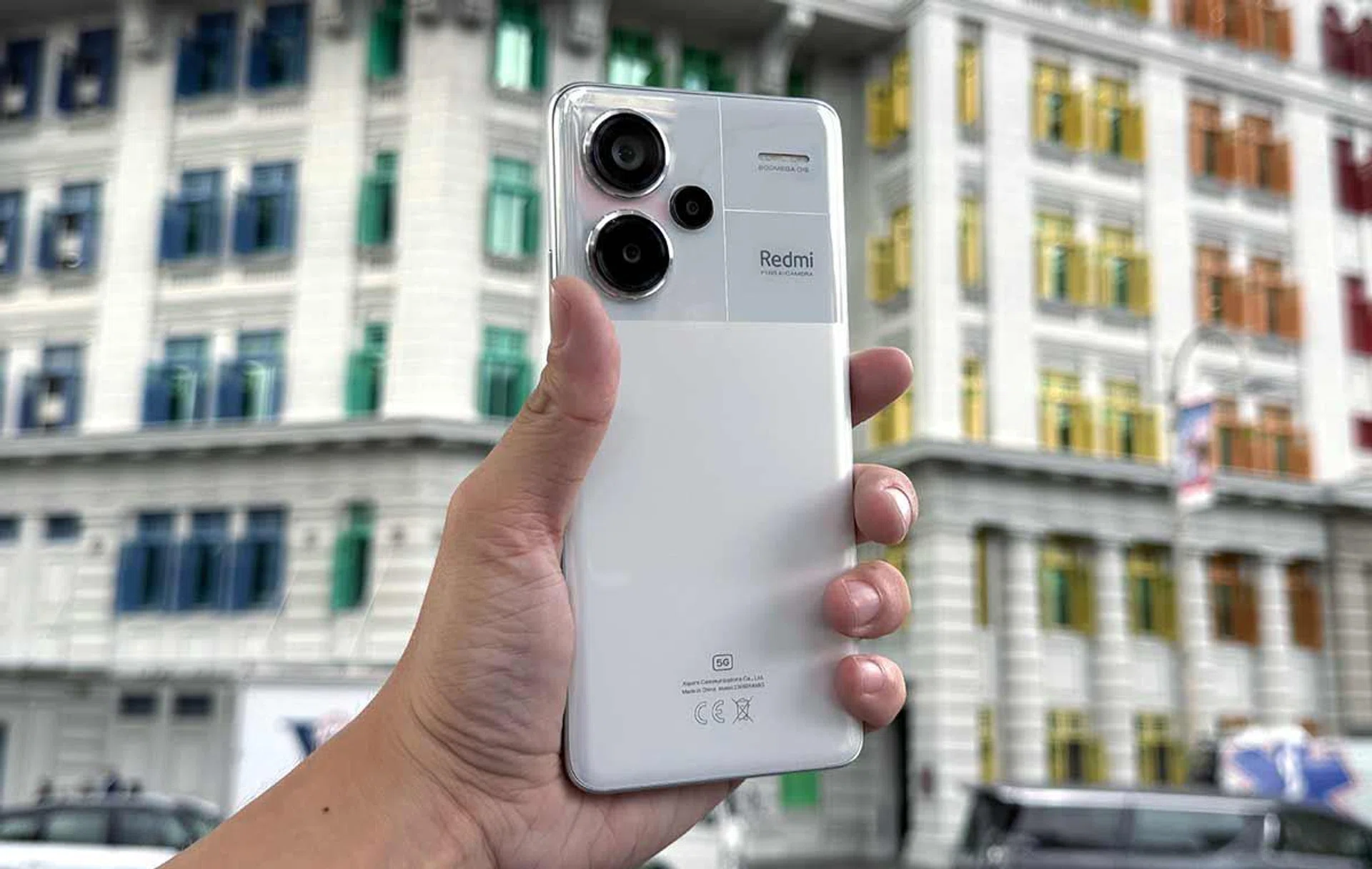
Redmi Note 13 Pro+ 5G.
What makes it sweeter is that the Redmi Note 13 Pro+ 5G is a clear upgrade from its predecessor since the Redmi Note 12 Pro+ 5G did not have IP68 protection, a display-mounted fingerprint sensor, or a bright 1,800-nit panel for outdoor viewing.
If the raw performance, battery life, and imaging quality are a touch better than they are, we’d say the Redmi Note 13 Pro+ 5G is the budget-tier phone others will need to beat. But even without these advantages, the Redmi Note 13 Pro+ 5G is still a good option and decent value for money if you need an affordable handset without superfluous add-ons.
The Redmi Note 13 Pro+ 5G retails at S$569 (12GB RAM + 512GB storage) on its official channels, such as its Xiaomi authorised stores, Lazada, and Shopee. Colours available are Midnight Black, Aurora Purple, and Midnight White.
Our articles may contain affiliate links. If you buy through these links, we may earn a small commission.