
Redmagic 10 Pro review: Tactical trade-offs for overpowered gameplay
The Redmagic 10 Pro is one of the best gaming phones we've encountered. It starts at just S$999 and offers flagship-tier hardware. #redmagic #gamingsmartphone #redmagic10pro

Note: This review was first published on 5 May 2025.
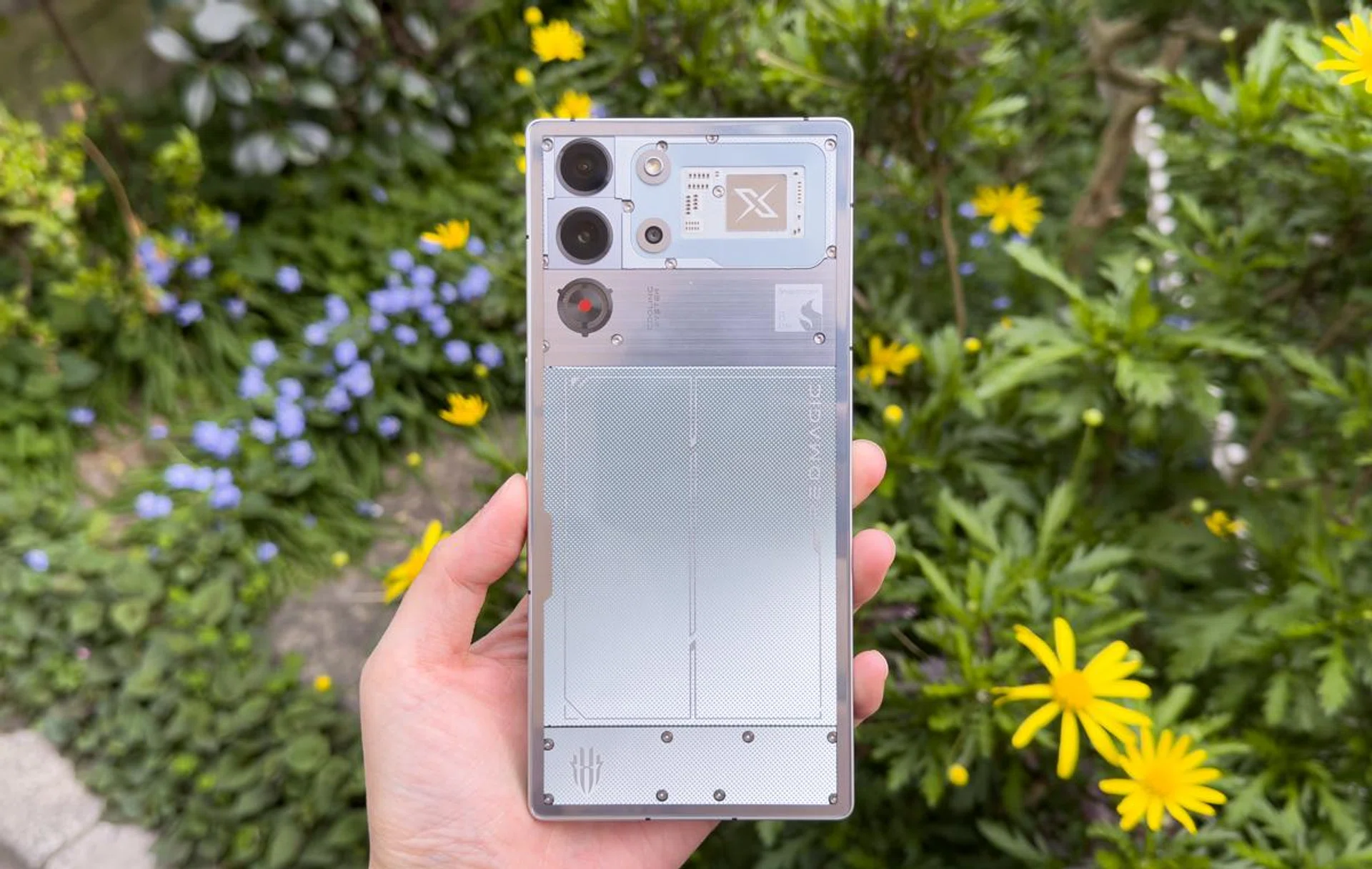
Redmagic 10 Pro. Photo: HWZ.
The future of mobile gaming? US$1.5 billion a week
Gaming smartphone releases have been steadily declining over the years. Brands like Lenovo, Razer, and others are discontinuing their offerings. However, there's still an undeniable market of mobile gamers who enjoy demanding titles like Wuthering Waves, Genshin Impact, and more.
Even if millions of mobile gamers don't turn heads, mobile gaming will remain an essential smartphone metric. According to Data.ai's State of Mobile 2024 report, global spending on mobile gaming was US$1.5 billion per week in 2023.
So, it's logical that some phone brands will want to be a relevant and reliable partner in this space, cutting through the stigma of gaming even in conservative, wet-blanket markets.
The Redmagic 10 Pro was released in late 2024, and it immediately stood out as a great option. It has the latest Qualcomm Snapdragon 8 Elite processor, LPDDR5X Ultra RAM, a large 6.85-inch AMOLED display that supports up to 144Hz refresh rate, and a built-in cooling fan that is supposed to help manage the phone’s thermals.
TL;DR version:
Redmagic 10 Pro might be the best gaming smartphone you can buy right now. It has a large battery, flagship hardware, and excellent performance.
The phone is available at S$999 on Redmagic's online portal (in SGD, ships to Singapore).
The large 7,050mAh battery inside should provide plenty of power for long gaming sessions. It's also supported with 100W fast wired charging, which we'll find out if it actually makes the phone juice up quickly.
At just S$999 for the 12GB RAM + 256GB configuration, it’s one of the most affordable phones with a class-leading 2025 Qualcomm proecessor. Should you choose this over regular premium phones if you love mobile gaming? Let's see.
Sleek, but chunky design
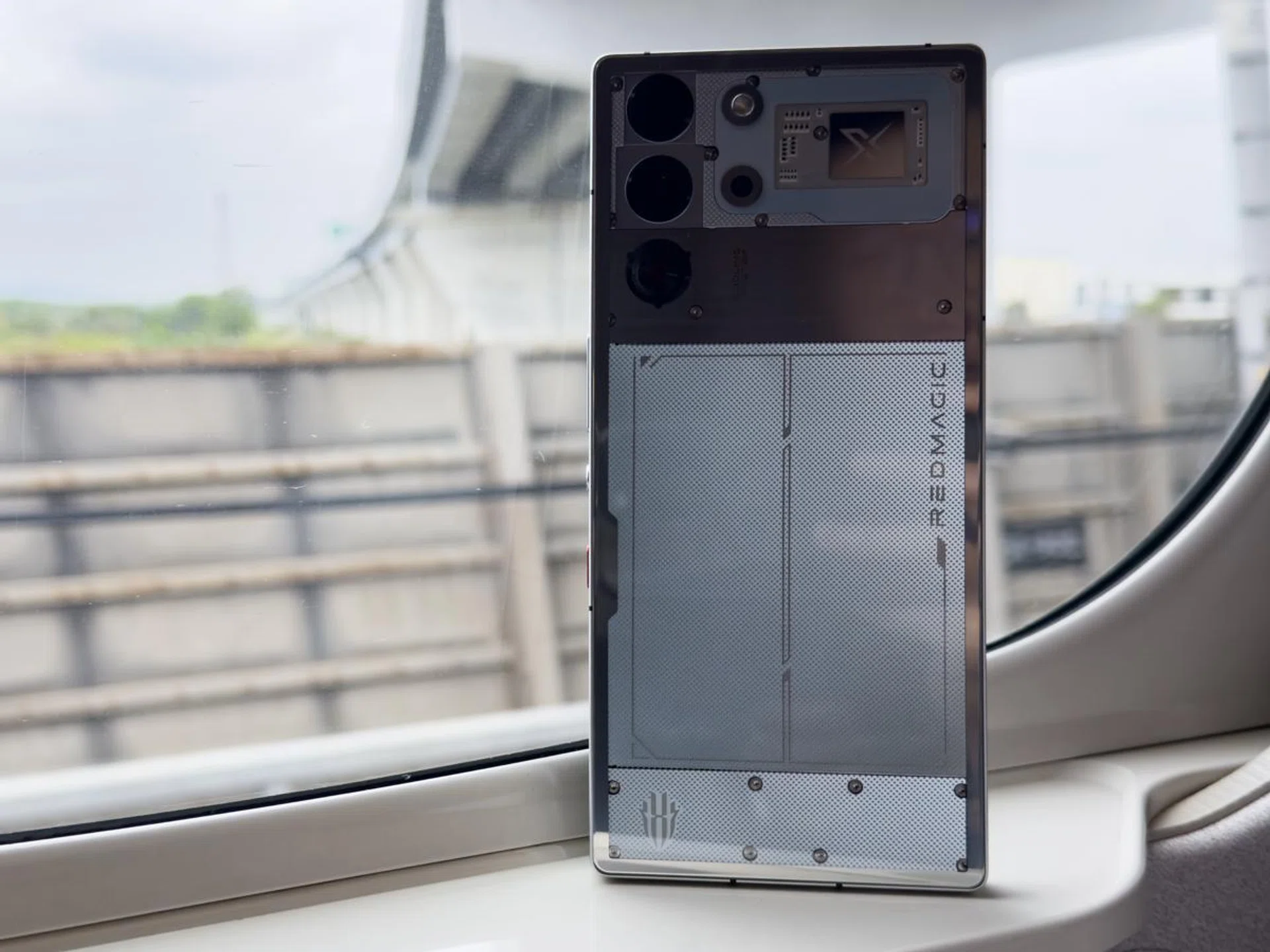
Redmagic 10 Pro. Photo: HWZ.
The Redmagic 10 Pro's design makes it a large and blocky phone. With aluminium straight edges all around and flat panes of glass, the phone feels acutely angular and unwieldy during day-to-day use. The perk, however, is that this design gives a better grip when held in landscape mode, be it for gaming or watching content.
Redmagic goes back to its futuristic vibe by using a transparent back panel that shows off the pattern and screws on the rear. The industrial aesthetic is similar to Nothing's phone designs, but I think the Redmagic 10 Pro looks sleeker (a personal preference).
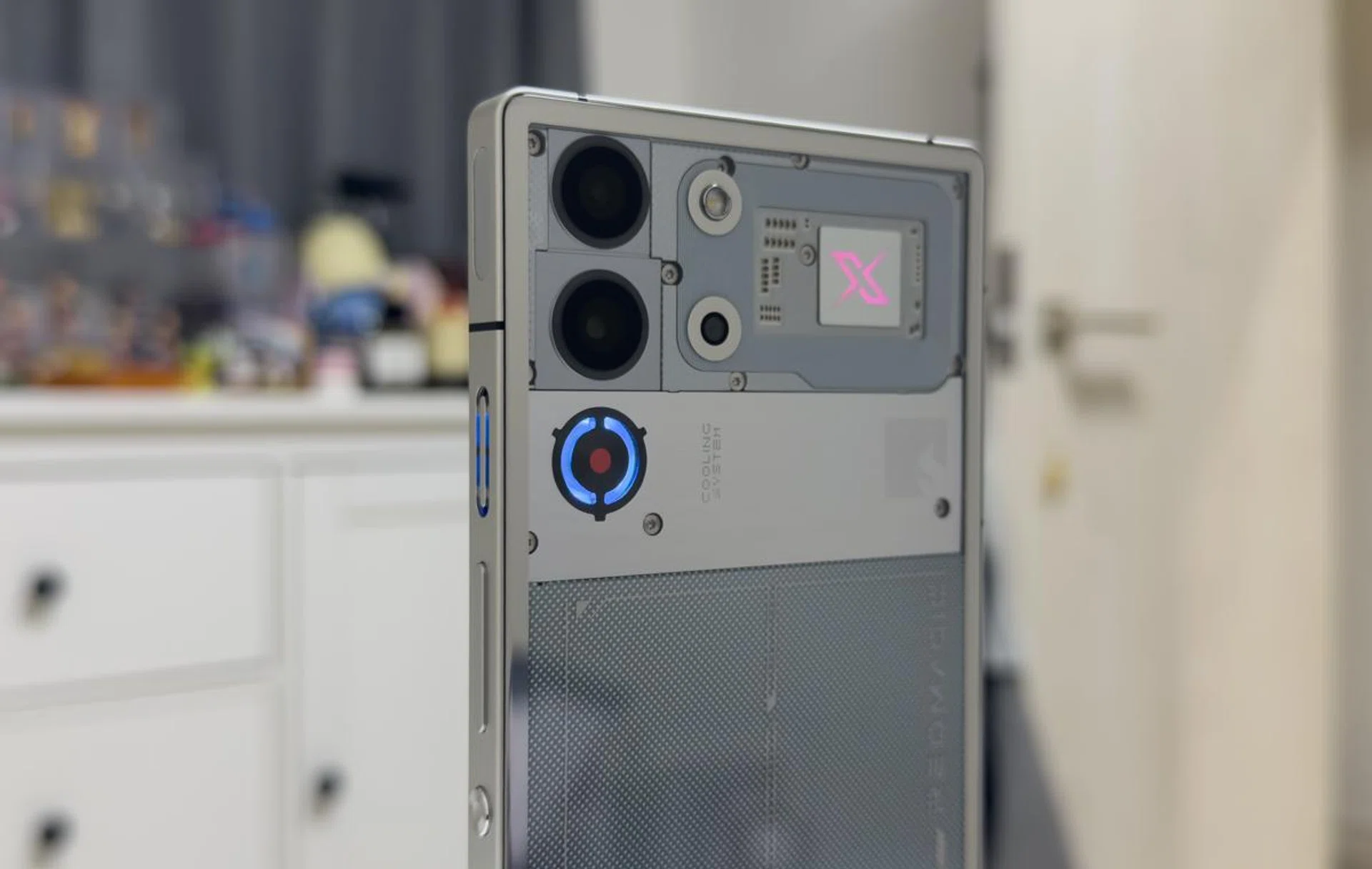
LED lights aren't too gaudy. Photo: HWZ.
There are minimalist and tastefully accentuated LED light areas on the rear. It's just a single ring around the cooling fan, an “X” next to the camera array, and the Redmagic logo at the bottom of the phone.
These LED lights don’t usually light up unless the fan is turned on or when Game Space is running. While this is contrary to typical gaudy gaming setups, the sparseness of Redmagic 10 Pro's LEDs makes it clear that it's capable without screaming its competency out loud.
In a nice change from most new phones, the rear of the Redmagic 10 Pro is almost entirely flat. Save for a mild metal ring protrusion at the flash module, the rest (including cameras) stay flush under the single back glass panel. The phone sits flat on surfaces with no rocking or instability, a rarity in Android phones these days.
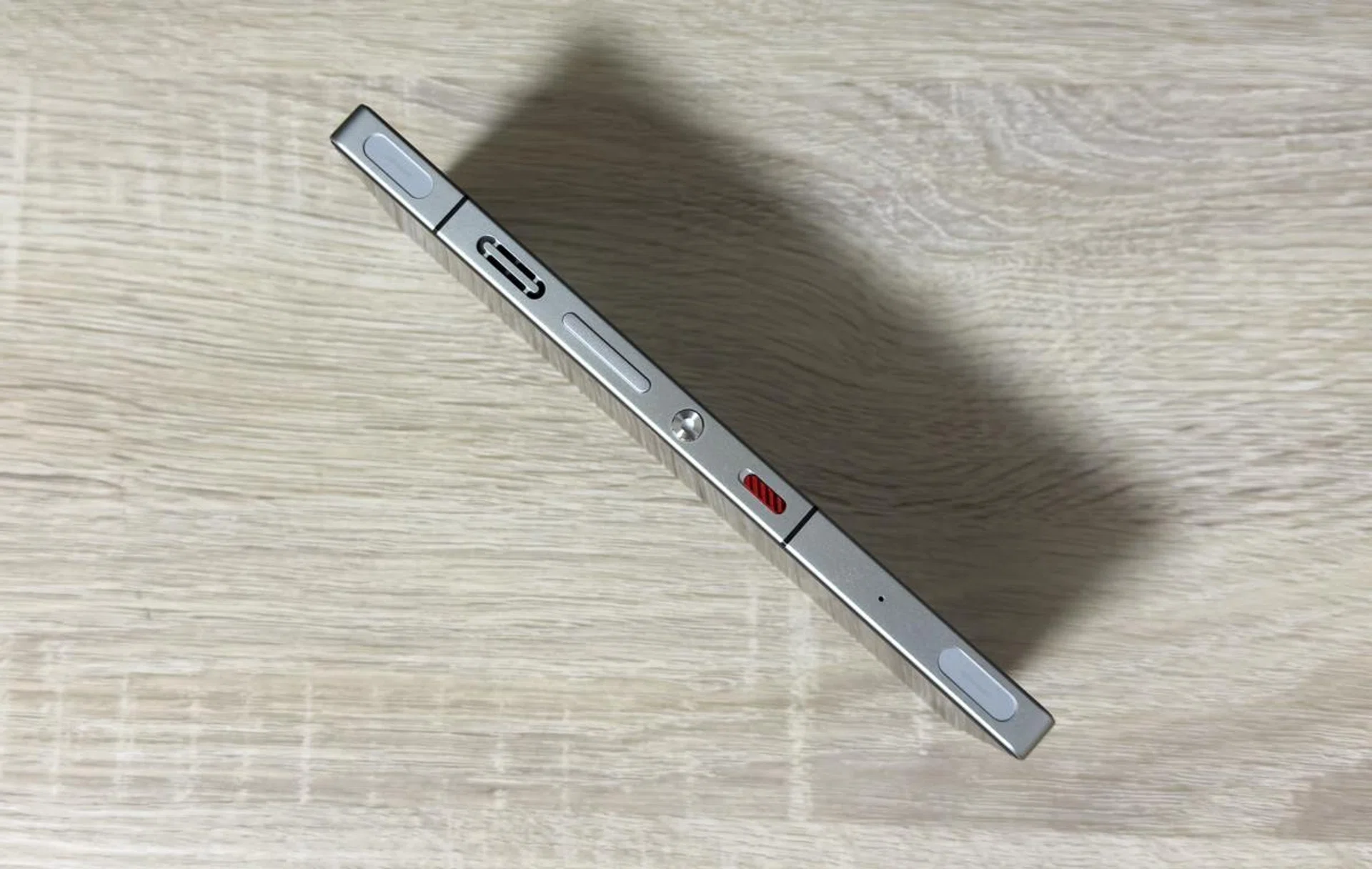
Capacitive triggers, fan intake, power button and Competitive Key. Photo: HWZ.
All the buttons are placed on the phone's right side. The power button is the most distinct with a circular cutout. Its volume rockers and the fan intake port are above it. Below is a red, textured slider button called the Competitive Key that activates the phone's gaming mode, Game Space.
The left side is bare except for an exhaust port that directs hot air out of the phone after it has been directed through its internal ICE-X Liquid Metal cooling system.
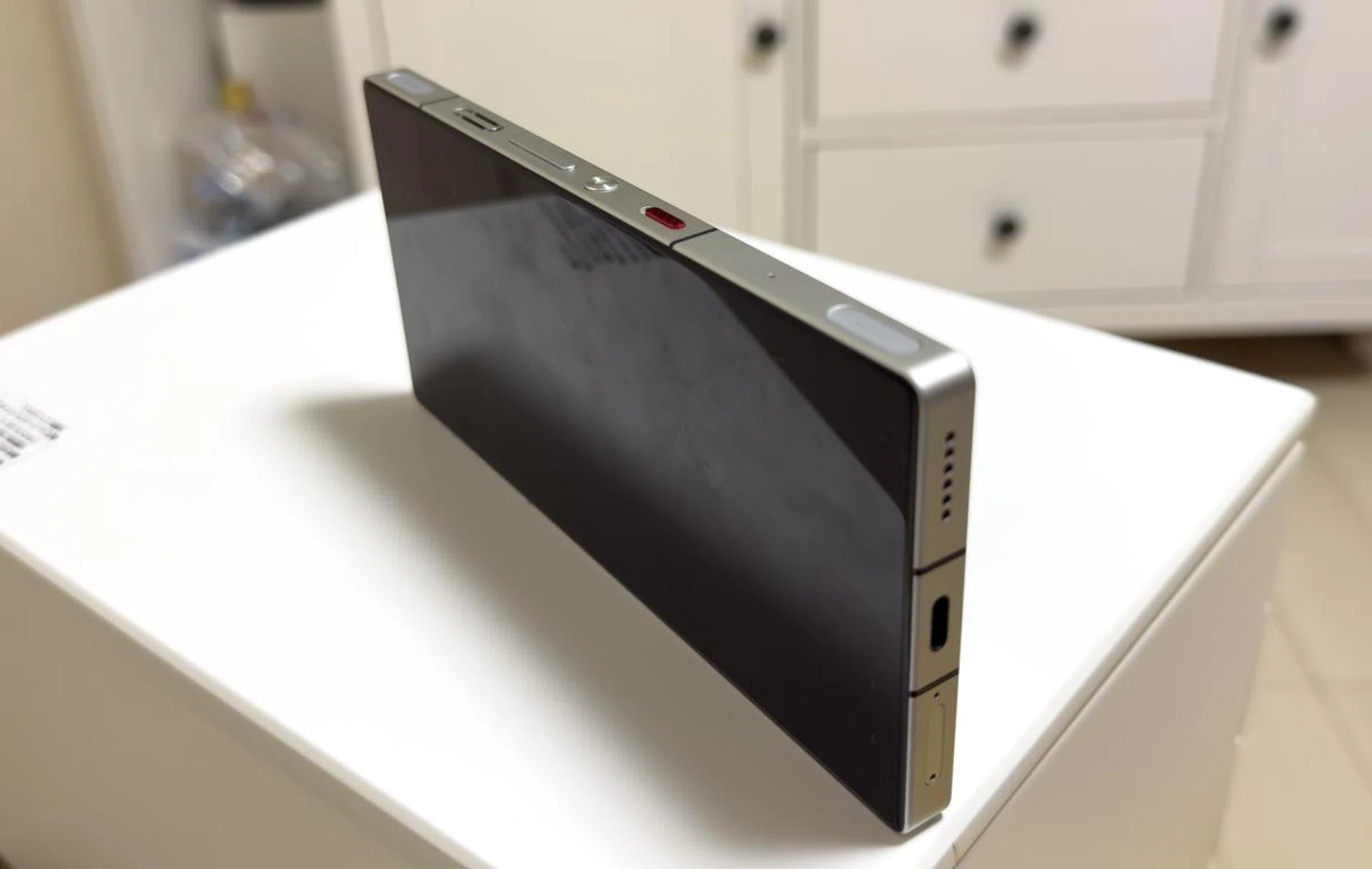
Flat, angular edges. Photo: HWZ.
The bottom has the SIM card tray and the USB-C charging port, and the top has a rare 3.5mm headphone jack for wired audio.
We do have to note that while the phone can support dual SIMs, it does not support eSIMs, and we think it's the only thing they overlooked on this device.
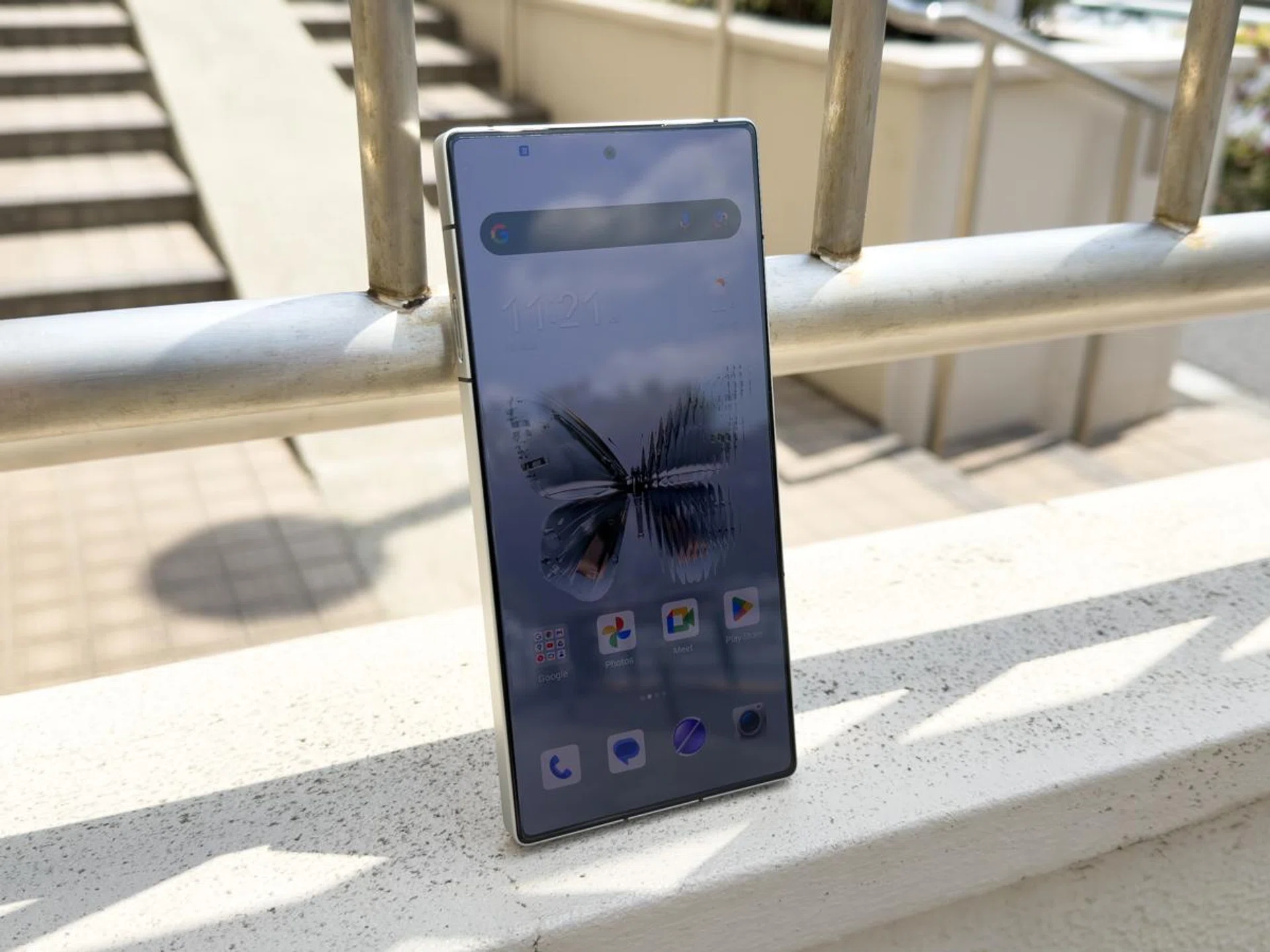
Legible under bright sunlight. Photo: HWZ.
The 6.85-inch AMOLED display has a peak brightness of 2,000 nits, a refresh rate of up to 144Hz, and support for 10-bit colour. The bezels are uniformly thin all around, which adds to its immersion and focus when gaming or watching content. The selfie camera is hidden under the display, although it’s visible when looking at the camera from an off-angle.
The stereo speakers do get quite loud when playing back music or videos, and they serve decently for game audio as well. However, if you're serious about audio meeting your gaming needs, you might want to invest in good earbuds or wired in-ears for better quality.
There is no official water/dust resistance rating for this phone, so take care if you use it on the beach or by the pool.
The major tradeoff
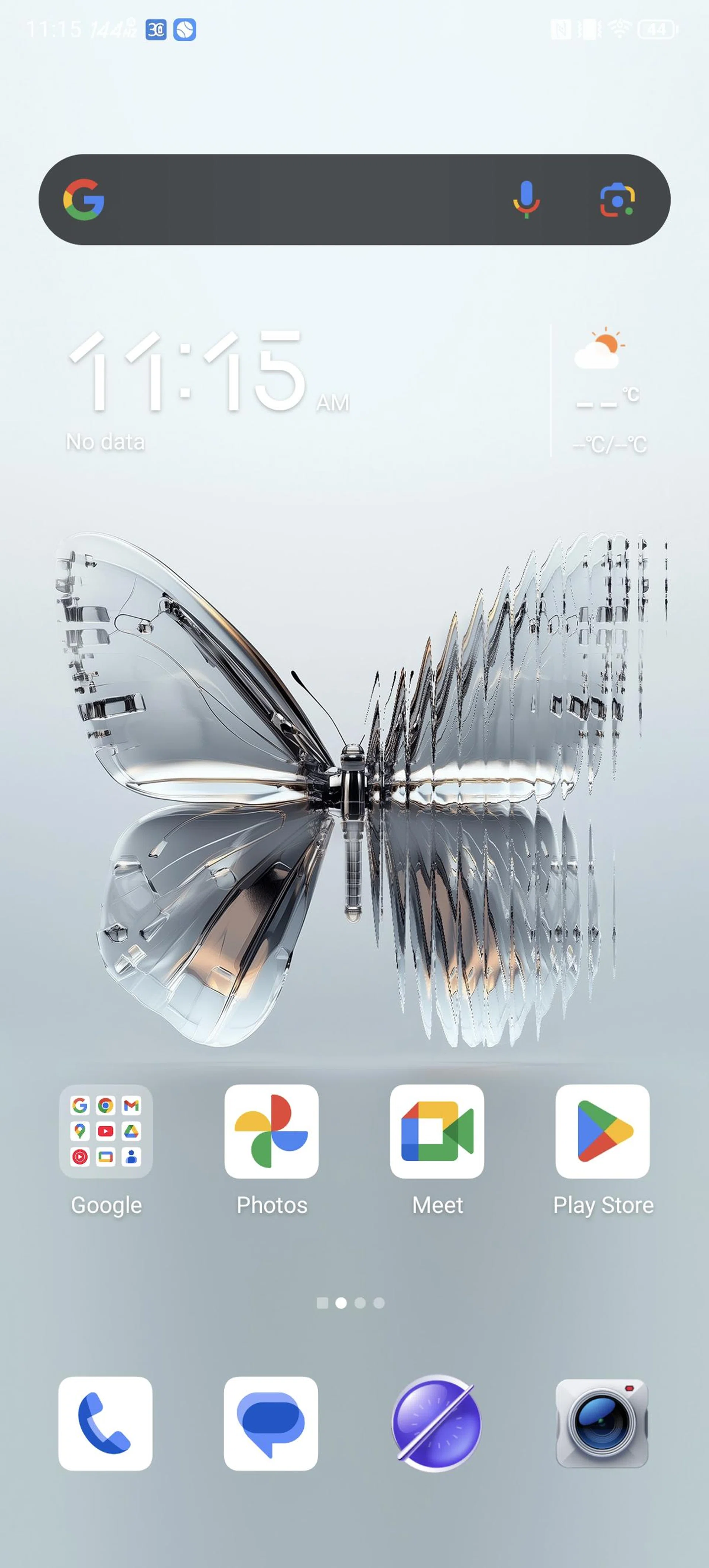
Redmagic OS 10. Photo: HWZ.
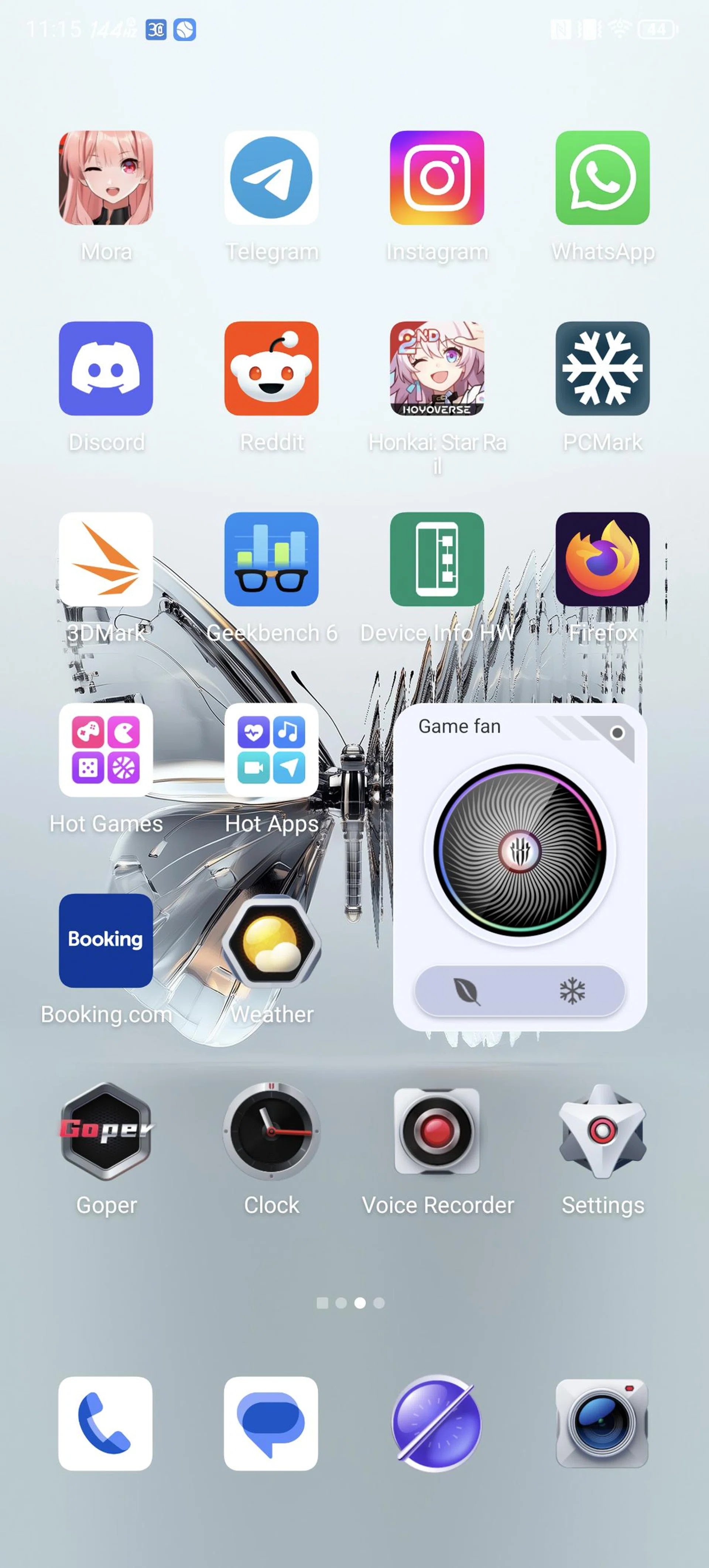
Redmagic OS 10. Photo: HWZ.
There’s not much to nitpick with the hardware so far, but that’s not quite the case for its software.
The phone uses Redmagic OS 10, which is the company’s customised skin of Android 15. It gets three years of regular updates with at least one major Android OS update, which lacks support or longevity.
We expected better for a phone starting from S$999, especially since other brands like Xiaomi can offer four years of software updates and five years of security updates for phones that cost less.
Unfortunately, Redmagic OS 10 isn’t the most optimised either. While there’s nothing wrong performance-wise, we encountered minor issues like mistranslations and inconsistent grammatical errors in some parts of the UI.
It feels almost like Redmagic just used results from Google Translate without getting a native speaker to take a look after.

We recommend downloading a third party browser. Photo: HWZ.
There are also other small flaws like its ad-infested default browser, but you won't have to suffer too long after downloading your browser of choice from the app store and banishing the default one to the dungeon depths.
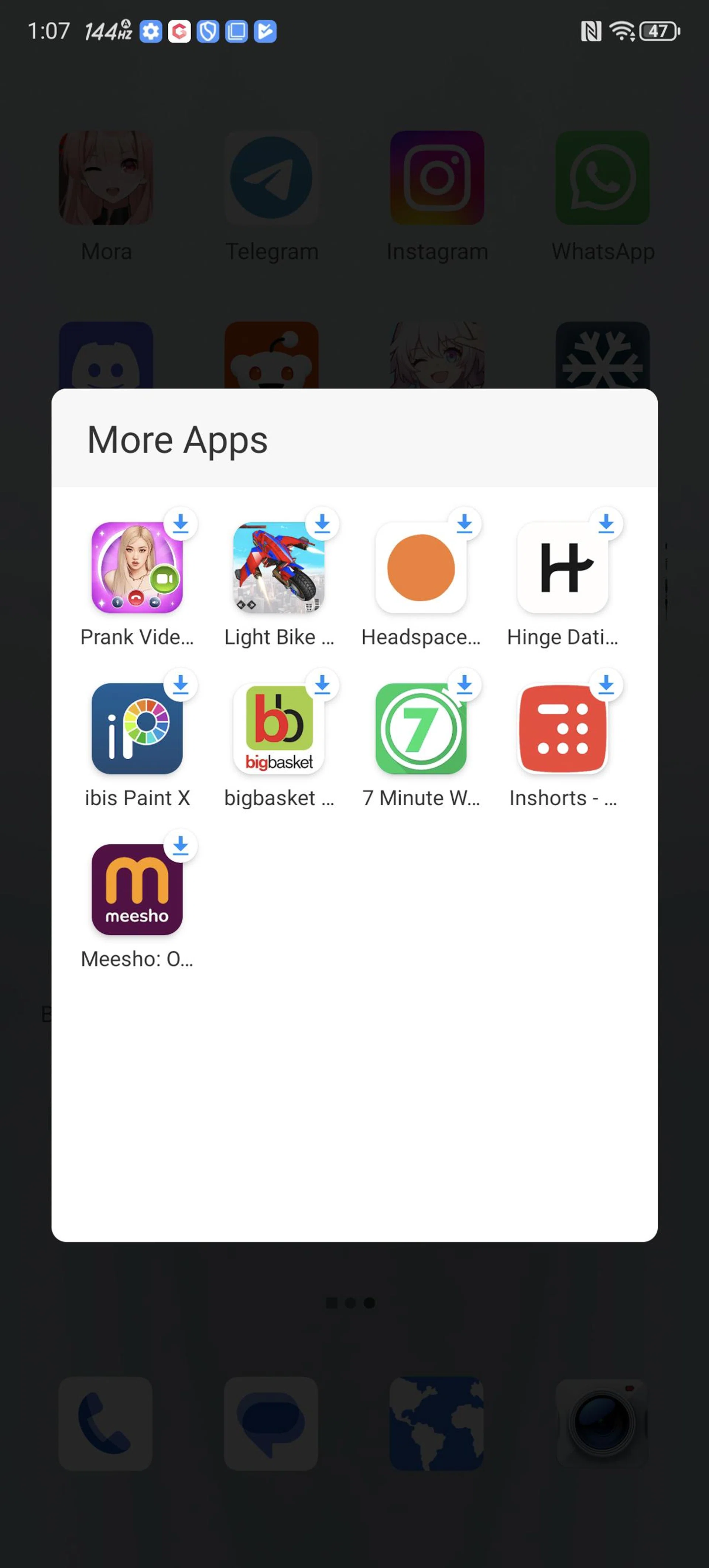
The bloatware recommendations aren't installed. Photo: HWZ.

Just delete the folder and it all goes. Photo: HWZ.
Bloatware is kept to a bare minimum, but it's still not ideal. Two folders' worth of gaming apps on the home screen aren't pre-downloaded, which makes it easy to remove simply by deleting the folders. It shouldn't have to be that way, though.
One design issue I have is the unappealing default app icons. Thankfully, they can be easily changed in the Theme and Personalisation section in Settings, and it’s a personal preference anyway.
Game Space

Game Space. Photo: HWZ.
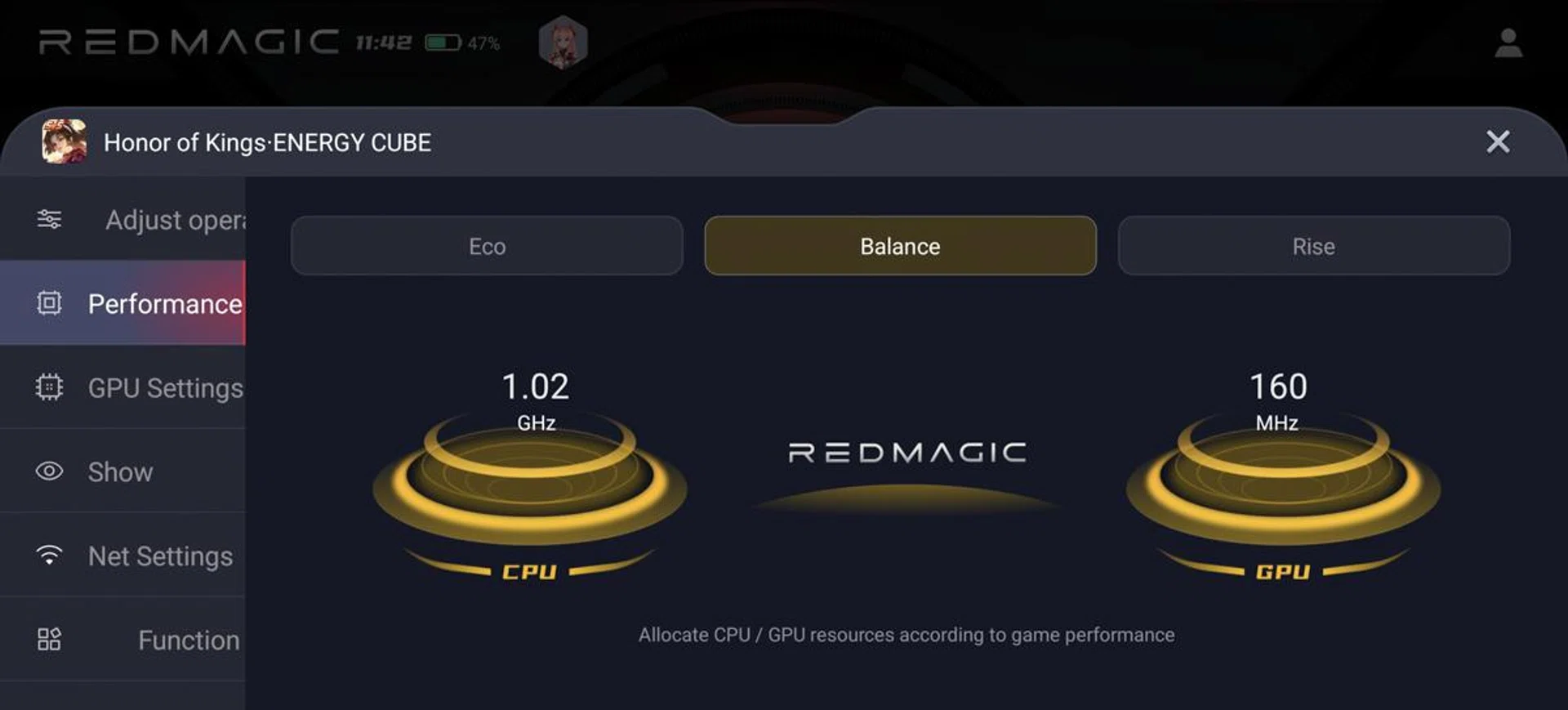
Game Space settings. Photo: HWZ.
Game Space is a gaming-centric feature that can be easily activated by sliding the red button on the side of the phone. You can see the button in an earlier photo from the previous sections.
It offers an in-game overlay and game-specific functionalities, like customisable capacitive shoulder triggers, monitoring in-game FPS, clock speeds for the CPU and GPU, and other adjustments for overclocking, touch sampling rates, and more.

Mora. Photo: HWZ.

Mora. Photo: HWZ.
Just like on older Redmagic phones, the Redmagic 10 Pro comes with the company’s Mora AI virtual assistant. She is switched off by default, but can be enabled in Game Space.
Personally, we didn’t find the AI waifu offering very much to our interface. While she can talk to you and you can make the avatar react by poking your screen, it feels more like a gimmick and less of an actual phone assistant.

Mora settings. Photo: HWZ.
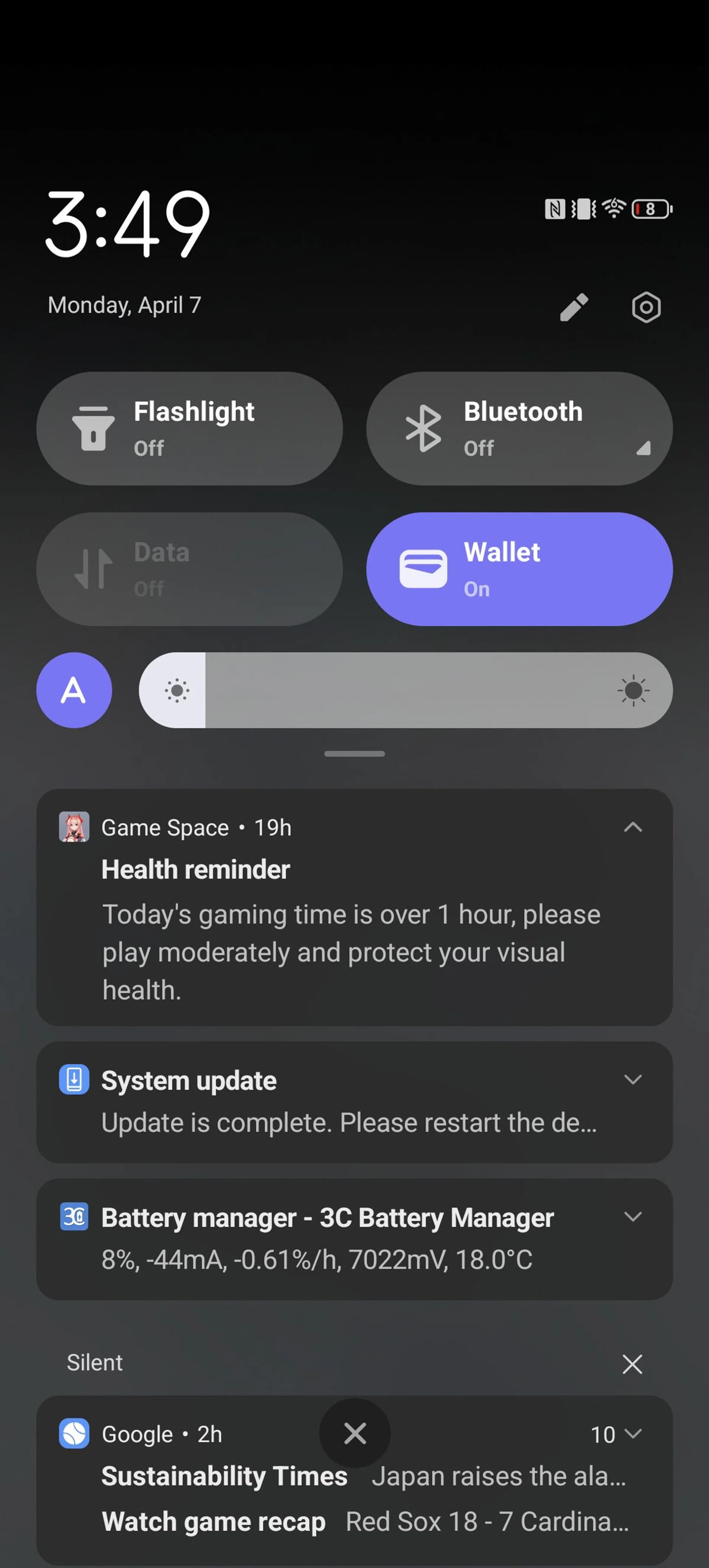
Gaming reminders. Photo: HWZ.
She gives you reminders for breaks, but I detested the notifications popping up in the middle of a team fight during ranked matches for Honor of Kings. Contrary to what other gamers like to say about our mothers whenever they lose, most of us who are willing and able to drop a thousand dollars for a gaming phone probably don’t need a surrogate AI mother to nag at us.
Imaging performance
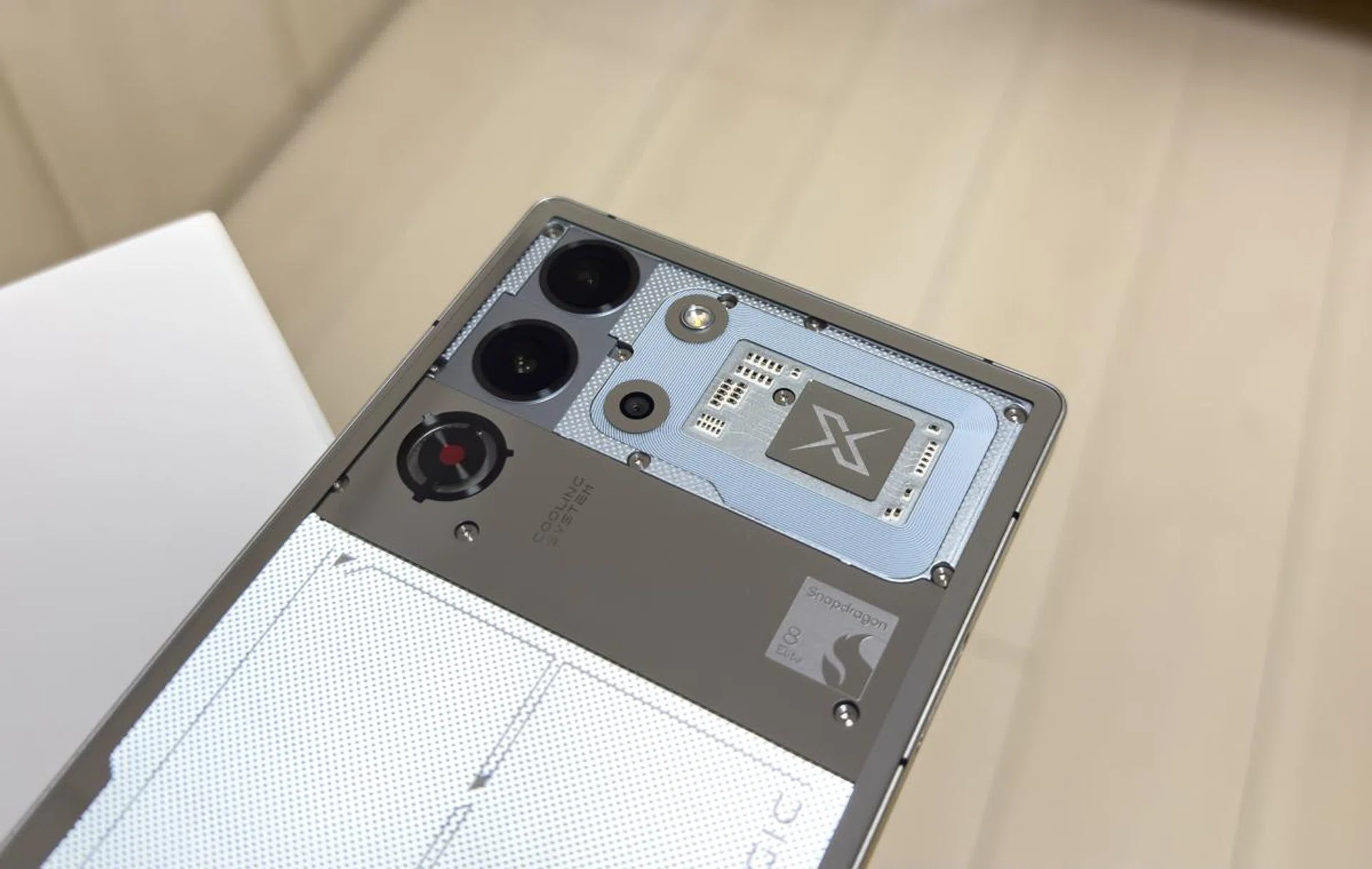
Cameras are flush with the glass back. Photo: HWZ.
The Redmagic 10 Pro has a 50MP main camera (f/1.8 aperture, 1/1.55-inch OmniVision OV50E sensor, PDAF, OIS), a 50MP ultrawide camera (f/2.2 aperture), and a 2MP macro camera (f/2.4 aperture).
Given that Redmagic 10 Pro prioritises gaming experience, we've tempered our imaging expectations for this phone. To our surprise, it can serve up decent results.

Main camera. Photo: HWZ.

Main camera. Photo: HWZ.

Main camera. Photo: HWZ.

Main camera. Photo: HWZ.

Main camera. Photo: HWZ.

Main camera. Photo: HWZ.

Main camera. Photo: HWZ.

Main camera. Photo: HWZ.
The photos from the main camera are punchy and well-saturated, perhaps more than we would like. However, its impeccable sharpness makes it easy to share these images directly to social media or friends and family without editing. There's plenty of detail, as seen by the text on all the bottles of wine, which are still legible when zoomed in.

Ultrawide camera. Photo: HWZ.

Ultrawide camera. Photo: HWZ.

Ultrawide camera. Photo: HWZ.

Ultrawide camera. Photo: HWZ.

Ultrawide camera. Photo: HWZ.
The ultrawide camera is also sharp, but its colours and contrast are passable. There's a noticeable difference in exposure and colour from the photos out of the main camera. We also noticed a slight loss of detail which means text and the likes aren't as crisp, but images are generally still usable with a bit of editing.

Low-light shot. Photo: HWZ.

Low-light shot. Photo: HWZ.

Low-light shot. Photo: HWZ.

Low-light shot. Photo: HWZ.
Low-light images are decent. The phone’s night mode does a good job of automatically lifting shadows and dark areas to try to get an evenly exposed image. Shots taken indoors are handled well, with good white balance and exposure.

Selfie camera. Photo: HWZ.
We typically don’t discuss selfie cameras in our reviews, but the under-display selfie camera used here isn’t great, especially if you have light sources behind you. We can understand why Redmagic went with an under-display camera (for better gaming immersion), but this technology significantly affects photo quality.
Taking selfies and playing mobile games aren't hobbies that should exclude each other, so we'd like to see more effort put into the selfie quality. It would also help uplift the phone's USP when it's already short on eSIM support, dust/water-resistance ratings, and a clean, error-free UI.
Benchmark performance
With the latest Qualcomm Snapdragon 8 Elite processor inside, paired with LPDDR5X Ultra RAM and UFS 4.1 Pro storage, we expect nothing but excellent benchmarks from the Redmagic 10 Pro. Therefore, we will be pitting it against a few true flagship devices with the same processor, as well as other devices around the S$1,000 price range for a sense of scale.
Putting it to the test
To find out how the competitors line up specs and price-wise, check them out in this link.
To find out more about the tests we conduct and what they relate to, we've jotted them down here.
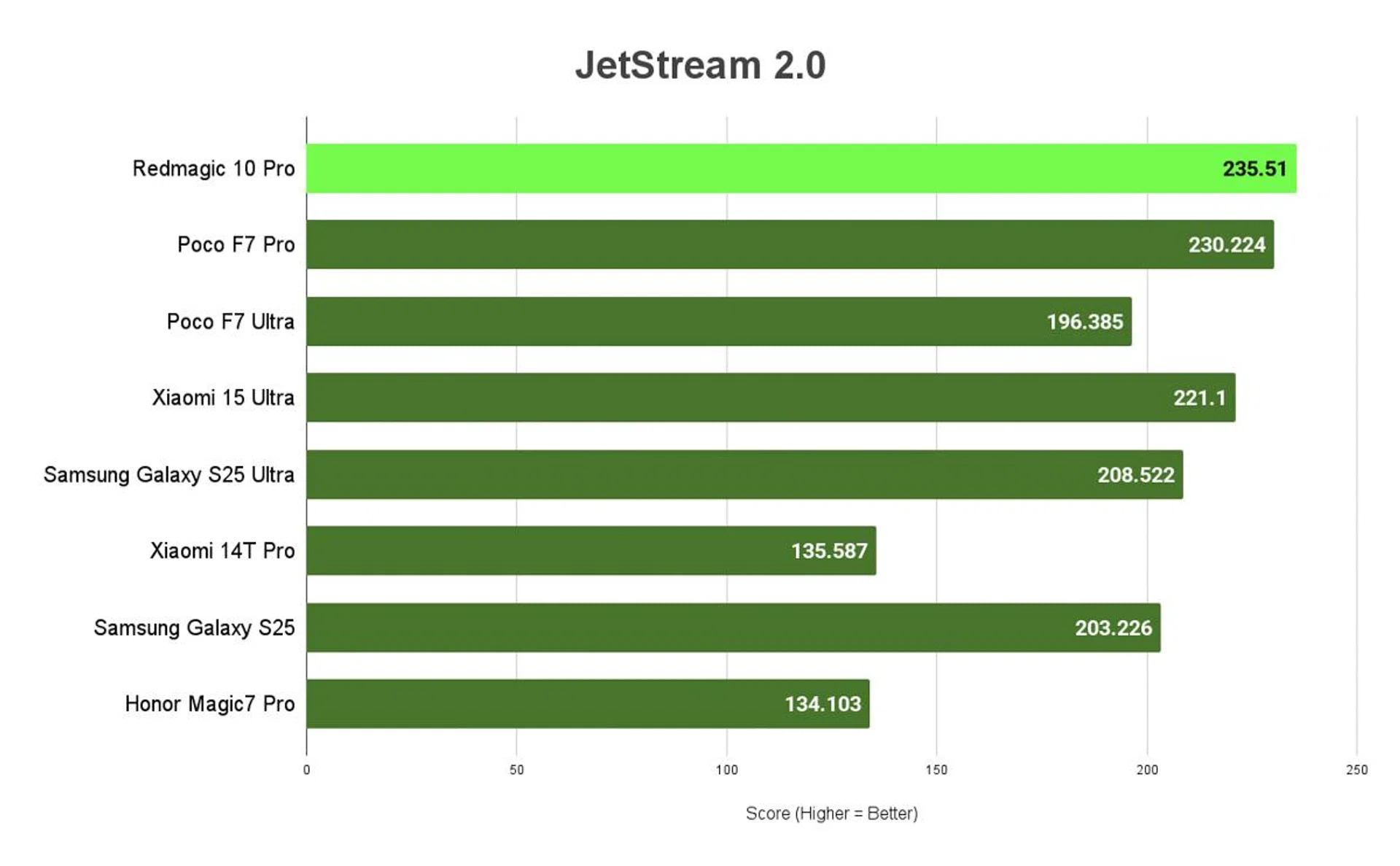
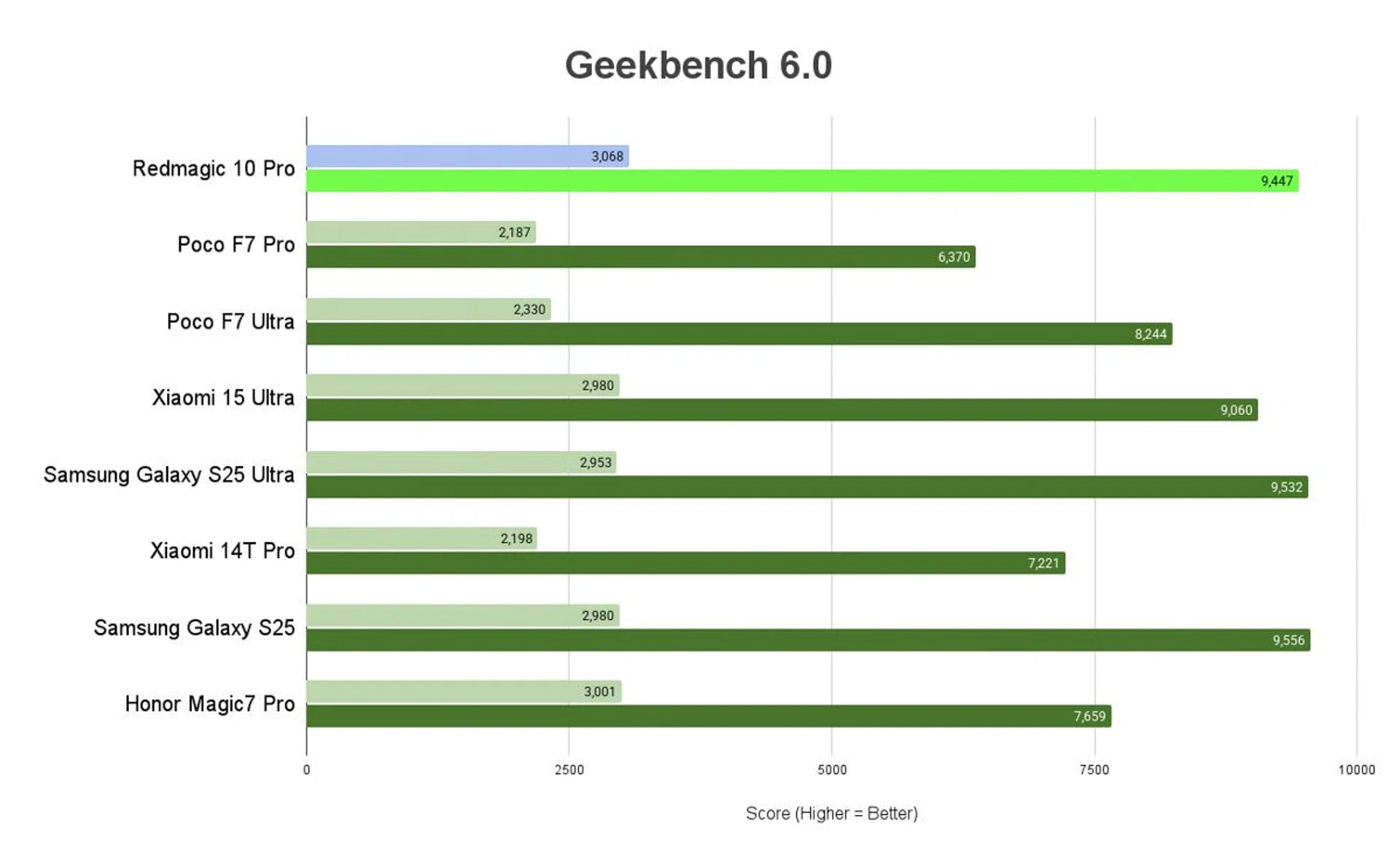
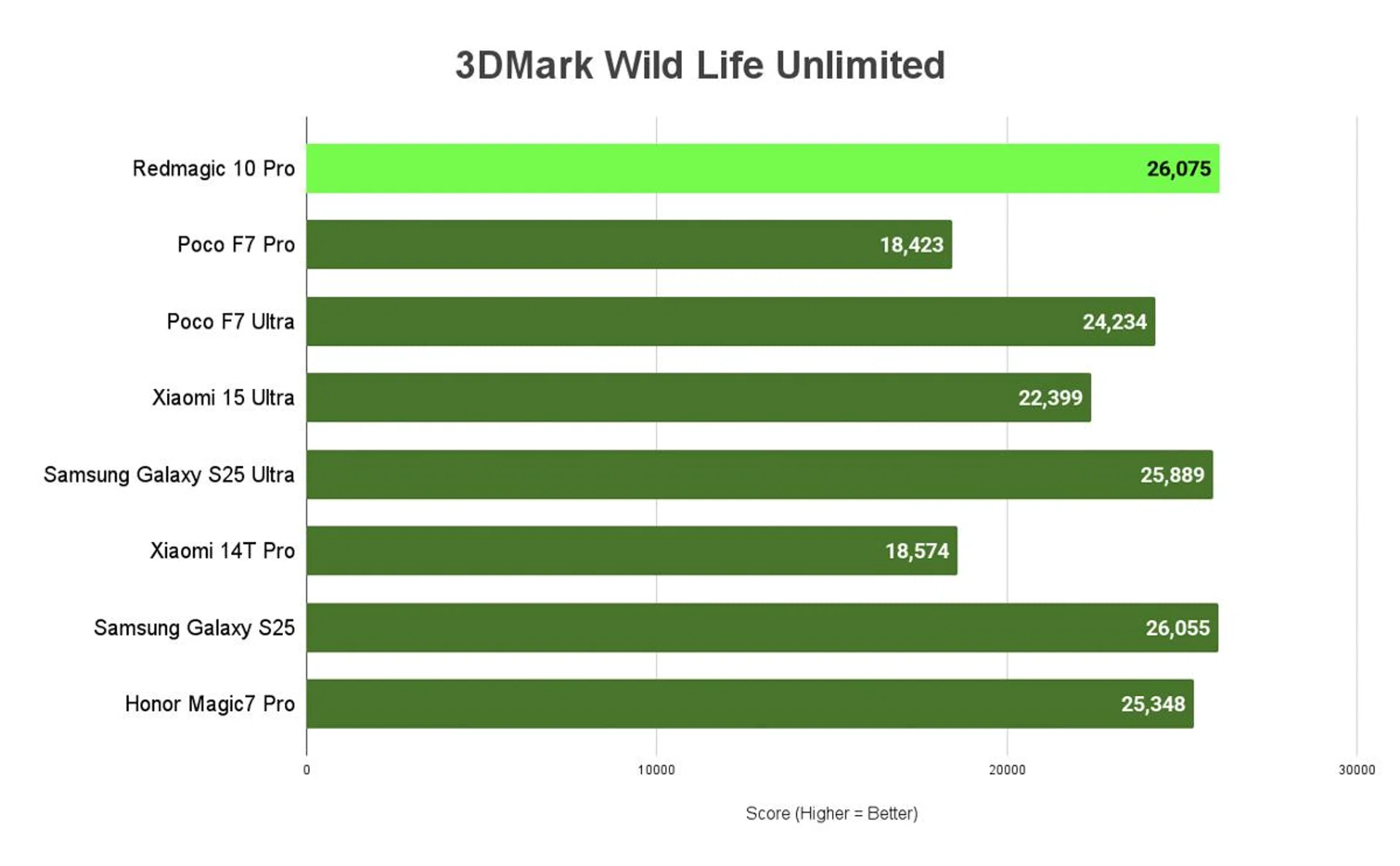
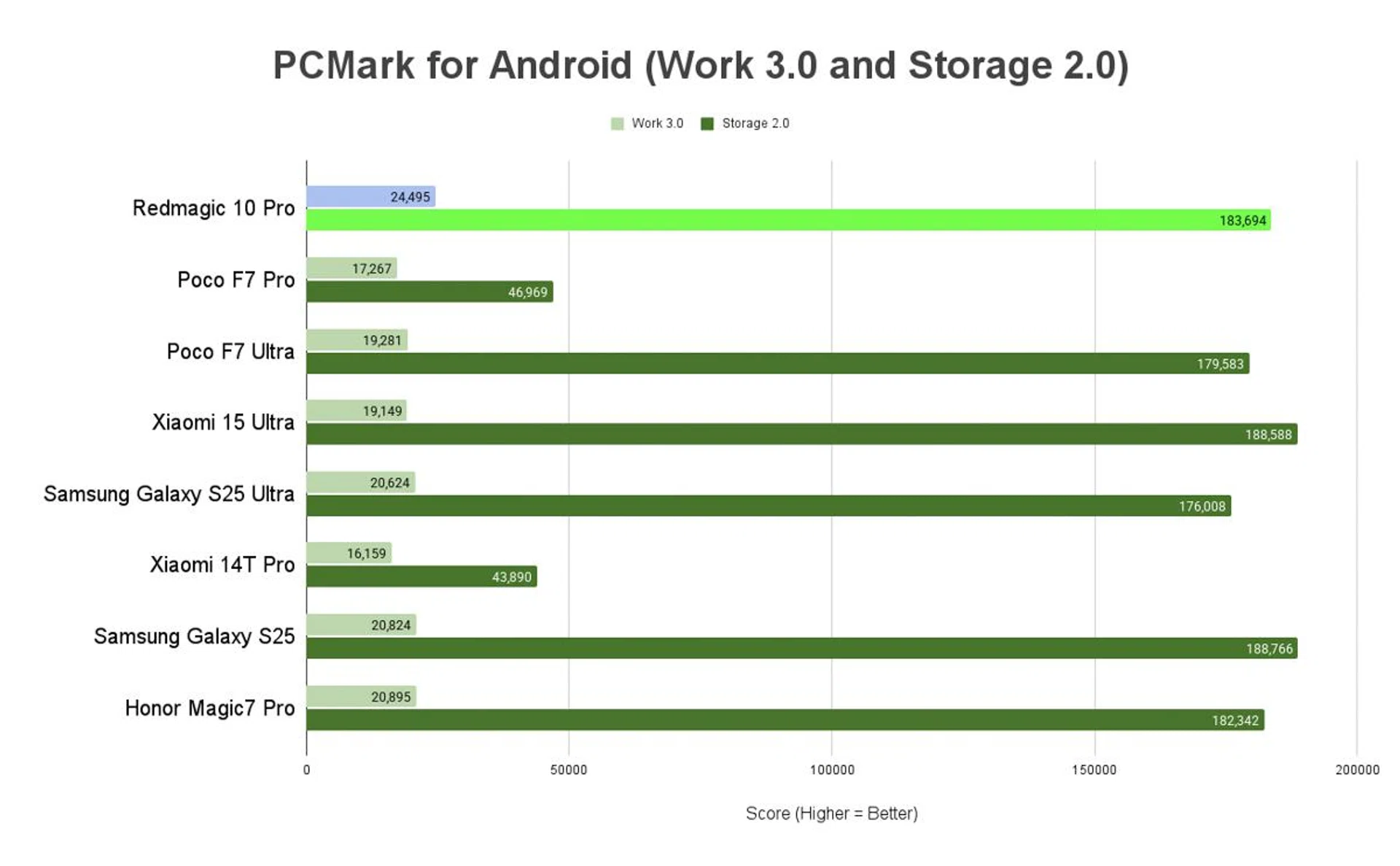
Benchmark performance remarks
The Redmagic 10 Pro performed exceptionally well in our synthetic benchmark tests, and it was the first time ever that I saw the “Maxed Out” result for 3DMark. For a phone that retails from S$999, it's impressive that it can go toe-to-toe with flagship devices that cost around S$1,600.
Battery life
Our new battery benchmark uses PCMark for Android’s Work 3.0 Battery Life test to determine a modern Android-based smartphone's battery uptime in minutes. This controlled benchmark simulates real-world usage with a combination of both web and social media browsing, video and photo editing, parsing data with various file formats, writing (on documents), and more.
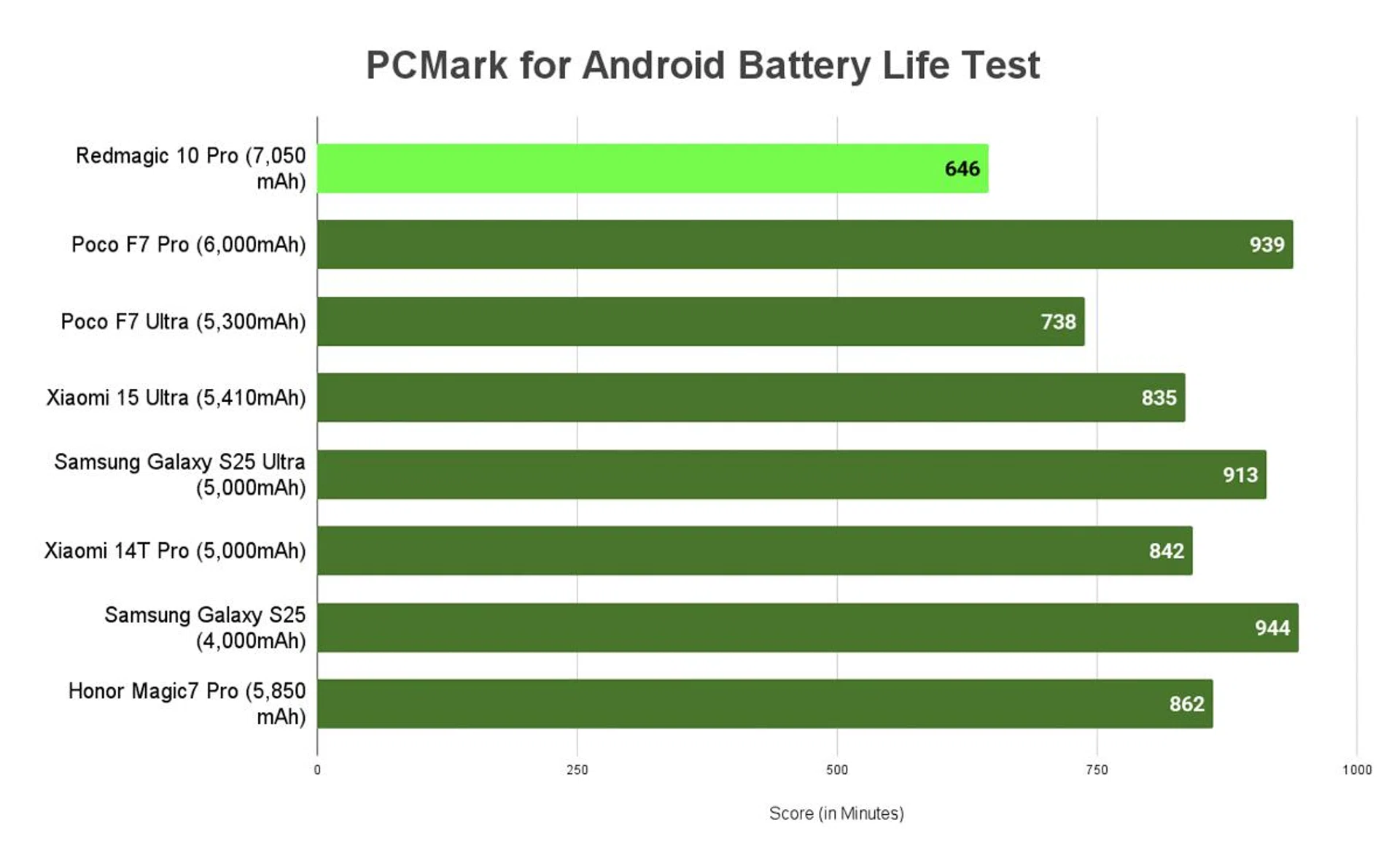
Despite the lower-than-average battery life numbers, the large 7,050mAh silicon-carbon battery inside provides plenty of power. As we all know, benchmarks don’t tell the whole story, so I tested it myself with a five-hour gaming session on Honor of Kings.
Running on the standard “High” settings, I turned on the cooling fan and started the session at 100% battery. By the end of it, I had 44% battery life, and the highest internal temperature captured was around 32°C, which is insanely good.
Leaving the phone alone, connected to Wi-Fi and receiving intermittent notifications, the phone sapped just 5% of juice over 24 hours.
The phone also supports 100W fast charging, although the included charger only goes up to 80W. Using a third-party charger, we managed to get the phone from 0 to 50% in 24 minutes, with a full charge in just 44 minutes. Despite the fast charging, the internal fan helped keep temperatures relatively cool at just 37°C during its hottest.
Conclusion
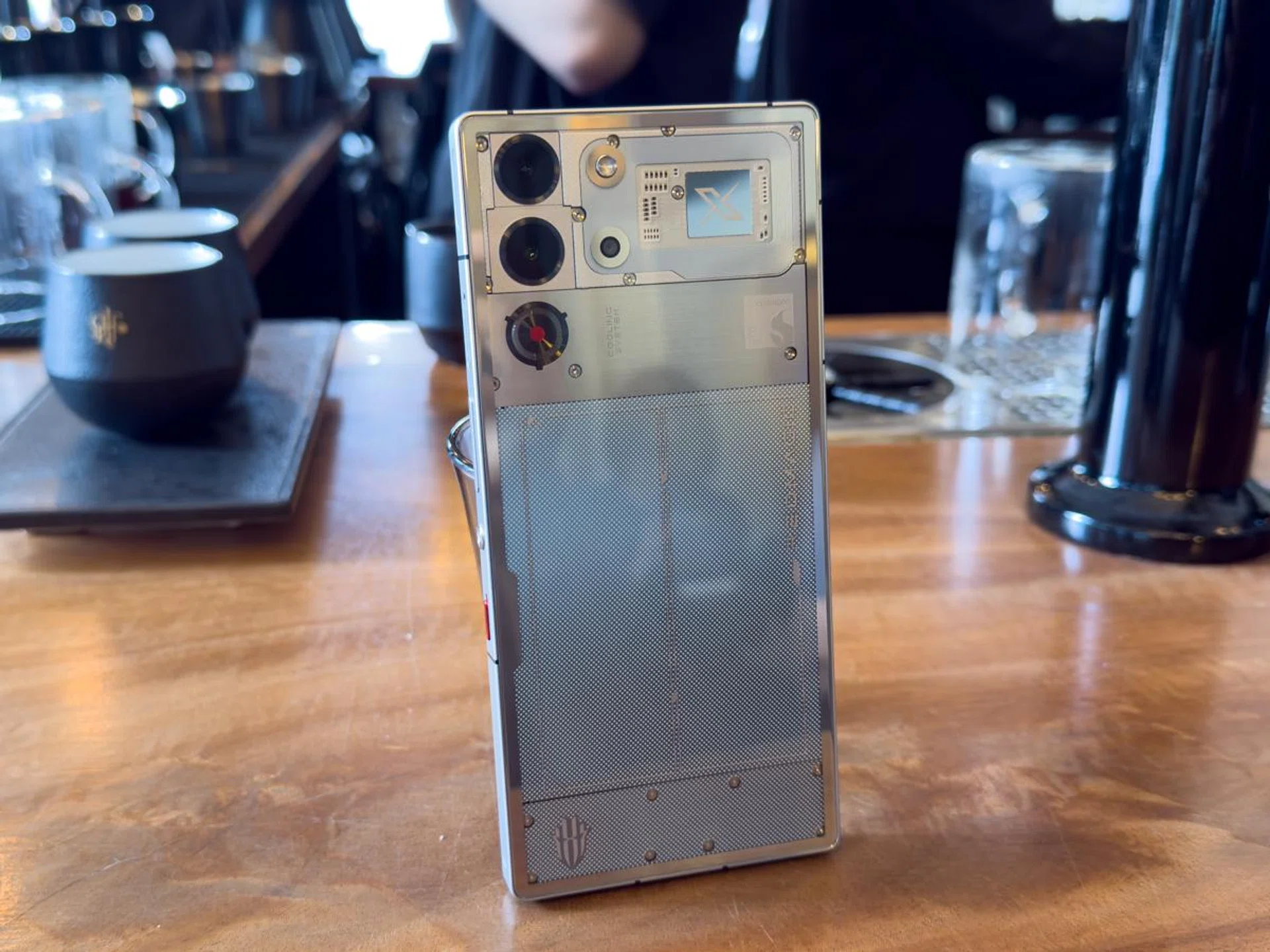
Redmagic 10 Pro. Photo: HWZ.
It’s easy to see the value of the Redmagic 10 Pro. It’s a gaming smartphone through and through, with plenty of hardware chops and gaming-centric features to back that up.
For mobile gamers, it’s important to highlight how features like the built-in fan and ICE-X Liquid Metal cooling system, the large battery and 100w fast charging, capacitive shoulder triggers and excellent all-around performance all contribute to an amazing gaming experience.
Unlike most phones that heat up with prolonged gaming, Redmagic 10 Pro's cooling system kept the phone cool during gaming sessions, making it comfortable to hold in longer sessions.
But even if you’re not gaming, the Redmagic 10 Pro's long (real-world) battery life, fast charging, and great performance make it an excellent “regular” smartphone, too.
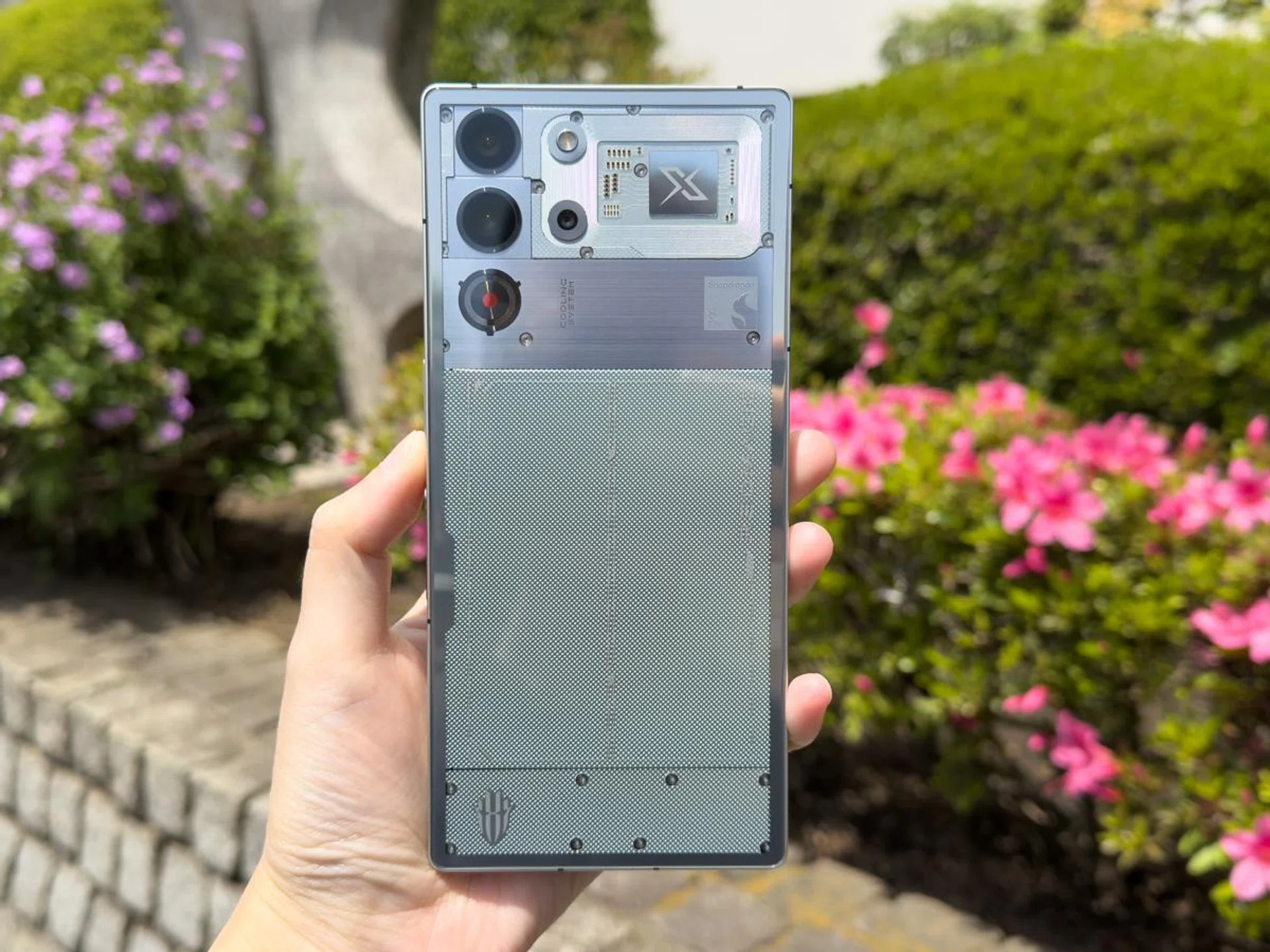
Limited years of security updates is tough. Photo: HWZ.
The only major downside to the phone is a few missing pieces and software gaps. Here's a quick stocktaking of its flaws: It lacks eSIM support, water and dust resistance against basic elements, and only three years of security updates, on top of a less polished operating system. There are many ways to improve Redmagic's best phones, and we can see how they tried to justify some of it with a S$999 price tag (lower than true blue premium handsets).
The cameras aren’t the best, but they performed better than expected for a gaming smartphone, so we can’t fault Redmagic too much here.
For S$999, this is probably the best gaming smartphone on the market right now, if you want to save some money and still get unparalleled game performance.
Note: The Redmagic 10 Pro retails from S$999 (256GB) onwards at Redmagic's online portal.