
Preview - Nikon D3 and Nikon D300
Nikon's new D3 and D300 have finally been announced, much to the delight of Nikon users and adoring fans, but really, it's Nikon who's the most relieved to have finally made the D3 and D300 official. Now, Nikon finally has what it needs to make a huge step forward.

Nikon: The Next Generation
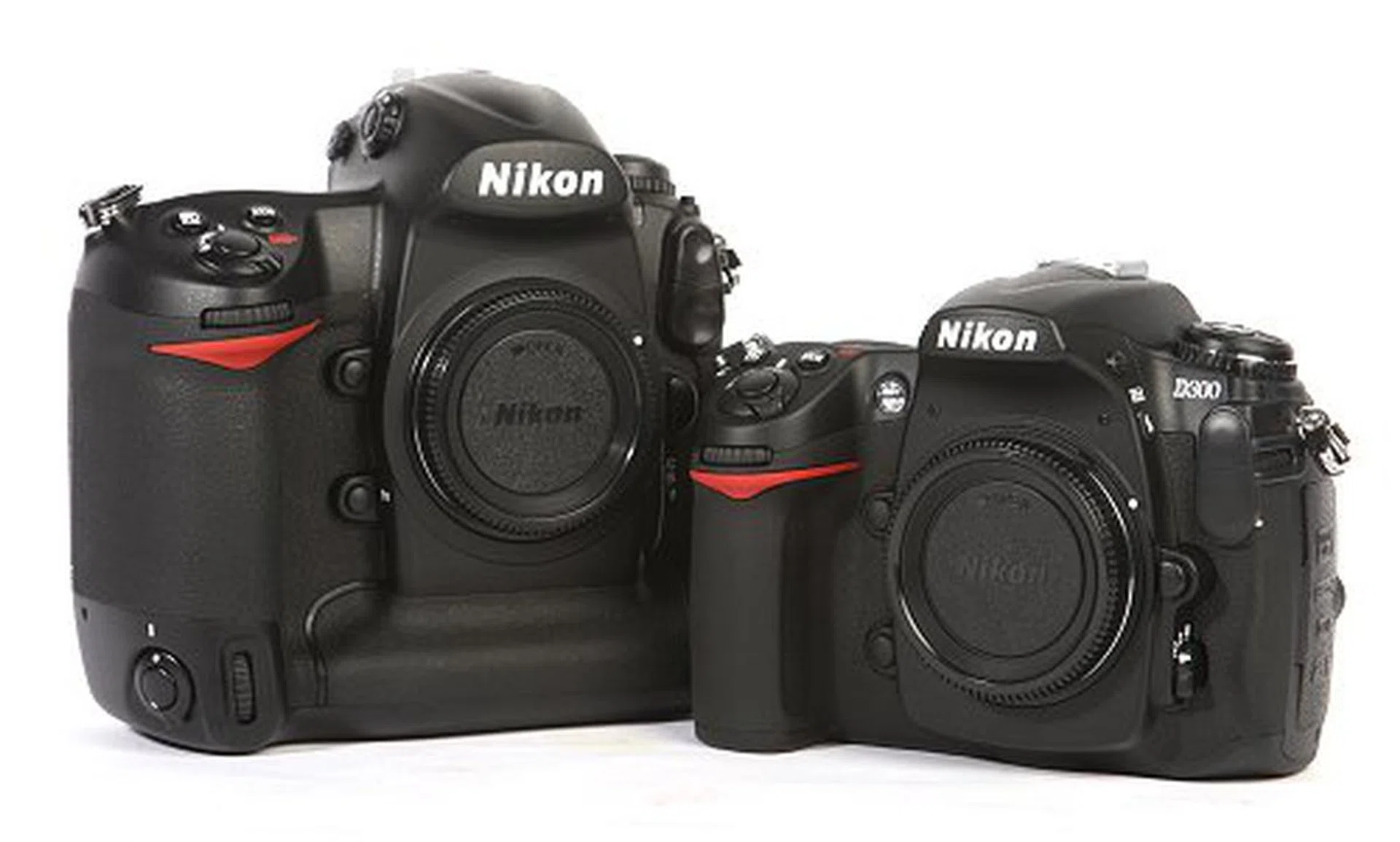
Nikon's DSLR future beyond 2007.
The August period of the year 2007 will be best remembered for Nikon's worldwide announcement of the D3 and D300 digital SLRs - at least it'll be so for avid photographers, professionals and the likes. More than just replacements for their respective predecessors, the D3 and D300 offer imaging power that is in excess of 12 million pixels from a new generation of CMOS image sensor with integrated A/D converter, and along with it, many new breakthroughs to see Nikon into its next stage of evolution.
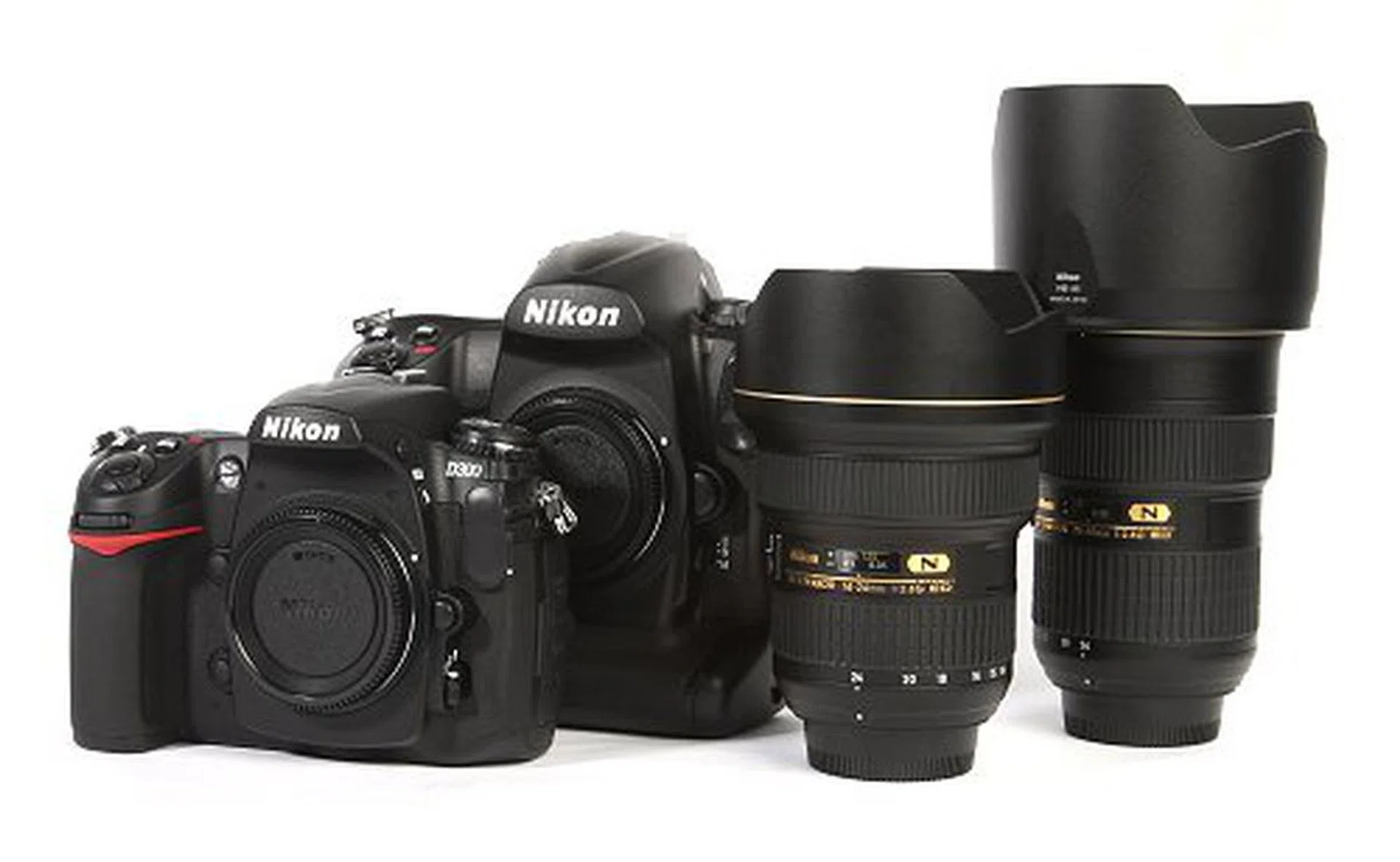
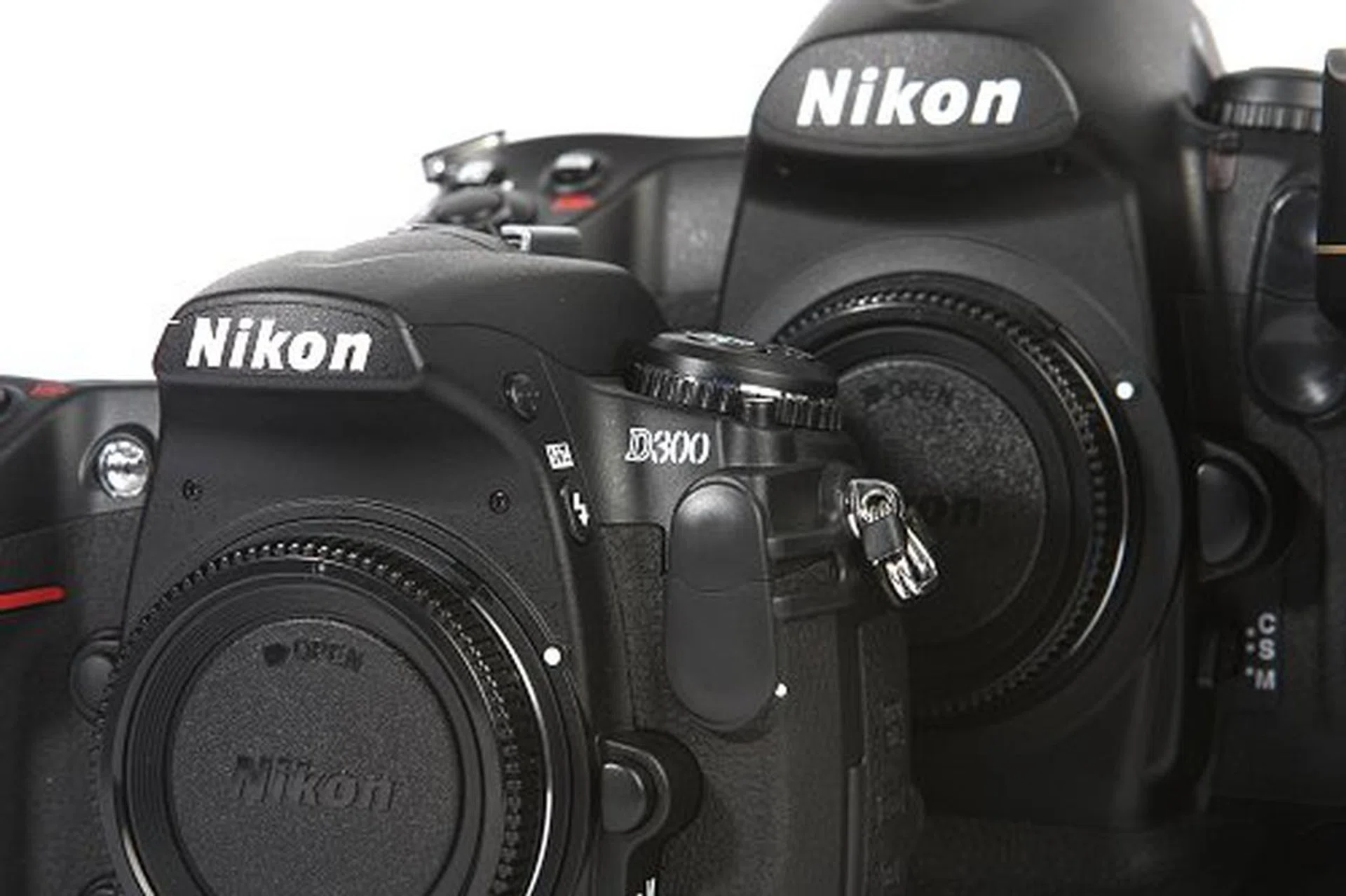
Foreground to background: Nikon D300 and D3.
At the heart of these two DSLRs is Nikon's new digital image-processing concept called EXPEED, and this is more than just an image processing engine per se. EXPEED basically refers to Nikon's technical know-how and experience in image processing, and the EXPEED concept or philosophy can simply be optimized and applied to the design and imaging aspects of future Nikon products. EXPEED plays a major role in Nikon's digital image-processing technology, and is applied to every operation conducted by the image-processing engine.
A Preview of the Nikon D300 DSLR
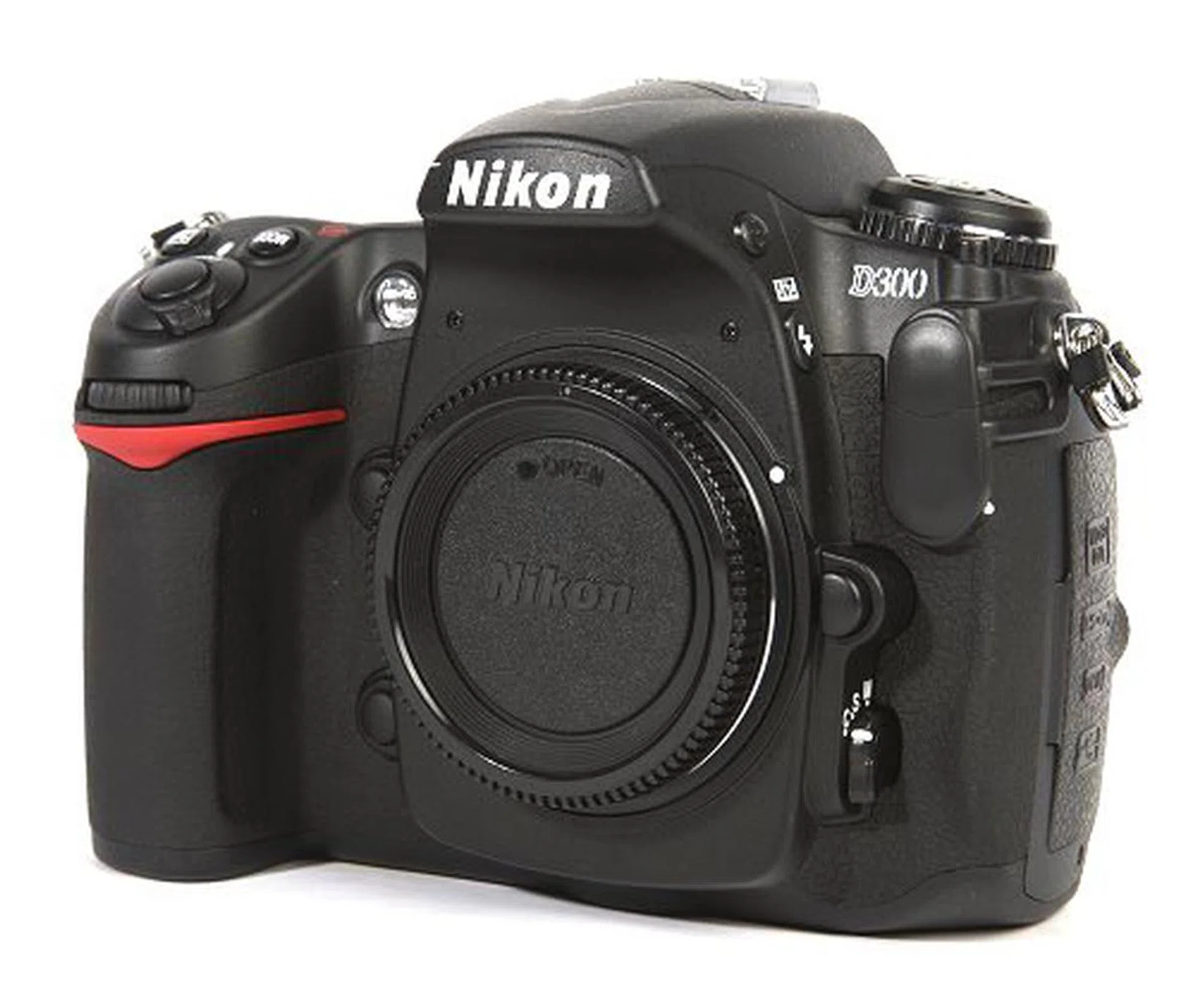
Nikon D300.
Having covered the lower rungs of entry-level and consumer range of DSLRs with the Nikon D40, D40x, D50, D70 and D70s, it was really only a matter of time before Nikon finally unveil new additions to take their range of prosumer and pro DSLR cameras to the next chapter. Indeed, anyone who's familiar with Nikon's product cycle, which is fairly predictable by the way, should find it easy to produce a fairly accurate prediction of what new cameras are in the pipeline and subsequently the respective launch dates of those upcoming products. Even if you are totally clueless, all the speculations in circulation should help you fill in the blanks easily.
Strangely, this [predictability] has been working well for both Nikon and industry observers, and is evident in the way Nikon launches new pro DSLR cameras in the past decade or so. Short of being a tradition, it's almost common knowledge that Nikon would always have a new and affordable prosumer SLR ready each time it is ready to unveil its latest pro offering. What's surprising though is that the image quality, functionality and ease of use of the pro offering would often pale in comparison to the prosumer SLR that usually arrives some time later. We saw this for the launch of the F5, D1 and D2 that was quickly followed by the launch of the F100, D100 and D200 prosumer models respectively.
Then came the bombshell...
Imagine our anticipation and expectations when Nikon entrusted us with rare prototypes of not one but two of their upcoming SLRs, the D3 and the D300. Bearing in mind that it has taken Nikon literally years to finally refresh their prosumer and pro SLR range, what we have in ours hands are definitely more than just a mundane improvement in the megapixel department.
It's All in the Noise
Recalling the D200 that was launched some 18 months back, one of the disappointments that was most talked was the noise levels at 3200 ISO. Since then, many comparisons had been drawn between the Nikon D200 and the Canon 5D at 3200 ISO, with the Canon 5D receiving most of the votes for ISO performance, as it just performed better at retaining color accuracy and details as ISO increased.
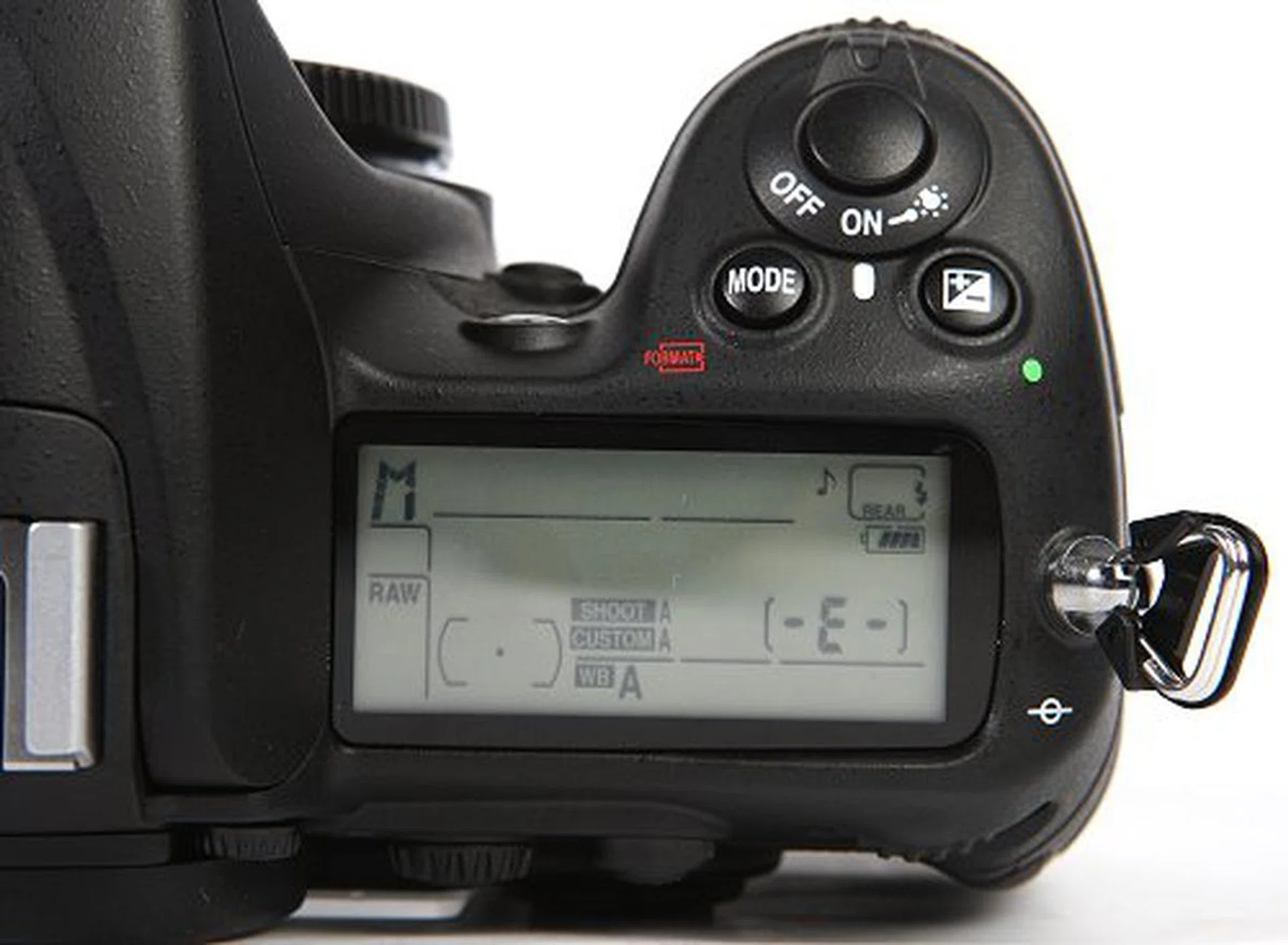
A closer look at the information panel.
Suffice to say, Nikon has solved the noise issue with the D300. Multiple test shots at 1600 ISO and 3200 ISO confirmed that the D300 is able to produce noticeably "cleaner" images without the exponential jump in noise from 1600 ISO to 3200 ISO as seen in the older D200. This is encouraging news granted the D300 we had was a prototype. Full production models should have the same, if not better noise handling capability. The ISO sensitivity ranges from ISO 200 all the way up to ISO 3200 in base mode with a higher stretch to 6400 ISO under the H setting via the multi-selector. Nikon's new feature with the ISO is that you may now alter the ISO to one full stop, in 1/3rd stop increments, above and below the base settings to give you more precise control over the sensitivity of the image sensor.
Taking Prosumer Photography to New Heights
In the same way Nikon manufactures the existing entry-level and consumer range of cameras, the new D300 looks and feels different to its predecessor, the D200. While the basic shape and distinct SLR features remain more or less unchanged, the D300 manages to come across as a more evolved camera; it's lighter now, weighing just 825 grams but its metal body still provides the same confidence inspiring handling nonetheless. Even the battery it uses is the same as the D200.
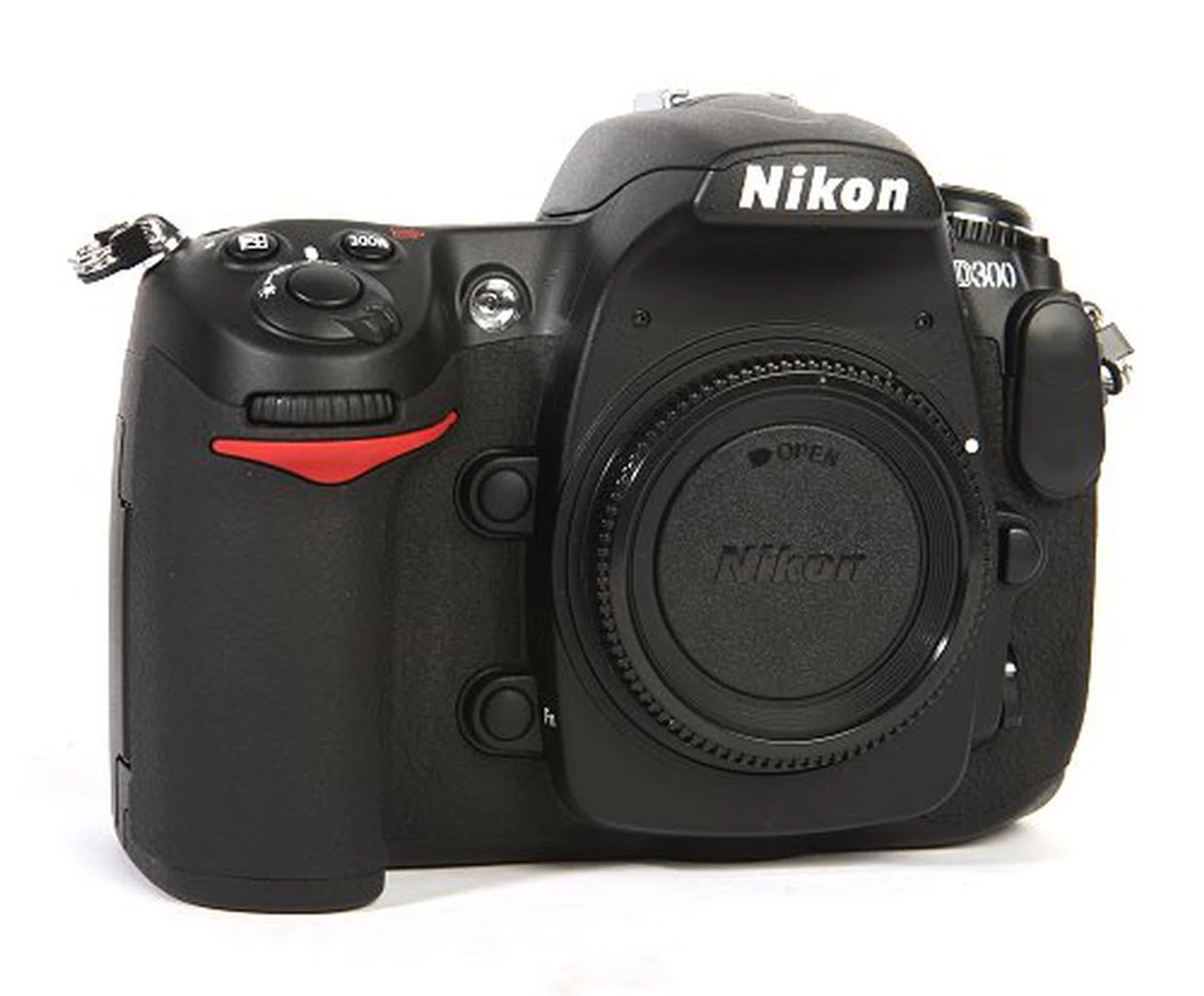
Front.
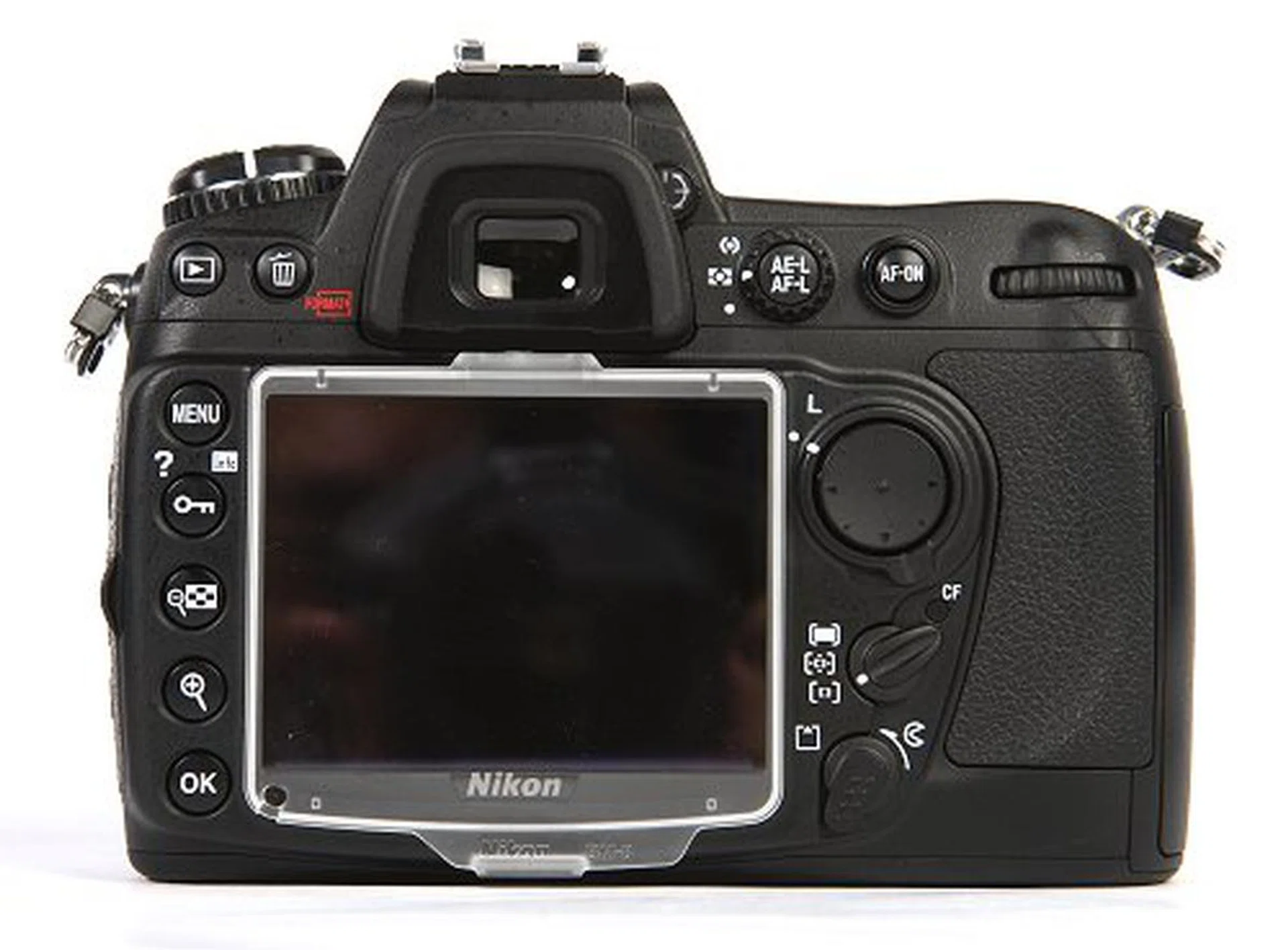
Back.
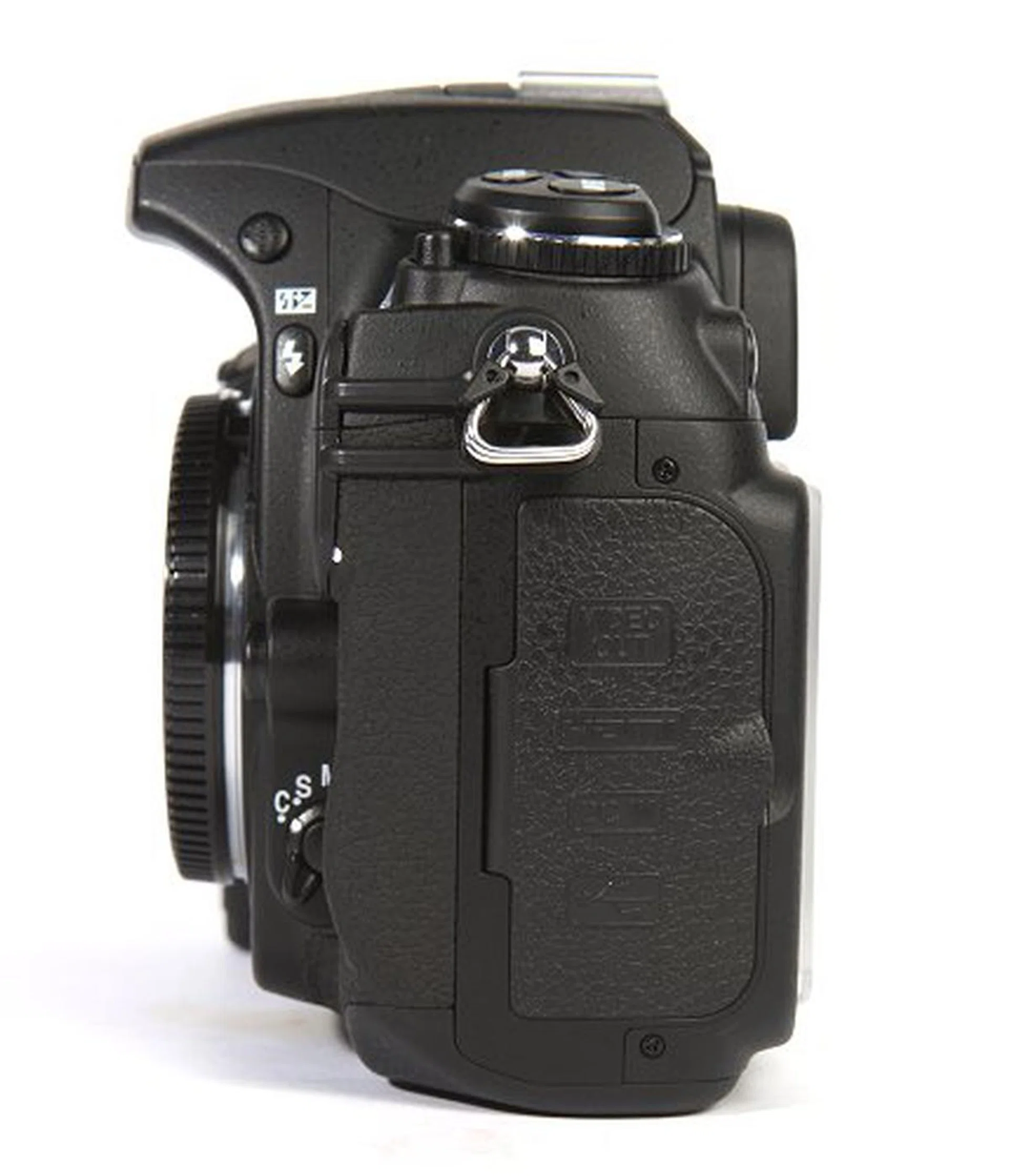
Left Profile.
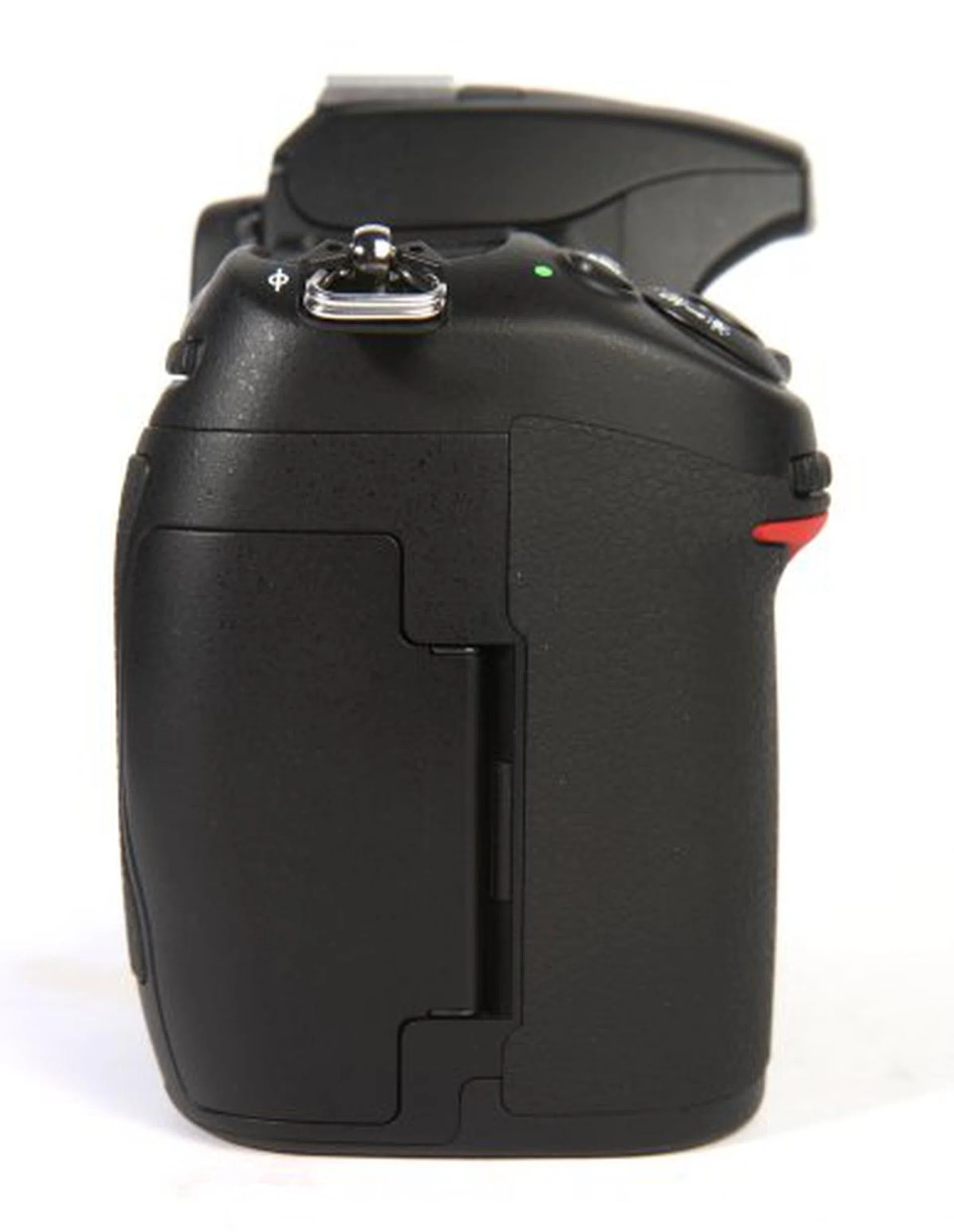
Right Profile.
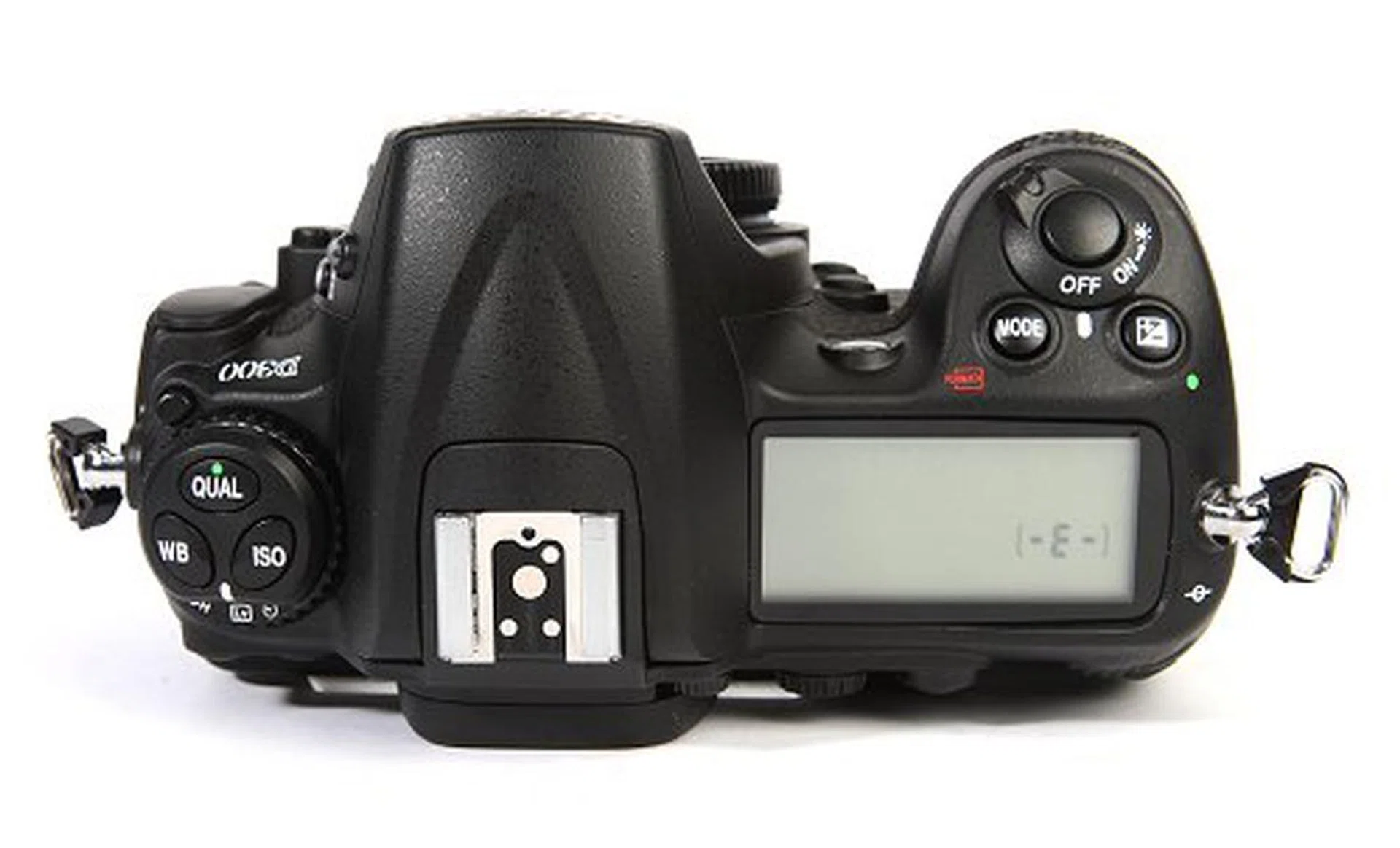
Top.
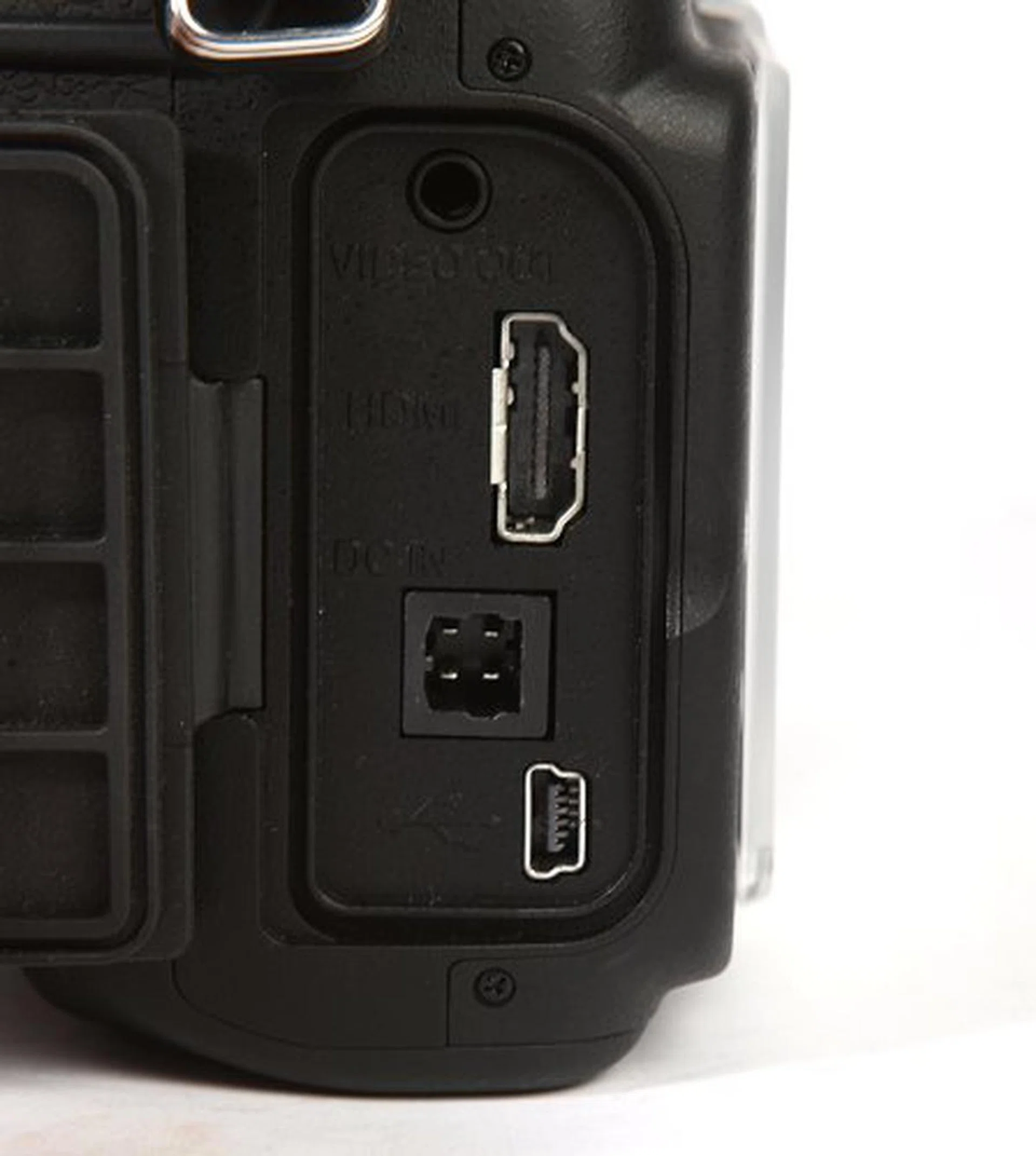
Nikon embraces HDMI to welcome the era of high definition.
Obviously, the D300 has much more to offer and your eyes will quickly find the terminal sockets just underneath the D300 logo to be the most telling of all. To the left, you'll find a new HDMI jack beside the power socket and USB 2.0 jack. Yes, the D300 has a HDMI jack to let you view your shots in full glory on any compatible high-definition display.
New Sensor and New Speed
Taking charge of capturing all the light and color information is a brand new 12.3-megapixel sensor taken from Nikon's new range of DX Format CMOS sensors. Image resolution maxes out at a sweet 4,288 by 2,848 pixels but it's the depth of color that really caught our attention. The processing speed and performance of Nikon's new EXPEED image processing concept proved to be the key contributor here, producing clean and smooth gradations of shadow and highlights in each color field.
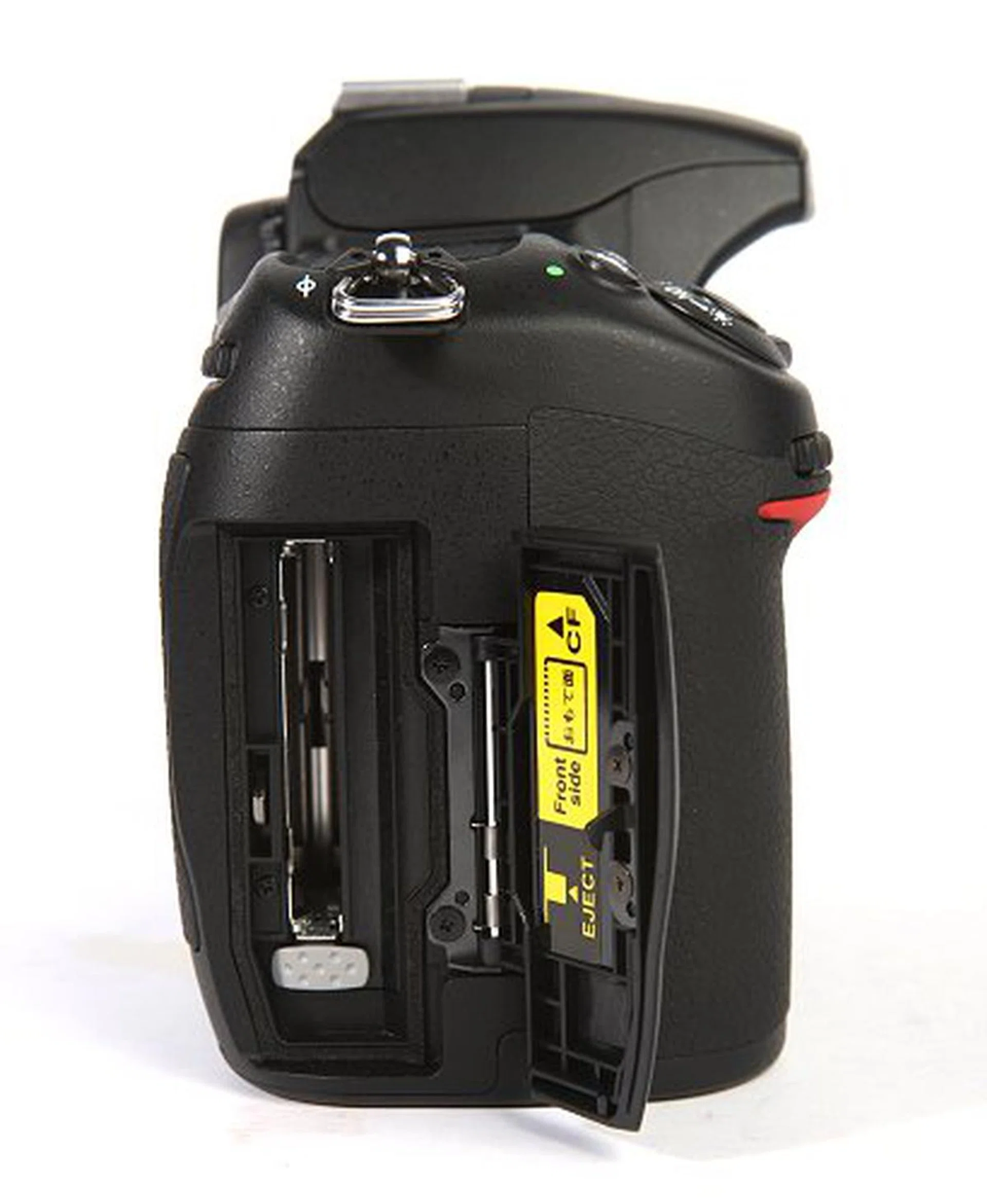
Not just any ordinary card slot, but UDMA CF card slot.
Equally astounding is the speed at which data from the 12.3-megapixel CMOS sensor is written to CF card. With high-speed CF cards such as the Kingston's new 4 and 8GB Ultimate 233x editions, shooting speed of 6 frames a second is easily achievable. Attach a multi-power battery pack and the D300 could even manage 8 frames a second, but the impression of speed doesn't just end there. Now that the D300 supports high-speed UDMA CF cards, sports photographers will be eager to put its 100-frame, full 12.3-megapixel resolution continuous shooting to good use.
Helping you to preview your shots and to harness all the functions of the D300 is a new 3-inch TFT LCD screen with 920,000 dots. Having a large screen is complementary to Nikon's renowned user interface and also a huge plus considering the D300 offers a wide range of adjustments and setups. A new addition called 'Retouch Menu' in particular makes full use of the space offered by the LCD to let you perform image editing on the camera. The D-Lighting control here allows you three choices on increasing or decreasing the density of your captured image, there are also controls to allow red eye reduction, trim, monochrome effects, filter effects, colour balance fine tuning and image overlay options also located under this menu.
Colour Spaces on the D300 come in AdobeRGB and sRGB. Previously Nikon had another menu item called Colour Mode, which users elected either colour space I, II or II. Now, this menu item has been replaced by Picture Control, which allows users to customize their colour modes based on the these options: Vivid, Neutral, Standard, and Monochrome. To explain it simpler, it�s like the good old days when there were different types of films that produced different results regardless the camera used. The same concept has been adopted by Nikon here. Using Picture Control, you will be able to achieve the results that you desire, and all you need to do is to copy those settings and transfer them to another camera that you are using.
Metering wise, the options offered by the D300 are fairly standard, selectable from the very capable Nikon TTL 1005 pixel RGB 3D Colour Matrix Metering II, center weighted and spot metering.
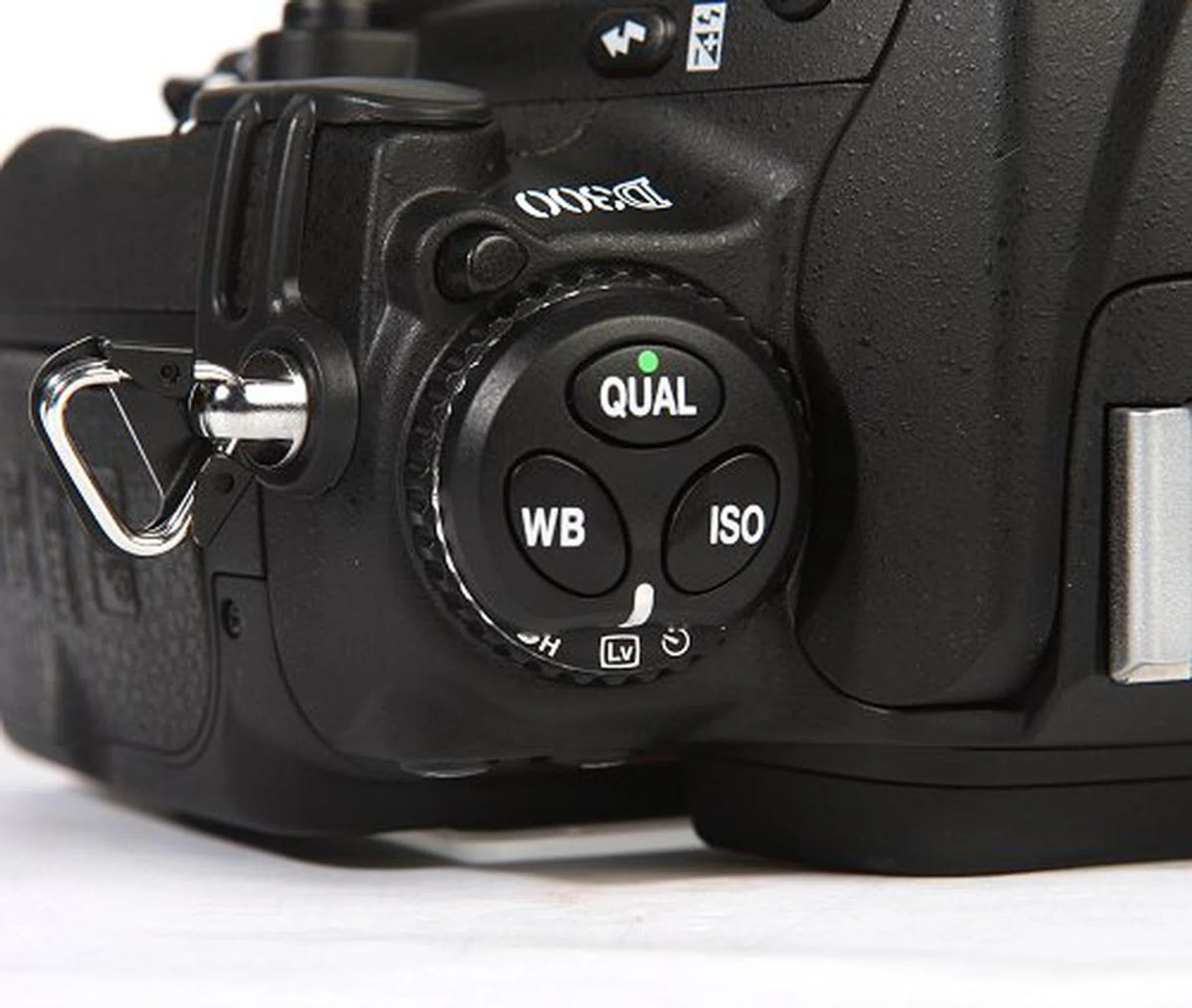
'Lv' on the dial denotes Live view.
Catching up and finally making its debut entry into Nikon's latest DSLR range is "Live" view technology. Selectable via a quick flick to 'Lv' mode on the mode dial, Nikon's implementation shows aperture changes and handles AF at the same time. The D300 has a new 51-point AF system with 15 cross type and 36 horizontal sensors that ensure fast and accurate focusing. To shoot moving subjects you can select from three dynamic focus AF Modes using groups of 9, 21, or all 51 focus points. The advantage of using all the 51 points is that it uses all the data from the AF points to provide accurate colour and light information, which helps Nikon's new Scene Recognition System to produce clear and sharp images. Lastly and perhaps most importantly, the D300 is fully compatible with Nikon's extensive range of DX-Format lenses - nice.
Nikon D3 - Full Frame or Half?
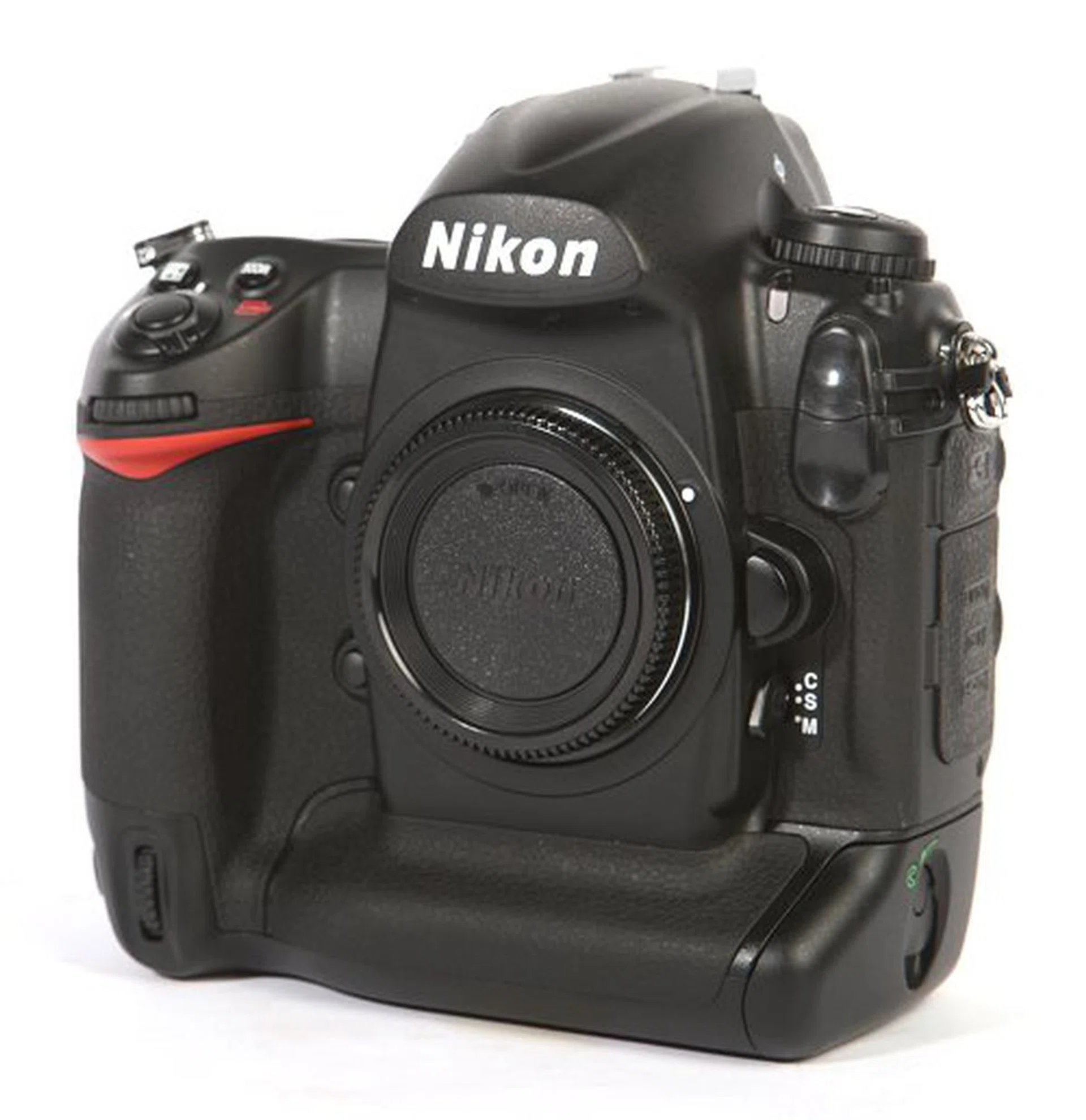
Nikon D3.
It has taken years but Nikon is finally on the verge of unveiling the D3, which will be the company's first Full frame digital SLR. Obviously, after such a long wait, expectations will be high, and rightly so too after the benchmark set by competitions. Still, let's give Nikon where credit is due for taking the time to develop an affordable Full frame DSLR to replace the aging D2.
The imminent arrival of the D3 is an exciting one and of particular interest because not only is Nikon releasing its first ever Full frame DSLR but it is also taking a huge leap forward with its professional series of cameras and lenses. Ushering in a new era for Nikon is a new CMOS sensor, a new image processing system called EXPEED and a whole new range of lenses specially engineered for Full frame photography. All these, coming together for the first time in the D3 as a launch platform, are the main components of Nikon's latest FX format.
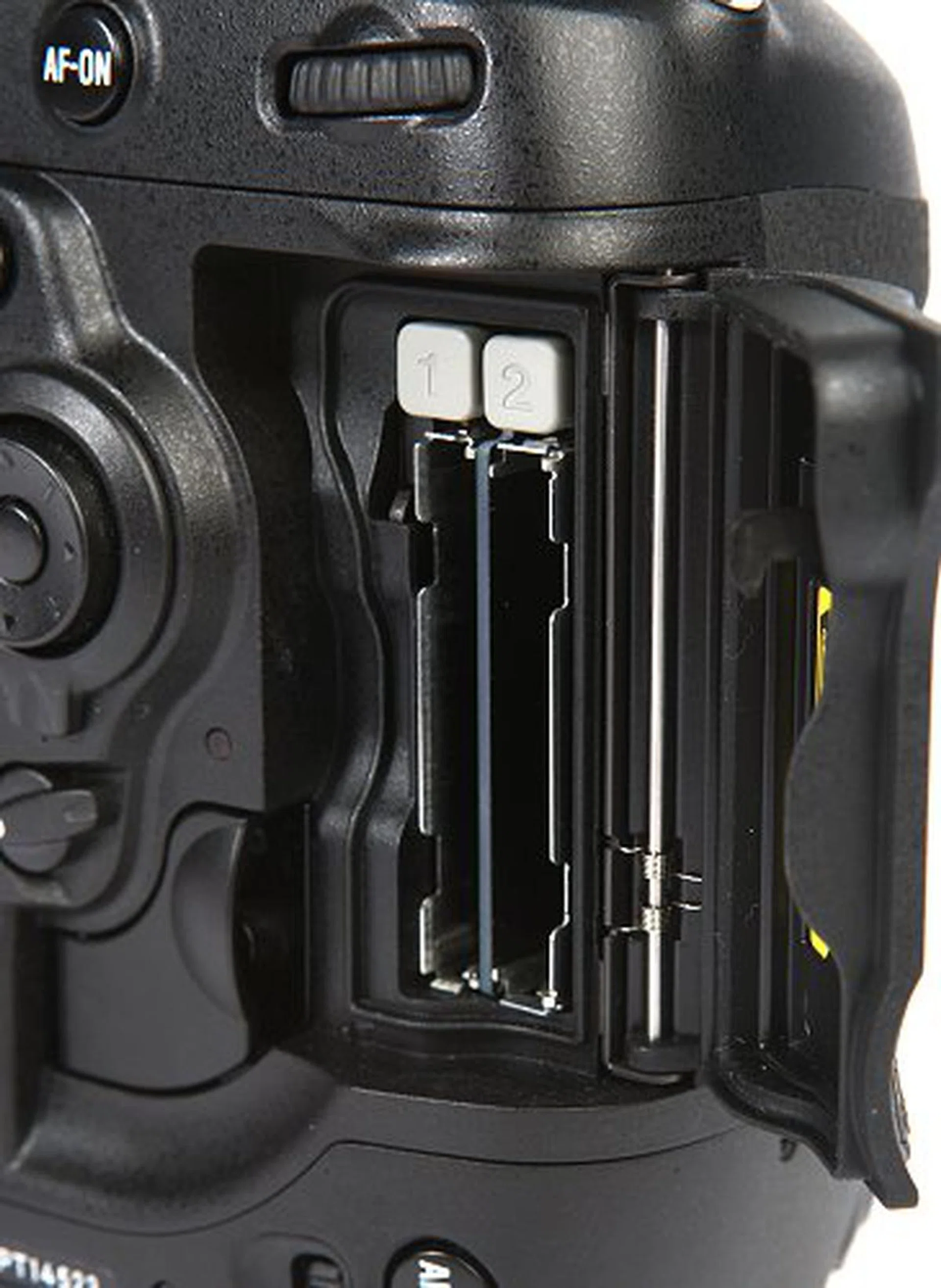
Dual high speed UDMA slots.
The new FX format essentially replicates the image size of the traditional 35mm film: 36.9mm x 23.9mm, but that doesn't mean the DX format is no longer applicable. On the contrary, the D3 is flexible in that it allows you to either shoot continuously for up to 9 frames a second at full 12.1-megapixel FX Format or at an astonishing 11 frames per second in DX format (24mm x 16mm, 5.1-megapixel only). Like the D300, the D3 is also fully compliant with the next generation of high speed cards, giving it a recording speed of up to 35MB per second or four times faster than the recording speed of the D2XS.
Full Frame Excitement
The new 12.1 FX-Format CMOS sensor offers superior picture quality through bigger pixel size, thereby giving you a wider sensitivity range. For us photographers, it basically translates to cleaner, sharper and more colorful pictures with a wider colour gamut. The high-speed 12-channel readout allows faster continuous shooting speeds of up to 9 frames a second and incorporates Nikon's new Liveview technology as well.
Being a professional DSLR, the D3 is expected to provide an extensive ISO range no less. With a super wide range starting from ISO 200 to ISO 6400 in base mode with further 1/3 stop selections to take it down to a low of ISO 100 or a maximum of ISO 12,800, it's safe to say that the D3 has had ISO range well and truly covered. Stretching the performance of the image sensor and the EXPEED processing concept even further is the D3's ability to let you select H2 to jack up ISO level to a staggering ISO 25,600. What about the issue of noise at this level you ask. Well, we managed to get a very good image at 6400 ISO and a surprisingly usable shot at 25,000 ISO, so our expectation (and anticipation) is the same as yours as to the image quality the retail D3 unit is able to produce.
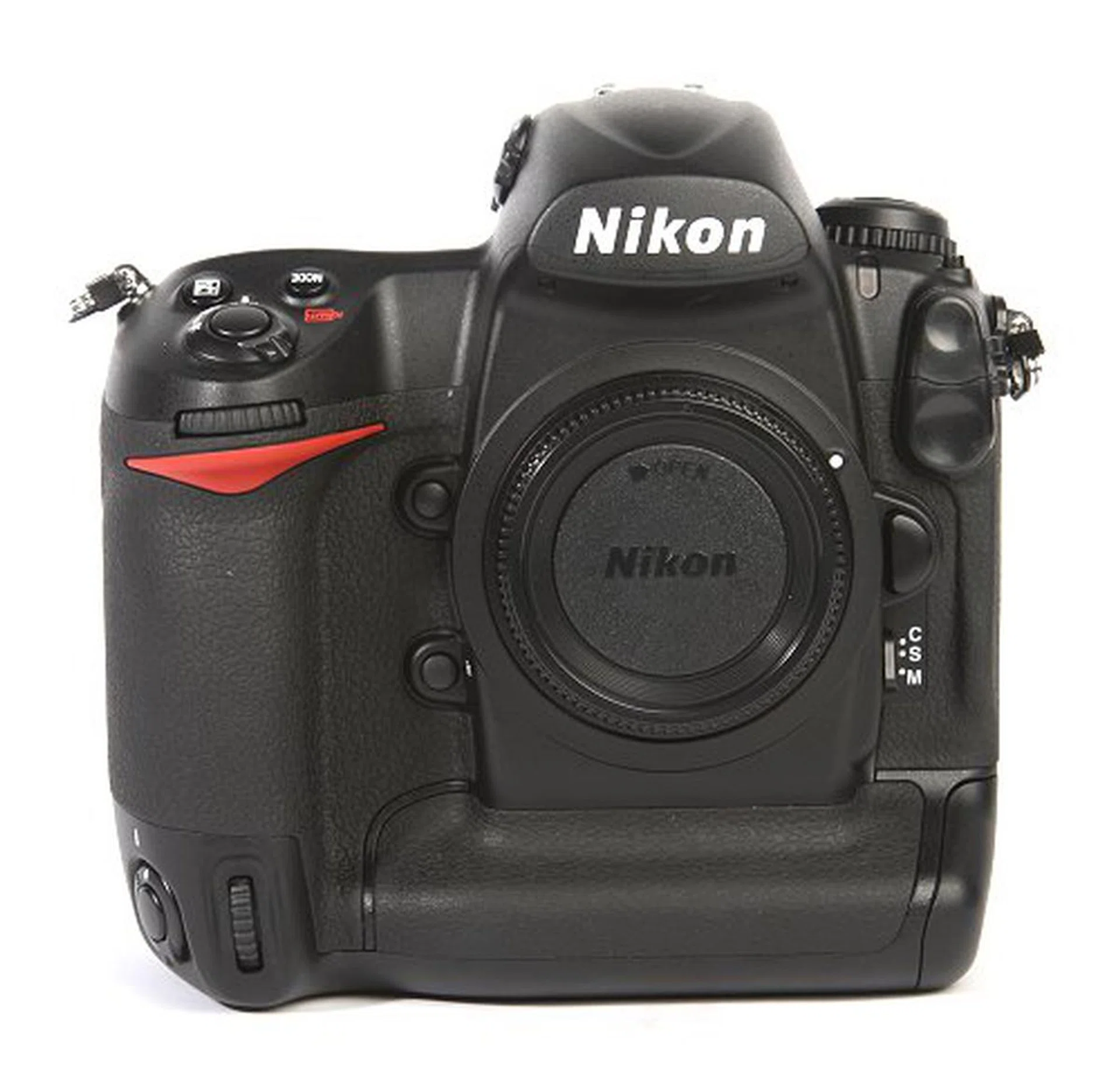
Front.
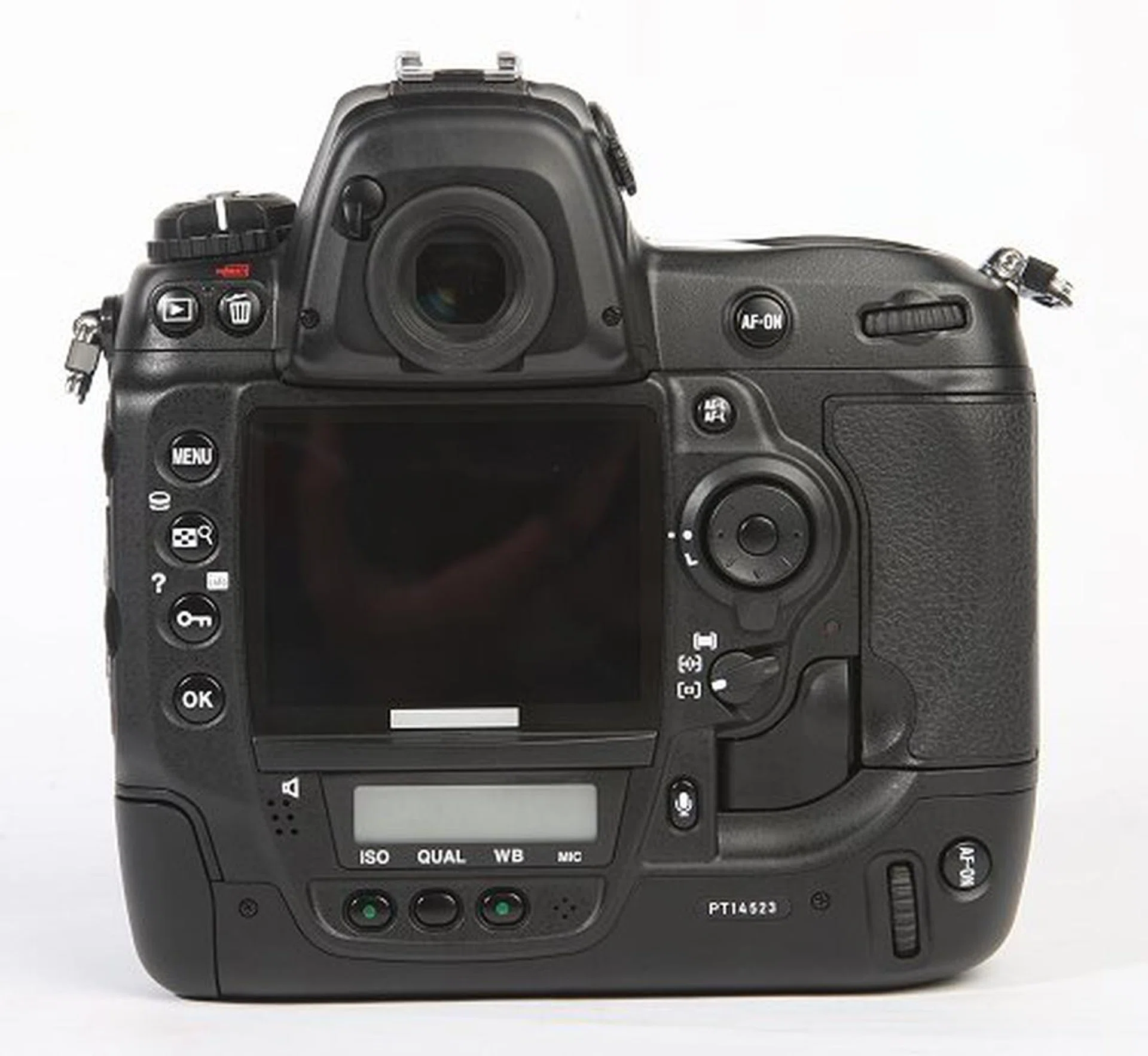
Back.
A Whole New Equation
Responsible for all the data processing and high speed shooting is the EXPEED image processing concept and this will eventually make its way into all future Nikon digital compacts and DSLRs. Using EXPEED as a foundation, image processing engines and systems will be optimized for every particular model offering specific user characteristics and a variety of applications. The D3 offers 12-bit or 14-bit A/D conversion and 16-bit image processing, producing wide colour gamuts, very high performance and wide dynamic ranges on the images shot.
Throw into the equation three hot new features: Nikons new Picture Control System and the Scene Recognition System to improve the accuracy of the AF, the Auto Exposure and AWB. And then there is the new Active D-Lighting whereby the value is chosen prior to shooting the picture. Active D-Lighting is combined with exposure compensation to increase the range from "highlights" to "shadows" (as if it is increasing the dynamic range). The advantage of using Active D-Lighting is that it maintains proper contrast by preventing the image from looking flat. All are designed to expand your creative horizon as a photographer.
In response to feedbacks, the new Nikon D3 employs a new high density 51 point AF system with 15 cross type sensors and a new "3D tracking" mode, which consistently responds to a subject's movement in real time to ensure that the subject is always in focus.
To check your progress, the D3 has a new 3-inch VGA TFT LCD monitor with 920,000-dot, offering a 170-degree viewing angle to complement the use of the new Liveview technology when the D3 is held at unconventional shooting angles. Now you can focus in on your subjects in two distinctive modes: handheld using all the 51 point AF system or the Tripod Mode for more precise focusing of still subjects.
As a professional camera with fast shooting and writing speed, and the ability to capture data in RAW NEF, it's a good thing Nikon loaded the D3 with two UDMA card slots, which means to say you can simply throw in two 8GB Lexar Professional UDMA 300x CF cards and let your shutter finger run wild.
Aesthetically and physically, the new D3 is marginally bigger and a tad heavier than the D2XS, but thanks to the handiwork of designer Giugiaro, the D3 manages to feel very ergonomically designed and manageable. The command dials, multi selector and grips are all in the right places for good handling.
Like its stable mate the D300, the D3 also offers HDMI output to HDTV's to playback your shots and this is where you can see if the hot new VIRTUAL HORIZON feature really helps you to keep your camera level prior to sensor exposure. Looking and behaving like its counterparts commonly found on aircrafts (and in movies), the horizon gauge is located in the SETUP sub menu and it assists you in ensuring your camera is completely level at times when you need it to be so. You can also plug in an external GPS module to record the exact locations of your shoots as well. Nikon has also improved the voice note taking controls, which now allow editing and erasing of those important .WAV files when you change your mind.
A Quick Look at the Lenses
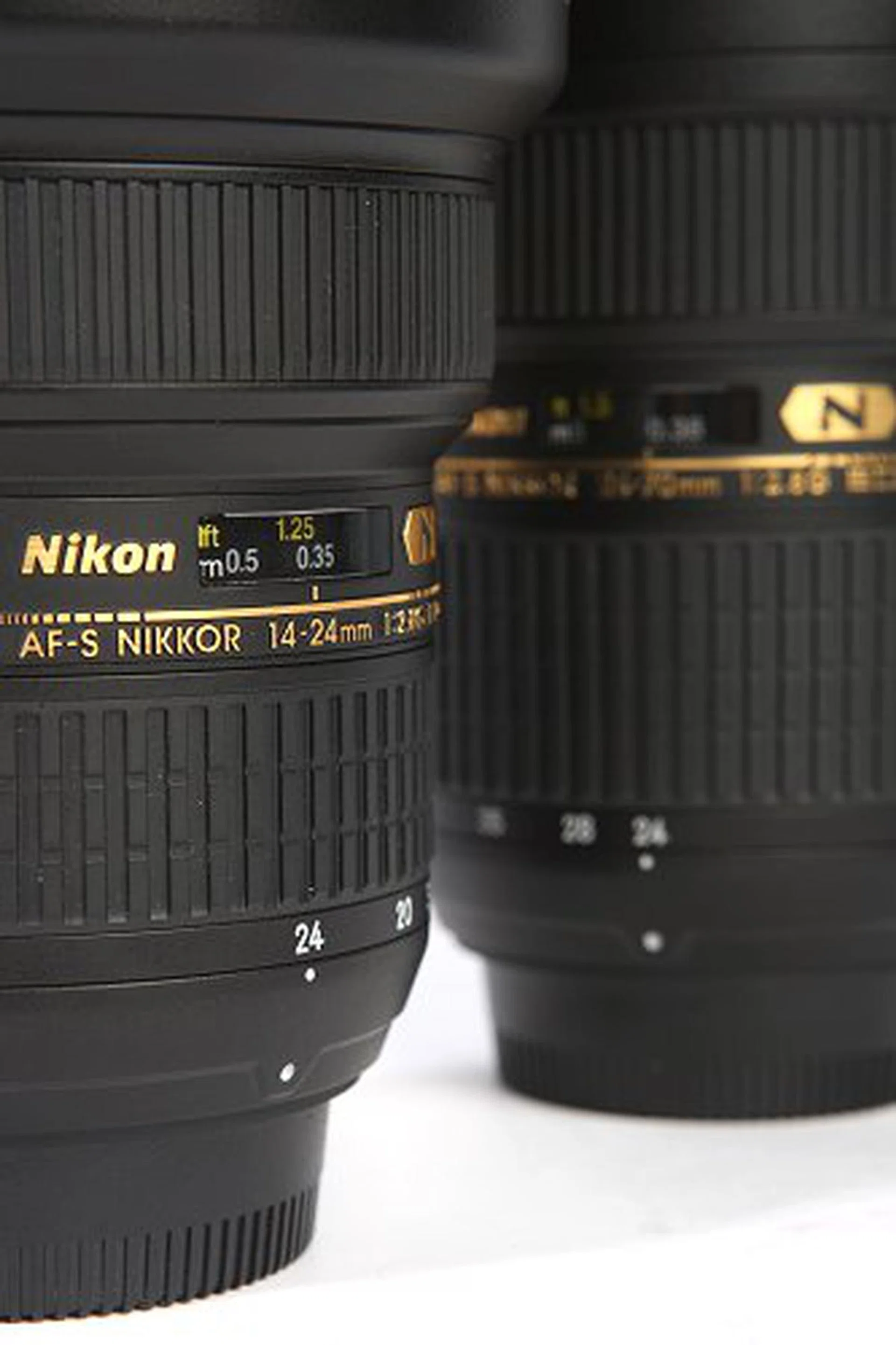
AF- S Nikkor 14-24mm f/28G ED. Ultra-wideangle, high-speed zoom NIKKOR lens.
The AF-S NIKKOR 14-24mm f/2.8G ED wideangle lens is the world's first 14mm focal length for f/2.8 aperture. It offers a full range of professional features to provide superior overall performance. In addition to the fast maximum aperture of f/2.8 at all focal lenghts, it features a short focusing distance of 0.28m with focal length 18-24mm, making it ideal for photo journalism and general photographic needs.
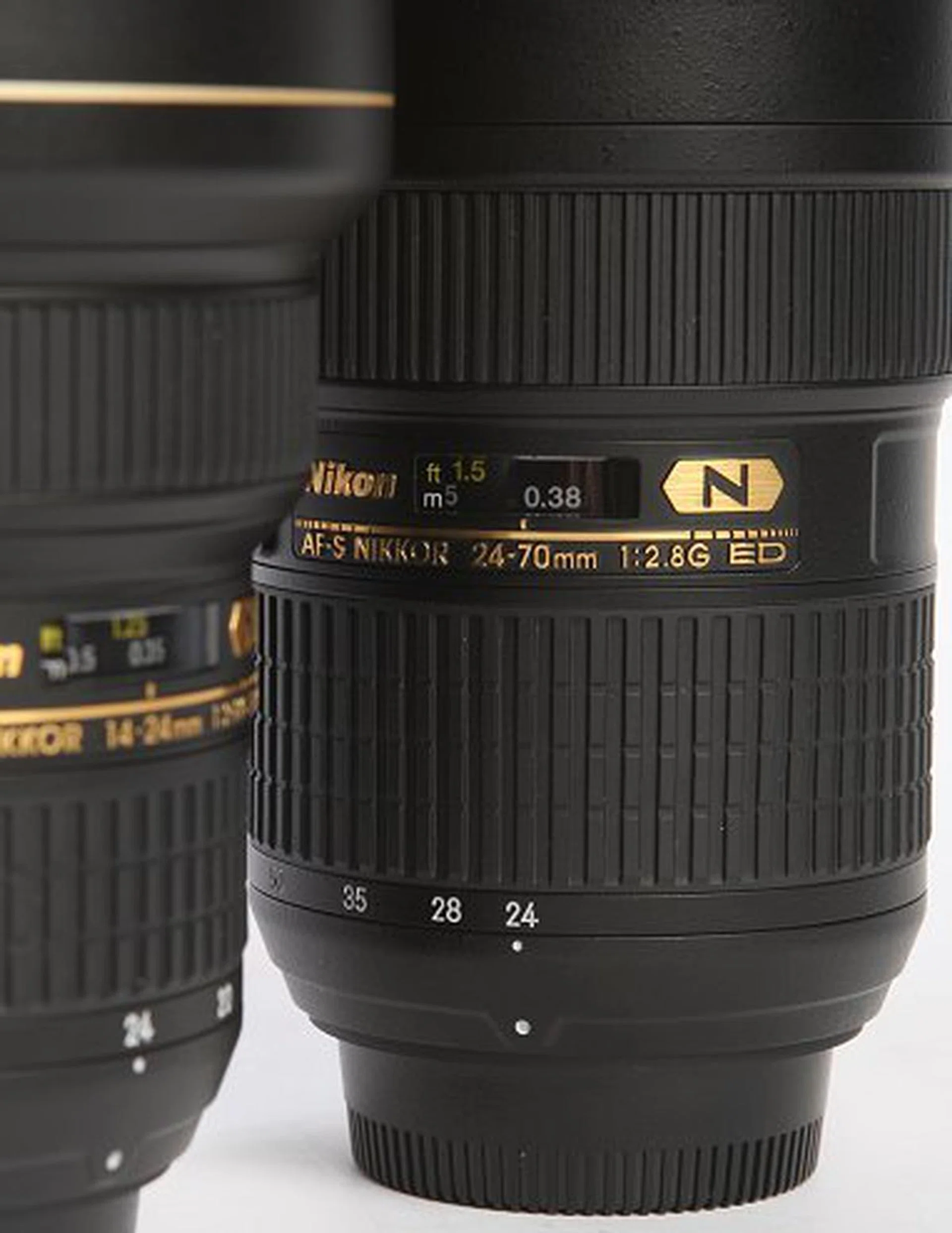
AF-S Nikkor 24-70mm f/28G ED. Standard zoom NIKKOR lens with constant high f/2.8 aperture.
The AF-S NIKKOR 24-70mm f/2.8G ED is a standard 2.9x zoom lens with a highly practical wideangle to medium-telephoto focal range, offering maximum versatility to accomodate everything from tight portraits to expansive scenes. Together with the ultra-wideangle AF-S NIKKOR 14-24mm f/2.8G ED lens and the existing AF-S VR Zoom-Nikkor 70-200mm f/2.8G IF-ED telephotho zoom lens, the new lens is part of an exclusive Nikon high-performance zoom lens system featuring a high f/2.8 aperture and covering a focal range of 14mm to 200mm.
In Summary
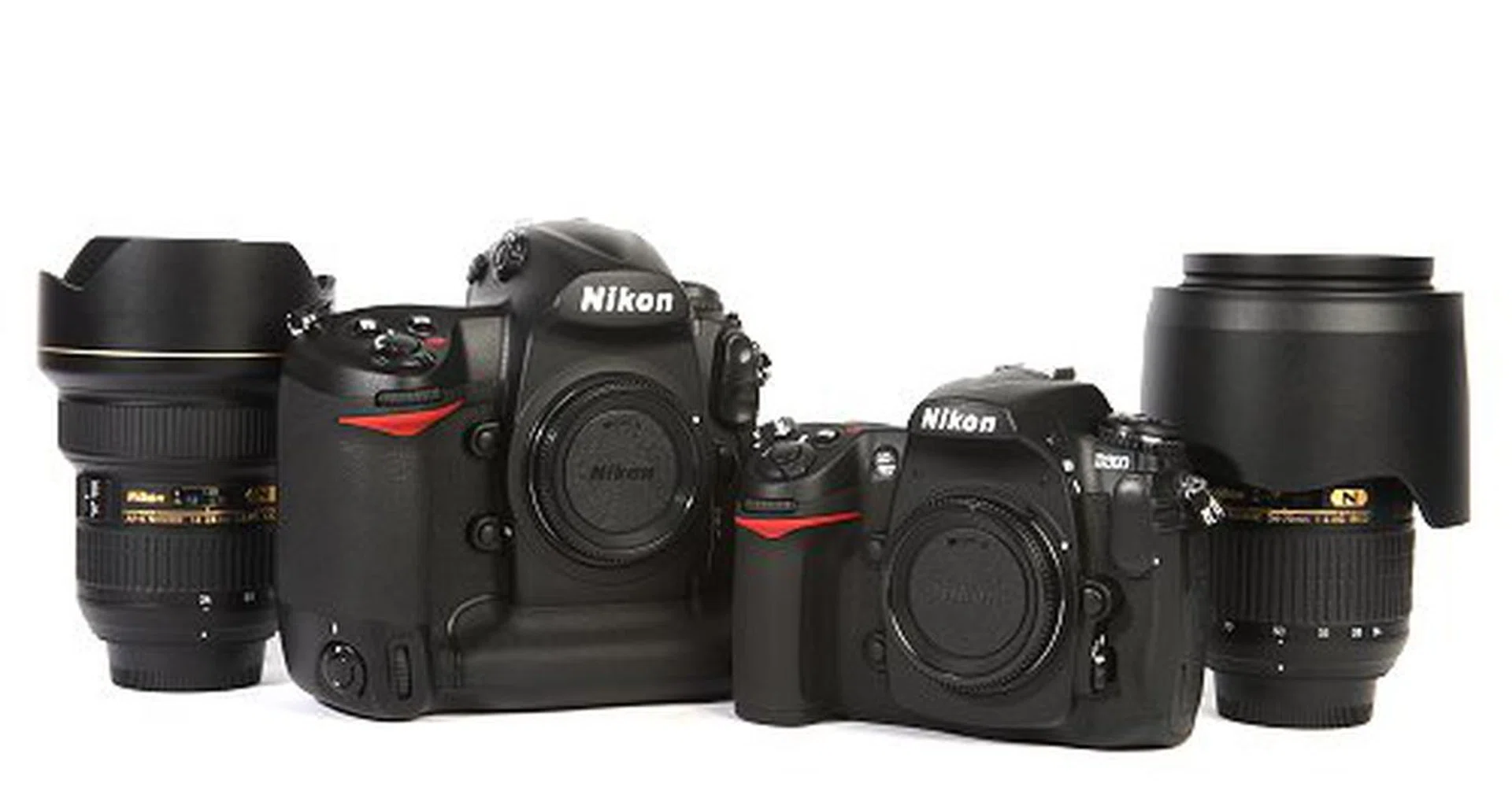
On the D300...
Based on the enhancements and imaging quality we managed to discover from our short stint with the D300 prototype, we must say the D300 is shaping up to be a compelling package. As it will soon to be, one will get a high-quality 12.3-megapixel CMOS sensor, "Live" view, an optical viewfinder with 100% coverage, tons of imaging options, a powerful image processor with low noise quality at high ISO levels, and compatibility with existing range of DX lenses. If the performance from the prototype D300 is anything to go by, the full production model should be a hot seller when it finally gets to stores everywhere.
On the D3...
Addressing issues raised by professional and serious amateurs worldwide about what they wanted in a pro-level camera, Nikon has unveiled a top-of-the-line successor to the D2 that delivers superb colour with a wide range of ISO sensitivities, all wrapped in a new and affordable Full frame offering. The FX-format Nikon D3 marks a new era of DSLRs and their FX format. It'll be interesting to see how the format performs as more FX lenses are slowly introduced.
Special thanks to the crew at Nikon Singapore for the chance to see what the future holds for photographers.
Our articles may contain affiliate links. If you buy through these links, we may earn a small commission.