
PowerColor Radeon HD 3850 Xtreme 512MB
ATI's new 55nm GPU, the RV670 hits the streets today and we take a look at the lesser Radeon HD 3850 in the form of a special, overclocked version from PowerColor featuring a third party cooler. Can it shake up the mid-range graphics segment like NVIDIA's recent GeForce 8800 GT? Find out inside.

Introduction
Roughly two weeks ago, NVIDIA dropped a bombshell with its new G92 based graphics card, the . Like most review sites, we were quite taken aback by the extremely competitive price and performance of the new card. And this positive impression was based solely on performance benchmarks, before considering the additional PureVideo HD hardware integrated in the new core that is a significant improvement over the original GeForce 8800 series.
With a single stroke, NVIDIA effectively stole the thunder from ATI's anticipated attempt to revive its faltering Radeon HD 2000 series. Since then, enthusiasts have been buzzing about the GeForce 8800 GT and from all accounts, initial batches of GeForce 8800 GT have been practically sold out. The question of course, is whether ATI's new Radeon HD 3800 series can actually be a solid alternative to NVIDIA's offering. Today is the day we find out, though as circumstances would have it, we received the lesser version of the two new Radeon HD 3800 cards launched, the Radeon HD 3850 instead of the HD 3870.
So what's different about the Radeon HD 3800 series? For one, ATI leads the industry with the first GPU to be manufactured using a 55nm process. As most of you should know, that means a die shrink from the 80nm of the R600 with all the beneficial side effects, like lower power consumption, lower operating temperatures and along with it, greater allowance for higher clock speeds and to enthusiasts - overclocking. With NVIDIA's G92 still on 65nm, ATI has the advantage, on paper at least. But what's really inside this new core, codenamed RV670?
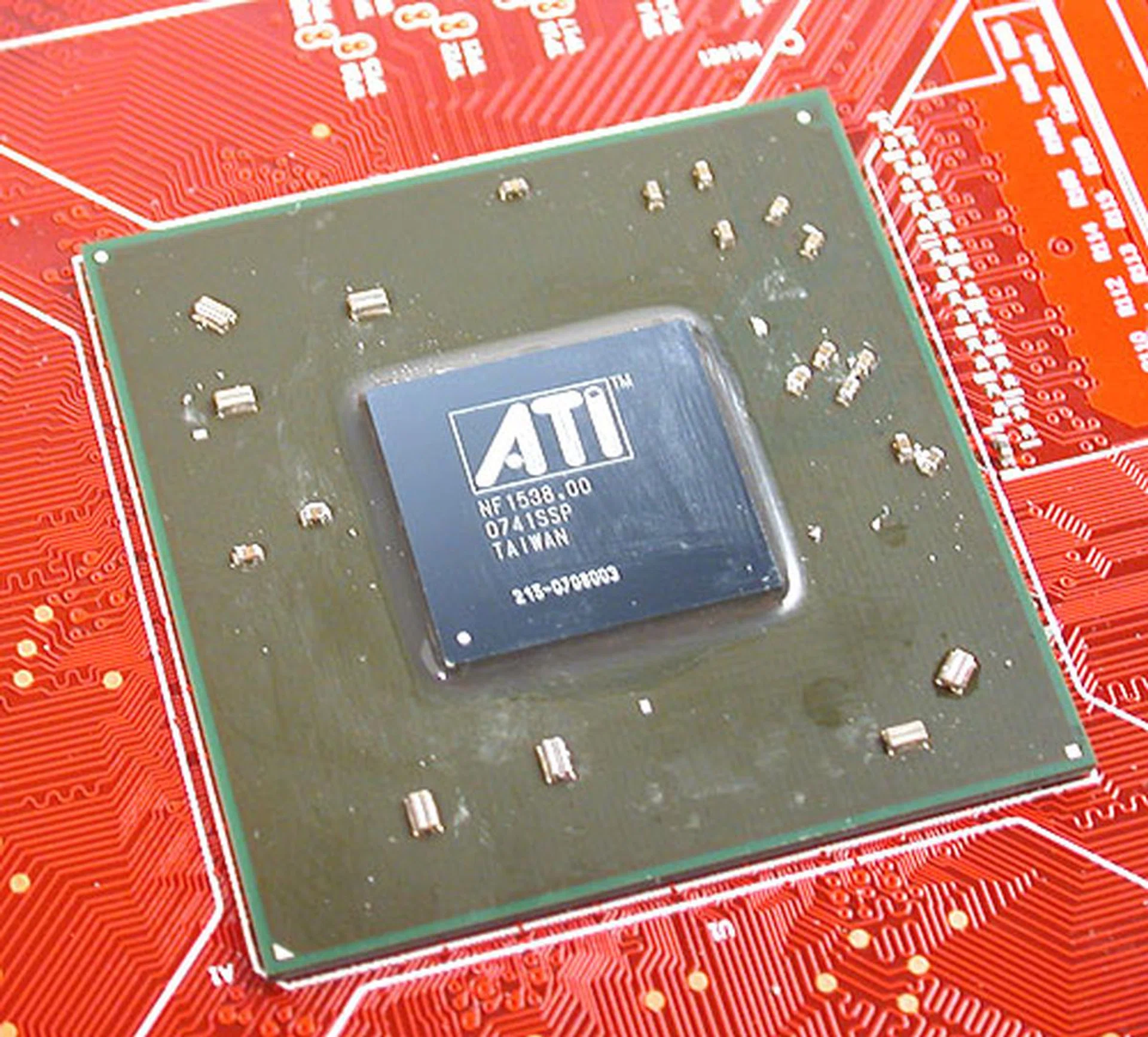
Packing 666 million transistors, the RV670 still manages to squeeze the architecture of the R600 along with ATI's UVD.
For starters, the RV670 aims to be gunning to be as future proof as you can get for a product in the fast pace of consumer graphics industry. Not only does it match the GeForce 8800 GT in having PCIe version 2.0 support, it is also the first DirectX 10.1 compatible GPU and also the first to use Shader Model 4.1. Now all this is certainly very nice sounding, but with DirectX 10.1 only available with Windows Vista's Service Pack 1 next year, the advantages of DirectX 10.1 mentioned by ATI, like having real time global illumination and compulsory 4x multi-sample anti-aliasing (thereby raising the bar on image quality), may not actually be implemented in 3D games till much later. Also, Microsoft has commented that DirectX 10.1 is really just a minor superset of DirectX 10, similar to the DirectX 9.x updates, which as we know have gone from 9.0 to 9.0c, including the ongoing bi-monthly updates. As far as Microsoft has admitted, all DirectX 10 hardware will work in compliance with DirectX 10.1. The Radeon HD 3800 series may be the first GPU core to officially claim full support, but whether or not it will overshadow current DirectX 10 hardware still remains to be seen because DirectX 10.1 just isn’t out yet.
As for the actual processing hardware, the architecture is similar to the R600, with the exact number of stream processors and texture units but an important distinction is the 256-bit memory bus of the Radeon HD 3800, which probably explained why the RV670 clocks in with 666 million transistors instead of the 700 million on the R600.
For consumers, the immediate advantage of the Radeon HD 3800 series over the older Radeon HD 2900 XT probably lies in ATI's inclusion of its Unified Video Decoder (UVD). If you can recall, this hardware that takes over the task of decoding H.264 and VC-1 video codecs is found only in the mid and lower Radeon HD 2400 and 2600 series, but not on the high-end Radeon HD 2900 XT. In short, this move is similar to NVIDIA adding its VP2 processor to the GeForce 8800 GT.
The other major improvement is the addition of ATI's PowerPlay technology to the Radeon HD 3800 series. This technology had been found previously in ATI's Mobility chipsets and as one might deduce, it's a form of speed throttling similar in concept to Intel's SpeedStep. In this case, the RV670 core and memory clocks will change dynamically according to GPU utilization. So with PowerPlay, while checking your emails for example, you can expect your GPU to change to a lower usage state and draw less power and the reverse to be true when you're running intensive 3D applications. Whether that translates to a sizable or merely minor improvement in power consumption figures remains to be seen but at the very least, ATI claims that the Radeon HD 3870 will have a maximum power draw of 105W and the Radeon HD 3850, 95W. This is almost half the 215W the Radeon HD 2900 XT consumes, though still more than the 45W rating for the Radeon HD 2600 series.
Finally, while details are still scant at the moment, the new Radeon HD 3800 cards will support ATI's CrossFireX initiative, which seems to be a quad GPU configuration to counter NVIDIA's quad SLI. To be available on the upcoming Spider (AMD’s codename for their new all-AMD ecosystem consisting of the Phenom CPU, 7-series chipset and Radeon HD 3800 GPU) platform, such a setup can have up to four Radeon HD 3800 cards supporting up to eight display outputs. On a similar note, ATI also plans to have a dual GPU Radeon HD 3870 X2 graphics product (think GeForce 7950 GX2) out next year, but we'll get to that when it's available.
As for now, the following table shows how the two new Radeon HD 3800 cards compare against the older R600 and since we only have the Radeon HD 3850 in our hands at the moment, we have compared it against some of its likely competitors in terms of pricing. Obviously, prices for some of these existing cards will probably see some adjustments due to the expected US$150 - 250 price range that ATI intends for the Radeon HD 3800 series.
Model | ATI Radeon HD 3850 256MB | ATI Radeon HD 3870 512MB | ATI Radeon HD 2900 XT 512MB | NVIDIA GeForce 8600 GTS 256MB | ATI Radeon HD 2600 XT 256MB GDDR4 |
Core Code | RV670 | RV670 | R600 | G84 | RV630 |
Transistor Count | 666 million | 666 million | 700 million | 289 million | 390 million |
Manufacturing Process | 55nm | 55nm | 80nm | 80nm | 65nm |
Core Clock | 670MHz | 775MHz | 742MHz | 675MHz | 800MHz |
Stream Processors | 64 Shader Processors (consisting of 320 Stream Processing Units) | 64 Shader Processors (consisting of 320 Stream Processing Units) | 64 Shader Processors (consisting of 320 Stream Processing Units) | 32 Stream Processors | 24 Shader Processors (consisting of 120 Stream Processing Units) |
Stream Processor Clock | 670MHz | 775MHz | 740MHz | 1450MHz | 800MHz |
Texture Mapping Units (TMU) or Texture Filtering (TF) units | 16 | 16 | 16 | 16 | 8 |
Raster Operator units (ROP) | 16 | 16 | 16 | 8 | 4 |
Memory Clock | 1660MHz DDR3 | 2250MHz DDR4 | 1650Hz DDR3 | 2000MHz DDR3 | 2200MHz DDR4 |
DDR Memory Bus | 256-bit | 256-bit | 512-bit | 128-bit | 128-bit |
Memory Bandwidth | 53.1GB/s | 72.0GB/s | 105.6GB/s | 32.0GB/s | 35.2GB/s |
Ring Bus Memory Controller | 512-bit | 512-bit | 1024-bit | NIL | NIL |
PCI Express Interface | PCIe ver 2.0 x16 | PCIe ver 2.0 x16 | x16 | x16 | x16 |
Molex Power Connectors | Yes | Yes | Yes (dual) | Yes | Yes |
Multi GPU Technology | Yes (CrossFireX) | Yes (CrossFireX) | Yes (CrossFire) | Yes (SLI) | Yes (CrossFire) |
DVI Output Support | 2 x Dual-Link | 2 x Dual-Link | 2 x Dual-Link | 2 x Dual-Link | 2 x Dual-Link |
HDCP Support | Yes | Yes | Yes | Yes | Yes |
Street Price | From US$150 | ~US$240 | ~US$329 | ~US$149 - 169 | ~US$139 |
The PowerColor Radeon HD 3850 Xtreme 512MB GDDR4
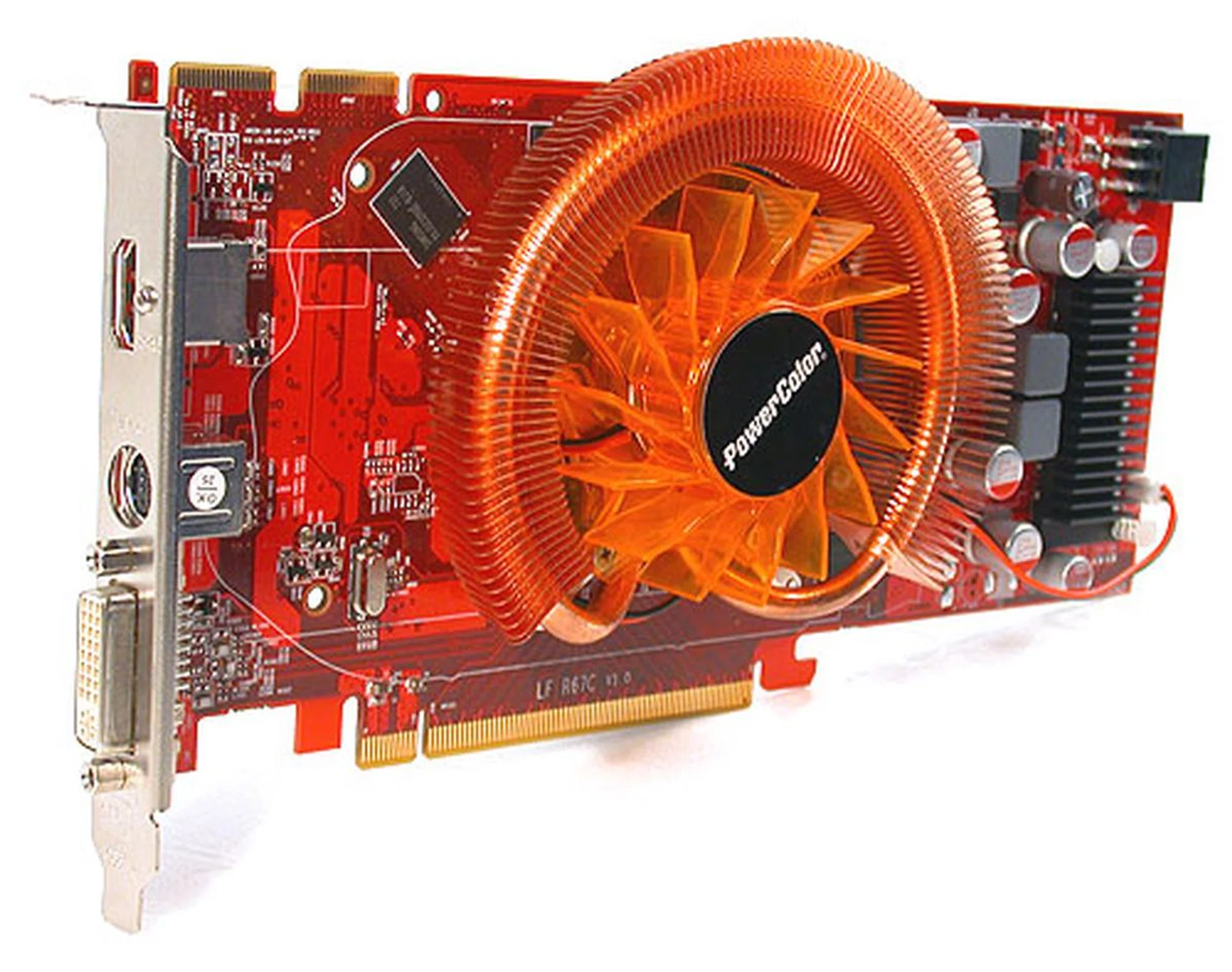
We'll be looking at the Radeon HD 3850 through a special edition from PowerColor. Featuring a third party cooler from ZEROtherm, the PowerColor Radeon HD 3850 Xtreme aims to live up to its name. While the standard Radeon HD 3850 is expected to have 256MB of DDR3 memory, this overclocked edition naturally had to be different and in this case, and that means doubling the amount of memory to 512MB. It also features increased core and memory clocks - to 720MHz and 1800MHz DDR respectively.
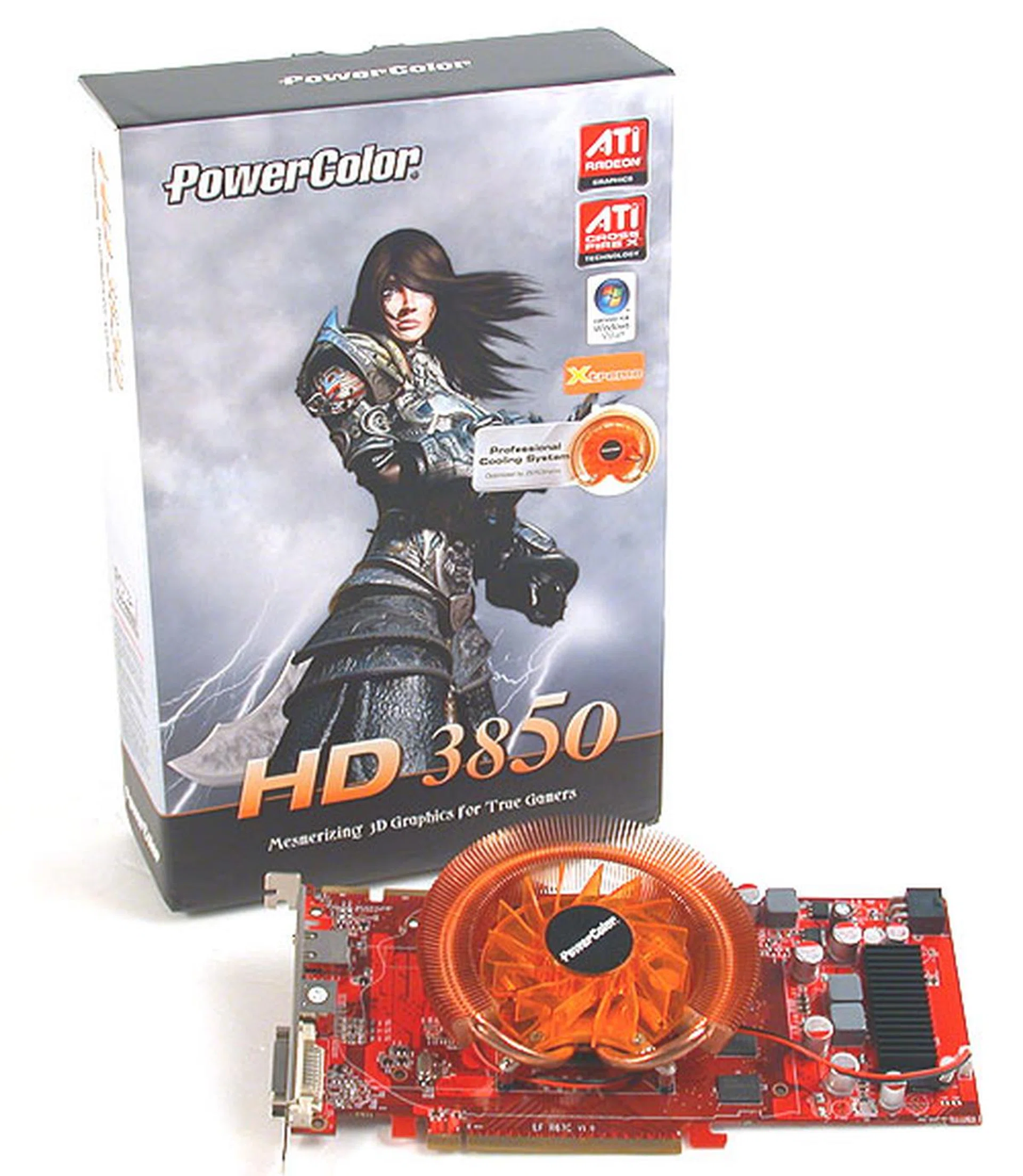
We didn't get a Radeon HD 3870 but an overclocked Radeon HD 3850 is nonetheless interesting.
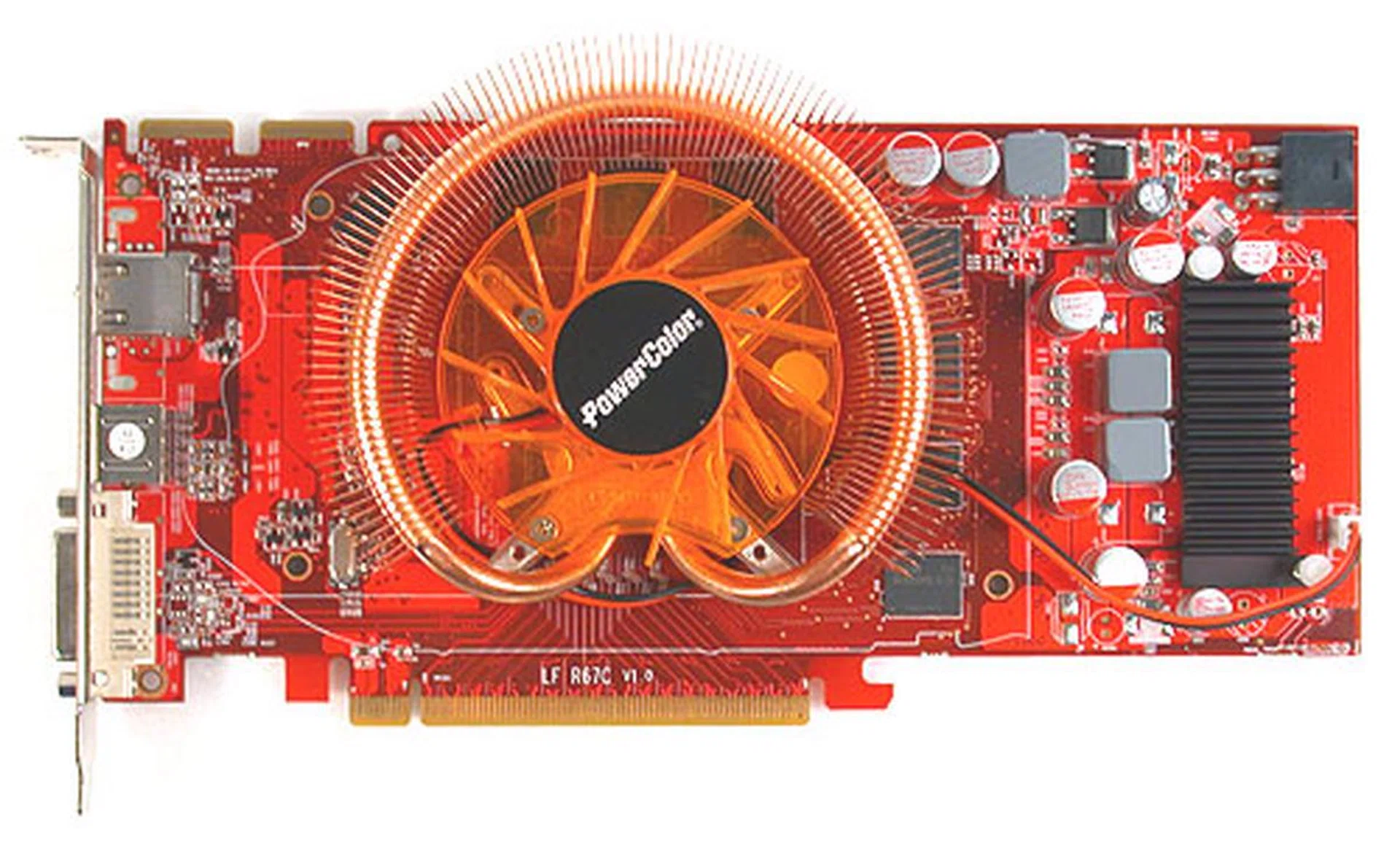
PowerColor went with a ZEROtherm VGA cooler that is not so kind on our ears. The standard version from ATI has a slim single slot cooler.
Compared to the 670MHz and the 775MHz core of the Radeon HD 3850 and 3870, the PowerColor is somewhere in the middle. Given that both use the same GPU, the difference then boils down to the clock speeds and the fact that the Radeon HD 3870 utilizes the more costly and 'power efficient' GDDR4 instead of GDDR3. Physically, the presence of the two-slot ZEROtherm cooler is probably the most distinctive feature of the PowerColor. Not only that, the noise on this cooler is also significantly more audible than its competitors.
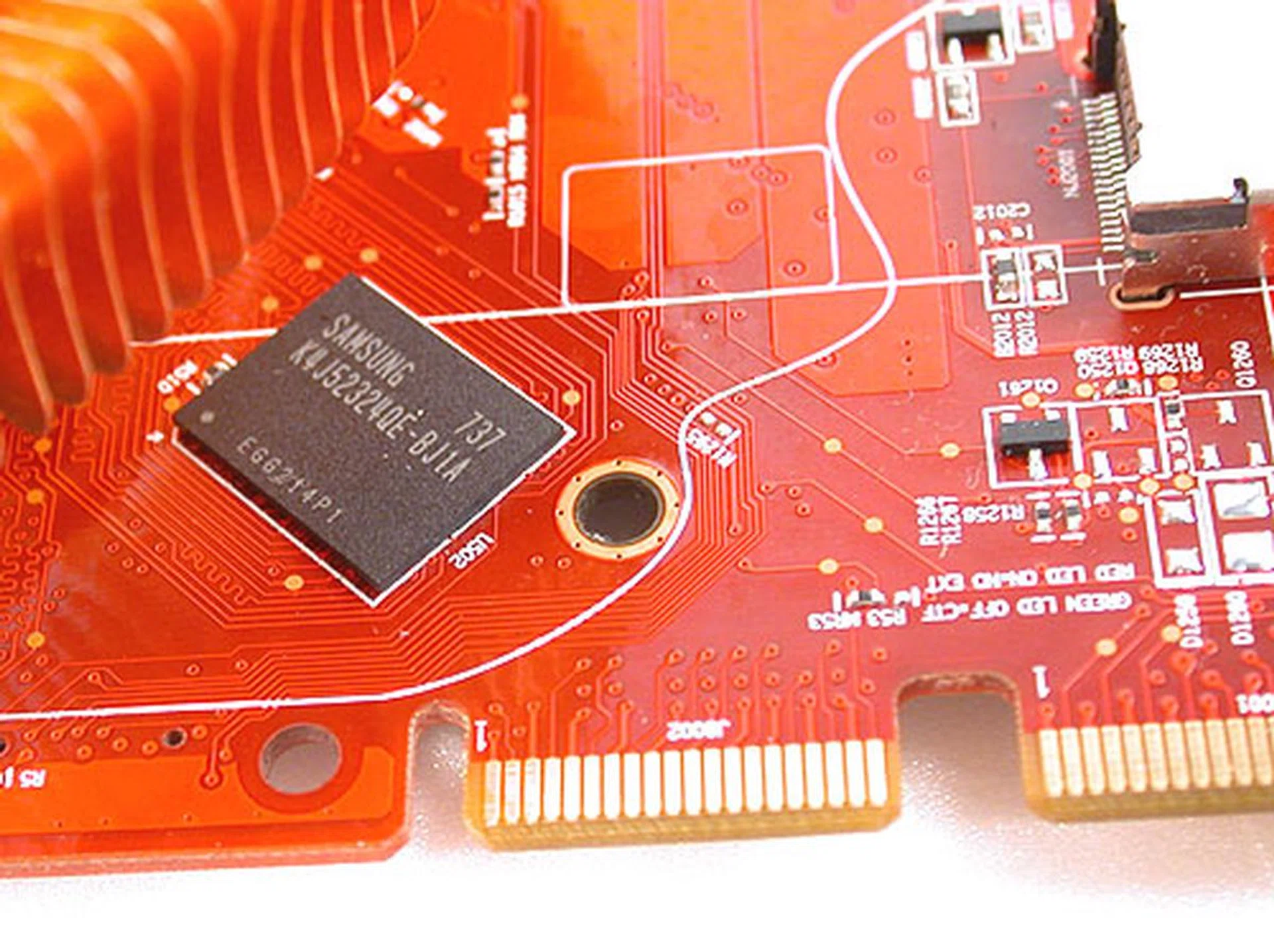
The PowerColor has 512MB of GDDR3 memory and uses 1.0ns chips from Samsung. There are also two CrossFire connectors, ready for any future CrossFireX ventures.

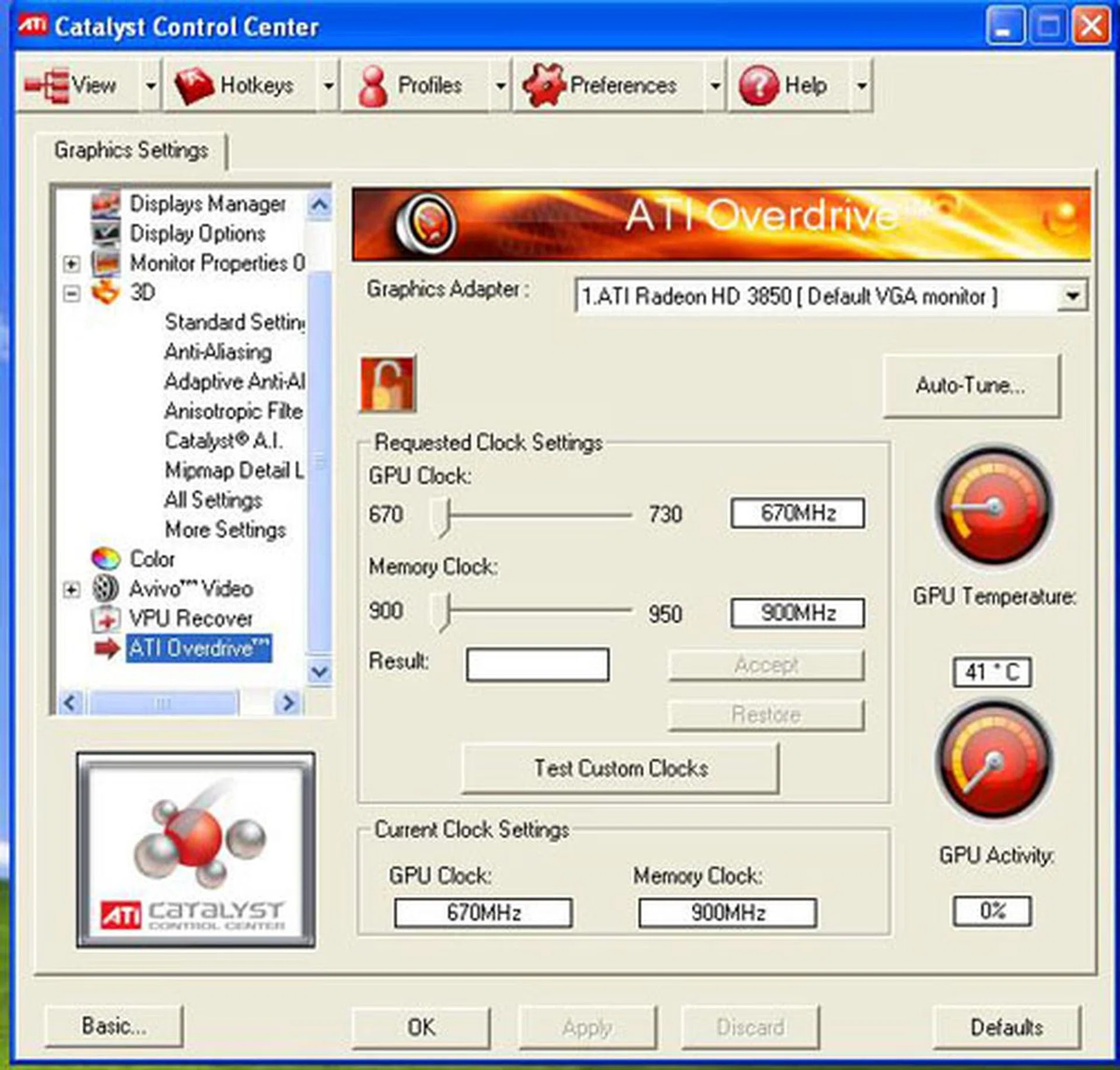
The new Catalyst Control Center includes a CPU utilization indicator. Note that the core clock shown here is not the default of the PowerColor, which is in fact at 720MHz.
Additionally, PowerColor has replaced one of the two DVI outputs with a HDMI output, so there's no need for ATI's special DVI-to-HDMI dongle if you are only using a single HDMI output. There isn't such a dongle included in the package either even if you wanted to try dual HDMI, though there is a CrossFire bridge for those who looking forward to dabbling with ATI's upcoming CrossFireX. The rest of the contents in our box are quite typical and listed below. Unfortunately for some consumers, there are no games included, even for this Xtreme version.
- DVI-to-VGA adapter
- 9-pin mini-DIN to Component dongle
- 6-pin Molex power connector
- Composite extension cable
- CrossFire bridge
- Driver CD
- Installation guide
Test Setup
Our graphics test system was configured with an Intel Core 2 Duo E6700 processor (2.66GHz) on an Intel D975XBX 'Bad Axe' motherboard. There were two sticks of 1GB DDR2-800 HyperX memory from Kingston and we also used a Seagate 7200.7 SATA hard drive, on which was installed Windows XP Professional with Service Pack 2 and DirectX 9.0c.
Since the Radeon HD 3850 is the less powerful variant of the two new members of the HD 3800 series and prices start from US$150 (an optimistic figure we believe), we decided to include some of the existing mid-range options, like the Radeon HD 2600 XT and the GeForce 8600 GTS. In light of the performance gains that we saw in the GeForce 8800 GT, we also included some higher end cards like the GeForce 8800 GTS 640MB and also the original R600. Also, since the GeForce 8800 GT has made such an impact since its debut, we have included it in these benchmarks. To be fair, the Radeon HD 3870 should be the rightful comparison against the GeForce 8800 GT, but as we have not yet received it, we thought it would be interesting to see how the overclocked PowerColor would fare instead.
Here are the cards included in the benchmarks, with their driver versions:
- PowerColor Radeon HD 3850 Xtreme 512MB GDDR4 (Catalyst driver ver 8.43)
- ATI Radeon HD 2600 XT 256MB GDDR4 (Catalyst 7.6)
- NVIDIA GeForce 8600 GTS 256MB (ForceWare 158.19)
- NVIDIA GeForce 8800 GTS 640MB (ForceWare 158.19)
- NVIDIA GeForce 8800 GT 512MB (ForceWare 167.37)
- ATI Radeon HD 2900 XT 512MB GDDR4 (Catalyst driver ver 8.37)
The following benchmarks were tested:
- Futuremark 3DMark06 (ver. 102)
- F.E.A.R
- Supreme Commander
- Company of Heroes (ver 1.3)
- Unreal Tournament 3 Beta Demo
Results - 3DMark06 Pro (ver 1.2)
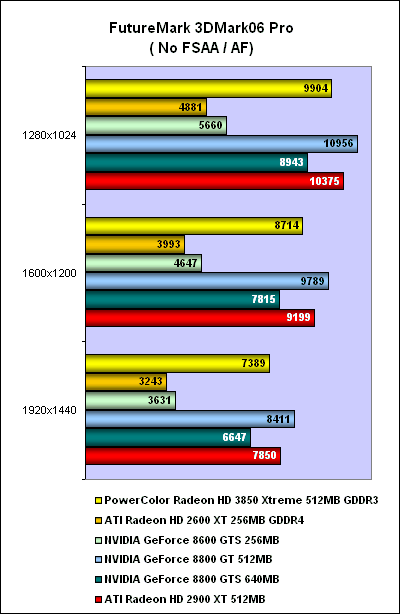
It may be a synthetic benchmark, but 3DMark06 is still one of the most popular benchmarks used today. The PowerColor Radeon HD 3850 Xtreme was surprisingly ahead of the GeForce 8800 GTS here though the new NVIDIA GeForce 8800 GT also made headlines with its lead position. Of course, since the PowerColor is overclocked, you can expect the standard Radeon HD 3850 to score a little lower, though we believe the GeForce 8800 GTS would still very likely to end up slower in 3DMark06. Meanwhile, mid-range cards like the GeForce 8600 GTS, are staring at an imminent drop in market value, as the Radeon HD 3850 expected to start from US$150.

Results - F.E.A.R (DirectX 9 Benchmark)
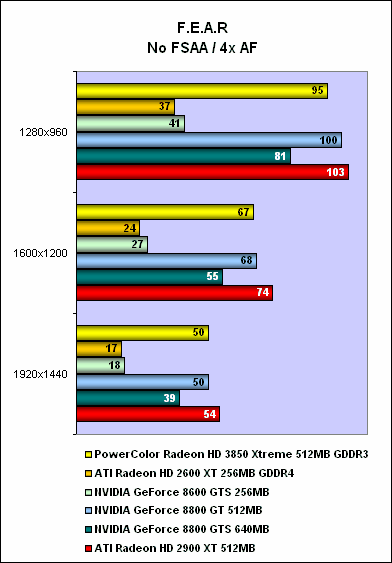
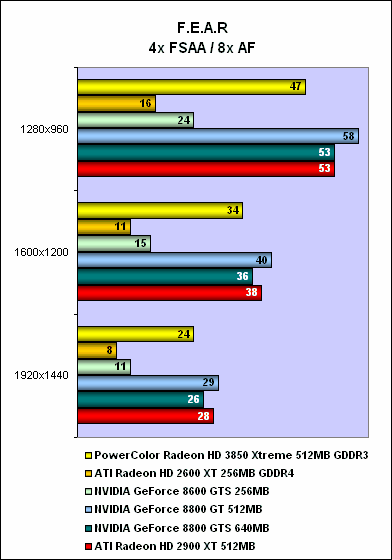
Without anti-aliasing, the PowerColor managed to beat the GeForce 8800 GTS to third spot in F.E.A.R and was only marginally slower than the GeForce 8800 GT. This order was tweaked slightly when 4x anti-aliasing was enabled, though the PowerColor still did quite well to stay within touching distance of the leaders. ATI's Radeon HD 2900 XT was overtaken with anti-aliasing, with GeForce 8800 GT proving why it's rolling off the tongues of most enthusiasts now.
Results - Supreme Commander
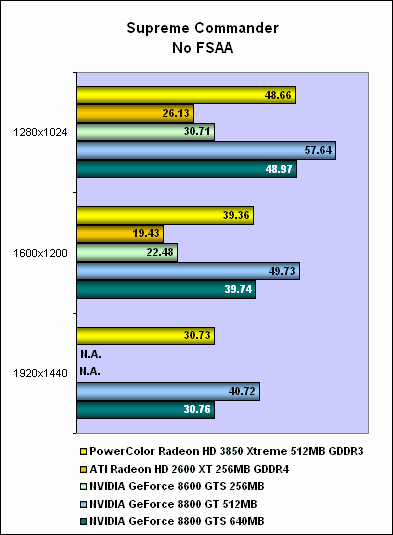
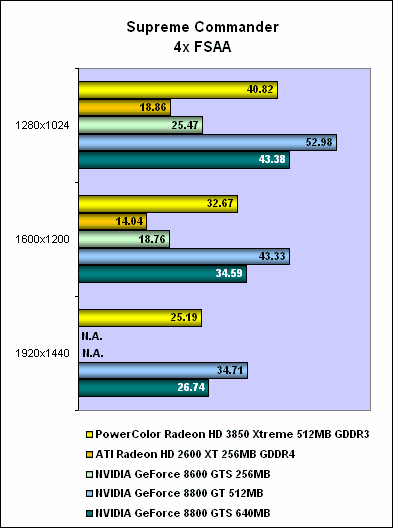
Once again, the new revised graphics cards from ATI and NVIDIA continued to shake up the established pecking order, with the PowerColor matching the GeForce 8800 GTS in Supreme Commander. No doubt, the PowerColor had higher than usual clock speeds, but with the GeForce 8800 GT also clearly in the lead here, the end is nigh for the GeForce 8800 GTS.
Results - Company of Heroes & Unreal Tournament 3 Demo
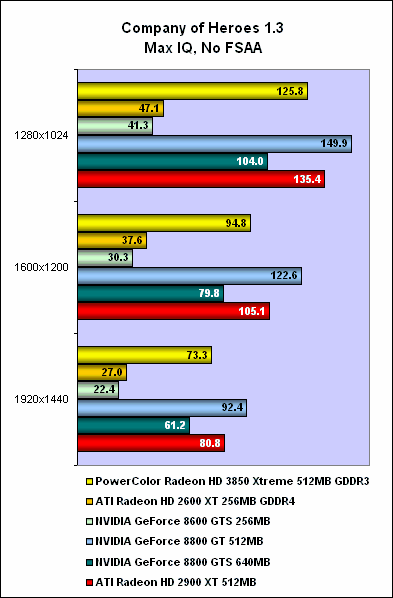
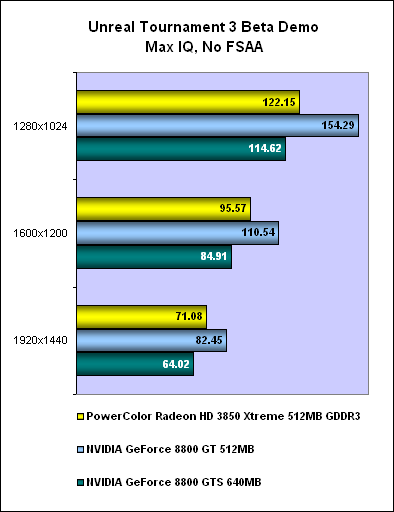
The squeeze on the mid-range segment continued in these two games, as cards like the PowerColor and the GeForce 8800 GT completely eclipsed their lesser and predecessor rivals, making them look more like low-end options. As expected, the GeForce 8800 GT was extremely impressive here, beating ATI's Radeon HD 2900 XT to the top spot in Company of Heroes. Meanwhile, the overclocked PowerColor was slightly slower than the Radeon HD 2900 XT and we can't help but wonder where the HD 3870 will place in this game. The GeForce 8800 GT's lead over the PowerColor was also significant in the UT3 beta demo while the GeForce 8800 GTS looked down and out in both games, losing to both its newer G92 cousin and the PowerColor here.
Temperature Testing
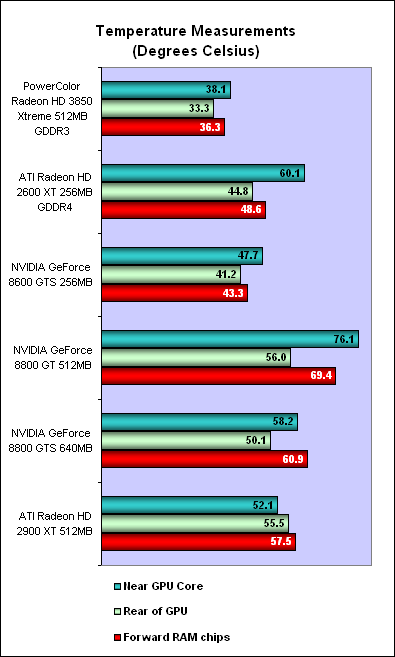
The move to a 55nm manufacturing process for the core paid dividends when it came to operating temperatures, with the PowerColor registering the lowest temperatures during our testing. Despite looping 3DMark06 for hours, the temperatures stayed below 40 degrees Celsius in our air-conditioned lab environment. Of course, the ZEROtherm cooler used by PowerColor is probably another reason for such cool readings. While we have not tested the reference Radeon HD 3850 yet, we believe it should be comparable, since remember, this PowerColor card is overclocked. In this particular test, the Radeon HD 3850 basically blows NVIDIA’s GeForce 8800 GT out of the water with temperatures that are nearly half of what the scalding hot GeForce 8800 GTs produced. Granted we've yet to test the Radeon HD 3870, we are already looking at a temperature-to-performance trade off between the new ATI Radeon HD 3800 series and NVIDIA's GeForce 8800 GT – an angle we're sure ATI will want to capitalize on.
In terms of noise level, reports have come in that the new Radeon HD 3800 series cards will actually see a reduction in noise levels and there are indications that the single slot reference models are indeed able to operate quietly. However, again, we have had the pleasure to be running an overclocked model with a third-party cooler, which has become the only blemish to the PowerColor HD 3850 Xtreme, as it definitely produced more noise than the competition here.
Power Consumption
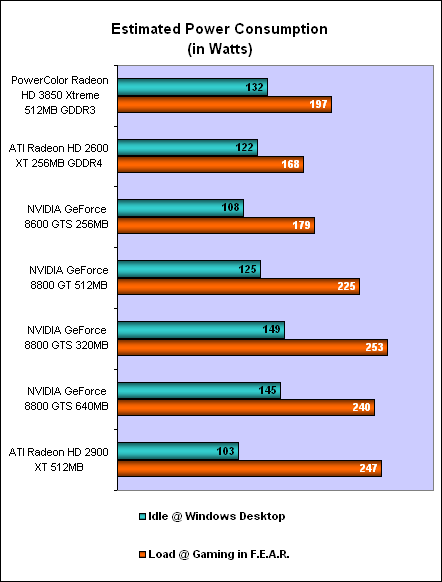
Another major development in the RV670 core is its lower power consumption. Due in part to its PowerPlay technology, the power draw of this new series will be markedly lower than the older R600. Our observations found that to be true only during the benchmarking segment because when idle, the Radeon HD 2900 XT surprisingly had the lower number. Since the PowerColor is an overclocked model with a custom cooler, that could be a contributing factor in these numbers, though on the bright side, they are still lower than most of its NVIDIA rivals. In case you need reminding, ATI itself states that the maximum power draw of a Radeon HD 3850 to be around 95W and for the Radeon HD 3870, approximately 105W.
We also tried our hand at overclocking this Xtreme version but even minor 50MHz overclocks failed to pass our benchmarking. It could be that the given clock speed is already the best possible for our review sample and the marginal increases that we managed are not worth trying just for a couple more 3DMark06 points. Considering that this is the first of the new Radeon HD 3800 cards we've been able to test, we’ll be actively looking at this particular angle in the days to come. As hardware and drivers mature, we may be able to see better overclocks.
Conclusion
We have wondered how ATI was going to respond to NVIDIA's price and performance edge with its GeForce 8800 GT, and it had looked like a huge uphill task to reclaim the buzz generated by the G92. Going by what we have seen of the overclocked PowerColor Radeon HD 3850, we can assume that NVIDIA will still hold the performance crown this time around even over the Radeon HD 3870, since it is essentially an even higher clocked 3850.
Yet, things have changed from the extremely rosy outlook for NVIDIA just a couple of weeks ago. The GeForce 8800 GT cards have sold like hotcakes from the get go and then the supply dried up. We have read from unverified sources that NVIDIA had limited supply and thus may not be able to keep production up to meet the demand after the initial batches were exhausted. Although we are unlikely to get confirmation for such rumors from NVIDIA, this seems to bear out in our experiences with online retailers and local distributors in the local Singapore market; prices are likely to climb in response to the tight supply.
Here is where the new Radeon HD 3800 series steps in and where ATI seems to have lost out on performance, they have an equally enticing counter offer. No doubt there are many enthusiasts who desire a GeForce 8800 GT for its performance, but we can see that some may just settle for the slower, but less expensive and much cooler Radeon HD 3800s. This is a window of opportunity for ATI to get some momentum in their consumer graphics, and given the fact that the Radeon HD 3800 cards operate at lower temperatures than their NVIDIA counterparts, it will help persuade more users onboard. The addition of Power Play to improve power efficiency could be another positive factor, though we're not betting too much on the DirectX 10.1 and Shader Model 4.1 support having any impact on sales in the short term. Crucially, ATI needs to have the supply to take advantage of NVIDIA's perceived supply woes and that is something that remains to be seen. Meanwhile, NVIDIA is prepping its 256MB variant of the GeForce 8800 GT, and that could be another twist in this saga.
It may not be the GeForce 8800 GT killer that fans may have hoped for but ATI is banking on lower prices to make up for its performance shortcomings.
True, the Radeon HD 3850 is not the direct competitor against the GeForce 8800 GT, but like the GeForce 8800 GT however, it should wipe out the existing mid-range contenders like the older GeForce 8600 GTS and the Radeon HD 2600 XT. It is also probably the final nail in the coffin for the GeForce 8800 GTS, in its current incarnation at least (Rumors of a G92 based remake seems to be on the table). It also signals a shift towards more affordable graphics cards from both chipmakers, making it a great time to be a PC gamer now, with more DirectX 10 games finally beginning to see the light of day.
For those looking for something different, PowerColor's Xtreme, overclocked version of the Radeon HD 3850 falls somewhat in between a Radeon HD 3850 and the HD 3870. Temperatures are considered very low for its performance level and the third party cooler from ZEROtherm is actually cool to the touch, a stark contrast to the scorching shell on any GeForce 8800 GT today. It is however a bit too noisy for our tastes and unlike the variety of modern games found on almost any retail GeForce 8800 GT, this PowerColor package has no bundled games at all. While we do not have the local price for this card at the moment, it should fall between the S$319 and S$399 recommended local prices for the standard PowerColor Radeon HD 3850 and 3870 respectively. As you can see, there isn't too much wiggle room for this Xtreme version and we'll recommend that you do your math before making a decision. Still, if the PowerColor Radeon HD 3850 Xtreme 512MB is any indication, the new RV670 GPUs are very compelling products, if not the fastest, they offer better performance-per-watt. Ironically, AMD has been able to achieve success on one front, where they are still struggling in another.
Our articles may contain affiliate links. If you buy through these links, we may earn a small commission.