
MSI R6970 Lightning - Lightning Strikes, Again
The MSI R6970 Lightning is the company's flagship Radeon HD 6970 and packs a host of high-end features such Military Class II components and Triple Over-Voltage. Aimed at hardcore gamers, we put it through our tests to find out if it is indeed "lightning" fast.

Lightning Strikes Again
The Radeon HD 6970 is AMD’s fastest single GPU card and it has been released for about 3 months now. In our review, we thought that it was a little underwhelming and not as exciting as AMD’s previous releases. Fortunately, then, we now have the MSI R6870 Lightning.
MSI’s “Lightning” series of cards represents the company’s flagship high-end cards. These cards are made with the best components and are designed for hardcore users. So it is no surprise then to find that the MSI R6970 Lightning is packed with high-end features. For a start, it uses the new Military Class II suite of components which includes Solid CAPS, Hi-C Caps with tantalum cores and Super Ferrite Chokes, all in the name of improving efficiency, durability and stability.
The R6970 Lightning also has MSI’s Power4 architecture, which consists of an 18-phase PWM design (a world’s first), independent power to the memory, NEC Proadlizers and CopperMOS. These features help enhance overclocking performance by boosting and optimizing the power supply to critical components like the GPU and memory. Speaking of power, the R6970 Lightning also supports Triple Over-Voltage, which lets users tweak voltage levels of the GPU, memory and PLL with the aid of MSI’s now almost ubiquitous Afterburner overclocking utility.
Next, the R6970 Lightning is fitted with the latest third-generation Twin Frozr III cooler. The new cooler has larger 9cm “Propeller Blades” fans which MSI claims provide up to 40% more airflow over the previous generation cooler. On top of that, the cooler also has a nickel-plated copper base, high-density cooling fins and 8mm extra thick heatpipes for better heat dissipation.
To top it all off, the card is also factory overclocked, although a bit too conservatively, if we are to be completely honest. Core clock speeds have been bumped up to 940MHz from 880MHz, while memory clock speeds are unchanged at 5500MHz DDR. Considering the high-end components that have been added to beef the card up, we expected more.
Here’s a look at the R6970 Lightning.
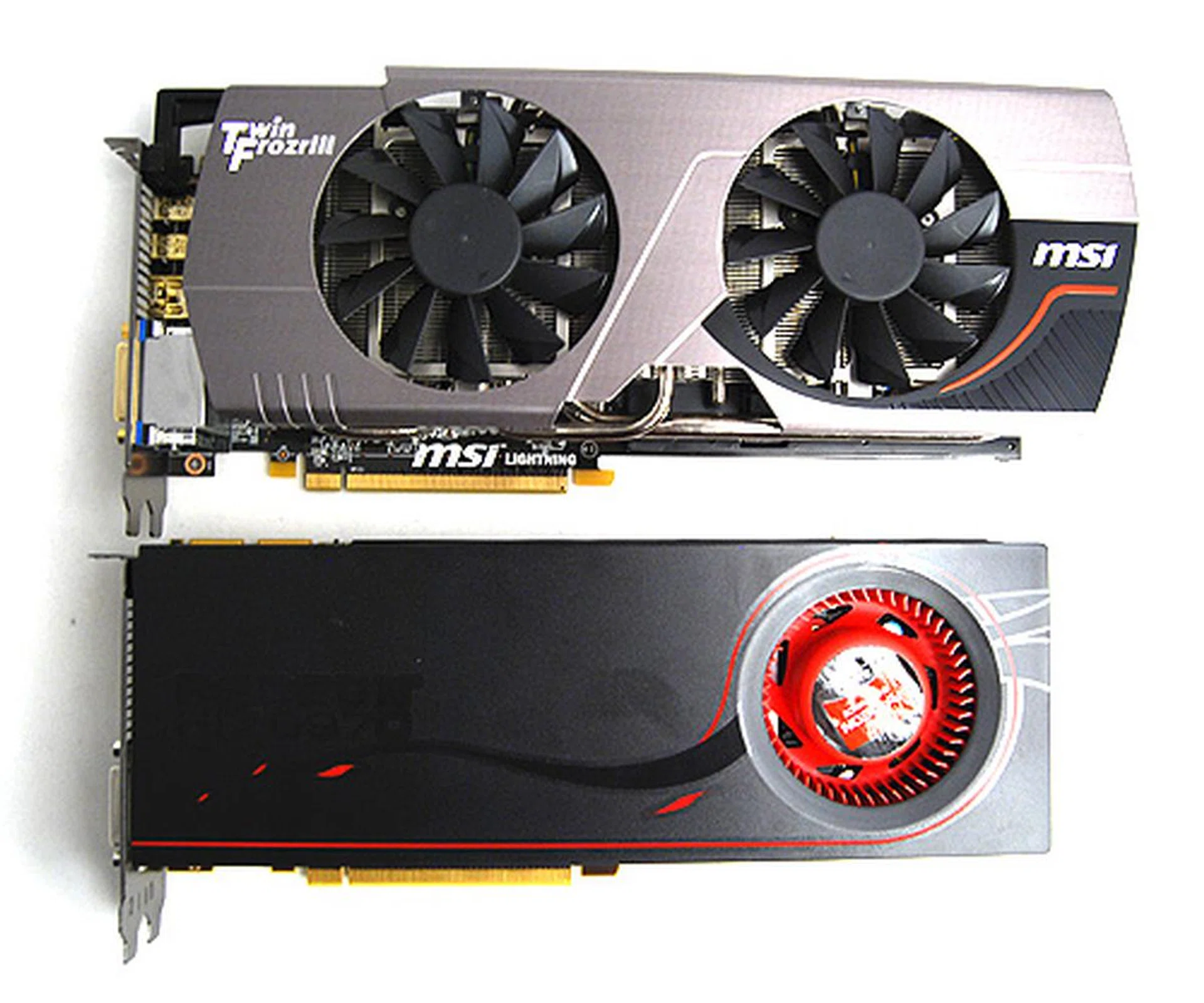
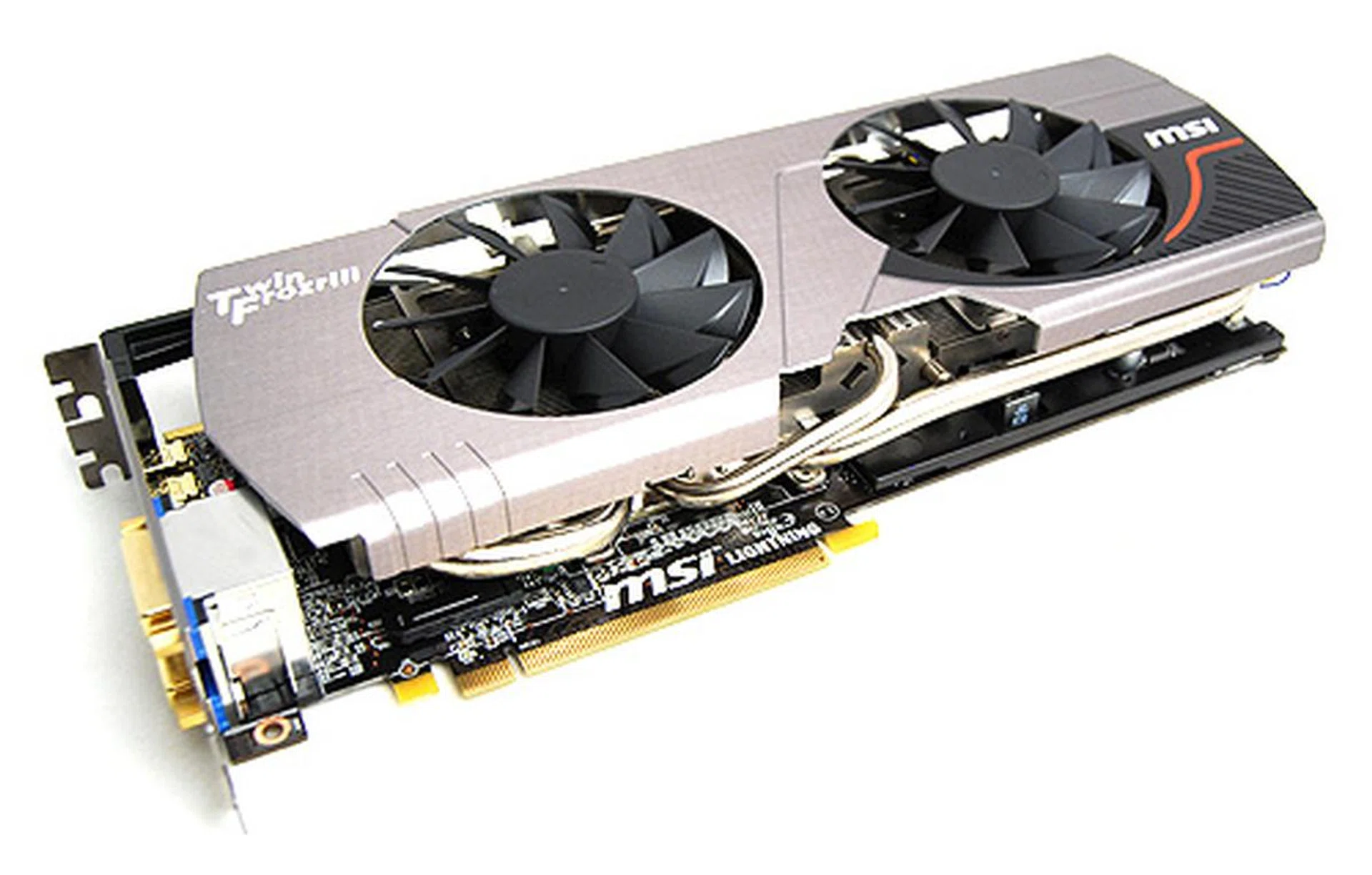
The MSI R6970 Lightning looks considerably stockier thanks to the large Twin Frozr III cooler.
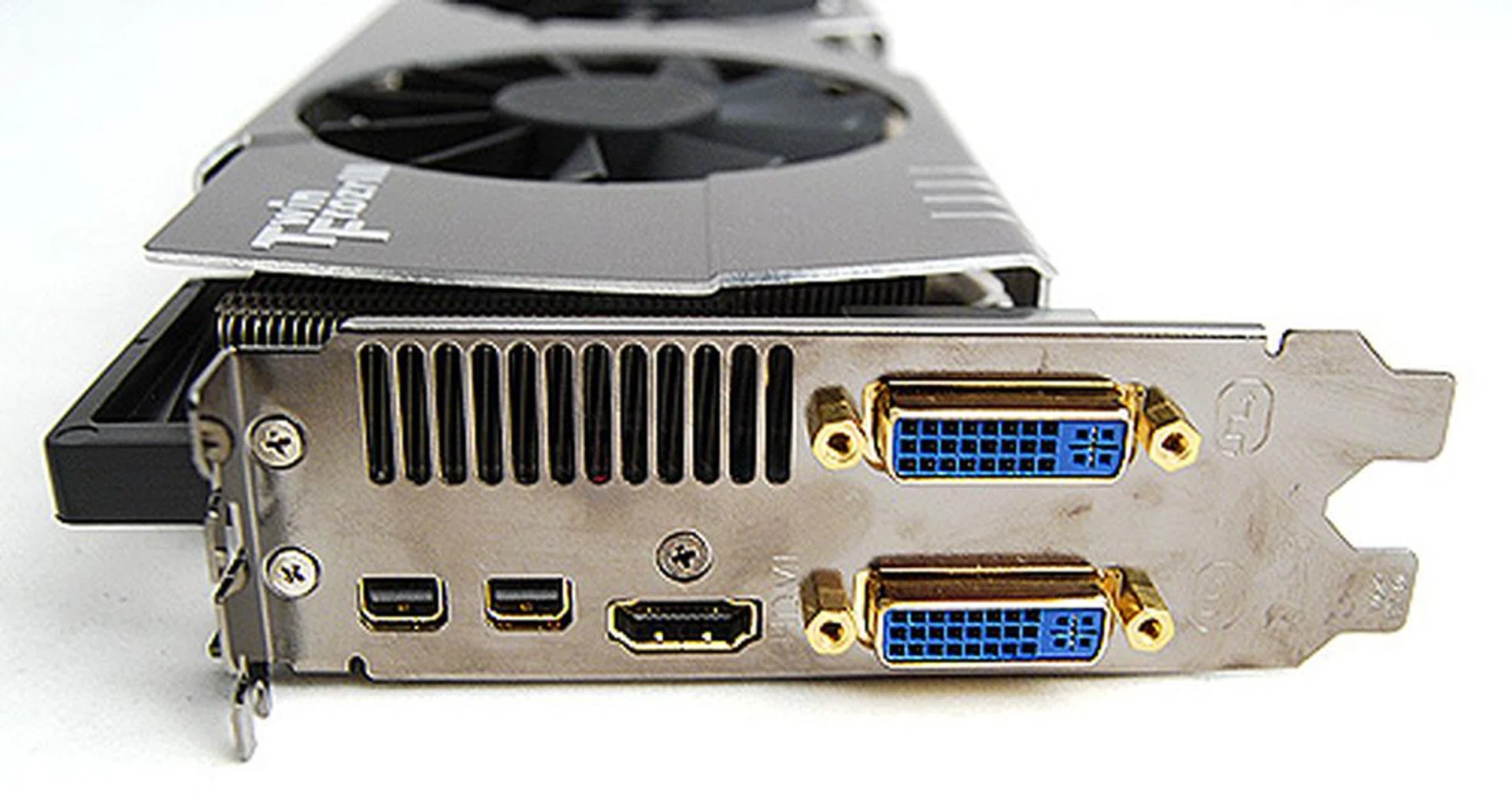
The card gets the usual twin DVI ports, single HDMI port and twin version 1.2 mini-DisplayPorts.
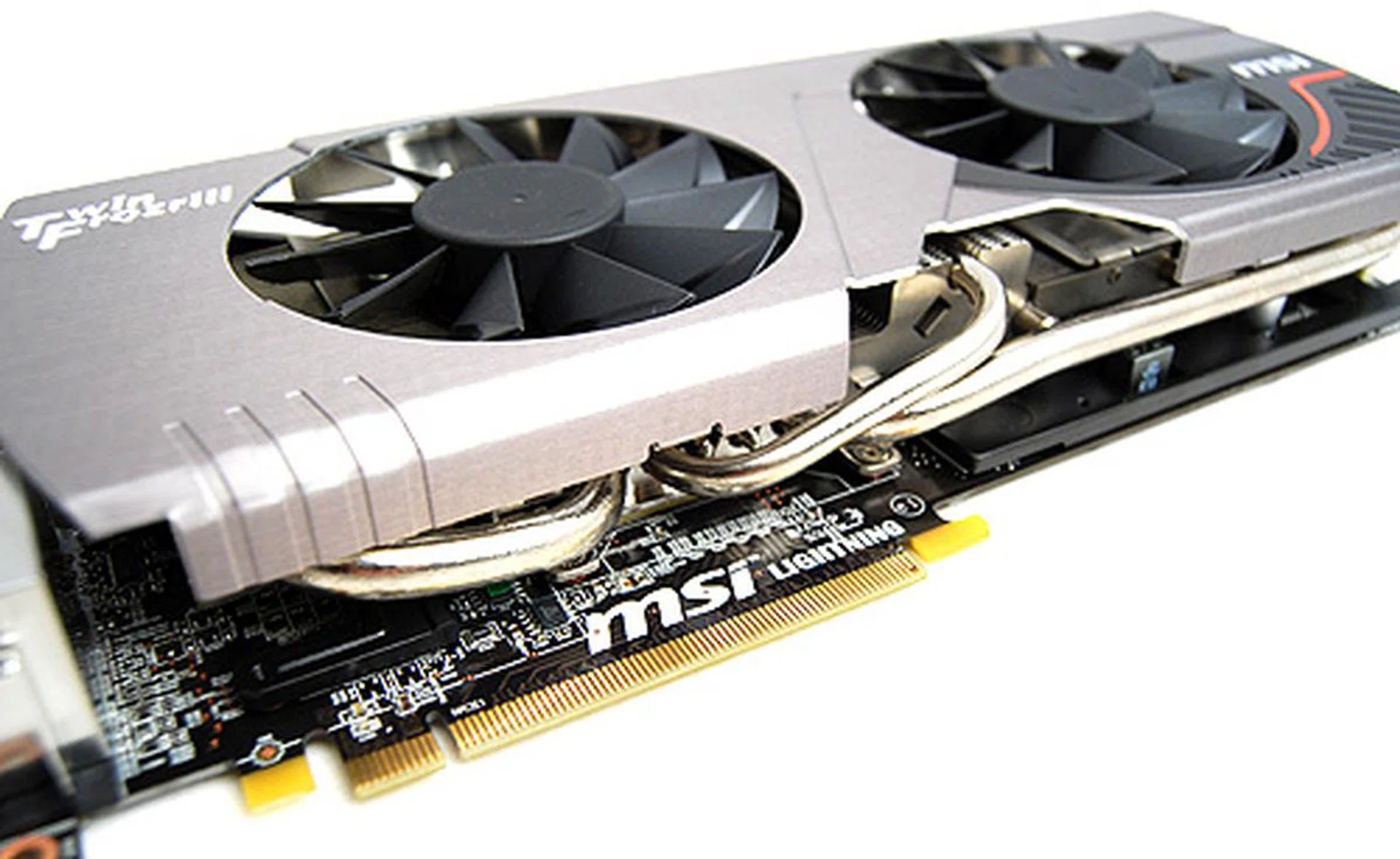
Cooling duties are handled by five 8mm thick copper heatpipes which help dissipate heat to the super dense cooling fins, which in turn are cooled by two 90mm large fans.
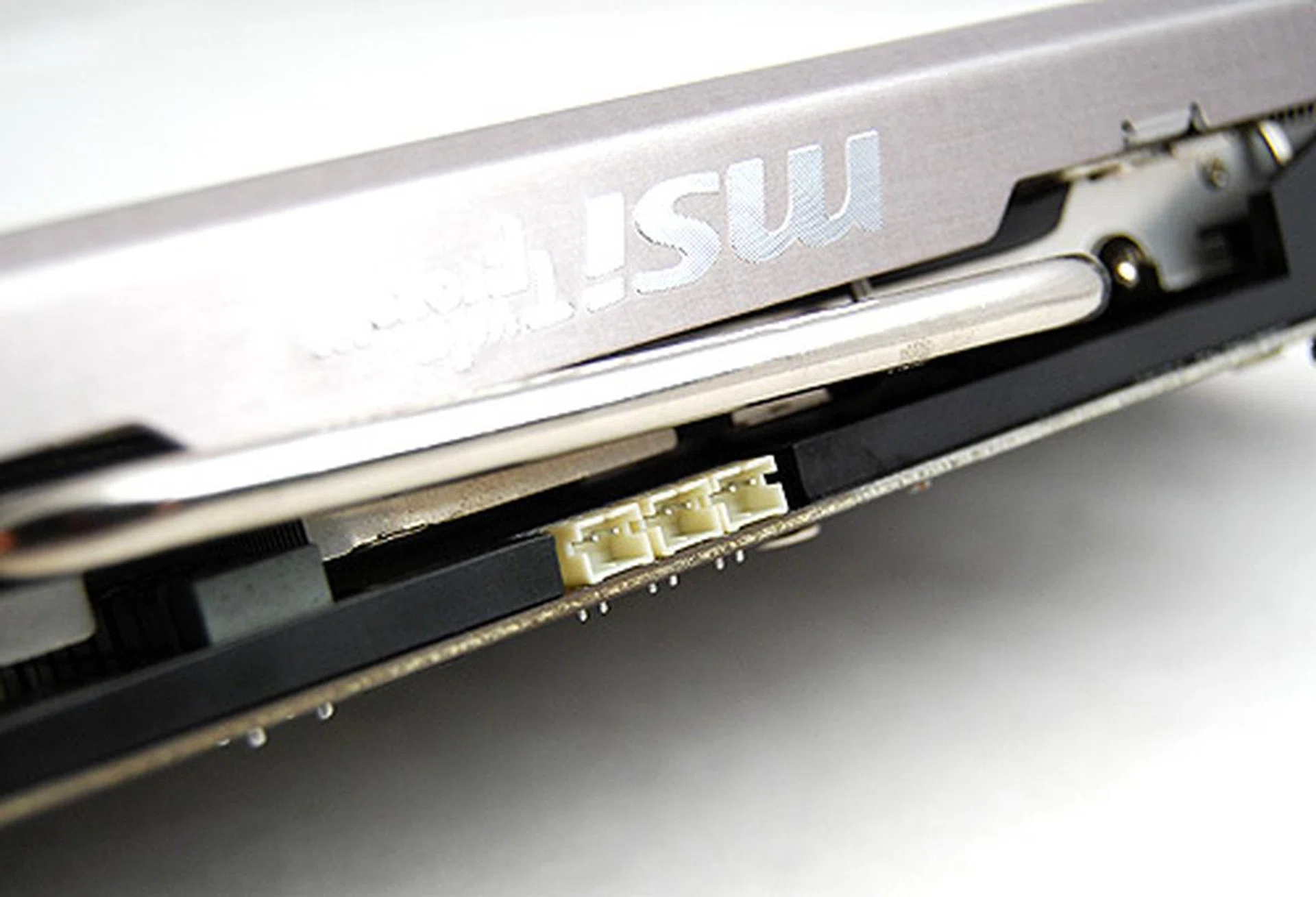
No Lightning card will be complete without the crucial V-check points, which overclockers use to accurately determine the voltage at the GPU, memory and PLL circuit.
Test Setup
We’ll be evaluating the new MSI R6970 Lightning with our X58 testbed which has the following specifications:
- Intel Core i7-975 (3.33GHz)
- Gigabyte GA-EX58-UD4P motherboard
- 3 x 1GB DDR3-1333 G.Skill memory in triple channel mode
- Seagate 7200.10 200GB SATA hard drive
- Windows 7 Ultimate
Since the basic performance of the Radeon HD 6970 SKU has been established in our original Radeon HD 6900 series article and we've also furthered that with a Radeon HD 6900 CrossFire performance article, we've decided to cutback on the number of tests for this card rather than running the usual suite of benchmarking tests.
Since the R6970 Lightning is touted for its overclocking capabilities, we are interested to find out just how far we could push the card. We will also present results of the card in it’s overclocking state to show just how much more performance you can eke out from such a highly-tuned card. To this end, we managed a maximum stable overclocking state of 1000MHz at the core and 5600MHz DDR at the memory, which is respectable for a Radeon HD 6970.
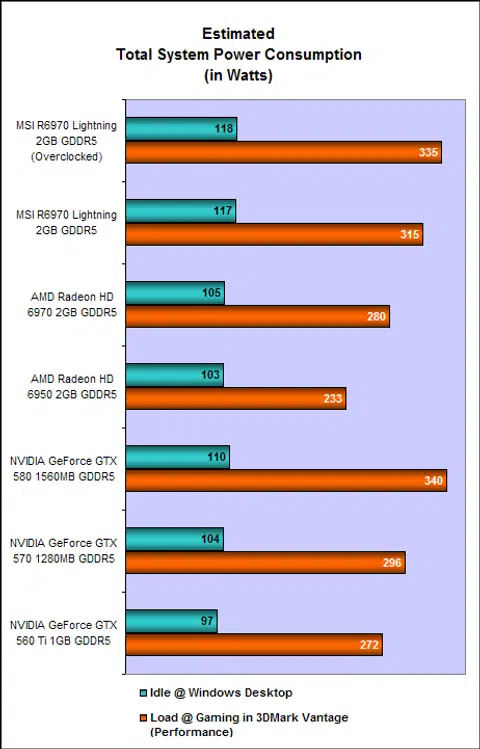
We are also interested to find out, in stock form, how much faster would this card be than a reference one. And for comparison, we have also included results of other high-end cards such as the Radeon HD 6950 and GeForce GTX 580 and GTX 570.
The full list of cards tested and driver versions used:
- MSI R6970 Lighting 2GB GDDR5 (Catalyst 11.2)
- AMD Radeon HD 6970 2GB GDDR5 (Catalyst 11.2)
- AMD Radeon HD 6950 2GB GDDR5 (Catalyst 10.11)
- NVIDIA GeForce GTX 580 1560MB GDDR5 (ForceWare 266.58)
- NVIDIA GeForce GTX 570 1280MB GDDR5 (ForceWare 263.09)
- NVIDIA GeForce GTX 560 Ti 1GB GDDR5 (ForceWare 266.56)
The list of benchmarks used:
- Futuremark 3DMark Vantage
- Futuremark 3DMark 11
- Crysis Warhead
- Far Cry 2
- Battlefield Bad Company 2
Strictly for Overclockers
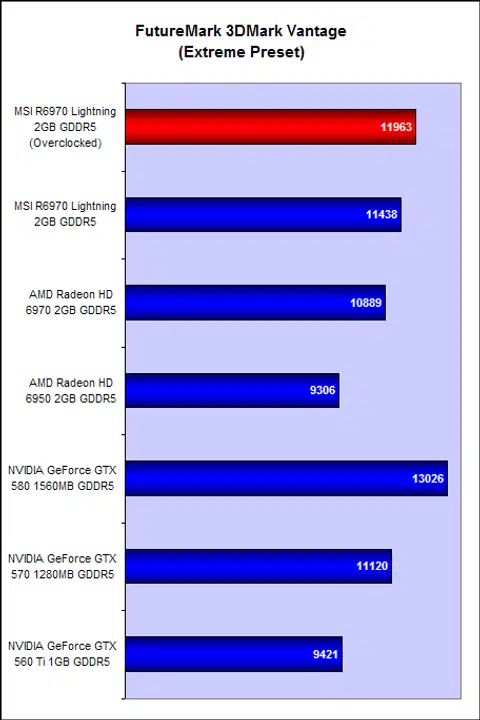
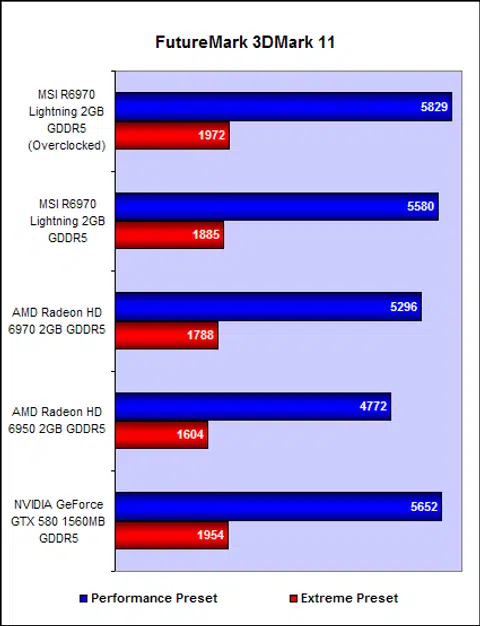
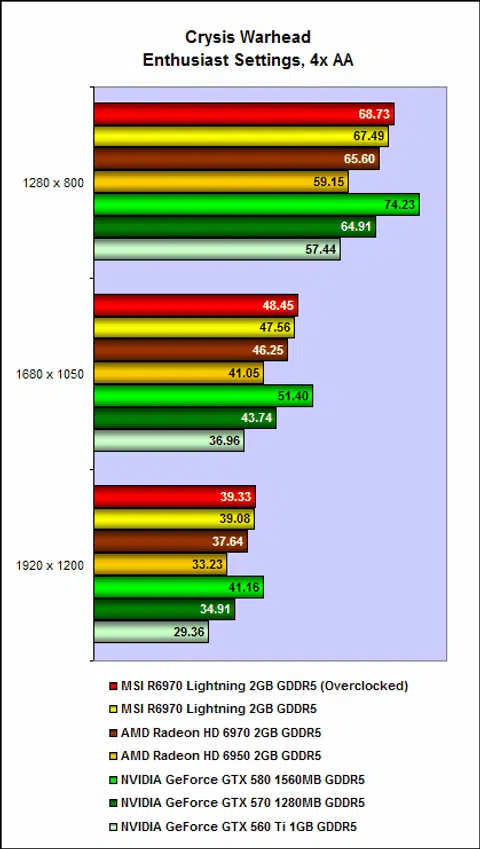
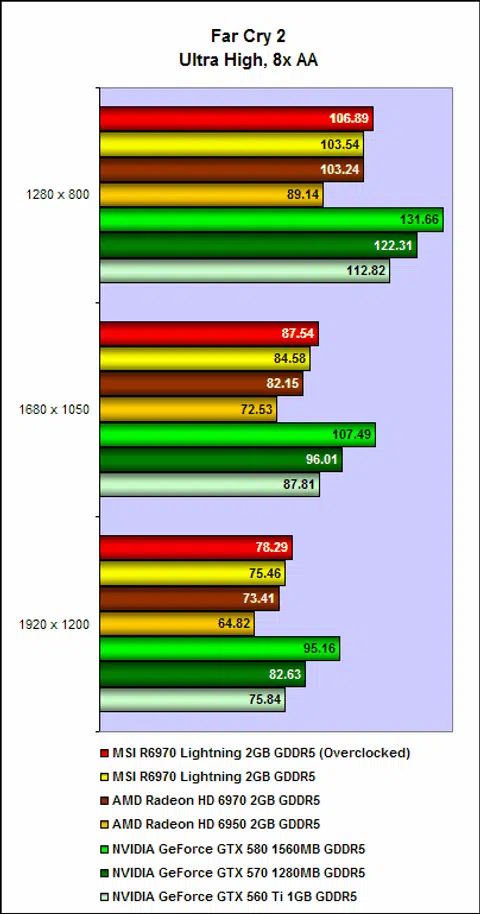
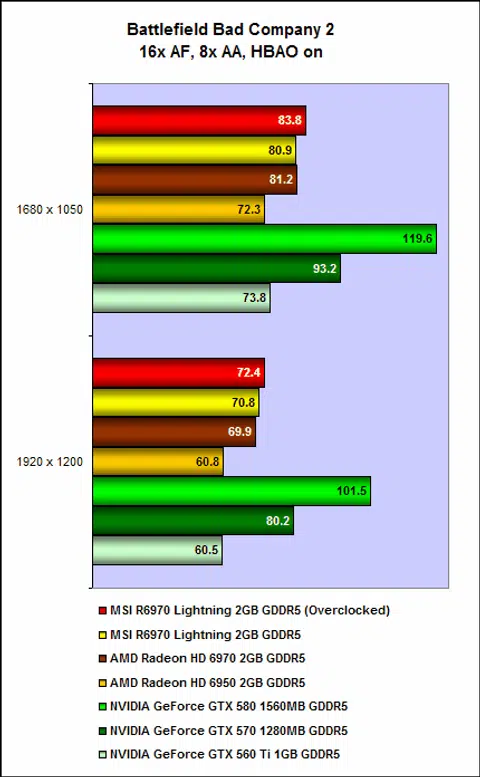
Out of the box, the performance of the new R6970 Lightning was pretty disappointing. It started brightly on the two synthetic benchmarks, 3DMark11 and 3DMark Vantage, posting gains of around 5%, but real world applications such as Crysis and Battlefield Bad Company 2, the difference in performance is negligible.
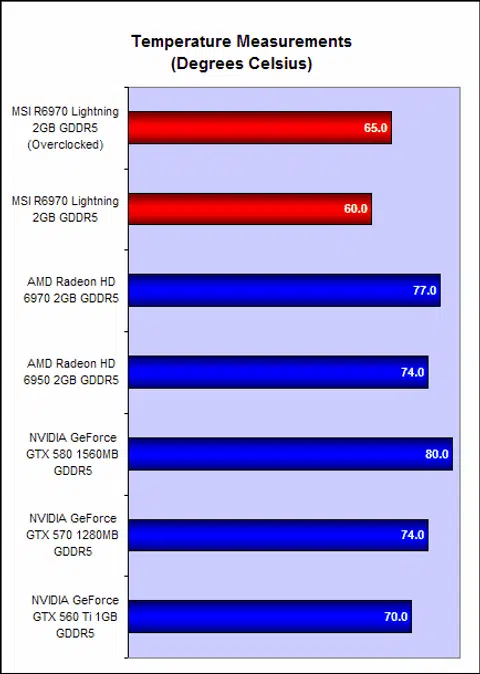
On the upside, the Twin Frozr III cooler proved to be really effective, keeping the card operating at a cool 60 degrees Celsius even at load, an improvement of a whopping 17 degrees Celsius when compared to a reference card. It was also really quiet too, despite the two huge 90mm fans.
Overclocking performance is certainly admirable for a Radeon HD 6970 card. Using MSI Afterburner, we boosted the voltages and managed to run the card stably at 1000MHz at the core and 5600MHz DDR at the memory. These clock speeds gave the R6970 Lightning a more appreciable edge over reference cards, boosting performance in real world applications by around 5%.
Lackluster in stock form, the MSI R6970 Lightning requires know-how and skill to unlock its full potential. Only hardcore users need apply.
What’s important to note is that the aforementioned clock speeds were achieved with the standard Twin Frozr III and with with the fan speed set to “auto” to prevent it from making a ruckus. Therefore, it is highly possible that we could achieve even higher clock speeds if we had a beefier cooling setup. Simply by turning up the fans’ speed a couple of notches alone should suffice even.
At US$400, the MSI R6970 Lightning commands a considerable premium (about US$20) over reference Radeon HD 6970 cards. Hence like the MSI R6950 Twin Frozr III Power Edition we reviewed earlier, the R6970 Lightning is ultimately one for enthusiasts who have the knowledge and tools to unlock the card’s maximum potential.
Our articles may contain affiliate links. If you buy through these links, we may earn a small commission.