
MSI P965 Neo (Intel P965)
MSI's offers up a mid-range motherboard based on Intel's Broadwater chipset. The P965 Neo comes at a perfect timing to welcome the just-launched Core 2 processors. Does the board have any bite? Or will it drop below the radar like so many mainstream fare. Find out inside.

Introduction
Every time the PC industry forces a new platform into the market, it's the users that always get left behind. With AMD, it was an expensive upgrade path and core component overhaul to adopt Socket AM2, but Intel isn't all that better off either. Yes, the new Core 2 processors are more 'upgrade' friendly as they are still based on the LGA775 socket, but most older LGA775 motherboards don't really support the new CPU.
Barring the huge population of enthusiasts out there who are able to just continuously upgrade to the latest and baddest hardware with impunity, we of finite monetary resources have to strike a balance of features and performance. Will you blow your budget on a feature-rich motherboard and settle for a less powerful processor? Or do away with extra features for a higher-end CPU.
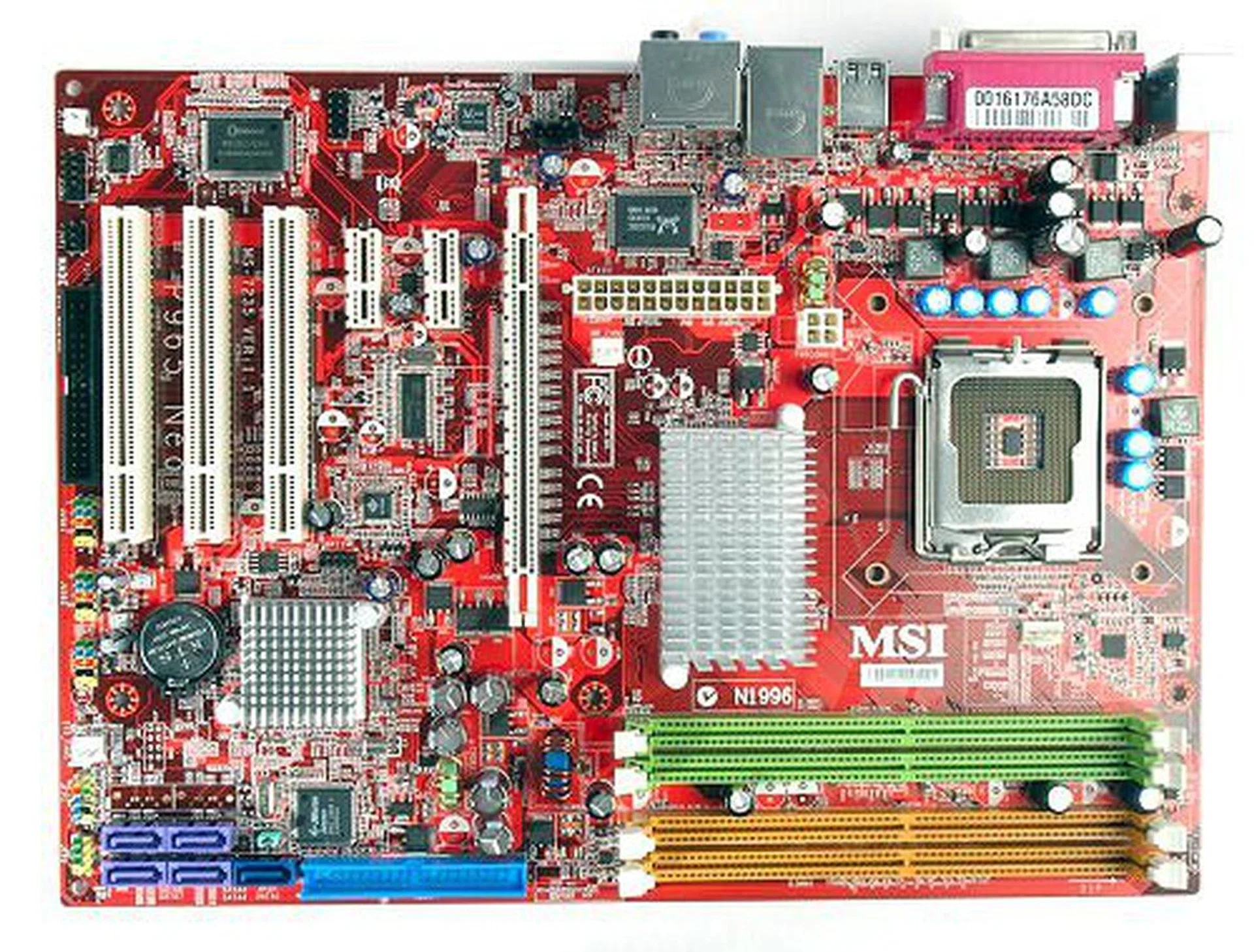
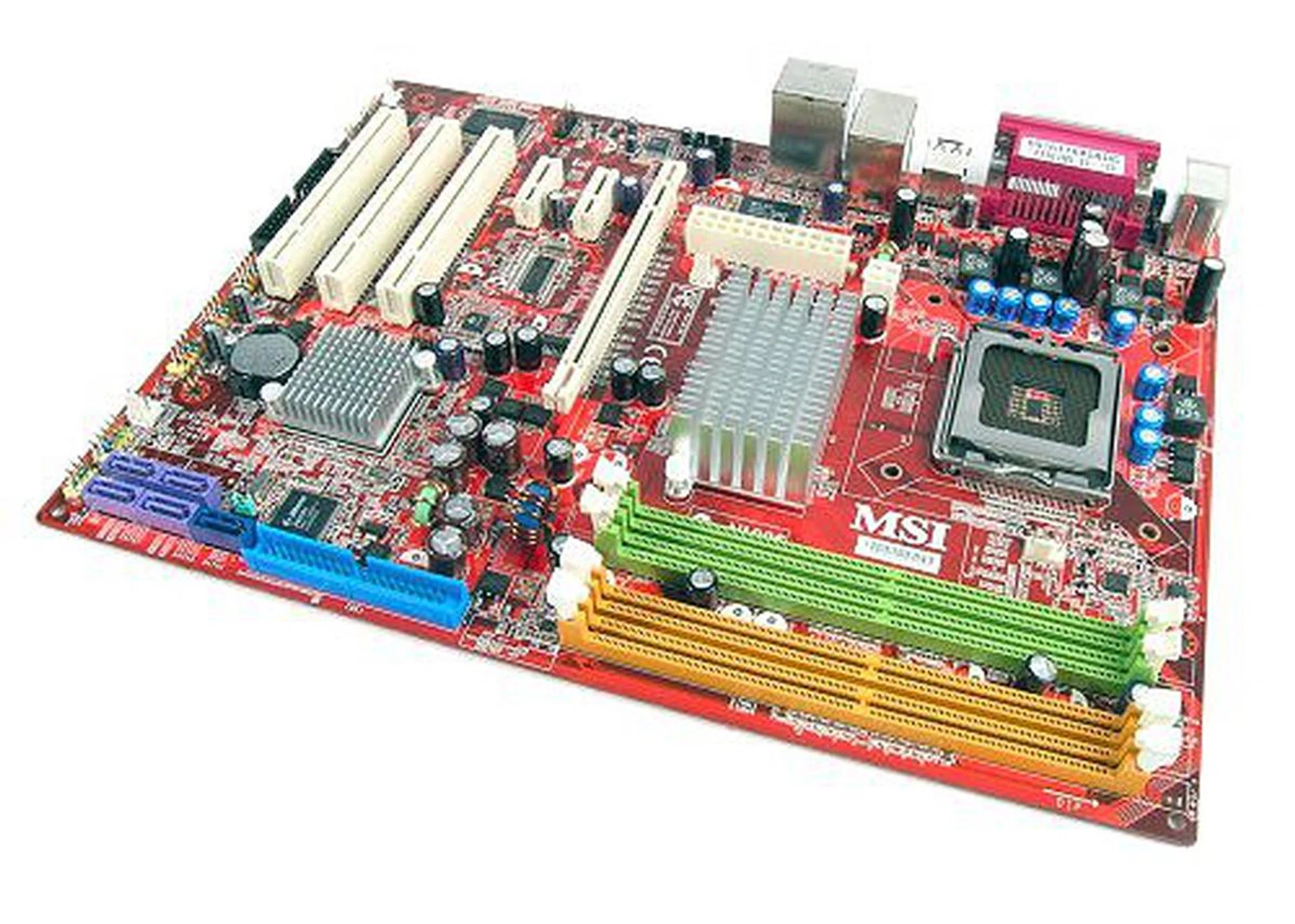
The MSI P965 Neo motherboard.
This is where MSI's new P965 'Broadwater' motherboards come into play. MSI only carries a modest two-board lineup that clearly distinguishes the line between feature-rich performance (P965 Platinum) and mainstream (P965 Neo). Fresh from reviewing the high-end Gigabyte GA-965P-DQ6 a while back, we were curious as to how the P965 chipset would perform in a mainstream configuration like the P965 Neo. After playing around with the MSI P965 Neo, our results were not all that unexpected, but we did make some interesting observations. Read on to find out what they are, but before we start though, we'll let you familiarize yourself with the board's technical specifications.
The following bundle is available to the MSI P965 Neo motherboard:-
- 1 x SATA data cable
- 1 x SATA power converter cable
- 1 x 80-conductor Ultra ATA data cable
- 1 x floppy drive data cable
- I/O shield
- Driver CDs
- User's guide
Features
While the MSI P965 Neo is based on Intel's new Broadwater platform, its use of the standard 'lite' chipset formula - P965 MCH paired with the basic, suffix-less ICH8 - creates a slim motherboard without any real standout features besides the official support of DDR2-800 memory and more USB 2.0 slots. The P965 Neo is a standard PCI Express motherboard sporting one PCIe x16 interface with a decent mix of two PCIe x1 and three PCI slots for expansion capabilities. However, storage functionality and performance turns out to be rather limited as the ICH8 Southbridge has no support for AHCI, NCQ or RAID, even though it supports fast SATA 3.0Gbps transfer rates.
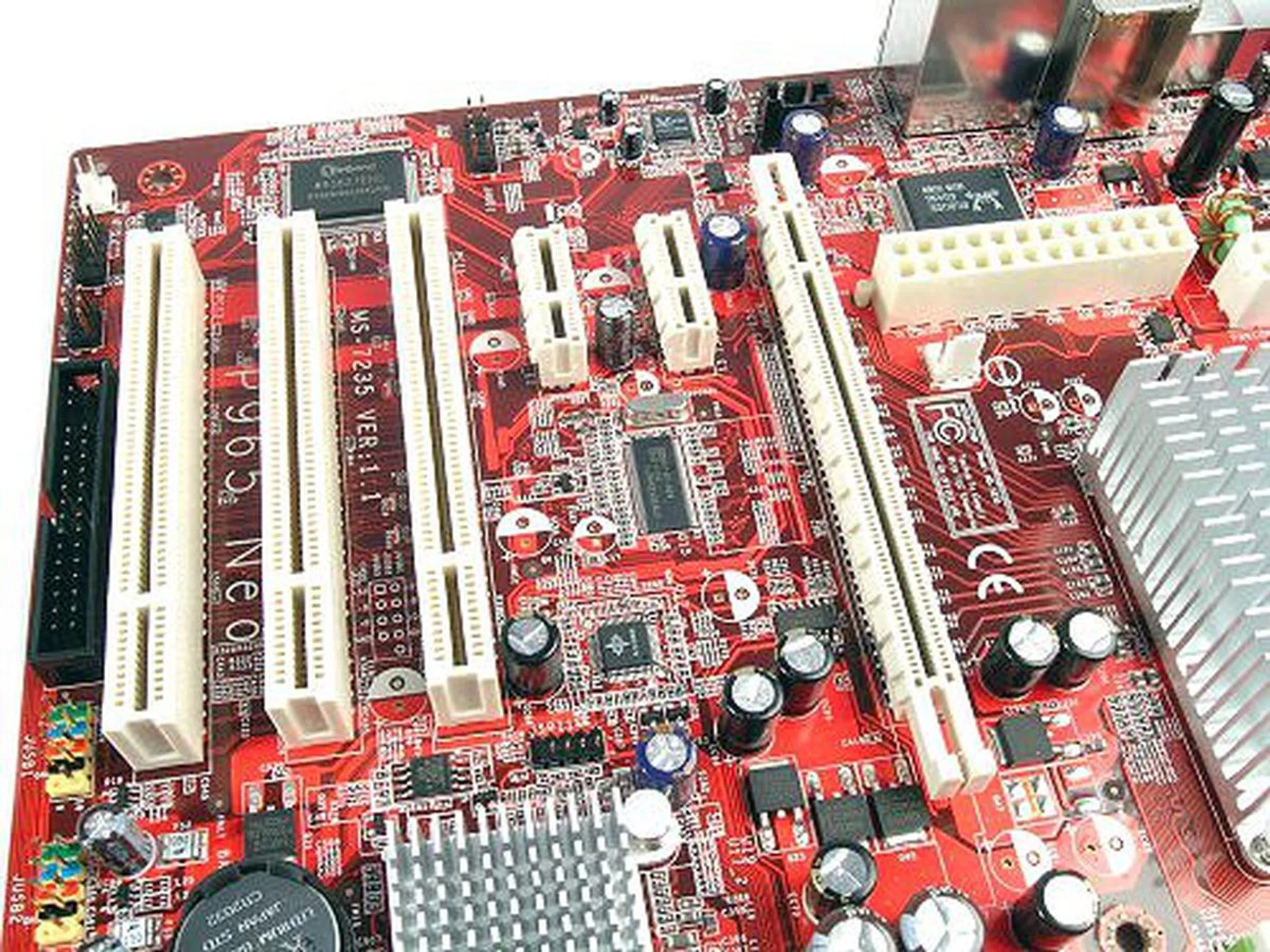
The P965 Neo actually sports a very expandable slot configuration. Even with a huge graphics card, you lose at most one PCie x1 slot. Also notice the wide berth on both sides of the PCIe x16.
The good thing about the board is that MSI tries to make up for its core deficiencies. The P965 Neo comes with a secondary JMicron SATA/IDE controller (JMB361) that provides the board with an extra SATA and IDE channel each. The JMB361 is also compliant with AHCI standards and supports NCQ. Because the ICH8 has no advanced performance features and coupled with the fact that Intel chose to remove IDE support altogether, it is not surprising to find that MSI favors the JMicron controller as primary storage. Of course, if you do intend to use the JMB361 with your main OS HDD, remember to get ready an AHCI driver disk for Windows installation.
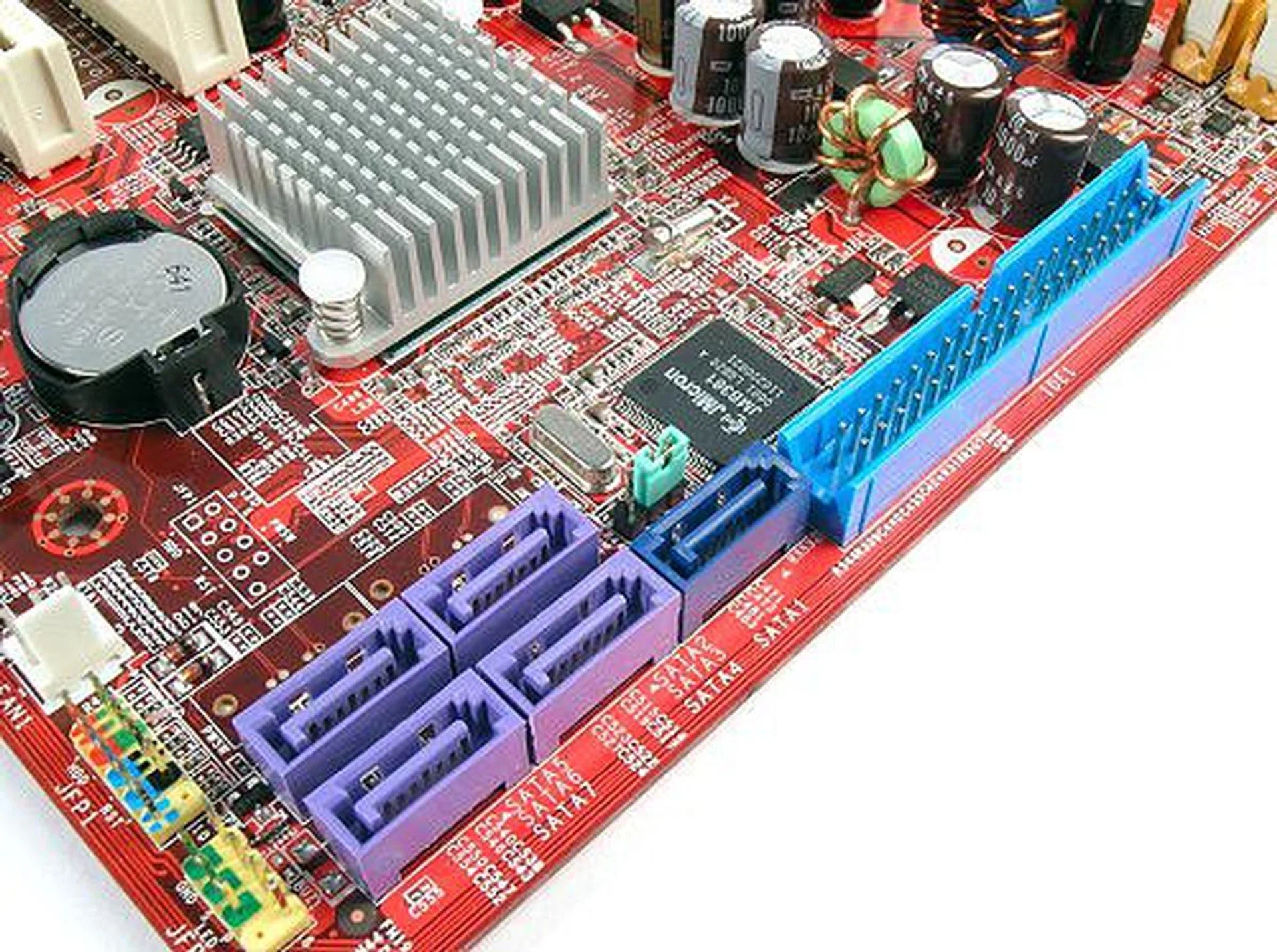
Storage capabilities on the P965 Neo. The four purple SATA ports are the main connections, though they cannot support AHCI or NCQ.
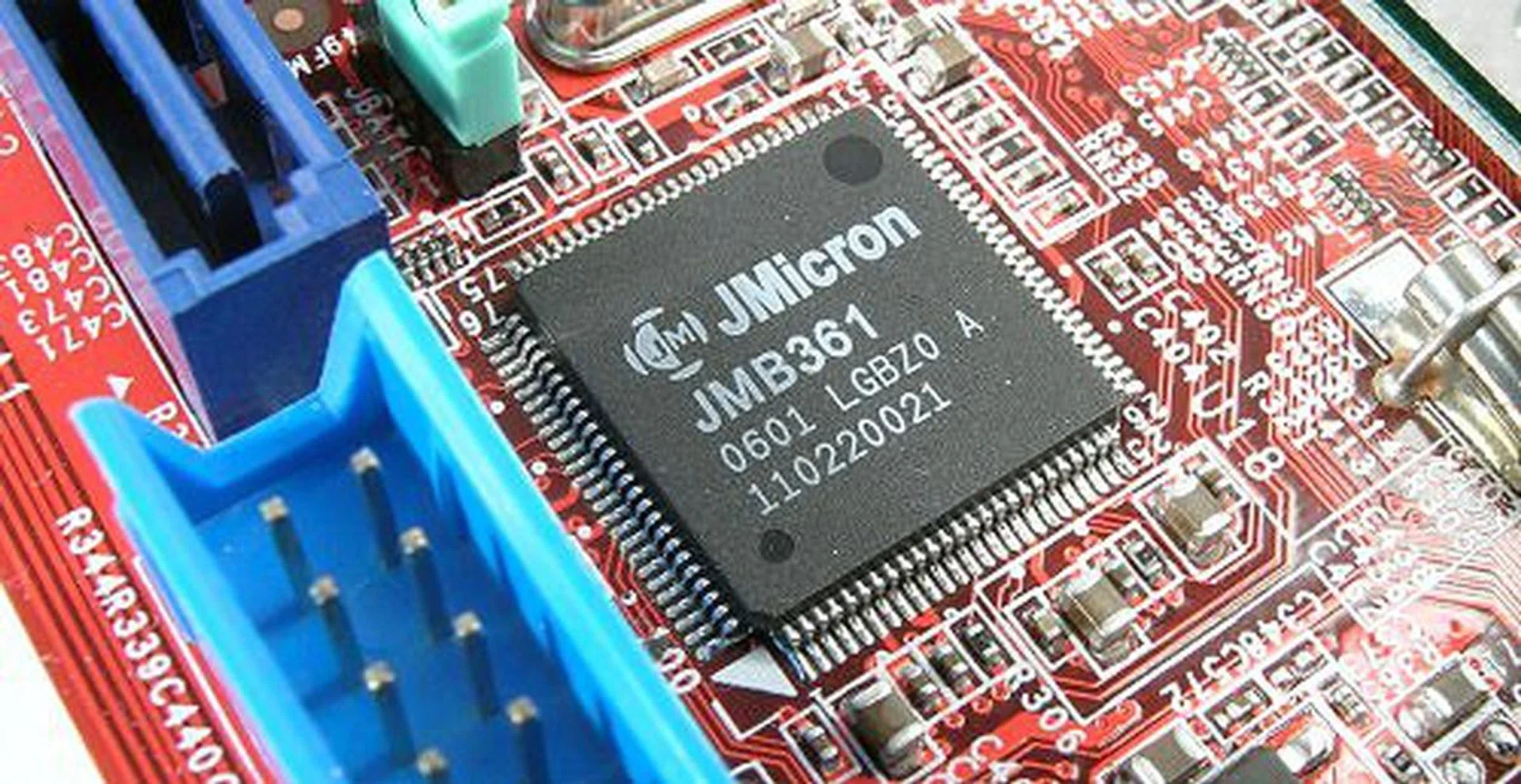
The JMB361 provides an alternative SATA 3.0Gbps port with AHCI and NCQ. The IDE channel is also needed to support legacy optical and storage devices.
The rest of the board's features are pretty decent as well. Audio is controlled by a Realtek ALC883 8-channel HD Audio CODEC with full analog ports, but missing S/PDIF. In order to lower costs further, the P965 Neo uses a dedicated single-chip Gigabit network controller instead of relying on the onboard Gigabit MAC. Although still technically a Gigabit controller, the Realtek RTL8110SC is a PCI device and not PCIe, thus network throughput might be throttled if you've heavy LAN loads. FireWire, not surprisingly, is a feature that is not included on the board.
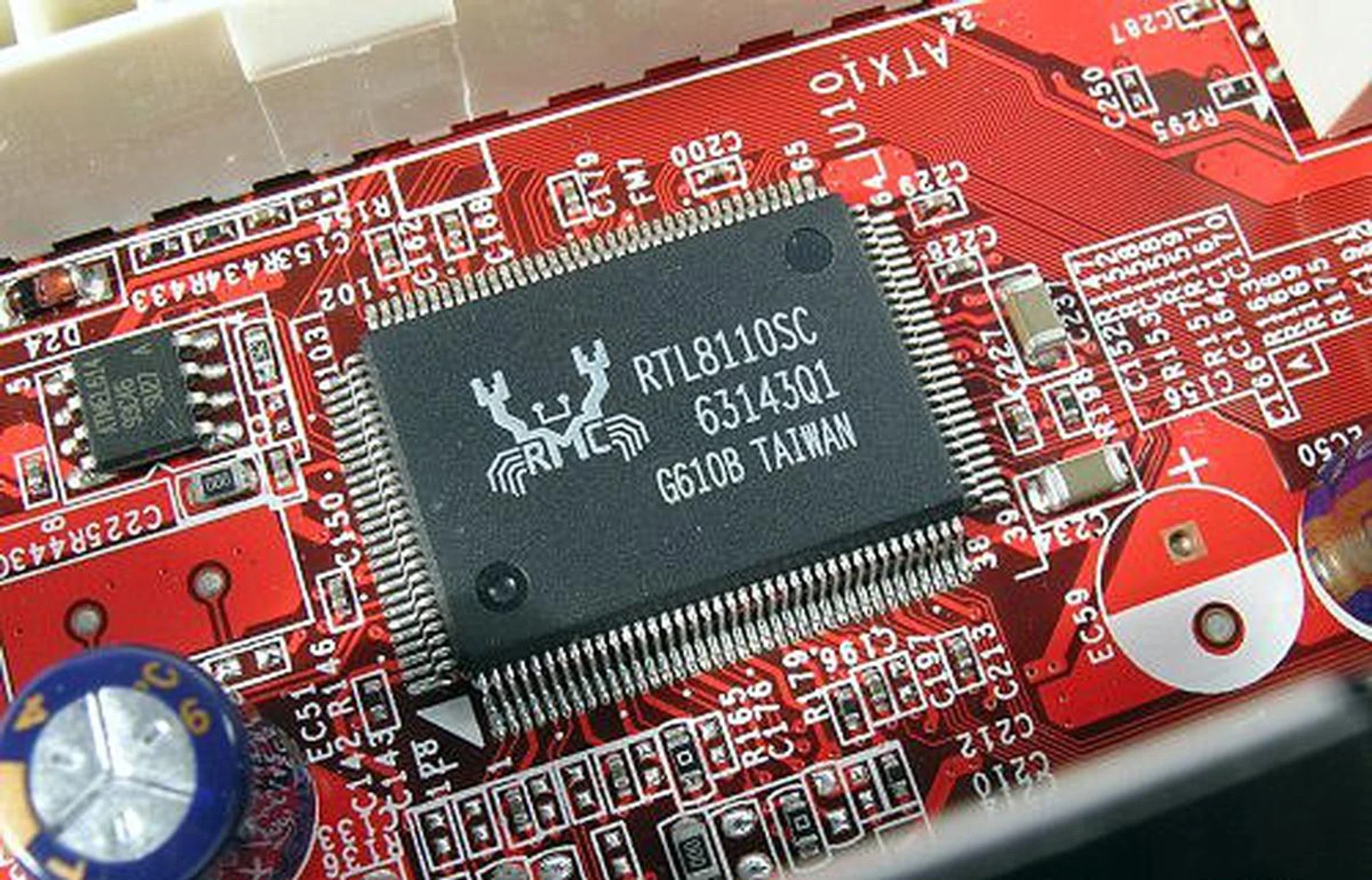
Gigabit LAN, but PCI only controller.
Layout
Unlike some of the entry-level motherboards we've reviewed recently, the MSI P965 Neo is designed around a full ATX PCB. Now that's a healthy dose of PCB real estate to play with and MSI chose to have some fun with component placement. As a result, we have a board with a clean layout, but not exactly free from problems. We love how much room the DIMM and expansion slots enjoy, but our chief complaint is with the middle of the board. Both main and auxiliary ATX power connectors are located towards the back in the middle, close to the MCH heatsink, which in itself is a problem. After installation, we find that the combination makes it a little hard to access the CPU cooler retention clips in that corner.
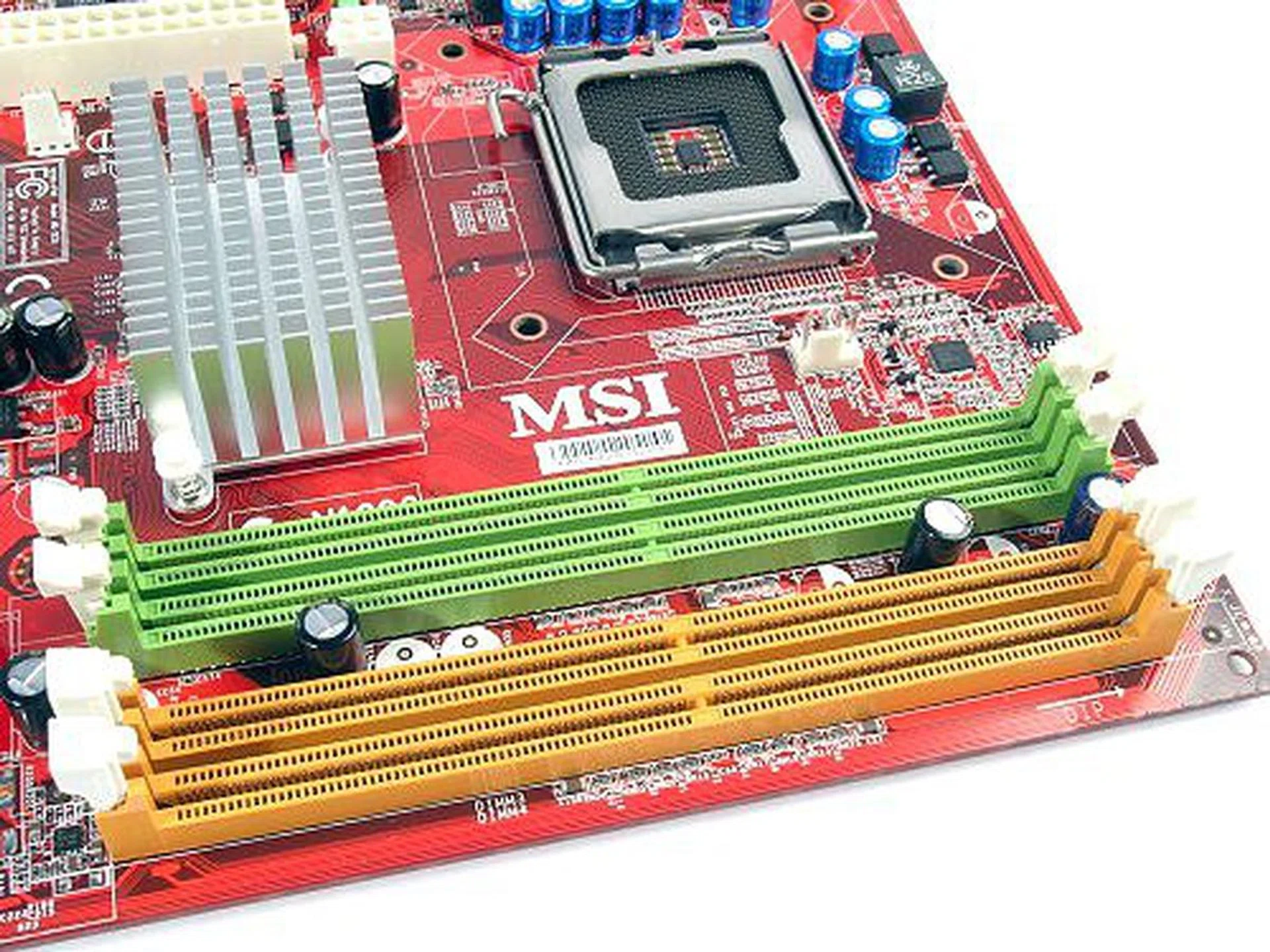
MSI gives the DIMM slots plenty of breathing room and good circulation. Also frees up vertical spacing between the CPU socket.
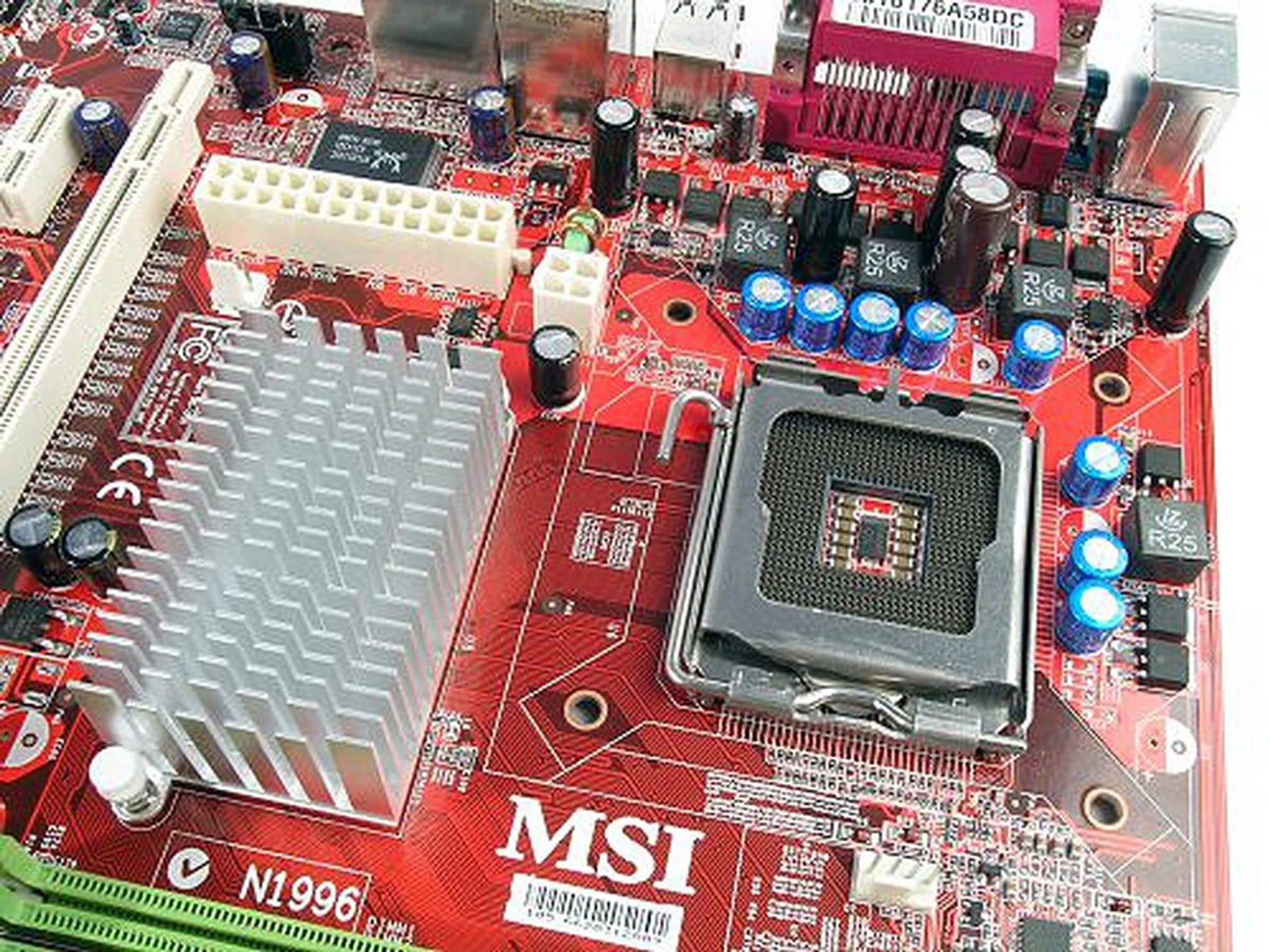
Clean and spacious, but after everything is installed the middle area tends to get crowded with cables.
Overclocking
- FSB Settings: 266MHz to 333MHz
- RAM Frequency: DDR2-533, DDR2-667, DDR2-800
- Memory Voltage Settings: 1.80V to 2.40V (in 0.05V steps)
- PCIe Voltage Settings: 1.50V to 1.80V (in 0.05V steps), 1.80V to 2.20V (in 0.1V steps)
- Multiplier Selection: Yes (unlocked CPUs only)
The P965 Neo has a severely limited BIOS with almost no overclocking features at all. Simple memory timing, voltage and core frequencies are just about all you can tweak and the absence of voltage controls for both CPU and chipset will tell you just where the board stands. Of course, we decided to go ahead and overclock it anyway, this being a review and all. Surprise, surprise! Coupled with our unlocked Core 2 Extreme X6800 processors, the P965 Neo was actually able to reach its maximum FSB limit in the BIOS - an impressive 333MHz without requiring any voltage boosts. This is actually quite an impressive score as Intel's quad-pumped bus will give you a final 1333MHz PSB. This makes the P965 Neo a higher overclocker than most LGA775 motherboards with an Intel chipset prior to the P965 and puts it in a similar league as the Gigabyte GA-965P-DQ6. Too bad the board is intentionally limited by its BIOS.
Test Setup
Unlike NVIDIA's entire nForce 500 range, the P965 is only a single chipset and thus, should post comparable results regardless of whether it is implemented as a mainstream board like the P965 Neo or MSI's higher end P965 Platinum. As such, in our benchmarking section, we'll pit the P965 Neo with the previously reviewed Gigabyte GA-965P-DQ6 as well as throw in the results of the Intel 975X Express based ASUS P5W DH Deluxe for good measure. The test bed setup for all the three boards are listed below:-
- Intel Pentium Extreme Edition 955 processor 3.46GHz (dual core, 1066MHz FSB)
- 2 x 1GB Kingston DDR2-800 @ 12-4-4 CAS 4.0
- Seagate Barracuda 7200.7 80GB SATA hard disk drive (one single NTFS partition)
- MSI GeForce 7900 GT 256MB - with NVIDIA ForceWare 91.31
- Intel INF 8.0.1.1022 driver set
- Intel AHCI 6.0.0.1022 driver set for ASUS P5W DH Deluxe and Gigabyte GA-965P-DQ6 only
- Microsoft Windows XP Professional with Service Pack 2 (and DirectX 9.0c)
Benchmarks
The benchmarks listed below will be used to gauge the performance of the P965 Neo motherboard:-
- BAPco SYSmark 2004
- Futuremark PCMark05
- SPECviewperf 8.01
- Futuremark 3DMark05
- AquaMark3
Results - BAPco SYSmark 2004
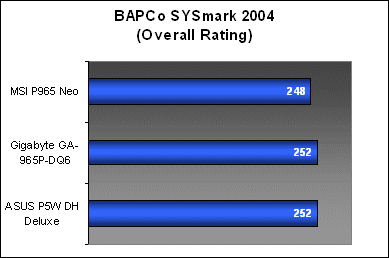
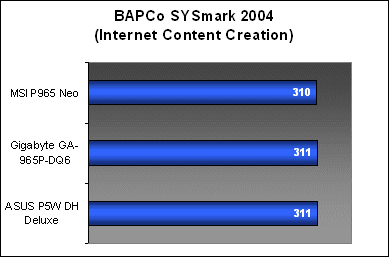
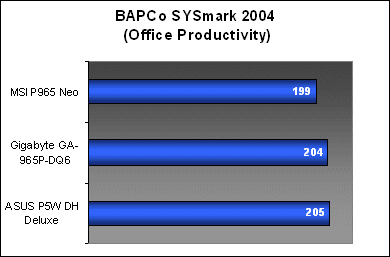
The P965 Neo performed slightly poorer against both the Gigabyte GA-965P-DQ6 and ASUS P5W DH Deluxe in SYSmark's overall score, but after breaking down the different workloads, we noticed that the board was actually on par in Internet Content Creation. It did not perform as well in the Office Productivity suite due to a weaker storage subsystem that hadn't support for NCQ, which our test drives support.
Results - Futuremark PCMark05
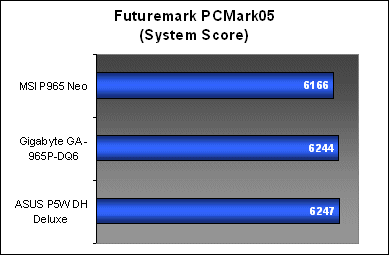
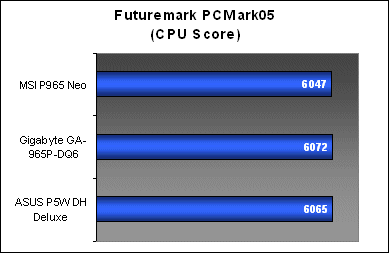
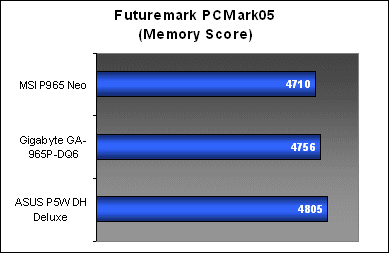
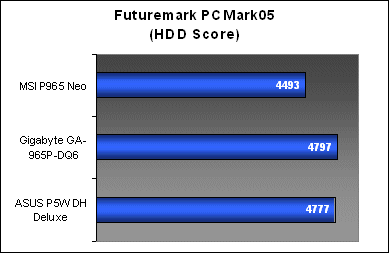
The P965 Neo managed to keep up with the two high-end boards with great CPU and System scores for PCMark05. However, its memory performance slipped off the mark slightly. Its HDD performance was expected though, more or less keeping in line with a board that doesn't have NCQ or AHCI features to boost its performance. The outcome in these two subsystems enforces the results from SYSmark previously.
Results - SPECviewperf 8.01
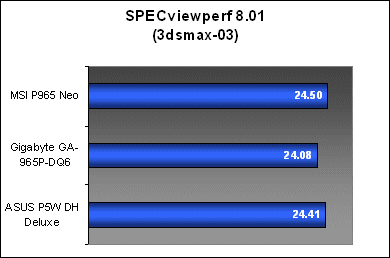
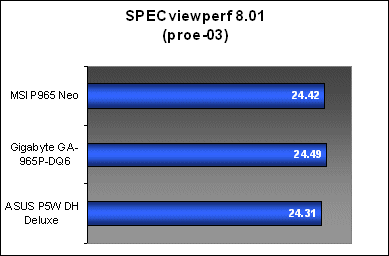
The P965 Neo motherboard displayed a rather strong OpenGL performance in certain graphics intensive workloads like 3dsmax-03, but surprisingly, the board also did well throughout the rest of the benchmark and even managed to edge out the ASUS P5W DH Deluxe in the memory subsystem intensive proe-03 test.
Results - Futuremark 3DMark05
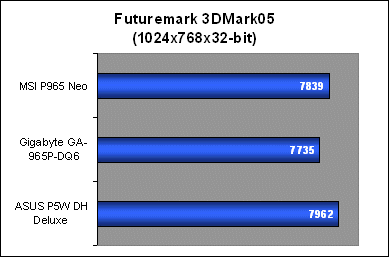
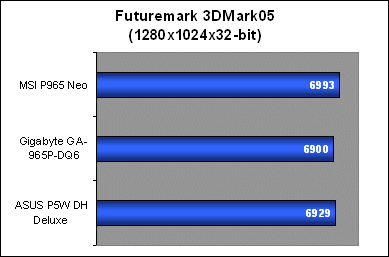
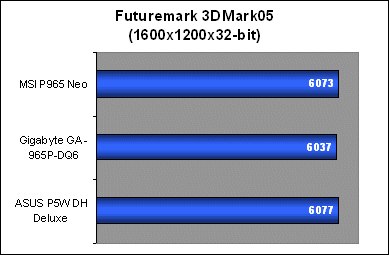
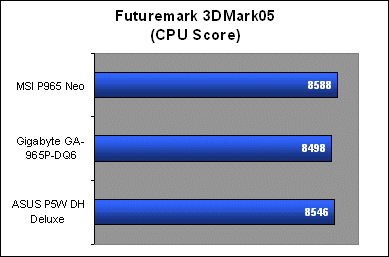
The same performance pattern that was seen in the 3dsmax-03 workload of SPECviewperf was also evident in 3DMark05. If you look at the graphs, the P965 Neo constantly outperformed the Gigabyte GA-965P-DQ6 in all resolutions. Not enough to cause a stir in real world gaming, but at least we know that the mainstream P965 Neo can carry its own weight as a simple gaming platform.
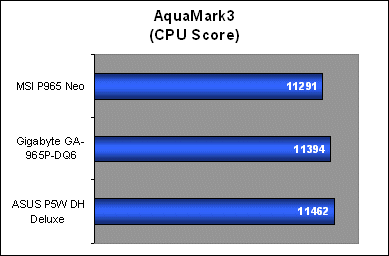
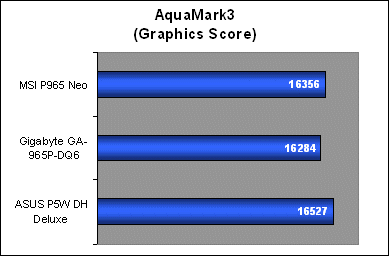
Results - AquaMark3
The P965 Neo has consistently led the Gigabyte GA-965P-DQ6 in graphics performance over several benchmarks, but the same cannot be said for its memory and CPU subsystem performance.
Conclusion
The P965 Neo is another example of a solid motherboard that does what its designed to do without being pretentious about it. Based on the new Intel P965 chipset, the board sports a basic configuration with Core 2 support, DDR2-800, 8-channel analog HD Audio, Gigabit LAN and SATA 3.0Gbps. It isn't a spectacular board in any way, but neither is it spectacularly bad. We're just sad that there is no RAID support with the ICH8. Terribly wasteful of five good SATA 3.0Gbps ports if you ask us.
Performance-wise, the MSI P965 Neo managed to keep up with its high-end competitor, the Gigabyte GA-965P-DQ6 as well as the enthusiast-class ASUS P5W DH Deluxe, which was based on the Intel 975X Express. While the board did exhibit a tad weaker memory subsystem than the other boards, the minor difference seen in our benchmarks shouldn't even be noticeable under real world environments.
The most interesting aspect of the board is actually its overclocking ability. Yes, we know that the P965 Neo has a gimped BIOS with limited functions, but the fact that it can run at 333MHz FSB without additional voltage is something to take note of. In previous generation chipsets, most manufacturers stuck with the golden number of 1200MHz as the overclocking benchmark, which was fine in the Pentium 4 and Pentium D days.
Now that Intel has launched the Core 2 and moved completely to a 1066MHz PSB for desktop processors, it seems that the bar must now be raised. Like before, it is not so much an overclocking achievement, but a milestone to see if a motherboard can operate at the next logical PSB stepping - 1333MHz. If you didn't take note, a 333MHz FSB incidentally equates to 1333MHz PSB. Food for thought, and certainly a major plus point for the P965 Neo.
Good performance and solid stability. The MSI P965 Neo is a surefire Core 2 Ready platform.
As a mainstream motherboard, the P965 Neo's lack of features is actually a welcome compromise for lower costs and MSI has of late been giving mainstream manufacturers like ECS and ASRock some hard competition in this area. Pricing for the MSI P965 Neo is expected to be in the range of US$134, putting the board in a sweet spot for a mid-ranged offering and as good a price to pay if any for its performance, scalability and stability. Once Intel's Core 2 processors get into retail in quantity, the P965 Neo should enjoy brisk sales.
Our articles may contain affiliate links. If you buy through these links, we may earn a small commission.