
MSI P7NGM-Digital (NVIDIA GeForce 9300 mGPU)
NVIDIA's GeForce 9300/9400 mGPU is going places, what with the new Ion platform for Atom powered devices. Today however, we're looking at the desktop segment with our second retail GeForce 9300 mGPU board, the MSI P7NGM-Digital arriving in our lab.

NVIDIA's Big mGPU Push
NVIDIA has been whipping up a storm on the integrated GPU front recently. Last year saw the debut of its GeForce 9300/9400 mGPU chipsets, which tethered the GPU prowess of its GeForce brand (albeit a GeForce 8400 class) to a solid motherboard chipset to produce one of the best chipsets with an integrated graphics solution for the Intel platform. Having Apple as one of the launch partners and seeing the mobile variant debut in all the new Apple MacBooks is nothing short of a huge win for NVIDIA.
The company has continued down this path, unveiling its Ion platform at CES 2009. The popular Atom processor is the target this time, with NVIDIA adapting the GeForce 9400 mGPU to work with this CPU. Given that the netbook segment has been the sole bright spot in a PC market that has been affected by the economic malaise, we think that this is a good move if NVIDIA manages to pull it off successfully. (We don't know enough about the power consumption and pricing yet, but we should be able to give you a good update of our first-hand account, real soon.)
We highly doubt that Intel has given its blessings for this new competitor. After all, our own testing had shown the GeForce 9300/9400 mGPU to be faster than Intel's G45 chipset so there's no doubt that the Intel GMA 950 integrated graphics on the typical Atom-based offering is heavily outmatched. NVIDIA is therefore understandably keen on making its integrated chipsets find home in everything from notebooks to desktops.
However, at its debut, we didn't find many choices for the GeForce 9300/9400 mGPU for the desktop, while the mobile front only had the Apple MacBooks. How has the situation changed since? An online check showed that there were around seven vendors offering GeForce 9300/9400 mGPU desktop motherboards and appropriately, we snagged an MSI version of the chipset for testing.
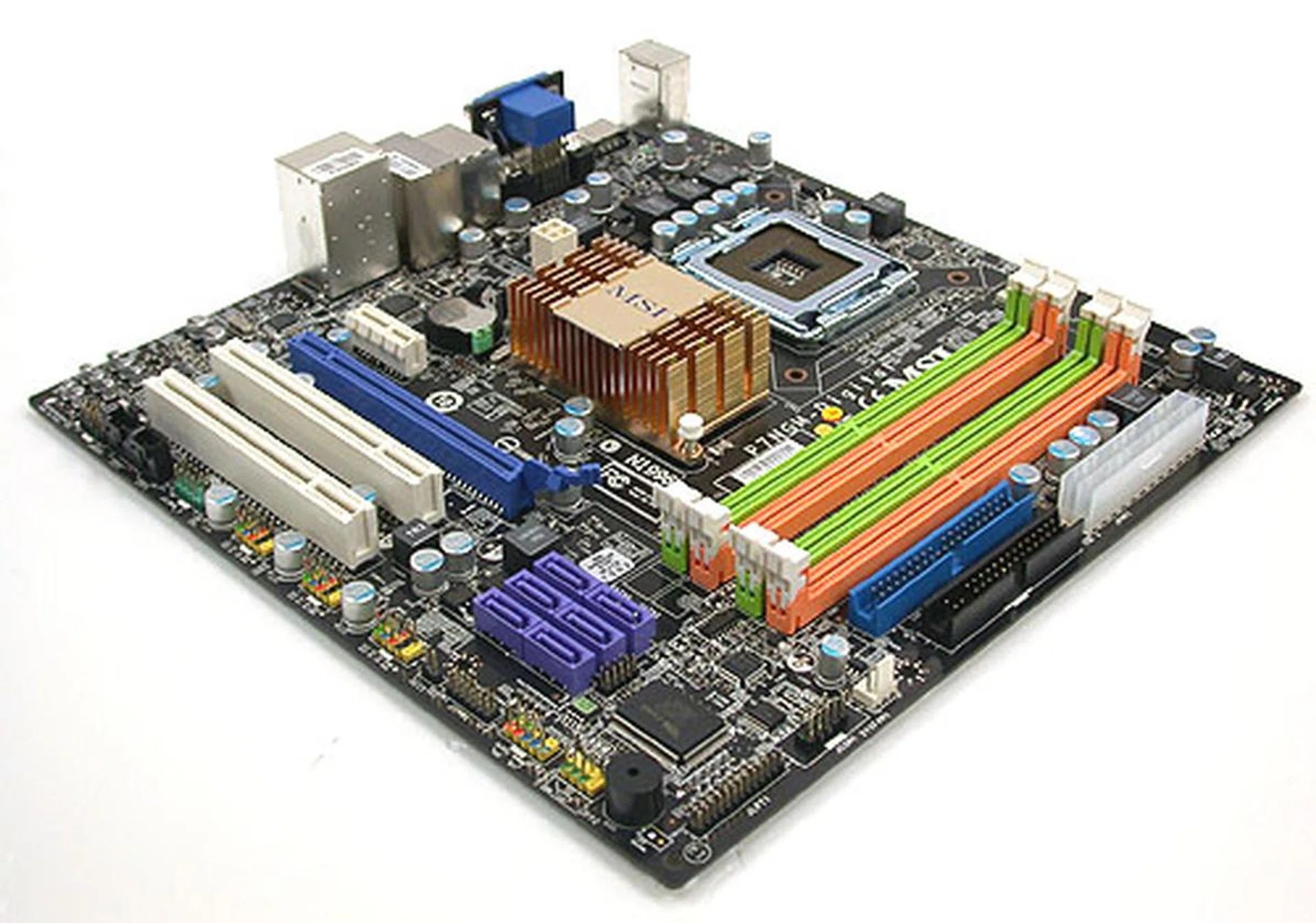
This board, the MSI P7NGM-Digital is based on the GeForce 9300 mGPU and like many of its class, comes in mATX format. Before we proceed to the review proper, here's what we found in the retail package and its specifications:-
- 1 x SATA data cables
- 1 x SATA power converter cable
- 1 x 80-conductor Ultra ATA data cable
- I/O shield
- Driver CDs
- User manual
- Quick installation guide
The MSI P7NGM-Digital
First, we're not going to talk about NVIDIA's chipset in this article because we have already covered it here. For those who are unfamiliar, all you need to know is that the MSI P7NGM-Digital uses the same GeForce 9300 mGPU chipset with the exact same specifications, so you'll get the integrated GPU running at the same 450MHz for its 16 stream processors and with PureVideo HD support capable of hardware acceleration for HD content.
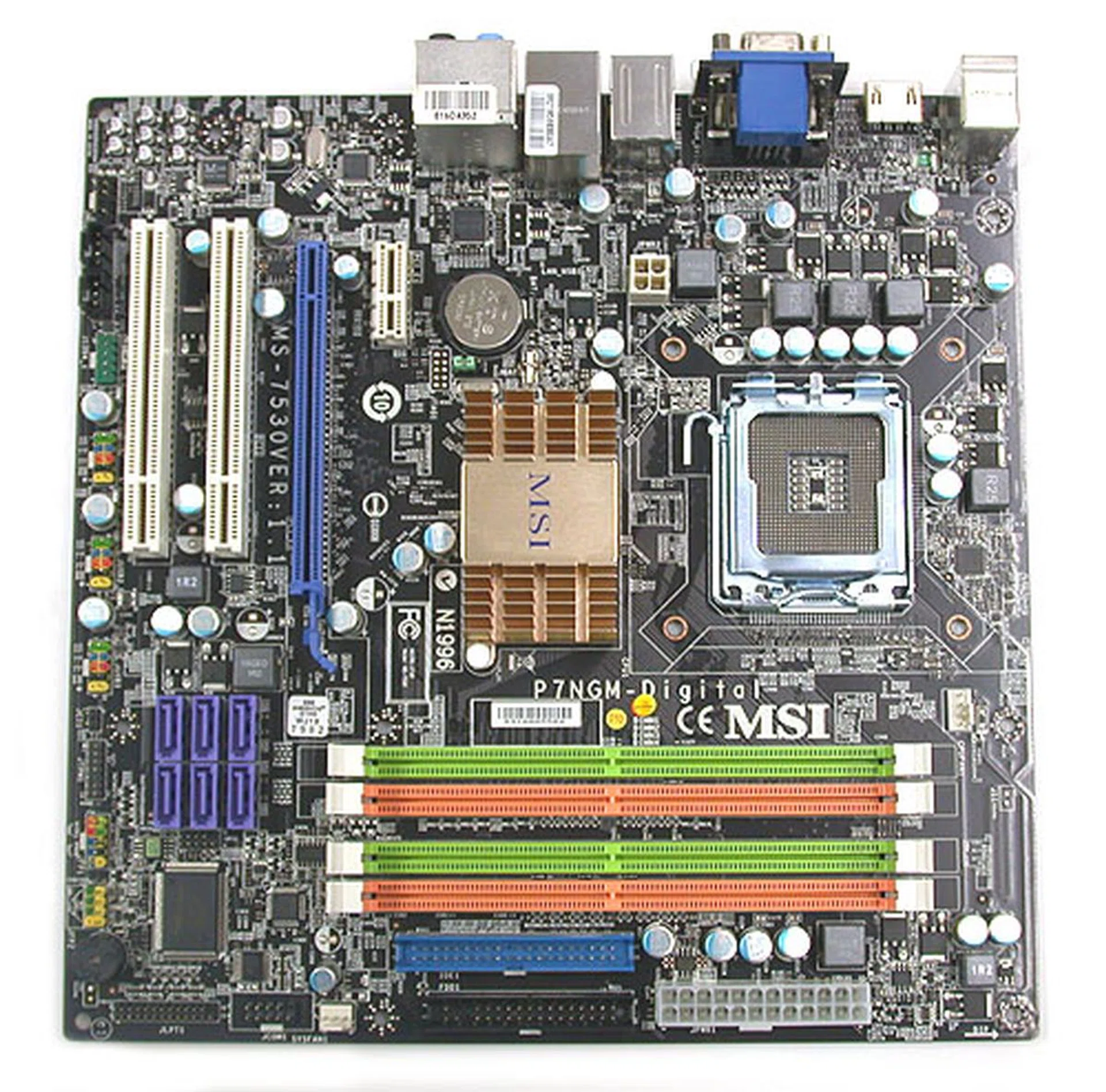
The MSI P7NGM-Digital comes in a standard micro-ATX form factor, which means sacrificing some expansion slots.
This mATX board supports all Core 2 processors up to the 45nm variety and 1333MHz front side bus (FSB). The memory support is up to 8GB of DDR2-800 with four DIMM slots and storage options include six SATA 3.0Gbps ports natively along with two IDE devices thanks to a JMicron JMB368 controller. RAID options are present too with NVIDIA's MediaShield technology. MSI has also roped in Realtek for the HD audio and Gigabit LAN found onboard.
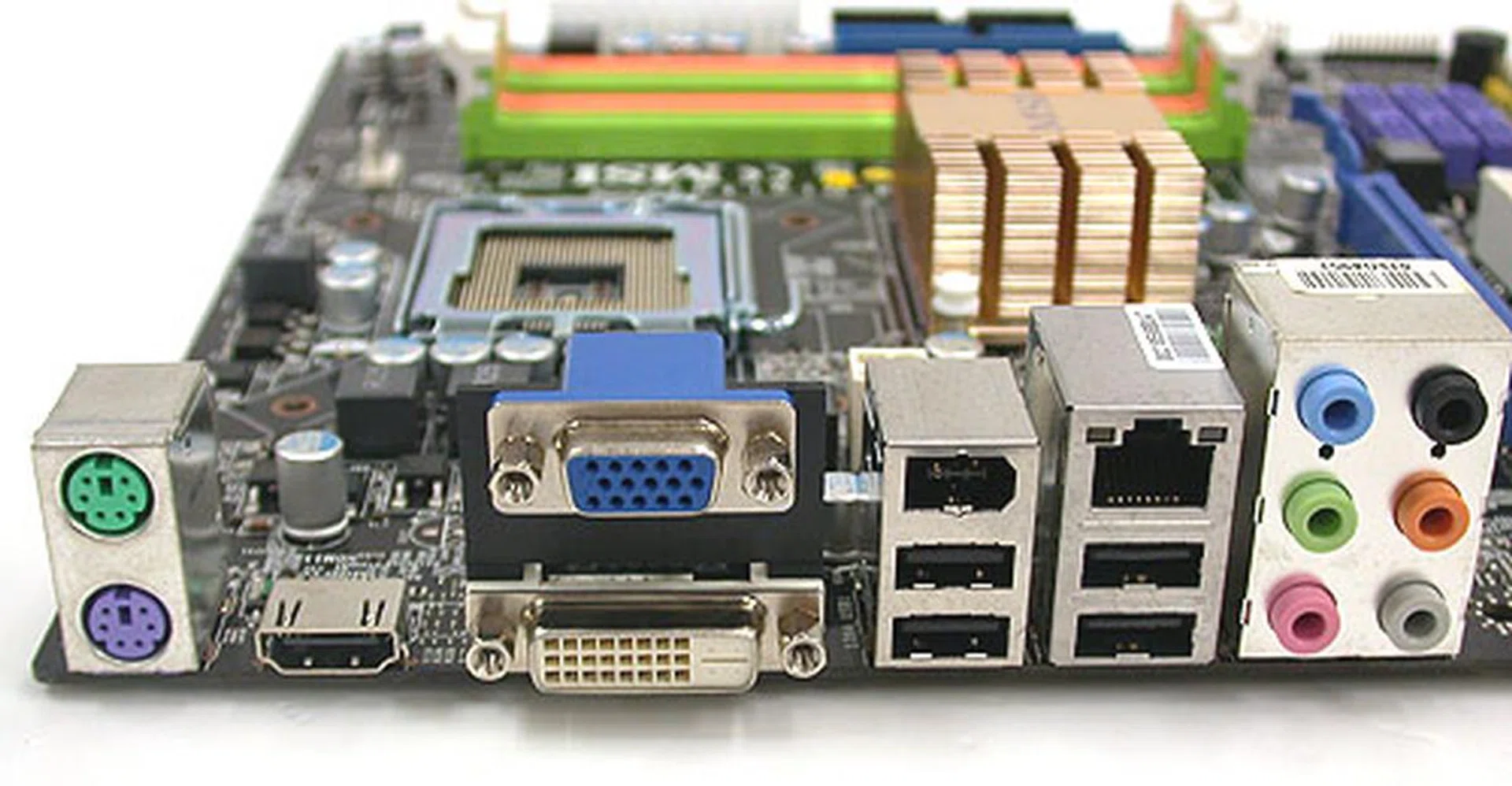
There are many ports that are useful for those looking for a media center board, including HDMI, DVI and the standard VGA. However, the mATX form factor means there are some notable omissions like S/PDIF and eSATA. The four USB 2.0 ports are also relatively few.
MSI has surprisingly kept some legacy technologies alive, including COM and Parallel port headers. There's also FireWire, though it's not available on the base variant of this board; so do check the motherboard specs carefully at purchase if this is important to you. We also found an S/PDIF header onboard, but there is neither a coaxial or optical S/PDIF output on the rear I/O. You can have up to ten USB 2.0 ports, but MSI only provides four at the rear I/O.
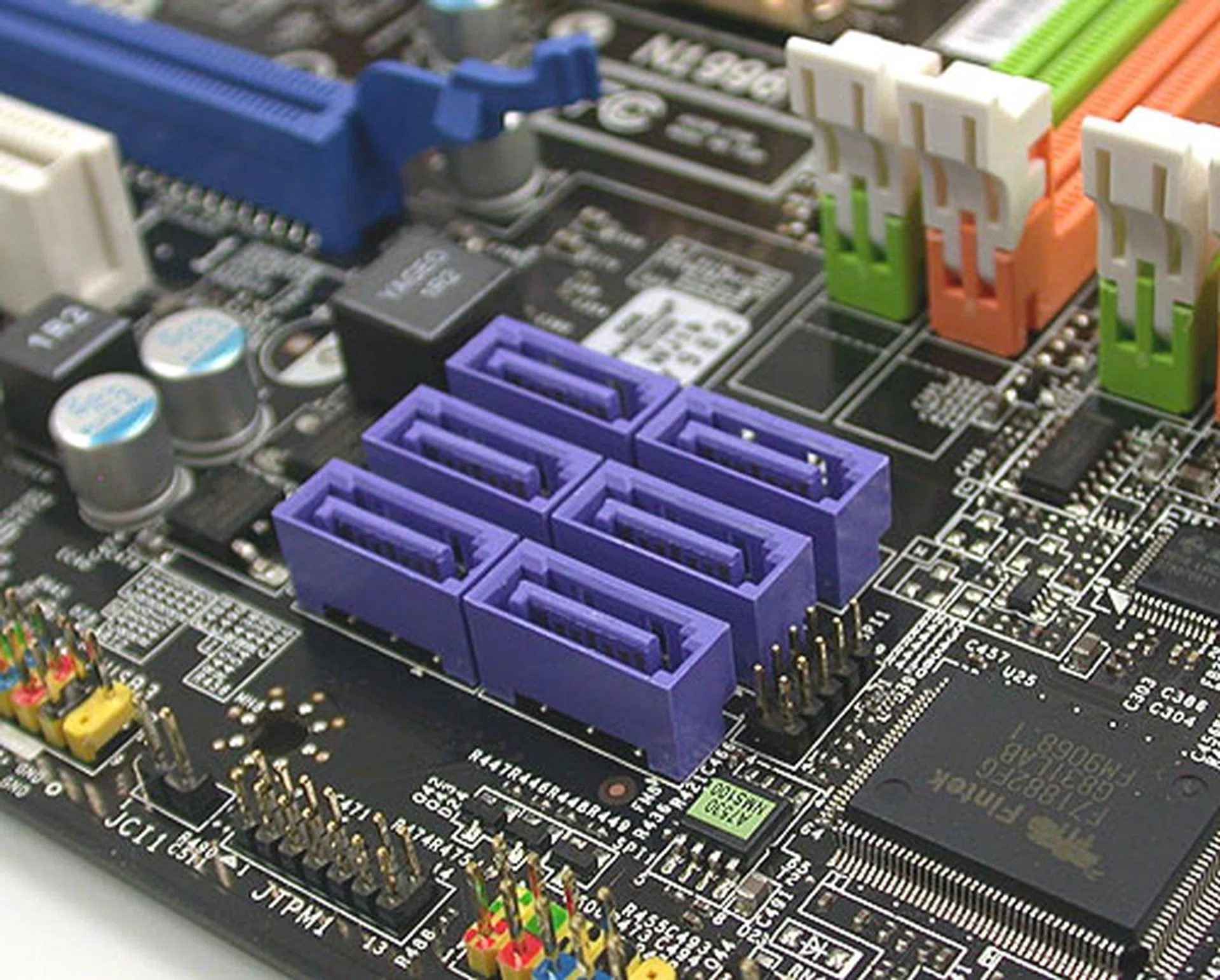
There are six SATA 3.0Gbps ports as determined by the chipset. The layout is not ideal, with the ports aligned such that the SATA cables may be blocked by longer expansion cards.
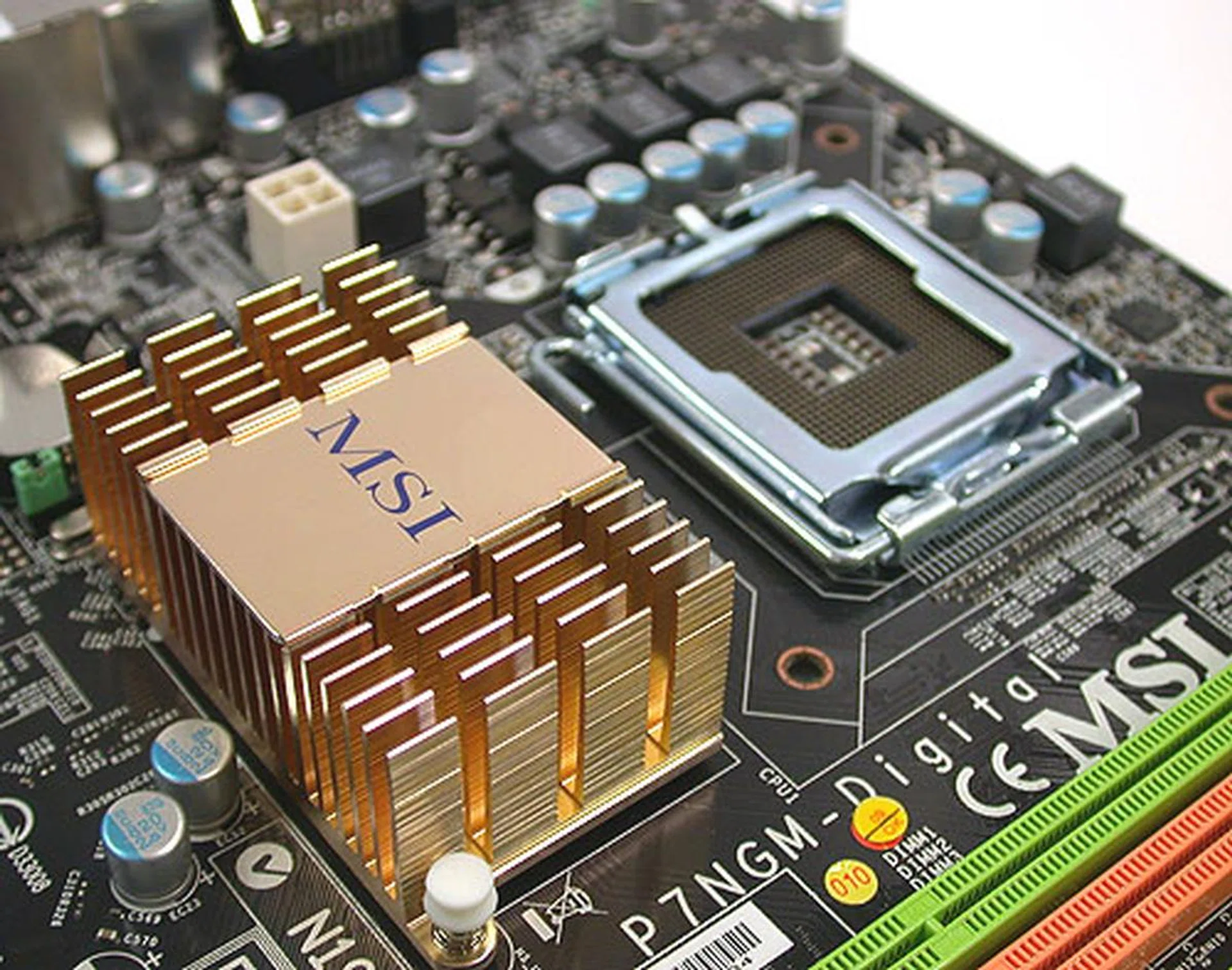
The heatsink felt only slightly warm to the touch during our testing. It was not too large either and didn't interfere with the CPU socket, which was nicely free of obstructions.
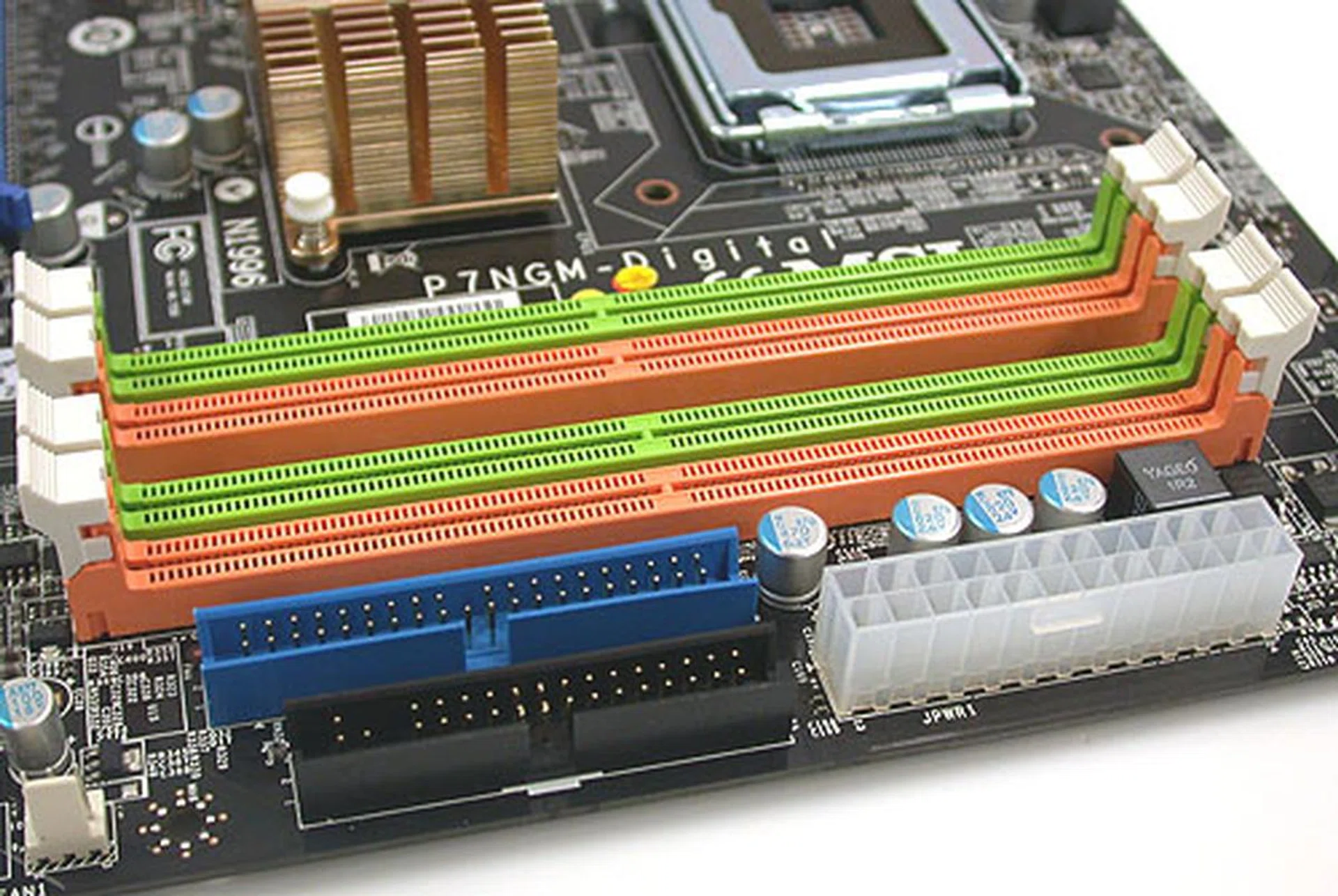
It may be an mATX board but that doesn't mean you can't get the full complement of four DIMM (DDR2) slots, IDE and floppy connectors.
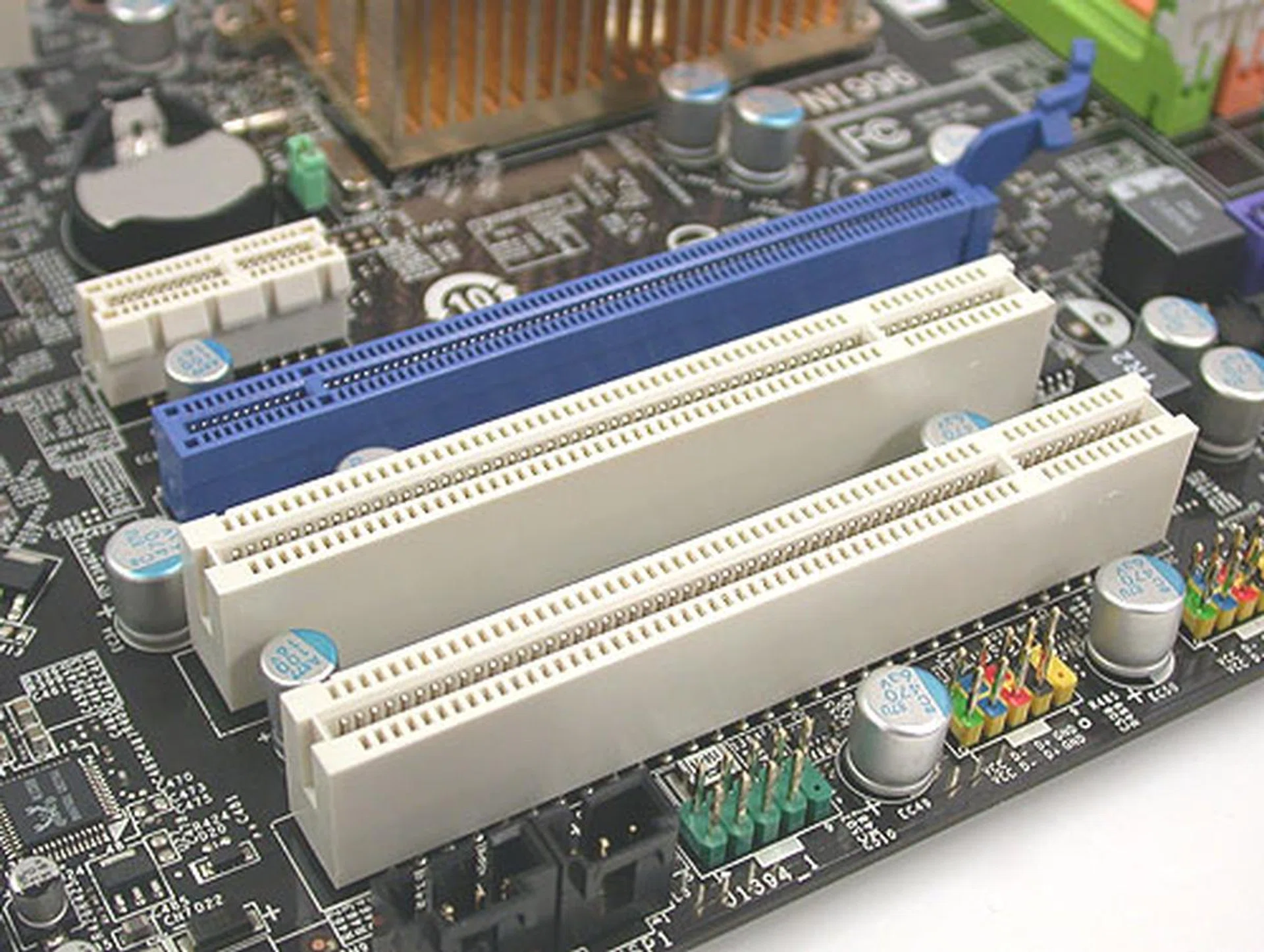
Besides the single PCIe 2.0 x16 graphics slot, there's also two PCI and one PCIe x1 slot. Not many, but typical for a mATX board.
Overall, the layout of the board was pretty standard. There was adequate space around the CPU socket for third-party coolers of your choice and most of the onboard headers were relegated to the edge of the board. The DIMM slots could have been positioned more towards the right edge of the board unlike its present placement. The SATA ports could have also been better placed while we liked having the floppy, power and floppy connectors all in close proximity. We only saw one system fan pin header besides the CPU fan so that could be increased by at least another pair. However, given its mATX dimensions, we won't quibble too much.
Finally, MSI went for the now-typical solid capacitors and shielded chokes to improve reliability and power efficiency but there was none of the MSI proprietary technologies like Core Cell and GreenPower. In short, it's a solidly mainstream product.
Overclocking
Overclocking is not exactly something that the target audience for mATX boards is looking for. MSI obviously came to the same conclusion, based on the limited settings that we saw on the MSI P7NGM-Digital. Of course, it's not as bad as some motherboards using integrated GPUs that we have seen before. Compared to the ASUS P5N7A-VM however, the MSI has slightly fewer options. In particular, we were unable to change the GPU clock speed unlike the ASUS. Here are some of the options we did find in the BIOS (which we had updated to version 1.1 found on MSI's website):-
- FSB Clock: 400 - 2500MHz
- CPU Ratio: 6.0 - 9.5
- CPU Voltage: 1.215 - 1.9875V (in 0.0125V steps)
- Memory Voltage: 1.80 - 2.55V (in 0.10V steps)
- NB Voltage: 1.060 - 1.354V (in 0.021V steps)
- VTT FSB Voltage: 1.200 - 1.550V (in 0.025V steps)
While its options were limited, the 'quality' of the overclocking was not unduly affected. We could easily push the FSB up a decent amount and the MSI more than matched the ASUS when it came to the FSB limit. In the end, we managed a stable 450MHz, 30MHz over the ASUS and a significant jump over the default.
Test Setup
Since we already had a chipset comparison between the Intel G45 and NVIDIA GeForce 9300 mGPU, we won't be repeating such a thorough set of benchmarks. If you're interested in how the chipset stacks up, you can refer to the article here. We don't expect the MSI P7NGM-Digital to differ significantly. Instead, we'll be using our usual suite of benchmarks for our motherboard reviews, together with a graphics benchmark, power consumption and temperature testing since these are of importance for a integrated GPU motherboard.
To sum up the rest of the hardware configuration:-
- Intel Core 2 Duo E8500 (3.16GHz)
- 2 x 1GB Kingston HyperX DDR2-800 @ 5-5-5-16 (MSI P7NGM-Digital @ 5-5-5-15)
- Seagate Barracuda 7200.7 SATA HDD 80GB
- Microsoft Windows XP Professional with Service Pack 2 and DirectX 9.0c
We took the results for the Intel G45 and ASUS P5N7A-VM for comparison in this review, giving us a total of three motherboards altogether. The integrated GPUs were all manually allocated 256MB of framebuffer. ForceWare 178.24 drivers and NVIDIA chipset driver version 20.08 were used for the NVIDIA GeForce 9300 mGPU chipsets. For the Intel G45 board, the drivers used were 14.36.3.4990 for the graphics and INF 9.1.0.1007 for the chipset.
As we had noted previously, the ASUS P5N7A-VM could not run our DDR2-800 memory at our usual 4-4-4-12 settings. The same issue cropped up on the MSI P7NGM-Digital, so we fell back to 5-5-5-15 that we set manually. This similar setting was also set for the other two boards in their BIOS, though CPU-Z showed the ASUS and the Intel to be running at 5-5-5-16 when we checked.
Benchmarks
The benchmarks used to test the motherboards are as follows:-
- BAPco SYSmark 2007 (ver 1.04)
- Futuremark PCMark05 (ver 120)
- SPECviewperf 9.0
- AquaMark3
- 3DMark06 (ver 110)
Results - SYSmark 2007 Preview
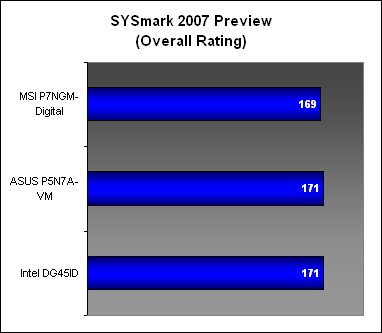
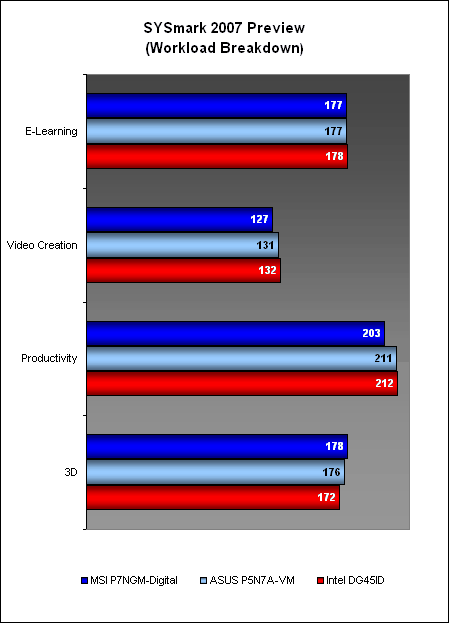
According to SYSmark 2007, all three motherboards were closely tied in terms of overall system performance. The MSI was a couple of points off from the rest but it wasn't a significant margin. The breakdown helped to pinpoint the weaknesses, specifically the video creation and productivity segments. The MSI however did have a slight lead for 3D that almost made up for the deficit. All in all, there was as expected, little difference between the two GeForce 9300 mGPU boards.
Results - Futuremark PCMark05 Pro
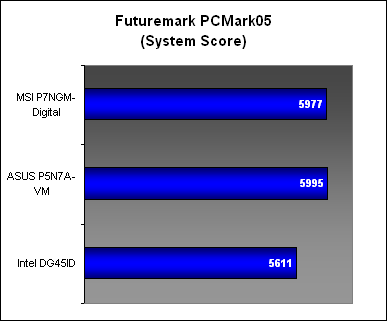
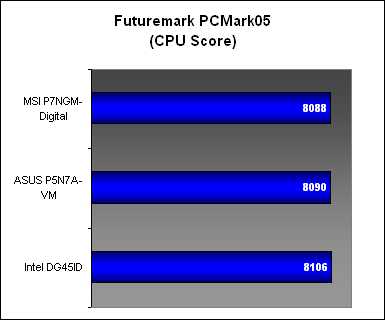
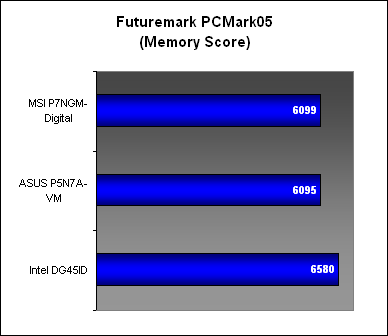
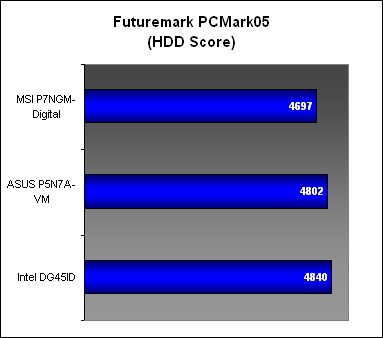
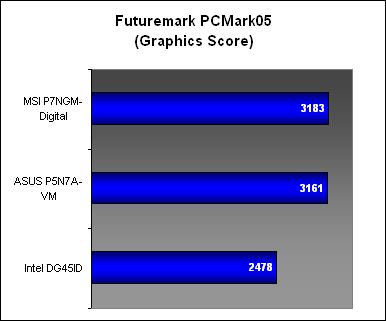
Like SYSmark 2007, PCMark05 is another general benchmark that tests the various subsystems of the PC. Again, the results showed mostly a tie between the ASUS and MSI, with the Intel G45 board comprehensively outclassed when it came to graphics. While the scores between the ASUS and MSI were similar, the MSI looked to be the weaker board when it came to hard drive performance.
Results - SPECviewperf 9.0
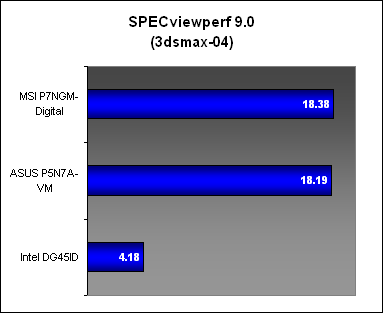
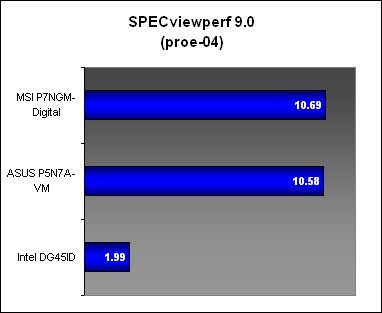
SPECviewperf was a benchmark which showed the disparity between the GeForce 9300 mGPU and the Intel G45 chipsets. When it came to the ASUS and the MSI however, both were almost identical in performance.
Results - AquaMark3 & 3DMark06
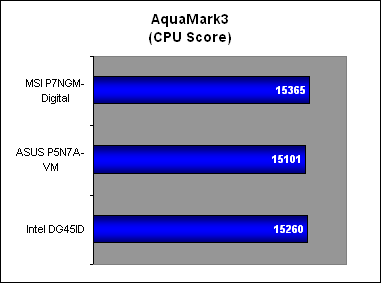
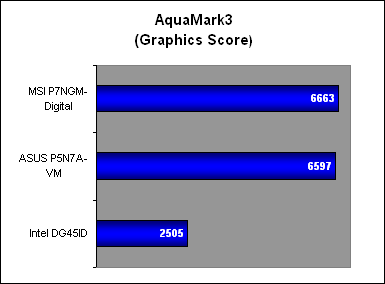
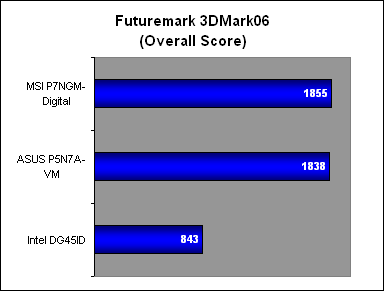
To finish our roundup of the benchmarks, we have two 3D graphics benchmarks for users to get a quick gauge of their graphics capabilities. Like before, the Intel G45 was no match for the GeForce 9300 mGPU. Meanwhile, we had no complaints about the MSI P7NGM-Digital as it appeared to be on par with the ASUS.
Temperature
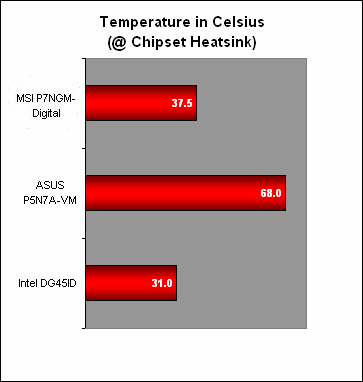
Surprisingly, given the modest looking heatsink on the MSI P7NGM-Digital, the temperature measurements that we took from it was very much less than the one from the ASUS - a 30 degrees Celsius difference in fact! Although the Intel G45 board still retained the coolest heatsink title, MSI's temperature was a huge improvement over the ASUS. Such a temperature reading is more in-line with what we expect from a mATX board that's likely to be found in media-center oriented PCs that may have cramped and less than ideal casing airflow.
Power Consumption
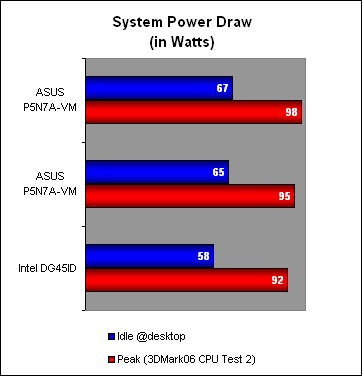
The power draw for the MSI was similar to the ASUS, with the MSI marginally higher. Both GeForce 9300 boards recorded higher results than the Intel board but compared to non-integrated GPU solutions, the readings here were all pretty decent.
Conclusion
NVIDIA's motherboard chipsets have fallen far from its peak popularity in the past. AMD's recent chipsets have proven to be quite tough competitors, especially with the new 790GX and the 780G while Intel's own chipsets have been quite solid for the past few generations. With the new X58 chipset for the Core i7, there isn't a need anymore to go NVIDIA to get SLI support.
So the integrated GPU chipset segment looks like a very important one for NVIDIA. Here, its GeForce 9300/9400 mGPU has a distinct performance advantage over Intel's current G45 chipset. AMD's 780G also puts up a tougher fight on the AMD platform but from the developments so far like NVIDIA's Ion, the Intel Atom platform is the NVIDIA's next target.
Besides having all the features and performance one expects of NVIDIA's GeForce 9300 mGPU chipset, the MSI P7NGM-Digital also happens to have one of the lowest prices that we could find for a mATX board based on the GeForce 9300.
Such a move is not surprising, for the integrated GPU brings a lot to the table. As we have seen with our first GeForce 9300 mGPU board from ASUS and subsequently, the MSI P7NGM-Digital, modern 3D games can be played at modest settings with these integrated GPUs. More importantly, it's the HD playback hardware acceleration that makes it a natural fit for mATX desktop boards wanted by media center enthusiasts and also for multimedia entertainment notebooks.
Looking at this MSI version, it's very much a standard implementation of the GeForce 9300. Performance too followed the book, with this board showing negligible differences with the ASUS. The only difference came when we measured the temperature of the heatsink that's cooling the chipset. The MSI P7NGM-Digital had a much cooler heatsink compared to the ASUS. Besides that, there were some minor differences, with the MSI having a decent board layout though it could have been better.
When it came to pricing however, the MSI too had a slight advantage, as it goes for US$109, US$10 less than the ASUS. One will do fine with either choice, so besides the razor-thin price difference, it boils down to the specifics, like the ASUS having rear S/PDIF outputs which the MSI lacked while the MSI came with FireWire, something that the ASUS did not include. The real winner here is the consumer, with the number of motherboard vendors offering GeForce 9300/9400 boards increased from the last time we reviewed them (when there was just the ASUS).
Our articles may contain affiliate links. If you buy through these links, we may earn a small commission.