
MSI N9800GTX-T2D512-OC (GeForce 9800 GTX)
It's only been days since the GeForce 9800 GTX made its debut but MSI already has prepared an overclocked version for the enthusiasts. Outwardly similar to the reference design, it is similar to MSI's own standard edition, but with higher clocks. Does it have the pace to stand out from the competition?

Introduction
With its support for 3-way SLI, NVIDIA's GeForce 9800 GTX is obviously tailor made to fit into the shoes of the previous champ, the GeForce 8800 GTX. Of course, as far as benchmark performance is concerned, the dual GPU GeForce 9800 GX2 remains NVIDIA's top desktop graphics card while ATI's Radeon HD 3870 X2 too has a competitive price/performance ratio. In our testing, the GeForce 9800 GTX was not exactly convincing when it came to fending off its single GPU competitors. In fact, its predecessor, the GeForce 8800 GTX had its moments, especially in games which require a greater memory bandwidth. This resulted in the rather mediocre rating in our previous review.
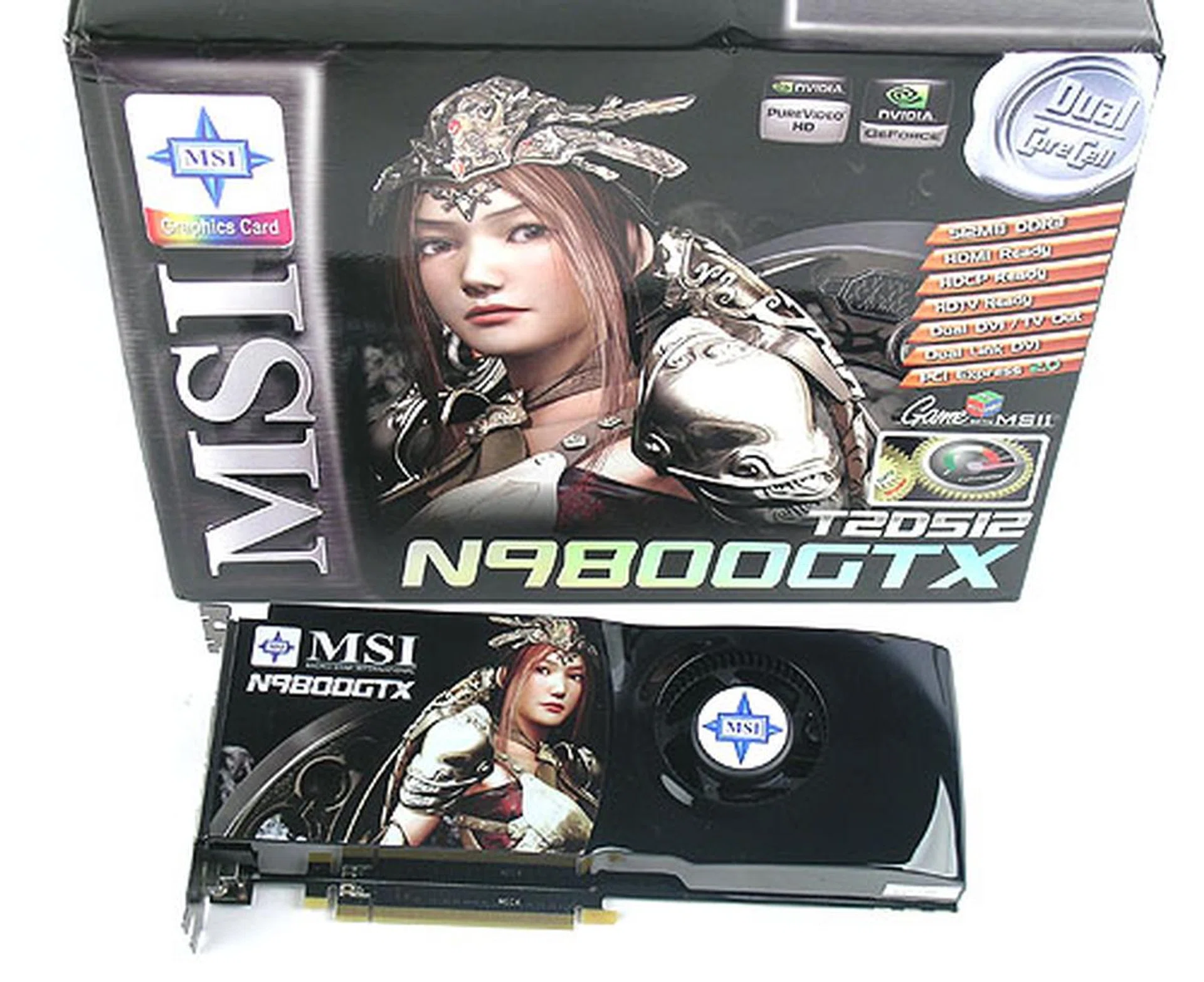
It didn't take MSI long to issue an overclocked version of the GeForce 9800 GTX.
Today, we have a slightly overclocked GeForce 9800 GTX from MSI, with both higher core and stream processor clocks. Can it change our impression of the insipid GeForce 9800 GTX? Read all about it after the jump and the technical specifications.
The MSI N9800GTX-T2D512-OC
Sadly for enthusiasts, the overclocking on the MSI N9800GTX-T2D512-OC failed to raise our heartbeats. With an increase of 25MHz to 700MHz on the core and consequently, an increase of the stream processor clocks to 1750MHz (from 1688MHz), it's a slight piece of overclocking that most users would be able to replicate simply with NVIDIA's Control Panel. In which case, the user only loses the certainty that comes with a pre-overclocked graphics card. Based on what we have seen however, there is very little risk of doing this amount of overclocking and ample margins for users to play around with. Probably the nice part about this overclocked graphics card is that it will retail in the same price segment as the existing non overclocked competitors. So that should be interesting.
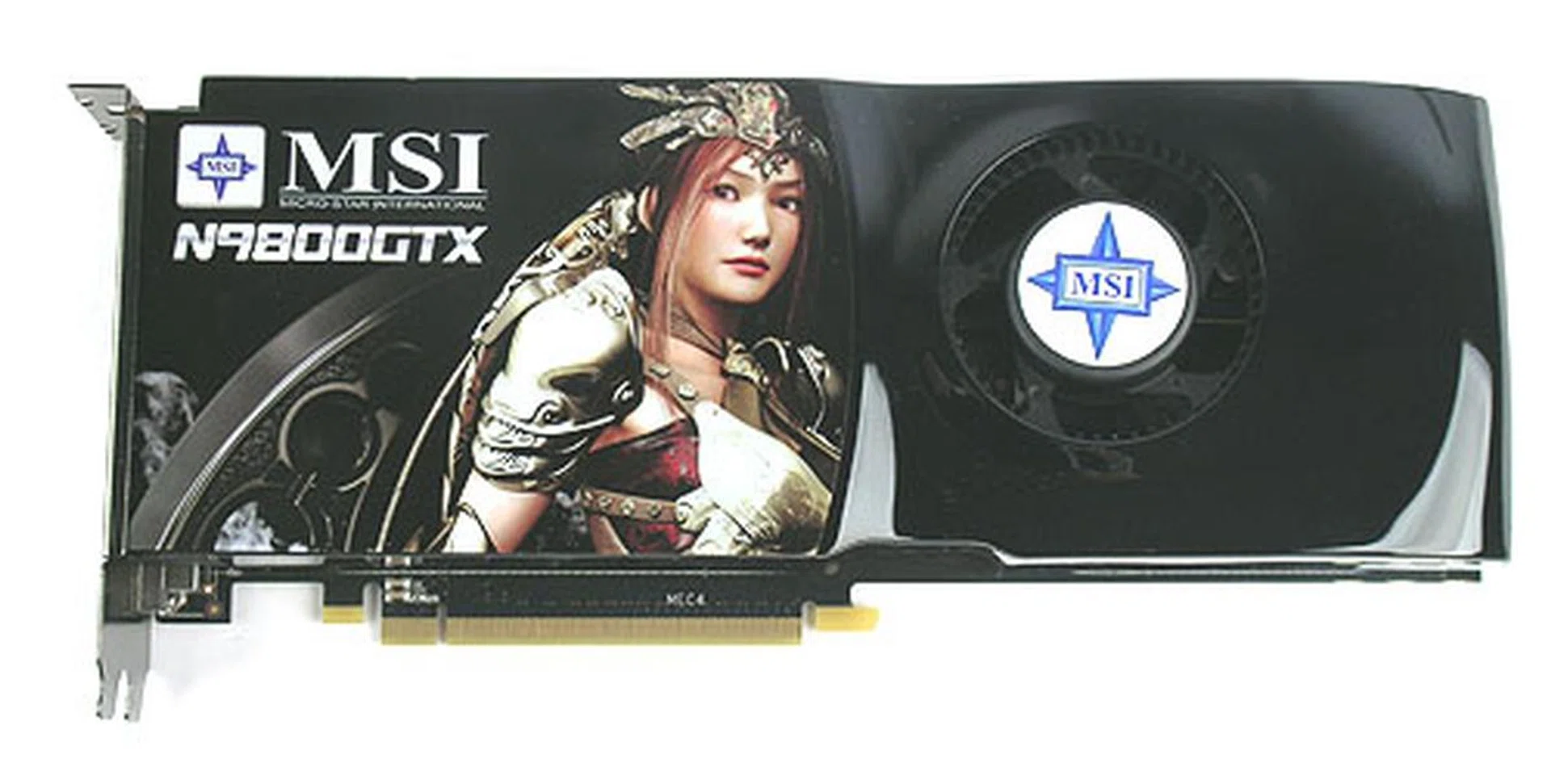
Despite the slightly higher core clock, this is still a reference board.
The MSI board itself is no different from the many reference boards that are probably circulating in the retail market now. Say what you will about the lack of innovation in the GeForce 9 series, the mature architecture means that vendors are able to churn out the products quickly and even on launch day, stocks seem plentiful. If you're not aware by now, the GeForce 9800 GTX has two 6-pin PCIe power connectors that have to be connected, requiring a PSU of at least 450W.
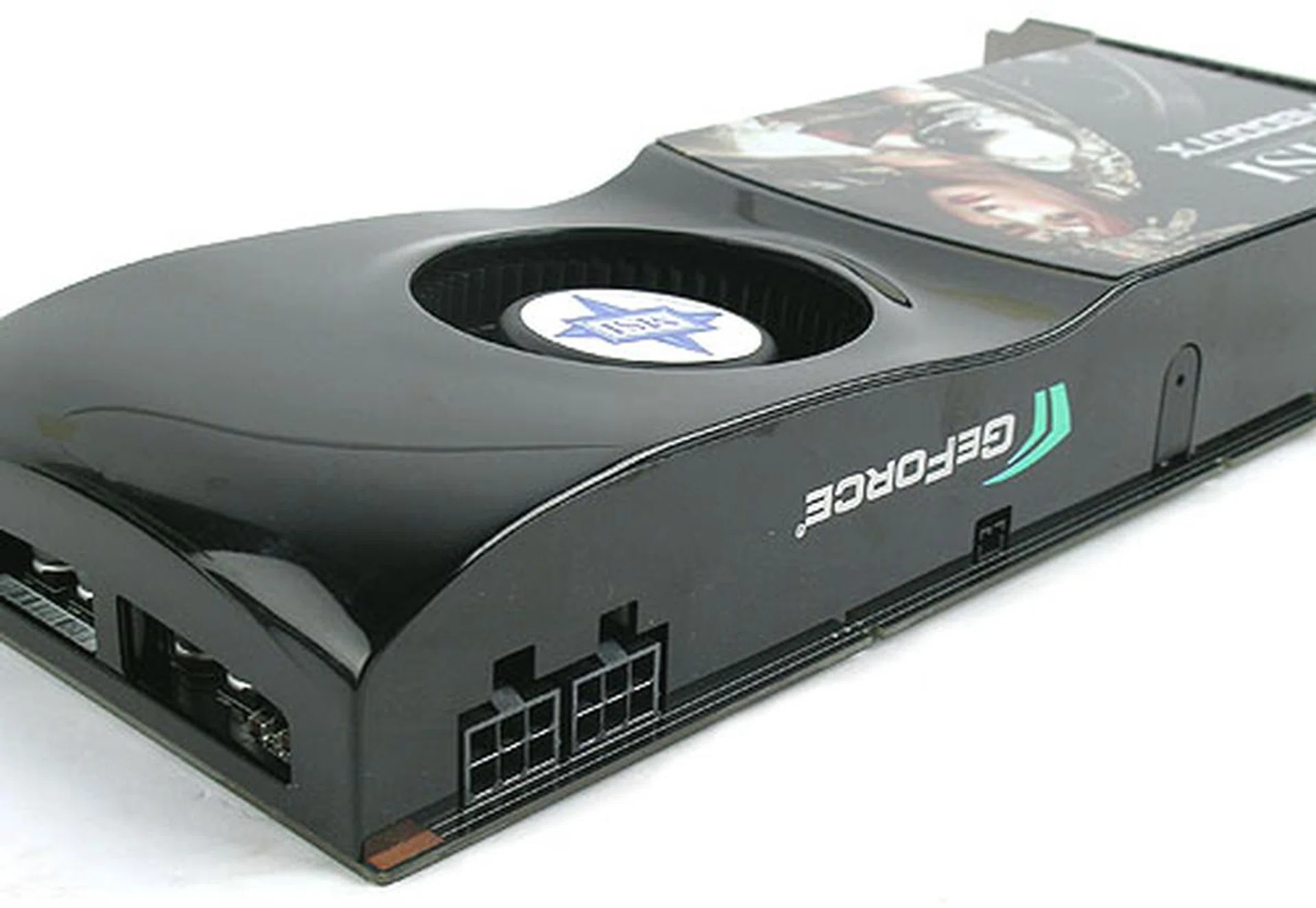
The higher clock speeds on the GeForce 9800 GTX are aided by having an extra 6-pin PCIe Molex power connector, compared to the other G92 GeForce 8 boards.
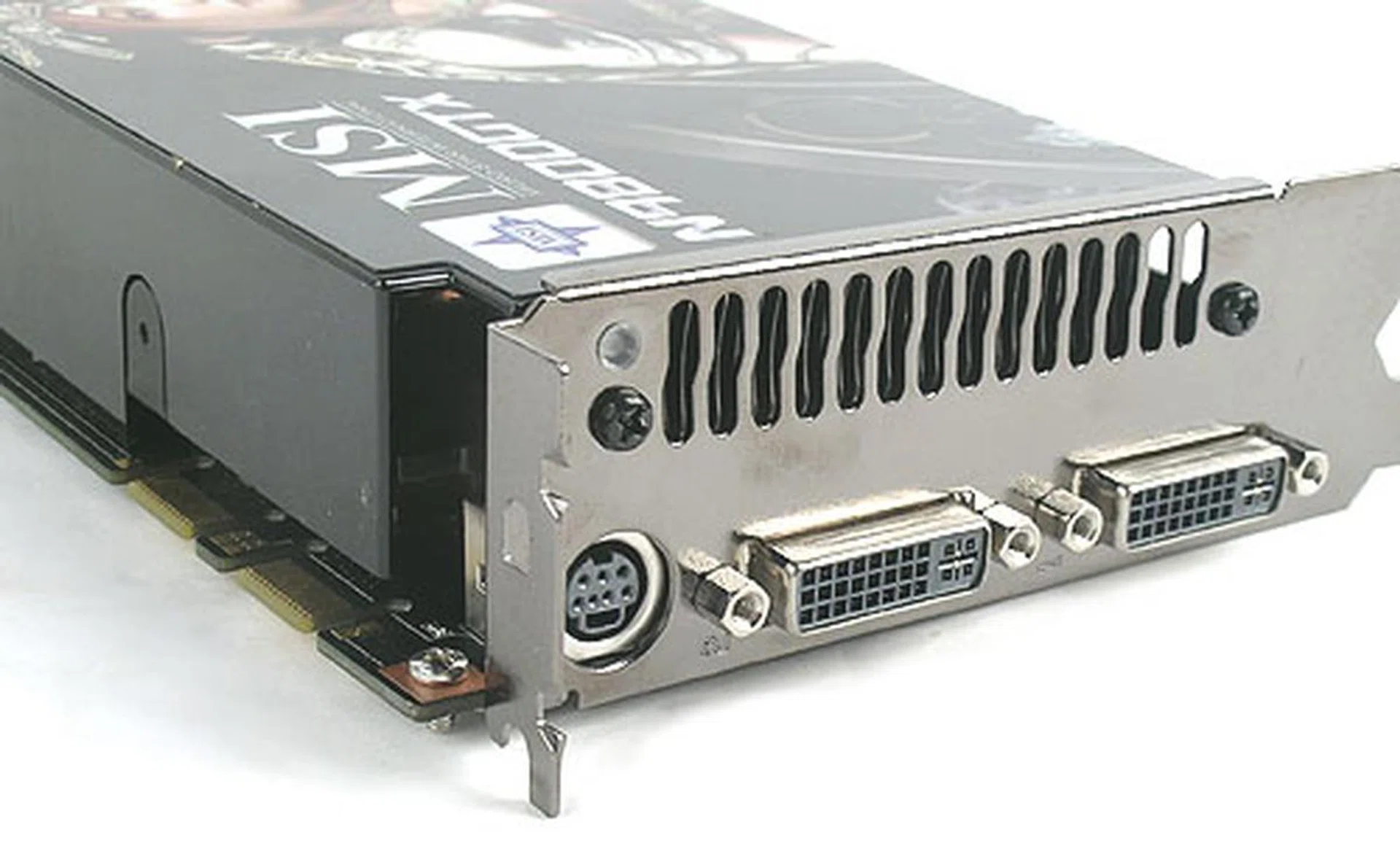
We found the usual set of outputs behind the card and there's also a glimpse of the two SLI connectors that make the GeForce 9800 GTX one of the few cards to support 3-way SLI.
Besides being the fastest single G92 based graphics card now, the GeForce 9800 GTX, supports both Hybrid SLI and 3-way SLI, of which Hybrid SLI is one of the more unique features found only on the GeForce 9. Like we mentioned before, it's too early to tell if it will turn out to be useful or more feature bloat. The bundled package however was quite standard, with a CD containing the drivers and MSI's proprietary software, which has become quite a long list of tools over the years. All the necessary cables and accessories are also accounted for, but there is no game included. The items we found are listed below:
- Driver CD (including utilities)
- Installation guide
- DVI-to-VGA adapter
- DVI-to-HDMI adapter
- 6-pin Molex power connector
- 7-pin mini-DIN to Component/S-Video dongle
- S-Video extension cable
- S/PDIF cable
Test Setup
An Intel Core 2 Duo E6700 (2.66GHz) processor and an Intel D975XBX 'Bad Axe' motherboard made up the backbone for our test system. This was complemented with 2GB of Kingston low latency DDR2-800 memory in dual channel mode. We have continued to use Windows XP Professional with Service Pack 2 on our system and this was installed on a Seagate 7200.7 SATA hard drive. DirectX 9.0c was also installed and working on this system.
Just like our previous GeForce 9800 GTX, the newcomer was tested using ForceWare 174.74 drivers while older NVIDIA cards were tested on driver version 169.21. The single ATI card we included for reference, the Radeon HD 3870 X2 was on Catalyst 8.3. The following benchmarks were tested using their built-in time demo or benchmarking tools:
- Futuremark 3DMark06 (ver 110)
- Company of Heroes (ver 1.3)
- F.E.A.R (ver 1.0)
- Crysis (ver 1.1)
- Unreal Tournament 3 (ver 1.1)
Results - 3DMark06 Pro (ver 110)
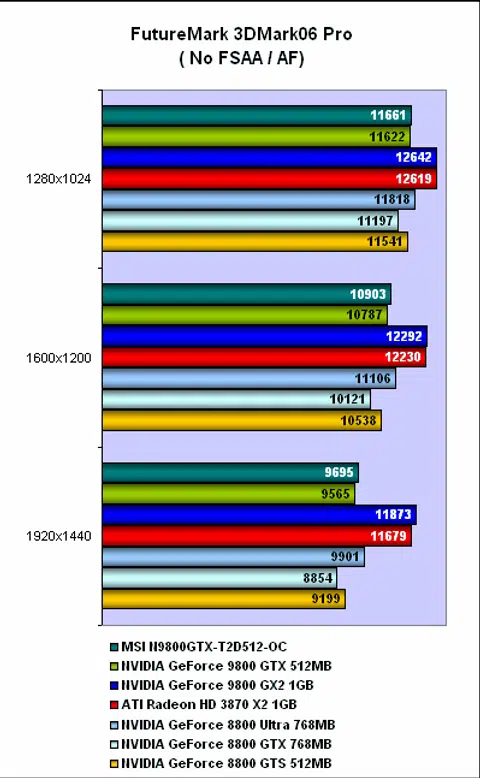
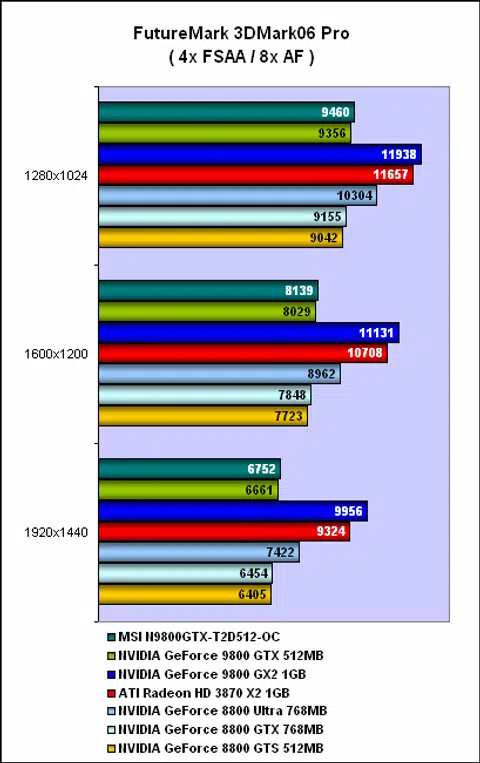
With the minor bit of overclocking on the MSI, the improvements were very marginal in 3DMark06, with the MSI just around 1% faster than the reference board. Effectively, the differences between the two are probably negligible.
Results - Company of Heroes & F.E.A.R
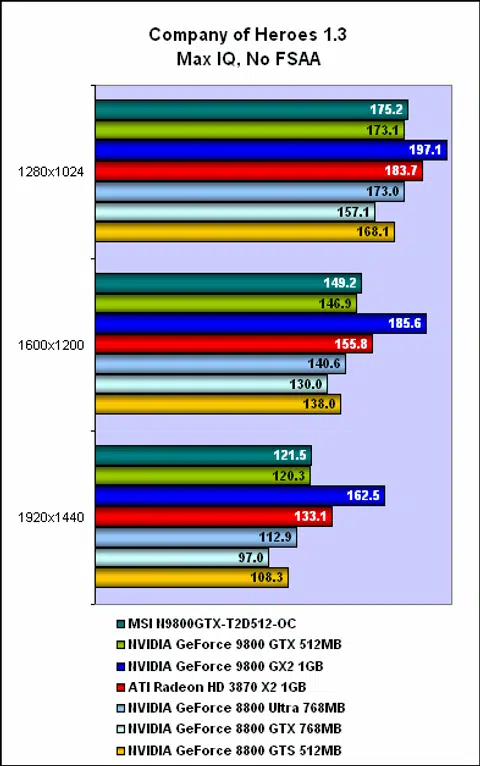
We saw more tangible results of the overclocking on the MSI in Company of Heroes, where the frame rates went up between 1 - 3. Again, it's a very small improvements, especially since we're talking about frame rates that already exceeded a hundred even at 1920 x 1440. In that context, the scores of the MSI sounded just about right.
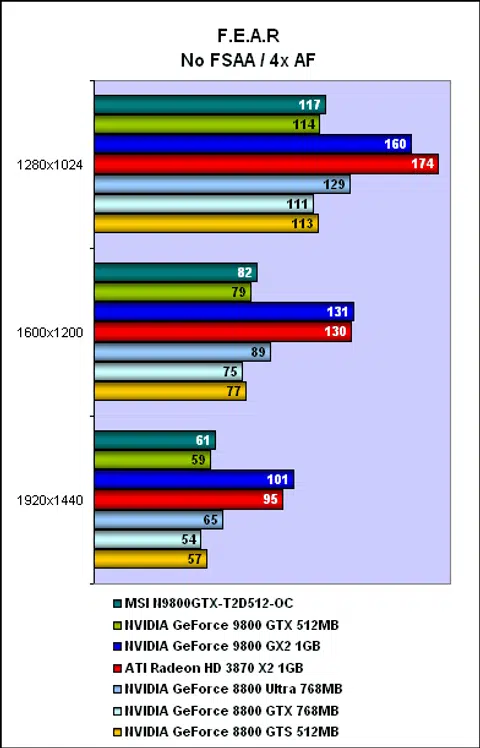
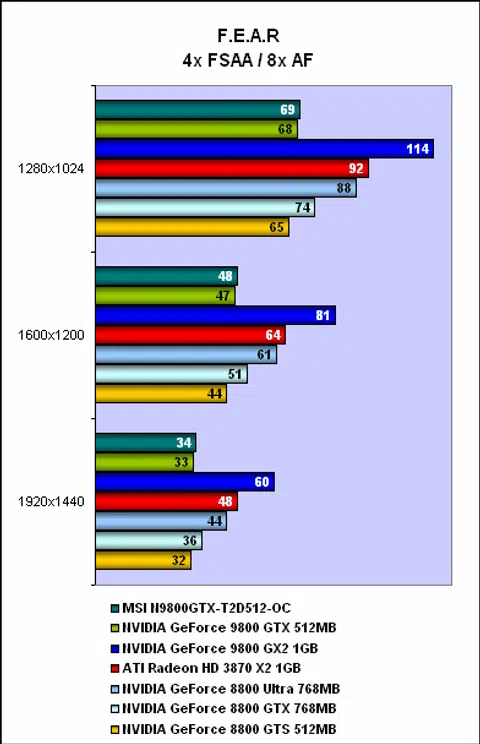
F.E.A.R too showed some gains but the differences were small as usual, with the greater share of the improvements coming when no anti-aliasing was active. The magnitude for these gains was also similar to that in Company of Heroes, with a couple of frames in the best case scenario.
Results - Unreal Tournament 3 & Crysis
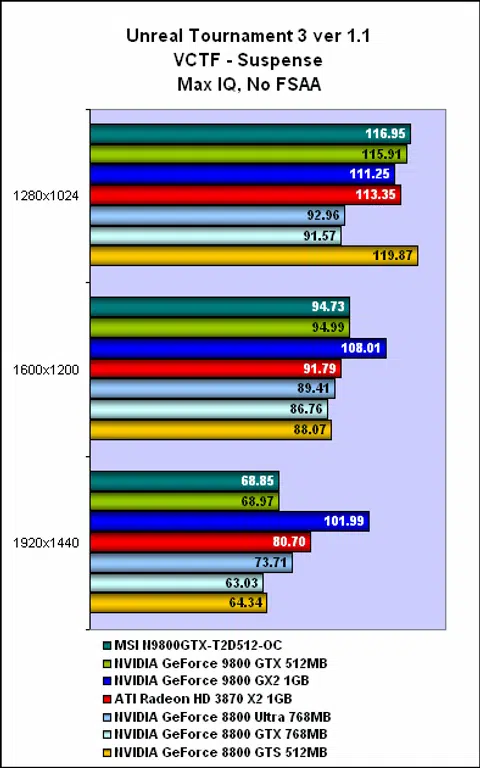
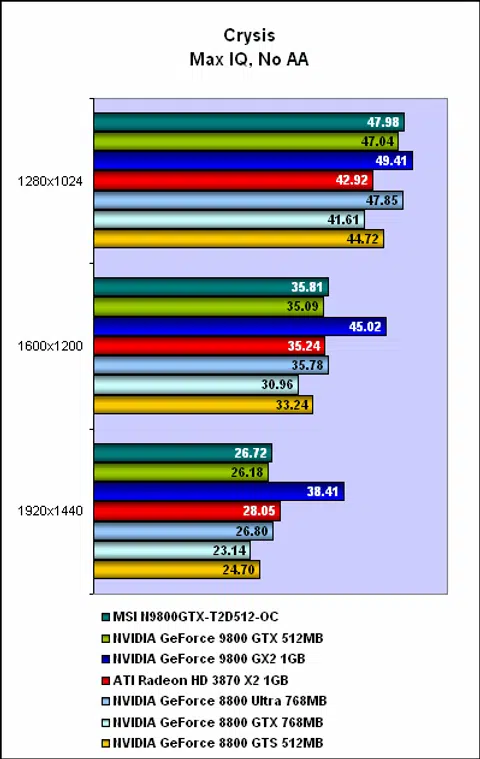
By now, we were accustomed to finding little to no differences in our benchmark scores and it was exactly the case in both Unreal Tournament 3 and Crysis. The margins between a standard GeForce 9800 GTX and the overclocked MSI were within a frame or less. That's hardly an endorsement of the overclocking approach as a product differentiation policy, at least not at the clocks MSI set.

Temperature
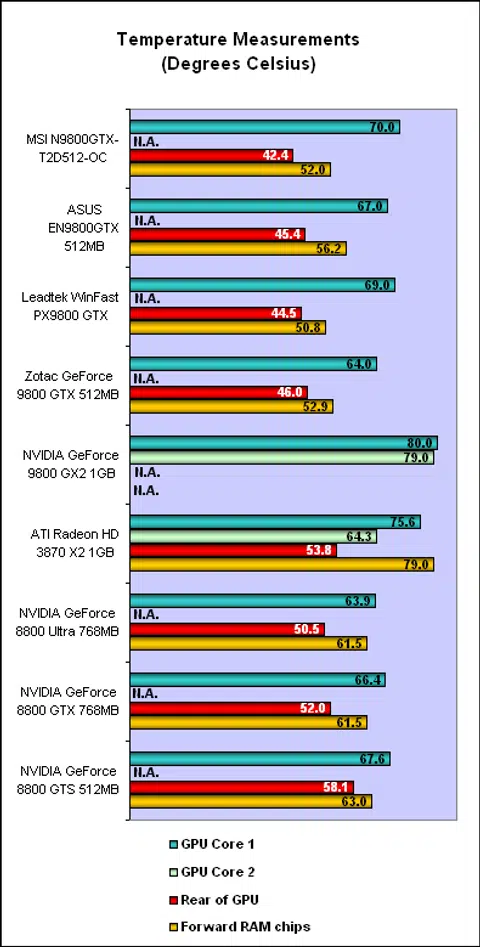
While one would expect higher temperatures on a card with higher clock speeds, the small increase on the MSI meant the corresponding increase in temperatures was also very slight, with the core hovering around 70 degrees. Overall, the temperatures on the MSI were in line with the other GeForce 9800 GTX cards, which is expected given its cooler.
Overclocking
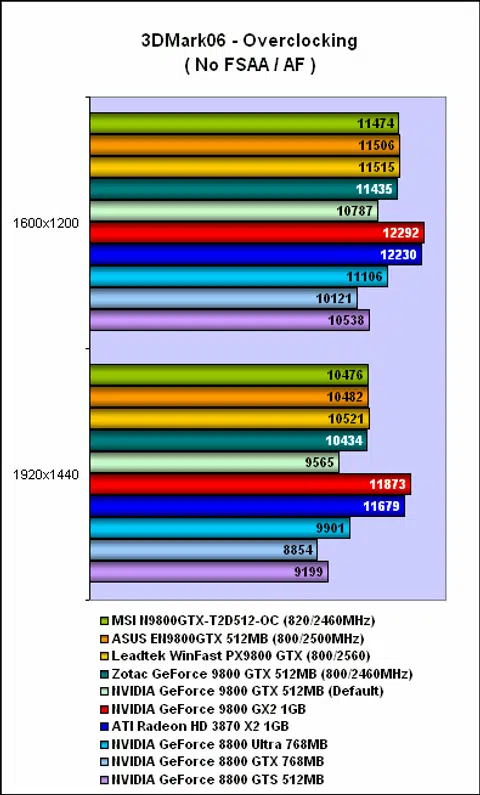
So how did the MSI perform when we tried to push it further in our overclocking segment? Well, we did have to say that the MSI hit a maximum core clock of 820MHz, which was slightly higher than the other cards that we tested. Unfortunately, it did not score the highest in 3DMark06, as the ASUS edged it out due to its better memory clock. However, the differences between the GeForce 9800 GTX cards were so small that it shouldn't really matter.
Conclusion
The cries that the GeForce 9 graphics cards released so far are mere variations of the G92 core are getting increasingly loud. And here to fuel such a sentiment further, comes a claim that the GeForce 8800 GS could be recycled into a GeForce 9 SKU . While it is commendable that NVIDIA is able to get so much value out of the G92, enthusiasts could be forgiven for not jumping onboard the GeForce 9. In most cases, we bet that this group of users would probably have gone for the G92 based product when it first appeared in the GeForce 8800 GT. Hence, given the limited gains - despite the grand sounding names - there is not much of an incentive to upgrade to something like the GeForce 9800 GTX. It is however an option for those using low-end GeForce 8 products (or older), but the next-generation naming scheme is very misleading when there's not much of an improvement.
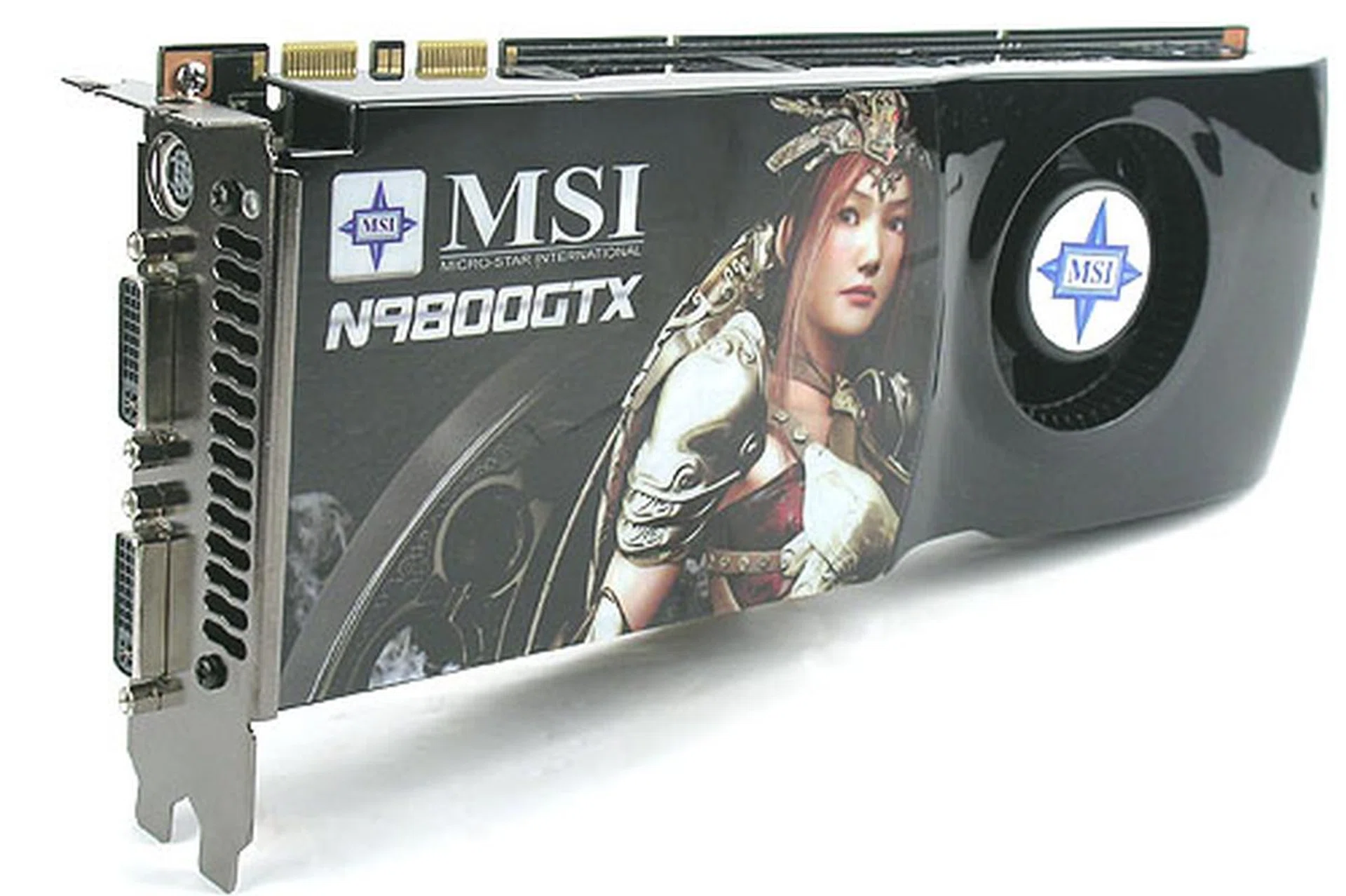
With the right overclocking tool, enthusiasts can easily replicate the mild overclocking found on this MSI card. Even doing so, users are unlikely to notice any significant improvements in performance.
While the launch price of the GeForce 9800 GTX may seem reasonable compared to before, e.g. the US$449 GeForce 8800 GTX, the kingpin of the previous generation, its performance is not that much faster than the GeForce 8800 GTS 512MB. Hence the US$299 - 349 price tag for the GeForce 9800 GTX may not represent as much value as one expects. With an overclocked version like the MSI N9800GTX-T2D512-OC, the local street price is quoted at S$499. Also, when it is released, it will replace the existing non-overclocked version, which will probably be phased out.
After all, our tests showed that one can expect a very minor boost in benchmarks with the higher clock speeds. You'll find a real gain of up to three frames per second in some actual games but this did not happen that often and in any case, has no discernible effect. Accordingly, the higher clocks also affected the temperatures on the MSI, though like its performance, it was only a bit warmer and again, no cause for concern. The MSI did record the highest core clock in our overclocking test but overall, it finished second behind the ASUS. To conclude, the overclocking had very little impact on its performance, giving consumers few reasons to choose this. If you're hunting for an overclocked version, we recommend that you wait for more ambitious editions from other vendors before dipping in, but as far as value is concerned, the MSI N9800GTX-T2D512-OC is reasonable since its price point is almost the same as the normal edition, thus still competitive.
Our articles may contain affiliate links. If you buy through these links, we may earn a small commission.