
Legion Go S review: Not the budget-friendly gaming handheld you're looking for
Is it just us or does it bear resemblance to a competitor's gaming handheld?
#legiongaming #gaming #lenovo

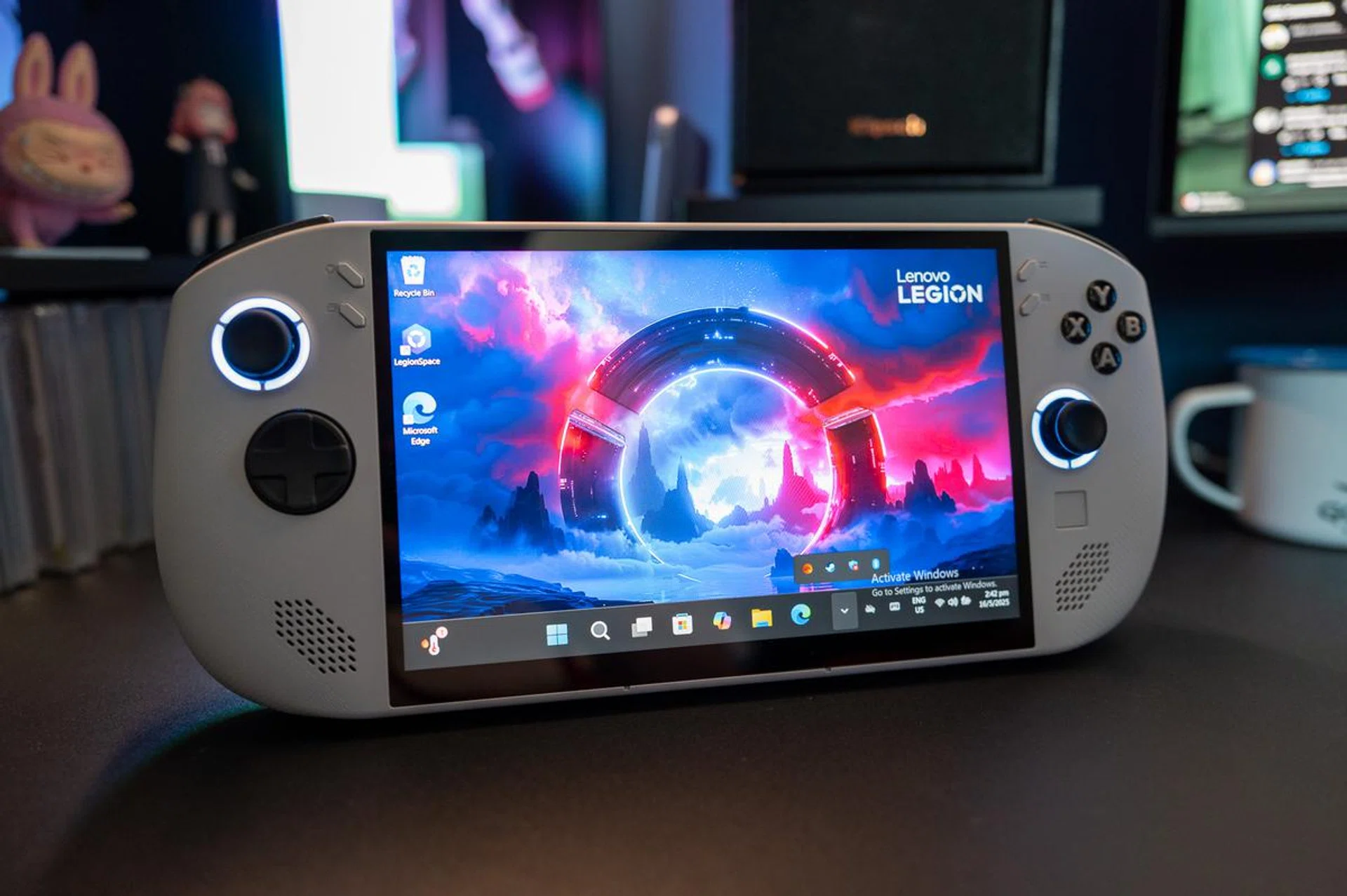
Image: HWZ
When Lenovo announced the Legion Go S, a compact follow-up to the original Legion Go, expectations were reasonably high. After all, its predecessor was one of the more ambitious attempts at bringing PC gaming to handheld devices, albeit with some mixed results. The Go S promised to be more refined, more compact, and more efficient – essentially, a step forward. However, after spending some time with it, I can't help but feel that the handheld has taken a few steps back instead.
Let’s start with the basics. The Legion Go S was launched with a S$899 price point, which already places it in a slightly awkward position. At that price point, you might be better off with the base Steam Deck (S$949) that comes with an OLED display. The hardware itself is, admittedly, quite solid. The 8-inch, 1920x1200 LCD display is vibrant enough and offers a 120Hz refresh rate, but it does pale alongside an OLED one. The analog sticks feel good, the buttons and triggers are sturdy, and the overall build quality is robust. Yet, the handheld feels awkwardly bulky – significantly so when compared to the Steam Deck, which was already on the larger side. Despite being billed as more compact, it doesn’t exactly scream portability.
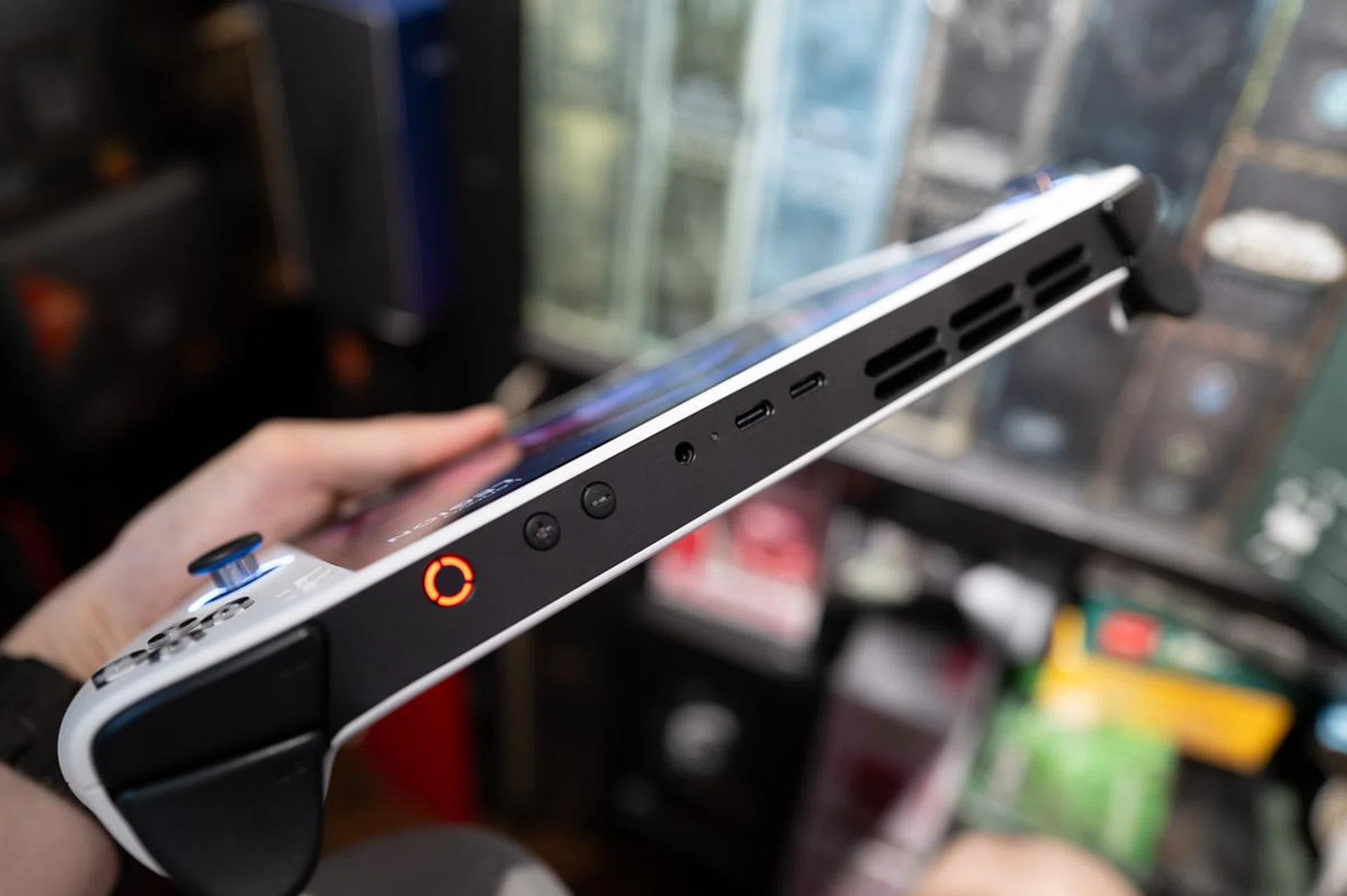
Photo: HWZ
Photo: HWZ
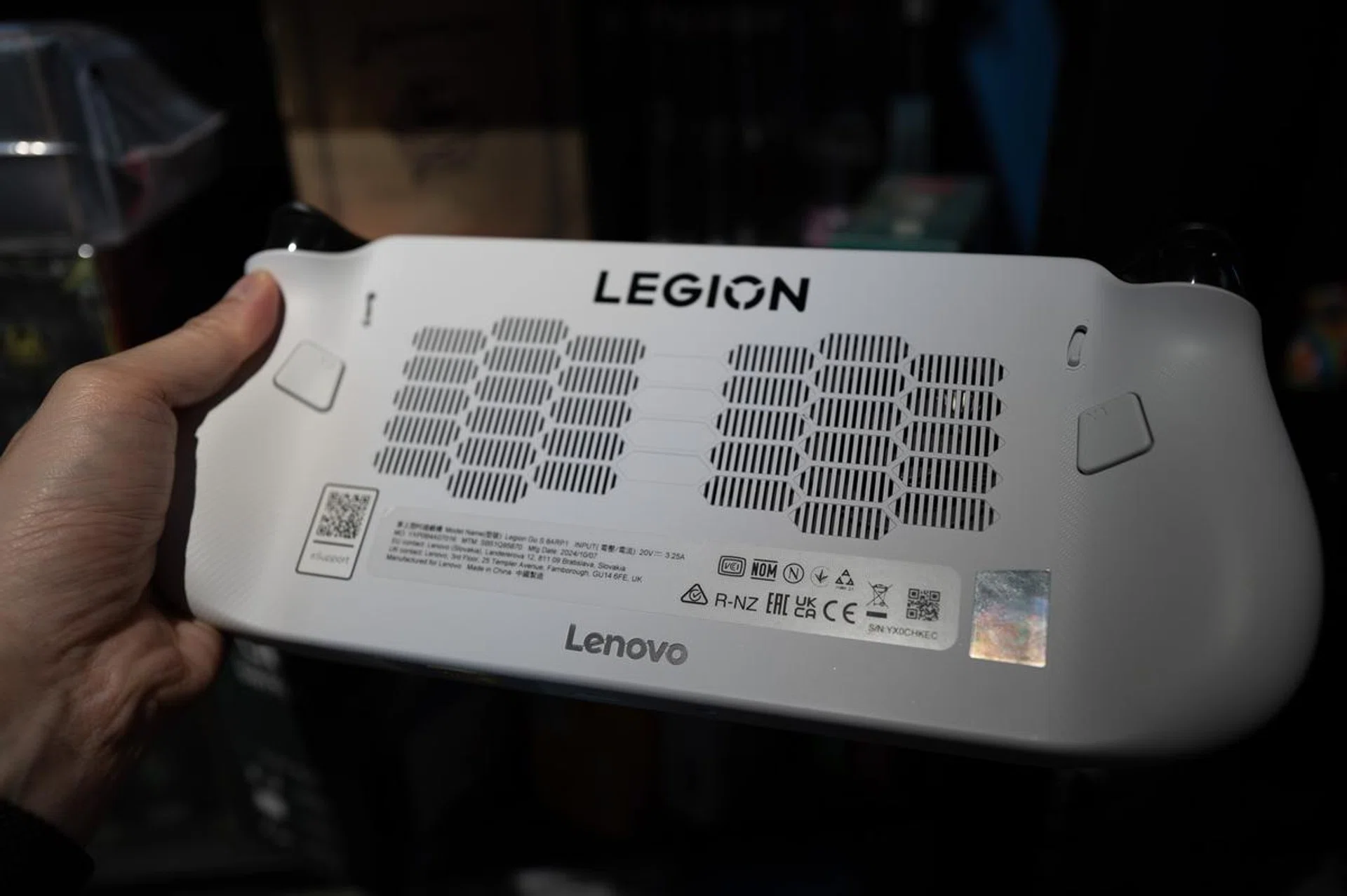
Photo: HWZ
Compared to its more powerful Legion Go sibling, the Go S feels more like a budget alternative than a follow-up that some gamers were expecting – myself included. The original Legion Go's 8.8-inch display and detachable controllers offered a more Switch-like experience that genuinely felt innovative when it was launched. Its kickstand and wireless controller setup made it more versatile than the Go S, which has stripped away those elements in favour of a more conventional handheld design like the ROG Ally. Unfortunately, what you get in compactness, you lose in functionality. The Go S, despite being smaller, feels more constrained in terms of overall performance.
Legion Go S | |
Price | S$899 |
Processor | AMD RyzenZ2 Go processor |
Display | 8" WUXGA (1920 x 1200), IPS, Glare, Touch, 100%sRGB, 500 nits, 120Hz |
Memory | 16GB LPDDR5X |
Storage | 512GB PCIe 4.0 NVMe M.2 SSD |
Network and Communication | Wi-Fi 6E 2x2 AX andBluetooth5.3 |
Battery | 55.5WHrs |
Weight | 740g |
Dimensions (W x D x H) | 299 x 127.55 x 22.6mm |
Performance tests
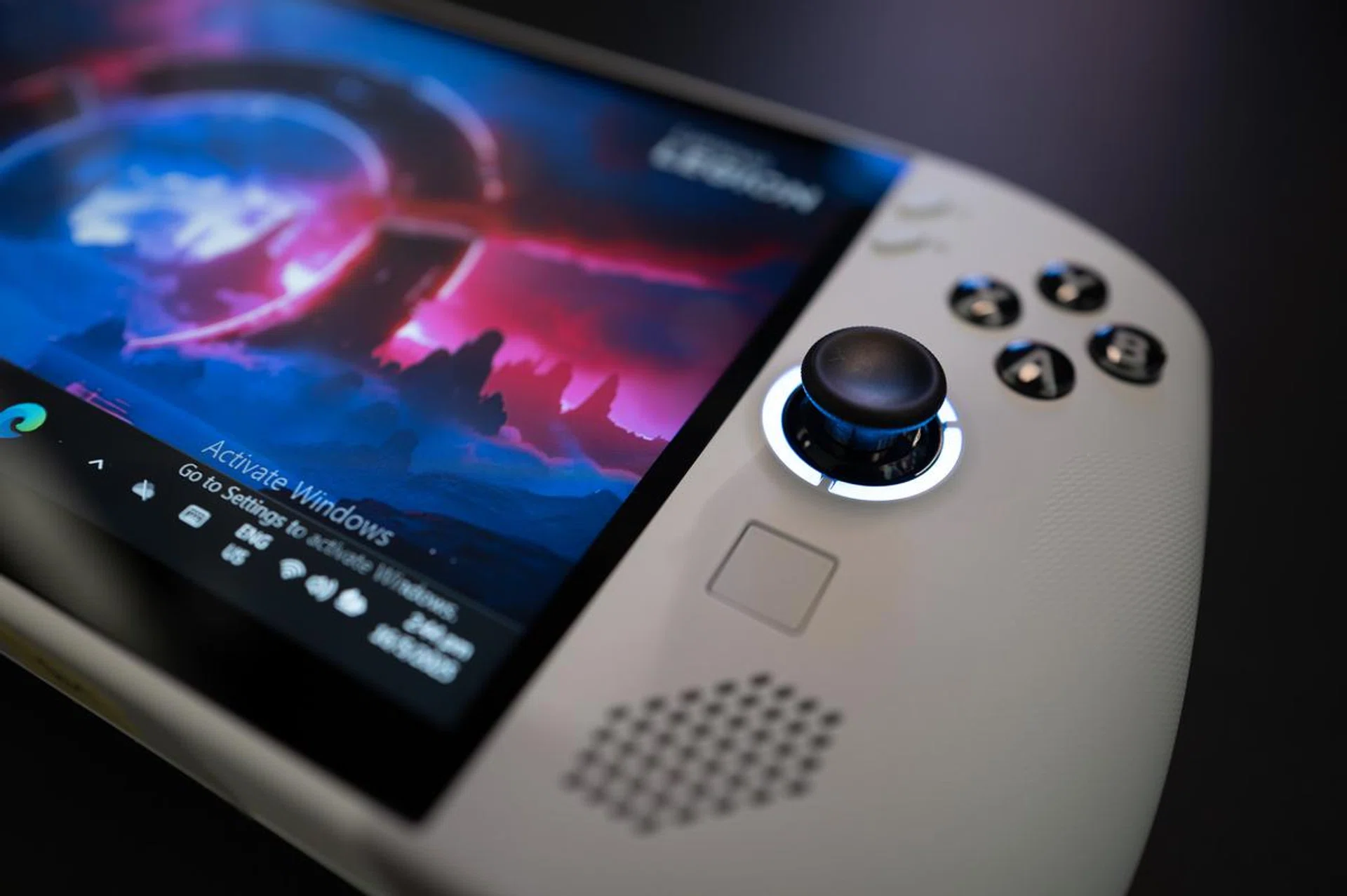
Photo: HWZ
Performance is where the cracks in the Legion Go S’s armour become apparent. While it handles old (but gold) classics like GTA: San Andreas and lighter platformers like Mandragora with relative ease, more demanding titles like Cyberpunk 2077 and Shadow of the Tomb Raider are a different story. Even after dropping graphical settings to their medium or lowest settings, maintaining smooth frame rates proved challenging. At the heart of this struggle is the AMD Ryzen Z2 Go processor, which, frankly, just isn’t cut from the same cloth as its more powerful sibling, the Ryzen Z1 Extreme, found in the Legion Go and ASUS's ROG Ally X.
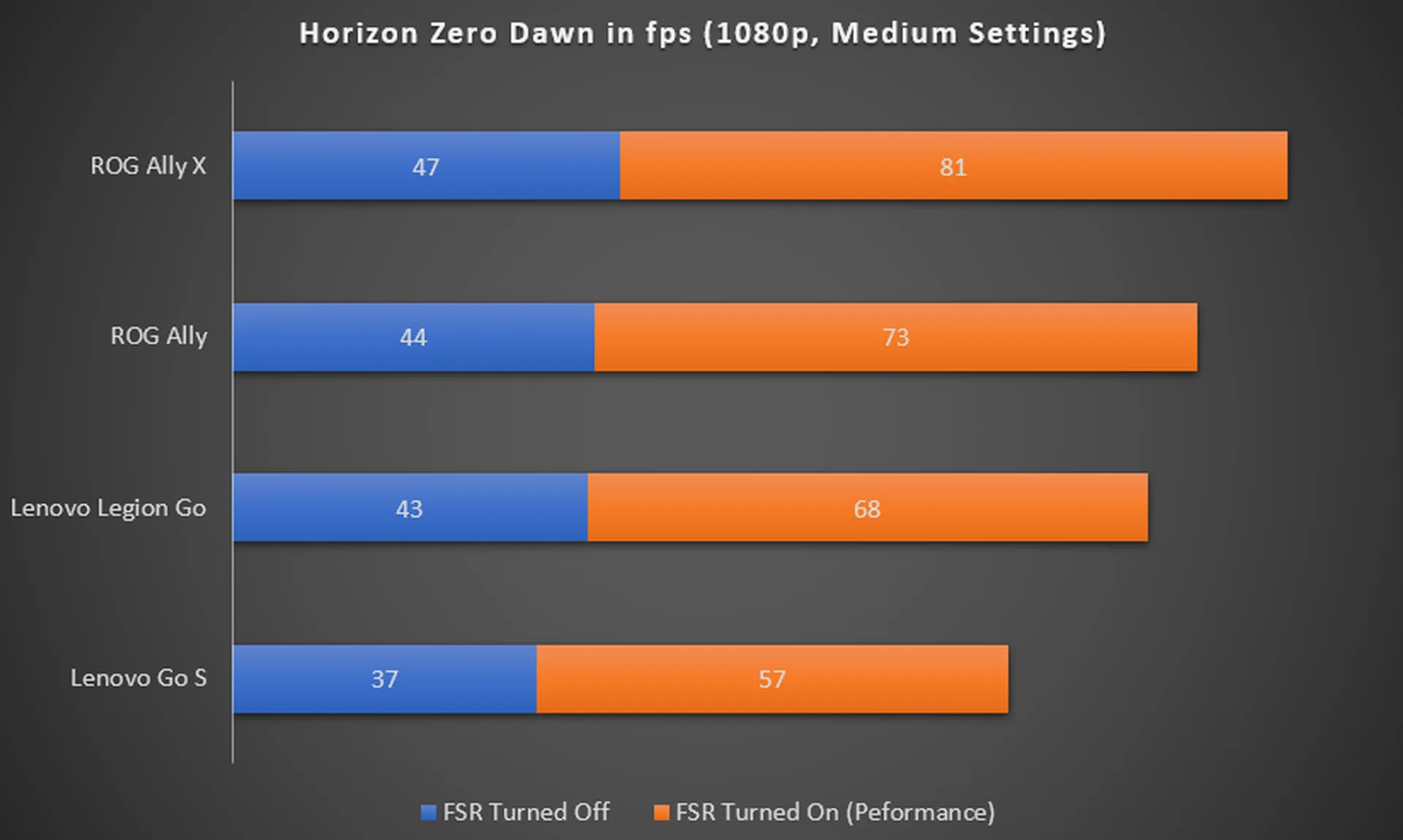
Image: HWZ
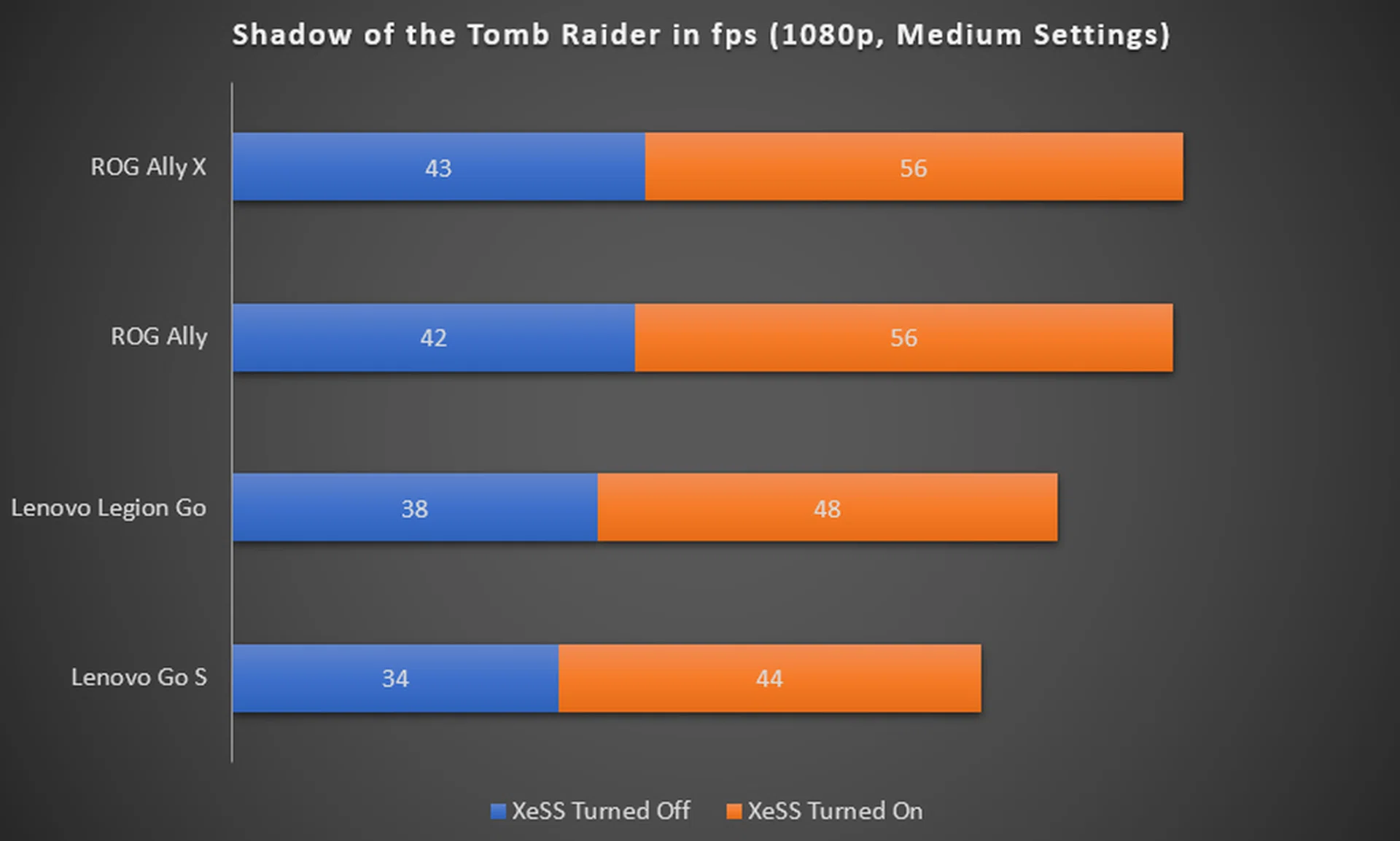
Image: HWZ
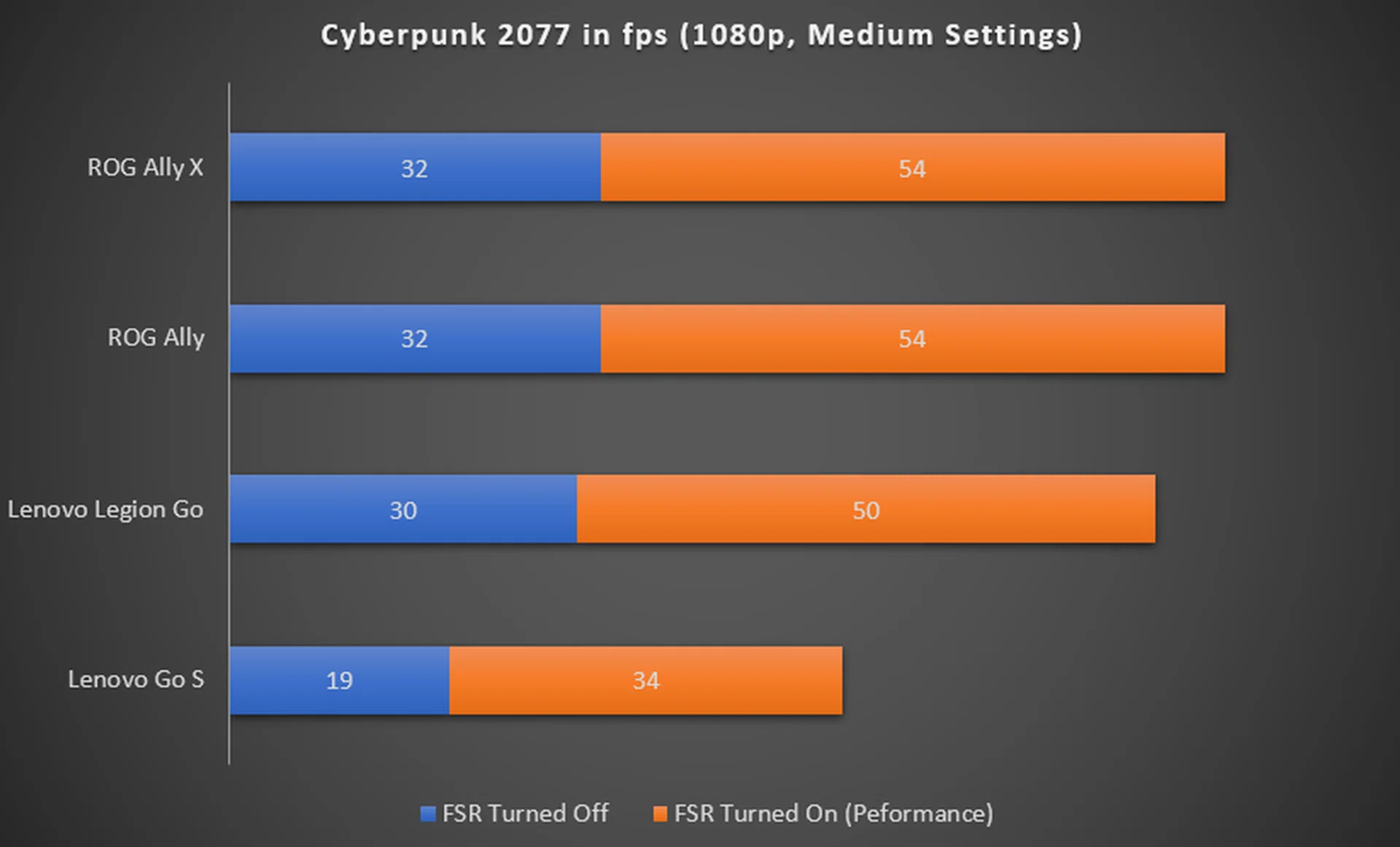
Image: HWZ
When stacked up against other gaming handhelds, the performance gaps are hard to ignore. In Horizon Zero Dawn, for instance, the Legion Go S managed just 37fps with FSR off and 57fps with it enabled. In contrast, the ROG Ally X pushed 47fps and 81fps respectively, while the Legion Go sat at a more comfortable – and playable – 68fps with FSR turned on. The same story unfolds in Shadow of the Tomb Raider, where the Go S stuttered 44fps with XeSS enabled, compared to the Ally X's smoother 56fps. The gap widens further in Cyberpunk 2077, which is a more power demanding game and, quite frankly, a title you won’t enjoy and should not be playing on a gaming handheld. But in the interest of scientific research, we ran the game on the Go S and to no surprise saw it crawled at 19fps with FSR off and only reached 34fps with it enabled, while the Ally X and Legion Go maintained far more consistent playability in the low 50s with upscaling turned on. It’s a stark reminder that Lenovo’s decision to go with the Ryzen Z2 Go processor seems more like a cost-saving measure to position the Legion Go S as a more budget-friendly entry in its handheld line-up.
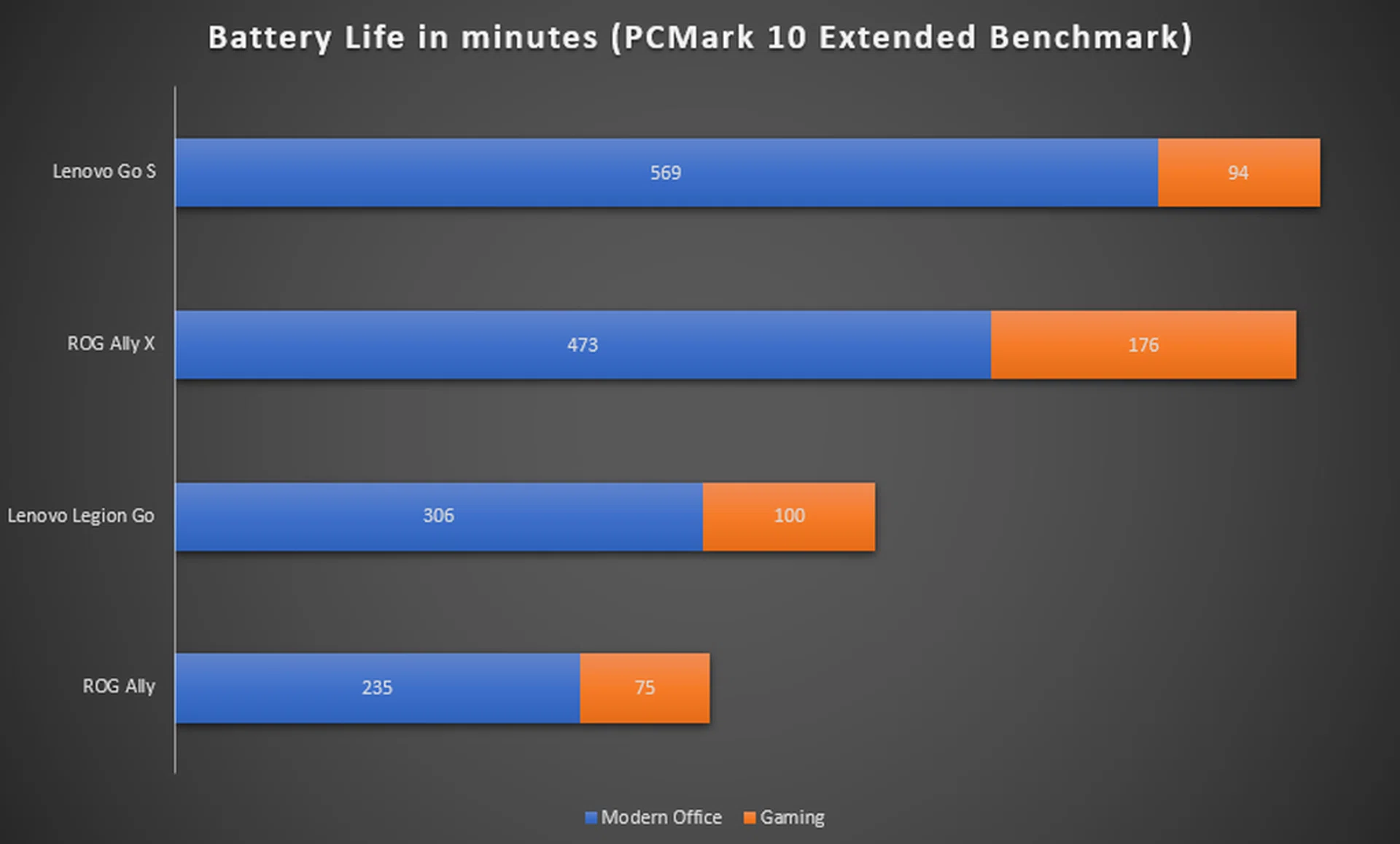
Image: HWZ
Battery life is another sore point from my experience, where it scored just 75min in our PCMark Extended gaming battery life test. The silver lining here is that the Legion Go S lasted the longest when it comes to non-gaming tasks – such as web browsing and productivity – but that kind of go against the concept of a dedicated gaming handheld. In any case, you’re better off checking emails on your smartphone or tablet.
Final thoughts
Photo: HWZ
In the end, I thought that the Lenovo Legion Go S is a stark reminder of how ambition can be constrained by compromise. In its bid to offer a more affordable entry into the handheld gaming market, Lenovo perhaps cut too deeply by choosing the Ryzen Z2 Go processor and scaling back its design compared to the original Legion Go. Our benchmark numbers speak for themselves: contemporary games will struggle on the Go S, where the ROG Ally X and even the original Legion Go handle them with far greater ease. Its subpar battery life when gaming, sluggish performance, and lack of robust optimisation further distance it from the competition. While it aims to cater to budget-conscious gamers looking for a Windows-based gaming handheld, it simply doesn’t hold up against the stronger, more capable offerings from ASUS and even Lenovo’s own stable.
Our articles may contain affiliate links. If you buy through these links, we may earn a small commission.