
Gainward Radeon X1950 PRO 512MB Golden Sample
Gainward marks its comeback to the Asian market with its first ever ATI product. And what could be more appropriate than to launch a Golden Sample of ATI's hottest property now, the Radeon X1950 PRO. Find out if Gainward manages to get the full potential out of this overclocked 512MB version.
Gainward Goes Red
Everyone knows about Amazon.com, the giant online retailer that has almost anything you want, from books to music to even groceries. When it comes to the hardware that makes tech enthusiasts go wobbly at the knees, the equivalent has to be Newegg. Naturally it has also become one of our main sources for product pricing and availability. It was also where we first turned to when we wanted a rough estimate of how ATI's Radeon X1950 PRO was doing in the retail market.
Our gut feeling was that the Radeon X1950 PRO was faring reasonably well in the market but of course, we had to have at least some market figures to back that up. So off to Newegg we went and the ATI reference Radeon X1950 PRO was actually on the retailer's top sellers list. It wasn't clear if its list was ranked in order, but the Radeon X1950 PRO was on the first page of that list and the eighth entry from the top (at the point of writing this article). That certainly seems to suggest that sales of the card should be quite respectable. There were also up to 20 different models of the Radeon X1950 PRO available on Newegg, only slightly lesser than the 22 entries for its main rival, the NVIDIA GeForce 7900 GS. That seems to be an indication of the popularity and availability of this graphics card among many vendors, which is quite unlike the previous SKUs where we've seen offerings only from the usual ATI add-in-board (AIB) partners.
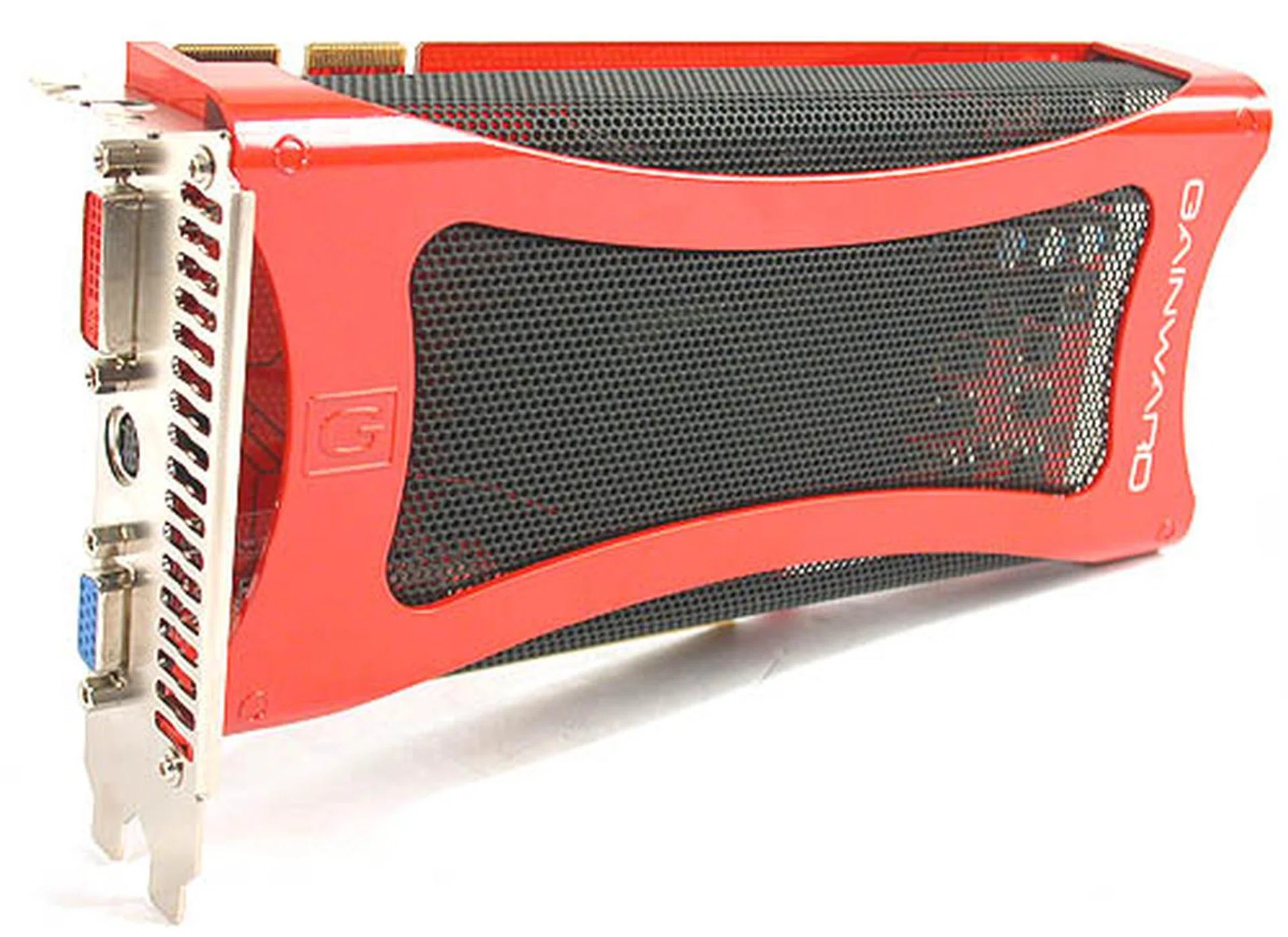
And the list of vendors offering the Radeon X1950 PRO is set to increment by one more, as ATI seems to have managed to get Gainward onboard this bandwagon. It's quite the coup as Gainward has only ever sold NVIDIA products. Whatever the reasons for joining the ATI fold, ATI fans will now get to experience the vendor's daring, overclocked Golden Sample graphics cards. In fact, we have just that card in our labs now and as we expected, Gainward has bolstered the reference Radeon X1950 PRO - it's overclocked and has 512MB of DDR3 memory. Here's a look at the striking Golden Sample version of the Radeon X1950 PRO from Gainward:
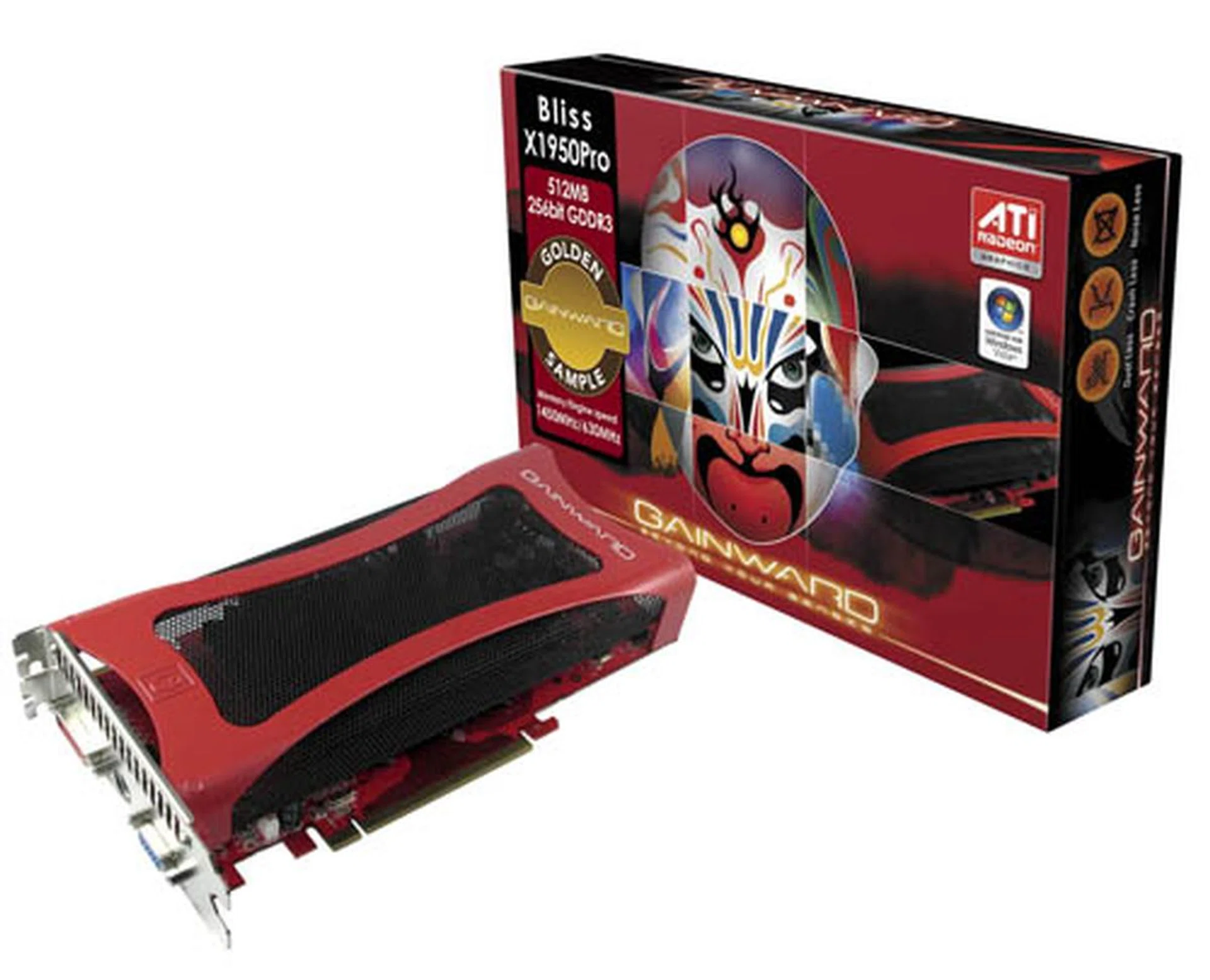
This Golden Sample is so new that it's not even on Gainward's website yet. Here's the retail packaging courtesy of Gainward.
The Gainward Radeon X1950 PRO 512MB Golden Sample
Now we all know that ATI has gone 'green' after AMD's acquisition but for us, it will always stay as the 'red team'. Perhaps Gainward shared the same sentiments for its first offering from ATI, as the Golden Sample Radeon X1950 PRO 512MB comes in a stylish red. A wire meshed plastic shroud covers the two-slot custom cooler. Gainward believes that the shroud will reduce the dust accumulation on the fan but that merely diverts the dust build up to the shroud. However we must admit that it should be easier to clean the shroud alone. The cooler was reasonably quiet though we have to admit that the Arctic Cooling designed Accelero on PowerColor's version was just a tad quieter. Gainward has also extensively revamped the layout of the components on the PCB meaning that you shouldn't be alarmed if some capacitors or other components seem to be in the wrong place from the other competing products.
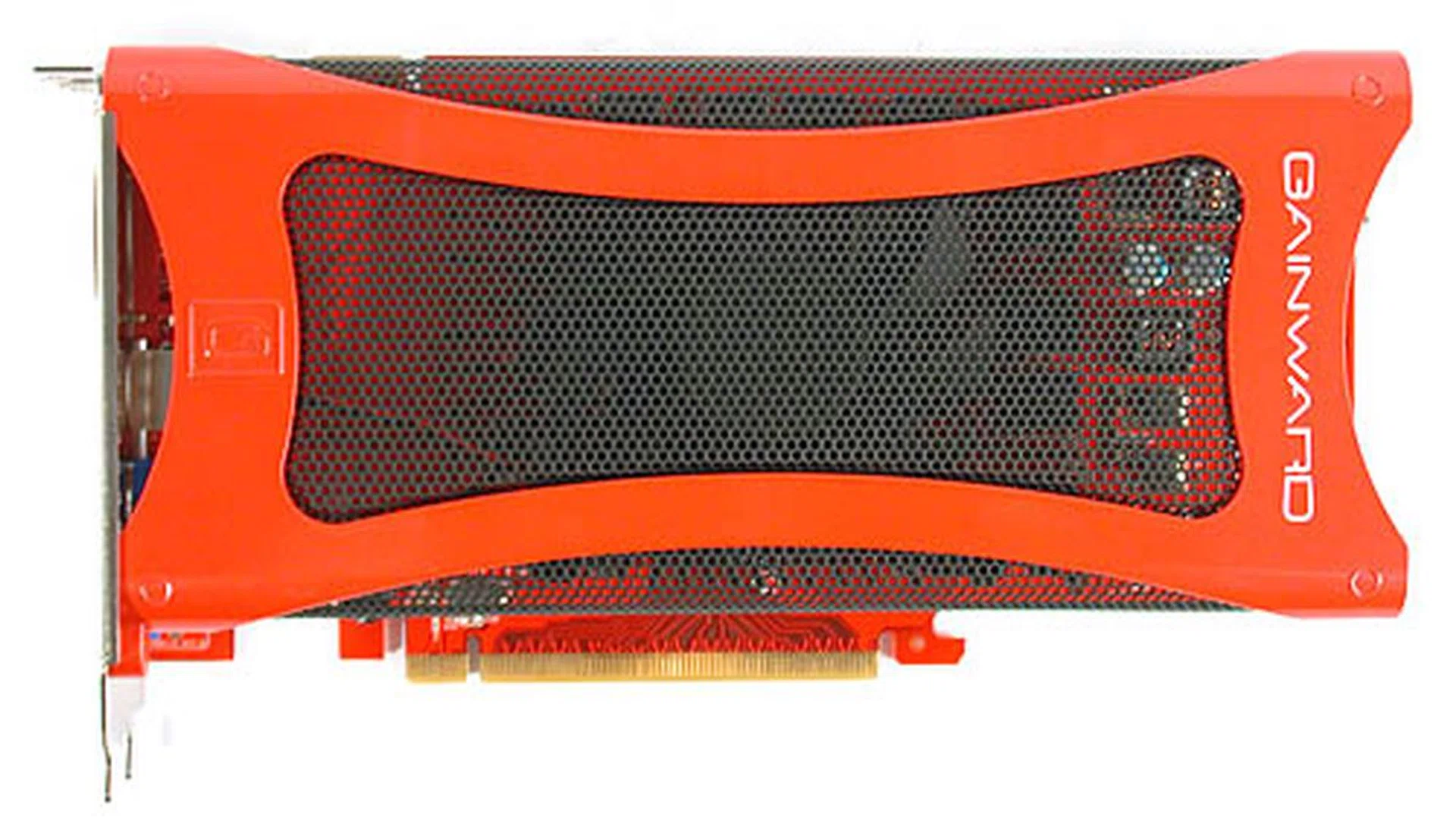
A wire meshed shroud covers most of the card. Beneath it we found a typical heatsink and fan combo. No heat pipes for this card.
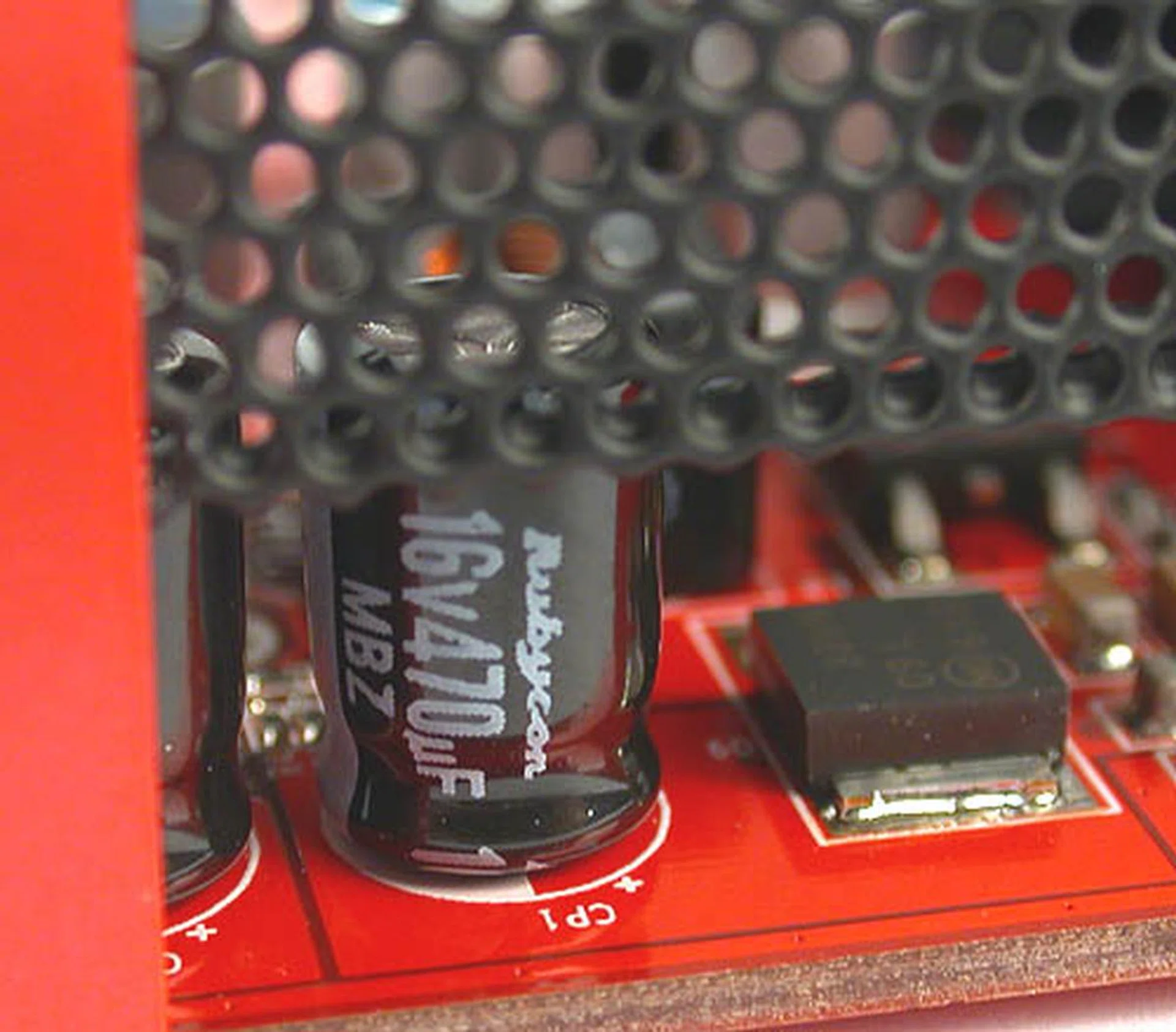
While the reference Radeon X1950 PRO favored solid capacitors, the Gainward has a mix of solid and Rubycon capacitors.
When it comes bearing the Golden Sample name, you know it means business. This Gainward Radeon X1950 PRO boasts the highest default clocks that we have seen so far. The core (ATI's 80nm RV570) is clocked at 630MHz, which is more than the maximum Overdrive option found on the reference model. The frame buffer has been doubled to 512MB. Increasing the memory size will not dramatically improve performance for most games and settings (unless you game at very high resolutions) so in addition to that, Gainward has upped the memory clock speeds from the standard 1380MHz to 1450MHz DDR. Gainward has also gone for the faster and more expensive 1.0ns rated memory chips instead of the 1.4ns that we found on the reference card. It all makes for a very aggressive Radeon X1950 PRO, at least on paper.
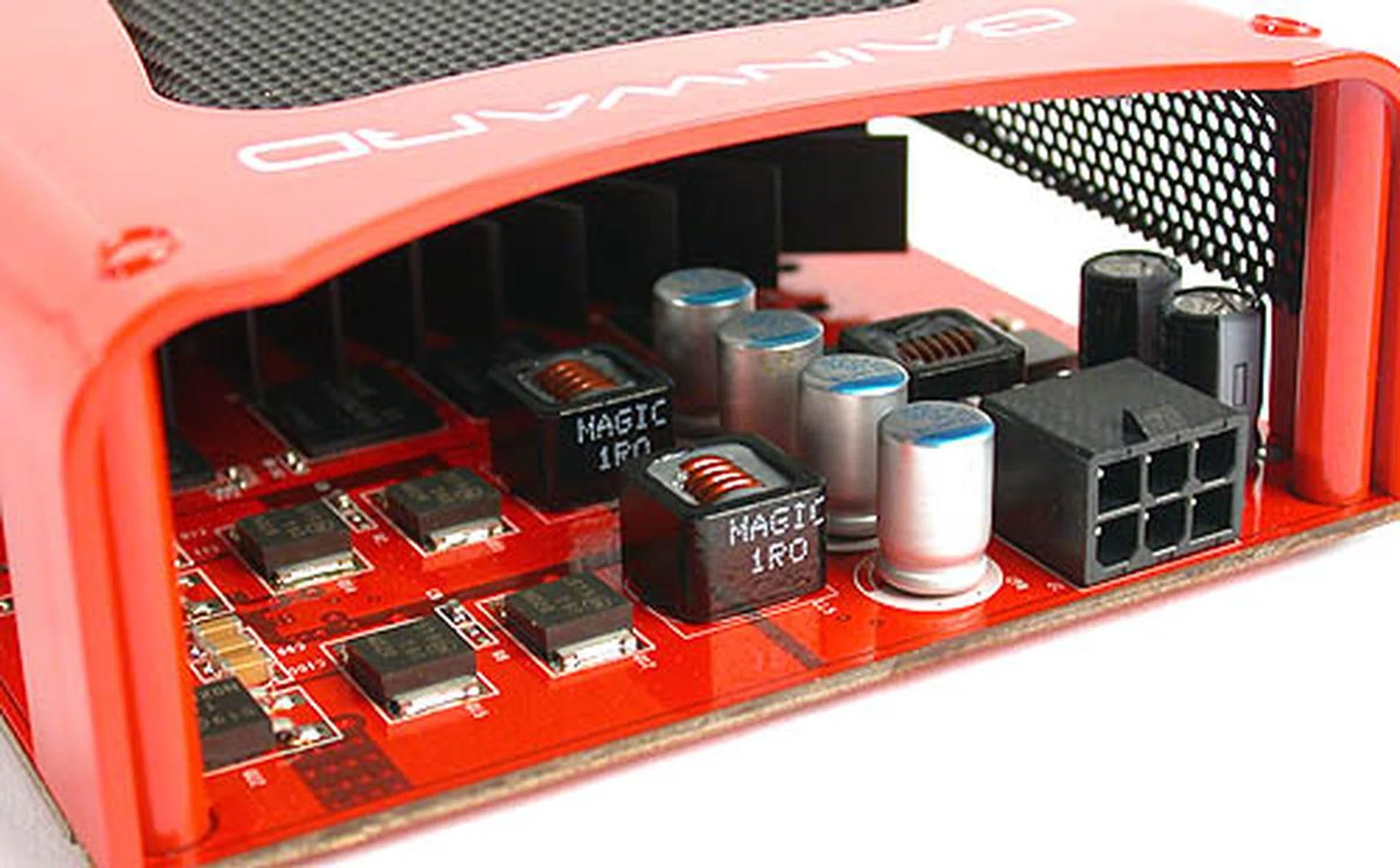
Compared to the reference model, Gainward has redesigned the layout of the PCB for this Radeon X1950 PRO.
Gainward seems to have sacrificed some features that some may consider standard for high-end Radeon cards. This includes the lack of a Rage Theater ASIC, which allows for video capturing functionality. There is precedence however for such a move as the chip is only found in the premium editions of the Radeon X1950 PRO from other vendors. What's less common is the substitution of one DVI output with an analog VGA output. To us, this seemed a throwback to the previous generation but all things considered, it's probably not going to affect most users. If Gainward did so to reduce production cost, we hope that consumers may benefit from this.
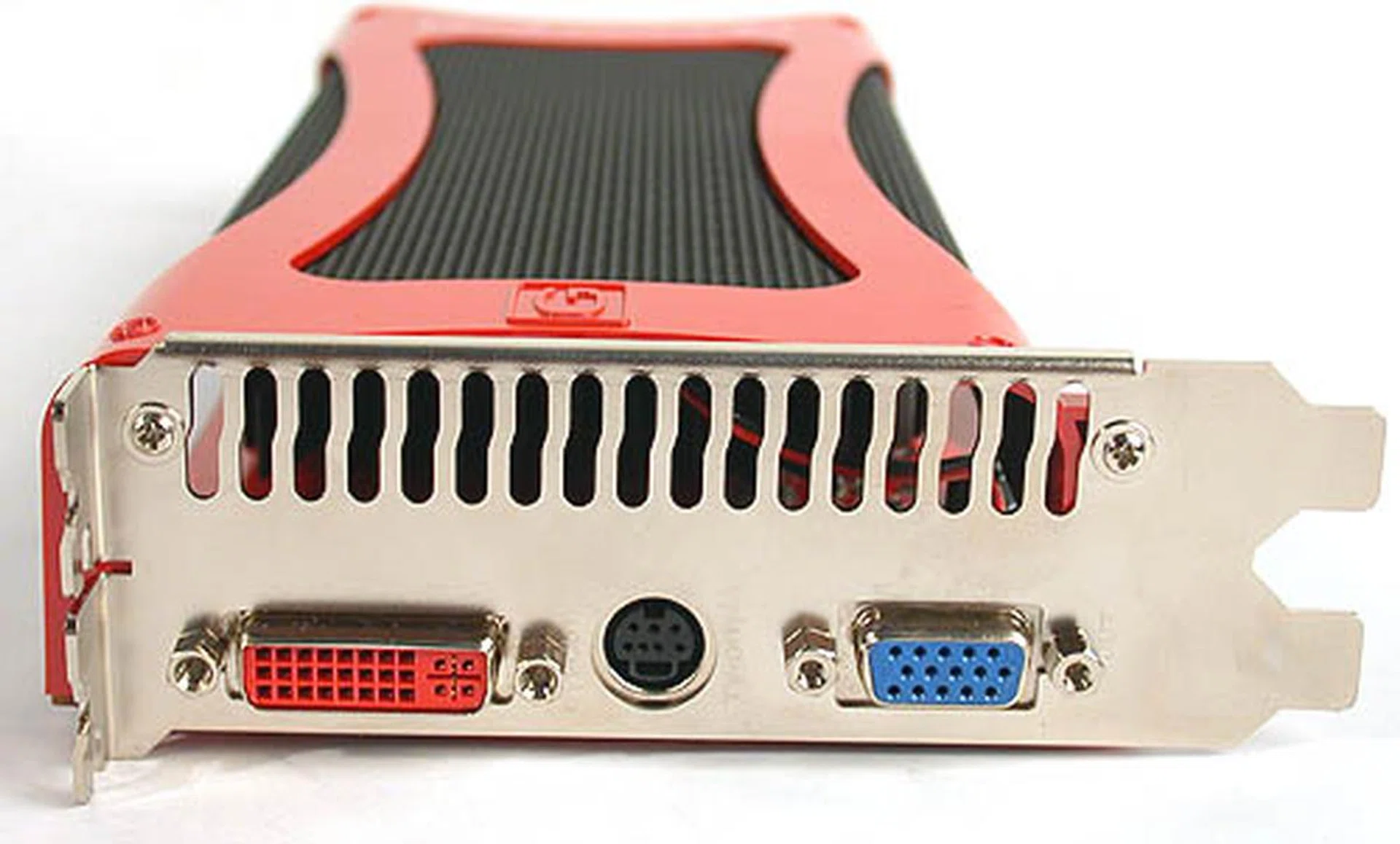
The standard model has a pair of HDCP supported dual-link DVI outputs but it seems that Gainward only provided one. The other is the older VGA analog output and seems like a step backwards. However, we believe many end-users would still be glad with just one DVI port.
There wasn't much in the way of software applications on the Gainward. For a card targeted at enthusiasts, there was no game but Gainward did bundle the useful CyberLink DVD Solution suite. We reckon the cost factor was the main reason why the bundle was kept modest and lean with just the usual accessories. There was also a CrossFire bridge, an item that some vendors have been skimping on for their budget editions of the Radeon X1950 PRO. Here are the items we found in the package:
- 1 x DVI-to-VGA adaptor
- 6-pin Molex power connector
- 9-pin mini-DIN to Component dongle
- S-Video extension cable
- CrossFire bridge
- CyberLink DVD Solution suite
Test Setup
The Gainward Radeon X1950 PRO Golden Sample 512MB was tested on an AMD rig consisting of an Athlon 64 FX-55 (2.6GHz) processor, a MSI K8N Diamond Plus motherboard and two sticks of DDR400 low latency memory from Kingston in dual channel mode. The hard disk of choice was a Seagate 7200.7 SATA, on which we installed Windows XP Professional before patching to Service Pack 2 and DirectX 9.0c.
As we have mentioned on a few occasions, ATI did not have the proper generic drivers for the Radeon X1950 PRO available for download on its website initially. Hence, users and hardware reviewers alike had to rely on the bundled drivers that came with the product. Therefore, there were minor differences in the driver versions that we used to test our Radeon X1950 PRO cards. This problem has since been resolved and the bundled driver included with the Gainward was the downloadable standard Catalyst 6.12 and that was the driver that we used for this card. The older cards in the comparison, like the ASUS and PowerColor were on modified Catalyst 6.9 drivers and so was the MSI, which was using driver version 8.292. For the NVIDIA GeForce 7900 GS, it was tested with ForceWare 91.47. The following benchmarks were tested:
- Futuremark 3DMark05 (ver. 120)
- Futuremark 3DMark06 (ver. 102)
- Tom Clancy's Splinter Cell: Chaos Theory
- F.E.A.R
- Chronicles of Riddick: Escape from Butcher Bay
- Quake 4
Results - 3DMark05 Pro & 3DMark06
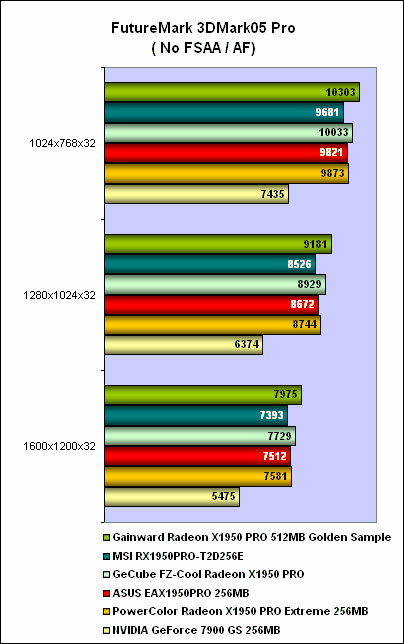
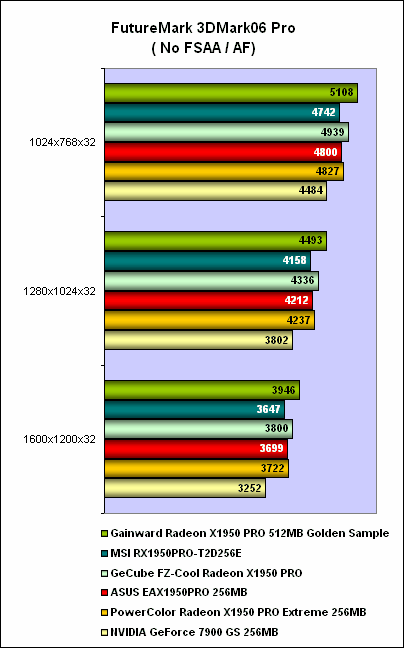
Having seen its upgraded specifications, how would the Gainward perform in benchmarks? We got our first clue to its performance in 3DMark, the popular benchmarking suite. In 3DMark05, we pitted the Gainward against some of its fellow peers, including a 512MB contemporary in the GeCube FZ-Cool, and the Gainward was around 3% faster than the GeCube. It was also about 7% faster than the MSI, which ran at default clock speeds. This gap was maintained when we moved to 3DMark06 and although the GeForce 7900 GS improved dramatically from 3DMark05, it was some distance behind.

Results - Splinter Cell: Chaos Theory & F.E.A.R (DirectX 9 Benchmarks)
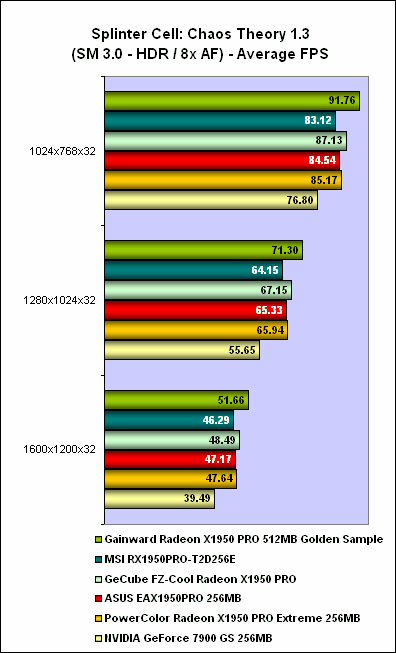
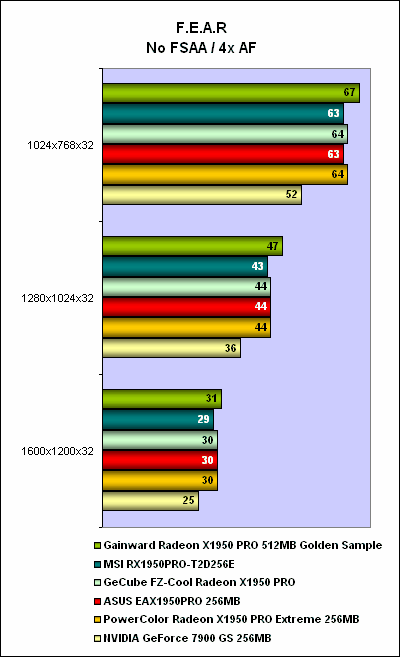
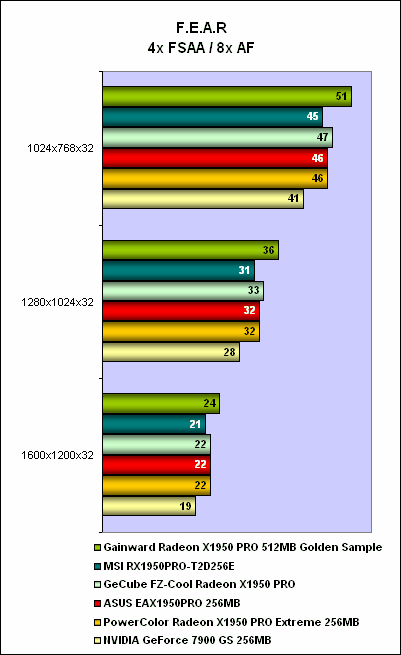
The Gainward was around 5 to 6% faster than the second placed 512MB GeCube in Splinter Cell. Translated into actual frame rates, this varied between 3 to 4 frames per second, going up to 8 frames if we compared the Gainward to the reference clocks. Again, this margin of around 6% remained for F.E.A.R, though the difference in frame rates is less emphatic when there was no anti-aliasing. With anti-aliasing, this margin was almost doubled to 13%. Therefore, turn on the eye candy effects to get the most out of this card.
Results - Chronicles of Riddick & Quake 4 (OpenGL SM2.0+ Benchmarks)
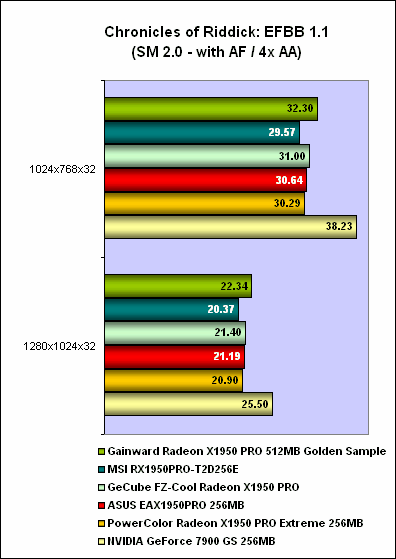
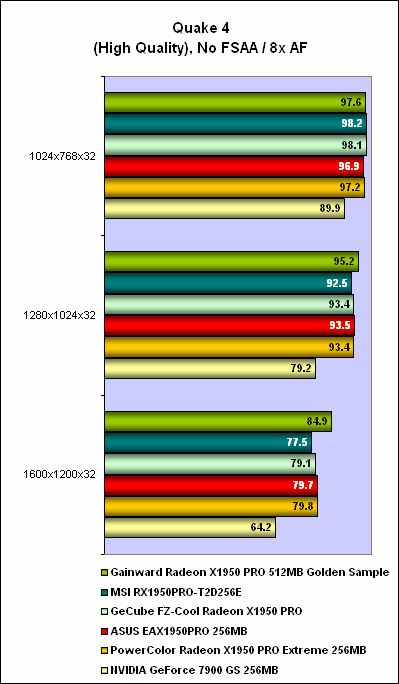
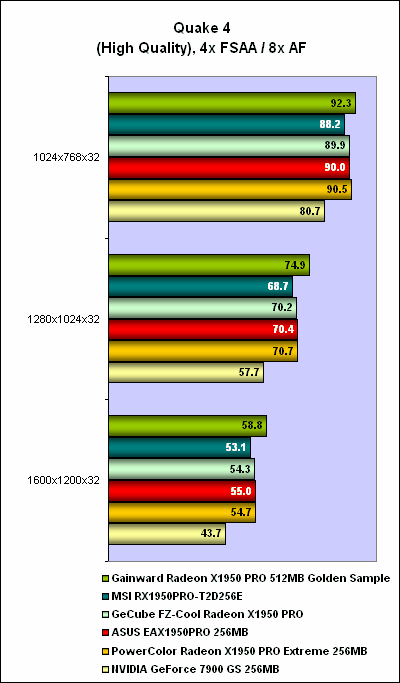
As usual, the ATI cards all fared poorly in Chronicles of Riddick and the Gainward was not immune to this OpenGL weakness. It was still the fastest Radeon X1950 PRO in our comparison but lagged behind even the GeForce 7900 GS. Quake 4 was where parity was restored and while all the cards performed similarly at the lower resolutions, the Gainward gradually pulled away and at 1600 x 1200, had a 7% lead over the closest contender.

Temperature Testing
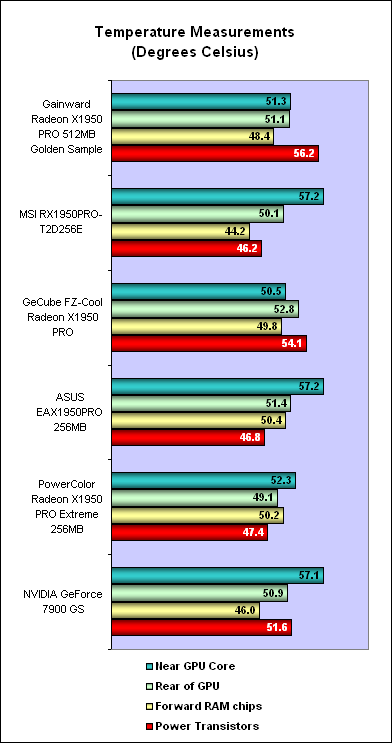
Overclocked it may be, but the temperatures on the Gainward were quite in line with other Radeon X1950 PRO cards. The power transistors were on the high side but generally we had no complaints with the heat, especially since the cooler was also relatively quiet.
Overclocking
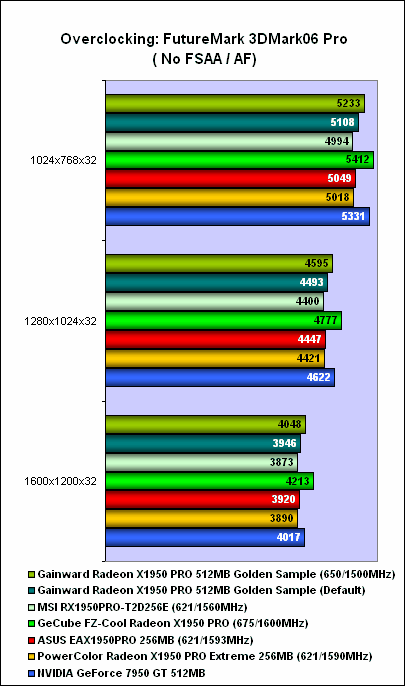
In case you're wondering, the Gainward may stand a chance against the standard GeForce 7950 GT 512MB. But that's only if you push the Gainward to its maximum of 650/1500MHz and only at a high resolution of 1600 x 1200. With the many overclocked GeForce 7950 GT cards in retail, we doubt that the Gainward would make any headway against those. Against other Radeon X1950 PROs, the Gainward was faster than all except for the unique and expensive GeCube, which remains our top overclock so far. Strangely, Overdrive option for the Gainward did not allow us to go beyond 1500MHz for the memory, a clock speed that the other cards managed easily. If you happen to have a third party overclocking tool that works properly for the Radeon X1950 PRO (which amazingly some popular tools don't yet support it), you should definitely get a higher memory clock than we did.
Conclusion
With so many vendors taking the easy way out and simply slapping their stickers on the reference model from ATI or NVIDIA, it is refreshing to find Gainward doing some actual work in designing this Golden Sample card. To be fair, the Radeon X1950 PRO SKU has had more than its share of custom cooler designs so the vendors have certainly put in some effort. However, Gainward has trumped all with this new card. Coming from the company that counts XpertVision and Palit as 'family', this makeover was not only typical but expected. We may not be completely persuaded with some of the decisions, like the loss of a DVI output but ultimately, we are swayed by the aggressive overclock and buffed up memory. Obviously Gainward knows what buttons to push to get the enthusiasts all fired up.
Bolstered with 512MB (though the impact of the extra memory is marginal at best for most settings) and faster overclocks than the competition, the Gainward Radeon X1950 PRO merits its Golden Sample billing.
Is the performance of the Gainward worth the sacrifices? That would depend on the individual but given that most users still only have one monitor, we would say yes. Unless you're the power user who needs dual monitors for imaging or video editing. For the hardcore gamers, one giant display is probably the choice and the single dual-link DVI output is adequate for this purpose. Performance is the more pertinent criteria and the Gainward delivers up to 13% more than the reference model, while edging other premium models by at least 3%. These advantages however usually come into play at higher resolutions and settings so keep that in mind for these overclocked premium models.
The Gainward Radeon X1950 PRO Golden Sample also marks the return to the Asian market for the company, which has in recent times focused exclusively in Europe. While we have occasionally received review units from Gainward, we always have to leave out the availability information because it was quite unlikely that you can find the product in Asia. Fortunately, with a new and capable ATI product like the Radeon X1950 PRO to spearhead the return, we have high hopes for its success, especially in the enthusiast segment. The Golden Sample brand has been dormant for too long and this Radeon X1950 PRO will remind us of what we have been missing. Besides its performance, Gainward has also ensured that it is price competitive with other 512MB variants by listing it at US$265.
While competitive and in fact better than many other Radeon X1950 PRO cards of its class, pure performance seekers might also want to note that there are better alternatives abound. The Radeon X1900 XT and X1950 XT should be attainable for not much more. On NVIDIA's turf, the GeForce 7950 GT is more than a match for the Radeon X1950 PRO at no additional cost. As such, the Gainward Radeon X1950 PRO 512MB Golden Sample is positioned precariously at the moment, but if its shelf price drops below the SRP, it should look more appealing in our opinion. So keep a look out for it when it gets listed in your favorite PC components retailer.
Our articles may contain affiliate links. If you buy through these links, we may earn a small commission.