
ECS NFORCE 570 SLIT-A (NVIDIA nForce 570 SLI Intel Edition - Core 2 Ready)
CS has updated their exceptional budget board - the C19-A SLI - with new Core 2 Duo support. Tagged as the NFORCE 570 SLIT-A, it gets a new name, but it is essentially the same board beneath. If you need SLI support on the cheap, this may be a good place to start your hunt.

Introduction
It seems very nostalgic to say so, but back in the Pentium 4/Pentium D days, NVIDIA's nForce 4 family of chipsets proved to be the top choice, besting even Intel's own 955X/975X Express chipsets in terms of raw performance and overclockability. NVIDIA launched the successor to the nForce 4 earlier this year, but the new nForce 500 series was initially only available for the AMD platform with Intel Editions 'on the way'. Now with all the attention around Intel's new babies - the Core 2 processor and Broadwater chipset - it has been a while since we've seen NVIDIA's chipsets in the limelight. So comes into play ECS' new NFORCE 570 SLIT-A (rev 5.1) motherboard. As its name implies, it is based on the nForce 570 SLI Intel Edition chipset.
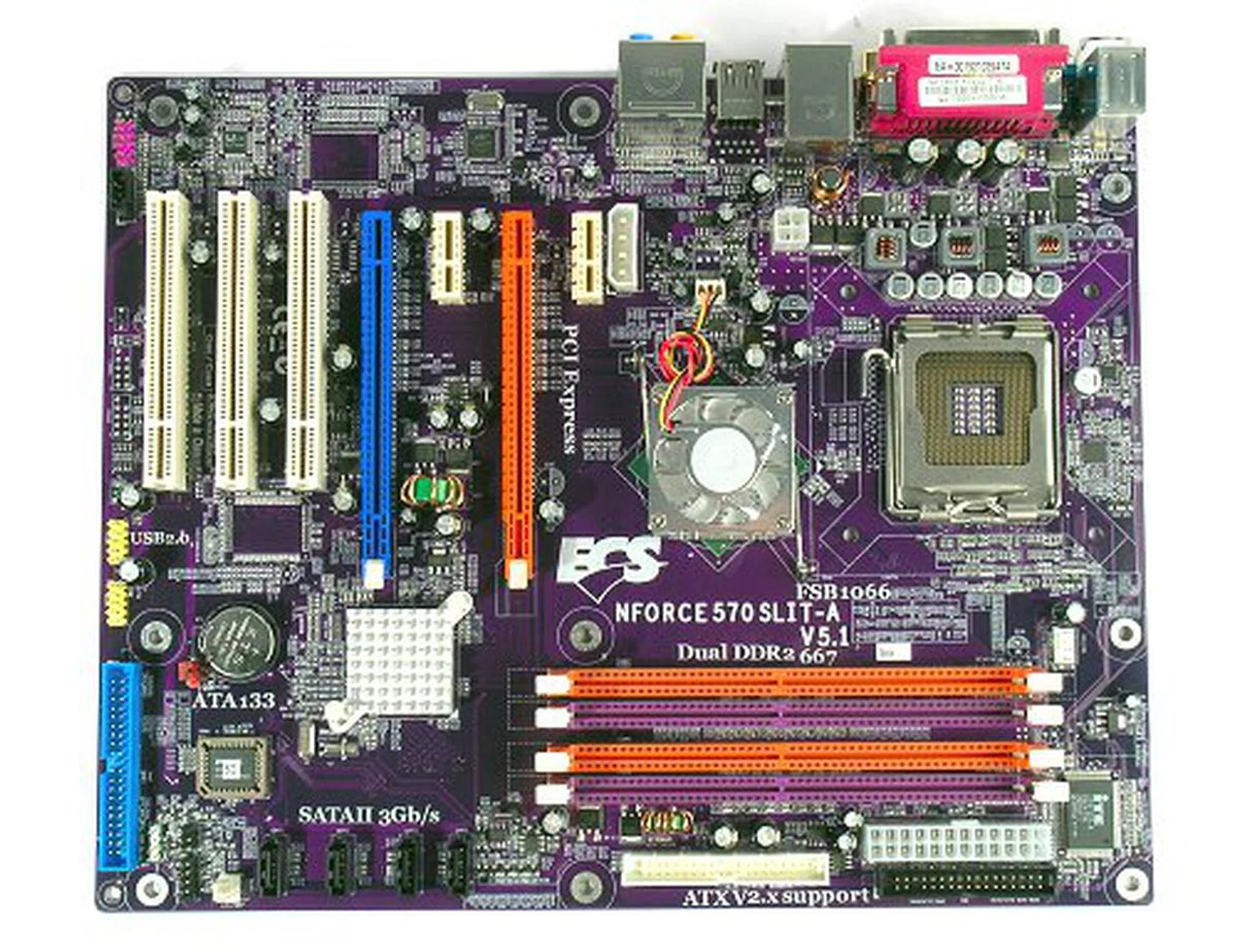
The ECS nFORCE 570 SLIT-A motherboard.
The following table lists the bundled peripherals and technical specifications of the ECS NFORCE 570 SLIT-A motherboard:-
- 1 x SATA data cable
- 1 x SATA power converter cable
- 1 x 80-conductor Ultra ATA data cable
- 1 x floppy drive data cable
- SLI high-speed digital link interface bridge
- I/O shield
- Driver CD
- User's manual
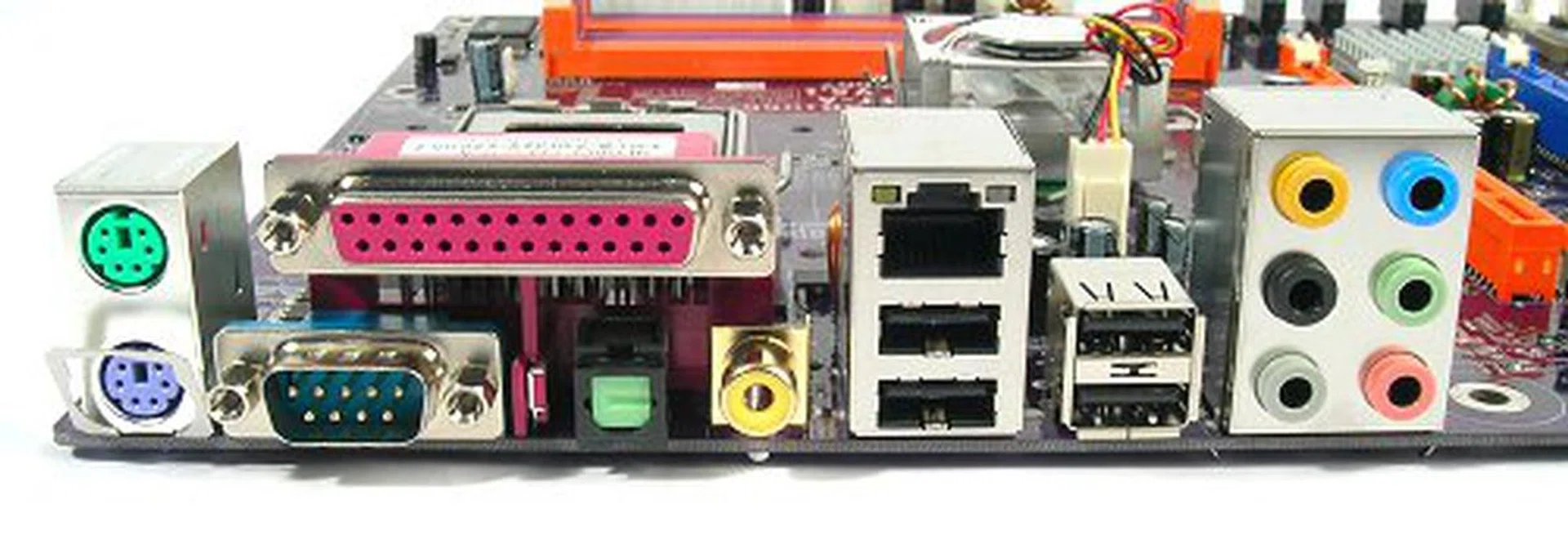
For an entry level board, the nFORCE 570 SLIT-A has a nicely featured rear panel with S/PDIF. Gigabit LAN, USB 2.0, analog surround sound and the usual legacy ports.
Features
To clear things up right at the beginning, the nForce 570 SLI Intel Edition is basically a re-badged nForce 4 SLI XE. As such, the ECS NFORCE 570 SLIT-A is quite essentially the same board as the C19-A SLI that we've reviewed before, complete with the same MCP51 Southbridge (nForce 430) and C19XE Northbridge (nForce 4SLI SPP). The only differences seem to be the use of the C19 A3 revision chipset and the design to support Core 2 CPUs. The C19XE Northbridge is capable of running single PCIe x16 or dual PCIe x8 for SLI configurations. However, much like how ECS has engineered their boards before, they've locked the PCIe lanes into x8 mode. Cost is lowered, but this also means that users will be running at PCIe x8 even with a single GPU.
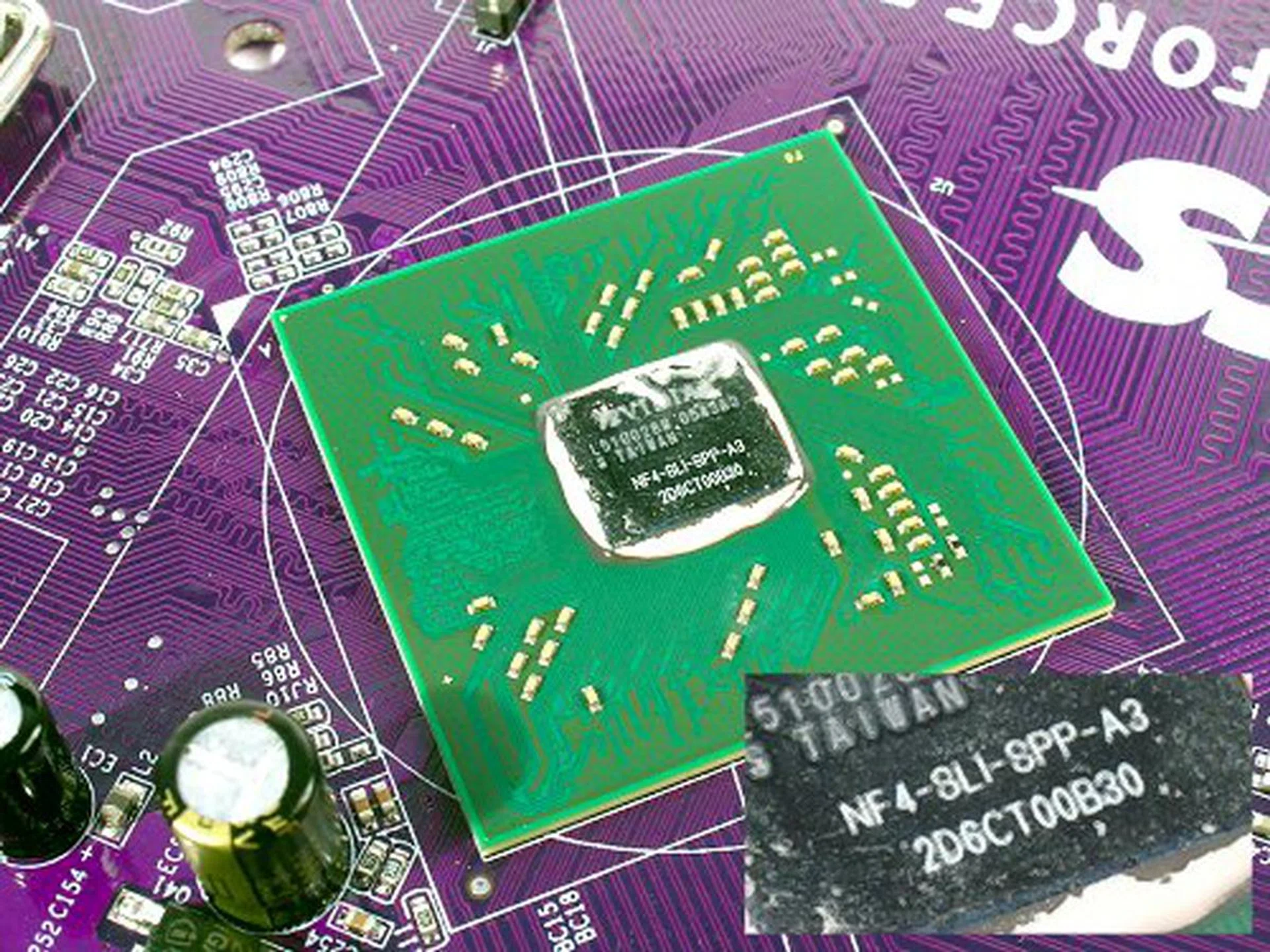
Pop open the SPP cooler and you'll notice the same nForce 4 SLI Intel Edition SPP onboard, also known as the C19XE or C19 rev. A3.
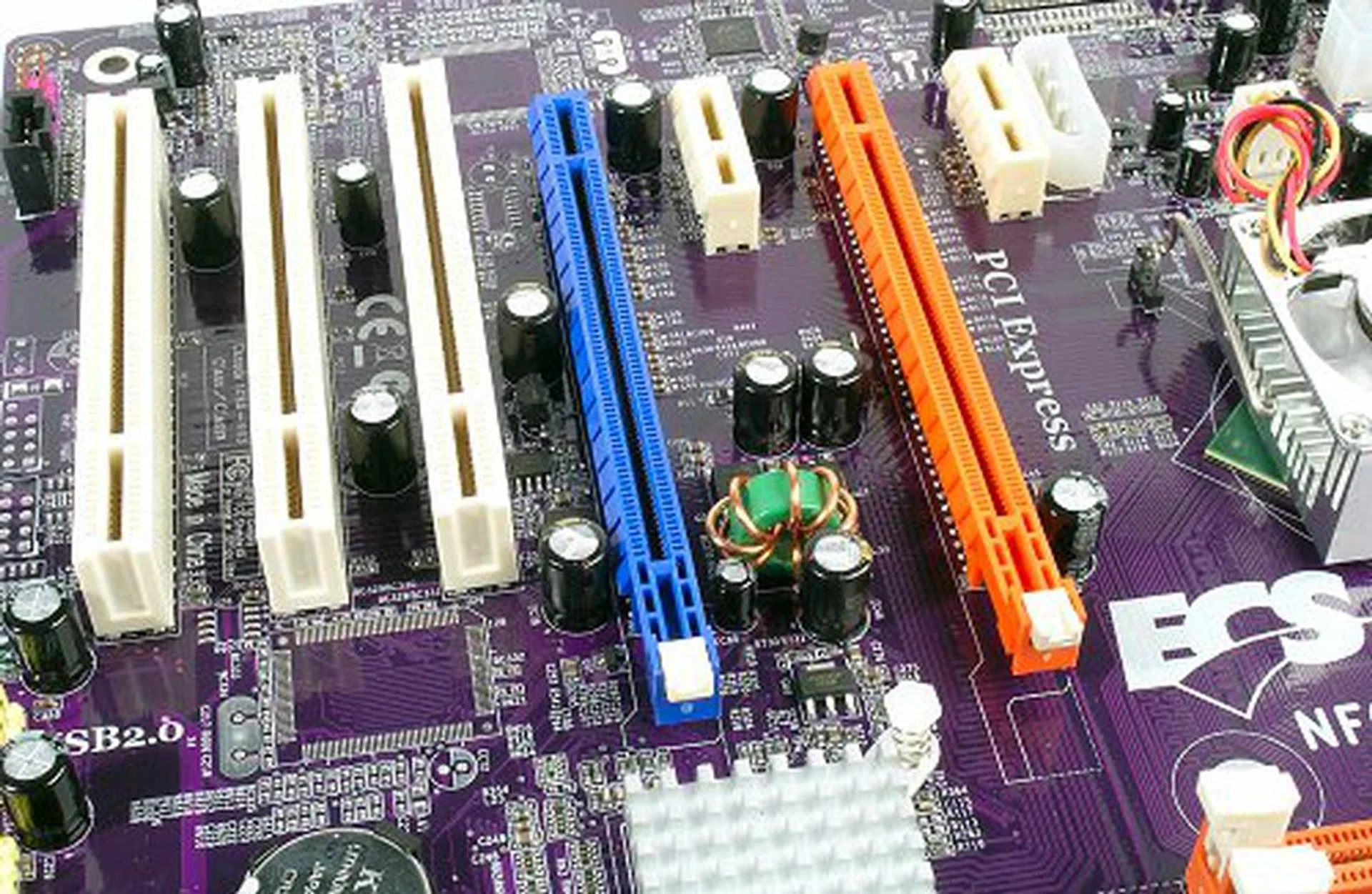
SLI capable dual PCIe x16 slots are locked at PCIe x8, hence the lack of any switching mechanism.
One other thing to take note of is memory support of the NFORCE 570 SLIT-A. Officially, the nForce 570 SLI (C19 chipset) only supports up to DDR2-667, which doesn't look too hot when you consider that mainstream Core 2 chipsets these days can feature DDR2-800. However, with NVIDIA's DualDDR2 Memory Architecture, the scalability of the chipset memory controller has been proven before to work at much higher frequencies. You can read more on the memory compatibility of the board in our benchmarking section on the next page.
The MCP51 Southbridge offers four SATA 3.0Gbps connections supporting NVIDIA's MediaShield technology and capable of RAID 0,1, 0+1 and RAID 5. There are also two IDE channels available. ECS didn't deem it necessary to include any additional storage controllers for more options or eSATA, which has become quite a common sight nowadays. Other features of the MCP include an onboard Gigabit MAC paired with a Marvell 88E1116 PHY, eight USB 2.0 ports and HD Audio. The audio CODEC used here is also identical to that of the C19-A SLI, that being the Realtek ALC883. The inclusion of both coaxial and optical S/PDIF ports in addition to regular analog jacks is a pretty good plus to a value motherboard. There are spaces on the PCB reserved for additional PCI LAN and FireWire ICs, but those are optional items and as far as we know, ECS doesn't have an SKU of the board that has these features by default.
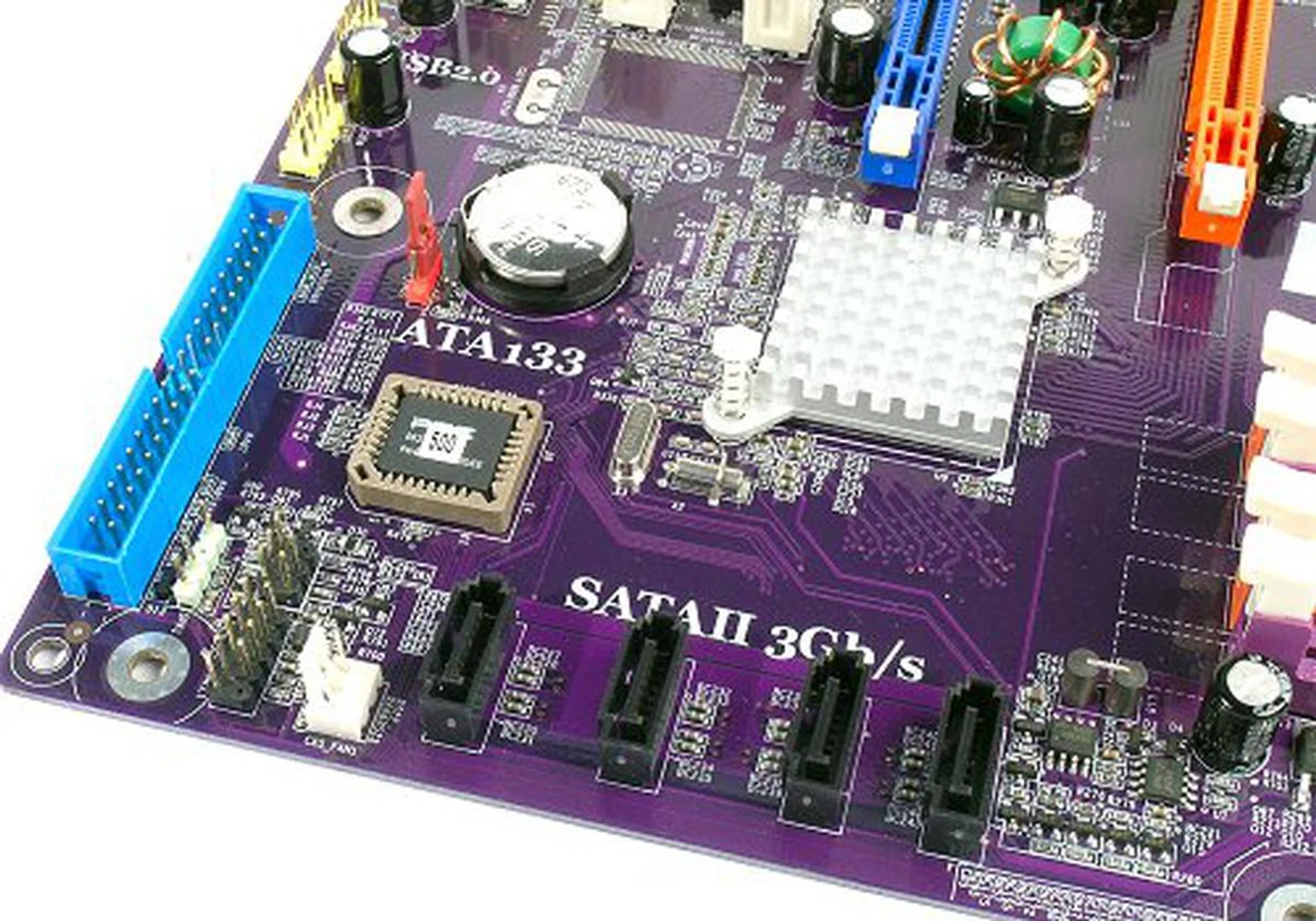
Four SATA 3.0Gbps ports sparsely arranged at the bottom, along with the primary IDE connector.
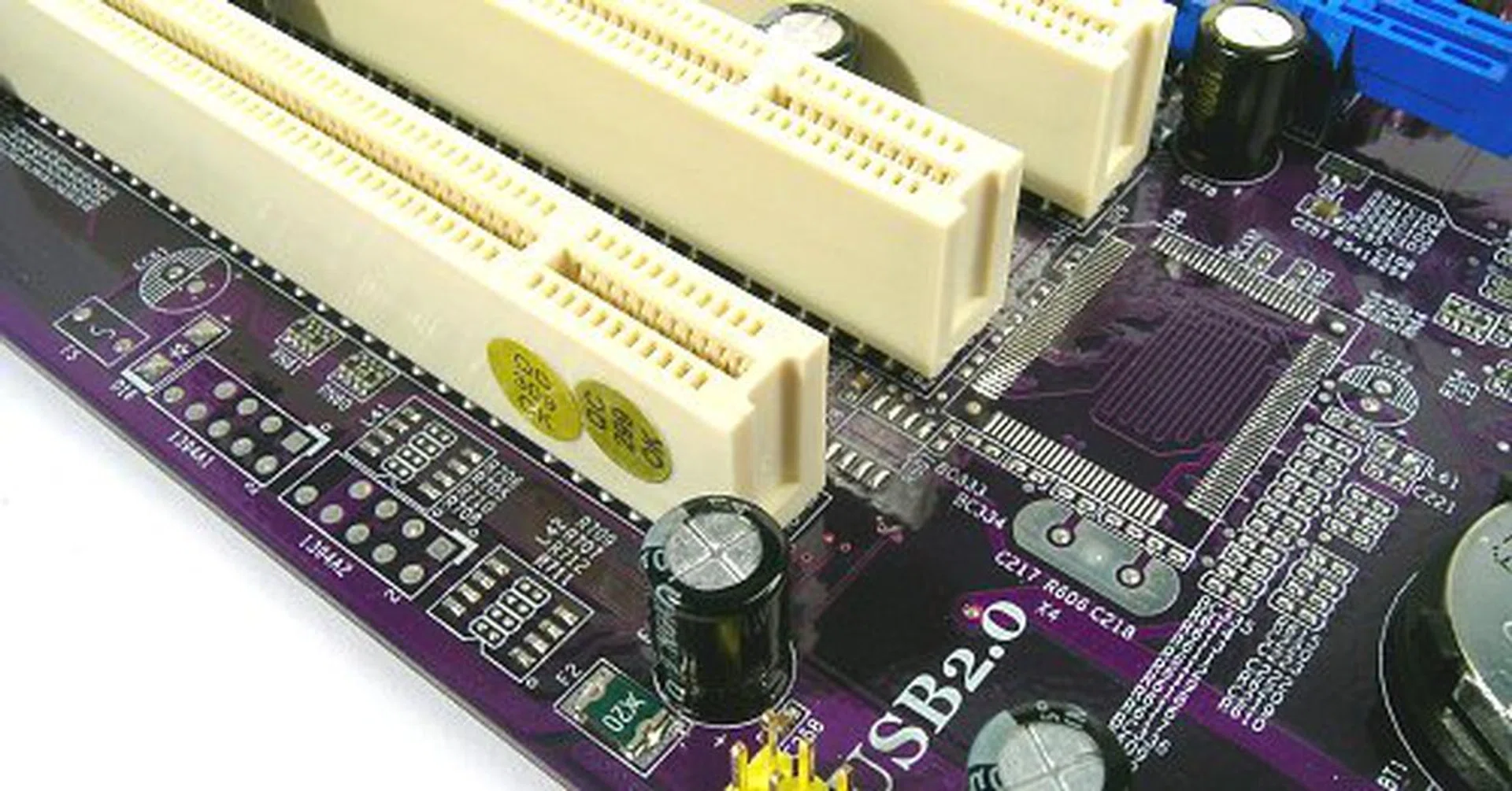
Spacing was reserved for FireWire components, but the board does not come with it.
Layout
The NFORCE 570 SLIT-A follows the design of the C19-A SLI to a tee, which shouldn't be surprising since they are essentially the same. The board looks spacious with most of its components in ideal locations, except we feel that the primary and secondary IDE positions should have been switched around. The board has a low profile cooler that does an OK job and doesn't make too much noise, which is good. The board also has a full complement of expansion slots to make up lack of onboard features and we like how they staggered the PCIe x1 slots so at least one can still be used even if you have dual slotted graphics cards. Mostly, the board feels spacious enough that there shouldn't be a problem with installation or airflow.
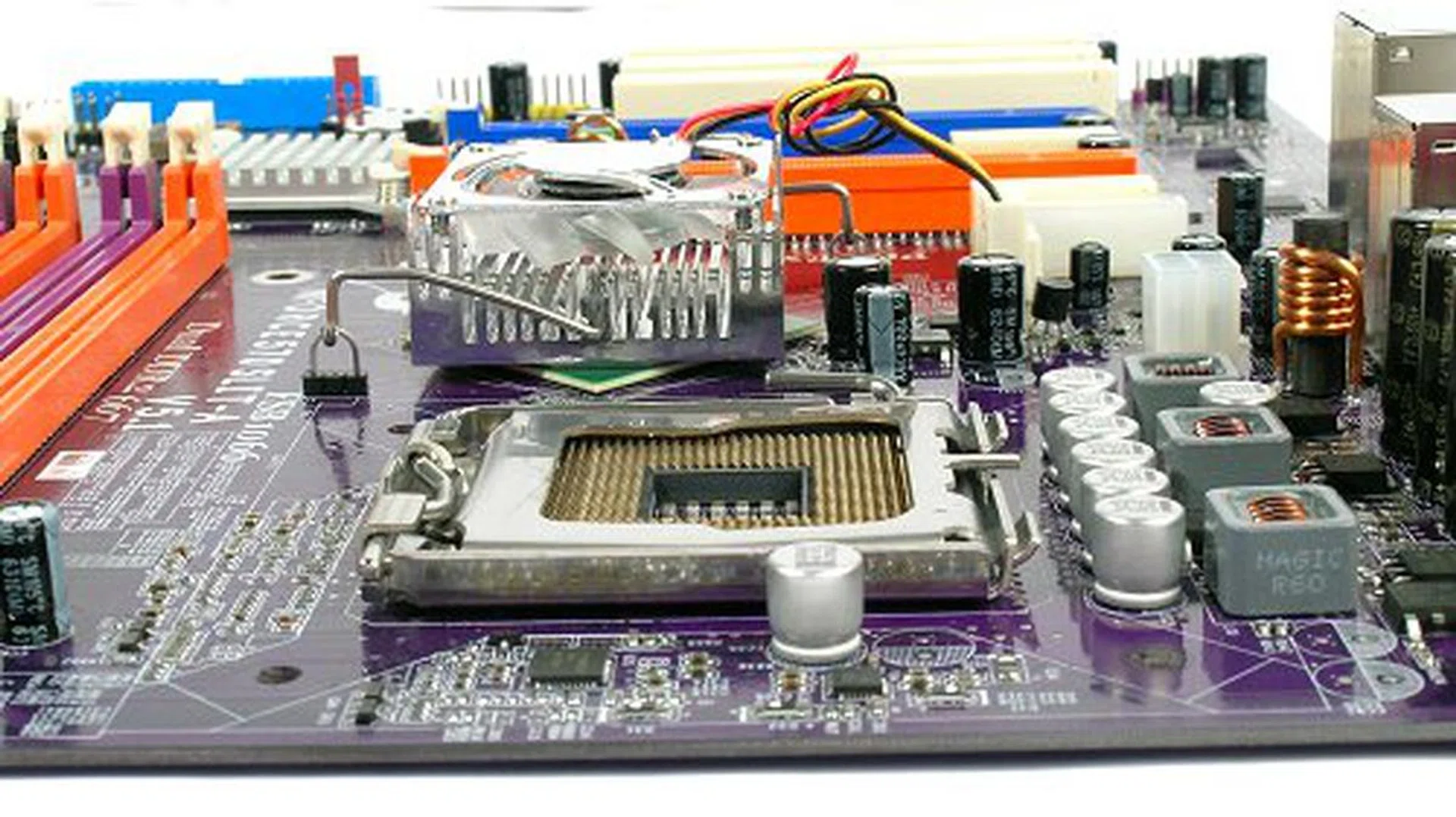
The board features a clean design with low profile components.
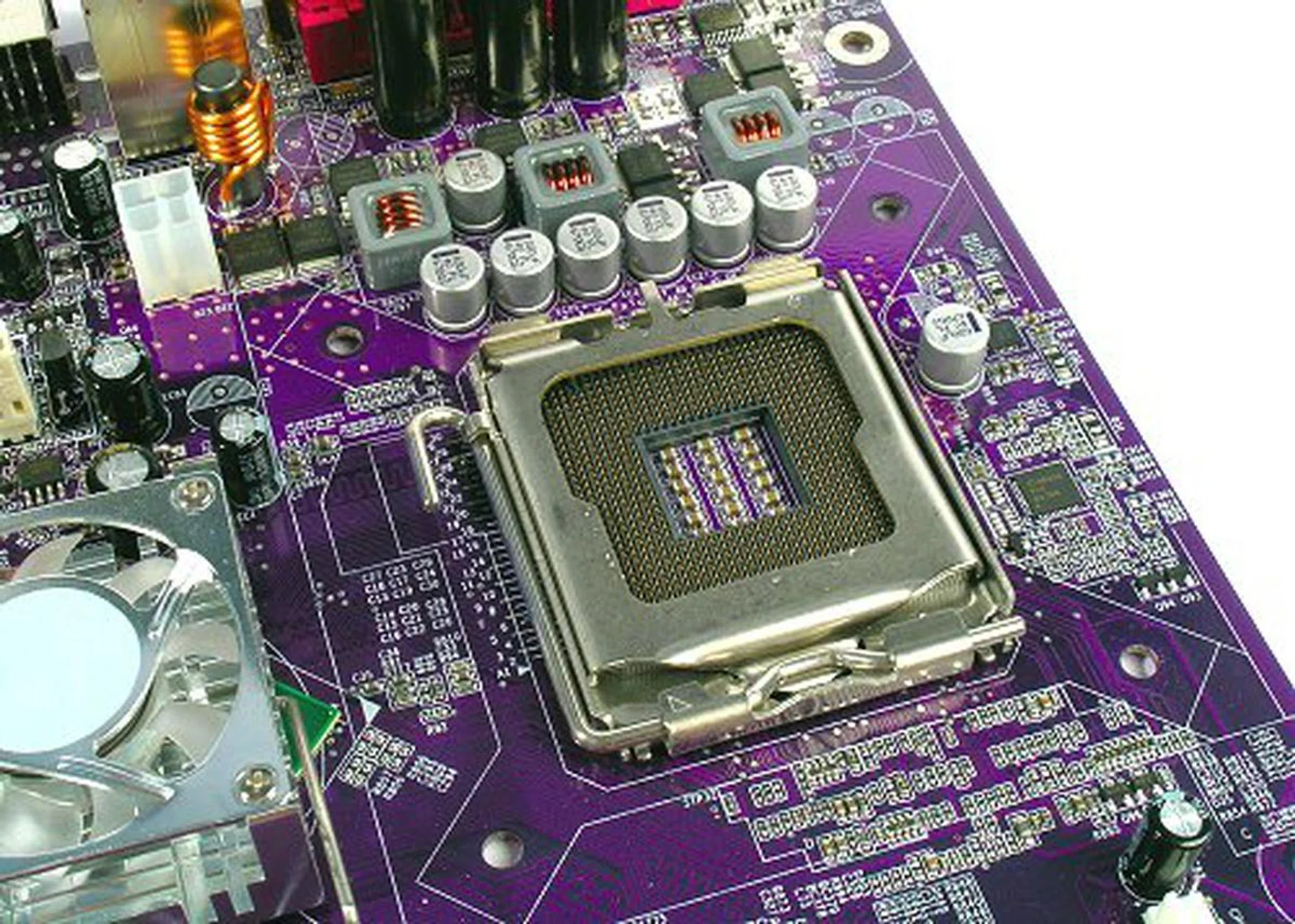
Clear CPU socket area because of the low profile components. Notice that most manufacturers are turning to solid state capacitors, even if it is only for the CPU PWM.
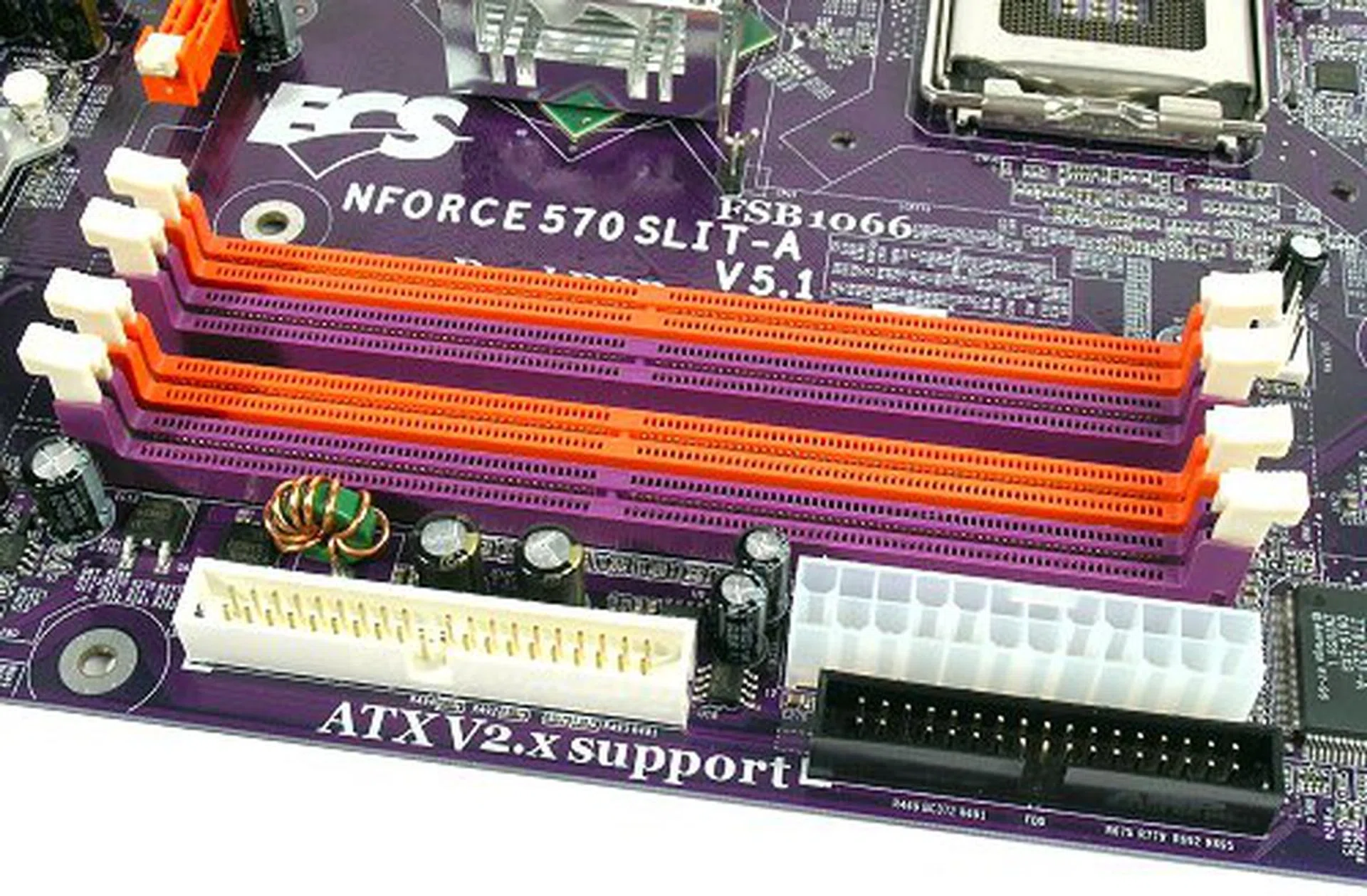
Properly lined up DIMM slots with sufficient spacing, though the white secondary IDE slot should have placed in the lower part of the board.
Overclocking
- FSB Settings: 1066MHz to 1300MHz (266MHz to 400MHz)
- RAM Frequency: 400MHz to 1300MHz
- PCIe Frequency: 100MHz to 148MHz
- CPU Voltage Settings: 1.200V to 1.600V (in 0.0125V steps)
- Memory Voltage Settings: 1.80V to 2.10V (in 0.05V steps), 2.2V
- LDT Frequency: 1x, 2x, 3x, 4x (default)
- Multiplier Selection: Yes (unlocked CPUs only)
The BIOS hasn't really changed much from the C19-S SLI as well and are greeted with the exact same options, down to the frequency and voltage stepping. We did notice a slight quirk with the BIOS; It would sometimes lock up if you change any of the options within the CPU Functions sub-menu. This includes C1E, Thermal and Execute Disable Bit options.
Moving on to our overclocking tests, the NFORCE 570 SLIT-A however, turned out to be an even lower overclocker than the C19-A SLI. In our tests, we maxed out the overclocking on the board at 280MHz FSB (just 14MHz higher than the default FSB), compared to the 298MHz we managed out of the C19-A SLI.
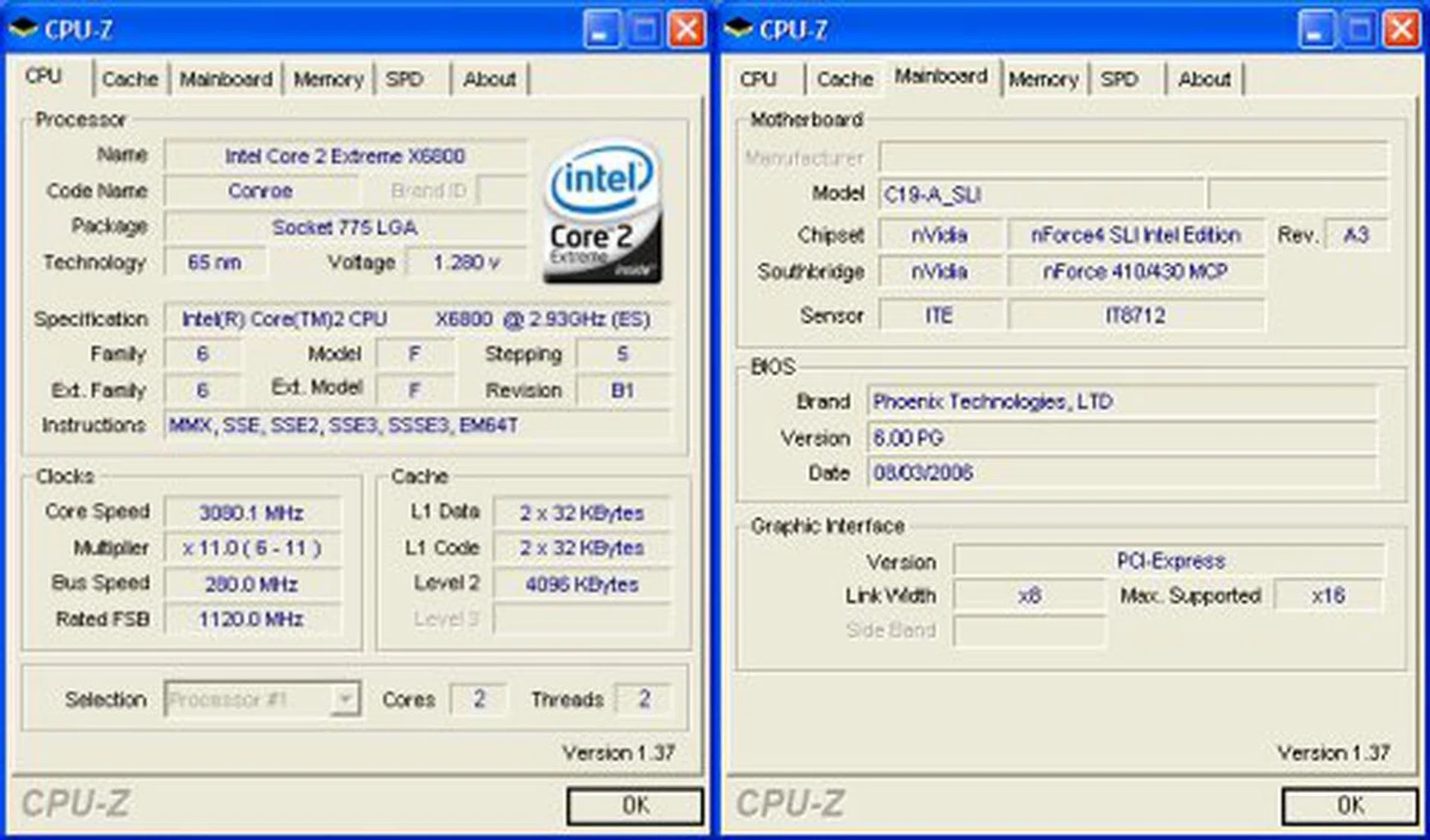
CPU-Z overclocking screenshot - Notice that CPU-Z is still detenting the board as a C19-A SLI as the components and BIOS are essentially identical. Click for larger image.
Test Setup
To benchmark the ECS NFORCE 570 SLIT-A motherboard, we'll be using a Core 2 ready ASUS P5N32-SLI Deluxe motherboard as a comparison. The P5N32-SLI Deluxe is based on the nForce 4 SLI X16 chipset, which should yield similar results to the C19XE on the ECS board. We'll also throw in a mix of Intel P965, 975X and 945P Express results to see where the various Core 2 ready chipsets stand in the larger scheme of things. These boards include the ABIT AW9D-MAX (Intel 975X), ASRock ConRoe XFire-eSATA2 (Intel 945P) and the always trusty Gigabyte GA-965P-DS3 (Intel P965).
The test bed configuration that will be used for this segment is listed below and will be the same for all benchmarked motherboards unless otherwise stated:-
- Intel Core 2 Extreme X6800 processor (2.93GHz)
- 2 x 1GB Kingston HyperX DDR2-800 @ 12-4-4 CAS 4.0
- 2 x 1GB Kingston HyperX DDR2-667 @ 12-4-4 CAS 4.0 (ECS NFORCE 570 SLIT-A and ASRock ConRoe XFire-eSATA2 only)
- Seagate Barracuda 7200.7 80GB SATA hard disk drive (one single NTFS partition)
- MSI GeForce 7900 GT 256MB - with NVIDIA ForceWare 91.47
- Intel INF 8.1.1.1001, Intel Matrix Storage (AHCI) 6.1.0.1022 driver set (All Intel chipset boards)
- NVIDIA nForce 8.22 chipset driver set (ECS NFORCE 570 SLIT-A only)
- NVIDIA nForce 7.15 chipset driver set (ASUS P5N32-SLI Deluxe only)
- Microsoft Windows XP Professional with Service Pack 2 (and DirectX 9.0c)
Additional Notes
- Although the nForce4 series are rated at DDR2-667, the DualDDR2 Memory Architecture makes it possible to run higher speed memory. The P5N32-SLI Deluxe is one such example that the nForce4 readily accepts high-speed memory to match up with the newer Core 2 ready chipsets from Intel. The ECS NFORCE 570 SLIT-A however, does not work well with DDR2-800 memory and becomes incredibly unstable at these timings. As such, the board will be benchmarked with DDR2-667 memory throughout this review.
- The ASRock ConRoe XFire-eSATA2 is also benchmarked with DDR2-667 memory as the Intel 945P Express doesn't support DDR2-800.
Benchmarks
- BAPco SYSmark 2004
- Futuremark PCMark05
- SPECviewperf 9.0
- Futuremark 3DMark05
- AquaMark3
Results - BAPco SYSmark 2004
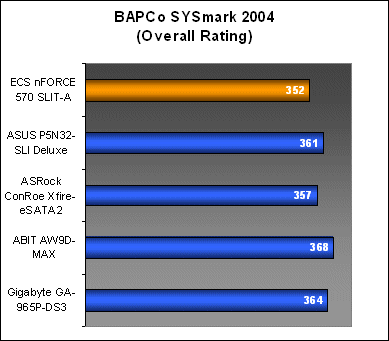
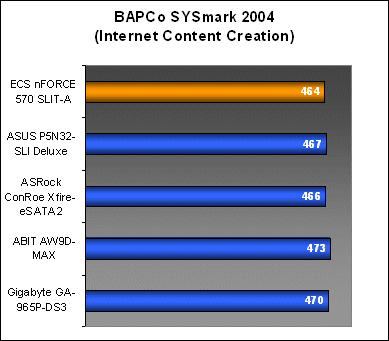
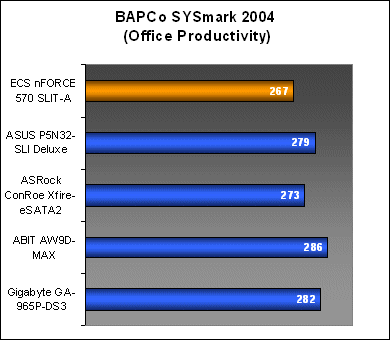
The NFORCE 570 SLIT-A, along with ASRock's ConRoe XFire-eSATA2 posted lower scores due to the reduced bandwidth of DDR2-667, which impacted the most in data analysis calculations done in the Office Productivity workloads. All the boards were on par in the more CPU intensive Internet Content Creation portion of the benchmark.
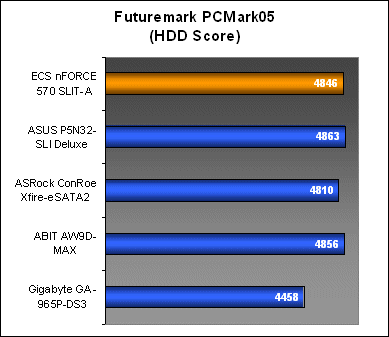
Results - Futuremark PCMark05
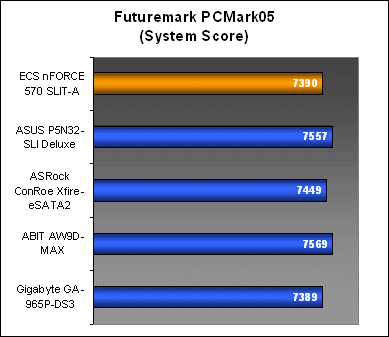
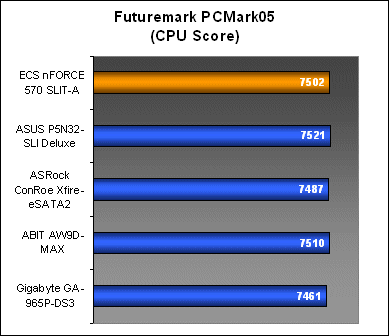
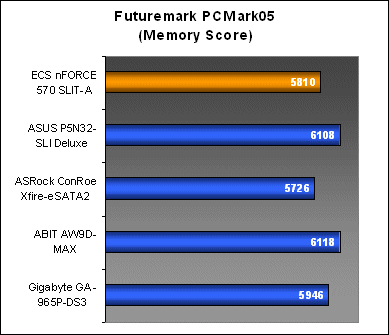
The NFORCE 570 SLIT-A was hampered again by poorer memory results running DDR2-667, while the ASUS P5N32-SLI Deluxe steamed ahead perfectly with DDR2-800. We also noticed the trend that among all the chipsets tested, CPU scores remain almost on par while the ECS board managed to return competitive HDD performance results.
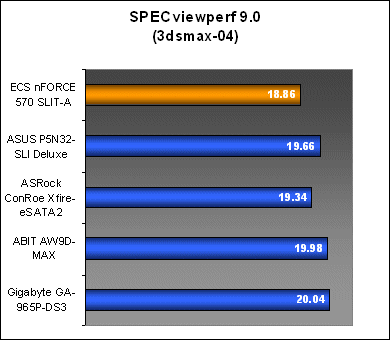
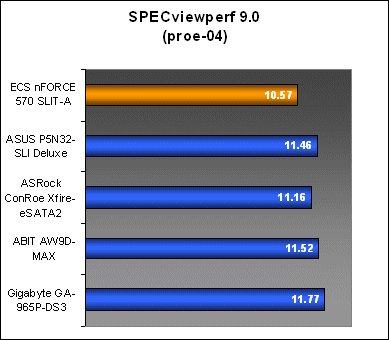
Results - SPECviewperf 9.0
As our readers should well know by now, SPECviewperf is an OpenGL benchmark that stresses the memory subsystem as much as the graphics. As such, we've already expected that the NFORCE 570 SLIT-A and the ASRock ConRoe XFire-eSATA2 to show lowered scores. However, the ECS board came in last in almost every workload.
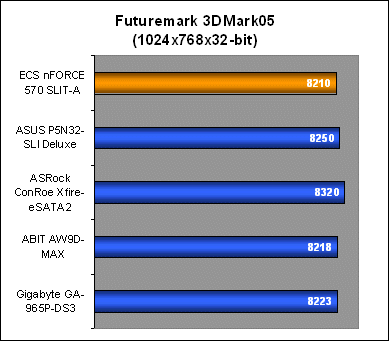
Results - Futuremark 3DMark05
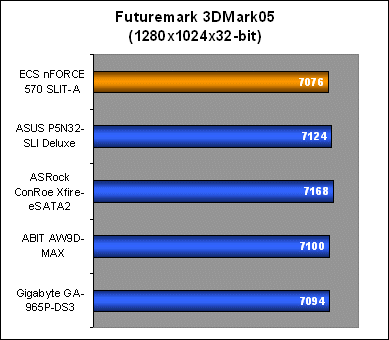
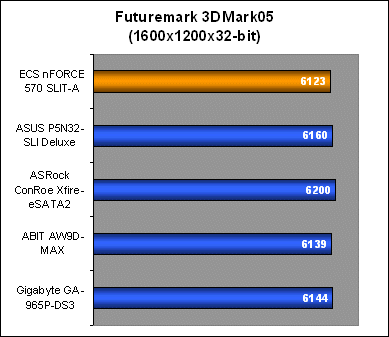
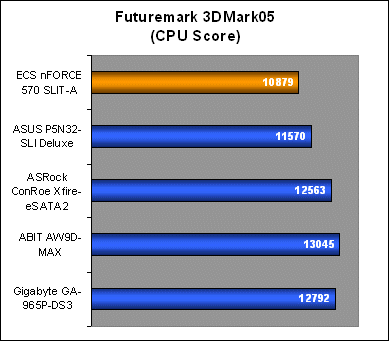
As with most gaming benchmarks that are heavily GPU-centric, you will notice that all our boards performed on par with each other. However, both the nForce-based boards seem to perform poorly in 3DMark05's CPU-only tests compared to the Intel boards.
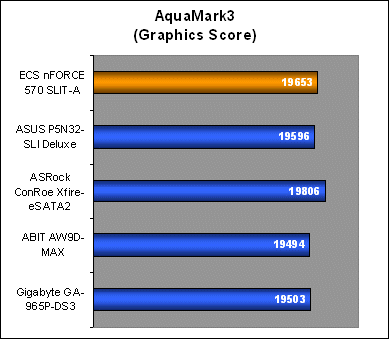
Results � AquaMark3
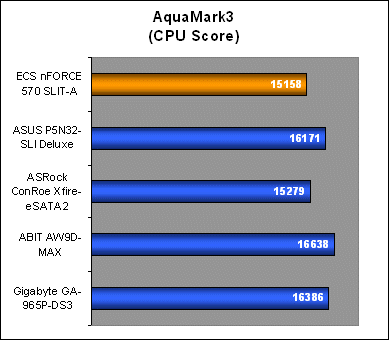
The results from AquaMark3 showed the same performance trend for both boards running DDR2-667, which caused an impact to their system performance. However, the GPU tests showed very strong results even from the NFORCE 570 SLIT-A, which has a capped PCIe x8 slot instead of a regular PCIe x16.
Conclusion
The C19-A SLI motherboard we reviewed in the past proved to be a solid board with a matured enough BIOS, decent performance and great value. The NFORCE 570 SLIT-A however, doesn't share the same sentiments. Although it is the same board that has been updated and repackaged to support Intel's Core 2 line of CPUs, it seems to be enough of a change to introduce stability issues that were never there with the old board. Our first indication of problems was the BIOS locking up on us while changing certain settings.
Then of course, there is the inability to properly support DDR2-800. Granted, the C19 is supposed to only support DDR2-667 with DDR2-800 support not coming out till NVIDIA launches their updated C55 chipset. However, we've had no problems with the ASUS P5N32-SLI Deluxe, so you can see why we were a little disappointed that the ECS NFORCE 570 SLIT-A was unable to run DDR2-800. What the board really requires is some extra work put into tweaking and stabilizing the BIOS and we'll have a very capable upgrade from the ECS C19-A SLI.
After we got past these setup issues with the board, the NFORCE 570 SLIT-A performed to expectations. There were no hardware compatibility problems under Windows and installation was smooth. The board may not have the appeal of the newer P965 'Broadwater' or 975X Express chipsets when it comes to enthusiast optimizations and overclocking won't be on your list of things to look forward to.
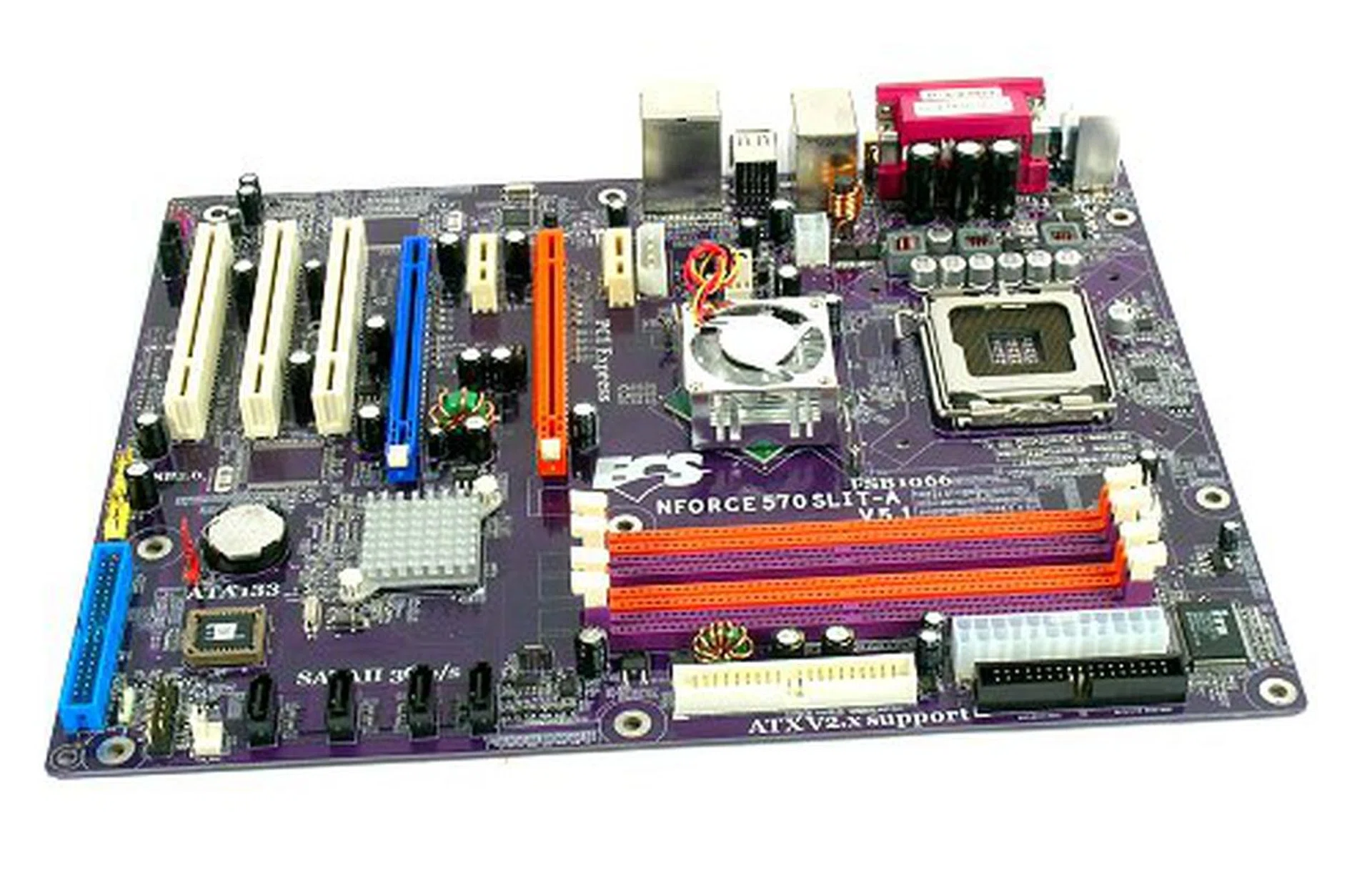
The ECS nFORCE 570 SLIT-A: Shoestring Core 2 SLI, but does not have the stability or tweaking bandwidth for the hardcore.
As a basic entry-level Core 2 motherboard though, the ECS NFORCE 570 SLIT-A is a credible option. The board has all the features required by today's standards and the nForce 430 MCP already supports advanced SATA options like NCQ and RAID. Gigabit LAN, HD Audio with S/PDIF connectivity and most importantly, SLI support. SLI graphics should make up for any deficiencies of its weaker memory bandwidth in most games. As you've seen from our benchmarks, the board performs well in our gaming tests. Today's gaming environments and hardware have yet to fully utilize the full PCIe x16 bandwidth, which is why you do not see any drop in performance with the NFORCE 570 SLIT-A, even though ECS locked the bus to PCIe x8. In any other case, the board is no worse off than a 945P Express board converted to support Core 2 like the ASRock ConRoe XFire-eSATA2.
The ECS NFORCE 570 SLIT-A can be found for around US$90, which is similar in pricing to the ASRock ConRoe XFire-eSATA2 so it will still compete well in the entry-level market. In the end, it all depends on whether you're an ATI fan or a NVIDIA fan for your dual-graphics support.
Our articles may contain affiliate links. If you buy through these links, we may earn a small commission.