
ASUS P5K3 Premium Black Pearl Edition (Intel P35)
ASUS launches their third generation Black Pearl Edition motherboard with the ASUS P5K3 Premium. Packing its own low latency DDR3-1333 memory onboard, great cooling, extreme performance and overclocking plus everything else that comes with the regular P5K3 Deluxe, this you've got to see.

Introduction
Mention 'black pearl' these days and you'll probably conjure up an image of a dilapidated pirate ship and a half-crazy Johnny Depp. However, a natural black pearl (as in real pearls - the jewelry kind) is incredibly rare and often used as a term to describe something that is highly limited and valued. In the motherboard world, ASUS on rare occasions, tend to release a special edition of a motherboard that has been engineered to the brim with features and special high-quality components that sets it apart from their regular boards. These are known as the ASUS Black Pearl Edition motherboards.
Now, if there's one thing in PC marketing that is constant, it is the over saturation of a certain branding till it becomes somewhat trivial. However, the ASUS Black Pearl Edition is truly a rarity. The last Black Pearl motherboard from ASUS was the P4PE back in 2003 based on the Intel 845PE chipset (which we've reviewed here too if you're interested to take a peek). Now, after a four year hiatus and five chipset generations later, ASUS commemorates their 18th anniversary with brand new third generation series of Black Pearl Edition motherboards. Presently, ASUS has taken their current two flagship P35 motherboards, the P5K Deluxe and P5K3 Deluxe and transformed them into the P5K Premium and P5K3 Premium Black Pearl Edition boards respectively.
As it can get a little confusing separating ASUS' large family of boards, we'll go through a short background on the two boards. The ASUS P5K Deluxe and P5K3 Deluxe are really two versions of the same motherboard, the former exclusively supporting DDR2 and the latter, DDR3. Both these boards have appeared in our various past articles ( , and ), so www.hardwarezone.com readers should be very familiar with the original ASUS P5K Deluxe and P5K3 Deluxe by now. Since we've directly reviewed the DDR2 based P5K Deluxe before, we've decided that it would be much more interesting to have an in depth look at the DDR3 variant instead. In this article, we will pick apart the ASUS P5K3 Premium to see if ASUS still has what it takes to deliver a real Black Pearl.
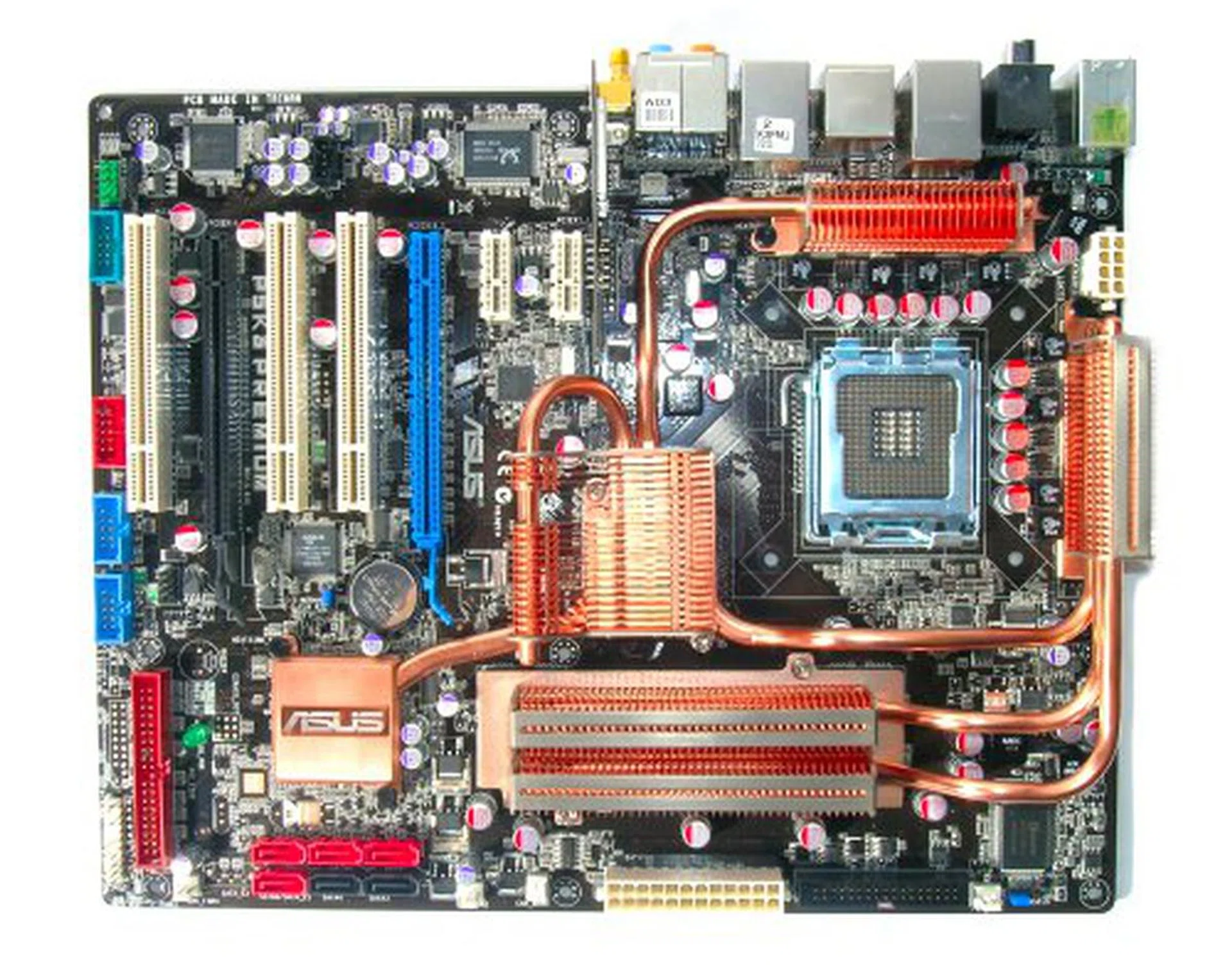
The ASUS P5K3 Premium motherboard.
- 2 x SATA data cables
- 1 x SATA power converter cables (dual plugs)
- 1 x 80-conductor Ultra ATA data cable
- 1 x floppy drive data cable
- 2 x Heatsink cooling fans
- USB 2.0 (2 ports) and IEEE 1394a (1 port) bracket
- ASUS Q-Connector set
- ASUS WiFi-AP Solo Antenna
- I/O shield
- Driver CDs
- User's manual
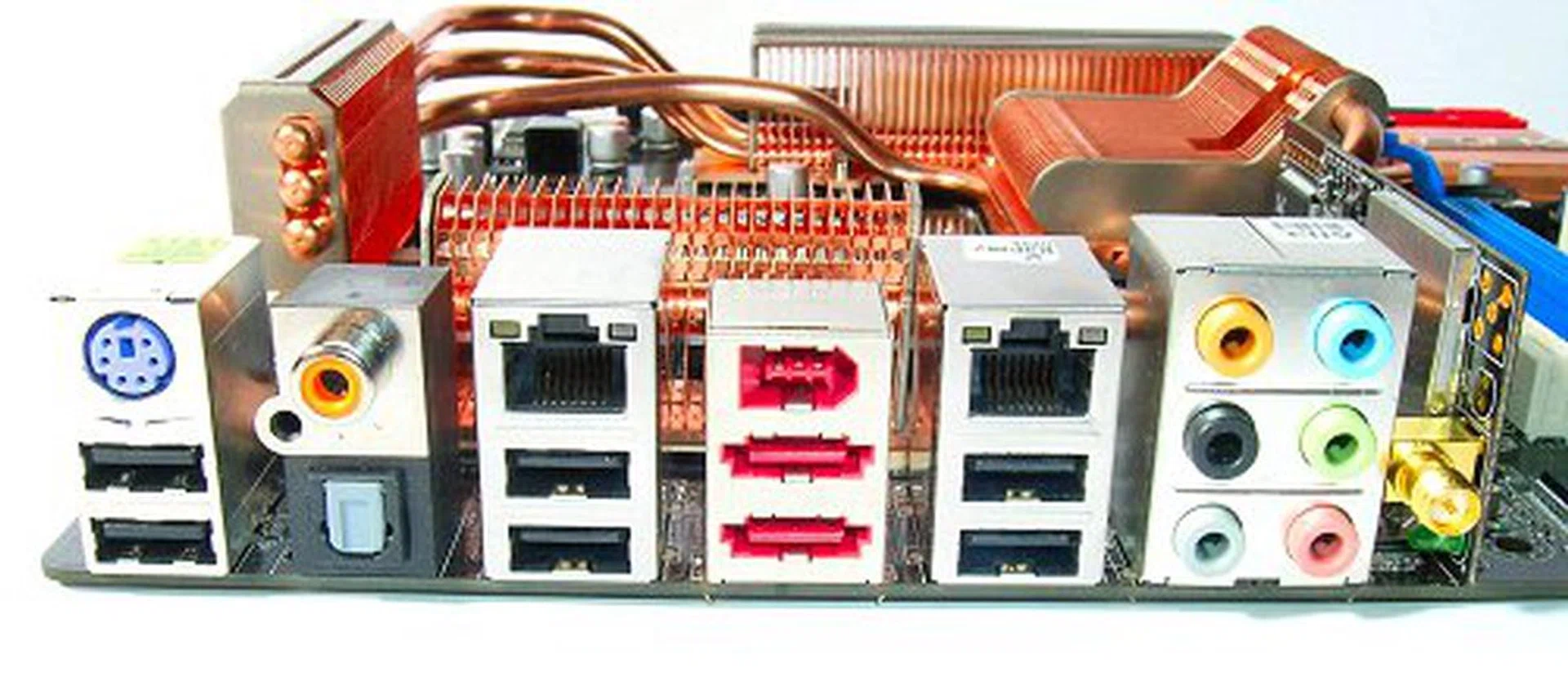
Rear panel features one PS/2 keyboard port only, no PS/2 mouse here. You will have to use a USB mouse. There are six USB 2.0 ports, dual RJ-45, FireWire, two dedicated eSATA ports, coaxial and optical S/PDIF for digital audio, 8-channel analog audio jacks and a Wireless LAN antenna connection.
The Black Pearl
ASUS created the P5K3 Premium Black Pearl Edition based off the existing P5K3 Deluxe motherboard. Hence, readers should not be expecting any new component features that is not on the Deluxe. The motherboard PCB design, layout, expansion slots and component features are exactly the same. Because of this, we will only be focusing on the new Black Pearl Edition extras in this review and not the standard features. For more information on these, our and before should have covered the topic in great detail.
Turbo D3 - Onboard Memory
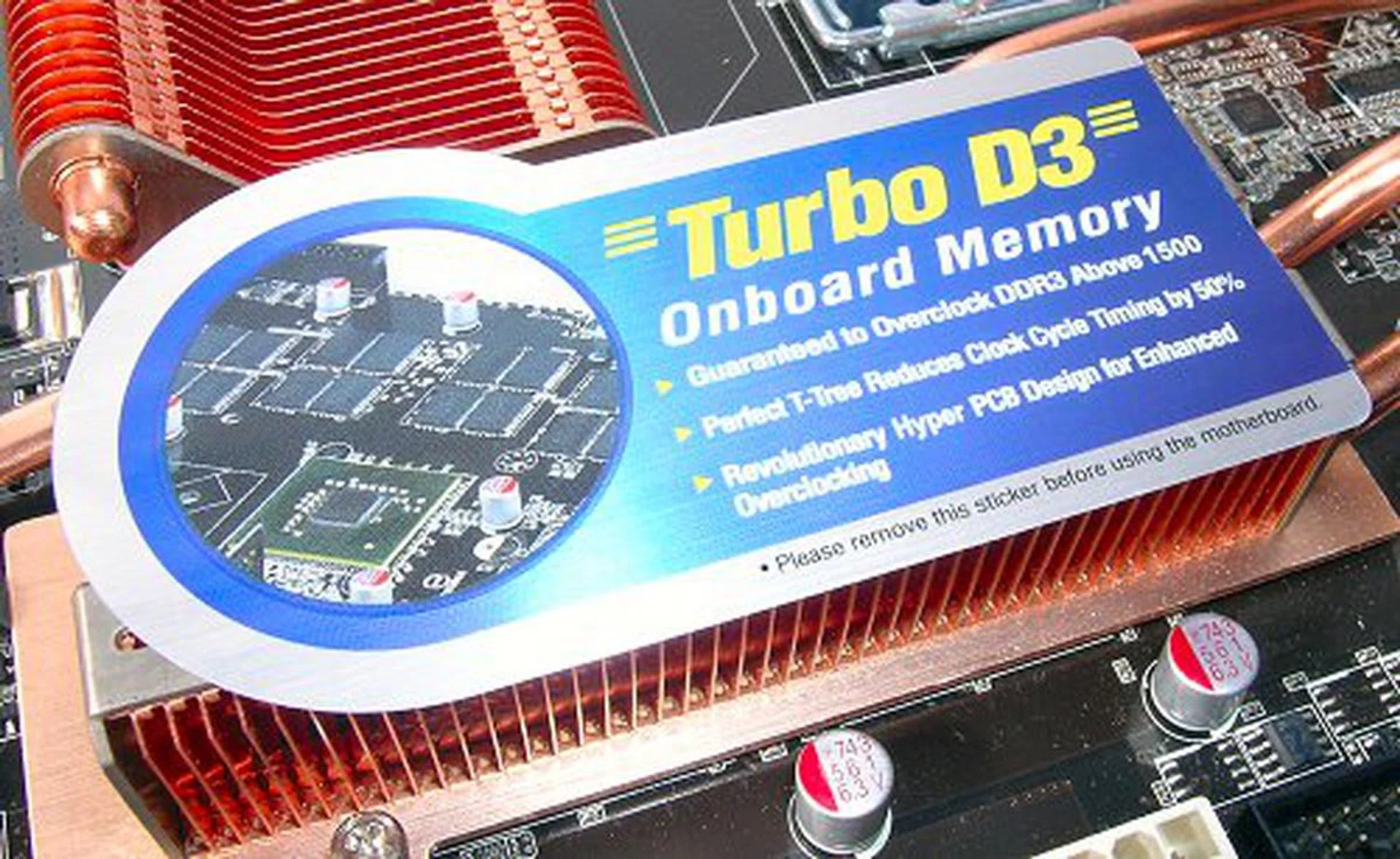
The first thing anyone will notice when they set their eyes on the P5K3 Premium will be its series of large copper heat-pipe blocks that cover half of the board. First you'll be thinking "Radical cooling!" and then comes the question, "Just where the hell are the RAM slots?". Sit back down and take a deep breath. We've come to the best part about this motherboard. ASUS has decided the only way to deliver the best motherboard to enthusiasts is to design a tightly integrated board where only the top components are used so that they can confidently guarantee performance and overclocking capability. This also includes integrating the memory onboard instead of allowing users to muck around with low grade RAM and then complaining that it doesn't do the job.
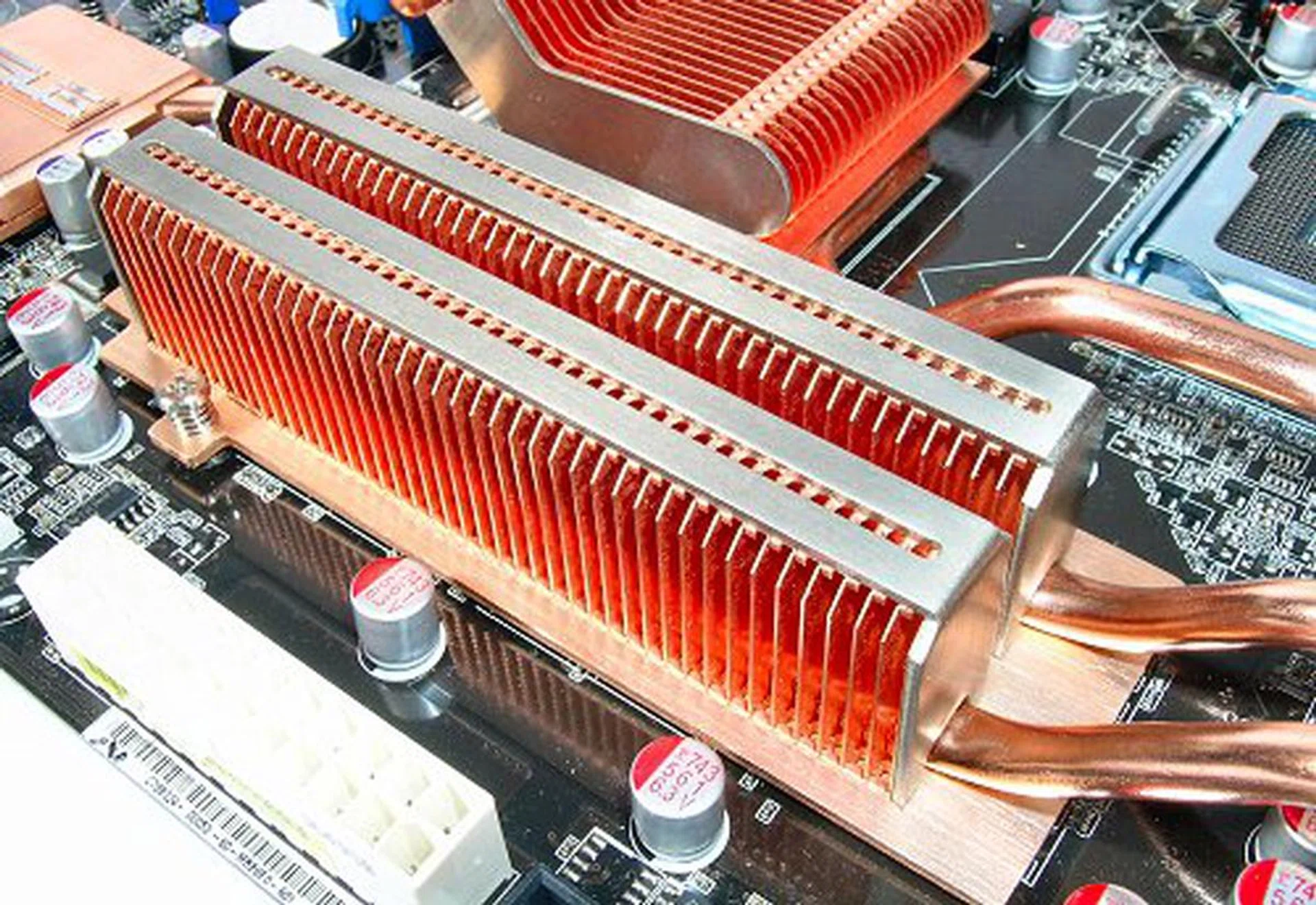
Hey, wheres my memory slots?
Labeled as Turbo D3, the ASUS P5K3 Premium comes with 2GB of DDR3-1333 memory on the motherboard itself, and these are not your average CL9 chips either. ASUS actually took the initiative to offer enhanced high-speed CL8 Qimonda DDR3 chips that have SPD timings of 8-8-8-24. ASUS has further tweaked their board to run at default (using the Auto parameter in the BIOS) timings of 8-6-5-19 in DDR3-1333 mode. These are pretty tight timings compared to the 9-9-9-25 DDR3-1333 modules you'll find in the market right now, which will give the P5K3 Premium a performance edge over standard boards and RAM. Not only that, ASUS is guaranteeing that the memory will overclock to 1500MHz at least. Considering that we've had pretty bad experience with overclocking and DDR3 memory, this is a pretty tall statement from ASUS, one that we intend to put to the test.
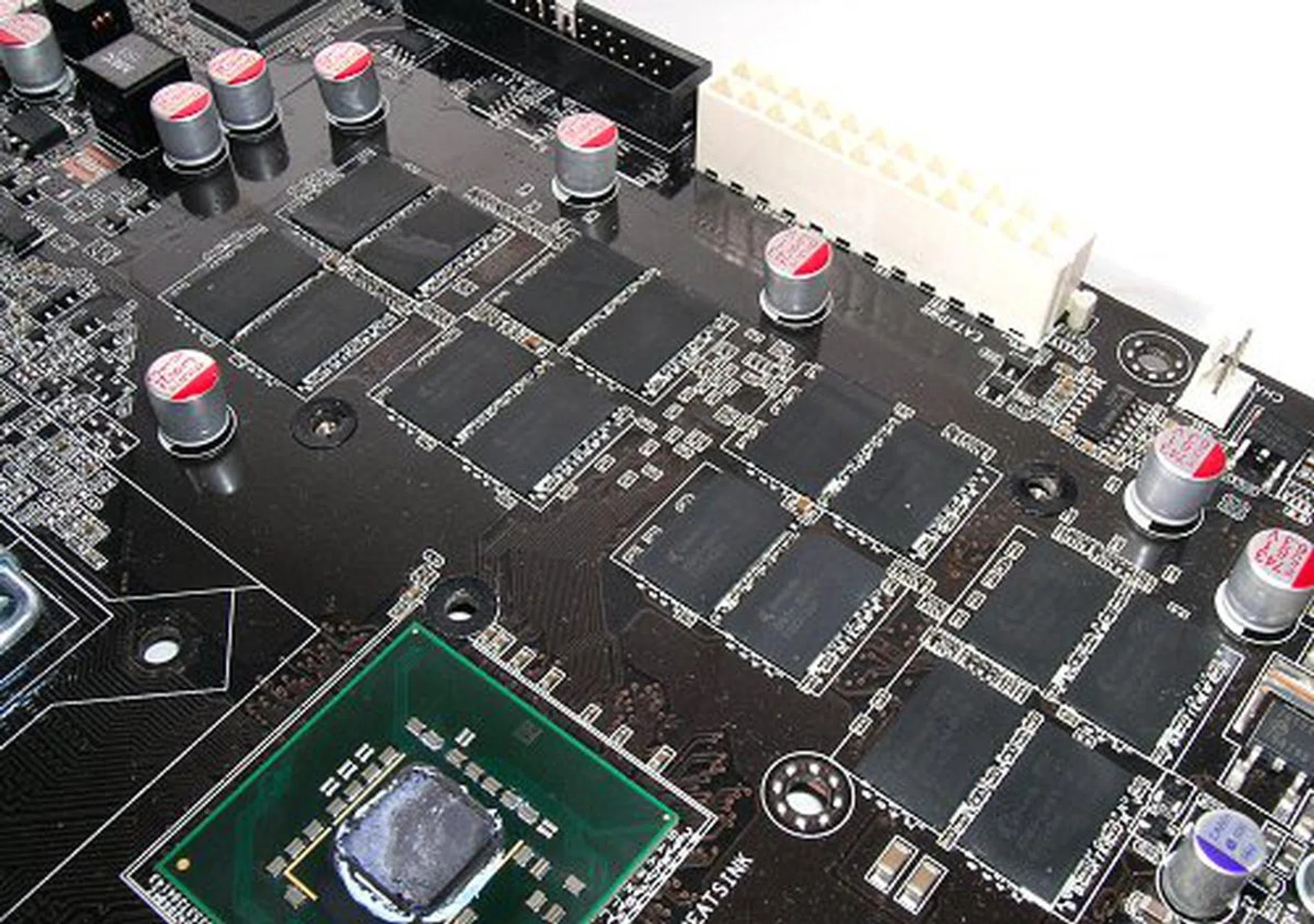
With the heat-pipe removed, you see the line of DDR3 chipset lining the board.
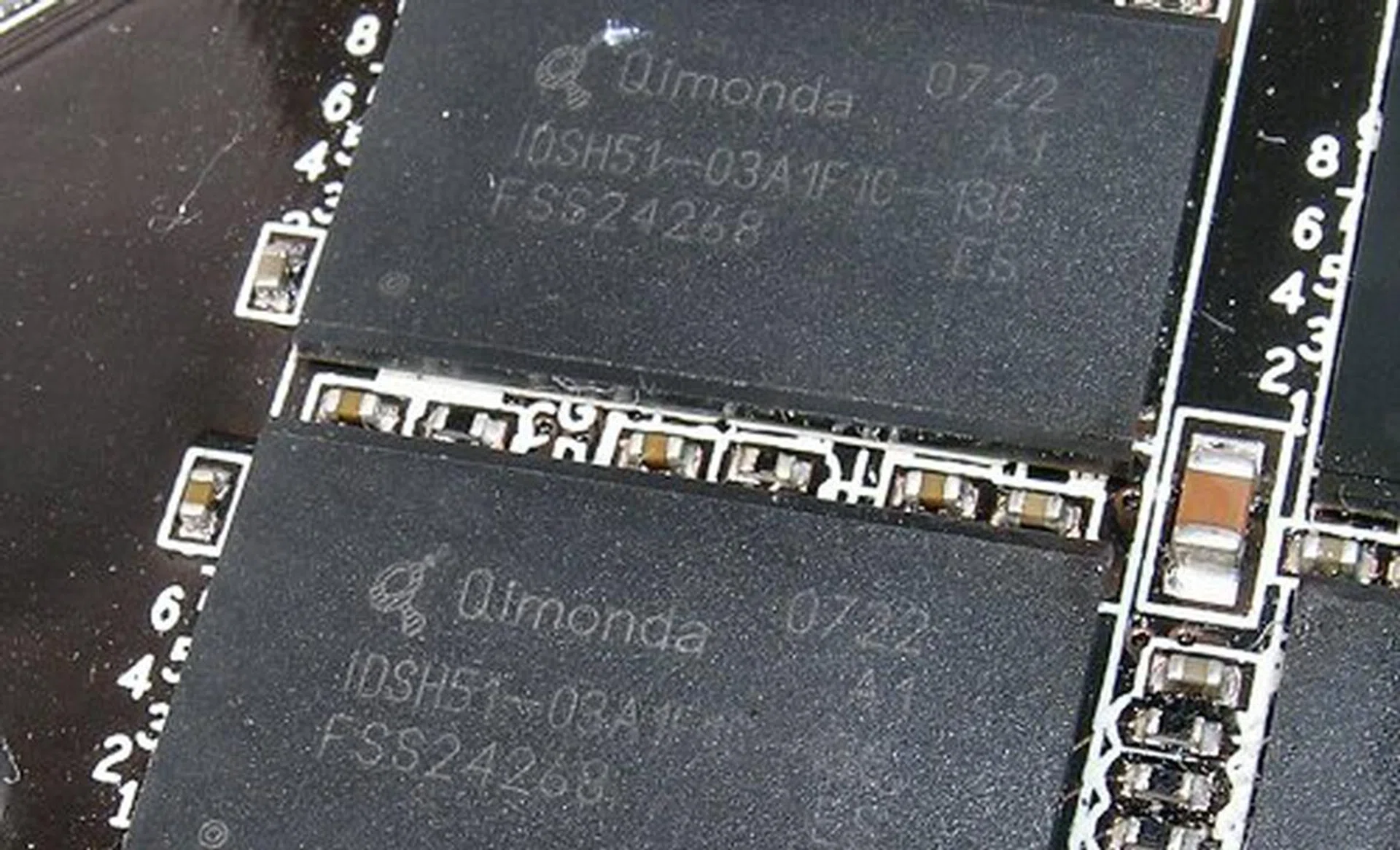
A close up shot at the Qimonda memory chips used for the board.
Electronics
In the past, ASUS Black Pearl motherboards came with more features than regular boards. However, features are a trivial matter for today's boards and chipsets. So, what does the P5K3 Premium have besides onboard RAM that sets it apart from the P5K3 Deluxe? For one, the board is supposedly engineered with higher quality PWM components. Both Deluxe and premium boards come with similar 8-phase power design. However, the P5K3 Premium may be the first ever motherboard to employ a crazy 10-layer PCB.

Similar to the P5K3 Deluxe, the Premium also employs an 8-phase PWM, though with slightly different components.
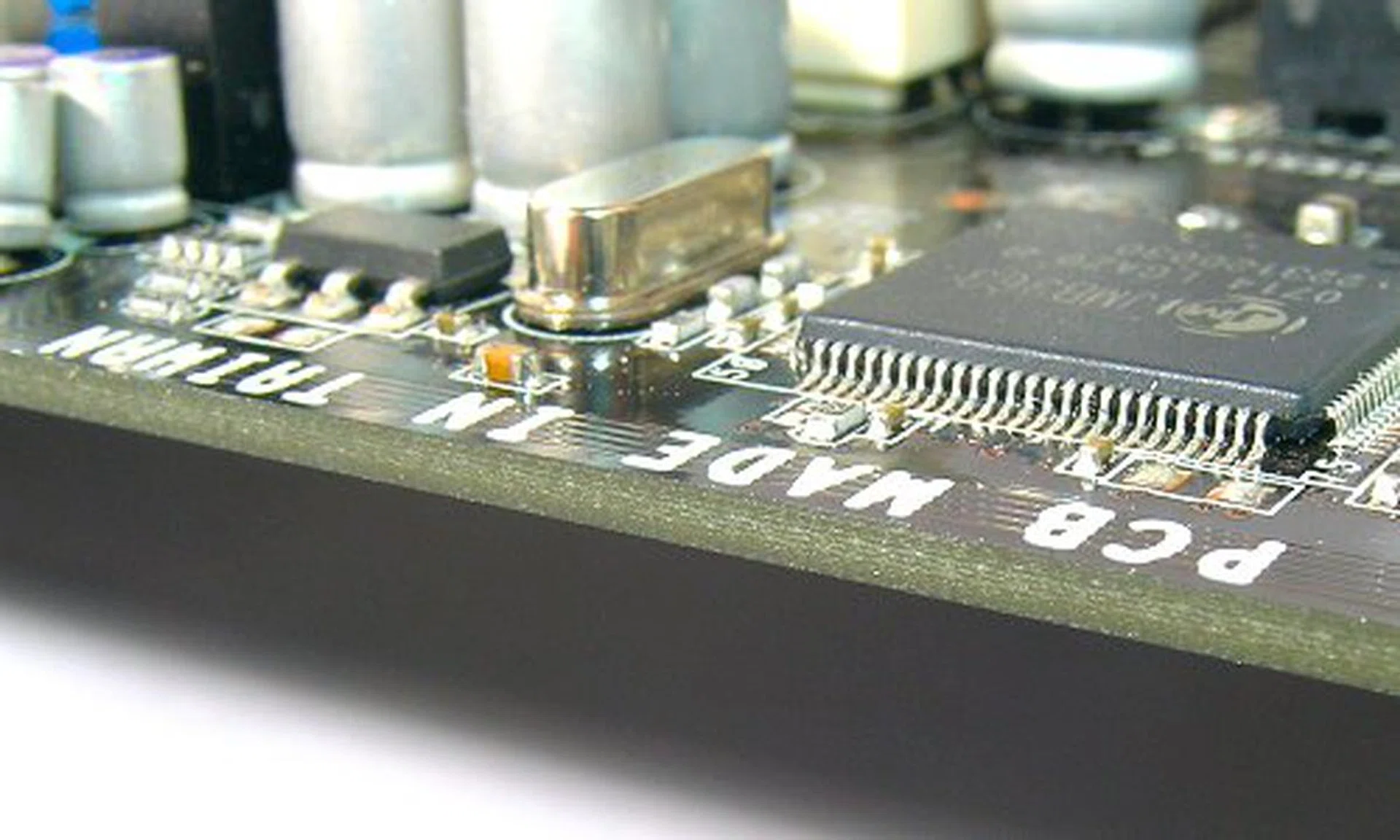
Can you count 10-layers?
Layout
There really isn't much to talk about here. We think that ASUS has really done a great job packing so many features into the board, especially the network of heat-pipes. We commented on the simple heat-pipe design on the P5K Deluxe before and now we know why that was. ASUS already had the Black Pearl Edition boards in mind when they designed the PCB layout and components were already placed to accommodate the onboard memory and additional cooling required. This was why the RAM slots were so centered before. There is one problem that might crop up though. The heat-pipe system is now a full five piece set that is connected. Since there is a need to cool the onboard memory as well now, it will be harder to replace the default cooling for custom mod jobs.

A look at the heat-pipe cooling on the P5K3 Premium.

The Premium uses a different Northbridge block than the Deluxe version. This has a lower profile and angled to give more room to larger CPU coolers.
The only problem with having onboard memory is of course shutting out the upgrading path. You will not be able to add more memory or change to a different brand. Thankfully ASUS didn't short change users by including generic chips, so the high-quality memory will probably last users for the lifespan of this board. 2GB is the standard today for Vista, and users shouldn't really need more, but it is still disconcerting that you will not be able to upgrade even if you wanted to. Of course ASUS profiles such high-end users to frequently upgrade their entire system platform and components. So on that basis, ASUS is the first commercial end-user board to have integrated memory and have gone to the extent of maximizing the board's performance capability with the 'new infrastructure'.
There is one issue surrounding the weight of the board. With all that copper piping, the P5K3 Premium weighs in at 1.3KG, which is pretty hefty indeed. Better make sure that your mounting is secure.
Test Setup
The ASUS P5K3 Premium is the first DDR3 Intel P35 motherboard that we're officially reviewing and although we've tested hybrid DDR2/DDR3 motherboards in the past, we were limited to using a 1066MHz FSB. As we move on to dedicated DDR3 motherboards, we will also be transitioning to a new testbed based on a 1333MHz ecosystem (FSB, processor and memory), which will more readily benefit from the extra bandwidth of DDR3 than our old testbed. The hardware configuration of our new DDR3 testbed is listed below.
To benchmark the P5K3 Premium, the best comparison would have to be the very motherboard that it is based on, the ASUS P5K3 Deluxe. Since the memory is integrated into the P5K3 Premium, we will consider it a 'feature' of the board and benchmark it using its default memory timings and settings. This means that the P5K3 Premium will be running DDR3-1333 at 8-6-5-19 latency timings. In order to compensate, we will run two sets of benchmarks with the P5K3 Deluxe as reference, one with the DDR3 SPD timings of 9-9-9-25 and another with low latency 7-7-7-20 timings. How well will the P5K3 Premium perform? Continue reading.
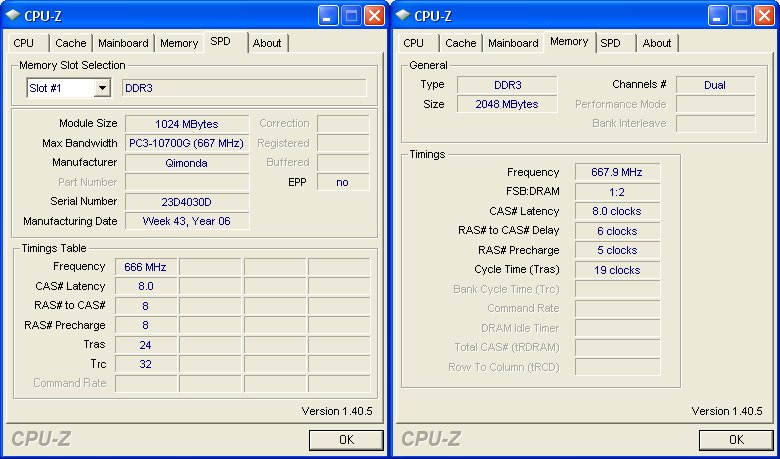
P5K3 Premium memory SPD information and default timings. Click for full size image.
- Intel Core 2 Extreme QX6850 processor (3.0GHz, 8MB L2, quad core)
- 2 x 1GB Qimonda DDR3-1333 @ 6-5-19 CAS 8.0 (ASUS P5K3 Premium only)
- 2 x 1GB Kingston HyperX DDR3-1333 @ 9-9-25 CAS 9.0 / 7-7-20 CAS 7.0
- Seagate Barracuda 7200.10 200GB SATA hard disk drive (one single NTFS partition)
- MSI GeForce 8600 GTS 256MB - with ForceWare 162.18 drivers
- Intel INF 8.3.1.1013 and AHCI 7.5.0.1017 driver set
- Microsoft Windows XP Professional with Service Pack 2 (and DirectX 9.0c)
Benchmarks
The following benchmarks will be used when benchmarking the ASUS P5K Deluxe:-
- BAPco SYSmark 2004
- Futuremark PCMark05
- SPECviewperf 9.0
- Futuremark 3DMark06
- AquaMark3
Results - BAPco SYSmark 2004
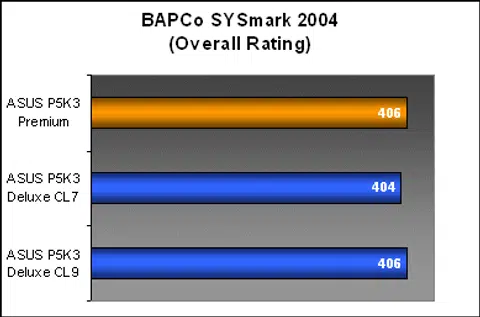
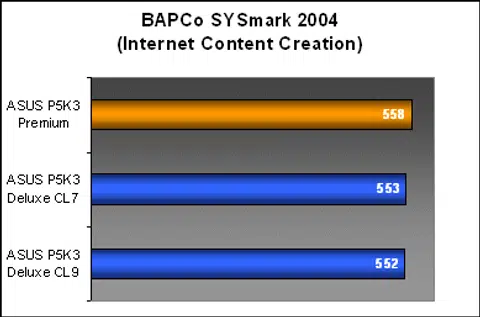
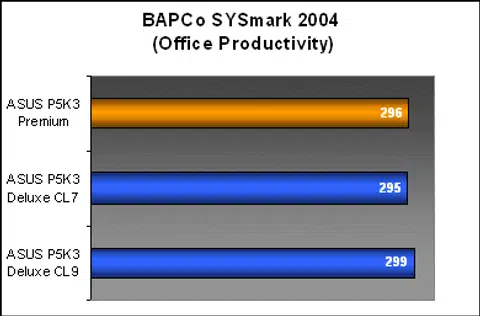
Surprisingly, the workload that made a difference here was the Internet Content Creation and not Office Productivity, which is the one that has more memory sensitive tests. It could be our transition to a quad-core processor with an 8MB L2 cache that may have negated some of the benefits of memory performance. However, the P5K3 Premium held up very well with great performance all around.
Results - Futuremark PCMark05
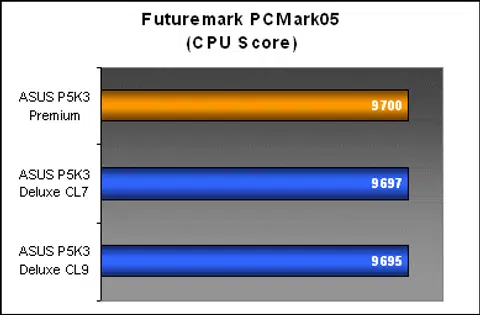
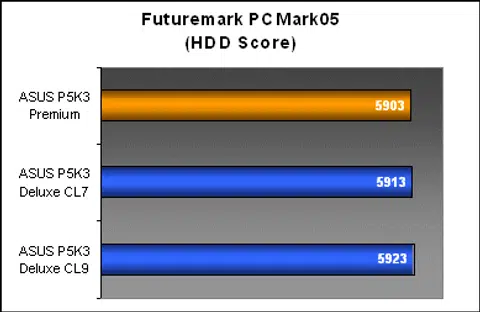
In PCMark05, the results were more telling. In the System workloads, memory performance made a linear difference between CL9 and CL7 on the P5K3 Deluxe, but the top scorer was the P5K3 Premium. Though not noticeable, the CPU scores also showed a similar increase, even if it was just 2-3 points. The biggest just could be seen in the Memory workloads. The results trend stayed the same, and again the CL8 Qimonda memory on the P5K3 Premium was able to outperform the Kingston HyperX CL7 on the P5K3 Deluxe due to tighter tRCD, tRP and tRAS timings.


Results - SPECviewperf 9.0
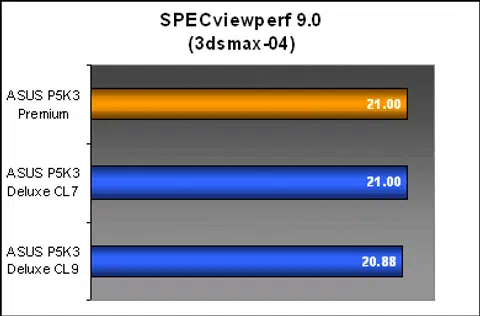
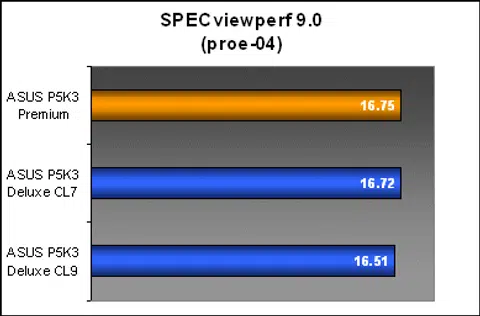
Though the SPECviewperf benchmark is heavily GPU oriented, over the years of motherboard testing has shown us that for certain viewsets tested, changes in the platform parameters do affect the overall performance results. Surprisingly, effects on the memory subsystem performance for the P5K3 Premium was not as prominent as we expected. In the 3dsmax workload, the P5K3 Premium performed identically to the P5K3 Deluxe with CL7 timings, though the Premium did managed to slightly outperform the Deluxe in the more memory intensive Pro/ENGINEER workloads.
Results - Futuremark 3DMark06
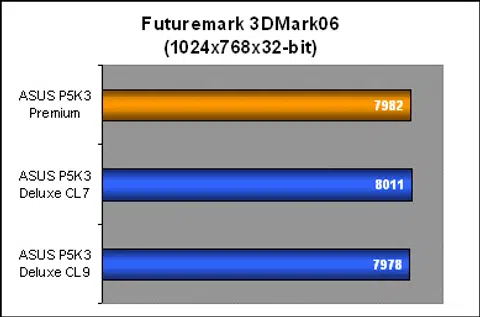
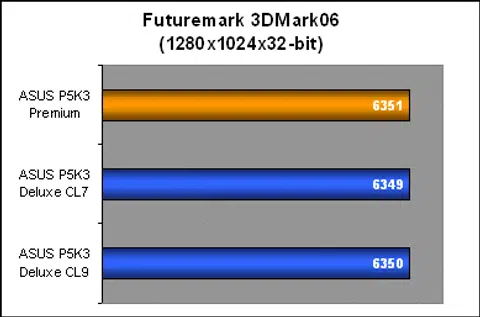
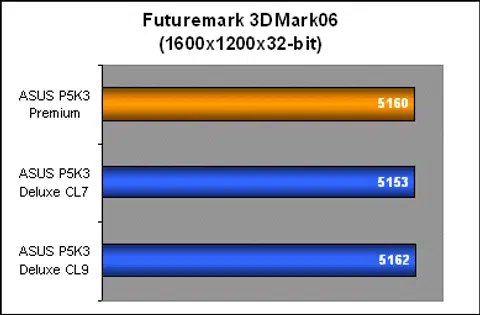
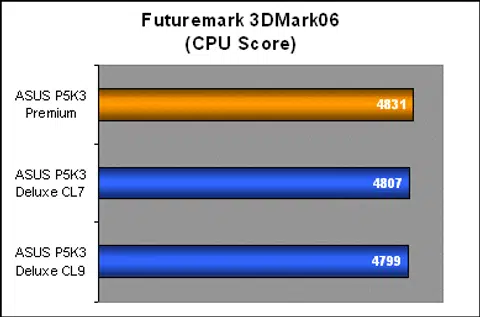
Gaming-wise, the P5K3 Premium and P5K3 Deluxe went head to head in terms of overall performance. Since these two boards are essentially identical, we had no doubts on the outcome. The difference in memory timings show up in the CPU rendering tests, but that did not affect the gaming scores by much. Again, the P5K3 Premium comes out on top.
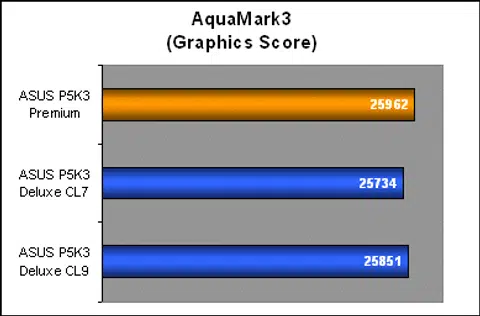
Results - AquaMark3
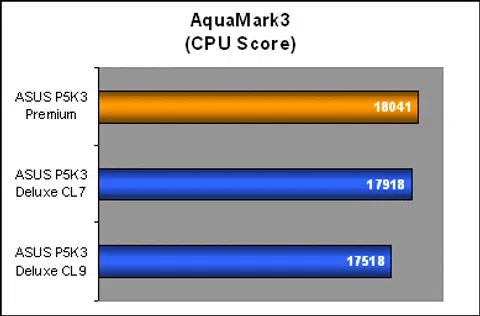
AquaMark3 was less forgiving though and the much more optimized memory on the P5K3 Premium beat out the generically configured P5K3 Deluxe not only in the CPU tests, but also spilled over to the GPU results. Now, the actual impact on game play is not as impressive as we're only talking about an average 1fps improvement from CL9 to CL7 on the P5K3 Deluxe and another 1fps going to the P5K3 Premium. However, this shows just how well ASUS has tweaked the board for with stock performance.
Overclocking
- FSB Settings: 200MHz to 800MHz
- DDR3 Settings: 800/833/1000/1066/1111/1333MHz
- PCIe Settings: 100MHz to 150MHz
- CPU Voltage Settings: 1.1000V to 1.7000V (in 0.0125V steps)
- Memory Voltage Settings: 1.50V to 2.25V (in 0.05V steps)
- CPU Voltage Reference Settings: 0.63x, 0.61x, 0.59x, 0.57x
- CPU PLL Voltage Settings: 1.50V to 1.80V (in 0.10V steps)
- FSB Termination Voltage Settings: 1.20V to 1.50V (in 0.10V steps)
- Clock Over-charging Mode: 0.70V to 1.0V (in 0.1V steps)
- NB Voltage Settings: 1.25V, 1.40V, 1.55V, 1.70V
- NB Voltage Reference: 0.67x, 0.61x
- SB Voltage Settings: 1.05V, 1.20V
- Multiplier Selection: Yes (unlocked CPUs only)
Normally with motherboard reviews, our only concern is the overclockability of the board itself. CPU and memory frequencies are lowered to ensure that there are no bottlenecks to FSB. For the P5K3 Premium, we took a different approach. Since the memory is now part of the board, we treated it as such and overclocked both memory and FSB in tandem. This was done to test how well ASUS managed to integrate and optimized the onboard memory as well as ASUS' claims for reaching DDR3-1500.
Till date, we've never had much success at FSB overclocking with DDR3 memory and the past few hybrid boards we've tested would refuse to overclock using DDR3, but would scream ahead with DDR2. The ASUS P5K3 Premium had no such problems or limitations. We managed to hit a maximum stable FSB overclock of 485MHz, which is similar to the capabilities of boards running on DDR2. Not only that, this was achieved with the DDR3 memory running at a blazing 1620MHz and tight 9-7-7-20 timings.
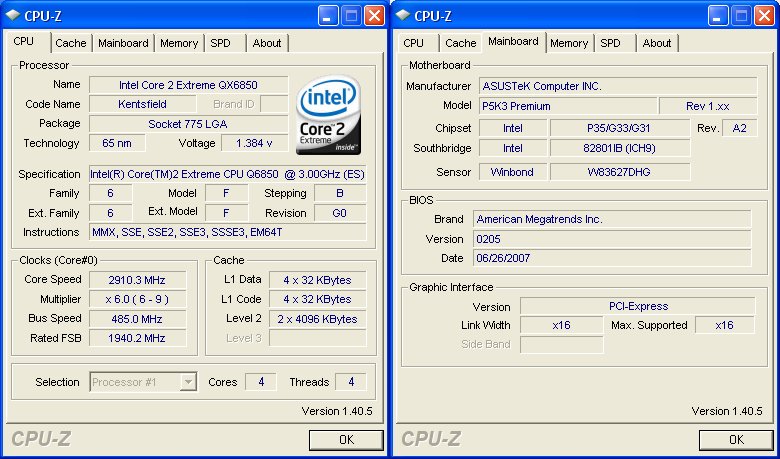
CPU-Z overclocking screenshot. Click for full size image.
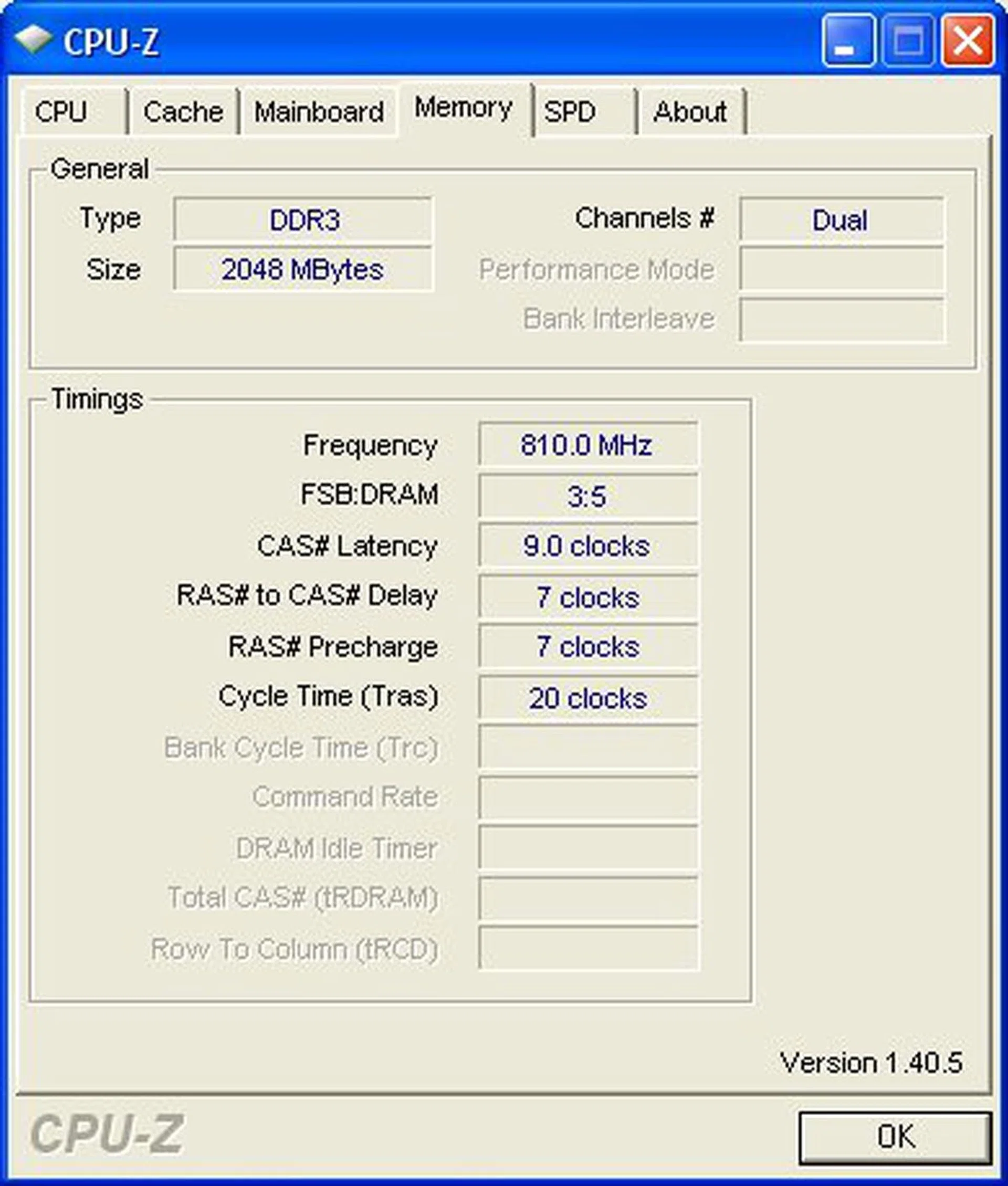
Final memory overclocked settings.
We only had to slightly tweak the voltage settings to 1.55V for the Northbridge and 1.90V for the memory to get everything running rock solid. The board handled overclocking extremely well and cooling was superb. During full load at our overclocked settings, both chipset and memory heatsinks only felt moderately warm.
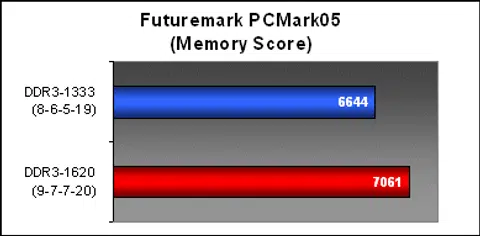
We ran a quick PCMark05 benchmark to test the performance improvements to the available memory bandwidth and found that there was an over 6% boost to overall results compared to the board's DDR3-1333 timings.
Conclusion
Technically speaking, the ASUS P5K3 Premium is a gimmicky upgrade to the P5K3 Deluxe. However, unlike other similarly gimmicky enthusiast products, we feel that ASUS has really done themselves proud with the board. The P5K3 Deluxe itself is already a very full featured motherboard with wireless LAN onboard and all its other features. Now after throwing in integrated memory and more cooling into the picture, it still does not feel like a heavily bloated motherboard. Perhaps it is the tight integration and engineering on ASUS' part or maybe it is because there are no 'fats' to the board, just 1.3KG of pure muscle. The features implemented are actually integral to the functionality and performance of the board and there aren't redundant stuff like large LCD panels or flashing gizmos that most users will not miss whether they are there or not.
Put all your fears aside, the P5K3 Premium does not disappoint. The quality of the build and components used to make the P5K3 Premium Black Pearl Edition are some of the best to ever make way into a motherboard. The DDR3 memory integration is extremely well done and its performance is superb. Based on every benchmark that we ran for this review, the stock settings of the Qimonda memory on the board puts the P5K3 Premium ahead of the P5K3 Deluxe that was configured with retail over-the-shelf memory modules. This shows ASUS' commitment into making the P5K3 Premium extremely competitive with current and future products.
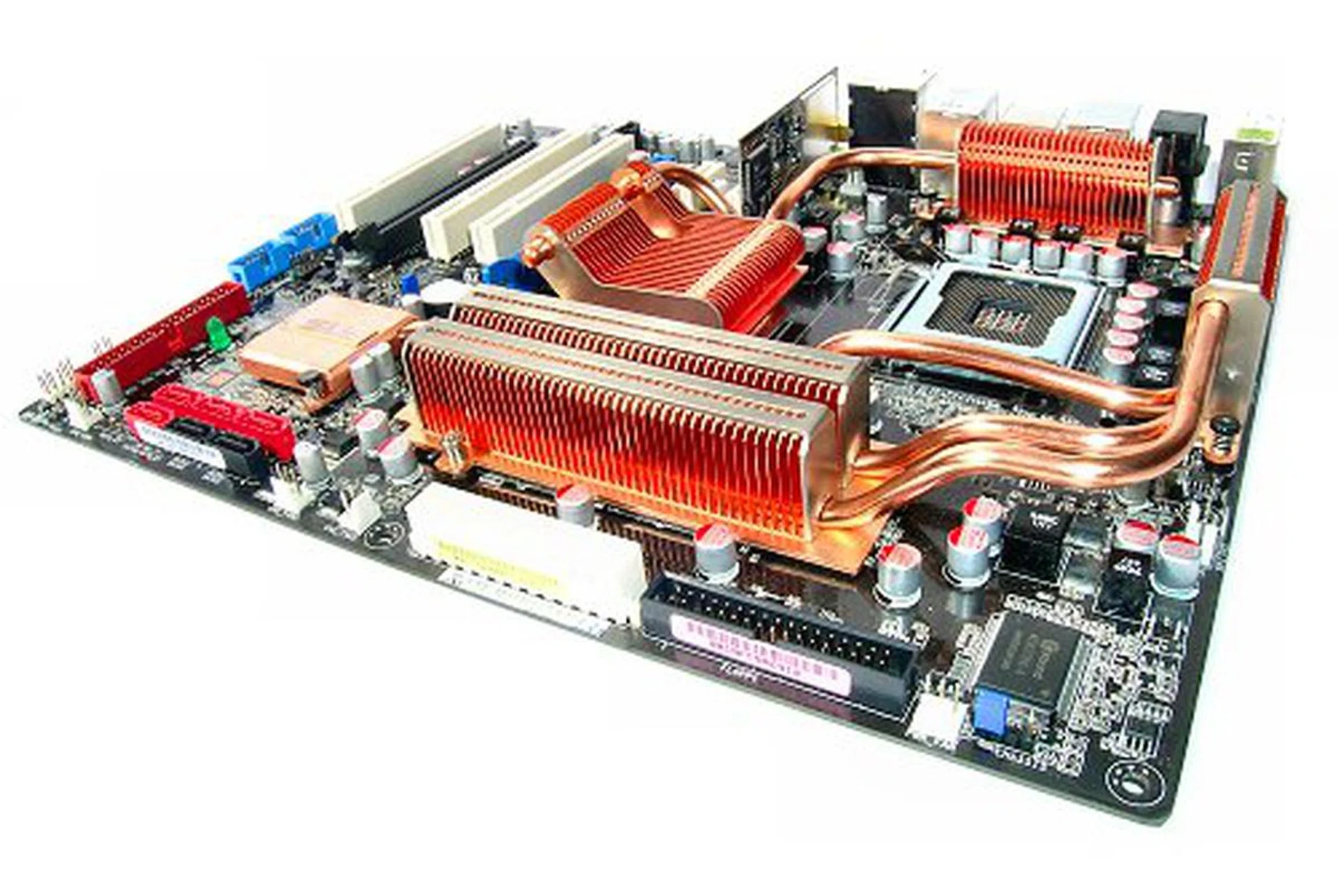
The ASUS P5K3 Premium Black Pearl Edition is certainly an incredible motherboard, but you will have to decide if the prospect of being stuck with 2GB of memory worth it.
In our opinion, this was a move that had to be made because of the permanent nature of integrated memory. Yes, you will not be able to upgrade your memory and that is something that cannot be helped, but 2GB can last most people till the next motherboard upgrade comes along. What can be helped though is the available bandwidth of the onboard memory. Depending on the CPU you use, the memory can scale from DDR3-1066 to beyond DDR3-1600, while maintaining pretty tight timings. ASUS made sure though that the memory chosen for the P5K3 Premium will outlast and outperform the competition for a long time coming.
Although the P5K3 Premium is not the best overclocker we've come across as far as pure FSB overclocking is concerned, its extensive BIOS package, great DDR3 overclocking performance and overall platform synergy and integration convinced us to award the P5K3 Premium with our Most Overclockable Product (M.O.P.).
There is no doubt, the ASUS P5K3 Premium Black Pearl Edition is one of the best DDR3 motherboards you can get today. This is the Lamborghini of motherboards. Of course, you can be expected to shell out major dough for it and that goes without question. We don't have an exact pricing for the P5K3 Premium right now, but if we consider the price of the ASUS P5K3 Deluxe which goes for around US$250, and a matched pair kit of 2GB DDR3-1333 memory that goes for US$380 today, that will come up to a US$630 price tag if we shopped conservatively. As the P5K3 Premium is a complete package by itself, we expect ASUS to attach a premium, which could potentially put the board near US$1000 or more. Some unconfirmed sources have listed the board's initial pricing to be US$1299! Sound ludicrous, but then again that is to be expected from a one-of-a-kind motherboard - just as with real rare black pearls.
Our articles may contain affiliate links. If you buy through these links, we may earn a small commission.