
ASUS P5K Deluxe/WiFi-AP (Intel P35)
The latest ASUS P5K Deluxe motherboard combines everything that made the P5B Deluxe a classic with updated design elements and a new chipset that is set to take the Intel platform into the future. Read the full review right here and see why we love the P5K Deluxe so much.

Introduction
The Intel P35 may be one of the most well 'known-unknown' chipsets to have come from the Intel stable in a while. Yes, we know that's self-contradictory, but it is still true nonetheless. Anyone following the processor and chipset market would have heard of Intel's next generation desktop chipset and most probably awaiting its arrival. With new features like DDR3, 1333MHz FSB and 45nm processor support, you'd think that it would be a big deal, but like what we've pointed out in our MSI P35 Platinum review (and we'll say it again), if you went to Intel's website today (at press time), you will still not find any link or information on this new chipset.
This is quite unlike Intel not to be tooting its own horn on a brand new product, but that hasn't stopped manufacturers from embracing the P35 wholeheartedly. ASUS for one, surprised us once again by having an entire armada of P35 boards ready the moment Intel's supposed launch date on the 21st May drew to a close. ASUS has a total of seven P35 boards in production, including two workstation class boards with PCI-X support. ASUS has been on a roll the whole of 2006 and it doesn't seem like they're losing any steam churning out board after board with rapid succession. How well each series actually sells may be debatable, but the sheer choice that ASUS provides can only be a good thing for consumers.
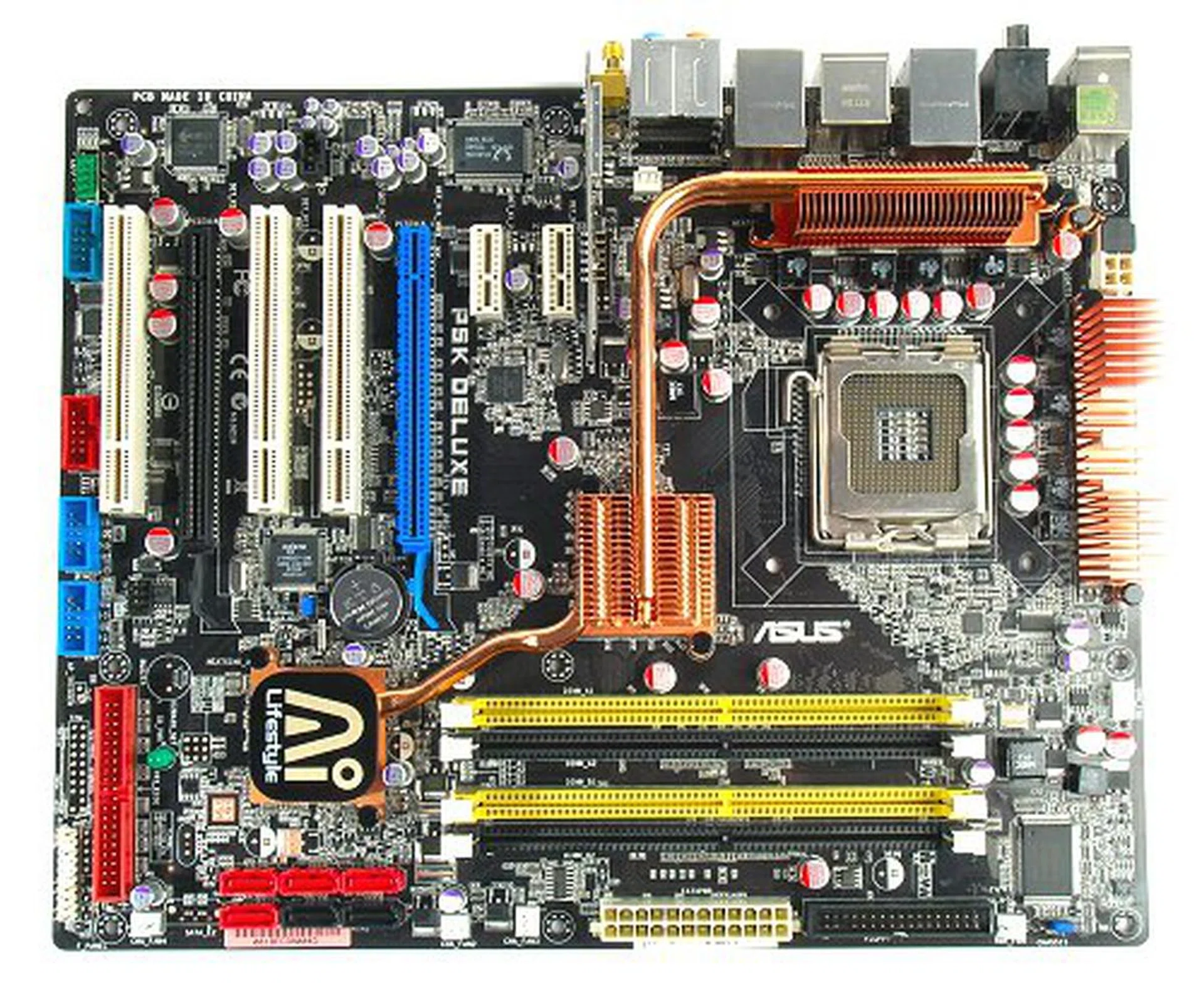
The ASUS P5K Deluxe motherboard is a P35 chipset board supporting DDR2 memory.
We brought you a preview of the two flagship boards in the ASUS P5K series earlier this month and we can finally show you just what the P5K Deluxe can do. Like the MSI P35 Platinum review before, we will dive right into the heart of the board and get down with benchmarks in this review.
The following lists the bundled peripherals that come with the ASUS P5K Deluxe:-
- 2 x SATA data cables
- 1 x SATA power converter cables (dual plugs)
- 1 x 80-conductor Ultra ATA data cable
- 1 x floppy drive data cable
- USB 2.0 (2 ports) and IEEE 1394a (1 port) bracket
- ASUS Q-Connector set
- ASUS WiFi-AP Solo Antenna
- I/O shield
- Driver CDs
- User's manual
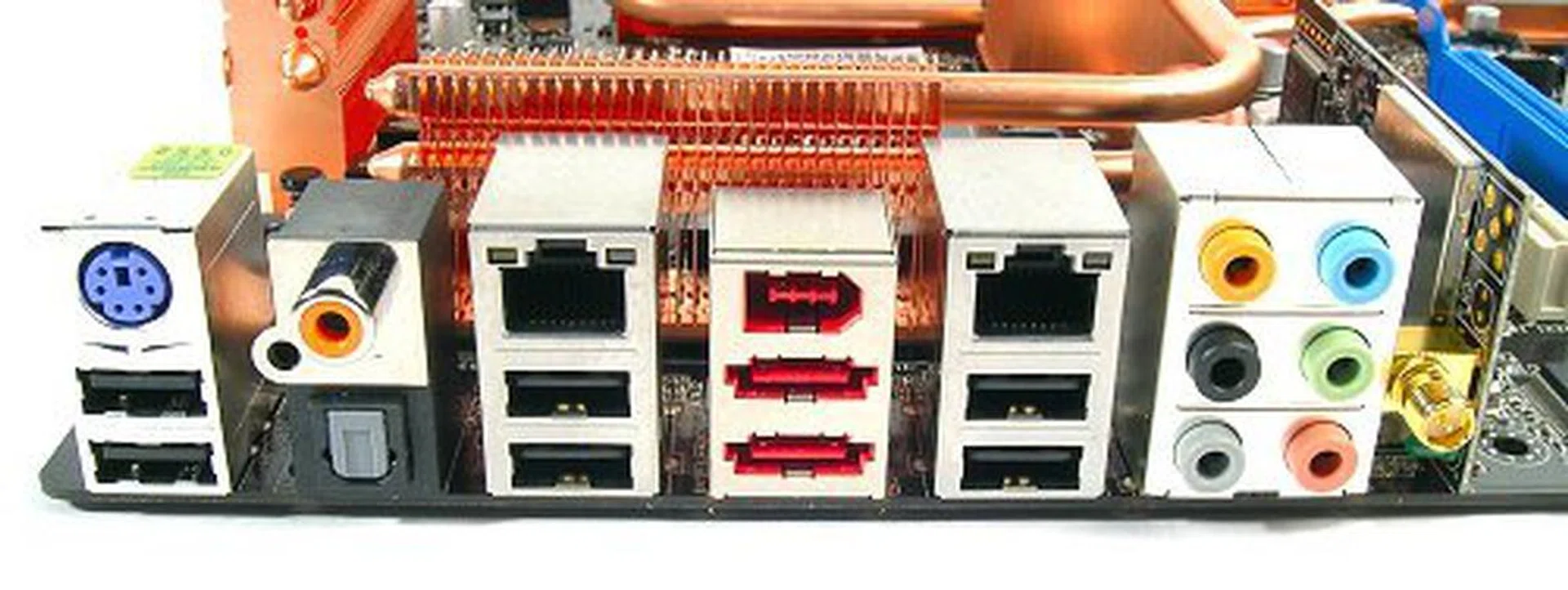
Extensive rear I/O panel devoid of PS/2 mouse, serial or parallel ports. Instead you have six USB 2.0, two LAN, optical and coaxial S/PDIF, two eSATA, FireWire, analog surround and Wireless LAN.
P5K Deluxe In Depth
The ASUS P5K Deluxe sits at the very top of the P5K series as the flagship desktop product, sharing its spot with the DDR3-only P5K3 Deluxe. As usual, the philosophy of 'more is better' applies here and the board is brimming with features. If you've noted the actual components ASUS is putting into the board in our preview article, there isn't anything really new on the P5K Deluxe that ASUS hasn't used before in their previous motherboards, but it is the way ASUS implements them that sets it apart from some of the competition.
First, some facts. The P5K Deluxe is designed using full solid capacitors, has an updated 8-phase PWM that ASUS claims to be 15C cooler and their Stack Cool 2 PCB to further improve heat dissipation. The P5K Deluxe also comes with a simple heat-pipe system that is uncharacteristic of ASUS' previous elaborate designs. The rest of the board looks like standard ASUS engineering that we've come to expect from a Deluxe motherboard.
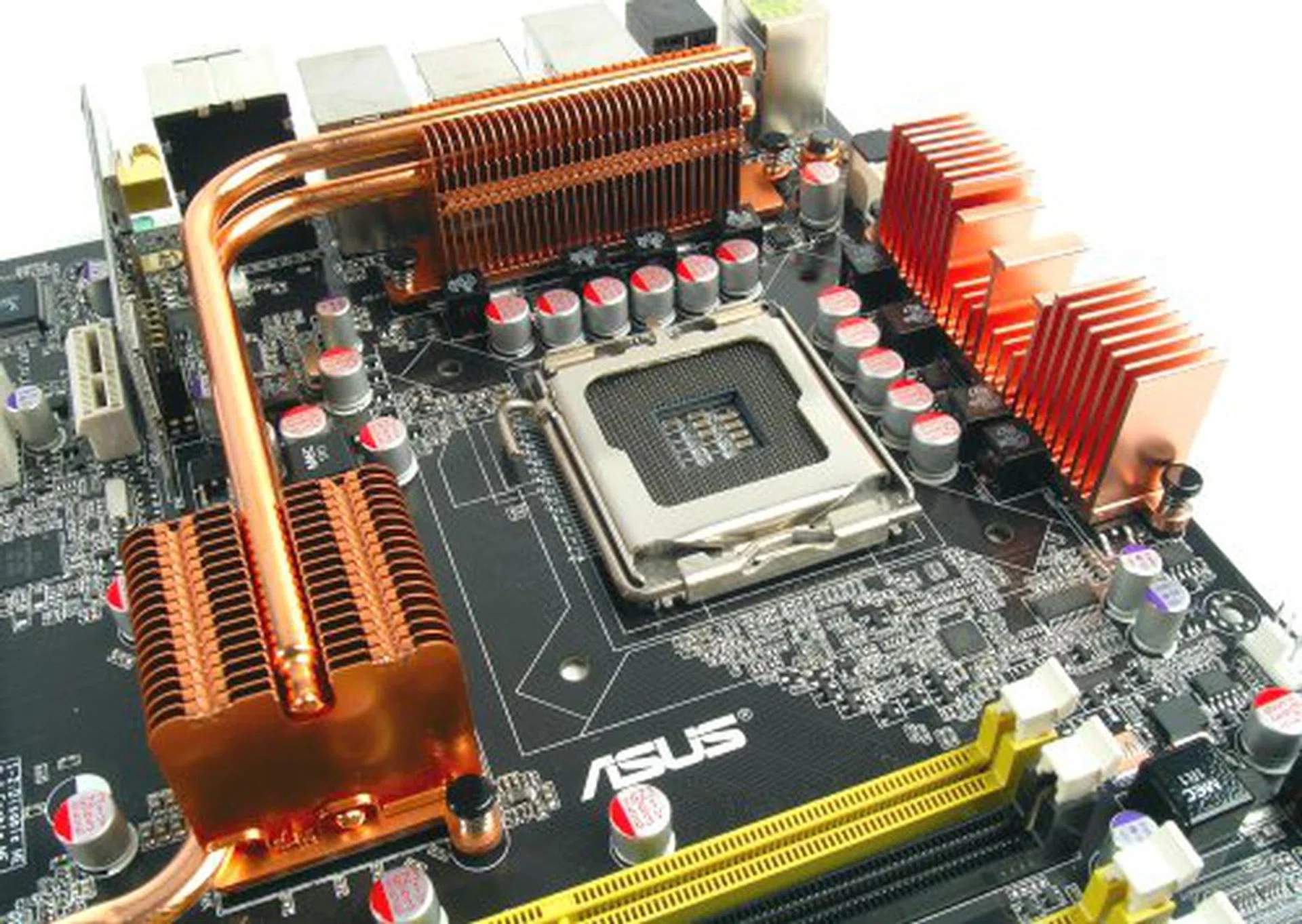
Simple heat-pipe system, yet effective enough even for extreme overclocking. The corner heatsink might be problematic though if you've got a large CPU cooler.
So what sets the P5K Deluxe apart? ASUS has taken a bold move to remove as many legacy connections as possible. With 12-USB 2.0 ports available from the new ICH9R chipset, the P5K Deluxe even does away with the traditional PS/2 mouse port. If this is your first motherboard upgrade in a while, you'd be quite surprised at the port availability on the P5K Deluxe. The P5K Deluxe is also one of the first P35 boards we've come across to feature multiple networking features. ASUS stacks two Gigabit LAN controllers on the board and also includes their 802.11g WiFi-AP Solo adapter as well to provide wireless LAN capabilities. Interestingly, ASUS does not make use of Intel's own LAN MAC on the chipset, opting for two discreet LOM (LAN-on-motherboard) controllers instead.
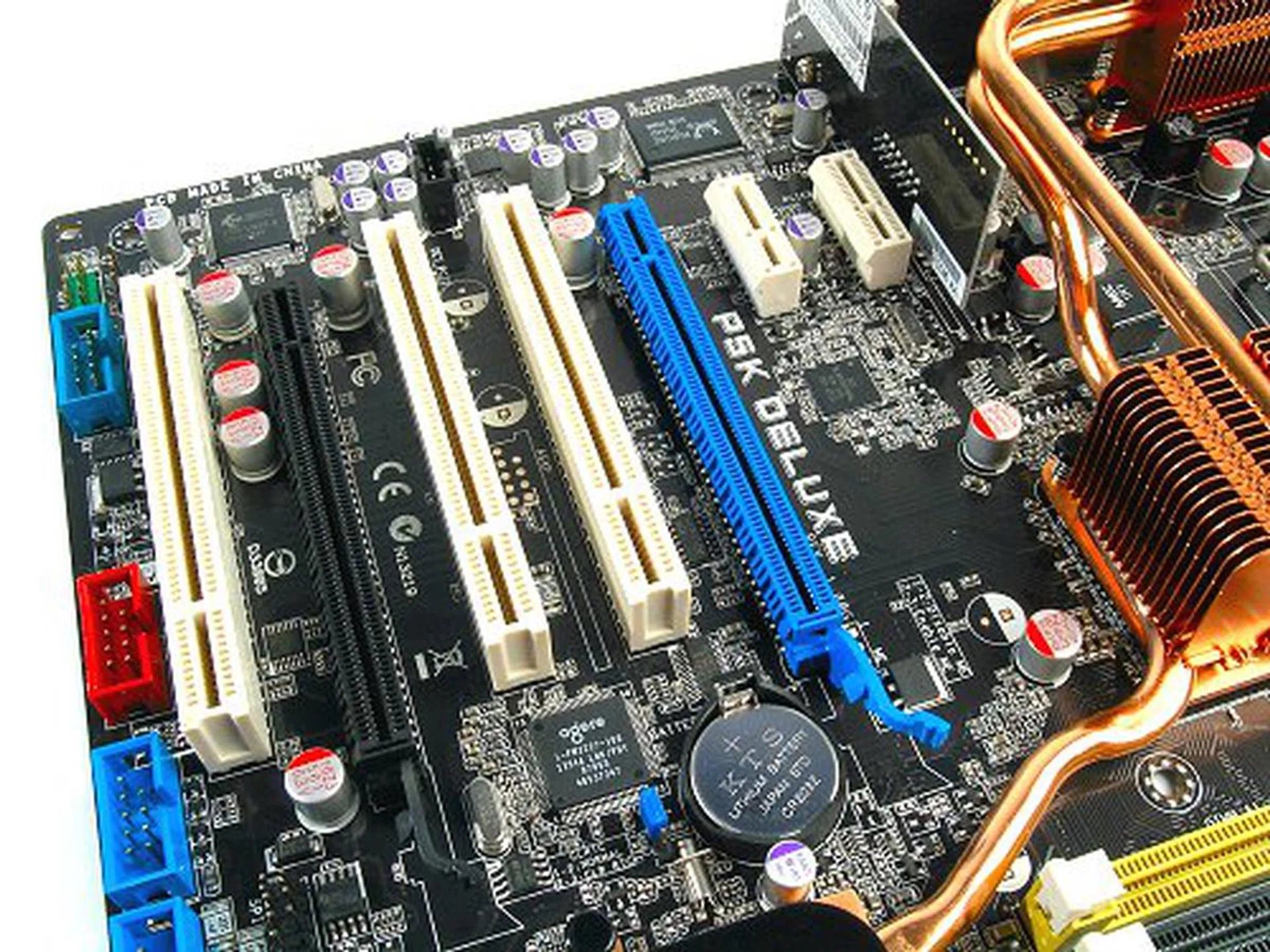
ASUS still values the need to have PCI slots. Note that the dual PCIe x16 slots have an electrical configuration of 16 and 4 lanes on the blue and black slots respectively.
We also like the storage setup on the board. Like the MSI P35 Platinum, the ASUS P5K Deluxe sports two eSATA ports by default, but unlike MSI, ASUS uses a third party chipset (Jmicron JMB363) to enable this feature, freeing the ICH9R Southbridge for internal connections only. This means better RAID functionality on the P5K Deluxe with the full set of six SATA 3.0Gbps connectors onboard instead of four.
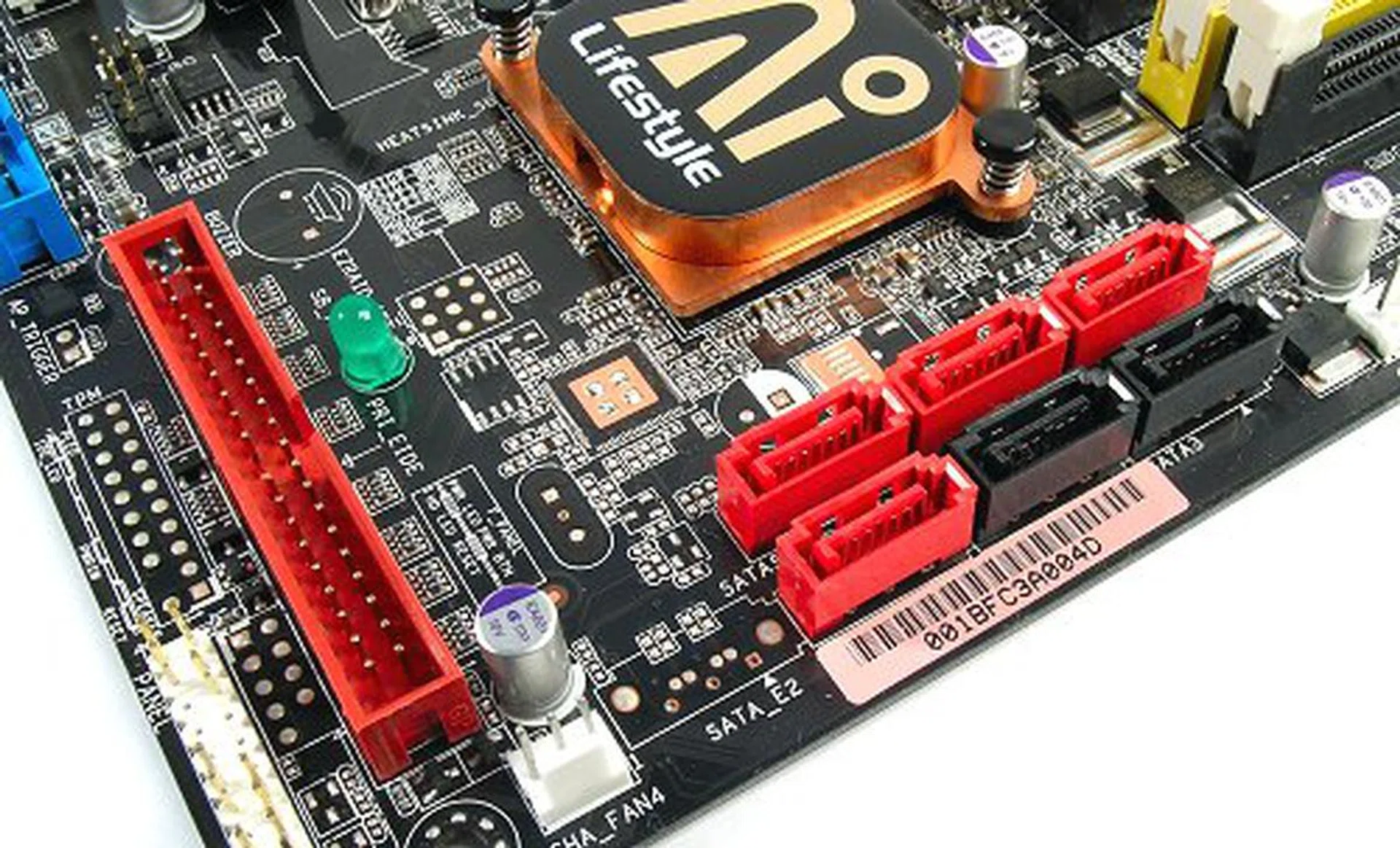
Full set of SATA connectors for more RAID options, but just note that full length graphics cards may interfere with cable connection.
Remember when we mentioned that the P35 chipset supports some form of Intel Turbo Memory (Robson) feature that seems tied with the new ICH9 storage controller? Well, the P5K Deluxe was the board that actually lent some truth to this connection. If AHCI or RAID is selected in the BIOS, an extra Robson Technology option appears in the menu. Since the P5K Deluxe doesn't carry any additional Flash memory module - Intel Turbo Memory or ASUS Accelerated Propeller (ASAP) - enabling this function doesn't do anything at the moment, neither do we know how Turbo Memory will be integrated into desktop motherboards. However, we do know that it is specifically tied to the AHCI and RAID functionality of the storage controller, which could simply mean proprietary ReadyDrive support for SSD or Hybrid HDDs via Turbo Memory drivers like how it works on the Santa Rosa notebook platform. Take note that this is just our speculation as we've not seen actual implementations of the P35 Turbo Memory in any motherboard.
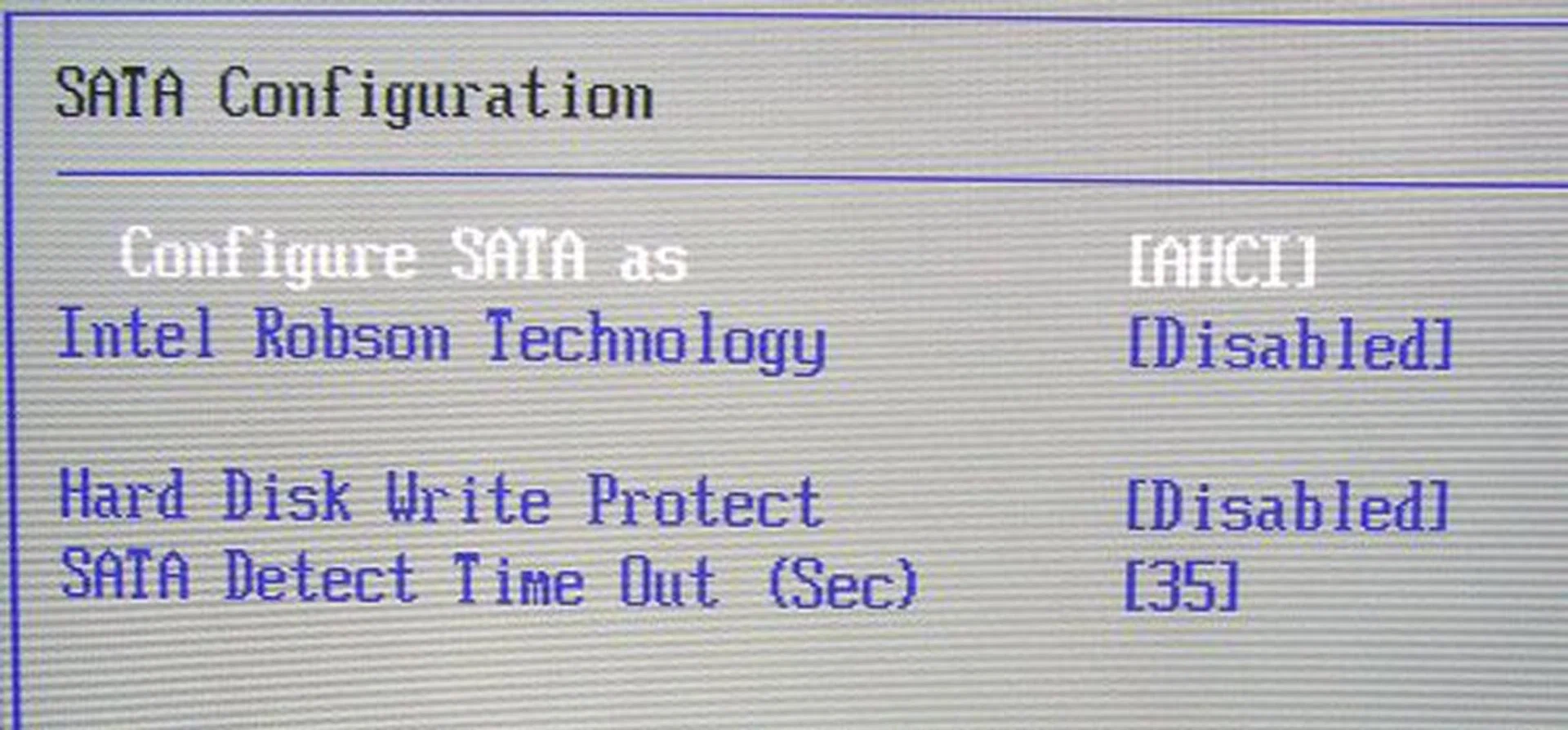
Selecting AHCI or RAID will enable the Robson Technology option in the BIOS, but no word on how it works with the board or HDDs at the moment.
Overclocking
- FSB Settings: 200MHz to 800MHz
- DDR2 Settings: 667/800/886/1067MHz
- PCIe Settings: 100MHz to 150MHz
- CPU Voltage Settings: 1.1000V to 1.7000V (in 0.0125V steps)
- Memory Voltage Settings: 1.80V to 2.55V (in 0.10V steps)
- CPU PLL Voltage Settings: 1.50V to 1.80V (in 0.10V steps)
- FSB Termination Voltage Settings: 1.20V to 1.50V (in 0.10V steps)
- NB Voltage Settings: 1.25V to 1.70V (in 0.15V steps)
- SB Voltage Settings: 1.05V, 1.20V
- Multiplier Selection: Yes (unlocked CPUs only)
The P5K Deluxe is ASUS' flagship DDR2 motherboard for the P35 chipset, so it comes as no surprise that it is geared for overclocking. ASUS is hyping a new technology called Super Memspeed Technology that 'Enhances Memory Speed up to 75%', if you believe what's on the box that is. Basically, it just means that the board supports a DDR2-1066 divider natively and has more timing options available. Looking at the BIOS itself, ASUS seems pretty ambitious with a maximum FSB of 800MHz (3200MHz QDR) selectable. Surprisingly however, we find that the MSI P35 Platinum actually has a better overclocking BIOS in terms of higher voltage selections and better granularity in most options. Nevertheless, the P5K Deluxe proved to be an exceptional overclocking motherboard when put to the test.
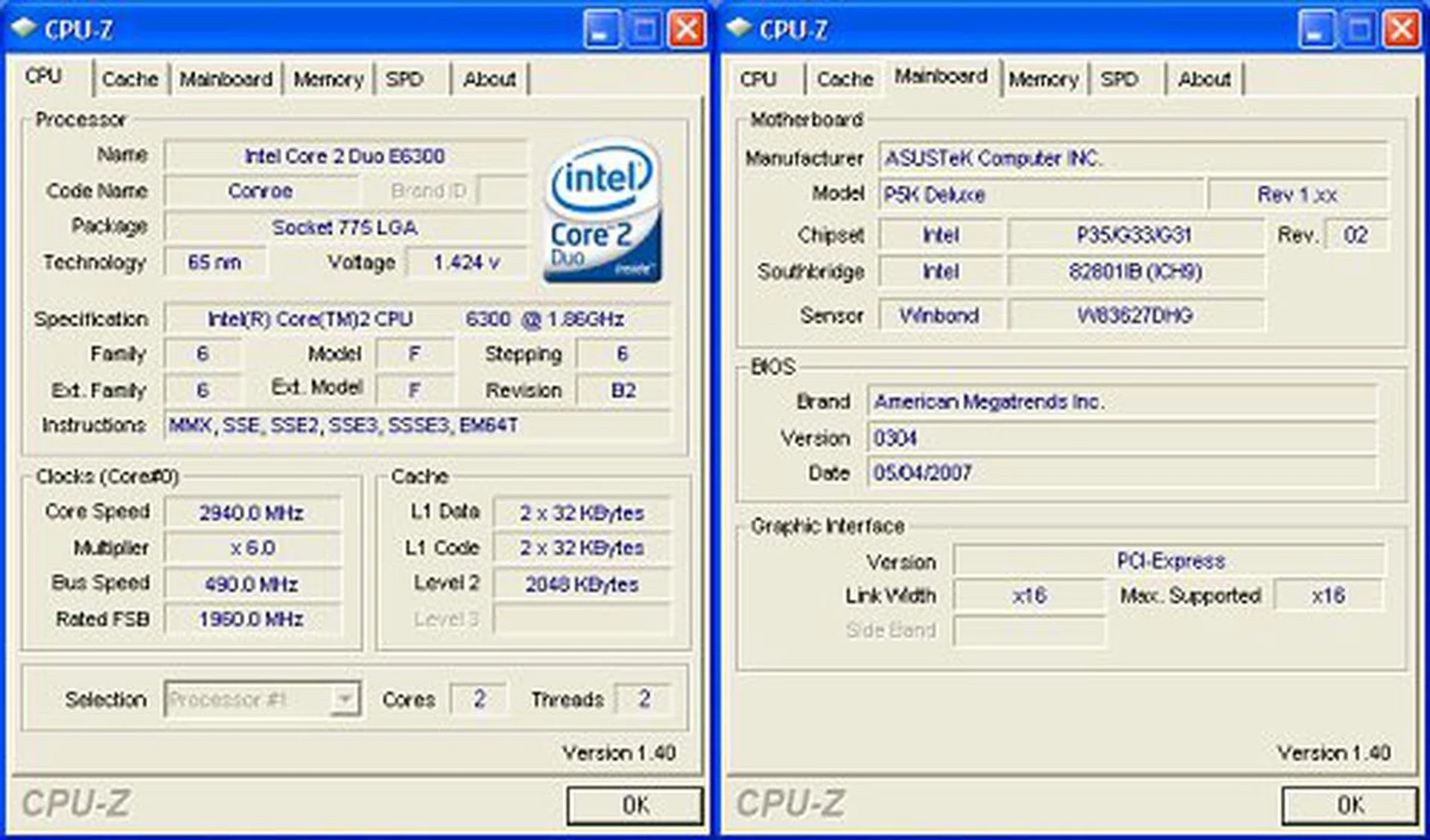
Pushing the limits of a Core 2 Duo E6300 and DDR2-800 memory, we managed to push the P5K Deluxe up to a maximum stable overclock of 490MHz. Note that this was achieve with standard air cooling, though we had to boost the NB Voltage to 1.55V beyond 480MHz. As it stands, we've yet to break the 500MHz barrier on a P35 chipset (both the Intel P965 and NVIDIA nForce 680i SLI have achieved post 500MHz overclocks in previous tests - both on ASUS motherboards), though 490MHz already shows incredible capability way beyond the upcoming 333MHz standard.
Test Setup
For our benchmarking section of this review, the obvious performance comparison would be against the MSI P35 Platinum that was just recently reviewed. In order to maintain a proper perspective of performance, we'll also be including the same reference Intel P965 and NVIDIA nForce 680i SLI results used in the P35 Platinum review. As before, the full test bed configuration is listed below and will be used throughout this review unless otherwise noted.
- Intel Core 2 Extreme X6800 processor (2.93GHz)
- 2 x 1GB Kingston HyperX DDR2-800 @ 12-4-4 CAS 4.0
- Seagate Barracuda 7200.10 200GB SATA hard disk drive (one single NTFS partition)
- MSI GeForce 8600 GT 256MB - with ForceWare 158.22 drivers
- Intel INF 8.3.1.1013 and AHCI 7.5.0.1017 driver set (Intel P965 and P35 only)
- NVIDIA nForce 9.53 driver set (NVIDIA nForce 680i SLI only)
- Microsoft Windows XP Professional with Service Pack 2 (and DirectX 9.0c)
Benchmarks
The following benchmarks will be used when benchmarking the ASUS P5K Deluxe:-
- BAPco SYSmark 2004
- Futuremark PCMark05
- SPECviewperf 9.0
- Futuremark 3DMark06
- AquaMark3
Results - BAPco SYSmark 2004
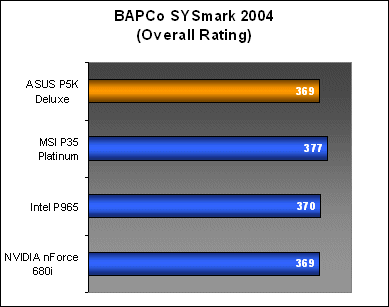
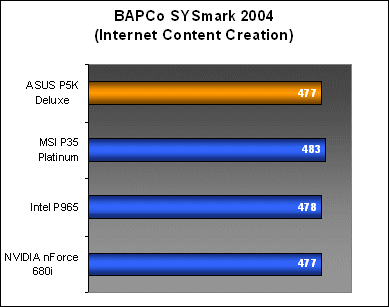
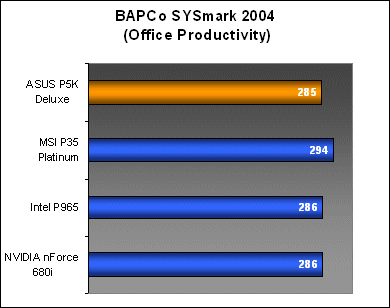
The performance of the P5K Deluxe in SYSmark 2004 was more in line with the reference P965 and nForce 680i SLI than the MSI P35 Platinum. In this case, we're not seeing any improvement over previous generation chipsets with the P5K Deluxe, which means that the MSI P35 Platinum holds a strong lead in desktop productivity performance at the moment.
Results - Futuremark PCMark05
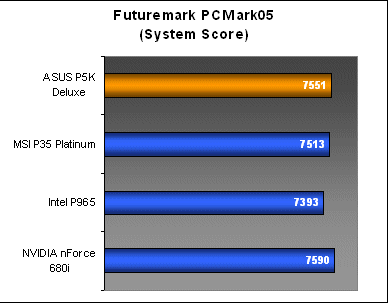
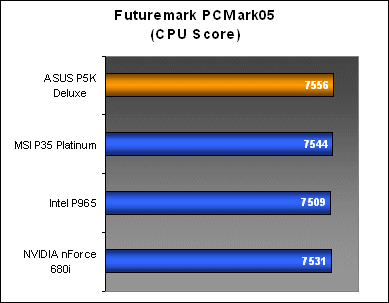
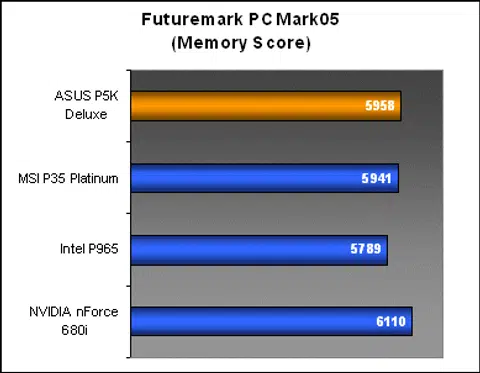
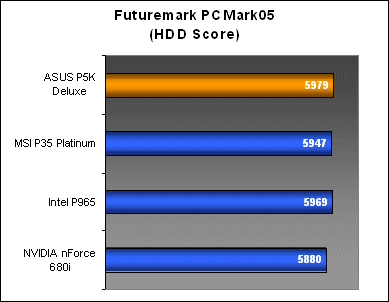
Under PCmark05, the ASUS P5K Deluxe moved back up the scale to compete directly with the MSI P5K Platinum. In fact, the P5K Deluxe outperformed the MSI in every test here by a small amount, though the nForce 680i SLI's memory performance was hard to beat.
Results - SPECviewperf 9.0
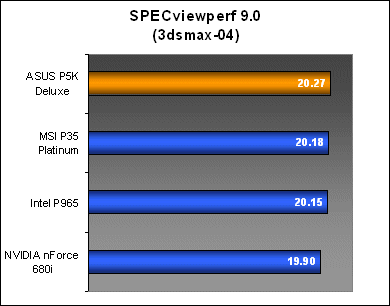
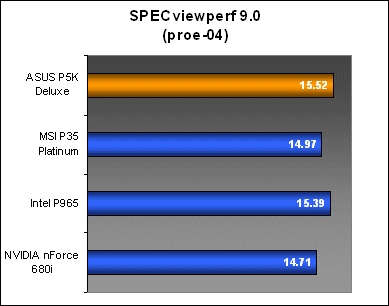
The ASUS P5K Deluxe again proved to be the better board in SPECviewperf 9.0 with both higher graphics and memory subsystem performance throughout the various workloads. The board posted an impressive pro/ENGINEER result, which speaks well for it as a professional workhorse and its high memory subsystem performance here most probably helped it edge out in 3dsmax as well, which is usually more graphics dependent.
Results - Futuremark 3DMark06
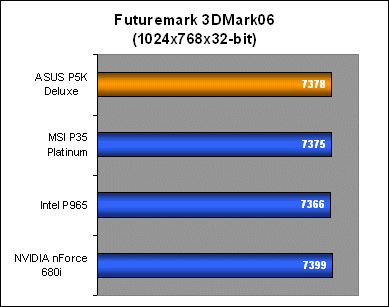
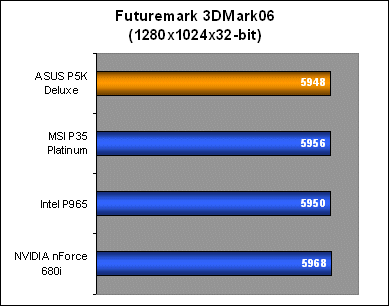
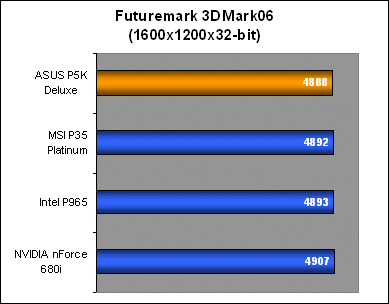
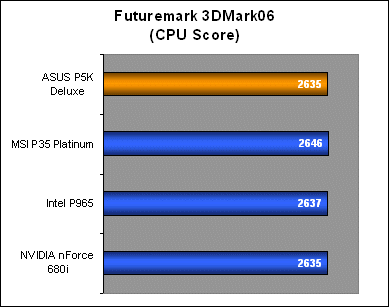
Consistency is the name of the game in 3DMark06 for a motherboard and the P5K Deluxe results were very much as expected in both the graphics and CPU only workloads. The MSI P35 Platinum held a slight lead, but the differences are negligible.
Note that in our benchmarks, all proprietary performance enhancing technologies (like ASUS Transaction Booster and PEG Link where available) are disabled. Enabling these features will most probably affect overall performance in favor of the board where some of these settings actually use more aggressive settings and overclocking some of the data busses. Such features may not bode well for all users due to compatibility and stability variables since there is an infinite amount of system configurations possible.
Results - AquaMark3
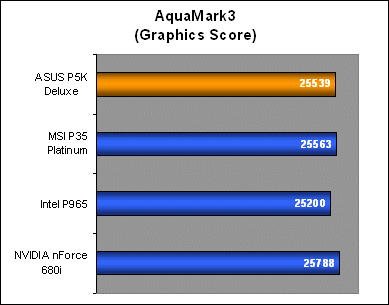
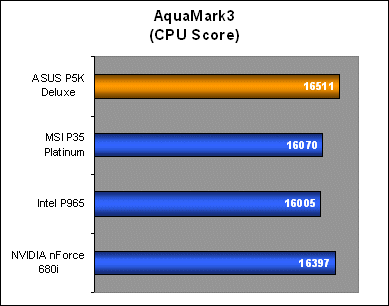
Even though CPU subsystem results from AquaMark3 favored the ASUS P5K Deluxe, both the ASUS and MSI boards shared very similar results when the graphics element was brought into play, matching the nForce 680i SLI in overall fps.
Conclusion
The Intel P35 chipset itself is actually a minor upgrade from the already excellent P965 in order to support upcoming processor and memory standards. However, there aren't many 'new' features to make it really stand out on its own. The ASUS P5K Deluxe is in the same situation as it is basically the natural progression of the venerable ASUS P5B Deluxe to the new chipset. If you take a look at our old ASUS P5B Deluxe review, the two boards are basically the same component wise. ASUS may be throwing out some new fangled terms this time around but even before the P35 chipset came about, motherboard manufacturers were already promoting DDR2-1066 support on the P965, so you'll forgive us if we aren't overly enthused about the whole Super Memspeed Technology claims.
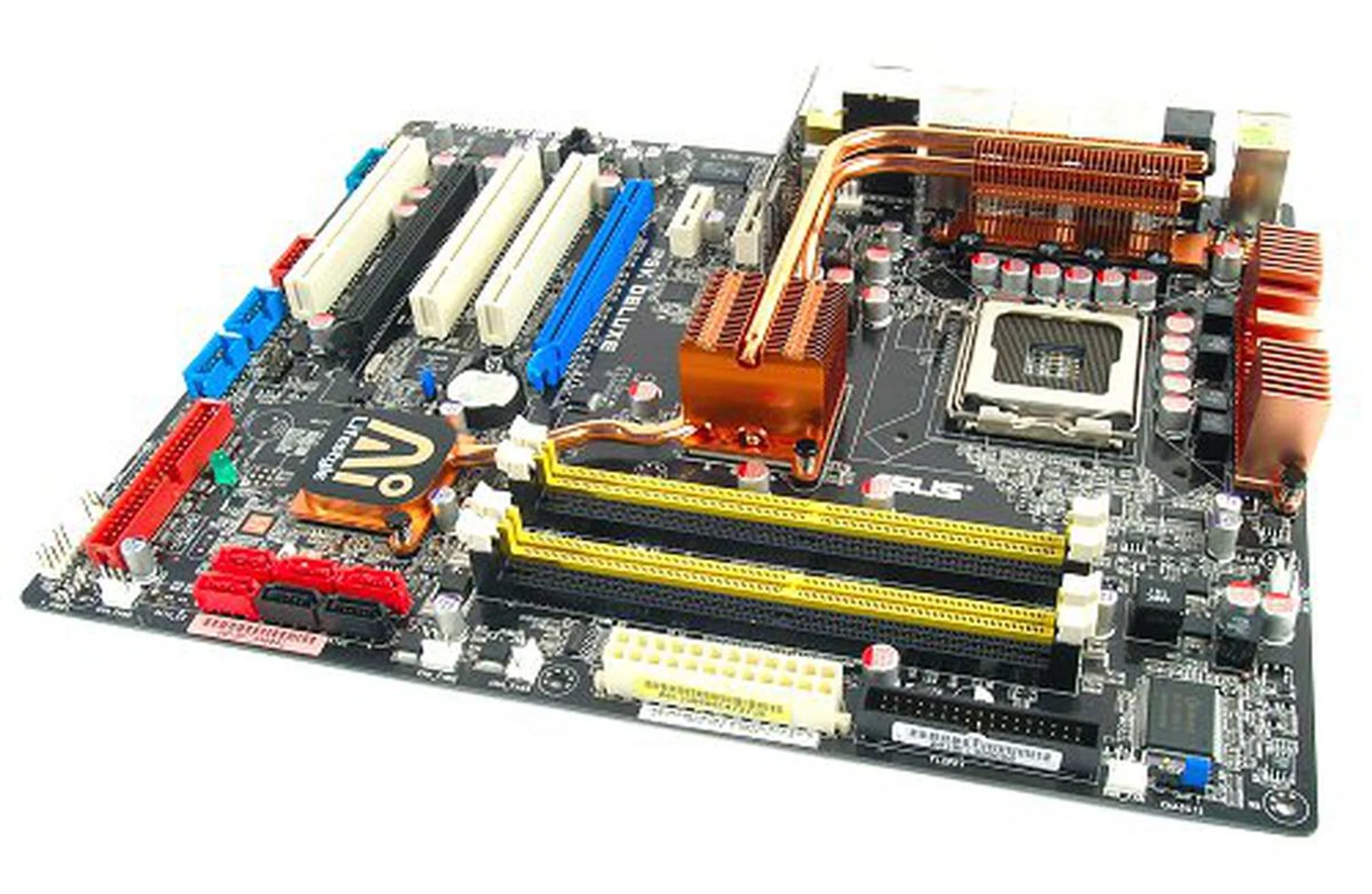
The ASUS P5K Deluxe is a great motherboard for enthusiasts looking to let their DDR2 memory go out in a blaze of glory.
Yes, the P5K Deluxe supports 'native' DDR2-1066 memory, but so does almost every other P35 motherboard out there, including the recently reviewed MSI P35 Platinum. The one good thing about ASUS' Super Memspeed Technology is that they enable a wider range of memory timings to play around with, which would be beneficial for extreme overclocking.
Performance-wise, the P5K Deluxe is just as able as the MSI P35 Platinum, matching the current top Intel platform performers like the nForce 680i SLI and the P965. However, we've yet to perform a full evaluation of DDR3.
The P35 chipset is also still on the same scale as the P965 in terms of overclocking capabilities, but if you're looking for a more stable overclocking platform, the P5K Deluxe should be among your top choices. Working with an ASUS board is always a pleasure and we believe that their BIOS and overclocking safeguards are some of the most reliable in the industry. You can almost always guarantee a proper recovery from a bad overclock with minimal hassle and full directory access in the BIOS level (floppy, HDD and USB) removes all the inconveniences related with BIOS updating. While ASUS is just as guilty of excessive marketing like every other manufacturer out there, they have the quality and reliability to back it up. Engineering quality on the P5K Deluxe is top notch, which is what we've come to expect from ASUS' high-end motherboards. Never once did the P5K Deluxe display any stability or compatibility problems throughout our review, though we did note that the chipset does get slightly warm at full loads. Nothing compared to the scalding heat from previous generation chipsets, but we can't help being more and more impressed with the MSI P35 Platinum and its ice cool Circu-Pipe cooling.
Instead of trying to outdo its competitors with increasingly lavish motherboards, ASUS stuck to a winning formula, perfecting the design with improvements developed over time such as solid capacitors and a tweaked PWM. All in all, the ASUS P5K Deluxe is an excellent motherboard worthy of the P5B legacy. At US$247 though, the ASUS P5K Deluxe will be around US$17 more expensive than the P5B Deluxe when it was launched nearly a year ago, but it still isn't one of the most expensive P35 boards that have been launched. That honor goes to the Gigabyte GA-P35-DQ6.
Our articles may contain affiliate links. If you buy through these links, we may earn a small commission.