
ASRock AM2V890-VSTA (VIA K8T890 CF)
ASRock has now updated their motherboard line-up with native AM2 processor support. Meet the AM2V890-VSTA, a mainstream offering based on a new variant of the VIA K8T890 chipset. Can the veteran chipset support the full potential of the new AM2 CPUs? Read on.

Introduction
AMD's Socket AM2 launch is now water under the bridge and we've seen a fair share of new motherboard designs based on NVIDIA's new nForce 500 series of chipsets. However, budget motherboard maker ASRock has been busy retrofitting older Athlon 64 chipsets to the AM2 socket. Today, we take a look at the AM2V890-VSTA, which is based on a mature VIA K8T890 chipset - with a twist.
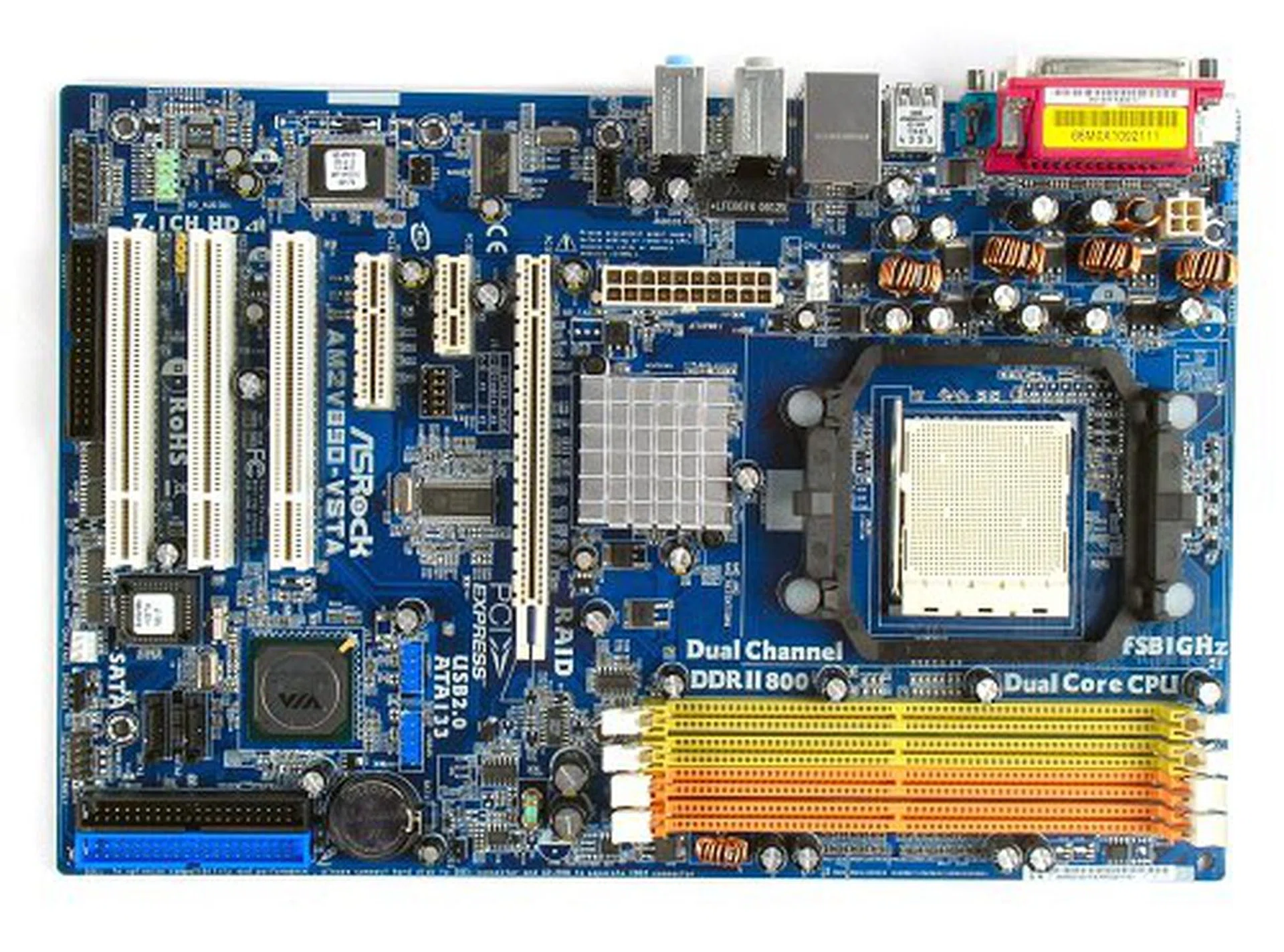
The ASRock AM2V890-VSTA motherboard.
ASRock has taken pains to point out that the board uses a K8T890 'CF' revision of the chipset, which on paper seems to be nothing more than a regular K8T890 that officially runs AM2. As its name implies, the board is also fully certified for Windows Vista compatibility. Can the AM2V890-VSTA motherboard deliver enough performance and features to be considered a decent mainstream offering for the Socket AM2? That's what we intend to find out. Before we begin though, let's have a look at the product bundle and full technical specifications of the board listed below:-
- 1 x SATA data cable
- 1 x SATA power converter cable
- 1 x 80-conductor Ultra ATA data cable
- 1 x floppy drive data cable
- HDMI S/PDIF audio cable
- I/O shield
- Driver CDs
- User's guide
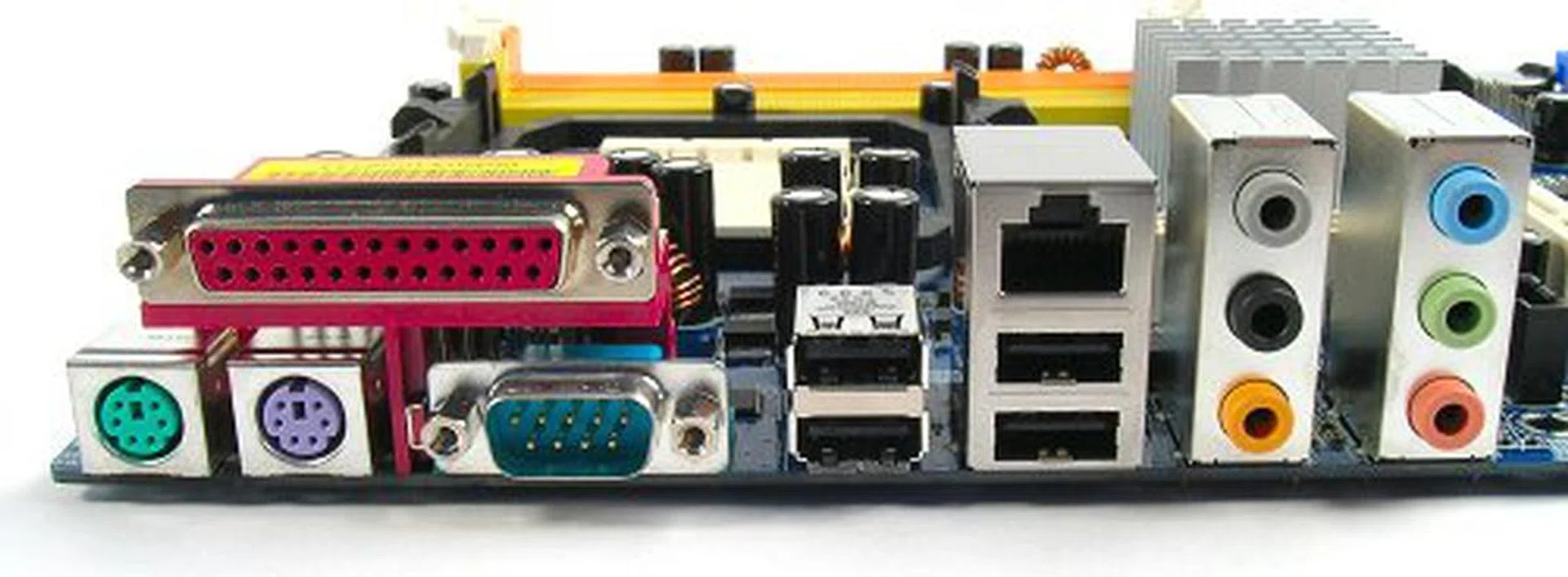
PS/2, serial and parallel ports are available as well as the standard array of four USB 2.0, one RJ45 (Fast Ethernet) and 8-channel analog audio. No S/PDIF or FireWire though.
Features
The AM2V890-VSTA is designed for the entry-level Socket AM2 market, sporting a classic K8T890 setup with the familiar VT8237A as its Southbridge. ASRock has designed the board to be easy on features to keep costs down, but still seemingly enough to meet the requirements for the Windows Vista Premium Logo Hardware Ready program. HD Audio is one of the key components here and we were pleasantly surprised to find a high-end Realtek ALC888 HD CODEC instead of the value edition ALC883 that comes with many budget boards. The board is also one of the first in the market to start featuring direct HDMI S/PDIF connector onboard that allows you to route onboard audio to a HDMI capable graphics card for output to consumer electronic devices like HDTVs.
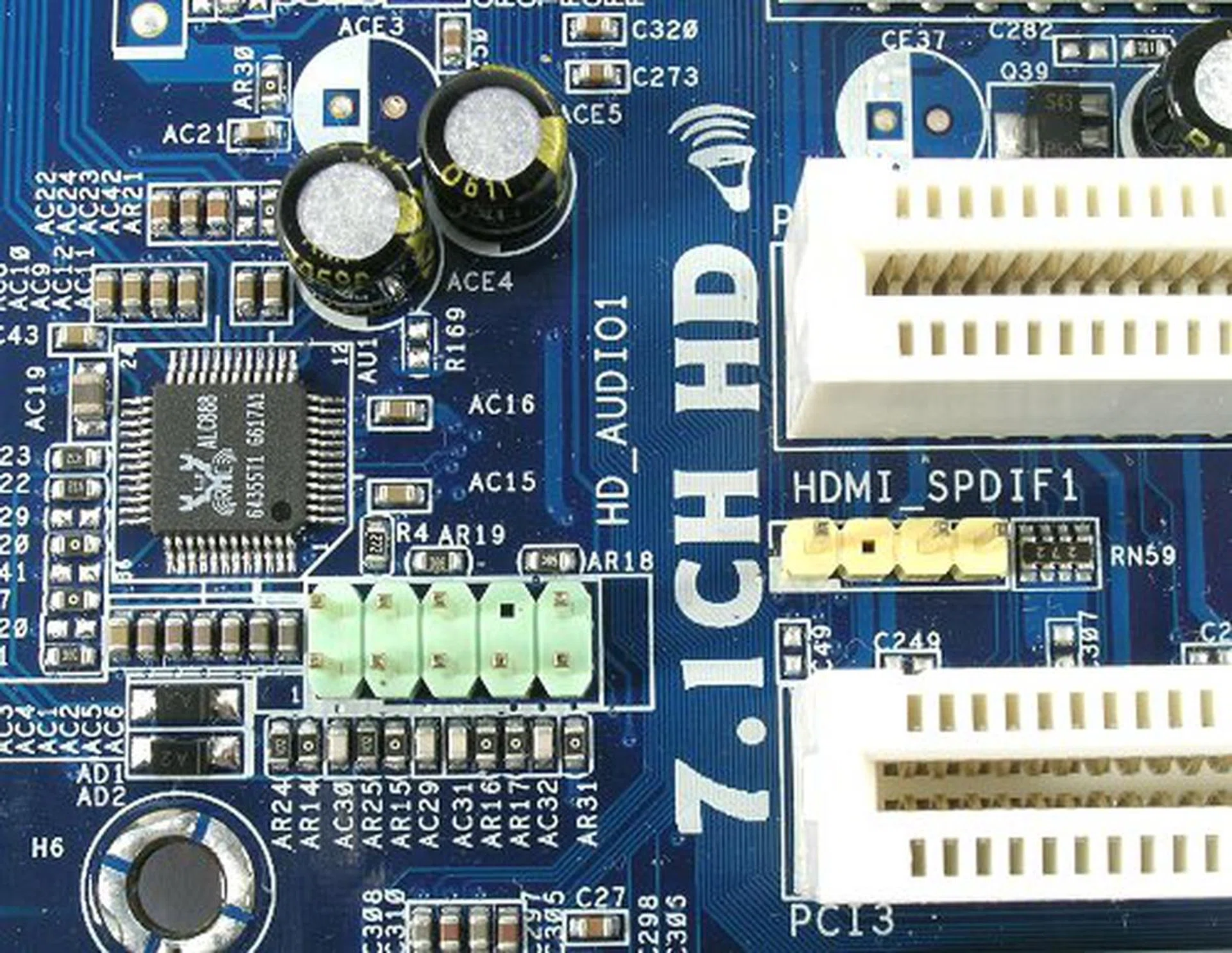
Realtek's new ALC888 CODEC with green HD Audio front panel header. The yellow header to the right is a dedicated HDMI S/PDIF connection to HDMI capable graphics cards. ASRock bundles the appropriate cables with the board too.
The AM2V890-VSTA is a single GPU motherboard, with additional PCIe and PCI expansion slots. The attention grabber is an open ended PCIe x4 slot, which should be able to support an additional graphics card for multi-monitor output. However, the VT8723A only has four PCIe lanes to spare so by default, both PCIe expansion slots run at x1 mode. You'll need to flip a jumper to enable the PCIe x4 slot to run at x4 mode, though this will disable the remaining PCIe x1 slot.
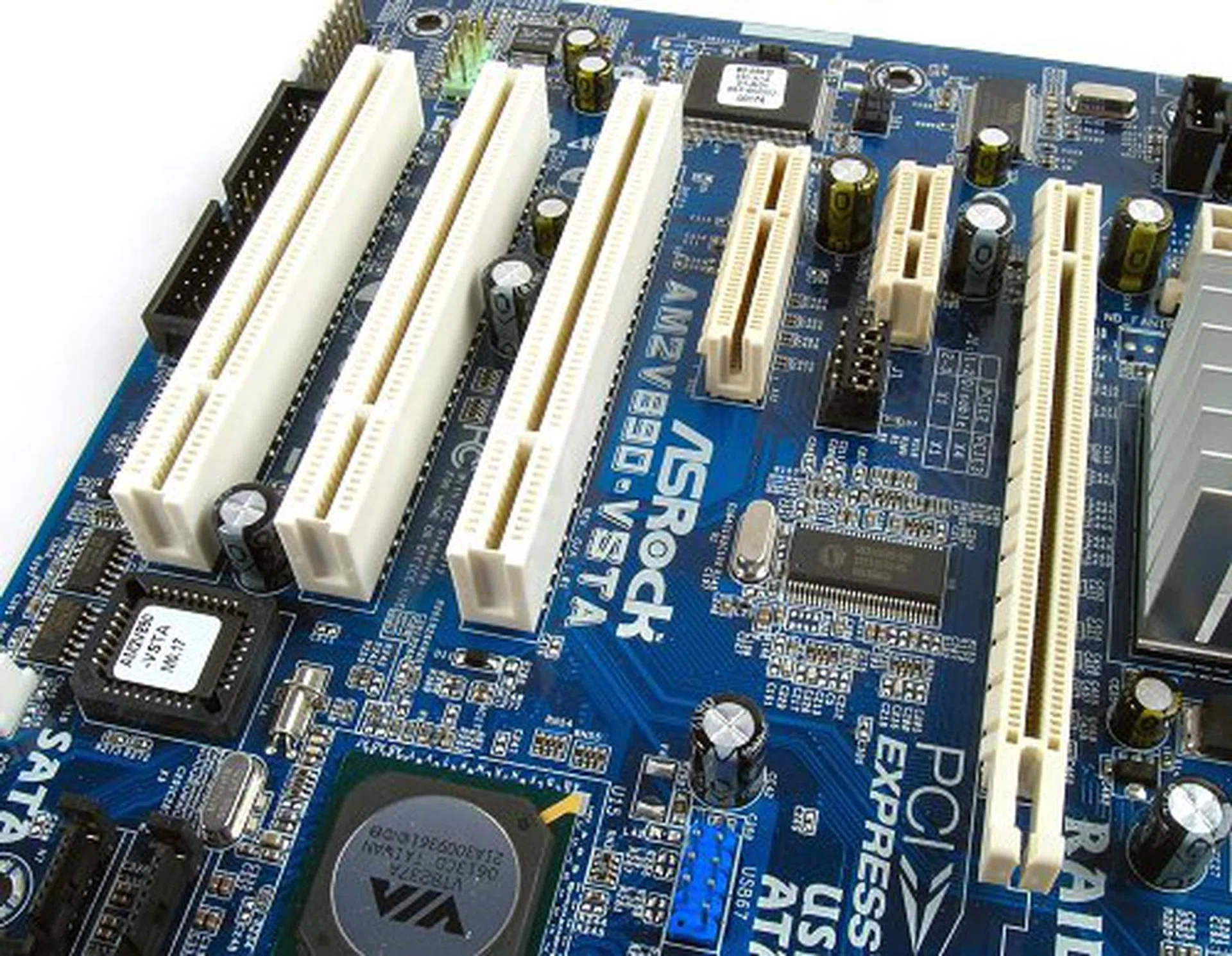
Single GPU motherboard with possibilities of running a second graphics card with an open ended PCIe x4 slot.
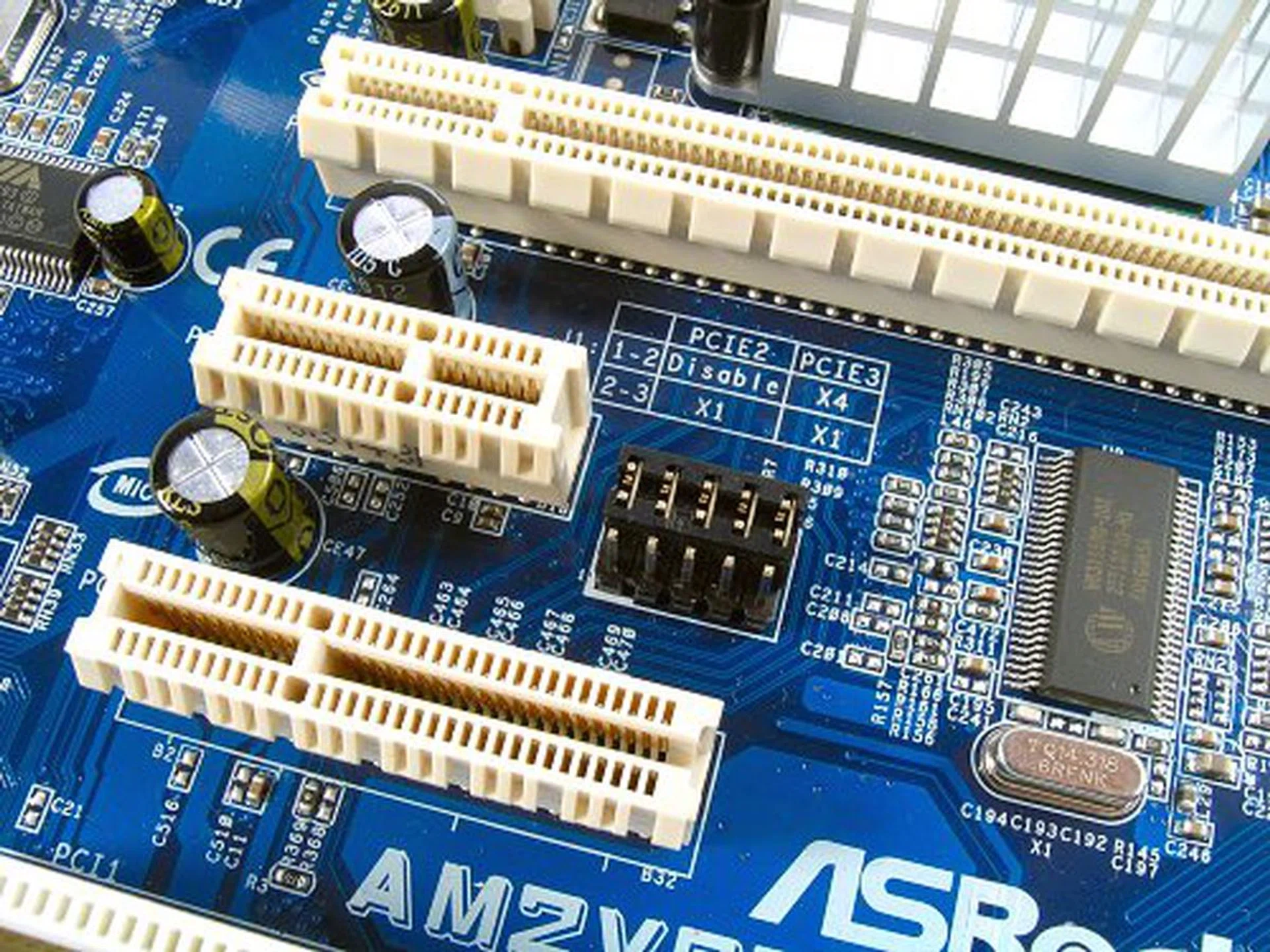
Jumper select for PCIe x1/x4 mode. Factory defaults are set at dual PCIe x1.
The VT8723A Southbridge has basic storage support with two RAID capable 1.5Gbps SATA ports (RAID 0, RAID 1 and JBOD) and two Ultra ATA-133 connectors. However, the older chipset will not support NCQ. In light of all new chipsets doing away with IDE connections, the AM2V890-VSTA will at least be IDE friendly, retaining support for up to four IDE devices Connectivity-wise the AM2V890-VSTA will only come with one Fast Ethernet port, which is itself powered by the onboard MAC in the Southbridge. ASRock uses a VIA Networking VT6103 PHY to complement the MAC. Eight USB 2.0 ports are a given connectivity feature, though the board will not have support for FireWire.
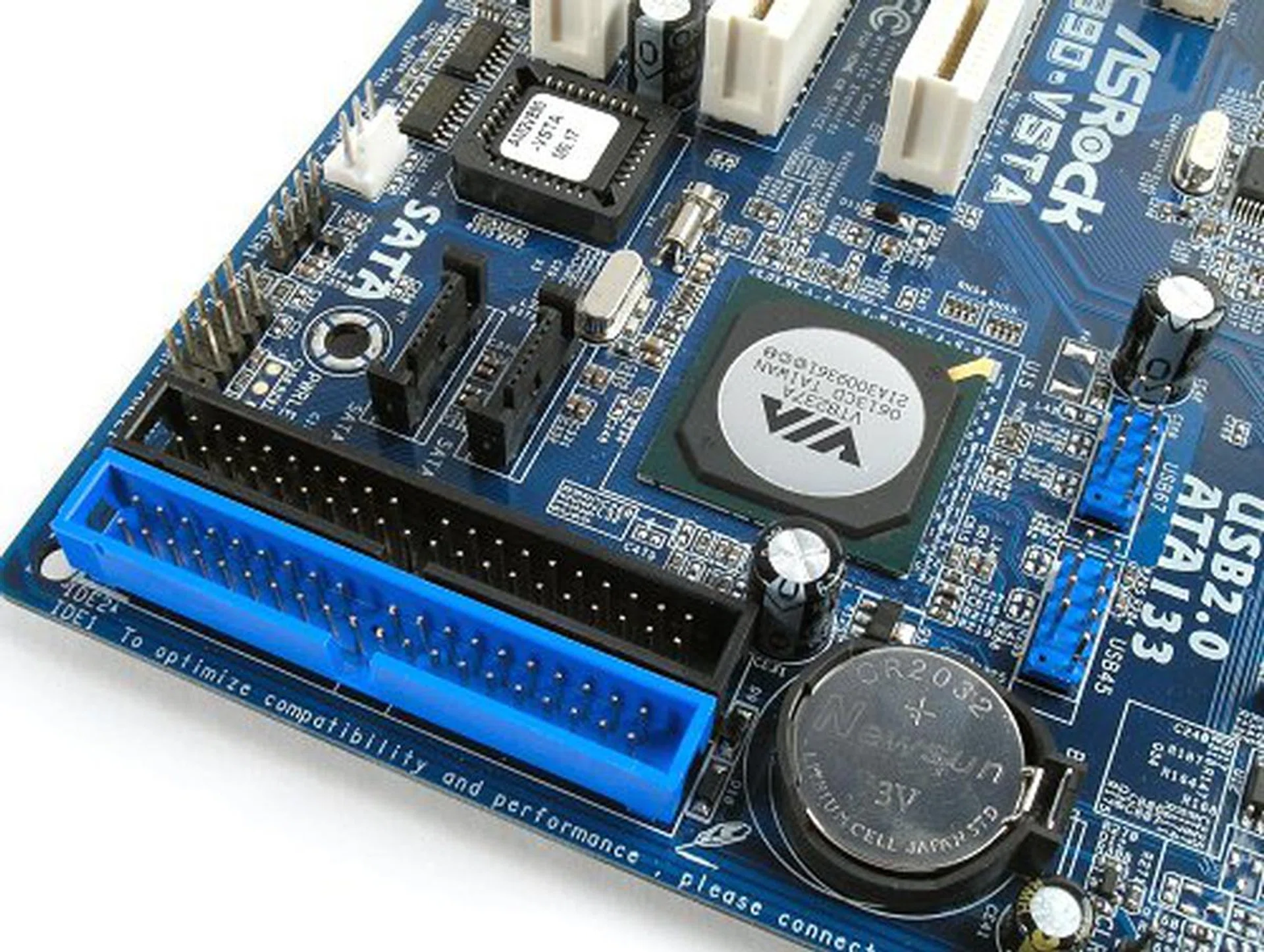
Both the IDE connectors as well as two SATA headers are located at the bottom of the board.
Layout
The AM2V890-VSTA is designed with a compacted ATX PCB, retaining the full 12-inch length, but ASRock shaved 1.6-inches off its width to save space. At a glance, the board looks to have a decent layout, but once you start installing the board, there are some component placement issues you should look out for, especially the main 24-pin ATX, floppy and both IDE connectors, which are all non-ideally located. Other than that, the board is actually CPU and graphics card friendly with space to spare even if you happen to have one of those cards with outlandish coolers.
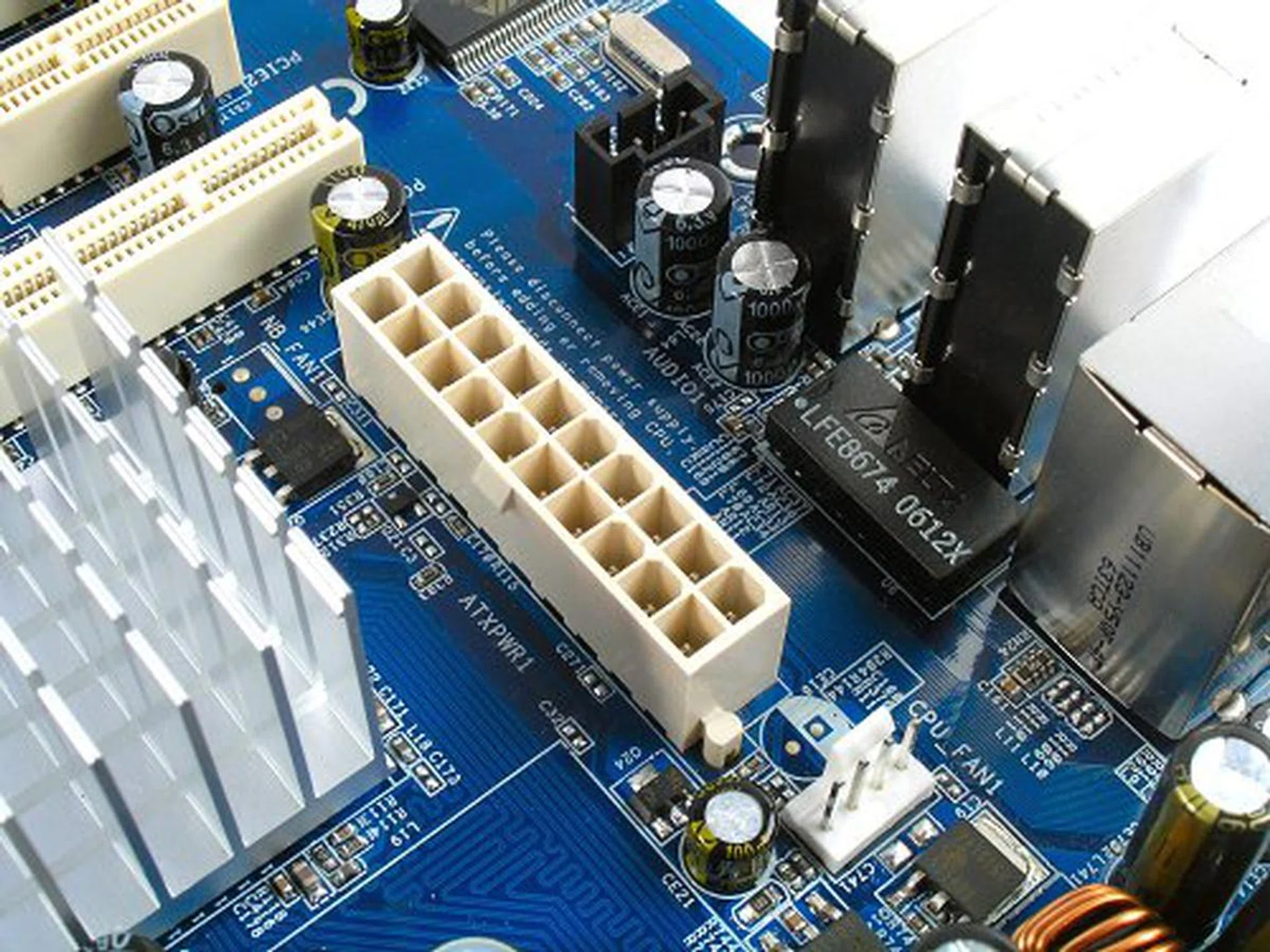
Main 24-pin ATX power connector at the rear of the board.

Out of sight, out of mind? Floppy connector hidden at the bottom rear corner.

Tightly packed DIMM slots line the very edge on a thin ATX PCB. Luckily the board still retains decent component spacing.
Overclocking
- FSB Settings: 200MHz to 450MHz
- RAM Frequency: DDR2-400, DDR2-533, DDR2-667, DDR2-800
- Memory Voltage Settings: Auto, Low, Normal, High, Ultra High
- Multiplier Selection: Yes (unlocked CPUs only)
Let us just say this outright - The AM2V890-VSTA is not an overclocking motherboard - period. The BIOS of the AM2V890-VSTA is totally devoid of any voltage options except for a very vague and ambiguous memory setting. Users are able to toggle memory voltage from Normal to Ultra High, but there is no documentation on what the actual values are. As it turns out however, the memory voltage option might as well not exist either since the board will only run our low latency DDR2-800 memory stable at the maximum 'Ultra High' setting.
In our efforts at overclocking the board, we managed to achieve a 240MHz FSB with a 5x HTT multiplier, which was actually a decent score for the VIA K8T890, but then the board refused to budge any further even after the HTT multiplier was lowered to 4x and subsequently 3x. All memory frequencies and CPU multipliers have been lowered to compensate for the increase in FSB, but 240MHz is all we were able to get.
Test Setup
The main contenders in the chipset market today for the AMD platform is NVIDIA and ATI and the enthusiast sector is dominated by either nForce 590 SLI and CrossFire Xpress 3200 chipsets, mostly due to the demand for multi-GPU systems. In the benchmarking section of this review, we'll be testing the AM2V890-VSTA against these emerging Socket AM2 platforms.
While it is unfortunate that the AM2V890-VSTA isn't a K8T900 motherboard, we'll get to see if the K8T890 can survive another CPU generation. Test bed setup for all the motherboards used are listed below:-
- ASRock AMV890-VSTA (VIA K8T890 CF)
- AMD Athlon 64 X2 5000+ (2.6GHz, Socket AM2)
- 2 x 512MB Corsair XMS DDR2-800 @ 12-4-4 CAS 4 CMD 1T
- Seagate Barracuda 7200.7 80GB SATA hard disk drive (one single NTFS partition)
- MSI GeForce 7900 GT 256MB - with NVIDIA ForceWare 91.28 beta driver
- VIA HyperionPro 508A
- Microsoft Windows XP Professional, Service Pack 2 - with DirectX 9.0c
- ECS KA3 MVP (ATI CrossFire Xpress 3200)
- AMD Athlon 64 X2 5000+ (2.6GHz, Socket AM2)
- 2 x 1GB Kingston HyperX DDR2-800 @ 12-4-4 CAS 5 CMD 2T
- Seagate Barracuda 7200.7 80GB SATA hard disk drive (one single NTFS partition)
- MSI GeForce 7900 GT 256MB - with NVIDIA ForceWare 91.28 beta driver
- ATI SMBUS and AHCI driver
- Microsoft Windows XP Professional, Service Pack 2 - with DirectX 9.0
- Foxconn C51XEM2AA (NVIDIA nForce 590 SLI)
- AMD Athlon 64 X2 5000+ (2.6GHz, Socket AM2)
- 2 x 1GB Kingston HyperX DDR2-800 @ 12-4-4 CAS 4 CMD 1T
- Seagate Barracuda 7200.7 80GB SATA hard disk drive (one single NTFS partition)
- MSI GeForce 7900 GT 256MB - with NVIDIA ForceWare 91.28 beta driver
- NVIDIA nForce 500 package 9.34 beta
- Microsoft Windows XP Professional, Service Pack 2 - with DirectX 9.0c
Additional Notes
- The ASRock AM2V890-VSTA will be benchmarked with a pair of 512MB Corsair XMS DDR2 memory instead of a pair of 1GB Kingston HyperX DDR2 RAM. This is due to a serious memory compatibility issue with the board that causes random POST problems and application instability within Windows. After much trial and error on our part, this is the most stable configuration that the board will accept.
- The ECS KA3 MVP runs with slower SPD timings of CAS 5 and CMD 2T because of BIOS limitations that does not allow manual configuration.
benchmarks
The following benchmarks will be used in this review:-
- BAPco SYSmark 2004
- Futuremark PCMark05
- SPECviewperf 8.01
- Futuremark 3DMark05
- AquaMark3
Results - BAPco SYSmark 2004
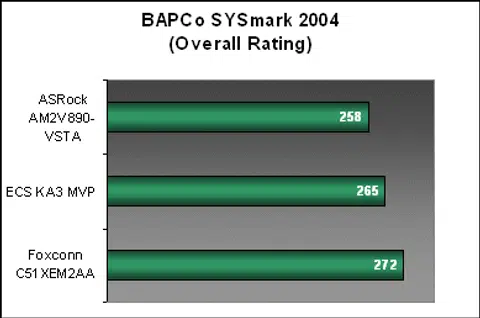
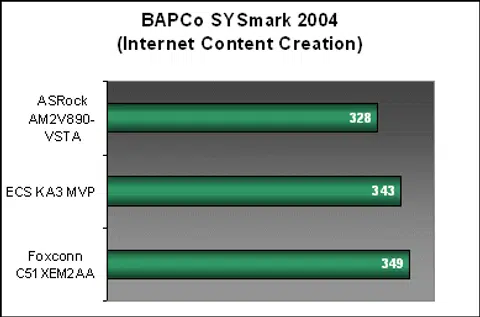
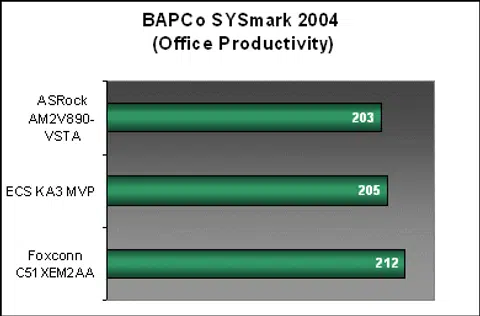
The AM2V890-VSTA didn't get off to a good start. With less memory, SYSmark scores were slightly lower than usual in the Internet Content Creation workload. However this wasn't reflected too badly in the Office Productivity tests, and it was able to catch up to the ECS KA3 MVP.
Results - Futuremark PCMark05
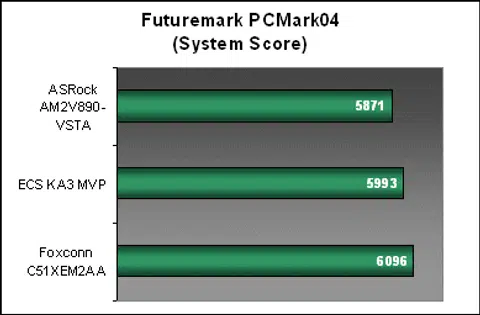
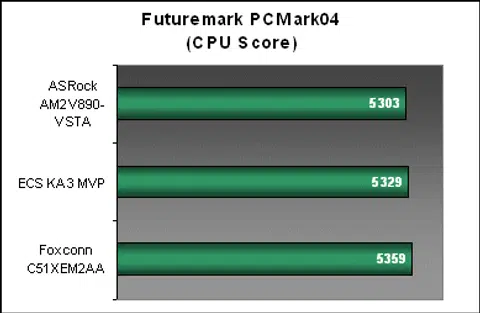
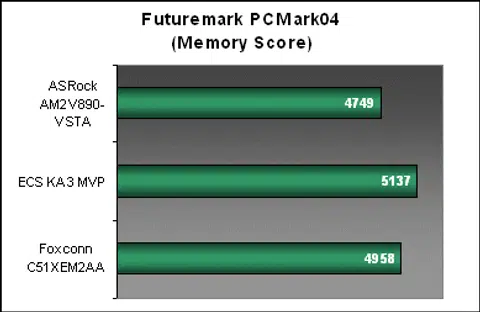
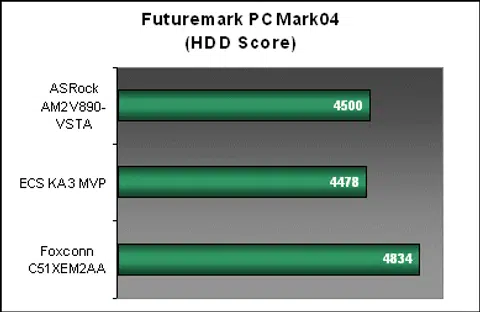
The individual CPU results of all three boards were more or less on par with each other, but the memory performance disadvantage of the AM2V890-VSTA was still apparent. Also with the older VT8723A SATA controller, the low HDD scores posted by the board was expected though.
Results - SPECviewperf 8.01
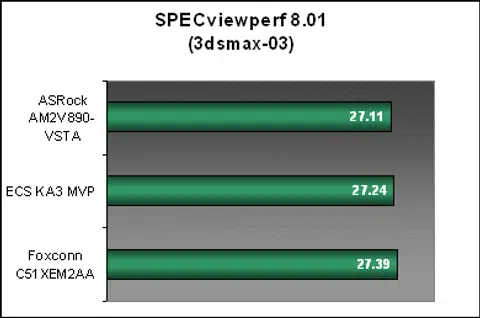
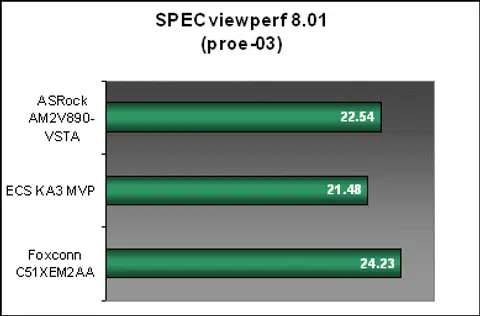
OpenGL performance of the AM2V890-VSTA looked promising as the AM2V890-VSTA kept up with the rest of the boards, but underperformed in pro/ENGINEER due to its memory subsystem. Surprisingly though, the ECS KA3 MVP fared worse here.
Results - Futuremark 3DMark05
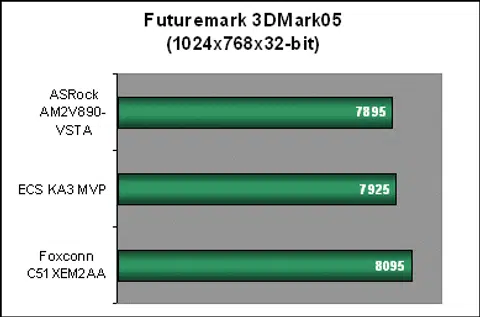
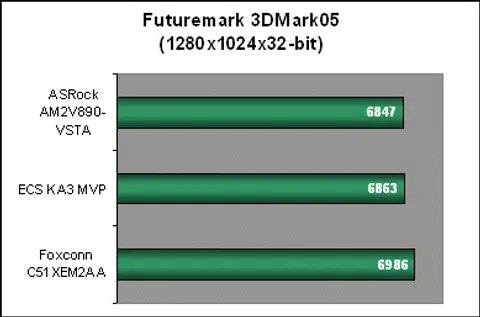
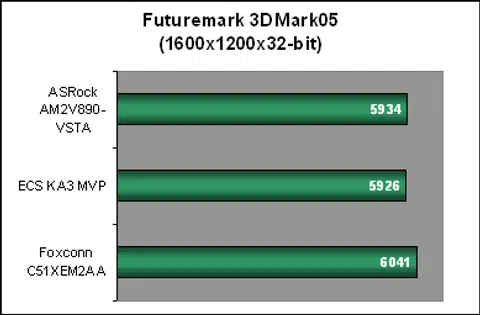
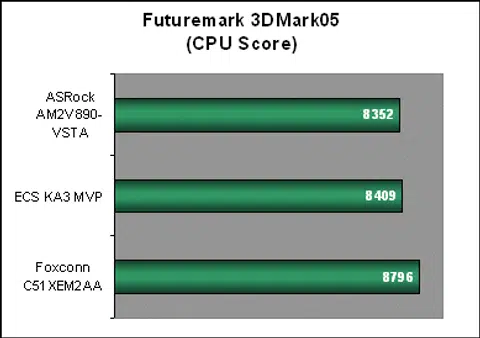
The AM2V890-VSTA was able to compete with the ECS KA3 MVP in terms of gaming performance across all resolutions on 3DMark05. most probably due to the fact that both boards encountered memory issues that lowered their overall performance.
Results - AquaMark3
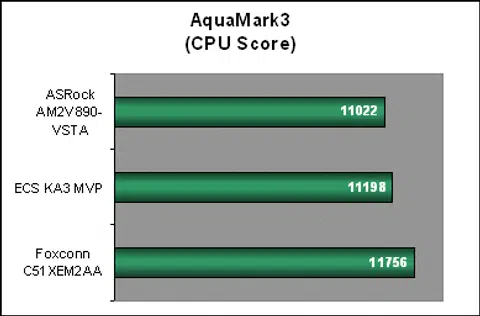
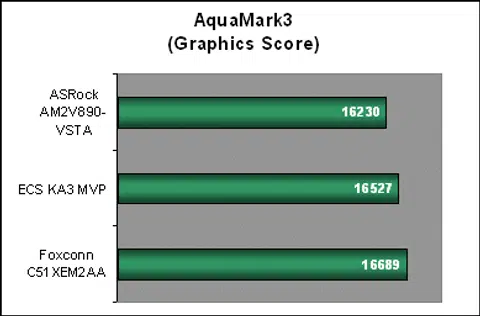
Unlike 3DMark05, the AM2V890-VSTA came out the lowest performer here in both the CPU and GPU subsystem ratings, which were influenced by the reduced memory capacity and the overall slower memory performance.
Conclusion
ASRock is well known to veer away from new and high-end chipsets for their motherboard products, opting instead to deliver capable entry-level solutions on older or existing core logic solutions without sacrificing too much on the performance front or even features. This has proven to be quite a successful combination and we've had the opportunity to test a few such boards from ASRock like the 939Dual-SATA2 and 775XFire-eSATA2. Sadly, the AM2V890-VSTA falls off the mark.
When ASRock announced a line of motherboards supporting Socket AM2 based on a variety of chipsets from NVIDIA and ULi to VIA, the AM2V890-VSTA seemed to be the most cost-effective motherboard to go for. Its basic features are perfect for the home user with no real need for performance computing out of the casual web-surfing or desktop publishing. Because of this, we cannot really complain about the 'slow' SATA 1.5Gbps support or 10/100Mbps Ethernet and since AMD is moving their entire line-up to AM2, it becomes justifiable for a low-cost motherboard such as the AM2V890-VSTA.
In fact, the board does offer up some interesting multimedia capabilities with its top end Realtek ALC888 HD Audio CODEC (which we suspect is an incentive for having the Vista Premium Ready logo) and HDMI S/PDIF connector.
However, the AM2V890-VSTA suffers from poor implementation where its major problems are all memory related. Firstly, the board is incredibly picky about memory modules used with it and incompatible RAM can cause problems ranging from being unable to POST to application instability. From our tests, the board also has a low tolerance level for memory tweaking, and changing RAM timings out of SPD can cause all the stability problems to re-surface.

Budget for budget's sake. The AM2V890-VSTA is really a decent entry-level board, but memory problems are aplenty.
Properly setup, the board performs well enough to hold its own against the high-end ECS KA3 MVP, but at the moment, that is exactly the hardest part to do. Seeing that the board targets the entry-level market, the average consumer may not have the technical knowledge to troubleshoot memory and BIOS related problems or have no patience in doing so. Until ASRock is able to iron out the compatibility, stability and performance issues with the board, it is hard to wholeheartedly recommend the AM2V890-VSTA. If you're looking for a budget motherboard to jump on the Socket AM2 bandwagon, there are better alternatives out there, even from ASRock themselves.
ASRock has since released a new BIOS (P1.20) that seems to resolve most compatibility problems with different types of RAM modules. However, the board is still very fickle with memory tweaking and still exhibits POST issues with non-SPD timing and frequencies.
Our articles may contain affiliate links. If you buy through these links, we may earn a small commission.