
AMD Athlon X2 BE-2350 - Attacking the Power Efficiency Angle
Sporting a brand new naming scheme, AMD's brand new mainstream dual-core Athlon X2 BE-2350 is based on the same 65nm 'Brisbane' manufacturing process, but now offers a suprisingly cool 45W max. TDP for extreme energy efficiency in the desktop space.

It's Not Just About the Speed Anymore
As far as the history of computing goes, speed and performance have always been the first thing on anyone's minds. "How fast is it?", "How much fps boost will it give me?", the questions are all the same. However, somewhere along the line in 2005, something happened. The pure performance metric just wasn't working anymore. As technology advanced and performance peaked, power and efficiency became the new buzzwords for the industry in place of clock speeds. Multi core processors promised overall performance improvements through the efficiency of multiple cores working on the same task to get the task done faster. Imagine you and your friend attempting to piece together a jigsaw puzzle. You do the top half and your friend does the bottom. You both effectively only need to complete half the puzzle each and overall, the puzzle is completed much faster.
To that end, both Intel and AMD have successfully introduced and entrenched multi core computing into the consumer space. However, multi core processors are still about performance. Though dual core processors tend to operate at lower frequencies than their single core counterparts, there are now two cores to power up and maintain. You've probably heard the phrase 'performance-per-watt' thrown about so much that your ears are bleeding, but the one factor of computing performance that still dodges real scrutiny is power efficiency, not performance efficiency.
Intel changed the face of the game when they launched their Core 2 Duo processors in 2006 based on a whole new microarchitecture, simply called 'Core'. Intel merged advanced power saving technologies from their notebook architecture into the desktop. With the Core 2 Duo, Intel brought the average TDP (Thermal Design Power) of its entire range down to 65W. This is compared to the 89-125W TDP of AMD's Athlon 64 X2 processors based on the 90nm 'Windsor' design and Intel's own 95-130W furnaces that were the Preslers (Pentium D 9xx series).
Now, it is important to note that AMD did have energy efficient models of their Windsor-based Athlon 64 X2 processors with 65W TDP as well as the special 3800+ SFF edition, which had a TDP of only 35W. However, it was only available in extremely limited quantity, making it more of an urban legend in the retail chains than an actual product with sustainable quantities.
Over the following months of Intel's Core 2 Duo launch, AMD quietly introduced their Brisbane cores, an update to the Athlon 64 X2 family moving from a 90nm manufacturing process to 65nm and standardizing its TDP to 65W as well, bringing Intel and AMD back on the same page again as far as TDP goes. Intel's Core 2 Duo processors were still the better processor overall and AMD resorted to a pricing game. If they couldn't beat Intel in performance, they can beat them in value. When an Athlon 64 X2 5000+ becomes more affordable than a Core 2 Duo E6300, the choices suddenly become blurred.
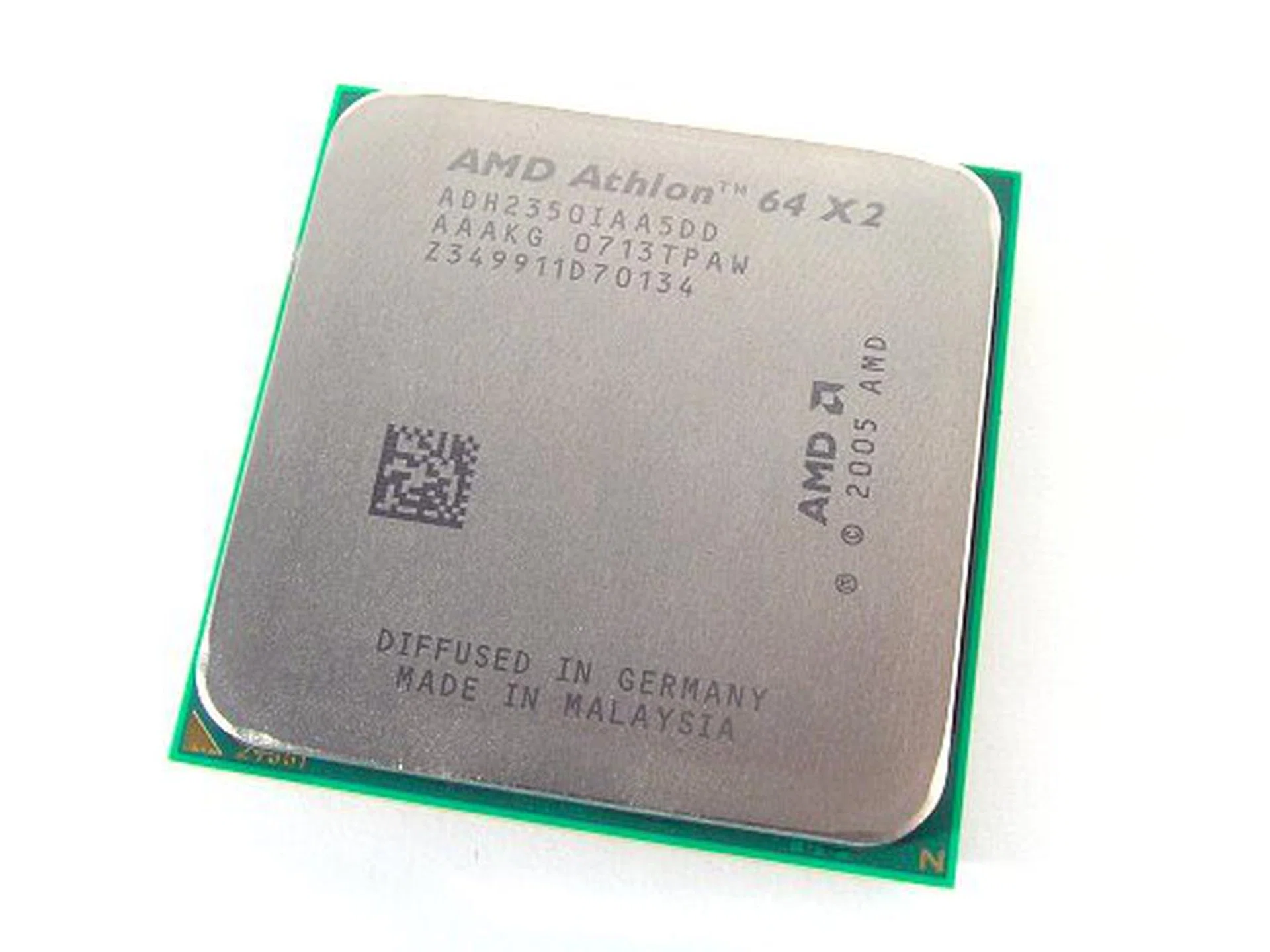
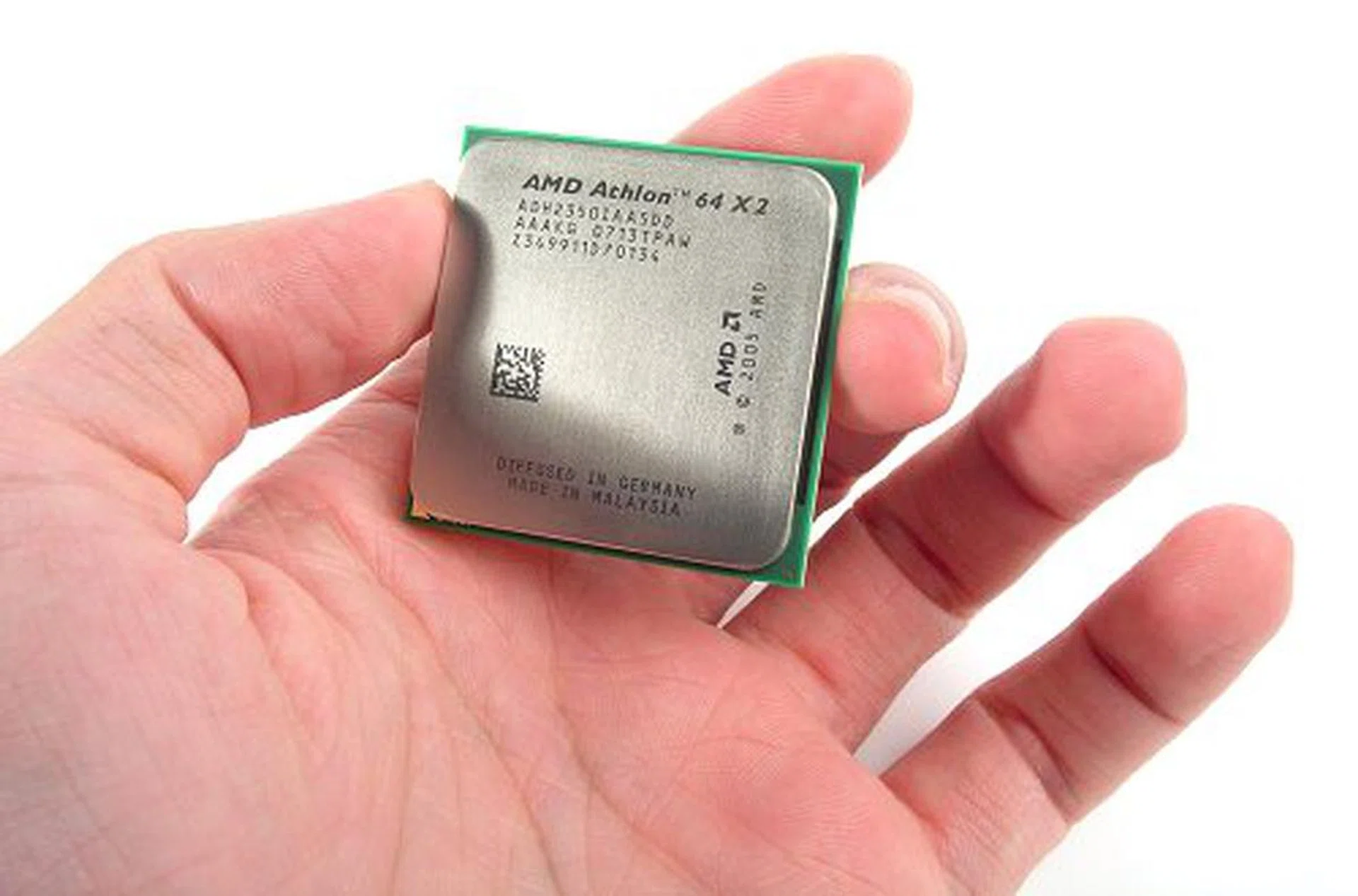
Looks like any old Athlon 64 X2 currently in the market, but this is actually the new Athlon X2 BE-2350 energy efficient processor.
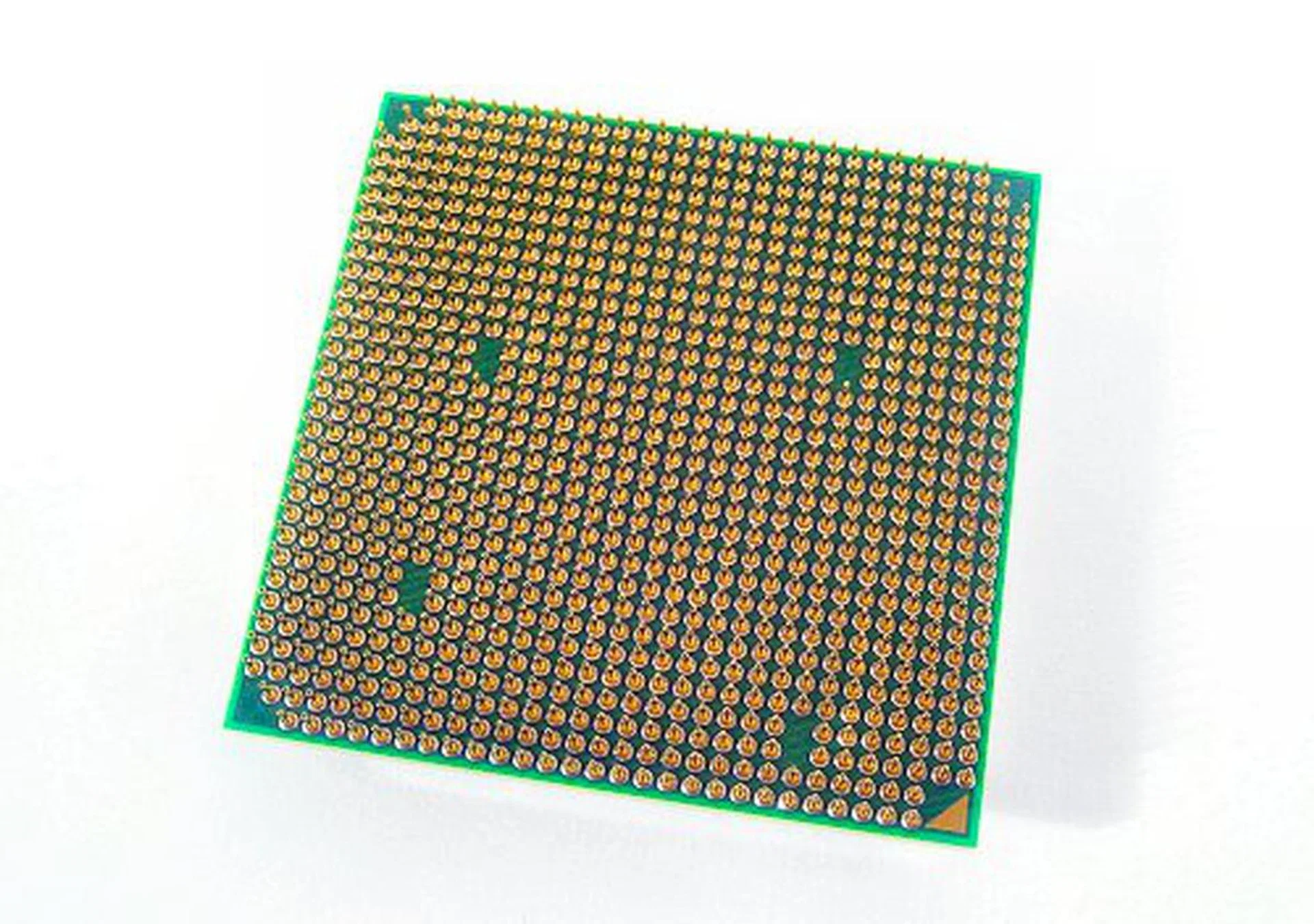
The Athlon X2 BE-2350 should be compatible with all Socket AM2 motherboards as it is features the same pin count and layout. If your motherboard doesn't recognize it, a new BIOS will most probably fix it.
Now that AMD has the pricing advantage, the next step is to take thermals as well. On June 5th 2007, AMD added two new processors, namely the Athlon X2 BE-2300 and Athlon X2 BE-2350 into their line up with another Athlon X2 BE-2400 scheduled for an August refresh.
Processor Model / Processor Characteristics | Clock Speed | L2 Cache | Max TDP (W) | Price (US$) | Availability |
Athlon X2 BE-2300 | 1.90GHz | 512KB x 2 | 45 | $86 | June 2007 |
Athlon X2 BE-2350 | 2.10GHz | 512KB x 2 | 45 | $91 | June 2007 |
Athlon X2 BE-2400 | 2.30GHz | 512KB x 2 | 45 | TBA | August 2007 |
In Comes the Athlon X2 BE-2xxx
The new Athlon X2 BE-2xxx series of processors are simply a variant of the existing 'Brisbane' core with a lower maximum TDP of 45W compared to 65W of the regular Athlon 64 X2s. As such, there are actually no technical or architectural differences between the new processors and the existing Brisbane based Athlon 64 X2 except for another naming convention change (other than the already mentioned the lower 45W TDP that is). The following table shows a quick comparison of processor specifications:-
Processor Name | AMD Atlhon 64 X2 / Athlon X2 (Brisbane) | AMD Atlhon 64 X2 (Windsor) | Intel Core 2 Duo (Conroe) | Intel Core 2 Duo / Pentium Dual Core (Allendale) |
Processor Models |
| 3600+ - 6000+ | E6300, E6400, E6320, E6420, E6600, E6700, X6800 |
|
Processor Frequency |
| 2.0GHz - 3.0GHz | 1.86GHz - 2.93GHz |
|
No. of Cores | 2 | 2 | 2 | 2 |
No. of Logical Processors | 2 | 2 | 2 | 2 |
Front Side Bus (MHz) | - | - | 1066 | 800 |
HyperTransport Bus | 1GHz (2000MT/s) | 1GHz (2000MT/s) | - | - |
L1 Cache (data + instruction) | (64KB + 64KB) x 2 | (64KB + 64KB) x 2 | (32KB + 32KB) x 2 | (32KB + 32KB) x 2 |
L2 Cache (per core) | 512KB | 256BK / 512KB / 1MB | 2MB / 4MB (shared) | 1MB / 2MB (shared) |
Memory Controller | Integrated Dual Channel (up to DDR2-800) | Integrated Dual Channel (up to DDR2-800) | Dual Channel (up to DDR2-800) | Dual Channel (up to DDR2-800) |
VID (V) | 1.15 - 1.25 | 1.25 - 1.35 | 0.85 - 1.3625 | 1.162 - 1.325 |
TDP (W) | 45 / 65 | 35 / 65 / 89 / 125 | 65 | 65 |
Execute Disable Bit | Yes | Yes | Yes | Yes |
Intel EM64T / AMD64 | Yes | Yes | Yes | Yes |
Enhanced Intel SpeedStep Technology (EIST) / AMD Cool 'n' Quiet | Yes | Yes | Yes | Yes |
Virtualization Technology | Yes | Yes | Yes | Yes |
Packaging | AM2 | AM2 | LGA775 | LGA775 |
Process Technology | 65nm SOI | 90nm SOI | 65nm | 65nm |
Processor Codename | Brisbane | Windsor | Conroe | Allendale |
Die Size | 118 - 126mm² | 230mm² | 143mm² | 111mm² |
No. of Transistors | 154 - 221 million | 154 - 227.4 million | 291 million | 167 million |
What's In a Name?
In the past, AMD processors were identified primarily based on its performance index alone. According to AMD, this singular identification number is no longer capable of providing an accurate description of a processor and its technologies. Thus, the new naming scheme.
Firstly, AMD removed the '64' from Athlon 64 X2 and shortened the name to Athlon X2. This does not mean that the processor no longer features 64-bit technology. On the contrary, AMD claims that since they're already recognized as the pioneer of 64-bit consumer processor technologies and that 64-bit capable CPUs have already become ubiquitous in the market, there is no longer the need to identify processors with the '64' in its name. However, the Athlon 64 logo will remain as it is the branding image of the AMD64 family.
Moving on to the actual numbering of the processor itself, AMD's new numbering consists of a six digit alphanumeric sequence in the format of AA-0000. The two alpha characters in the front represent the processor class and power. The first character denotes processor class as being entry level, mainstream or performance. In this case, the 'B' class processors are supposed to be the mainstream models and there will be additional entry level and high performance classes to be added in the future. The second letter represents the processor power envelop. 'E' in this case stands for energy efficiency below 65W TDP. The new Athlon X2 BE-2xxx series all have a 45W TDP only.
The next four numeric characters determine processor family and performance. The first number is supposed to correspond with the family and tied to the number of cores, while the last three numbers denote the processor performance index or position within its family. Thus, the Athlon X2 BE-2350 can be read as a mainstream, low TDP, dual core processor in the same family as other Athlon X2s, more powerful than the BE-2300, but less than the BE-2400.
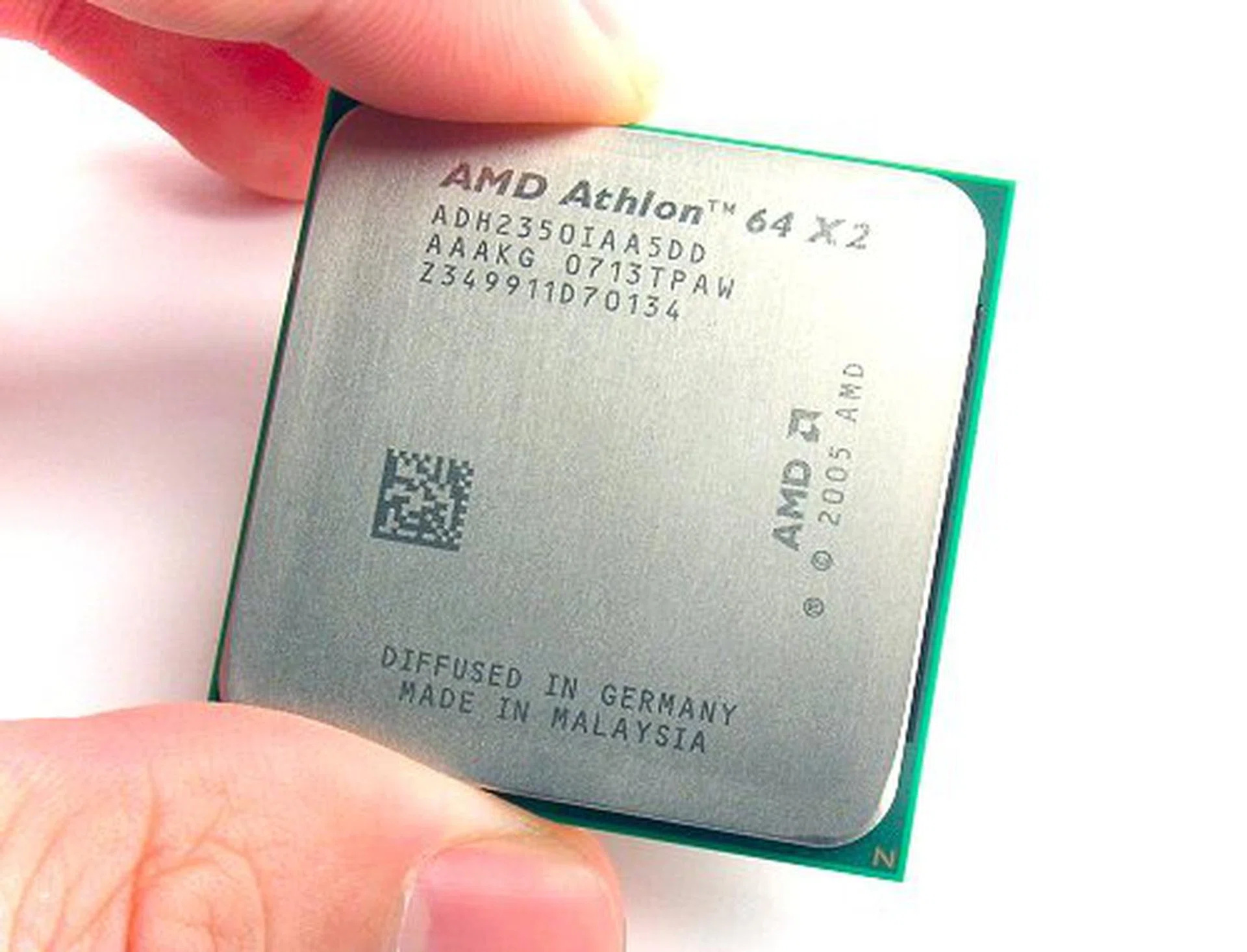
Our sample chip still has the Athlon 64 X2 etched on it, but retail models should only show the new Athlon X2 naming scheme.
This new naming scheme will only reflect a processor position within its own family and is no longer a direct indicator as to how the processor will perform in comparison to competitor products or market performance numbers. Currently, only the Athlon X2 BE-2xxx series have adopted this new naming scheme and you can expect all future processor launches to take on the same sequence.
Test Setup
For this article, we will be reviewing the Athlon X2 BE-2350, the highest available model at the moment running at 2.1GHz.
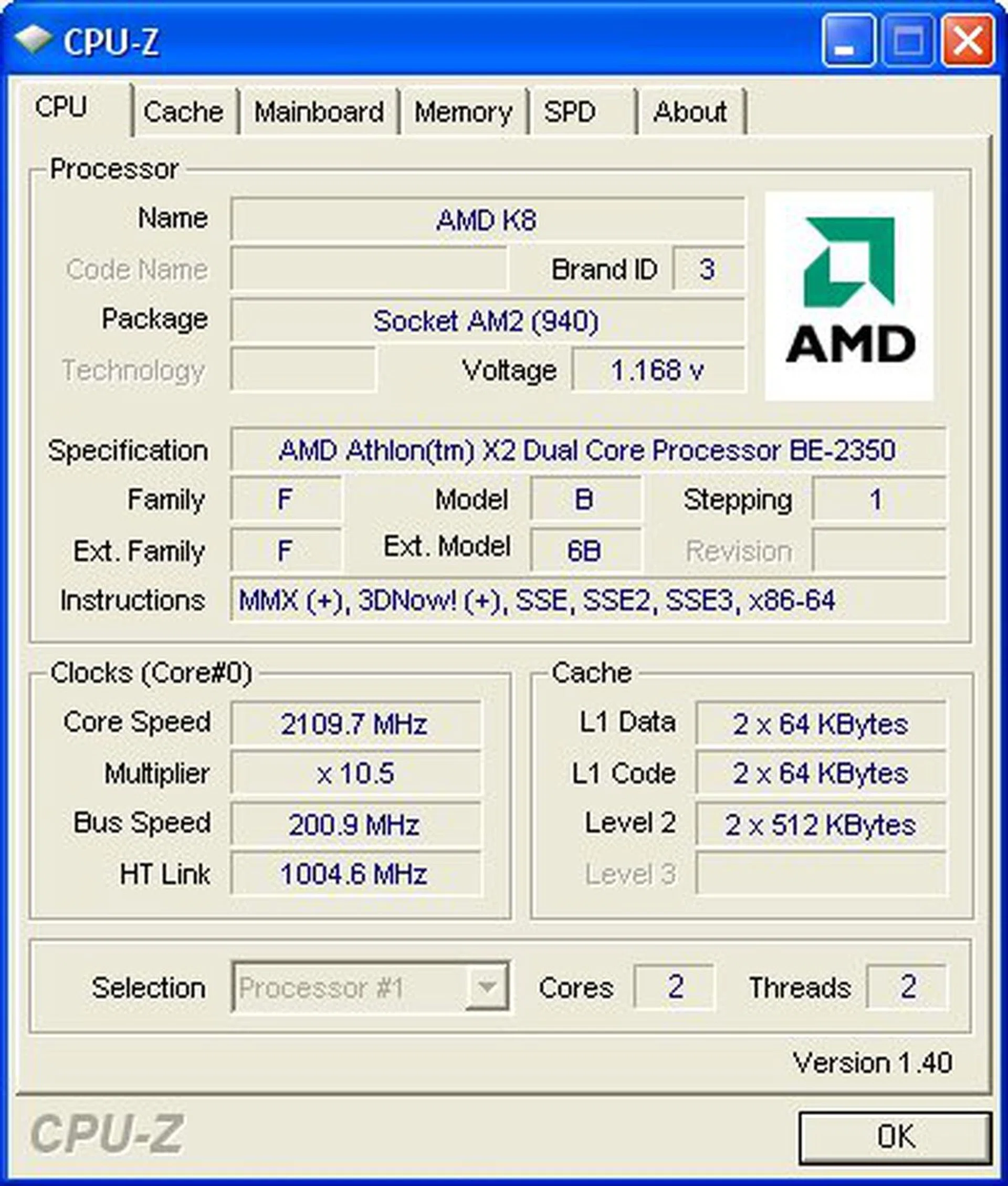
Considering that there are no architectural differences between the Athlon X2 and current Athlon 64 X2 processors, we expect the BE-2350 to perform similarly to the Athlon 64 X2 4000+ 'Brisbane' processor, which is also clocked at 2.1GHz. As we did not have a Brisbane processor on hand for direct comparison testing, the benchmarks in this article will be using results from the 'Windsor' based Athlon 64 X2 3800+ (2GHz) and 4200+ (2.2GHz), which should clearly put the Athlon X2 BE-2350 in perspective. All of these Athlons are equipped with 1MB (512KBx2) L2 cache.
On the side of the competition, Intel has a few new interesting processors in the low end segment that should fare well with the Athlon X2 BE-2350 in terms price and performance as well. First up is the Pentium Dual Core E2160, which is actually a Core 2 Duo E4300 in disguise. The E2160 has the same specifications as the E4300 (1.8GHz, 800MHz bus), but only has a 1MB L2 cache. Of course, the results from the E4300 will also be included as well as the original E6300. Scores of the AMD Athlon 64 X2 5000+ and Intel Core 2 Duo E6600 are provided as a gauge on where these mainstream processors stand in the overall scheme of things.
The test bed configuration for all systems are listed below and will used throughout the benchmarking process unless stated otherwise:-
AMD Athlon X2/Athlon 64 X2 Configuration
- ASUS M2N32-SLI Deluxe (nForce 590 SLI chipset)
- AMD Athlon X2 BE-2350, Athlon 64 X2 3800+, 4200+ and 5000+
- 2 x 512MB Corsair XMS DDR2-800 non-ECC memory modules (CAS 4, 4-4-12)
- Seagate Barracuda 7200.7 80GB SATA hard disk drive (one single NTFS partition)
- MSI GeForce 7900 GT 256MB - with NVIDIA Detonator XP 84.21
- Microsoft Windows XP Professional with Service Pack 2
Intel Pentium Dual Core/Core 2 Configuration
- Intel Desktop Board D975XBX (Intel 975X Express chipset)
- Intel Pentium Dual Core E2160
- Intel Core 2 Duo E4300, E6300, 6320 and E6600
- 2 x 512MB Corsair XMS DDR2-800 non-ECC memory modules (CAS 4, 4-4-12)
- Seagate Barracuda 7200.7 80GB SATA hard disk drive (one single NTFS partition)
- MSI GeForce 7900 GT 256MB - with NVIDIA Detonator XP 84.21
- Microsoft Windows XP Professional with Service Pack 2
Benchmarks
The following benchmarks will be used:-
- BAPCo SYSmark 2004
- SPEC CPU2000 v1.3
- Lightwave 3D 7.5
- Futuremark PCMark 2005
- SPECviewperf 8.01
- Cinebench 2003
- XMpeg 5.0.3 (DivX 6.2.5 encoding)
- Futuremark 3DMark05
- Futuremark 3DMark06
- Unreal Tournament 2004
- AquaMark3
- Quake 4 ver.1.20
- F.E.A.R.
Results - BAPCo SYSmark 2004
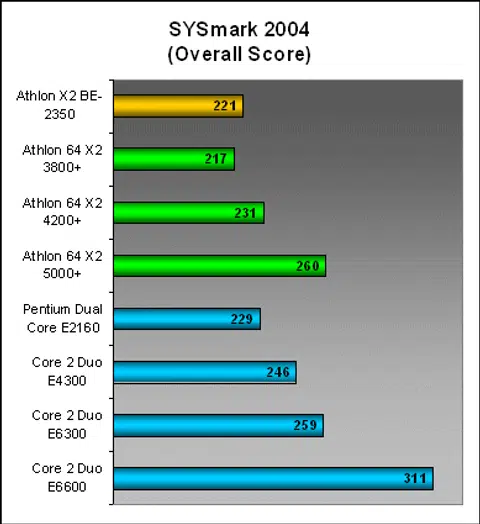
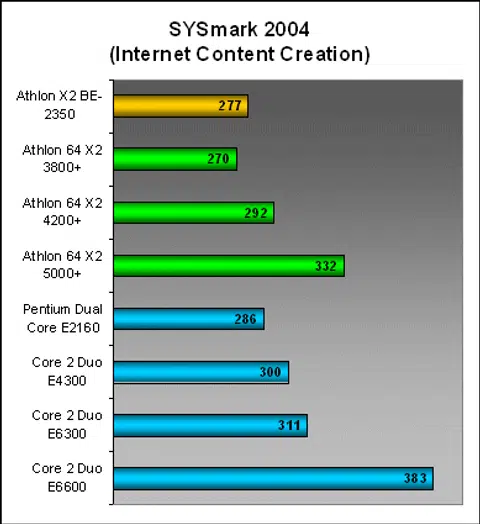
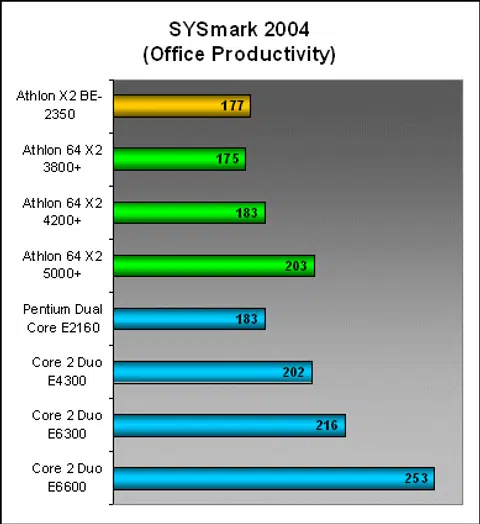
At 2.1GHz, the Athlon X2 BE-2350 performed as expected sitting put between the 2.0GHz 3800+ and 2.2GHz 4200+ as SYSmark 2004 captured the results perfectly. The much larger 2MB/4MB L2 cache sizes of the Intel Core 2 Duos proved to make the biggest difference in performance here as you can see the E4300 easily outperforming not only the BE-2350, but the 4200+ as well. The new Intel Pentium Dual Core E2160 however, was more closely matched to the Athlons with its 1MB L2 cache, albeit Intel still takes a small lead.
Results - SPEC CPU2000 v1.3
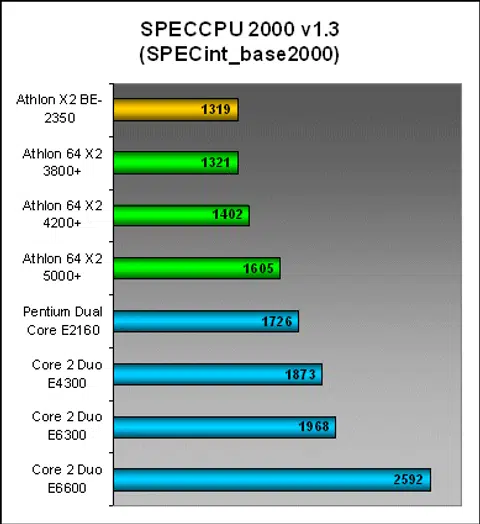
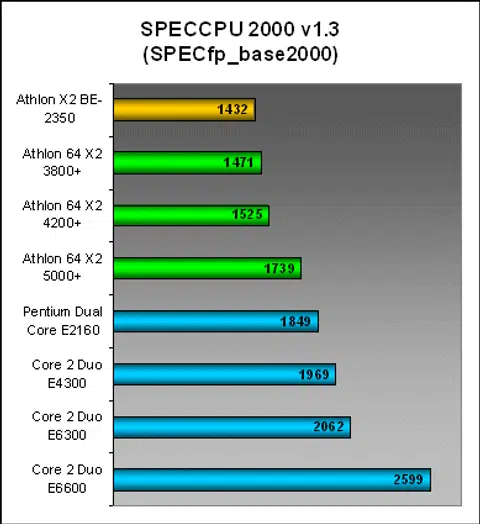
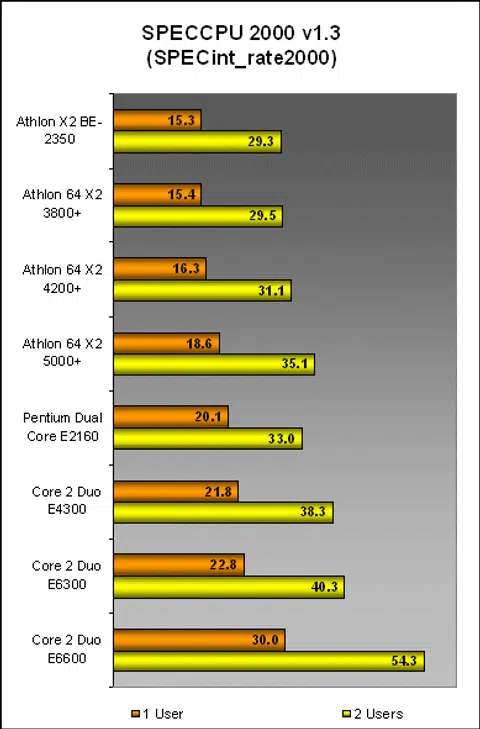
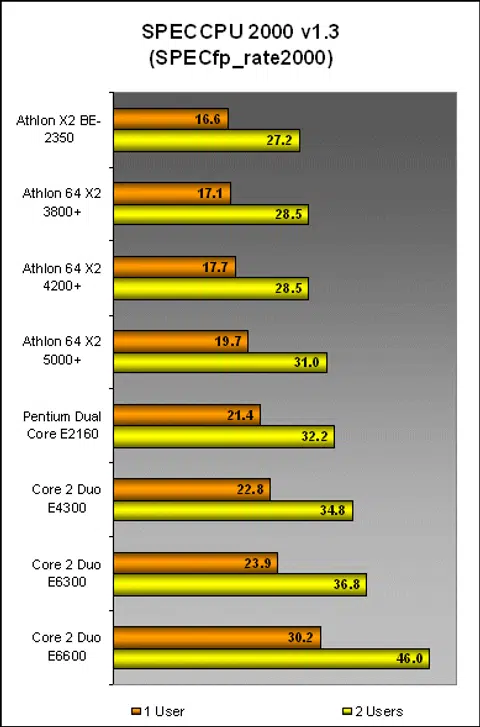
Under SPEC CPU2000, the Athlon X2 BE-2350 actually struggled to keep up even with the Athlon 64 X2 3800+. In every test performed for both integer and floating point workloads in either single or dual threaded configuration, you'd notice that the BE-2350 always comes just shy of the 3800+. Even the Pentium Dual Core E2160, after enduring a lowered FSB to 800MHz and further reductions to a 1MB L2 cache proved to still be a competitive performer against even an Athlon 64 X2 5000+.
Now there are some that may want to see SPEC CPU2006 results instead, arguing that CPU2000 has been retired. However, do take note that there have been no significant changes in processor technology that would warrant this switch at present. The AMD 'Brisbane' core as well as Intel's Core 2 Duo processors were all released in 2006 when SPEC CPU2000 was still the industry standard benchmark. These results accurately portrayed CPU performance then, and still does today.
Results - Lightwave 3D 7.5
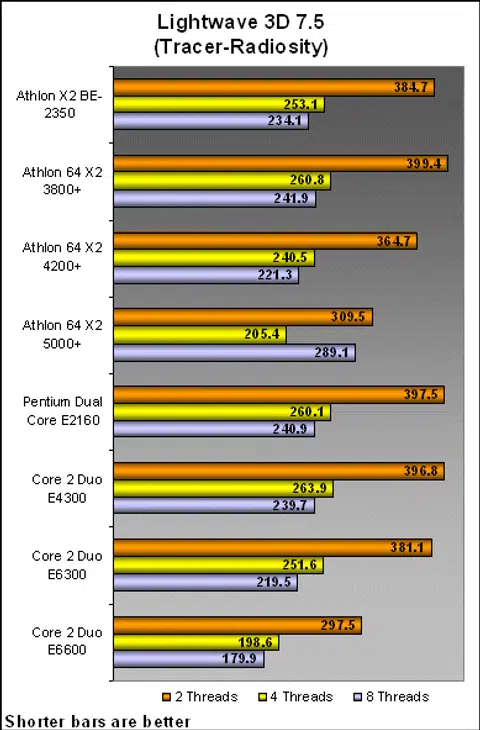
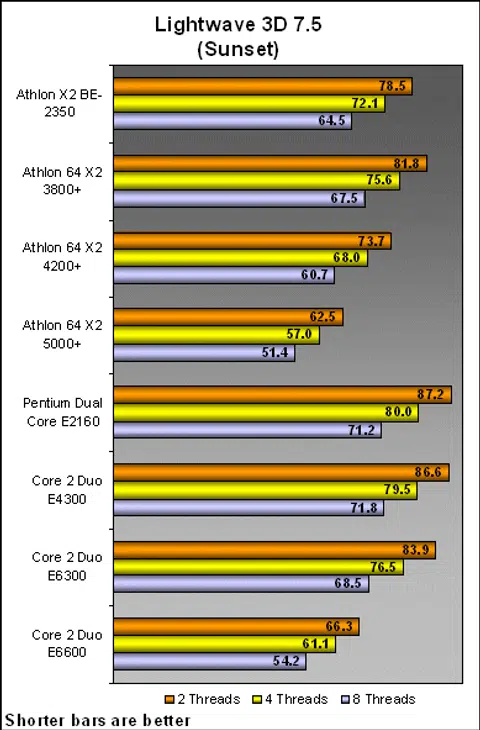
Going back to benchmarks based on real world application workloads, the BE-2350 once again sits comfortably between the 3800+ and 4200+. The effective, shorter pipelines and integrated memory controller of the Athlon 64 architecture actually helps the AMD processors outperform Intel's entry level and mainstream Pentium Dual Core and Core 2 Duo CPUs.
In our Lightwave 3D rendering tests, the BE-2350 outperforms the E2160 and E4300 by a comfortable margin and even outperforms the E6300 in the Sunset workloads.
Results - Futuremark PCMark 2005
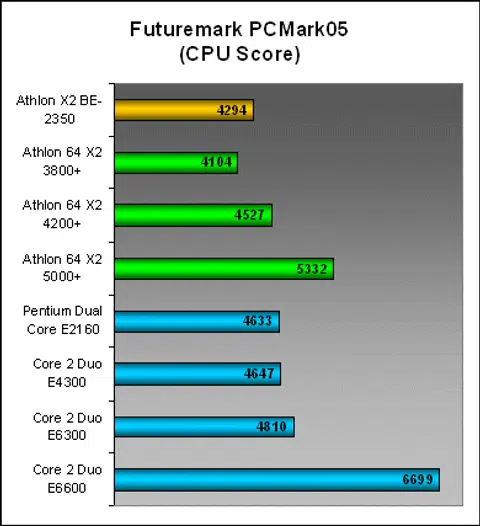
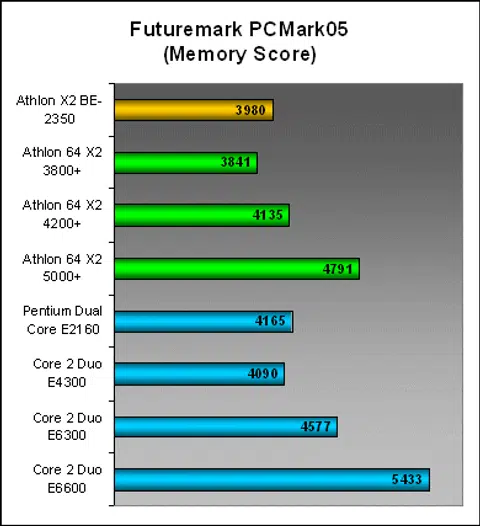
The performance differences between the Athlon processors were clearly distinguishable in PCMark 2005 for both memory and CPU subsystem performance. Here, the BE-2350 took its place between the 3800+ and 4200+ again with no irregularities in numbers. Intel processors continued to show superior performance and even the low end Pentium Dual Core E2160 was only challenged by the Athlon 64 X2 4200+. Unlike SYSmark 2004 before, the processor's L2 cache sizes did not make any difference in performance as evident from the scores of the E2160 and E4300. The benchmark itself isn't anywhere as comprehensive as SYSMark 2004 and so its simplistic nature and load reflects upon the performance figures we've gathered too. It's still a great gauge for many light benchmarkers out there wanting to know where their processors or systems stand.
Results - SPECviewperf 8.01
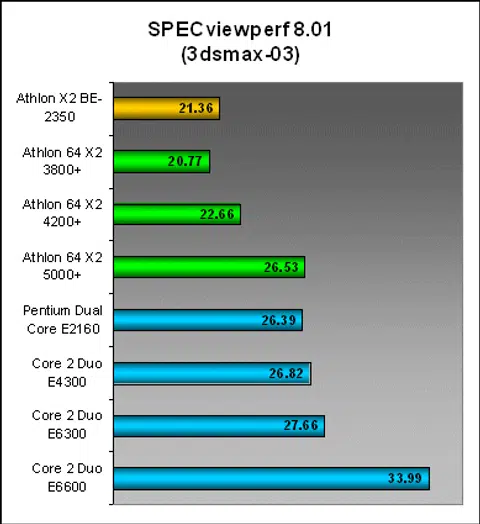
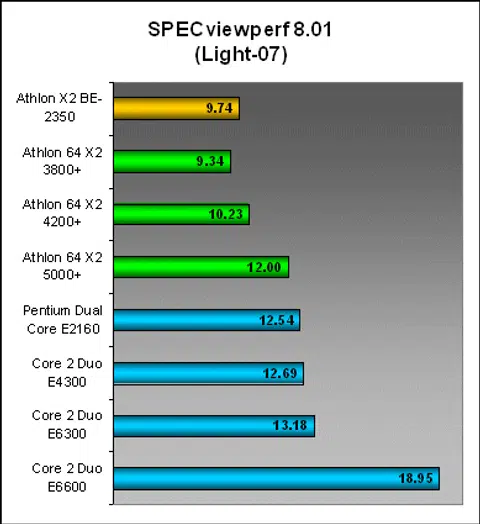
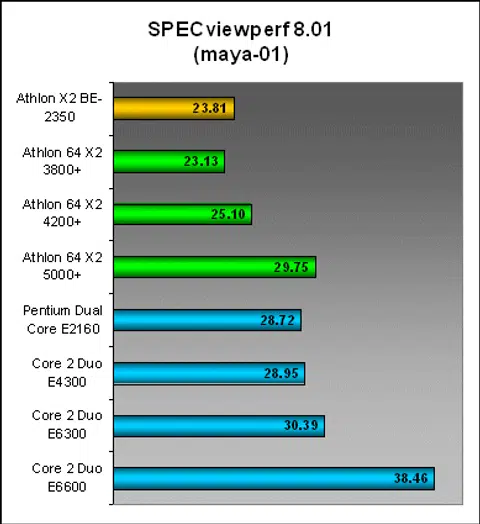
No surprises here, the Core 2 Duo's have traditionally been a very strong performer in SPECviewperf benchmarks and even the low end E2160 and E4300 continue to dominate this industry OpenGL tool, even going as far as beating the Athlon 64 X2 5000+ in many of the workloads. Again, this was a benchmark that wasn't affected much by the L2 cache. Instead, SPECviewperf relies on a strong memory subsystem performance indicated by the larger gap in numbers between the 800MHz and 1066MHz bus Intel CPUs.
As for the Athlon processors, things did not seem out of the ordinary. The consistency of the Athlon X2 BE-2350 has been expected and the trend you see below continues throughout the benchmark regardless of which SPECviewperf workload was run.
Results - Cinebench 2003, XMpeg 5.03
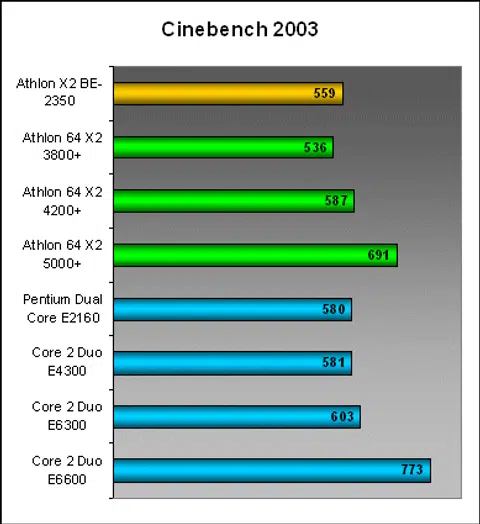
Based on the CINEMA 4D software, Cinebench is a widely used processor benchmark because of its real world application performance and highly threaded architecture. Like Lightwave 3D before, this benchmark has always been the stronghold of AMD's Athlon 64 architecture before Intel's Core 2 Duos came out. Although the low end Athlon X2 BE-2350 put on a decent performance here, it still took the 4200+ to match up against the Intel processors, even the E2160.
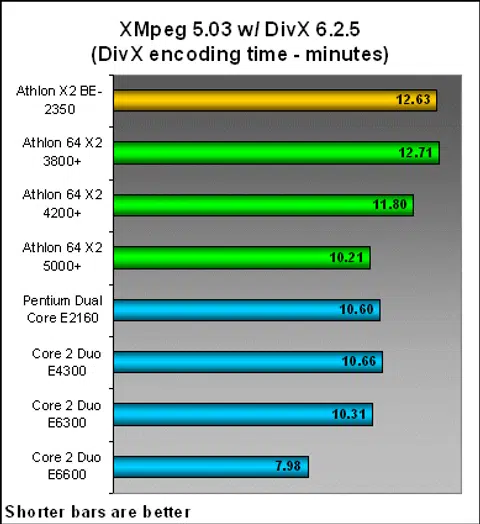
For multimedia encoding with DivX, the BE-2350 turned out to be only a little faster than the 3800+ while the 4200+ was able to shave nearly one minute off those scores. These aren't really impressive numbers for the BE-2350, but at least it still falls within our expected performance range. Surprisingly, the reduced L2 cache size of the Intel Pentium Dual Core E2160 had no affect on its encoding performance and was a whole two minutes ahead of the Athlon X2 BE-2350.
Results - Futuremark 3DMark05 and 3DMark06
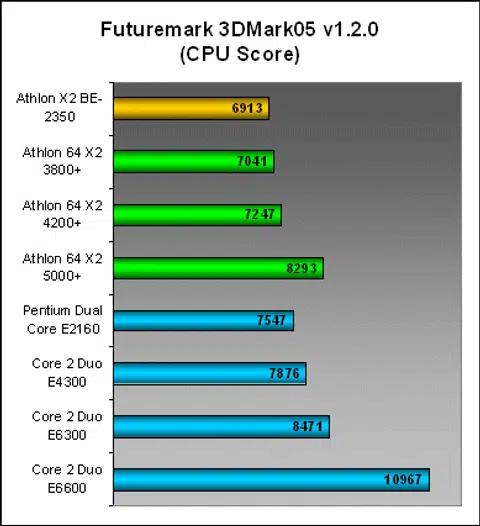
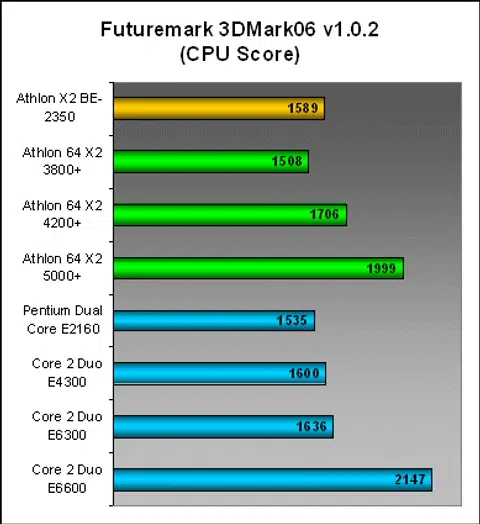
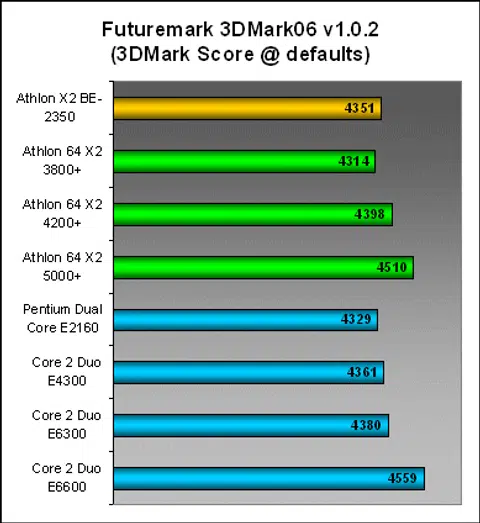
Moving on from office productivity and professional desktop publishing applications and benchmarks, we take a look at some gaming performance with the BE-2350. 3DMark is still very much one of the most widely used synthetic gaming benchmarks around, but you'll notice some discrepancies between 3DMark05 and 3DMark06 in terms of overall performance scores.
Our tests are always run multiple times to attain average and consistent scores, and in the many runs, 3DMark05 CPU results always come up with the BE-2350 as the lowest performer. On 3DMark06 however, the scoring was more consistent with what we've noticed thus far into our review. Here, the BE-2350 is exactly between the 3800+ and 4200+, competing well with the Intel Core 2 Duo processors and in the rare instance, actually beating the Pentium Dual Core E2160.
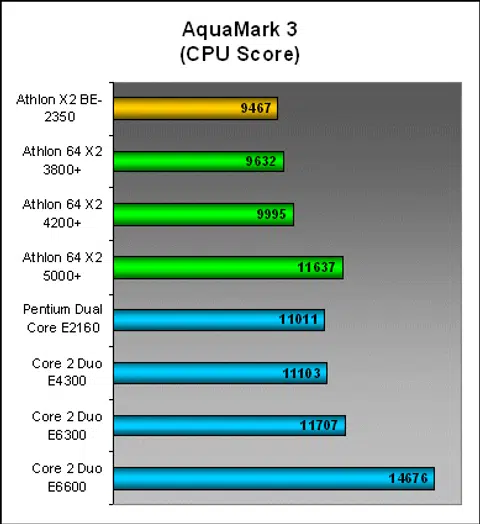
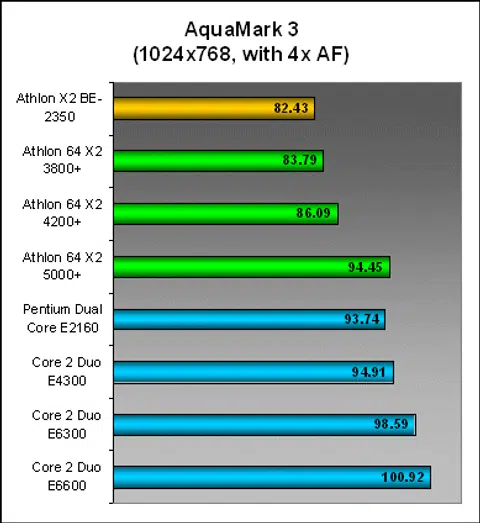
Results - Unreal Tournament 2004 and AquaMark3
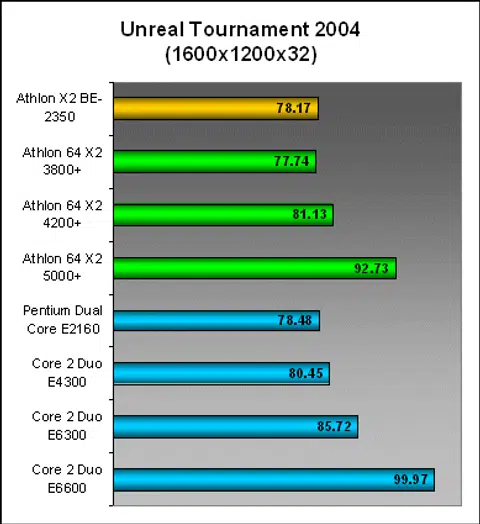
Unreal Tournament 2004 and AquaMark3 are one of those older games that still scale very well with processor performance as there isn't a GPU bottleneck to hold it back. The BE-2350 held true to the performance trends so far, but you'd probably have noticed that the real world performance difference here is merely a few frames in-between. For UT 2004, the AMD and Intel processors actually perform comparitively well against each other with the BE-2350 going against the E2160 and the 4200+ challenging the E4300.
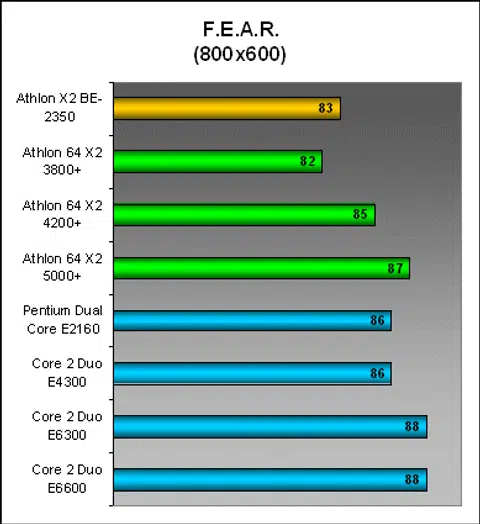
Results - Quake 4 and F.E.A.R.
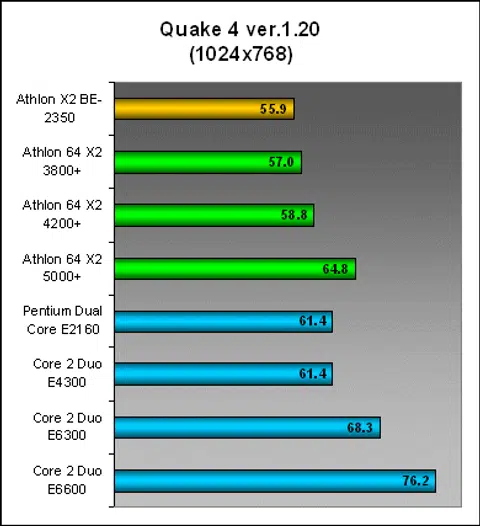
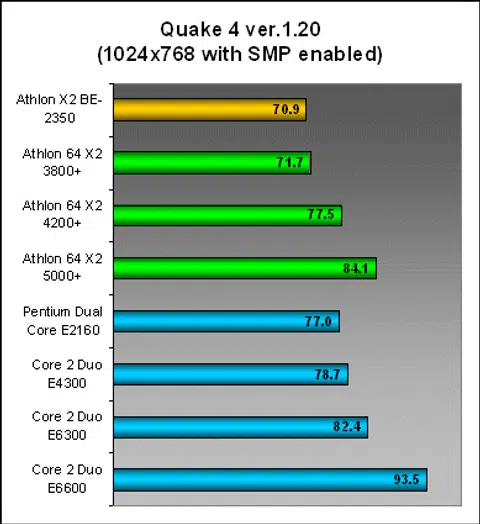
In Quake 4, the BE-2350 ran one or two frames slower than the 3800+ in all resolutions tested, with and without multi-threading enabled. From 4200+ onwards, the Athlon processors showed better gains with SMP enabled and the 5000+ actually outperformed an E6300 in an SMP-enabled timedemo (though you can expect the similarly priced E6320 to have the last say). Sadly, this wasn't the case with the lower end Athlon X2 BE-2350 as both the Pentium Dual Core E2160 and Core 2 Duo E4300 refused to be challenged.
Power Consumption
The new Athlon X2 BE-2350 may have a very attractive TDP rating, but in order to test real power consumption, the entire system must be taken into account. Power consumption is measured using a power meter connected to the power point, reading total power drawn in real time from the test machine. Bear in mind that we try our best to eliminate discrepancies by using identical hardware components for testing when possible, but this is impossible with two different platforms. The system configuration for this section of the review is the same as what's listed in the Test Setup page. However, there is one change to the AMD configuration.
The nForce 590 SLI board we were using for benchmarking did not play nice with AMD's Cool 'n' Quiet (QnC) drivers. As such, we switched the motherboard to an AMD 690G for power consumption testing. Do take note that the AMD 690G's mainstream and HTPC audience oriented boards are by-default more power efficient than full-fledged high-end desktop boards like the Intel D975XBX2 and the nForce 590 SLI motherboards (the difference in power draw can be up to 10W). The rest of the hardware remains exactly the same. AMD results with and without CnQ are captured to see its benefits on the new processor. On the other hand, we only list the Intel results with power saving features enabled (EIST and Enhanced C1E) because we've noted no difference in power draw from our previous test runs with and without the power saving features. This goes to show how deep Intel's power saving techniques are embedded within the chip.
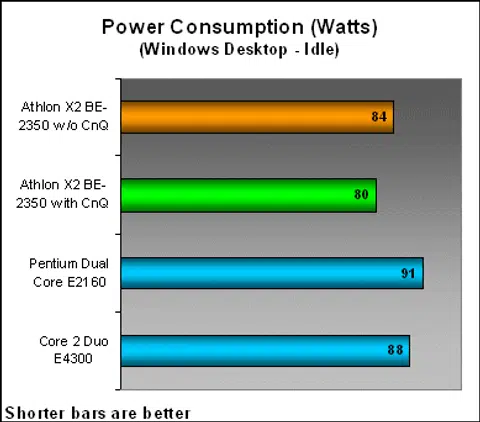
Idling on Windows Desktop
Power consumption of the Athlon X2 BE-2350 seemed impressive under idling conditions compared to Intel's equivalent low-end models, the Pentium Dual Core E2160 and Core 2 Duo E4300. Even without QnC enabled, the BE-2350 still draws less power than the Intel processors. With QnC enabled, AMD proves that their new energy efficient models can save up to 10W of power overall. However, note that the difference might be lesser had the Intel system been tested on an equivalent mainstream platform.
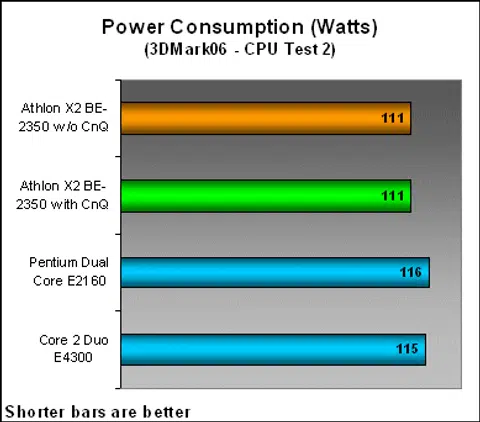
3DMark CPU Test 2
In order to measure power consumption at full load, one of the easiest and most effective tool is 3Dmark06's CPU Tests. The CPU test is highly multi-threaded and is able to really tax the processor to represent power draw when under intense processor usage. Here, the Athlon X2 BE-2350 draws around 111W of power with or without QnC enabled and, putting it on average around 5W more efficient than the Intel processors.
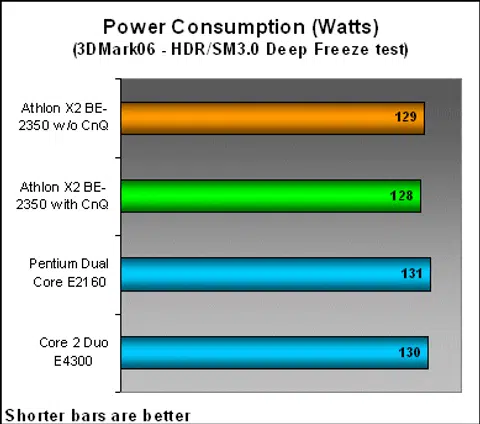
3DMark06 HDR/SM3.0 Deep Freeze Test
In a balanced gaming scenario which involves the power hungry graphics card quotient, the Athlon X2 BE-2350 is still able to perform better than both the Intel Pentium Dual Core E2160 and Core 2 Duo E4300. However, notice that the average power consumption difference is now narrowed down to 1 - 2W between processors.
Notes on Overclocking
Overclocking Athlon 64 X2 processors have never yielded as impressive results as overclocking on the Intel platform. Whether it was the extreme clock speeds of the old Pentium 4 or the incredible platform speeds on the newer Core 2 Duo, Intel has generally given better overclocking mileage. For AMD, its stumbling block is its complicated platform design, chiefly the integrated memory controller. As you overclock both processor and memory, CPU Vcore and memory controller voltages are both pumped into the processor itself, threading a fine line between power and heat.
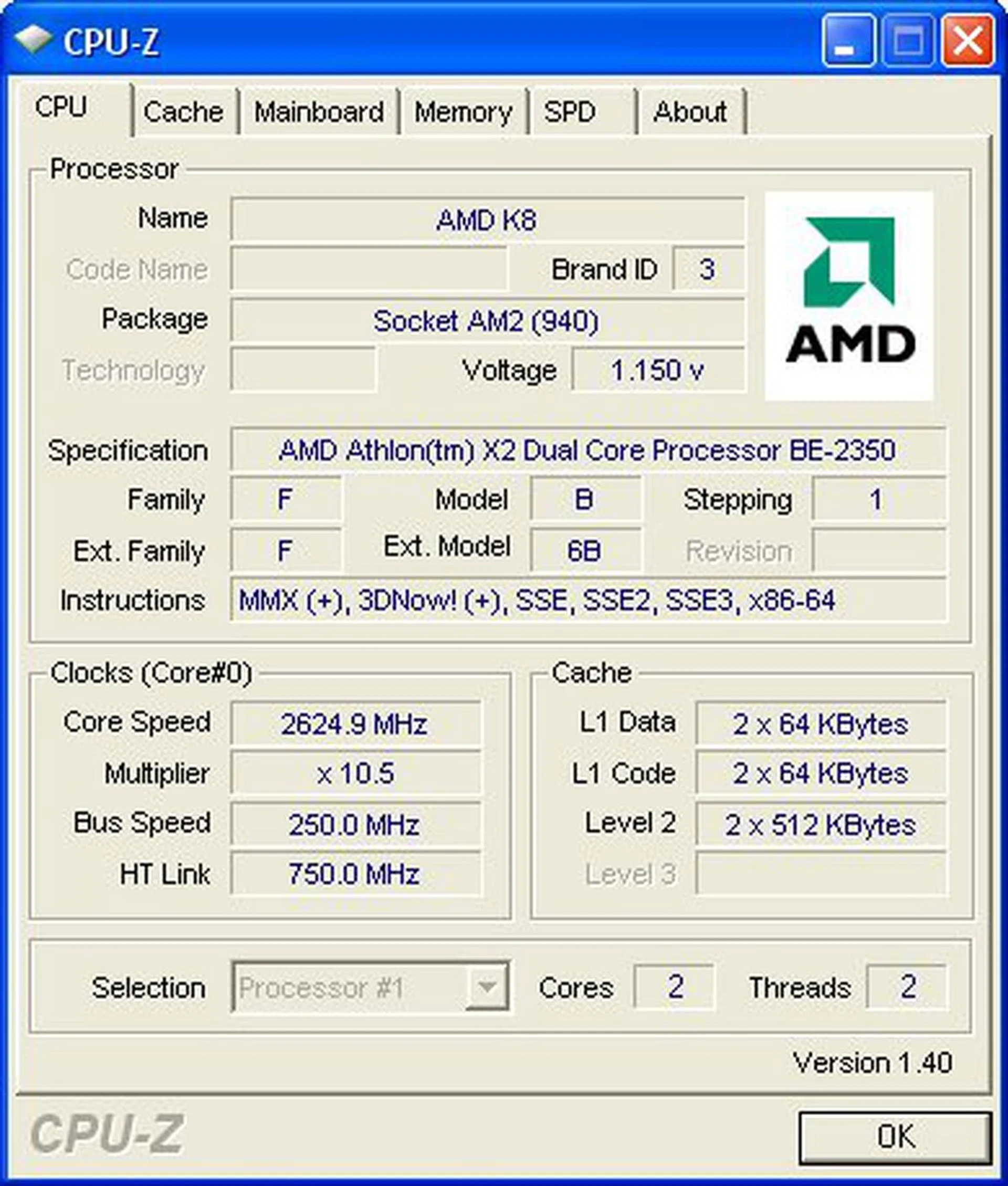
With the new Athlon X2 BE-2350 however, one can be a little more optimistic. Its inherently lower TDP and bargain bin pricing make it a cheap testing ground for avid overclockers. In our own overclocking tests, we were able to clock the processor up to 2.62GHz. This was achieved with a 250MHz HT bus and a 10.5 multiplier at 1.475V (CPU-Z 1.40 doesn't seem to be able to properly report real-time voltages for the new Athlon X2 processors yet, and only shows the default 1.15V). HT multiplier was reduced to 3X and memory to DDR2-667 for this test to make sure that memory and motherboard did not become a bottleneck for processor overclocking. At 2.62GHz, the processor performs quite similarly to an Athlon 64 X2 5000+, which is great value for a sub-US$100 processor. However to put things in perspective, Intel's sub US$100 processors have an overclocking potential to match and even exceed the Core 2 Due E6600 performance, thus providing even better value.
Conclusion
The real purpose for reviewing the Athlon X2 BE-2350 is to find out how much more power efficiency AMD could squeeze out of the Brisbane core. With no other architectural differences, this processor would have passed under the radar for many users, and rightly so since there are also no performance changes worth noting about. The benchmarks that were run in this article are there simply to confirm what we already expected from the BE-2350 the moment the processor entered our labs. AMD explored extreme desktop energy efficiency with the 3800+ EE SFF edition, but its limited nature meant that it never really took hold in the consumer space. With the Athlon X2 BE series of processors, AMD is committed to be able to deliver in quantity and we hope to see that come to pass.
As we mentioned right at the beginning, AMD lost the processor performance competition when Intel launched their Core 2 Duo line of processors. However, they've now created two new battlegrounds to take the fight to, and if they've been criticized for being too quiet the past year, AMD is trying to gain ground by trumpeting superior price point and thermals. Of course, this is a move that will not work in the high-end enthusiast market, and we're sure that AMD knows this. Most of AMD's tactics thus far have been to maintain a competitive product line up until the much anticipated Phenom processors arrive for the desktop.
In the mean time, it will be an interesting slug fest "in the slums", so to speak. In order to preempt AMD's attack at the low price point, Intel released the much crippled Core 2 Duo processor under the guise of the Pentium Dual Core. In fact, the Pentium Dual Core E2160 that we used in this review has the same price point as the AMD Athlon X2 BE-2350. AMD on the other hand, is focusing on the thermal angle for the mainstream and/or entertainment PC where absolute CPU performance isn't a priority. In this, AMD delivers a strong and valued proposition with the Athlon X2 BE-2xxx line of processors, but at this point in time, the question to ask is whether the processor has come too little too late?
AMD shows that there is still life yet for the Athlon 64 architecture, now optimized for industry leading power efficiency. However the lead is small and performance falls short of expectations of its class.
With TDP measurements, manufacturers always specify the maximum power than a chip will possibly draw in a real world scenario to ensure that the power envelop is not exceeded. In the case of the Athlon X2 BE-2350, its 45W TDP is 20W lower than the nearest competition, but the actual savings over time for the whole platform is not as impressive. Processors do not operate at 100% capacity, i.e. maxing out its TDP 100% of the time. We also know that Intel's Core microarchitecture has more power saving technologies built into it than the aging Athlon 64. This is very evidently shown in our power consumption tests in previous articles. Yet for the new Athlon X2 BE-2xxx series, AMD managed to one-up Intel on this front (though not by much). Fully idle, the Athlon X2 BE-2350 could achieve up to 10W power saving over the Pentium Dual Core E2160 or Core 2 Duo E4300. However, once the processors are loaded, this advantage was reduced to a slim 2 - 5W difference.
Intel has made their move to counter AMD's price point advantage with the Pentium Dual Core and AMD fights back with better power consumption, but at the end of the day, we feel that consumers may not want to sacrifice the kind of performance you can get from the Pentium Dual Core E2160 for what little thermal savings the Athlon X2 BE-2350 can give you.
Our articles may contain affiliate links. If you buy through these links, we may earn a small commission.