

SandForce X Asynchronous NAND
Not too long ago, SSDs were too expensive for most people to have in their systems. They were considered a novelty, a luxury for which only those with deep pockets or an unhealthy passion for performance could afford. Nowadays, prices of SSDs have come down drastically and are much, much more affordable thanks to falling costs of memory and also the sheer number of SSD solutions in the market today.
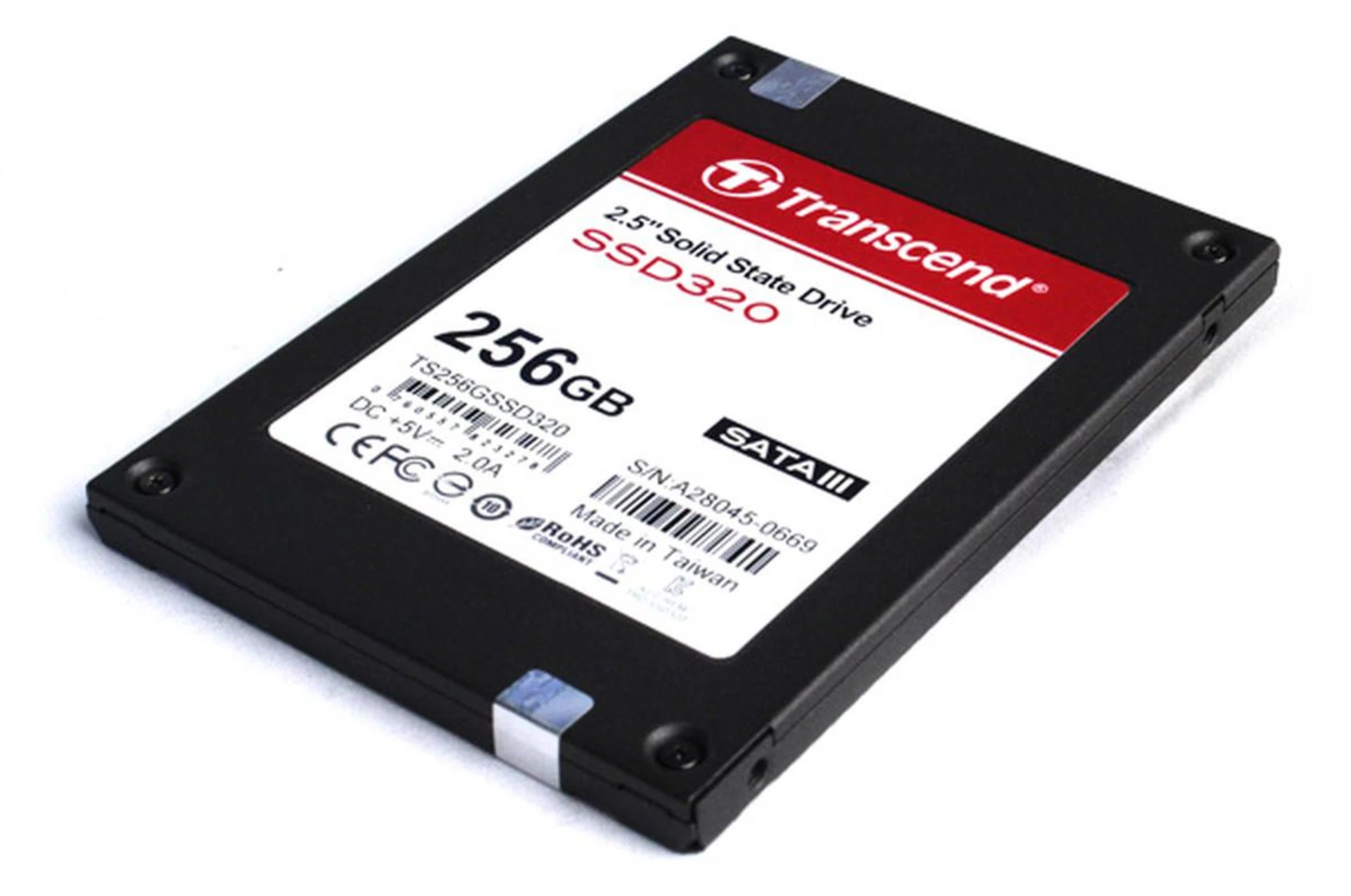
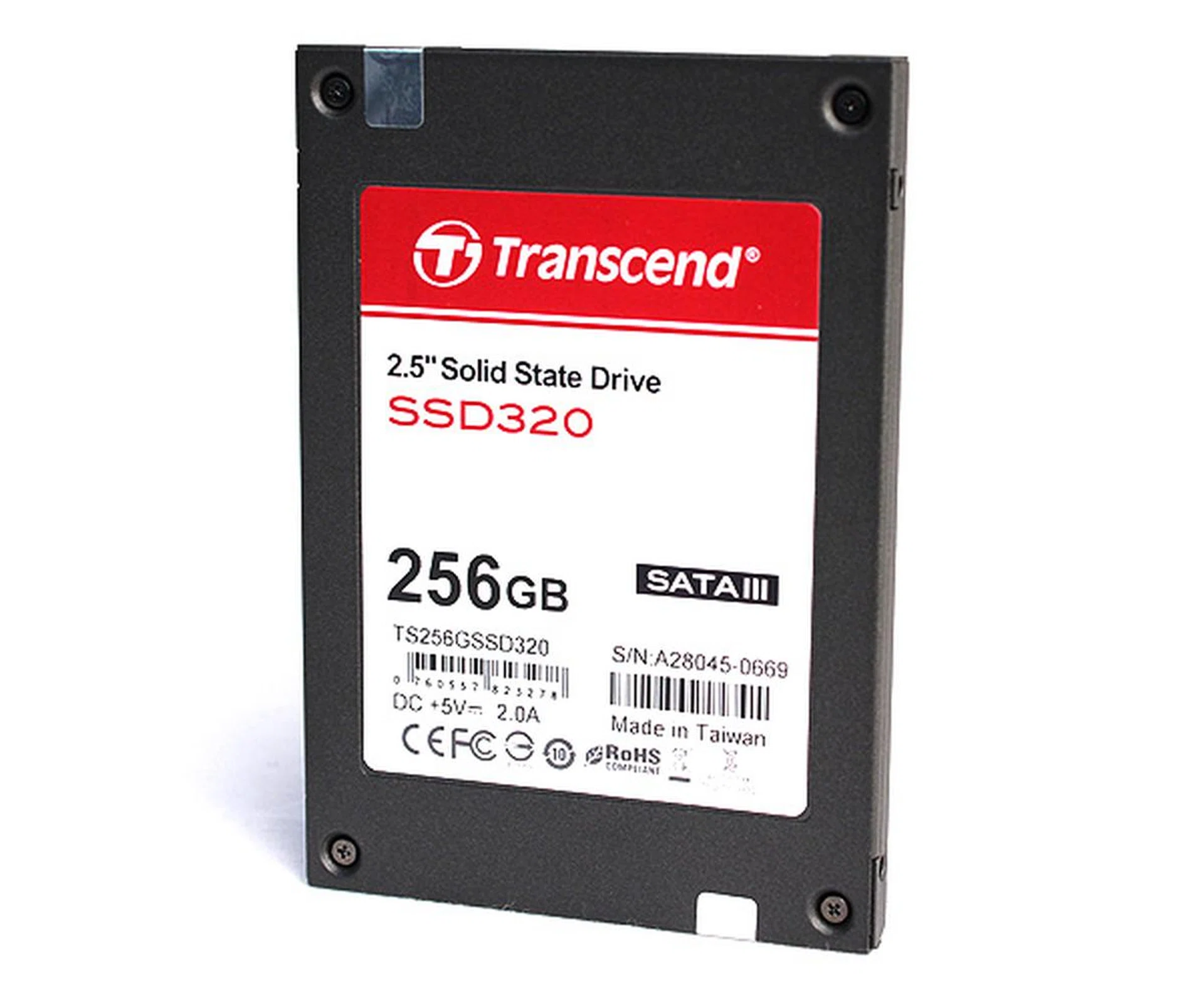
The Transcend SSD320 uses the same SandForce controller but packs cheaper and slower asynchronous NAND.
To stand out in the crowded market place is difficult, which is why we are already seeing some companies moving away their focus and energies from the SSD business. We heard that Patriot is going to distance itself from the SSD marketplace and focus on memory/flash solutions instead. Transcend, however, is a very strong and big player in the SSD market and seems to only be forging full steam ahead.
We reviewed their flagship SSD720 drive back in June and found it to be a very competent SandForce SSD, offering good, consistent performance at an attractive price. Today, we are looking at the SSD720’s little brother, the SSD320.
The Transcend SSD320 is the company’s mainstream offering and although it uses the same SandForce SF-2281 controller as the SSD720 and also has the same SATA 6Gbps interface, it differs in that it uses slower asynchronous NAND memory. The difference between synchronous and asynchronous NAND memory is that synchronous NAND memory transmits data on both the rise and fall of the signal wave, which translates to higher raw data throughput and faster response times. How much of an impact will this have on performance will be interesting to see.
But before we continue, here’s a quick look at the drive.
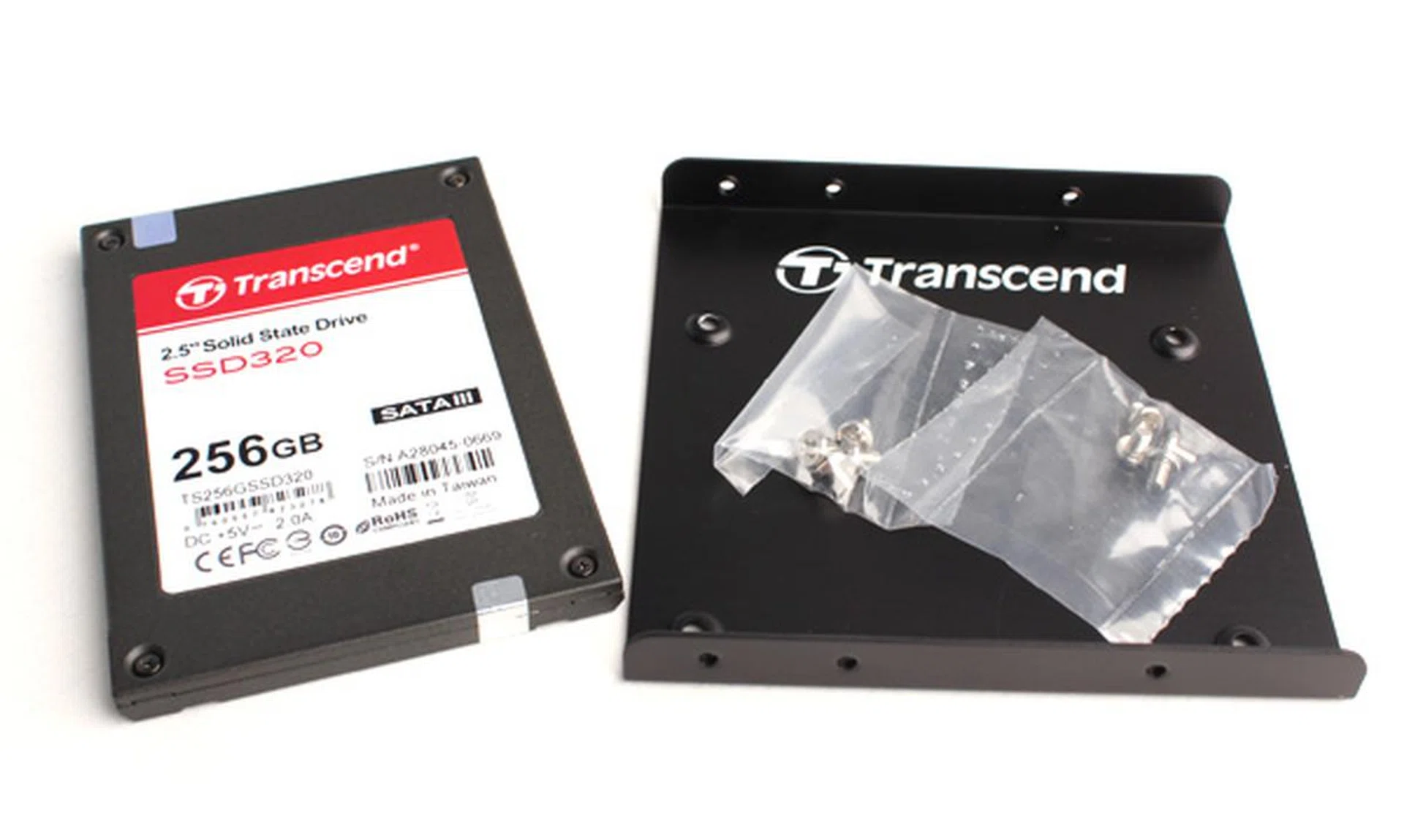
The Transcend SSD320 comes with an installation drive adapter to fit into standard 3.5-inch drive bays, but no SATA data and power cables.

Peeling the drive cover open reveals eight NAND chips. These chips are of 16GB density. Further investigation into the serial code reveals that they are sourced from Micron.

Flipping the PCB aside reveals an additional eight NAND chips and the SandForce SF-2281 controller.
Test Setup
The drives tested on our new storage testbed, has the following system specifications:
- Intel Core i5-2400 (3.1GHz)
- MSI Z68A-GD80 (Intel Z68 chipset)
- 2 x 4GB DDR3-1600 memory
- MSI GeForce 8600 GTS
- Windows 7
The list of SSDs tested are as follows:
- Transcend SSD320 (256GB) (Firmware 5.0.4)
- Transcend SATA III SSD720 (256GB) (Firmware: 5.0.2)
- Intel SSD 335 Series (240GB)
- Intel SSD 520 Sereis (240GB)
- OCZ Agility 4 (256GB)
- OCZ Vertex 4 (256GB) (Firmware 1.5 Beta)
- Plextor M2S (256GB) (Firmware 1.09)
- Kingston HyperX SSD (240GB)
The Transcend SSD 320 is one of the few SSDs with asynchronous NAND memory that we’ve tested and it will be interesting to see how it matches up against Transcend’s own SSD720, which uses quicker Toggle Mode NAND. Also, key comparisons will be made against the OCZ Agility 4, which is also equipped with asynchronous NAND memory. Included in our performance analysis is also the duo from Intel - the SSD 520 and SSD 335 Series - as well as the Plextor M2S and Kingston HyperX SSD.
The list of benchmarks used are as follows:
- AS-SSD benchmark 1.6.4
- HD Tune Pro 4.6
- CrystalDiskMark 3.0.1
- PCMark 7
- PCMark Vantage
- Iometer (version 2006.07.27)
AS SSD Results
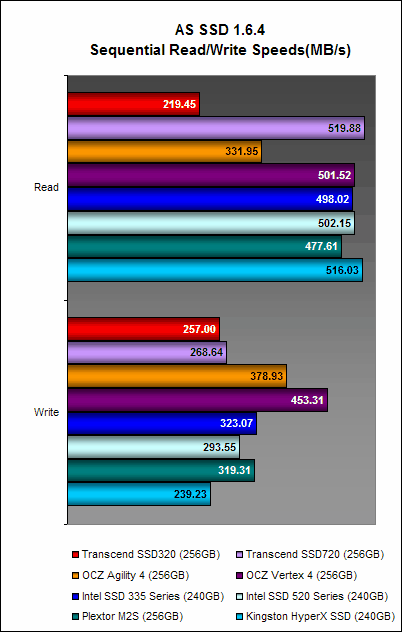
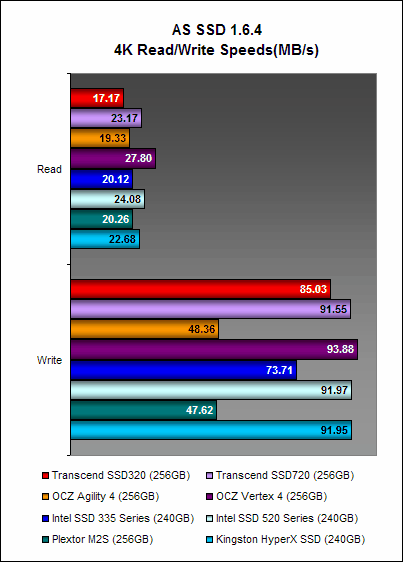
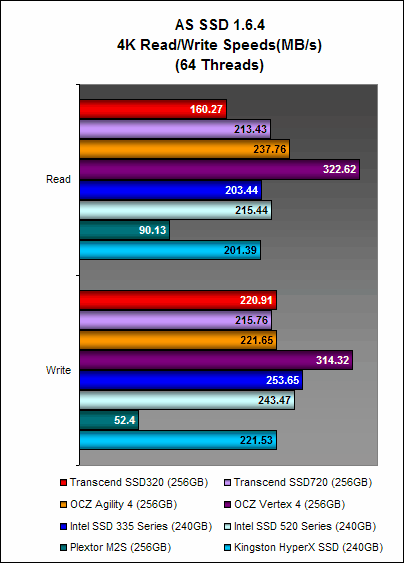
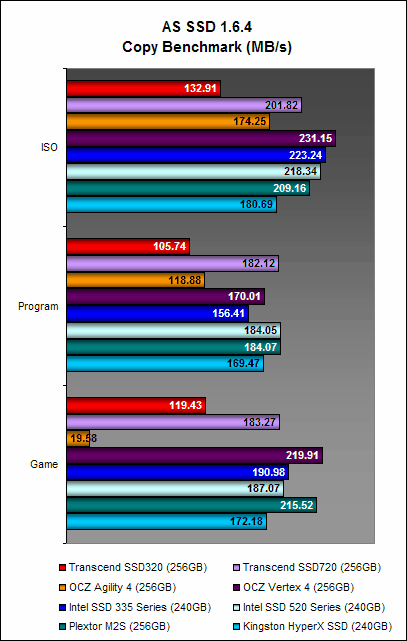
AS SSD is a benchmark that uses non-compressible and completely random data. What this means is that the drives using the SF-2281 controller cannot compress the data first, which takes away one of the strong advantages of this controller. Therefore this is a useful benchmark because drives that use the SF-2281 don't gain an upper hand.
The shortcomings of using asynchronous NAND memory is apparent here. The SSD320’s sequential read performance wasn’t even half that of the SSD720 and the other high-end SandForce drives. Looking at the more intensive 4k and 4k, 64 threads work loads, while the Transcend SSD320 posted pretty competitive write performance figures, its read performance was significantly slower than the SSD720 by around 25%. Finally, in the simulated copy benchmarks, the SSD320 was around 40% slower than the SSD720 and the other high-end SSDs.
CrystalDiskMark 3.0.1 Results
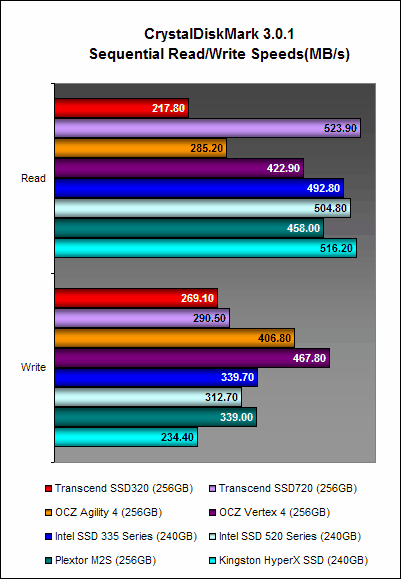
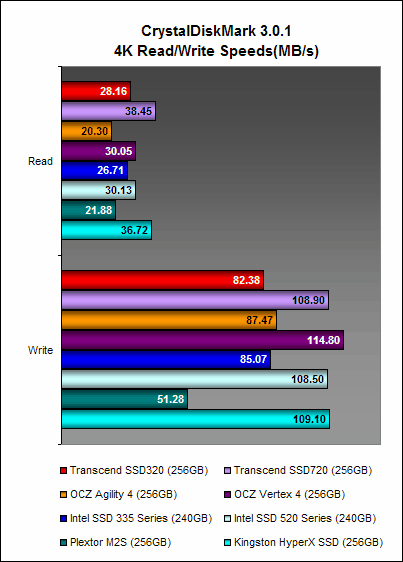
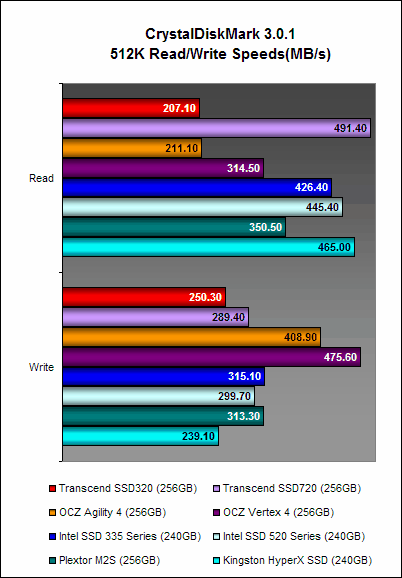
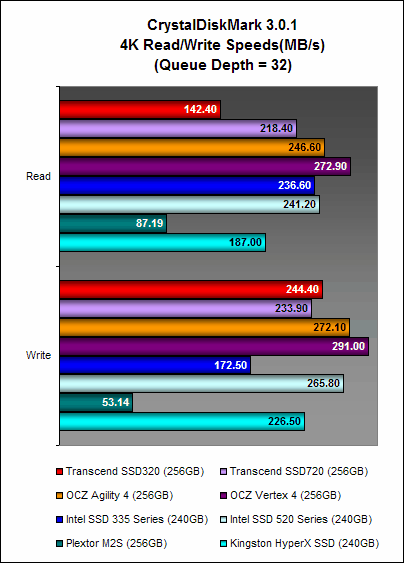
CrystalDiskMark is an easy-to-run and quick utility to use to gauge a drive’s performance. It measures sequential read and write performance and random read and write speeds of random 4KB, 4KB (queue depth 32) and 512KB data.
Here, the Transcend SSD320 once again showed that while its write performance was no slouch, its read performance was significantly poorer than the Transcend SSD720. This is no doubt due its slower asynchronous NAND memory. The OCZ Agility 4, which also has asynchronous NAND memory, was arguably the better performer and this could point to the efficiency of its Indilinx Everest 2 controller at negating the shortcomings of asynchronous NAND memory.
HD Tune Pro 4.6 Results
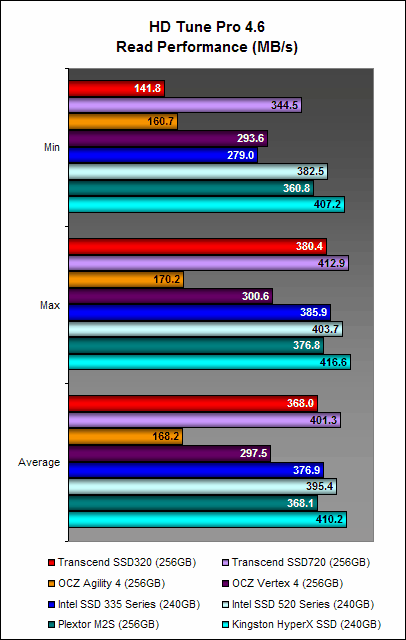
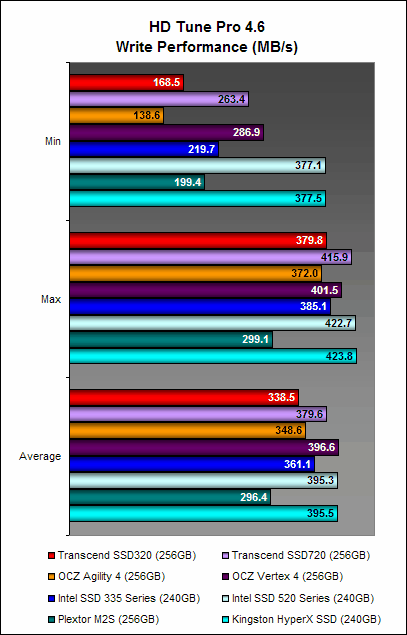
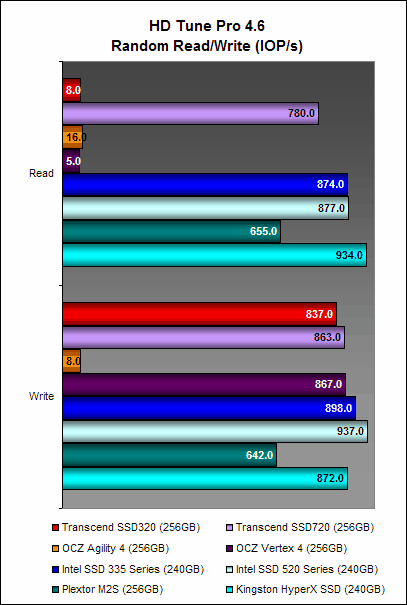
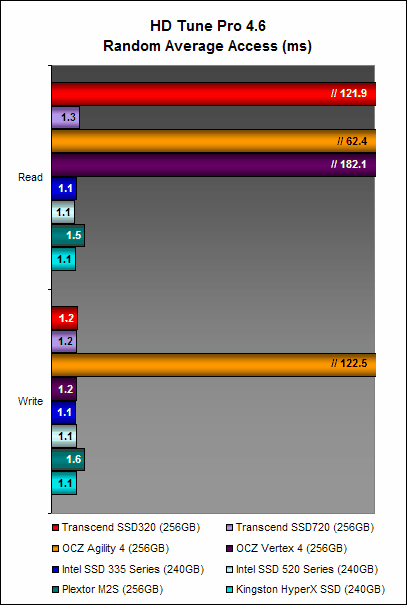
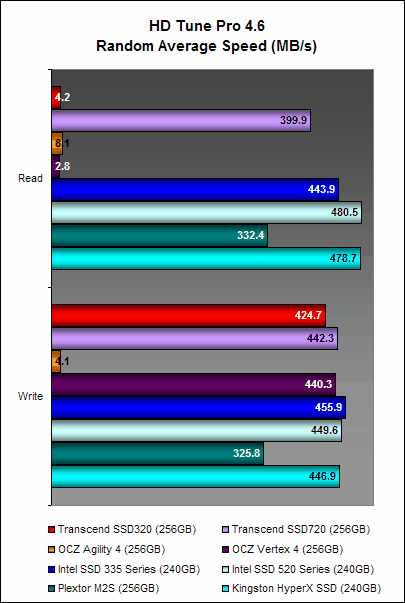
On HD Tune, the Transcend SSD320 gave a more encouraging performance. Average speeds during the standard read and write tests were not too far off the mark from the Transcend SSD720 and were within the same range as the rest of the drives, even the formidable Intel SSD 520 Series.
The SSD320’s random write performance was also decent as it only a smidge slower than the SSD720 and slightly slower than other speed demons such as the Intel SSD 520 Series and Kingston HyperX. However, random read performance was poor, managing a mere 8 IOPS, which consequently resulted in poor random access times too.
Futuremark PCMark 7
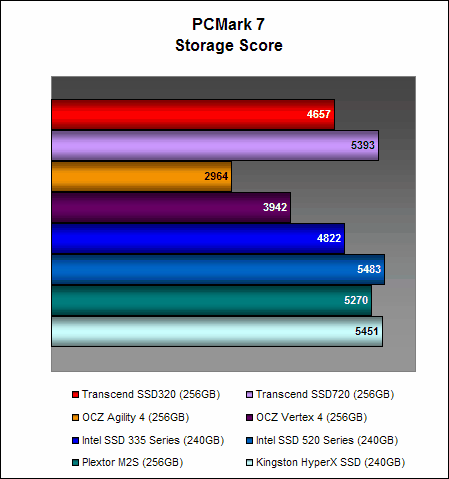
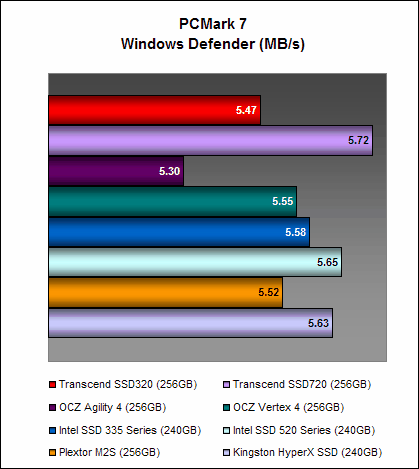
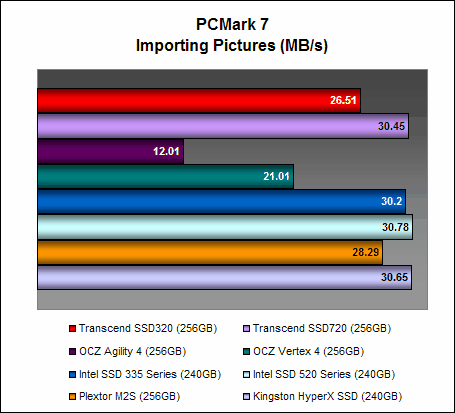
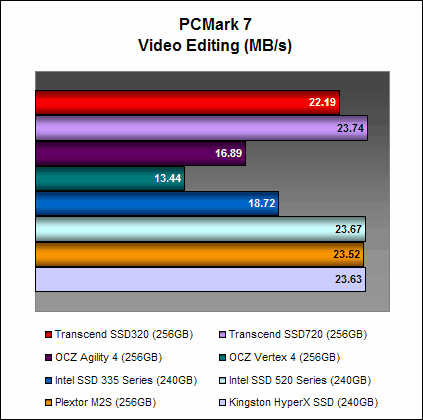
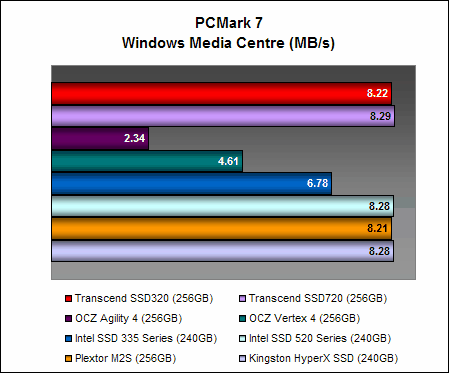
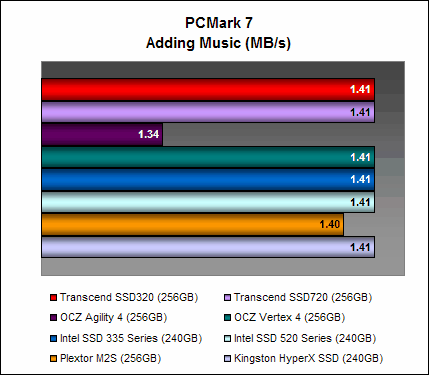
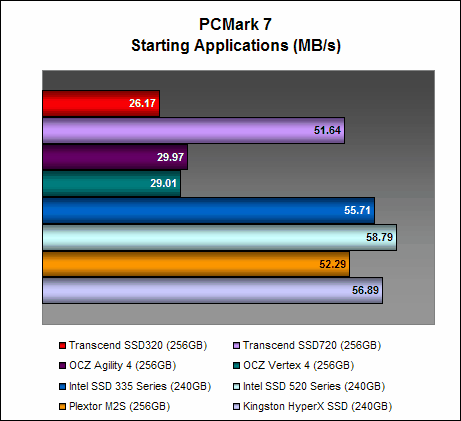
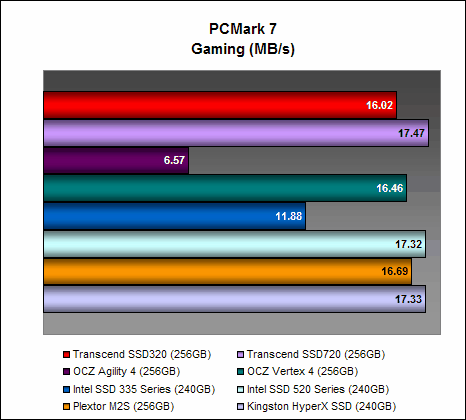
PCMark 7 is the latest benchmarking suite from FutureMark that evaluates the performance of Windows 7 machines. It tests a wide range workloads and aspects of the system ranging from computation, image and video manipulation and storage. We’ll be looking solely at the storage test here.
On PCMark 7, the Transcend SSD320 managed 4657 PCMarks, which is comparable to the Intel SSD 335 Series and ahead of the OCZ Vertex 4. It is a decent showing, but it was still almost 14% lesser than what the Transcend SSD720 could achieve, showing again the disparity in performance between Transcend's high-end and mainstream offerings. Interestingly, it was performing much better than the OCZ Agility 4 on this test.
PCMark Vantage Results
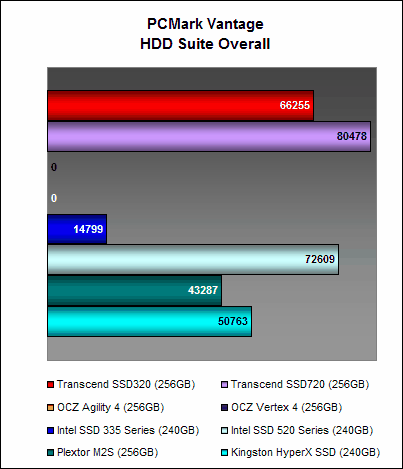
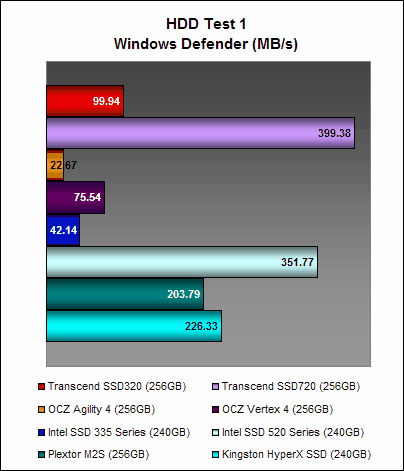
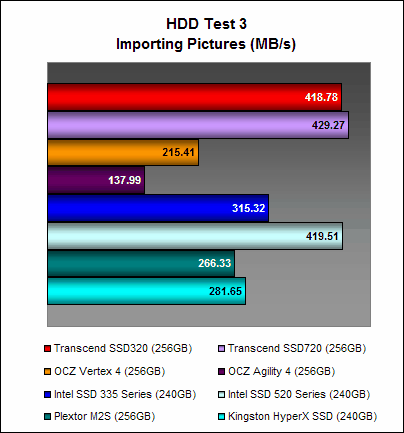
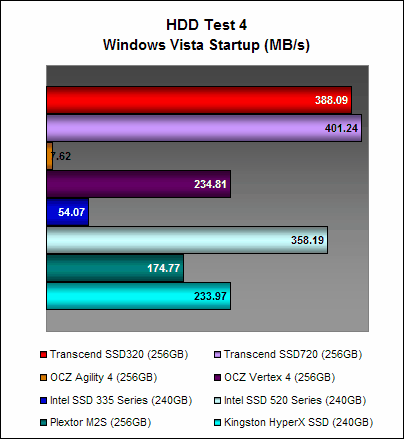
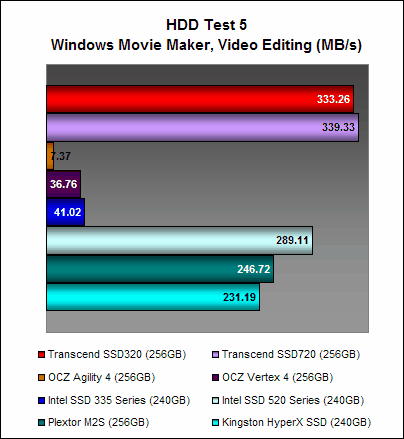
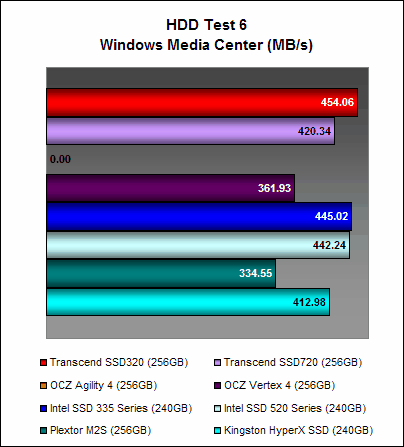
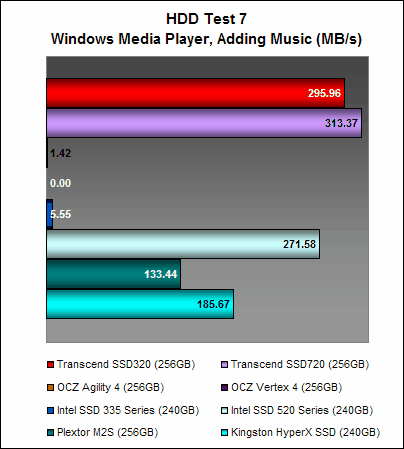
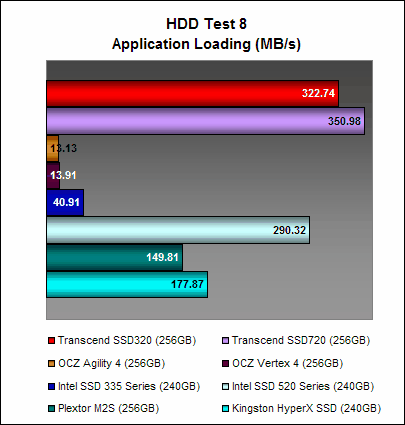
PCMark Vantage might have been around for quite some time, but it is still a fairly accurate representation of how the drives might be used in real-world scenarios. We are focusing on the hard drive test suite which comprises of tasks such as loading of applications to media creation.
Although PCMark Vantage has been giving some of the newer drives problems lately, the Transcend SSD320 had no problems in completing this benchmark. It scored 66255 PCMarks, which was 18% less than Transcend’s flagship SSD720 - not too shabby. Once you peer at the detailed breakdown of results, you can see that the SSD320 is actually a very competent performer in most cases.
Iometer Results (Part 1)
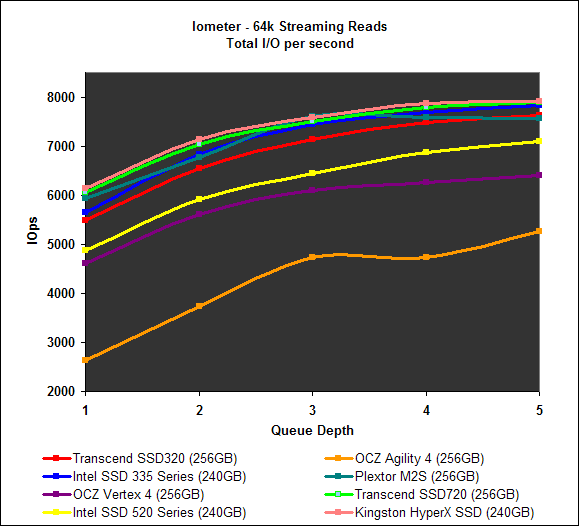
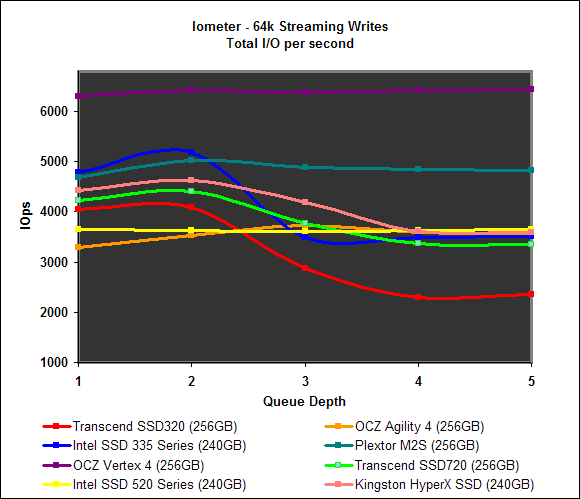
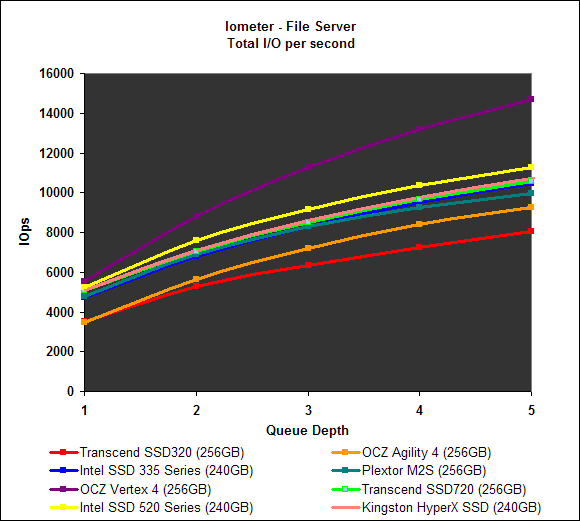
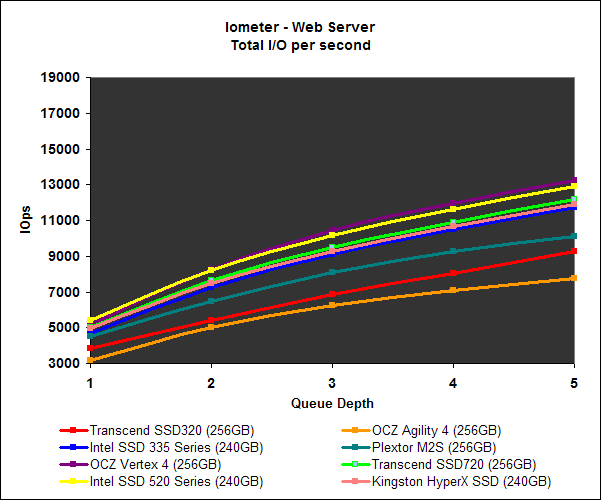
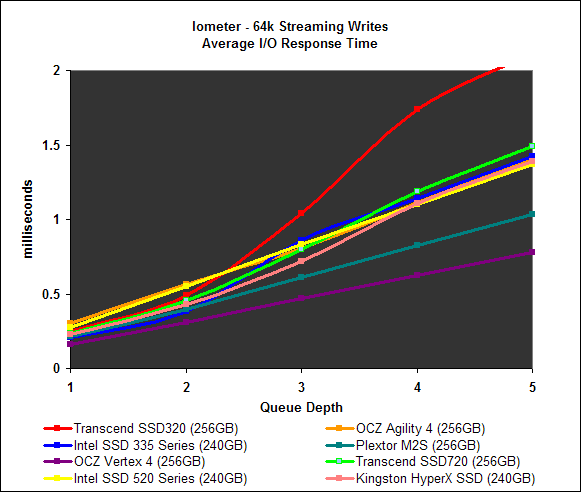
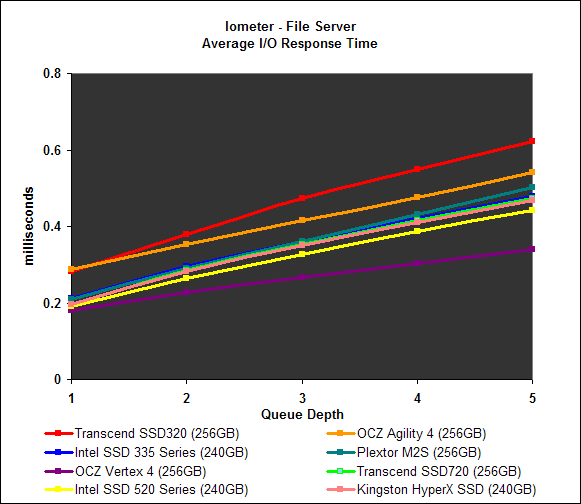
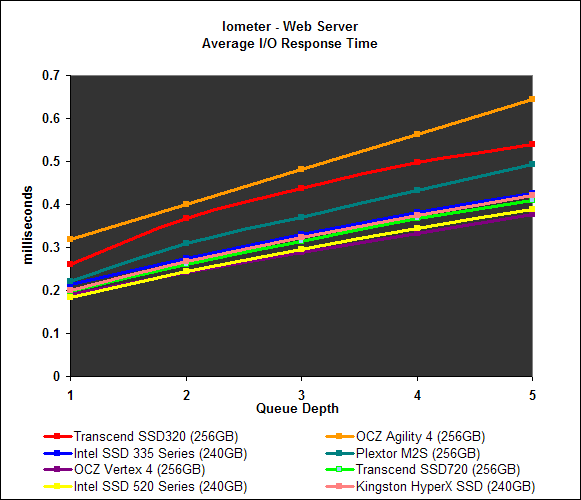
Lastly, we put the drives through the rigorous grind of Iometer, with different workloads and I/O queue depths. We have chosen to show results from a queue depth of 1 to 5 as this better represents the workloads a typical consumer might face.
On Iometer, the Transcend SSD320 performed as we would expect from a mainstream SSD. It’s 64k streaming reads IOPS was middle of the pack, but its 64k streaming writes performance took a significant dip as the queue depth increased. Performance on the File and Web server was towards the bottom of the pack, a position it shared with the OCZ Agility 4.
Iometer Results (Part 2)
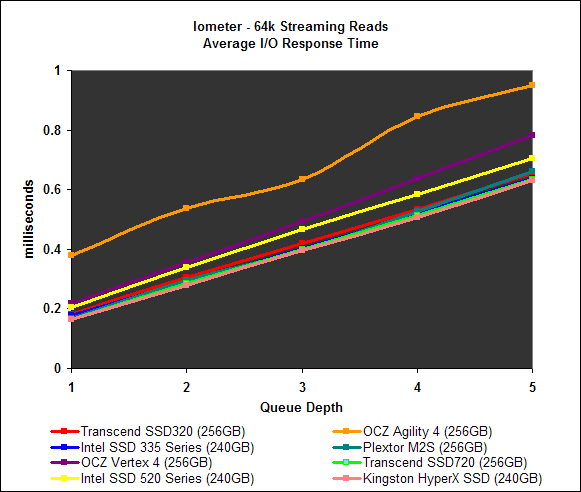
Finally, we look at the I/O response times for the workloads reported on the previous page. Overall, the Transcend SSD320’s response times made it one of the less responsive drives of the pack, along with the OCZ Agility, which incidentally also has asynchronous NAND memory. This is not surprisingly given that it has asynchronous NAND memory, which means it can only transmit data on either the rise or fall of the clock cycle, not both.
Mad Pricing Undoes It
Like we have detailed in our review of the OCZ Agility 4, the shortcomings of asynchronous NAND memory is evident. Across all benchmarks, the OCZ Agility 4 was measurably slower than the Vertex 4.
Likewise, the Transcend SSD320, despite having the same SandForce SF-2281 controller, was evidently less quick than the Transcend SSD720 because of its asynchronous NAND memory. To be sure, the difference is not as clear as day and night, and certainly not as great as one would think. While read performance was generally about 20% to 30% poorer, write performance remained very competitive.
However, the performance of the Transcend SSD320 is very clearly a tier below that of the Transcend SSD720 and the rest of the present crop of premium enthusiast-grade SSDs. That said, it’ll still give even the fastest traditional hard drives a good whipping, so anyone upgrading from one can still expect to see appreciable gains in performance.
The Transcend SSD320 is undone by its mad pricing. It simply does not make sense to pick it over the much faster SSD720 and various other high-end SSDs that are in the market right now that are priced similar to the SSD320.
While it was no surprise that the Transcend SSD320 was going to be slower than the SSD720, what was surprising however, was its price. Given its mainstream positioning, the use of asynchronous NAND memory, and the performance that we’ve seen here, you would think that the SSD320 would be considerably more affordable. Unexpectedly, however, the Transcend SSD320 costs just S$5 less than the flagship SSD720 - S$330 to be exact.
There’s two major problems with this pricing. Firstly, at just S$5 less, we cannot think of any logical explanation why anyone would pick the significantly slower SSD320 over the SSD720. Secondly, S$330 is pretty pricey for an SSD with asynchronous NAND memory, considering there’s a host of very fast SSDs that can be had for less, such as the Intel SSD 520 Series (S$313), OCZ Vertex 4 (S$313) and the SanDisk Extreme SSD (S$259). Even the Transcend SSD720 at S$335, islooking a bit pricey, what more the SSD320?
As such, for those considering the Transcend SSD320, it makes sense to cough up the extra $5 and aim for the flagship SSD720. The Transcend SSD720 is one of the quickest drives we have ever tested and is consistent in its performance, breezing through our benchmarks with no issues whatsoever.
In summary, it’s a pity that the Transcend SSD320 is priced as such. If it had cost significantly less, it would have been a decent, mainstream SSD worth recommending. Right now, at S$330, it simply makes no sense to pick it over the Transcend SSD720 and so many other quicker options.
Our articles may contain affiliate links. If you buy through these links, we may earn a small commission.