

The Shift to Marvell
Mention SanDisk and you are likely to think of USB flashdrives and memory cards. The company hasn’t really been strong in the SSD space (from a marketing perspective) but they are looking to change that by providing consumers with a variety of options.
Recently, we reviewed their flagship SanDisk Extreme SSD in our Great High-end SSD Shootout, and we found it to be an excellent drive, delivering good performance at an attractive price. On the other end of the scale, we also reviewed their ReadyCache SSD companion drive that greatly speeds up any system still running on mechanical hard drives for a relatively low cost.
Today, we are looking at another drive from SanDisk, the Ultra Plus. There are a couple of differences between the Ultra Plus and the Extreme SSD series of drives. While the Extreme drives are driven by the very popular SandForce SF-2281 controller, SanDisk has instead chosen to go with Marvell for the Ultra Plus drives. In this case, the controller of choice is the fairly new Marvell SS889175.
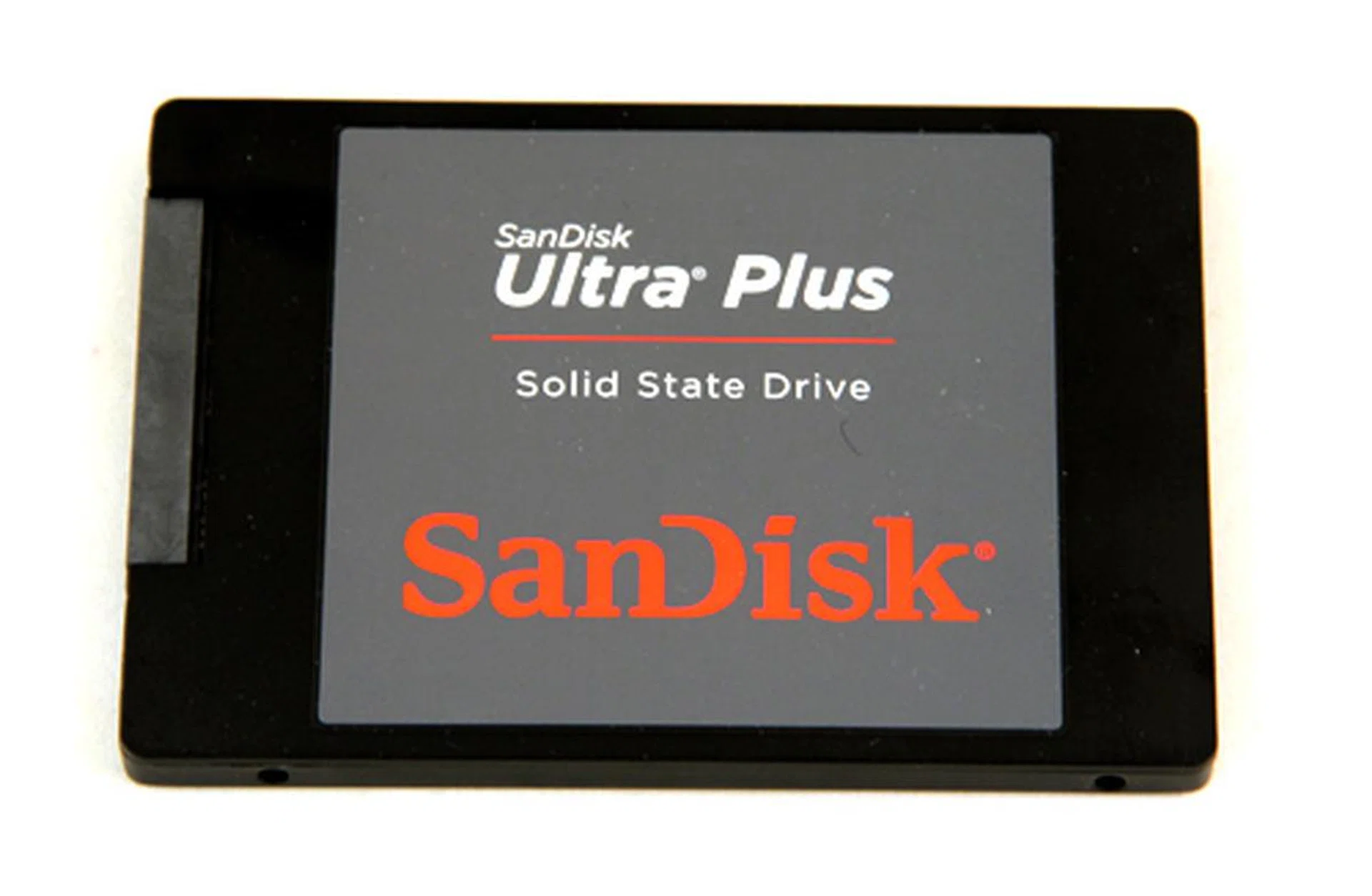
The Ultra Plus is SanDisk's new range of drives using a new Marvell controller and is targeted at more mainstream users.
This controller is not entirely different from the more popular Marvell 88SS9174. In fact, it can best be described as being a light version of the 88SS9174. While the 88SS9174 is often complemented with 512MB of DRAM, the 88SS9175 as fitted in the SanDisk Ultra Plus has to make do with just 128MB. Furthermore, this controller has just four independent NAND channels (the 88SS9174 supports up to eight), which should hamper random access performance. Naturally this meant that the memory chips in this 256GB drive are of 64GB density each. The memory chips used are SanDisk’s own 19nm MLC NAND memory. If you remember, the SanDisk Extreme drives are fitted with SanDisk's faster Toggle-Mode MLC NAND. Factoring all this information, we expect the SanDisk Ultra Plus to be a slower performer than most of the other drives we've recently tested.
Here’s a quick look at the drive.
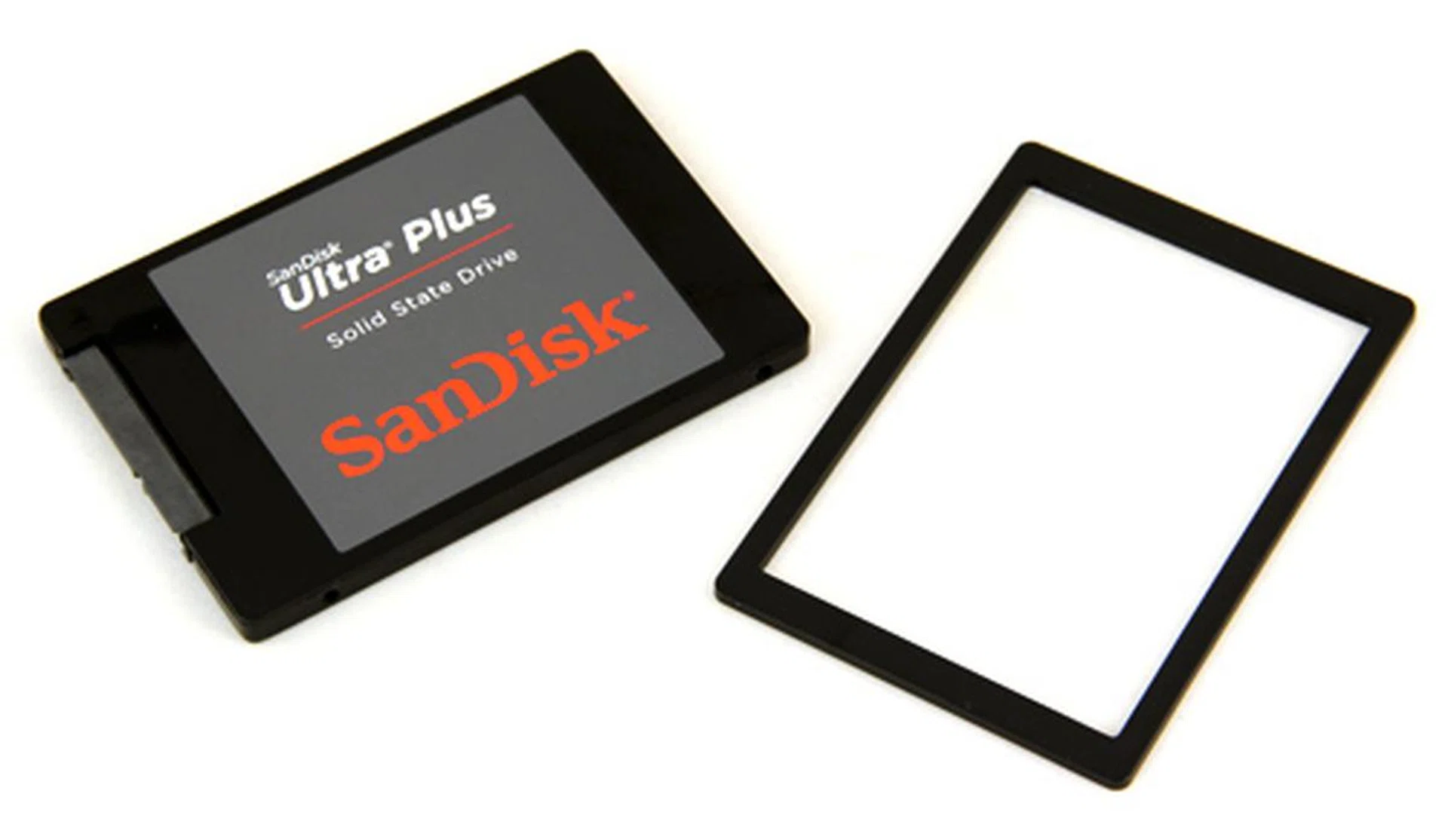
The drive is of the slimmer 7mm form factor, but it comes with an additional bumper to "expand" it to 9.5mm if required. Apart from this bumper, there's no additional accessories.
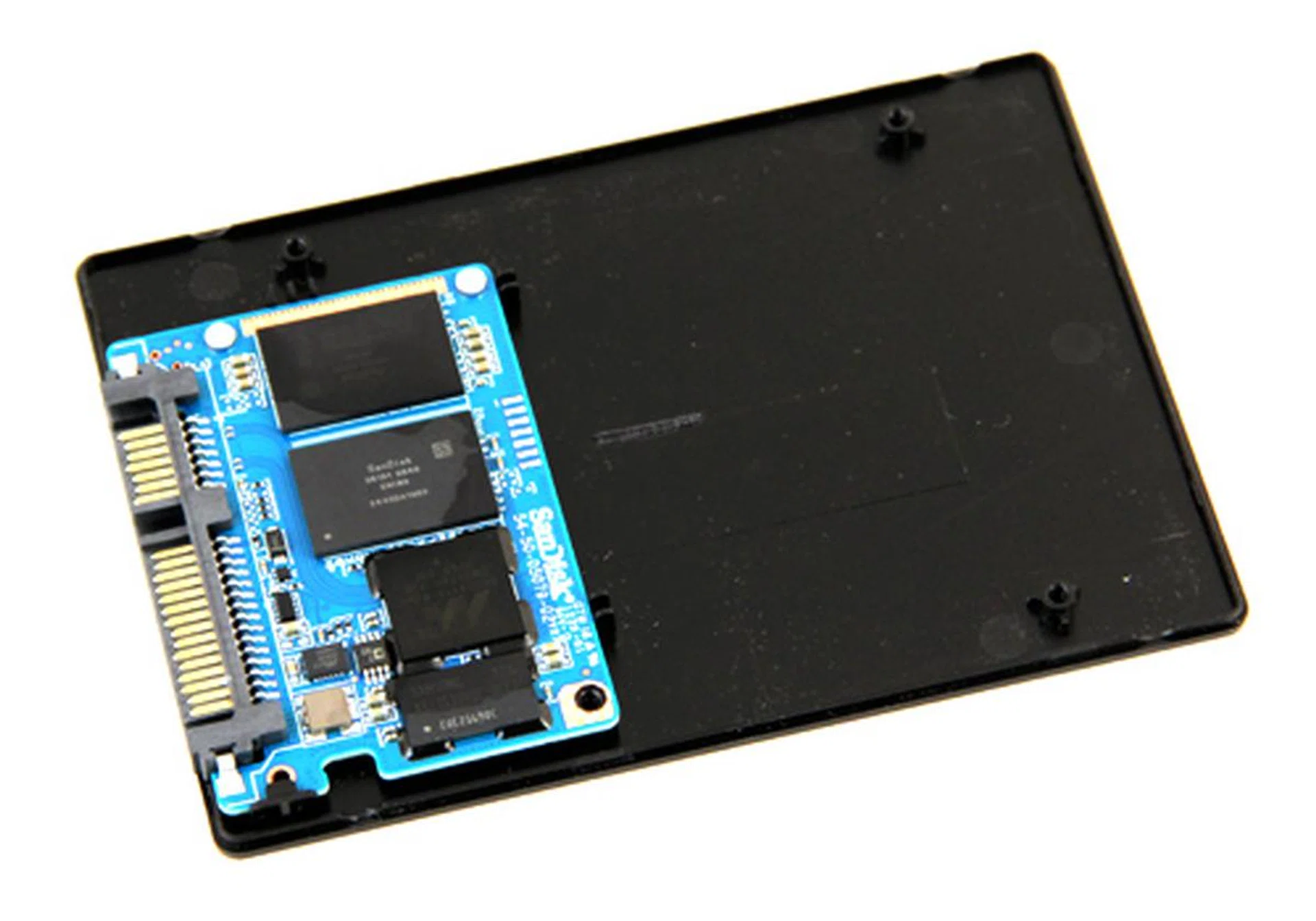
Peeling away the cover, we can see the innards of the drive. As you can see, it's really basic. There's the Marvell SS889175 controller, a 128MB DRAM chip, and four 64GB SanDisk MLC NAND chips (two on each side).

The Marvell SS889175 controller chip is second from top. The 128MB DRAM chip is above, while the bottom chips are the NAND flash memory chips. As can be expected, SATA 6Gbps connection is the normal external drive interface.
Test Setup
The drives were tested on our storage testbed, which has the following system specifications:
- Intel Core i5-2400 (3.1GHz)
- MSI Z68A-GD80 (Intel Z68 chipset)
- 2 x 4GB DDR3-1600 memory
- MSI GeForce 8600 GTS
- Windows 7
The list of SSDs tested are as follows:
- SanDisk Ultra Plus (256GB)
- SanDisk Extreme (256GB)
- OCZ Agility 4 (256GB) (Firmware 1.5.2)
- OCZ Vertex 4 (256GB) (Firmware 1.5)
- Intel SSD 335 Series (240GB)
- Intel SDD 520 Series (240GB)
- Plextor M2S (256GB) (Firmware 1.09)
We will be looking at how the SanDisk Ultra Plus stacks up against its flagship Extreme counterpart. Also, it will be interesting to see how it performs against OCZ’s mainstream and high-end Indilinx Everest 2 controller based offerings, the Agility 4 and Vertex 4. As we have documented, the Indilinx Everest 2 controller is in fact a rebranded version of the newer 88SS9187 controller. We have included results from Intel’s high-end and mainstream duo - the SSD 520 and SSD 335 Series. Finally, we have included results of the Plextor M2S, which uses the 88SS9174 controller.
The list of benchmarks used are as follows:
- AS-SSD benchmark 1.6.4
- HD Tune Pro 4.6
- CrystalDiskMark 3.0.1
- PCMark 7
- PCMark Vantage
- Iometer (version 2006.07.27)
AS SSD Results
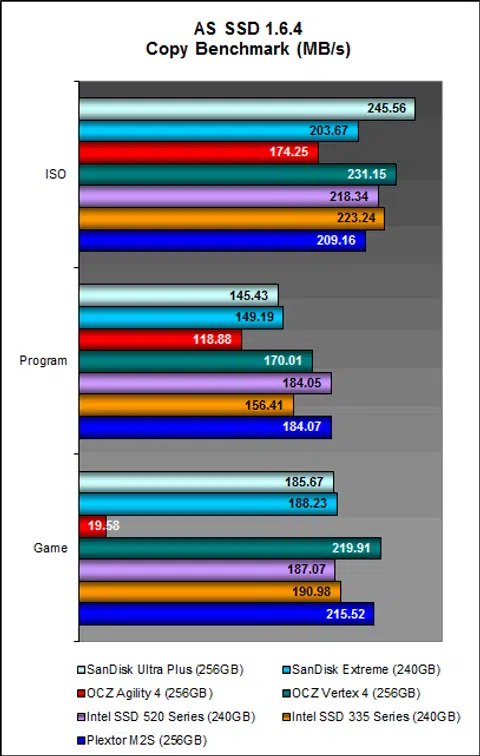
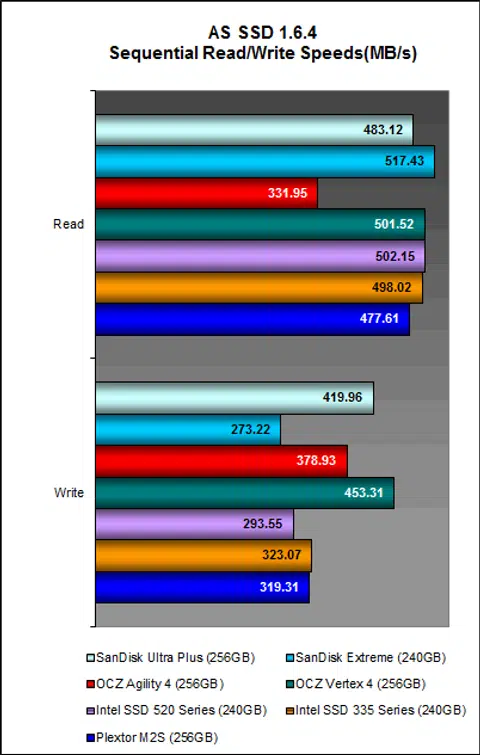
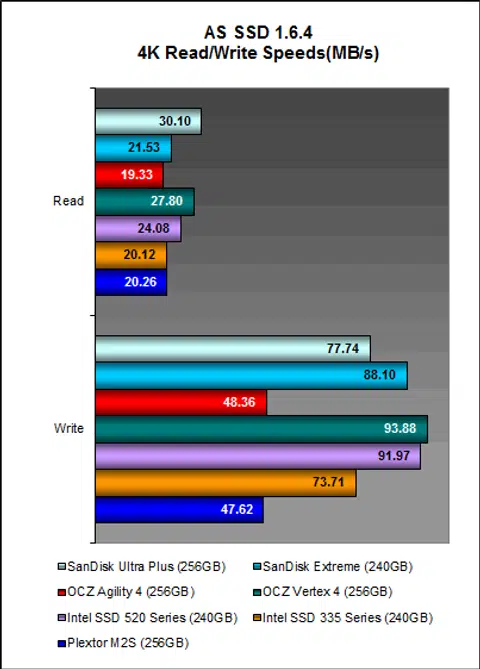
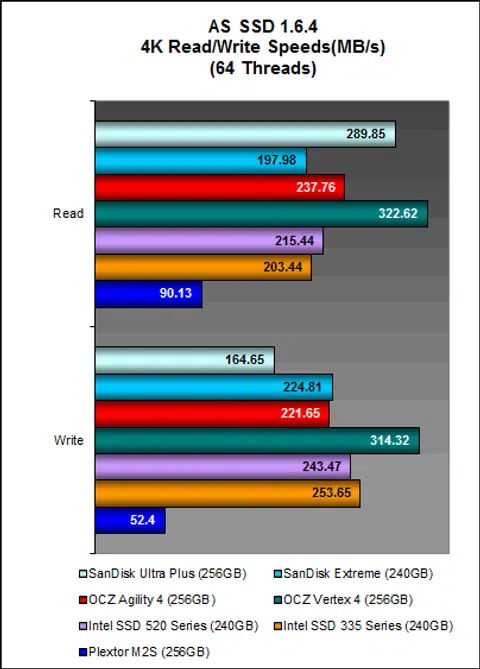
AS SSD is a benchmark that uses non-compressible and completely random data. What this means is that the drives using the SandForce SF-2281 controller cannot compress the data first, which takes away one of the strong advantages of this controller. Therefore this is a useful benchmark because drives that use the SF-2281 controller don't gain an upper hand.
AS SSD is a benchmark that generally favors Marvell-driven drives and the SanDisk Ultra Plus performed respectably as it proved itself to be more than a match for its more illustrious Extreme counterpart. Sequential read and write performance was very strong and it was capable of keeping pace with the high-end drives such as the OCZ Vertex 4 and Intel SSD 520 Series. Interestingly, the SanDisk Ultra Plus was quicker than the Plextor M2S, despite having what is essentially a scaled down version of the same controller in the Plextor drive.
CrystalDiskMark 3.0.1 Results
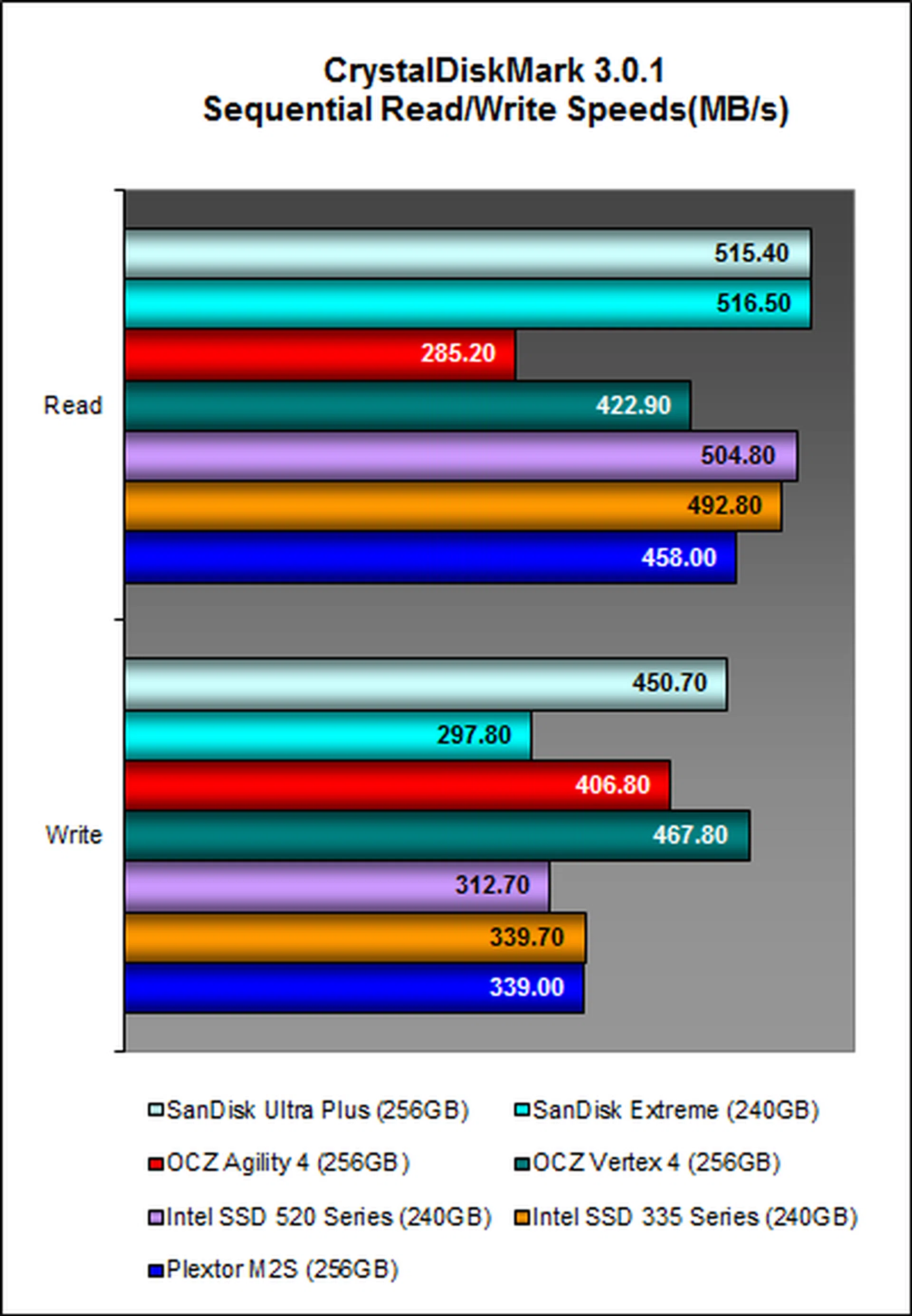
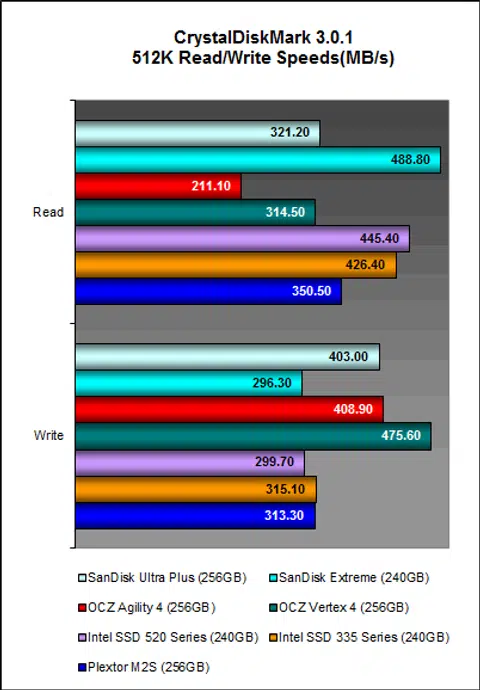
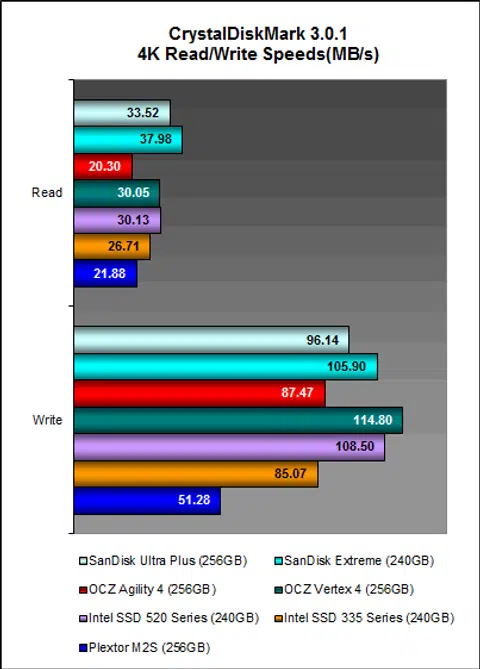
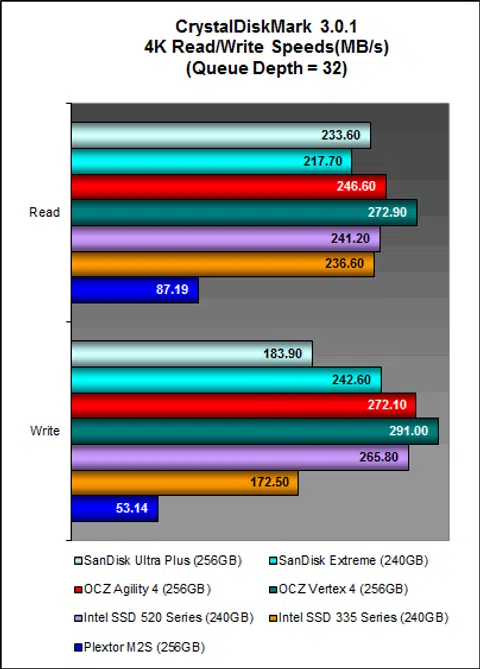
CrystalDiskMark is an easy-to-run and quick utility to use to gauge a drive’s performance. It measures sequential read and write performance and random read and write speeds of random 4KB, 4KB (queue depth 32) and 512KB data.
Here, the SanDisk Ultra Plus impressed with its high sequential read speeds and it was on a par with the very quick SanDisk Extreme, but its performance dipped noticeably when it came to handling small data blocks. Having just four independent NAND channels has undoubtedly boosted its performance in handling contiguous data, but hampered its ability to handle multiple small data blocks. Again, the SanDisk Ultra Plus easily breezed past the older Plextor M2S, despite having an inferior controller.
HD Tune Pro Results
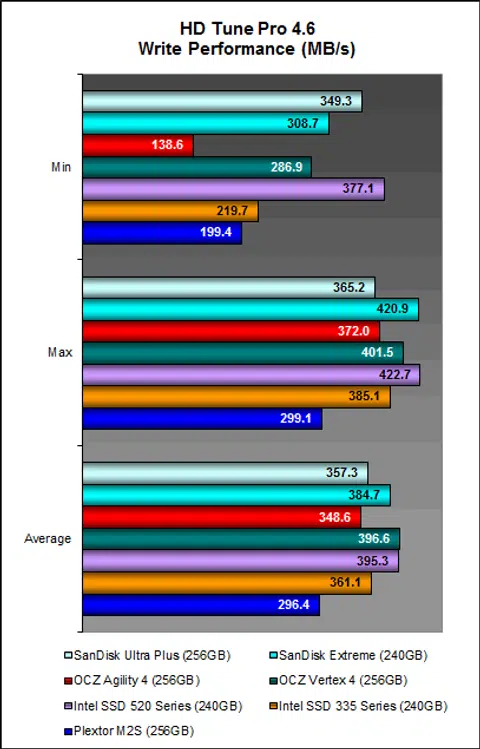
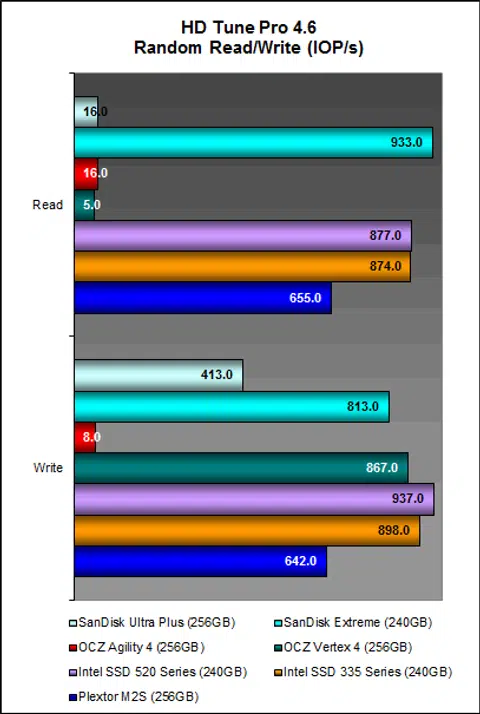
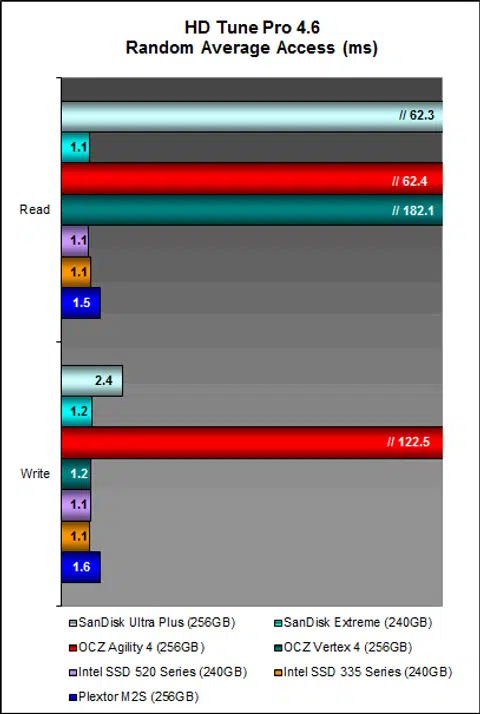
HD Tune is one of the more popular and benchmarking tools for measuring the performance of storage drives. Again, we noticed that the SanDisk Ultra Plus posted very strong read and write performance. It was definitely more than capable of standing its ground against fast drives such as the SanDisk Extreme and Intel SSD 520 Series.
However, random access performance was generally below par. As with many other Marvell-driven drives, random access read performance was problematic and random access write performance was uninspired as justified by its random average write speed of just 209.7 MB/s - less than half of what drives like the OCZ Vertex 4 and Intel SSD 520 Series are capable of.

Futuremark PCMark 7 Results
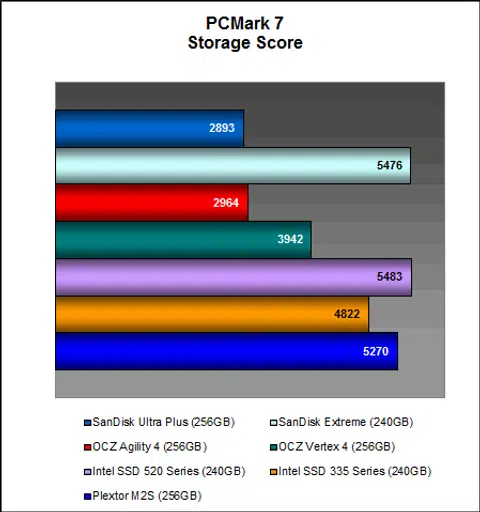
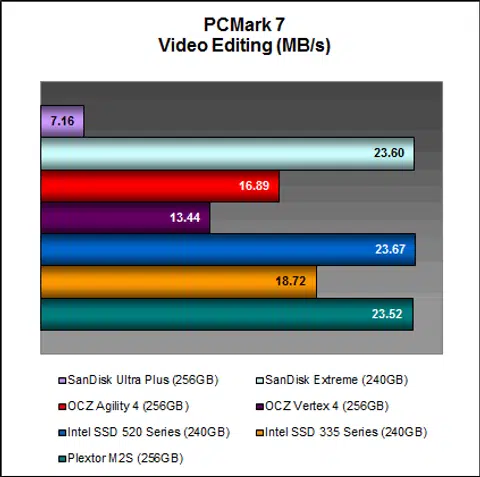
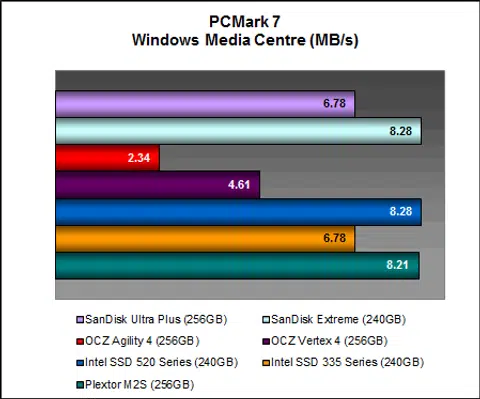
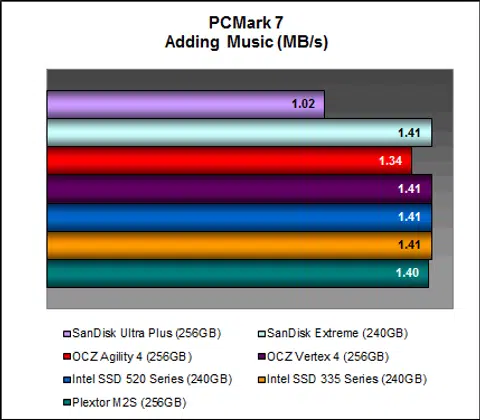
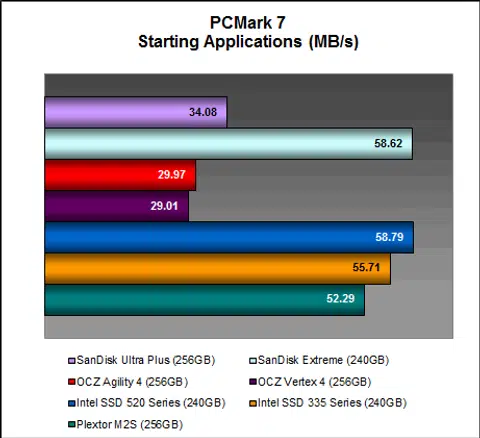
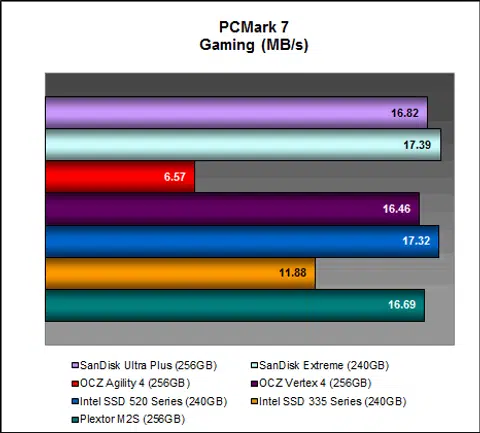
PCMark 7 is the most current benchmarking suite from FutureMark that evaluates the performance of Windows 7 machines. It tests a wide range workloads and aspects of the system ranging from computation, image and video manipulation and storage. We’ll be looking solely at the storage test here.
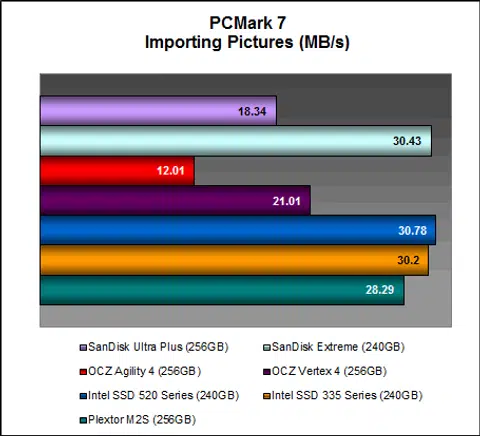
Performance on PCMark 7 was underwhelming as the SanDisk Ultra Plus scored just 2893 PCMarks - 48% less than the SanDisk Extreme’s 5476 PCMarks and 45% less than the Plextor M2S. Its score was about on a par with the mainstream OCZ Agility 4 and some 27% less than the OCZ Vertex 4. Looking at the breakdown of results, we can see that it trailed in every workload.

Futuremark PCMark Vantage
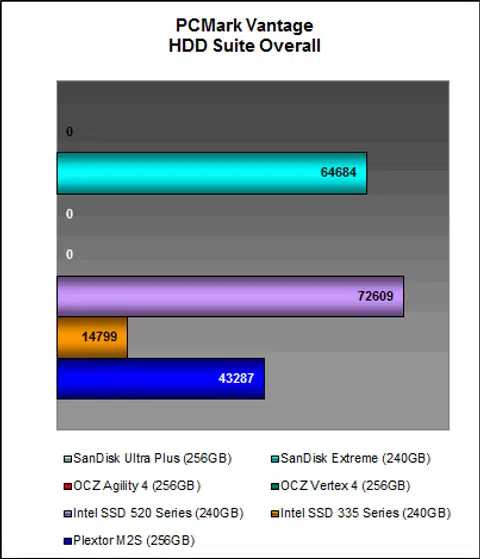
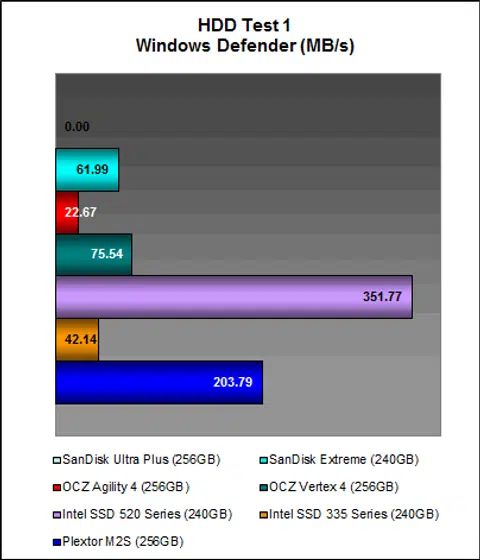
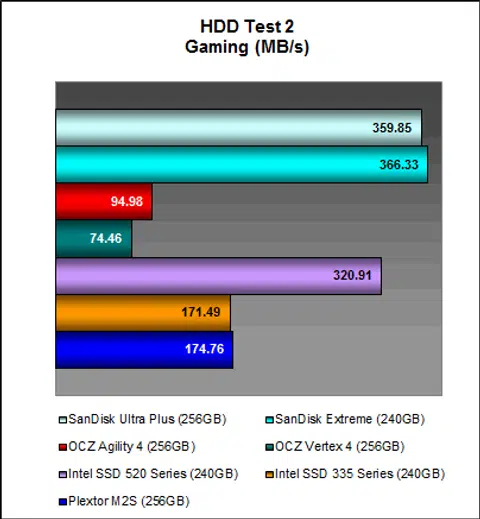
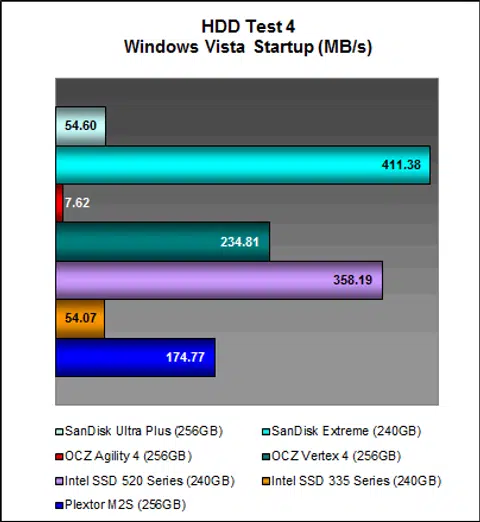
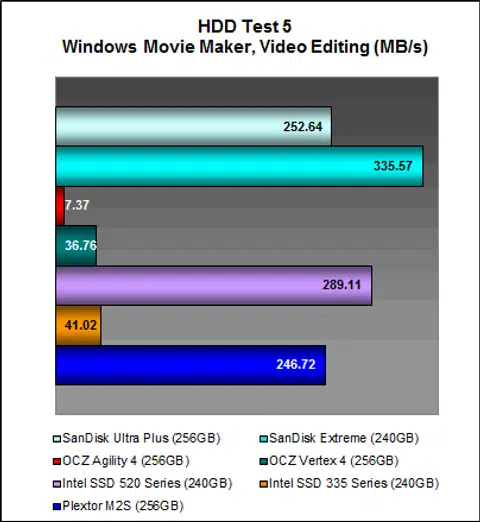
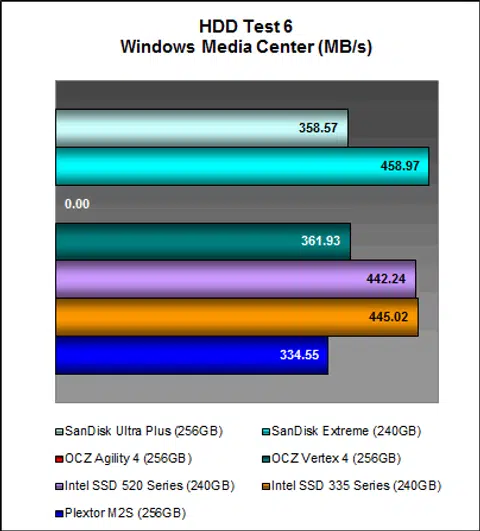
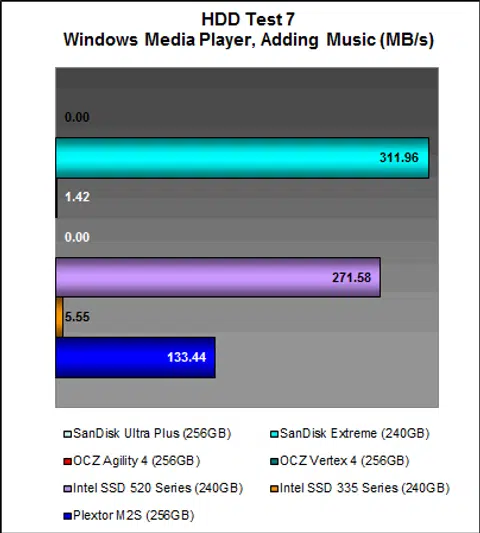
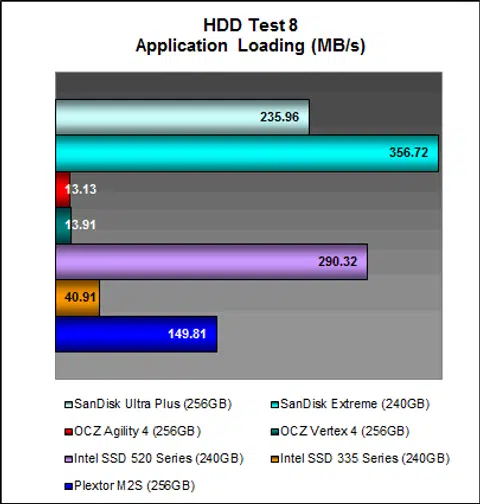
PCMark Vantage might have been around for quite some time, but it is still a fairly accurate representation of how the drives might be used in real-world scenarios. We are focusing on the hard drive test suite which comprises of tasks such as loading of applications to media creation.
Drives with Marvell controllers have traditionally struggled with PCMark Vantage and the SanDisk Ultra Plus was no different. It failed to generate an overall score as it couldn’t complete two of individual workloads - Windows Defender and Windows Media Player. Looking at workloads that it did complete, performance was pretty disappointing too as it was significantly slower than the SandForce-driven SanDisk Extreme and Intel SSD 520 Series in some cases.

Iometer Results (Part 1)
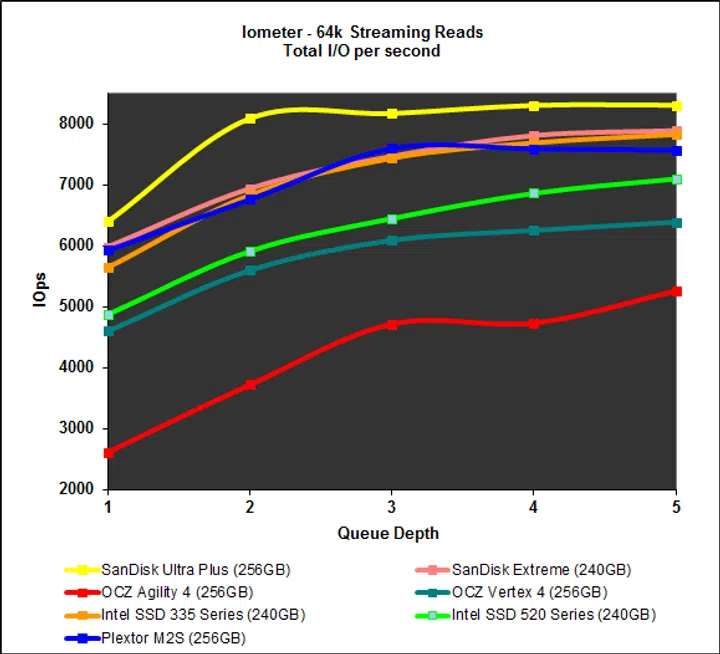
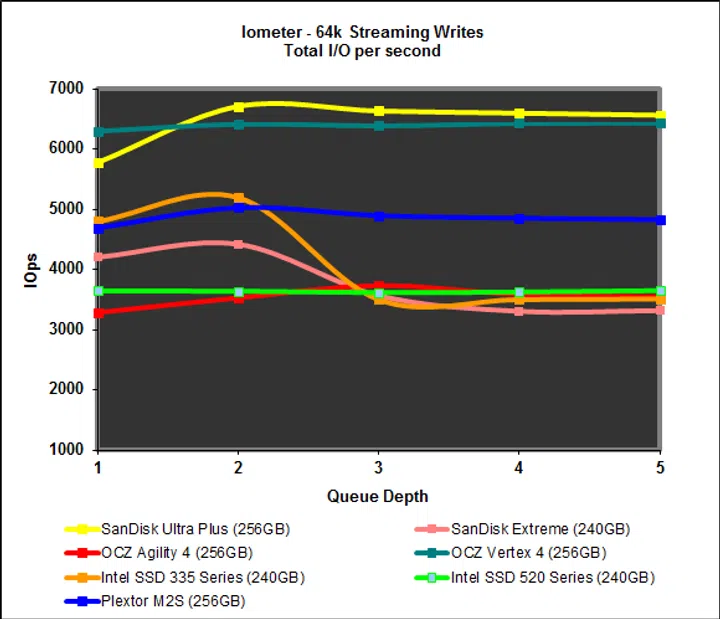
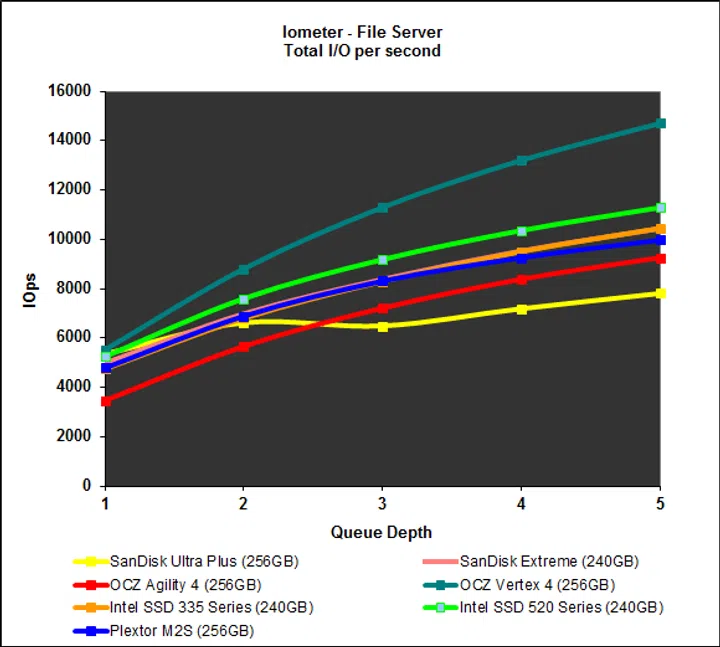
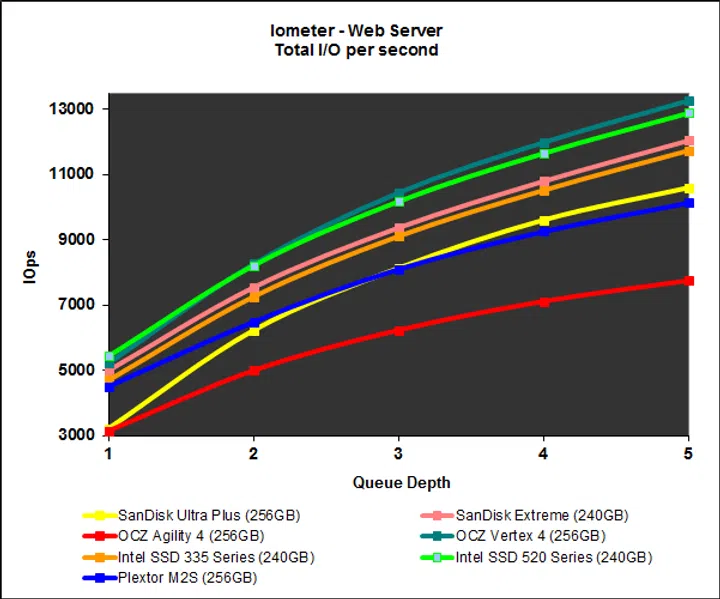
Lastly, we put the drives through the rigorous grind of Iometer, with different workloads and I/O queue depths. We have chosen to show results from a queue depth of 1 to 5 as this better represents the workloads a typical consumer might face.
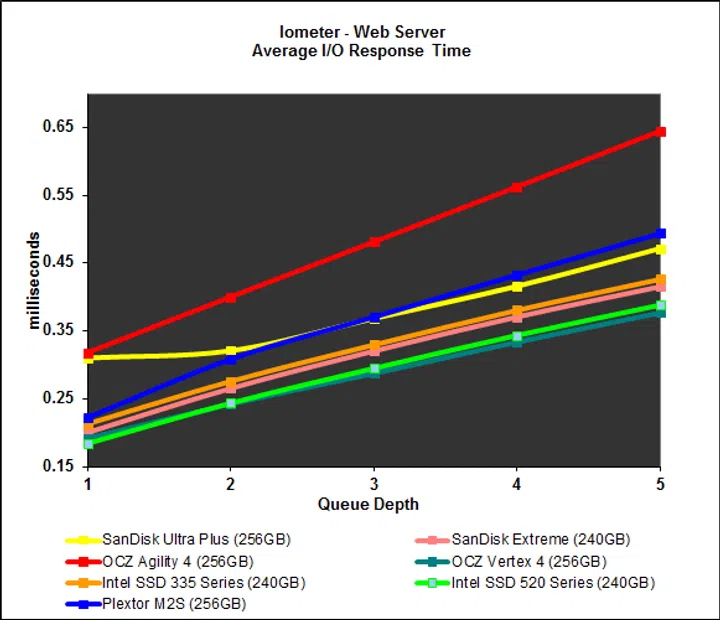
On Iometer, the SanDisk Ultra Plus recorded very impressive streaming read and write performance. In fact, it achieved the highest raw IOPs amongst all the drives. However, on the more enterprise-related File and Web Server workloads, the Ultra Plus’ performance suffered considerably. These two workloads are considerably more intensive and require fast access times. And in this case, the Marvell SS889175 controller simply couldn’t cope.
Iometer Results (Part 2)
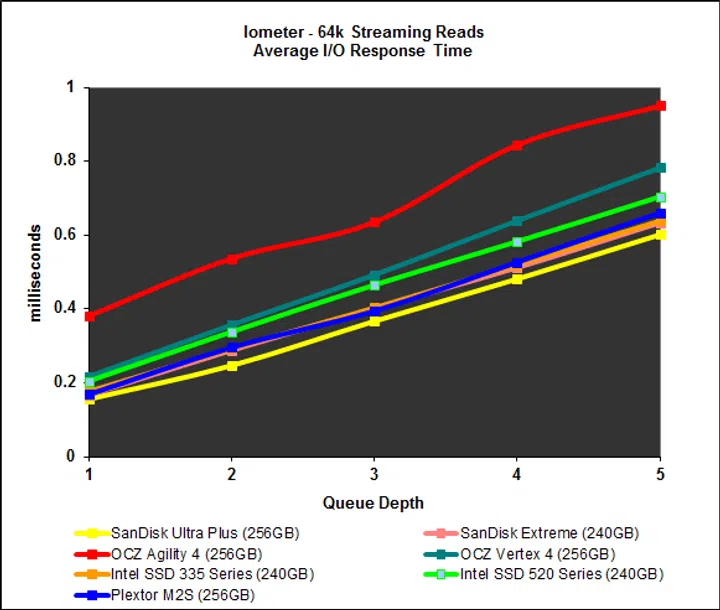
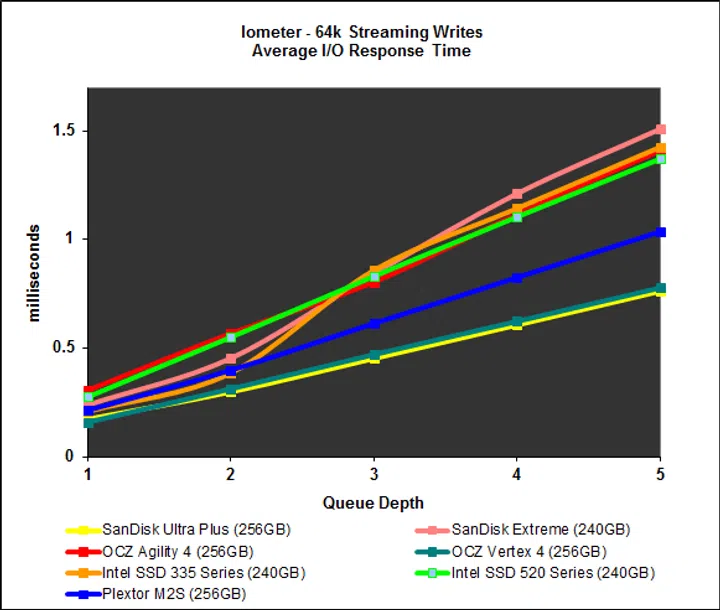
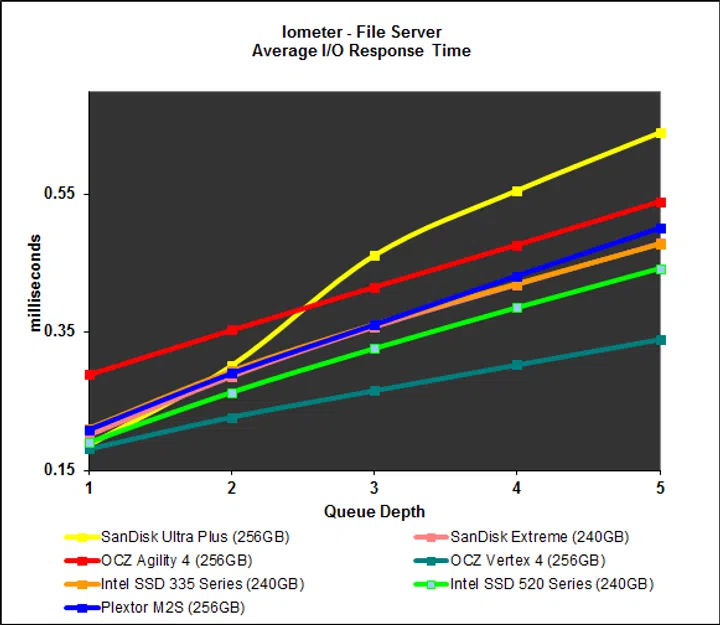
Lastly, we look at the I/O response times for the workloads reported on the previous page. Streaming read and write response times for the SanDisk Ultra Plus was good, but times for the File and Web Server workloads were significantly poorer.
Right Drive at the Wrong Price
The SanDisk Ultra Plus is unique in that it is the first drive we have tested to use the Marvell 88SS9175 controller, which is a scaled down version of the older Marvell 88SS9174 controller. Despite that, performance of the drive was very competitive. The Ultra Plus’ sequential read and write performance, in particular, were very good and were capable of matching even the fastest high-end consumer grade drives. However, random access performance was significantly poorer.
All things considered, the SanDisk Ultra Plus can best be described as a mid to high-end SSD. It’s a smidge faster than mainstream SSDs with asynchronous MLC NAND memory, but it still has some ways to go before it can challenge the crème de la crème of high-end consumer SSDs such as the SanDisk Extreme and Intel SSD 520 Series.
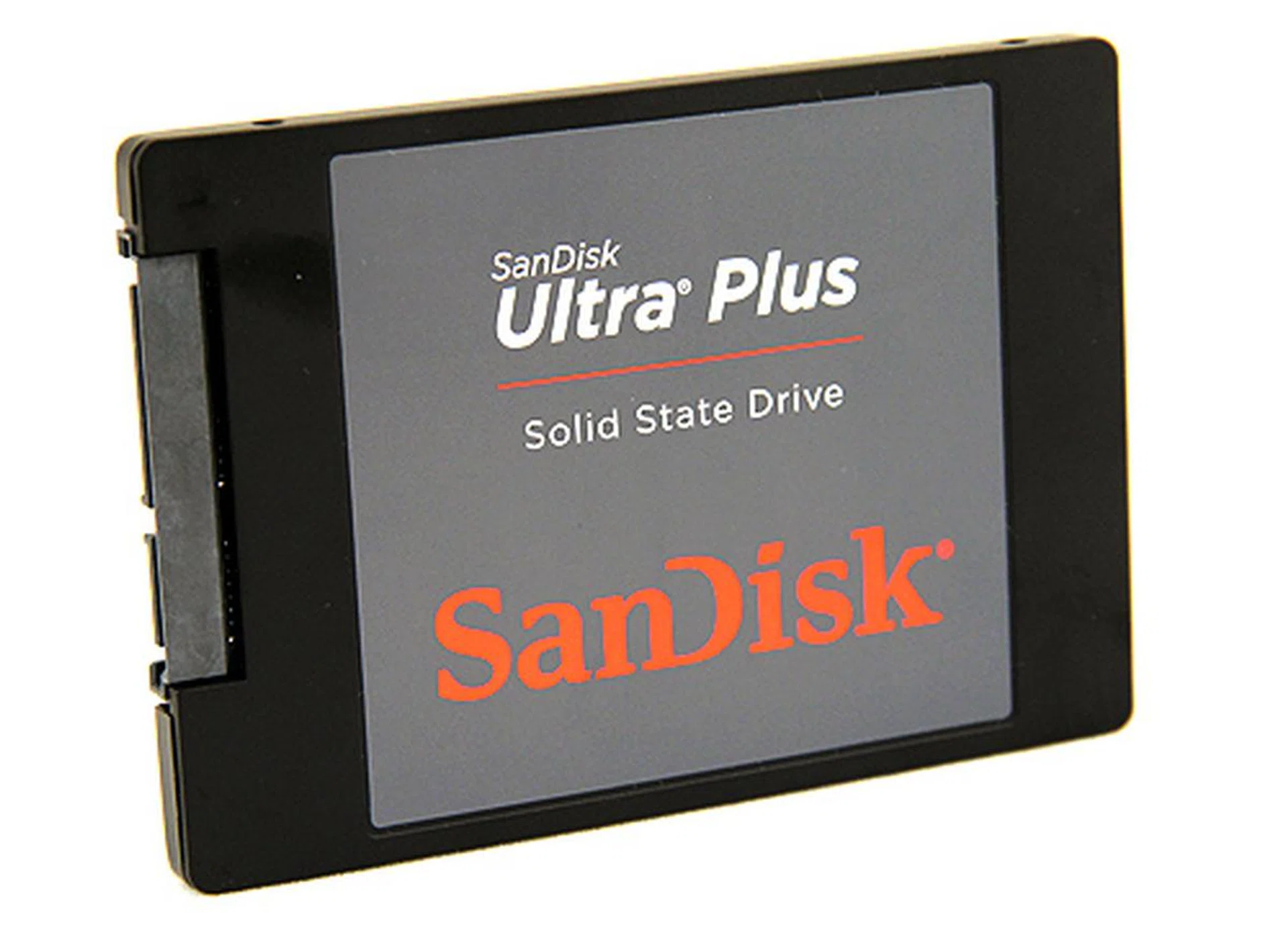
The SanDisk Ultra Plus has decent performance characteristics, but it's priced way too high to be truly competitive in this crowded playing field.
Price-wise, we’ve been informed that the 256GB variant of SanDisk Ultra Plus will go S$360. A quick look around at several retailers revealed that you can probably get it for a bit less, but it will still be in the mid $300 range. That’s a pretty shocking amount for a drive with its performance characteristics. Not that the SanDisk Ultra Plus is a slouch, but at this price point, it goes against heavyweights such as the Intel SSD 520 Series and the bonkers fast Corsair Neutron GTX, which won our Great SSD Shootout. What's also noteworthy is that the faster and more accomplished flagship SanDisk Extreme goes for just S$259.
The SanDisk Ultra Plus is a promising drive with decent mid to high-end performance characteristics. Unfortunately, at this point, it is let down by its rather ludicrous price tag. At that price-point, there’s simply too many faster, more accomplished and more consistent drives around. Therefore unless its price is revised, there is no good reason to pick the Ultra Plus over its competitors or even the SanDisk Extreme series.
Our articles may contain affiliate links. If you buy through these links, we may earn a small commission.