
Becoming Vertically Integrated
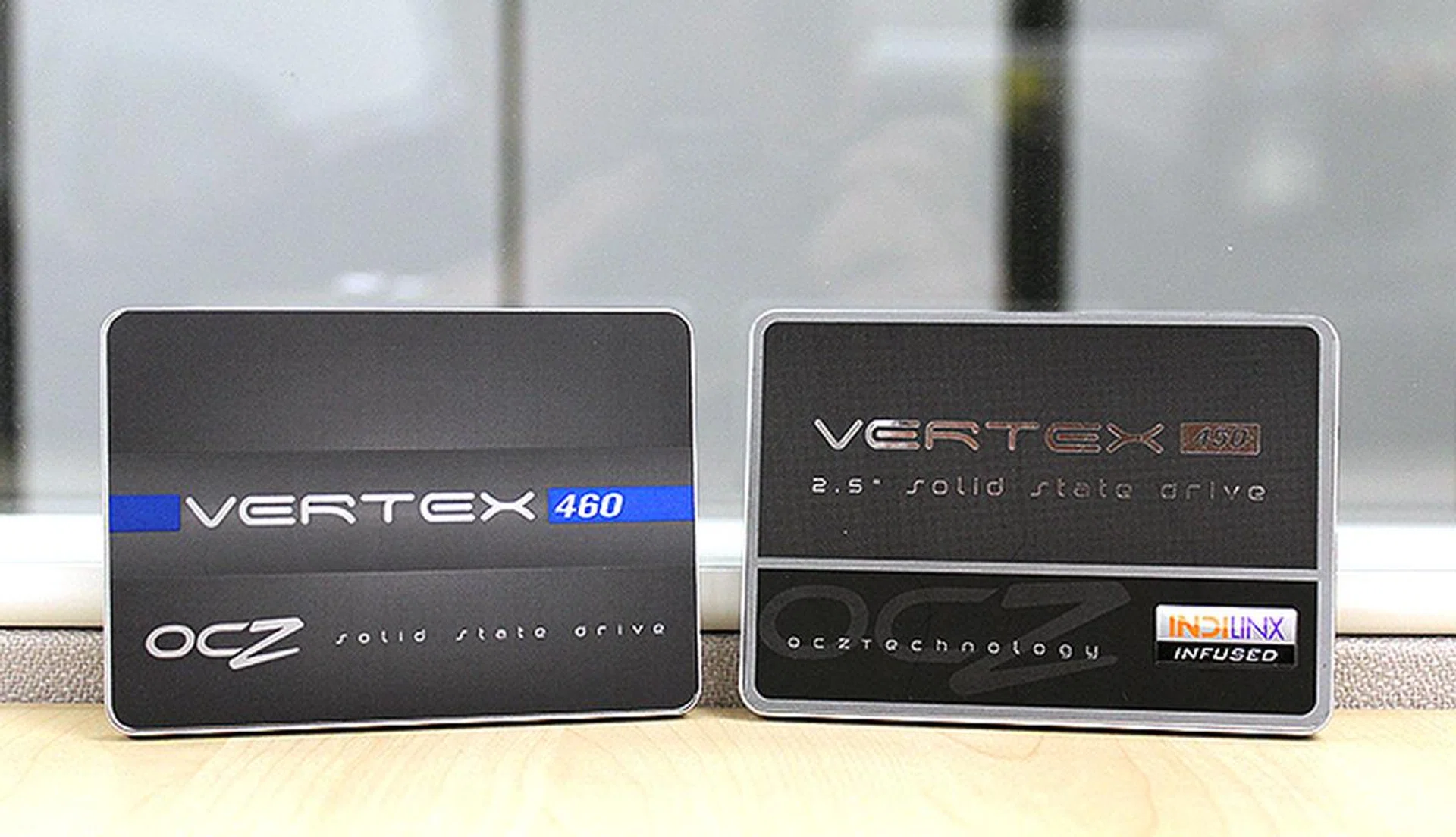
The new Vertex 460 uses the latest and fastest 19nm Toggle-Mode NAND from its new owner Toshiba.
OCZ has had an interesting past couple of months. The company was long said to be mired in troubles and this was finally confirmed in late November when the company filed for bankruptcy.
This was a bit of pity as they were one of the few SSD manufacturers to boast of an in-house developed controller. In fact, we were pretty impressed with the OCZ Vector - OCZ’s first SSD to use its in-house developed Indilinx Barefoot 3 controller. Its successor, the OCZ Vector 150 which featured the latest 19nm Toggle-Mode NAND, also did very well in our recent Great High-end SSD Shootout.
Fortunately, recognizing the potential for OCZ’s hardware, Toshiba came to fore and agreed to acquire OCZ. On paper, this sounds like a very promising union; after all, Toshiba is one of the world’s largest producer of NAND memory chips and as evidenced in our recent shootout, majority of today’s high-end flagship SSDs all use Toshiba’s 19nm Toggle-Mode NAND.
The greater implications of this move is that in one fell swoop, Toshiba has enabled OCZ to transform overnight into a vertically integrated SSD manufacturer that not only makes and designs its own controller and firmware, but also one that has access to its own NAND chips. Today, only Samsung, Toshiba and SK Hynix (through acquiring Link_A_Media) can boast of such a claim, although the latter two are not as active in the consumer SSD space.
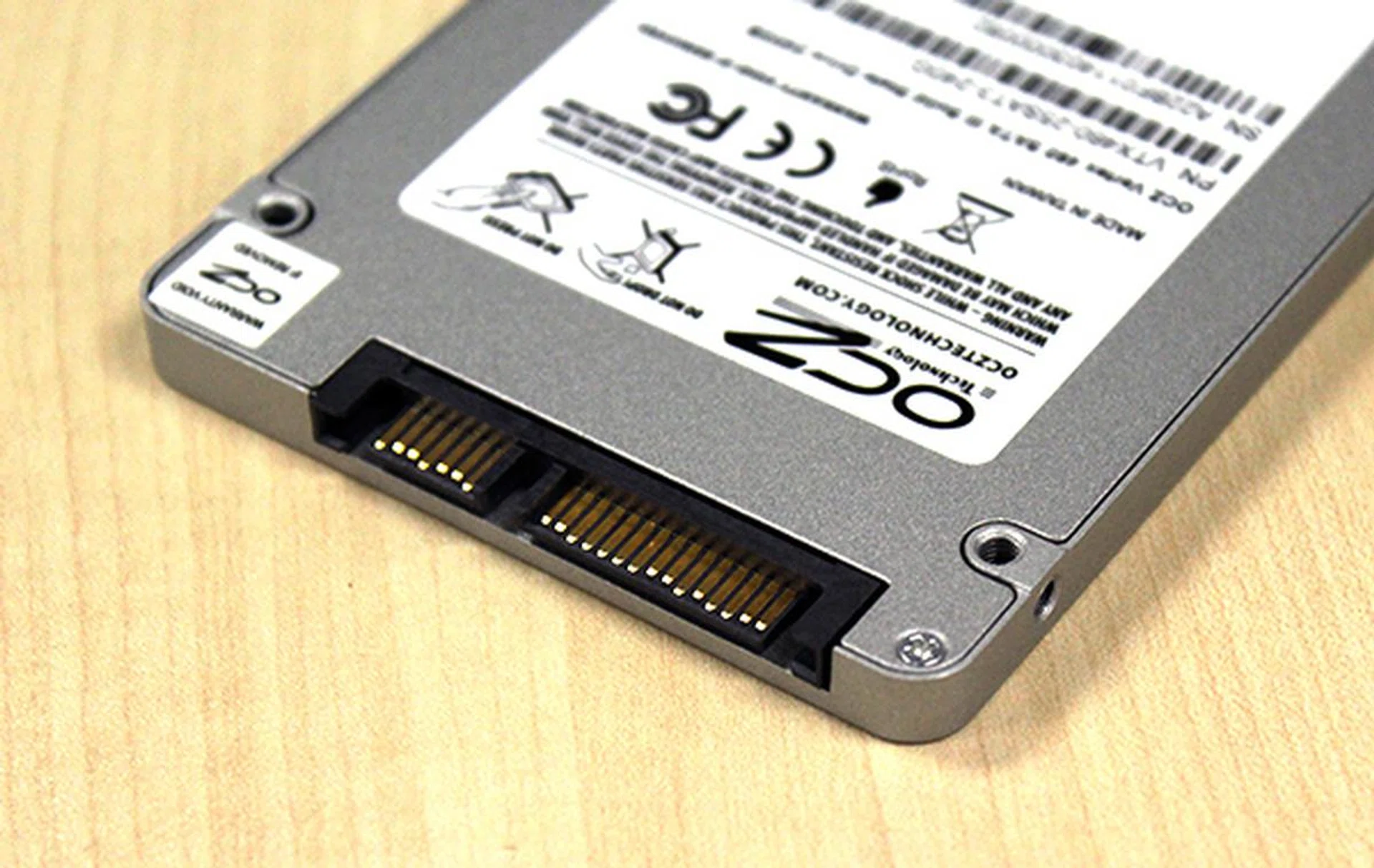
It goes without saying that the Vertex 460 supports the latest SATA 6Gbps interface.
The Vertex 460 is the first new SSD to be launched after Toshiba’s acquisition of OCZ and it is a minor update to the older Vertex 450. The drive continues to be powered by the Indilinx Barefoot 3 controller but the memory has been swapped for newer 19nm Toggle-Mode NAND from who else but Toshiba - the older Vertex 450 used 20nm MLC NAND from Micron.
As a result, the Vertex 460 and Vector 150 are highly similar, boasting the same controller and same memory chips. The only exception is that the controller in the Vertex 460 has a slightly lower clock speed - 352MHz vs. 397MHz - and the Vector 150’s memory chips has been specially tested and validated for high endurance, otherwise the two drives are practically identical. They even come with the same accessories - 3.5-inch HDD adapter and Acronis cloning utility - and come in the same thick and heavy chassis that has now become an OCZ trademark.
Test Setup
The drives will be tested on our recently revamped storage testbed. The main changes are the faster Core i5-2500K processor and an accompanying Z77 motherboard which has native Thunderbolt connectivity.
- Intel Core i5-2500K (3.3GHz)
- ASUS P8Z77 Pro Thunderbolt (Intel Z77 chipset)
- 2 x 2GB DDR3-1600 memory
- MSI GeForce 8600 GTS
- Windows 7
We have also revised our benchmarks, ditching older benchmarks such as HD Tune and also including an all new timing test to better evaluate the drive’s real world performance.
The list of benchmarks used are as follows:
- AS-SSD benchmark 1.7.4739
- CrystalDiskMark 3.0.1
- PCMark 7 (Storage suite)
- Iometer (version 2006.07.27)
- Timing Tests (Cold start, Reboot, Apps Launching)
Apart from including results of some of the latest high-end drives tested in our Great High-end SSD Shootout, we are also interested to see how the new Vertex 460 compares against the older Vertex 450, and how the Vertex 460 fares against the flagship Vector 150.
The complete list of drives tested:
- OCZ Vertex 460
- OCZ Vertex 450
- OCZ Vector 150
- Samsung SSD 840 Pro
- Samsung SSD 840 EVO
- Plextor M5 Pro Xtreme
Timing Tests
New to our evaluation of SSDs is how they perform in real world everyday situations, namely booting up from a cold start, reboot and launching applications. As for the applications used, we made the drives launch 11 applications from the Adobe CS6 suite of utilities simultaneously, which includes resource intensive applications such as Photoshop, InDesign, Dreamweaver, Premiere Pro amongst others. As a point of reference, a 7200rpm mechanical hard disk would take over 5 minutes to open all the applications.
The new OCZ Vertex 460 managed decent timings and predictably, it was mostly quicker than the Vertex 450 but considerably slower than the flagship Vector 150. However, in real world usage, we doubt most users would feel the difference, since the biggest margin between the fastest and slowest drives is only a second or two.

CrystalDiskMark 3.0.1 Results
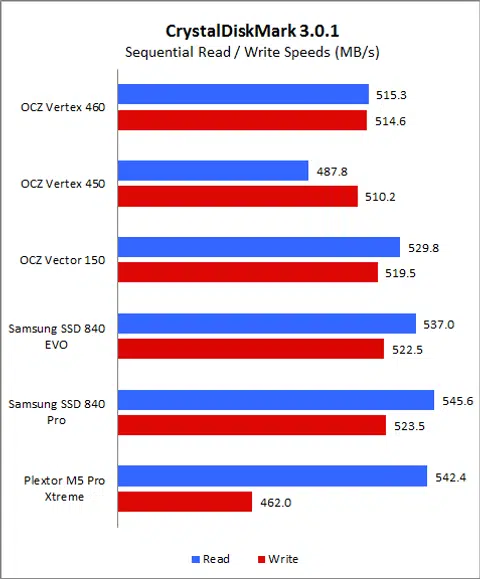
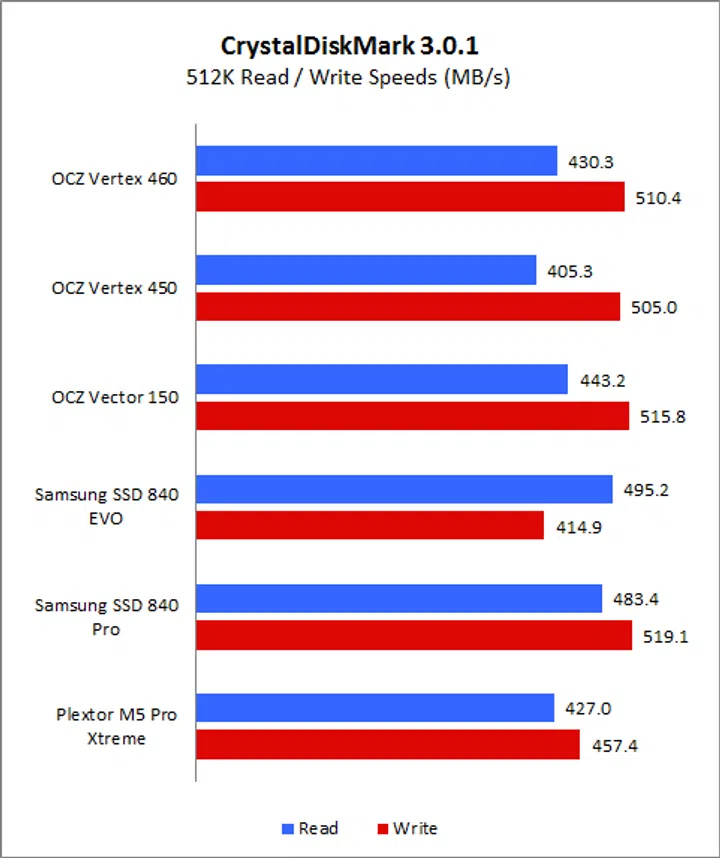
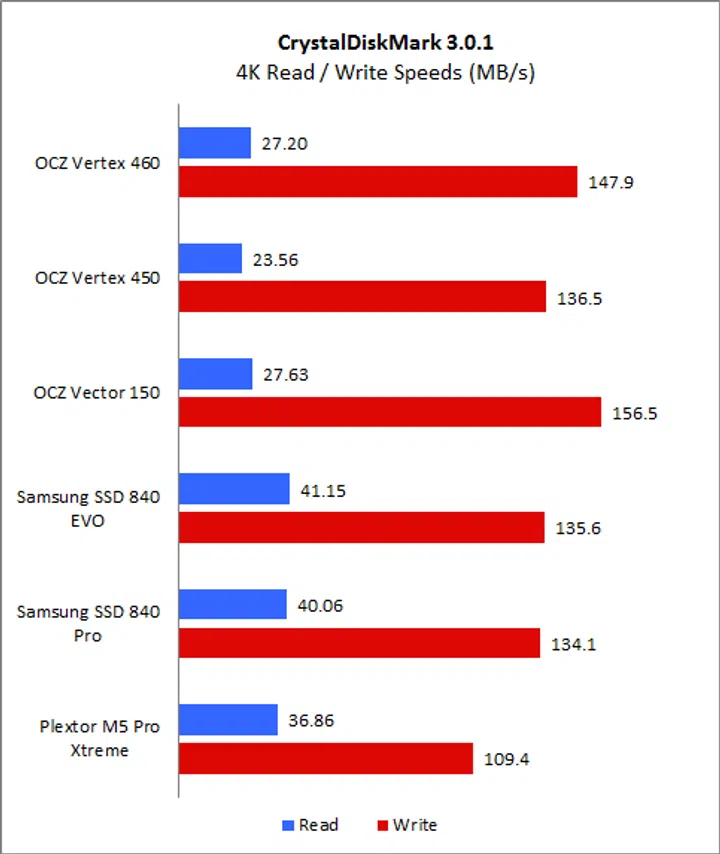
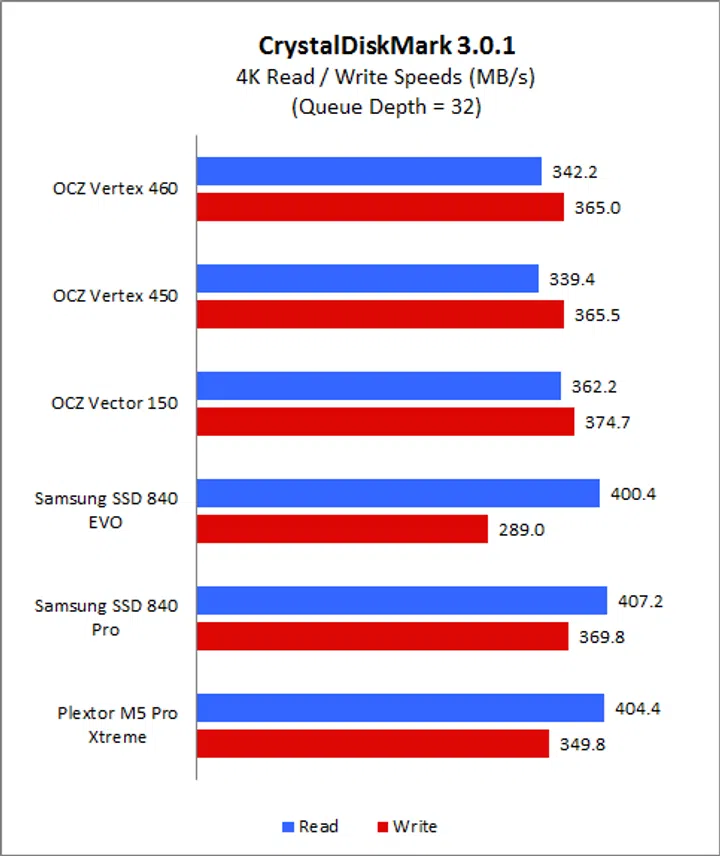
CrystalDiskMark is an easy-to-run and quick utility to use to gauge a drive’s performance. It measures sequential read and write performance and random read and write speeds of random 4KB, 4KB (queue depth 32) and 512KB data.
Compared to the older Vertex 450, the Vertex 460 features much improved read performance by around 5% overall across the different workloads. Handling of small 4K data blocks saw the biggest improvements overall. Despite the improvements, the flagship Vector 150 handily beats the Vertex 460. Interesting also is that the Samsung SSD 840 EVO is able to outperform the Vertex 460 right up until the more intensive 4K, 64 threads workload.
AS SSD 1.7.4739 Results
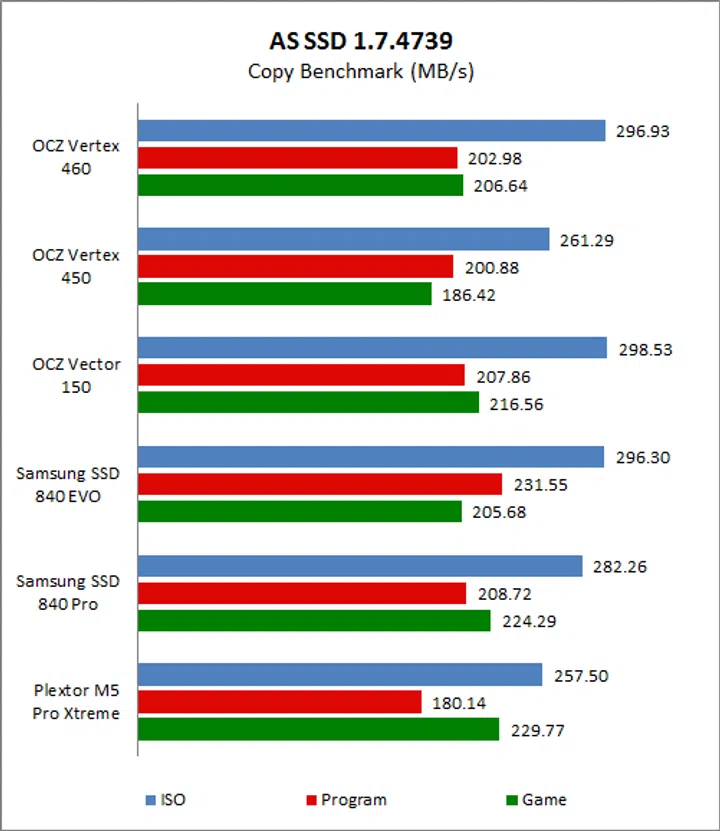
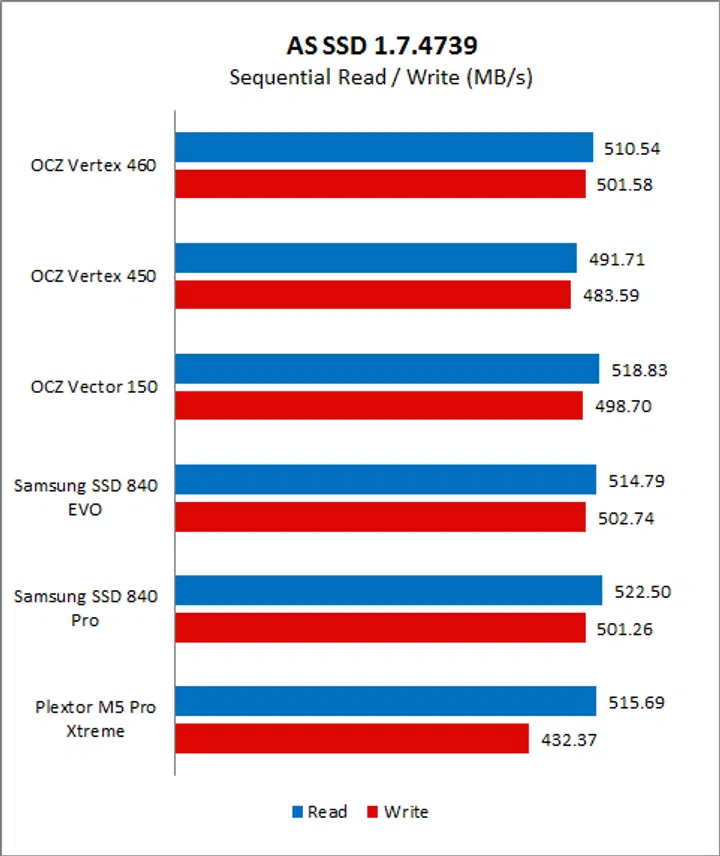
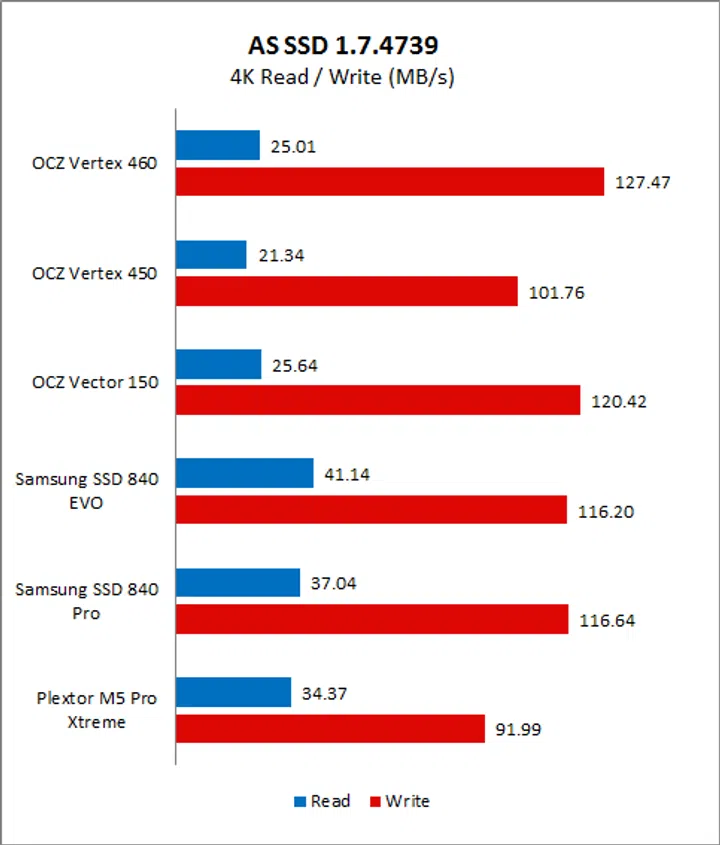
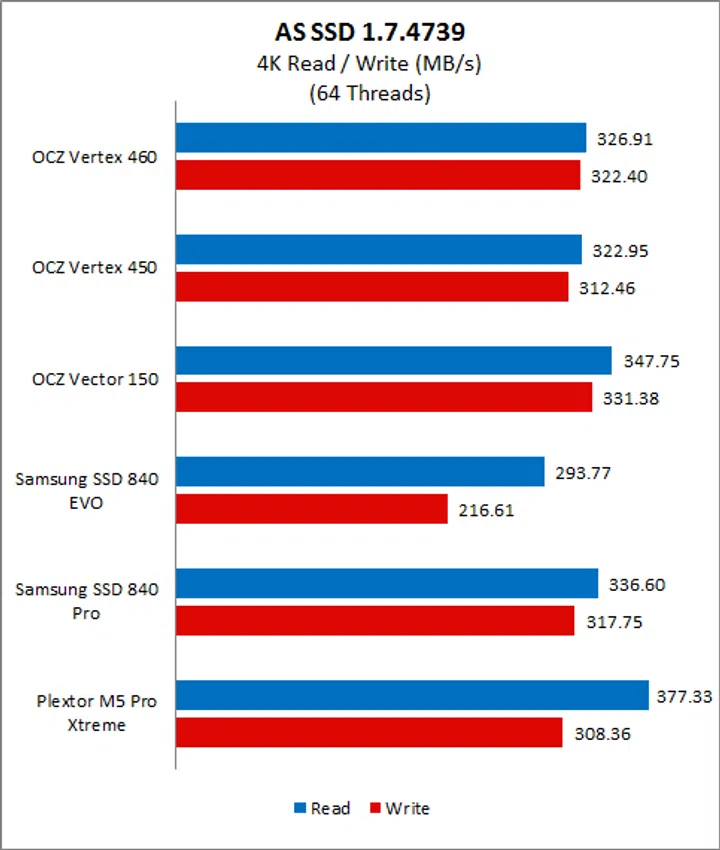
AS SSD is a benchmark that uses non-compressible and completely random data. What this means is that the drives using the SandForce SF-2281 controller cannot compress the data first, which takes away one of the strong advantages of this controller. Therefore this is a useful benchmark because drives that use the SF-2281 controller or similar, don't gain an upper hand.
On AS SSD, the Vertex 460 offered improved performance across all workloads when compared to the Vertex 450. Again, the biggest improvements came when handling 4K reads and writes, with read performance netting a gain of close to 20%, whereas write speeds went up by around 25%. Expectedly, the Vector 150 still holds an edge over the Vertex 460.
PCMark 7 Results
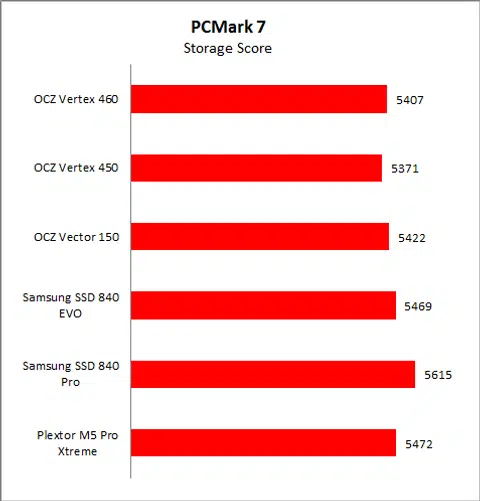
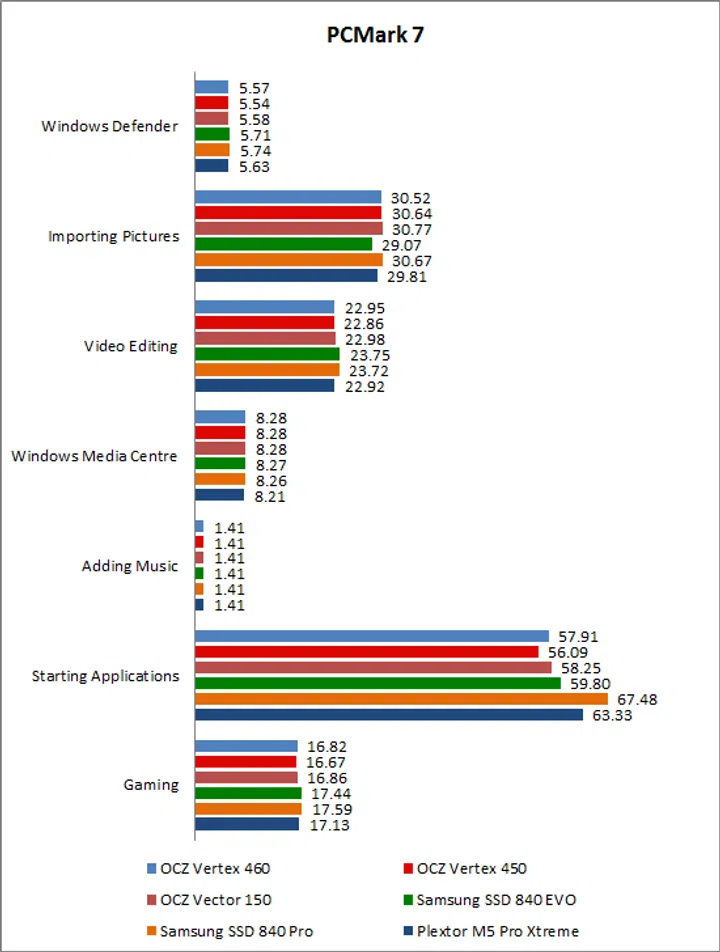
PCMark 7 is a benchmarking suite from FutureMark that evaluates the performance of Windows 7 machines. It tests a wide range workloads and aspects of the system ranging from computation, image and video manipulation and storage. We’ll be looking solely at the storage test here.
The Vertex 460 only managed a slightly better score than the Vertex 450 - just 36 points which translates to an improvement of just 0.0067%. If we look at the breakdown of the results, we can see that their performance across all the scenarios are just about the same, with the OCZ Vertex 460 taking the slightest of leads in most of them. And again, we see that the Vertex 460 has come behind the Vector 150. It seems that the slower clocked controller has indeed prevented the Vertex 460 from ever outperforming its more prestigious stablemate.
Iometer Results (Part 1)
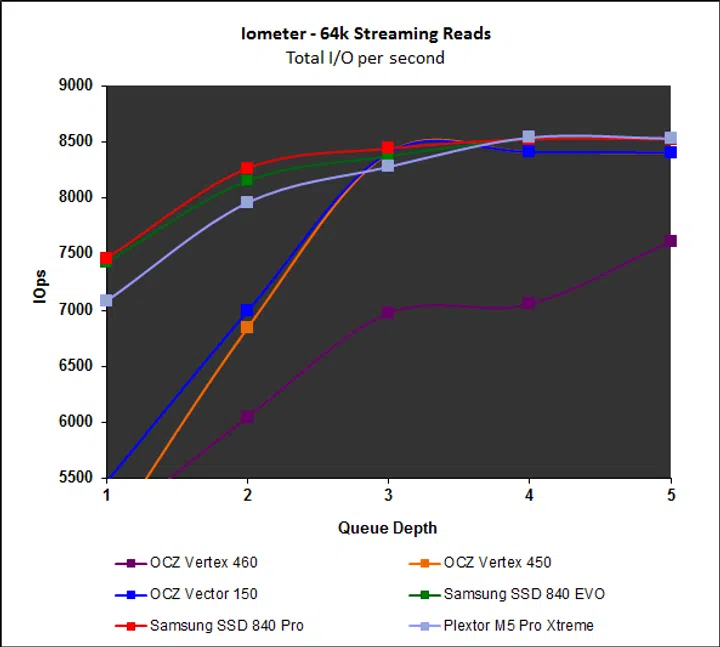
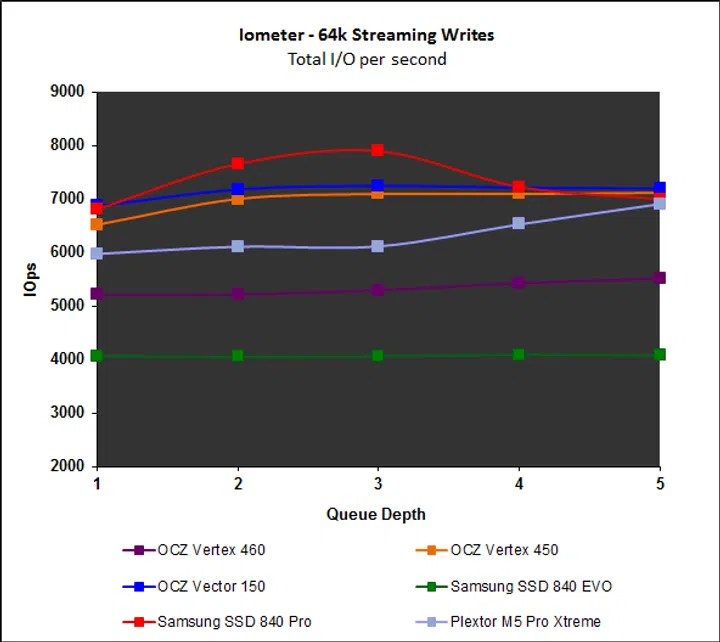
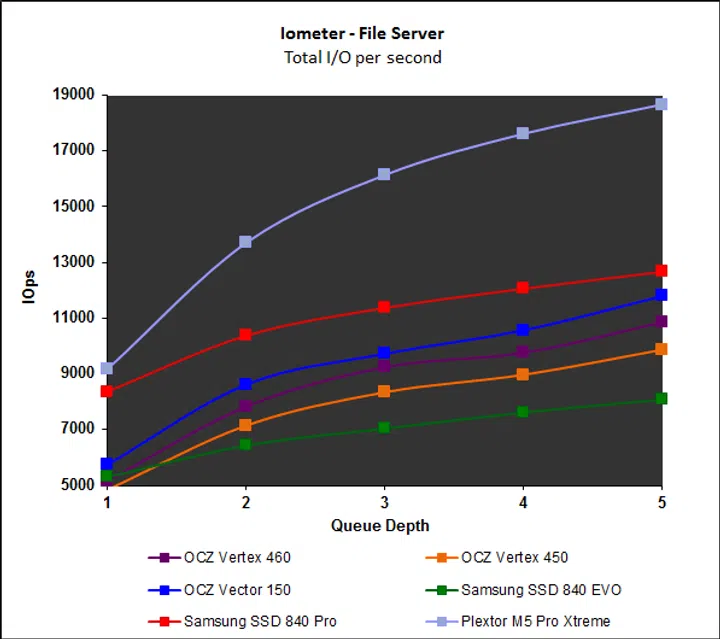
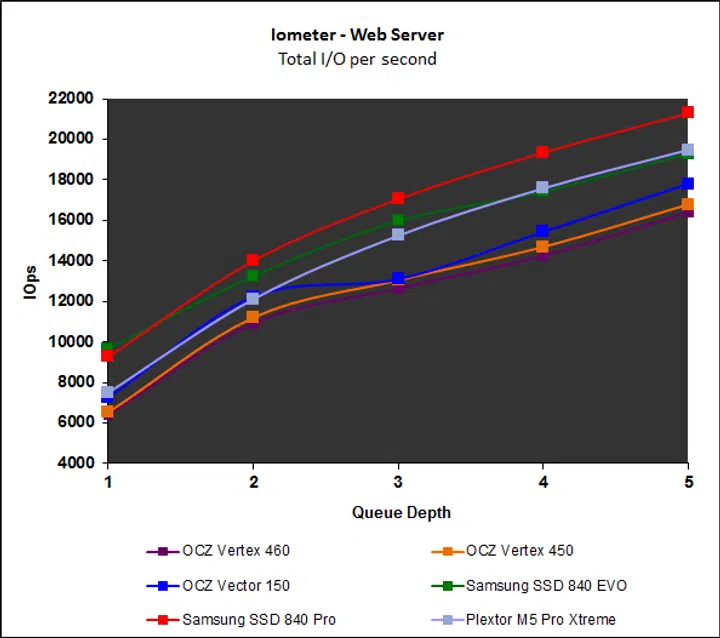
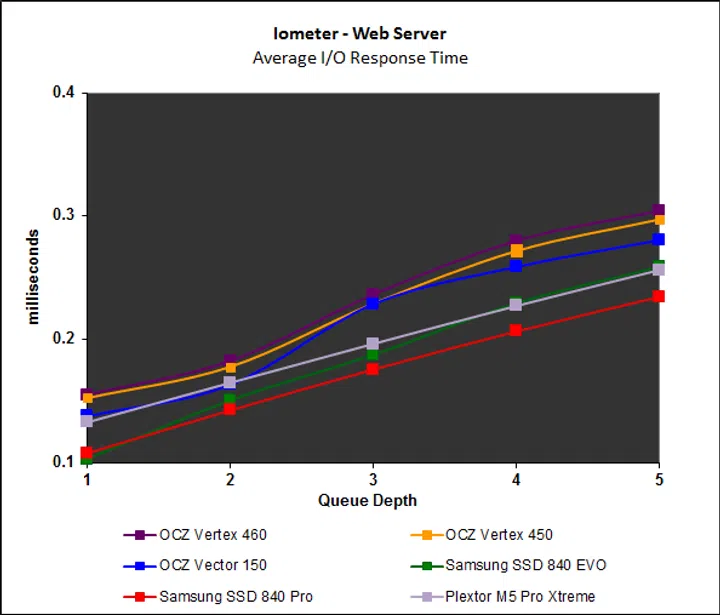
Lastly, we put the drives through the rigorous grind of Iometer, with different workloads and I/O queue depths. We have chosen to show results from a queue depth of 1 to 5 as this better represents the workloads a typical consumer might face.
Overall, the Vertex 460 was disappointing on Iometer. Performance on the 64K streaming read and write workloads were particularly bad as it was noticeably slower than the older Vertex 450 and was one of the slower drives in this test. It picked itself up somewhat on the File Server workload but performance suffered once more on the Web Server workload as it recorded the lowest IOPs amongst the other drives tested. That said, Iometer has always been some what of an Achilles heel for OCZ drives as the Vector 150 and Vertex 460 also exhibited erratic performance on this benchmark.
Iometer Results (Part 2)
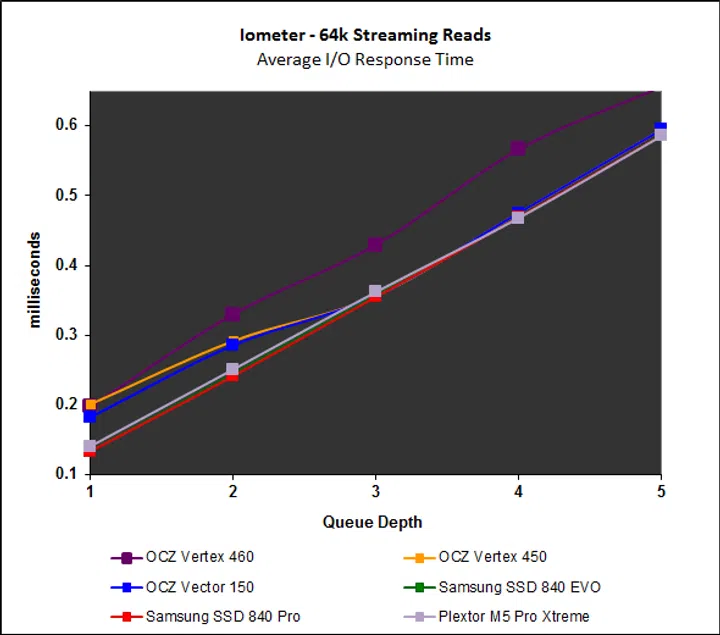
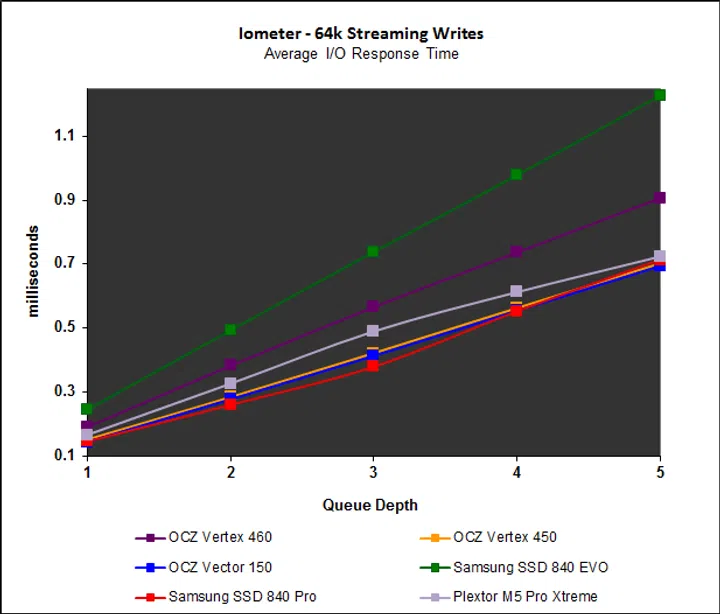
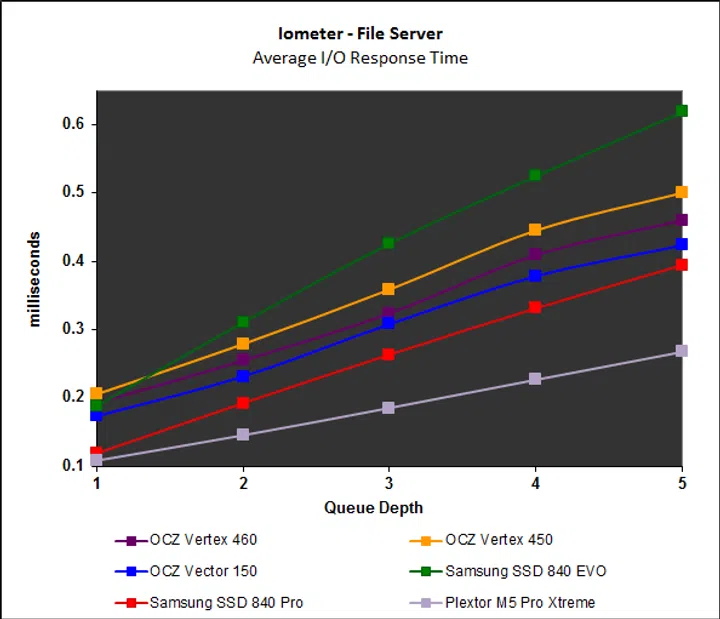
Finally, we look at the I/O response times for the workloads reported on the previous page. As a result of its dismal performance earlier, it was not surprising to see that the Vertex 460 recorded higher than normal average response times. Average response times for the 64k streaming reads workload was especially bad considering how tight and close the rest of the drives were.
Watch Out, Samsung
OCZ makes very solid SSDs and the Vertex 460 stays true to this tradition. Overall, performance is generally improved over the older Vertex 450, but it is obviously no match for OCZ’s flagship Vector 150 - the slightly lower clock speeds of its controller ensures that it would not outperform its more prestigious stablemate. In all, performance across the board is of a very high standard that can best be described as a rung below of that of the uber consumer SSDs, a group which counts the Samsung SSD 840 Pro, OCZ Vector 150 and Plextor M5 Pro Xtreme as its members. That said, its showing on Iometer was particularly disappointing considering its performance on the other benchmarks.
In terms of pricing, the 240GB variant of the Vertex 460 retail for S$279, which puts it right smack in the middle of mainstream SSDs such as the Crucial M500 and Samsung SSD 840 EVO, which cost around S$255 and below; and high-end ones such as OCZ Vector 150, Plextor M5 Pro Xtreme and Samsung SSD 840 Pro, which cost upwards of S$300. It is a somewhat tricky place to be in.
Although the Vertex 460 performs at a very high level, serious enthusiasts and users would probably feel more comfortable paying a bit more for the added performance that drives like the OCZ Vector 150, Plextor M5 Pro Xtreme and Samsung SSD 840 Pro offer and also for the added security of a 5-year warranty - the Vertex 460 is offered with a 3-year warranty.
On the other hand, we see little reason for mainstream users to fork out the extra money for the Vertex 460 when cheaper alternatives such as the very excellent Samsung SSD 840 EVO and very affordable Crucial M500 exist. To be fair, the Crucial M500 cannot hope to compete on performance, but it is very much cheaper at around S$215, depending on where you shop.
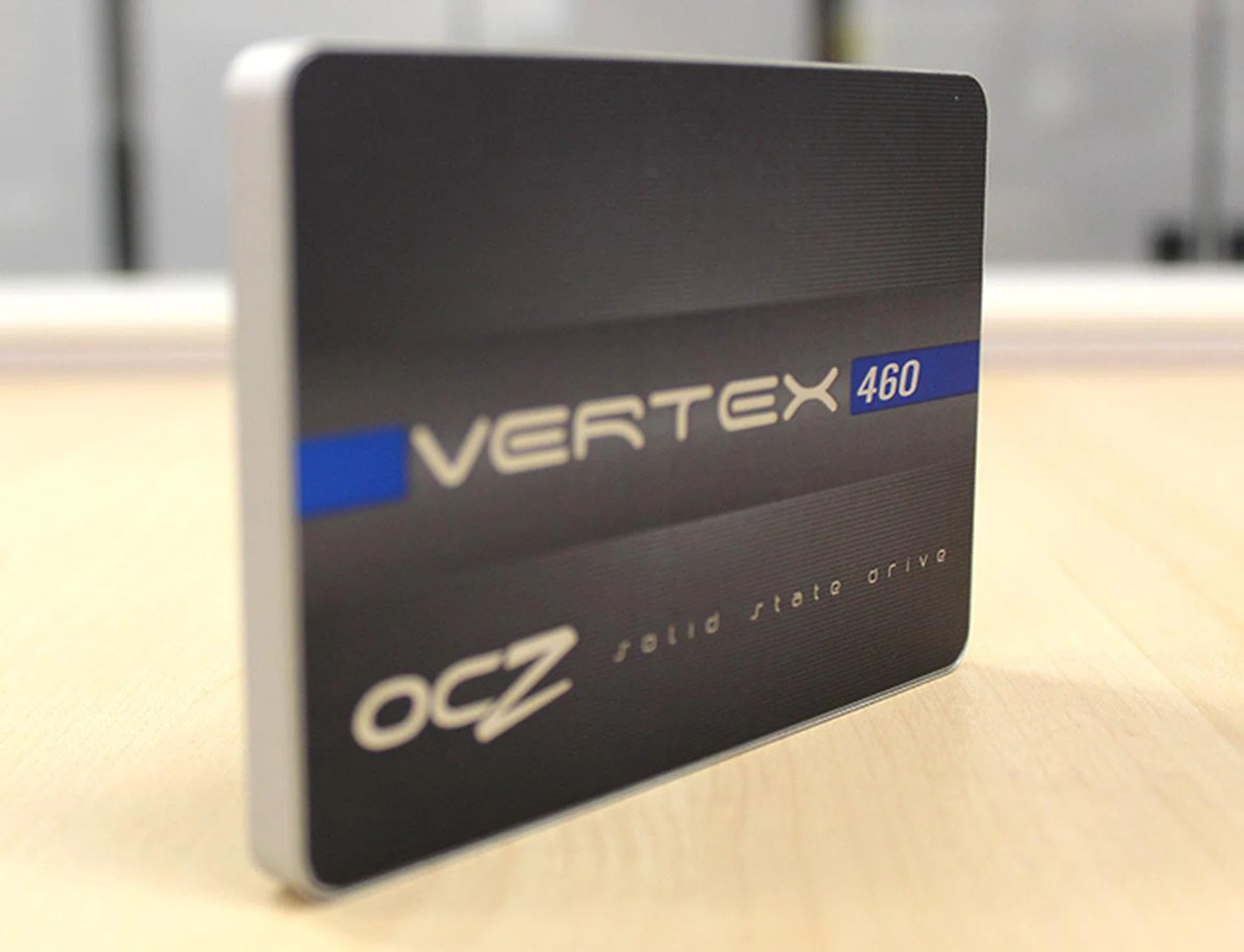
The Vertex 460 is a decent SSD, but it faces stiff competition from the likes of Samsung, Plextor and more.
Realistically, the Samsung SSD 840 EVO is arguably its closest competitor and where the Samsung drive loses out is on outright endurance and performance when it comes to high queue depths because that is when it exhausts its TurboWrite cache. For most mainstream users, these scenarios and considerations are of little consequence to them and the fact is that the SSD 840 EVO is more affordable. Therefore, the Vertex 460 would be a more appealing proposition if it were priced more aggressively.
Bearing in mind that Toshiba has only just acquired OCZ, the Vertex 460 was mostly likely developed way before Toshiba had any major input. With Toshiba providing the necessary financial backing and NAND chips, this union has the best chance of giving Samsung a run for its money.
Our articles may contain affiliate links. If you buy through these links, we may earn a small commission.