
ASRock Vision 3D - the Ultimate HTPC?
ASRock's latest high-end HTPC, the Vision 3D comes with NVIDIA 3D Vision support, making 3D Blu-ray a reality on a PC the size of some media streamers. Can it live up to its name?

Is this the Ultimate HTPC?
It's a question that we usually address near the end of a review, not at the beginning. But a glance at the specs of the ASRock Vision 3D convinced us that we were dealing with an extremely competent PC that home theater PC (HTPC) enthusiasts have been lusting after for the longest time. Dare we hope that those dreams of a small form factor, low-power PC that can satisfy all your media cravings are about to come true?
Almost.
Before we go into its few shortcomings, let's take note of its many positives. The ASRock Vision 3D series of mini PCs is what ASRock dubs these compact desktop machines geared for media consumption. While there are six different models with slight variations in their specifications, they share the same foundation, namely, an Intel Core i3 or i5 mobile processor and an NVIDIA's GeForce GT 425M capable of supporting NVIDIA's 3D Vision (hence the name). If you're looking to save a few bucks or a fervent believer of digital distribution of content, you can opt to get the DVD combo drive instead of the Blu-ray version.
Besides the optical storage option, you can only vary the grade of the processor. The other specs, like its 4GB SODIMM DDR3 1066MHz memory, the ASRock HM55 based motherboard with up to three USB 3.0 ports, the 2.5-inch 500GB 7200RPM hard drive and the integrated Wi-Fi module are all standard. As you can tell, it's a pretty solid system in a form factor that usually limits one to more anemic specs like integrated graphics. Not for this little system though.
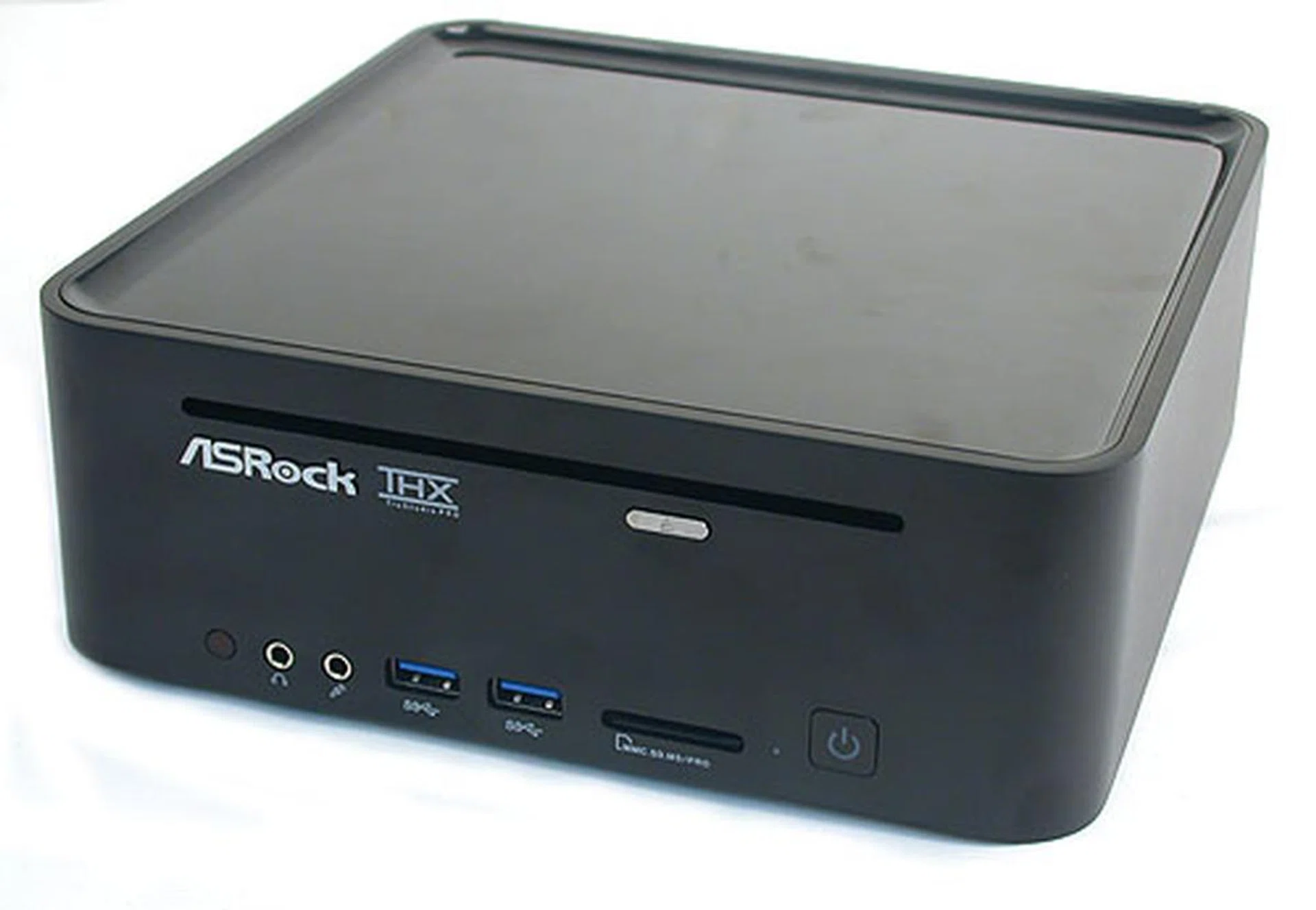
ASRock's Vision 3D series of small form factor PCs is its most powerful yet, with specs that target the high-end HTPC enthusiast. Our review unit comes with a Core i3 processor, 3D Vision capable NVIDIA GeForce GT 425M, 3x USB 3.0 ports and a Blu-ray combo drive.
Exterior Design
First, let us get this off our back: why did ASRock make the top cover of the Vision 3D out of glossy plastic instead of the matte black metal that encloses the sides of this PC? The plastic cover quickly gathered our fingerprints and its hollow sound when tapped just lowers the overall class of this machine. The rest of the Vision 3D is attractive enough and consumers have a choice between black or silver.
Compared to Apple's sleek Mac Mini, the Vision 3D is not as compact. Even when discounting its external power adapter, it weighs slightly more than 2kg. It's also taller and its front ports are completely exposed unlike the Mac Mini's minimalistic feel. But comparisons aside, the Vision 3D is distinctive enough to deserve praise and if one has seen ASRock's older attempts, it's a significant visual upgrade.
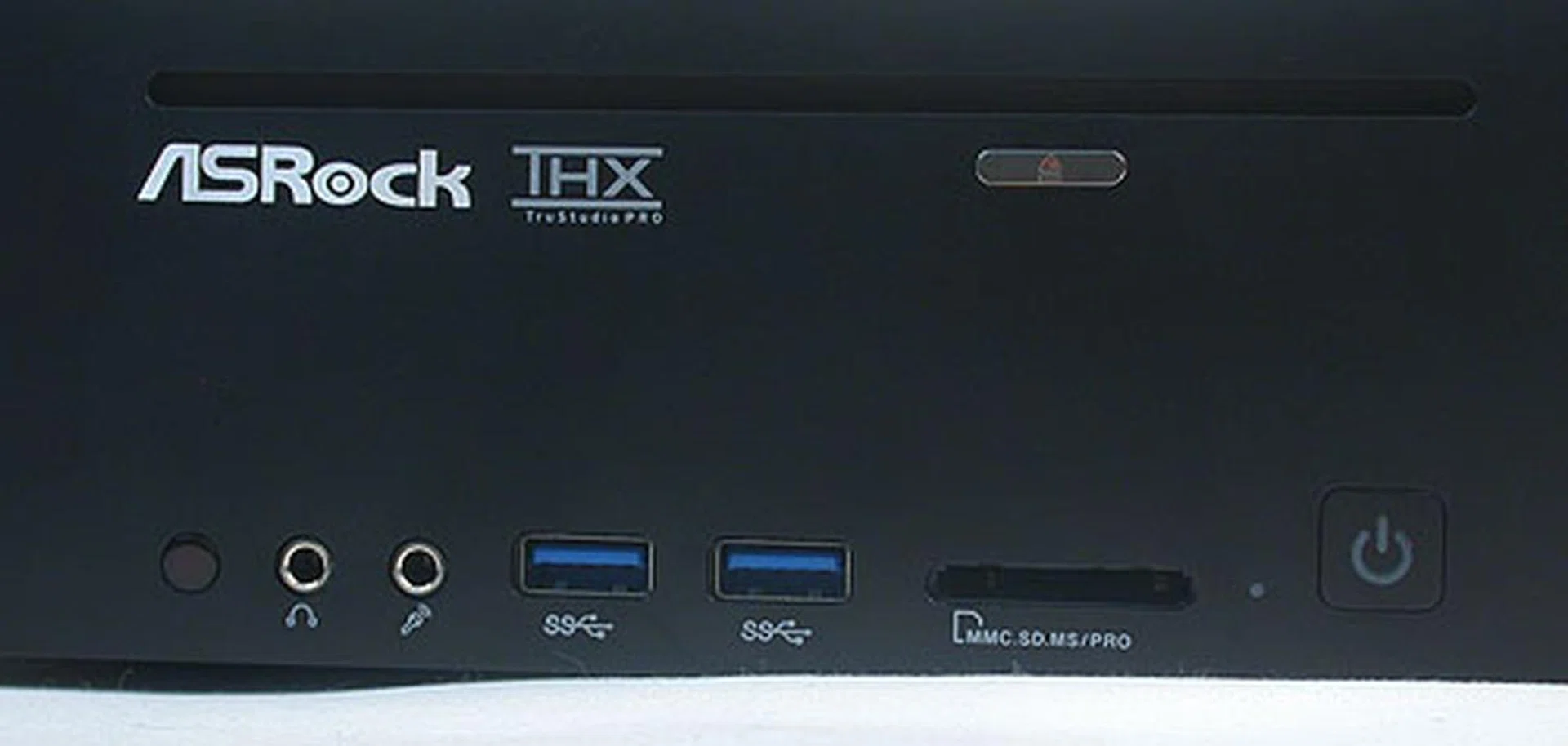
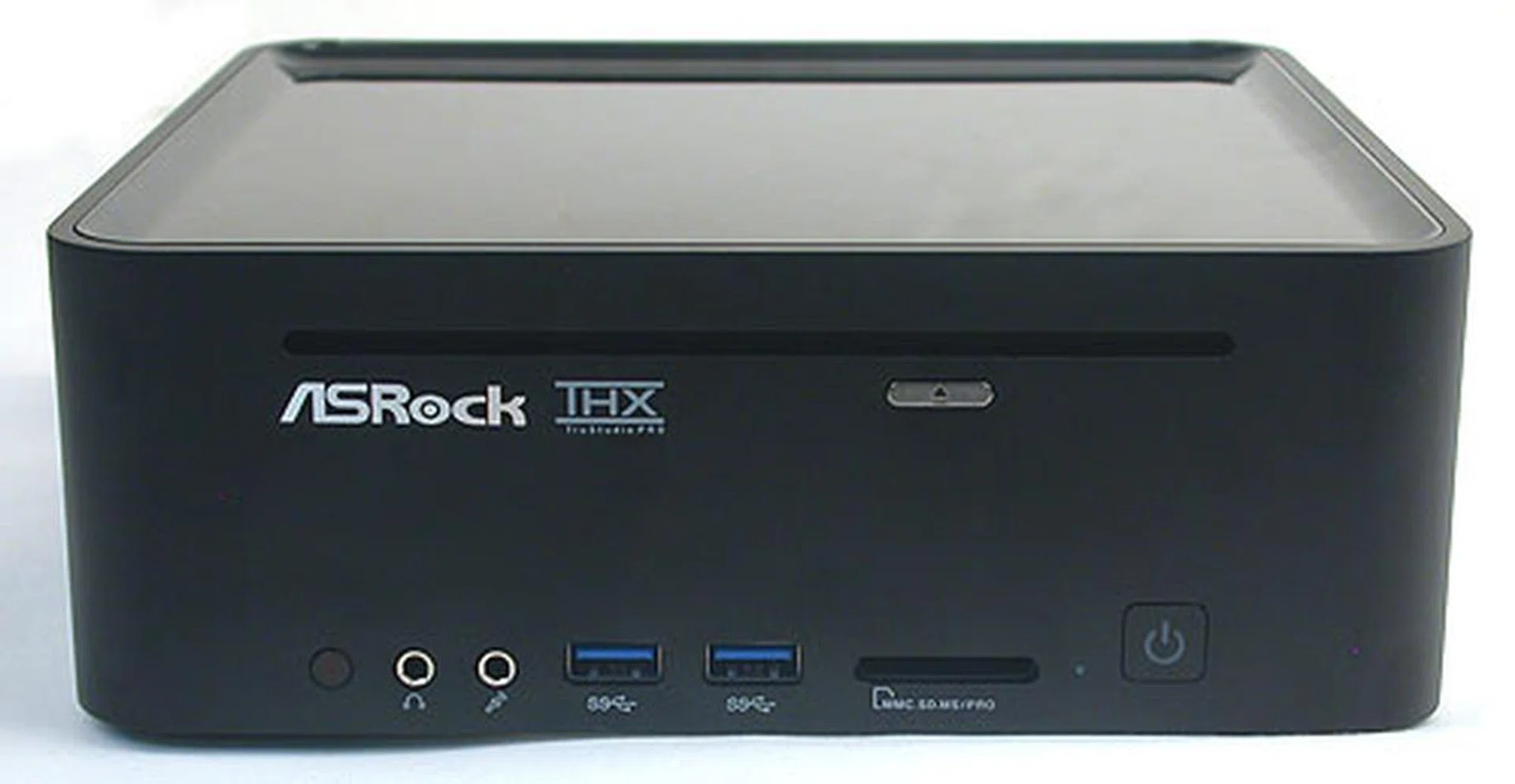
A slot loaded Blu-ray combo drive keeps the front facade compact but ASRock spoils the look by having all of its ports exposed. No doubt it's convenient but definitely not as elegant. The ports here are two USB 3.0 ports with the usual blue tips, a 4-in-1 card reader and the audio/microphone jacks. There's also an IR sensor for the remote control.
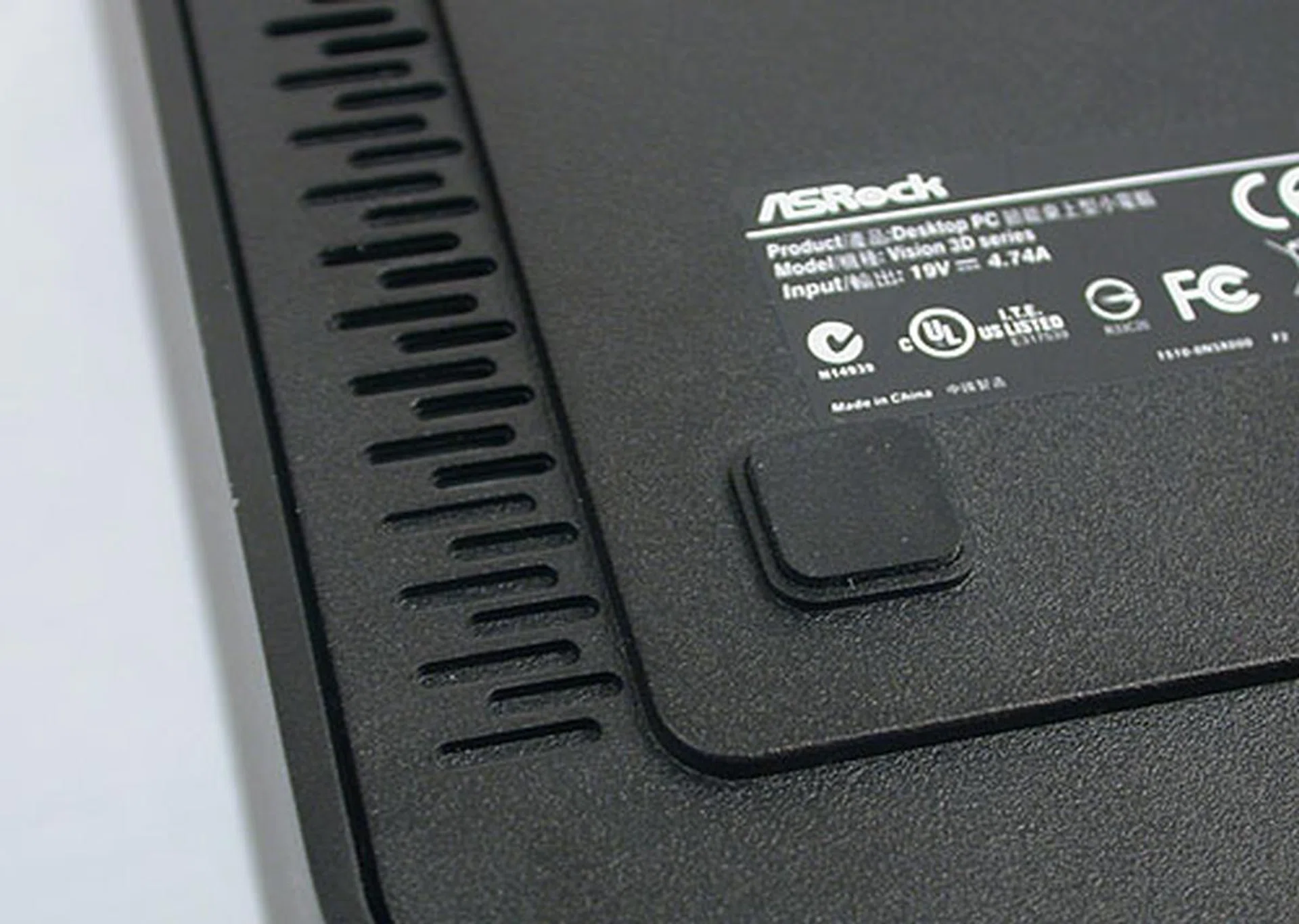
There's a fan exhaust at the back of the Vision 3D but air intake is via these vents at the bottom of the unit, which is slightly raised. Take care not to block them.
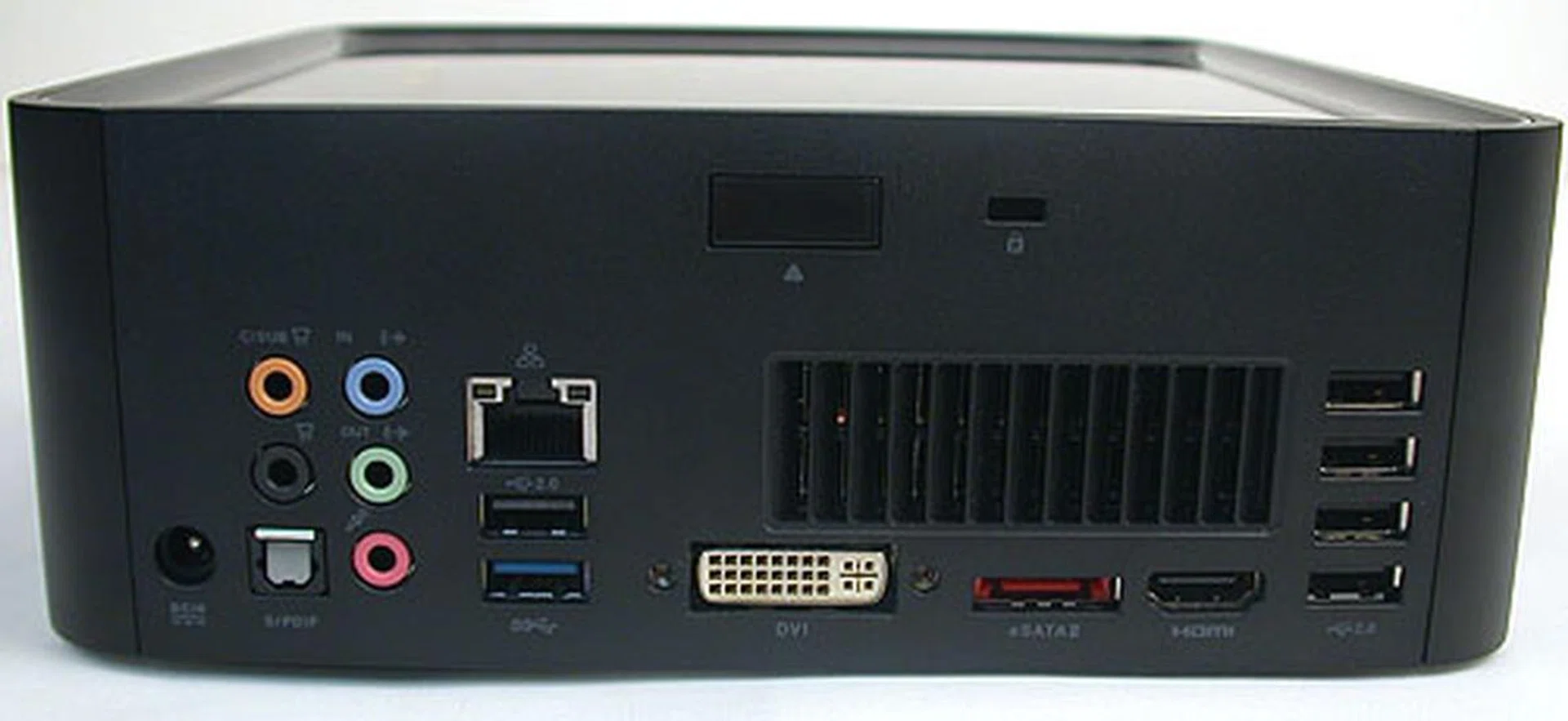
More ports at the rear, including HDMI and DVI display options, eSATA and numerous USB ports (only 1 USB 3.0) and optical S/PDIF. The single fan exhaust is also found here, so it can get a bit warm here.
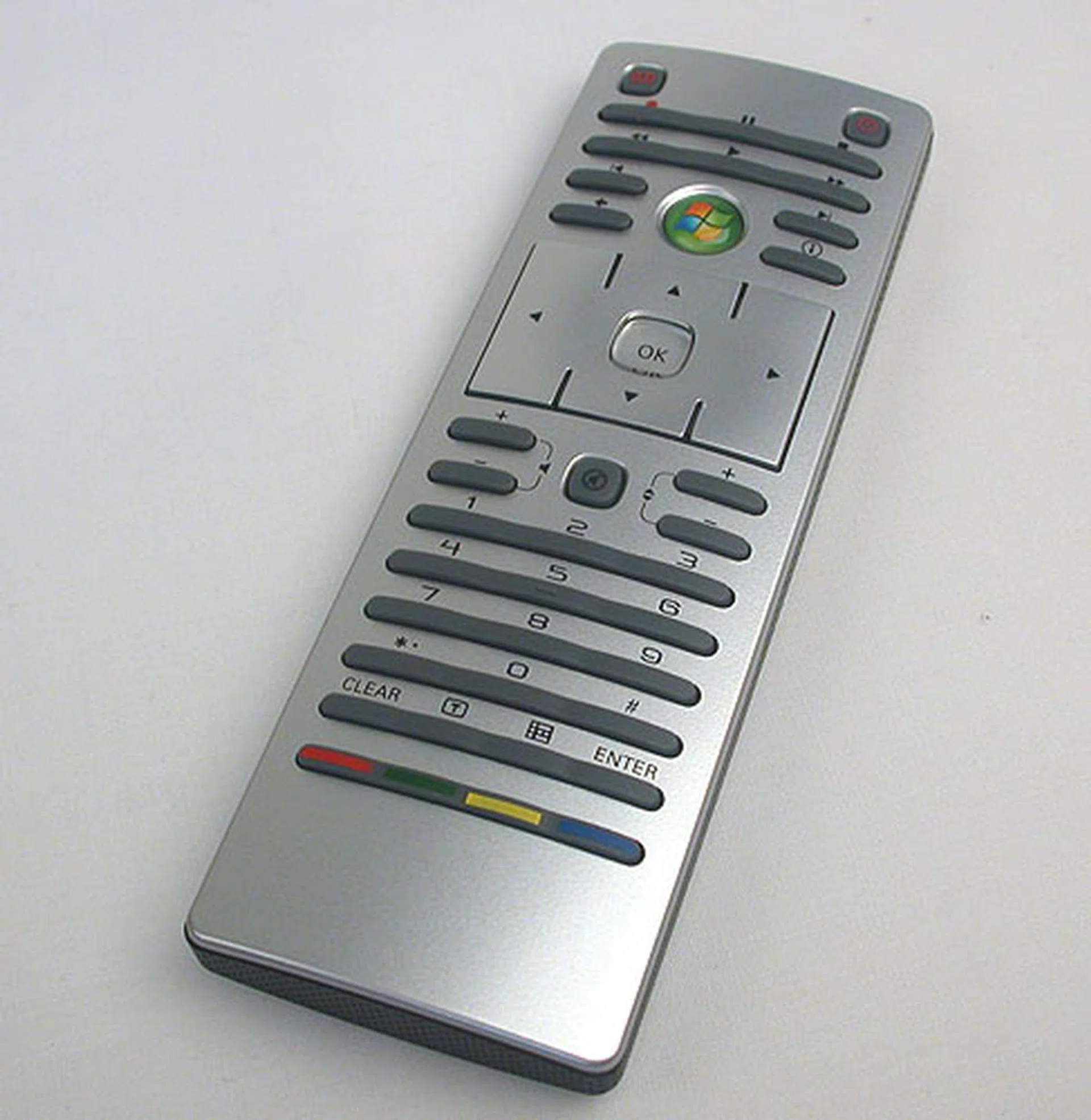
A Windows Media Center compatible remote is included.
Overall, it's polished and the plentiful ports, especially USB will appeal to users who value functionality over aesthetics. No doubt, some of you will prefer a cover of some sort to hide these unsightly ports and connectors but we find it more than acceptable.
Exploring the Internals
Getting inside the ASRock Vision 3D isn't too difficult but you'll need a screwdriver. Pop open the plastic cover and unscrew the metal shield. This allows you to get to the optical drive and hard disk compartment. While ASRock includes spare cables and an internal SATA port for an additional hard drive, we really don't see how you can fit another 2.5-inch drive comfortably.
ASRock has gone with components of the mobile variety, so the processor is a mobile Intel Core processor while the graphics is in the MXM form. ASRock has included useful upgrade instructions complete with images with our review unit on how to change the components, like the processor and graphics. But unless you have access to such mobile components in your area, it's unlikely that you will be upgrading anytime soon.
It's a good thing then that our review unit is pretty souped up in HTPC terms. Besides a competent, Arrandale based 2.4GHz Intel processor, the GeForce GT 425M comes with 96 shader cores with 1GB of DDR3 memory, boasts the latest VP4 engine for full hardware acceleration HD video decoding and lossless bitstreaming audio through HDMI (comes equipped with the 1.4a version). As mentioned earlier, it's 3D Vision ready and NVIDIA's other technologies like PhysX and CUDA are naturally supported.
The DDR3 memory is sufficiently fast at DDR3-1066, and it's probably the easiest to upgrade for consumers since SODIMM is common enough. 8GB however is the maximum supported by the motherboard. There are also two USB 3.0 controllers are onboard the ASRock, the more familiar NEC controller and another from Fresco Logic for a total of three USB 3.0 ports. eSATA is included since the adoption of USB 3.0 is still in infancy. Both Wi-Fi and wired Ethernet are available so connectivity is never an issue.
An important thing to note is that our unit came without an operating system installed and it will be so in the retail edition too. While it allows power users to have their choice of operating systems (Linux has its niche for HTPCs), less savvy consumers may be lost here. It certainly pushes home the message that this performance HTPC is targeted at enthusiasts rather than the general user.
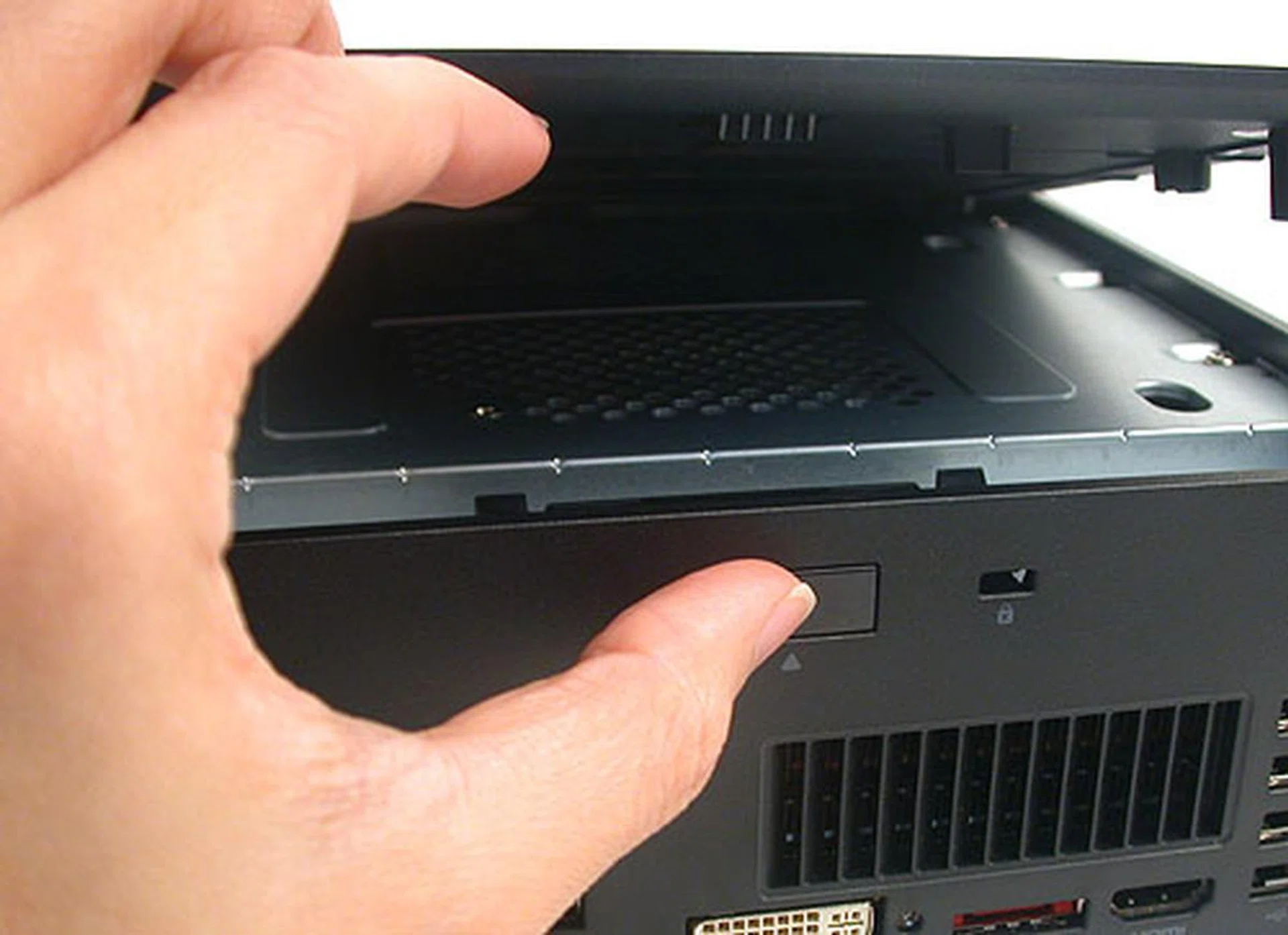
Push hard enough on this switch to spring open the plastic top to access the interior of the PC.
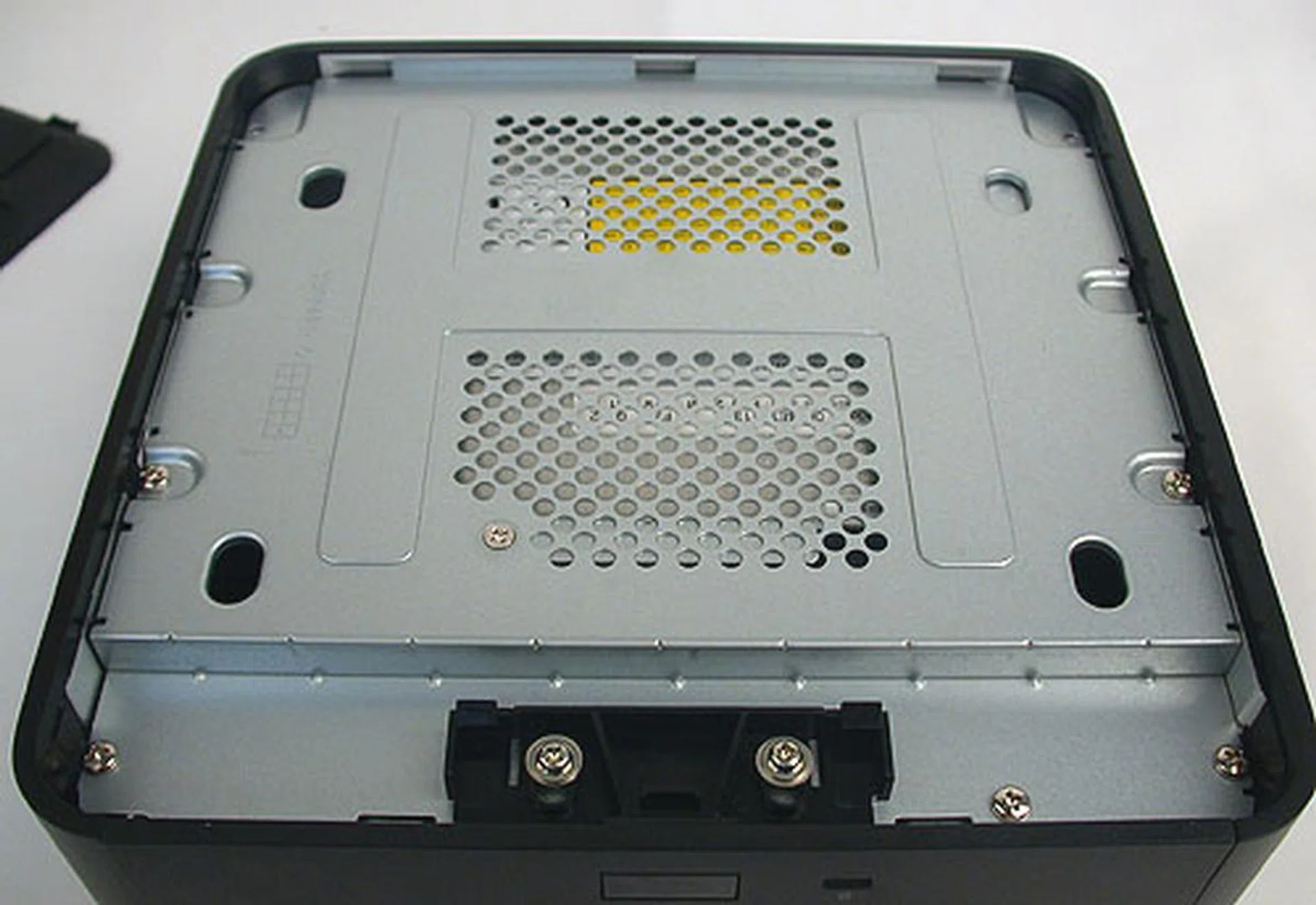
The average consumer will probably stop here. We counted nine screws that need to be removed before we can reach the HDD and Blu-ray drive.
The 2.5-inch 7200RPM WD hard drive that comes with the Vision 3D is a 500GB model. Since it comes with no OS installed by default, it's easy enough to change to your preferred model. The BD combo drive appears to be by Philips and Lite-On.
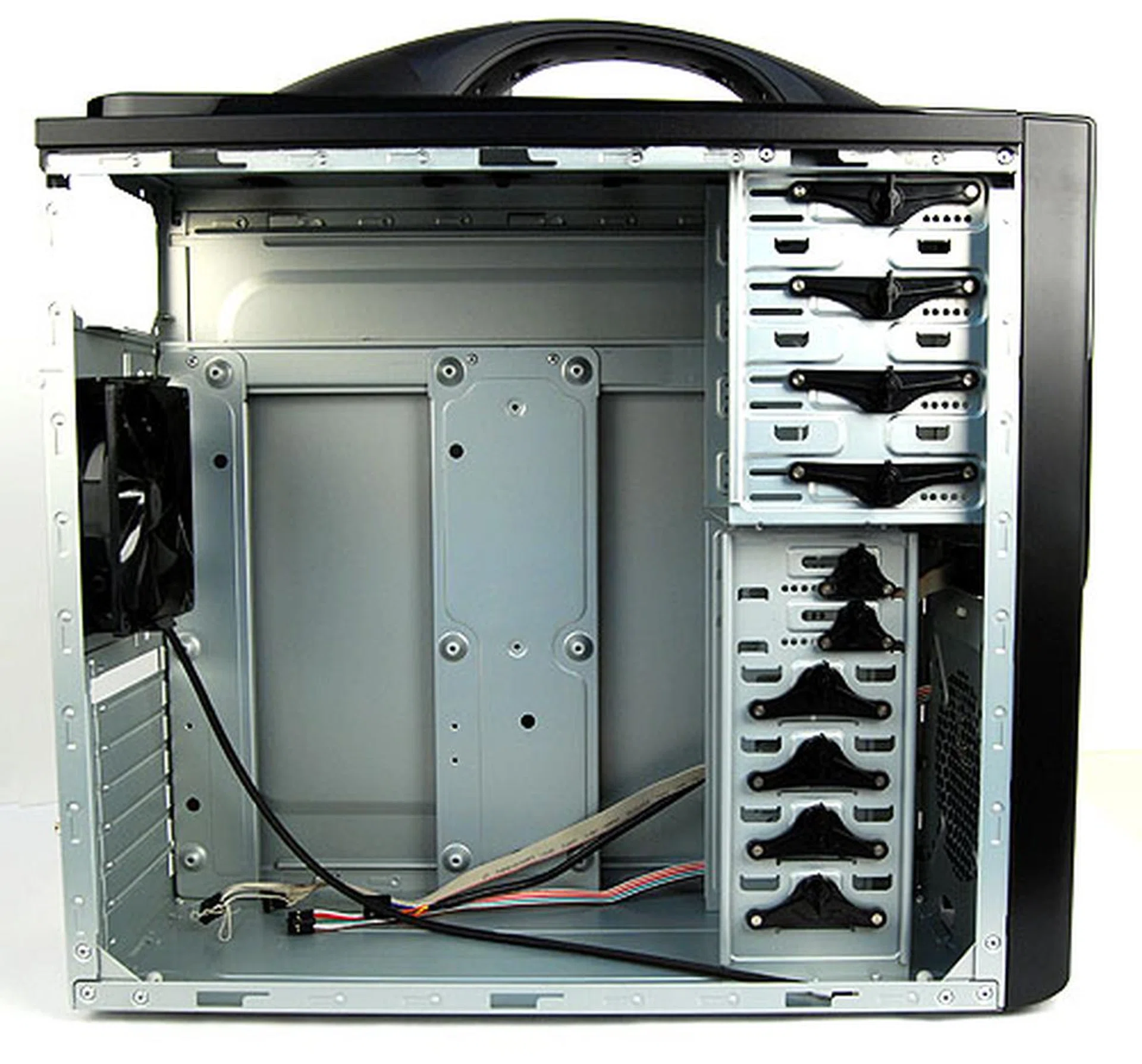
Once we removed the storage portion, the interior appears relatively spacious.
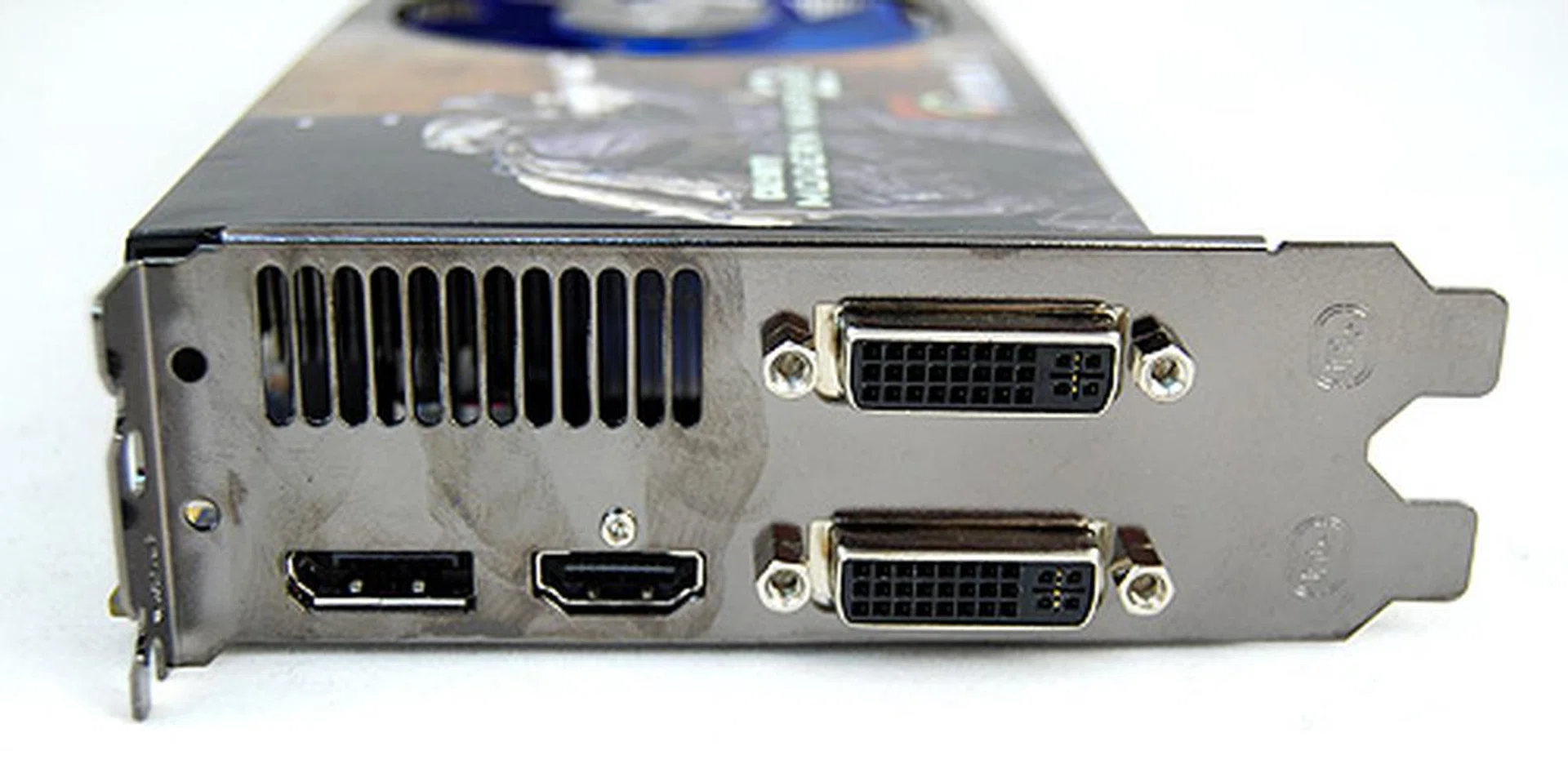
The front ports and the card reader, along with the NEC USB 3.0 controller.
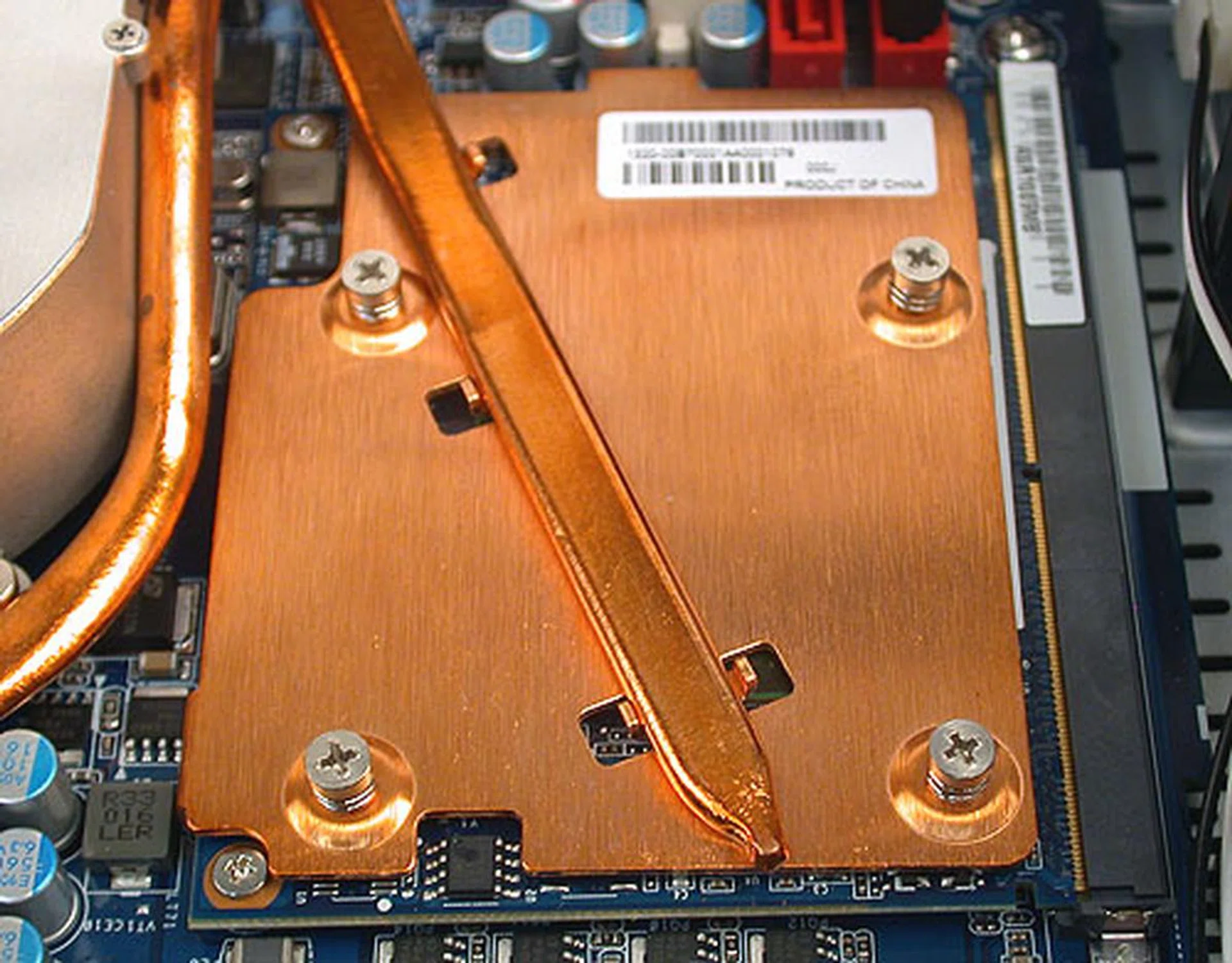
The GeForce GT 425M comes in a MXM package that according to ASRock can be upgraded if you choose (and if you can find the MXM part). The heat-pipe is connected to the single exhaust fan that also manages the CPU.
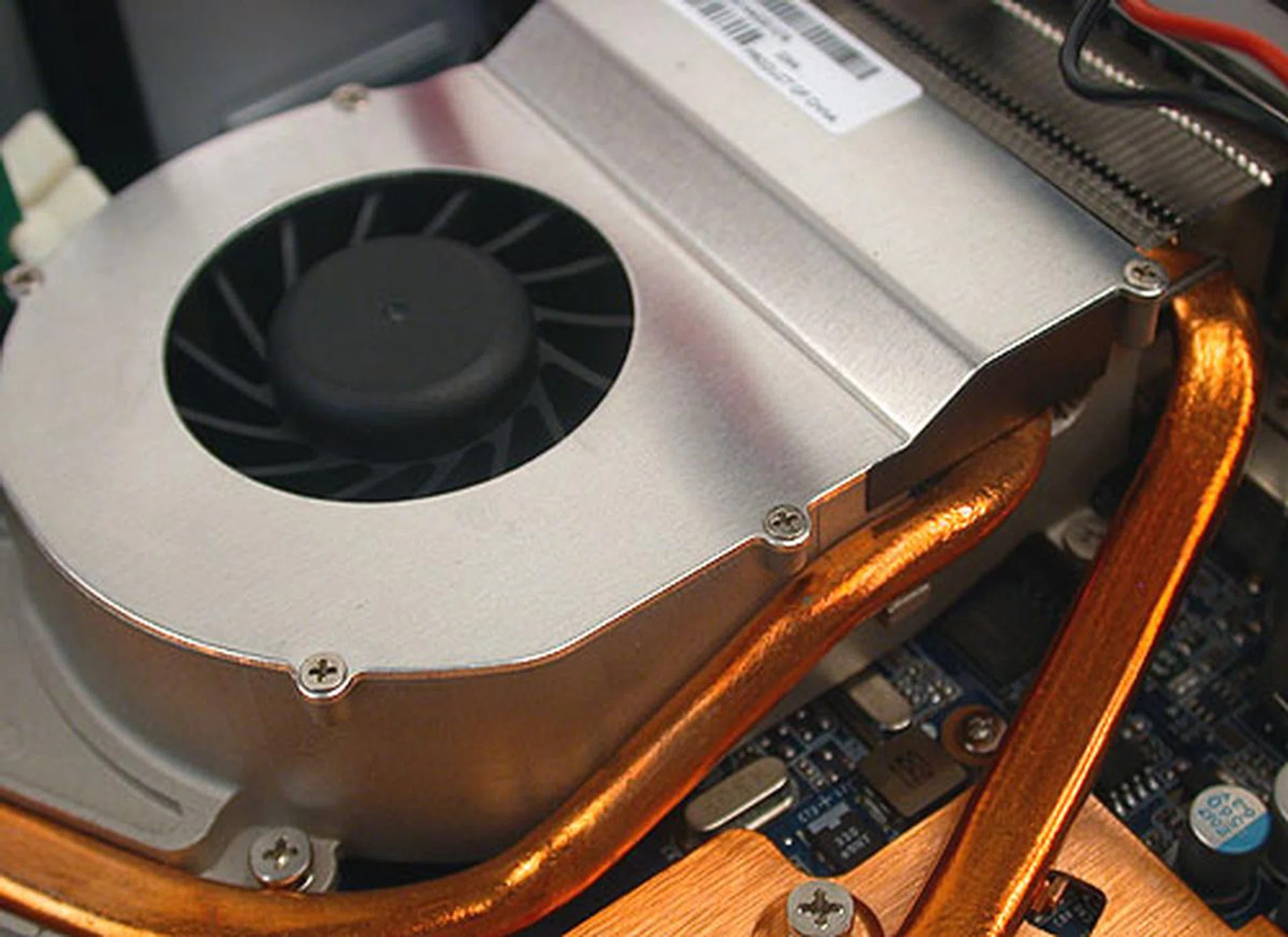
It looks large but we couldn't really hear the fan when using the Vision 3D. It is extremely quiet by any standards.
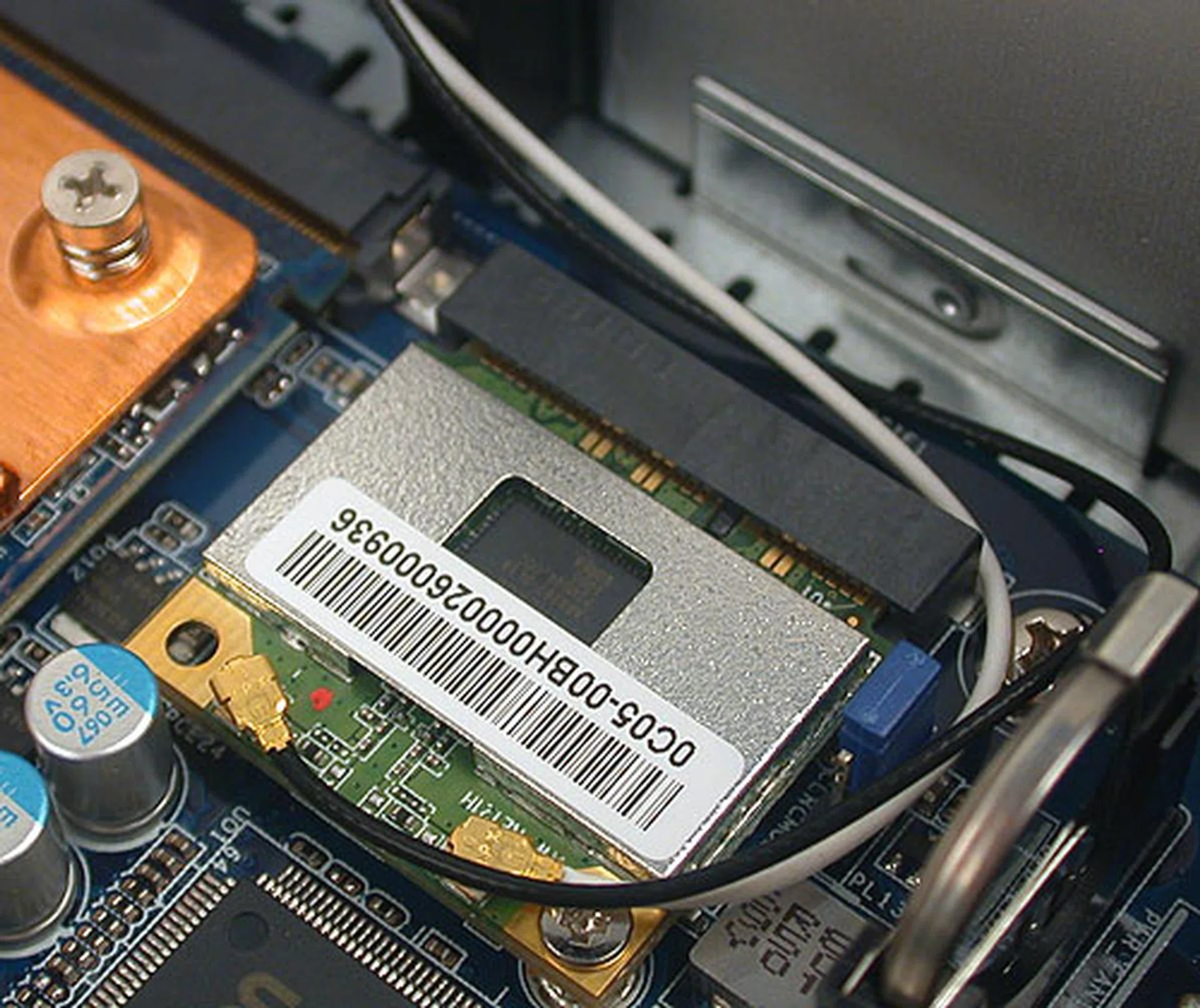
The WiFi module (802.11n) is connected internally to metal plates at the rear of the chassis which act as the antenna.
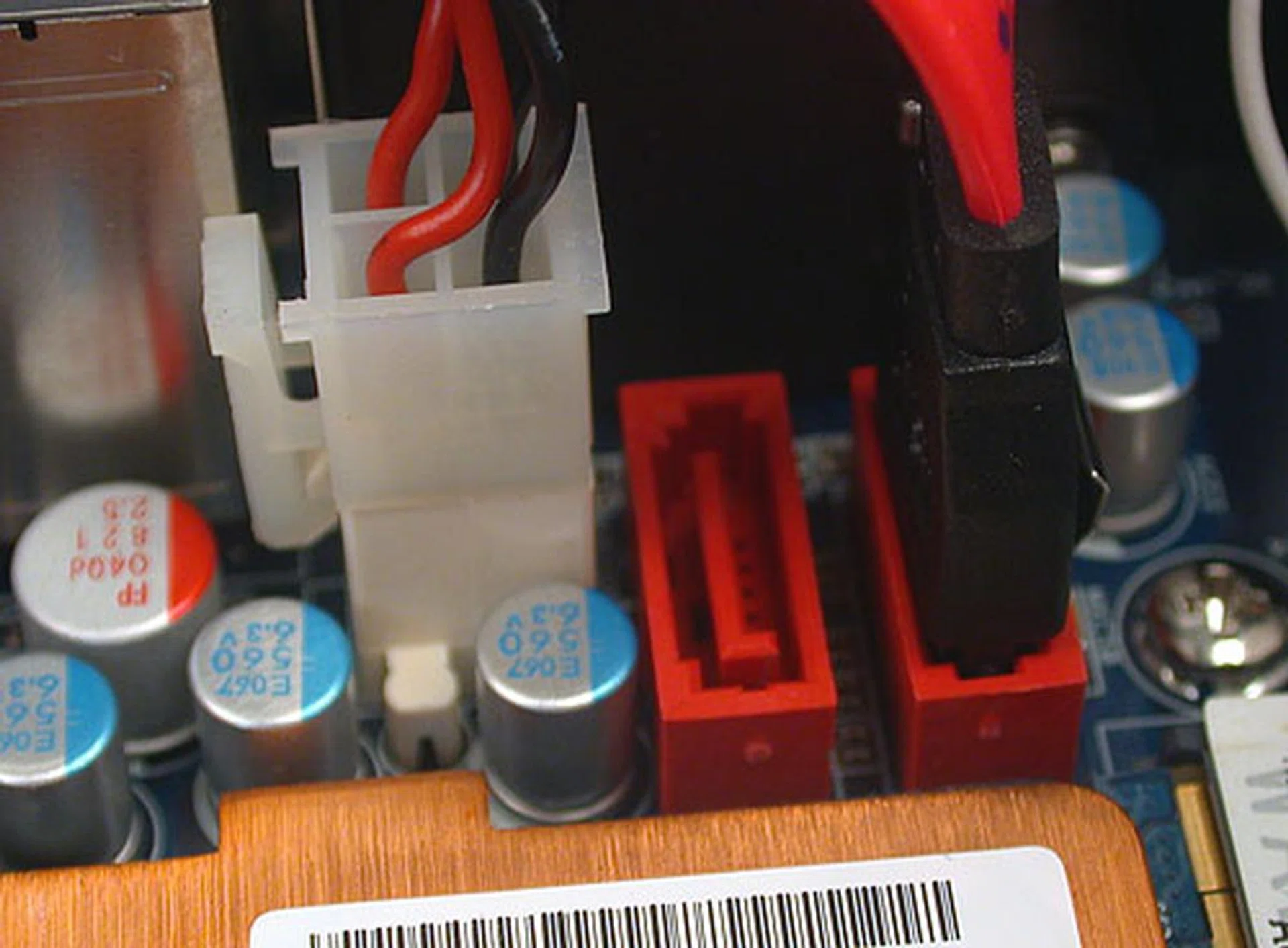
There's one more SATA connector for another HDD but space is another issue.
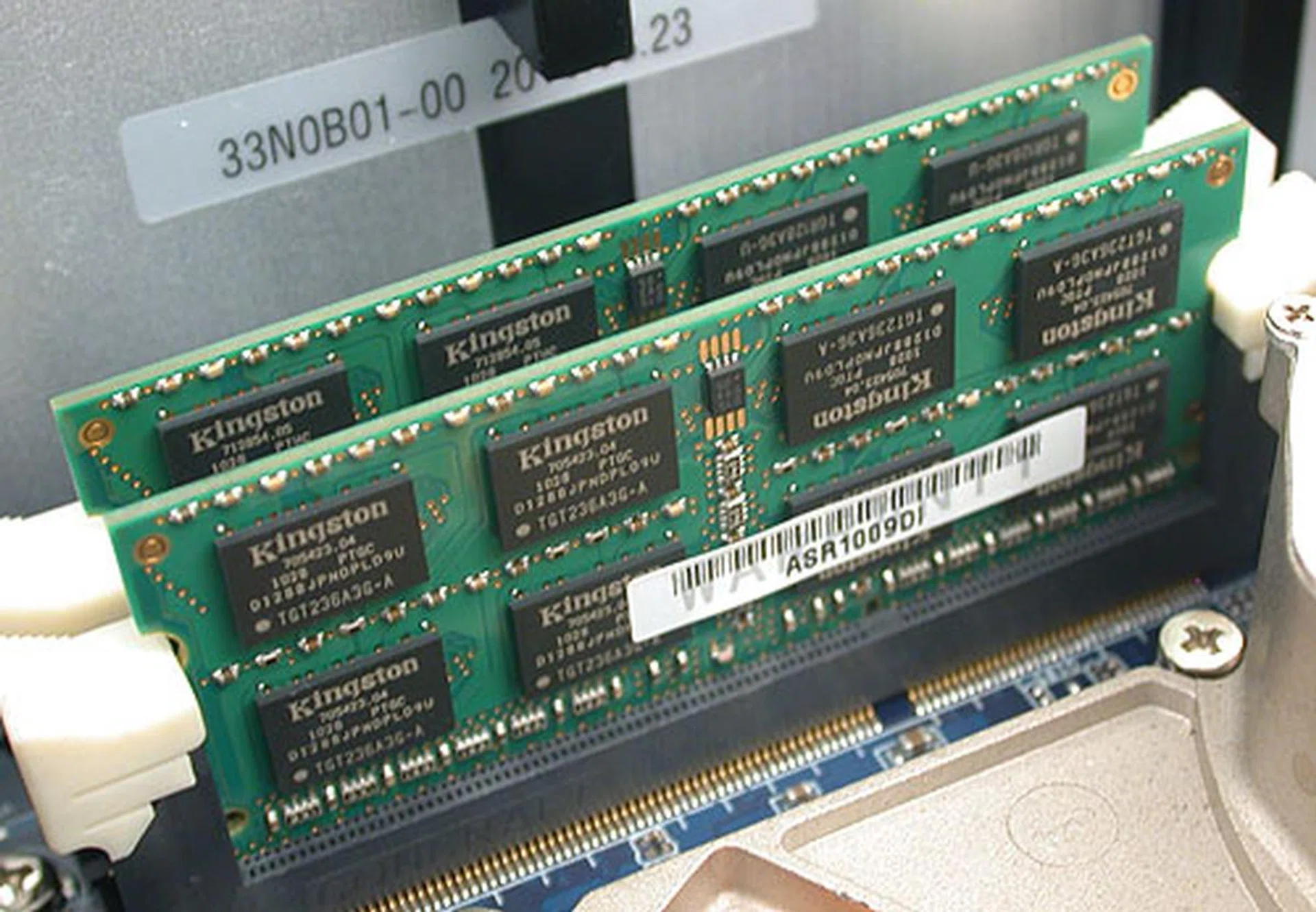
Two sticks of DDR3 1066 SODIMM memory from Kingston for a total of 4GB. 8GB is the maximum supported.
Benchmark Comparisons
In terms of the user experience, the ASRock Vision 3D was very quiet during testing, with the Blu-ray drive the main culprit on occasions when it drew our attention. While we could feel the heat emitting from the rear and the sides can get a bit warm, we felt that it was more than tolerable.
As usual, getting the appropriate comparison for pre-configured products like desktops and notebooks is a tricky task. More so when the ASRock Vision 3D probably has practically no peers in the high-end HTPC segment. Hence, we included the more budget friendly and widely available , which fulfills a similar entertainment HTPC role and to assess its general capabilities, we threw in a multimedia notebook from ASUS, the .
All three systems were tested on Windows 7 64-bit on various benchmarks like PCMark Vantage and Far Cry 2. The ASRock Vision 3D came with beta 260.66 ForceWare drivers that are slightly older than the just released 260.89 WHQL but we believe the performance shouldn't differ too much.
Specifications/Models
| ASRock Vision 3D | Dell Zino HD | ASUSNX90Jq |
Processor | Core i3-370M (2.4GHz with 3ML2 cache) | AMD Athlon Neo X2 6850e (1.8GHz with 1MB L2 cache) | Intel Core i7-720QM
(1.60GHz, quad-core with 6MB L2 cache) |
Chipset | Intel HM55 | AMD M780G | Intel HM55 |
Memory | 4GBDDR3 | 4GB DDR2 | 4GB DDR3 |
HDD | 500GBSATA7200RPM | 500GB SATA 7200RPM | 2 x 640GB SATA 7200RPM |
Video | NVIDIA GeForce GT 425M | ATI Mobility Radeon HD 3200 | NVIDIA GeForce GT 335M |
Benchmark Results
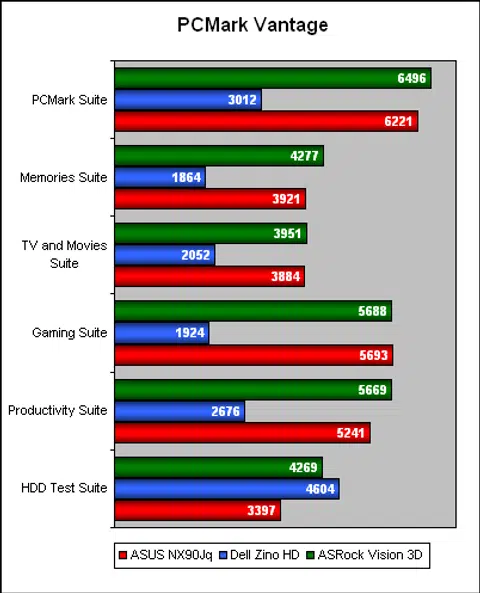
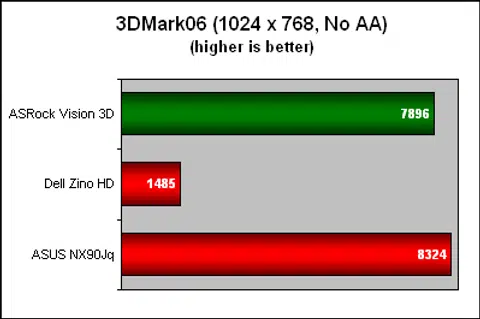
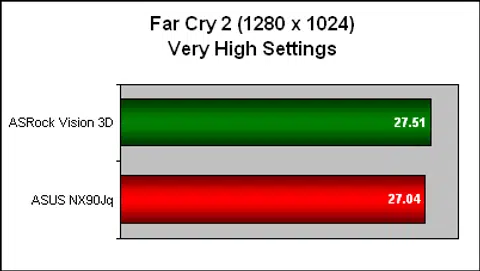
Thanks to a better performing hard drive, the ASRock edged out the Core i7 powered ASUS NX90Jq in PCMark Vantage. The two systems were evenly matched for most of this benchmark with the decisive blow coming in the HDD segment. The AMD powered Dell Zino HD was predictably off the pace with its older, integrated graphics. 3DMark06 saw the ASUS getting the better of the Vision 3D but the results were very close and Far Cry 2 confirmed that the two had similar graphical performance.
Now About the 3D
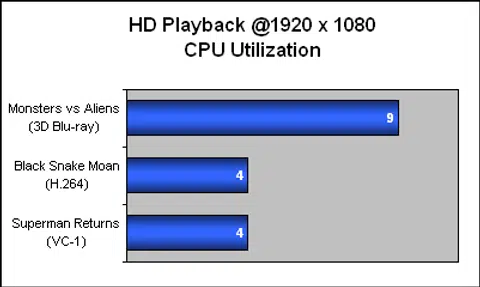
Next, we tested the 3D Blu-ray support present. We were fortunate to have NVIDIA's 3D Vision kit with us and a suitable LG 3D Vision capable monitor to test. Using a similar test scenario that we outlined in our , we found the 3D playback of Monsters vs Aliens to be smooth and trouble-free. Setting up the 3D Vision was a matter of installing the proper drivers and software like the bundled CyberLink PowerDVD 10. Check out the low CPU utilization rates in the chart below.
With the recently released 260 drivers, NVIDIA brings 3DTV Play to its supported 3D Vision products. This means that 3D Blu-ray will work with any current 3D TV as long as the TV is HDMI 1.4 compliant. You can even use the 3D TV's own active shutter glasses instead of NVIDIA's solution. 3D games and 3D photos are also supported on the ASRock Vision 3D with these drivers.
It's Just the Beginning
HTPC fans will be extremely pleased with ASRock's Vision 3D. While many will continue to assemble their own systems since that is part of the fun for these hobbyists, others who wish to get right into watching their HD and Blu-ray content immediately will welcome the Vision 3D. A respectable, competent configuration that's more than equal to an above average multimedia notebook, the silent operation, relatively low power consumption and its rather unique (at the moment) novelty of having NVIDIA 3D Vision support should garner it a niche following. And it can even play modern games at medium settings.
If you remember, we said at the start that this is just shy of being the perfect HTPC. The reason is simply because there's no option for an internal TV tuner. One could of course get an external USB solution (DVB-T versions for example), but besides using up another port, it also means additional cost. These USB tuners are also not as powerful as the internal ones that could come with both analogue and digital TV tuners. Traditional TV programming may be less important in today's TV landscape with the advent of internet streaming but it's still significant enough that one expects the complete HTPC to have such functionality built-in.
For the HTPC enthusiasts, the Vision 3D is close to perfection. One would be hard pressed to do any better as an individual, given the limited access to notebook components.
The other sticking point would be the cost. While we don't have a retail price locally, the various prices floating online from other tech sites are in the range of US$1000. That's about the price of some notebooks, without a screen and the portability. Mind you, that's not factoring the cost of the operating system.
While the ASRock Vision 3D is a relatively high-end HTPC, we believe that 2011 will herald more 'mini PCs' targeted at the general population. With both AMD and Intel releasing very decent integrated graphics solutions next year with their new processors, the trend will be towards smaller, more power efficient desktops. Be it for work or leisure, for surfing the net or watching your videos, these small form factor PCs are here to stay and if the Vision 3D is any indication, they are anything but weak.
Our articles may contain affiliate links. If you buy through these links, we may earn a small commission.