

Red-y to Rumble
If you're familiar with Toshiba's QOSMIO's line, then Toshiba's QOSMIO F60 will feel right at home in your hands. If you don't, then here's a quick recap. The QOSMIO series is basically Toshiba's high end multimedia notebook line of the desktop replacement category and most commonly found in sizes 17-inches or larger. The F60 however, isn't quite as big, and comes slightly smaller in a 15.6-inch build.
Being smaller, however, doesn't mean that it's any less powerful, as the F60 comes loaded with decent hardware in the form of a Intel Core i5-560M (2.66GHz) with Turbo Boost of up to 3.2GHz, 8GB RAM and a NVIDIA GeForce GT 330M. All this hardware is wrapped inside the nice red glossy shell, which we will let the pictures do the talking before we venture into the more technical stuff. For a complete specs summary of the notebook, hit the above.
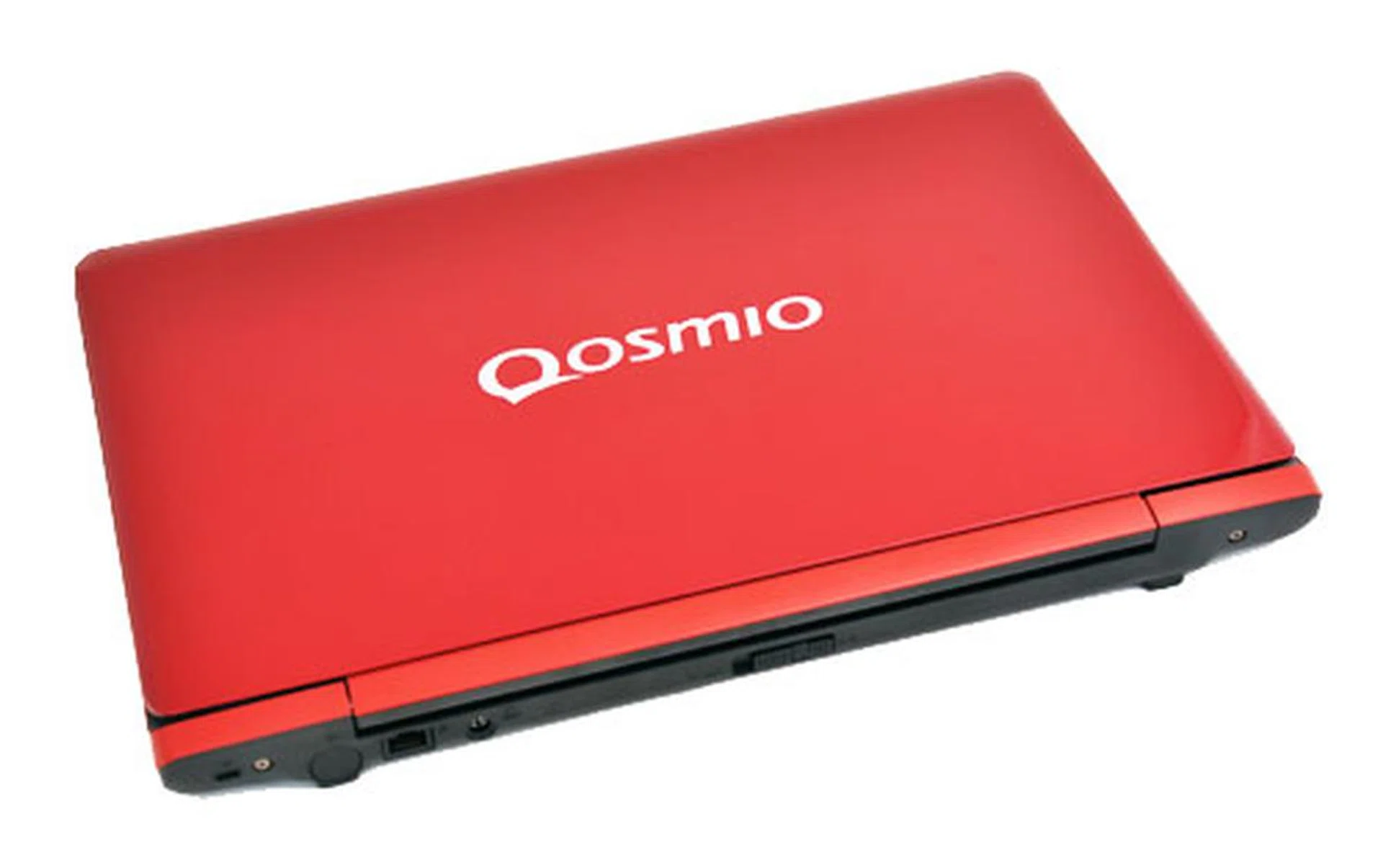
Pretty in red and raring to go is the Toshiba QOSMIO F60.
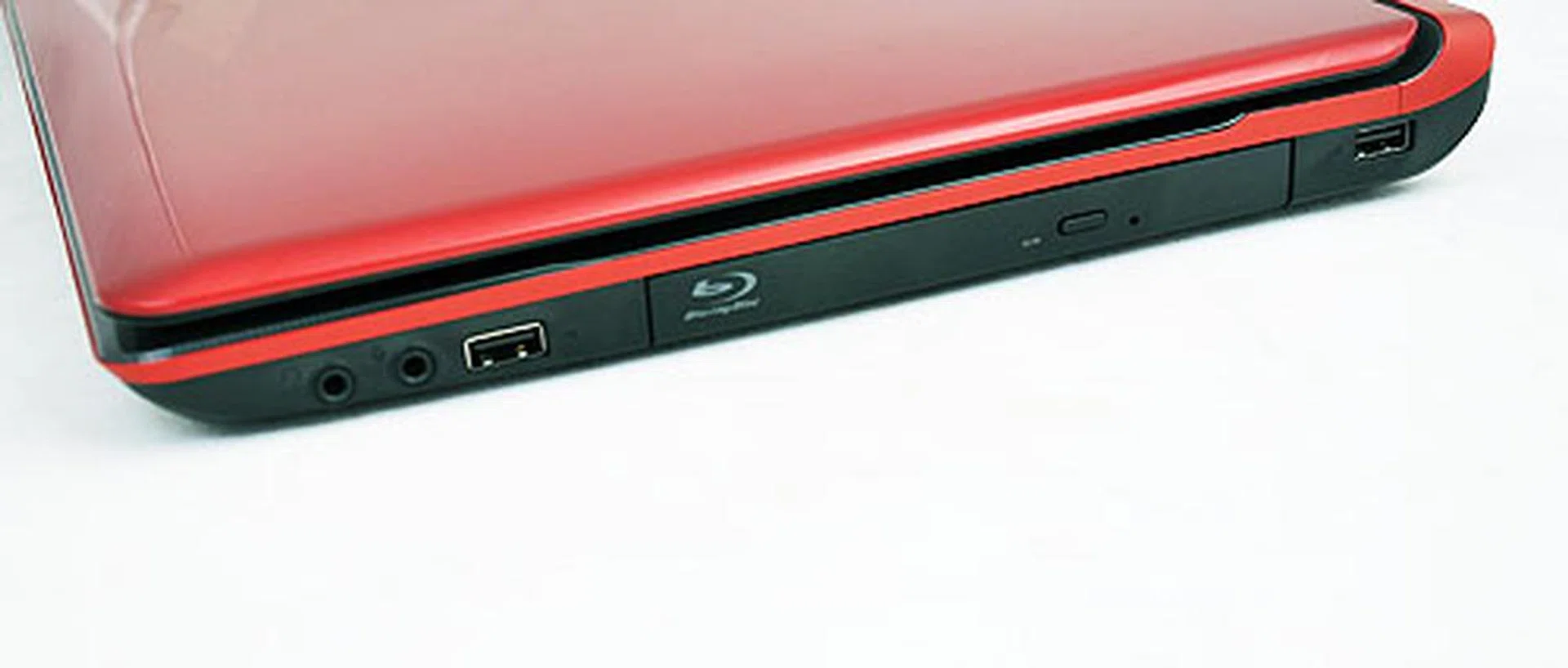
Ports wise, the F60 comes packing with more than a handful of convenience options. On the right side, you get the audio jacks, a Blu-ray optical drive, and two USB ports.
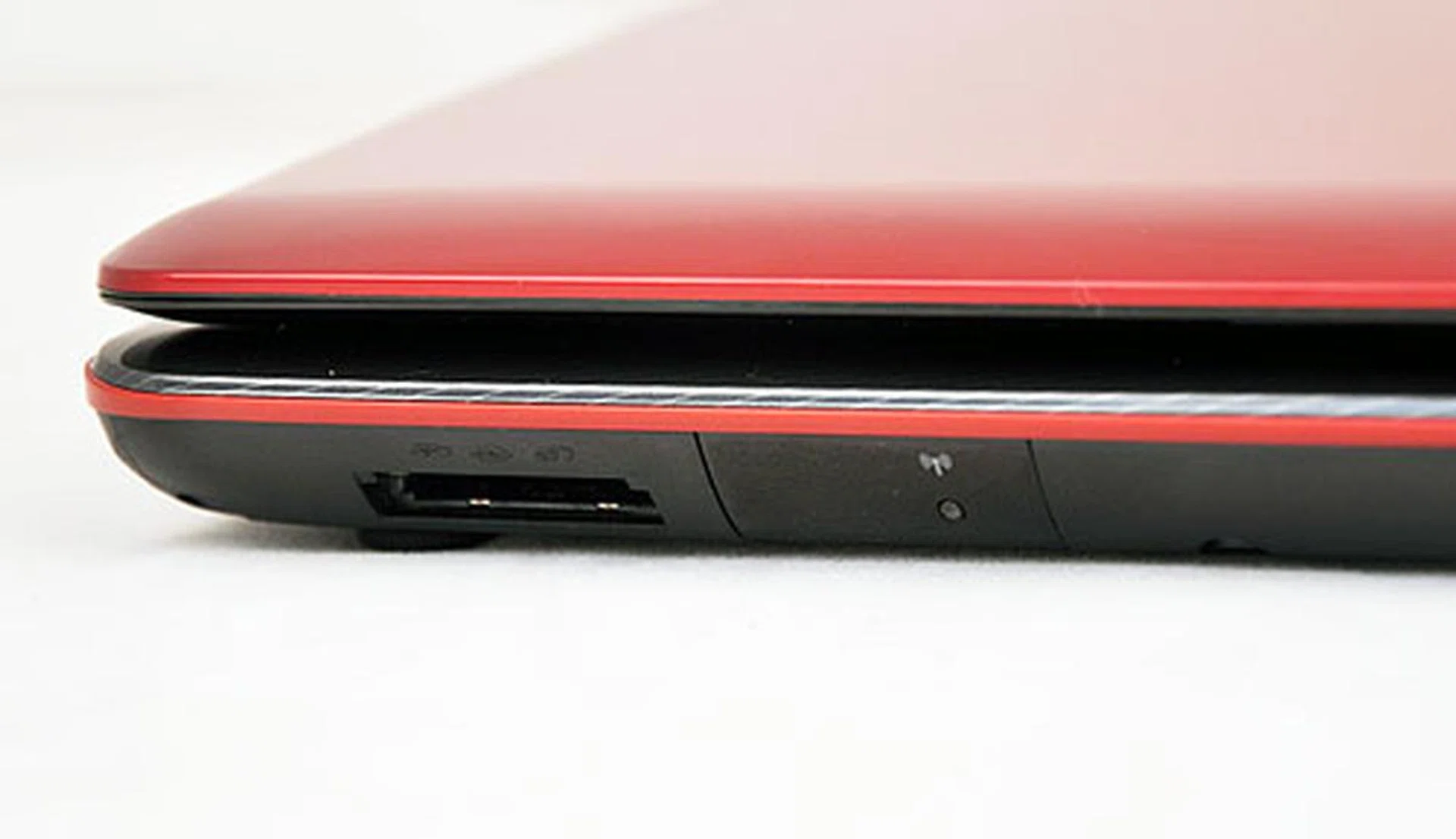
Located on the front panel is the SD card reader and the wireless LAN status indicator.
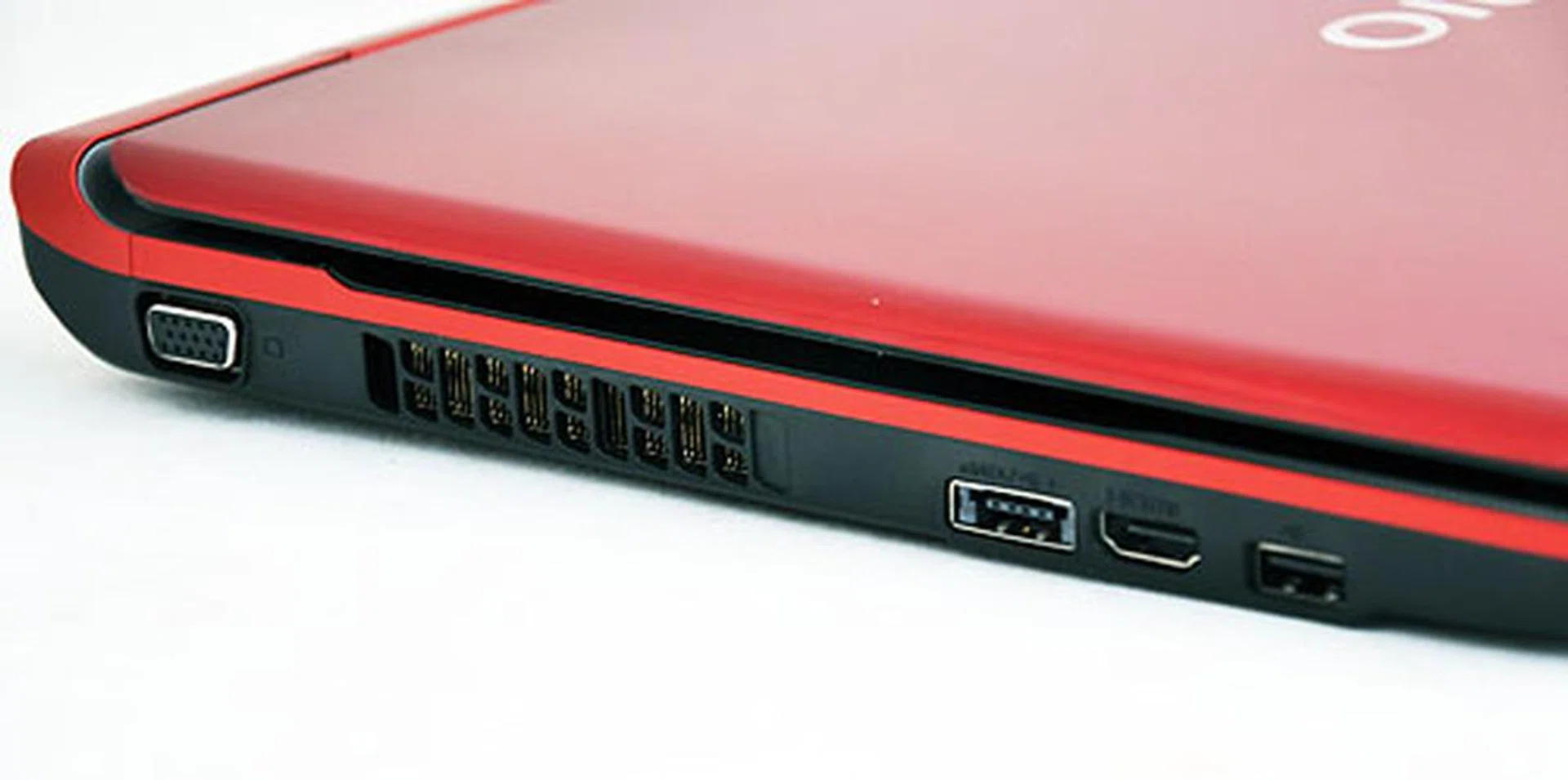
On the left side, you get a VGA port, an eSATA-USB combo port with "Sleep and Charge" functionality, HDMI and another USB port.
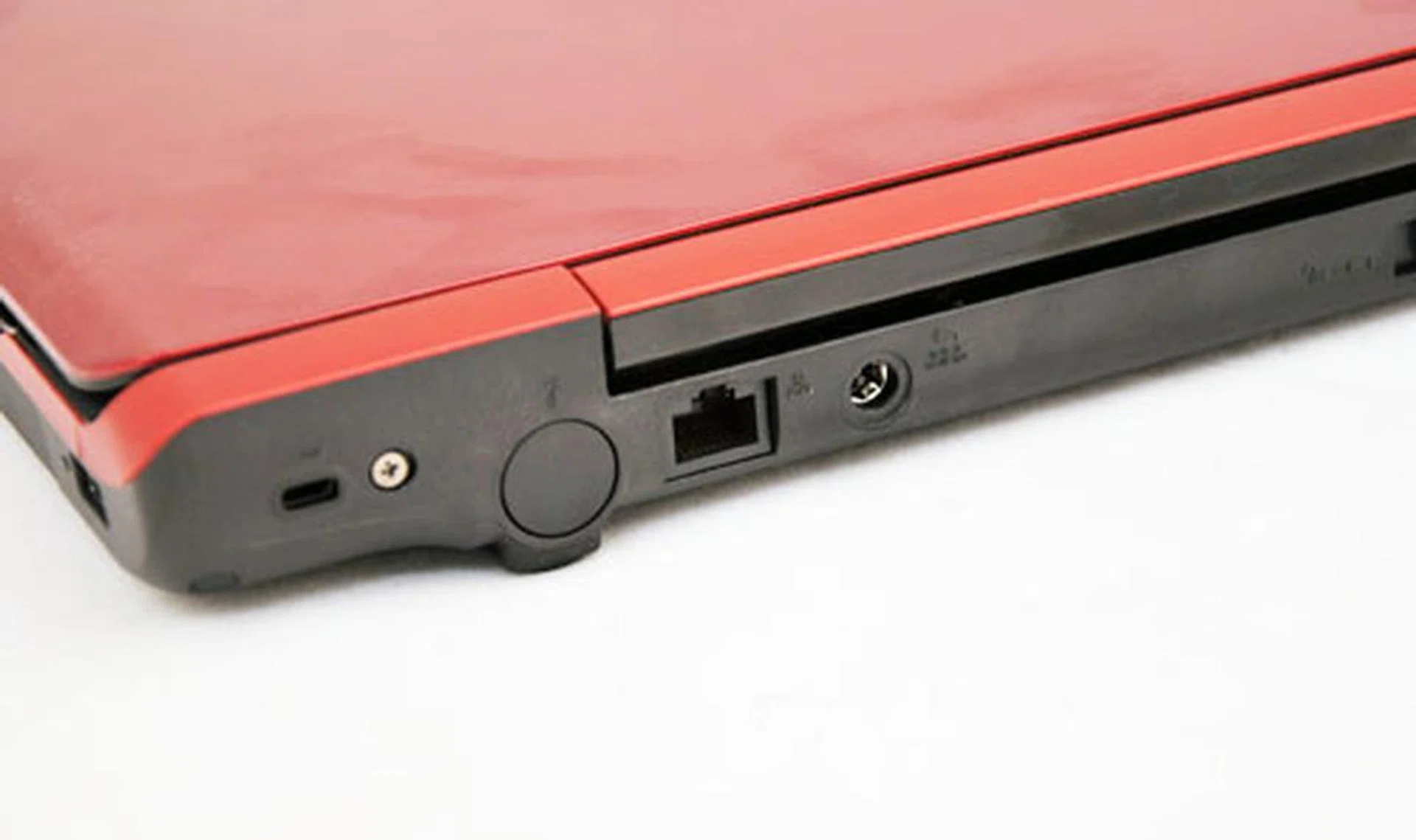
At the back you'll find the LAN and power jack. Next to the LAN port is an opening for a TV tuner that's not found on this SKU.
Red-y to Rock
Underneath its red exterior, the interior of the QOSMIO F60 also shares much of the same look and feel, which means that you will end up with a very smudged notebook unless you wipe it often to clear the fingerprints. The screen is also likewise glossy and reflective, but holds up well in terms of viewing angles.
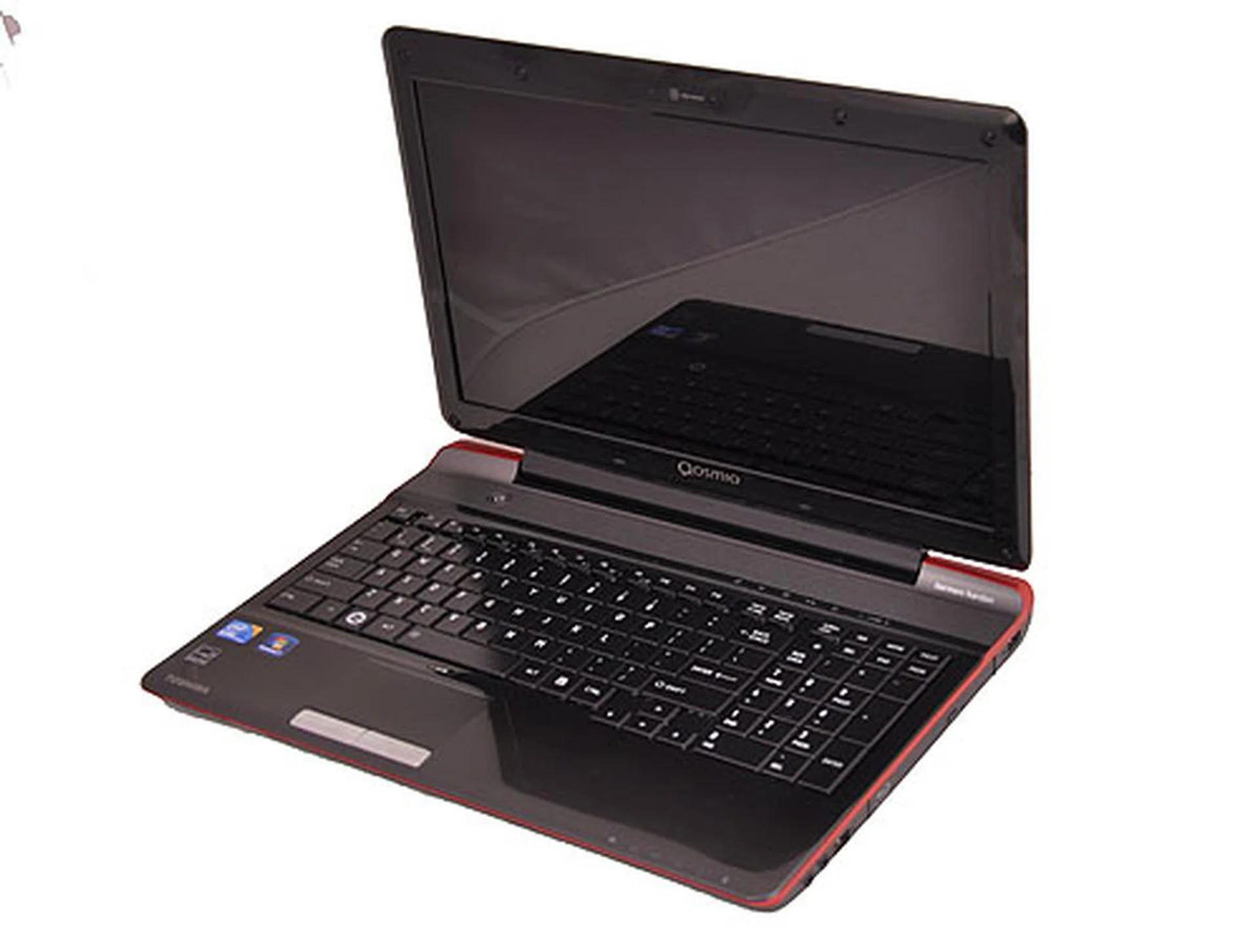
As we mentioned, the screen's glossy and reflective. So if you need a mirror in a pinch, you know what to rely on.
Focusing on the bottom half of the clamshell notebook, we noted that the keyboard while pretty, isn't quite as glossy as the rest of the notebook, so at least you won't end up with a really ugly keyboard after heavy use. The trackpad wasn't too bad, and tracking wise, it seems similar to what you can get from most other notebooks. We still do recommend a mouse if you want to do heavy gaming though. The glossy palm rests however, aren't a good choice other than looking good when kept clean.
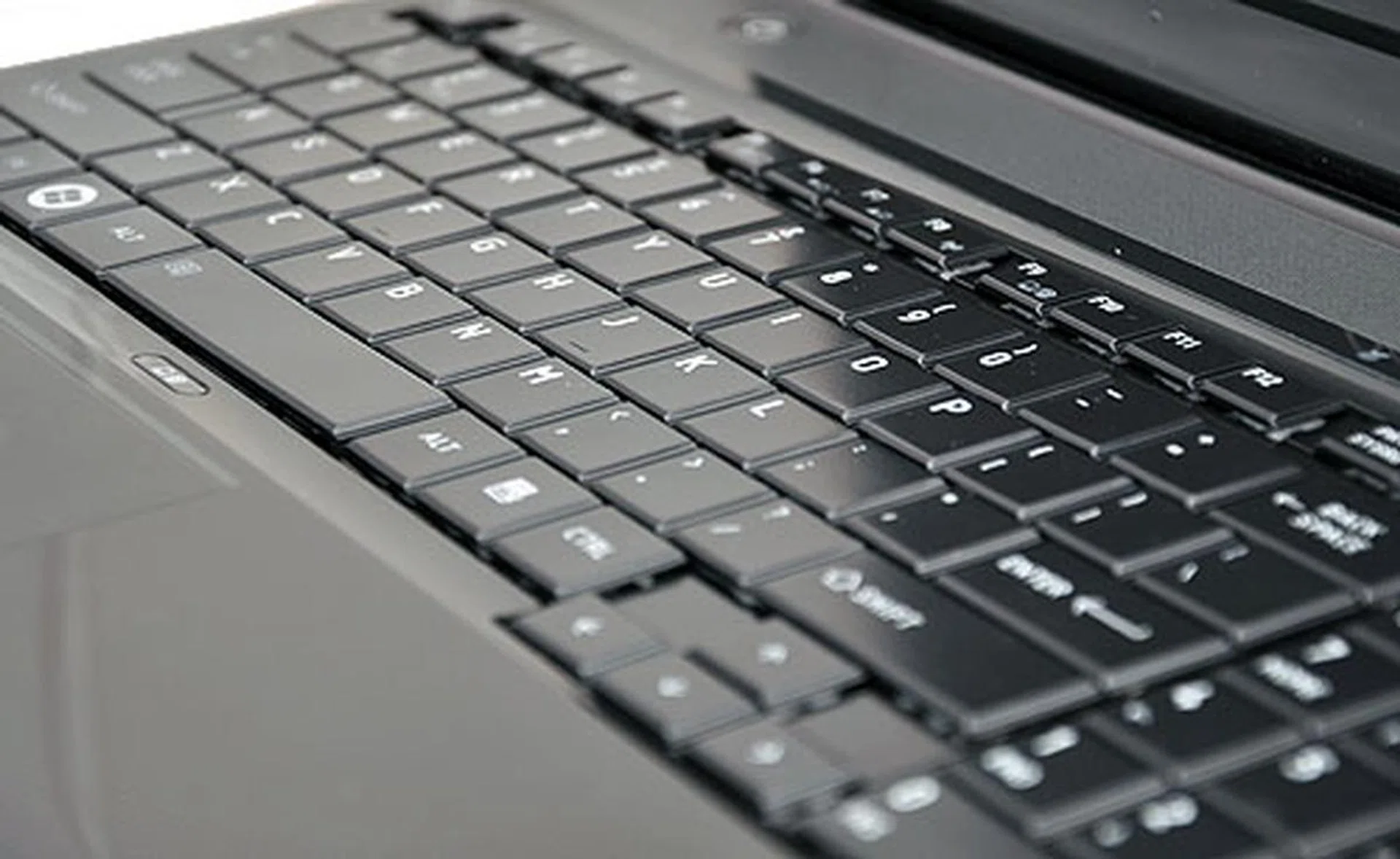
The keyboard isn't as glossy as the first generation of this keyboard design, so that's a relief at least.
Audio wise, we're quite impressed, though the F60 lacks the subwoofer found on its bigger cousins. You do get decent sound quality from the harman/kardon speakers, so you're pretty much set if you want to watch movies on the move (and you may want to, thanks to the Blu-ray drive in this notebook).
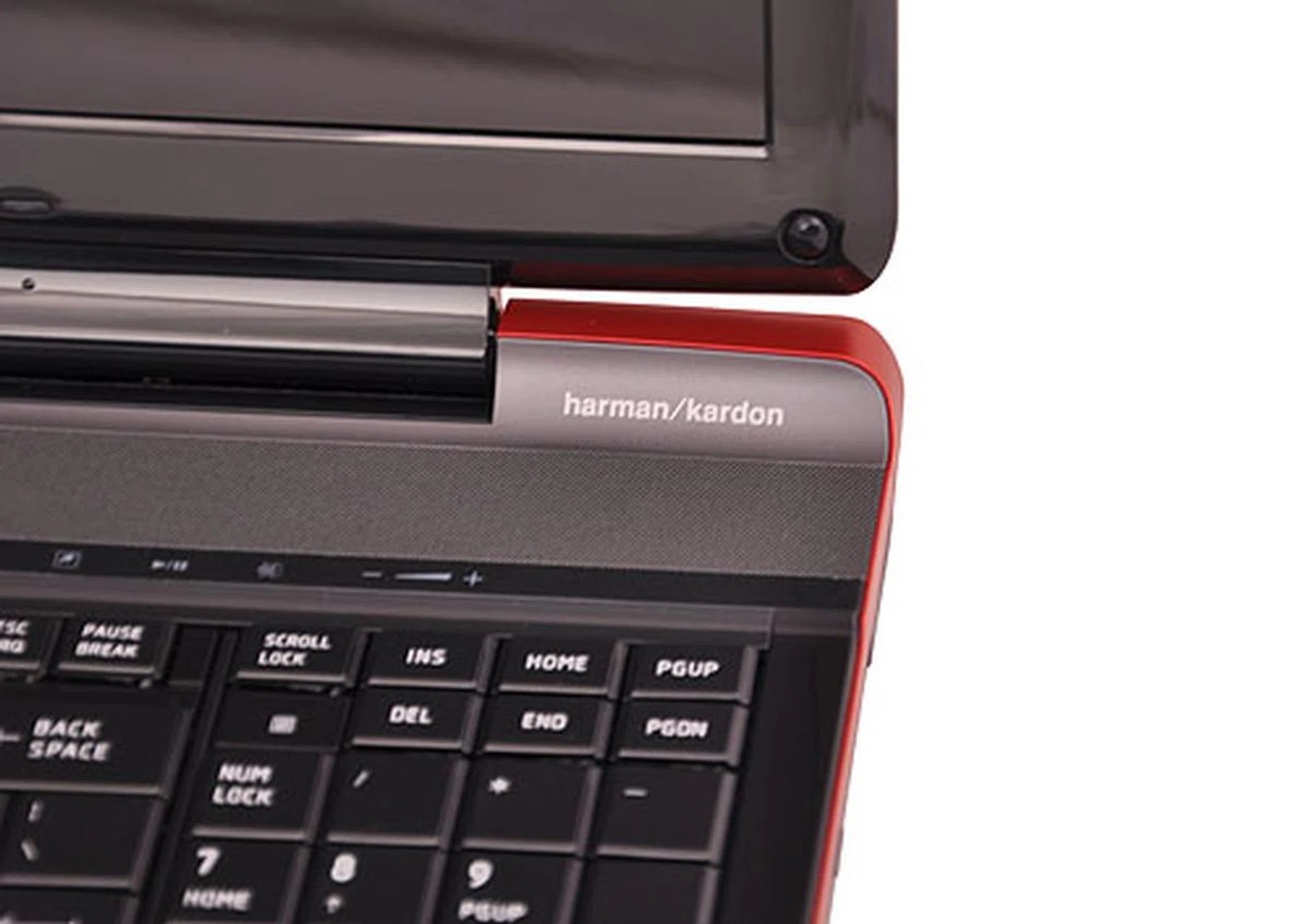
You can't go wrong with harman/kardon speakers for your audio, though we would have preferred the unit to have a subwoofer for a better punch.
Performance Benchmarking
Pitting the Toshiba QOSMIO F60 with a suitable notebook to compare against was an uphill task, but we do have a previous review of the to fall back on. Bear in mind both units are using different hardware altogether, with the F60 using an Intel Core i5-560M while the Y560 uses a quad-core Intel i7-740QM and the Lenovo equipped with more powerful discrete graphics compared to the NVIDIA GeForce GT 330M that the F60 sports. The F60 does have twice the RAM of the Y560 at 8GB though, so let's see how all this holds up in our benchmarks.
Specifications / Notebook | Toshiba QOSMIOF60 | LenovoIdeaPad Y560 | Lenovo IdeaPad Y550P |
Processor | Intel Core i5-560M (2.66GHz, Turbo Boost up to 3.2GHz) | Intel Core i7-740QM
(1.73GHz, quad-core with 6MB L2 cache) | Intel Core i7-720QM
(1.60GHz, quad-core with 6MB L2 cache) |
Chipset | Intel HM55 | Intel HM55 | Intel HM55 |
Memory | 8GBDDR3 | 4GB DDR3 | 4GB DDR3 |
HDD | 500GBSATA (5400 RPM) | 750GB SATA (5400 RPM) | 500GB SATA (5400 RPM) |
Video | NVIDIAGeForce GT 330M | ATI Mobility Radeon HD 5730 | NVIDIA GeForce GT 240M |
PCMark Vantage
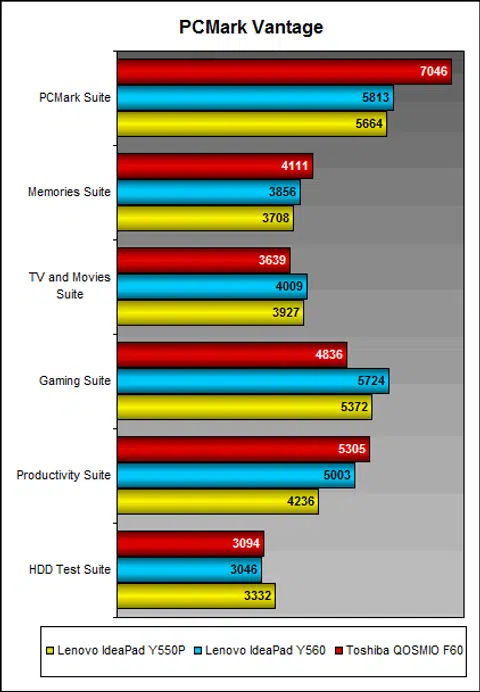
In our PCMark Vantage test, the F60 basically outclasses the Y560 with a surprisingly high score of 7046 PCMarks. This is most likely due to the higher clock and Turbo Boost speed of the Intel Core i5 processor that the F60 has. In more demanding multi-threaded applications though, expect the Y560 to perform better thanks to its quad processing cores.
3DMark06
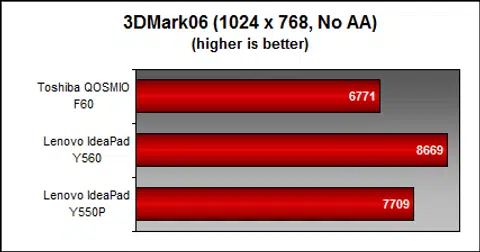
We've seen the very strong 3D gaming performance from the Y560, so it's no surprise to see the F60 struggle to catch up. It's still using the NVIDIA GeForce GTS 330M discrete graphics, which is a pretty average graphics engine, but you'll still be able to get some decent gaming based on the 3DMark06 results. Let's see how it does in Far Cry 2 though.
Far Cry 2
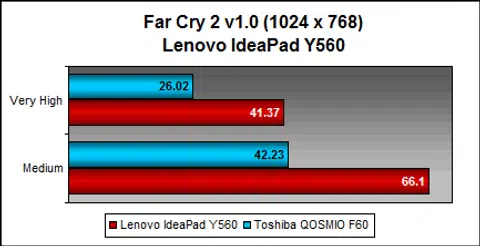
In Far Cry 2, the QOSMIO F60 achieved 26.02fps on Very High settings at a resolution of 1024 x 768 pixels, while reaching 42.23fps on Medium settings at the same resolution. Which means if you're looking to play this intensive game, you're better off sticking to the tamer Medium settings, thought Very High might still be playable somewhat. It's not numbers that we would drop our jaw at, but it comes off as pretty average for a entry to mid-level discrete graphics engine.
You will still be able to play plenty of games at mid-level detail settings seeing that the maximum screen resolution for the display is just 1366 x 768 pixels, so you can't really scale much higher resolutions than what we've tested here. However high graphics details, anti-aliasing settings are something you'll likely have to forego with this machine.
Battery Life and Portability Index
The Toshiba QOSMIO F60 is relatively bulky, and at 2.85kg, it is pretty heavy to be lugging around for most. Ideally, it should have a decent battery life, otherwise, you'll be frantically looking for a power point in order to get anything done on the move.
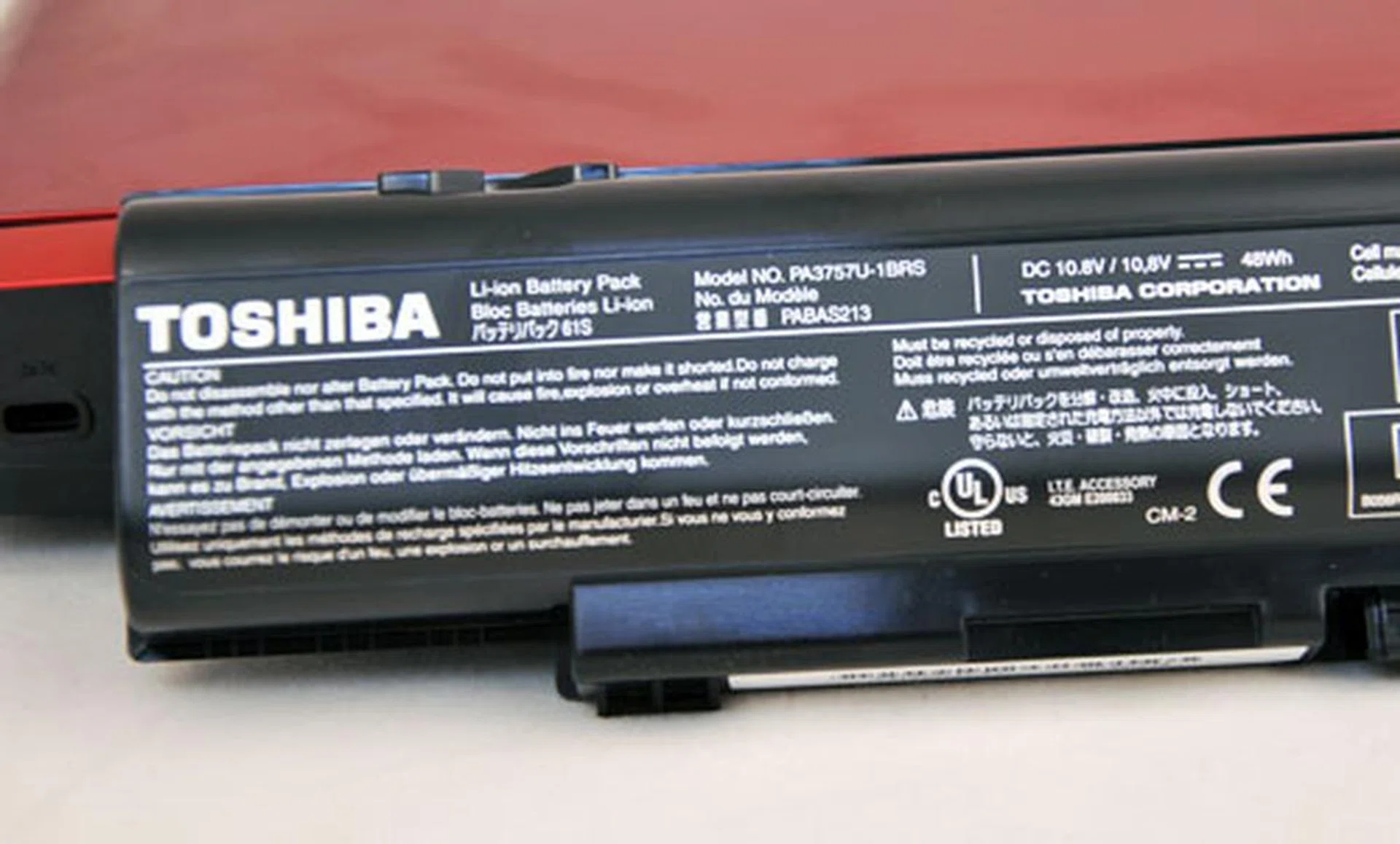
The Toshiba QOSMIO F60 is powered by this 10.8V, ~4444mAh battery.
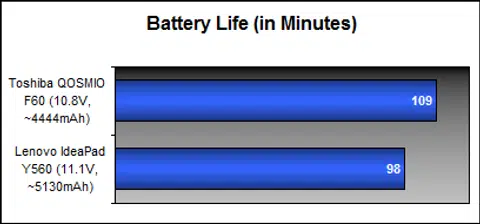
On our standard DVD video looping test, we've basically looped a DVD on the F60 with its brightness and volume at the 50% setting. The notebook performed admirably, lasting almost two hours at 1 hr 49 minutes to be exact. That's enough for one movie session at most. Even if you factor storing the media on the hard drive (which means more work to the drive) or streamed over the internet (which would meaning the wireless radios sapping your battery), this is probably the likely average time you'll get out of the notebook from an intensive movie session. Just don't plan on watching extended edition movies unless you're plugged to a wall socket for power.
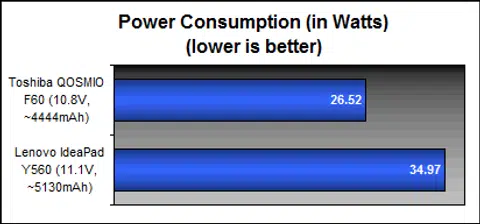
Power efficiency reveals that the Toshiba machine and its hardware does seem to be more efficient with a power consumption of just 26.52 watts during our battery test. This is in-line with the notebook specs being more tamer than the Lenovo machine compared here. Whether it's more portable remains to be seen in the next benchmark below due to the notebook's heftier weight.
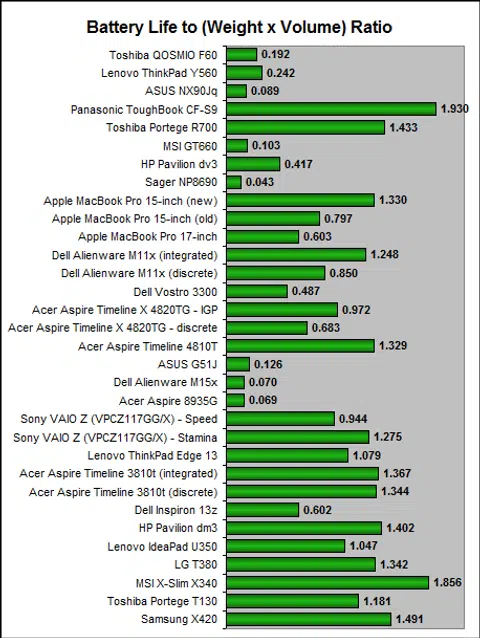
As for our Portability Index test, it's basically a simple calculation where we take the battery life of the notebook and divide it by the product of the weight and volume. What you get is a ratio that shows just how portable a notebook is. The higher it is, the more portable a notebook is and the F60 scores a 0.192, meaning it's actually less portable than the Lenovo IdeaPad Y560 despite having a longer battery life. Looks like the bulk of the Toshiba isn't helping it.
Qosmic Conclusion
If you have the cash to splurge on a 15.6-inch multimedia notebook and one of your top priorities should be an eye-catching design, then the Toshiba QOSMIO F60 at S$2399 would seem more palatable. Compared to our previously reviewed Lenovo IdeaPad Y560 which posses better hardware and performance and costs less, the Toshiba would appear to be overpriced. However, style does come at a price and that's the Qosmio's proposition.
Performance wise, the F60 did outperform the Y560 for certain benchmarks, but this is mostly due to the higher clock speed and higher Turbo Boost cap for the dual-core processor which will suffice for most standard run-of-the-mill needs. If you're looking at heavy-weight multi-threaded applications however, the Lenovo machine would be a better buy with its true quad-core processor. So do keep in mind on what what sort of needs you might have with your notebook before making your decision. In the case of our comparison, the Toshiba will come off as the better choice if you're into standard office and content creation needs but will probably take a back seat for video encoding or graphics rendering applications that usually benefit from more processing cores. So there's no clear winner here as different processors are made to quench various needs.
That said, for that price, you're getting a notebook with very decent performance, a pretty interior and exterior, and Blu-ray playback capabilities.

Though the Toshiba QOSMIO F60 is an expensive multimedia notebook, it should appeal to those who want a machine with style and elegance. Just beware of its glossy finish everywhere and its hefty build.
Our articles may contain affiliate links. If you buy through these links, we may earn a small commission.