


Microsoft just ended its Windows and Surface event in San Francisco, and if there was one phrase the Redmond-based company wanted everyone to take away, it was hybrid intelligence.
The idea behind it is actually pretty simple: Microsoft does not think every AI task should be sent off to the cloud. Instead, it wants Windows PCs to decide when something can be handled locally (aka on-device), when it needs the cloud, and increasingly, when both should work together.
At the centre of that push are Microsoft’s new RTX Spark systems, developed in partnership with NVIDIA. They provide the local AI horsepower behind Microsoft’s hybrid intelligence strategy, while also giving the company a new platform to rethink what a high-performance Windows PC can be.
Surface Laptop Ultra is Microsoft’s showcase for RTX Spark
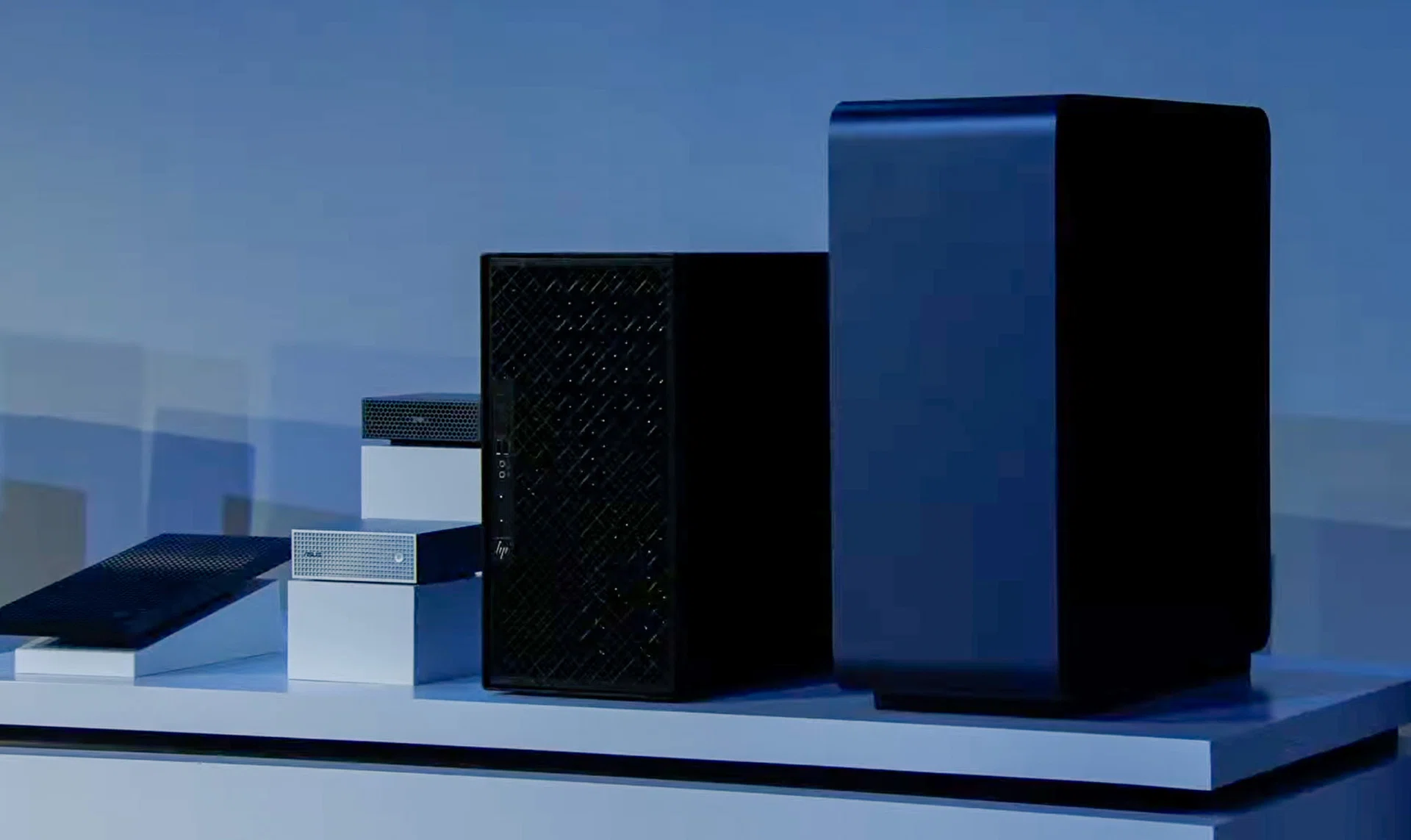
Microsoft also revealed there will be new Surface RTX Spark Dev Box PCs.
The first and most obvious example of that is the new Surface Laptop Ultra, Microsoft’s high-performance flagship and its first notebook built around NVIDIA’s RTX Spark platform. It uses a Grace-based CPU paired with a Blackwell RTX GPU, with configurations going up to 128GB of unified memory – enough to run AI models with more than 120 billion parameters locally. The machine isn’t exactly an unknown either; we have already seen it first-hand at Computex in June (check out our video below), but it has now also been humorously revealed to have a magnetic USB-C charging system that works a little like Apple’s MagSafe.
Prices start at US$2,599, putting it up against the MacBook Pro. I don’t think that comparison is accidental either, but it’s really not about Windows versus macOS here. RTX Spark brings NVIDIA’s CUDA ecosystem into a familiar Windows environment, which could make local AI development and coding more accessible to a much wider audience, especially those who do not want to rely entirely on the cloud or set up a separate Linux machine just to experiment with AI models.
Surface Laptop Ultra is also only one part of the story. ASUS, Dell, HP, Lenovo and MSI all announced RTX Spark laptops of their own, with Gigabyte among the brands joining in the second wave. This is significant because NVIDIA’s traditional role in the Windows PC ecosystem has been that of a discrete GPU provider – Intel, AMD and more recently Qualcomm provide the CPUs. RTX Spark changes that dynamic by bringing NVIDIA’s Arm-based Grace CPU and Blackwell GPU together into a single platform, with unified memory shared across both.
At the other end of the spectrum is the Surface RTX Spark Dev Box, a compact desktop with 128GB of unified memory and what Microsoft claims is “up to one petaflop of AI performance”. At US$5,999, it’s clearly not targeted at the average Windows user, but Microsoft is positioning it as a local development PC for those who might otherwise be running expensive AI workloads in the cloud.
Taken together, the laptops and Dev Box also show that Microsoft and NVIDIA are not treating RTX Spark as a single product category. They are trying to put the same local AI capabilities into everything from relatively familiar Windows laptops to specialised developer machines. But having all that computing power sitting on your desk is only useful if Windows and its apps know how to make use of it, and this is where Microsoft’s broader hybrid intelligence strategy starts to become more important.
Hybrid intelligence is really the bigger story
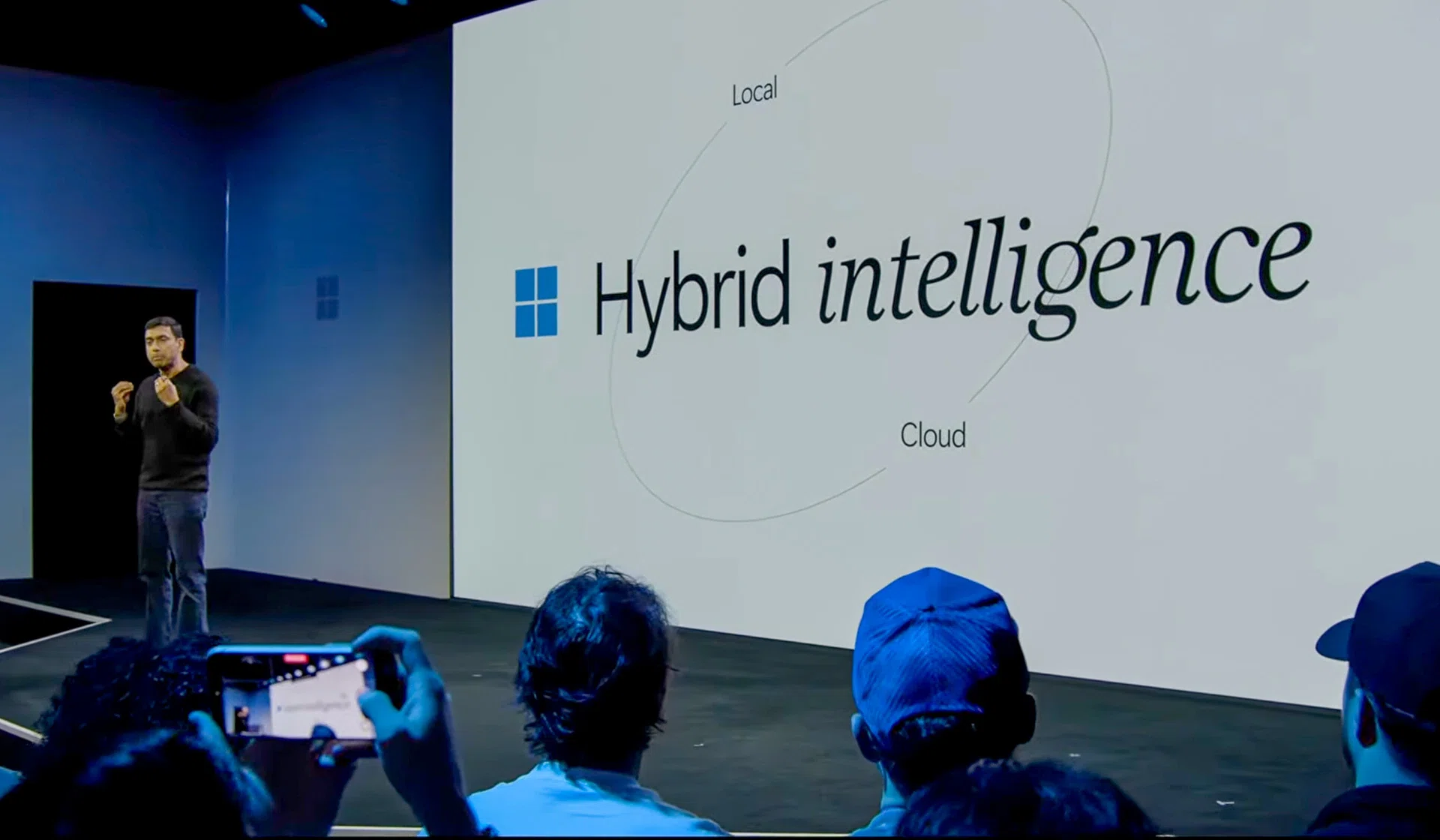
It took almost 2 years for Microsoft to have a clear definition of what an AI PC actually is.
Essentially, Microsoft wants Windows apps to use local AI models when that makes sense, while falling back to cloud models when a task needs more compute or access to something that cannot reasonably be handled on the PC. Hence the “hybrid” name.
In theory at least, that approach makes a lot of sense. Cloud AI is convenient, but it also brings latency, cost and, more importantly, privacy considerations – you really shouldn’t be uploading sensitive company documents to ChatGPT, for instance. Running everything locally solves some of those problems, but even a powerful RTX Spark machine is not going to replicate the collective computing power of an AI data centre. The practical solution, then, seems to lie somewhere in between.
Microsoft is already building towards that with local model support through Windows ML, while tools such as GitHub’s HydraFusion can route workloads between local and cloud models. The much maligned but steadily improving Copilot is also becoming much more closely tied to the PC itself, with Microsoft demonstrating on stage how it can understand local files, work with recent activity, organise content and eventually carry out actions across Windows.
This is also where I think Microsoft’s biggest challenge lies. Asking an AI chatbot a question is one thing. Giving an AI agent permission to search through my files and perform actions on my PC is something very different, and it requires a much higher level of trust. Remember Microsoft’s controversial Recall? The company’s experience with it showed how quickly we can become uncomfortable when a tech giant asks for permission to access some of our most personal data – from financial statements to photos – even if there are legitimate technical reasons for doing so.
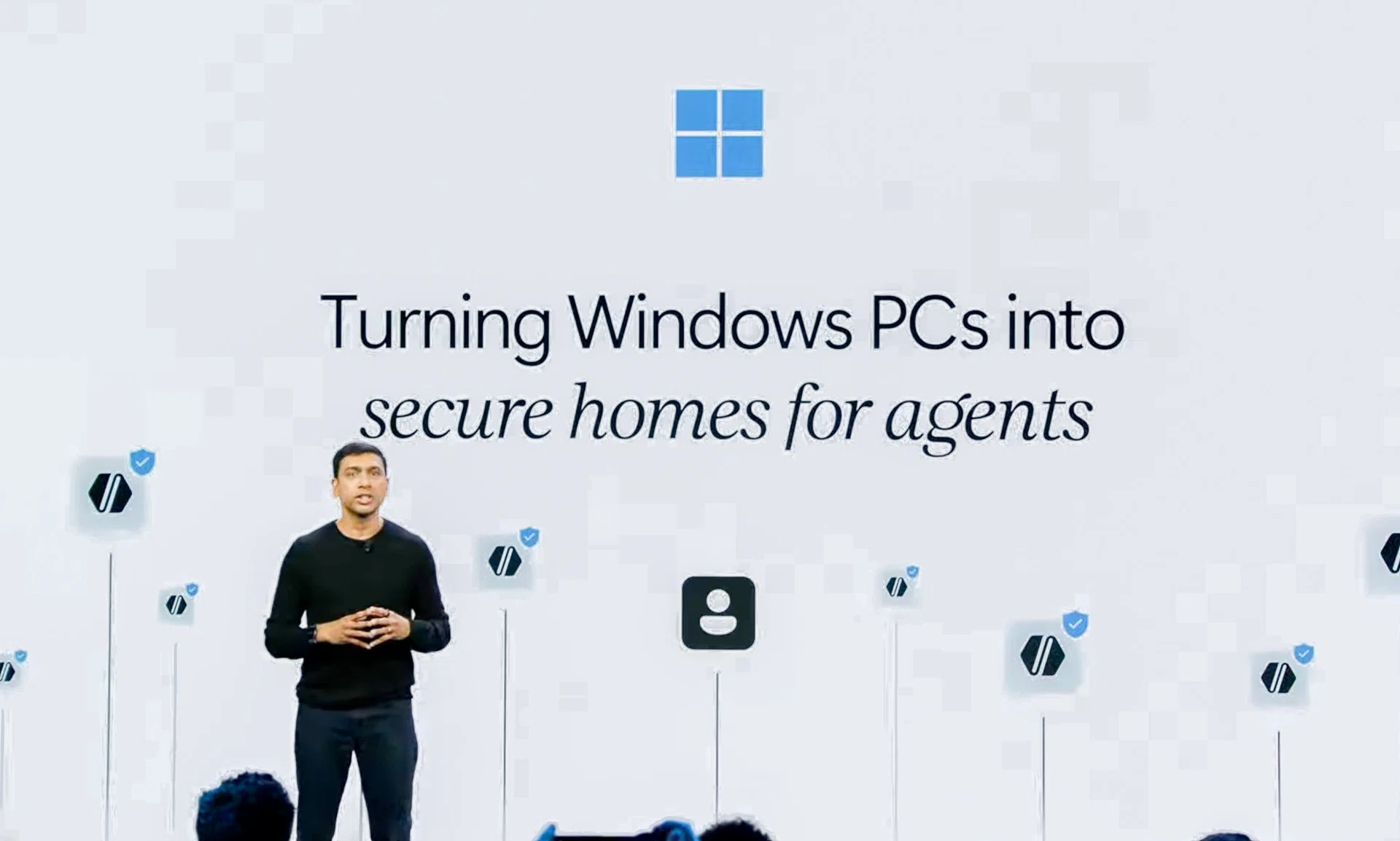
Microsoft Execution Containers, or MXC, are part of the company’s answer to that concern. They are designed to sandbox AI agents and control which files, networks and other parts of the system they can access. OpenAI’s Codex, GitHub Copilot and NVIDIA OpenShell are among the tools supporting MXC. If Microsoft really wants AI agents to become a standard part of Windows, these security boundaries are arguably just as important as the models themselves.
Some other quality-of-life Windows changes
The new Windows Search box might be the OS’ most consequential upgrade yet.
There were also a few more conventional Windows improvements announced at the event that caught my eye, including a revamped Windows Search that can carry out actions directly from the taskbar. Users will be able to do things such as switch on dark mode, mute the PC, minimise windows or even rename multiple files in sequence.
Interestingly, I think the new Windows Search might end up being one of the more useful changes for everyday Windows users. Microsoft has spent the past few years telling us that AI will fundamentally change the PC, yet many of its AI features so far have felt more like apps shoehorned into Windows than something that genuinely changes how we use the operating system.
RTX Spark and hybrid intelligence could finally start changing that. For developers running local models, creators working with generative tools or businesses trying to reduce their dependence on cloud inference, there is now a much clearer reason to have all that AI compute inside a laptop or compact desktop. For everyone else, maybe not so much, because Microsoft still has to prove that letting AI agents dig through our files and carry out tasks on our behalf actually makes using a PC more convenient.
What I found more convincing after the event was that Microsoft finally seemed to have a clearer answer for what an “AI PC” is supposed to become. It is no longer simply a Windows machine with an NPU and a Copilot key on the keyboard. Microsoft wants the PC itself to become part of the AI infrastructure, with capable models running locally, larger models available from the cloud when needed, and Windows deciding how the two should work together.
RTX Spark gives Microsoft something different from the AI PC platforms we have seen from Intel, AMD and Qualcomm so far: plenty of unified memory, Blackwell GPU performance and, importantly, access to NVIDIA’s CUDA ecosystem for developers. Combined with hybrid intelligence, that gives Microsoft a much more coherent foundation for where it wants the Windows AI PC to go next.