
Intel Atom - The Heart Within Companion Computing
There's still a lot of momentum for netbooks based on the Intel Atom platform if we consider the 100 millionth unit milestone which Intel hit just this month as proof of its popularity. Although year-on-year sales of Atom netbooks have slowed considerably, probably due to the emergence of other competing devices such as tablets, Intel is confident that users will continue to benefit from the Atom platform.
At Intel's keynote during Computex 2011, Intel talked about how they are putting user experience as a top priority in building the next generation of Atom-based netbooks. Basically, they want the netbook to be a companion computing device, a portable computer that users keep with them wherever they go. In order to do that, Intel is enabling more features and that is through the next generation netbook platform known as "Cedar Trail". The upcoming Cedar Trail platform will be based on the 32nm technology and will enable hardware developers to build ultra-thin, fanless designs. Cedar Trail will also feature Intel Smart Connect Technology which enables an always updated experience even when device is in standby, Intel Rapid Start Technology which provides quick wake-up from hibernation and Intel Wireless Display. All these technologies are already available in current 2nd generation Core notebooks and are being implemented in future netbooks.
In addition to that, Intel is working hard to make the netbook behave more like a tablet. With Cedar Trail, we can expect battery life to extend to more than 10 hours of usage and probably weeks of standby. Besides that, graphics will also be vastly improved, with built-in capabilities to handle 1080p videos as well as more advanced graphical usage. It is expected that Cedar Trail (based on 32nm process technology) will hit the market late this year and future 22nm Atoms in 2014.
For now, the new Intel Atom processor N435 based on the 45nm process technology have already found its way into new netbooks from Samsung, Acer, Lenovo and ASUS. These netbooks will support leading operating systems like Microsoft Windows, Google Chrome and even MeeGo.
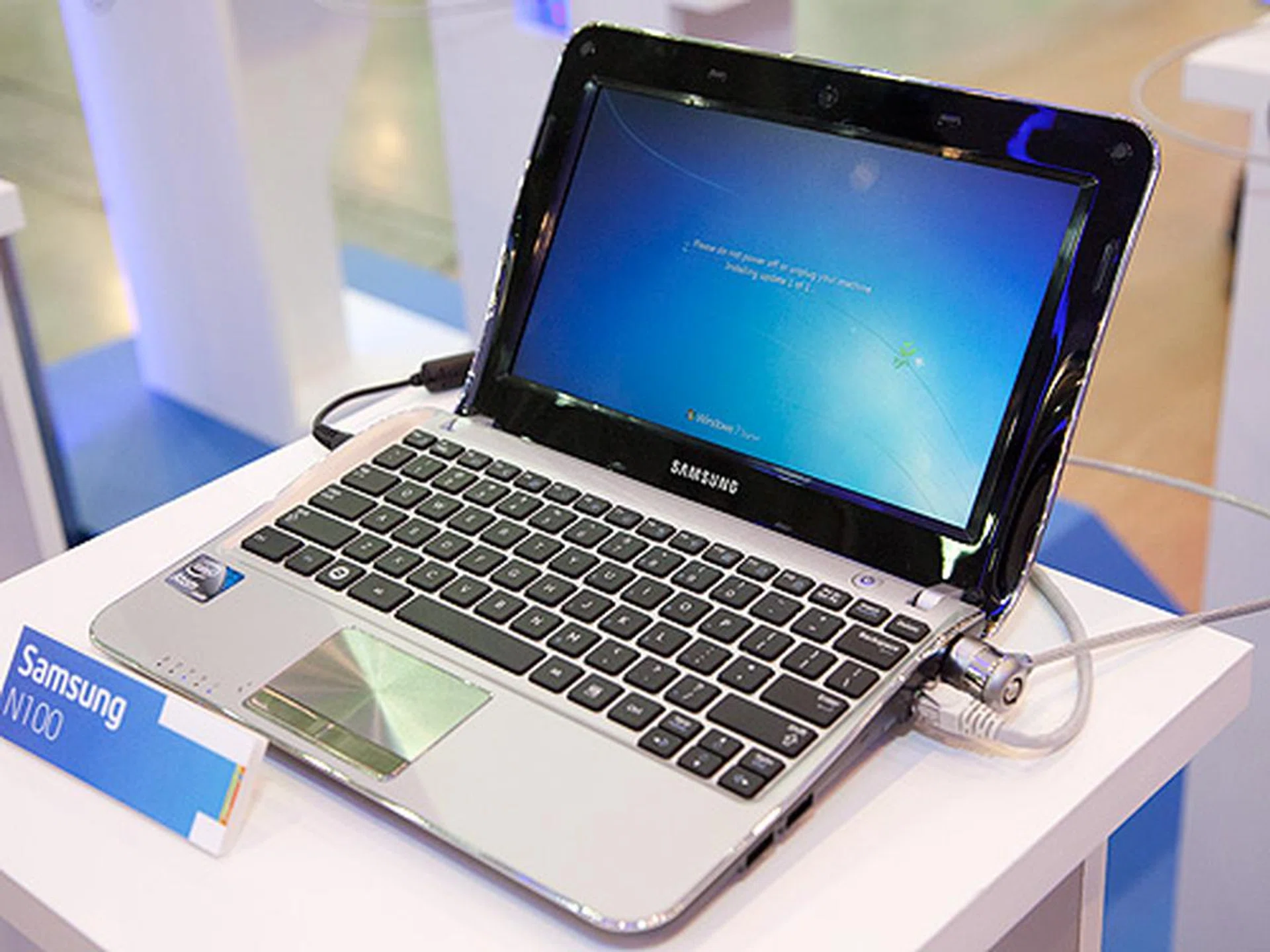
The Samsung N100 netbook based on the Atom N435 seen here running Microsoft Windows.
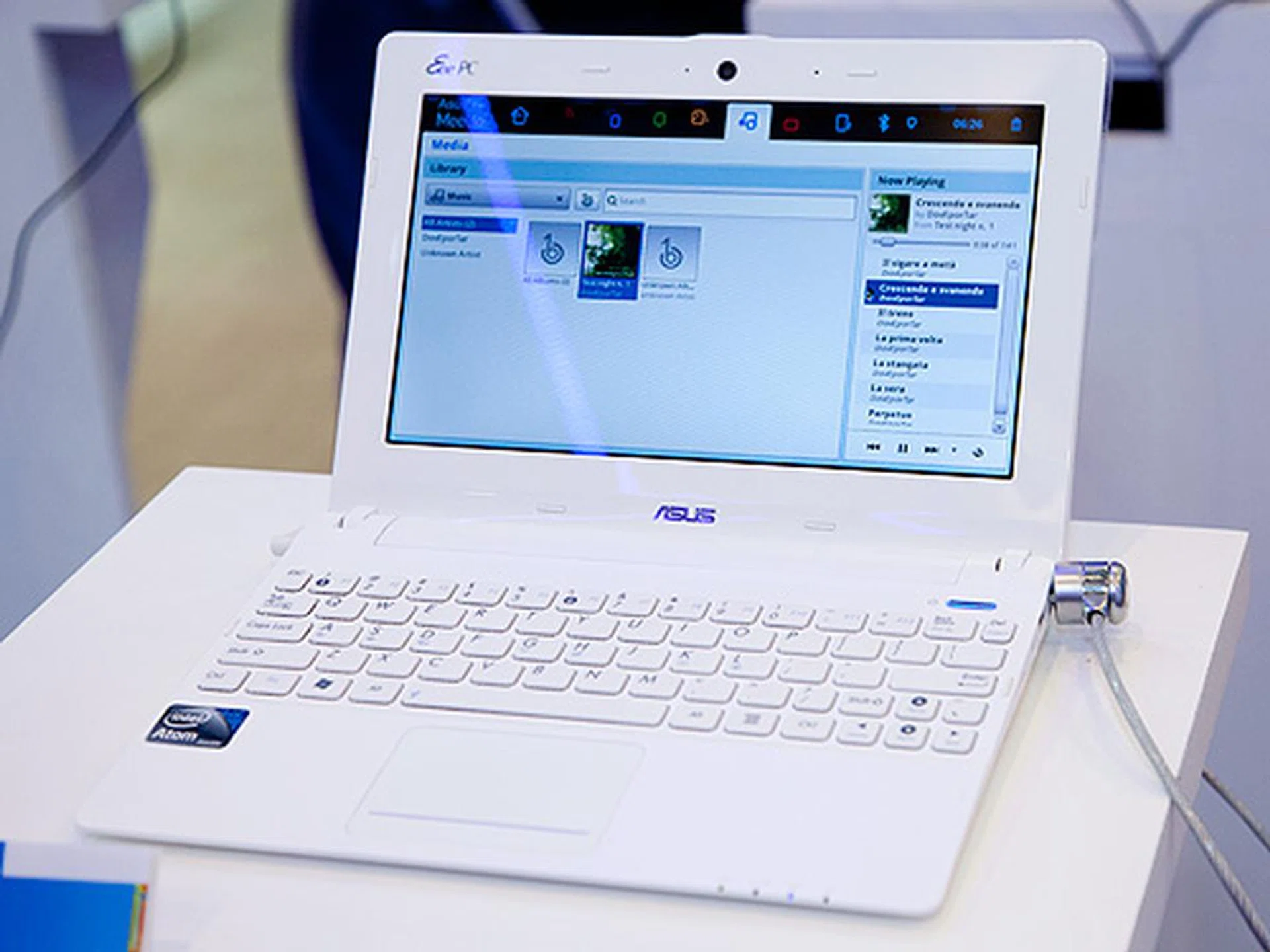
The ASUS EeePC X101, also based on the 1.33GHz single-core Atom N435 processor, is seen here running MeeGo.

The Lenovo IdeaPad S100 netbook with the MeeGo operating system.
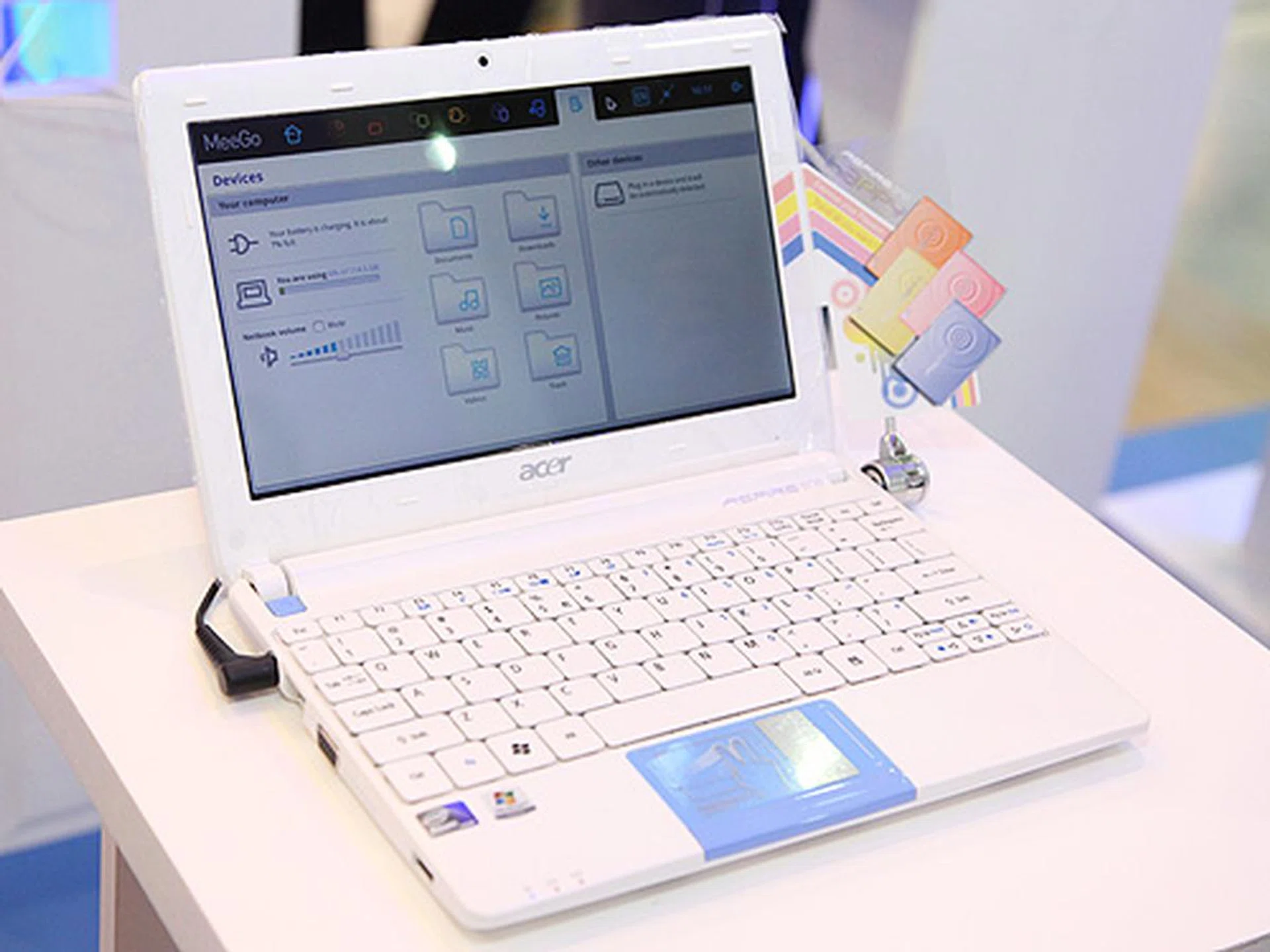
Acer's latest Aspire One Happy 2 is based on the latest Atom N435 processor. This fashion netbook comes with various hues of color.
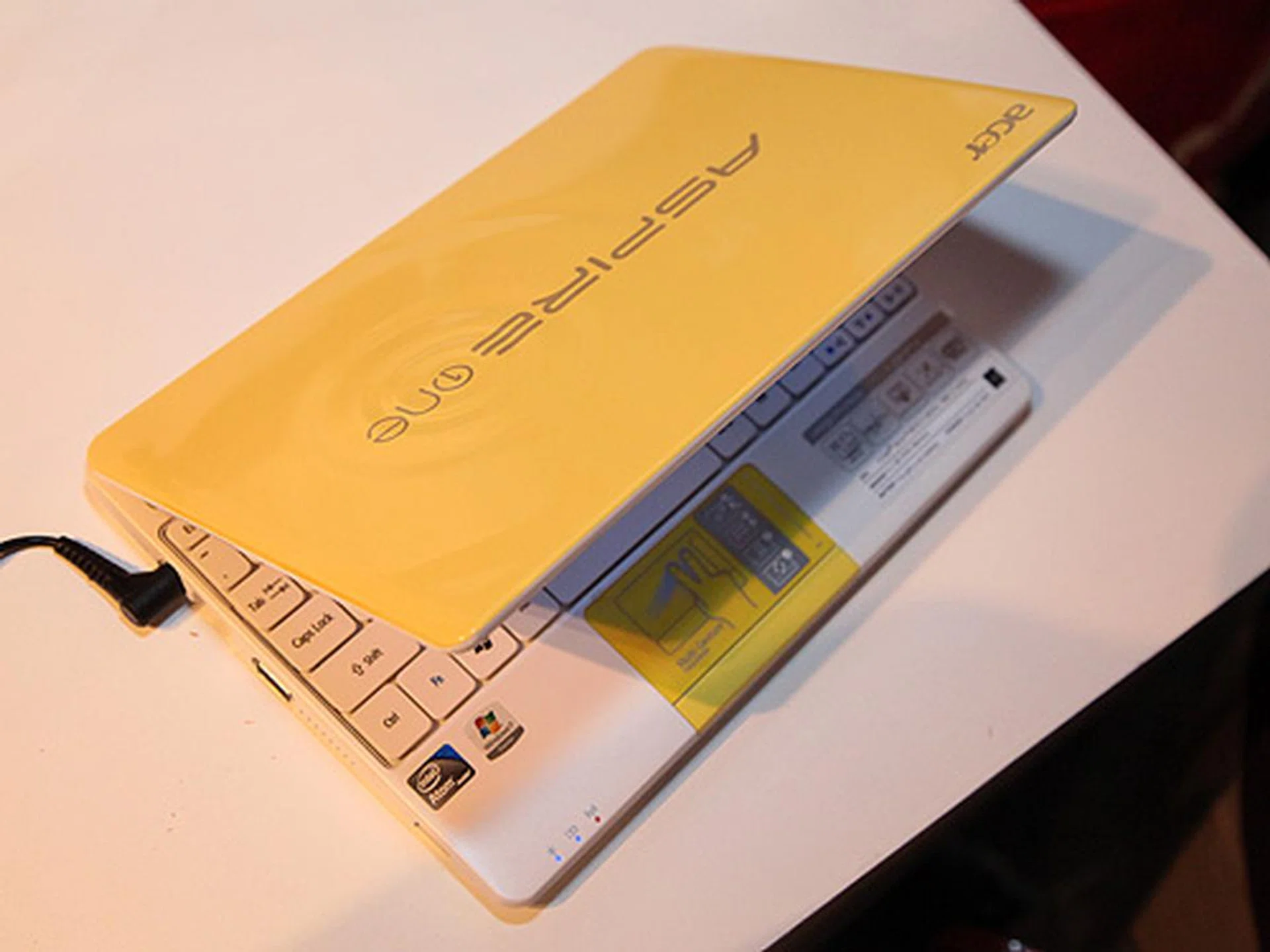
Here's another look at the brightly colored cover design of the Acer Aspire One Happy 2.
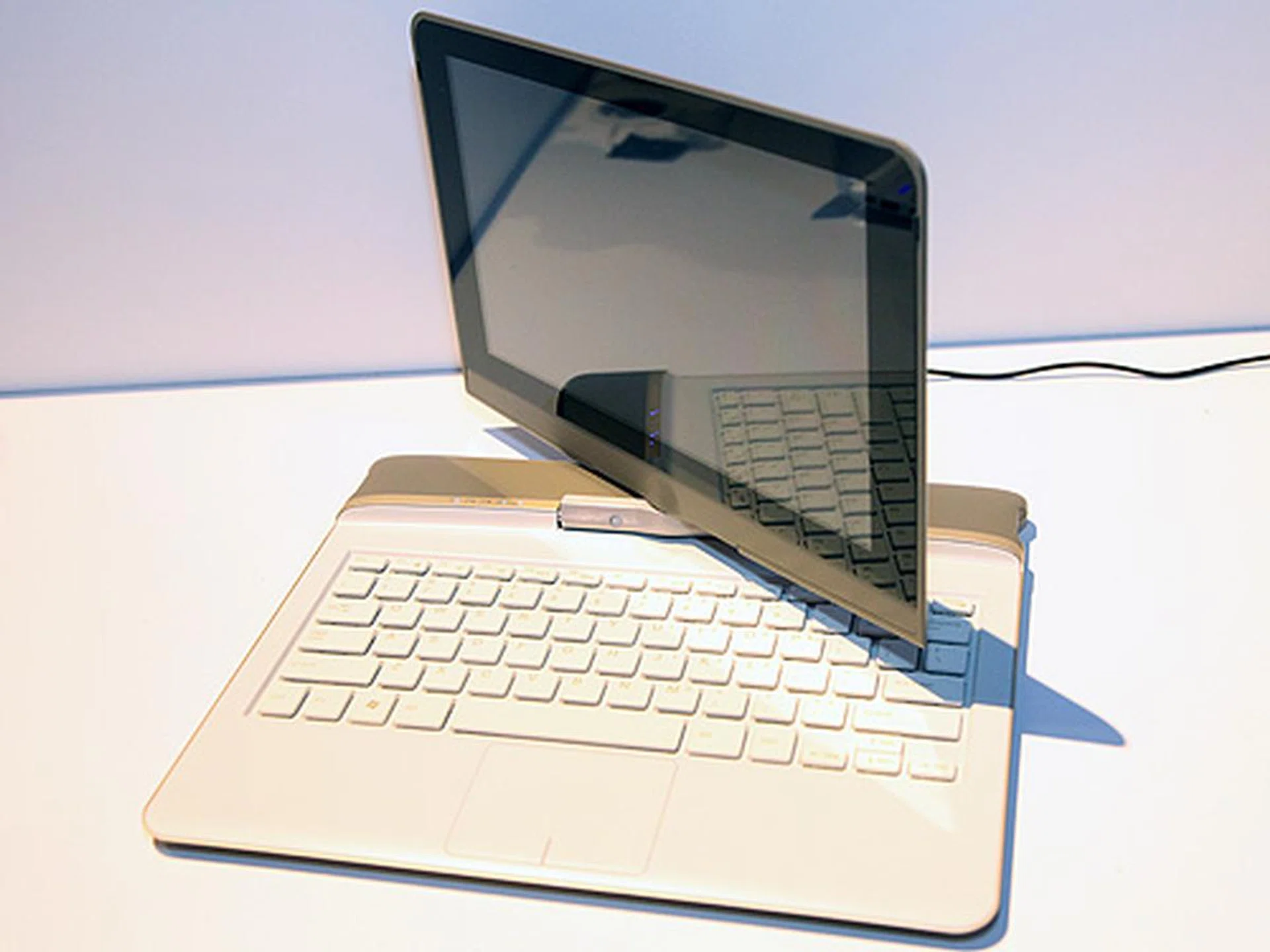
Intel introduced "Keeley Lake", a convertible design based on the upcoming “Cedar Trail" Intel Atom netbook platform. The design allows for inputs via keyboard or touch and will offer users with sleek form factors with thinness from 17mm-20mm and multi-touch capacitive displays. With flexibility to run operating systems including Chrome OS, MeeGo and Windows, Intel is enabling ODMs with the “Keeley Lake” design and we may probably see similar designs like this on sale in the near future.
Up Next: Medfield Tablets
For tablets and smartphones, Intel will introduce the upgrade to Moorestown known as Medfield. The new "Medfield" SoC will be Intel's first purpose-built 32nm platform which will be optimized for both low power and high performance. Expected to be shipped in the next 6-9 months, "Medfield" promises to deliver longer battery life, rich media and gaming, and advanced imaging capabilities. Devices based on this new SoC will start production later this year and we can expect to see new devices with sub-9mm designs that weigh less than 1.5 pounds in the first half of 2012. It will also support a range of operating systems, including Google Android and MeeGo. To prove the system's flexibility, Intel demonstrated a "Medfield" prototype running Google's Android 3.0 (Honeycomb) operating system.
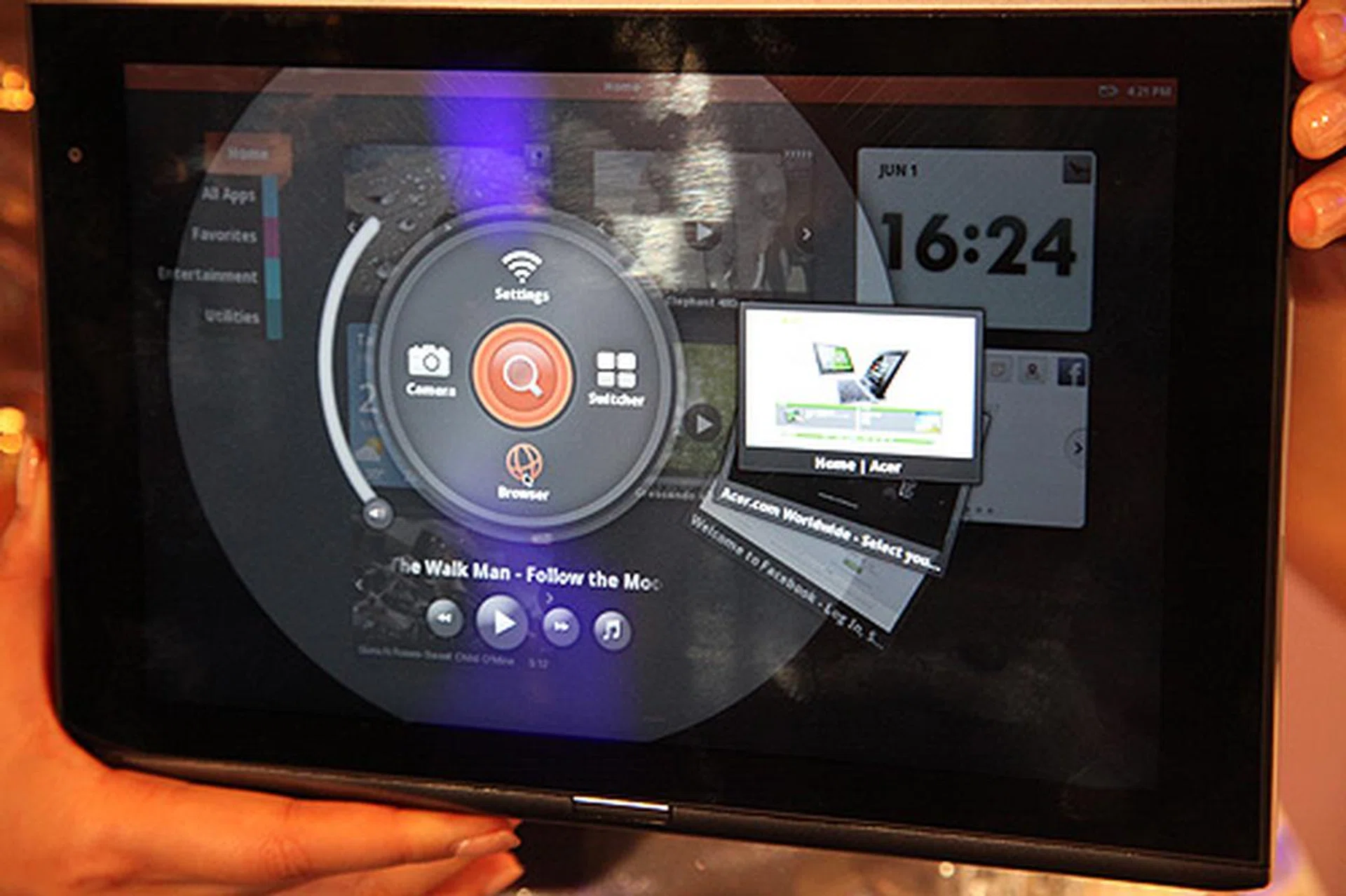
Acer demonstrated the new Acer Iconia M500 tablet based on the Atom processor. Here, you can see it running a customized UI of the MeeGo operating system.
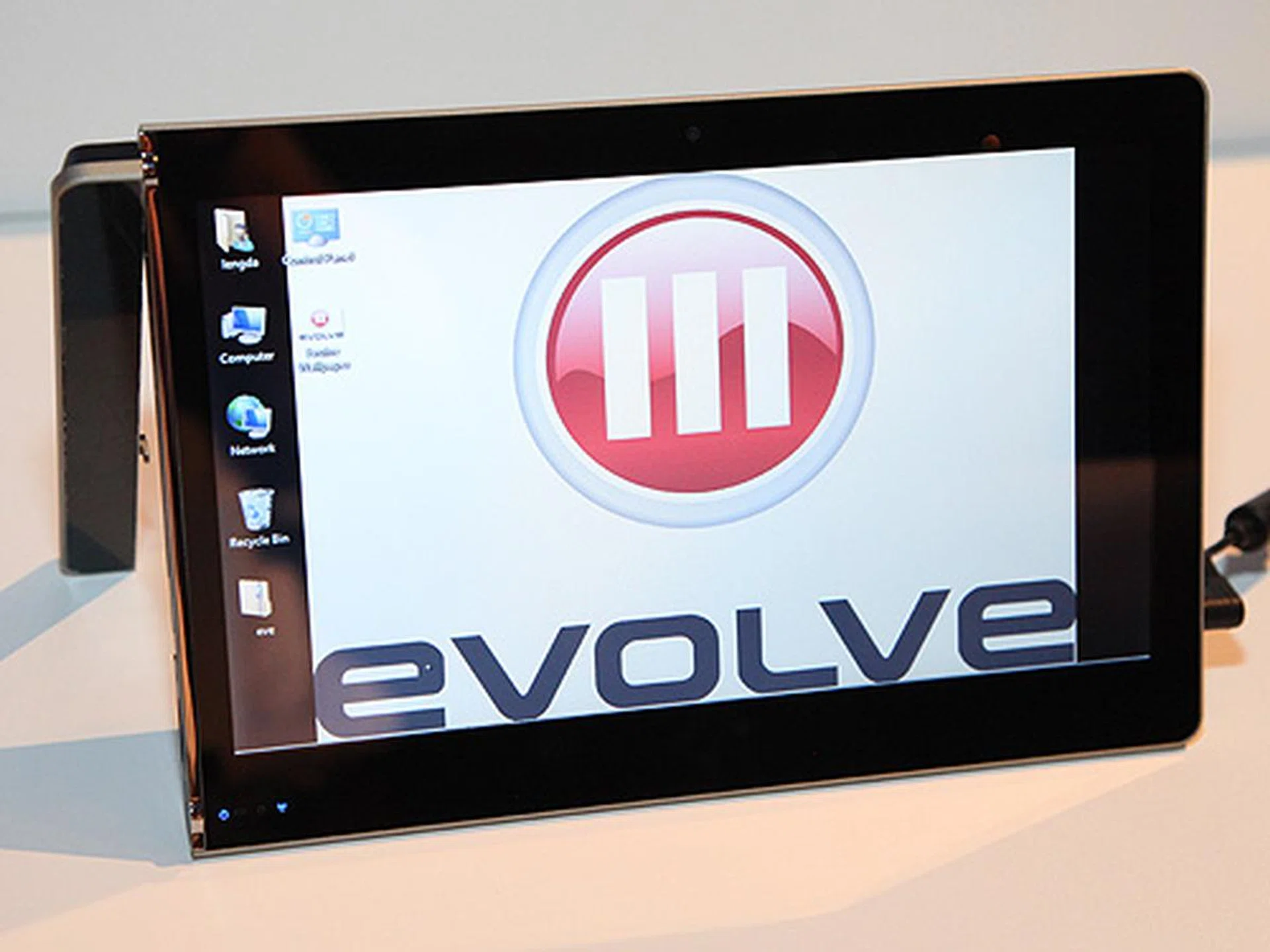
Evolve III's convertible tablet with an innovative built-in stand. It's based on the Oak Trail (Z670 processor) platform and it runs Windows.
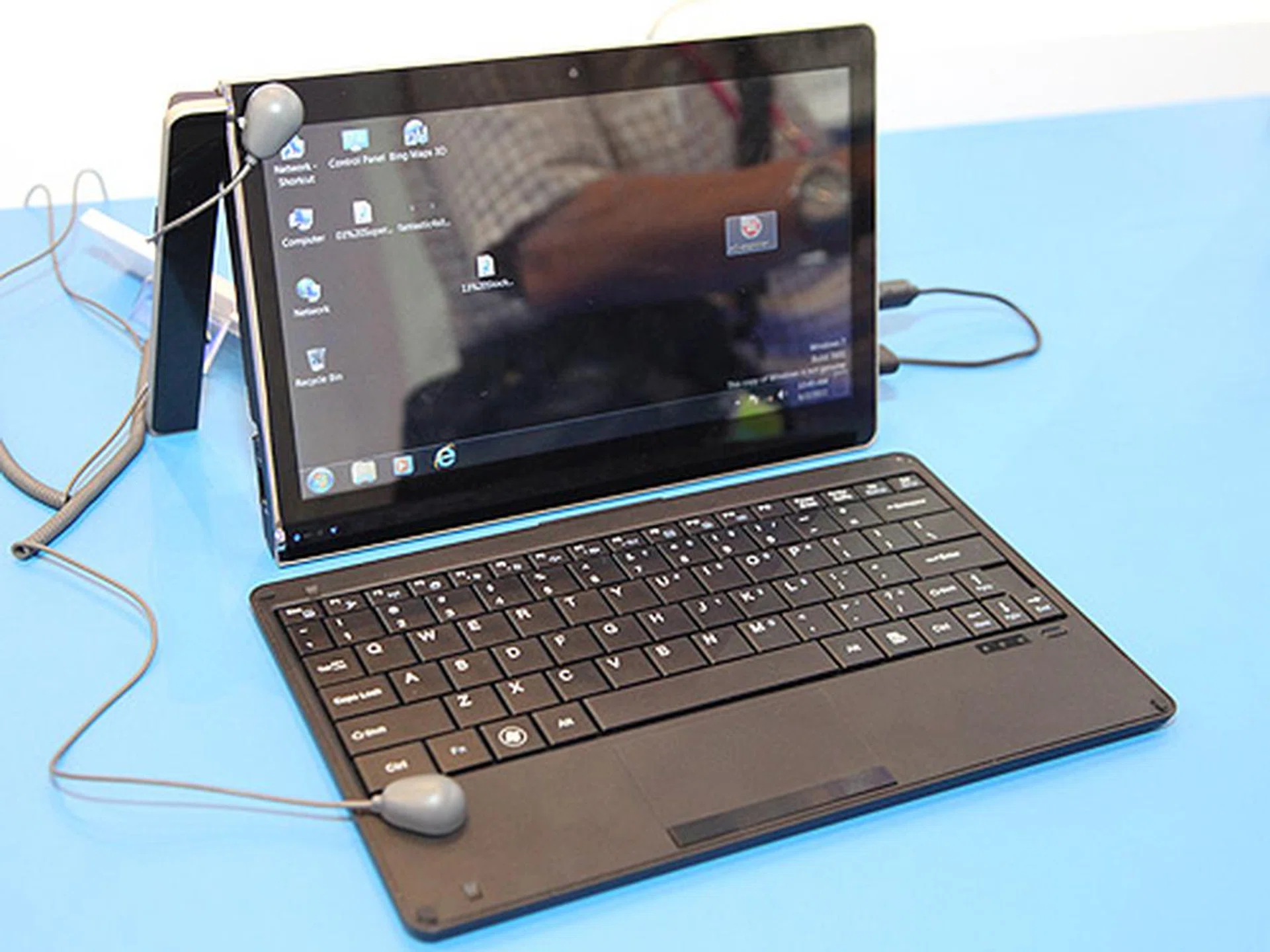
The Evolve III convertible also comes with an optional USB RF keyboard that can be folded to the tablet magnetically.
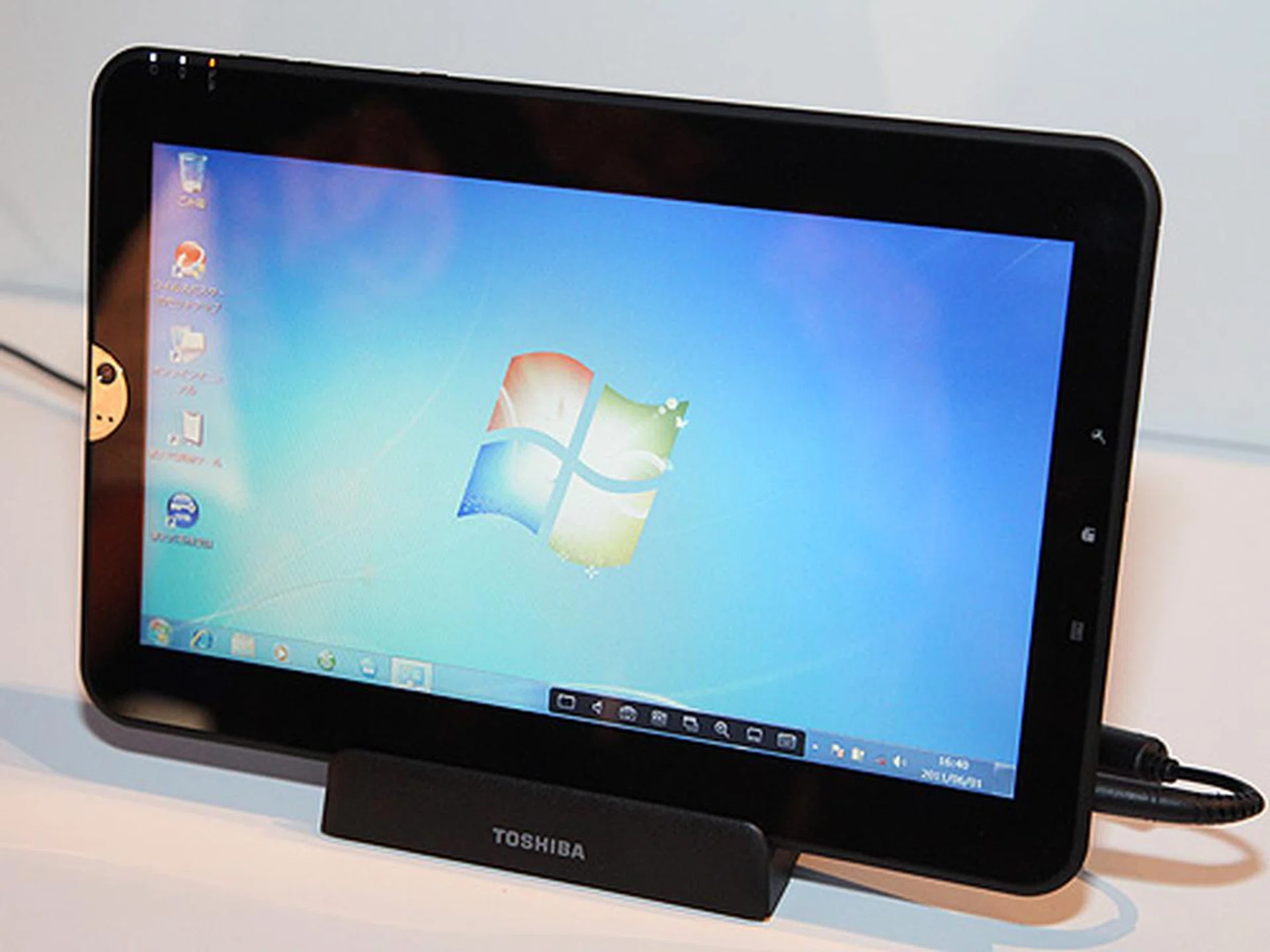
Toshiba's new WT110 based on the Atom Z670 processor demonstrated here with Windows 7.
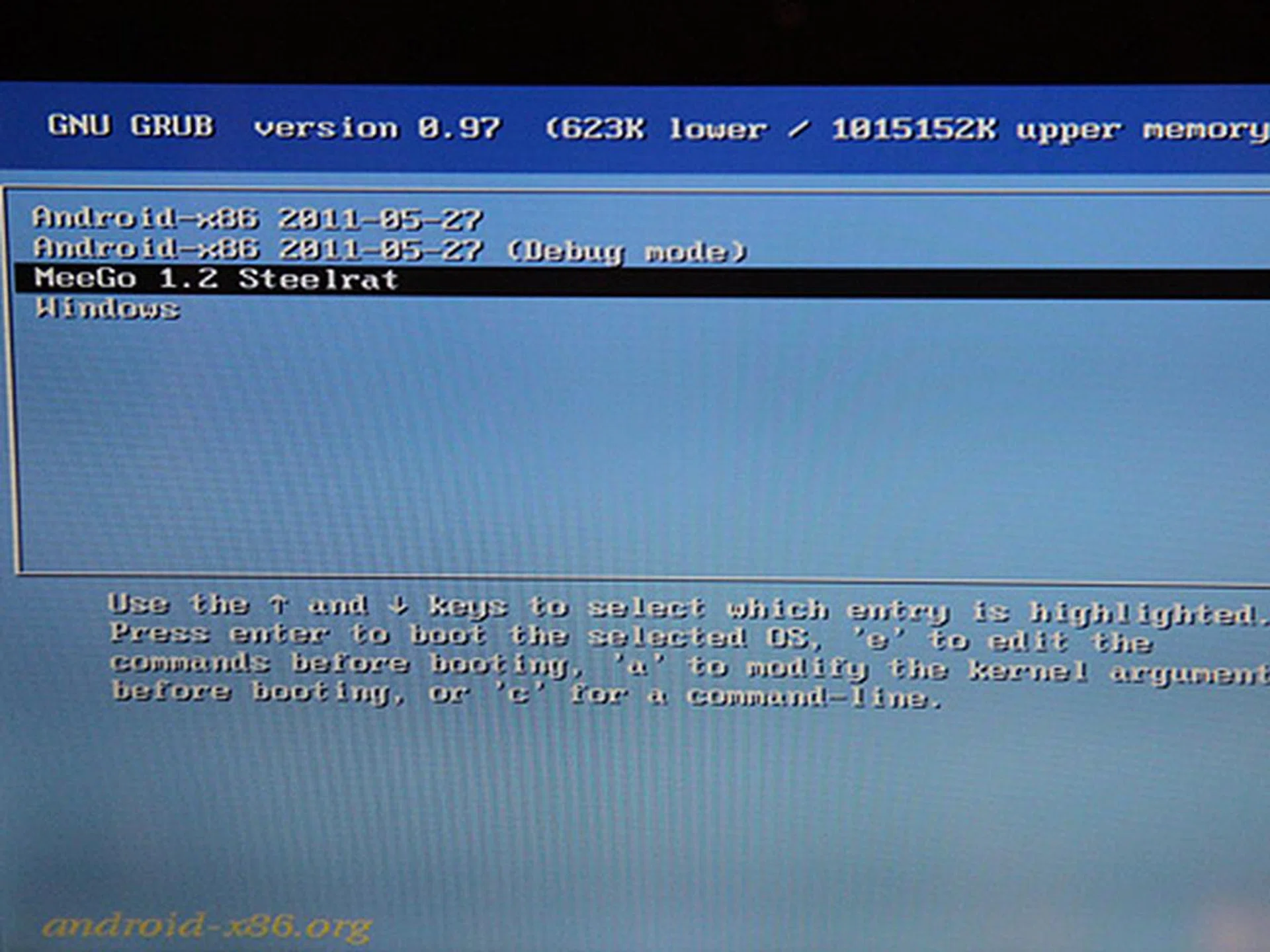
Fancy having all 3 supported operating systems on your tablet? Now you can!
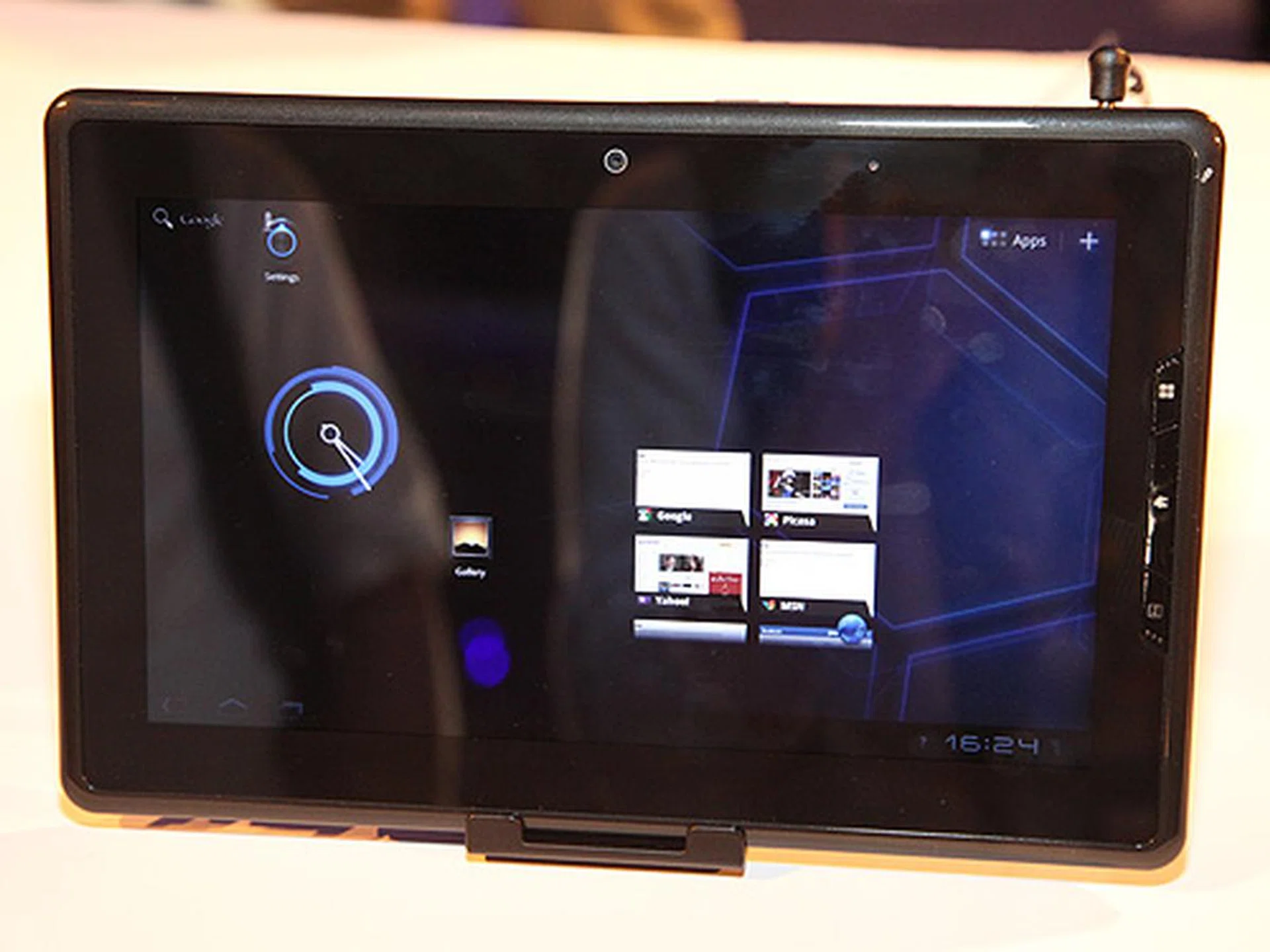
Intel's Atom tablet running Android's Honeycomb operating system.
Intel's Booth: X79 motherboards
At Intel's booth, a wall decked with motherboards based on their latest X79 chipset greeted us. The new chipset is for the upcoming Socket 2011 processor, also known as Sandy Bridge-E.
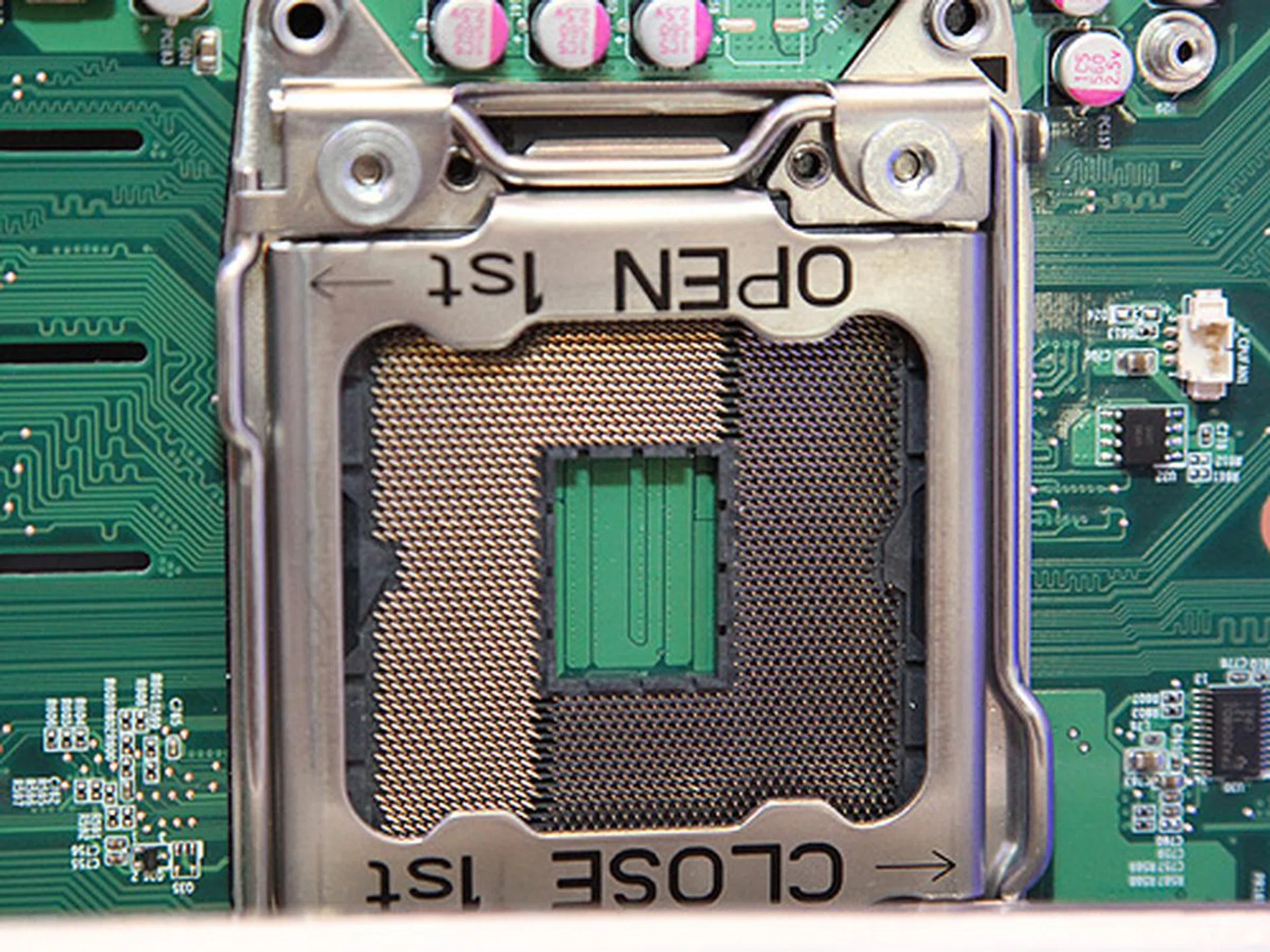
A close-up look at the new Socket 2011.
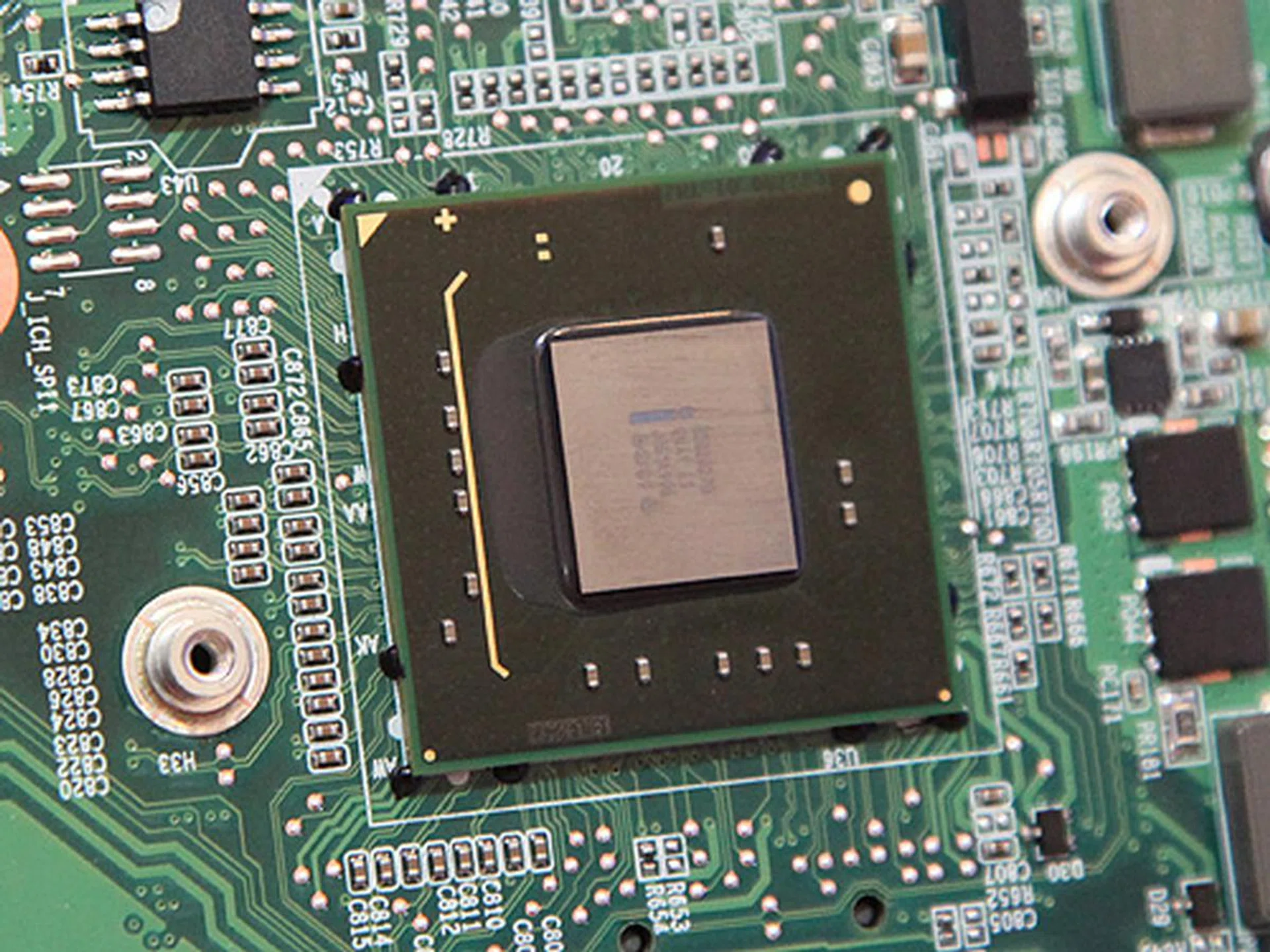
The Intel X79 chipset.
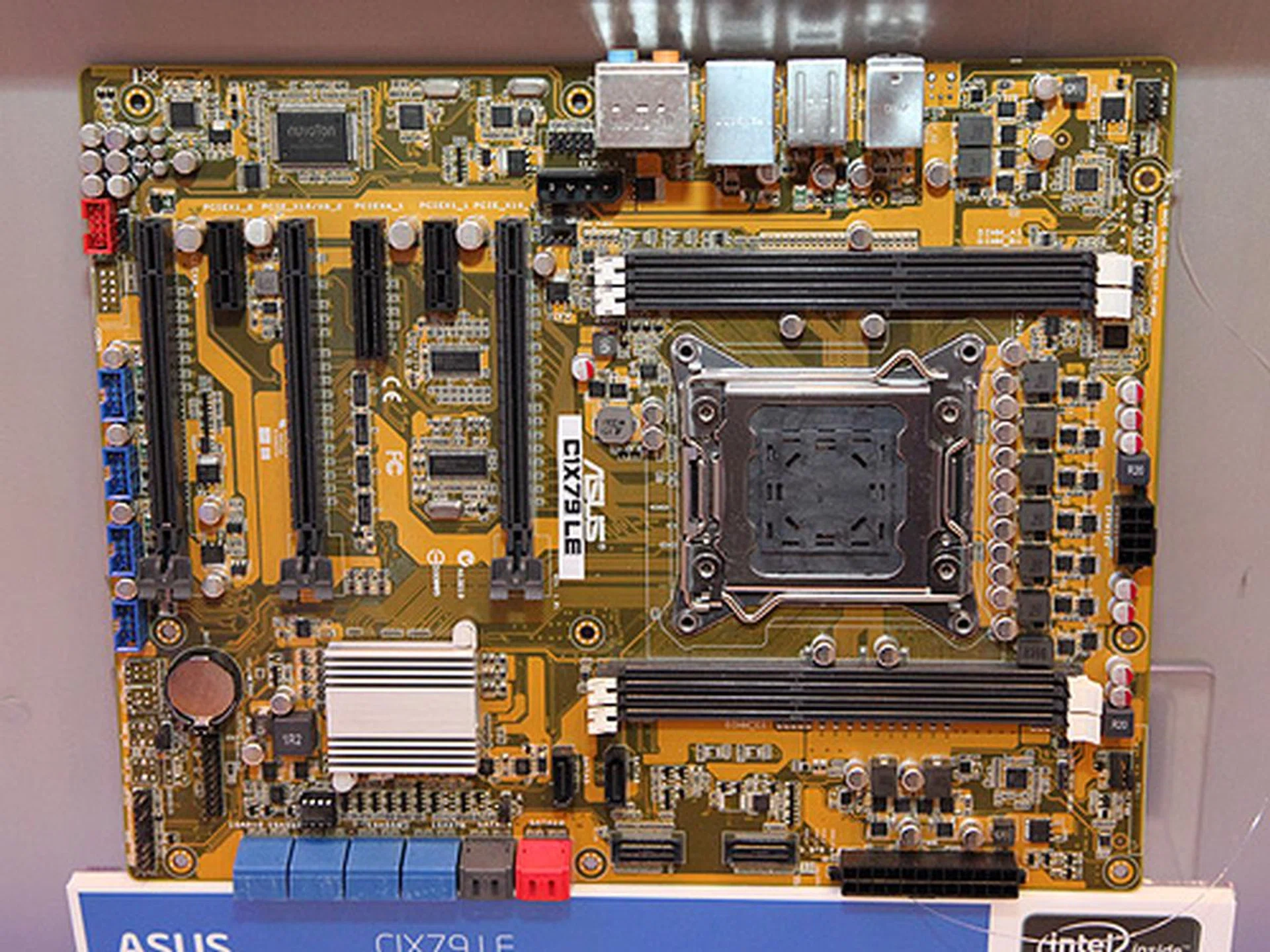
The ASUS CIX79 LE motherboard.
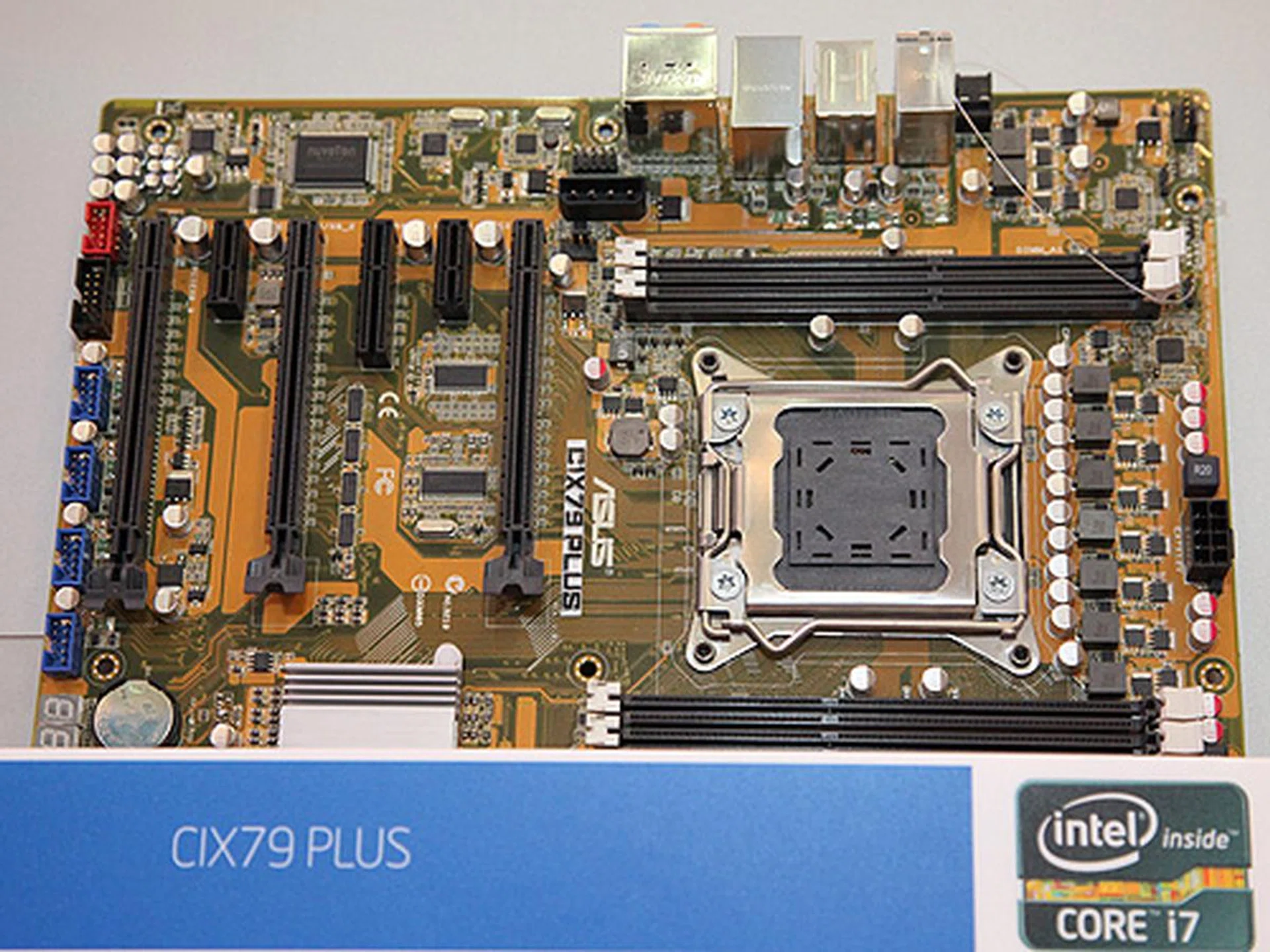
A higher end version of the X79 motherboard from ASUS, with the suffix Plus.
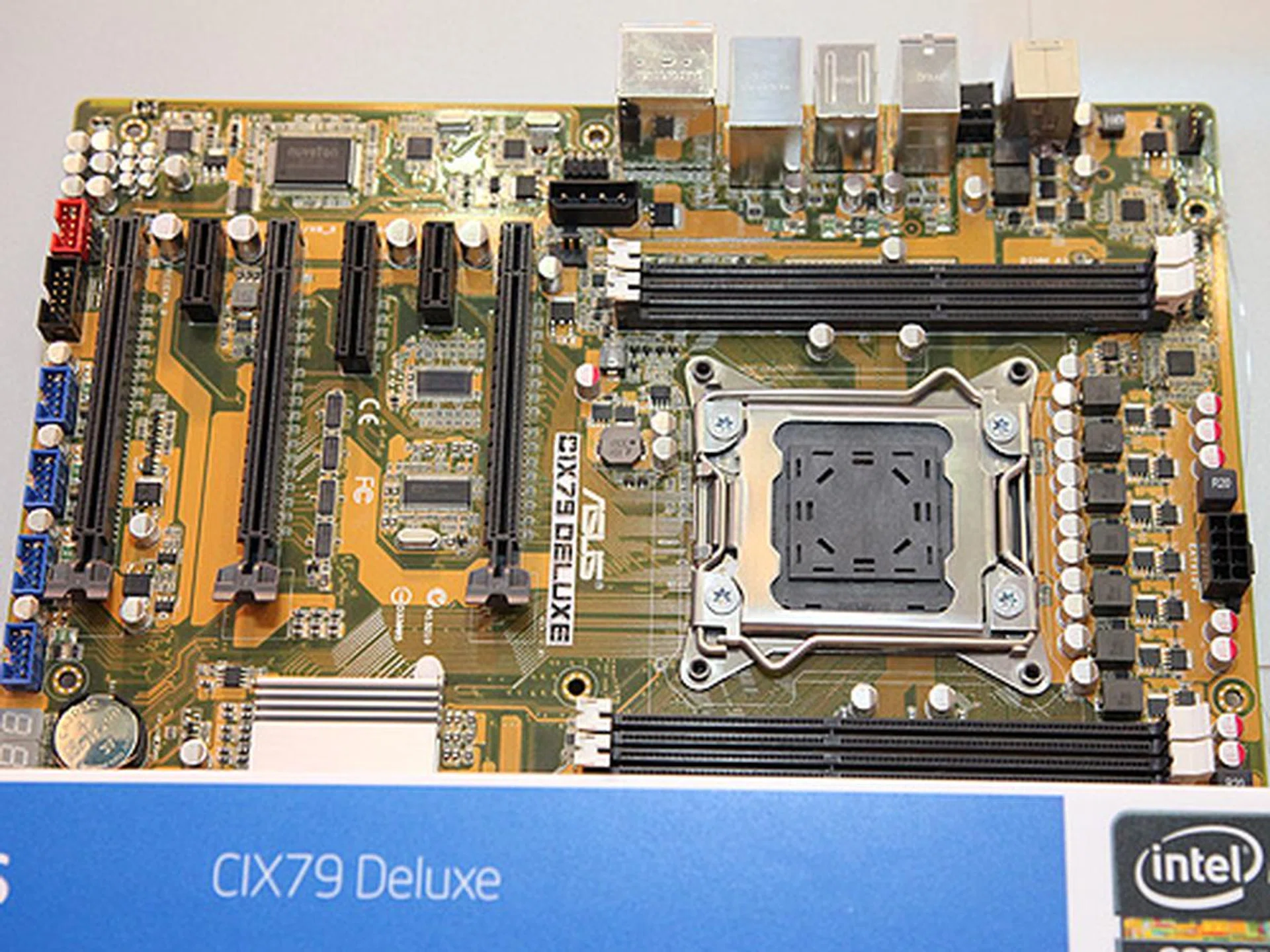
Yet another ASUS board, probably with features befitting the Deluxe label.
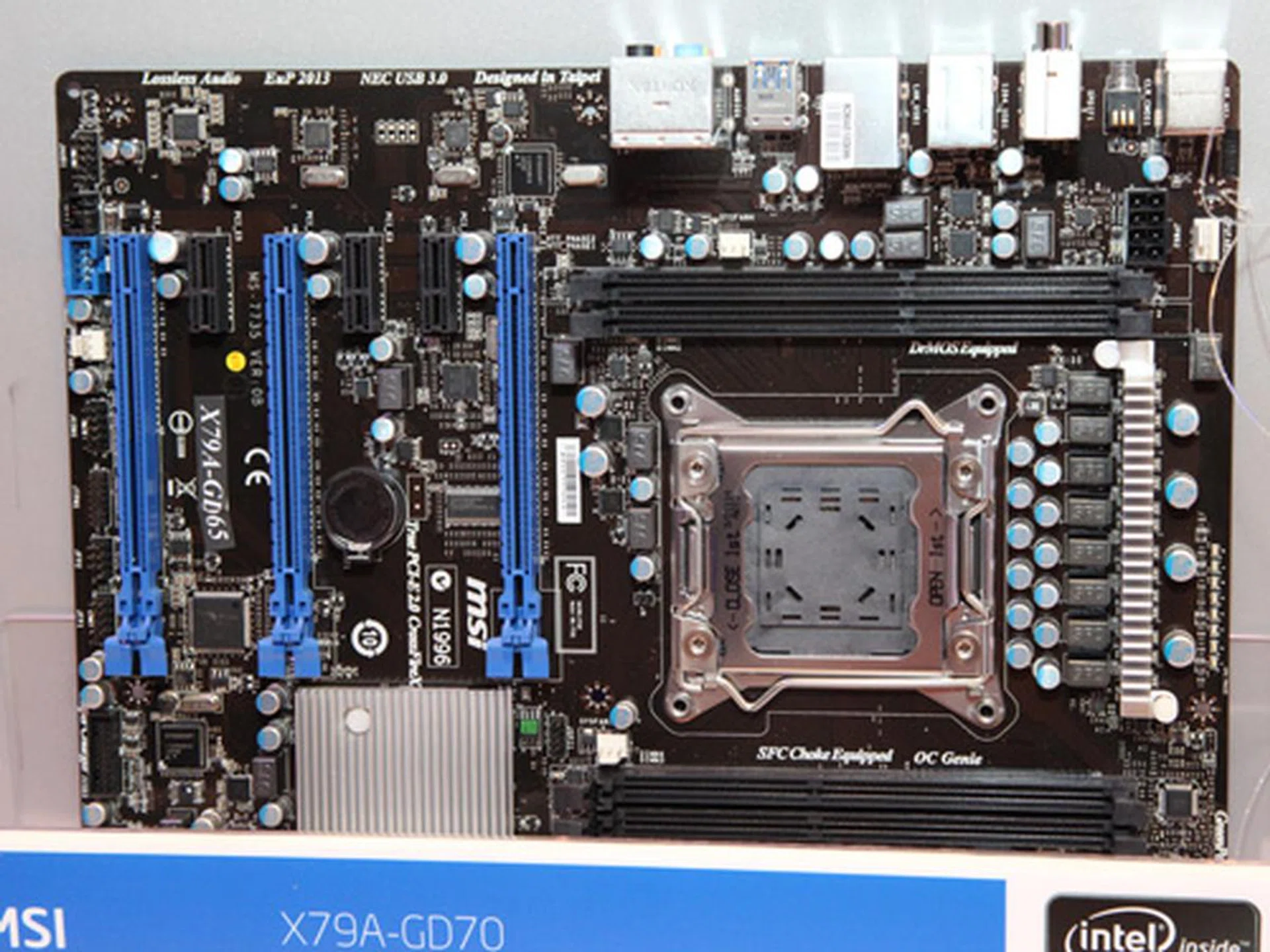
The MSI X79A-GD70.
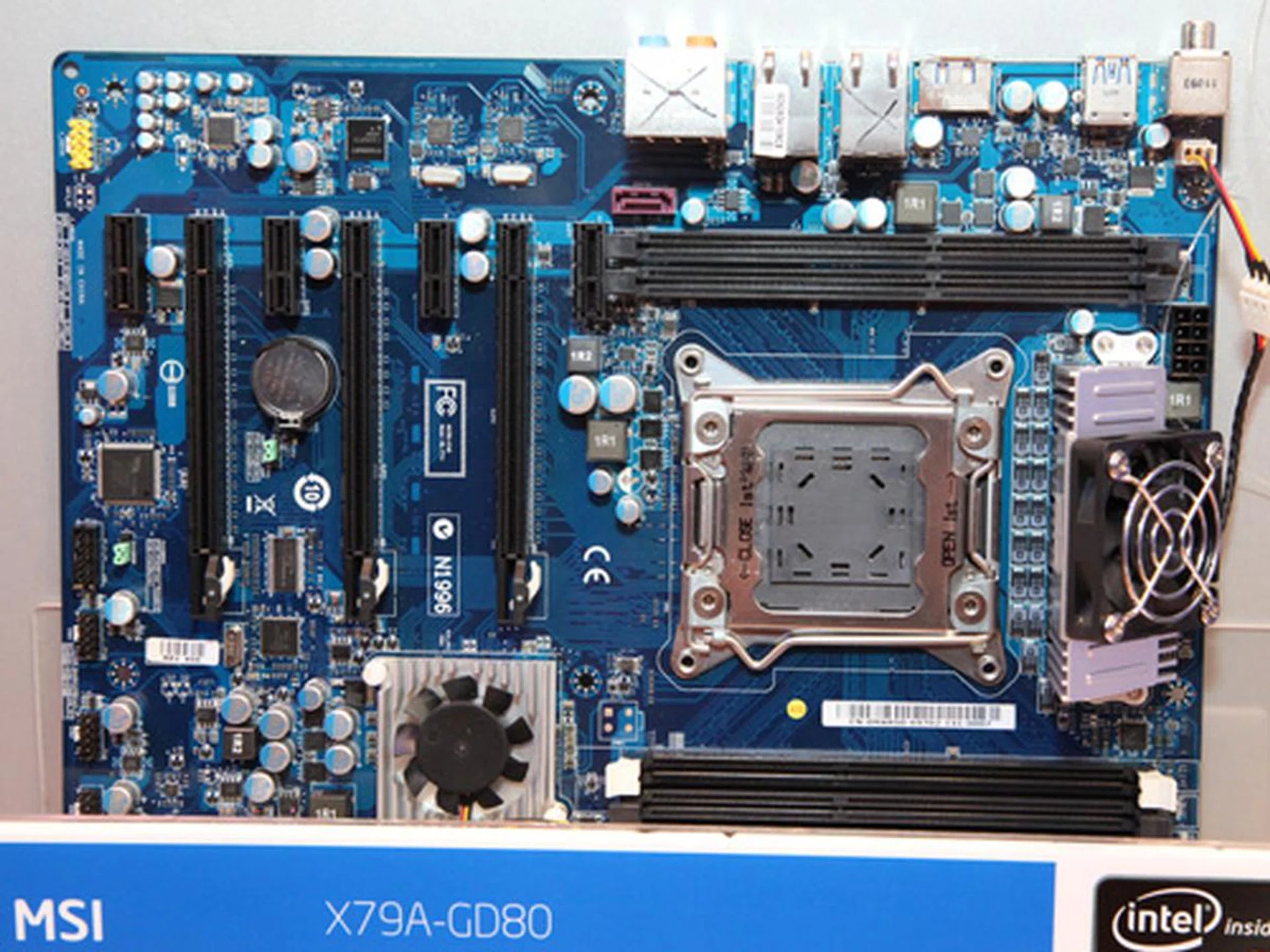
The MSI X79A-GD80 with more cooling fans and six memory slots (as opposed to the standard four slot design in most other boards).
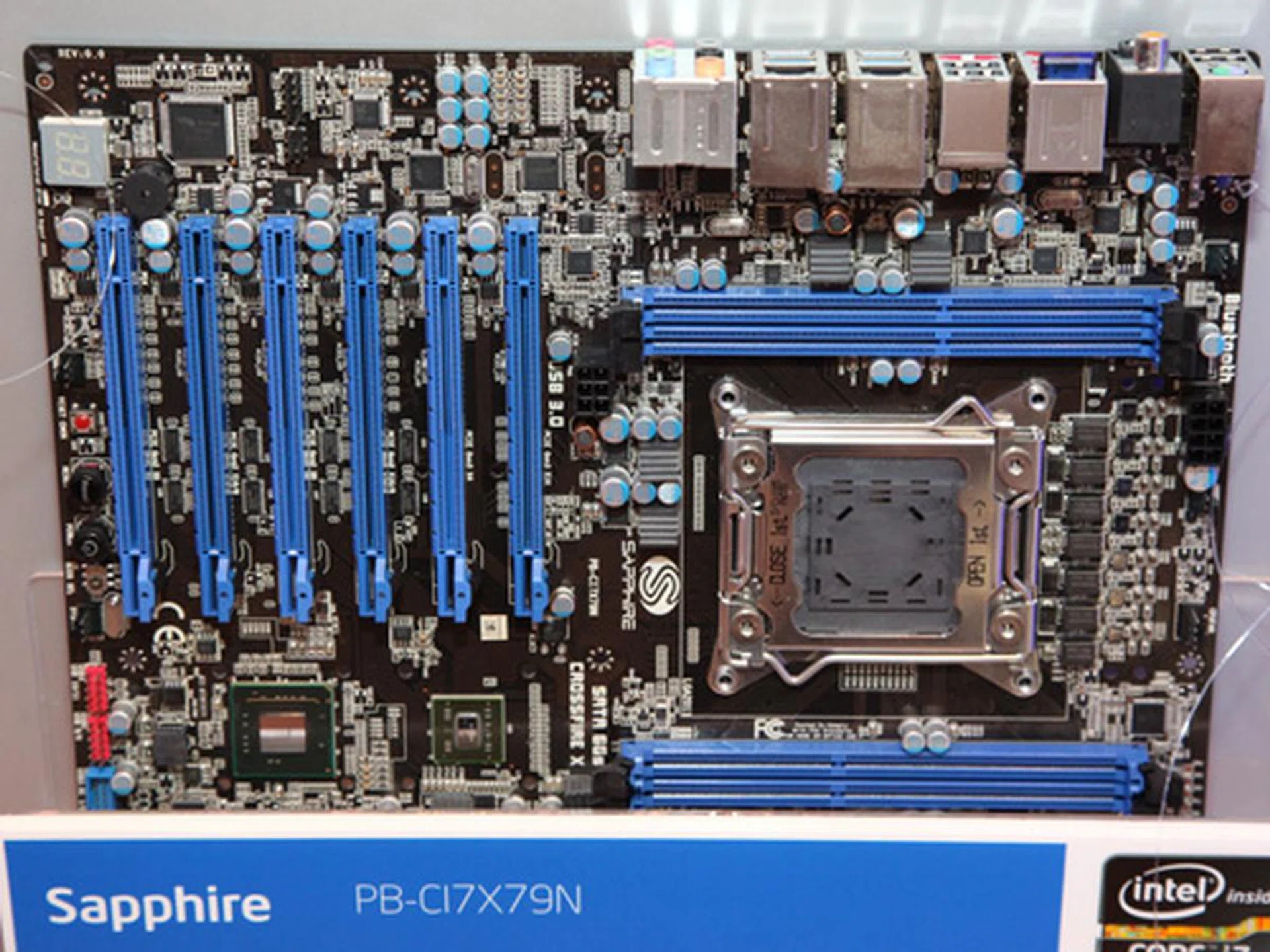
Sapphire's ambitious PB-CI7X79N with six full length PCIe slots.
Intel's Booth : Misc Stuff
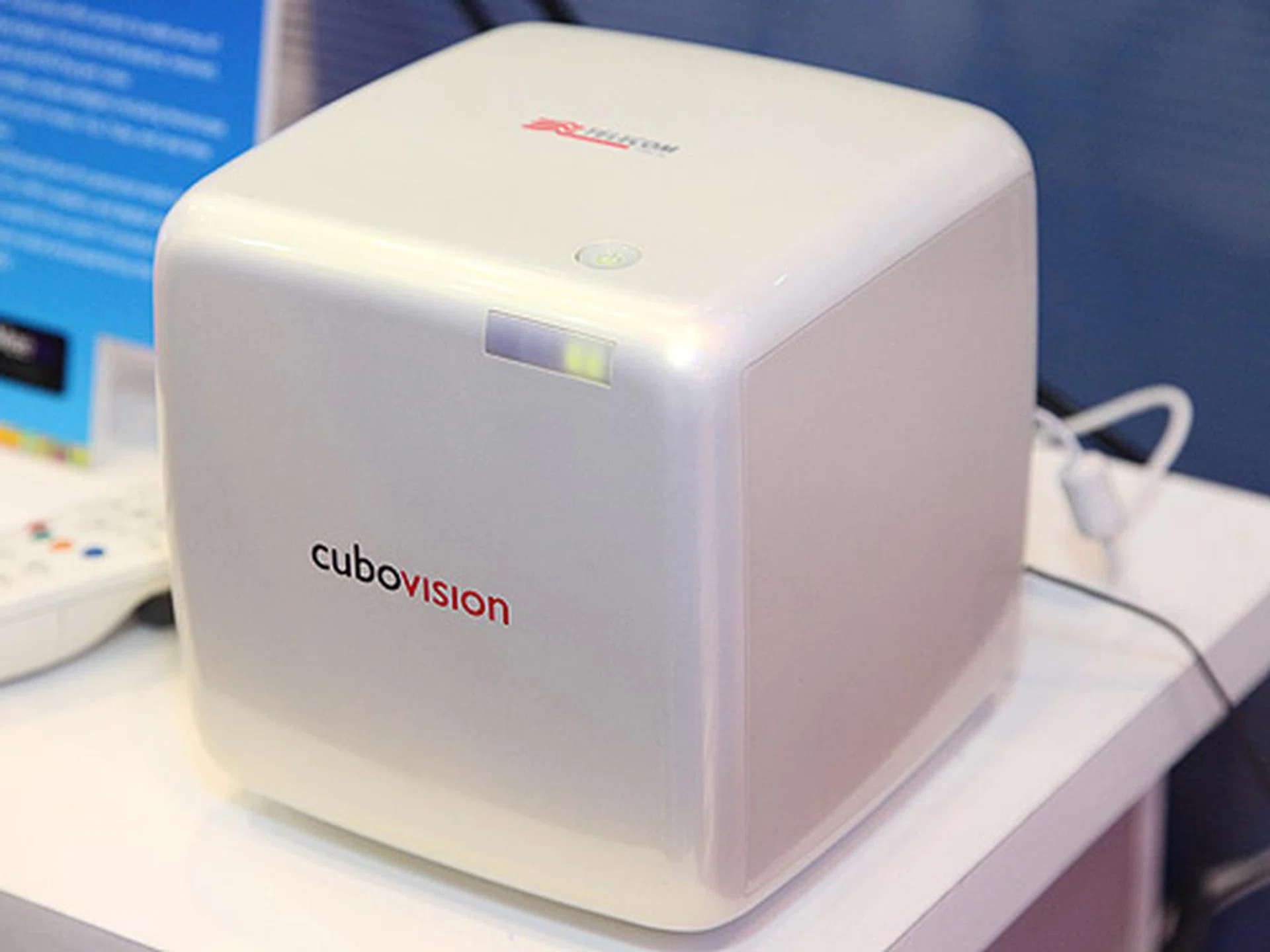
The CuboVision box is used by IPTV services to provide video on-demand services, internet as well as digital broadcasts. It's based on the Atom CE4100 and it's the first of such boxes built using MeeGo.
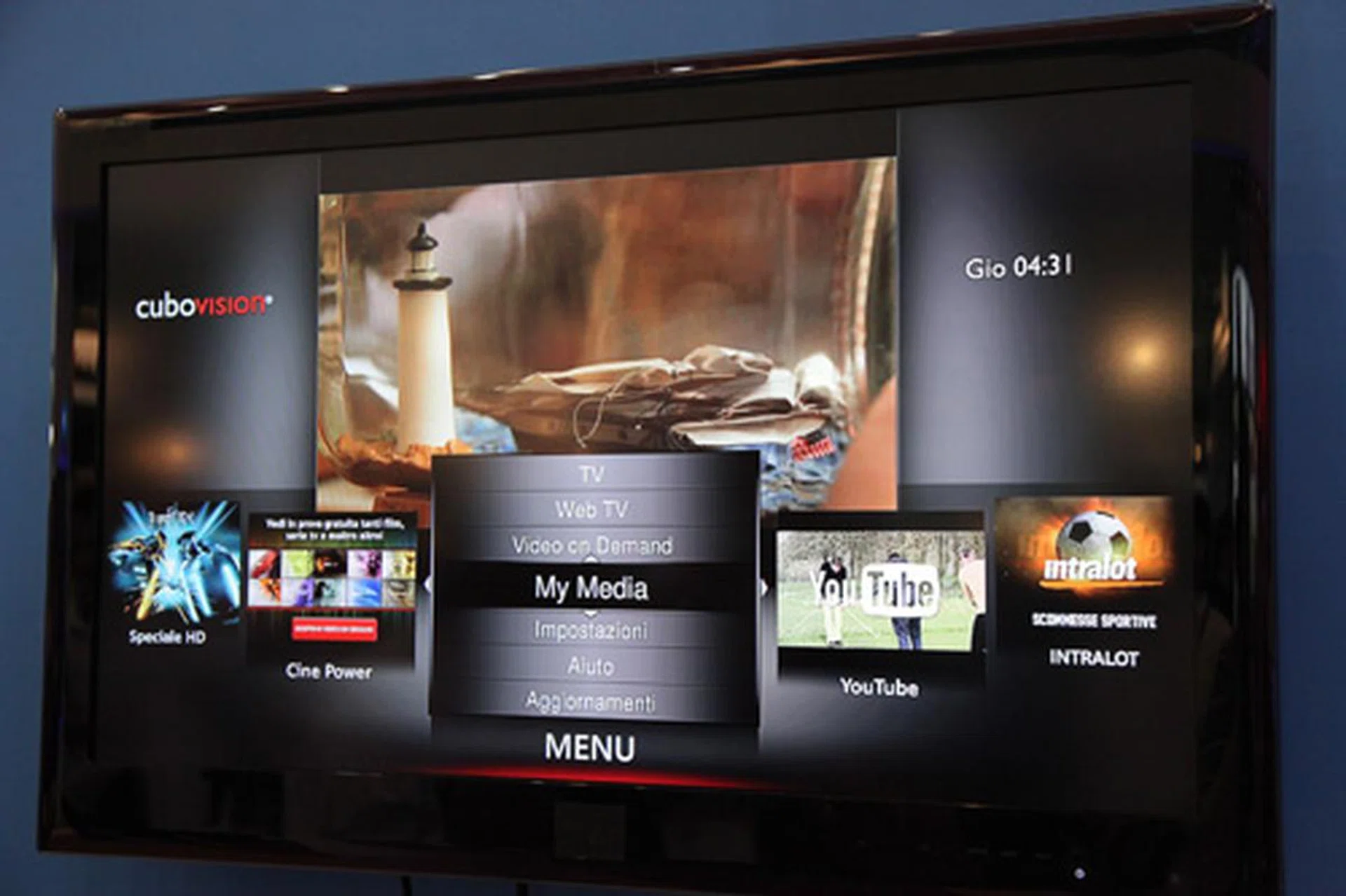
Here's a screen capture of CuboVision's user interface, powered by MeeGo.
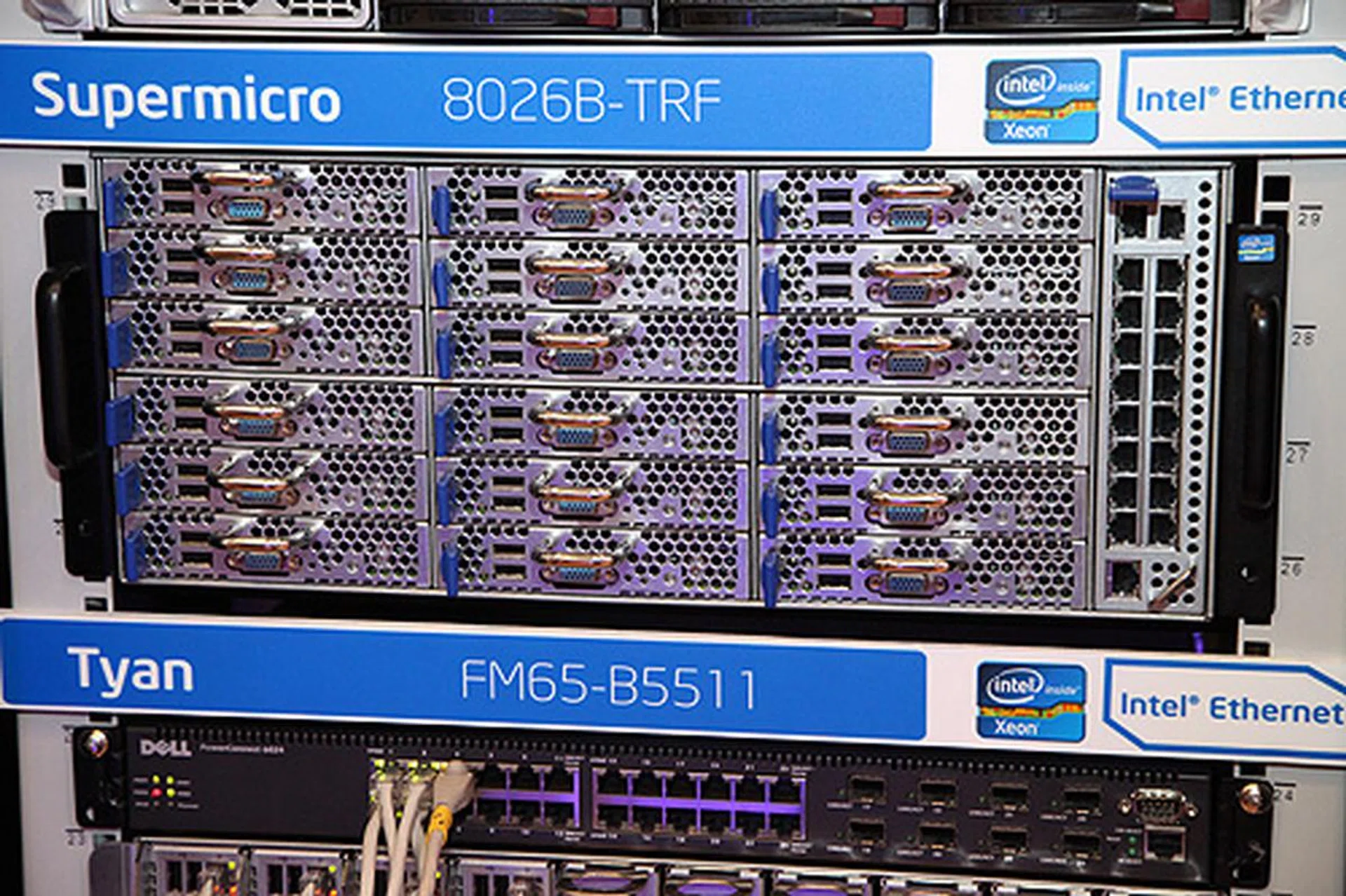
The latest Tyan FM65-B5511 is the recently released high density 4U micro server rack with 18 removable front-loaded compute nodes, an integrated 1 G-bit or 10 G-bit switch module, and redundant (2+1) hot-swap power supplies. Each individual node supports a single next-generation Intel Xeon processor, up to 32GB of un-buffered ECC DDR3 memory, and two 2.5” SSD or HDD drives.
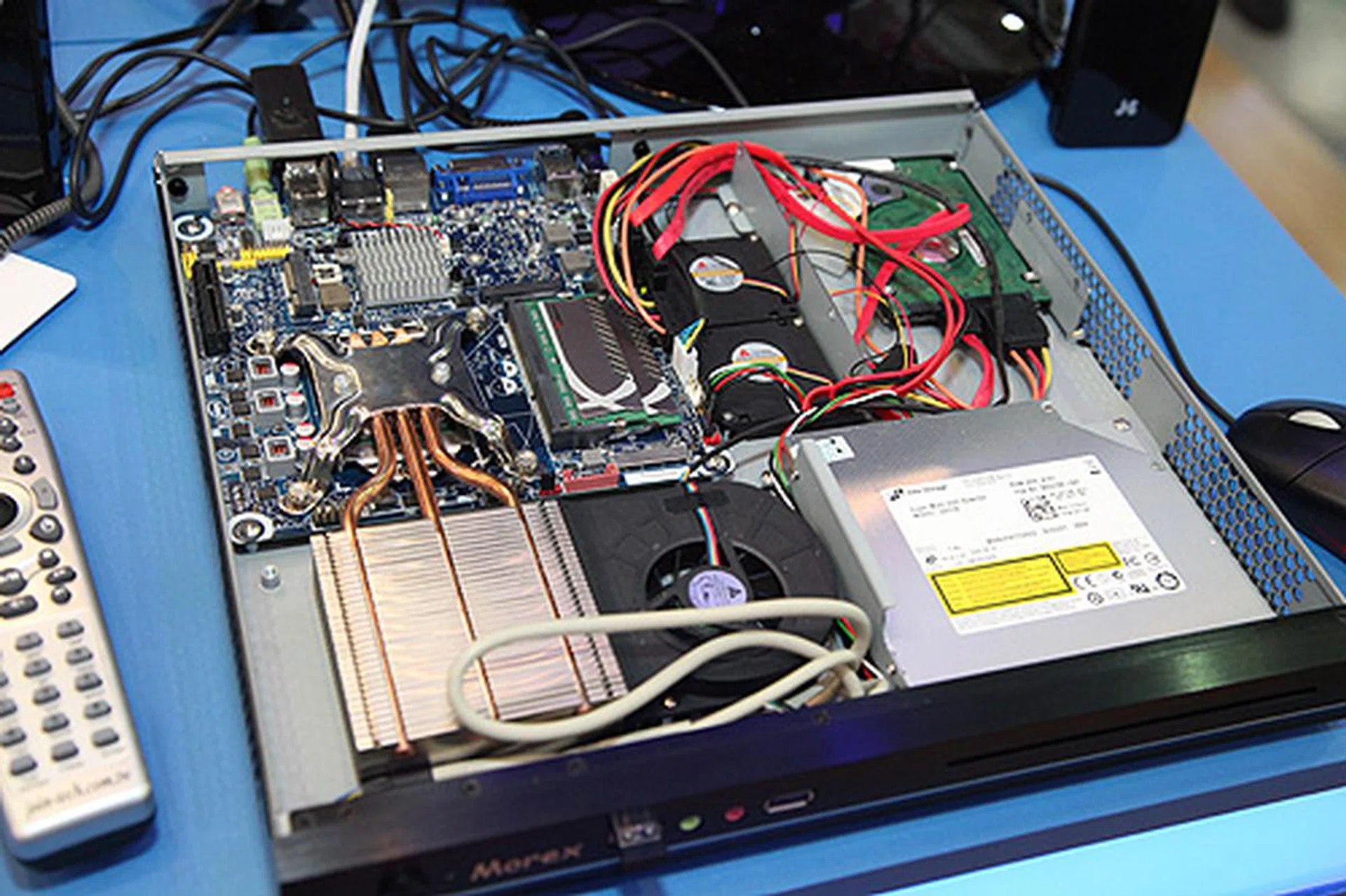
Intel's recently announced Thin Mini-ITX form factor boards are finding their way into new thin and light systems. Integration seems simple enough and it's enabling future slim desktops that you'll probably find in the retail channel or through individual system integrators.
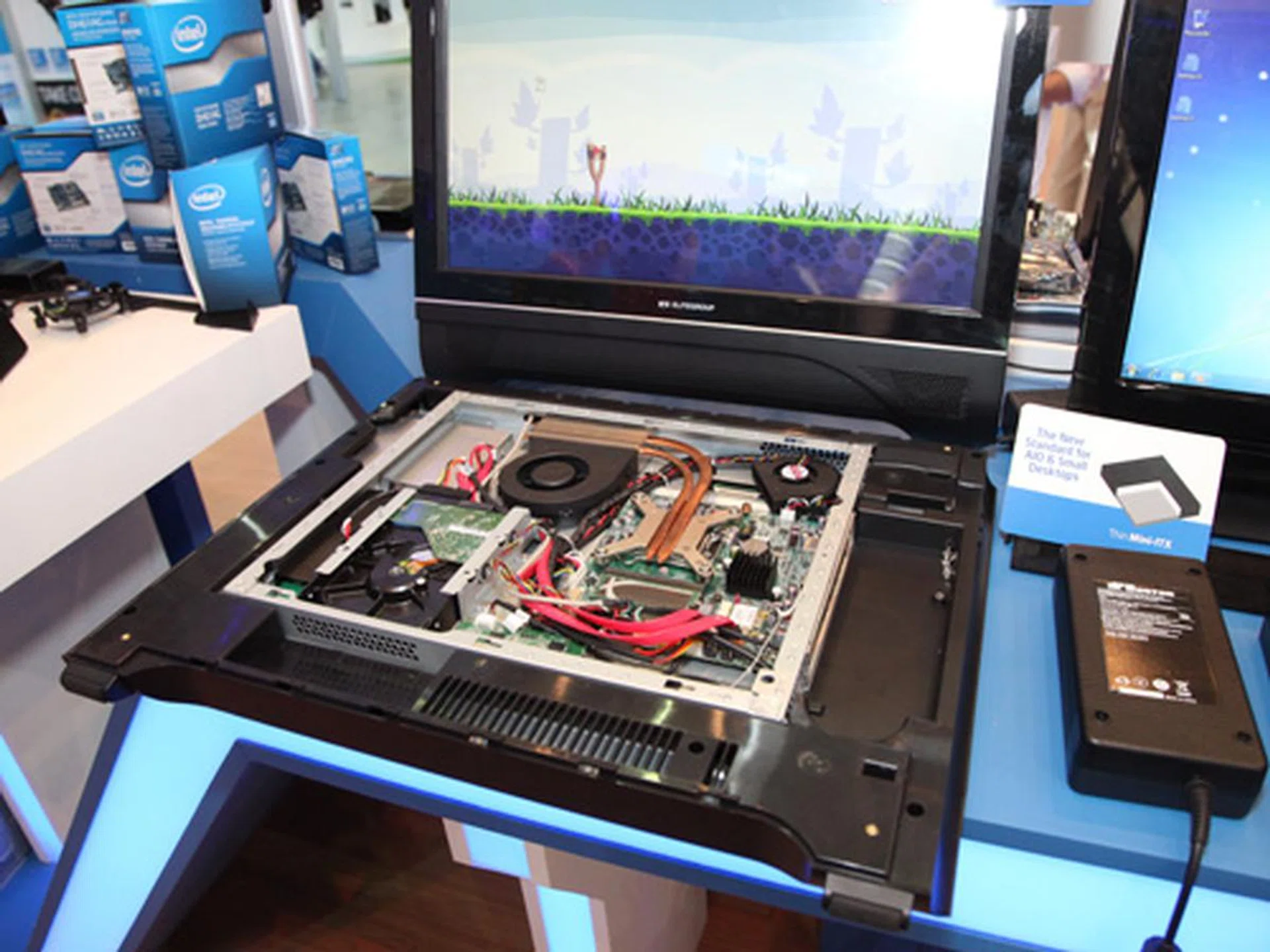
Here's another usage of the new Thin Mini-ITX form factor. OEMs will begin integrating this standard part into All-in-One PCs, enabling very highly configurable specifications, all the way to using a Core i7. Seen here is a sample from ECS. How about a DIY AIO PC, anyone?
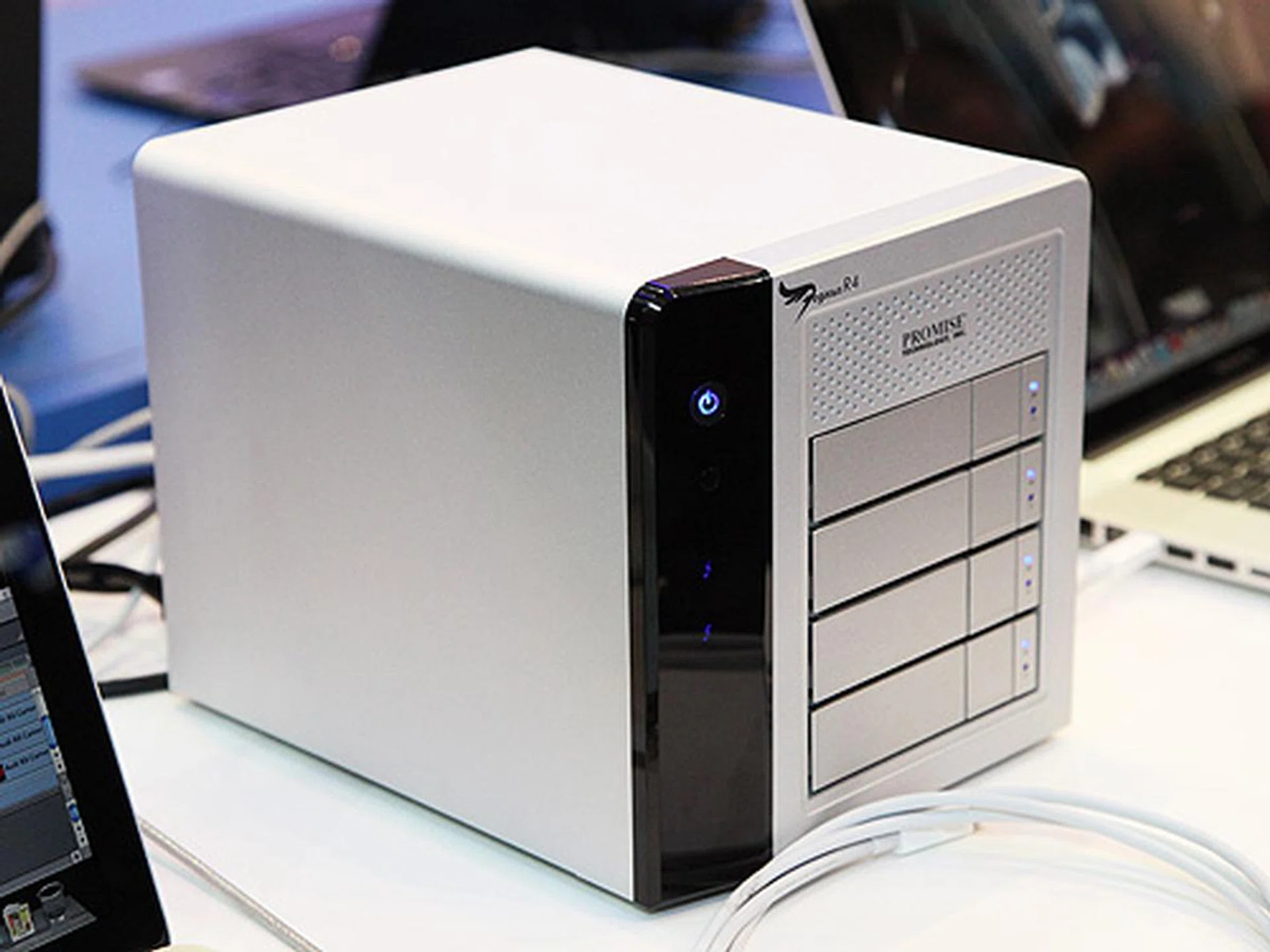
Also on demonstration at Intel's booth was Promise's Thundebolt 4-bay NAS device. This baby is capable of delivering high data throughput, exceeding 700MB/s.
Our articles may contain affiliate links. If you buy through these links, we may earn a small commission.