
All the NVIDIA GeForce GTX 1050 and 1050 Ti custom cards announced so far (Updated)
On Tuesday, NVIDIA unveiled the GeForce GTX 1050 and 1050 Ti for the most budget-conscious gamers. But because there's no Founders Edition card this time around, we'll be seeing custom cards roll out directly from NVIDIA's board partners. Here's a look at what has been announced so far.

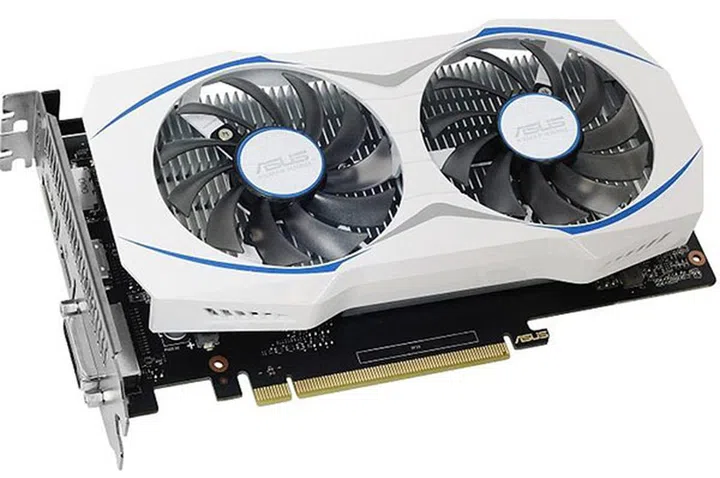
ASUS Dual GeForce GTX 1050 Ti. (Image Source: ASUS)
Updated on 14 Nov 2016: Added local price for the ASUS Expedition GeForce GTX 1050 Ti.
Updated on 27 Oct 2016: Added local prices for select ASUS and Palit cards.
Originally published on 21 Oct 2016:
It’s time again for yet another custom card round-up. On Tuesday, NVIDIA unveiled the GeForce GTX 1050 and 1050 Ti for the most budget-conscious gamers, and it was clear from the outset that these cards are intended to challenge AMD’s Radeon RX 400 series cards head on.
Starting at US$109 and US$139 respectively, both cards can reportedly offer around 60fps in most titles at 1080p, including new games like Gears of War 4 at Medium settings. That said, there are no Founders Edition models this time, and the cards will roll out direct from NVIDIA’s board partners on 25 October (local availability may vary from brand to brand).
Here’s a look at what you can expect to see in the coming weeks.
ASUS
There’s an impressive array of cards from ASUS, surprising considering that this is a budget-oriented card. The company announced four different series of cards in total, two of which we’re seeing for the first time:
- ASUS ROG Strix GeForce GTX 1050/1050 Ti
- ASUS Expedition GeForce GTX 1050/1050 Ti
- ASUS Dual GeForce GTX 1050/1050 Ti
- ASUS Phoenix GeForce GTX 1050/1050 Ti
The Strix cards are a familiar sight, featuring a dual-fan DirectCU II cooler and semi-passive fans that will power down during less demanding workloads. There’s even an ASUS FanConnect 4-pin header to let you peg a fan to the GPU temperature for more targeted cooling. That said, we’re not sure that it was the best decision to include this feature – the card’s target audience probably has little need for it, and it will only serve to drive the price up in a very price sensitive segment of the market.
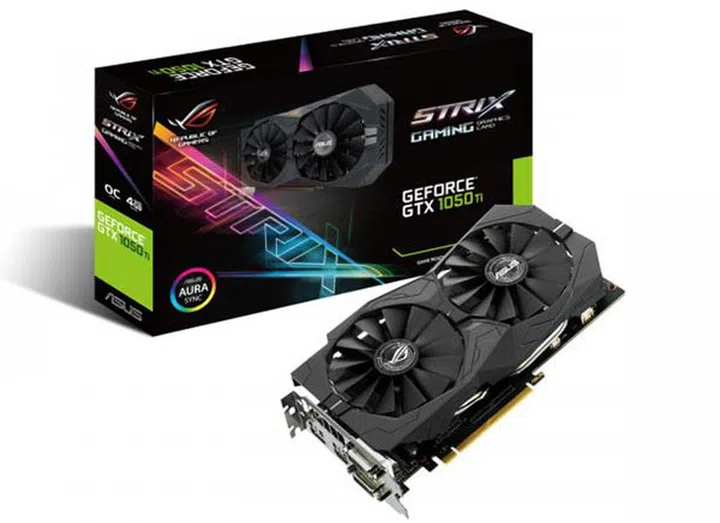
ASUS ROG Strix GeForce GTX 1050 Ti. (Image Source: ASUS)
Then there’s the Expedition series, which was designed with reliability and durability in mind. To that end, it comes with dual ball-bearing fans that last longer and run smoother. It has also been subject to testing in an environment that simulates the demanding conditions found in LAN shops, including two-hour reboot tests and 15-hour 3DMark tests at heavy load.
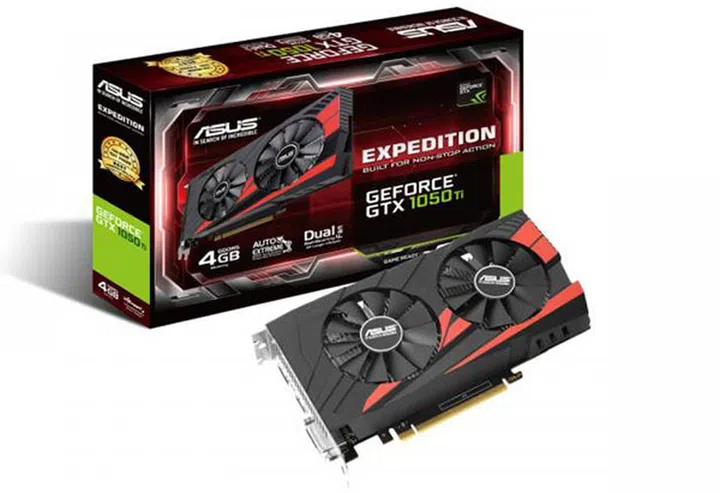
ASUS Expedition GeForce GTX 1050 Ti. (Image Source: ASUS)
The Dual series cards stand out because of their striking white cooling shrouds. ASUS designed these to match its Z170-A and Z170-Pro boards, but they will go nicely with pretty much any other white-themed build. These are likely to be more affordably priced than their Strix or Expedition counterparts, and are clocked the same as NVIDIA’s reference specifications.
Instead, they’ve been tuned for efficient cooling performance, and utilize quality components to minimize annoyances like choke whine.
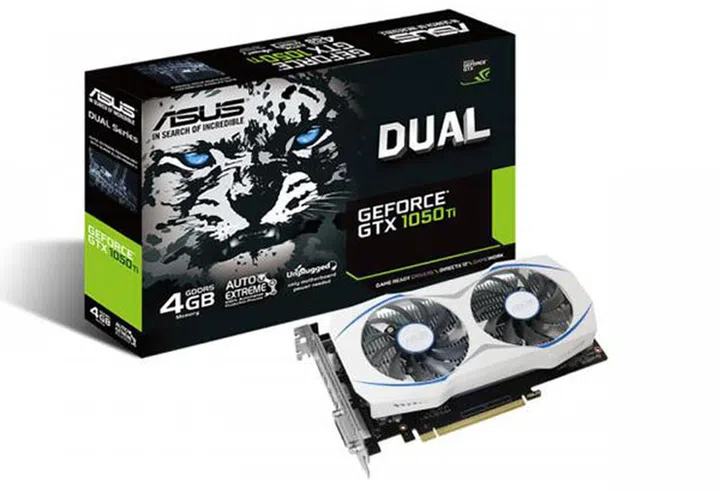
ASUS Dual GeForce GTX 1050 Ti. (Image Source: ASUS)
Finally, the Phoenix cards are probably the most interesting because of their exceedingly compact single-fan form factor. These are clearly intended to work in mini-ITX systems, and the fan uses dual ball bearings that circumvent the problem of oil drying present in sleeve-bearing fans. We can see the GeForce GTX 1050 and 1050 Ti garnering a lot of interest among users looking to build affordable, small form factor PCs, so these might just be the cards to watch.
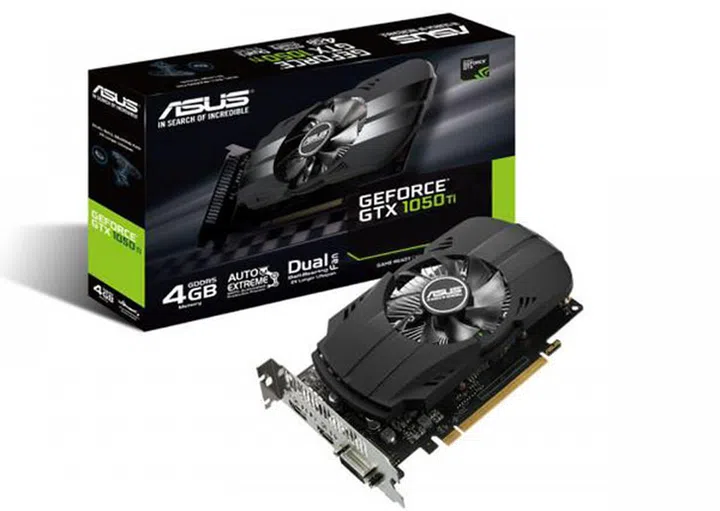
ASUS Dual GeForce GTX 1050 Ti. (Image Source: ASUS)
ASUS hasn’t released details on the local pricing of most of these cards yet. For now, we only know that the GeForce GTX 1050 Ti Dual 4G will cost S$269, while the Expedition GeForce GTX 1050 Ti costs S$289.
EVGA
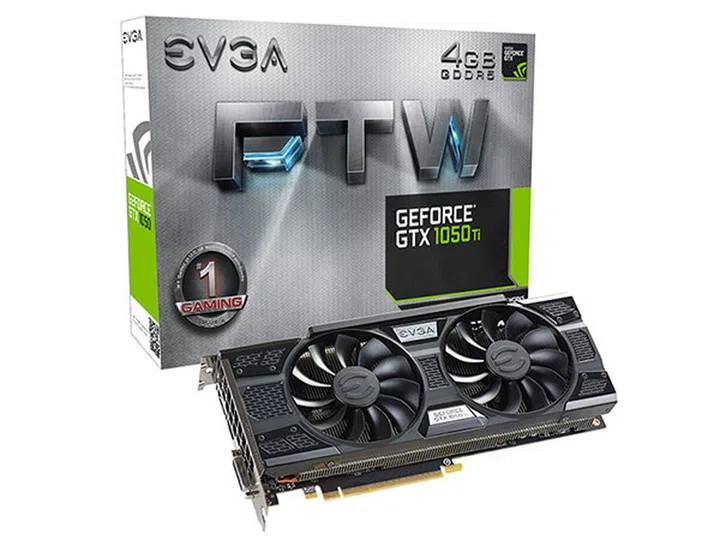
EVGA GeForce GTX 1050 Ti FTW Gaming ACX 3.0. (Image Source: EVGA)
In typical EVGA fashion, the company outed a veritable smorgasbord of cards – no less than 10, to be exact. These include superclocked, SSC, and FTW models, and we’ve listed them down as follows:
- EVGA GeForce GTX 1050/1050 Ti FTW Gaming ACX 3.0
- EVGA GeForce GTX 1050/1050 Ti SSC Gaming ACX 3.0
- EVGA GeForce GTX 1050/1050 Ti FTW DT Gaming ACX 3.0
- EVGA GeForce GTX 1050/1050 Ti SC Gaming
- EVGA GeForce GTX 1050/1050 Ti Gaming
Three of these use EVGA’s ACX 3.0 thermal solution, the same one found on higher-end cards like the GeForce GTX 1080. As a result, the cooler should have no problem keeping the 75 watt GeForce GTX 1050 and 1050 Ti running cool and chilly.
Both FTW cards also have an extra 6-pin PCIe power connector for additional overclocking headroom, supplying an extra 75 watts of power for you to push the card further. EVGA also bolstered the number of power phases to a 4+1 design, which should help with overclocking as well.
On the other hand, the lower-end Gaming and SC Gaming cards use a more compact cooler with just a single fan and have no additional power connectors.
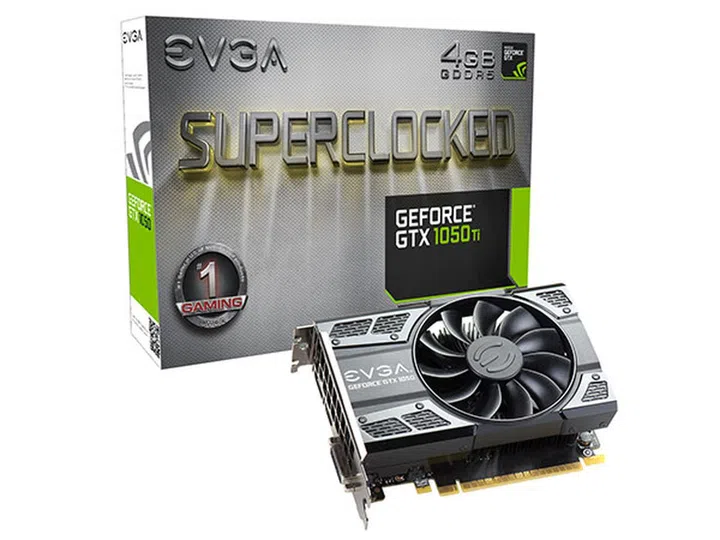
EVGA GeForce GTX 1050 Ti SC Gaming. (Image Source: EVGA)
When it comes to clock speeds, the cards start at the reference speeds for the regular Gaming cards, but can go as high as a 1,379MHz base clock and 1,493MHz boost clock on the GeForce GTX 1050 Ti FTW Gaming. That amounts to nearly a 100MHz overclock over the reference 1,290MHz base clock, typical of EVGA’s FTW cards.
We’ve no word on price at this point in time.
Gigabyte
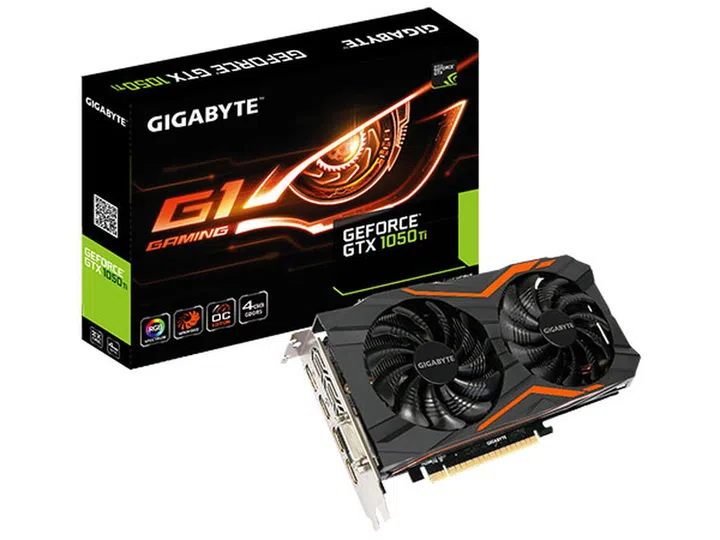
Gigabyte GeForce GTX 1050 Ti G1 Gaming. (Image Source: Gigabyte)
Gigabyte has a similarly wide range of cards as well. The company outed eight different cards, including its own single-fan variant:
- Gigabyte GeForce GTX 1050/1050 Ti G1 Gaming
- Gigabyte GeForce GTX 1050/1050 Ti WindForce OC
- Gigabyte GeForce GTX 1050/1050 Ti OC
- Gigabyte GeForce GTX 1050/1050 Ti D5
The G1 Gaming cards sit at the top of the product stack, and feature aggressive factory overclocks, RGB illumination, and a 4+1 phase power delivery circuit. For one, the 1050 Ti G1 Gaming card has a base clock of 1,392MHz in OC mode, over 100MHz over NVIDIA’s 1,290MHz reference specification.
It is also equipped with a dual 90mm fan WindForce 2X cooler and two composite copper heatpipes that are in direct contact with the GPU. A metal backplate rounds out the card’s offerings.
The WindForce OC cards are a step down from their G1 Gaming counterparts, although they do still share many similarities like the WindForce 2X cooler, 4+1 phase power design, and metal backplate. The key difference appears to be the lack of RGB lighting effects and lower clock speeds – for instance, the 1050 Ti WindForce OC is clocked lower, with a 1,354MHz base clock in OC mode.
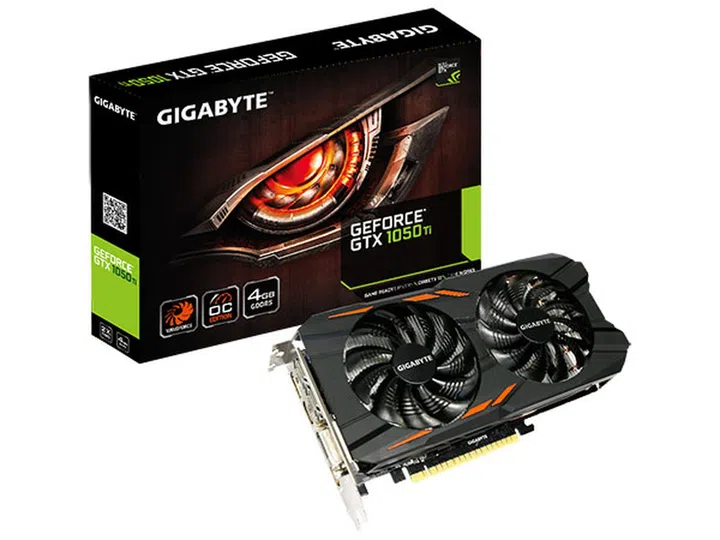
Gigabyte GeForce GTX 1050 Ti WindForce OC. (Image Source: Gigabyte)
That said, both the G1 Gaming and WindForce OC models do still feature an additional 6-pin PCIe power connector for better overclocking headroom.
And then there are the OC models, which trim the fat further by getting rid of the auxiliary 6-pin power connector and metal backplate. The WindForce 2X cooler is also equipped with smaller 80mm fans instead, although they’re still of the semi-passive variety. The clock speeds have been taken down a notch as well, and the 1050 Ti OC has a 1,341MHz base clock and 1,455MHz boost clock in OC mode.
Finally, the compact D5 edition cards boast just a single 90mm fan and what Gigabyte says is an optimized air flow cover and aluminum base. The fan is also capable of spinning down when the card is idle, thus minimizing noise when extra cooling performance is not required. This is the smallest card of the lot, measuring just 172mm long, compared 219mm for the G1 Gaming cards.
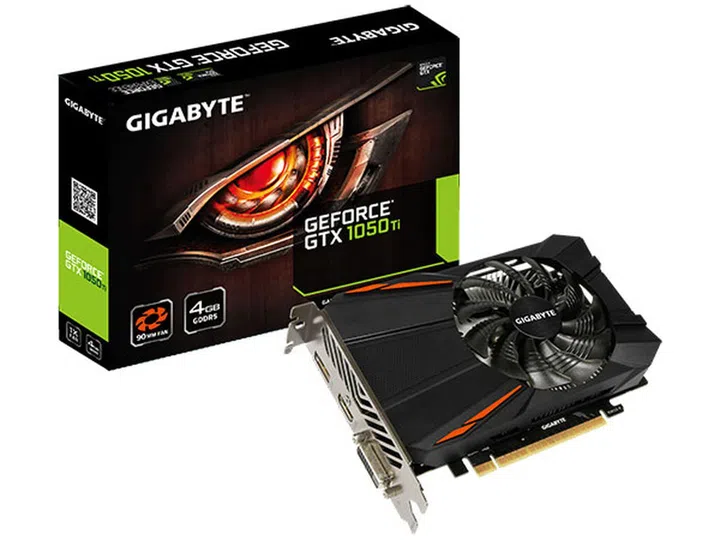
Gigabyte GeForce GTX 1050 Ti D5. (Image Source: Gigabyte)
We’ll update when we have more news on local price and availability.
MSI
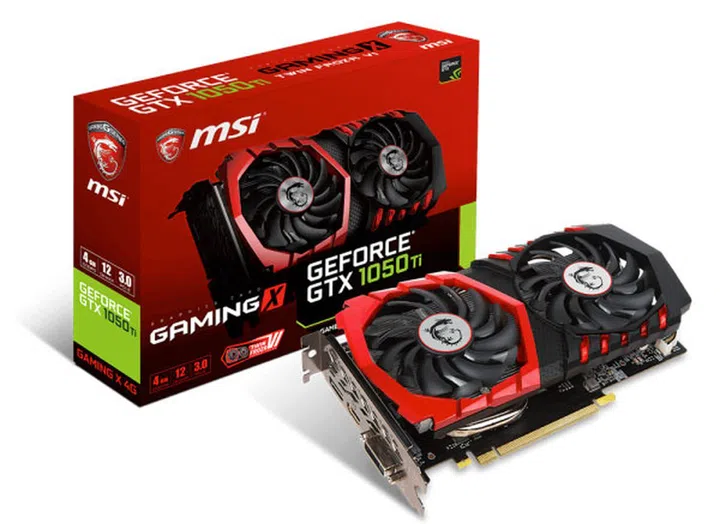
MSI GeForce GTX 1050 Ti Gaming X. (Image Source: MSI)
MSI is serving up quite the variety of cards as well, for a total of 10 (five each for the GeForce GTX 1050 and 1050 Ti). Here’s a list of everything announced so far:
- MSI GeForce GTX 1050/1050 Ti Gaming X
- MSI GeForce GTX 1050/1050 Ti Gaming
- MSI GeForce GTX 1050/1050 Ti 2GT/4GT OC
- MSI GeForce GTX 1050/1050 Ti 2G/4G OC
- MSI GeForce GTX 1050/1050 Ti 2G/4G
The Gaming series cards utilize MSI’s flagship TwinFrozr VI cooler, featuring beefy aluminum fin heatsinks, two semi-passive Torx 2.0 fans, and LED lighting. MSI has also thrown in an additional 6-pin PCIe power connector for greater overclocking headroom (only the Gaming series has this). However, the Gaming cards don’t come with a metal backplate, unlike their higher-end counterparts in the same series. Having said that, the GeForce GTX 1050 and 1050 Ti are aimed at an extremely price-sensitive segment of the market, so the elimination of superfluous features to keep costs down probably makes sense.
The Gaming and Gaming X cards differ mainly in the area of clock speeds – the 1050 Ti Gaming X has a 1,379MHz base clock in OC mode, while the Gaming model is clocked lower at a 1,316MHz base clock.
Moving down a tier, the 1050 and 1050 Ti 2GT/4GT OC models do still feature factory overclocks, but the thermal solution has been dialed back a bit. There are no aluminum fin arrays with heatpipes, and you’ll have to settle for just an aluminum cooling block and non-Torx 2.0 fans. Those utilize double ball bearings, so that’s one thing you’ll be missing out on.
These cards are also slightly more compact than the Gaming variants, measuring in at 215mm long versus the latter’s 229mm.
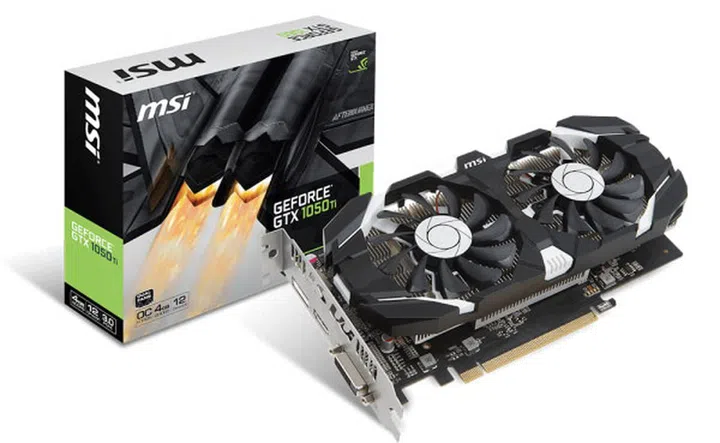
MSI GeForce GTX 1050 Ti 4GT OC. (Image Source: MSI)
Finally, the single-fan GeForce GTX 1050 2G and 1050 Ti 4G are the simplest and probably the most cost-effective of the lot. They’re best suited for use in mini-ITX systems where space is a precious commodity, and are a mere 177mm long. The OC models feature factory overclocks, no doubt to cater to system builders who want that bit of extra performance.
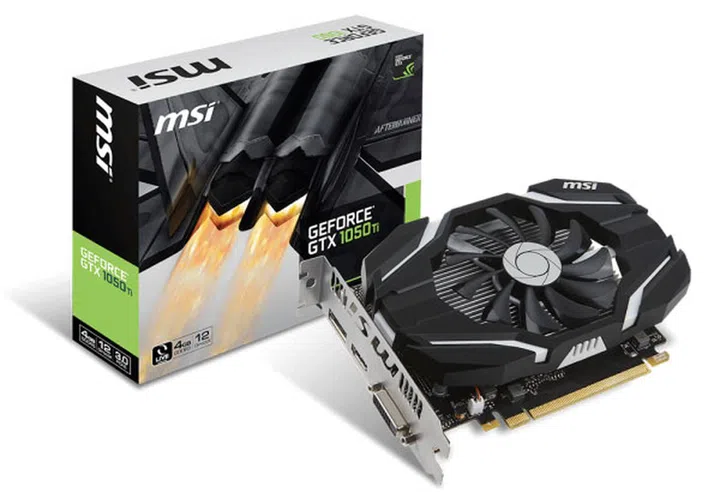
MSI GeForce GTX 1050 Ti 4G. (Image Source: MSI)
The GeForce GTX 1050 Ti Gaming X 4G retails for S$289 while the GeForce GTX 1050 Ti 4G OC is going for S$229.
Palit
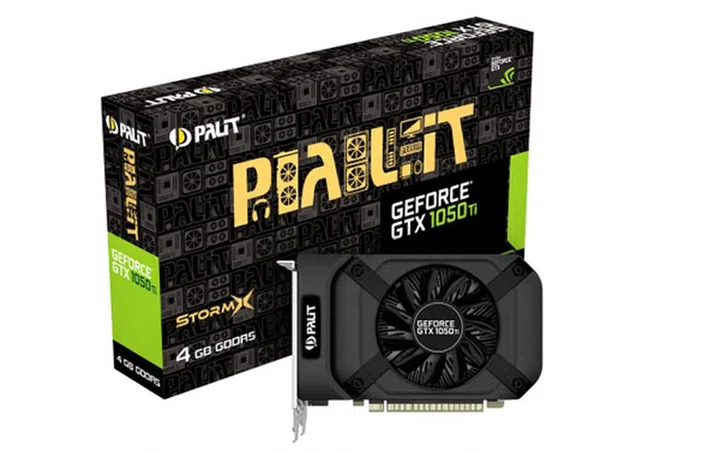
Palit GeForce GTX 1050 Ti Storm X. (Image Source: Palit)
On Palit’s end, it’s offering slim pickings this time, going with just a single model for both the GeForce GTX 1050 and 1050 Ti.
The GeForce GTX 1050 and 1050 Ti Storm X are single-fan cards, and it looks like Palit is going straight for the mini-ITX market.
Both cards are clocked to reference specifications, and are among the most compact we’ve seen so far, even among the wide field of mini-ITX cards that the GeForce GTX 1050 and 1050 Ti have spawned. They are just 166mm long at their longest, a sure fit for even the most space-constrained system.
Palit is serving up the bare essentials here, and you won’t get bells and whistles like factory overclocks or an extra PCIe connector either.
The GeForce GTX 1050 Storm X will cost S$188, while the 1050 Ti model is more expensive at S$228.
Zotac
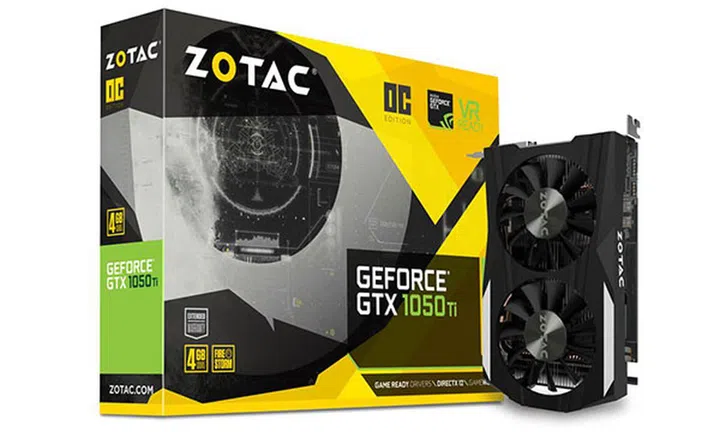
Zotac GeForce GTX 1050 Ti OC Edition. (Image Source: Zotac)
Like Palit, Zotac has set its sights on the mini-ITX market as well. It announced a slew of custom cards, where even the dual-fan variants are more compact than most of the competition. Here’s a list of what Zotac has in store:
- Zotac GeForce GTX 1050 Ti OC Edition
- Zotac GeForce GTX 1050/1050 Ti Mini
Zotac has only made available an OC Edition card for the GeForce GTX 1050 Ti. It measures 174mm long, and has a fairly hefty factory overclock to the tune of a 1,392MHz base clock and 1,506MHz boost clock. It draws power entirely from the motherboard’s PCIe slot, which may impose significant limits on potential overclocking performance.
The heatsink has a copper block that is in direct contact with the GPU, and heat is drawn away via dual 6mm copper heatpipes. And despite its small size, it still has dual 70mm fans on board.
The Mini variants of the card are even smaller. They are a mere 145mm long, with just a single 90mm fan for cooling. The heatsink fins radiate outwards from a central block that comes into direct contact with the GPU, and Zotac says this helps ensure that heat is dissipated more evenly.
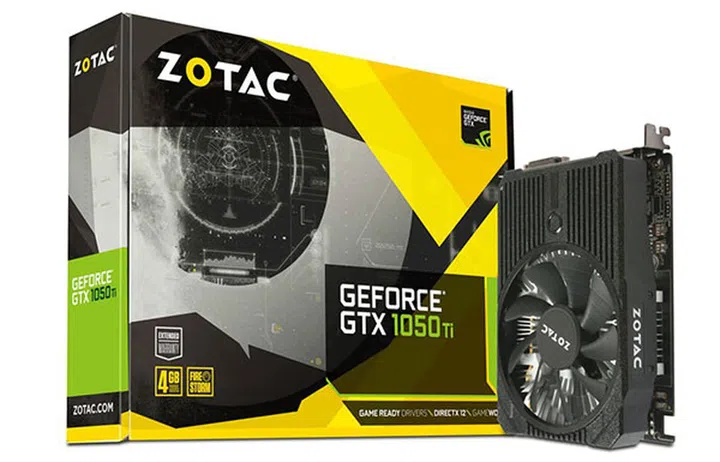
Zotac GeForce GTX 1050 Ti Mini. (Image Source: Zotac)
But while the GeForce GTX 1050 Ti Mini ships with a slight factory overclock to a 1,303MHz base clock and 1,417MHz boost clock, the 1050 Mini retains its reference clock speeds.
There’s no word yet on price or availability.
Our articles may contain affiliate links. If you buy through these links, we may earn a small commission.